


Hitting the road in an RV sounds like a romantic way to travel, but if you want a true home away from home, it’s not for everyone. Hitching it up, towing it properly, or backing it up can require expert-level skills, and you still have to set everything up once you get to camp. But if you have a Pebble Flow, the semi-autonomous electric travel trailer, you’ll enjoy a much easier experience all around!

Pebble Flow is still in the preorder stage, but it looks great on paper.
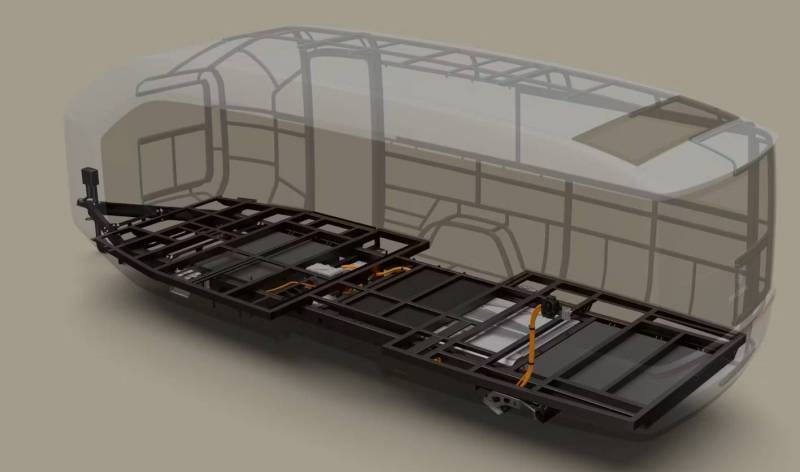
There’s a dual-motor active propulsion system, which not only means it’s easier to tow, but it also means it’s possible to tow it with an electric vehicle without completely destroying your range.
It can also autonomously hitch itself to your car and even park itself when you’re at your destination.
With the push of a button, the Pebble Flow will deploy or retract its awning, stairs, lights, and auto-leveling stabilizers so you can easily (and properly) set up camp or get back on the road!
Finally, like all smart devices these days, you can control it via an app on your phone.
Operating the Pebble Flow will be similar to the first time operating an iPhone – there’s no manual required, it just works.
Check it out in action:

Note that even with its own motor, the Pebble Flow’s dimensions are 25′ long by 7’6″ wide by 8’8″ tall, with a required towing capacity of 6,200 pounds. That’s in line with most full-size SUVs, and it’s something to keep in mind as you’re prepping your camping future.
Pebble Flow owners will enjoy updated features for comfort in a minimalistic design that doesn’t look out of place in the great outdoors.
The Pebble Flow sleeps up to four people and uses flexible features like a Murphy bed that retracts into a desk, so you can switch from relaxation to work mode in seconds.
Inside, there’s a removable induction cooktop, a 4-in-1 convection microwave, and a full-size fridge — all the better for creating amazing meals anywhere.
You’ll always be able to enjoy your surroundings inside, thanks to the 270º view offered by the wrap-around windows. Here’s a look inside from the floor at CES.
An aerodynamic design means that the Pebble Flow not only looks great but will also reduce drag for better mileage and an extended range.
The Pebble Flow charges via AC/DC, can use solar power, and uses regenerative charging while traveling, so you’ll have multiple opportunities to stay powered and moving. Plus, thanks to the solar charging, it can also work as a backup battery while it’s chilling at home, making it useful across the board!
Learn more about the Pebble Flow by clicking here.
The Pebble Flow will be available starting at $109,000, which includes a well-equipped travel trailer that goes beyond all-electric, with modern automotive construction, industry-leading aerodynamic performance, and a generous 45 kWh EV battery that all come standard.
The Pebble Flow with the Magic Pack will be available starting at $125,000. The Magic Pack adds a powerful dual-motor drivetrain and bundles a set of world-first features, including Remote Control, Magic Hitch, Easy Tow, and more for the full Pebble experience.
Want to get your hands on the Pebble Flow? You can preorder yours here.
October 5, 2026 Update: Jackery Joins Pebble to Add Even More Off-Grid Solar Power
The Pebble Flow has changed quite a bit since this post was originally published in 2024, and its latest update brings another familiar name from the portable power world into the mix.
Jackery has announced a partnership with Pebble that marks the portable power company’s first move into the automotive sector. Beginning with the 2027 Pebble Flow, Jackery will supply a purpose-built portable solar system designed to give owners more flexibility when camping away from shore power.
The new Self-Powered Package adds four 500-watt Jackery solar panels, along with four 3-meter extension cables and a four-in-one solar connection junction. When all four panels are deployed, they can provide approximately 2 kW of additional solar input directly into the Pebble Flow’s electrical system.
That extra solar capacity builds on one of the more interesting aspects of the Pebble Flow from the beginning: this isn’t simply an RV with a few solar panels bolted to the roof. The trailer is built around a 45 kWh lithium iron phosphate battery and an all-electric microgrid designed to run its appliances and systems without propane or a conventional fuel-powered generator.
With the Jackery panels added, Pebble says the 2027 Flow can accept up to 4 kW of combined solar input. The trailer can also export up to 12 kW of power, potentially supplying electricity to a home, another RV, or even an electric tow vehicle.
Pebble says that under the right conditions, the expanded solar setup can generate more electricity during the day than the trailer typically uses, even with air conditioning running. Real-world output will obviously depend on sunlight, panel positioning, temperature, and how much power you’re consuming, but the added capacity could make a meaningful difference for anyone hoping to spend several days away from campground hookups.
The partnership is also a notable development for Jackery. The company is best known for portable power stations, solar generators, and home backup systems, so moving into an integrated RV application is a fairly logical next step. Rather than creating a separate Jackery battery system inside the Flow, the portable panels plug directly into Pebble’s existing energy architecture.
For Pebble owners, that integration is arguably more important than the branding. RV solar setups can quickly turn into a collection of adapters, controllers, cables, and separate battery systems. A package designed specifically around the Flow should make the process considerably more straightforward.
Orders for the 2027 Pebble Flow with the new Self-Powered Package opened today.
The Self-Powered Package is a $4,000 upgrade on the Pebble Flow Founders Edition. Pebble’s Integrated Solar option costs $5,000, and adding the $4,000 Self-Powered Package brings the total solar upgrade cost to $9,000 for the complete Magic Pack configuration.
Jackery’s Self-Powered Package hardware is expected to begin shipping in December 2026.
For travelers who were already intrigued by Pebble Flow’s promise of easier towing, automated hitching and setup, and all-electric camping, the Jackery partnership addresses another important piece of the equation: how long you can comfortably stay somewhere after the pavement, campground hookups, and convenient electrical outlets disappear.