


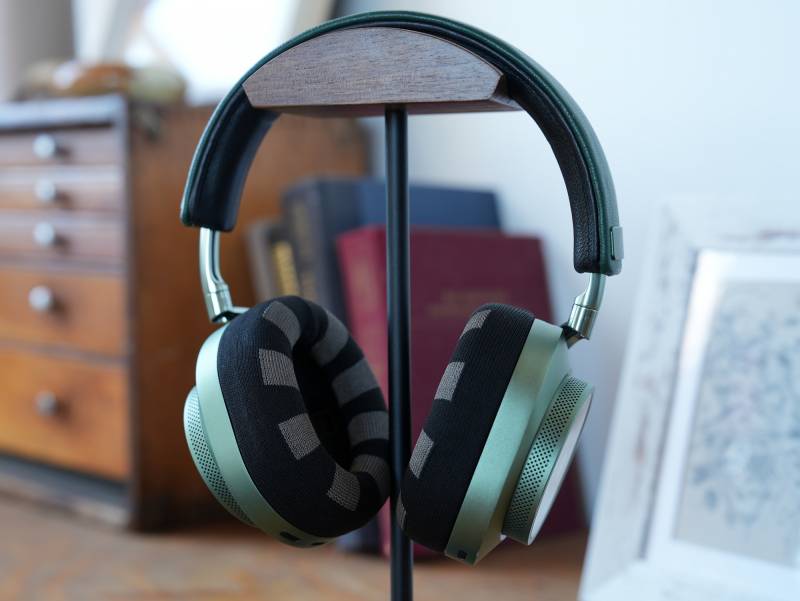
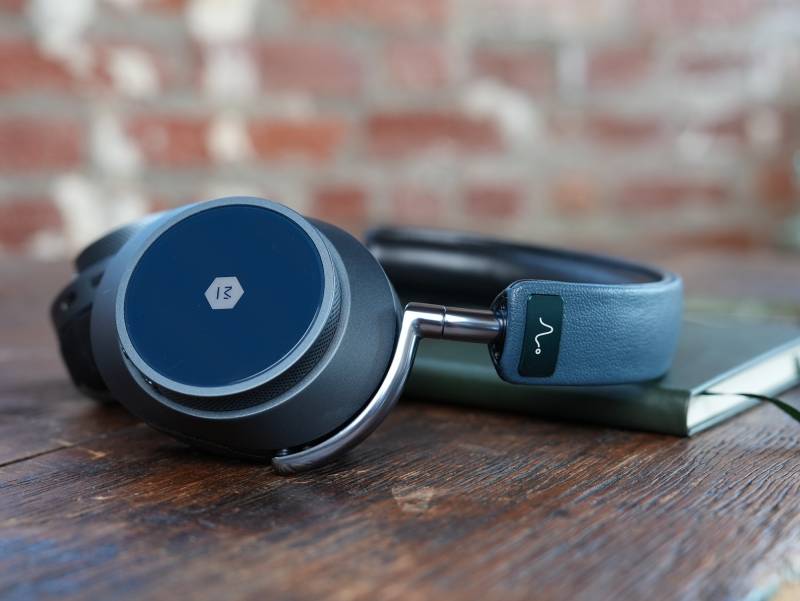
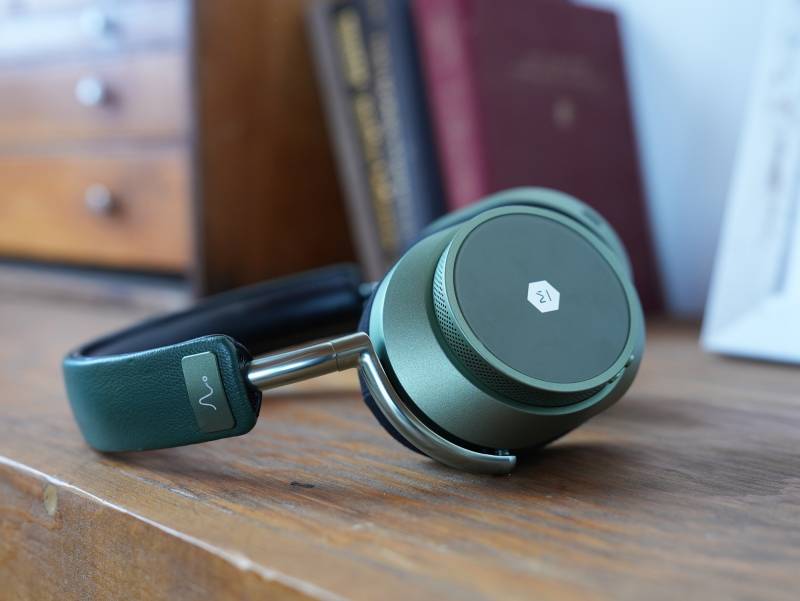
The Neurable MW75 Neuro LT looks like a premium pair of over-ear headphones, and it is, but that is only half the story. Developed in collaboration with Master & Dynamic, these headphones layer brain-computer interface technology on top of Master & Dynamic’s high-end audio to give you real-time insight into focus, stress, and mental stamina. If the idea of getting a gentle nudge to take a break before your brain melts sounds appealing, keep reading.
Finally, a Dashboard for Your Brain
The MW75 Neuro LT combines two familiar things into one. First, there are the headphones, designed with Master & Dynamic’s signature materials and tuning. Think glass, metal, and leather, plus custom 40 millimeter beryllium-coated drivers that deliver warm lows, rich highs, and a wide soundstage. If you care about sound quality, this is the sort of driver choice that matters because beryllium is both rigid and light, which helps reduce distortion while preserving detail.
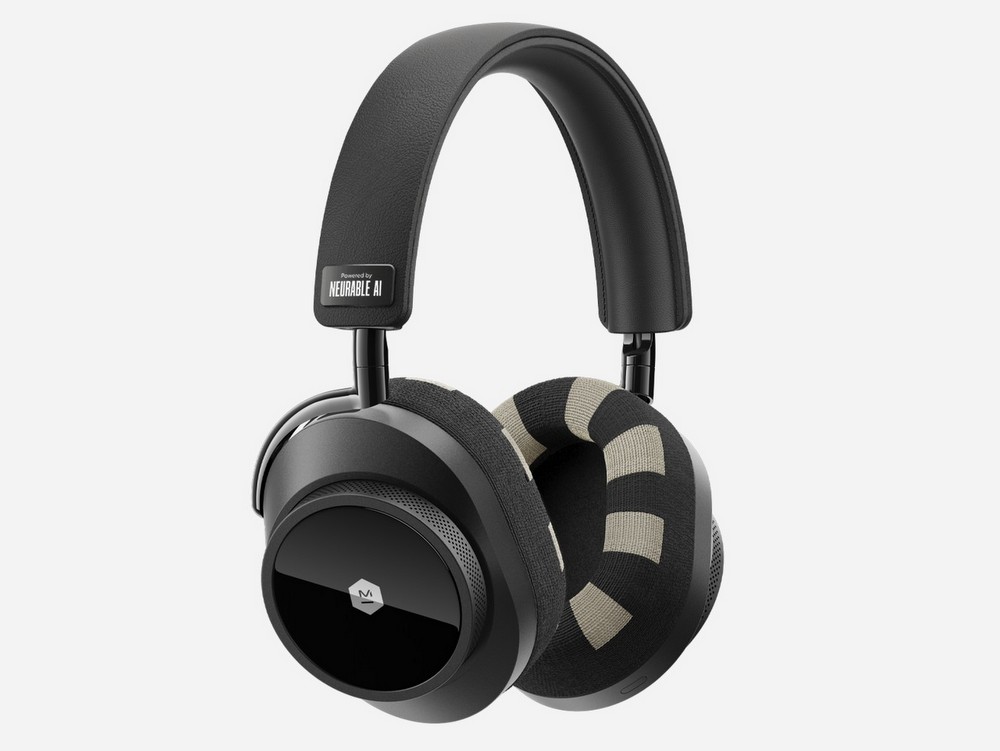
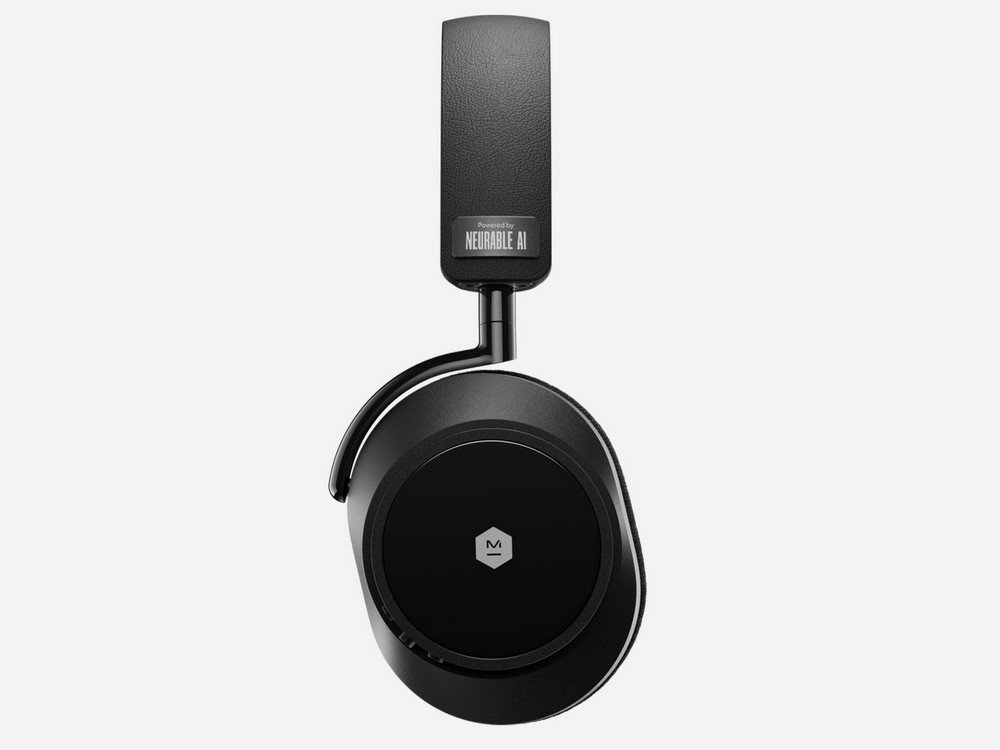
Second, there is the brain technology. The acronym here is BCI, which stands for brain-computer interface. Neurable fits soft fabric EEG sensors inside the ear cushions. EEG stands for electroencephalography, a century-old method for safely detecting tiny electrical signals that large groups of neurons produce when they fire: no gel, no sci-fi cap, no wires snaking around your head. You put the headphones on, move your hair away from the pads so the cushions touch the skin around your ears, and the sensors quietly listen while you listen.
How the MW75 Neuro LT Works Without Making You Do Anything Weird
During a focus session, the sensors pick up your brain’s electrical activity. The Neurable MW75 Neuro LT’s signal processing cleans up that raw EEG data to remove noise from movement or poor contact, then its algorithms estimate a Focus Level that is updated over time. Think of it like a fitness tracker for attention rather than steps. While a session is running, your focus metrics live on the headphones’ memory chip.
When you end the session, the data is transmitted to the Neurable app on your iPhone or Android device via Bluetooth, and then to Neurable’s encrypted servers for backup and analysis. If you have been offline, the headset can hold up to sixteen hours of data before it needs to sync.
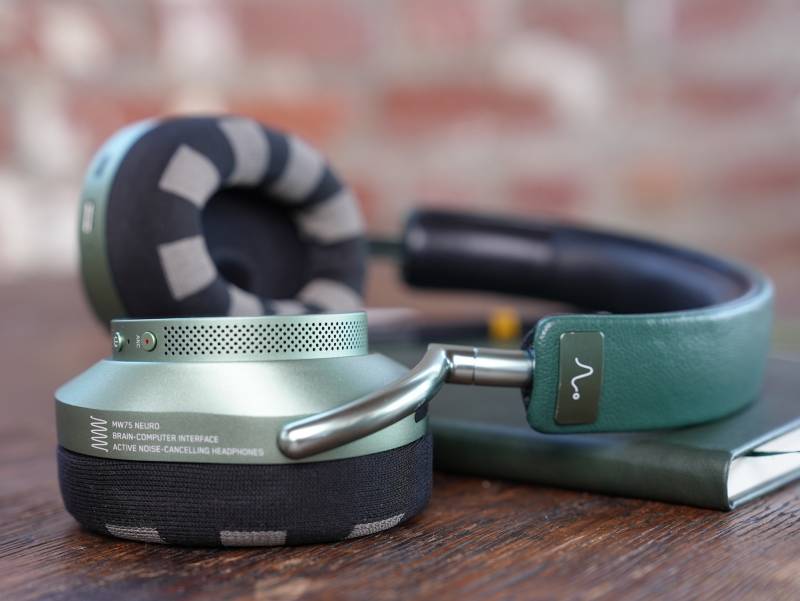
You start a session in the mobile app. The app checks sensor quality, offers live tips if adjustments are needed, and prompts you to select an activity type, as well as optionally set a goal. When the signal quality is acceptable, the session begins. If you remove the MW75 Neuro LT headphones during a session, the session automatically pauses, which is a small detail that prevents junk data.
What You See After You Work
The app gives you a Session Summary when you stop. You earn Focus Points based on your Focus Level for each minute of the session. High or medium focus earns two points per minute. Low focus earns one point. The app sets a daily goal of 100 points to help you build a consistent routine, and yes, there is a trophy when you reach it.
A timeline shows your Focus Level from zero to one hundred, marks any pauses or recommended Brain Breaks, and flags data that looks noisy. Above the timeline, you see Attention Spans, which are uninterrupted stretches of medium or high focus. Longer spans usually mean fewer distractions. There is space to jot notes about what helped or hurt, which sounds simple, yet it is the piece that turns graphs into better habits.
Beyond the single session, MyFocus views display daily and weekly summaries, allowing you to see point totals, minutes spent in high, medium, and low focus, as well as trends across days. After you record sessions on at least three different days, the app begins surfacing insights, such as the time of day when you tend to focus best or the longest Attention Span you achieved that week.
Brain Breaks, Cognitive Snapshots, and Why This Can Help You Avoid Burnout
Neurable built software features that make the data useful in the moment and informative over time. A two-minute Cognitive Snapshot offers a quick read on readiness at the start of the day. If you wake up feeling sharp but the snapshot says your brain looks under-rested, consider scheduling deep work later and tackling lighter tasks first. During work, the headphones monitor cognitive strain and suggest a Brain Break when the signals indicate that your attention is dropping.
It feels counterintuitive to pause when you are behind, but recovery is fuel. Neurable tested this concept with the Mayo Clinic, and participants preferred these context-aware breaks to rigidly scheduled ones, reporting a better sense of well-being after taking them. If you have ever tried to power through only to hit a wall, a timely break is not a luxury. It is a way to keep your tank from emptying.
The app also tracks a Weekly Brain Age trend, which is not your actual age but a composite measure of cognitive vitality derived from your sessions. If your brain age is drifting older relative to your calendar age, it is a sign to tweak sleep, caffeine, and workload. There is also an Anxiety Resilience score. If stress is constantly spiking, you will see it, and you can test adjustments to your routine to bring that score up over time.
What It Feels Like To Use Day To Day
Think about a busy afternoon; you put on the MW75 Neuro LT headphones and start a ninety-minute session. Ten minutes in, a notification suggests a Brain Break. You stretch, grab water, step outside, and resume. Your timeline later shows a clear dip before the break and a steady climb afterward. You notice that the dips tend to hit just before lunch. The next day, you schedule a short walk at that time, and your Focus Points climb faster. A week later, your insights page suggests that your best attention spans occur between nine and eleven in the morning, so you start protecting that time slot for tasks that require full concentration. The technology does not do the work for you. It gives you a mirror that is hard to ignore.
Why Headphones Make Sense For Brain Sensing
Neurable could have built a headband, but that would have been another gadget to remember and another look to explain. Headphones are familiar, and you probably already wear them while you work, study, or travel. They also sit where the sensors need to be. Neurable’s partnership with Master & Dynamic matters here because comfort, materials, and sound quality are not afterthoughts.
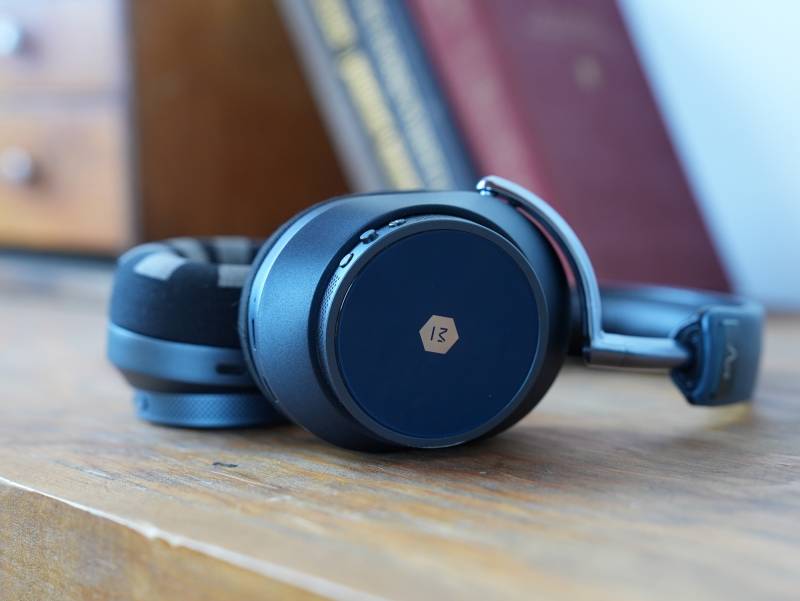
The MW75 Neuro LT is roughly forty-four grams lighter than the original MW75 Neuro, which you notice on long flights and marathon work sessions. If you want quiet, there are active noise-canceling modes for different environments, along with ambient modes for awareness and voice passthrough when you need to hear what is going on.
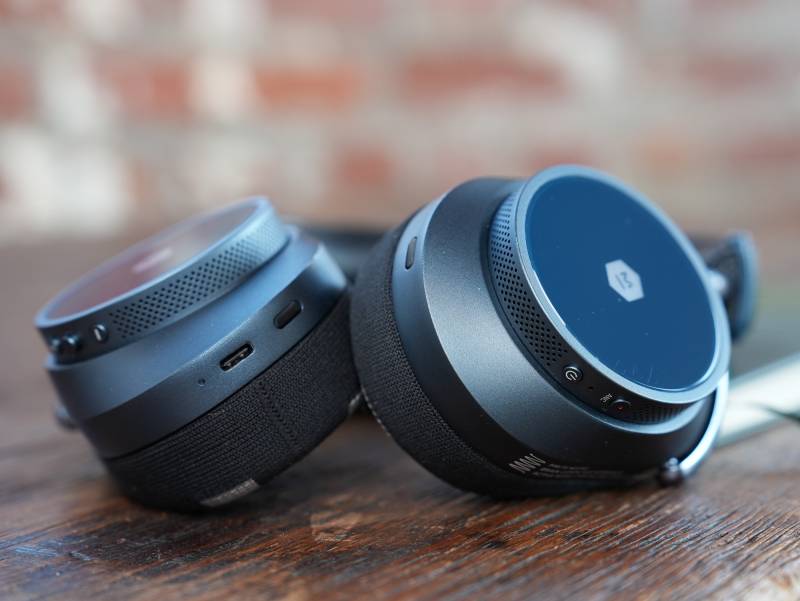
The MW75 Neuro LT supports Bluetooth 5.2 with AAC, aptX Adaptive, and SBC, can connect over USB-C for up to 24-bit/96 kHz audio on compatible devices, and includes a 3.5mm analog option. Multipoint pairing allows you to connect a phone and a laptop simultaneously, enabling you to seamlessly switch between calls and music without needing to navigate menus. The box includes a travel pouch, as well as USB-C charging and audio cables.
Battery life depends on how you use the headset. With active noise canceling on and EEG tracking enabled, you can expect approximately ten hours of use before needing a charge. If you switch off the EEG and noise cancellation, you can significantly extend the playback for long trips. You can record sessions on a plane after your first successful session, since the headset only needs Bluetooth to log and store data locally.
Set Up Tips That Save You Time
Signal quality significantly impacts data quality, so adopting a few key habits can make a substantial difference. Keep your hair away from the pads so that the fabric sensors can make contact with the skin around your ear. Stay still during the sensor check at the start of a session, especially while the app validates the top sensors, which can take a few seconds. Avoid chewing or talking during calibration. If you see red dots under the timeline after a session, that indicates the app has flagged moments when signal quality was low, often due to movement or electrical interference. Adjusting the fit or stepping away from a microwave can solve that quickly. If an ear cushion ever rips, replacements are available through support.
What The Algorithms Actually Do
Neurable’s algorithms look for patterns in your brainwaves that correspond to focused states. Different frequencies appear more strongly when you are concentrating than when your mind wanders, and those differences are visible to an EEG. The company trained its model on hundreds of hours of experiments and then validated performance on thousands more. It continues to personalize those patterns over your first few hours of use, so the focus estimates better match how your brain behaves. If your early scores are not matching your experience, try sessions that are clearly different, such as working with notifications on one day and off the next. The contrast helps the system learn faster.
For fun, Neurable nicknames each algorithm after a well-known monster from a popular game series. The names are lighthearted, but the work is classic signal processing and machine learning. If you are a researcher or developer, Neurable has a Research Kit on the way that streams raw EEG data over the Lab Streaming Layer protocol, as well as a Developer Kit for building applications.
Audio, Controls, and App Compatibility
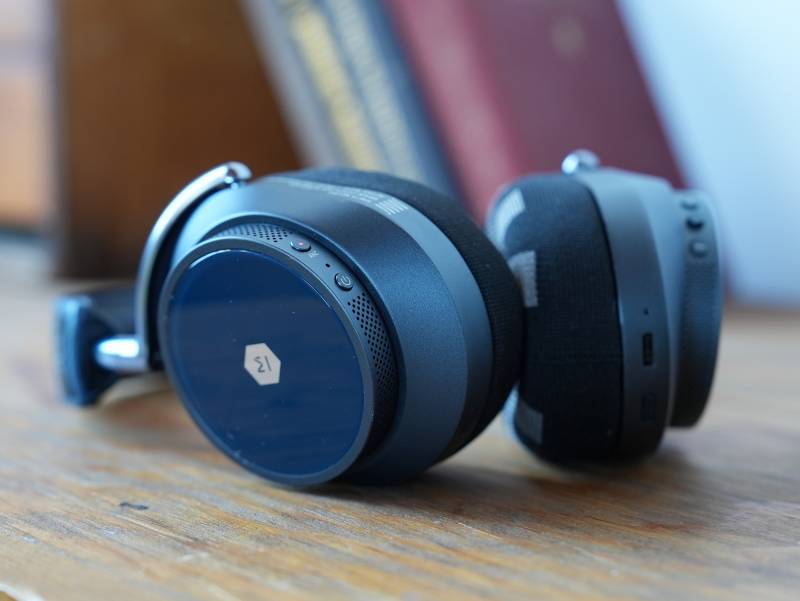
Because these are Master & Dynamic headphones at their core, the audio side is not an afterthought. The custom 40-millimeter drivers handle a broad range without harshness, and the active noise-canceling modes cover both travel and office needs. Ambient listening modes allow environmental sounds to be heard when awareness is important. Physical controls cover pairing, volume, playback, voice assistant, and toggling noise control. A touch pad on the right ear cup can start or end focus sessions and Brain Breaks. The Neurable app is compatible with iOS and Android for focus tracking and insights. If you want to tweak sound, the EQ presets in the Master & Dynamic app are supported on the LT.
Privacy, Security, and What Is Not Happening
Neurable is not reading your thoughts. If a single thought is a wave, an EEG is more like watching the tide. The sensors are not precise enough to decode individual ideas, and that is not the product’s intended purpose. The headset does not stimulate your brain, either. There is no current pushed into your head. This is passive sensing, similar to a smartwatch that measures your heart rate without altering it.
On the security side, data is encrypted on the headset, de-identified when it reaches the server, and stored in encrypted databases on Amazon Web Services with restricted access. The company says it does not sell data. Account basics, such as email and a password, are stored to manage your account. You also provide a first name, birth year, and indicate whether you are left- or right-handed. Those last two matter because age and handedness can slightly shift EEG patterns. Passwords must be at least twelve characters, which raises the effort required to crack them by brute force. You can request a refund within fourteen days if the product is not right for you.
Using The Data To Improve Focus
The goal is not to chase perfect scores. It is to learn what helps you do good work with less strain. Three behaviors make the biggest difference. First, track focus sessions consistently so the system can establish a baseline. Second, take Brain Breaks when the app suggests them, even when your calendar looks unforgiving. People who initially resisted breaks often ended up finishing more in less time. Third, reflect after each session. If a morning with coffee at eleven produced a longer Attention Span than coffee at eight, keep doing what works. One tester found exactly that by running a simple personal experiment and watching Focus Points climb when the timing changed.
Focus and productivity are related, but they are not identical. Some tasks require multitasking, which can be a drain on attention and concentration. Others are simple but necessary. The point here is visibility. When you observe how your attention behaves, you can plan deep work when your odds are highest and reserve administrative work for low-energy periods. That shift alone can make a week feel entirely different.
Practicalities, Support, and Where You Can Buy
The MW75 Neuro LT is priced at $499. It arrives first in black, with a second black colorway featuring green sensors, and an olive option is slated to follow. Preorders open through Neurable, and shipping timing depends on when you place an order. The headphones are currently available in the United States and Canada, with plans to expand to more countries. If you live elsewhere and want to raise your hand, Neurable invites you to send a message to its support team so it can gauge demand.
Battery updates and feature improvements arrive through the Neurable app. The first setup includes a firmware update that occurs in two stages and takes a few minutes, so plan accordingly. Staying near your phone, disabling distractions, and disconnecting other audio apps while the update runs will help make the process smoother. If a session appears to be missing after you reconnect, power cycle the headset and let it sync. Sessions shorter than five minutes do not count toward metrics to avoid skewing the charts.
What Sets The LT Apart From The Original MW75 Neuro
The LT retains the core brain-sensing hardware and the Master & Dynamic acoustic platform, then reduces weight by roughly twelve percent, improves comfort for all-day wear, and lowers the price by $200. The software adds more readiness, strain, and insights features to make the data clearer. In short, it is easier to wear, more affordable, and more helpful without sacrificing the science that made the first version compelling.
A Quick Word On Surgical Implants And Safety
It is easy to confuse any brain technology with everything else in the space. Neuralink, for instance, uses surgically implanted electrodes and is aimed at very different use cases. The MW75 Neuro LT is noninvasive. It sits on your head like any premium headphone, listens passively, and turns patterns in your brainwaves into everyday guidance. EEG has been used in academic and clinical contexts since the 1920s and does not cause discomfort. If you fall asleep wearing the headset, the signals can appear similar to those of focus because the brain filters out external stimuli in both cases. Neurable is working on additional sleep signatures to more precisely separate those states.
Who This Is For
If you are trying to avoid burnout while doing creative work, such as writing, coding, editing video, or studying, the MW75 Neuro LT provides a quiet assist. Frequent travelers can track how jet lag affects their focus and plan accordingly. Students can test whether studying at night or in the morning yields a longer Attention Span. If you already live in noise-canceling headphones, this is an easy upgrade that earns its place by helping you choose how to spend your limited attention each day.
The Bottom Line
By teaming with Master & Dynamic, Neurable packaged brain sensing in headphones that sound good and feel good. The MW75 Neuro LT does not try to control your brain. It gives you a dashboard for it. You get a realistic view of when to push, when to pause, and how to structure your day so work feels less like a grind and more like a plan. At $499, it is a premium buy, but it is not just another pair of pretty headphones. It is a practical way to make attention visible and then make better choices as a result.
Intrigued? You can learn more by clicking here.