


Walking into the THUNDEROBOT booth at CES feels less like stepping into a single brand showcase and more like entering a carefully choreographed tech ecosystem. The visitor flow is deliberate and surprisingly intuitive. You start with mobile devices meant to travel, move into desktop-grade power condensed into improbably small boxes, slide naturally into competitive gaming gear, and end in a zone built entirely around immersion. It is not subtle, and it is not meant to be.
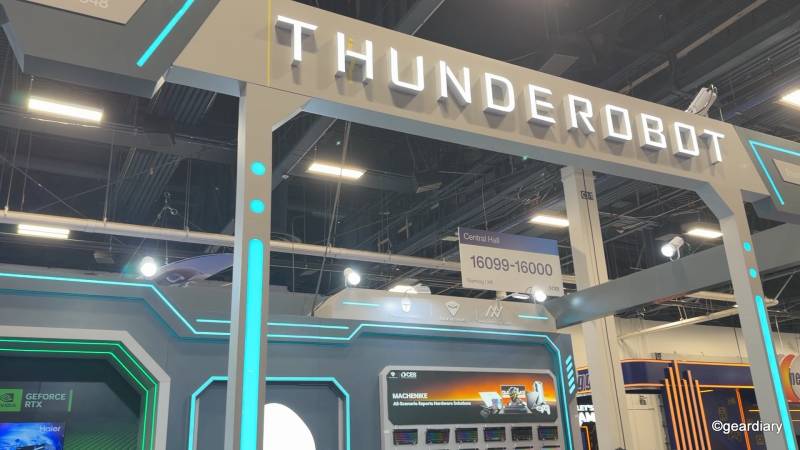
The idea is that computing no longer lives in a single mode. It follows you from your backpack to your desk to your gaming setup and, if THUNDEROBOT has its way, straight into your ears without ever touching your head. That philosophy also explains why THUNDEROBOT doesn’t operate as a single monolithic brand. Instead, it’s structured around three distinct product lines that quietly reveal themselves as you move through the booth.
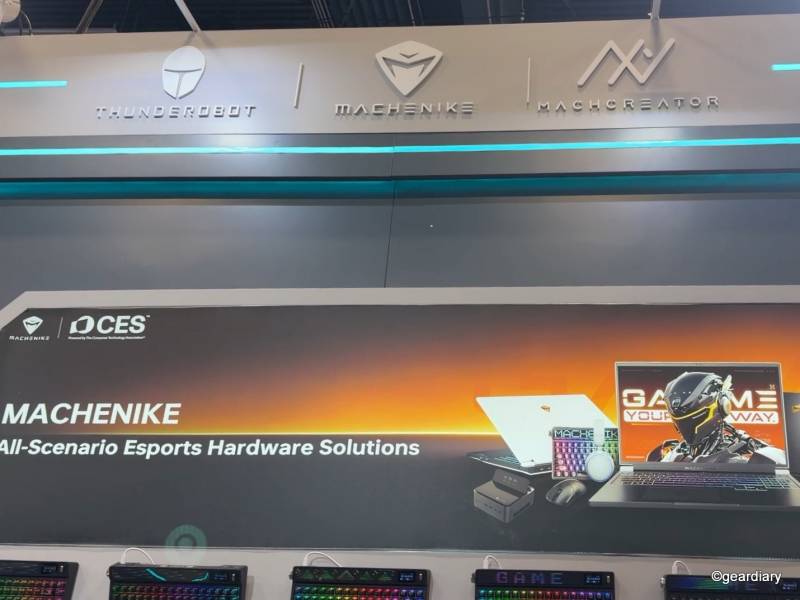
THUNDEROBOT, backed by the Haier Group and supported by long-standing partnerships with NVIDIA, Intel, and AMD, anchors the experience with high-end gaming hardware built for people who care deeply about performance ceilings. These are the machines designed for maximum frame rates, sustained power, and workloads that don’t politely ask for resources; they demand them.
Machenike sits in the middle, both literally and conceptually. This is where performance becomes more approachable. The gear still delivers meaningful power, but it’s balanced with personality, flexibility, and pricing that doesn’t assume gaming is your sole identity. Machenike products feel like they’re made for people who work, play, and create on the same machine without overthinking the transition.
Then there’s Machcreator, which rounds out the ecosystem by focusing on lightweight productivity and creative workflows. These are devices meant to travel, prioritize comfort and battery life, and quietly disappear into your routine rather than dominate it. Seeing all three side by side makes the segmentation feel practical instead of marketing-driven, and it sets the stage for everything that follows.
The tour begins, logically, with laptops. The THUNDEROBOT ZERO Air Ultra-Light Gaming Laptop is the attention grabber here, mostly because your brain needs a second to reconcile what your hands are feeling. At roughly 1.59kg and just under 16mm thick, it feels closer to an ultraportable than a gaming machine. Yet inside is an Intel Core Ultra H-series processor and an NVIDIA GeForce RTX 5060 Laptop GPU, paired with up to 32GB of DDR5 memory and a PCIe 4.0 solid-state drive topping out at 1TB. The 15.3″ OLED display runs at a 2560 by 1600 resolution with a 165Hz refresh rate, which matters if you care about smooth motion and accurate color in equal measure.
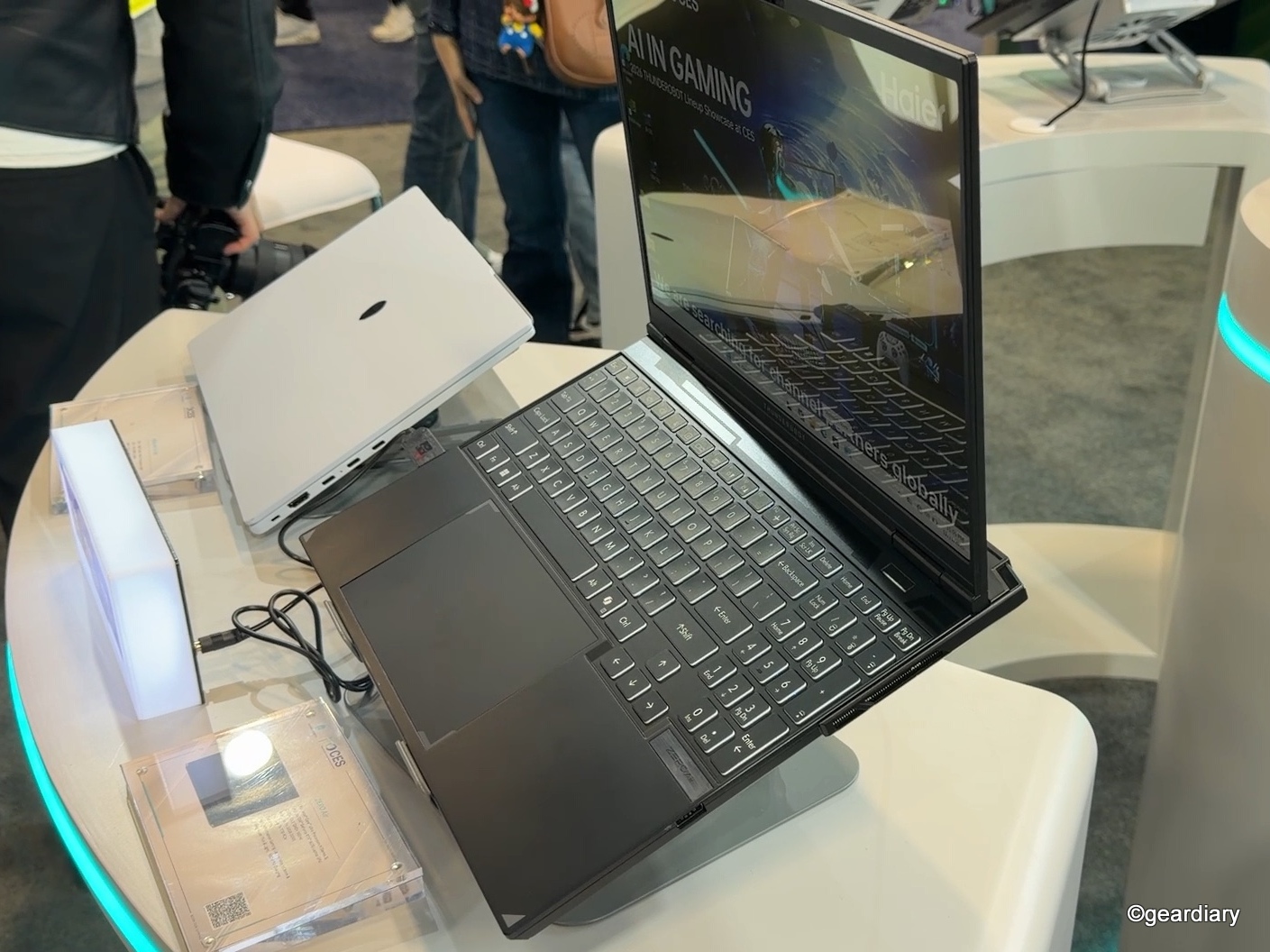
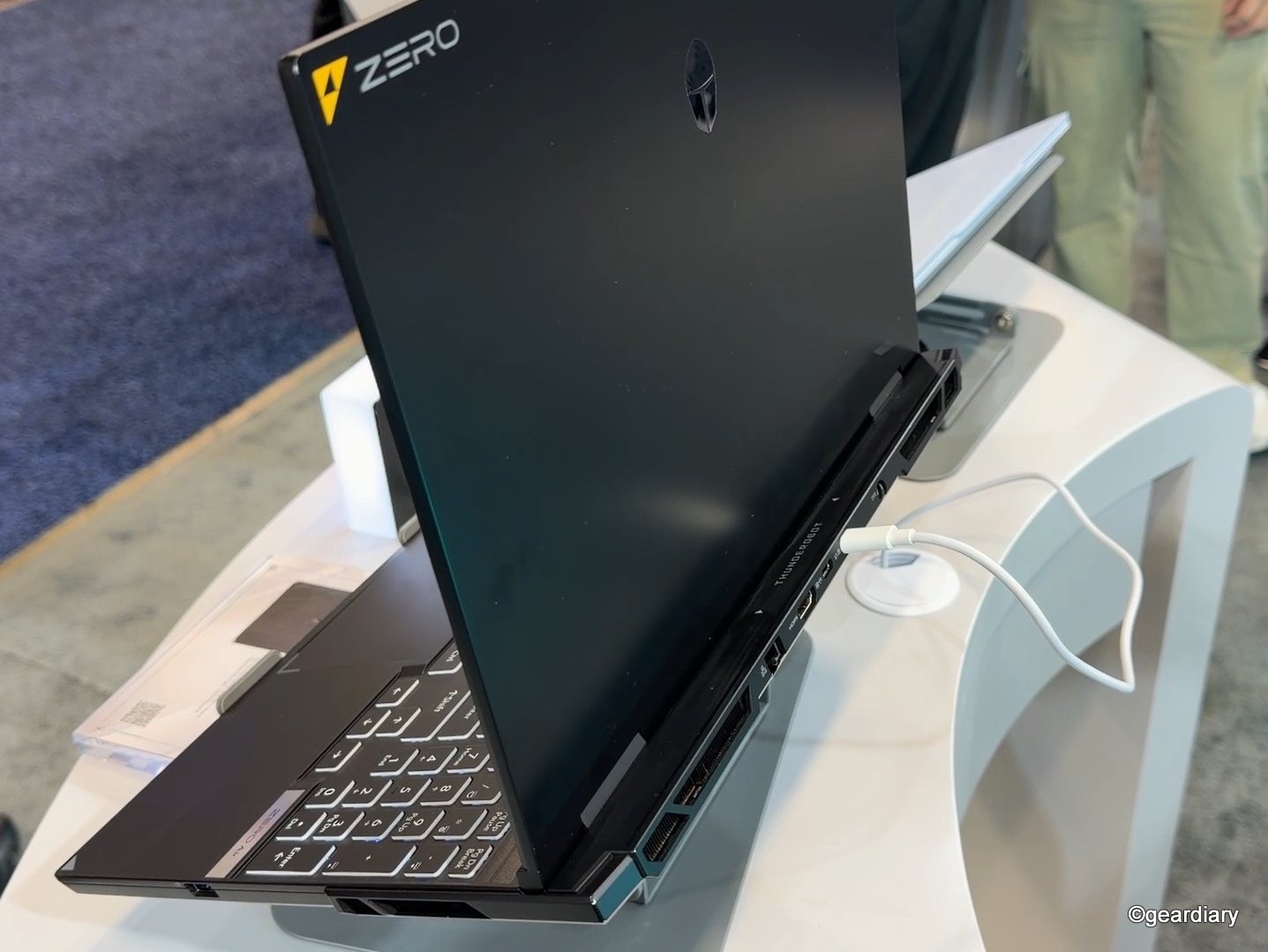
In use, this is the kind of laptop that makes sense if you split your life between work and play and do not want two machines. You can answer emails, edit photos, and then immediately launch a visually demanding game with ray tracing turned on. Ray tracing, for the uninitiated, simulates realistic lighting by calculating how light bounces in a scene, and it is usually the first thing to get sacrificed in thin laptops.
It sounds amazing on paper, but when you hold it in your hands in person, you feel like you’re holding the future. Gaming PCs have a specific style to them, flairs that highlight the cooling systems and light up the keyboards. But the Zero Air is a marvel, because it looks and feels like a gaming PC but like one that’s been slimmed down to an absolutely impossible level.
Here, paired with NVIDIA’s Deep Learning Super Sampling, or DLSS, which uses artificial intelligence to boost frame rates by rendering fewer pixels and filling in the gaps intelligently, gameplay stays smooth without the fans sounding like they are preparing for takeoff. Compared with bulkier gaming laptops that weigh closer to 2.5 kilograms, the ZERO Air trades some thermal headroom for portability, but the balance feels intentional rather than compromised.
Then there’s the THUNDEROBOT aibook14 Pro, which feels like the calmer sibling—and that’s very much the point. Weighing around 1kg thanks to its aerospace-grade carbon fiber chassis, this is firmly in ultraportable territory and clearly aligned with the Machcreator philosophy. The 2.8K display is tuned for eye comfort, which is marketing shorthand for lower blue light and better brightness control, and it shows when you spend extended time staring at documents or timelines. Light gaming is possible, but the real appeal is how quickly it shifts gears.
You can work all day, toss it into a bag without thinking about it, and still unwind with a game that doesn’t demand top-tier graphics. Compared to similarly sized ultrabooks from more traditional brands, the aibook14 Pro feels less precious and more willing to stretch beyond spreadsheets.
From laptops, the booth funnels you into mini PCs, and this is where THUNDEROBOT starts flexing. The MIX G2 mini PC is genuinely surprising. With a volume of about 3.4 liters, it is smaller than many desk drawers, yet it houses an NVIDIA RTX 50-series GPU and an Intel Core Ultra 9 processor.
This is not theoretical power. Running modern games at high settings remains stable, and the thermal system actively adjusts using artificial intelligence to keep temperatures in check. Compared to consoles or compact desktops that rely on mobile-class graphics, the MIX G2 behaves like a full desktop that someone accidentally shrank in the wash, firmly reinforcing THUNDEROBOT’s high-performance identity.
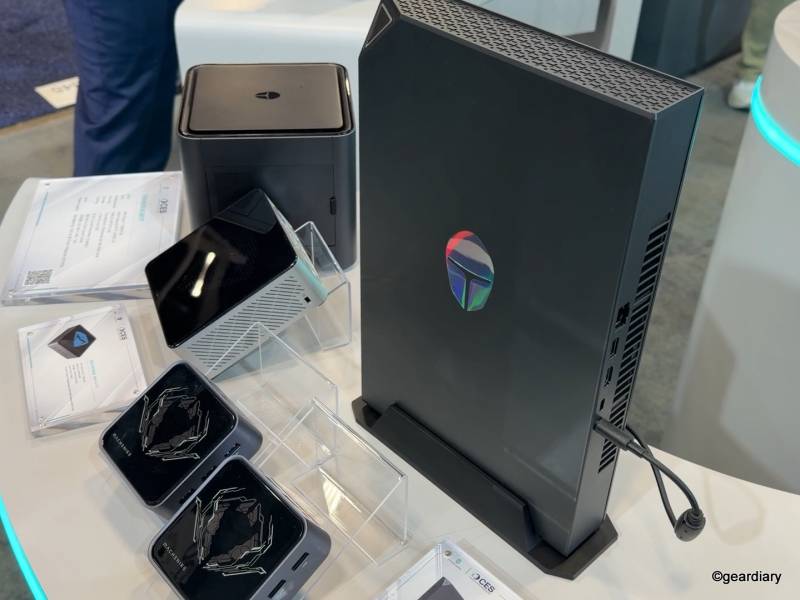
THUNDEROBOT MIX G2 mini PC and the Machenike MINI GTS
The Machenike MINI GTS takes a slightly different approach. At roughly 1.4 liters, it is even smaller and built around Intel’s Core Ultra 9 285H processor with up to 64GB of DDR5 memory. Instead of chasing raw gaming dominance, it leans into local artificial intelligence tasks. Image generation, 4K video noise reduction, and multitasking across four 4K displays all happen without leaning on cloud services.
If your workflow involves creative tools or data-heavy tasks and you don’t want a tower under your desk, this makes a strong case. Compared to Apple’s Mac mini or similarly sized Windows boxes, the MINI GTS offers more internal flexibility and a design that invites customization, including a flippable top cover with a display that can show system stats or visuals. It’s not often that you can call a PC powerfully adorable, but that’s the best way to describe the MINI GTS.
Competitive gaming gear comes next, and Machenike’s peripherals feel designed by people who actually play. The Machenike F1 E-Sports Controller is unapologetically specific. It supports an 8,000Hz polling rate, which means it checks in with your system 8,000 times per second, resulting in input latency as low as 0.377 milliseconds. In practice, this translates to inputs feeling instant, especially in fast-paced shooters.
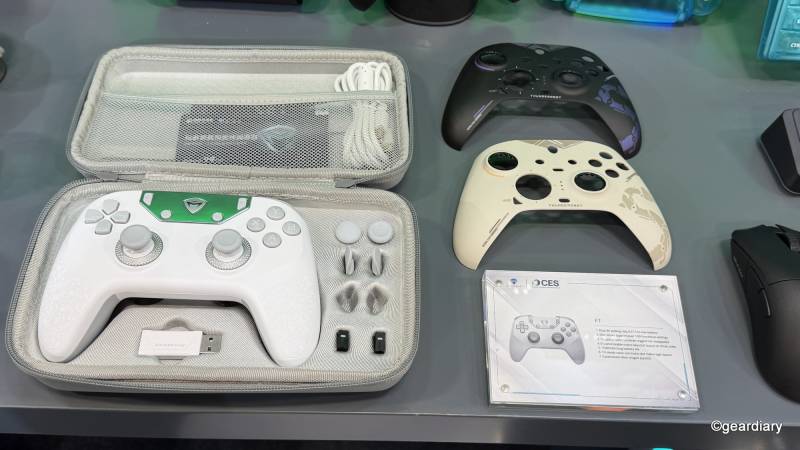
Machenike F1 E-Sports Controller
The controller includes 12 optical switches that use light rather than physical contact to register presses, reducing wear over time. Three-stage adjustable triggers and six programmable macro keys let you tailor the layout to your habits. With hot-swappable trigger covers and shells, you can customize the controller’s looks as well as its performance, making it uniquely and totally yours.
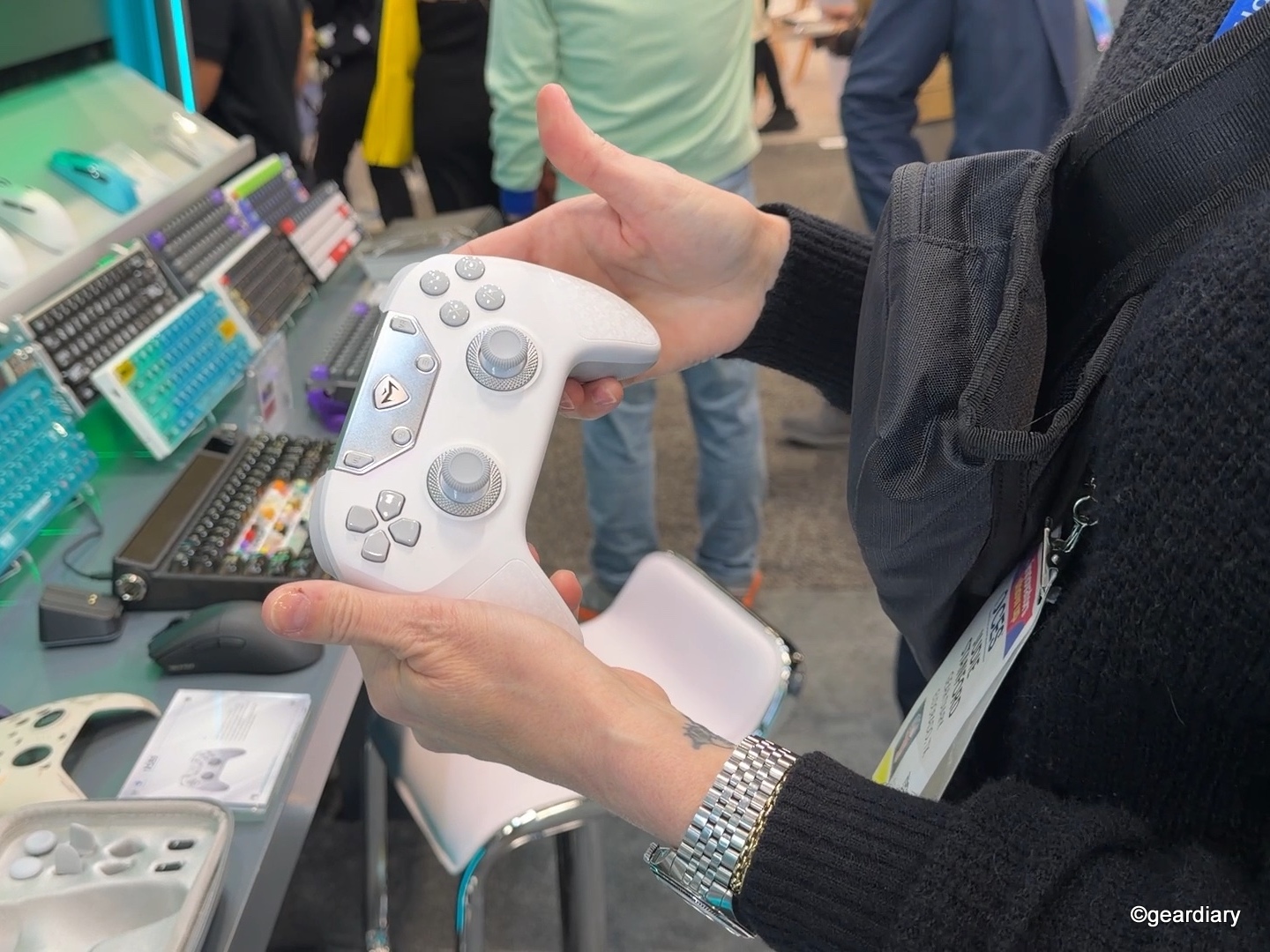
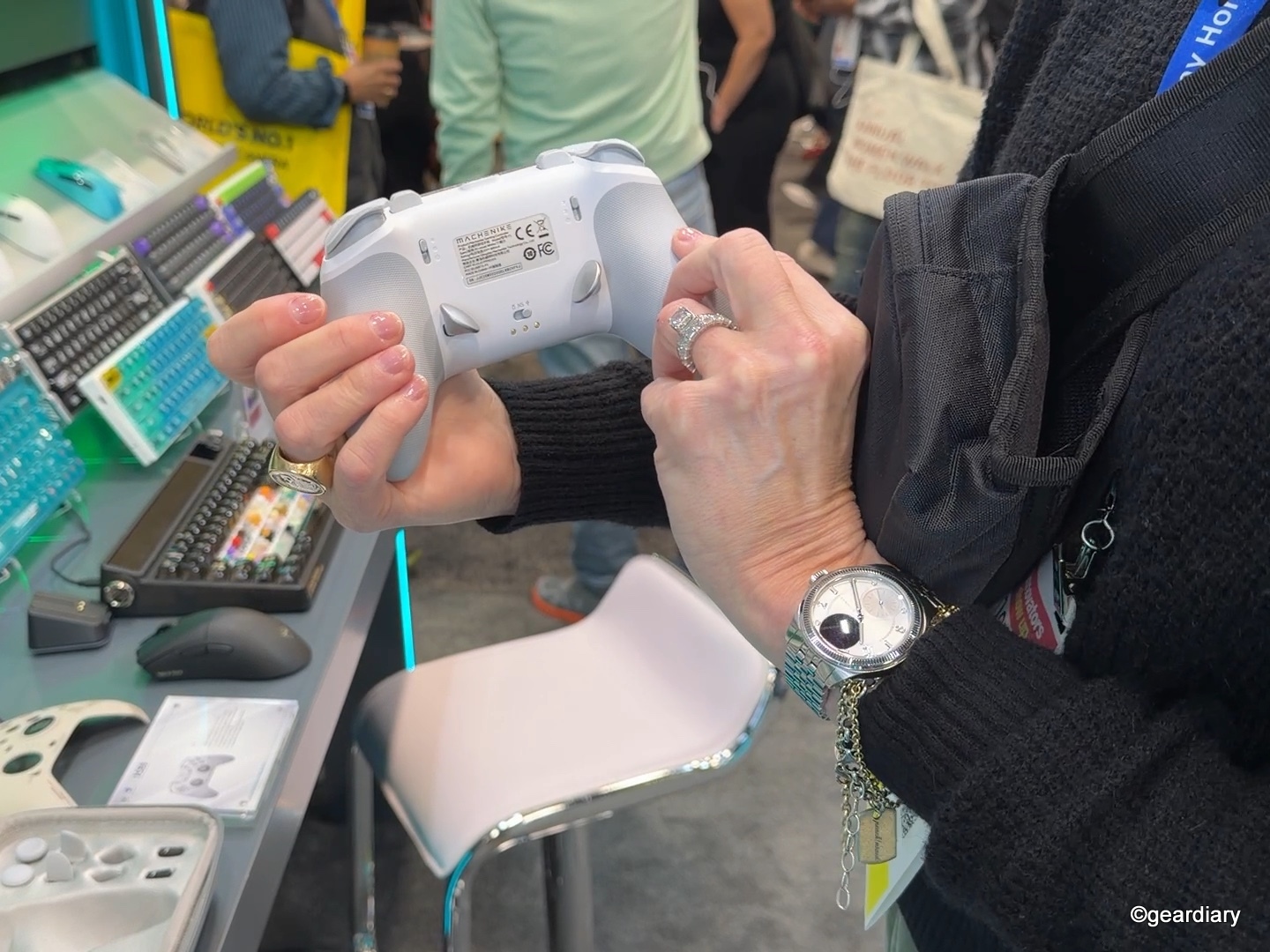
Compared to mainstream controllers that prioritize familiarity, the F1 is more demanding but also more rewarding if you invest the time to set it up.
The Machenike Shadow Hunter EX68 keyboard continues that theme. Its optical switches actuate quickly and offer adjustable trigger points, so you can set how far a key needs to travel before it registers. Hot-swappable switches mean you can replace keys without soldering, and the RGB lighting syncs across the board without looking like a carnival ride unless you want it to. Compared to mechanical keyboards with traditional switches, optical designs trade some tactile nostalgia for speed and longevity, and whether that is a win depends on your priorities.
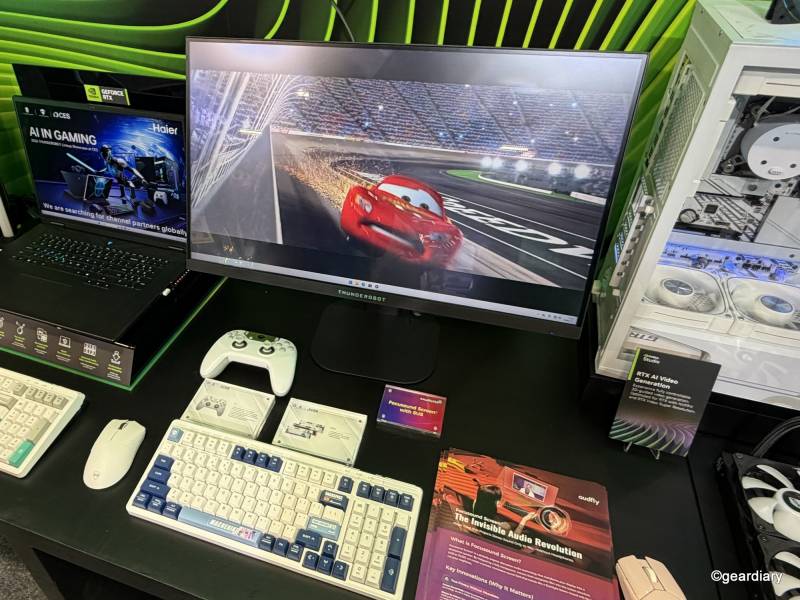
The final zone is where the booth stops feeling familiar and starts feeling futuristic. The THUNDEROBOT BLACKWARRIOR Focusound Monitor uses Focusound Screen technology from Audfly to turn the display itself into a directional speaker.
A transparent, micron-level film layered into the screen projects sound in a narrow beam, much like a flashlight for audio. Stand in front of it, and you hear a clear stereo sound. Step to the side by about 15 degrees, and the volume drops by roughly 20 decibels. In plain terms, you get your own audio bubble.
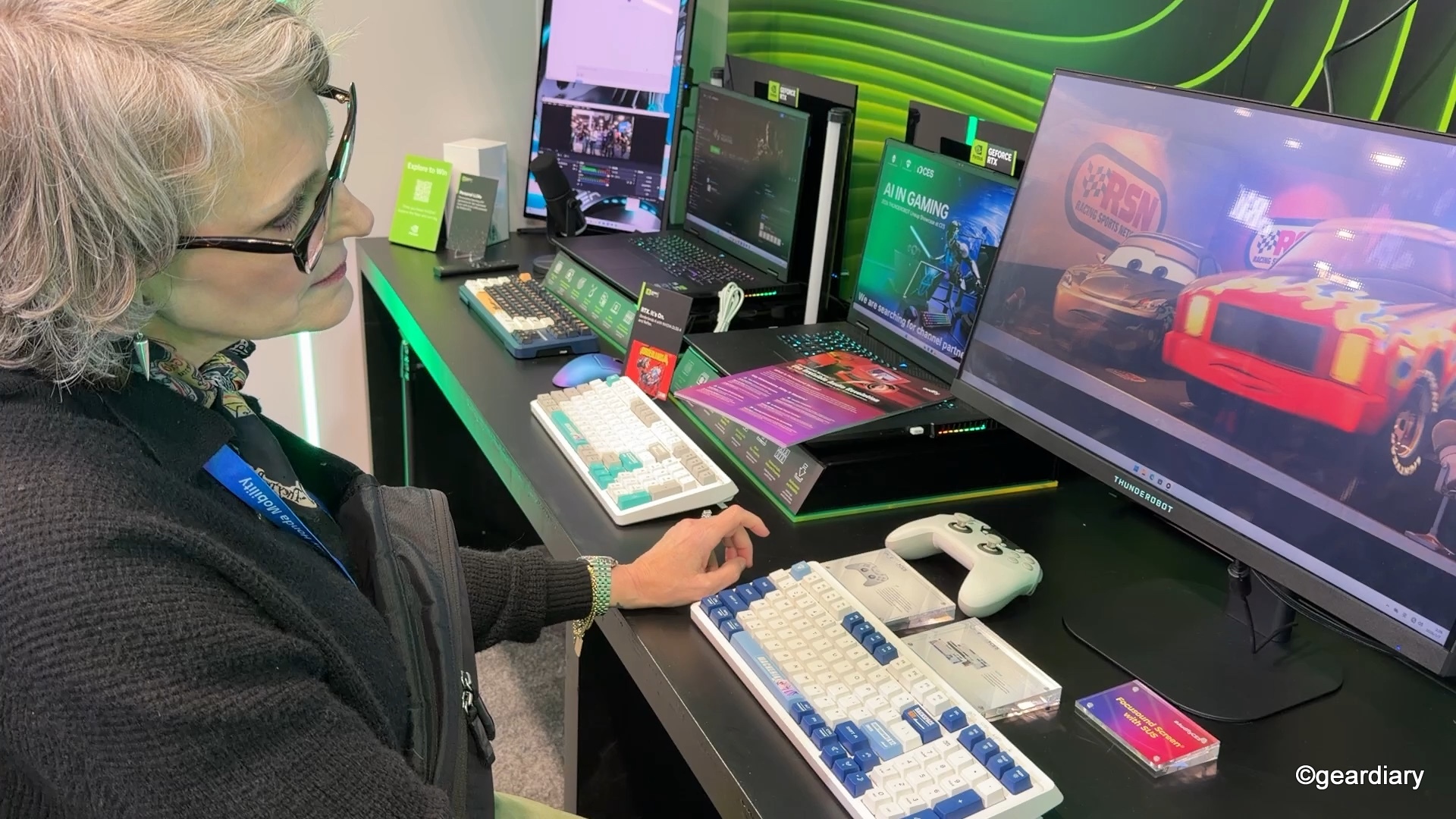
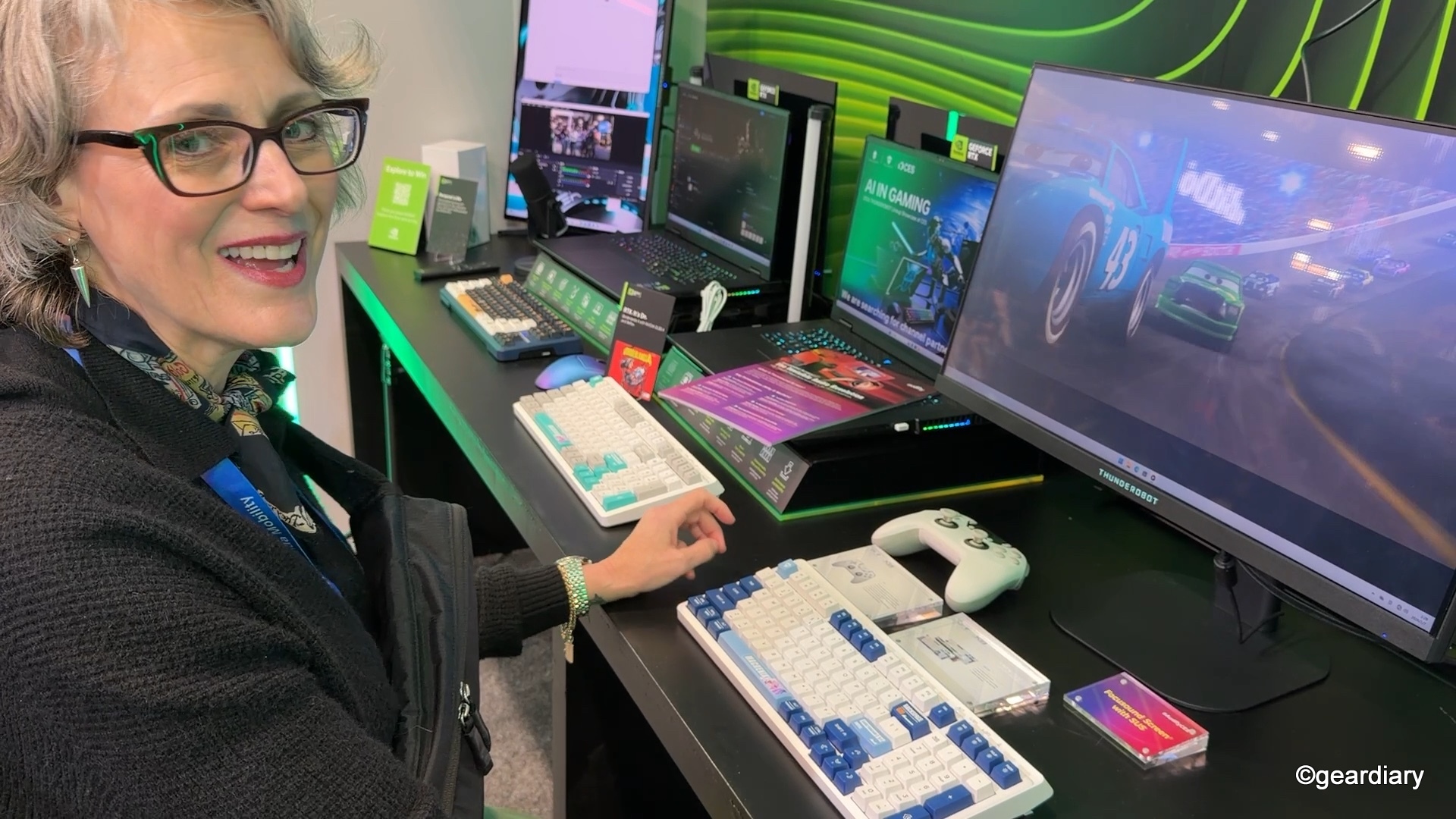
This is not a gimmick once you experience it. Late-night gaming in a shared apartment, video calls in an open office, or watching a show in a dorm room suddenly make sense without headphones. Future versions add camera-based tracking, so the sound follows you as you move. Compared to traditional monitor speakers that spray sound everywhere or headphones that can become uncomfortable over long sessions, Focusound sits in a strange but compelling middle ground. It won’t replace a surround sound system, but it solves problems those systems create.
Stepping back, the strength of THUNDEROBOT’s presence at CES isn’t any single product. It’s how clearly each piece fits into a broader narrative. The ecosystem genuinely covers everything from work to play, from portability to immersion, and the transitions between those states feel considered rather than forced.