


The Samsung 2026 TV lineup is expanding with refreshed Neo QLED 4K sets, a brand-new Mini LED range, updated OLED models, additions to The Frame family, and an even stronger push around Vision AI. After seeing the broader lineup in person at Samsung HQ in Edgewater, New Jersey, this March, the takeaway was less about one single hero product and more about how determined Samsung is to spread premium features across nearly every price tier. Whether that makes shopping easier or just gives you more ways to overthink your next TV purchase depends on your temperament.
Neo QLED 4K Still Handles the Step-Up Role
Samsung’s 2026 Neo QLED 4K family includes the QN80H and QN70H, and these remain the company’s more premium 4K LCD-based options before you move into OLED or even pricier territory. Both use Quantum Mini LEDs, meaning the backlights rely on much smaller LEDs than those in a conventional LED TV. In practical terms, that should allow for more precise light control, helping bright highlights pop without completely flattening shadow detail.
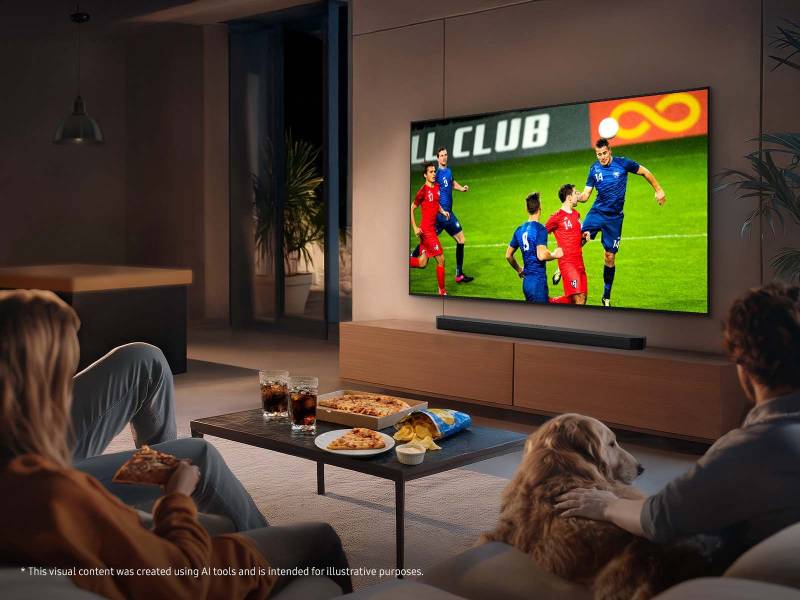
Neo QLED 4K QN80H
Samsung also says these sets use quantum dots for 100% color volume in the DCI-P3 color space. That phrase gets tossed around a lot, but the takeaway is simple enough: the TV should hold onto richer color even at higher brightness levels.
The QN80H gets the more advanced package. It uses AI-based real-time picture and sound processing, including upscaling older SD and HD content to 4K. As always, that is useful but not magical. A TV can clean up a weak source, but it cannot turn a fuzzy cable broadcast into pristine cinema, no matter how many chips are working behind the panel.
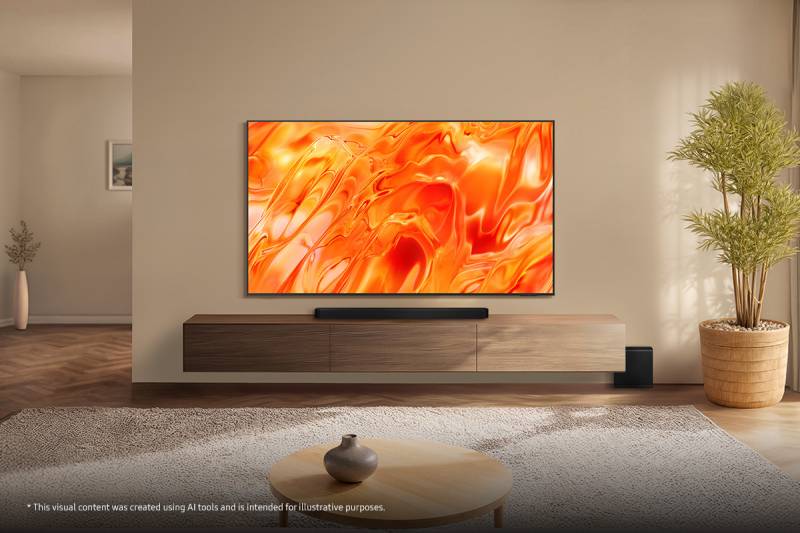
Neo QLED 4K QN70H
Samsung is also leaning harder into features designed to do some of the thinking for you. The QN80H can convert standard dynamic range video into something more HDR-like, with HDR offering more noticeable contrast between bright and dark elements on screen. AI Customization Mode is meant to recognize whether you are watching sports, movies, or TV shows and adjust the picture accordingly. For gamers, Motion Xcelerator 144Hz promises smoother motion and less screen tearing, though full 4K at 144Hz is available only in PC-connected games that support it.
Audio gets some attention, too. The QN80H can boost dialogue when scenes get noisy and adapt sound to your room’s dimensions. Dolby Atmos and Object Tracking Sound Lite are meant to make effects feel more spatial and less anchored to the bottom of the screen.
Pricing for the Neo QLED 4K range starts at $599.99 for the 43-inch QN70H and tops out at $5,499.99 for the 100-inch QN80H. In between, the QN70H comes in 50 inches for $749.99, 55 inches for $899.99, 65 inches for $1,199.99, 75 inches for $1,499.99, and 85 inches for $2,299.99. The QN80H is priced at $1,299.99 for 55 inches, $1,599.99 for 65 inches, $1,999.99 for 75 inches, $3,299.99 for 85 inches, and $5,499.99 for 100 inches. You can learn more about Samsung’s 2026 Neo QLED 4K lineup by clicking here.
Samsung’s New Mini LED Line Is Where the Value Fight Really Starts
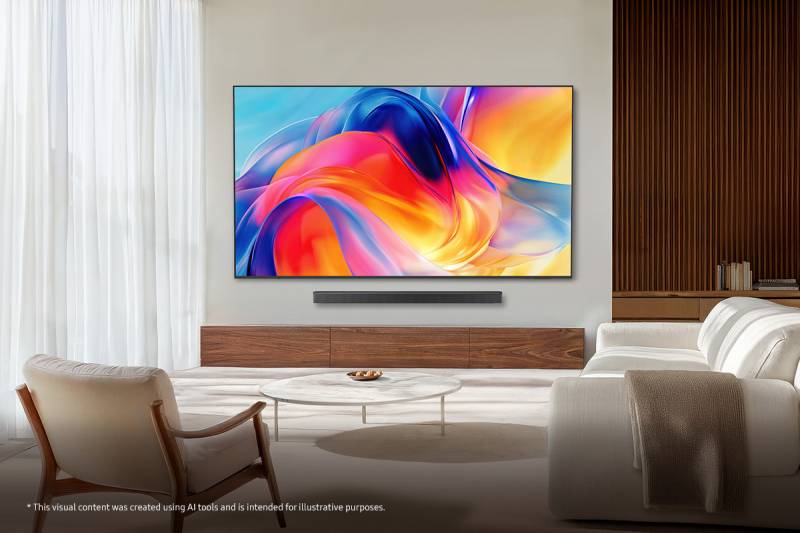
The all-new Mini LED series is likely where more shoppers will stop and pay attention. This lineup includes the M80H and M70H, with a 100-inch M90H arriving later this year. Samsung is positioning these models as a more affordable way to get better brightness, more precise backlighting, and a cleaner picture than its more basic LED sets.
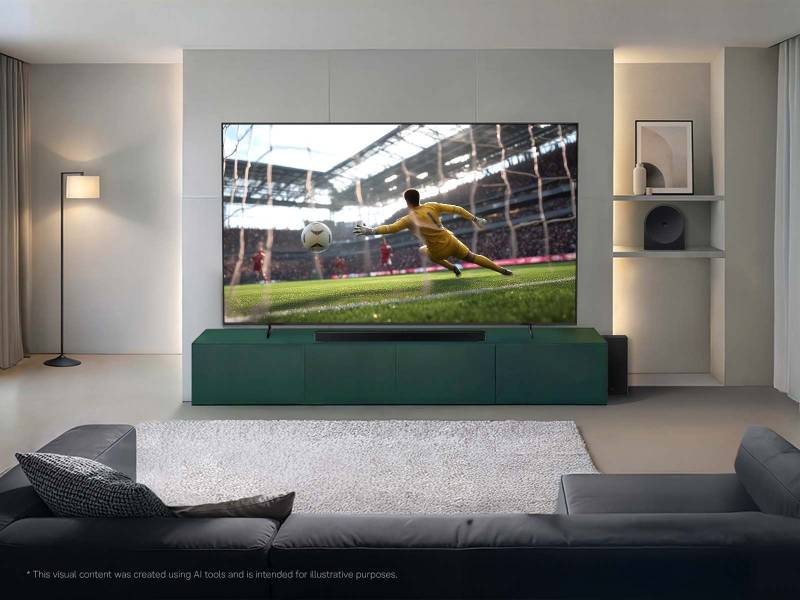
Samsung Mini LED M80H
Here again, Mini LED refers to the use of smaller backlights for tighter control over brightness and contrast. Samsung pairs that with Pure Spectrum Color, which it says can display a billion shades on screen. Color Booster Pro, or Color Booster on the M70H, uses AI to make colors look more vivid. Mini LED HDR is also supposed to improve contrast and brightness compared to Samsung’s 2025 U8000F.
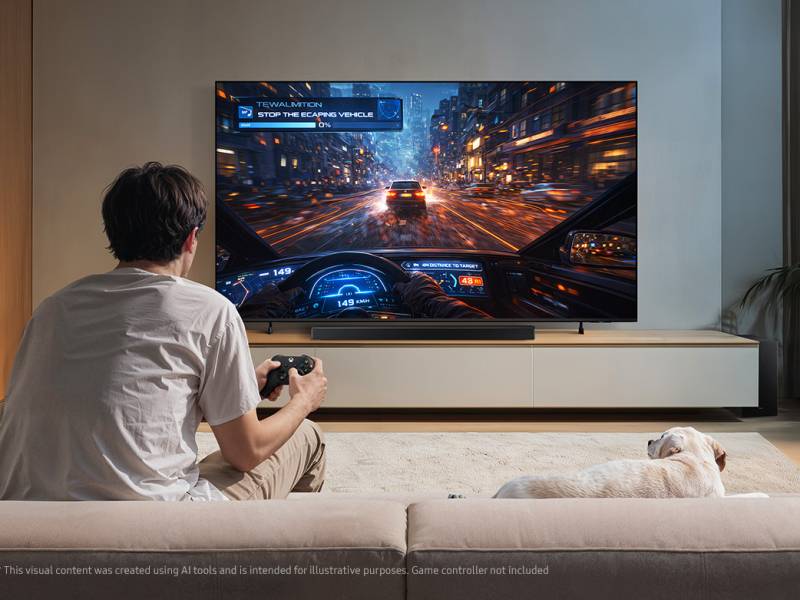
Samsung Mini LED M80H
The M80H uses Samsung’s NQ4 AI Gen2 Processor and Motion Xcelerator 144Hz. If you connect a gaming PC, DLG 240Hz support can push motion even further, though that mode reduces resolution. That is worth knowing before anyone decides to use a television as a giant esports monitor and then wonders where some of the sharpness went.
Samsung Mini LED M70H
To me, these look like the models Samsung hopes will land in family rooms, apartments, guest rooms, and larger living spaces where people want a big screen and a bright picture without stepping up to OLED pricing.
The M70H starts at $349.99 for 43 inches, then climbs to $399.99 for 50 inches, $449.99 for 55 inches, $529.99 for 65 inches, $729.99 for 75 inches, and $1,199.99 for 85 inches. The M80H is priced at $699.99 for 55 inches, $799.99 for 65 inches, $1,199.99 for 75 inches, and $1,799.99 for 85 inches. Samsung has only said the 100-inch M90H is coming later this year, with pricing still to come. You can learn more about Samsung’s new Mini LED lineup by clicking here.
Vision AI Is No Longer a Side Feature
Across the Neo QLED, Mini LED, OLED, Frame, and Micro RGB lineups, Samsung is making Vision AI a central part of the pitch rather than a side dish hidden three menus deep. That includes Vision AI Companion, which Samsung is positioning as a more conversational layer for the TV experience. On the Micro RGB models in particular, Samsung says it combines large language model-powered intelligence with natural back-and-forth through Bixby, so you can ask about what is on screen, get dinner ideas, or even use the TV as a glorified trip-planning assistant. It is a very 2026 idea, for better or worse.
Bixby handles those natural-language responses directly on the TV, while separate apps for Microsoft Copilot and Perplexity are also available for people who would rather outsource their curiosity to a different flavor of AI. Samsung is also making the usual claim that it offers access to more AI agents than any other brand, which sounds impressive right up until you remember that most people still just want the remote to work the first time.
The feature set also includes AI Sound Controller, AI Soccer Mode, Live Translate, and Generative Wallpaper. On higher-end models like the flagship Micro RGB R95H, Samsung adds AI Soccer Mode Pro and AI Sound Controller Pro, which are designed to recognize soccer on screen, boost jersey and field colors, enhance crowd and commentary audio, and let you independently adjust voices, music, and sound effects. On lower tiers like the R85H, you still get the standard versions of those tools, just without the extra “Pro” label.
Samsung is also trying to make all of this easier to find. One of the bigger complaints about last year’s AI features was that they were tucked away in menus where only the most determined button-masher was ever going to find them. For 2026, Vision AI gets its own menu in One UI Tizen, an AI button on the remote, and voice access so you can call it up directly.
The broader goal is to make the TV feel more like an interactive screen than a passive display. You can ask for information, fine-tune audio by separating voices, music, and sound effects, and let the TV make assumptions about what you are watching. Sometimes that will be genuinely useful. Sometimes it will feel like one more layer between you and the simple act of watching something.
Live Translate returns with support for 12 languages, though it only works with broadcast, cable, and Samsung TV Plus. Translation accuracy is not guaranteed, which is a sensible disclaimer and not exactly a ringing endorsement. Generative Wallpaper now responds to voice prompts, and Samsung is also pitching it as a free alternative to more curated art options, though the number of image generations per day is limited.
These features live in Samsung’s updated One UI Tizen interface, which has been streamlined for 2026 and now includes Samsung TV Plus with access to more than 2,700 free streaming options, including over 750 subscription-free channels, along with Samsung Gaming Hub for cloud gaming without a console and support for up to seven years of OS updates. Samsung is also continuing to push Knox as part of the smart TV package, positioning it as a security layer for user data, PINs, and account information. Honestly, that may matter more than some of the flashier AI talking points, because smart TVs age badly when the software is abandoned before the panel is, and “smart” gets old fast when it starts feeling sloppy.
There are also caveats, and they matter. Many of these network-based smart features require a Samsung account and an internet connection. AI inputs and queries may be recorded and shared with third-party providers, and some functions require users to opt in to its viewing information service and be at least 18 years old. None of that is unusual in 2026, but it is still worth reading before you hand your television a microphone and a social life.
The Frame Lineup Keeps Leaning Harder Into Decor
Outside the Neo QLED, Mini LED, and OLED announcements, Samsung’s broader 2026 TV story also includes a more fully fleshed-out update to The Frame and The Frame Pro. During the HQ walkthrough, Samsung spent plenty of time on the art and design angle, and for good reason. The company still sees this as a category it effectively created, and it is clearly not interested in surrendering it to the growing crowd of lookalikes.
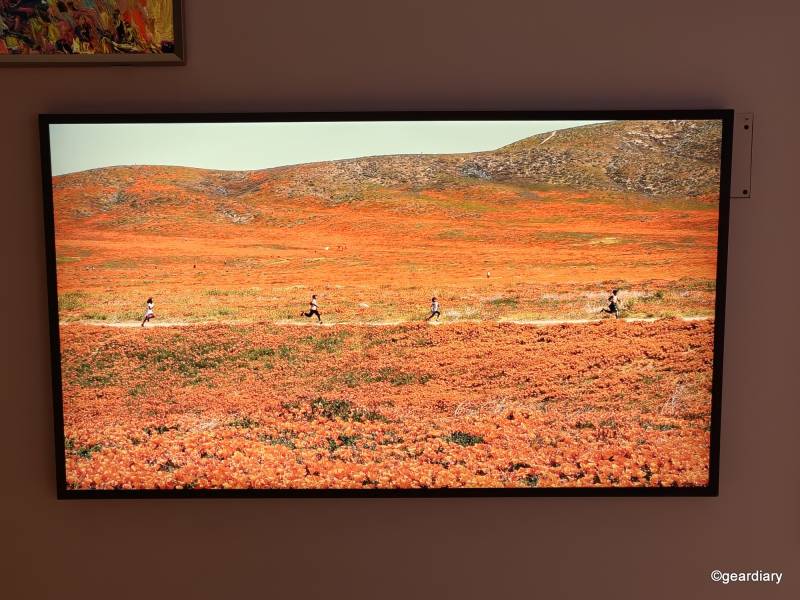
Samsung Frame Pro
The Frame Pro remains the more advanced art-forward model, using a Neo QLED 4K display and Samsung’s Wireless One Connect Box, which lets you place connected devices up to 30 feet away for a cleaner installation. For 2026, Samsung is also leaning on the NQ4 AI Gen3 processor to optimize art and entertainment in real time, and it has added a Micro HDMI port with eARC support for improved audio quality when you hook up a soundbar.
That is not the flashiest upgrade on paper, but it is exactly the sort of thing people appreciate after the TV is already mounted and they would prefer not to redo their whole setup because of one missing port feature.
The standard Frame is changing more noticeably this year. Rather than relying on a separate wired One Connect box, Samsung is moving to built-in connections on the TV itself while keeping the slim profile and included Slim Fit wall mount that lets it sit flush to the wall like a picture frame. The company said the shift came from feedback from designers, installers, and shoppers who wanted a cleaner look and easier in-wall cable management.
Previously, the connected cable was not rated for in-wall use, which made the “it’s art, not a TV” illusion a little harder to maintain once real-life wiring entered the room.
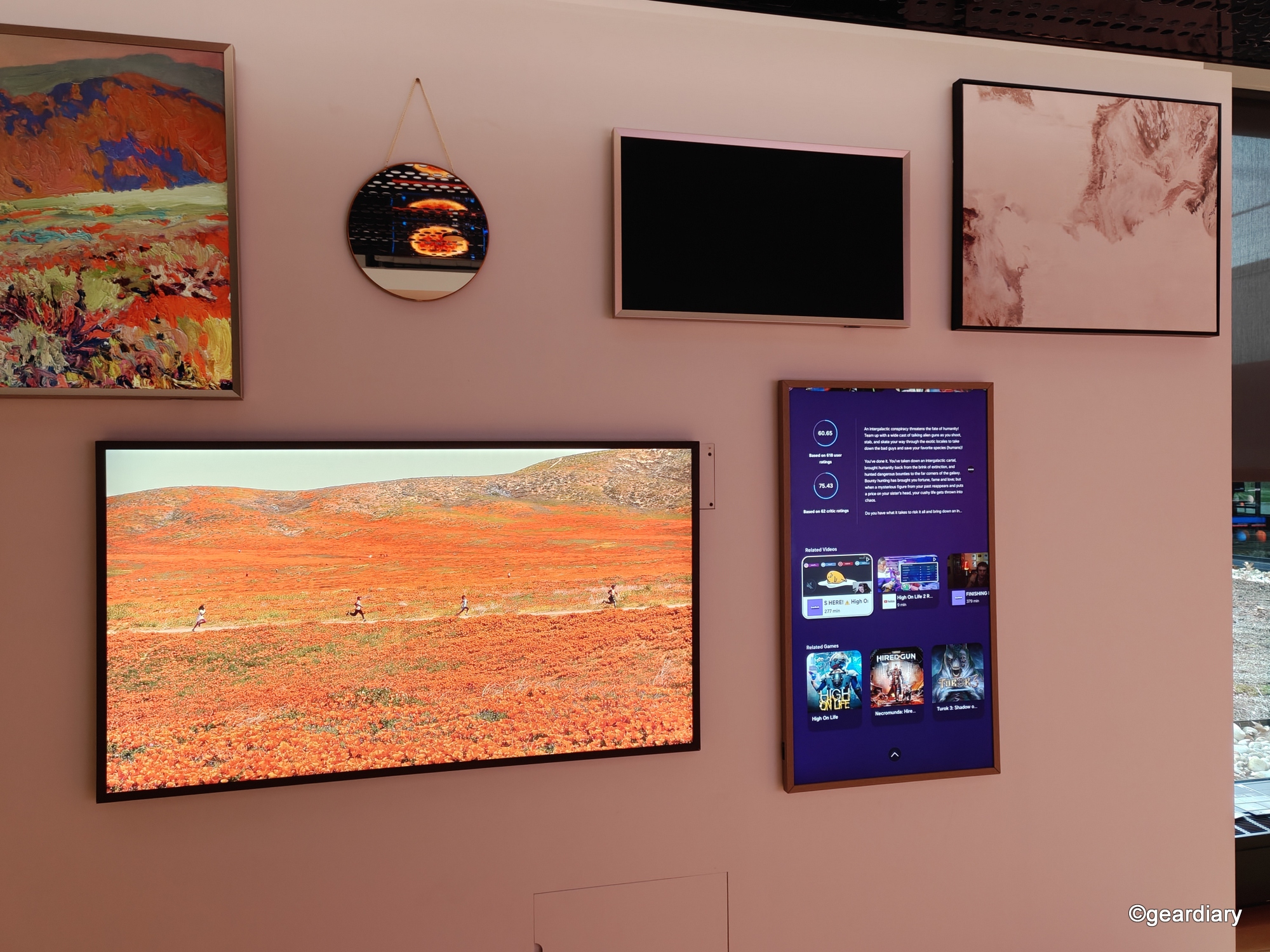
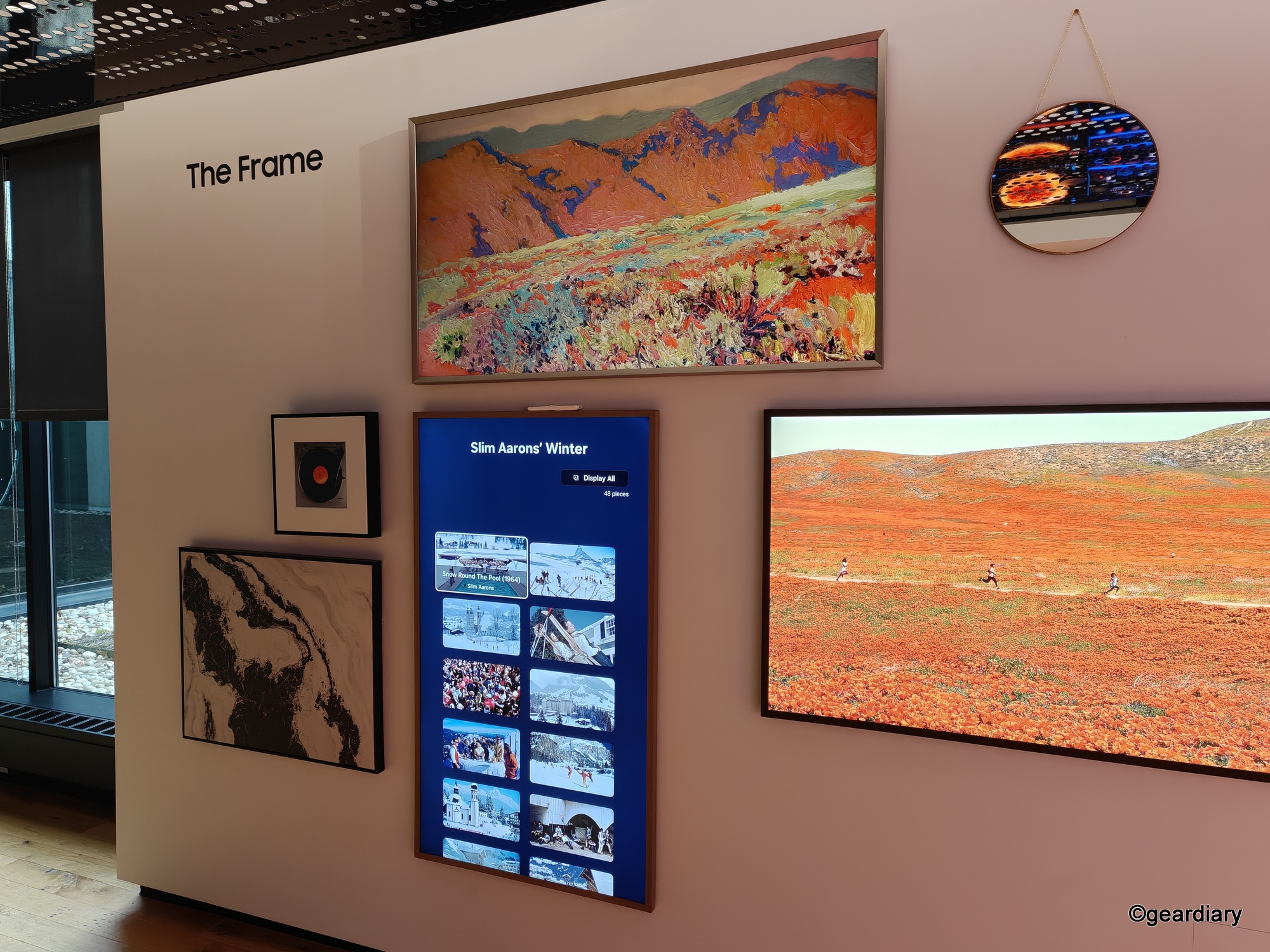
Samsung also added new back stoppers to both models, so you can pull the TV slightly away from the wall for easier port access without fully removing it. That sounds like a minor design tweak until you are balancing a large screen and trying to plug something in by feel while pretending this is still a fun home project.
Both The Frame and The Frame Pro are also upgraded with Samsung’s newer glare-free technology for 2026. The company says it does a better job of minimizing reflections while preserving the canvas-like finish that helps artwork look more believable in bright rooms. Samsung is also carrying over the gaming pitch here, with Motion Xcelerator 144Hz on both models and DLG 240Hz support when connected to a compatible gaming PC. Naturally, that higher frame-rate mode comes with tradeoffs, so nobody should assume physics took the day off.
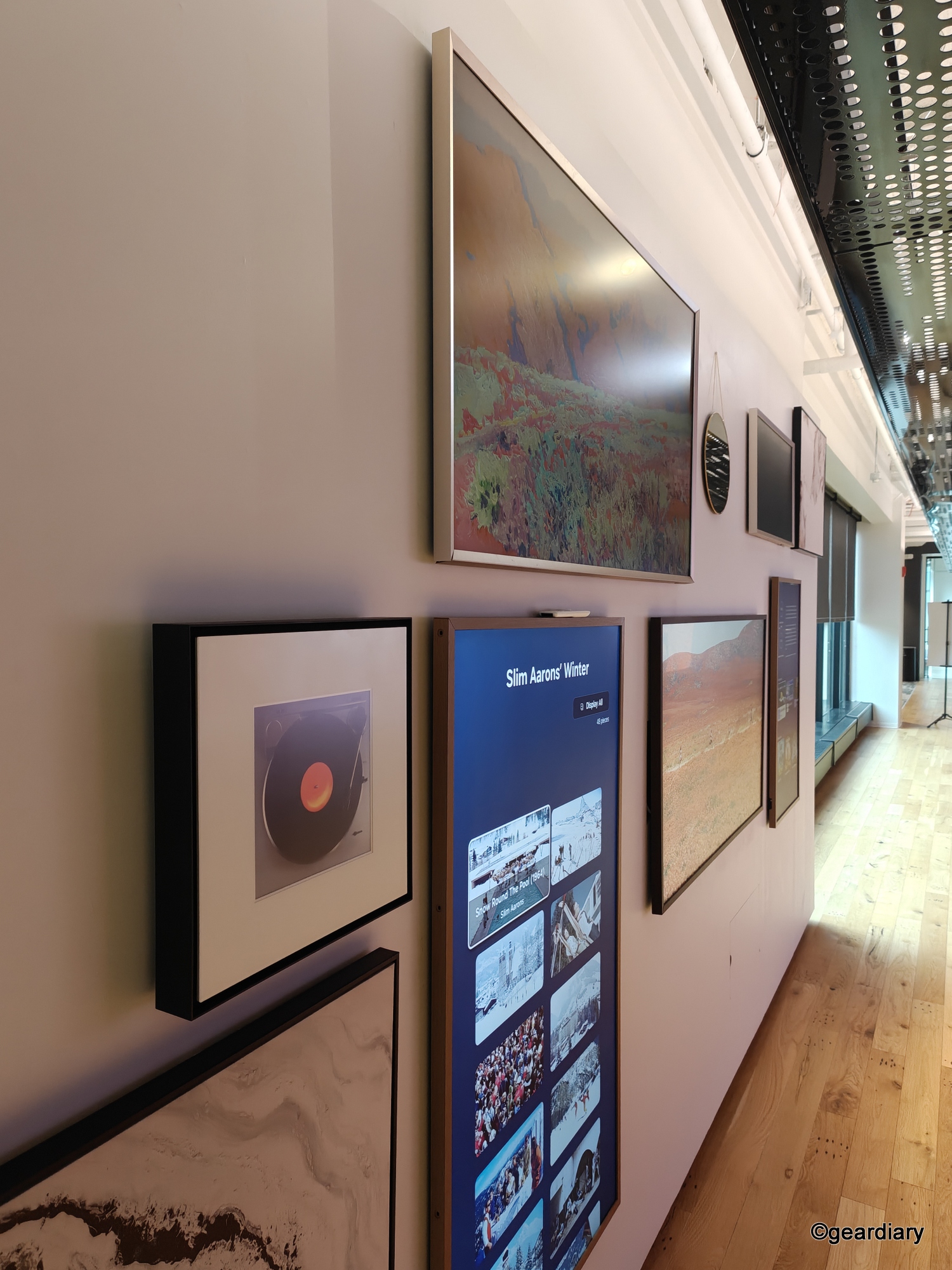
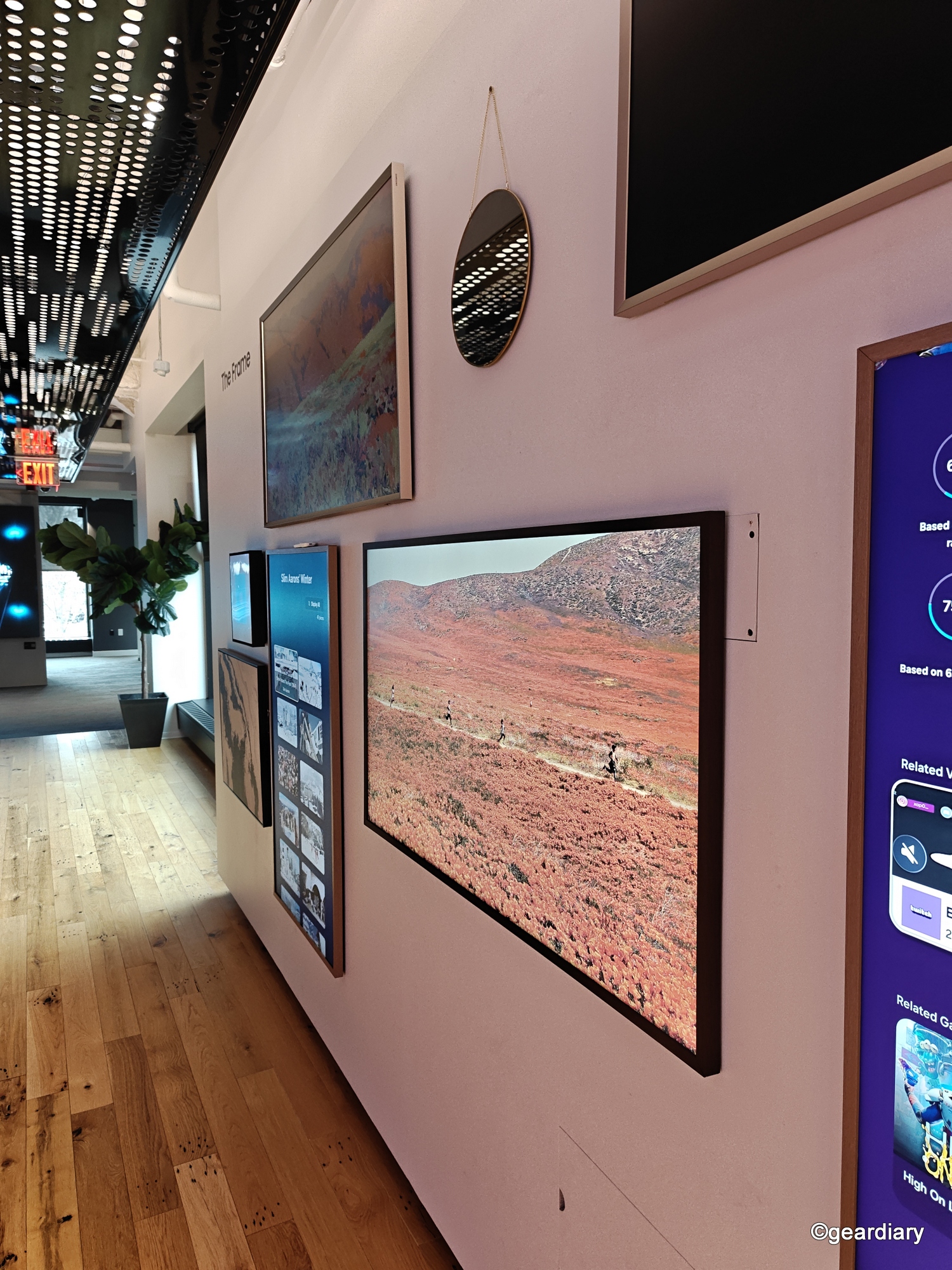
Art remains a major part of the pitch. Samsung’s Art Store now includes more than 5,000 works by over 800 artists and institutions, including collections from MoMA, the Art Institute of Chicago, Art Basel, Keith Haring, and many more. It is still subscription-based, but Art Store Streams offers 30 rotating works per month for free, totaling more than 350 pieces a year for anyone who does not want another recurring charge attached to a television. The sets are also Pantone Validated ArtfulColor, which is Samsung’s way of saying color experts have signed off on their ability to present artwork more faithfully.
Samsung is still leaning hard on customization beyond the art itself. The company says The Frame remains its most customizable Art TV, and for 2026, that means a wider mix of bezel options from Samsung, including Modern Brown, Modern Teak, Modern White, and Sand Gold Metal, along with more elaborate styles from Deco TV Frames designed specifically for The Frame and The Frame Pro. If Samsung wants these sets to pass as decor, it cannot stop at “here is a TV with paintings on it” and call the job finished.
The Frame line is also getting more of Samsung’s Vision AI package. That includes Vision AI Companion, which lets you ask questions through Bixby and get natural-language answers with related content. Separate apps for Microsoft Copilot and Perplexity are also available, giving shoppers yet another choice in how they would like their TV to overachieve. Samsung is also adding AI Sound Controller Pro on The Frame Pro, with AI Sound Controller on The Frame, so you can independently adjust voices, music, and sound effects. AI Soccer Mode is here too, because apparently even art TVs are expected to care about match day now.
These features live inside Samsung’s updated One UI Tizen platform, which still includes Samsung TV Plus and Gaming Hub while promising up to seven years of OS updates. Samsung is also pairing The Frame story with its 2026 Q-Series soundbars and new Music Studio speakers through enhanced Q-Symphony, which can now pair up to five Samsung sound devices with a compatible TV. At that point, the setup starts drifting from “tasteful wall art” toward “quietly ambitious AV project,” but at least Samsung seems to understand that some people want both.
As for availability, The Frame Pro is rolling out now through Samsung.com and retailers nationwide, while the standard 2026 The Frame will arrive later. Pricing for The Frame Pro starts at $1499.99 for the 55-inch model, rises to $1,999.99 for the 65-inch model, $2,799.99 for the 75-inch model, and tops out at $3,999.99 for the 85-inch model. Pricing for The Frame starts at $1,199.99 for the 55-inch model, rising to $1,499.99 for the 65-inch model, $1,999.99 for the 75-inch model, and ends at $2,999.99 for the 85-inch model.
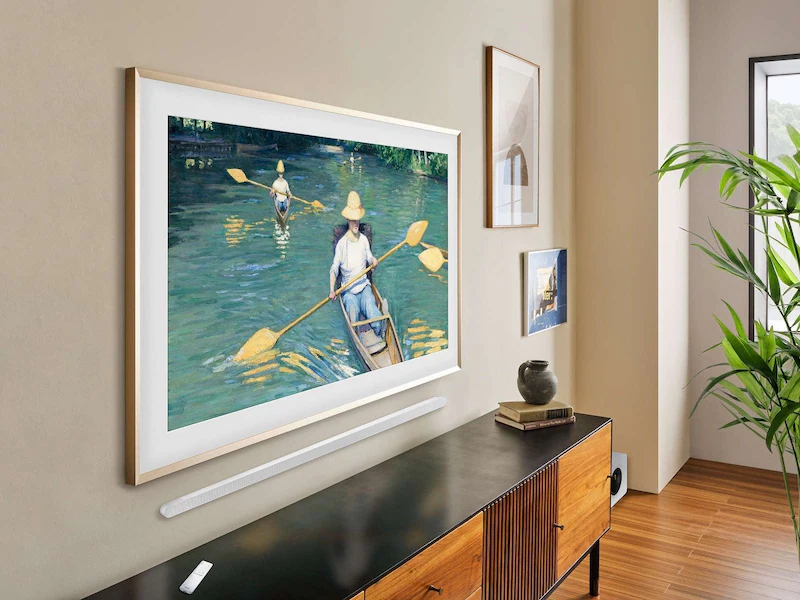
Samsung’s The Frame with an S-Series Soundbar HW-S801D
Samsung is also using launch promotions to make the décor pitch feel more complete. On Samsung.com, buyers of the 2026 The Frame Pro can get a Picture Perfect Bundle that includes a white bezel, Ultra-Slim soundbar, professional installation, a one-year Art Store subscription, and two years of Samsung Care+. Across national retailers, shoppers who buy the 2026 editions of The Frame Pro or The Frame can also get 50% off select customizable bezel options. In other words, Samsung is not just selling a television here; it is selling a whole aesthetic. You can learn more about The Frame and Frame Pro by clicking here.
UPDATE 06/15/26: The 98″ class size for The Frame is now available at Samsung.com for $4,499.99 and comes with an Amber Brown bezel included in the box!
OLED Gets Both a Design Statement and a Safer Option
Samsung also used its HQ event to show its 2026 OLED lineup, including the flagship S95H and the more traditional S90H, while noting that the S85H remains its entry OLED model. The lineup stretches up to 83 inches, and Samsung is clearly trying to make each tier feel distinct instead of just serving the usual “same TV, slightly sadder” progression.
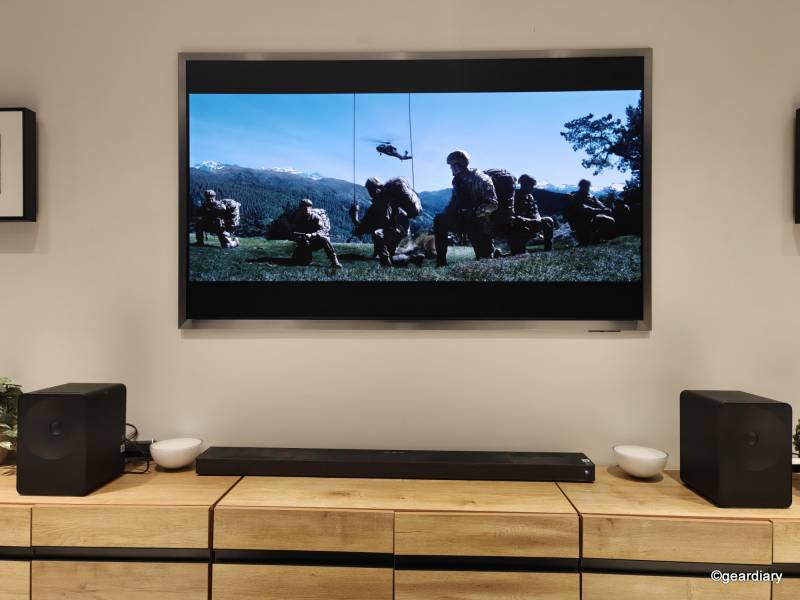
Samsung S95H
The S95H is meant to be the head-turner. It introduces a new FloatLayer design with a sleek metal bezel that mounts flush to the wall and creates a floating, gallery-like effect. It is also the first Samsung OLED to support Samsung Art Store, which instantly tells you how much the company wants this set to live somewhere between premium home theater and very expensive wall decor.
That Art Store access means subscribers can tap into more than 5,000 works from over 800 artists and institutions, including collections from MoMA, the Art Institute of Chicago, and Art Basel, while Art Store Streams serves up 30 rotating works each month for free. Samsung also says the set is Pantone Validated ArtfulColor, which sounds like branding but still speaks to the broader point: the S95H is meant to look intentional even when it is not playing a movie.
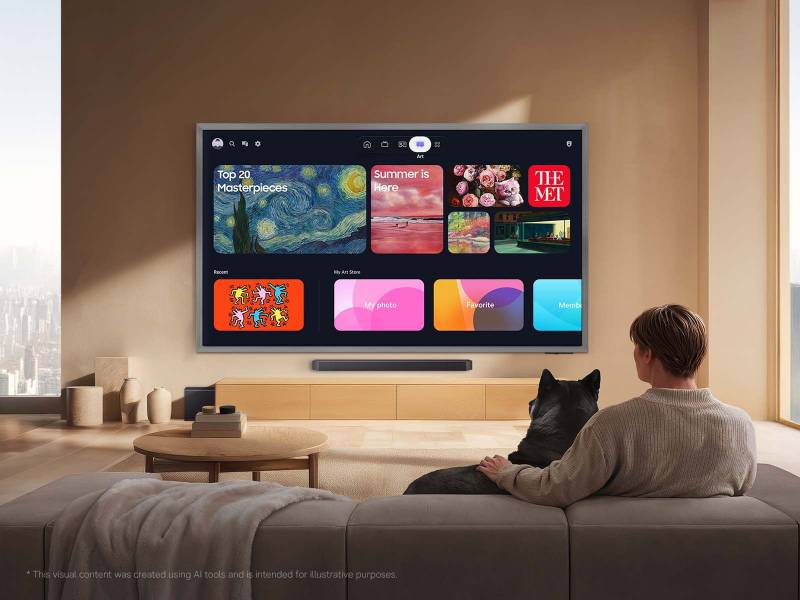
Samsung S95H
Completing that pitch is Samsung’s Wireless One Connect Ready approach. You can run connections directly into the TV, hide them up to 30 feet away with the optional Wireless One Connect Box, or use a mix of both. No, most people do not need that much flexibility, but it is a smarter answer to modern cable clutter than pretending streaming solved everything.
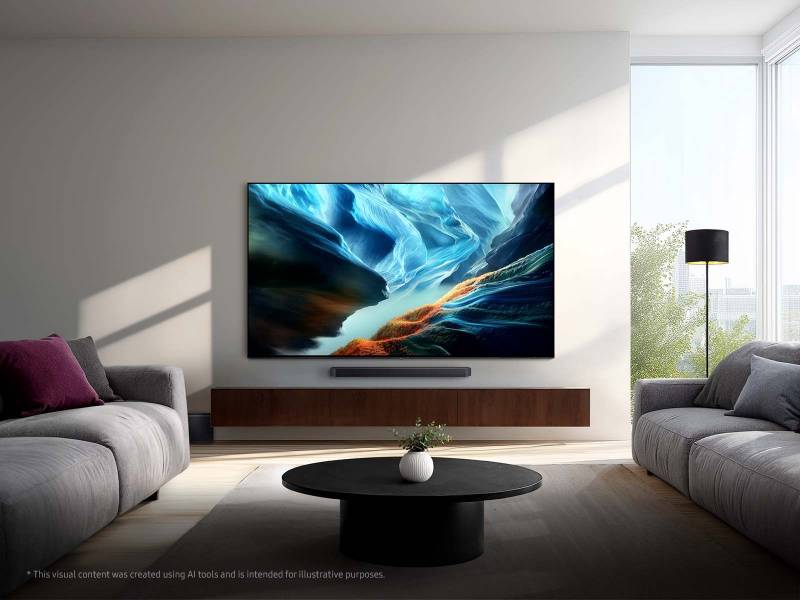
Samsung says the S95H is its brightest OLED yet, brighter even than last year’s S95F, while the S90H also gets a brightness boost over the prior generation. The S95H uses OLED HDR Pro, while the S90H gets OLED HDR+, and both models now feature Samsung’s glare-free technology. Samsung also says that glare-free performance comes with VDE-verified Real Black and Real Color, which is the sort of phrase that sounds suspiciously marketing-friendly until you remember how much bright-room reflections can ruin a perfectly good OLED experience.
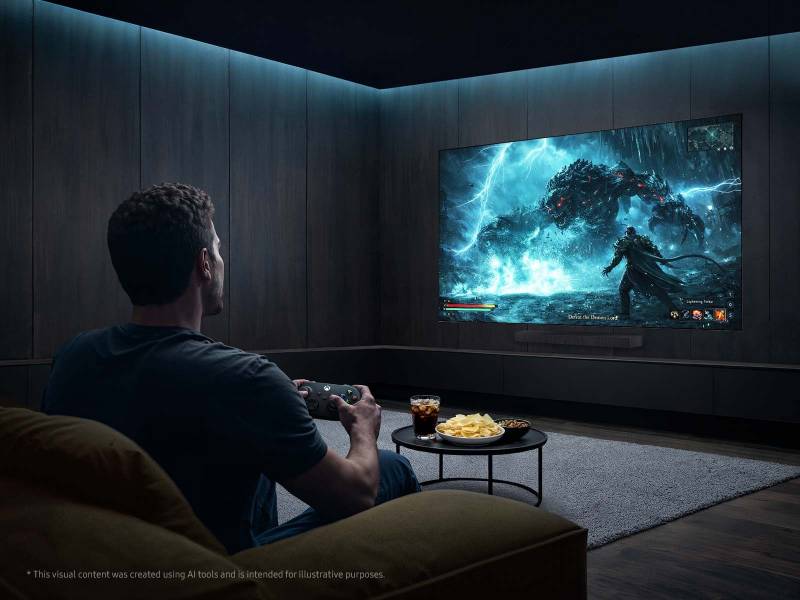
Samsung S90H
Gaming remains a major selling point. Both the S95H and S90H support Motion Xcelerator up to 165Hz, as well as NVIDIA G-SYNC Compatible and FreeSync Premium Pro. Samsung is clearly pitching them as living-room OLEDs that can also moonlight as very expensive gaming monitors.
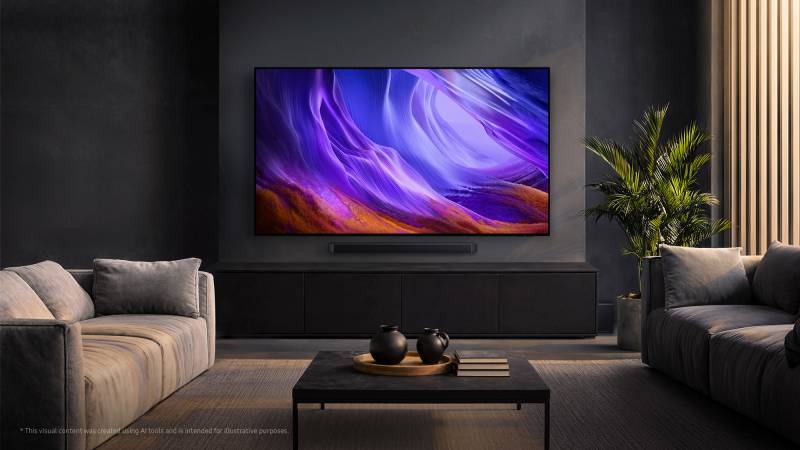
Samsung S85H
The S85H steps down a bit, using the NQ4 AI Gen2 processor instead of the Gen3 chip in the S95H and S90H, topping out at 120Hz, and skipping the glare-free finish, though it still supports FreeSync Premium and NVIDIA G-SYNC. That makes it the safer, simpler OLED option for people who want the core contrast benefits without paying for every premium extra Samsung has in the building.
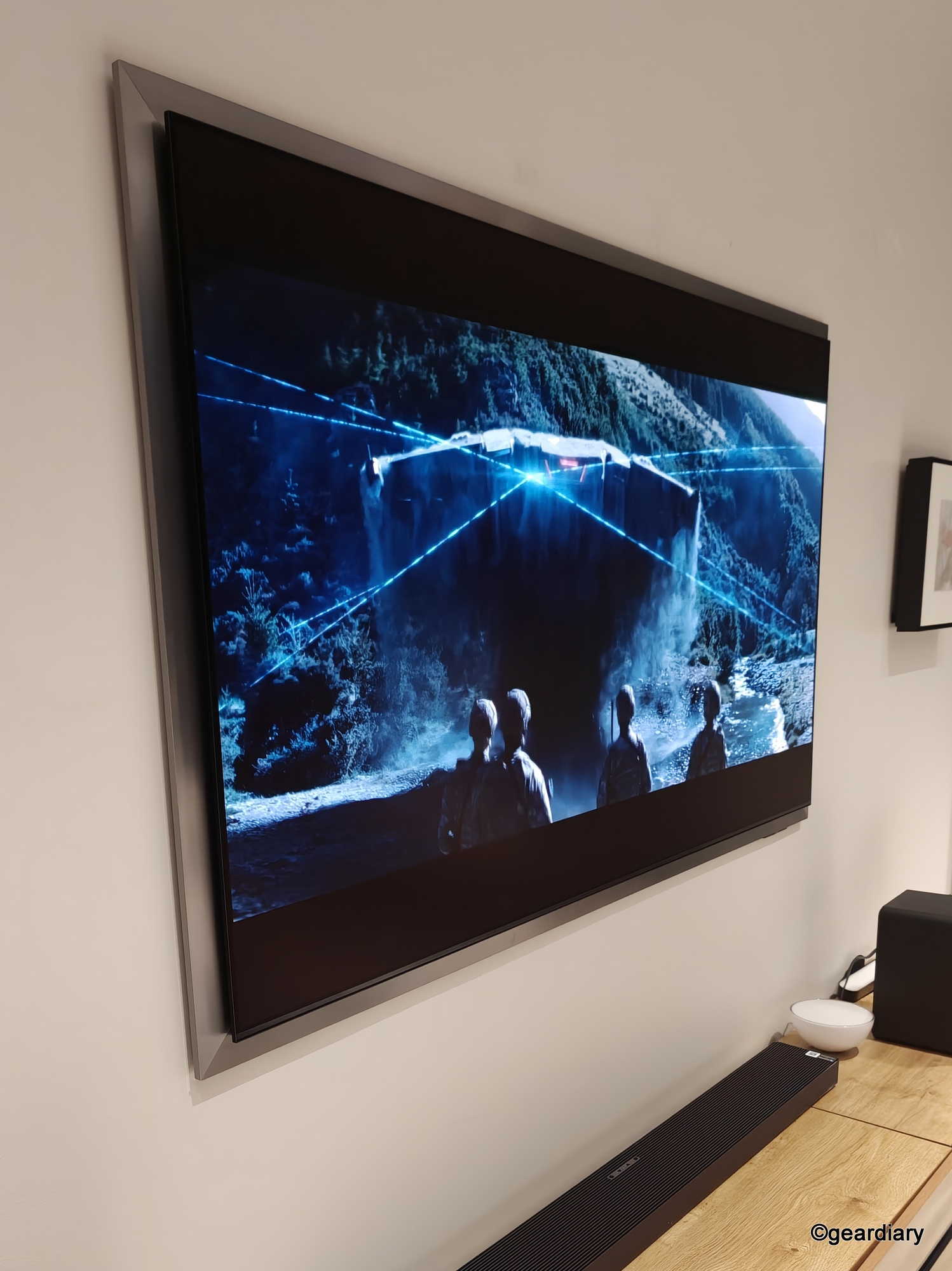
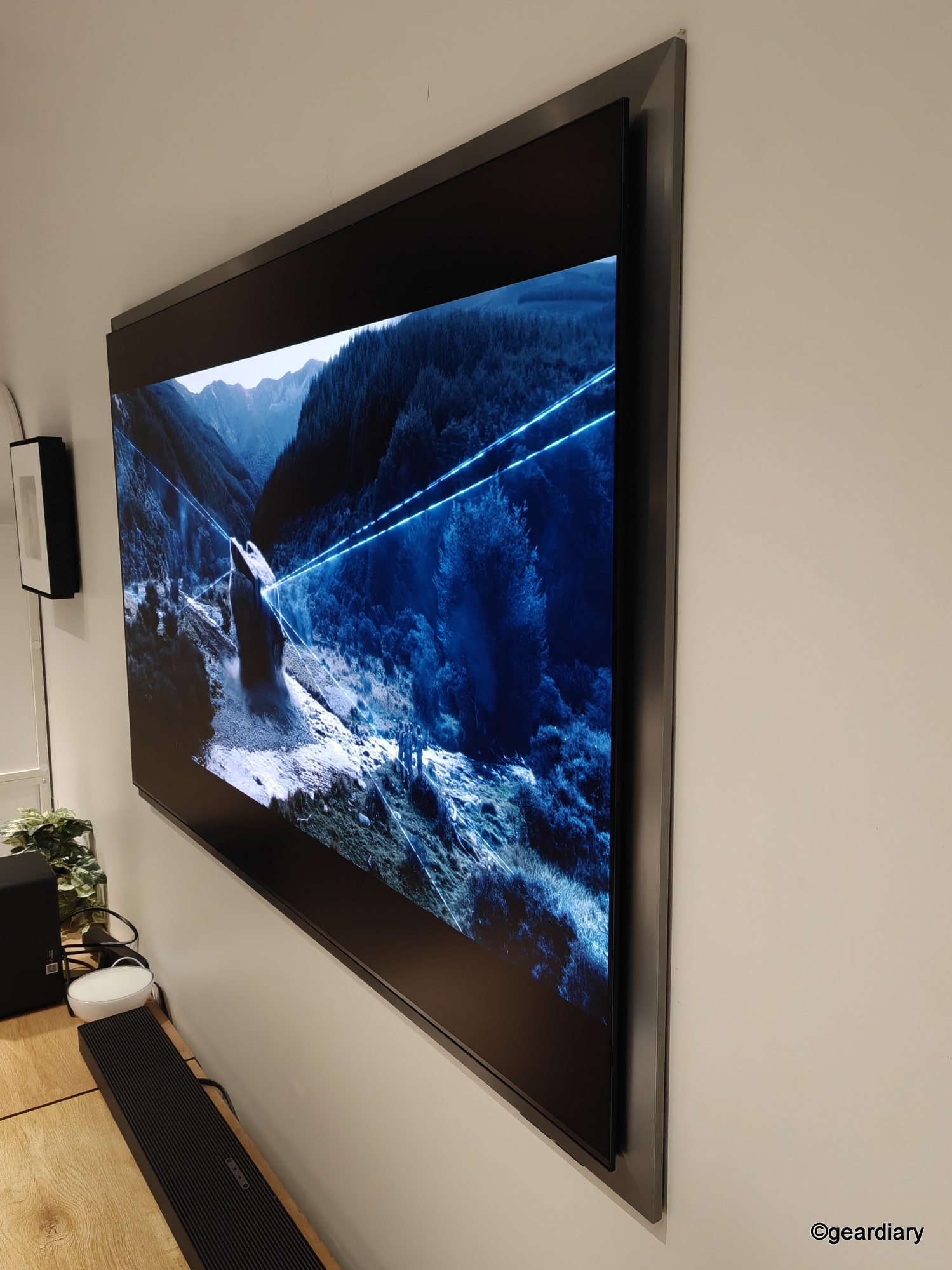
The S95H and S90H also share a longer list of premium picture features than Samsung’s earlier overview initially suggested. Both use the NQ4 AI Gen3 processor and support 4K AI Upscaling Pro, Auto HDR Remastering, Color Booster Pro, AI Motion Enhancer Pro, and AI Customization Mode, which is supposed to identify the content you are watching and adjust the picture accordingly. In other words, Samsung wants these sets to look smarter about lower-resolution content, color, and motion before you ever touch the settings yourself.
Audio gets a stronger story, too. All three models support Dolby Atmos, Adaptive Sound Pro, and Active Voice Amplifier Pro. The S95H gets Object Tracking Sound+, while the S90H and S85H use Object Tracking Sound Lite. Samsung is also tying the OLED line more closely into its broader audio ecosystem, with Q-Symphony support that can now pair up to five Samsung sound devices with a compatible TV, including the company’s upcoming 2026 Q-Series soundbars and Music Studio speakers.
Vision AI also shows up here in full force. The Vision AI Companion lets you ask questions through Bixby and get natural-language answers, while separate apps for Microsoft Copilot and Perplexity offer alternative ways to search and discover information. The S95H and S90H get AI Sound Controller Pro and AI Soccer Mode Pro, while the S85H gets the more basic AI Sound Controller and AI Soccer Mode. If nothing else, Samsung is making sure every OLED tier has at least some of the same “your TV is now trying very hard to be helpful” energy.
Samsung S90H
These features run on Samsung’s updated One UI Tizen platform, which includes Samsung TV Plus, the Gaming Hub, and support for up to seven years of OS updates. That long software window may matter more than some of the AI buzzwords, because premium TVs stop feeling especially premium once the software starts acting abandoned halfway through the panel’s useful life.
Pricing for the OLED lineup starts at $1,199.99 for the 48-inch S85H and runs up to $6,499.99 for the 83-inch S95H. The S95H comes in 55 inches for $2,499.99, 65 inches for $3,399.99, 77 inches for $4,499.99, and 83 inches for $6,499.99. The S90H is priced at $1,399.99 for 42 inches, $1,599.99 for 48 inches, $1,999.99 for 55 inches, $2,699.99 for 65 inches, $3,699.99 for 77 inches, and $5,299.99 for 83 inches.
Samsung’s Audio Lineup Is Trying to Be More Flexible, Not Just Louder
The new televisions were not the whole story. Samsung also showed several new audio products meant to complement its 2026 screens or, in some cases, replace the need for a traditional soundbar altogether.
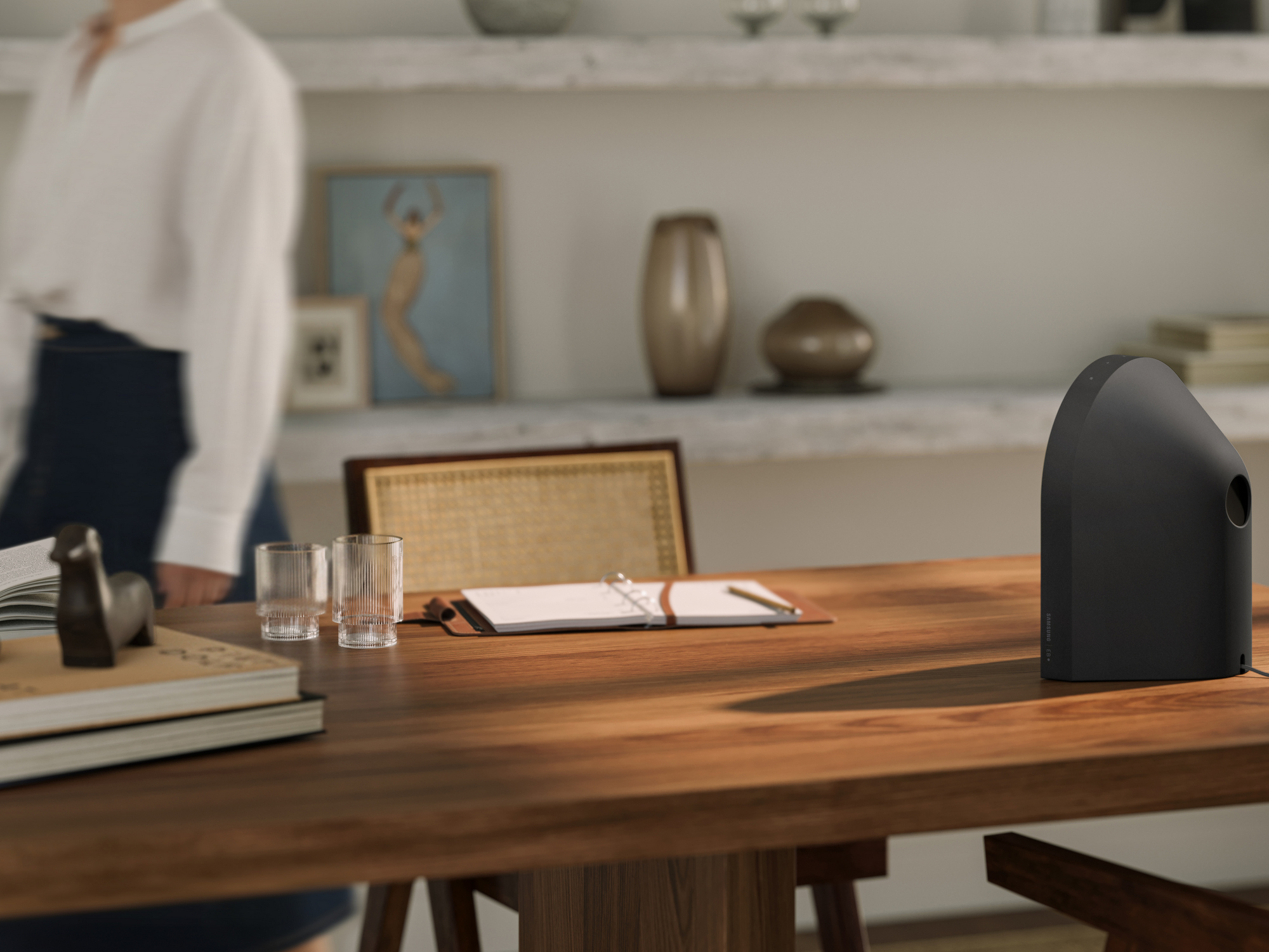
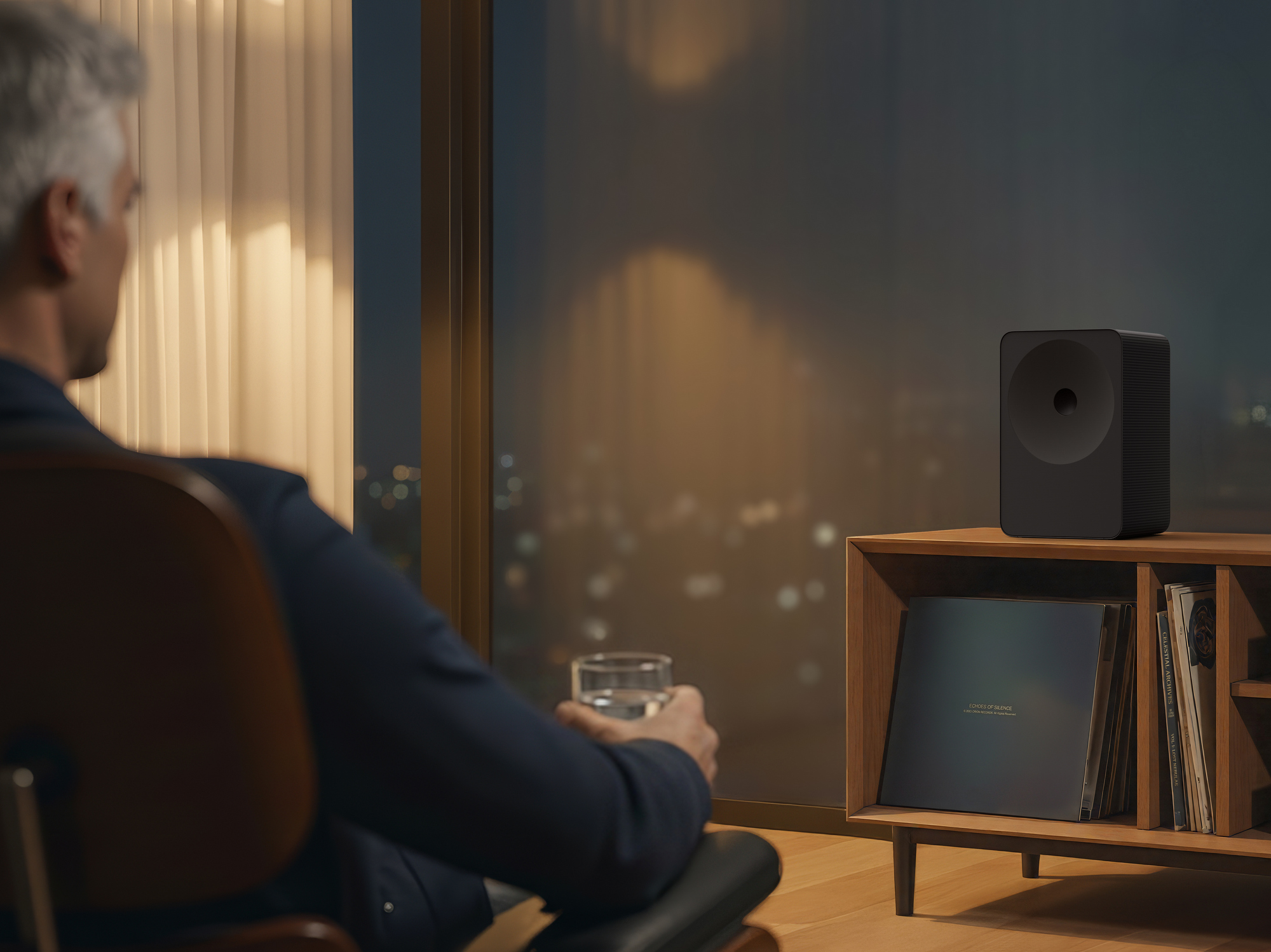
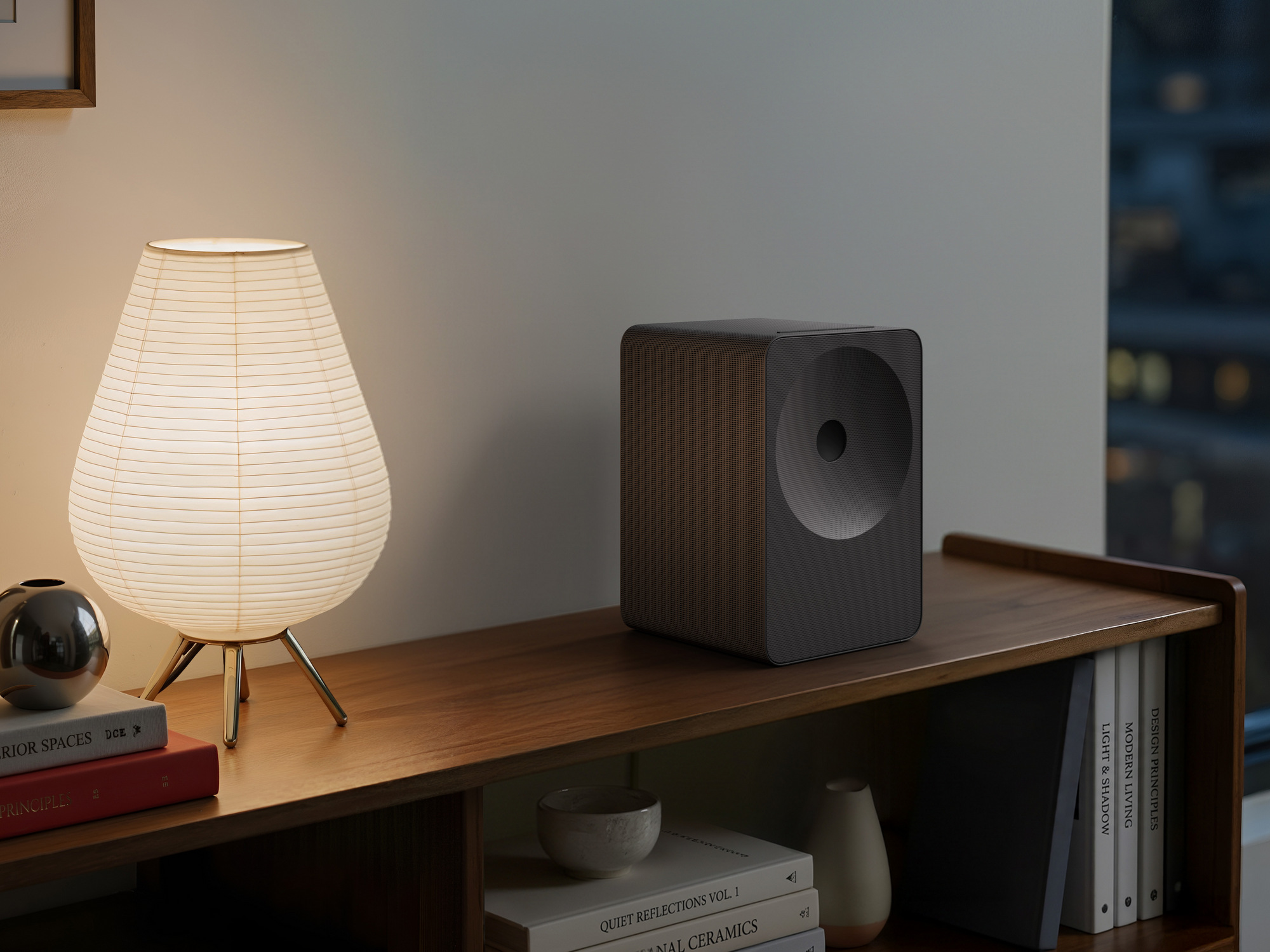
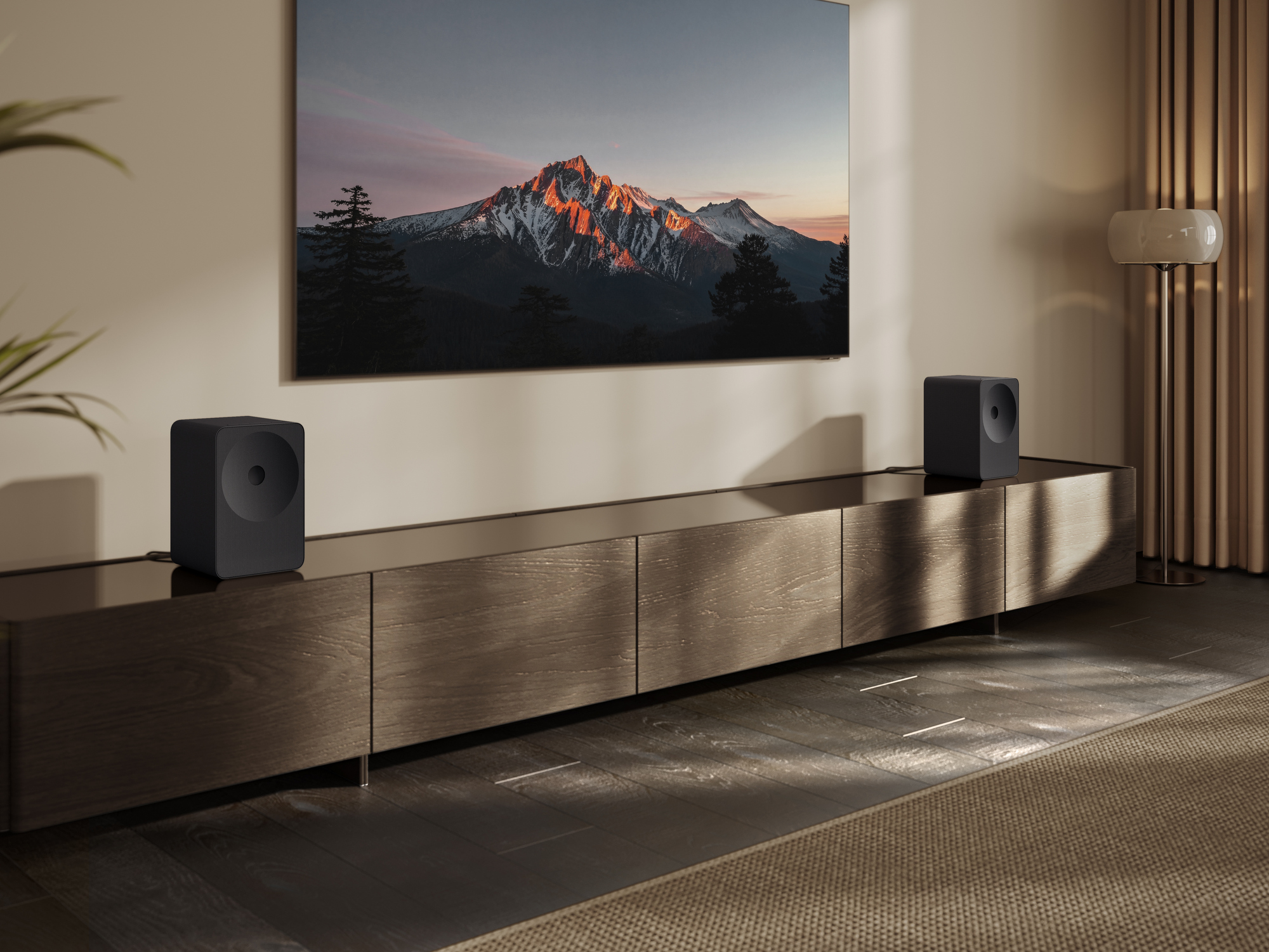
The new Music Studio speaker line includes the $499.99 Music Studio 7 and the smaller Music Studio 5. These are Wi-Fi speakers designed to blend into a room rather than dominate it, with a minimalist look that feels more bookshelf-friendly than attention-seeking. You can use them independently over Wi-Fi or Bluetooth for music and podcasts, and Samsung is adding Spotify Tap support so playback can jump from your phone to the speaker with a tap.
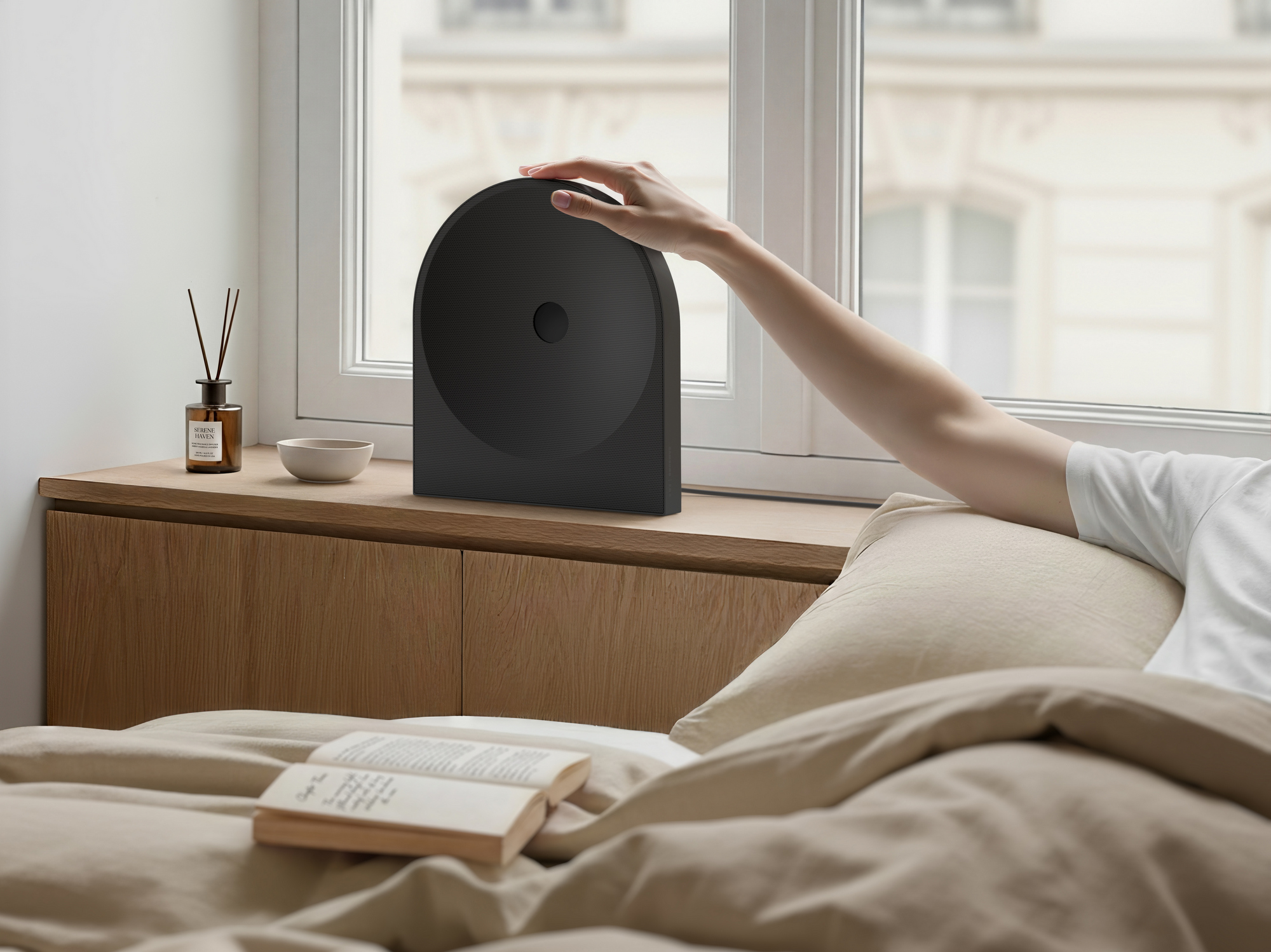

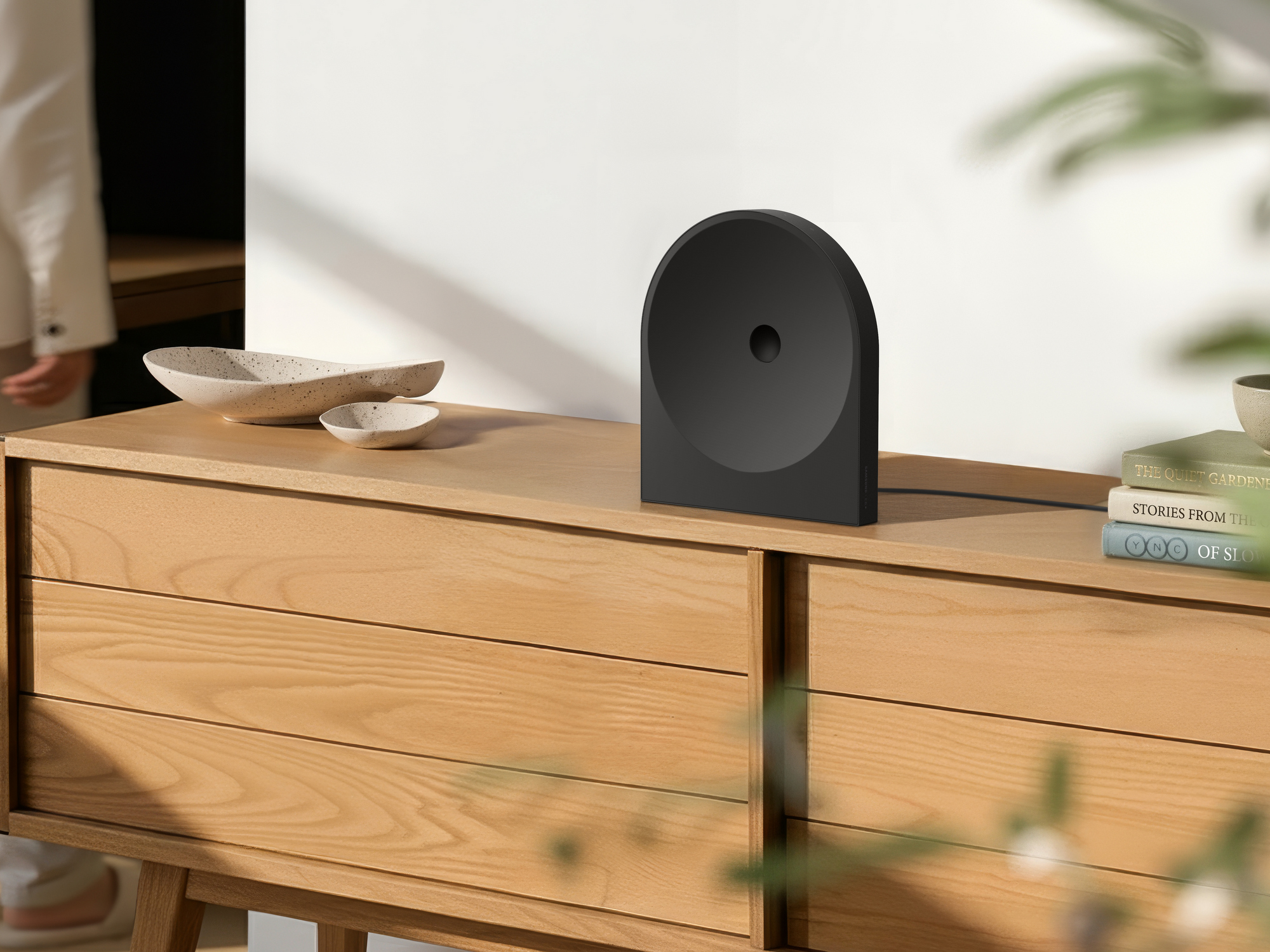
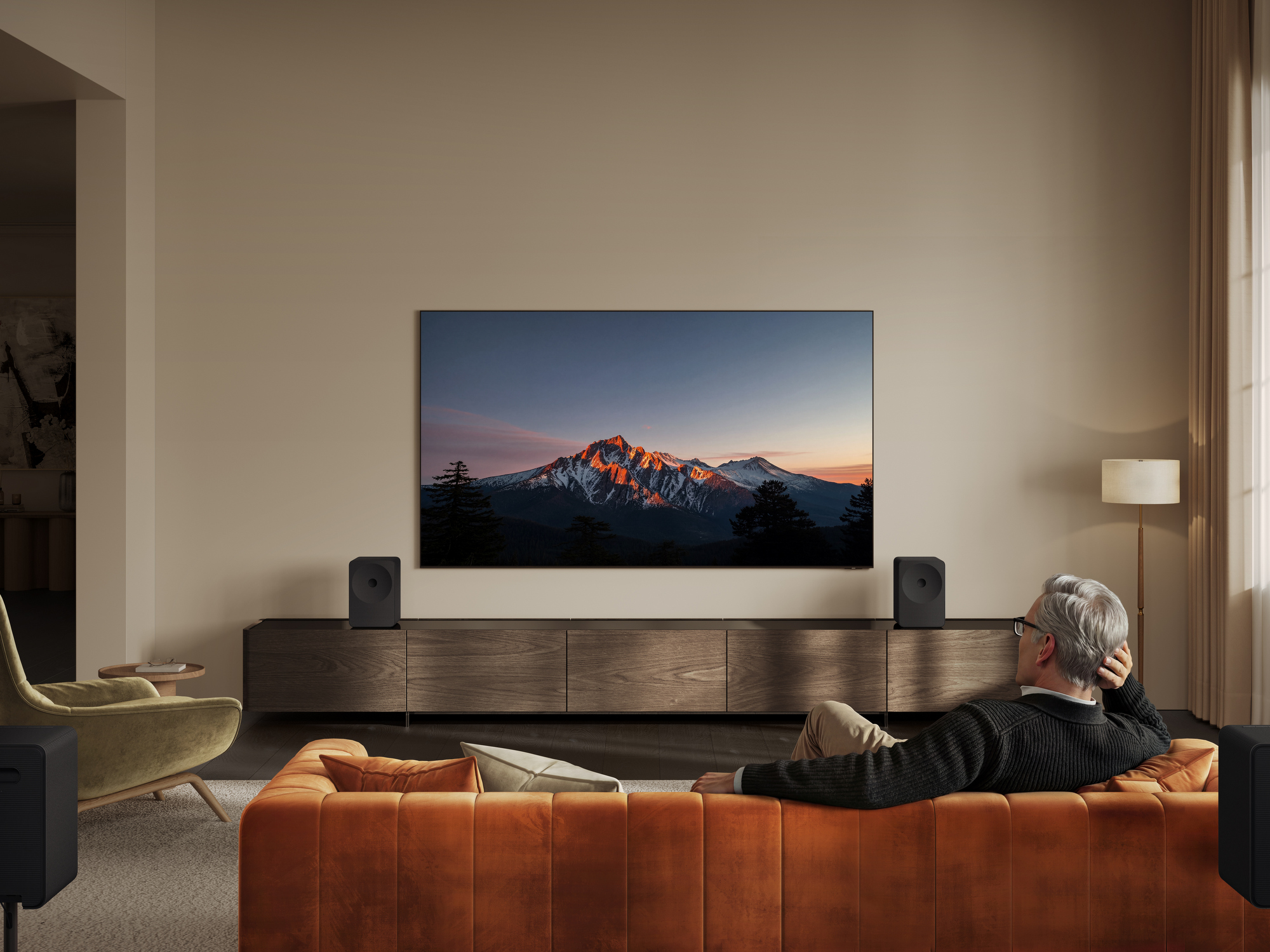
Where they get more interesting is in Samsung’s Q-Symphony ecosystem. That feature lets Samsung TVs, soundbars, and speakers work together as a synchronized audio system. For 2026, Q-Symphony can now connect up to five Samsung sound devices, not counting the TV itself. That means you could build a room with a soundbar, front speakers, and rear speakers without suddenly pretending to be an AV installer on weekends.
Samsung also says Q-Symphony can now recognize the positioning and angle of connected speakers in the room and optimize the sound accordingly, which is a lot more useful than simply throwing more speakers at the wall and hoping for the best.
The Music Studio 7 is also meant to stand on its own. Samsung described a single unit as a 3.1.1-channel device with built-in subwoofers, capable of 3D Dolby Atmos surround sound without requiring a separate soundbar or subwoofer. In the demo, the bass response was surprisingly full for something that looks far more restrained than a typical home theater setup. It is also very clearly Samsung’s pitch for people who want solid room-filling sound without committing to a long black soundbar under the TV like it is a blood oath.
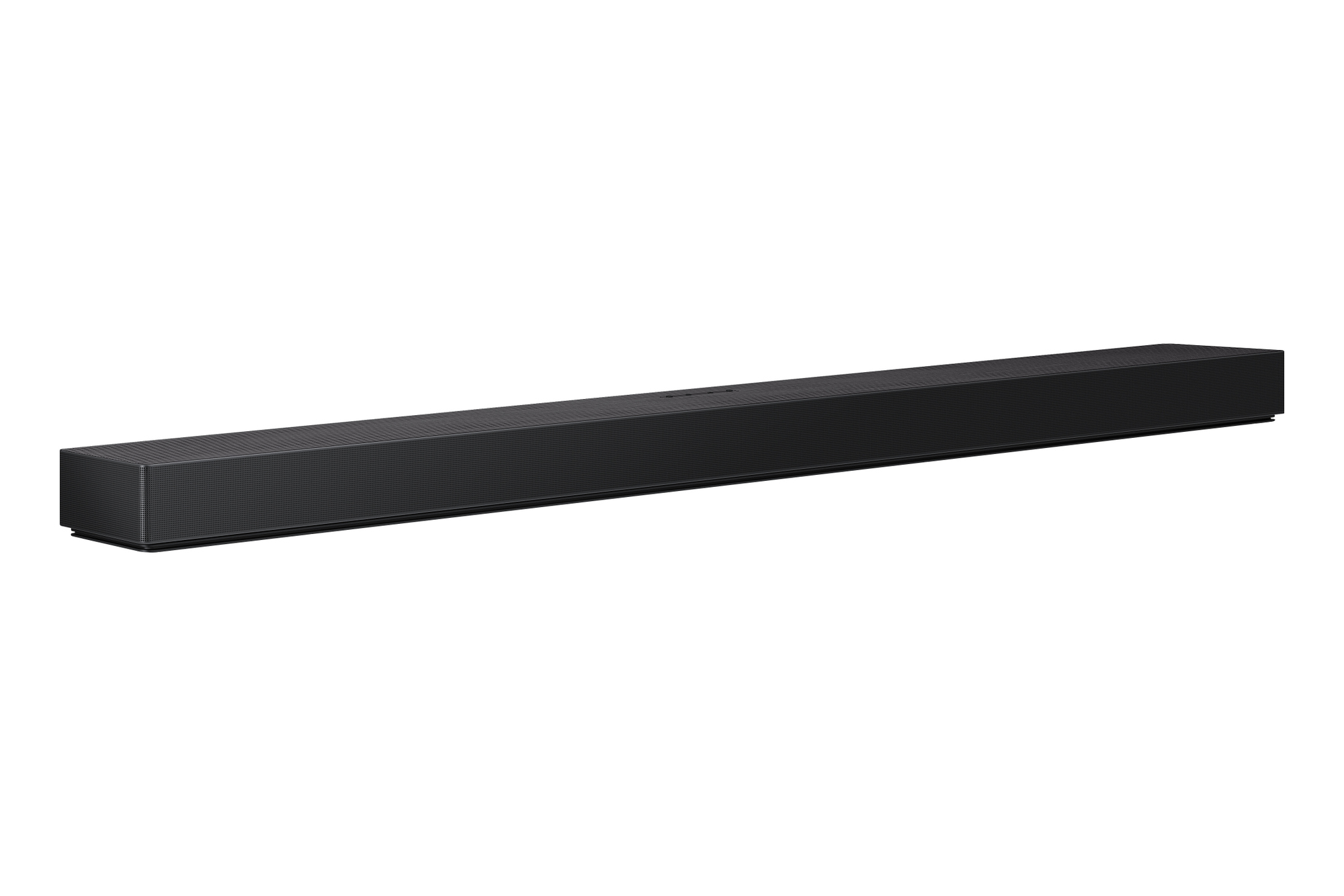
Samsung also introduced the $999.99 QS90H, its first all-in-one soundbar (coming soon). This is a 7.1.2-channel soundbar with no separate subwoofer and no rear speakers. It uses quad-woofer technology and includes an integrated gyro sensor that can tell whether the bar is sitting on furniture or mounted on a wall, then adjust speaker behavior to suit that position. That is a smart quality-of-life feature, especially for apartment dwellers who want better sound without committing to a room full of hardware. It is very much the “I want this to sound expensive without my living room looking like a speaker catalog exploded” option.
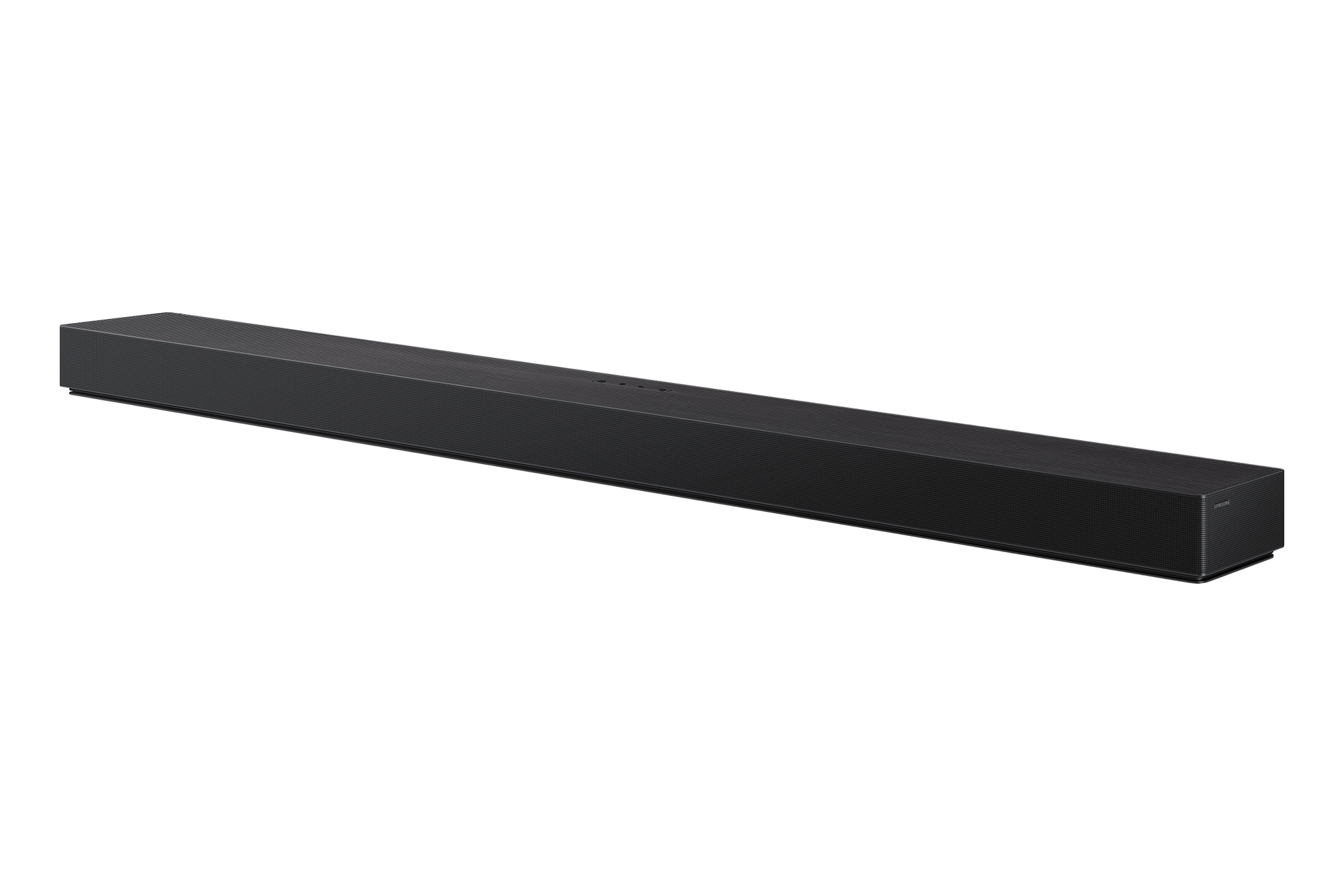
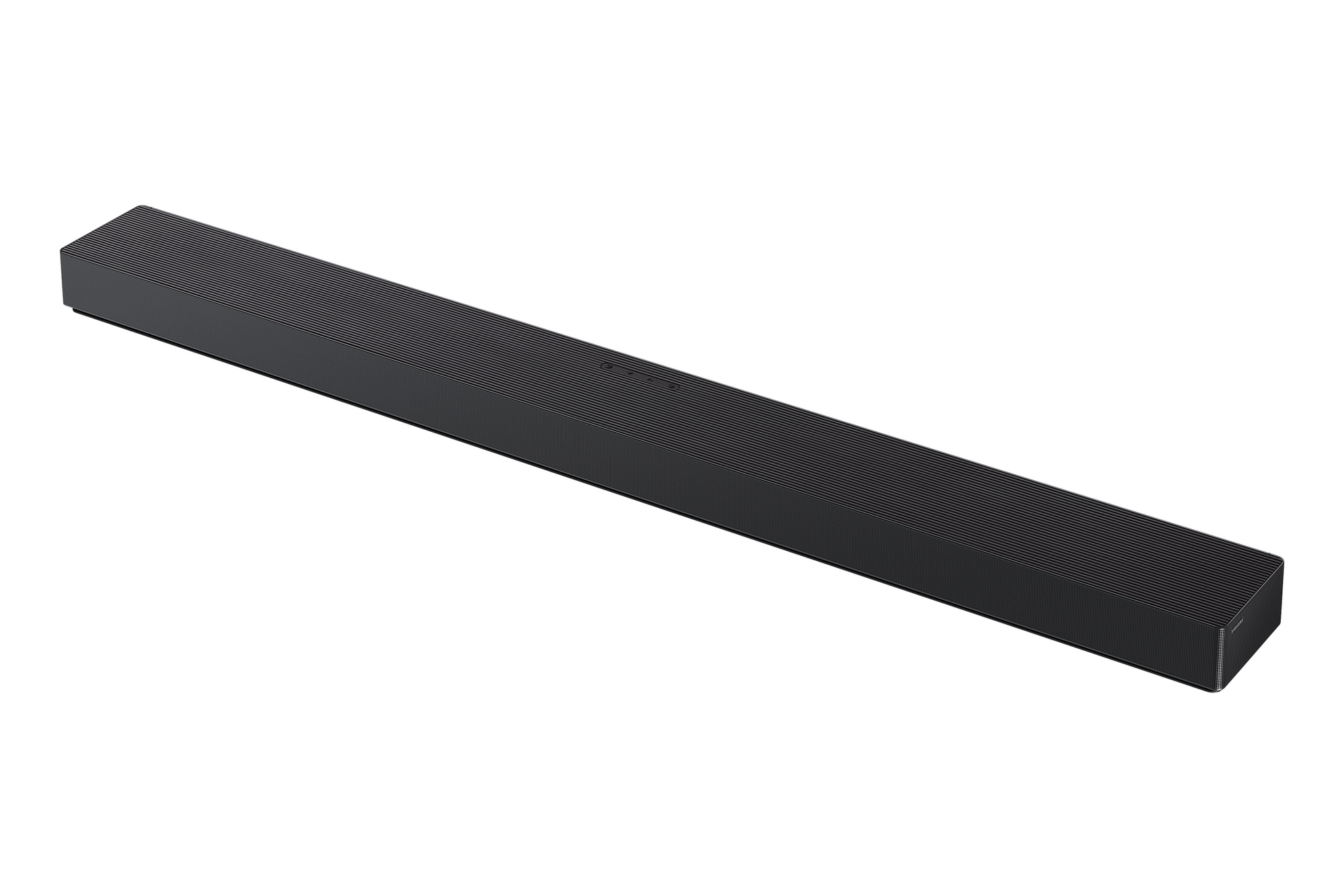
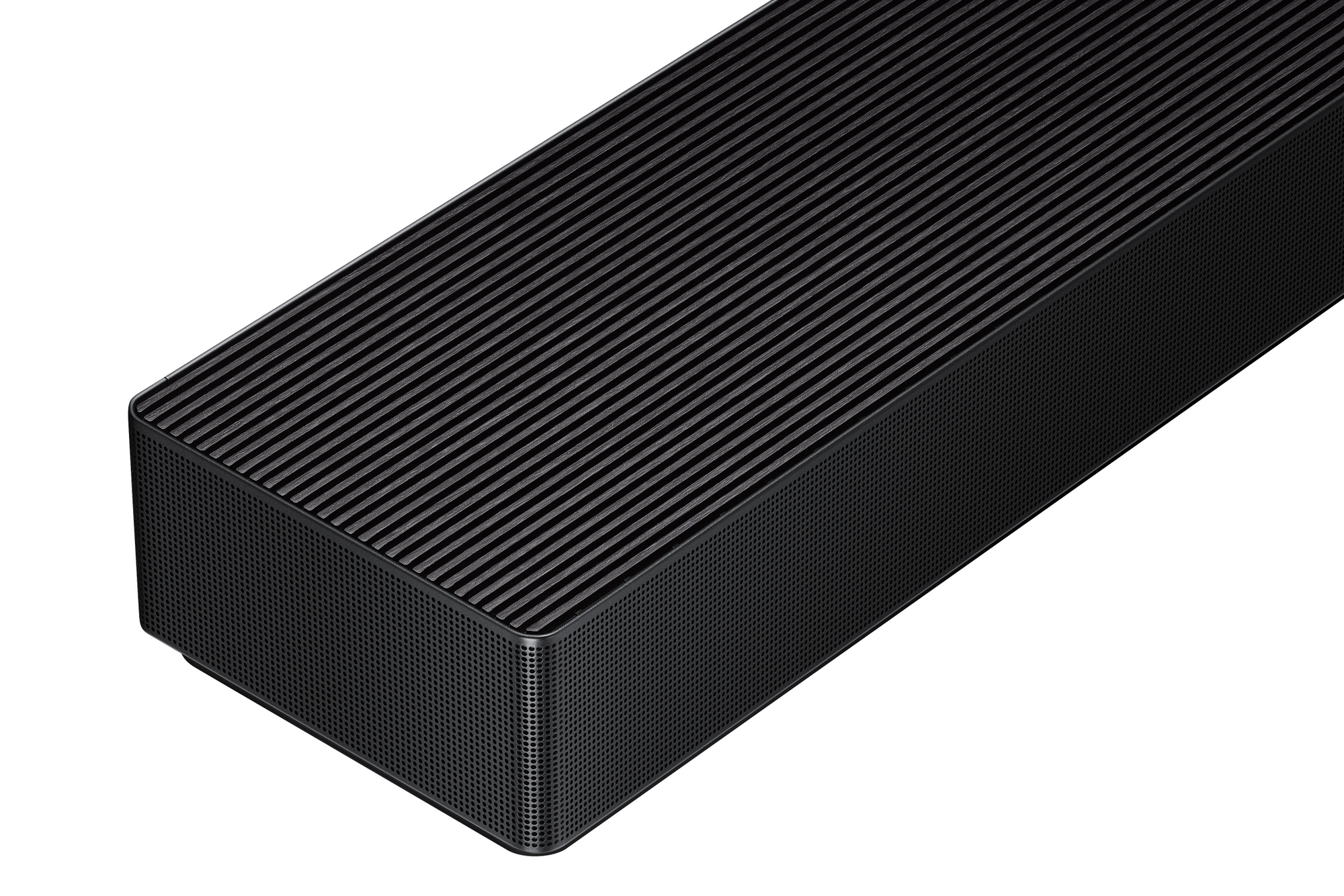
At the top of the audio stack sits the $1999.99 Q990H, Samsung’s flagship 2026 soundbar. It is an 11.1.4-channel setup with a smaller subwoofer and rear speakers, designed for full-room surround sound. Samsung is also leaning hard into AI processing here.
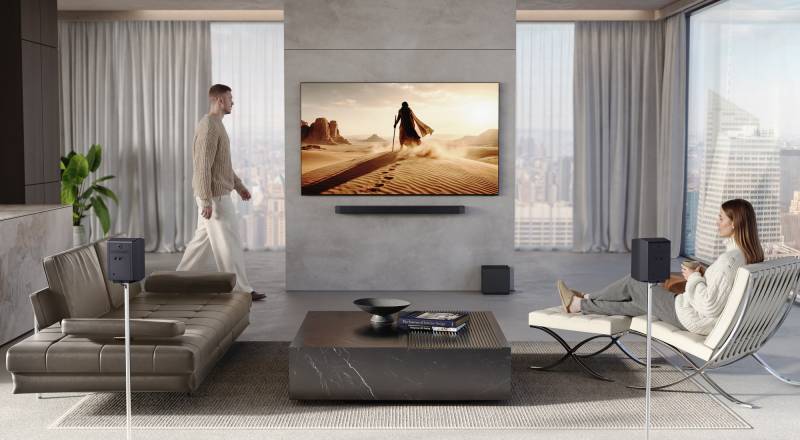
Samsung Q990H
The Q990H uses SpaceFit Sound Pro to adapt to room dimensions, Adaptive Sound to adjust by content type, and Active Voice Amplifier Pro to boost dialogue when background noise starts getting messy.
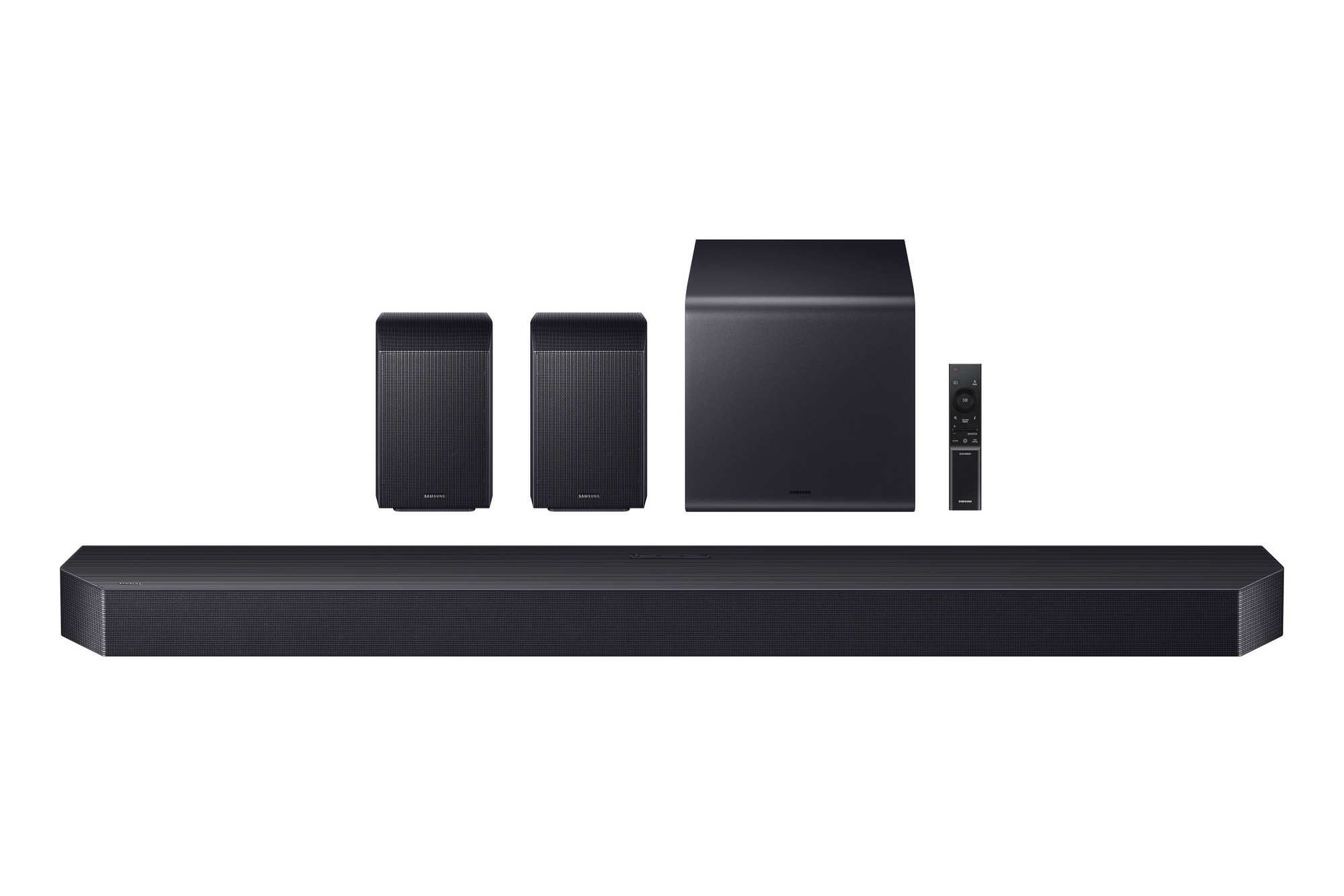
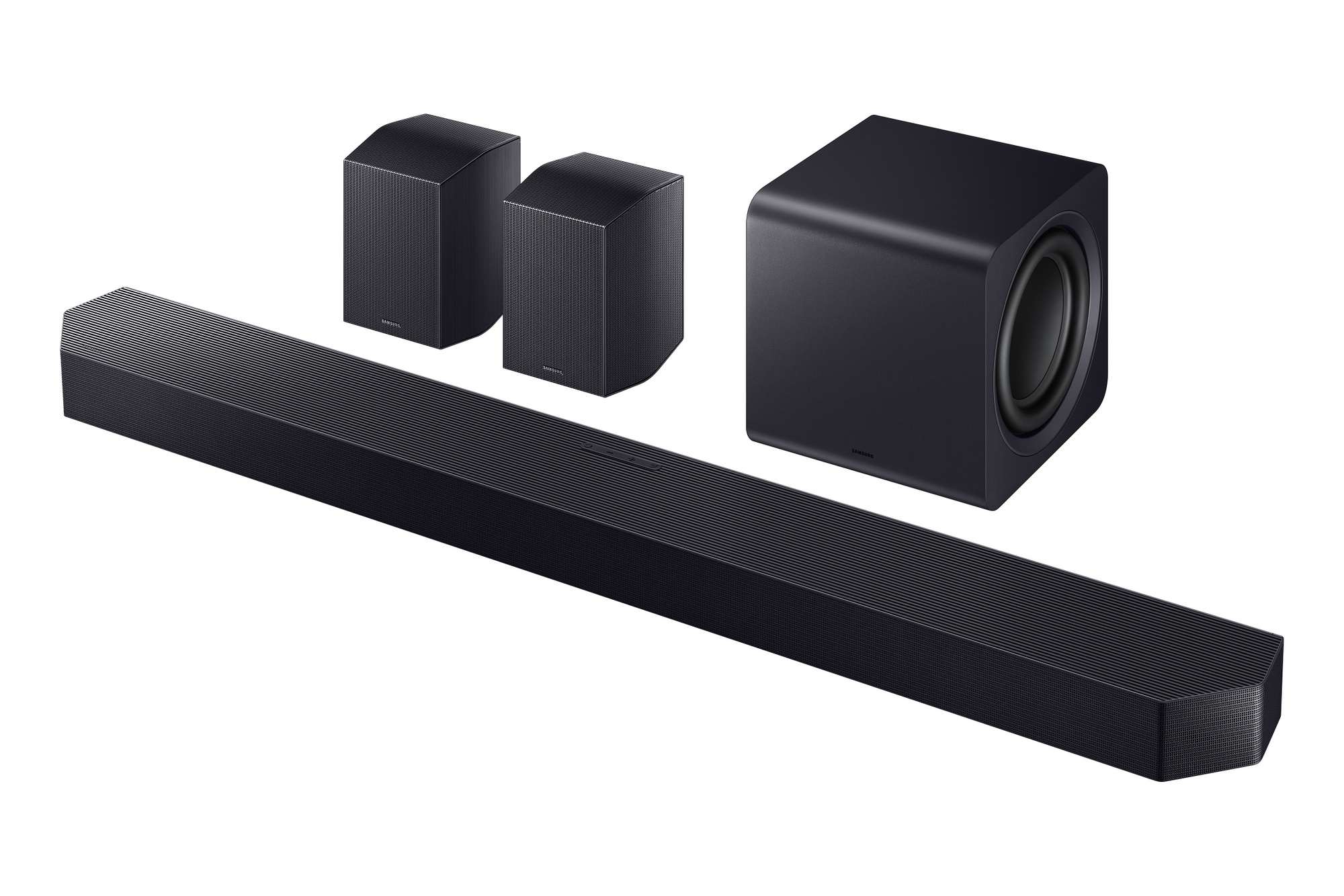
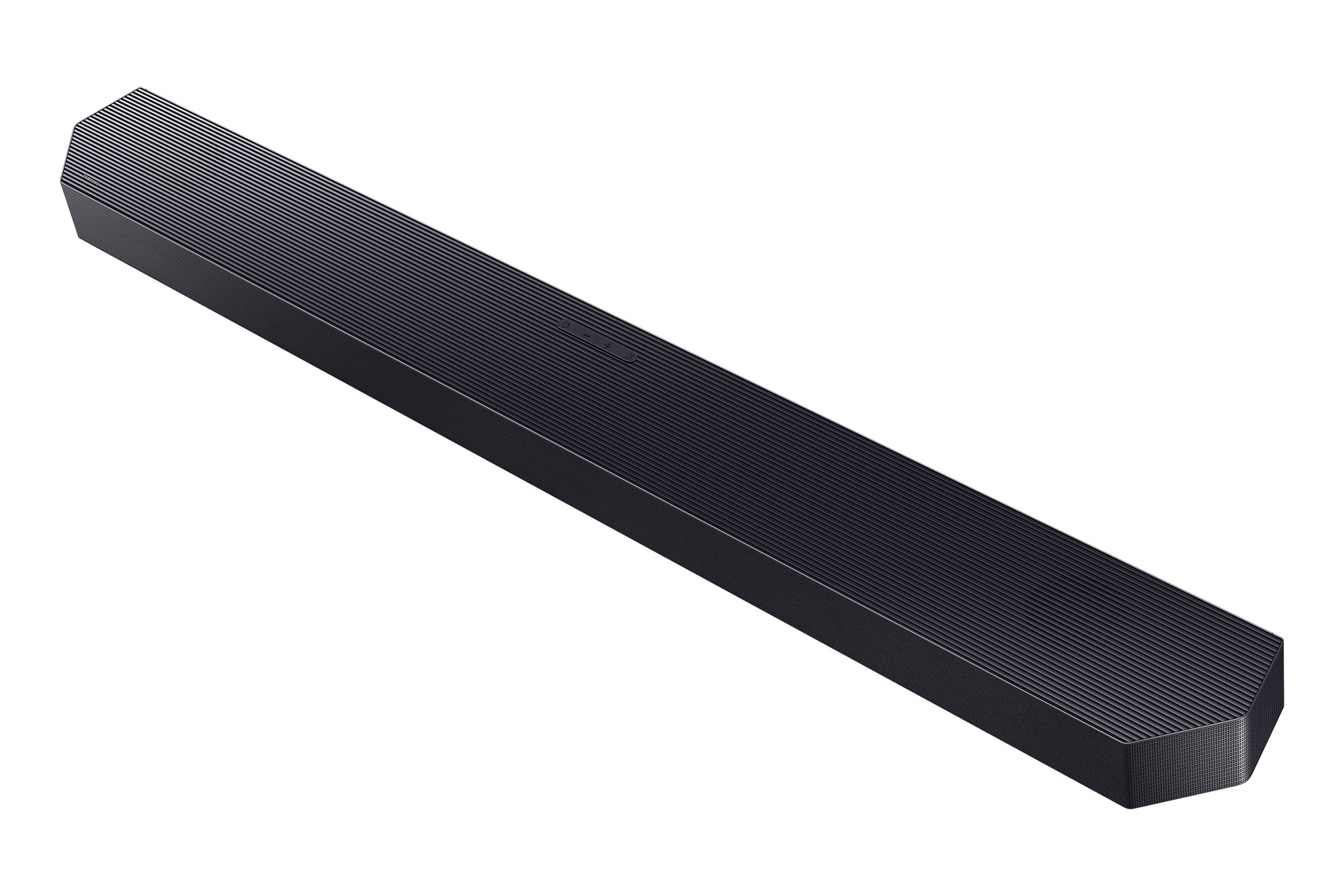
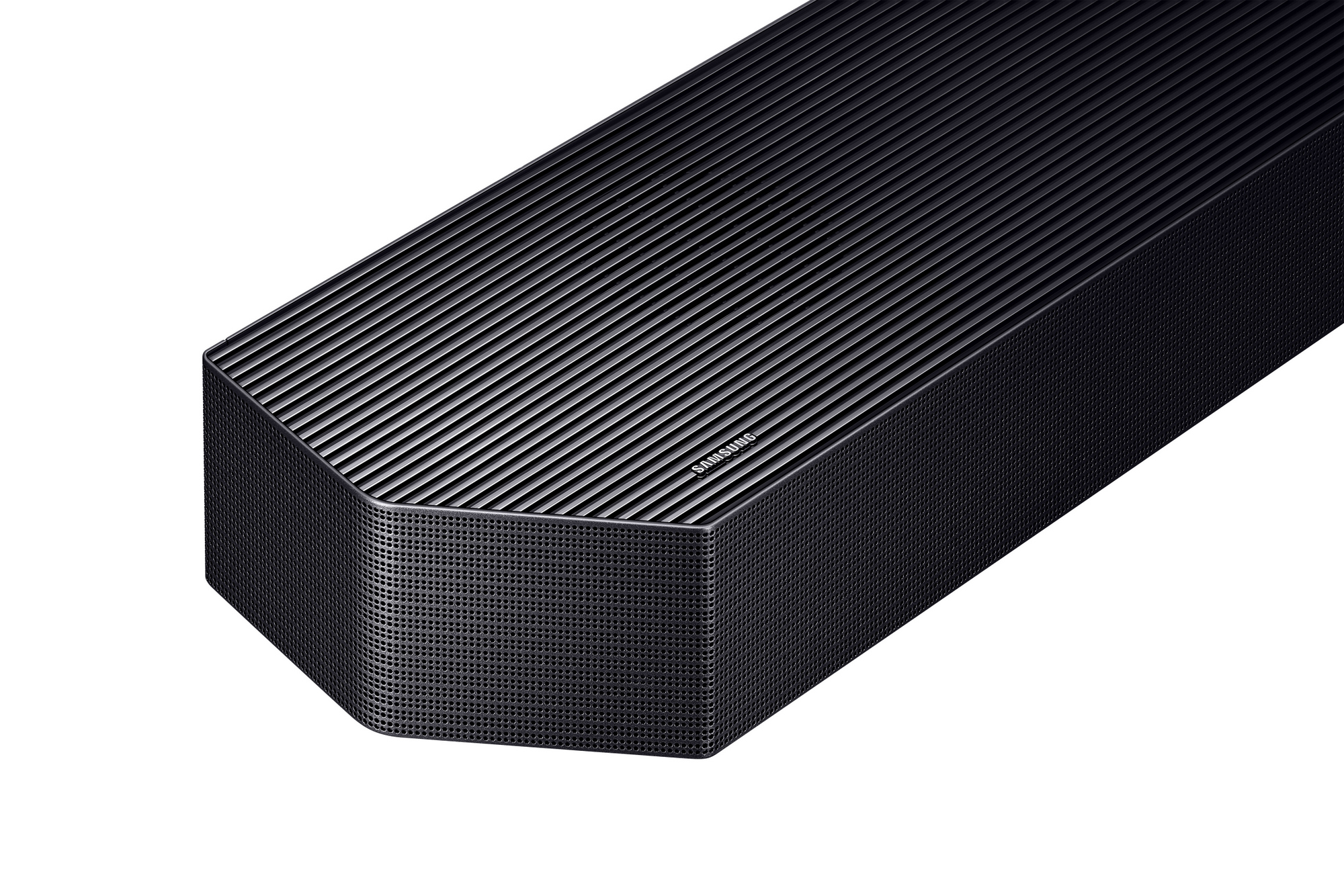
On top of that, Samsung is adding new AI-based features for 2026, including Auto Volume to smooth out sudden loudness shifts between content and Sound Elevation to make dialogue feel more centered on the screen rather than coming from somewhere under everyone’s chin.
Micro RGB May Be the Most Impressive Thing Samsung Showed
If the rest of the lineup is about refinement, Samsung’s Micro RGB TVs are about convincing you that the next big display leap has already arrived. The company first introduced Micro RGB last year in a 115-inch size with a roughly $30,000 price tag. For 2026, it is expanding the technology across two series, the flagship R95H and the more affordable R85H, while framing the broader Micro RGB range around class sizes from 55 inches up to 115 inches. Samsung also says a 100-inch class Micro RGB model will debut later this year.
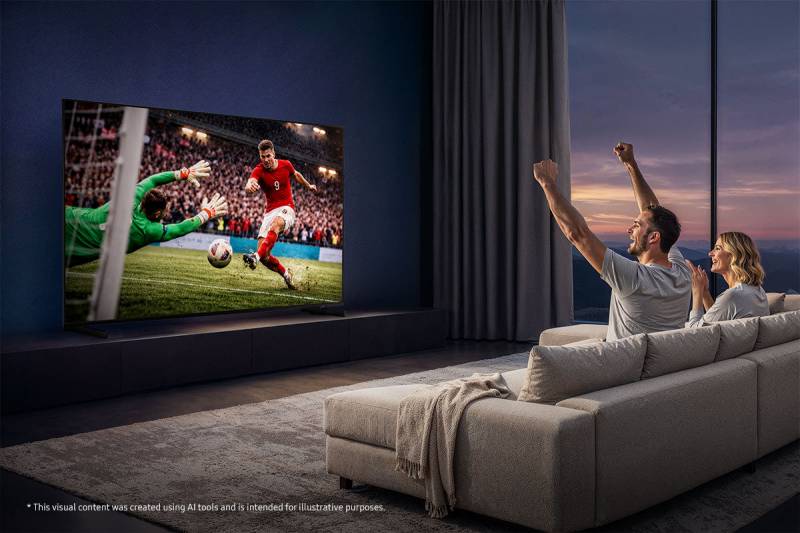
Samsung Micro RGB R85H
The underlying idea differs from a conventional LED or Mini LED TV. Instead of relying on a white or blue backlight filtered through a color layer, Micro RGB uses thousands of micro-sized red, green, and blue LEDs that each emit light independently. Those LEDs are each under 100 microns, and that their tiny size helps minimize color bleed while delivering more precise color control. In practical terms, the pitch is simple enough: the TV is trying to generate purer color at the light-source level rather than correcting for it later.
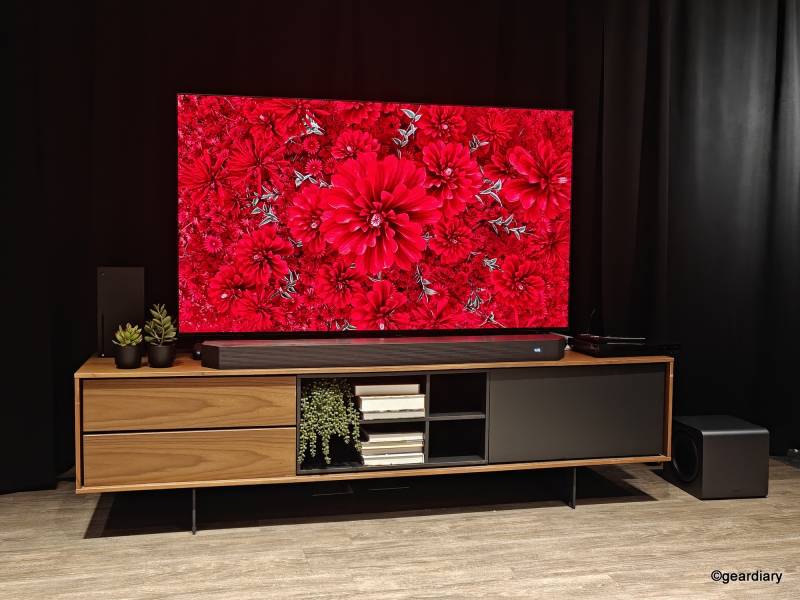
Samsung Micro RGB R95H
Samsung is also leaning hard on the measurement side of that claim. The company says VDE has verified its Micro RGB TVs for 100% coverage of the BT.2020 color area, which is a wider benchmark than the DCI-P3 target more commonly cited in premium TV marketing. That does not automatically settle the “best TV” debate, because television specs never travel alone, but it does help explain why Samsung is treating Micro RGB like a genuine display platform rather than another branding exercise.
In person, the effect was hard to ignore. Whether Micro RGB becomes the next mass-market TV format is another question entirely, but the color performance looked striking. The R95H uses a dedicated Micro RGB AI Engine Pro developed specifically for this line, while the R85H gets the standard Micro RGB AI Engine. On the flagship, that processing also powers features like Micro RGB Color Booster Pro, which is designed to recognize flatter or duller scenes and intelligently increase color intensity, along with Micro RGB HDR Pro, which delivers brighter highlights and stronger contrast. The R85H steps down to Micro RGB HDR+, which is still positioned as a premium feature, just not the full-fat version.
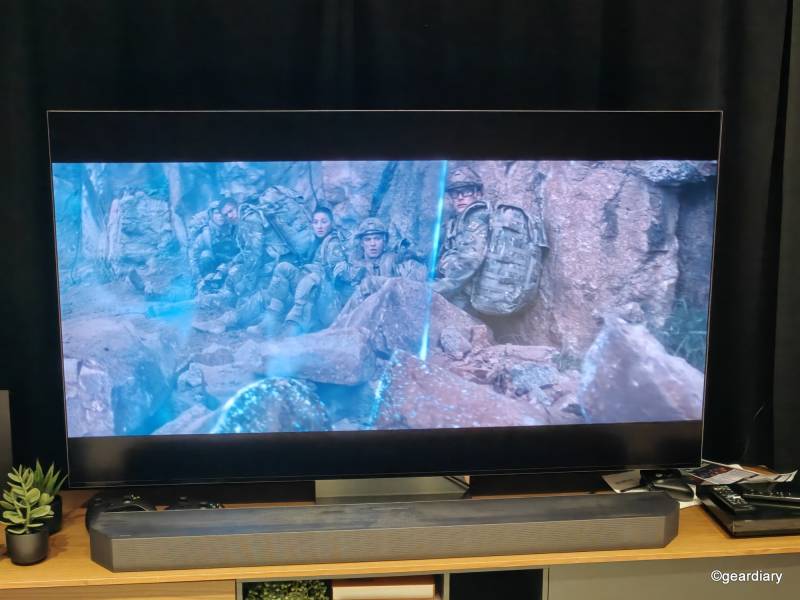
Samsung Micro RGB R95H
The R95H also adds Samsung’s Glare Free technology, which should matter more in real homes than in dark demo rooms, along with AI Motion Enhancer Pro, which makes fast-moving objects like a golf ball, soccer ball, or scrolling text easier to track. Both series support HDR10+ ADVANCED, which offers benefits such as brighter highlights, genre-based optimization, and smoother motion.
Gaming remains a major part of the pitch here, too. The R95H supports Motion Xcelerator 165Hz, while the R85H tops out at 144Hz. As usual, the fine print matters: those higher refresh rates are only available with PC-connected games that support them, and nobody should assume every console title is suddenly going to start behaving like a showroom demo.
Audio is getting a stronger story than you might expect from a display launch. Dolby Atmos is onboard, Object Tracking Sound is designed to make effects follow on-screen movement, and Q-Symphony can now synchronize the TV with up to five compatible Samsung sound devices for a fuller, more layered home theater setup. At that point, the television is no longer just the screen; it is the ringleader.
Samsung is also giving the flagship a more flexible installation story. The R95H supports Wireless One Connect Ready, meaning you can use wired or wireless inputs, or a mix of both, with the optional Wireless One Connect Box. Both the R95H and R85H also support Samsung’s Slim Fit Wall Mount for a flush-to-the-wall look, and both include access to Samsung Art Store, which now spans more than 5,000 works from museums, galleries, and artists. As with Samsung’s other 2026 premium sets, Art Store Streams offers 30 rotating pieces each month for free if you do not want to add another subscription to your entertainment budget.
Samsung’s strategy here seems obvious enough: make the flagship drool-worthy, then use the lower series to begin the long, slow march toward normal pricing. Pricing for Samsung’s 2026 Micro RGB lineup starts at $1,599.99 for the 55-inch R85H and climbs to $6,499.99 for the 85-inch R95H. The R95H is priced at $3,199.99 for 65 inches, $4,499.99 for 75 inches, and $6,499.99 for 85 inches. The R85H comes in 55 inches for $1,599.99, 65 inches for $2,099.99, 75 inches for $2,799.99, and 85 inches for $3,999.99. That still does not make Micro RGB cheap, exactly, but compared to where this technology started, Samsung is clearly trying to move it from “wild showroom flex” toward something at least vaguely within reach for more high-end shoppers. The Micro RGB sets are also arriving at select retailers, including Best Buy, while the 100-inch class Micro RGB model is set to arrive later this year.