
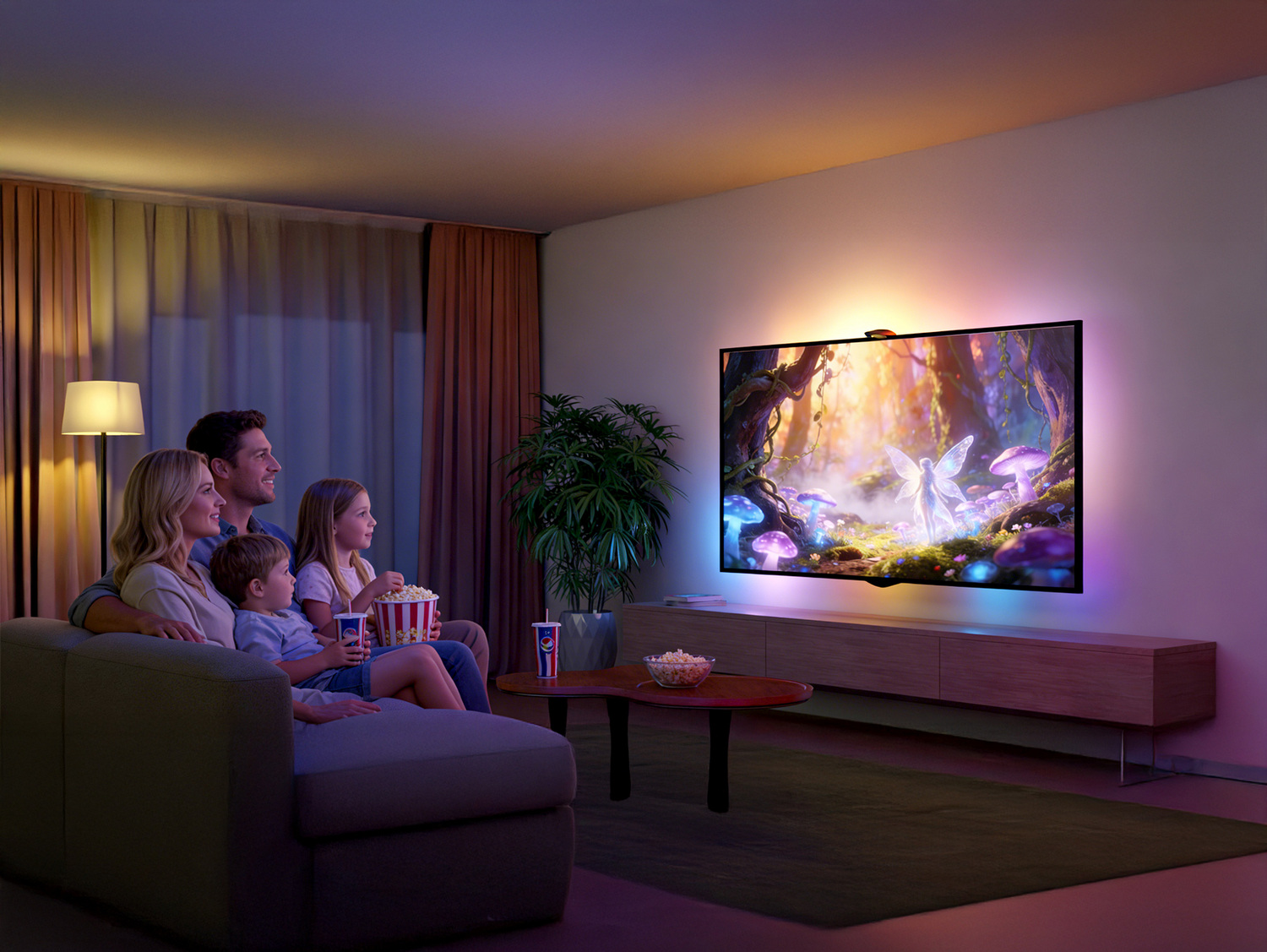


The Lepro STV1 AI-Powered Smart TV Backlight is built for anyone who likes the idea of the room reacting to what’s on-screen, but doesn’t want a nest of wires behind the TV or a setup process that feels like punishment. Launching May 15, 2026, the camera-based backlight extends colors from movies, games, sports, and music into the space around your television. It’s available in an 11.8′ version for 55″ to 65″ TVs for $89.99, and a 16.4′ version for 75″ to 85″ TVs for $109.99.
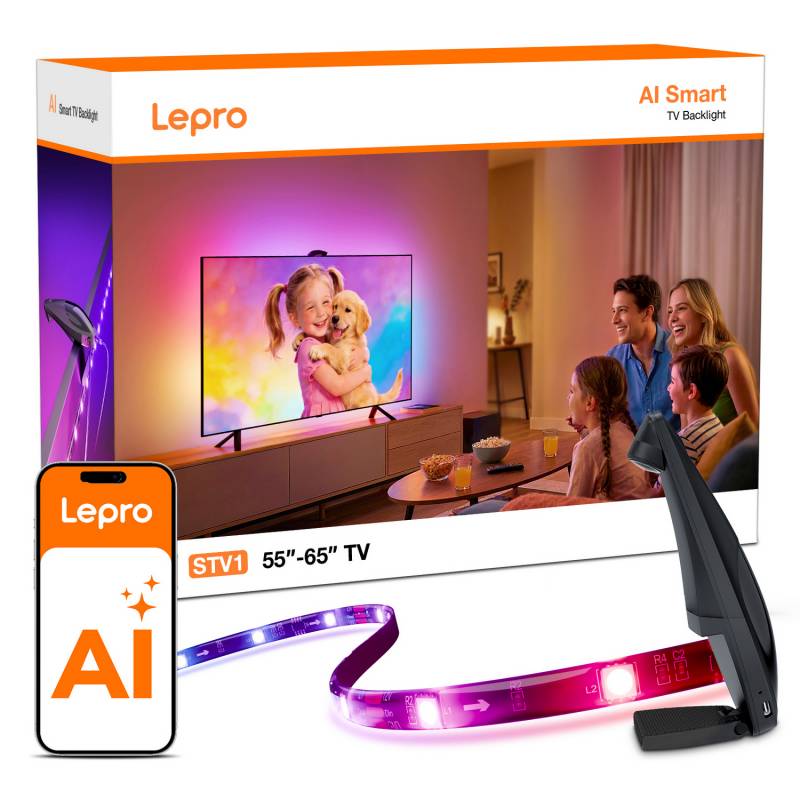
A Screen-Sync Backlight with AI Ambitions
TV backlighting has been around for years, and the basic idea is simple enough: add LEDs behind the television so the glow on the wall roughly matches what’s happening on-screen. Done well, it can make a movie feel a little more expansive and a gaming session feel more enveloping. Done poorly, it can look like your TV is wearing mood lighting it didn’t ask for.
The Lepro STV1 is trying to land on the better side of that divide with a camera-based system that reads the colors on your TV and uses an RGBIC LED strip to recreate those colors behind the screen. RGBIC means the strip can display multiple colors across different sections simultaneously, rather than changing the whole strip to a single shade. That matters because a sunset, an explosion, a football field, or a moody sci-fi hallway rarely occupies the whole screen evenly.
The Lepro STV1 also leans into AI-generated lighting scenes through Lepro’s LightGPM 4 AI Lighting Designer. Instead of only syncing with the screen, you can create lighting looks from text, voice, or image prompts. That could mean asking for team-colored lighting before a game, setting a warmer tone for a movie night, or making the room look less aggressively “smart home demo booth” during a casual hangout.
Faster Sync Could Matter for Games and Sports
The STV1 uses Lepro’s LightIMS Instant Sync technology, supported by a high-performance chip and the company’s own synchronization processing. Lepro says the system responds 36% faster than comparable competing products based on its testing.
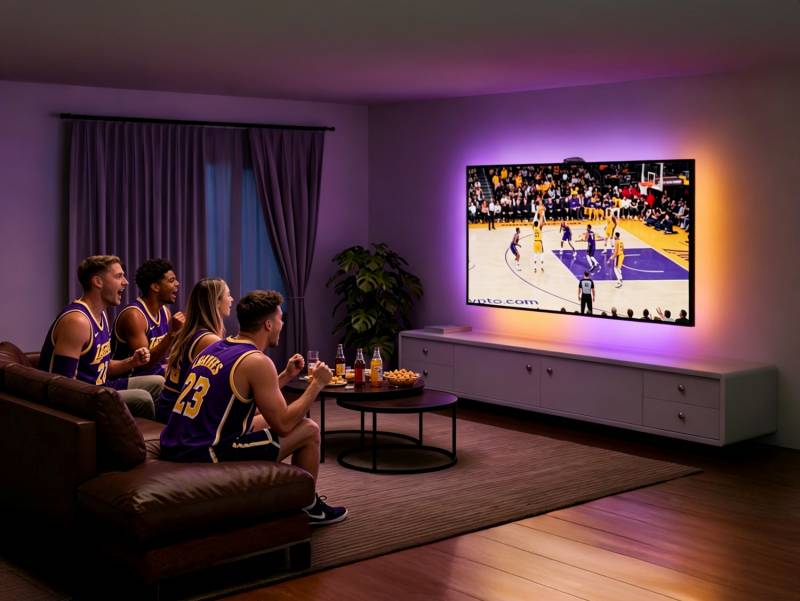
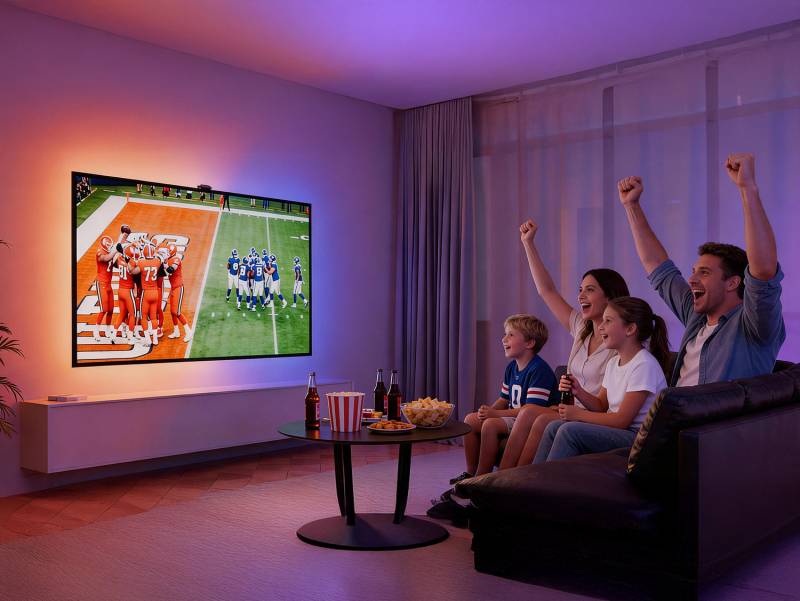
That claim is worth reading with the usual fine print tucked firmly in place, since “competing products” can mean many things depending on what was tested. Still, a faster response time does matter with this kind of product. If the screen changes quickly but the backlight lags, the effect starts to feel detached, like subtitles that are just slightly out of step. It’s especially noticeable during console gaming, fast action scenes, quick camera cuts, and live sports, where the picture changes constantly.
For a slower drama or a cooking show, a little delay probably won’t ruin your evening. During a racing game, a fight sequence, or a last-minute touchdown drive, better timing can be the difference between ambient lighting that blends in and lighting that draws attention.
The Camera Tries to Make Sense of the Whole Screen
Because the Lepro STV1 is camera-based, it doesn’t need to sit between your TV and your video sources. That can be useful if you watch content from multiple places, such as built-in TV apps, streaming boxes, game consoles, cable boxes, or disc players. The camera looks at the screen and sends color information to the backlight, so the source shouldn’t matter.
The camera has 1080p resolution (1920 by 1080) and an ultra-wide lens with a field of view greater than 180 degrees. That wide view helps it see the entire TV from a short distance, including larger screens up to 85″. The trade-off is that ultra-wide lenses can distort an image, especially near the edges. Lepro’s Lens Correction is designed to compensate for that fisheye effect and map different screen zones to the correct areas of the LED strip.
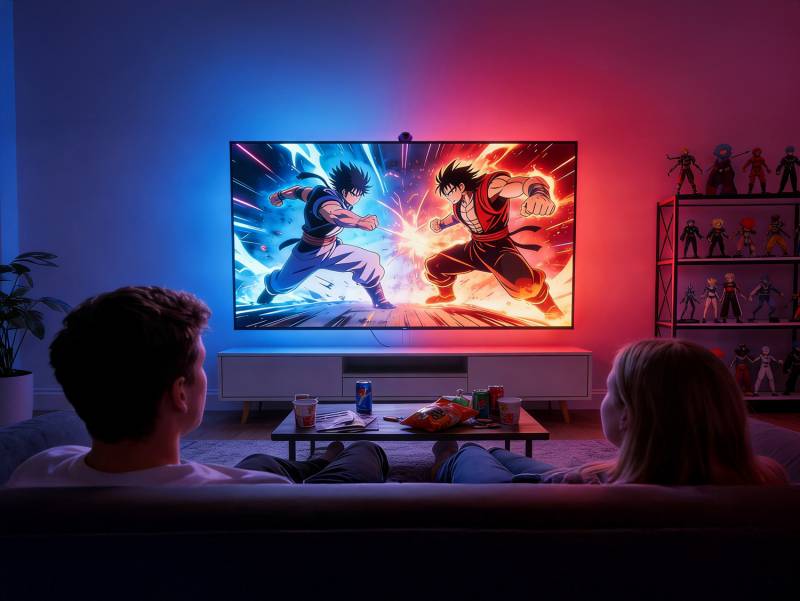
That’s the part that keeps the system from being just a blob of color behind your TV. Zone mapping helps the strip understand, for example, that the blue sky in the upper left of the screen should correspond to the LEDs on that side, while a red car on the lower right should light a different section. It won’t replace the picture on the TV, of course, but the goal is to make the wall glow feel connected rather than random.
Fewer Boxes Behind the TV Is Always Welcome
One of the more practical choices here is the Lepro STV1’s 2-in-1 camera and controller design. Instead of mounting a camera, finding a place for a separate control box, and then dealing with the cables that come with both, Lepro combines those components into a single device. That should make installation cleaner, especially if your TV is wall-mounted or your entertainment center already looks like it’s hiding a minor electrical incident.
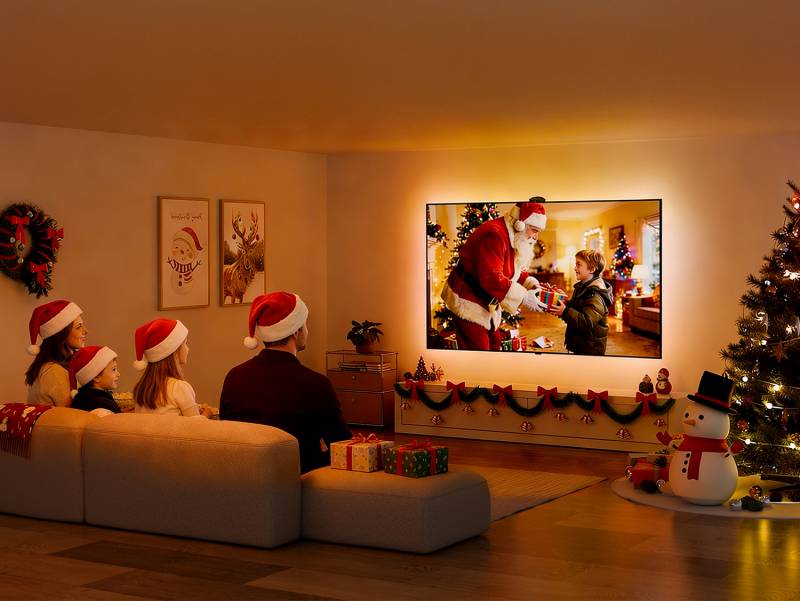
The backlight is corded and designed for indoor use. It connects via 2.4GHz Wi-Fi and Bluetooth, and can be controlled via the Lepro app, Alexa, and Google Assistant. Voice control may be handy if you want to change lighting without digging for your phone, though app setup and calibration will still be part of the first-run experience.
Lepro notes that an initial firmware update may be needed for the best syncing performance. Wi-Fi updates are expected to take about 6 minutes, while Bluetooth updates may take 7 to 8 minutes. Keep the device powered on during the update, because nobody wants to troubleshoot a half-updated light strip before movie night.
Music, Blank Screens, and the Specs to Know
The Lepro STV1 isn’t limited to TV syncing. Its LightBeats Music Sync feature uses a patented loudness algorithm to create smoother, wave-like lighting effects in response to sound. The idea is to avoid the harsh strobing that can make some music-reactive lights feel less like ambiance and more like a tiny nightclub having a crisis behind your television.
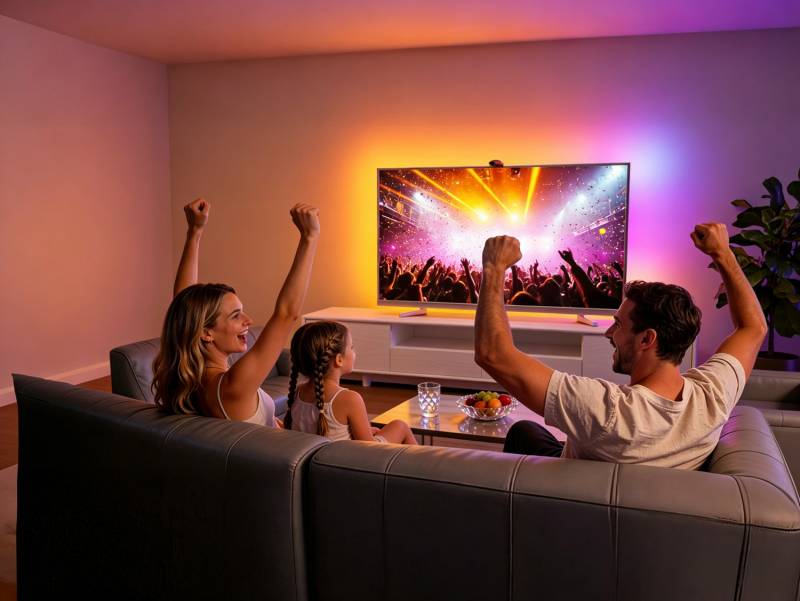
There’s also blank-screen detection, so the lights can turn off automatically when the TV goes dark. That’s a small convenience, but it’s the kind of detail that helps a gadget fade into daily life instead of demanding attention every time you use it.
The Lepro STV1 uses RGBIC LEDs with 9 LEDs per foot (30 LEDs per meter). The smaller STV1-3 model is listed for 55″ to 65″ TVs with an 11.8′ strip, while the STV1-5 fits 75″ to 85″ TVs with a 16.4′ strip. Power input is listed as 12V DC, with ETL, FCC, FCC-ID, CE, LVD, EMC, and ROHS certifications.