


The Lowdown
If the Brain-Body Therapy app offered a way to integrate your own workouts into its therapy advice, I think it would be significantly more successful. But for $9.99 a month, $70 for an annual subscription, or $159.99 for a lifetime subscription, I’d expect more detail and control over the workouts.
Overall
Pros
- Attempts to tackle the growing mental health needs in the world
- Acknowledges the bridge between mental health and physical health
- Presents the mental health lessons in a soothing and nonjudgmental way
Cons
- Lack of flexibility in the exercise portion is detrimental to the overall experience
- Needs more information on the workouts
- Needs a more robust journaling or tracking system to monitor physical and mental changes
I am a firm believer that exercise is a cornerstone of mental health. We are built to move our bodies one way or another. You don’t have to head out for 10-mile runs every day, but even yoga or stretching can help clear the detritus from your mind. So I was super excited to check out the Brain-Body Therapy App, which aims to combine basic therapy with exercise. Is it the path to a clearer mind and healthier body?

Exercise & Mental Health
The science behind exercise for mental health is pretty strong. Brain-Body Therapy cited this study, but there are plenty of others that come to the same conclusion. It’s not going to replace therapy, or psychiatric medications where needed, but there’s certainly a major benefit. And let’s be honest-exercise can often be a lot more accessible than therapy.
So the idea is strong. Combine exercise with some basic therapy concepts and help people physically and mentally. It’s a fantastic concept. Unfortunately, the app and service don’t quite come through as well as it appears on paper.
The Good
Let’s start with the good. The Brain-Body Therapy app is available for Android and iOS devices. Each session with the app opens with a 3-5 minute audio portion; sometimes it talks about the benefits of therapy, sometimes it’s about working through the effects of anxiety, but no matter what, it’s a nice bite-sized mental health support lesson. Then it segues into the exercise portion before wrapping up with another short mental health audio portion.
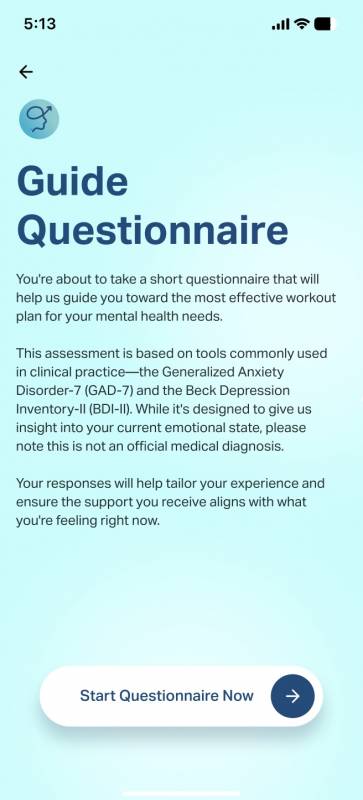
The specific type of advice you get depends on what you indicate to the app is bothering you. I have anxiety, and that’s why I lean on exercise, so most of the advice is centered around that for me. If you indicate your issues are more depression, for example, you might get different advice.
All this is great. It’s somewhat basic if you’ve been in therapy for a long time, but if that’s not something that you’ve explored before or if it’s not available to you, this part is helpful. The app also has a section in settings for country-specific mental health resources, including suicide hotlines where available.
The Bad
My issue here is with the exercise portion. The developers say they’re offering specific workouts designed for mental health, but there are no citations or explanations showing how they designed these. You can indicate your fitness level in the settings, and they offer a number of options from beginner to athlete. All that is fine.
However, the exercise portion is opaque and restrictive. There’s no way to choose your workout, and you can’t see what’s coming up in advance. It’s designed around not needing equipment, but it’s still good to know what’s next. So you have to absolutely love guided classes and be okay with having no control over your choices to enjoy the exercise portion.
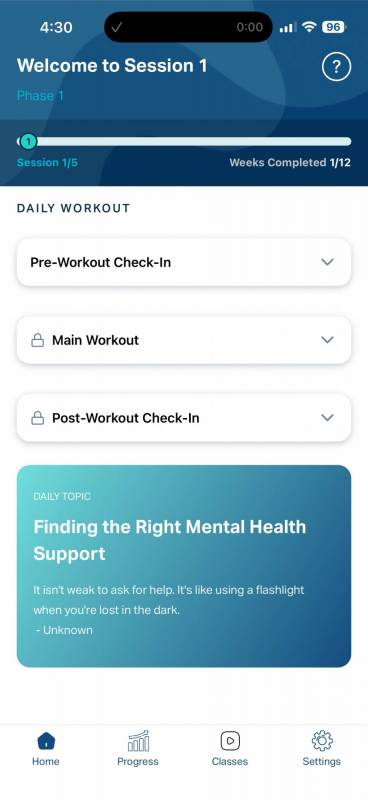
This will severely limit the audience for the Brain-Body Therapy app. You basically have to surrender your entire workout routine to the app for this to work, and even then, you have no way to keep notes or track your progress. It’s also unclear if or how the app will handle progression in your athletic program beyond just you self-adjusting the difficulty.
The Ugly
The real dealbreaker for me is the inability to see the workouts ahead of time or indicate how you’re doing with them. Even a simple journaling prompt after would be helpful. Without it, you’re really limited. Here’s an example. Let’s say you do a workout on Monday through the app. It’s mostly abs and stretching with some light leg work. You rest Tuesday, and Wednesday it suggests cardio. Great, you love cardio, so you go for a run. Friday you’re still sore from your run, and the app decides it’s leg day. You have zero ability to indicate “hey, can we swap this for a stretch day/upper body day/take out the squats”, you either do the program or you skip the day.
Should You Try It?
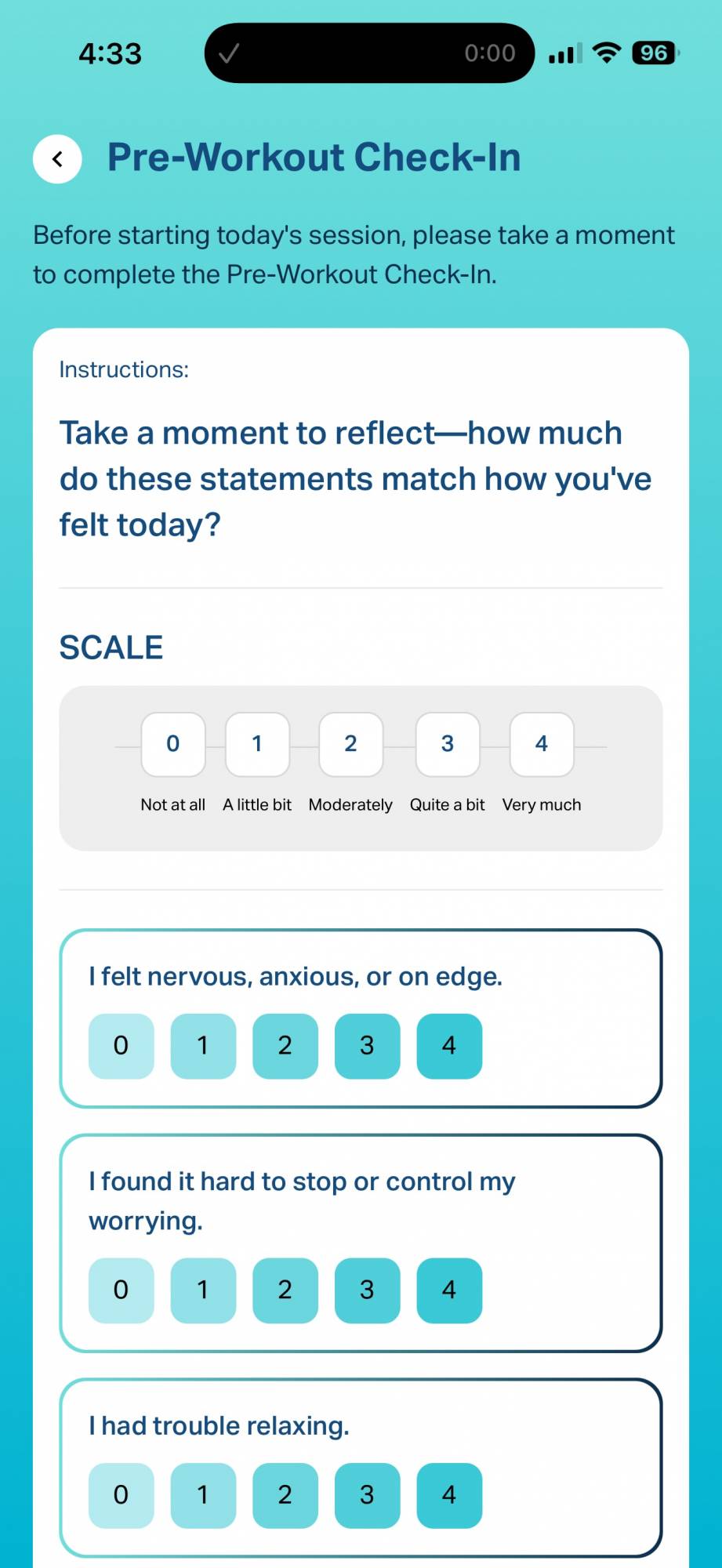
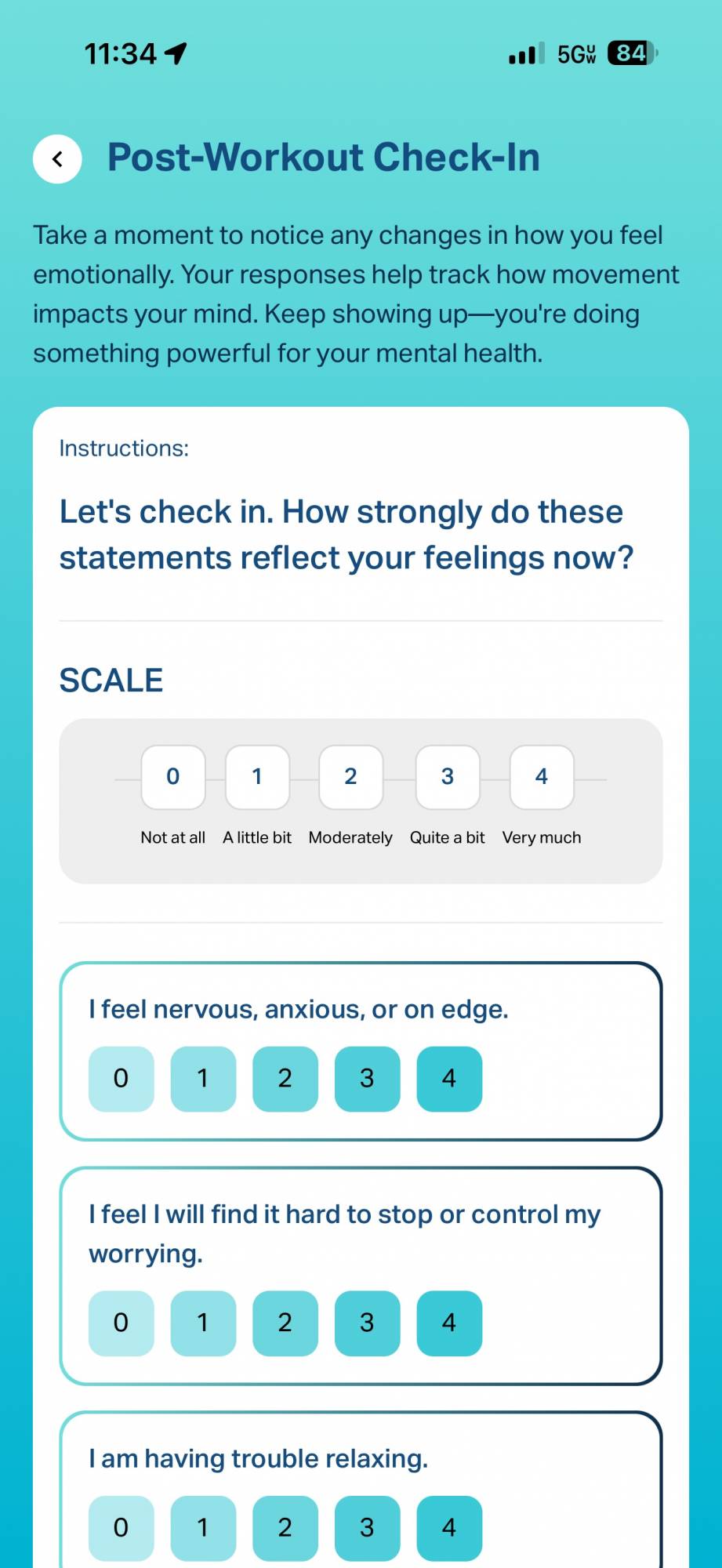
The Brain-Body Therapy app does ask you to rate your mental state pre- and post-workout, and you can see that progress over time, but with very little detail about how to interpret that. Plus, since you can’t easily see how it transitions from one workout to the next, it’s harder to figure out whether you’re benefiting more from bodyweight training or cardio days, etc.
That sort of rigidity is hard in any program, but if you’re simultaneously trying to get people to embrace their mental health, it’s going to make it way too easy to just quit the first time that happens. A big part of figuring out how to intertwine mental health with fitness is meeting people where they are and helping them figure out what works for them, not dictating “this is what you do because the algorithm said so today”.
If the Brain-Body Therapy app offered a way to integrate your own workouts into its therapy advice, I think it would be significantly more successful. But for $9.99 a month, $70 for an annual subscription, or $159.99 for a lifetime subscription, I’d expect more detail and control over the workouts.
Click here to learn more about the Brain-Body Therapy App.
Source: Developer-provided review code
What I Like: Attempts to tackle the growing mental health needs in the world; Acknowledges the bridge between mental health and physical health; Presents the mental health lessons in a soothing and nonjudgmental way
What Needs Improvement: Lack of flexibility in the exercise portion is detrimental to the overall experience; Needs more information on the workouts; Needs a more robust journaling or tracking system to monitor physical and mental changes