


The Lowdown
The OSCAL PowerMax 6000 is a capable, thoughtfully equipped power station with enough stored energy and inverter output to do considerably more than keep phones charged during a blackout. Its stable voltage, approximately 89 percent AC conversion efficiency, fast recharging, useful DC connections, 120/240-volt capability, and expandable LFP battery system give it legitimate appeal for home backup, RV travel, fieldwork, and off-grid projects.
Overall
Pros
- Stable voltage and strong AC conversion efficiency
- 120/240-volt output from one unit
- Rapid AC and solar charging
- Broad selection of USB and DC connections
- Expandable LFP battery system
- Wheels and retractable handle make its substantial weight manageable
- Fast five- to eight-millisecond backup switching
Cons
- The advertised 6,000-watt output is limited to five minutes before dropping to 5,000 watts
- No formal IP dust- or water-resistance rating
- Only three standard 120-volt AC outlets
- Inconsistent warranty coverage information on OSCAL’s website and in its marketing materials
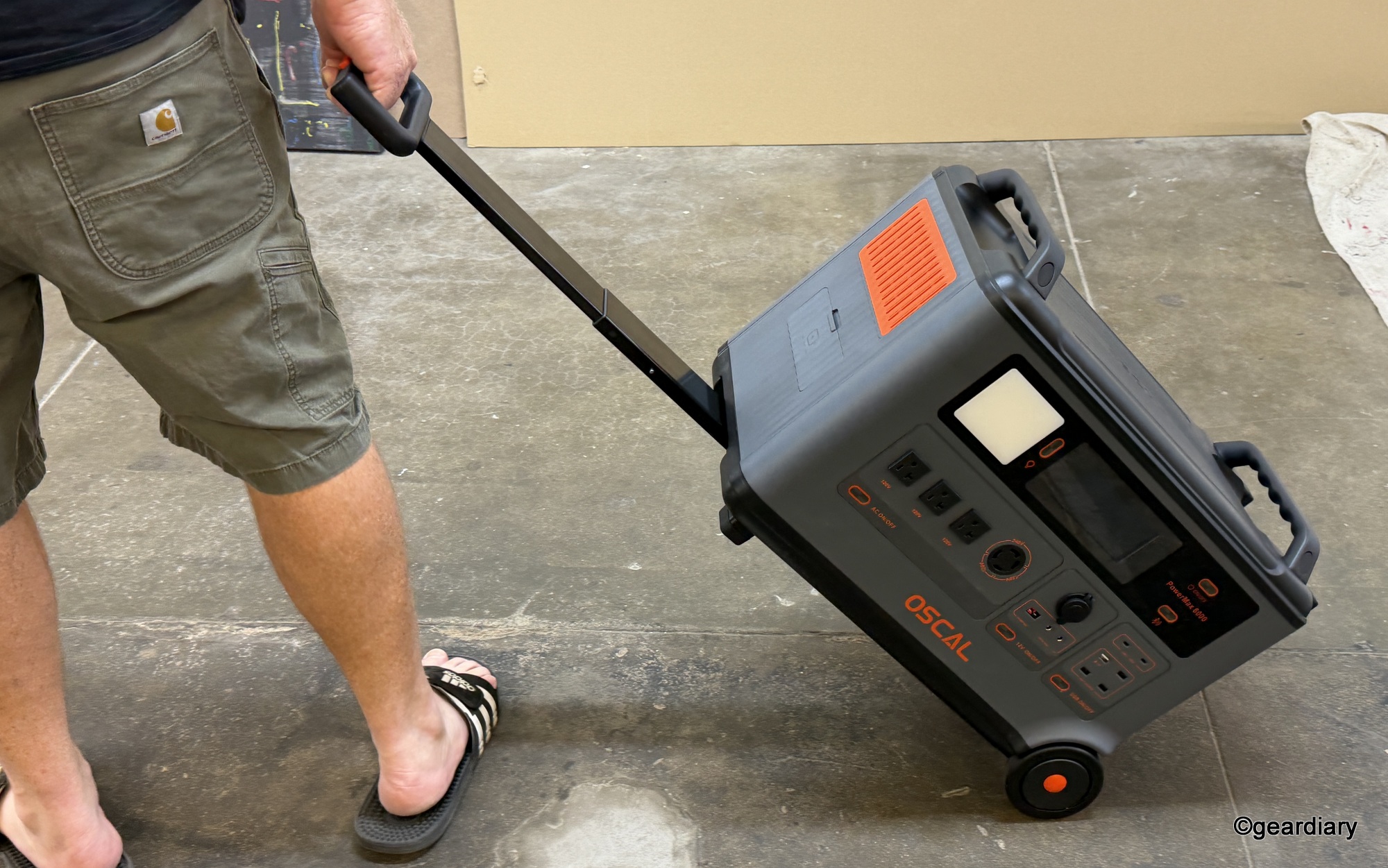
Calling the OSCAL PowerMax 6000 “portable” is technically accurate in the same way that calling a washing machine on a dolly portable is accurate. At 101.4 pounds, this isn’t something you’ll casually carry from the garage to a campsite. Fortunately, OSCAL has fitted it with wheels, sturdy handles, and a retractable trolley handle, making it reasonably manageable once it’s on the ground. That substantial weight buys you a 3,600-watt-hour lithium iron phosphate battery, 120- and 240-volt outputs, enough inverter capacity to operate demanding appliances and tools, rapid recharging, and support for up to 15 BP3600 expansion batteries.
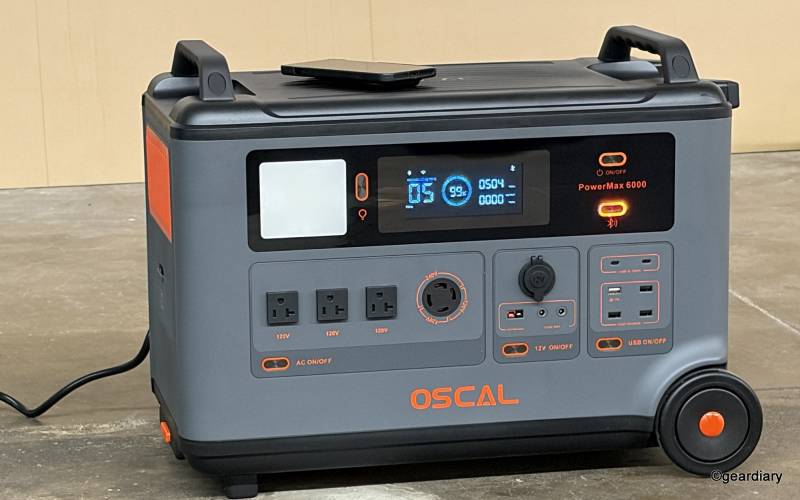
In other words, the PowerMax 6000 is much closer to a roll-around home backup system than to the small battery boxes typically used to charge phones and run camp lights.
It’s also priced accordingly. The important question isn’t whether the PowerMax 6000 can charge a laptop or keep a camping cooler running. Of course it can. The real questions are whether it can handle the larger loads OSCAL promises, whether its capacity translates into useful runtime, and whether choosing a less established power-station brand makes sense when Anker SOLIX, EcoFlow, BLUETTI, and Jackery are competing for the same emergency-preparedness dollars.
A Large Battery with an Appropriately Large Footprint
The OSCAL PowerMax 6000 measures approximately 23.2″ long by 13.8″ wide by 17.4″ high. Its housing is made from a combination of ABS and polycarbonate, two impact-resistant plastics commonly used in equipment expected to receive less-than-delicate treatment.
The design looks professional rather than improvised, with the display, controls, outlets, cooling vents, and lighting integrated into a reasonably cohesive enclosure. It isn’t small enough to disappear into a closet behind the vacuum cleaner, but it’s compact considering its battery capacity and power output.
OSCAL says the enclosure can survive a vertical drop of approximately 2.6 feet. That sounds reassuring, although a 101-pound battery falling from that height isn’t an experiment most owners will be eager to reproduce. More useful are the UV-resistant exterior and UL94 V-0-rated plastic. That rating indicates that the enclosure material is designed to stop burning quickly under defined laboratory conditions; it doesn’t make the power station fireproof.
OSCAL also describes the body as resistant to dust and splashing water. However, the company doesn’t publish a formal ingress-protection, or IP, rating for the PowerMax 6000. That’s a notable omission on a product promoted for construction sites, camping, and other exposed environments. It should tolerate an accidental splash, but without an IP rating, it’s prudent to keep it sheltered from rain, blowing dust, and standing water.
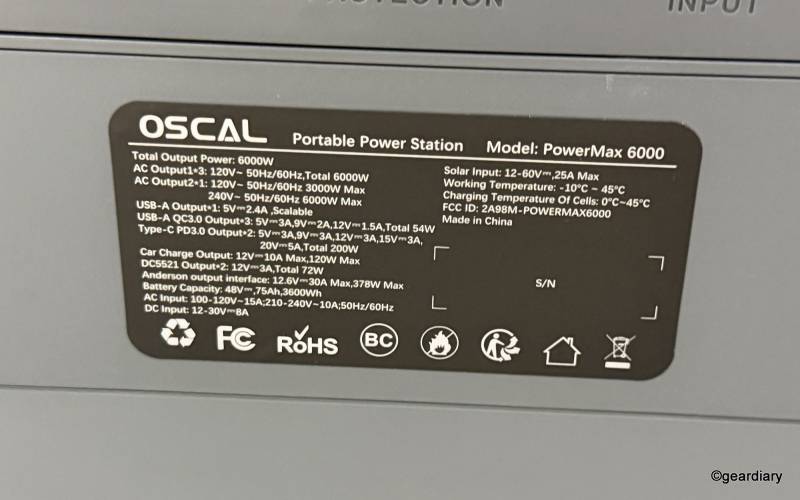
The box includes the PowerMax 6000, an AC charging cable, a car charging cable, a solar charging cable, a user manual, and a warranty card confirming five years of coverage.
Solar panels and BP3600 expansion batteries are optional unless included in a bundle. At the time of this review, each BP3600 expansion battery was priced at $1,179.99, and the solar panels start at $259.99.
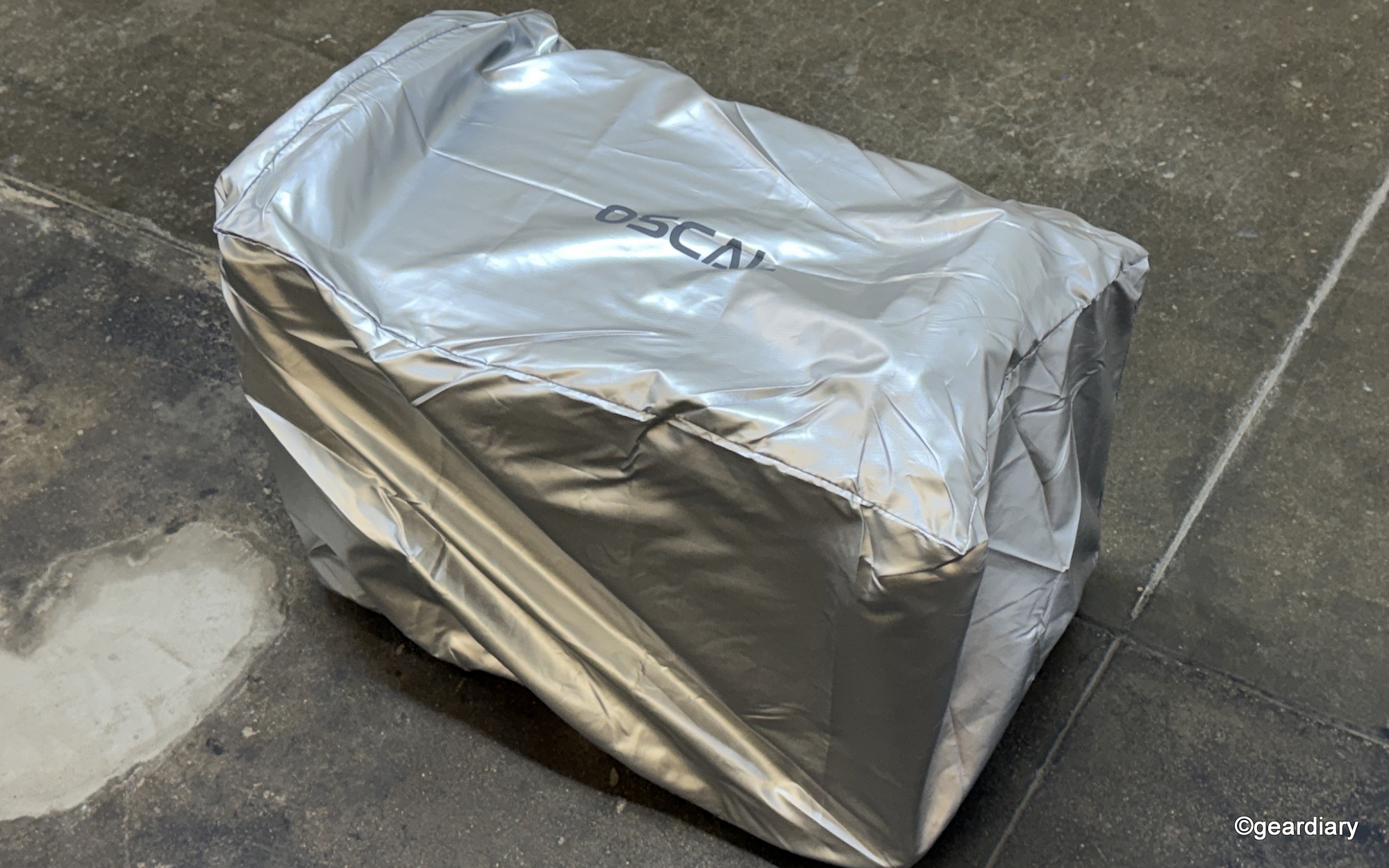
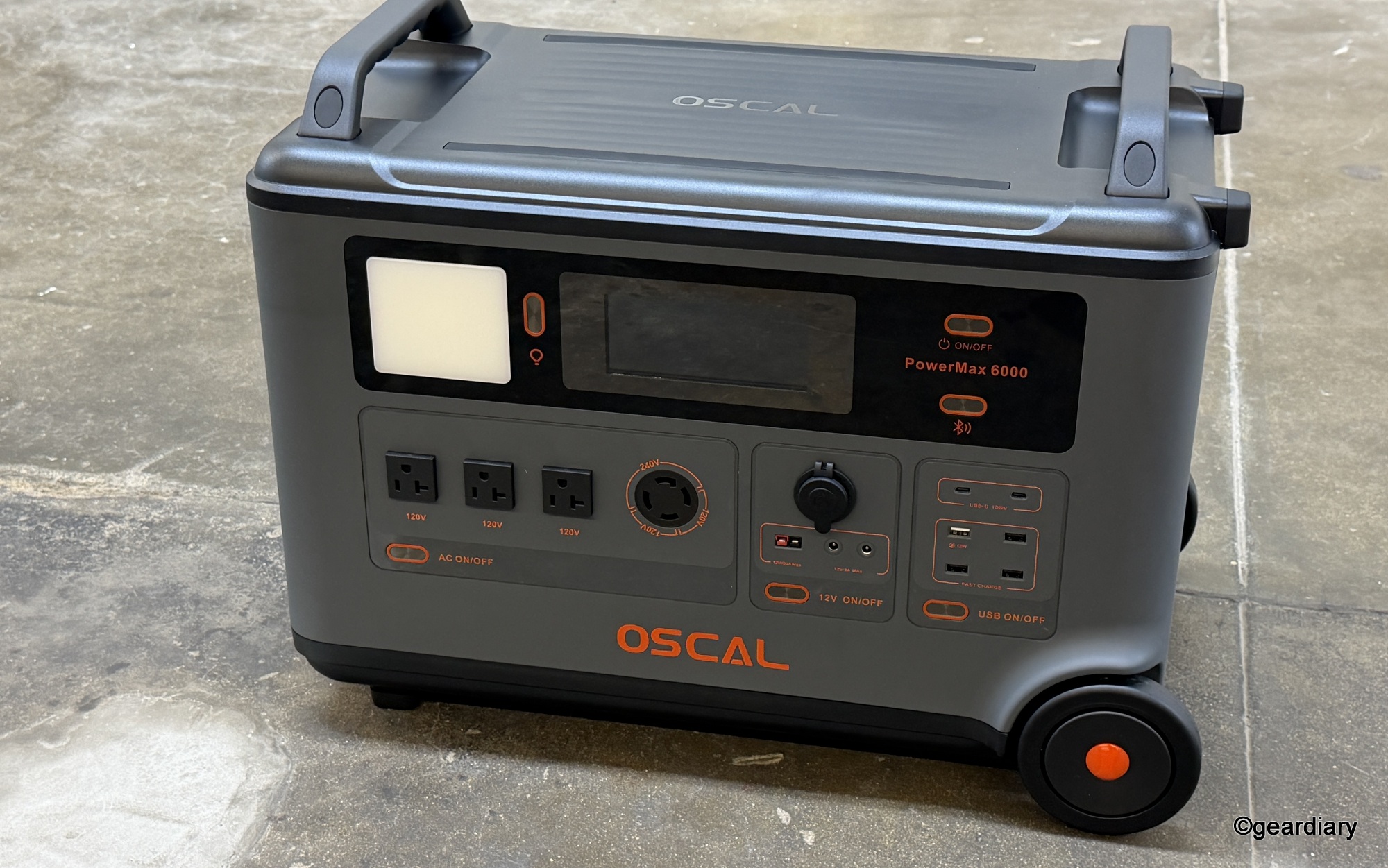
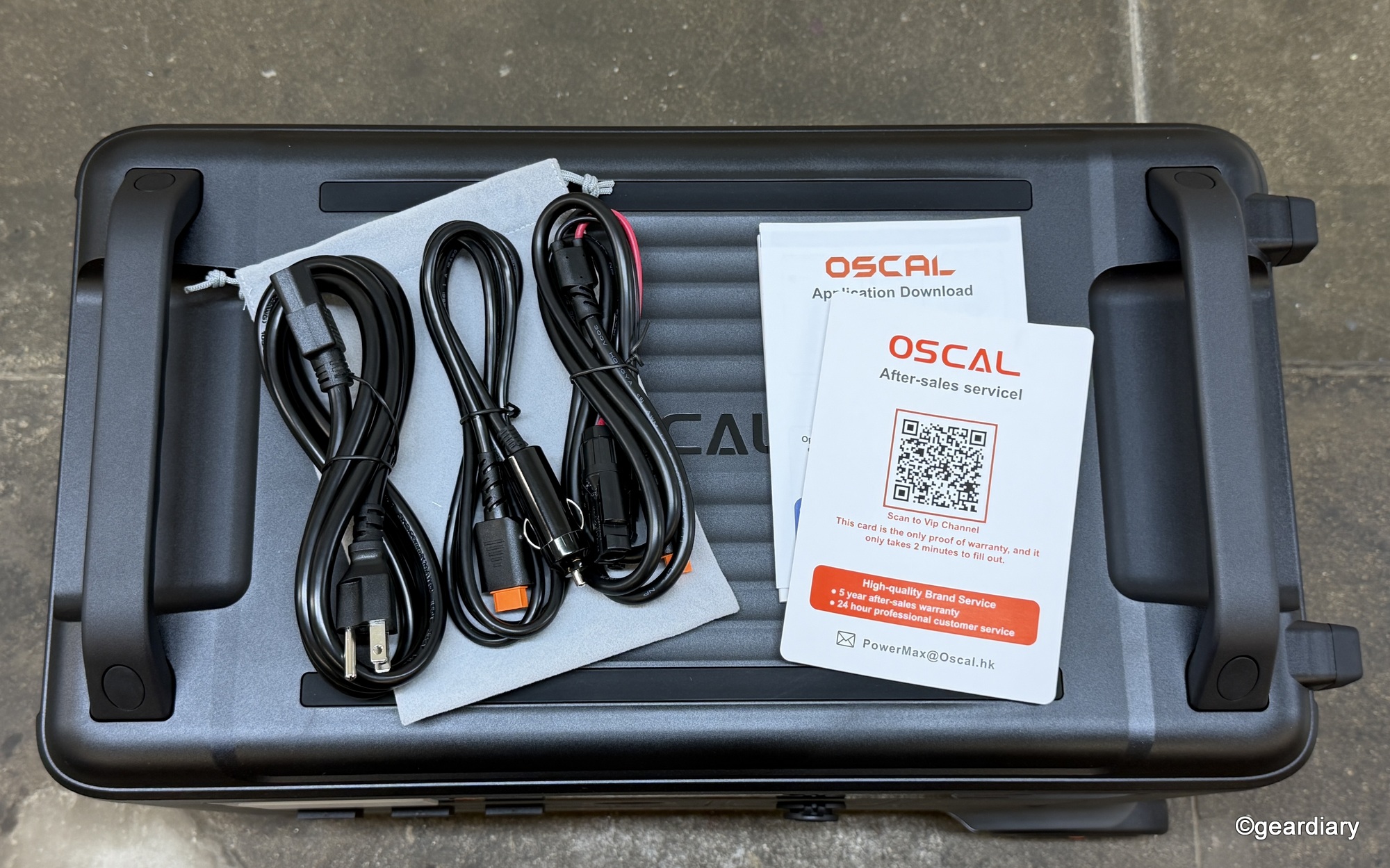
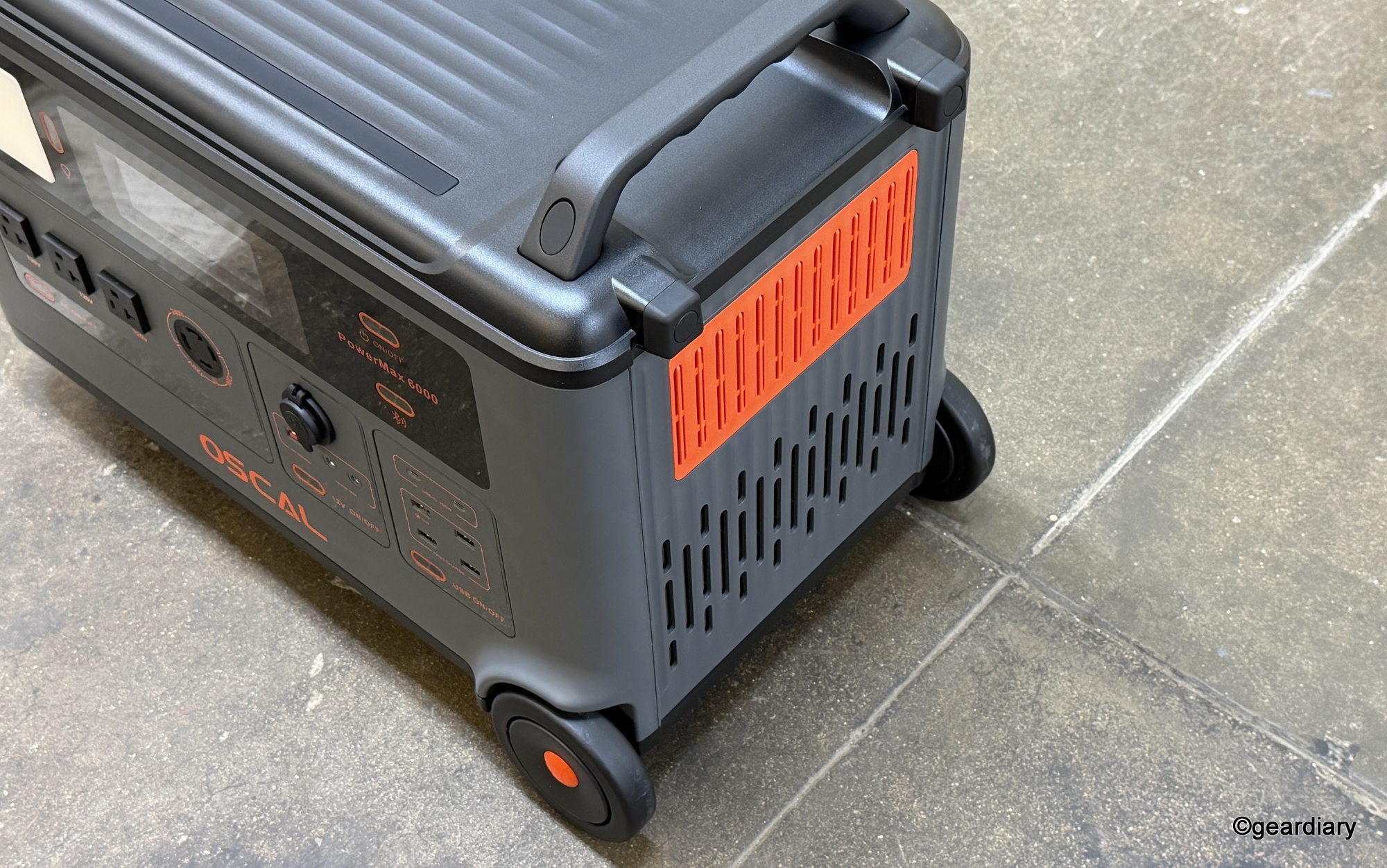
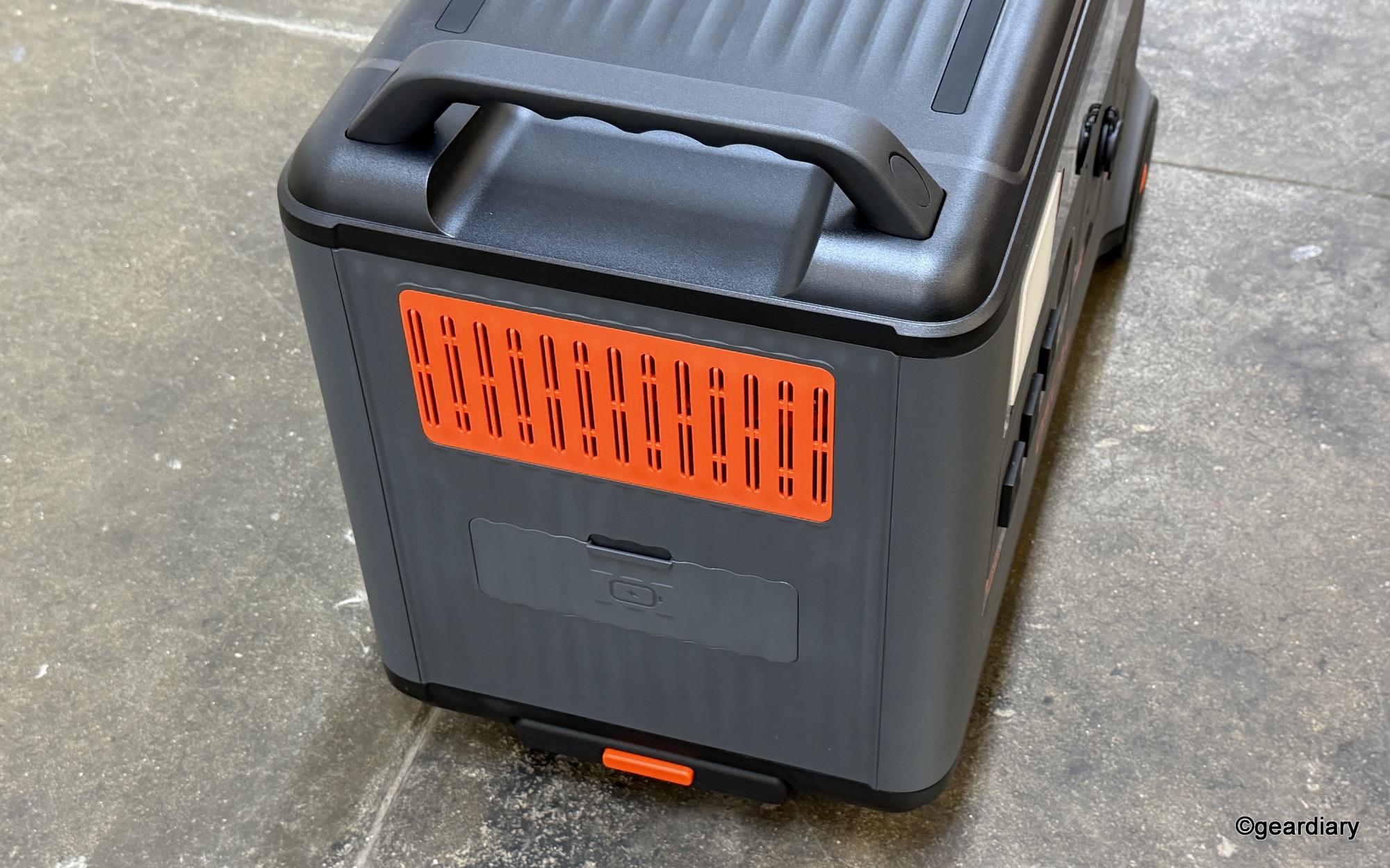
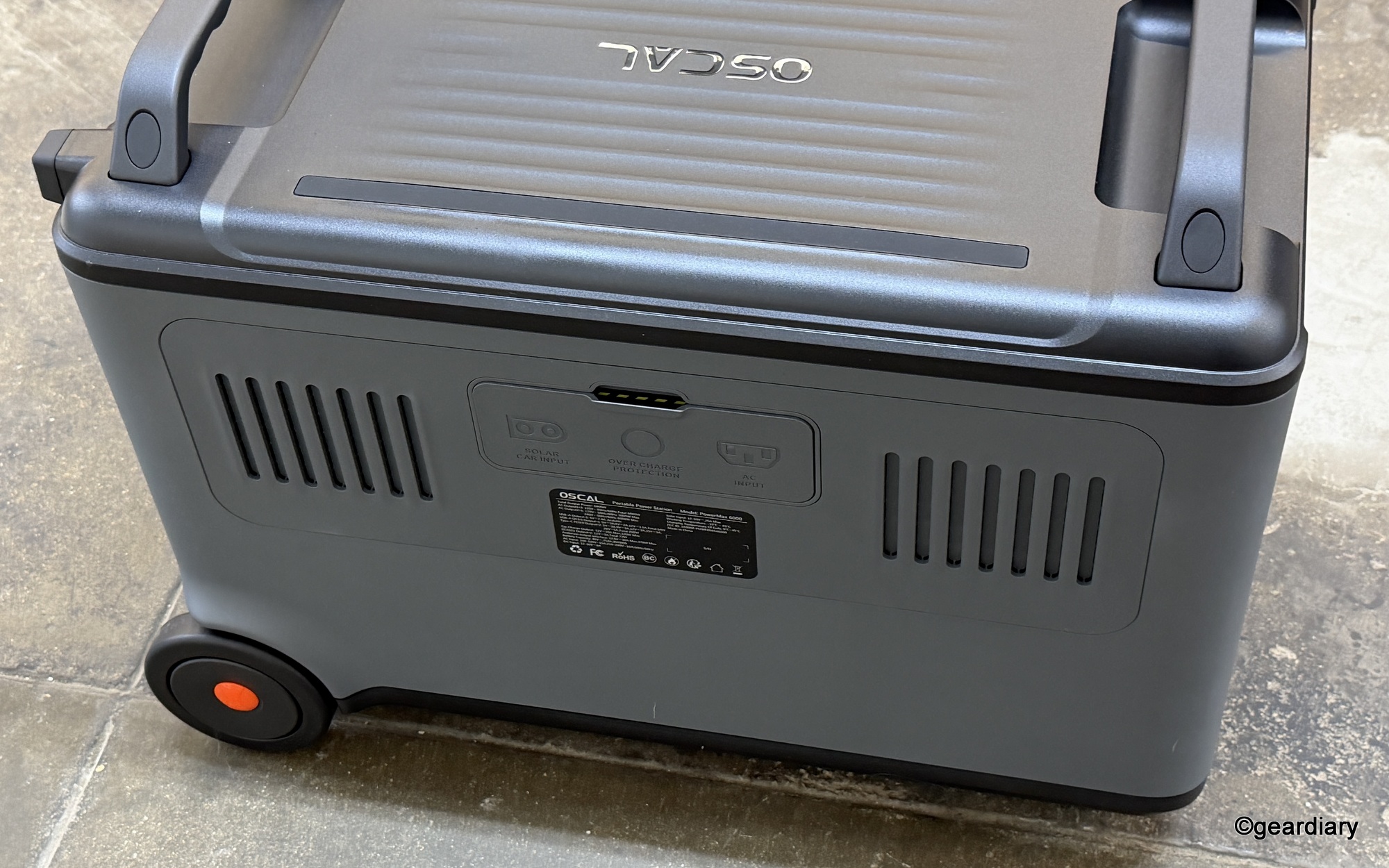
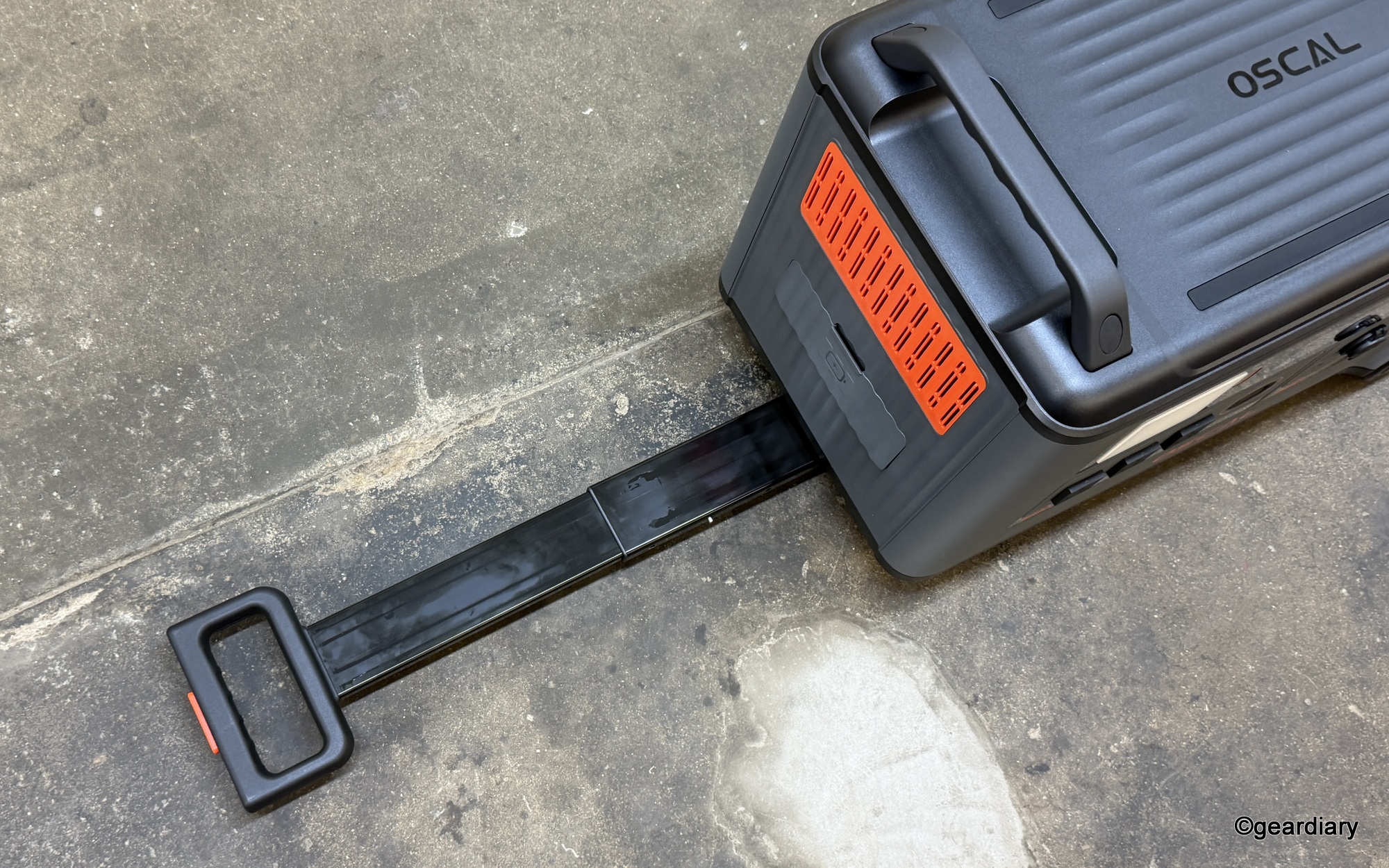
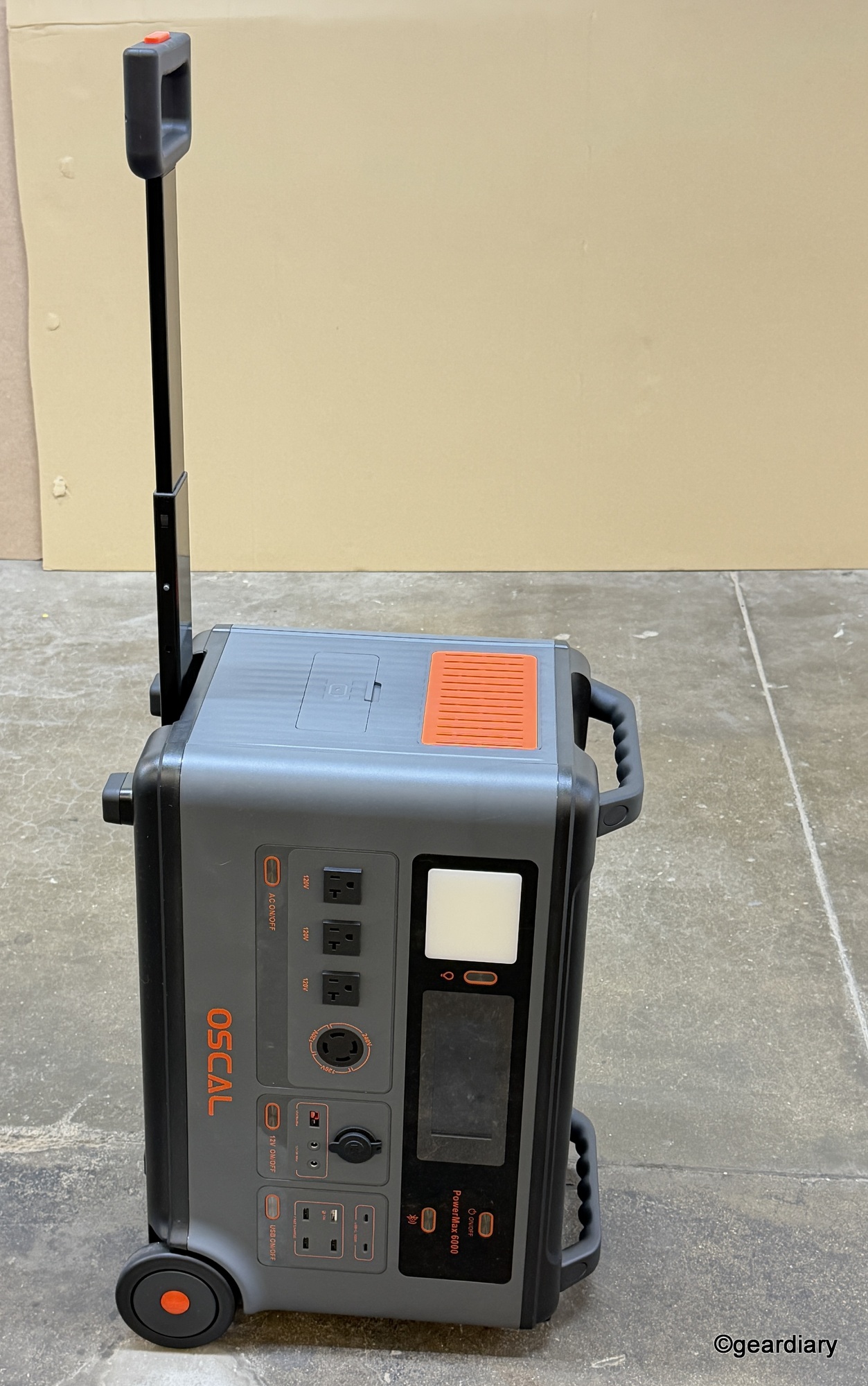
The wheels and retractable handle are essential, not decorative, at this weight. They allow one person to reposition the unit without attempting an awkward two-person deadlift disguised as weekend preparedness. The handle feels solid when fully extended, and the wheels crossed door thresholds and uneven ground easily, keeping the unit stable as it was pulled.
Capacity That Can Keep More Than the Lights On
The OSCAL PowerMax 6000 contains a 3,600-watt-hour battery. Watt-hours measure stored energy, so this figure describes how long the power station can run something rather than how much instantaneous power it can deliver.
During testing, battery-to-AC conversion efficiency measured approximately 89%. That’s a respectable result for a power station this size. It means that roughly 3,200 watt-hours of the battery’s rated capacity may be available to AC-powered equipment under favorable conditions, with the remaining energy consumed by the inverter, cooling system, and other internal electronics.
Actual runtime will depend heavily on the load. A 100-watt device could theoretically run for roughly 32 hours, while a constant 1,000-watt load would reduce that to a little more than three hours. Appliances such as refrigerators and freezers cycle on and off, so their runtime can be considerably longer than a simple calculation based on their maximum wattage might suggest.
The PowerMax 6000 could realistically keep a refrigerator, freezer, internet equipment, lights, and several smaller electronics operating through a moderate outage. It could also run a microwave, coffee maker, power tool, or window air conditioner when needed, although using multiple high-draw appliances simultaneously will drain the battery quickly.
Resistive heating appliances are particularly demanding. A 1,500-watt space heater, for example, could consume the PowerMax 6000’s usable AC capacity in roughly two hours, depending on temperature, inverter losses, and whether the heater cycles. The inverter may be powerful enough to run an appliance, but the battery may not have enough energy to run it for very long.
OSCAL promotes up to 30 days of whole-home backup, but that number applies only to a fully expanded 57.6-kilowatt-hour system and assumes average consumption of just 2 kilowatt-hours per day. The base 3.6-kilowatt-hour unit contains enough nominal energy to supply approximately 1.8 days of power at that unusually modest consumption rate, before accounting for conversion losses. It’s a useful backup battery, but the base unit alone won’t power a typical American household for a month.
The 6,000-Watt Claim Needs Context
The OSCAL PowerMax 6000’s inverter produces a pure sine wave, meaning its AC output closely resembles the electricity supplied by the utility grid. That matters for motors, compressors, audio equipment, computer power supplies, and other electronics that may run poorly or noisily on cheaper modified-sine-wave inverters.
Voltage remained impressively stable during testing, with fluctuations below 2%. That consistency is more meaningful than an inflated peak-power number because equipment depends on predictable voltage as loads change.
OSCAL advertises 6,000 watts of output and a 9,000-watt surge lasting up to five milliseconds. Surge capacity helps start appliances with compressors or motors, which can briefly draw several times their normal operating power.
There is, however, an important limitation buried in the specifications. When the internal temperature is below 131 degrees Fahrenheit, the PowerMax 6000 can operate at 6,000 watts for five minutes before reducing its output to 5,000 watts. At or above 131 degrees, it immediately reduces output. OSCAL also recommends treating approximately 5,500 watts as the practical continuous ceiling, and output is further restricted when the battery falls below 10 percent.
That doesn’t make the PowerMax 6000 underpowered, but it does mean the prominent 6,000-watt figure shouldn’t be interpreted as an indefinite continuous rating. Buyers who need to operate a sustained 6,000-watt load should look elsewhere or reduce expectations accordingly. OSCAL’s own product specifications confirm the five-minute limit and subsequent reduction to 5,000 watts.
For intermittent loads, such as a microwave, circular saw, air compressor, or pump, the distinction may not matter. For continuous operation of several heaters, large air-conditioning equipment, or other demanding loads, it matters quite a bit.
What 240-Volt Support Does—and Doesn’t—Provide
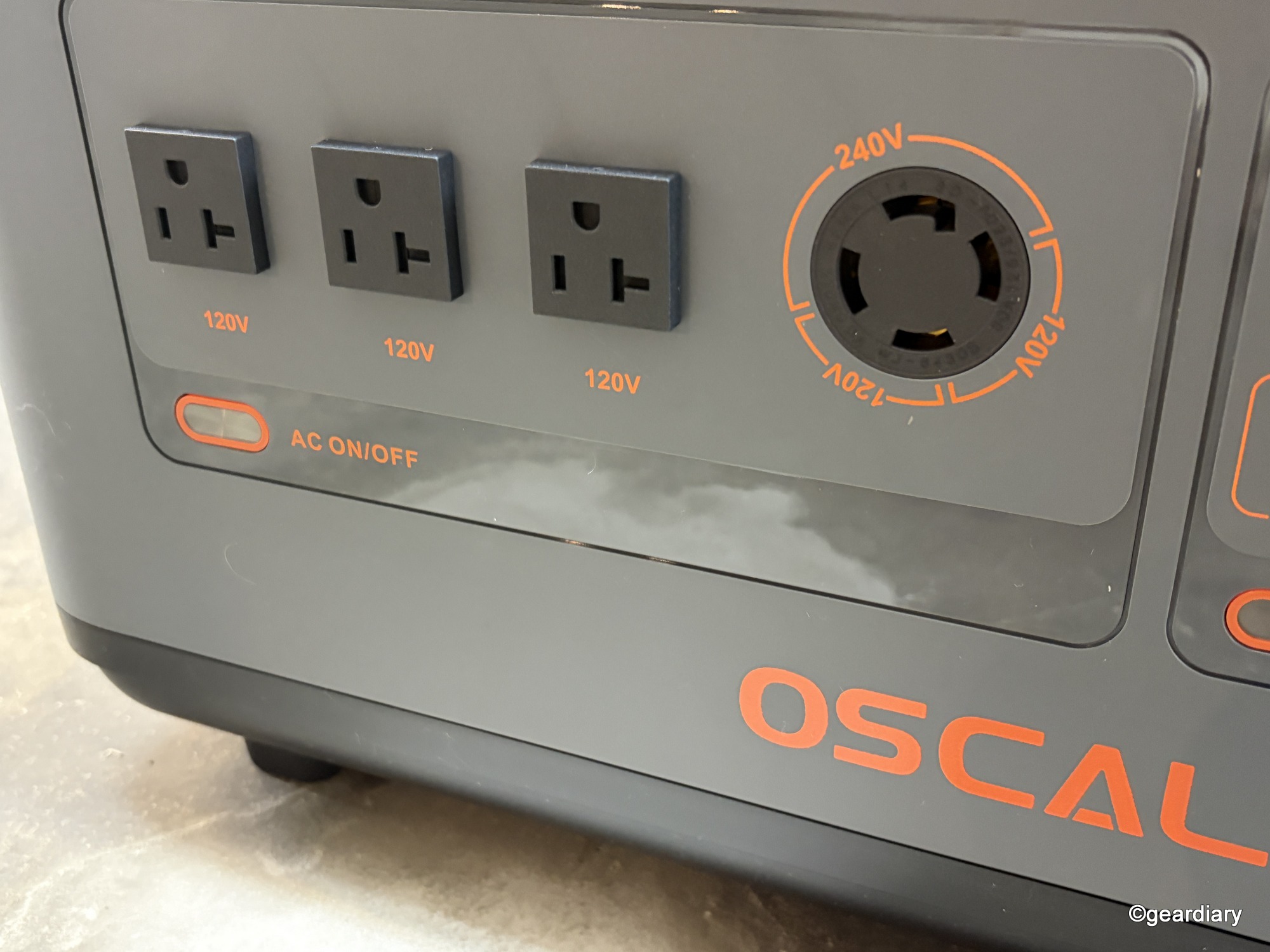
The 240-volt output is one of the PowerMax 6000’s more consequential features. It can potentially operate compatible pumps, welders, larger air conditioners, electric tools, and other equipment that smaller 120-volt power stations can’t handle. You’ll still need to confirm the appliance’s plug type, running wattage, starting surge, and current requirements; the presence of a 240-volt outlet doesn’t guarantee that every 240-volt appliance will be compatible.
It’s also important to distinguish between powering an appliance and powering a home. You can plug compatible equipment directly into the PowerMax 6000, but energizing circuits through a home’s electrical panel requires properly selected transfer equipment and professional installation. The standard PowerMax 6000 package doesn’t include a transfer switch, inlet, interlock, or dedicated smart-home panel.
A backup source should never be connected to household wiring through an improvised cord or by backfeeding an outlet; a transfer switch isolates the home from utility power and should be installed by a qualified electrician.
Fourteen Outputs, but Only Three Are Standard 120-Volt Outlets
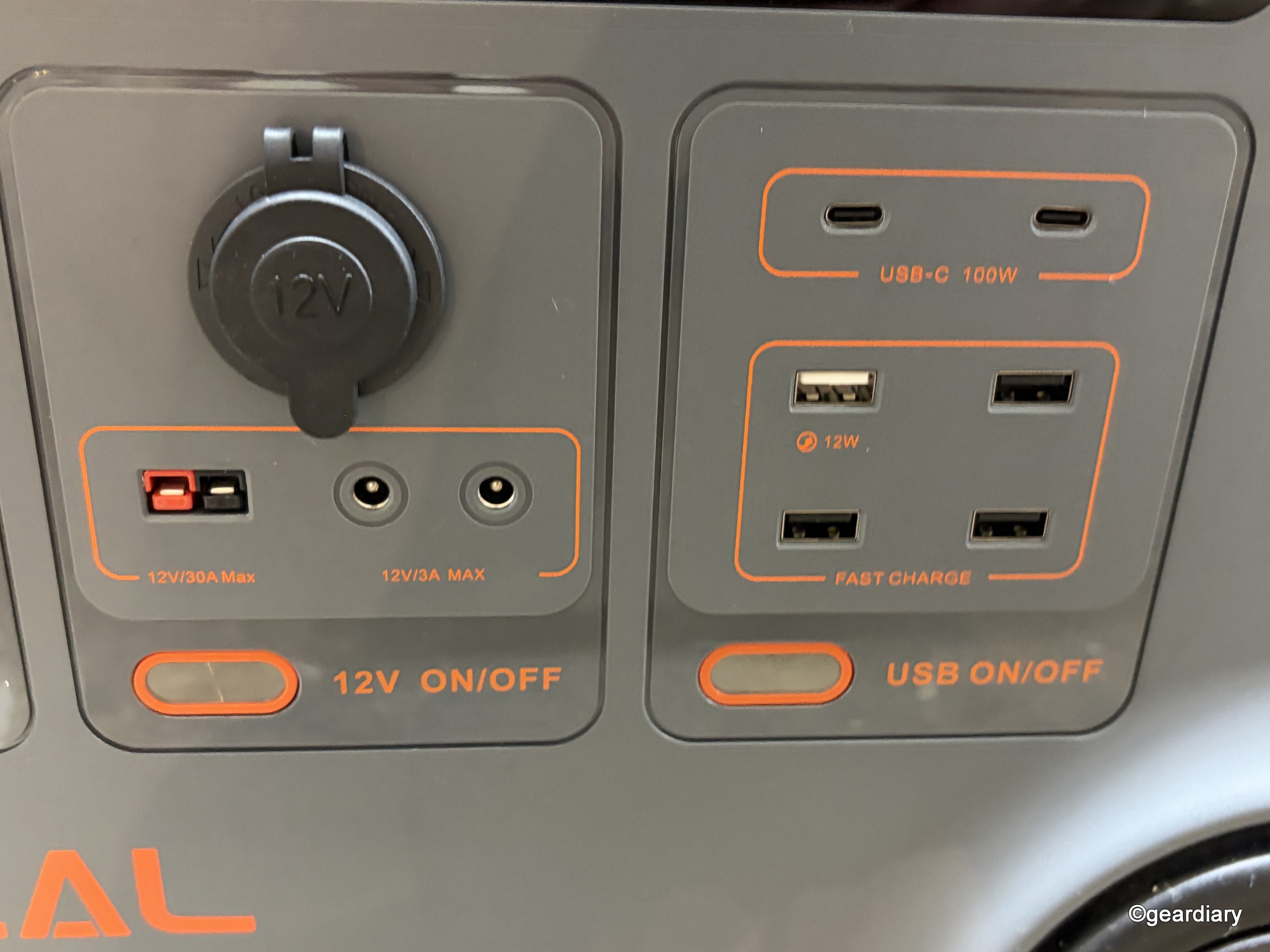
In addition to its three standard 120-volt, 20-amp AC outlets and one 240-volt, 30-amp connection, the PowerMax 6000 provides two USB-C ports capable of delivering up to 100 watts each, three 18-watt USB-A ports, one 12-watt USB-A port, one 120-watt automotive-style outlet, one 378-watt Anderson connection, and two 36-watt DC5521 barrel outputs.
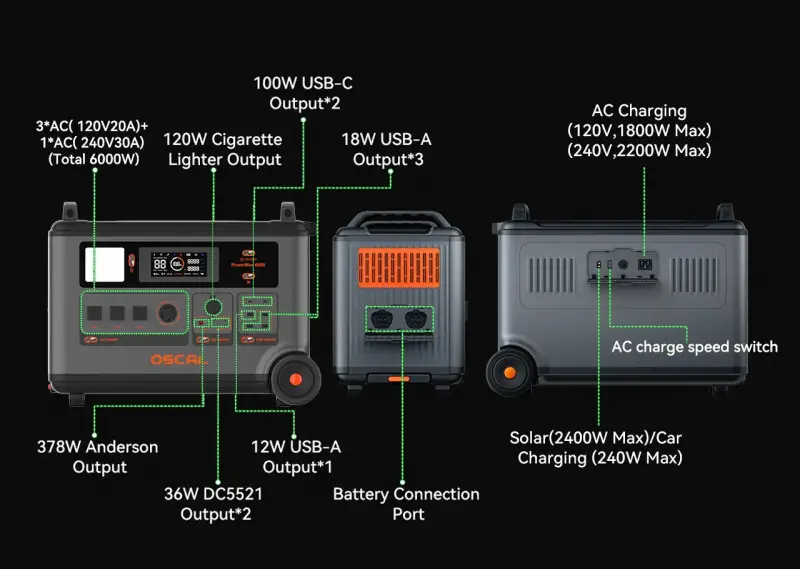
The two 100-watt USB-C ports can charge most laptops directly, eliminating the efficiency loss and cord clutter involved in connecting their AC adapters. The USB-A connections are suitable for phones, lights, radios, and older accessories, although their charging speeds are modest by current standards.
The Anderson and DC outputs are more specialized, but they’re useful for RV accessories, portable refrigerators, communications gear, and other equipment designed to run directly from DC power. Avoiding conversion between battery DC and household AC and back again can improve efficiency.
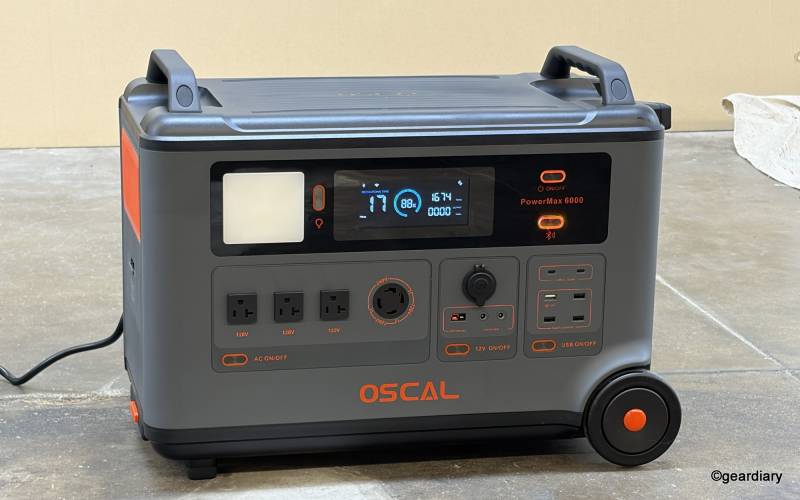
Three standard AC outlets may be enough for a carefully planned emergency setup, but they feel conservative on a machine capable of producing several thousand watts. A refrigerator, freezer, and internet system would occupy all three 120-volt outlets, leaving no room for a lamp, television, or another appliance without a properly rated power strip. The fourth AC connection is a 240-volt, 30-amp outlet intended for compatible high-voltage equipment, not another ordinary household plug.
Controls and Display
The PowerMax 6000’s controls are built around large physical buttons and an LCD that reports battery percentage, incoming power, outgoing power, and estimated operating time. Physical controls are preferable to an app-only design during an outage, especially when the home network may be among the things that aren’t working.
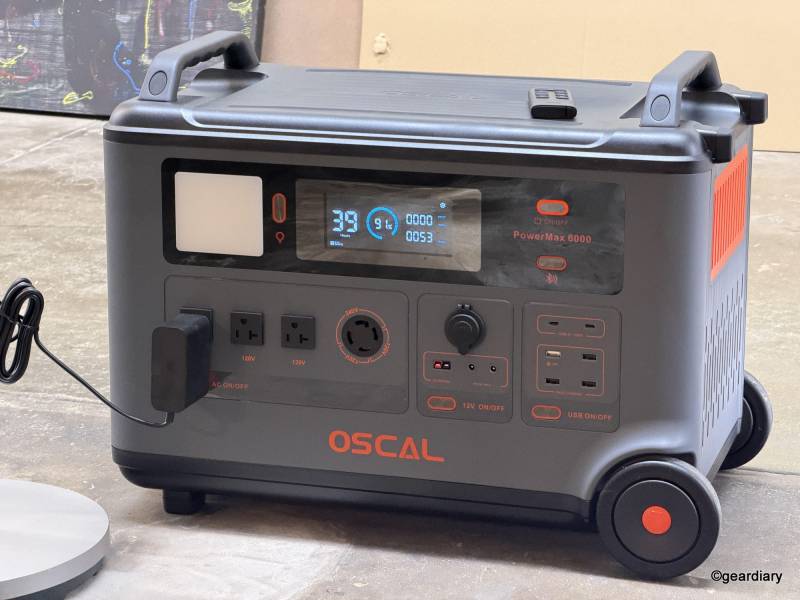
With the battery fully charged and the connected fan running continuously at its highest speed, the display estimated 39 hours of runtime. In testing, the fan continued running for approximately 39 hours before the battery was nearly depleted, making the estimate impressively accurate.
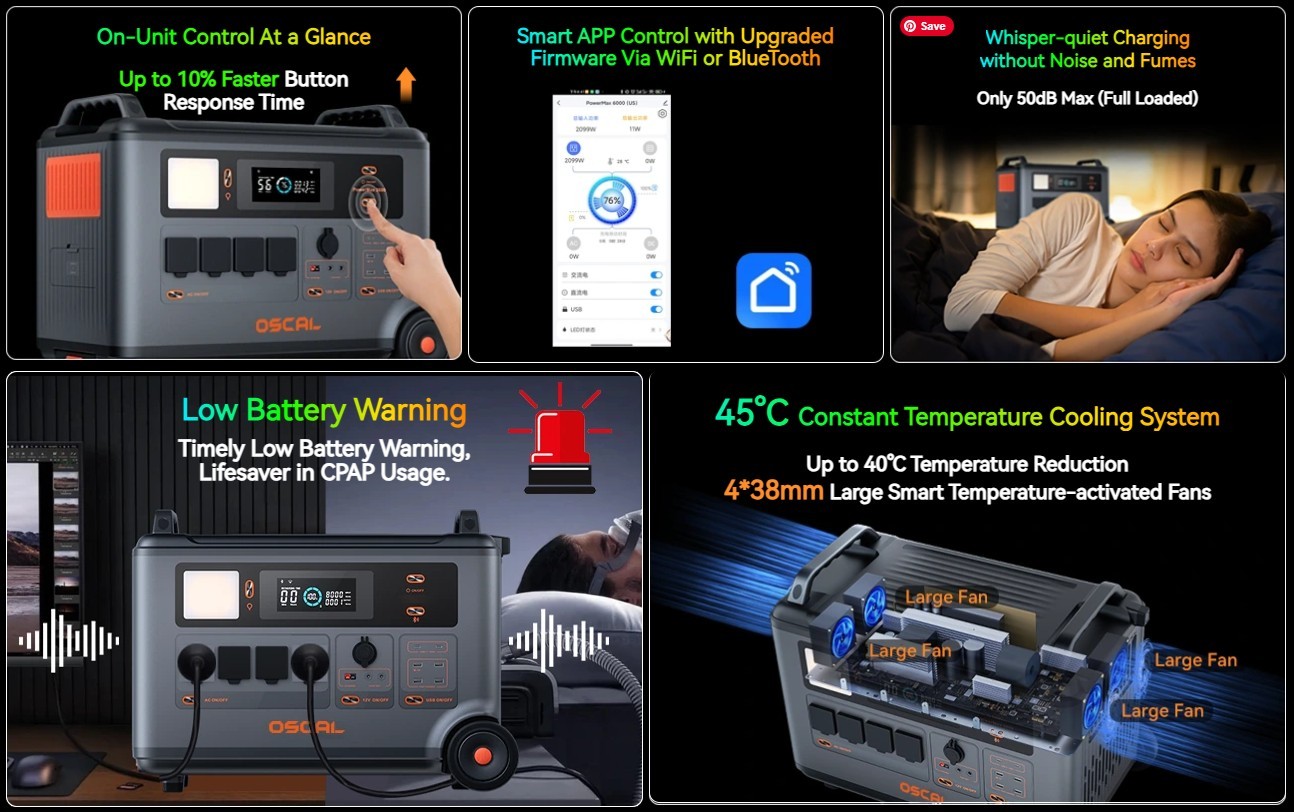
OSCAL says the buttons respond up to 10 percent faster because of an unspecified Texas Instruments chip. Without a published baseline or meaningful timing data, that claim is more brochure decoration than purchasing guidance. What matters is whether the controls respond consistently without requiring repeated presses.
The App Is Helpful, but It Shouldn’t Be Mandatory
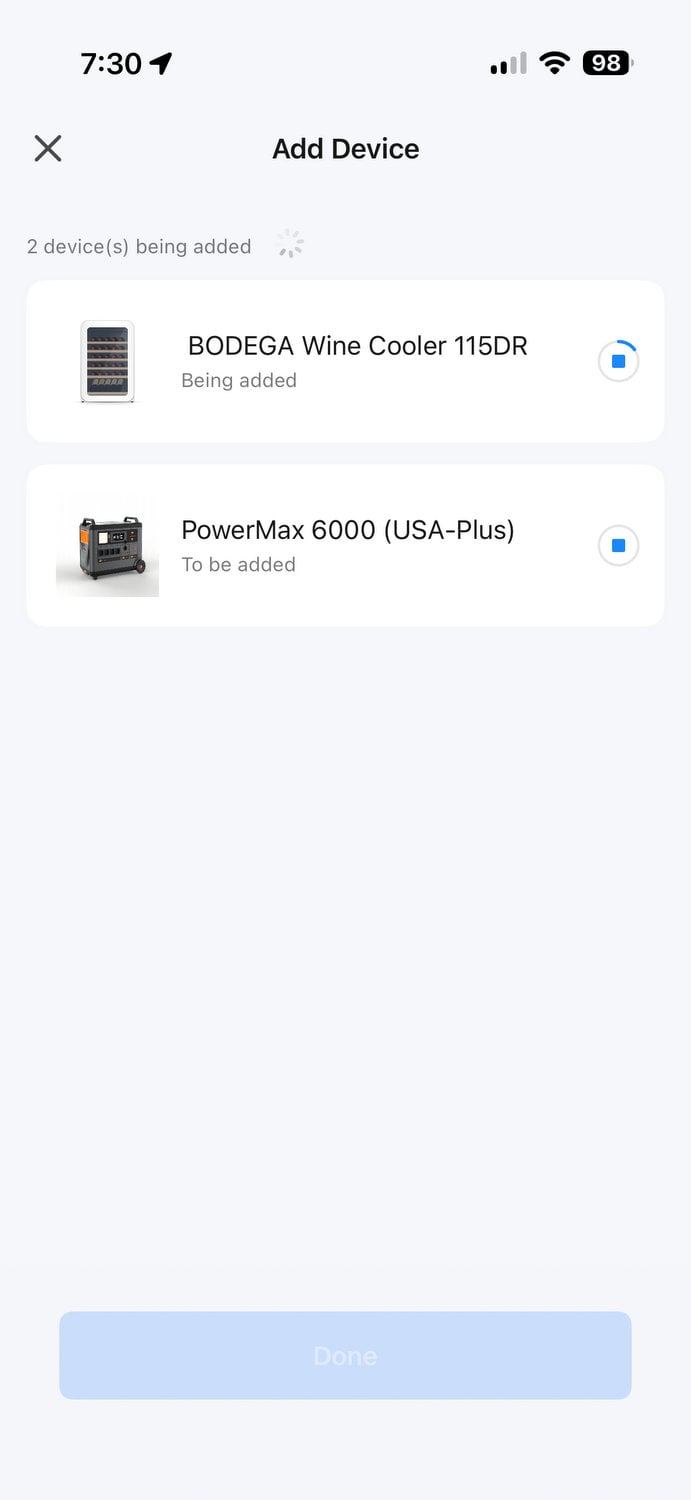
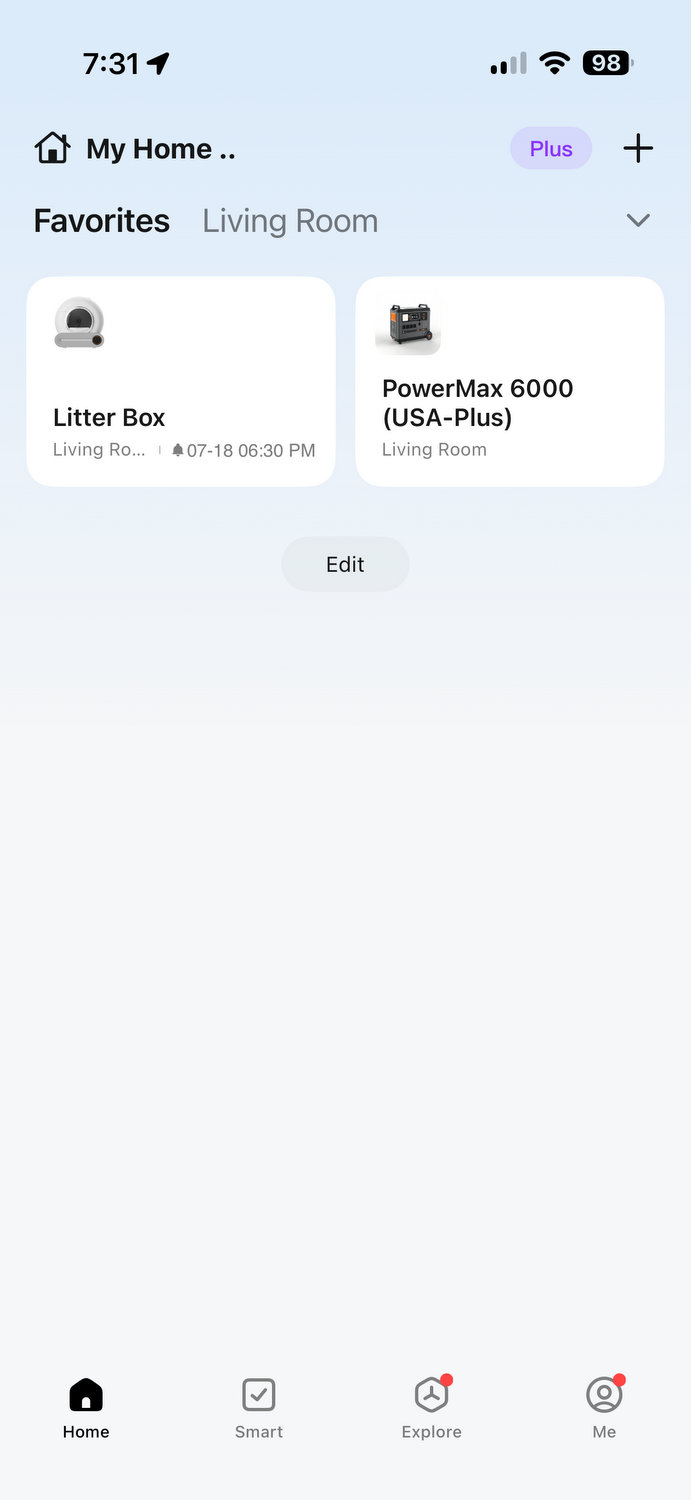
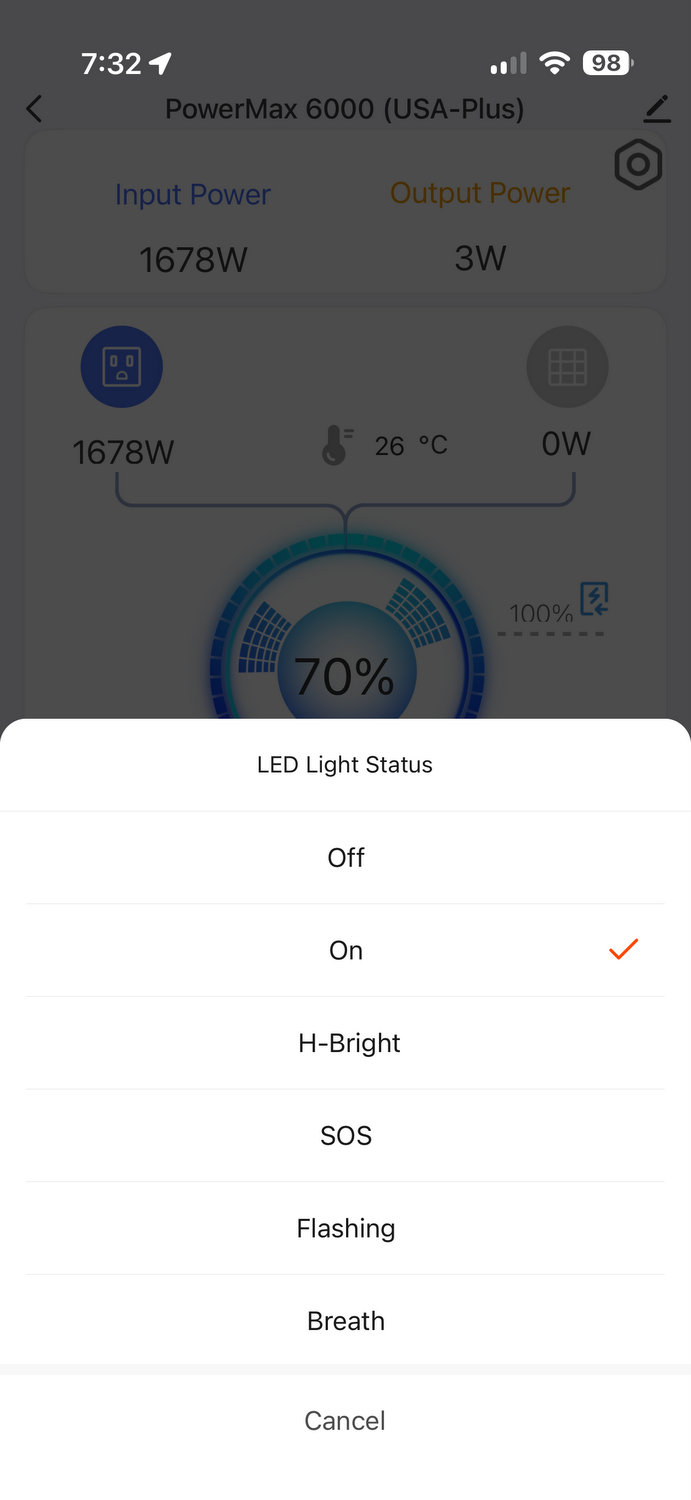
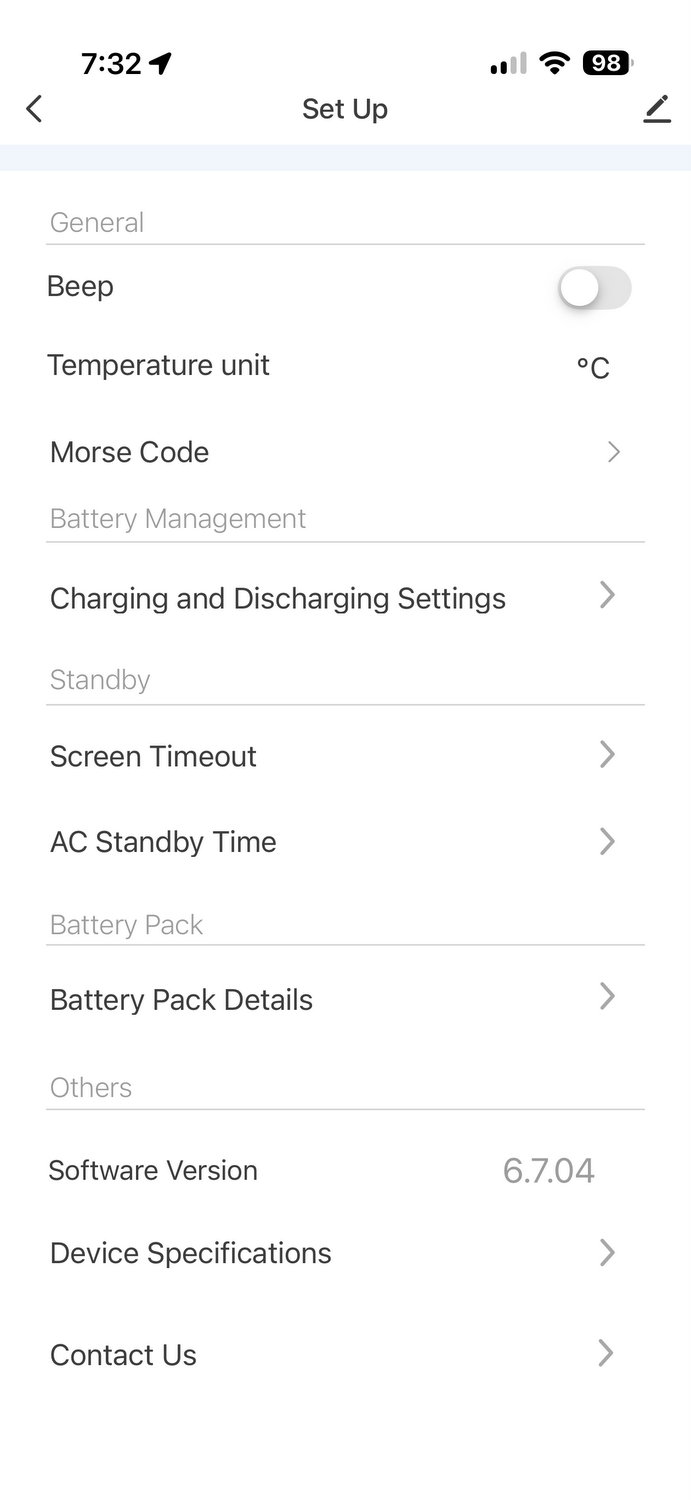
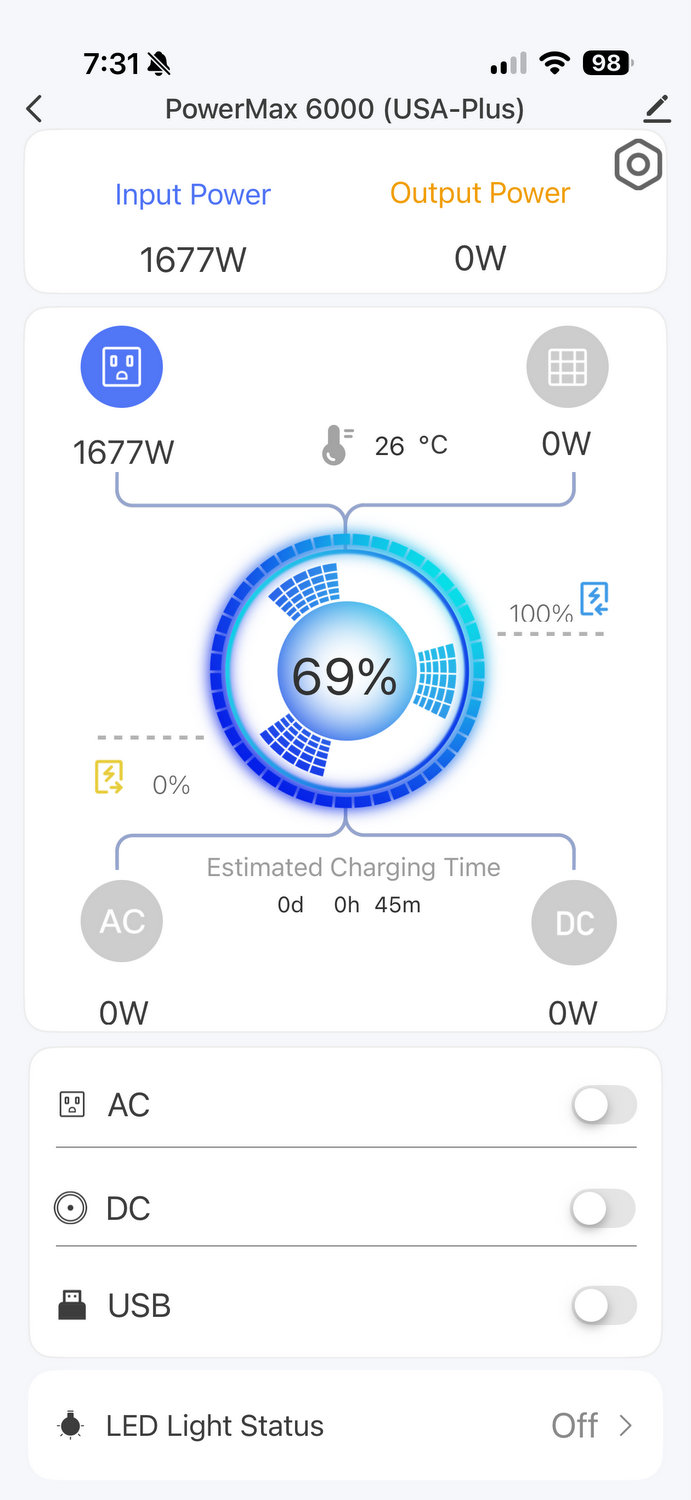
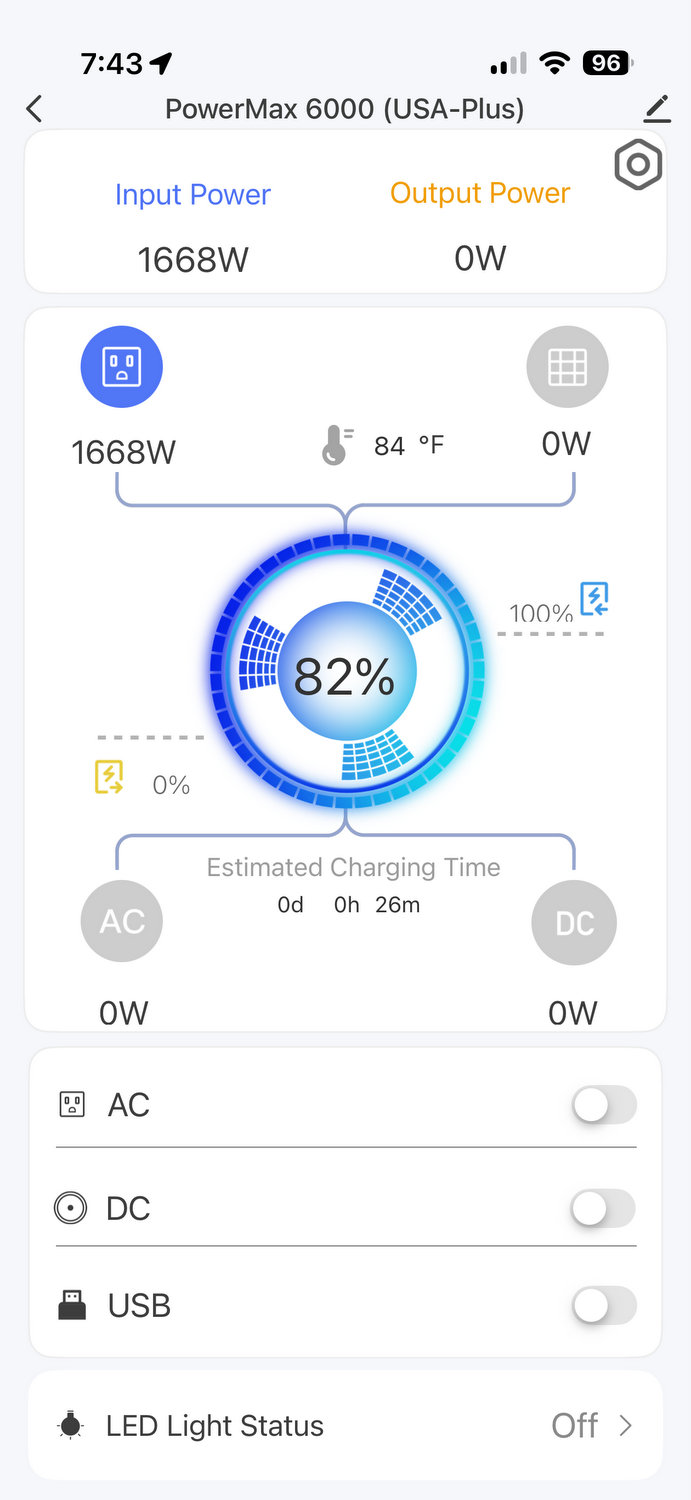
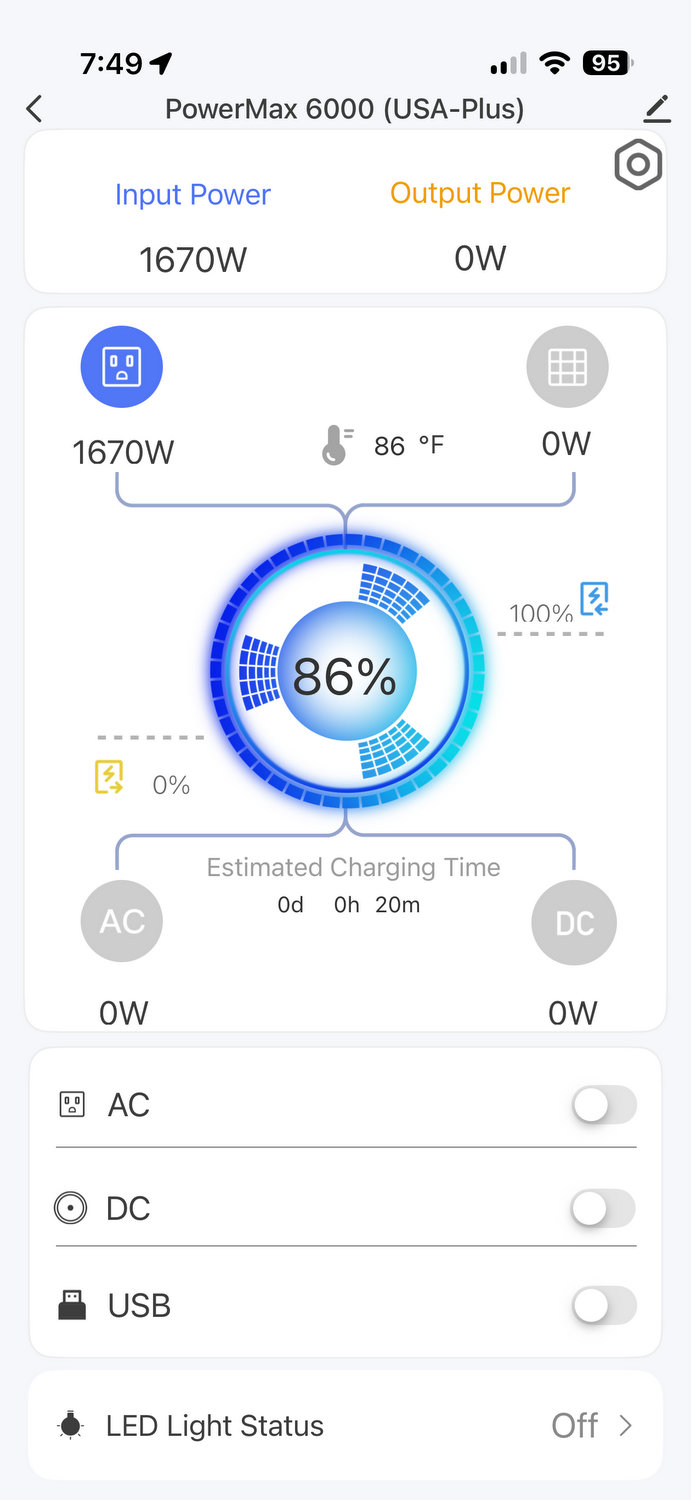
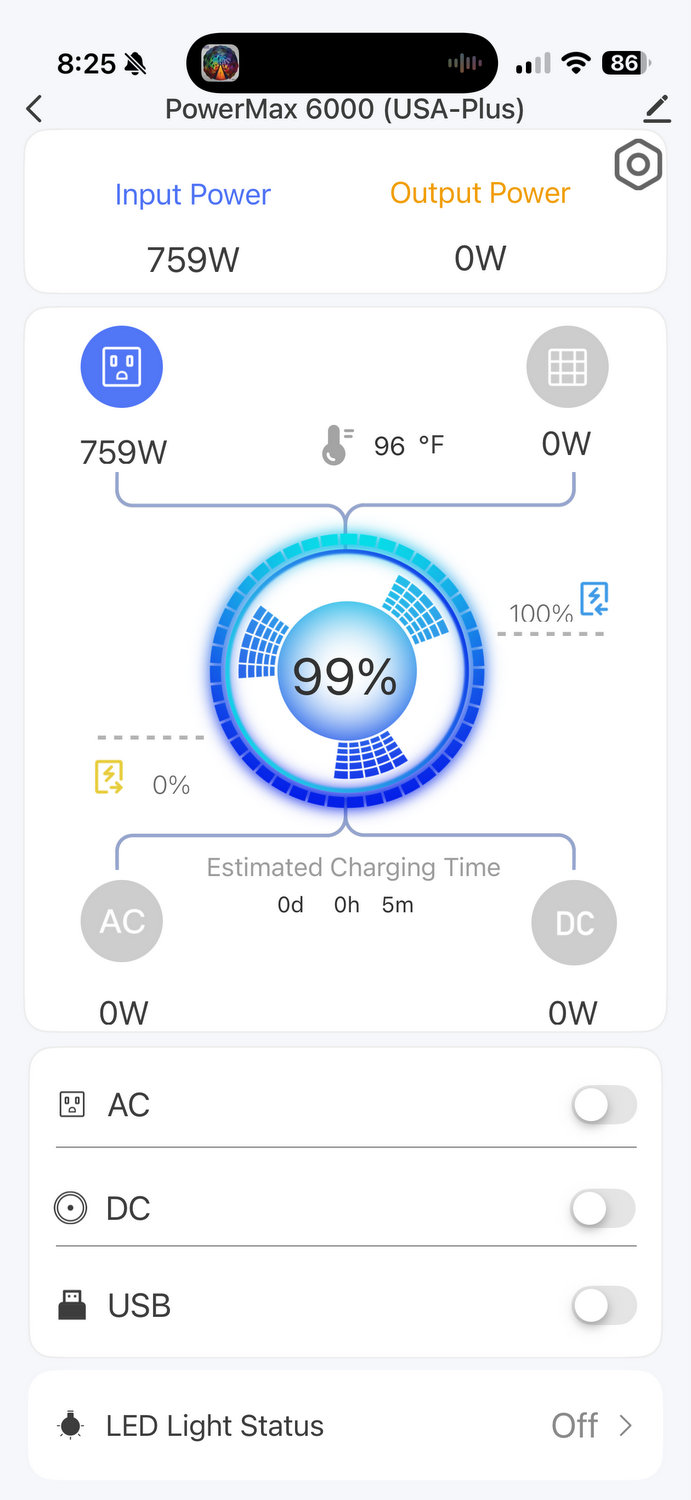
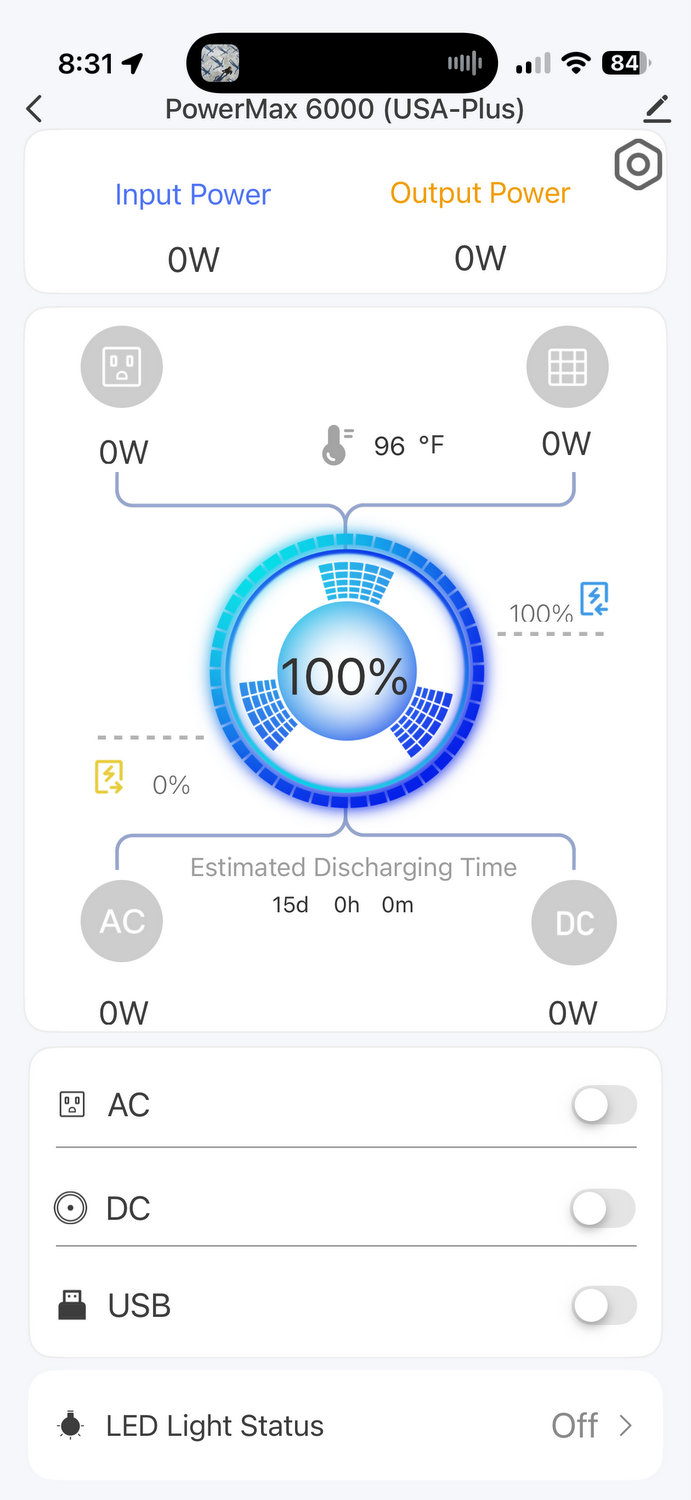
The OSCAL app connects through either Bluetooth or Wi-Fi. It allows you to monitor battery capacity, incoming and outgoing power, and operating status from a phone. Remote control is useful when the OSCAL PowerMax 6000 is in a garage, utility room, RV storage compartment, or another location you don’t want to visit every time you need to check the battery.
Bluetooth provides local access when internet service is unavailable, while Wi-Fi is more convenient for checking the unit from elsewhere in the house. Firmware updates are also delivered through the app.
The power station remains usable without the app, as it should. A backup power product that becomes helpless when a cloud service has a bad afternoon would miss the point rather spectacularly.

Charging Is Fast Enough to Matter During an Outage
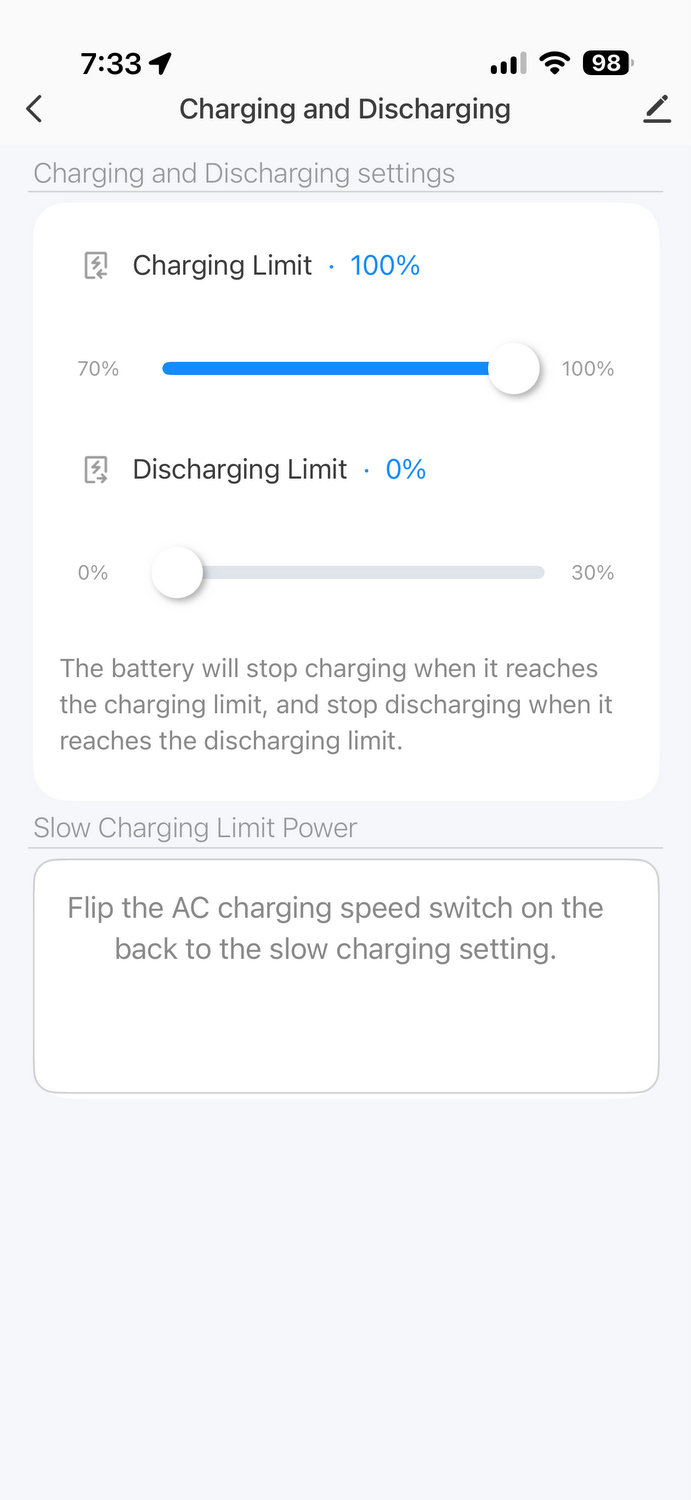
The PowerMax 6000 can accept up to 1,800 watts when charging from a standard 120-volt household outlet and up to 2,200 watts from a compatible 240-volt source. OSCAL estimates a complete recharge in approximately 1.96 hours at the higher input rate, so you shouldn’t assume that figure applies when the unit is plugged into an ordinary wall receptacle.
A physical switch on the rear panel controls the AC charging speed. Slowing the charging rate may be useful when the PowerMax 6000 shares a circuit with other equipment or when lower fan noise matters more than shaving time from the recharge.
Solar input supports up to 2,400 watts under ideal conditions, with a claimed full charge in approximately 1.5 hours. Achieving that result would require a large solar array, strong sunlight, appropriate panel placement, compatible voltage, and favorable battery temperature. Portable panels rarely spend an entire charging session at their headline output, so real-world solar times will usually be longer.
The OSCAL PowerMax 6000 includes an MPPT solar charge controller, which adjusts the electrical load on the panels to capture available solar energy more efficiently as sunlight changes. The 2,400-watt ceiling is only part of the compatibility equation, however. Solar arrays must also remain within the power station’s permitted voltage and current ranges. OSCAL’s consumer-facing specifications don’t make those limits as prominent as they should, so anyone assembling a third-party array should consult the product label and manual before connecting panels.
Reaching the advertised maximum with OSCAL’s 400-watt panels would nominally require six of them, along with enough unobstructed space to deploy the entire array. The charging claim is plausible under controlled conditions, but it’s hardly a “set one panel beside the tent and go make coffee” scenario.
Combining AC and solar input increases the total charging power to up to 3,000 watts. OSCAL claims that this can recharge the station fully in approximately 1.44 hours or reach 80 percent in about 69 minutes.
Those are valuable speeds because a backup battery is only useful once it has energy in it. Still, pushing several thousand watts into a battery generates heat and can create noticeable fan noise.
The included car cable provides up to 240 watts and takes approximately 15 hours to recharge fully. It’s better viewed as a way to add energy while driving than as a practical primary charging method.
OSCAL also advertises compatibility with electric-vehicle charging stations, lead-acid batteries, gas generators, wind turbines, and water turbines. Those are potential input sources rather than included capabilities, and some will require additional hardware, careful voltage matching, or a professionally designed installation. Plugging a battery into improvised renewable-energy equipment is not the ideal moment for creative experimentation.
A Cleaner Alternative to a Generator, but Not an Endless One
The OSCAL PowerMax 6000 offers several advantages over a gas generator. It can operate indoors, produces no exhaust, requires no fuel storage, starts immediately, and remains far quieter than a combustion engine. Those qualities make it considerably more convenient for overnight outages, apartments, RVs, workshops, and situations where generator noise or fumes would be unacceptable.
It isn’t an unlimited generator replacement, however. Once its 3,600-watt-hour battery is depleted, it needs access to utility power, solar panels, a vehicle, a generator, or another compatible charging source. A fuel-powered generator can continue operating as long as fuel remains available, while solar charging depends on weather, panel capacity, and daylight.
The distinction becomes particularly important during extended outages. The PowerMax 6000 is well suited to carrying essential equipment through shorter interruptions, supplementing a generator, or allowing a generator to run intermittently rather than continuously. Whether it can replace one altogether depends on your daily energy consumption and ability to recharge it.
Cooling and Noise
Four temperature-controlled fans, each approximately 1.5 inches across, cool the inverter and battery electronics. OSCAL says the system checks the temperature every 100 milliseconds and can substantially reduce internal temperatures under heavy loads.
OSCAL rates maximum noise at 50 decibels under full load. That’s relatively quiet for equipment capable of supplying several thousand watts, but it isn’t silent. Fan pitch, cycling behavior, and vibration can make two devices with the same measured volume sound very different in a quiet room.
Fast Backup Switching for Computers and Other Electronics
When connected between a wall outlet and supported equipment, the PowerMax 6000 can switch to battery power in approximately five to eight milliseconds after utility power fails. That’s fast enough that many desktop computers, routers, televisions, refrigerators, aquariums, and similar devices should continue operating without an obvious interruption.
This feature is better described as emergency power supply functionality than as a true online uninterruptible power supply. An online UPS continuously powers equipment through its inverter, providing additional isolation from grid disturbances. The OSCAL normally passes utility power through and switches when it detects a failure.
The distinction won’t matter for many household electronics, but anyone protecting servers, specialized networking hardware, or unusually sensitive equipment should confirm that the device’s power supply can tolerate the transfer time.
A CPAP machine is a clear use case because the PowerMax 6000 has ample capacity and provides a low-battery warning. Anyone relying on electrically powered medical equipment should still confirm compatibility with the equipment manufacturer and maintain a separate emergency plan rather than trusting a single battery, regardless of its capacity.
Standby Behavior and Pass-Through Operation
Backup equipment often spends more time waiting than working, making standby consumption an important part of its real-world efficiency. As with any power station with its AC inverter enabled, the PowerMax 6000 consumes some energy even when nothing is actively drawing power. OSCAL doesn’t provide a clear no-load consumption figure, so anyone planning to leave it continuously armed for backup duty should expect some gradual battery loss rather than assuming the displayed charge will remain unchanged indefinitely.
OSCAL’s “24/7” wording means the unit can remain connected and ready to take over automatically; it doesn’t mean the internal battery can power connected equipment indefinitely. While utility power remains available, the unit can stay connected and ready to switch over without relying primarily on its stored battery capacity. Once the grid fails, its operating time depends on inverter overhead, the battery’s state of charge, and the demands of the connected equipment.
Low-draw equipment also deserves consideration. Routers, networking hardware, CPAP machines, and similar devices consume relatively little power, but some power stations automatically disable their outputs when the load falls below a preset threshold. OSCAL doesn’t document the PowerMax 6000’s low-load shutoff behavior or adjustment options as clearly as it should, so compatibility with equipment that draws very little power should be confirmed before relying on it overnight.
OSCAL says the PowerMax 6000 can power connected equipment while it’s being recharged. That pass-through capability is important during an extended outage because it allows the battery to replenish while continuing to support essential devices. The input source still needs to provide more power than the connected equipment consumes for the battery percentage to rise; otherwise, charging may slow, stop, or fail to keep pace with the load.
Pass-through operation can also increase heat and fan activity because the power station is managing incoming and outgoing energy simultaneously. Anyone planning to use the PowerMax 6000 continuously as backup equipment should leave adequate clearance around its ventilation openings and avoid placing it in an enclosed cabinet.
Battery Chemistry, Expansion, and Longevity
The PowerMax 6000 uses lithium iron phosphate (LiFePO4) battery cells. Compared to the nickel-rich lithium-ion batteries traditionally used in smaller power stations, LFP cells generally offer better thermal stability and a longer cycle life. However, they’re heavier for the same stored energy.
OSCAL describes the cells as “EV-grade,” although it doesn’t identify their manufacturer or the qualification standard behind that term. The more useful, verifiable details are the LFP chemistry, battery-management protections, and stated cycle life.
The battery is rated to retain at least 80 percent of its original capacity after more than 3,500 full charging cycles. OSCAL translates that into up to 25 years of use when cycled every other day. The arithmetic works, but battery aging also depends on temperature, storage charge, discharge depth, and calendar time. The 25-year figure should be read as an illustration of cycle life, not as a guaranteed service life.

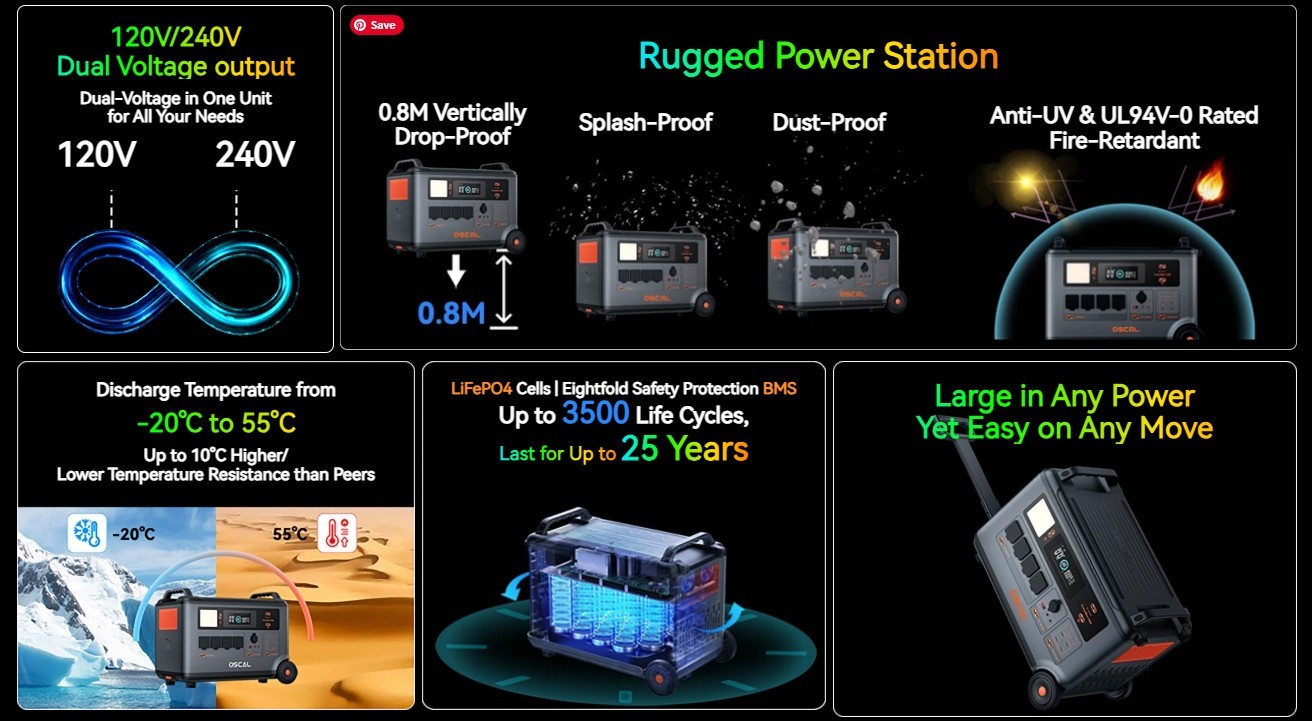
An eight-layer battery-management system monitors overcurrent, short circuits, high and low voltage, high and low temperature, overcharging, and overloading. These protections are expected in a modern high-capacity power station, but they’re particularly important when the inverter can deliver enough current to operate major appliances and power tools.
The base 3,600-watt-hour capacity can be expanded with up to 15 BP3600 batteries, bringing the total to 57.6 kilowatt-hours. Each expansion battery adds another 3,600 watt-hours, weighs approximately 79.4 pounds, and includes its own connection cable.
Adding batteries extends runtime but doesn’t make the PowerMax 6000 a higher-output inverter. Whether the system contains 3.6 or 57.6 kilowatt-hours, connected equipment remains subject to the same output limits. A fully expanded installation would involve well over half a ton of batteries, so while the system is electrically modular, mobility has packed a bag and quietly left the building.
Temperature Range and Outdoor Use
The OSCAL PowerMax 6000 can discharge between -4 and 131 degrees Fahrenheit, with OSCAL recommending operation between 14 and 113 degrees for the best performance. Charging is supported between 32 and 122 degrees, although temperatures between 32 and 113 degrees are preferred. Storage is rated from 14 to 113 degrees.
Those limits are broad enough for most garages, workshops, RVs, and outdoor trips, but charging below freezing isn’t supported. That’s typical for LFP batteries because charging cold lithium cells can cause permanent damage.
At the upper end, the PowerMax 6000 begins warning at 131 degrees and activates high-temperature protection at approximately 136 degrees. Leaving it in a closed vehicle or direct summer sun would be unwise, no matter how enthusiastically the marketing materials discuss desert expeditions.
The Built-In LED Light
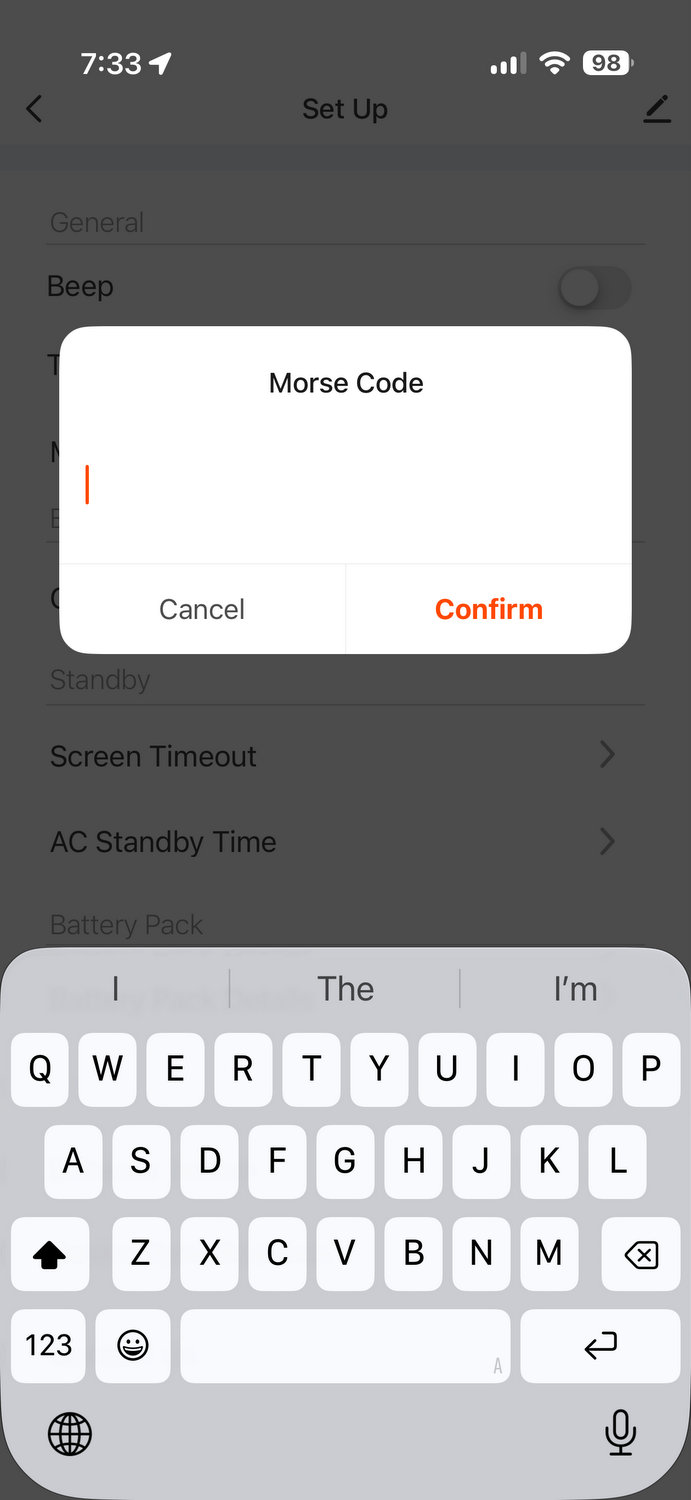
The PowerMax 6000 includes five conventional LED lighting modes—dim, bright, breathing, flashing, and SOS—plus a Morse-code signaling function. The dim and bright settings are the most practical for illuminating a room, work area, or campsite during an outage, while the flashing and SOS modes and the Morse-code function are intended to attract attention or communicate distress in an emergency.
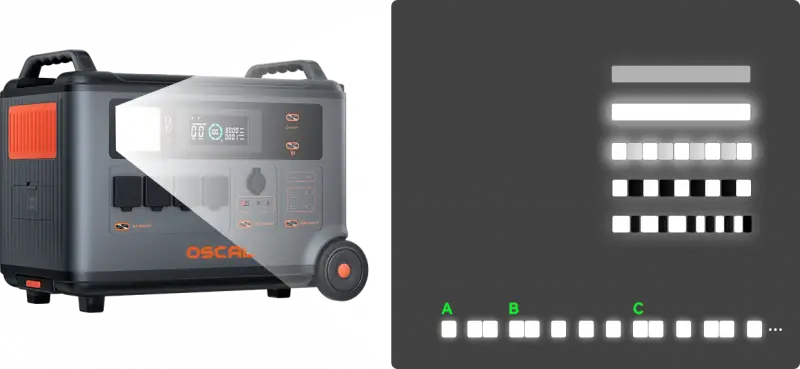
The light is useful, but the PowerMax 6000’s size and weight make it better suited to stationary illumination than carrying around like a lantern. Its real value is having an emergency light already available when the power goes out, without needing to search for a flashlight whose batteries quietly expired sometime during the previous presidential administration.
How the OSCAL PowerMax 6000 Compares
The closest direct rival is the Anker SOLIX F3800. It has a slightly larger 3,840-watt-hour battery, true 6,000-watt continuous 120/240-volt output, a 9,000-watt surge rating, up to 2,400 watts of solar input, six standard 120-volt outlets, dedicated high-voltage connections, and a five-year warranty. It’s heavier at 132.3 pounds, and its 1,800-watt standard AC input matches the OSCAL’s maximum input from an ordinary 120-volt household outlet. The OSCAL can reach 2,200 watts when connected to a compatible 240-volt source.
The EcoFlow DELTA Pro Ultra sits a tier higher. Its base battery stores 6,144 watt-hours, while its inverter supplies 7,200 watts continuously at 120 or 240 volts. It supports up to 5,600 watts of solar input, carries an IP54 dust- and splash-resistance rating, and can integrate with EcoFlow’s Smart Home Panel. The separate inverter and battery weigh about 182 pounds combined, and the system costs substantially more, but it’s a more convincing foundation for permanent whole-home backup.
The PowerMax 6000’s strongest argument is value. It offers rapid charging, dual-voltage output, high surge capacity, good battery-to-AC conversion efficiency, extensive expansion, and a lighter chassis than the Anker F3800. It makes sense for someone who wants to run large appliances, workshop equipment, an RV, or several household essentials without paying for a premium whole-home ecosystem.
OSCAL’s documentation contains inconsistent warranty language. The included warranty card confirms five years of coverage, while the company’s website lists five years, “4+ years,” and seven years in different places. OSCAL’s PR representative confirmed that the PowerMax 6000 carries a five-year warranty and said the webpage would be corrected after the discrepancies were brought to the company’s attention.
The Verdict
The OSCAL PowerMax 6000 is a capable, thoughtfully equipped power station with enough stored energy and inverter output to do considerably more than keep phones charged during a blackout. Its stable voltage, approximately 89% battery-to-AC conversion efficiency, fast recharging, useful DC connections, 120/240-volt capability, and expandable LFP battery system give it legitimate appeal for home backup, RV travel, fieldwork, and off-grid projects.
It’s also easier to move than its 101-pound weight suggests, although “portable” still means rolling it rather than lifting it. The lack of a published IP rating limits confidence outdoors, three standard 120-volt outlets feel stingy, and OSCAL needs to clean up its documentation.
Most importantly, the PowerMax 6000 shouldn’t be purchased under the assumption that it will deliver 6,000 watts continuously. Its official five-minute limit at that output changes how the product should be compared with the Anker SOLIX F3800 and other true 6,000-watt systems.
Viewed as a 5,000- to 5,500-watt power station with a short-duration 6,000-watt mode, however, it’s a much more convincing proposition. It has enough capacity for meaningful emergency backup, charges quickly enough to take advantage of brief power restorations, and provides uncommon flexibility for its price. OSCAL hasn’t produced the most polished system in the category, but it has produced one that deserves consideration, provided you read the specifications more carefully than the advertising expects you to.
The OSCAL PowerMax 6000 retails for $2,499.00; it is available directly from the manufacturer and other retailers, including Amazon. Pricing and availability vary considerably among base units, solar-panel bundles, and expanded-capacity packages.
Source: Manufacturer-supplied review sample
What I Like: Stable voltage and strong battery-to-AC conversion efficiency; 120/240-volt output from one unit; Rapid AC and solar charging; Broad selection of USB and DC connections; Expandable LFP battery system; Wheels and retractable handle make its substantial weight manageable; Fast five- to eight-millisecond backup switching
What Needs Improvement: The advertised 6,000-watt output is limited to five minutes before dropping to 5,000 watts; No formal IP dust- or water-resistance rating; Only three standard 120-volt AC outlets; Inconsistent warranty coverage information on OSCAL’s website and in its marketing materials