


The Lowdown
If you like wine, cider, and mead, however, the iGulu F1 is a very interesting piece of kit. It offers precision control of many elements of fermentation, which gives you the flexibility to focus on the details, and the small batch size makes it easy to experiment with recipes and flavors without worrying about wasting expensive ingredients – and disposing of really undrinkable results!
Overall
Pros
- Compact and quiet
- It uses standard CO2 cylinders
- Expansive homebrew potential
Cons
- Passive ABV monitoring
- Support for standard stainless bottle filler equipment
- The app is a bit kludgy
- The ingredient kits are lacking in quantity and quality
In 1993, American Michael Berstein dreamed of bringing microbrewing to consumers through small batches and foolproof kits. The result, Mr. Beer, became a profitable piece of countertop brewing equipment that’s still around today. Since then, advances in technology have inspired plenty of attempts at more sophisticated homebrewing devices, including the iGulu F1 in this review. But can it really perform as advertised? In short: kind of. Fermentation makes true one-step, brew-to-glass simplicity difficult. Still, the iGulu F1 is an intriguing device for homebrewers who value its features.

The iGulu F1 is an all-in-one brewer and kegerator for the homebrew aficionado. (Gnome not included.)
Prologue: A Homebrew Primer
Fermentation is a natural, organic process which we humans have used to our advantage for millennia. Fermentation is an organic breakdown process intentionally carried out in a controlled environment for food preservation. In the case of alcohol, fermentation is the process by which yeast consumes and digests various forms of sugar, converting it to alcohol. This served the important purpose of making beverages with a long shelf life, which mattered a lot before the invention of home refrigeration.
Pirate’s grog was, in essence, rum and water, because it was impossible to maintain potable water aboard their ships on the open seas. The rum’s alcohol content prevented hazardous pathogens from growing in stored drinking water. Once upon a time, American children drank lightly alcoholic cider in the dead of winter, because it was safe to drink!
In all forms of brewed, undistilled fermentation, the basic steps are:
- Sanitize! Because fermentation is an organic process, bacteria and other wild pathogens can contaminate your brew and ruin it. Sanitization of everything is crucial. I use a product called Star San, which is food-safe, very effective, and preferred by many homebrew enthusiasts.
- Prepare the ingredients. For meads, wines, and ciders, this doesn’t involve much at all – you just need yeast and juice (or, in the case of mead, honey and water). For beers, you have to boil the malt first, which converts its sugars for the yeast to consume. For the most control, use distilled water, but if you do this, make sure you understand the nutritional requirements of your chosen yeast. You might need to add nutrients to your recipe to prevent the yeast from dying off too quickly.
- Put everything in a fermenter. Fermentation doesn’t always involve a closed environment. Open fermentation only prevents insects and other creatures from intruding while allowing free air exchange. Some traditional fermentation methods (not just alcohol) rely on open fermentation. Closed fermentation can be pressurized or not; the latter uses a one-way airlock to let gases escape without letting ambient air in. Pressurized fermentation uses a pressure vessel to prevent gases from escaping, and a valve releases gas to maintain the desired pressure.
- Wait and monitor. Fermentation is a time-bound process. You wait while the yeast eats the sugar and dumps out ethanol (alcohol) and carbon dioxide (CO2). Monitoring progress by checking the specific gravity (the alcohol content) helps ensure the best results. It’s also important to monitor your brewing environment, since the ambient temperature of the room will affect the pace of the fermentation process.
- Rack your brew. Once the brew is complete, you can filter it for sediment before bottling, but you typically transfer it into bottles or kegs, which preserves carbonation and prevents oxygen intrusion. This step is called racking.
- Age your brew. This is an important step. Aging isn’t just about maturing your brew’s flavors; it’s also the time needed for any yeast still suspended in the liquid to sink to the bottom of the bottle. If you don’t filter your brew (most homebrewers don’t), drinking it too soon can cause grassiness, especially if you use the wrong yeast for your desired flavor profile.
The Tech Behind the F1
iGulu F1 aims to simplify these steps, so you need only need to collect your ingredients, sanitize your equipment, add everything, press a button, and wait for completion. iGulu’s advanced controller does the heavy lifting for you by monitoring temperature and pressure and automatically adjusting for both. A magnetic valve maintains the desired pressure, while a 13.2W heating element and 60W compressor manage the temperature in a range from 35-86° F (2-30° C).
The compressor also makes it possible to cold crash right from the device – a process by which a finished brew is rapidly chilled, which causes the yeast to die off and fall out of suspension and helps clarify the brew. This step isn’t necessary, but it speeds up finishing and aging.
A CO2 canister fixture at the rear of the device supports SodaStream standard threaded (blue) canisters. I purchased a pack of SimpliSoda canisters on Amazon, which required a small adjustment to the valve assembly on the iGulu F1 before they worked correctly.
Once fermentation is complete, the iGulu F1 will dispense CO2 into the keg from an attached cylinder, which most importantly prevents oxygen intrusion and maintains the stability of your homebrew for up to thirty days. Without a CO2 canister, your homebrew is only good for 24 hours unless you bottle it immediately, because dispensing will pull air into the keg as it loses CO2 pressure.
Granular, automated temperature and pressure control (the keg is designed for up to 29 psi) makes the iGulu F1 an interesting homebrewing kit. No other currently available countertop appliance offers both in one unit.
This all sounds really good on paper, but what about in practice?
In the Box
The F1 includes enough to get you started, but it’s missing some key bits.
- The F1 appliance with preinstalled faucet (dispensing tip)
- One Tritan pressure keg
- Two dispensing lines for use with pressure keg
- One dispensing line for use with 5-liter mini-kegs, such as these
Not in the Box
What’s missing is non-trivial. CO2 is more or less mandatory if you want to maintain product quality and prevent oxygen intrusion. It would be really nice if iGulu included a canister in the box, although this might preclude easy shipping.
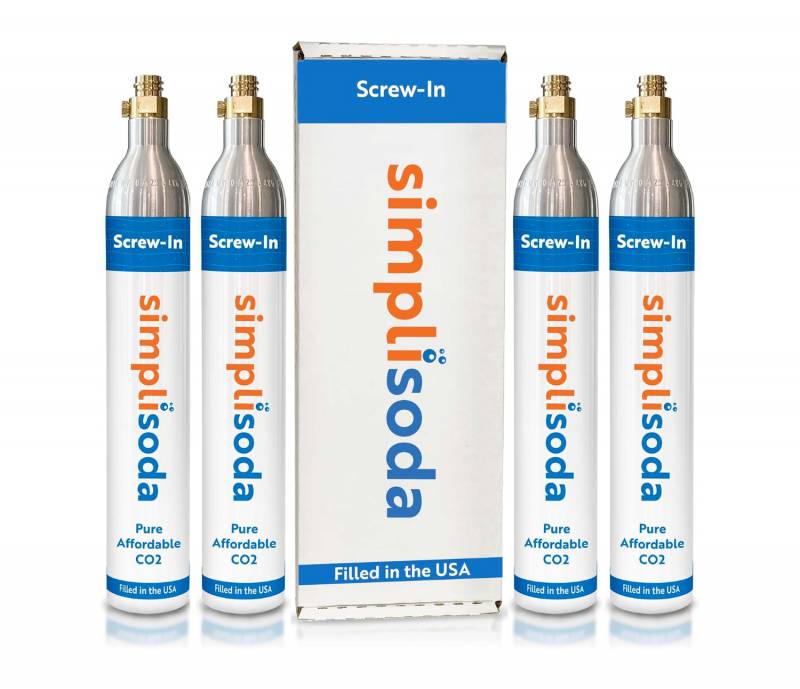
The iGulu F1 uses standard threaded SodaStream-style CO2 canisters, like these from SimpliSoda. (Image: Amazon)
More importantly, racking or bottling is effectively mandatory if you want the highest quality and flavor product. Without a second keg in the box, you’ll need to buy something. iGulu’s replacement kegs work great and make it easy to transfer pressurized liquid between the two, but you can also use any appropriate keg or bottles.
You can easily remove or swap the iGulu F1’s faucet by pulling it straight down. Right now, no accessory lets you attach a threaded stainless steel bottle filler like this UBREW USA product. I hope iGulu introduces a replacement faucet for this purpose, because it makes bottling a snap, no matter what you’ve made or what bottles you’re using.
What Is Tritan?
Because the iGulu F1 is made for high-pressure brewing, it uses a modern polymer originally developed by Eastman Chemical in 2007 under the brand name Tritan. Designed specifically for food-safe use as a BPA-free alternative to polycarbonate (Lexan), this material is very chemically stable and resistant to microfractures – two concerns in homebrewing, because of the solvent nature of alcohol and the acidity of common sanitizers used in brewing.
Tritan is not scratchproof, so cleaning and maintaining it requires careful handling. Soaking in hot water and using a dye-free, fragrance-free oxygen cleaner should be enough to fully clean the interior of the keg after use. Avoid using paper towels or scrubbing sponges – just use your hands to brush off any stubborn bits from your last homebrew.
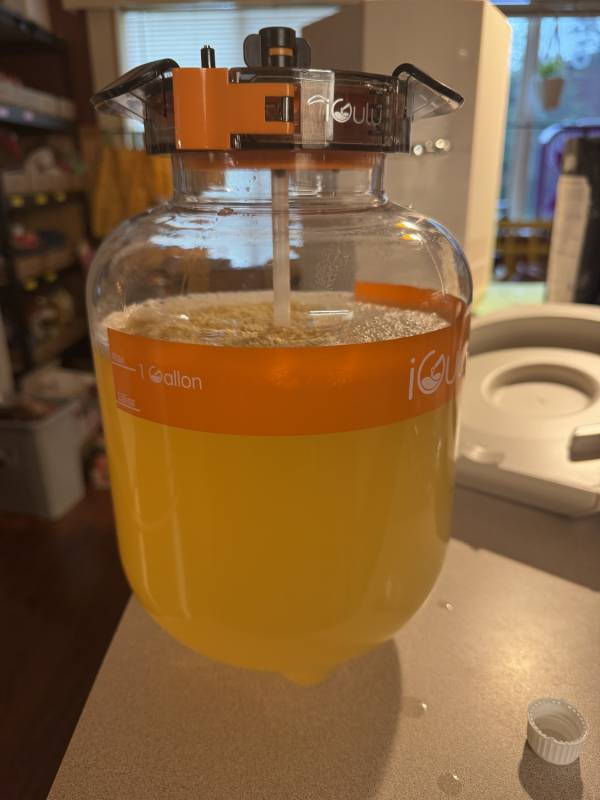
The Tritan keg is designed for high-pressure brewing.
One-step Brewing?
The iGulu F1 tries to make home fermentation easy and simple, and to that end, it’s advertised as a way to go from recipe to glass in one real step: add the ingredients, close the keg, insert, scan the included NFC tag, and wait.
To do this with its beer kits, iGulu uses hop extracts, which means if you care a lot about the quality of your homebrew beer, you probably aren’t going to be interested in iGulu’s kits. Hops, which are one of the principal ingredients in all beer, are generally added during the boil of the barley malt. Dry hopping is also a popular way to add distinct flavor to beer by adding hops during (or after) fermentation.
Since iGulu’s kits don’t involve boiling, and you’re not supposed to open the pressurized fermenter mid-ferment to alter the ingredients, the kits use hops and malt extracts rather than unprocessed, raw ingredients.
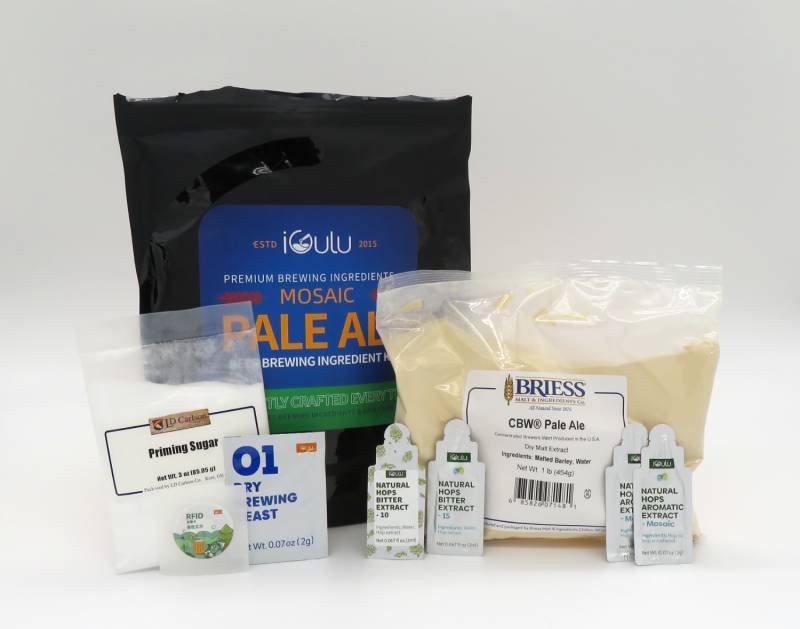
iGulu’s kits include everything you need to make a gallon of the fermented beverage you choose.
This is going to make a good enough beer – as in, it will be drinkable and taste like beer – but it won’t be a particularly high-quality product, because much of the flavor from the hops is lost in the commercial extraction process. That said, the kits make preparing and producing beer at home simple and foolproof.
Although homebrew beer can stay pressurized for several months with little flavor loss, this requires racking the finished product to a separate keg so the yeast cake is left behind. If this isn’t done, the decomposing, dead yeast at the bottom of the keg will add unwanted flavors to the finished product. Keeping your beer pressurized prevents most of this decay, but it’s still inevitable and will affect flavor more and more over time.
By advising a shelf life of no longer than thirty days when using a CO2 canister, the iGulu F1 avoids most of the problems associated with keeping the yeast cake in the finished product, but ultimately, you will probably still want to rack your homebrew so you can chill it and allow it to age long enough to fully settle the sediment.
The minimum aging time required varies dramatically with your recipe and the flavors you’re hoping to achieve. With some recipes, the yeast in suspension is a desired addition to the flavor profile, such as with wheat beers, while with very dark stouts and ales, aging generally requires up to a year to build the desired flavors.
Dragon Eye Mead Kit
iGulu sent me a couple of kits to try. I started with the Dragon Eye Mead, which is advertised as a light, sparkling, “session” mead – this refers to beverages which are low enough in alcohol content by volume to be drinkable all day without getting overly intoxicated. This is accomplished by using a minimal amount of honey, at 600 grams, with a (very) short brew time of only ten days.
Brewing a kit is simple: tap the included RFID tag on the side of the iGulu F1, over the big “G” in the logo, to start the recipe.
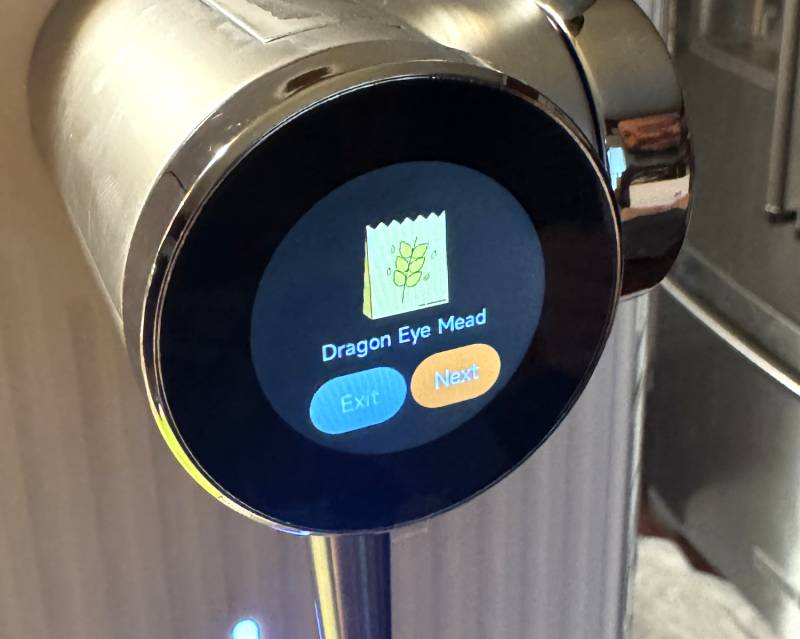
Brewing any of iGulu’s kits is as simple as tap-and-go.
Ingredients
- 600 grams Chinese-sourced honey
- Distilled water
- Dry brewing yeast
Recipe
- Stage 1: ten (10) days @ 68.0° F
- Stage 2: two (2) days @ 35.6° F (cold crash)
Results
The end result is something which is sort of mead lite – it’s bubbly, light on flavor, and light on alcohol. Out of the tap and only about 24 hours after the cold crash completed, there was a definite grassiness from the yeast, so we added an unbleached drip coffee filter to the equation, which cut out most of the yeast (and the head) and noticeably improved the flavor.
Even with filtration, though, this mead barely qualifies as an alcoholic beverage. The alcohol content is very low – I didn’t measure the specific gravity before and after fermentation to calculate the ABV, but I think it was probably 3% or less.
Unlocking Master Mode
The iGulu F1 does support custom recipe creation…if you spend $100 on this card to unlock Master Mode. This is necessary if you want to use your own recipes, which I think may very well be a necessary upgrade if you aren’t specifically aiming for very light, low-alcohol homebrews. All of iGulu’s built-in homebrew recipes are meant for rapid brewing, so they hit the absolute minimum fermentation time and then flip to the cold crash, which stops fermentation and settles much of the suspended yeast. This results in a weak, light homebrew.
With Master Mode, you can create your own homebrew recipes, with multiple brew stages, each featuring a custom length, temperature, and pressure. As of this review, setting a custom pressure for the iGulu F1 isn’t available, but the brand noted an upcoming firmware and app update will enable this capability. High-pressure brewing meaningfully changes the qualities of the final homebrew, so the ability to make both atmospheric and high-pressure recipes expands the range of results.
I do think there is one big missing feature from Master Mode – passive monitoring of specific gravity, which is a measure of a homebrew’s alcohol content. As sugar converts to alcohol, the liquid’s properties change in measurable ways. If the iGulu F1 could monitor this property during an ongoing fermentation, it could automatically cold crash when the desired alcohol concentration is reached.
Without this feature, you will generally want to monitor the specific gravity of your brew as it ferments. This is easy to do with the iGulu F1 – just open the pinch valve on the dispensing tube and pull the tap. A few drops on an inexpensive refractometer are all you need to measure the alcohol content of your homebrew. If you want to get fancy, there are a variety of digital options, like this one, which are much more precise.
So with Master Mode unlocked, just how different is it?
(Narrator: WOW, is it a massive improvement!)
Mead of the Wolves (Our Recipe)
For a real look at the iGulu F1’s capabilities, we decided to make our own mead after the Dragon Eye kit finished and was (mostly) consumed. We bottled the last bit of the Dragon Eye mead in a flip-top bottle, stuck it in the fridge, and set about making our own recipe.
Ingredients
- 1300 grams locally sourced honey – this is more than twice the Dragon Eye!
- Distilled water
- Red Star Premier Classique champagne yeast
- 1.5 grams Fermaid 0 yeast nutrient – this keeps the yeast healthy, especially when using distilled water
Recipe
- Stage 1: twelve (12) days @ 68.0° F
- Stage 2: seven (7) days @ 62.6° F
- Stage 3: two (2) days @ 35.6° F (cold crash)
Results
The difference between the mead kit and our custom recipe is dramatic. Even with a full three weeks of chilled aging, the Dragon Eye mead is far too light as an actual alcoholic beverage. It’s lighter than an American light pilsner, which is saying something!
By comparison, our recipe was much more alcoholic and had no trace of the grassy flavor left by the yeast in the Dragon Eye kit. This is specifically because we used significantly more honey and chose a yeast that is good in fruity, sweet homebrews. The Premier Classique yeast seems to fall out of suspension more readily, which means fewer unwanted flavors from dead, suspended yeast. We also measured the specific gravity before and after fermentation, and our finished product ended up at 7.75% ABV.
We had friends over to try our new mead, and everyone enjoyed it! We were all surprised by the dramatic difference, even without racking and aging. While aging is still necessary for really good flavor, what we learned from this experience was how the iGulu F1 can definitely produce a drinkable beverage with very minimal effort on the part of the homebrewer, no matter your skill level and knowledge.
The Cost of Novelty
In reading up on the history of all-in-one homebrewing kits, I noticed a few trends. There have been a number of competitors to Mr. Beer over the years; some have failed, while others are still in production and available for purchase. It seems with failed products, marketing at too low a price point – which means relying on post-acquisition purchases, like consumable kits, to remain profitable – led to their downfall, at least partially.
The iGulu system is not cheap. With the master unlock card and a two-pack of CO2 cylinders, you’re looking at around $900 invested right out of the gate. If you want another keg for racking and aging, that’s another $60. While the iGulu does support a type of mini-keg commonly available throughout Europe, these kegs aren’t readily available in the North American market unless you buy commercially produced German beers and reuse the kegs once the beer is consumed.
I think for what this product is, the price of admission is reasonable and worthwhile, if you are particularly interested in putting a little effort into your recipes. If you just want to make foolproof one-step alcoholic beverages, this is a very expensive gadget. If you want the granular control the hardware offers, the iGulu F1 is worth considering.
I would like to see one major tech improvement: passive monitoring of the alcohol content. This is feasible by monitoring the weight of the keg and its contents, as well as the Co2 content of the fermenting brew. It would be a real upgrade to also include the ability to set a desired alcohol content, so the device manages the fermentation timing.
One important feature of the iGulu: it does not require the app to access full functionality. iGulu told me they worked hard to make the appliance work offline and app-free, which means it won’t necessarily end up like the BeerMKR, which became a brick when the backend services were finally taken offline (unless you hacked it).
Final Thoughts
My views are mixed here. iGulu seems to have engineered something that can actually do what it says on the tin, provided you make the effort to design recipes that are significantly stronger (and brew longer) than the kits.
The kits, however, are rather unimpressive. I suspect iGulu is trying to market to the increasing number of adult consumers who don’t want to go full-on Prohibition in their social lives, but would like some low-alcohol options which allow them to hang out with their friends, have fun, and not end up blitzed on too much alcohol.
Even if you vibe with this description, the finished product from the kits is still mediocre, and you’re better off using your own recipes and just monitoring the specific gravity to ensure the alcohol content is within whatever range you and your friends prefer.
For a no-mess, no-pain beer, you’re stuck using liquid hops extracts…or you’ll still be boiling your hops and malt with all the commensurate mess and labor. Additionally, off-flavors from the dead yeast cake left in the keg affect beer far more dramatically than fruit- and honey-based homebrews, so racking before aging is required, not just recommended.
If you like wine, cider, and mead, however, the iGulu F1 is a very interesting piece of kit. It offers precision control of many elements of fermentation, which gives you the flexibility to focus on the details, and the small batch size makes it easy to experiment with recipes and flavors without worrying about wasting expensive ingredients – and disposing of really undrinkable results!
I really hope iGulu offers both 5L metal kegs and a bottle filling kit meant for use with standard glass bottles. Both would make the iGulu F1 much more compelling for small-batch homebrewers who want to experiment a lot and share their results with friends and neighbors.
I don’t really recommend the iGulu S1, unless you consistently have the fridge space to chill and store your brews so they don’t go completely bad after only a few days. The addition of both CO2 pressurization (which dramatically improves longevity) and a compressor (for the rapid cold crash) are part of what makes the iGulu F1 such an excellent homebrew option.
The iGulu F1 Smart All-in-One Home Brewer retails for $749.00; it is available directly from the manufacturer and through other retailers, including Amazon.
Source: Manufacturer-supplied review sample
What I Like: Compact and quiet; It uses standard CO2 cylinders; Expansive homebrew potential
What Needs Improvement: Passive ABV monitoring; Support for standard stainless bottle filler equipment; The app is a bit kludgy; The ingredient kits are lacking in quantity and quality