


The POCO F9 Ultra arrives with a spec sheet that suggests restraint never made it onto the meeting agenda. The POCO F9 Ultra packs an 8,050 milliamp-hour battery, a 185-hertz AMOLED display, a 200-megapixel main camera, a 5X periscope telephoto camera, 100-watt wired charging, 50-watt wireless charging, Qualcomm’s flagship Snapdragon processor, and even an independent subwoofer. That’s a lot of hardware for one phone, but specifications are easy. The more useful question is whether the POCO F9 Ultra turns all those numbers into a phone you’ll enjoy carrying, charging, photographing with, and living with every day.

The answer matters because the POCO F9 Ultra is no longer priced like a phone that expects to win you over simply by undercutting traditional flagships.
The POCO F9 Ultra starts at $799 for the version with 12 gigabytes of memory and 256 gigabytes of storage, although the Early Bird price drops that to a considerably more attractive $729. The model with 16 gigabytes of memory and 512 gigabytes of storage sells for $949, or $799 during the introductory period. At the top of the range, the 16-gigabyte/1-terabyte POCO F9 Ultra costs $1,199, with an Early Bird price of $1,059.
European pricing is steeper. The same three configurations are €1,099.90, €1,199.90, and €1,399.90, with Early Bird pricing of €829.90, €899.90, and €1,199.90.
That changes the conversation around POCO somewhat. A $729 phone can get away with a few rough edges if it offers enough hardware for the money. Once you’re knocking on the door of $1,200, however, the door opens onto a much less forgiving neighborhood.
The POCO F9 Ultra Has Two Chips Because Apparently One Wasn’t Enough
At the center of the POCO F9 Ultra is Qualcomm’s Snapdragon 8 Elite Gen 5 Mobile Platform. It’s built on a 3-nanometer process and combines two prime processor cores running up to 4.6 gigahertz with six performance cores reaching 3.62 gigahertz.
It’s paired with LPDDR5X memory capable of transfer speeds up to 9,600 megabits per second and UFS 4.1 storage, both intended to keep large games, file transfers, editing, and multitasking moving quickly. POCO offers the F9 Ultra with either 12 or 16 gigabytes of memory and up to 1 terabyte of storage.
POCO’s own AnTuTu benchmark testing produced a score of 4,165,108. Benchmark scores can help compare raw performance under controlled conditions, but nobody spends $800 or more on a phone just to admire an AnTuTu result over breakfast. The better test will be whether that performance remains available after a long gaming session and whether the phone stays pleasant to hold while delivering it.
That brings us to the second processor. The VisionBoost D8 is largely dedicated to graphics enhancement and can handle AI-assisted resolution enhancement, high dynamic range processing, and frame interpolation. The latter creates intermediate frames between those generated by a game to make movement appear smoother.
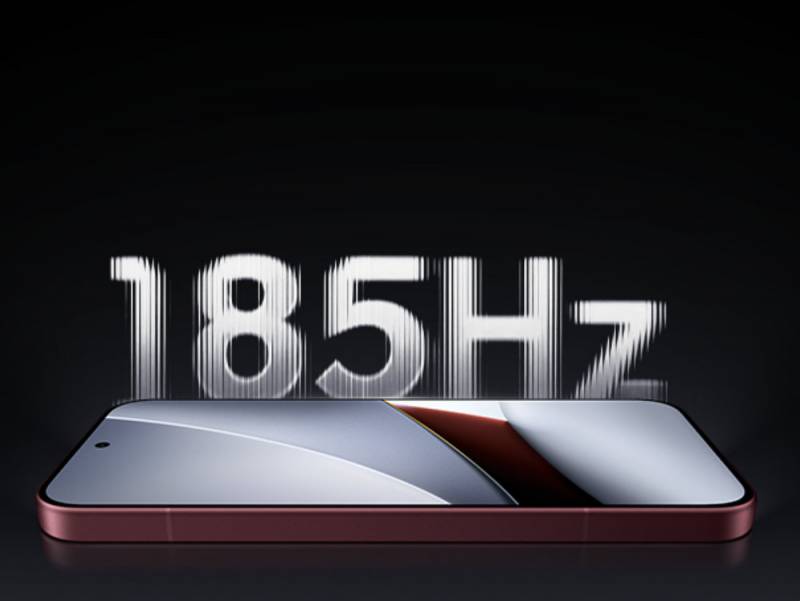
POCO says more than 20 games can take advantage of 185 frames per second, although actual frame rates depend on the title, graphics settings, software, temperature, and other conditions. The company also quotes a 480 hertz multi-finger touch-sampling rate, a momentary 4,800 hertz touch-sampling rate through Game Turbo, and a 200 hertz gyroscope mode for selected games.
If your gaming career begins and ends with Wordle, this is all fairly academic. Competitive mobile gamers are another audience entirely.
Keeping the POCO F9 Ultra From Becoming a Very Expensive Hand Warmer
Fast processors generate heat, and the POCO F9 Ultra uses what POCO calls its 3D IceLoop cooling system to deal with it. The cooling hardware includes a 6,300-square-millimeter heat-transfer area, roughly 9.8 square inches, plus 17,820 square millimeters, or about 27.6 square inches, of graphite material. POCO says its design separates vapor and liquid into a one-way cooling loop and can reduce processor temperature by up to three degrees Celsius under its testing conditions.
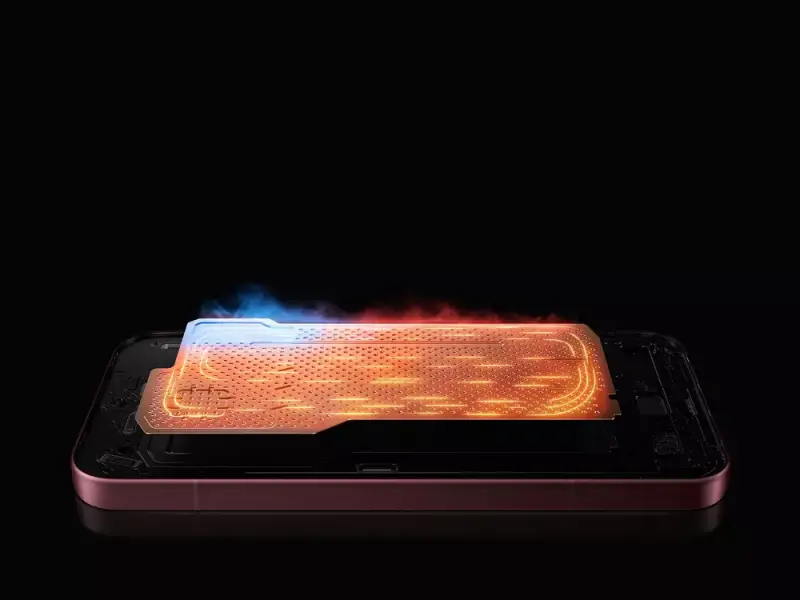
It’s an elaborate solution, but cooling systems prove themselves through use, not diagrams. Whether the POCO F9 Ultra remains comfortable after an hour of demanding gaming, and whether performance begins throttling as the temperature rises, will matter much more than the square footage of graphite hiding inside it.
The POCO F9 Ultra’s 185 Hertz Display Is Serious About Smoothness
The POCO F9 Ultra has a 6.9″ AMOLED display with a resolution of 2608 by 1200 pixels and a maximum refresh rate of 185 hertz.
POCO calls it a HyperRGB display because it uses full red, green, and blue subpixels rather than relying on a different subpixel arrangement. The idea is to deliver perceived clarity close to a conventional 2K OLED screen while using less power. It can reproduce 68 billion colors, covers the wide DCI-P3 color gamut, and supports Dolby Vision and HDR10+.
The F9 Ultra also debuts POCO’s M11 display panel. POCO says the new green light-emitting material improves luminous efficiency by 20 percent and panel lifespan by five percent compared with the previous technology it tested.
Then there are the brightness numbers, where context prevents things from getting silly. POCO quotes 10,000 nits of peak brightness, but that figure applies to just one percent of the screen. It can reach 4,500 nits across 25 percent of the display, while high-brightness mode tops out at 2,200 nits and typical brightness is 850 nits. Those latter numbers tell you considerably more about whether you’ll be able to read the thing outside without wandering around the parking lot looking for shade.
The POCO F9 Ultra also includes one-nit minimum brightness, full-range direct-current dimming, Wet Touch 2.0 for better response when the display or your fingers are damp, and Corning Gorilla Glass 7i. Xiaomi Vision Care incorporates several eye-comfort features, and the display has TÜV Rheinland certifications covering low blue light, flicker, circadian-friendly operation, and intelligent eye care.
That 8,050 Milliamp-Hour Battery May Be the POCO F9 Ultra’s Killer Feature
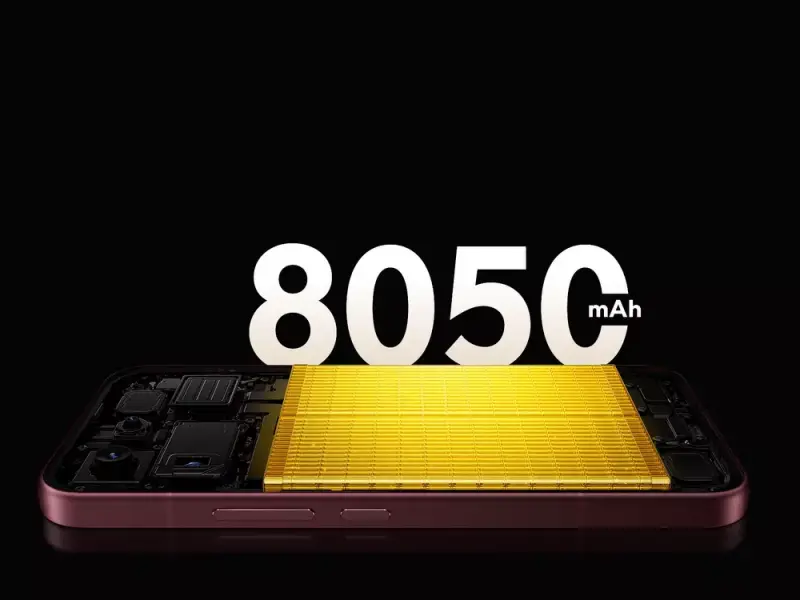
For all the attention paid to gaming and display technology, the POCO F9 Ultra feature that may change everyday life the most is its 8,050 milliamp-hour battery.
It’s the largest battery POCO has put into its F Series, and POCO claims up to two days of use based on internal testing that combines activities such as social media, email, maps, music, streaming video, and standby time. Actual endurance will naturally depend on signal strength, brightness, camera use, gaming, and what else you ask the phone to do. Two days should therefore be treated as an aspiration rather than a blood oath, but 8,050 milliamp-hours is still an enormous amount of capacity to start with.
POCO is also making a longevity claim that’s worth knowing about. Its internal calculations indicate that the POCO F9 Ultra battery should retain more than 80 percent of its original capacity after 1,600 complete charging cycles. Based on POCO’s assumed pattern of one full charge and discharge every day and a half, that works out to more than six years. Real-world battery aging depends on heat, charging habits, and use, so six years shouldn’t be penciled in as an appointment. Still, long-term battery health matters when phones cost this much.
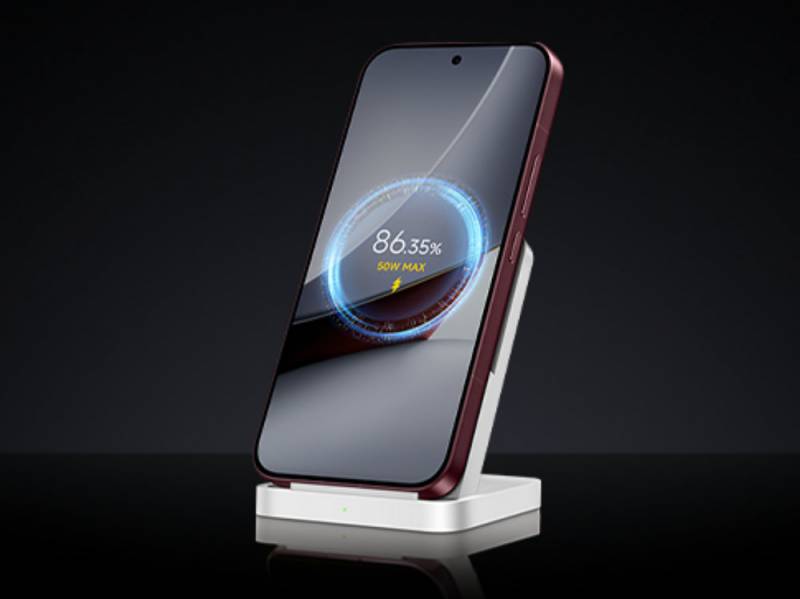
When the POCO F9 Ultra finally does need power, it supports 100-watt wired and 50-watt wireless charging. POCO’s internal testing showed a wired charge from 1% to full in 50 minutes using the appropriate charger and Top Speed mode with the display off. Its 50-watt wireless charging test reached 50 percent in 37 minutes, again starting at one percent and under controlled conditions.
The phone can also reverse-charge other compatible devices at up to 27 watts through a cable or 22.5 watts wirelessly, making that oversized battery useful when somebody nearby inevitably announces that their earbuds are dead.
One purchase detail is worth checking first: POCO says charger availability varies by region. The global specification page lists an adapter, USB Type-C cable, protective case, SIM eject tool, safety information, and warranty materials among the package contents, but it also warns that the contents can differ from one market to another.
The POCO F9 Ultra Camera Is More Than a 200-Megapixel Headline
The POCO F9 Ultra’s main rear camera uses a 200-megapixel sensor with an f/1.68 aperture and optical image stabilization. Its 16-to-one pixel combining can create effective 2-microliter pixels to gather more light, while a dedicated 200-megapixel mode is available when you want maximum detail and more freedom to crop afterward.
That’s the useful interpretation of 200 megapixels. A photograph doesn’t automatically become good simply because it contains enough pixels to wallpaper a garage.
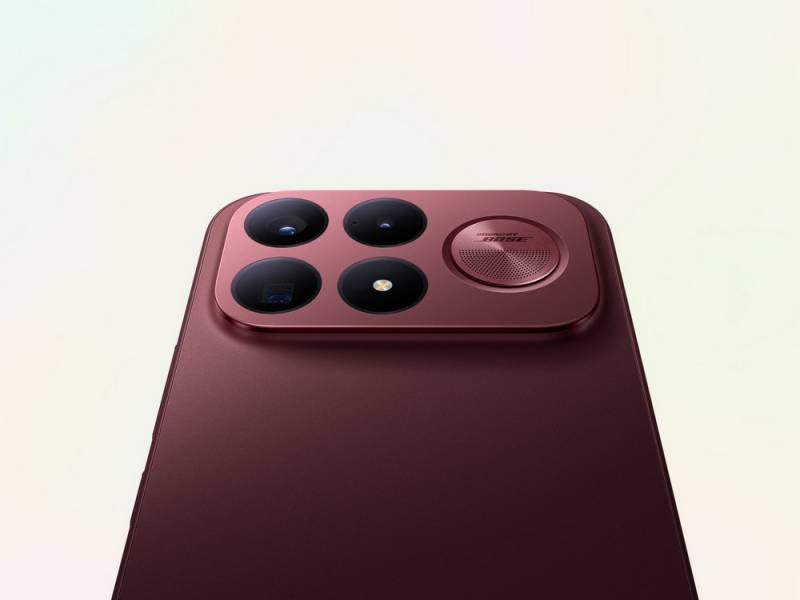
The more interesting camera may be the POCO F9 Ultra’s 50-megapixel periscope telephoto.
It has an f/3.0 aperture, optical image stabilization, and a 120-millimeter-equivalent focal length providing 5X optical reach. POCO also offers 10X lossless zoom, 20X artificial intelligence-enhanced zoom, and telemacro focusing from 30 centimeters, or about 11.8″. That last capability makes the telephoto useful for small details as well as distant subjects. A 50-megapixel ultra-wide camera with a 17-millimeter-equivalent focal length handles broad scenes, while the front camera is 32 megapixels.
Video capability deserves a little more attention than the earlier draft gave it. The POCO F9 Ultra can record up to 8K video at 30 frames per second, 4K at either 30 or 60 frames per second, and 4K Log video for anyone who wants greater latitude when color-grading footage later. There are also slow-motion, time-lapse, stabilization, subject-tracking, and teleprompter modes. Even the front camera can shoot 4K video at 30 frames per second.
POCO’s Live Cinematography mode adds automated zoom and focal transitions intended for travel clips and portrait-style video. Conveniently, the company’s own review guidance also acknowledges that difficult backlighting, excessive movement in low light, and handheld walking shots aren’t its happiest circumstances. That kind of candor is useful; cameras rarely spend their lives photographing perfectly illuminated stationary objects.
The POCO F9 Ultra Has Bose-Tuned Audio and, Yes, a Subwoofer
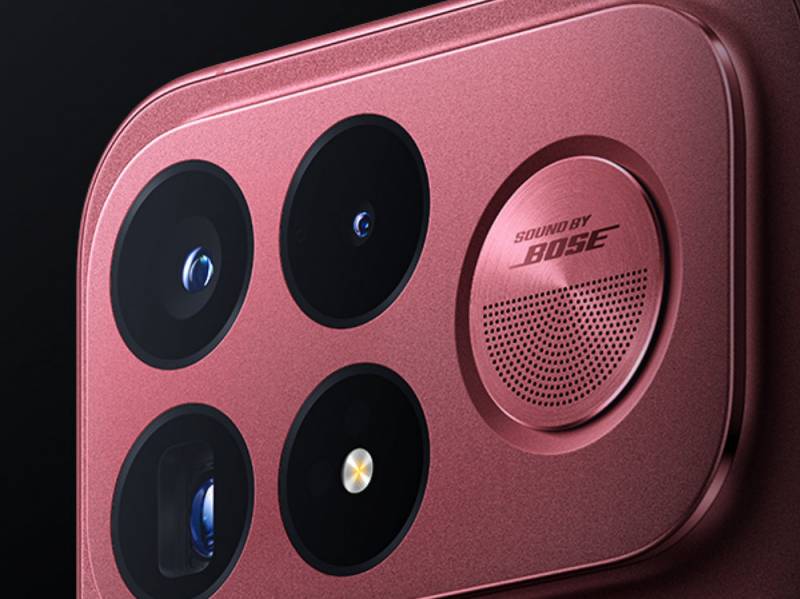
The POCO F9 Ultra uses two symmetrical stereo speakers and an independent subwoofer to create a miniature 2.1-channel system. Bose helped tune it, and Dynamic and Balanced profiles let you choose between more bass emphasis and a more neutral sound.
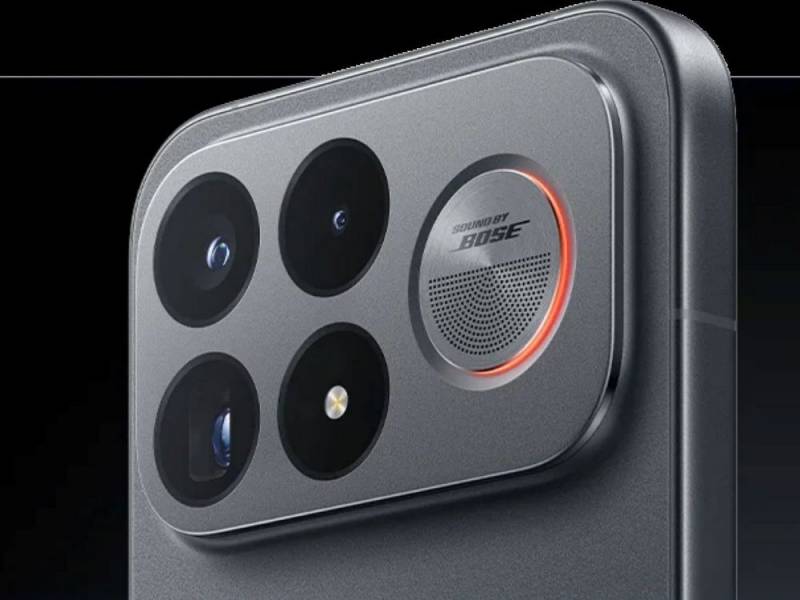
POCO has also implemented 15 levels of audio tuning intended to maintain detail at lower listening levels while controlling distortion as volume rises. It includes Dolby Atmos and high-resolution wired and wireless audio certifications, along with a three-microphone array.

Nobody should interpret “independent subwoofer” to mean the POCO F9 Ultra will replace the sound system at your next backyard gathering unless it’s a very small gathering. Still, dedicated bass hardware is unusual in a phone and could give games, movies, voices, and music substantially more body. There’s also a Bose gaming audio mode designed to make directional sounds such as footsteps easier to pick out in supported titles.
The POCO F9 Ultra Is Large, but There’s Plenty Going On Around the Edges
The POCO F9 Ultra measures 163.49 millimeters by 77.94 millimeters by 8.74 millimeters, or approximately 6.44″ by 3.07″ by 0.34″. It weighs 235 grams, or about 8.3 ounces. Nobody is slipping this unnoticed into one of those decorative little pockets clothing manufacturers insist on pretending is functional.
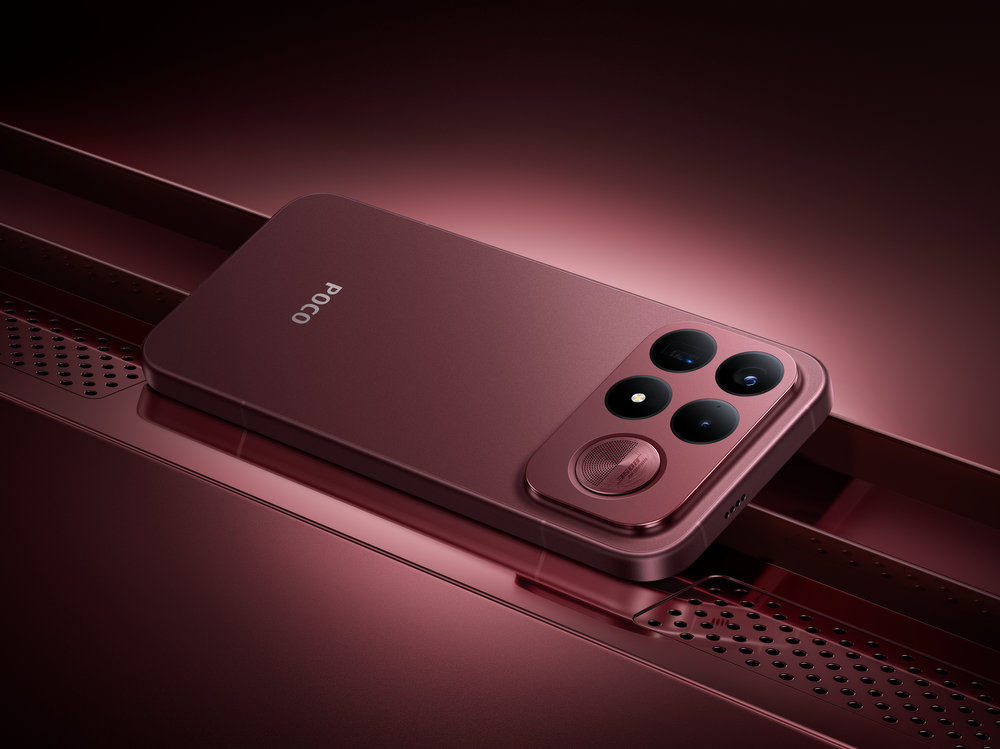
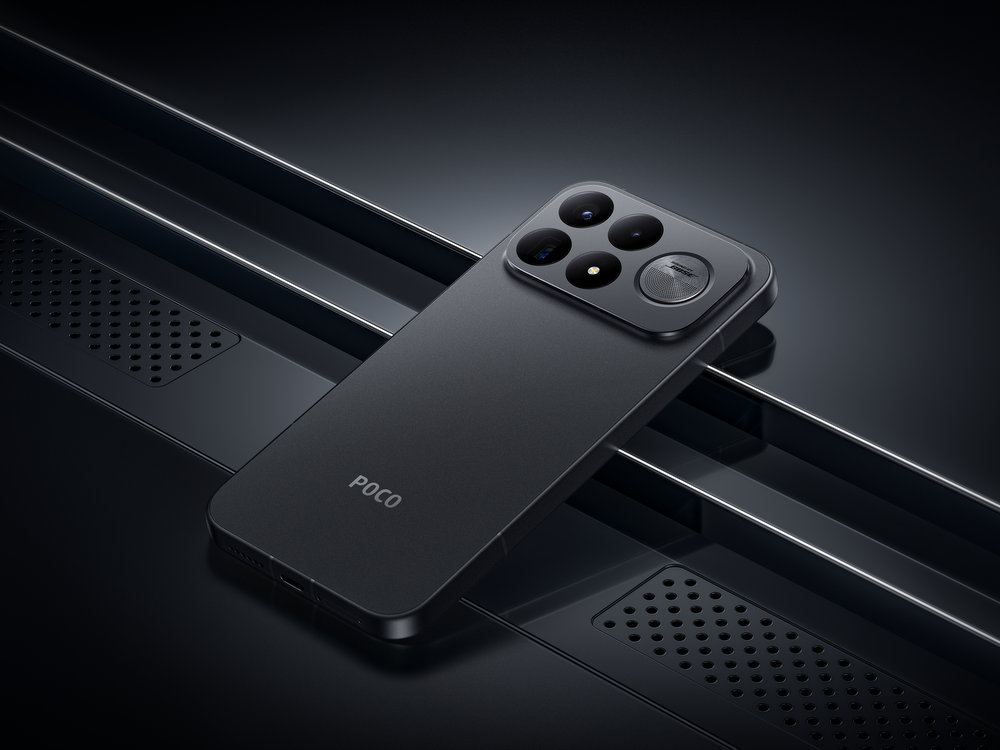
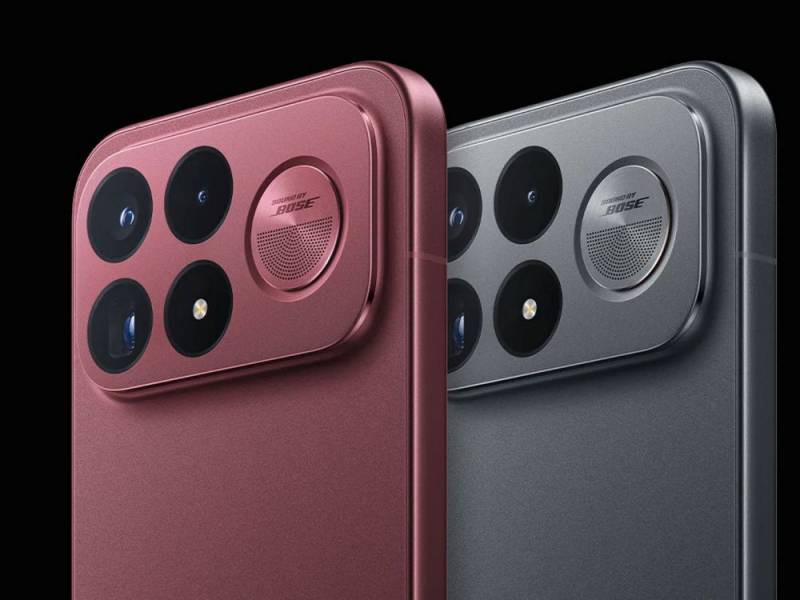
The POCO F9 Ultra is available in Dark Cherry or Black, with a fiberglass rear panel, a subtly curved metal frame, and a flat metallic camera module. There’s also a dynamic light integrated into the rear design, adding visual effects in supported situations.
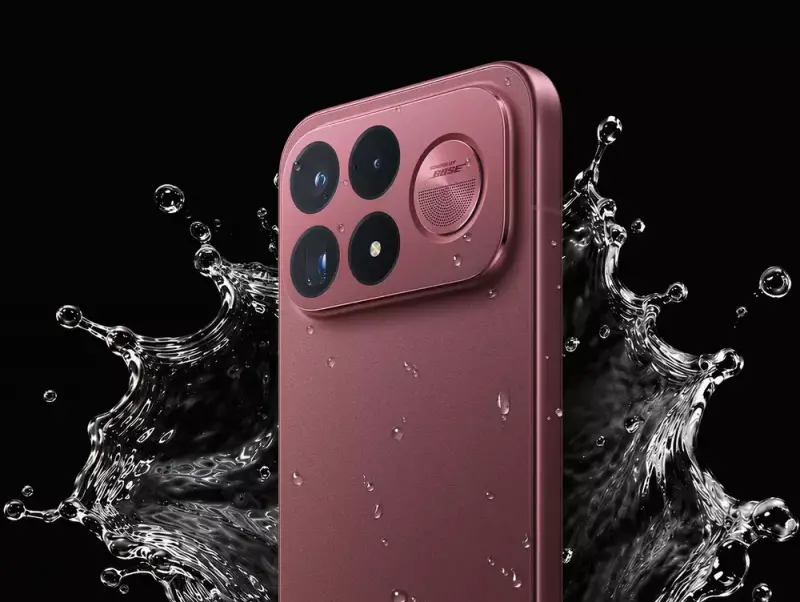
It carries an IP68 rating for dust and water resistance, based on laboratory testing in fresh water at depths up to 1.5 meters, or about 4.9 feet, for up to 30 minutes. As usual, that’s protection against accidents, not an invitation to make underwater vacation videos. POCO specifically advises against beach and pool use.
POCO Put Some Thought into Connectivity, Too
Wi-Fi 7, Bluetooth 6.0, NFC, 5G, physical SIM and eSIM configurations, an ultrasonic in-display fingerprint sensor, and Xiaomi HyperOS 3 are all aboard. It also offers USB 3.2 Gen 1 connectivity through the USB Type-C port, rather than an older, painfully slow USB implementation hidden behind a modern-looking connector.
More unusual is Xiaomi’s Surge T1+ Tuner, paired with seven gaming antennas. The system is intended to improve cellular, Wi-Fi, Bluetooth, and GPS reception, particularly when your hands are wrapped around the phone during gaming. POCO’s performance-improvement percentages come from internal comparisons with an F9 Ultra test device lacking that hardware, so they’re better read as an indication of what the system is designed to accomplish than as a universal promise about signal strength.
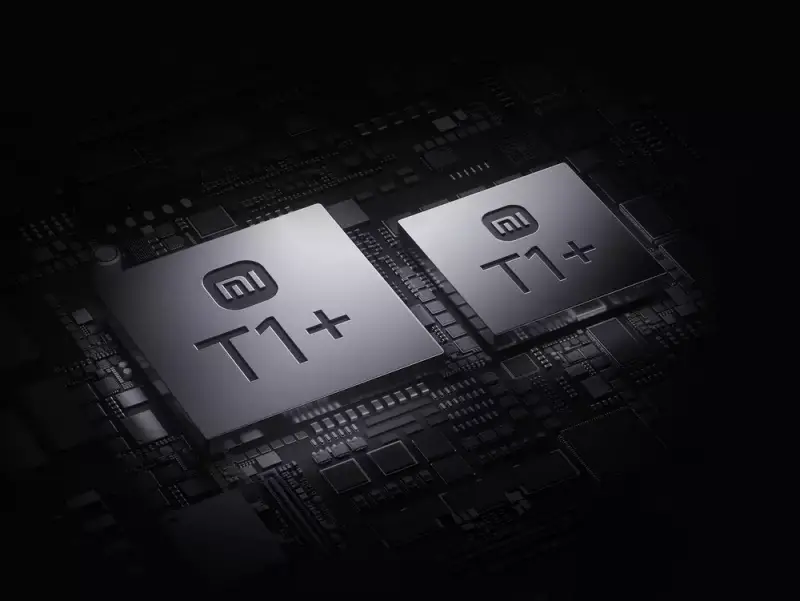
The POCO F9 Ultra also supports Xiaomi Offline Communication, which lets compatible Xiaomi devices make voice calls without conventional network service within a limited range. It requires a SIM card, a Xiaomi account, compatible devices, and suitable surroundings, and POCO specifically says it isn’t intended for emergency or life-saving communication. In other words, it could be handy in a parking garage or remote area, but don’t build your wilderness survival plan around it.
POCO F9 Ultra or POCO F9 Pro?
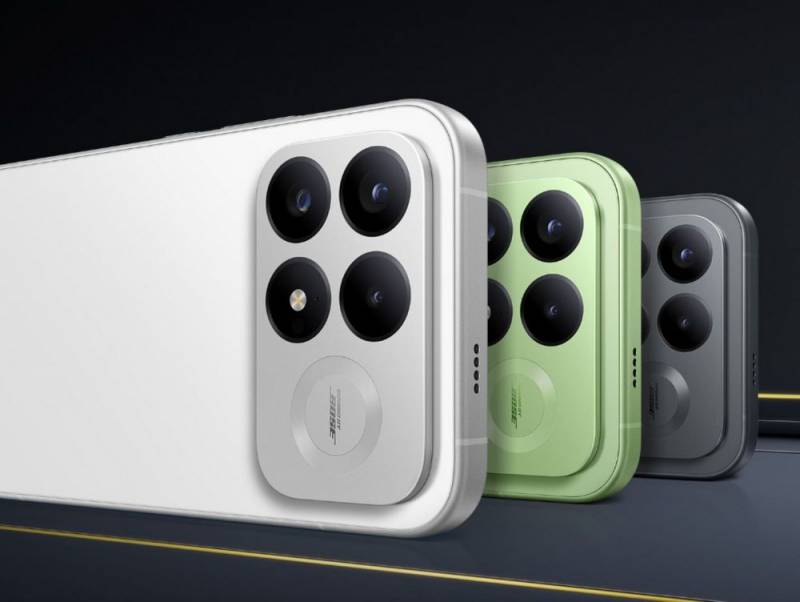
The POCO F9 Pro offers many of the same performance ideas for less money. It starts at $699 for 12 gigabytes of memory and 256 gigabytes of storage, or $649 during the Early Bird period. The 12-gigabyte/512-gigabyte version costs $769, dropping to $699 during the promotion. European pricing is €899.90 and €999.90, with introductory prices of €739.90 and €799.90.
POCO F9 Pro
The POCO F9 Pro uses a smaller 6.59″ AMOLED display while retaining the maximum 185 hertz refresh rate. Its battery drops to 6,330 milliamp-hours, while its camera system uses a 50-megapixel 2.5X floating telephoto camera and an 8-megapixel ultra-wide rather than the POCO F9 Ultra’s 5X periscope and 50-megapixel ultra-wide. It also has stereo speakers, but no independent subwoofer like the Ultra.
The Pro therefore makes more sense if raw performance and the fast display are your priorities. The POCO F9 Ultra earns its surcharge with the larger battery, much more ambitious camera hardware, upgraded audio, larger screen, and additional storage option.
There Are a Few POCO F9 Ultra Ownership Perks Worth Knowing About
Depending on eligibility and region, POCO is also offering several extras with the F9 Ultra: a four-month Spotify Premium trial, three months of YouTube Premium, and three months of Google AI Pro. More consequentially, the global product page advertises 24 months of quality assurance and one free screen replacement within the first six months. Terms and conditions apply, so confirm these benefits for your market rather than assuming they’ll automatically follow the phone wherever it’s sold.
The POCO F9 Ultra Has the Hardware; Now It Has to Earn the Price
There isn’t much about the POCO F9 Ultra that could reasonably be described as modest. The battery is enormous. The display is extremely fast. The main camera has 200 megapixels. The telephoto reaches 5X optically and can focus close enough for telemacro photography. Charging reaches 100 watts. It records 8K video. It has an independent subwoofer because ordinary smartphone speakers apparently weren’t doing enough engineering work.
At the $729 Early Bird price, the POCO F9 Ultra makes a compelling hardware argument. Once the price climbs to $949 or $1,199, though, hardware specifications alone can’t close the sale.
At that level, software polish matters. Camera consistency matters. Heat management matters. Long-term updates matter. So do haptics, ergonomics, standby battery drain, signal reliability, charging behavior, and whether the camera gets the shot when your subject has the audacity to move.
Those aren’t nearly as exciting as 185 hertz, 200 megapixels, or a seven-antenna radio system, but they’re the things you notice months later, when the launch-event confetti has been swept away, and the POCO F9 Ultra is simply the phone in your hand.
That’s the real test for the POCO F9 Ultra. POCO has thoroughly demonstrated that it knows how to put a formidable collection of hardware into one device. What matters now is whether all of those pieces work together naturally enough that you stop thinking about the specifications and simply enjoy using the phone.