
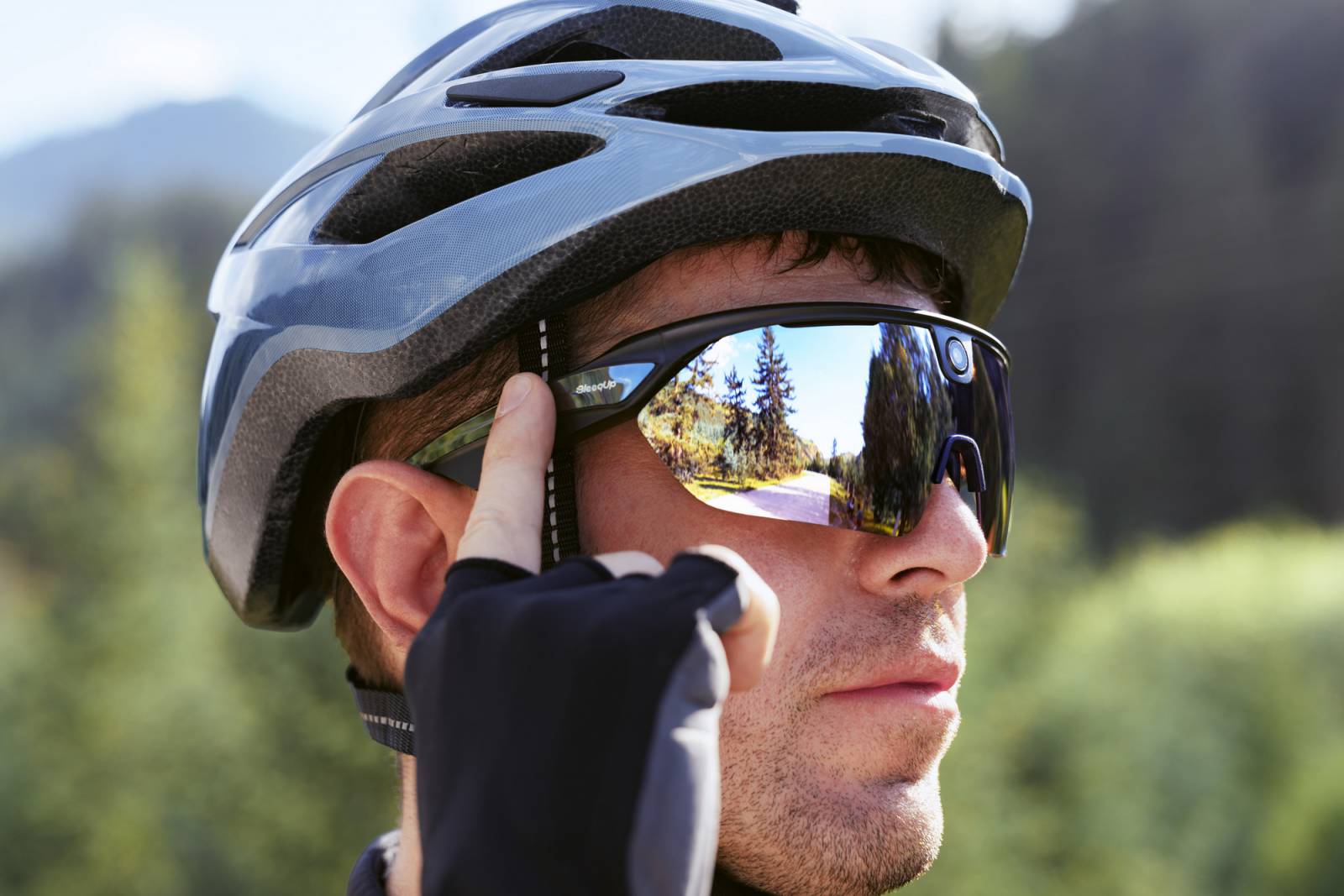


BleeqUp is using IFA 2026 to introduce the BleeqUp Rover, a $459 pair of AI sports glasses aimed primarily at cyclists and other outdoor athletes who want first-person video without strapping another camera to their body. The BleeqUp Rover combines a 16-megapixel camera, open-ear audio, activity tracking, voice controls, safety detection, and automated video editing in a 53-gram frame. The concept is ambitious, but the appeal is easy to understand: capture the ride, listen to directions or music, keep tabs on what’s happening around you, and leave some of the post-ride editing to software instead of your evening.
A Camera That Can Follow Your Riding Position
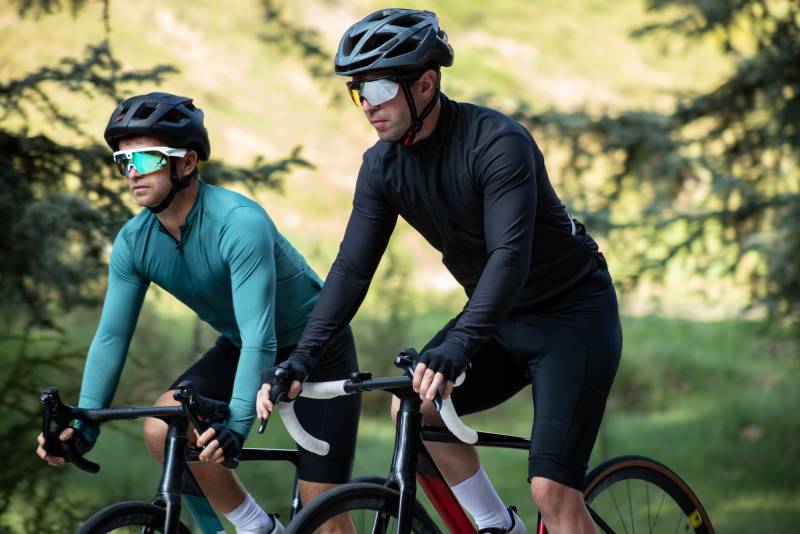
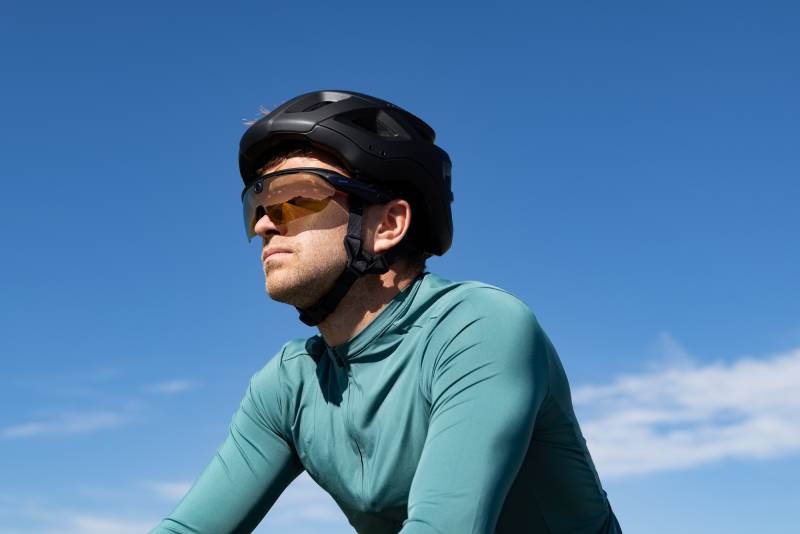
The camera is the BleeqUp Rover’s most straightforward feature, and it’s more flexible than a fixed lens stuck between the eyes. It can tilt to -10, 0, or +15 degrees, so you can adjust the point of view for a low road-bike posture, a more upright commuter position, or another outdoor activity. That matters because a camera that spends an entire ride filming the front tire or an impressive amount of sky isn’t especially useful.
A Sony 16-megapixel sensor captures 4656 x 3496 photos, while video tops out at 3K and 60 frames per second. It includes an HDR mode to preserve detail in bright highlights and dark shadows, a 120-degree field of view, and electronic image stabilization to reduce the shaking you’d expect on rough pavement, gravel, or fast descents. You can record video horizontally or vertically at 1080p or up to 2880 x 1620 resolution.
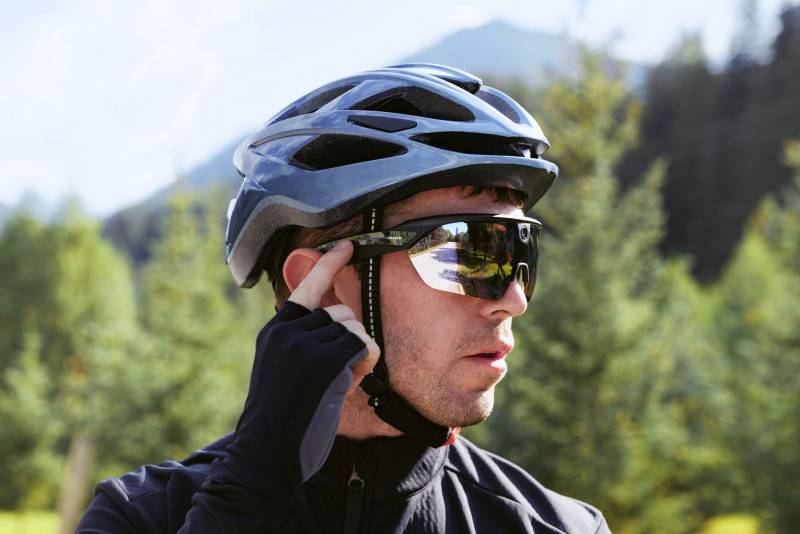
You can take a photo with a short press of the right-side button or use the “Hey Bleeker” wake phrase, while a long press or voice command starts and stops video. Rover includes 64GB of onboard storage, and recordings transfer to the BleeqUp app over the glasses’ Wi-Fi connection.
The AI Features Are Aiming at More Than Highlight Reels
BleeqUp calls its AI Agent Bleeker. During an activity, you can ask it questions by voice, and the system is designed to provide activity information without requiring you to reach for a phone. Afterward, Rover can generate an activity summary and incorporate breathing-related performance data.
Cycling gets the most ambitious safety features. The BleeqUp Rover is designed to recognize close vehicle passes, collisions, and hard braking, then preserve up to 10 seconds of video from before the detected event. It can also alert you to climbs, descents, sharp turns, and changing weather. Body monitoring combines breathing data, activity intensity, and heart-rate information from a compatible third-party strap to look for signs of fatigue or excessive strain and suggest that you adjust your pace.
Those features could be useful if they work reliably, particularly the pre-event recording after a close pass or crash. They’re also best treated as assistance rather than a substitute for watching the road, reading the weather, or paying attention to how you feel. Safety detection and environmental alerts are specifically aimed at cycling, so the BleeqUp Rover’s broader “sports” label doesn’t mean every activity gets the same toolset.
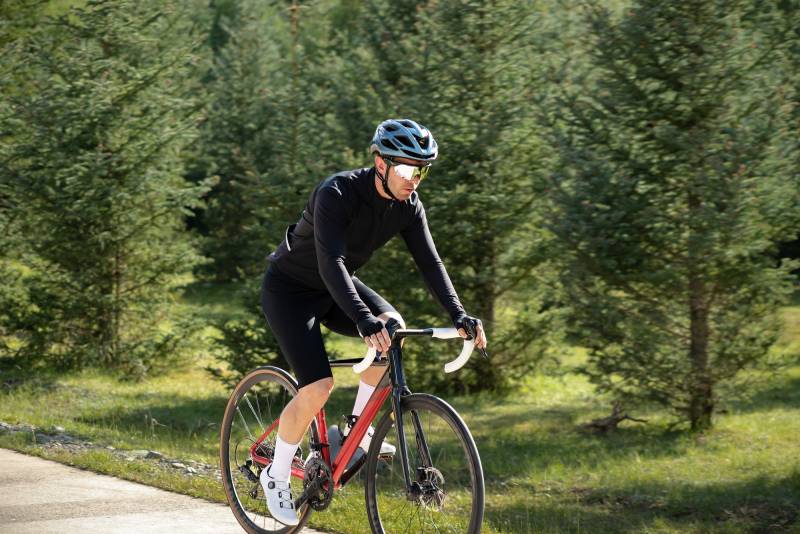
There’s plenty of software aimed at the post-ride ritual, too. AI Video Search finds a moment in a long recording from a spoken description. AI Roadbook combines first-person footage, GPS routes, and activity data into a shareable recap, while highlight detection looks for moments such as hard braking, overtaking, high-intensity efforts, and scenic sections, then assembles them into an edited clip.
The more experimental AI Sports Master Creator remains limited. AI Master Motion can turn first-person riding footage into a generated third-person perspective, while AI Master Remix applies automated styles and effects. Access requires opting into the Early Access to New Features program in the BleeqUp app, and availability isn’t guaranteed. Those tools sound entertaining, but they’re the sort of features that deserve hands-on testing before anyone assumes an evening of editing has been permanently retired.
Open-Ear Audio Leaves the World Around You Audible
The BleeqUp Rover also works as open-ear headphones, using two full-range speakers for music, navigation instructions, and calls without plugging your ears. That approach makes sense on a bike, where hearing traffic, other riders, and the occasional dog with strong opinions about bicycles can matter as much as hearing your playlist.
A five-microphone array handles calls and voice commands, with wind-noise reduction intended to keep audio understandable at speeds up to 30 km/h, or about 19 mph. The right temple supports swipe and tap controls for volume, playback, tracks, and calls.
There’s also a walkie-talkie feature in the BleeqUp app. It doesn’t require Rover glasses, but when Rover is involved, its microphones and wind-noise reduction handle the audio. You can create or join an intercom group after starting an activity, and voice chat stays open without push-to-talk. The left-side button can mute the intercom or switch to music while the right-side controls remain available for photos and video.
Lightweight Hardware Still Has Battery Limits
The BleeqUp Rover’s flexible TR90 frame weighs 53 grams, or about 1.9 ounces, with the lenses installed, and 42 grams without them. Rover uses swappable, anti-reflective UV400 lenses that block 100% of UVA and UVB rays, with myopia correction options from 0.00D to -6.50D. A prescription insert is included. The IP65 rating provides resistance to dust and water exposure, and the supported operating range is 32 to 104 degrees Fahrenheit.
Because Rover is designed primarily as sunglasses, daytime use is recommended, and the standard lenses can limit visibility at night. Photochromic lenses are offered for lower-light conditions. Temperatures below 32 degrees or above 104 degrees Fahrenheit can also reduce battery performance.
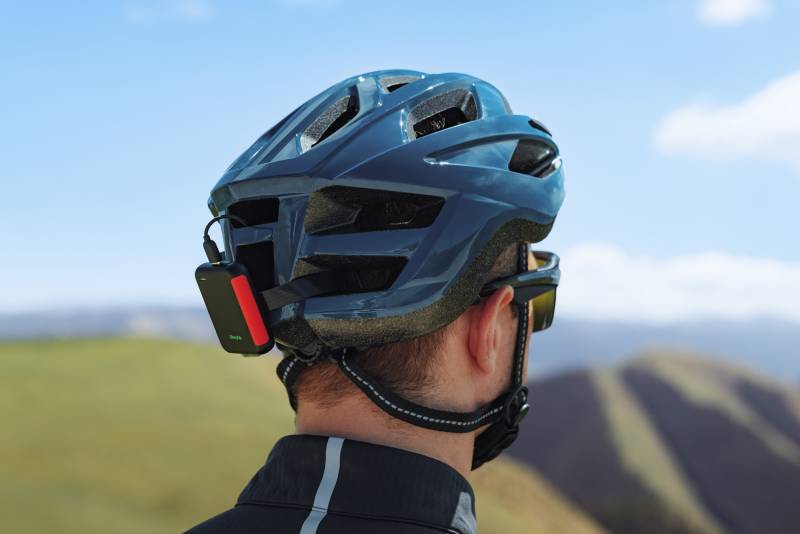
The built-in 260mAh battery is rated for up to one hour of continuous 1080p video at 30 fps or up to eight hours of music playback. The optional PowerPlus external battery extends those figures to up to five hours of recording or 48 hours of music, and it includes a tail light. Rover reaches a 50% charge in about 30 minutes and charges from USB-C through a magnetic pogo-pin connector. An optional Bluetooth remote controller is sold separately.
Inside, the BleeqUp Rover runs on Qualcomm’s Snapdragon W5 platform and supports Bluetooth 5.3 plus 802.11b/g/n/ac Wi-Fi. The BleeqUp app requires iOS 17.6 or later or Android 11 or later, and specific features and performance can vary by phone model.
BleeqUp Rover Price and Availability
The 64GB BleeqUp Rover will be available from BleeqUp’s official online store beginning September 4, 2026, at 9:00 a.m. GMT+2 for $459. The standard package includes the glasses, a prescription insert, a protective carrying case, a magnetic USB-C charging cable, a microfiber bag, and a cleaning cloth. The PowerPlus battery pack and Bluetooth controller are optional accessories sold separately.
If a first-person camera, open-ear audio, route tracking, and automated ride recaps already sound like four gadgets competing for space on your handlebars and helmet, Rover’s all-in-one approach has an obvious appeal. Whether its more ambitious AI and safety features are dependable enough to justify the $459 price is the part that’ll need time on the road.