


MOVA is stepping into desktop CNC with the MOVA Forgix, a machine that fills the gap between 3D printers and larger milling machines. Unveiled at IFA 2026, it’s the company’s first entry into CNC, built around solving the two things that scare people off: setup complexity and mismatches between design and finished parts. While 3D printing and laser cutting have become accessible hobbyist tools, CNC has remained the domain of people willing to learn CAM programming and set up stock manually. MOVA bets there’s an audience of makers and small workshops that want that precision without the learning curve.
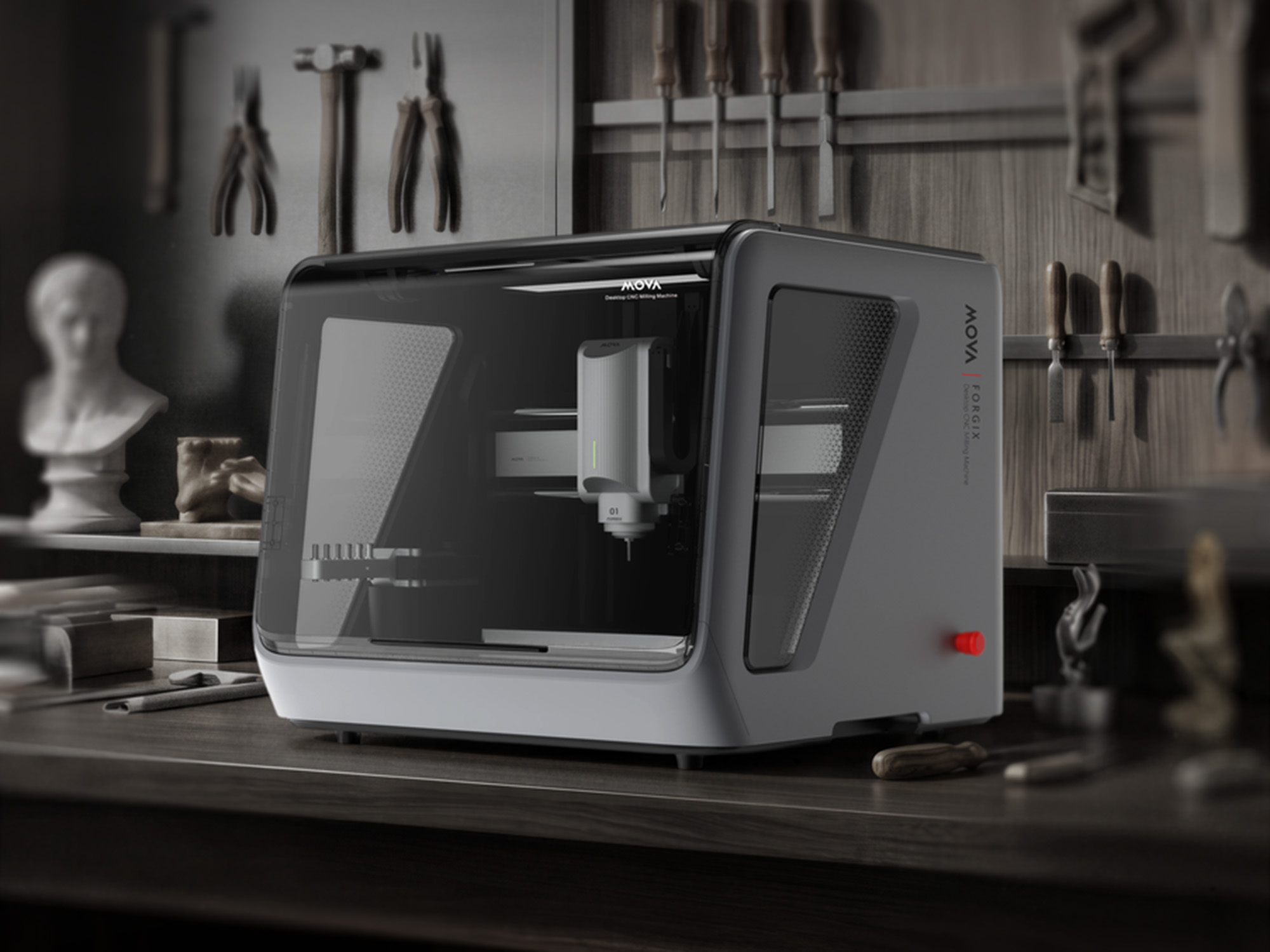
Large-Scale Desktop CNC Tech
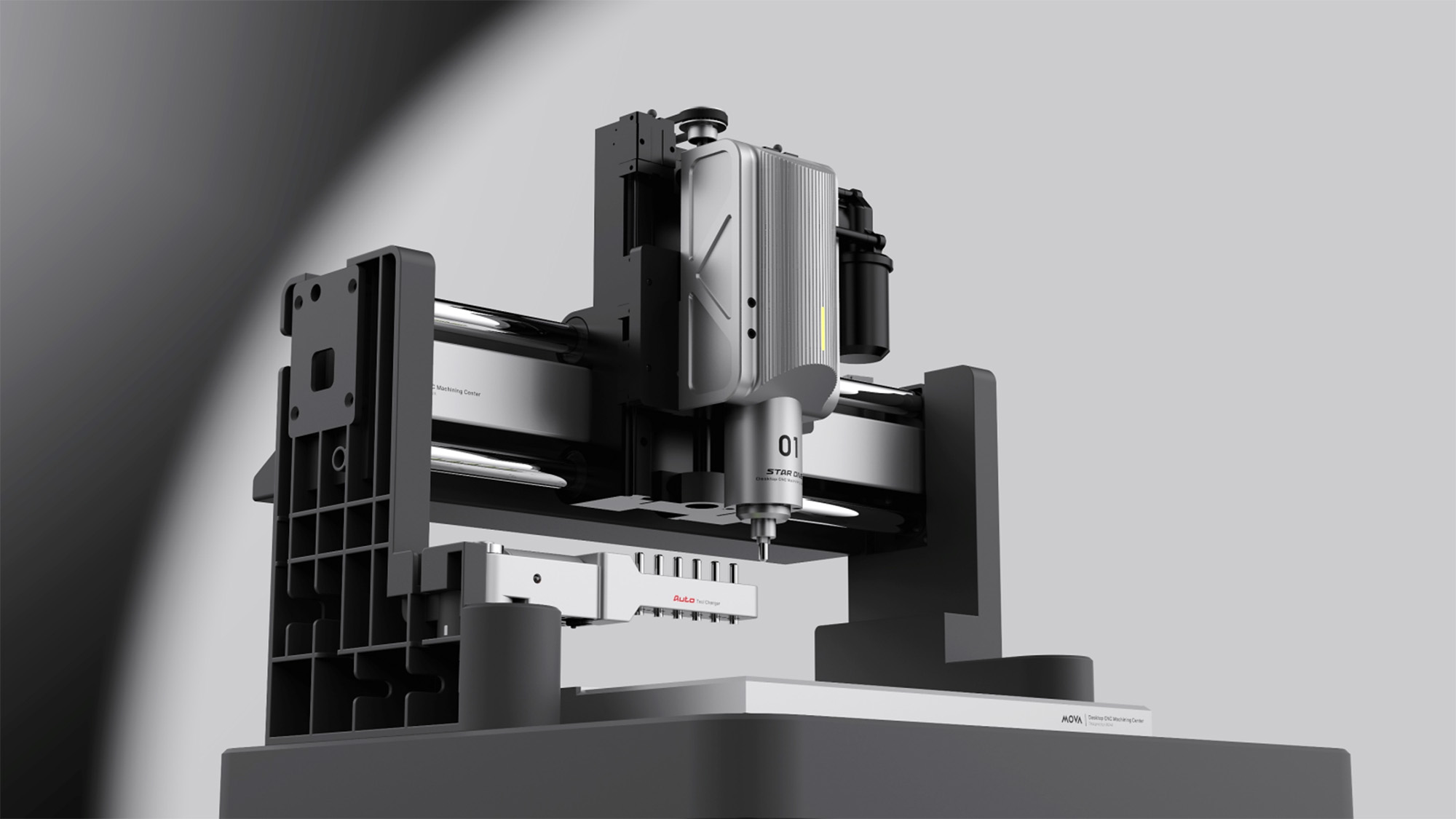
Forgix comes equipped with a 500W spindle and a 10-slot automatic tool changer, allowing back-to-back roughing, finishing, and drilling operations without manual bit changes. This is a game-changer. Camera recognition handles tool identification, and the machine uses onboard cameras and probes to sense material dimensions in all three axes, rather than requiring manual measurement and input.
What’s more interesting is the automation layered on top. A camera identifies the material’s outline, an electric vise clamps it into place, and the system builds a work coordinate system on its own- steps that normally eat up the most time and cause the most user error in a traditional CNC workflow. MOVA says it can even handle irregular material, like natural-edge wood or offcuts, without needing to square it off first, relying on laser-based 3D modeling to map non-standard shapes and generate machining parameters based on what it detects.
Competing models in this space top out around 200-800W depending on the machine, and not all of them offer automatic tool changing or camera-based material sensing; some still rely on manual clamps and physical probes. Forgix solves a lot of this by automating more of that setup work out of the box.
AI-Assisted Design and Job Monitoring
On the software side, MOVA’s CAM package compresses the process into five steps, from securing material to hitting start, and adds AI-assisted design tools like text-to-image and one-click relief generation for people who don’t want to touch a modeling program at all.
It also works with existing files, supporting common CAM formats for anyone who’d rather bring their own designs. The machine also runs a variable-speed control system that adjusts spindle output in real time based on cutting load, and can flag potential tool damage or breakage before it ruins a job, halting the operation automatically if it detects abnormal cutting patterns.
Wide Range of Materials
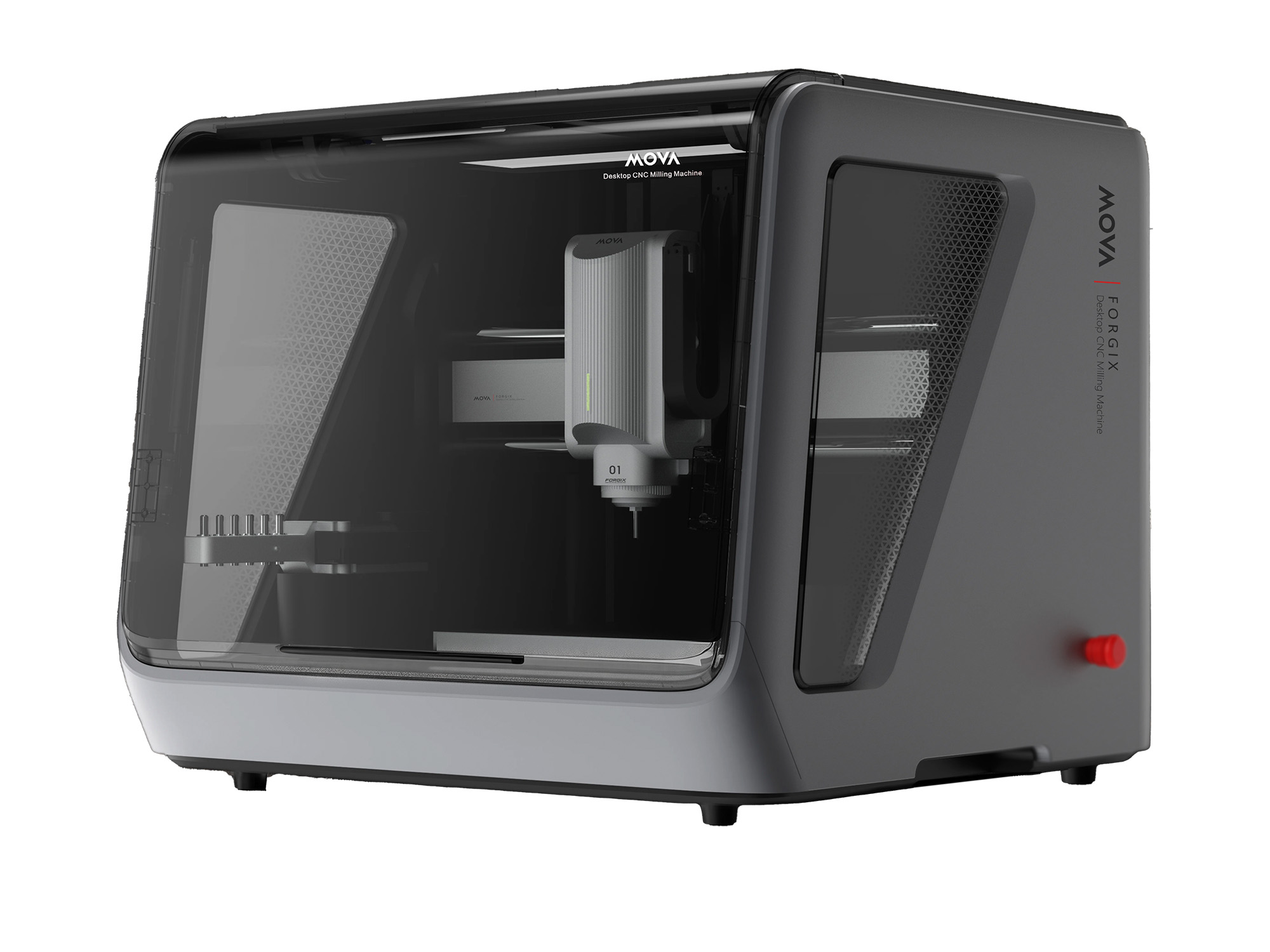
Materials-wise, MOVA Forgix Desktop CNC is built for wood, acrylic, aluminum, brass, carbon-fiber sheets, and PCBs, with an enclosed, soundproofed housing that handles dust collection and air filtration internally. Rounding out the package is a 5-inch touchscreen for offline operation and an accessory ecosystem that includes a rotary module for four-axis work, a 5W laser attachment, an automatic vise, and a tumble polisher.
MOVA is also planning a model-sharing community tied to the machine, where users can post designs, enter competitions, and pull from AI-generated models built by other owners.
If MOVA can deliver on its promises, the MOVA Forgix could make desktop CNC far more approachable for makers, designers, and small workshops that want professional-level precision without mastering every step of a traditional CNC workflow. With automated setup, AI-assisted design tools, material sensing, and automatic tool changing, it looks like an ambitious attempt to bring CNC machining closer to the plug-and-play experience people now expect from modern 3D printers. We’ll be watching for final pricing, configurations, and availability as its 2027 launch gets closer.