


The Lowdown
As much as there is to love about Sterling Pacific’s aluminum luggage, these polycarbonate cases may be the more practical choice for frequent travel. They’re lighter, easier to manage, visually distinctive, beautifully finished, and backed by a lifetime warranty and repair program.
Overall
Pros
- Considerably lighter than Sterling Pacific’s aluminum luggage
- 40L is easy to lift into an overhead compartment
- Distinctive, exceptionally attractive design
- Luxurious full-grain Italian leather handles and trolley grip
- Reinforced Makrolon polycarbonate construction
- Useful, straightforward interior organization
- 40L can handle a carefully planned week of clothing
- 90L offers substantial room for longer trips and souvenirs
- Spinner wheels
- Integrated TSA locking system
- Included care kit and dust cover
- Lifetime warranty and repair program
Cons
- Premium pricing puts both cases beyond what many travelers need to spend
- Less interior gadgetry and expansion capability than some competitors
- Airline carry-on limits vary, so the 40L’s 22″ by 14″ by 9″ dimensions should still be checked against your specific carrier
The Sterling Pacific Polycarbonate Cabin Travel Case (40L) and Polycarbonate Check-In Travel Case (90L) take the company’s distinctive luggage design in a lighter, more practical direction. Aluminum luggage has a certain appeal that polycarbonate has historically struggled to match. Aluminum looks substantial. It develops scars rather than simply scratches. It has that vaguely aviation-inspired quality that makes even a mundane trip through Terminal B feel a little more glamorous than it probably is. The problem is that aluminum also weighs like aluminum.
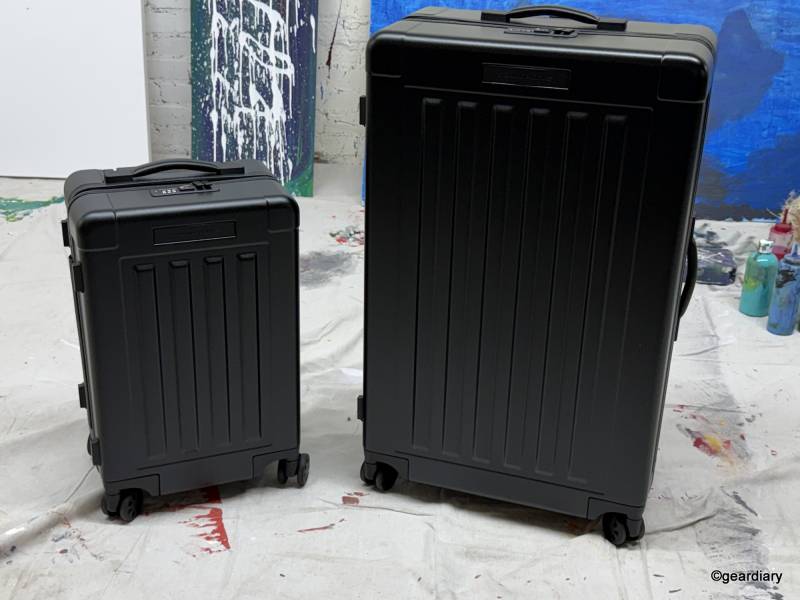
Sterling Pacific Polycarbonate Cabin Travel Case (40L) and Polycarbonate Check-In Travel Case (90L)
After reviewing and traveling with the Sterling Pacific 40L Aluminum Cabin Travel Case, there was plenty to love about it, from the beautifully finished metal shell to the leather handles and reassuringly solid construction. But its 12-pound empty weight never disappeared just because the suitcase looked good.
The new Sterling Pacific Polycarbonate Travel Case collection addresses that issue without making the luggage feel anonymous. The 40L Polycarbonate Cabin Travel Case weighs just 7.5 pounds, while the larger 90L Polycarbonate Check-In Travel Case weighs 12.5 pounds.
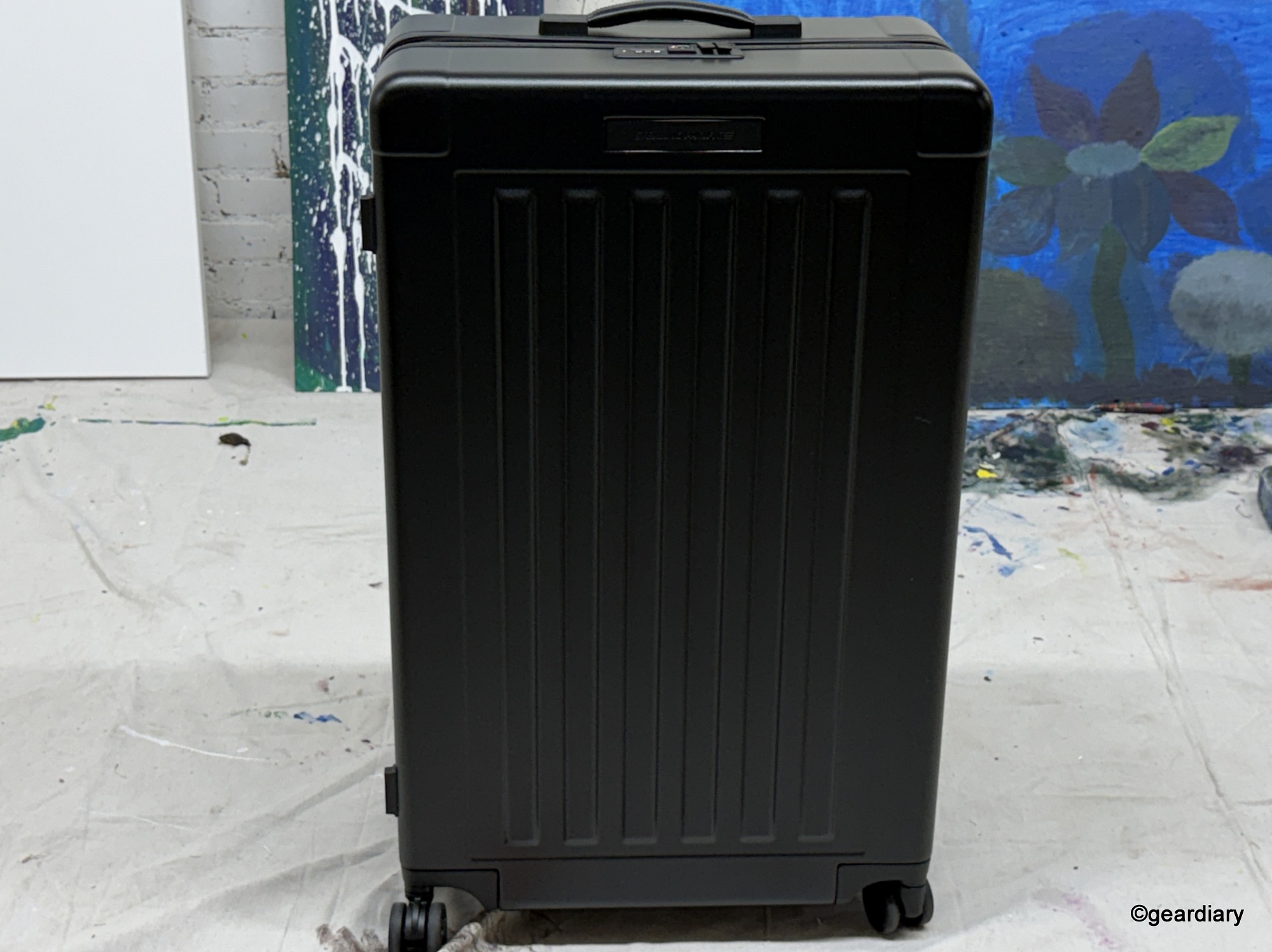
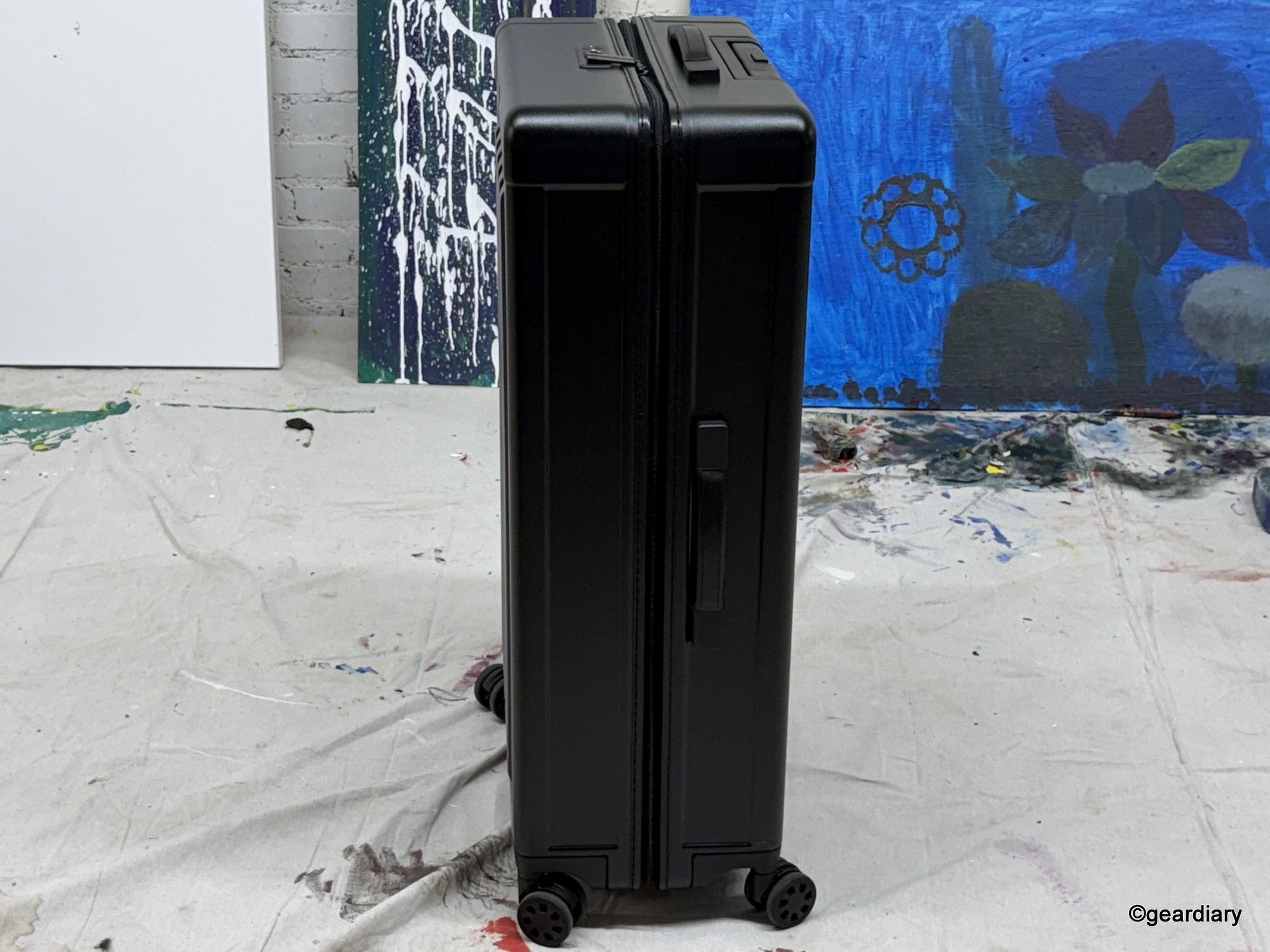
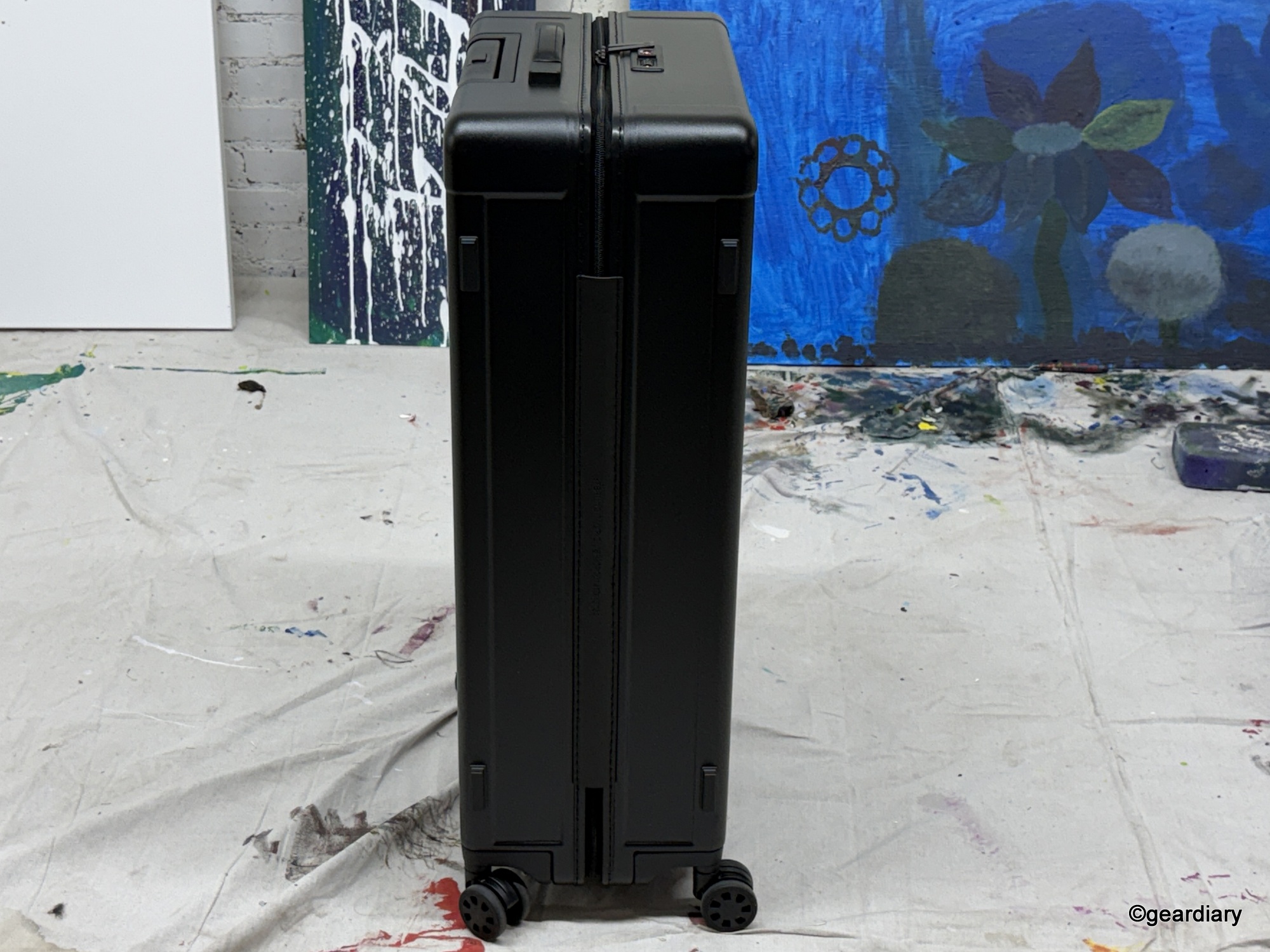
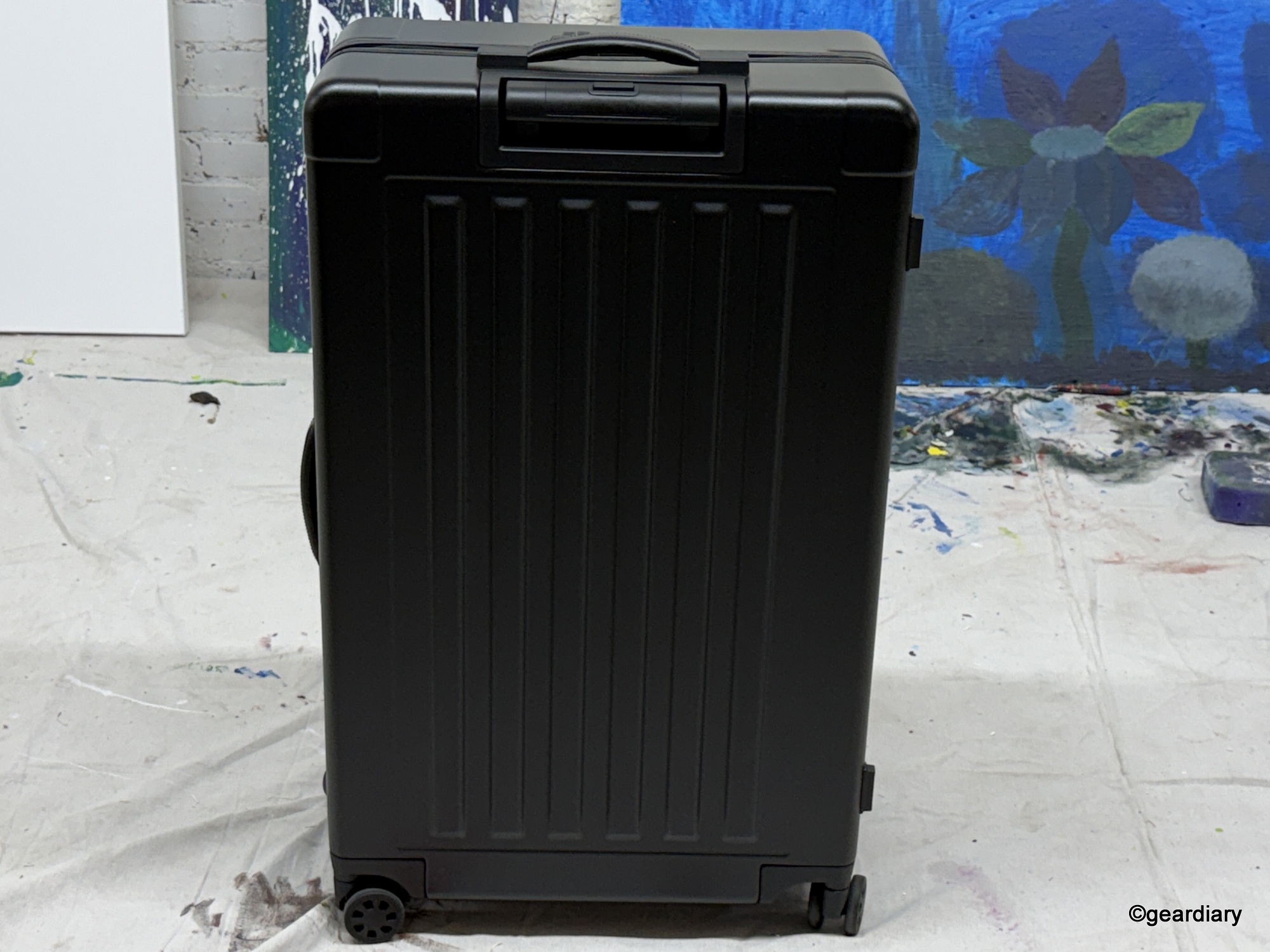
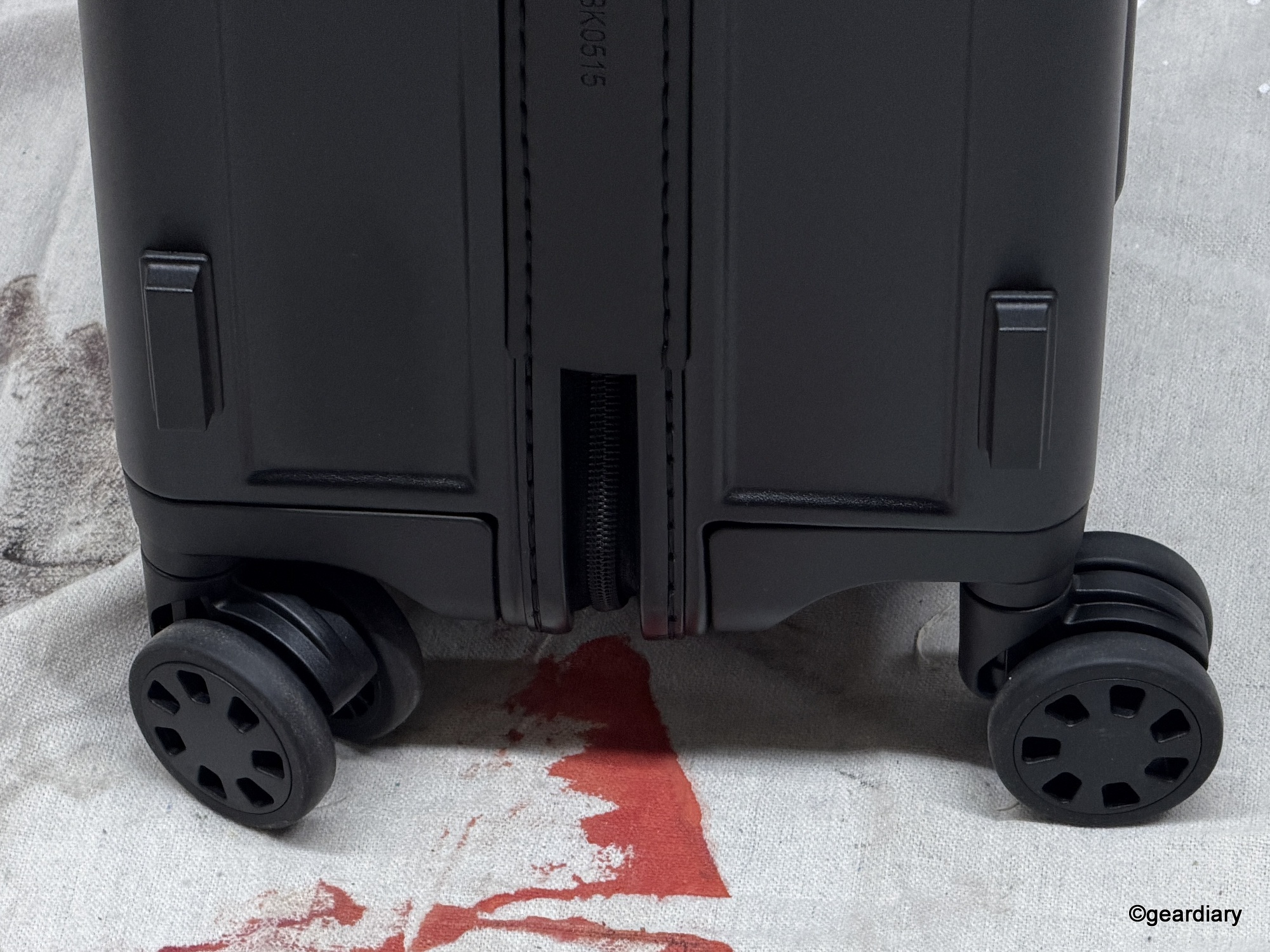
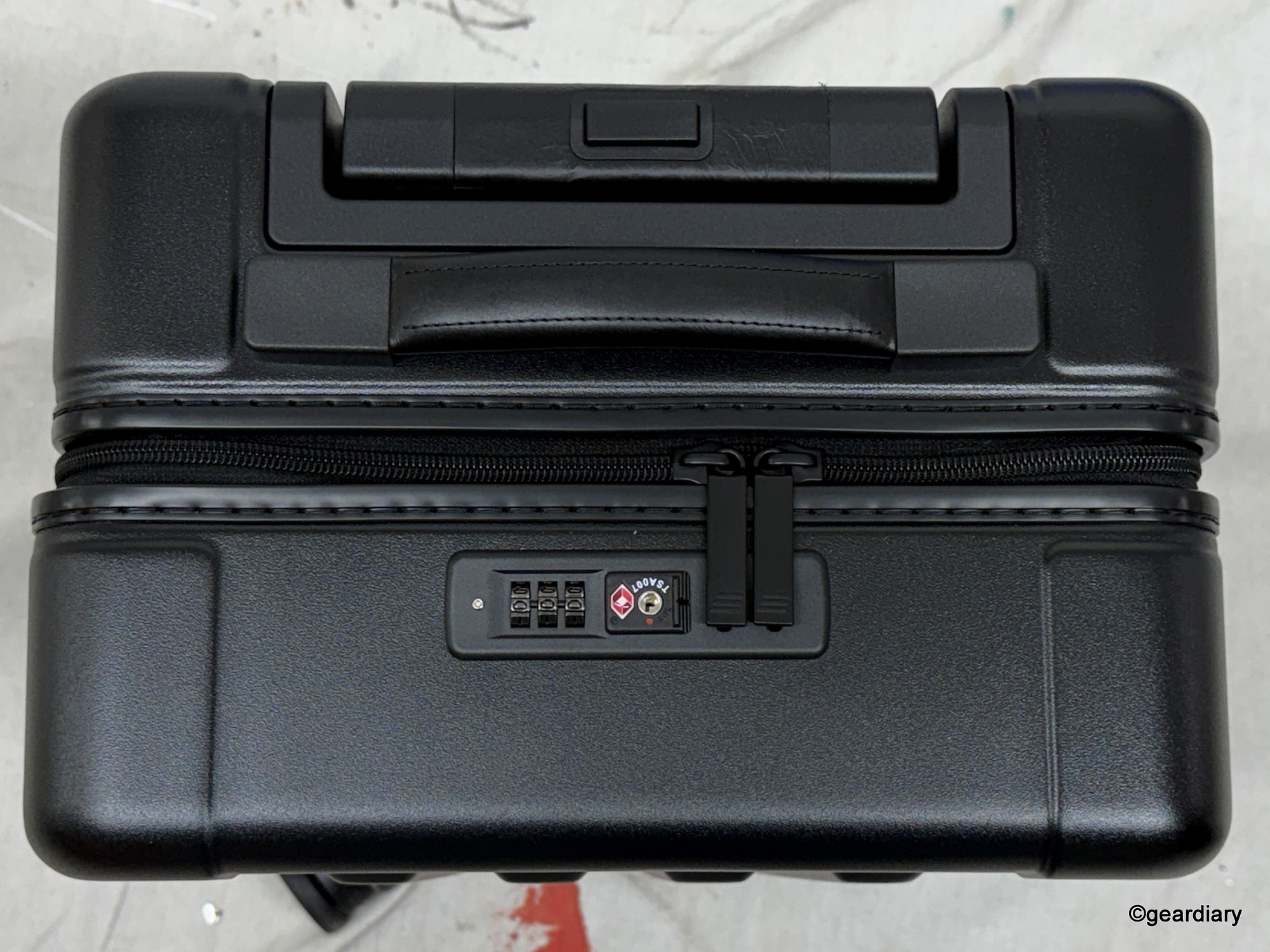
Both retain the distinctive ribbed Sterling Pacific styling, full-grain Italian leather details, substantial hardware, spinner wheels, TSA-compatible double-latch locking system, and unusually polished presentation that distinguish the company’s aluminum luggage.
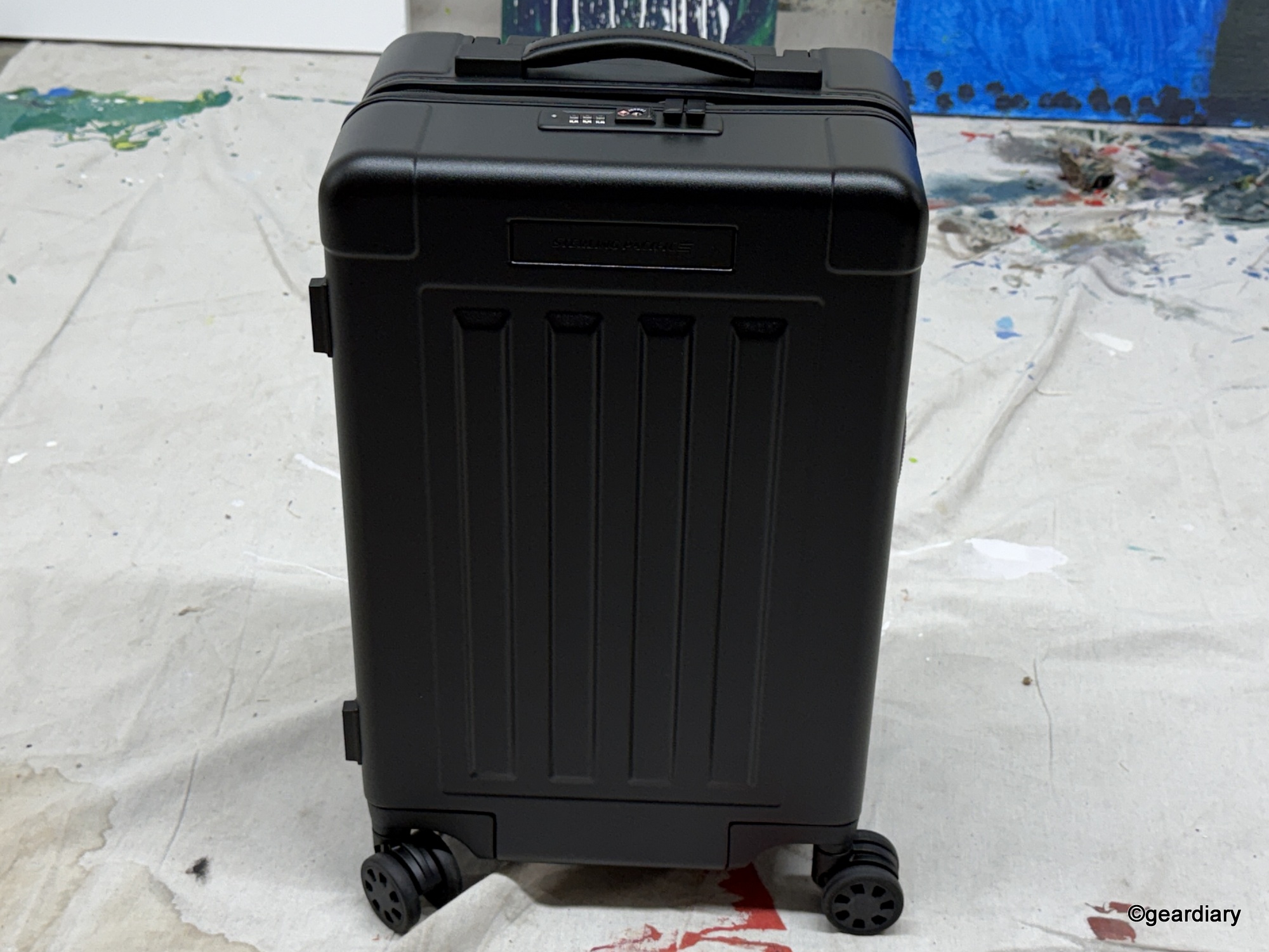
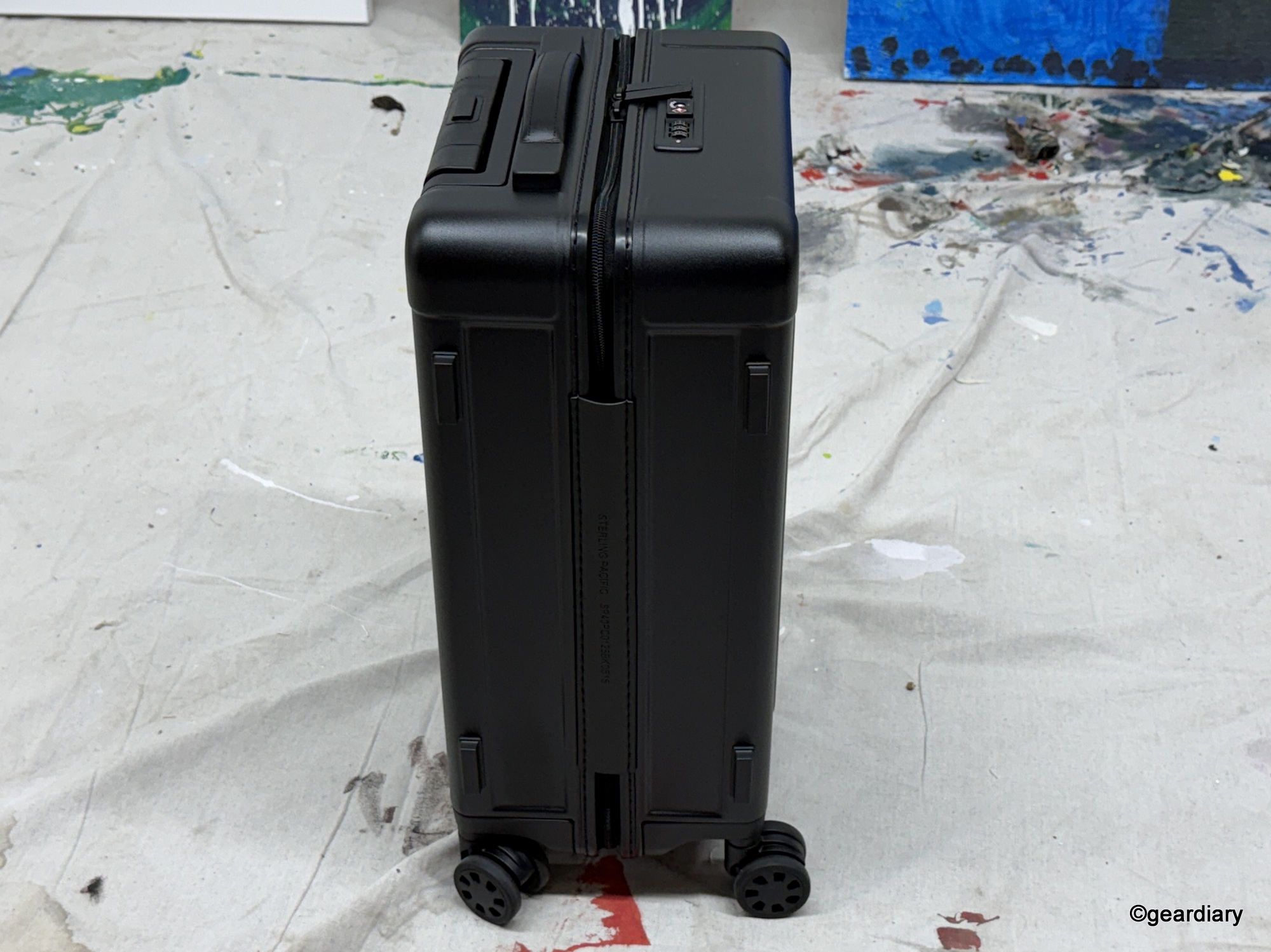
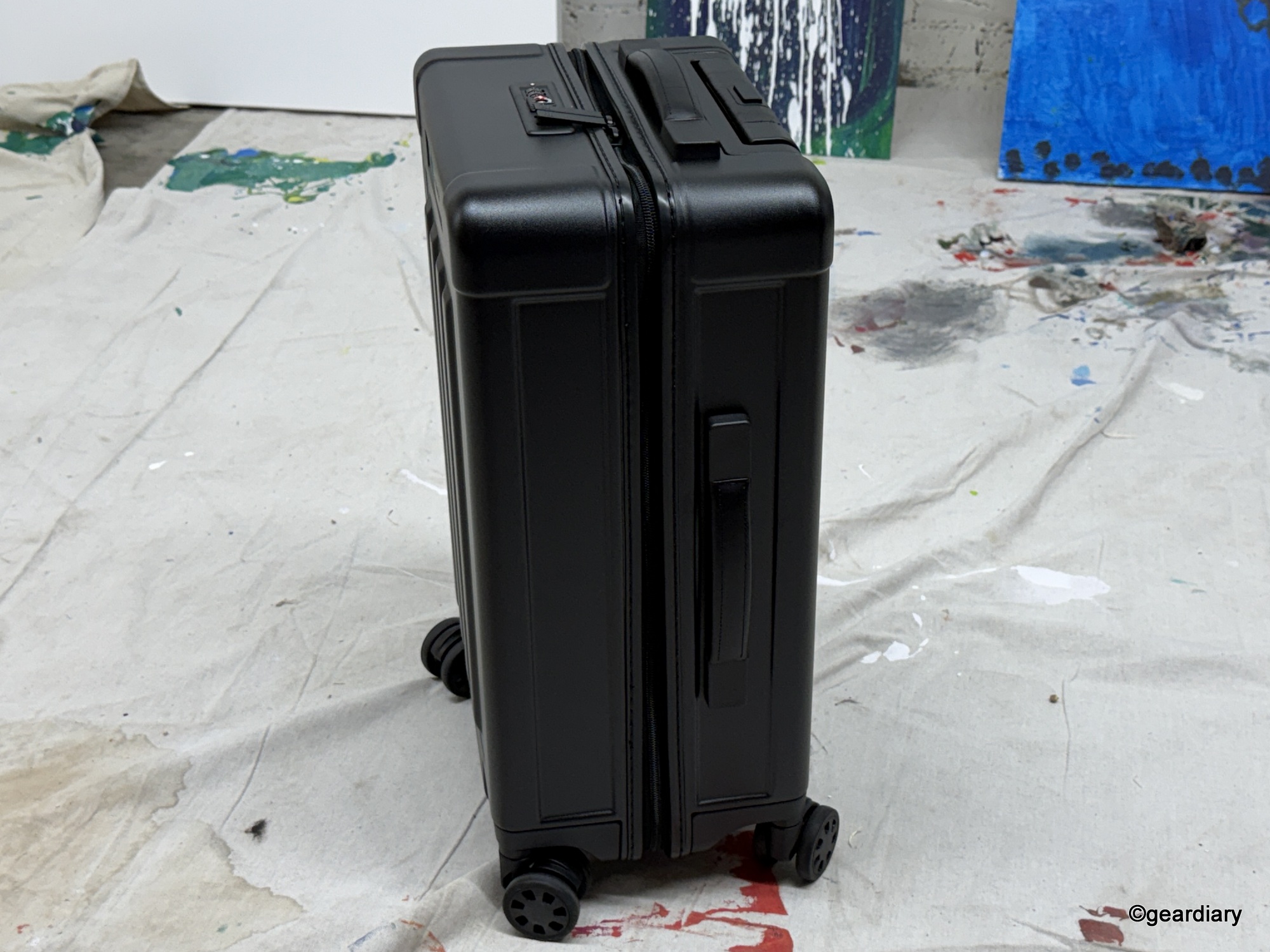
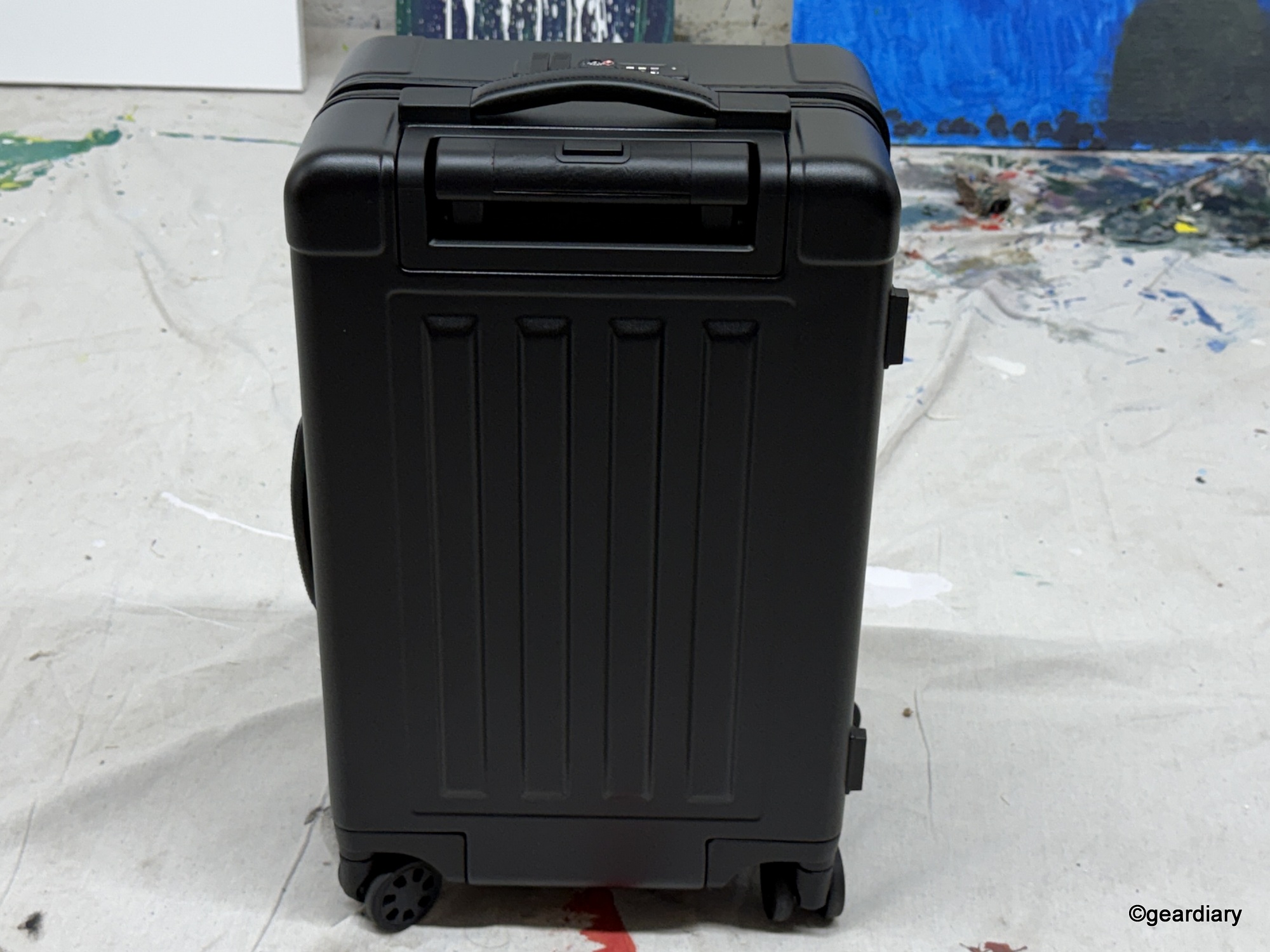
That makes the polycarbonate versions more than just less-expensive Sterling Pacific luggage. After traveling with them, they feel like the cases many people will actually prefer.
Four and a Half Pounds Makes a Very Real Difference
The Sterling Pacific Polycarbonate Cabin Travel Case (40L) measures 22″ tall by 14″ wide by 9″ deep, holds 40 liters, and weighs 7.5 pounds. Sterling Pacific describes those dimensions as meeting the maximum carry-on size accepted by major U.S. airlines, although it’s still worth checking your particular airline before traveling because baggage rules have a habit of becoming unexpectedly interesting at exactly the wrong moment.
For comparison, Sterling Pacific’s 40L aluminum model measures 22.5″ by 14″ by 9″ and weighs 12 pounds. Both offer the same stated 40-liter capacity, but the polycarbonate case starts 4.5 pounds lighter.
That difference matters far more at the airport than it does on paper.
The polycarbonate 40L is substantially easier to pick up, move through a security line, load into a vehicle, and, most importantly, lift into an airplane’s overhead compartment. Anyone who has ever tried an overhead-bin clean-and-jerk while a row of increasingly impatient passengers waits behind them will appreciate why empty luggage weight matters.
It also gives you more room within an airline’s weight allowance for the things you actually intended to bring.
Despite its smaller dimensions, the 40L has been roomy enough for a week-long trip when packing is reasonably disciplined. Rewearing a few pieces, coordinating clothing instead of packing seven completely unrelated outfits, and resisting the mysterious vacation impulse to bring three pairs of shoes “just in case” makes a week surprisingly manageable.
That isn’t an unusually generous capacity for a 40-liter carry-on, but the combination of usable space and low empty weight makes it particularly practical.
Polycarbonate, But Not Generic Polycarbonate
Sterling Pacific uses Makrolon ET3113 polycarbonate for the shell rather than an unspecified plastic blend. Polycarbonate is popular for premium hard-sided luggage because it can flex under impact rather than permanently deform like a metal shell can.
The corners, among the areas most likely to take a beating during travel, use extra material. Sterling Pacific says those sections are reinforced with a layer of ET3113 that’s 67% thicker than the rest of the shell. The exterior ridges also aren’t merely decorative; they’re intended to add structure and help distribute impact forces across the case.
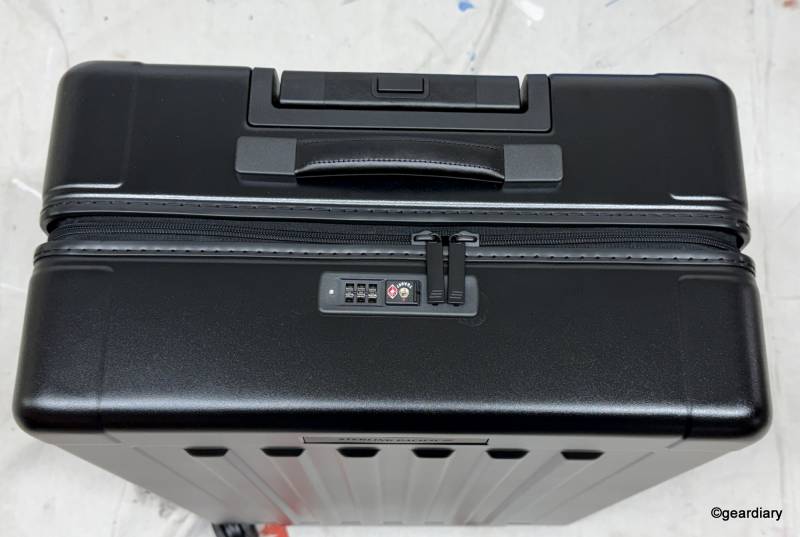
Reinforced Corners
None of that means you should expect the case to stay pristine forever. Polycarbonate luggage scratches, scuffs, and accumulates evidence of travel. Anyone buying expensive luggage under the assumption that baggage handlers will recognize its MSRP and adjust their technique accordingly is likely to have a disappointing first reunion at the carousel.
What matters more is how the case deals with those inevitable knocks over time. That said, after multiple trips by air and car, both of my review cases still look remarkably close to new.
Visually, though, these cases are exceptional. The black models have a restrained, almost architectural appearance, and the vertical ribbing gives them an immediate Sterling Pacific identity without requiring conspicuous branding.
This is easily among the best-looking luggage sets to pass through the Gear Diary testing rotation, and matching 40L and 90L cases have considerably more visual presence together than a typical pair of black plastic suitcases.
The Leather Details Make More Difference Than Expected
A large part of what keeps the Sterling Pacific Polycarbonate Travel Cases from feeling like downgraded versions of Sterling Pacific’s aluminum luggage is the leather. The top and side carrying handles use full-grain Italian leather sourced from a tannery in Chiampo, in Italy’s Veneto region, and the retractable trolley handle is also wrapped in leather.
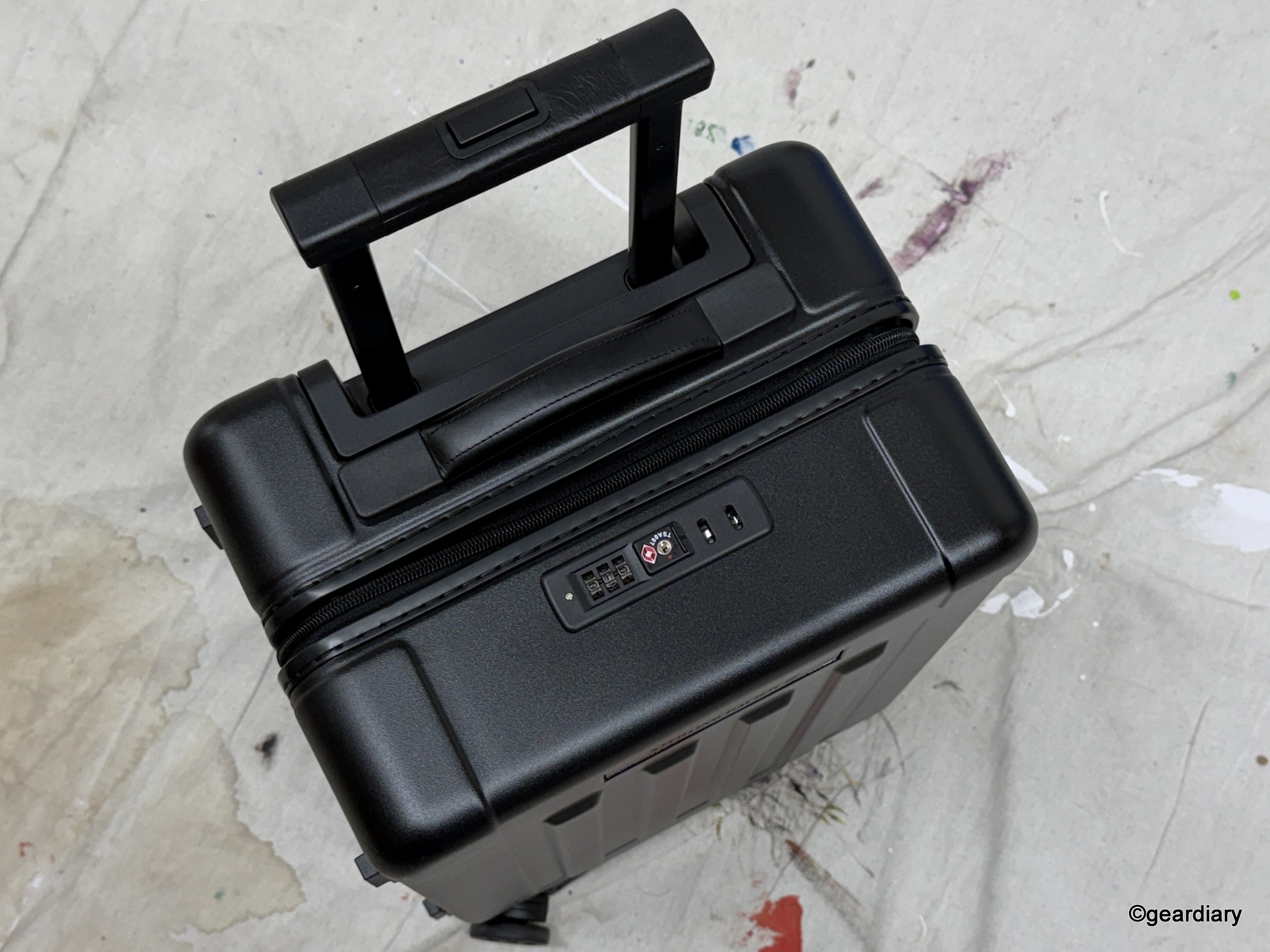
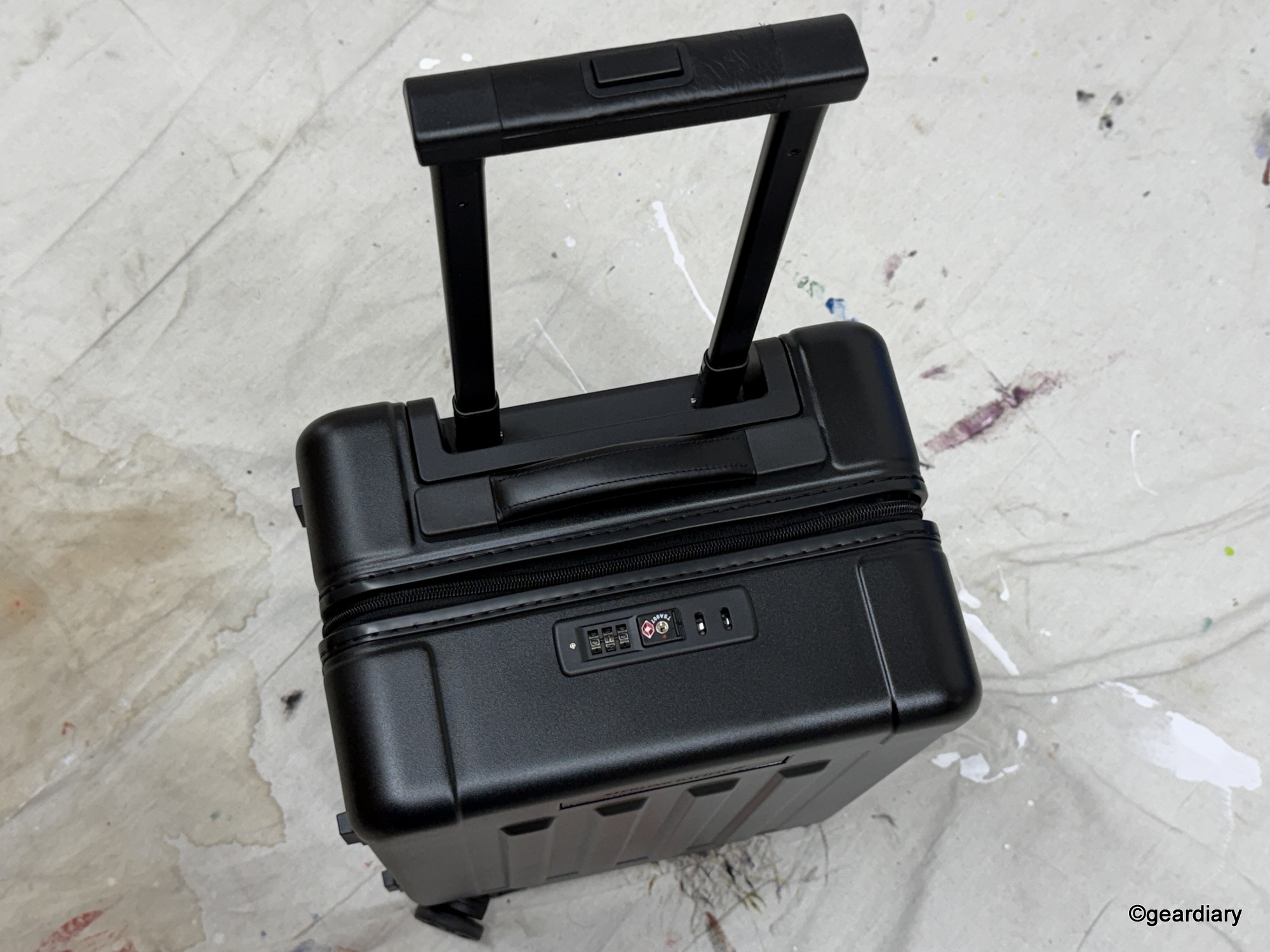
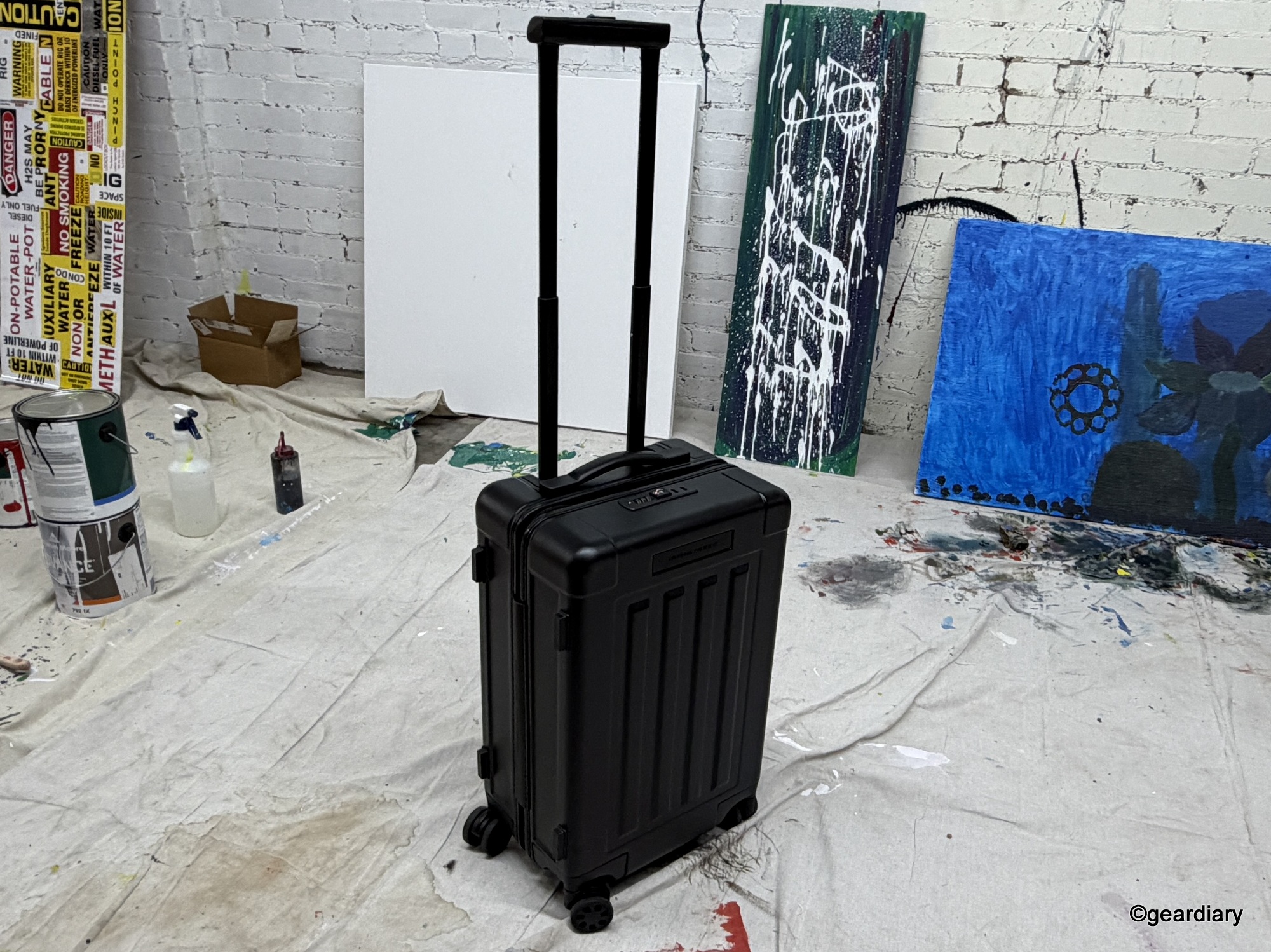
They’re functional details, obviously, but they’re also important to the experience of using luggage at this price.
The leather handles feel substantial in the hand and provide a warmer, more tactile contrast to the black shell. They also make the cases look far more expensive than most polycarbonate luggage.
Full-grain leather should develop a patina as it’s handled and ages, so the luggage ought to become more personal rather than merely more worn. That’s especially fitting for something meant to accompany you for years, not survive two vacations before being relegated to the back of a closet.
Leather adds an extra maintenance consideration, but it’s easy: a quick wipe with leather cleaner and conditioner. Sterling Pacific includes an Amenity & Care Kit with each travel case, including a bag for smaller personal items or cosmetics, a travel-case manual, a microfiber cloth, and an aluminum pen. Each suitcase also includes a woven protective dust cover for storage.
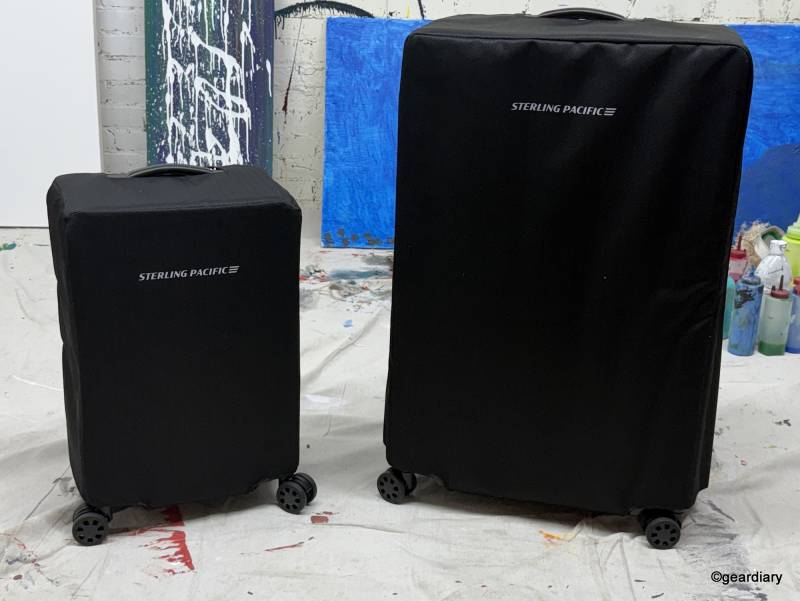
Sterling Pacific Polycarbonate Cabin Travel Case (40L) and Polycarbonate Check-In Travel Case (90L)
Is an aluminum pen necessary for a suitcase to work? Obviously not. But at four-figure pricing, opening the box and finding something more thoughtful than a plastic bag and warranty leaflet seems entirely reasonable.
Packing the 40L for a Week
The 40L opens into two structured packing areas rather than one large undivided cavity. One side includes a compression pocket with an additional mesh storage pocket, while the other secures with metal buckle straps trimmed in leather.
That organization works well for separating clothing categories without forcing you into an elaborate packing system.
For a week-long trip, the 40L is large enough when you plan your clothing with some overlap. Pants, jackets, or sweaters that can be worn more than once dramatically change what seven days of clothing looks like inside a carry-on.
And unlike some expandable luggage, the Sterling Pacific doesn’t encourage packing decisions you’ll later regret by offering another two inches of emergency expansion. What fits, fits, although the polycarbonate shell has a little more give than aluminum when you’re trying to coax the zipper closed.
Cheaper cases offer more elaborate interior organizers, removable panels, dedicated laptop compartments, or clever expansion systems, so the Sterling Pacific isn’t trying to win a feature-count contest. Instead, its interior favors structure, materials, and straightforward packing.
Whether that’s an advantage depends on how you travel. Someone who wants every charging cable to have its own zippered habitat may prefer a more compartment-heavy design. Someone who already uses packing cubes or has their own method of organized packing may prefer Sterling Pacific’s relative simplicity.
The 90L Is the One for Longer Trips, Wine, and Bad Decisions at Gift Shops
The 90L Sterling Pacific Polycarbonate Check-In Travel Case scales the same design up to 32″ by 20″ by 10″. It holds 90 liters and weighs 12.5 pounds. That’s a large checked suitcase, but its relatively low weight is especially valuable because checked luggage tends to pick up items during a trip.
The extra space makes the 90L far better suited to longer vacations, winter clothing, trips requiring more than one type of footwear, or travel where souvenirs are part of the plan.
And yes, wine counts as a souvenir.
Up to six bottles of wine purchased while traveling have made the return trip packed inside the 90L without casualties. That isn’t permission to toss glass bottles loose among your shoes and hope for divine intervention; careful padding and placement still matter, and I used my dirty clothes to provide protection. But it’s a useful real-world demonstration of both the capacity and the protection the case can provide when packed sensibly.
The lighter shell also leaves more of an airline’s checked-bag weight allowance available for what goes inside. That’s an important advantage when you’re transporting wine, gifts, heavy clothing, or the inexplicable collection of objects that somehow follows everyone home from a long vacation.
Wheels, Handles, Locks, and the Parts That Get Abused
Both cases ride on four 360-degree spinner wheels mounted in polycarbonate housings. Sterling Pacific says the wheel assemblies have completed a SATRA TM248 endurance test covering 25 kilometers, or about 15.5 miles, on a rolling test surface at roughly 3 mph.
Laboratory testing doesn’t perfectly reproduce airport life, where suitcase wheels encounter carpet, tile, sidewalks, expansion joints, curbs, and whatever architectural prank someone has installed between Terminal A and the rental-car shuttle. Still, endurance testing provides more useful information than simply describing the wheels as “premium.”
Both cases have rolled quietly and smoothly through airports, hotels, sidewalks, and parking areas, without developing the chatter, wobble, or reluctance to track straight that can make lesser spinner wheels irritating.
The telescoping handle assembly is housed in polycarbonate and topped with that excellent leather grip. The system is also rigid enough that the handle doesn’t immediately feel flimsy just because the surrounding suitcase has become lighter. The travel cases still feel stable when the case is heavily loaded, and there’s no side-to-side play, and steering remains easy.
The zipper uses a double-coil, puncture-resistant construction, and the pulls move smoothly around the corners and lock into an integrated TSA-approved combination latch. That gives the cases the familiar flexibility of zippered polycarbonate luggage while preserving some of the visual character of Sterling Pacific’s latch-equipped aluminum cases.
The Competition Is Serious at This Price
The 40L Sterling Pacific Polycarbonate Cabin Travel Case normally retails for $1,150, while the 90L Sterling Pacific Check-In Travel Case normally retails for $1,450. Those numbers require some context.
RIMOWA’s polycarbonate Essential Cabin currently sells for $990, putting it in essentially the same luxury tier as the 40L Sterling Pacific. RIMOWA’s Essential Check-In L is $1,250, weighs 10.6 pounds, and offers roughly 85 liters of capacity.
Briggs & Riley’s 22″ Sympatico Essential Carry-On Expandable Spinner costs considerably less at $695. It weighs 8.6 pounds, offers 41 liters of capacity before expansion, and expands to 51 liters. Its biggest competitive advantage may be Briggs & Riley’s particularly broad lifetime guarantee, which covers repairs even for airline damage.
At the other end of the pricing spectrum, Away’s 7.5-pound Carry-On offers 41 liters of space for $275, while its 7.9-pound Bigger Carry-On provides 49 liters for $295.
In other words, spending four figures on a polycarbonate suitcase clearly isn’t necessary.
The argument for Sterling Pacific isn’t simply that it holds clothing or rolls through an airport better than luggage costing one-third as much. At this end of the market, materials, finish, hardware, aesthetics, warranty support, and how much pleasure you get from owning and traveling with the thing all become part of the equation.
If maximizing capacity per dollar is the objective, there are much more rational choices.
If you like the Sterling Pacific aesthetic, appreciate its leather detailing and unusually substantial hardware, but don’t want the weight or significantly higher price of its aluminum luggage, the polycarbonate collection starts making considerably more sense.
Sterling Pacific’s Aluminum Case Finally Has a Real Rival … and It’s Made by Sterling Pacific
The unexpected part of testing the 40L Sterling Pacific Polycarbonate Cabin Travel Case isn’t that it’s easier to live with than the aluminum version. That was predictable from the weight specifications alone.
It’s that very little of what made the aluminum Sterling Pacific appealing feels absent.
The aluminum case still has its own personality. There’s something satisfying about the rigidity of metal luggage, the exposed hardware, and the expectation that every dent and scrape will eventually become part of its history. Anyone drawn to that experience won’t mistake polycarbonate for aluminum.
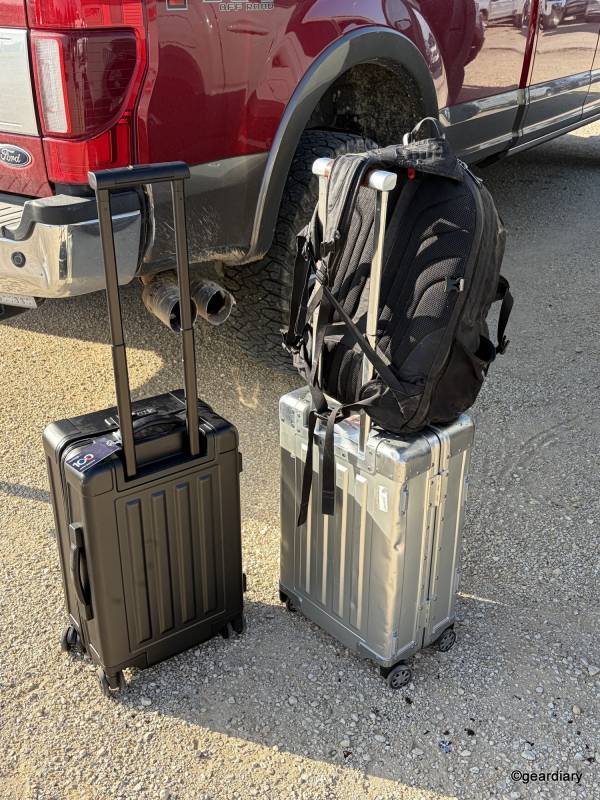
Sterling Pacific Polycarbonate Cabin Travel Case (40L) next to the aluminum version; note the travel scars on the aluminum version.
But the lighter case is simply easier.
When it’s time to lift a packed carry-on above shoulder height, maneuver luggage into a vehicle, or drag everything through yet another airport, the 7.5-pound polycarbonate case makes a persuasive argument for practicality.
The 90L Sterling Pacific Check-In Travel Case makes the same case on a larger scale. It offers enough room for extended trips and souvenir-heavy returns while keeping its own empty weight at a relatively manageable 12.5 pounds.
What’s worth noting is that Sterling Pacific provides a lifetime warranty and repair service for the original owner, covering defects and the case’s primary functionality. Each case carries a unique batch identification number used for warranty and repair service.
The Sterling Pacific Polycarbonate Travel Cases Make Luxury Luggage Much Easier to Live With
Sterling Pacific hasn’t tried to make inexpensive polycarbonate luggage. It has taken much of what distinguishes its aluminum cases and transferred that personality into a lighter material.
That means the Polycarbonate Travel Cases remain expensive, even compared with many very good alternatives. Buyers focused on function can spend substantially less and still get durable, lightweight luggage with smooth spinner wheels, thoughtful interiors, TSA locks, and strong warranty coverage.
But that’s not really the buyer Sterling Pacific is chasing.
The appeal lies in having something lighter and genuinely practical without giving up the materials, styling, leather details, and sense of occasion that make premium luggage enjoyable in the first place.
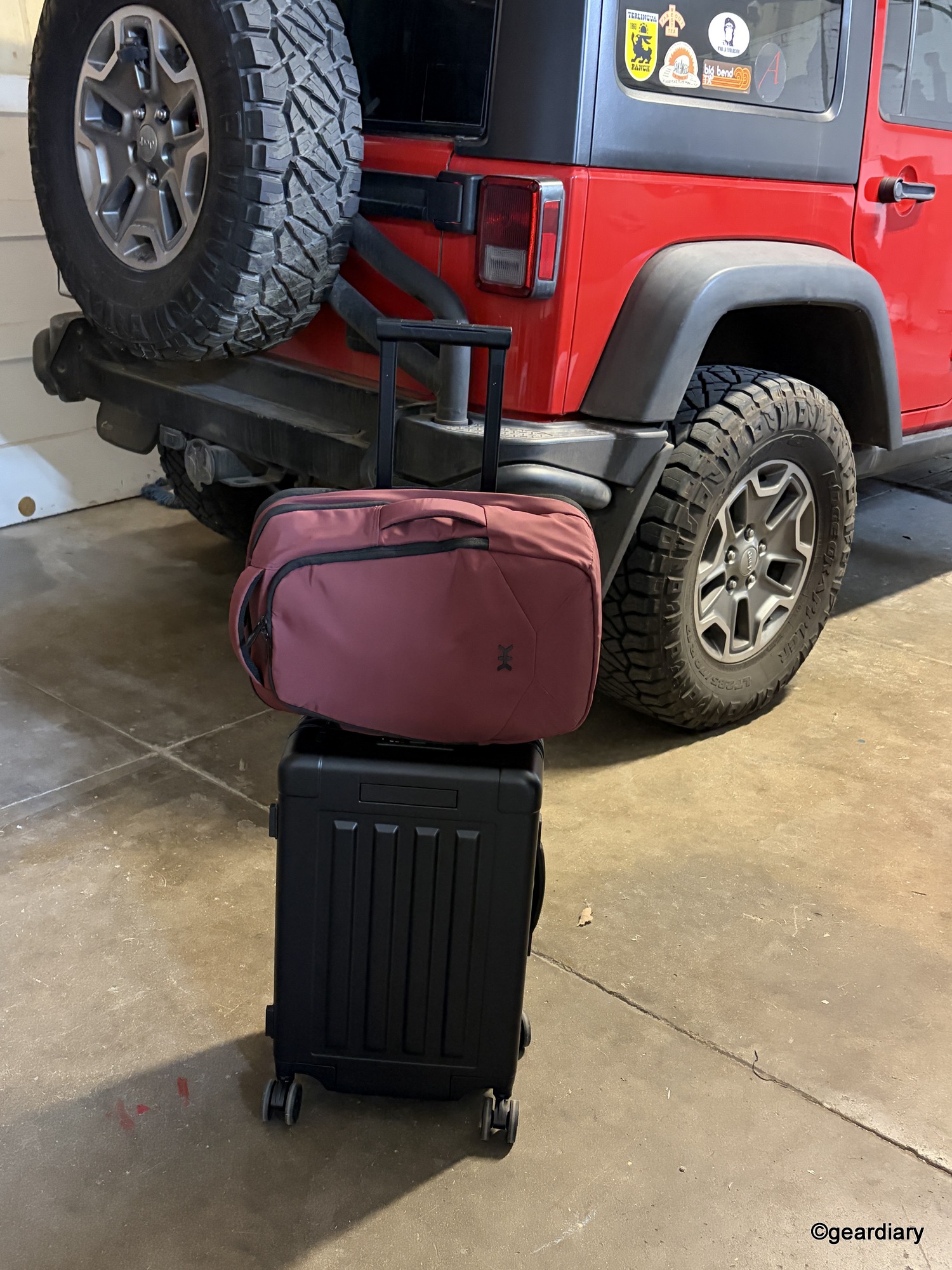
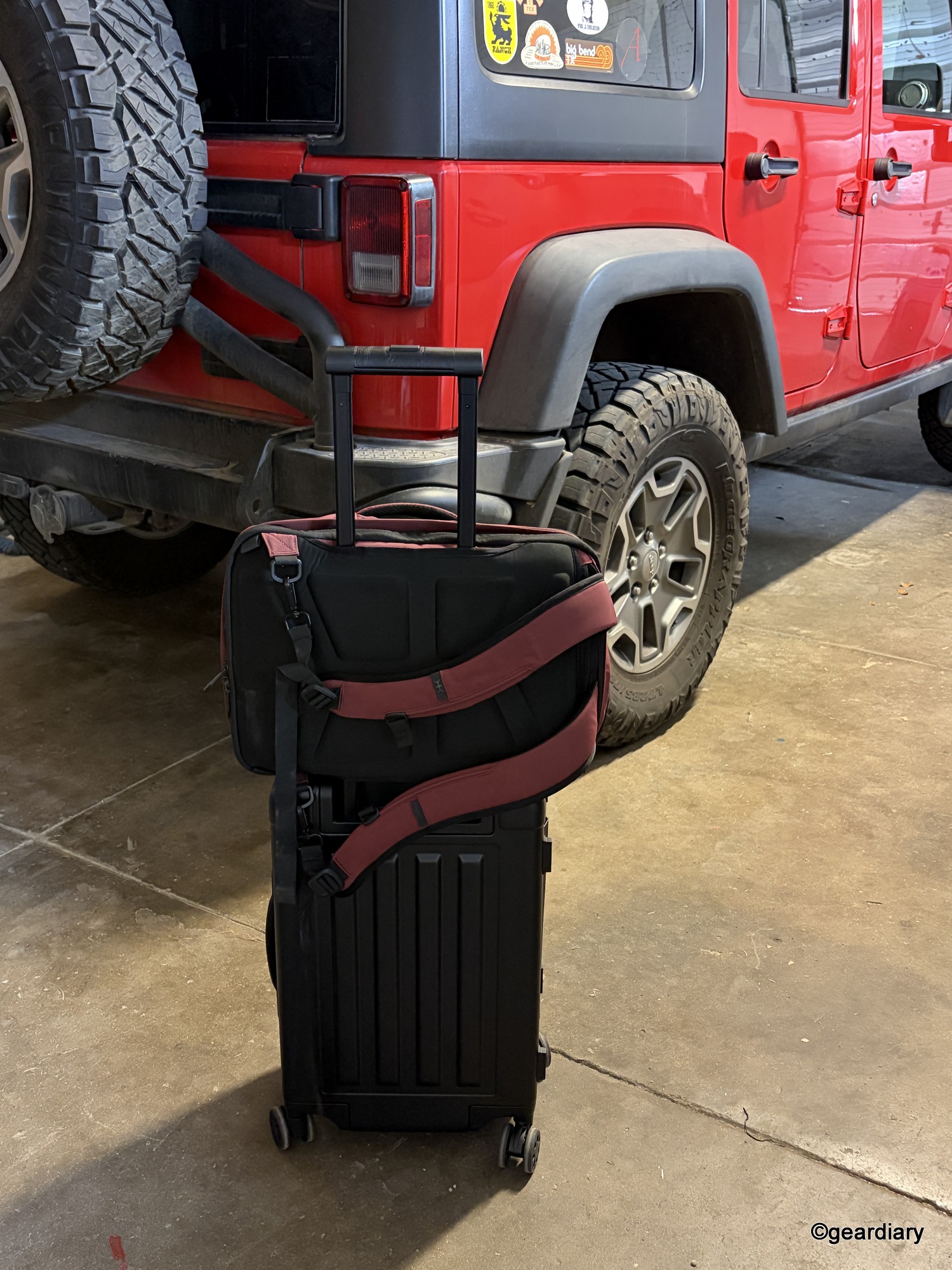
The 40L has become particularly compelling because that substantial weight reduction changes how the case feels in daily travel. The 90L extends the same formula to longer trips, with plenty of space for generous packing and whatever follows you home.
As much as there is to love about Sterling Pacific’s aluminum luggage, these polycarbonate cases may be the more practical choice for frequent travel. They’re lighter, easier to manage, visually distinctive, beautifully finished, and backed by a lifetime warranty and repair program.
Sometimes the less romantic material turns out to be the one you reach for more often. Airports have a way of encouraging that kind of pragmatism.
The 40L Sterling Pacific Polycarbonate Travel Case retails for $1,150; it is available directly from the manufacturer. The 90L Sterling Pacific Polycarbonate Check-In Case retails for $1,450; it is available directly from the manufacturer.
Source: Manufacturer-supplied review sample
What I Like: Considerably lighter than Sterling Pacific’s aluminum luggage; 40L is easy to lift into an overhead compartment; Distinctive, exceptionally attractive design; Luxurious full-grain Italian leather handles and trolley grip; Reinforced Makrolon polycarbonate construction; Useful, straightforward interior organization; 40L can handle a carefully planned week of clothing; 90L offers substantial room for longer trips and souvenirs; Spinner wheels; Integrated TSA locking system; Included care kit and dust cover; Lifetime warranty and repair program
What Needs Improvement: Premium pricing puts both cases beyond what many travelers need to spend; Less interior gadgetry and expansion capability than some competitors; Airline carry-on limits vary, so the 40L’s 22″ by 14″ by 9″ dimensions should still be checked against your specific carrier