


The Lowdown
If you love music and strive to listen to it at the highest possible quality, I wholeheartedly encourage you to consider the Questyle M18i Max.
Overall
Pros
- Spectacular sound quality
- Design and build quality
- Ease of use
Cons
- There may be confusion that the unit can transmit to wireless headphones
Questyle Audio was founded in Shenzhen, China, in 2012, and has grown into a globally recognized high-fidelity audio manufacturer specializing in lossless audio technology. Their product lines include devices and accessories designed to maximize personal, desktop, and wireless Hi-Fi experiences. Products include DAC / headphone amplifiers, earphones, and audio adapters. In this review, we examine their flagship Mobile DAC/Headphone Amplifier, the Questyle M18i Max.
What Is It?
The Questyle M18i Max is a portable DAC (Digital-to-Analog Converter) and headphone amplifier, a small device designed for audiophiles and music enthusiasts that enables high-quality playback from smartphones, tablets, and personal computers. In simple terms, the DAC takes over the decoding of the digital signal and the amplifier provides increased power with minimal distortion to power headsets that require it.
What is a DAC?
From What Hi-Fi:
In audio, a DAC (digital-to-analog converter) is a device that converts digital audio data into an analog electrical signal that speakers or headphones can reproduce as sound.
What a DAC Does
Digital audio files (such as MP3, WAV, or streaming data) store sound as binary numbers — discrete “samples” taken at regular intervals. Human ears and most audio equipment cannot interpret these directly; they need a continuous, varying electrical signal. A DAC’s job is to take those digital samples and reconstruct them into a smooth analog waveform that an amplifier can drive to a speaker or headphone.
What’s in the Box
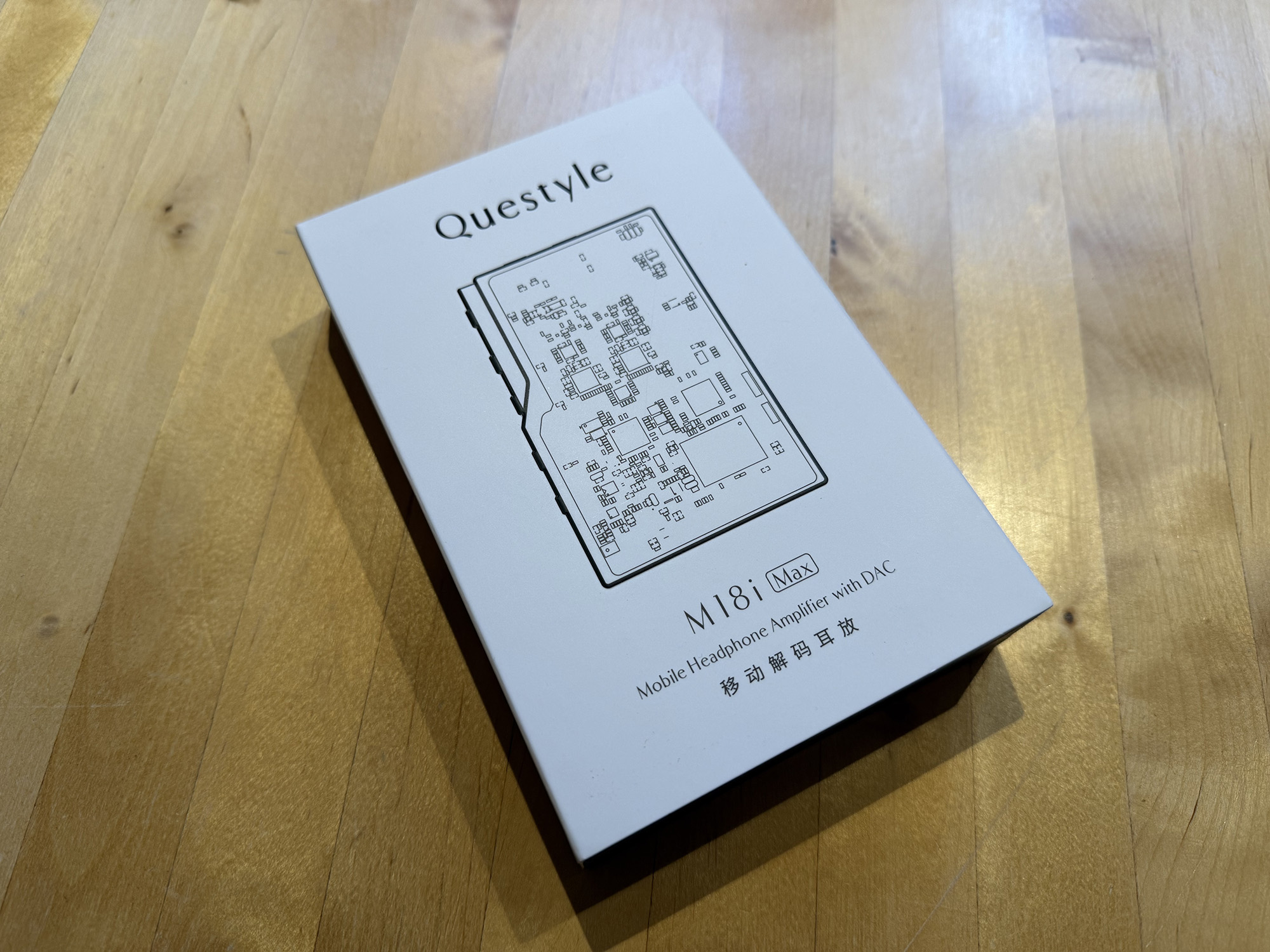
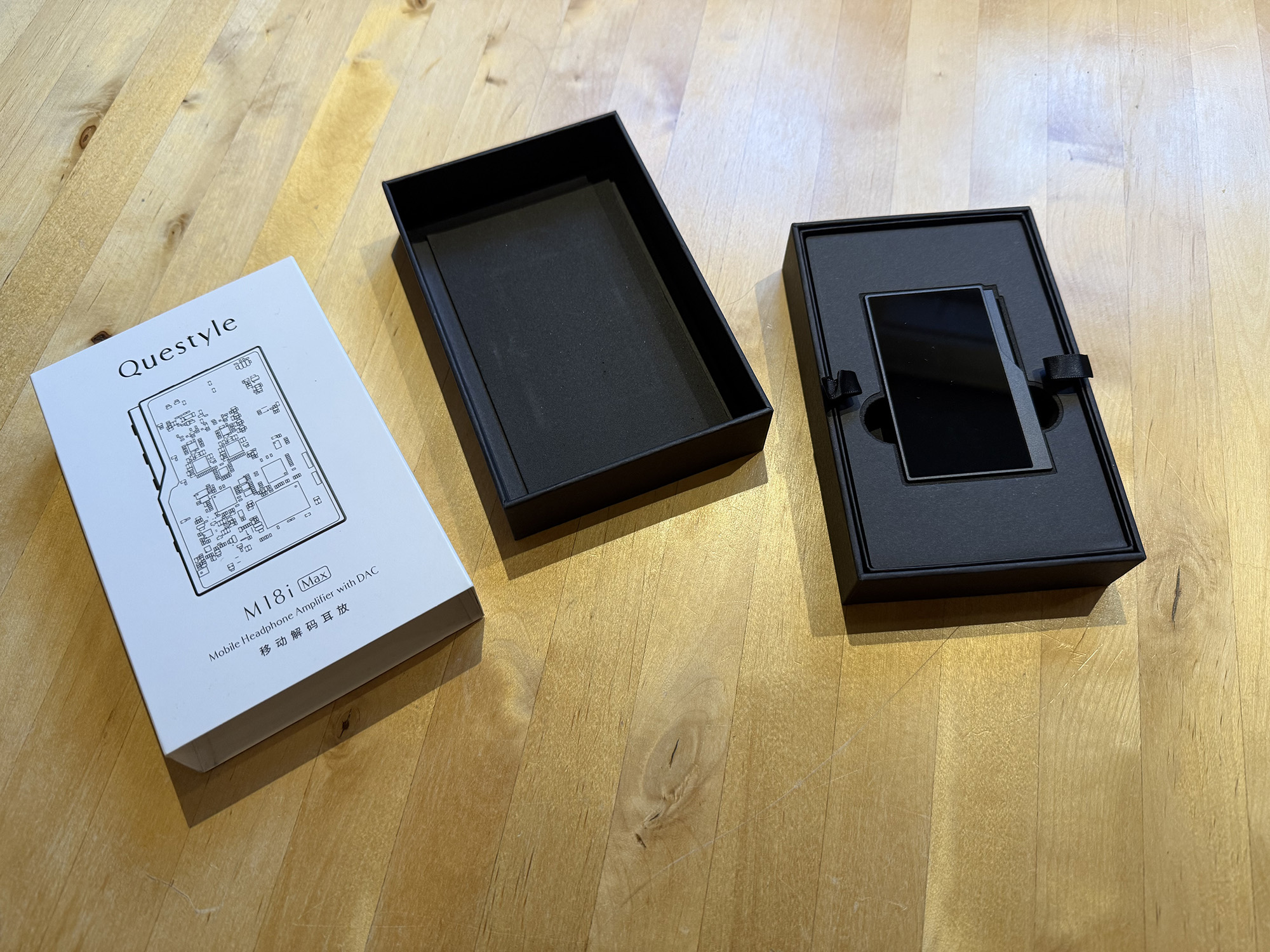
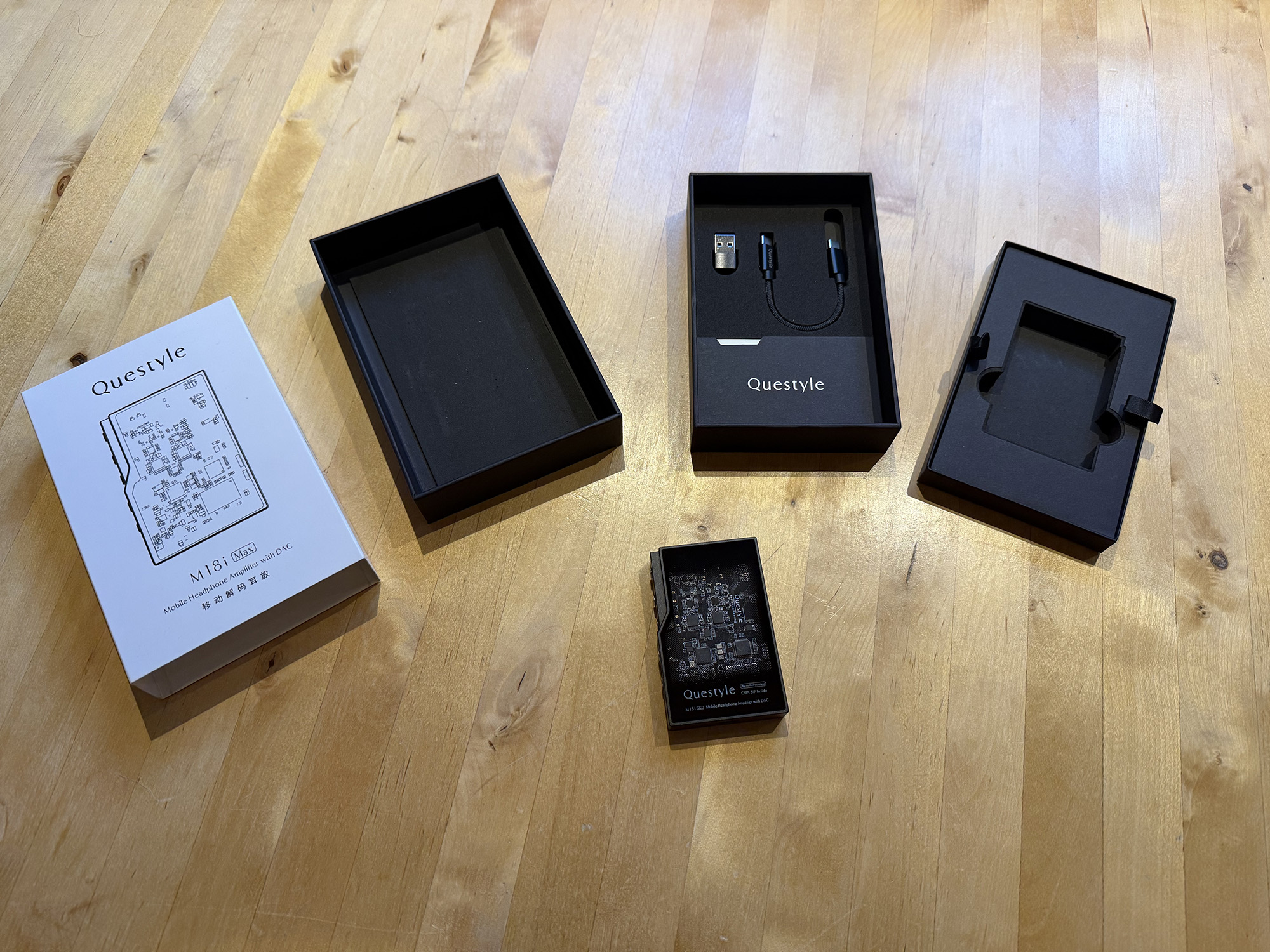
- Questyle M18i Max Flagship Mobile Headphone Amplifier with DAC
- USB Type-C Cable
- USB Type-C to USB Type-A Adapter
- Warranty Card & User Manual
Design and Build Quality
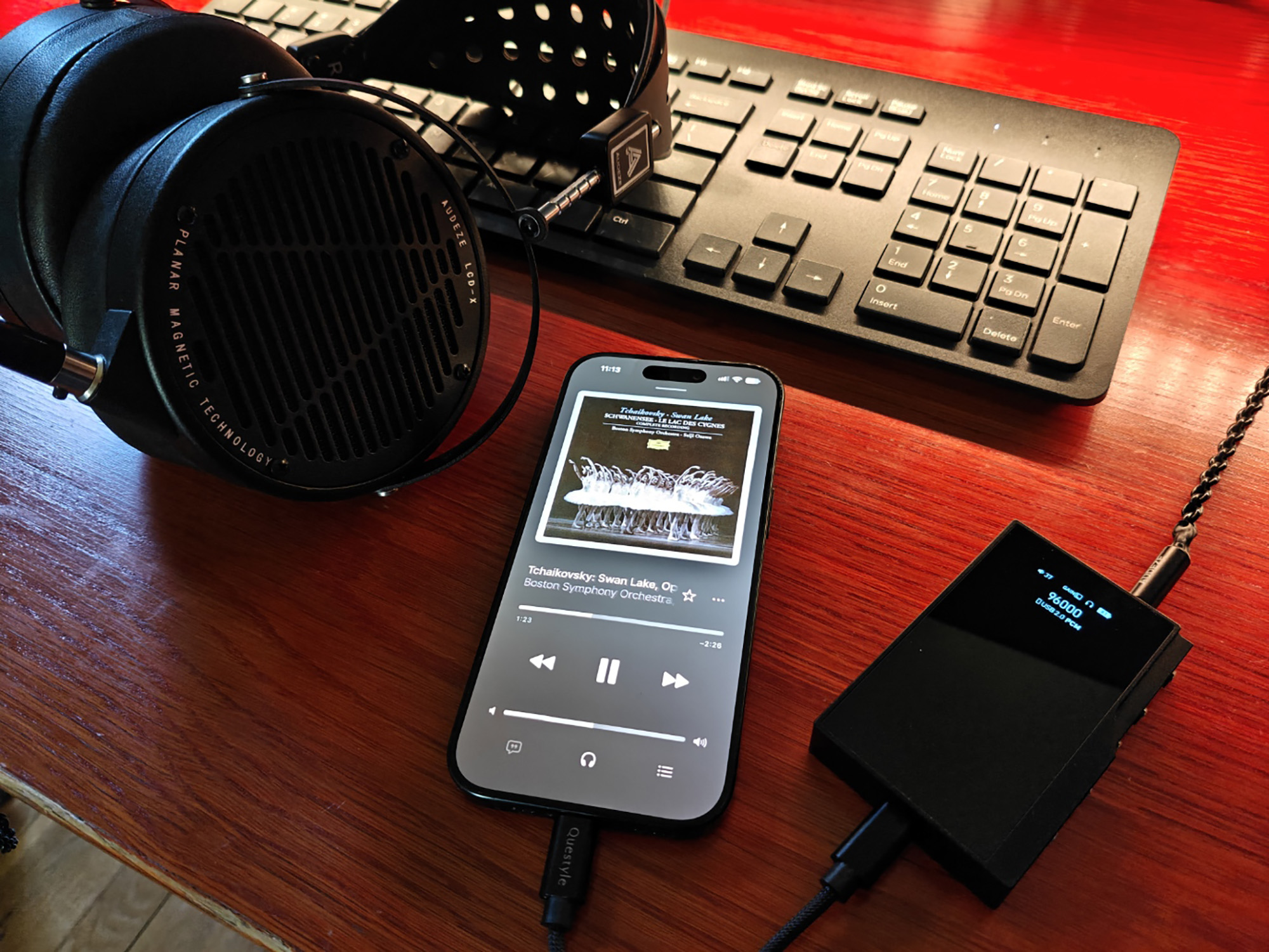
Questyle’s website uses expressions such as “Bauhaus Rational”, “Form Over Function” and “Less is More” to describe the design, and these are not hyperbole. This is a beautiful bit of gear.
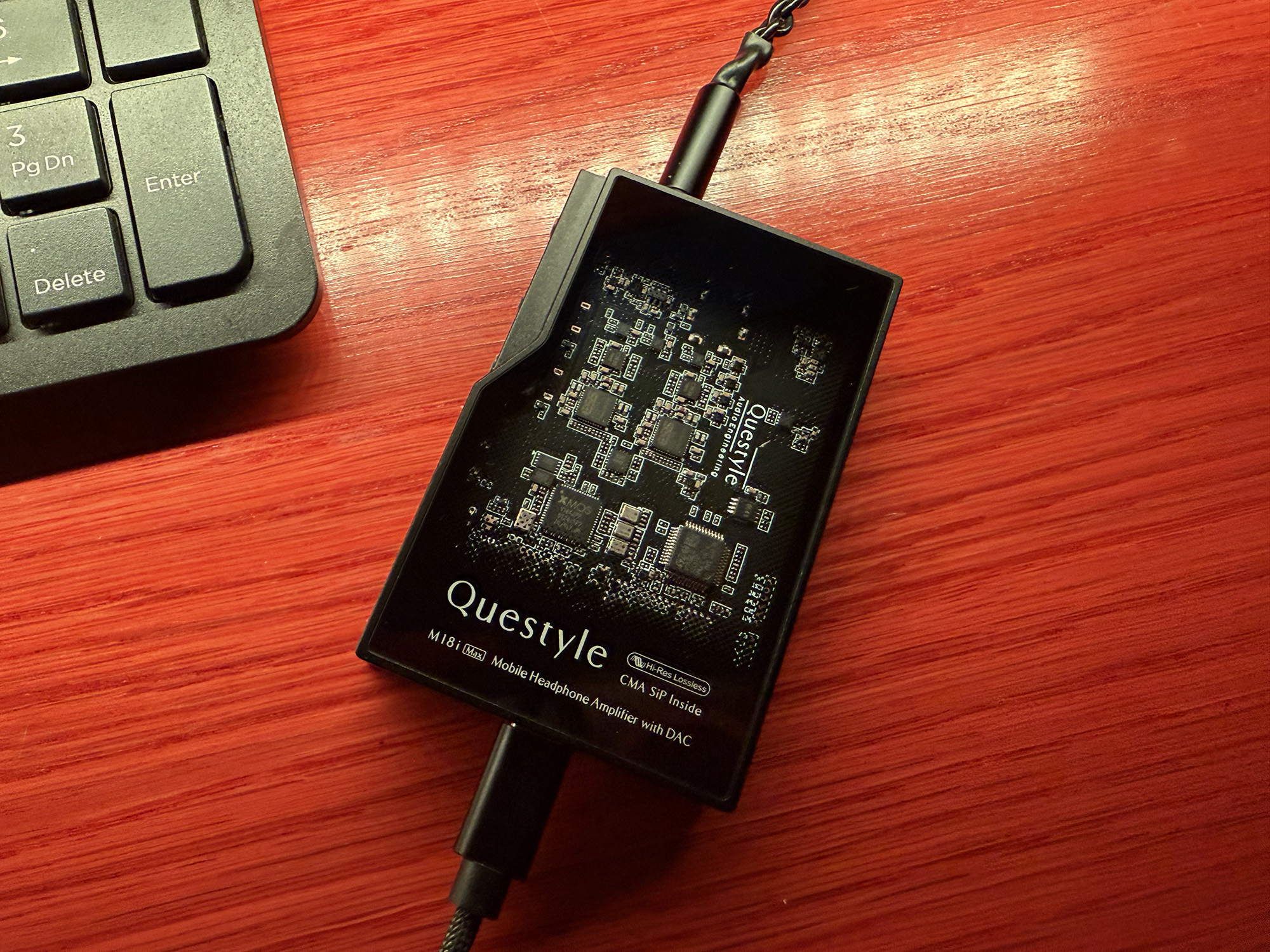
Made of “Tech Black” CNC anodized aluminum alloy, one whole side of the body features a glass window that shows off the chipset inside. The design is modern, functional, and subdued, while still celebrating its advanced technology.
The Questyle M18i Max is compact. At 3.4” high by 2.2” wide by .6” deep (86 x 55 x 15 mm), it is about the size of a pack of playing cards and weighs 3.5 ounces (98.4 grams).
The unit feels tremendously solid in hand and is designed to be held in one hand, leaving the controls at your fingertips. When held this way, the OLED display is at the top of the front. This display shows different information depending on the mode.
In both modes, the display shows volume, gain (high or low), output device, charging status, and the current battery level. In USB DAC mode, it also shows Phone or PC USB input, UAC Mode, Decoding Format, and sampling Rate. In Bluetooth DAC mode, the display indicates the Bluetooth mode and shows the Sampling and Bit Rates and Codec Format.
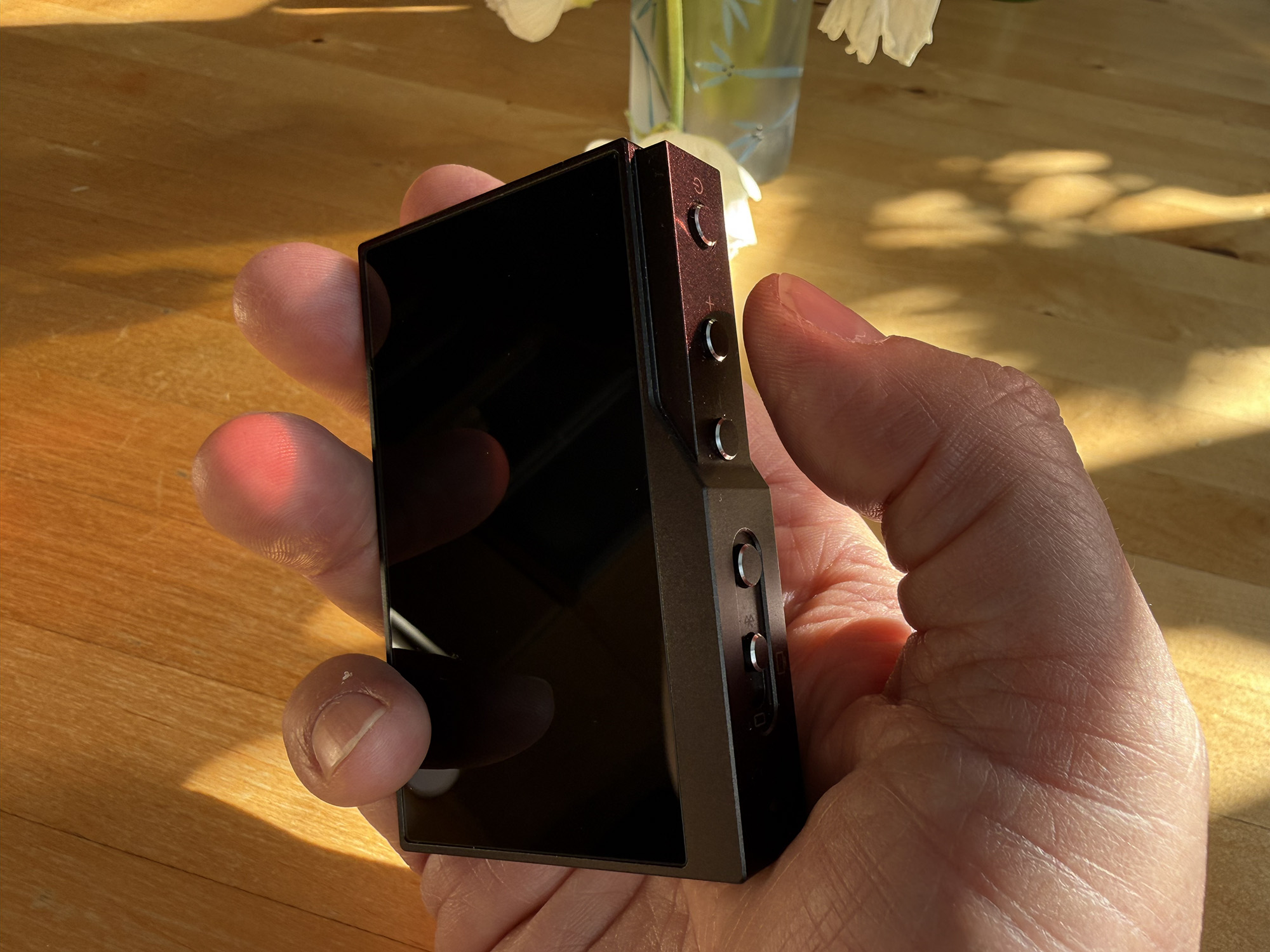
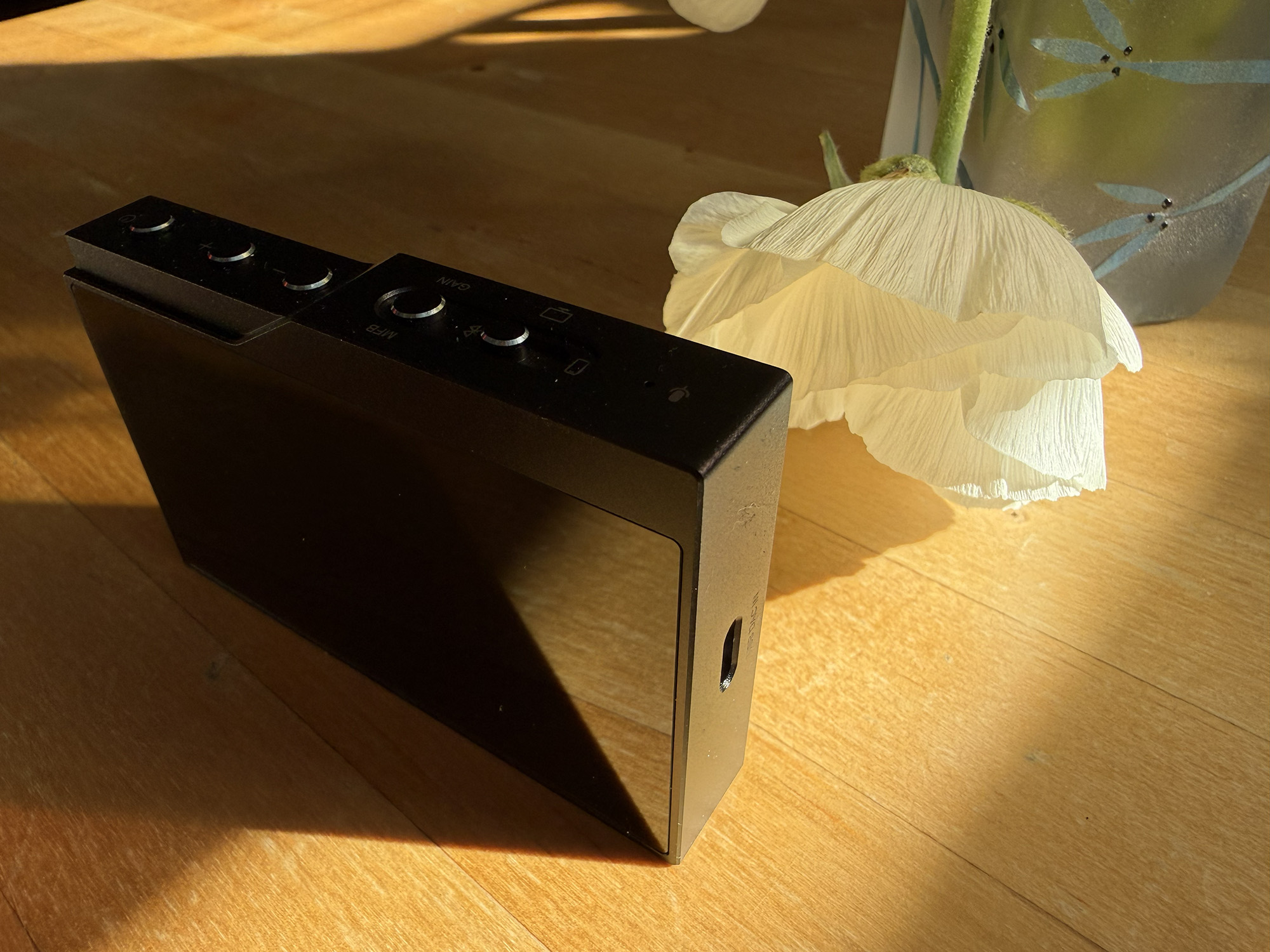
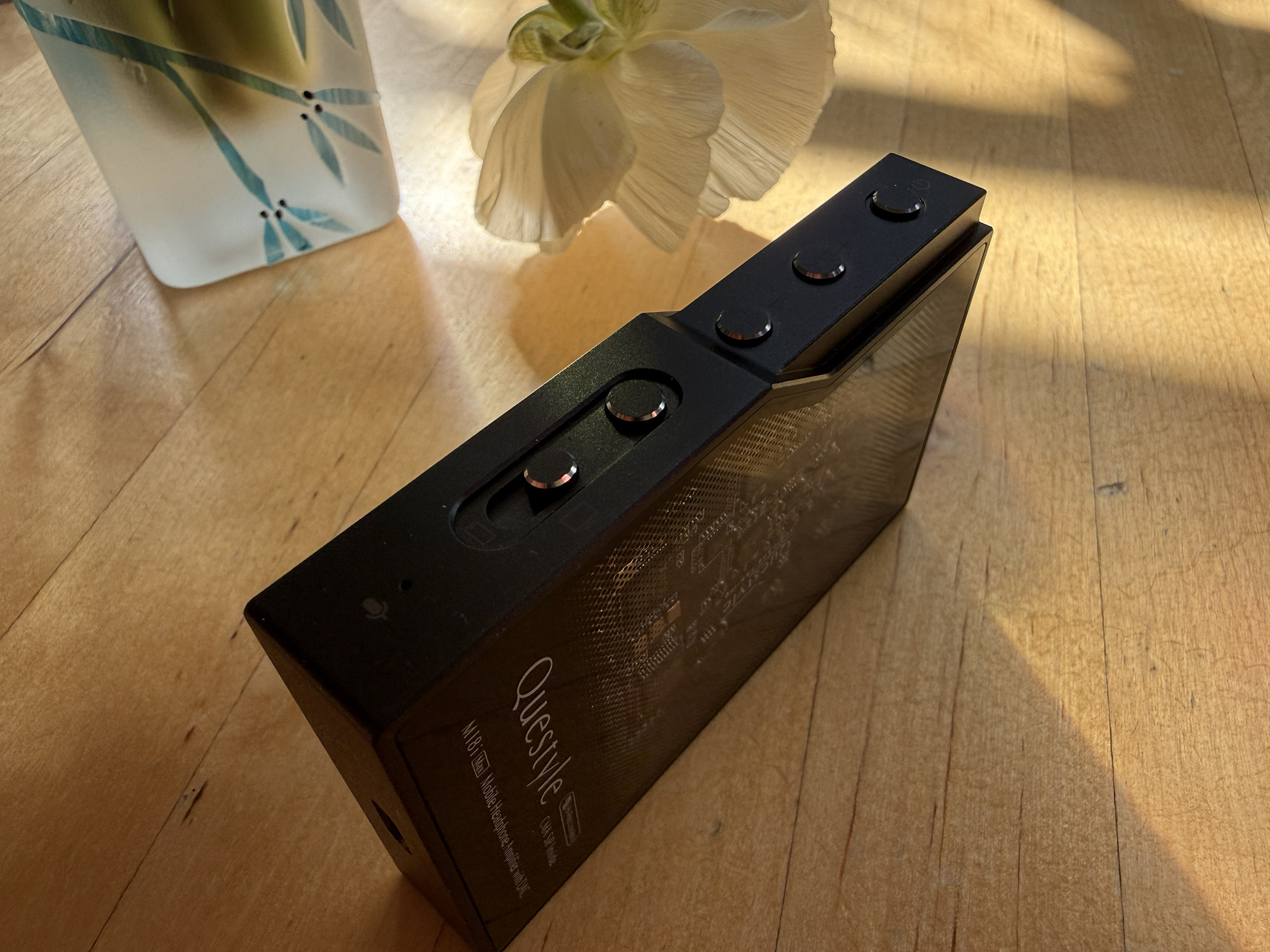
On the front edge, from top to bottom, are found the Power Button, the Volume Up and Down Buttons, the MFB (Multi-Function Button) / Gain Switch (the MFB button is only operational in Bluetooth mode while the Gain switch can only be set in Phone/PC mode), the Bluetooth & Phone/PC Mode Switch and the Infineon Flagship Microphone. The microphone is included so that users can take phone calls without disconnecting the Questyle M18i Max. The face opposite the control panel is blank.
The top edge of the unit features a 3.5mm Standard Headphone Jack, a 4.4mm Fully Balanced Headphone Jack, and a USB Type-C Charging Port. The opposite or bottom edge of the body has the USB Type-C DAC IN Input Port.
The defining feature of the Questyle M18i Max is the glass window with a dithered gradient around the edges. Looking through the glass, the various elements that make this device function are displayed. These include the twin ESS Flagship USB DAC ES9219Qs, the XMOS USB DAC, the Torex power management system, the MCU Controller, the Qualcomm Bluetooth Module, and the Asynchronous Clock Patented Architecture.
Compatibility
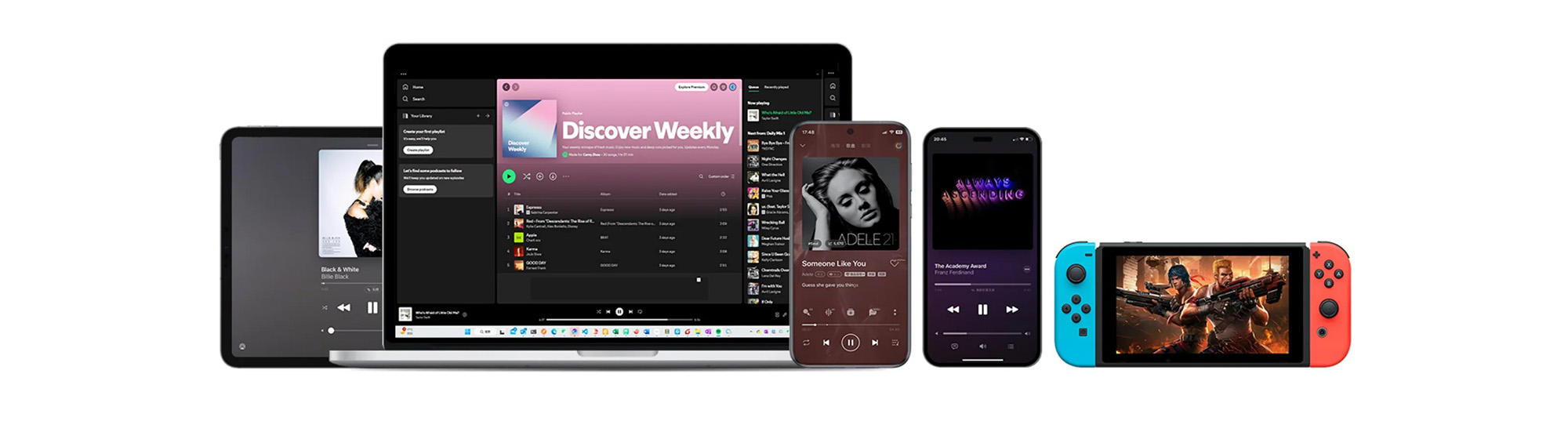
The Questyle M18i Max is compatible with a wide range of source devices. These include Android phones and tablets (running Android 5.0 and above), Apple phones and computers (devices with Lightning interfaces require the purchase of an optional Questyle LTC02 Lightning to USB Type-C cable), and PCs (running Windows 10, version 18.3 or higher). It is also compatible with PSP gaming consoles.
In terms of wireless connectivity, the M18i Max features codecs (Coder/Decoder software) including AAC, SBC, Qualcomm aptX, aptX HD and aptX Adaptive, Sony’s LDAC and LE Audio.
One important note that may get lost in the details is that while the Questyle M18i Max can accept lossless signals from sources like smartphones and computers via Bluetooth, it cannot transmit via Bluetooth to wireless headsets. Headsets and speaker systems need to physically plug into the unit via its audio jacks.
Set Up
Depending on the selected mode, setup is a bit different. In DAC USB mode, plug the USB Type-C cable into your source device, such as an iPhone or laptop, and the other end into the USB DAC IN port on the Questyle M18i Max. Then plug in your desired headphones or an audio cable to your powered speakers.
In Bluetooth mode, the selected source device and the M18i Max both need to be powered on and in pairing mode, and the M18i Max needs to be selected from the source device’s Bluetooth list. Plug in your headphones, and you are ready to rock. Literally.
Battery Life
The Questyle M18i Max includes an 1800mAh battery with an intelligent power management system. Both Bluetooth and Phone modes are powered by the internal battery with a cited 12-hour battery life. In USB DAC mode, battery life is estimated at 7 hours. When connected to a phone in PC mode, the M18i Max draws power from the phone’s battery.
In PC Mode, the audio USB port transmits data while also powering the unit and charging the battery. If both USB ports are connected in PC mode, the M18i Max will prioritize power from the charging port.
If an adapter is plugged into the dedicated USB charging port, the Questyle M18i Max enters battery charging mode and supports listening while charging, regardless of the current mode.
This all adds up to a battery life that I have yet to test in any real way. I have listened to many hours of music in USB DAC mode, for example, while barely denting the battery life.
Performance
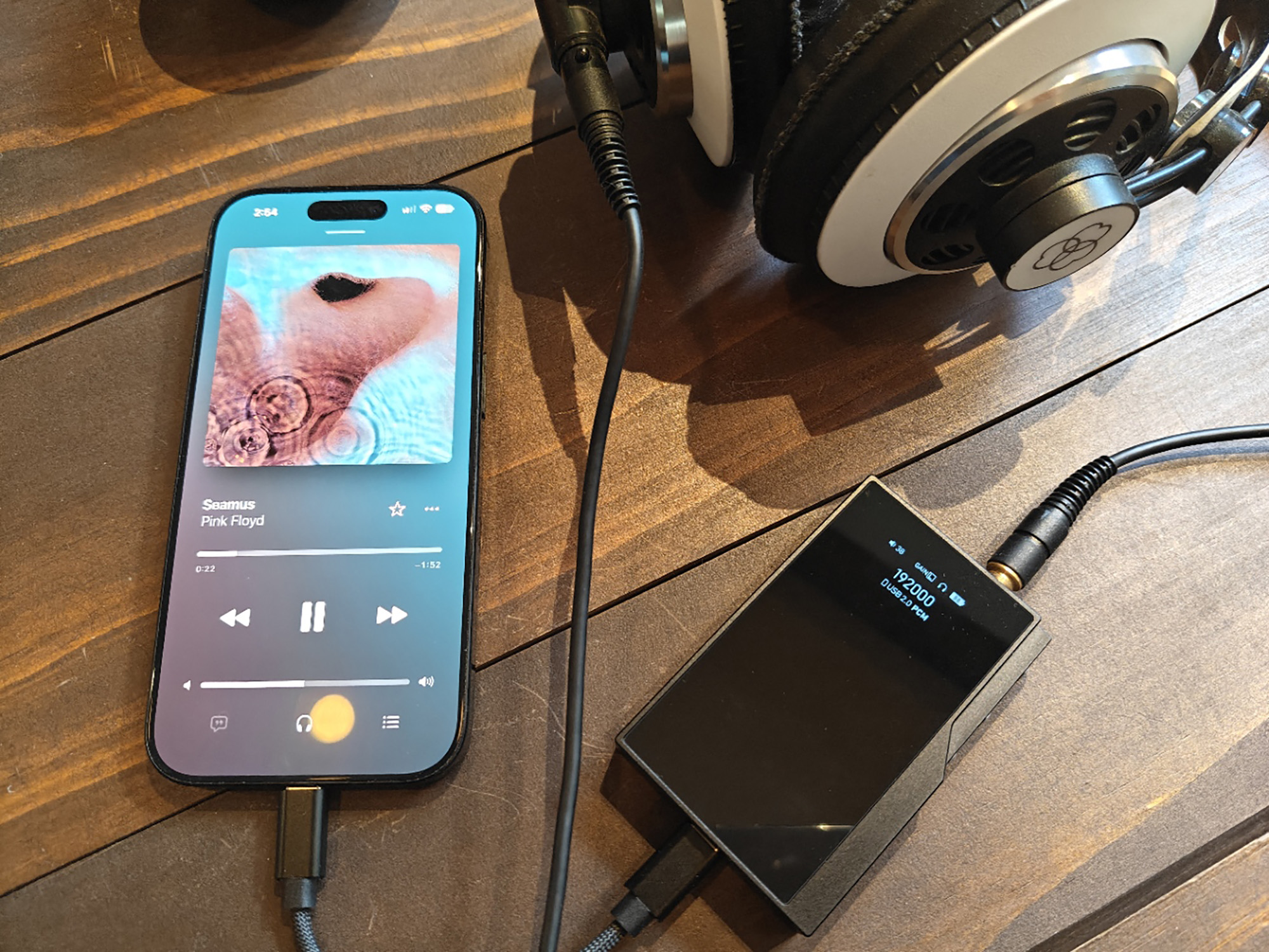
There are many ways to evaluate the performance of audio components. In the case of the Questyle M18i Max, we could talk about its twin ESS Flagship USB DAC, the ES9219Qs, or the XMOS USB DAC. We could point out that it supports decoding up to PCM384 (Pulse Code Modulation audio with a 384?kHz sample rate and typically 32?bit resolution) and DSD256 (Direct Stream Digital at 256 times the standard CD sampling rate).
We could cite its ultra-low THD (Total Harmonic Distortion) of 0.0002% (really, really low) or its frequency response ±0.1dB (20Hz-20kHz); ±2dB (20Hz-80kHz), but unless you are a seriously dedicated audiophile or a recording engineer, these numbers probably don’t tell you much.
When I was a teenager, I became very interested in high-end high-fidelity stereo equipment. I made every effort to obtain the best quality of gear that I could afford, as it continuously heightened the experience of listening to music.
Many things have changed in the way that we listen to music now, and most people do not use traditional stereo equipment any longer, instead favoring the convenience of the digital music format. I am no different, but I have always been interested in raising the sonic quality of my digital music listening experience.
This is where the Questyle M18i Max comes in. If you have purchased high-quality headphones and powered speakers and found that the sound is decent but not spectacular, then more than likely the issue lies with your source device’s subpar DAC and amplification.
The M18i Max takes over the digital decoding task from your smartphone, tablet, or computer and provides the amplification to power your headphones and speakers. If you recall the first time that you heard a familiar song on a good pair of headphones and suddenly heard sounds that you have never realized were part of the composition, then you know the experience. The M18i Max brings music to life with depth and clarity that you have been missing.
I tested the M18i Max on several pairs of headphones at different price points. These included models like the AKG M220S, AKG K553 Pros, and the Audeze LCD-Xs. In every case, there was a noticeable difference in what qualities you could discern. The soundstage was powerfully present, and the quality of the sonic separation was so effective that you could tell where each musician sat in the recording studio.
Music played through this DAC, both in the lossless Bluetooth mode and the direct DAC mode, has a spatial quality. It is as if it breathed life into the recording. Listening to the same tracks without the Questyle M18i Max sounds crushed in comparison. Using the M18i Max has so elevated my music listening experience that I started looking into higher quality source material.
Source Material

Most digital audio files that the majority of the listening audience is familiar with are digitized at the same rate and in one of a few compressed audio formats. If you use iTunes, for example, a typical file may be saved in a compressed format such as AAC or mp3 at a sample rate of 44.1 kHz and a bit depth of 16. Apple offers a number of options in terms of quality and compression, including:
From Apple Support:
- AAC Encoder – Default for most music; compatible with iPhone, iPad, iPod; smaller file size than lossless formats.
- AIFF Encoder – Lossless, ideal for burning high?quality CDs; larger file size.
- Apple Lossless (ALAC) – Lossless, audiophile-quality; larger file size.
- MP3 Encoder – Widely supported; choose bit rate (Good, High, Higher, or Custom) for balance of quality and size.
- WAV Encoder – Lossless, for systems without MP3 support; very large file size.
The quality of the listening experience greatly depends on the selected format and bit rate. Using a device such as the Questyle M18i Max with premium headphones may in fact expose the limitations of the source files.
There are many sources online for purchasing or streaming HD audio. Amazon Music offers all of its HD audio content free to users of Amazon Music Unlimited. I selected one of the most popular and recommended sites for purchasing HD audio, HD Tracks, and chose a few albums for extended testing of the Questyle M18i Max paired with high-end headsets.
I bought a few albums that I thought would provide the most robust material recorded and mastered at rates much higher than the typical files in my collection. These included the Pink Floyd albums Meddle, Dark Side of the Moon, and Wish You Were Here, as well as David Bowie’s Station to Station, King Crimson’s The Power to Believe, and a Deutsche Grammophon recording of Seiji Ozawa conducting the Boston Symphony Orchestra’s performance of Tchaikovsky’s Swan Lake. Not only are these personal favorites of mine, but they are remastered versions of material that I know very well.
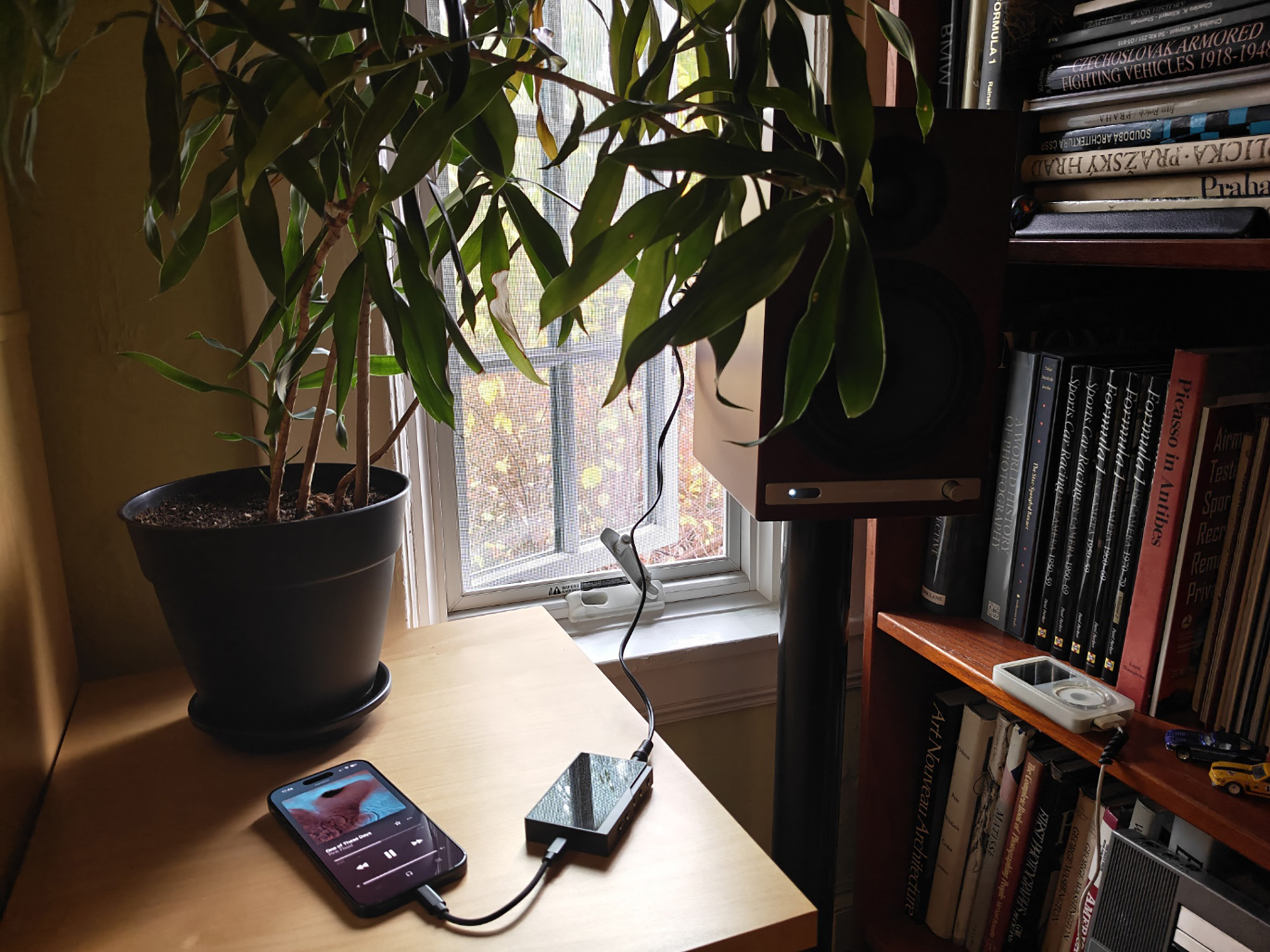 Many of these were recorded at significantly higher quality, some at 192 kHz and 24 bits. HD Tracks offers tracks in four formats: FLAC, ALAC, AIFF, and WAV. I selected AIFF as it is uncompressed and works with iTunes.
The listening experience is indeed enhanced, so much so that I find myself extolling its virtues to all of my music-loving friends. Certain tracks, such as the title track from Wish You Were Here or ‘Seamus’ from Meddle, are particularly impressive, as the Questyle M18i Max provides a base level that is so quiet that the music shines in a new, up to now unheard way.
As Questyle states on their website:
“Just as only a pure black background can reveal the richness of colors, only sufficiently low noise floor can capture the details within audio tracks, allowing true appreciation of high fidelity.”
The sonic stage and separation that I mentioned before are even more clearly defined and expressed. Listening to these tracks on powered speakers, as in my case, a pair of Audioengine HD6s through the Questyle M18i Max, is nearly equally impressive. Sorry, but the personal experience of a great headset always tops a great set of speakers.
And yes, HD audio tracks sound better everywhere, even in your car. The better the equipment, the better the sound.
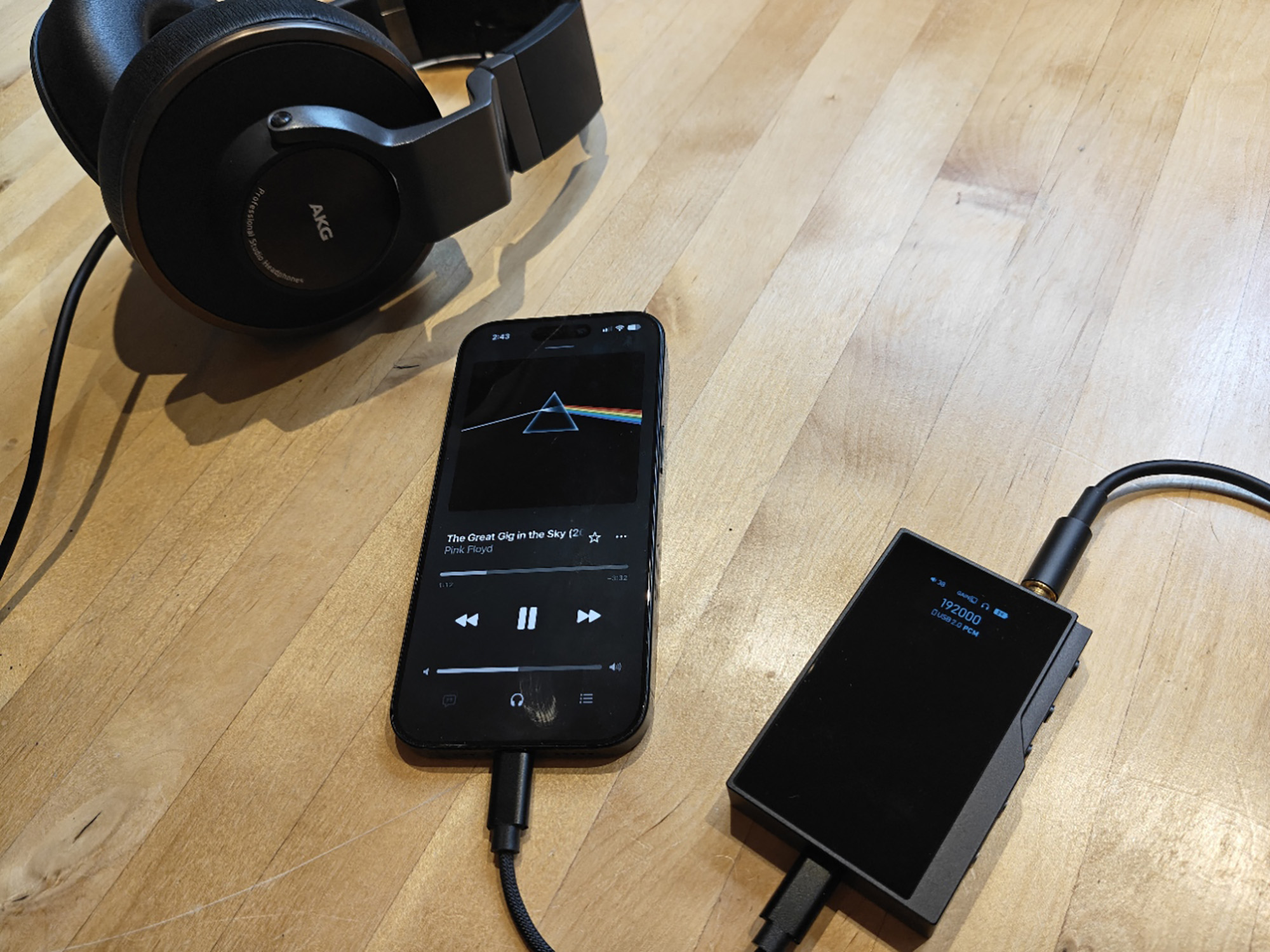
The Questyle M18i Max is a specialty product for those wishing to get the most out of their digital audio devices, especially those with premium headsets and powered loudspeaker systems. It raises the bar for listening to digital music files. Especially when used with high-quality headphones, the results go far beyond what is typically possible from your smartphone or laptop. When used for HD audio tracks, the results are even more spectacular.
If you love music and strive to listen to it in the best possible quality, then I wholeheartedly encourage you to consider the Questyle M18i Max.
The Questyle M18i Max sells for $349.00 and is available directly from the manufacturer and other retailers, including Amazon.
Source: Manufacturer-supplied review sample
What I Like: Spectacular sound quality; Design and build quality; Ease of use
What Needs Improvement: There may be confusion that the unit can transmit to wireless headphones