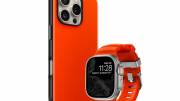
Apple iPhone Air leads a crowded launch that also includes the iPhone 17 family, AirPods Pro 3, and Apple Watch Series 11. On paper, the updates range from lighter materials and faster chips to sharper cameras and smarter software. In practice, the appeal comes down to how these changes show up in your day, whether that is a red-eye flight with crying babies nearby, a late-night photo walk, or a week of bouncing between workouts and work calls.
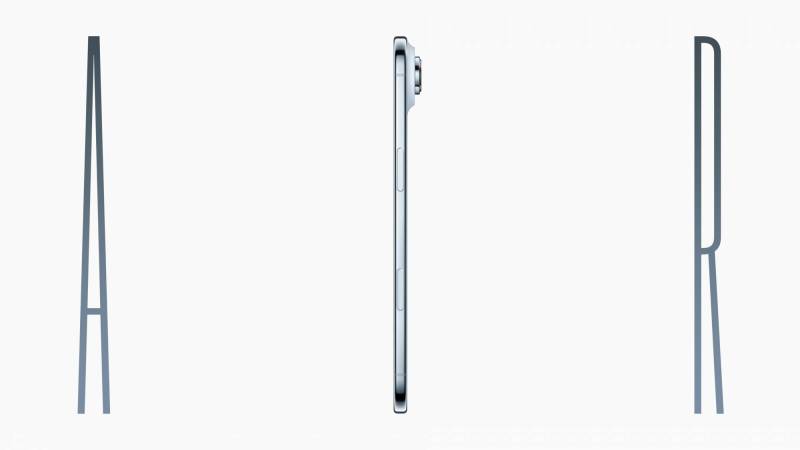
Apple iPhone Air; all photos courtesy of Apple.
iPhone Air: Thin, Light, and Built Like It Means It
Apple positions iPhone Air as the thinnest iPhone it has ever shipped, listed at 5.6 millimeters, with a titanium frame shaped to keep weight low and rigidity high. Titanium is prized in aerospace because it is strong relative to its mass, so the pitch here is simple. You get a big screen in a phone that will not feel like a brick in your pocket or purse.
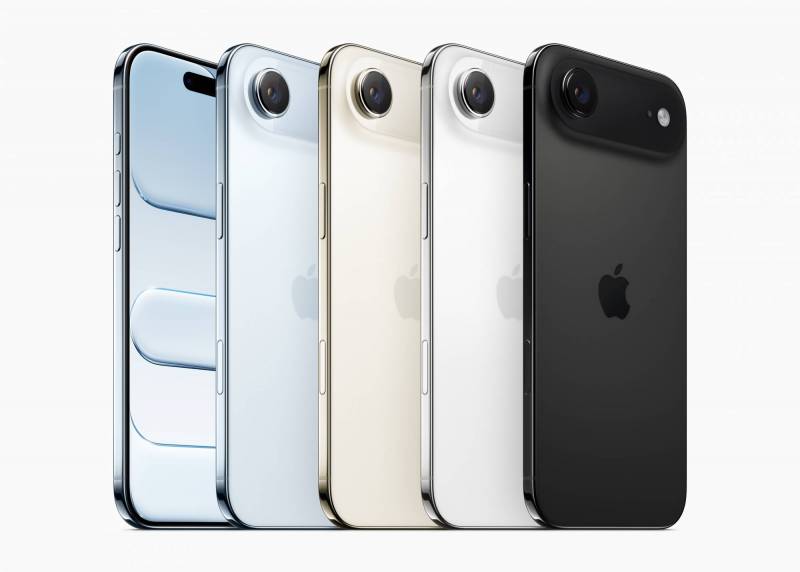
iPhone Air
The back and front are covered by Ceramic Shield, with a second-generation formulation on the front that Apple says improves scratch resistance by a factor of three compared to earlier models. In plain terms, the display should show fewer hairline marks when you toss the phone on a countertop or fish it out of a bag with keys. The back panel also shifts to Ceramic Shield for the first time, which should help if gravity wins and the phone kisses concrete. The company says bend strength is up as well, which matters if you tend to keep your phone in a back pocket.
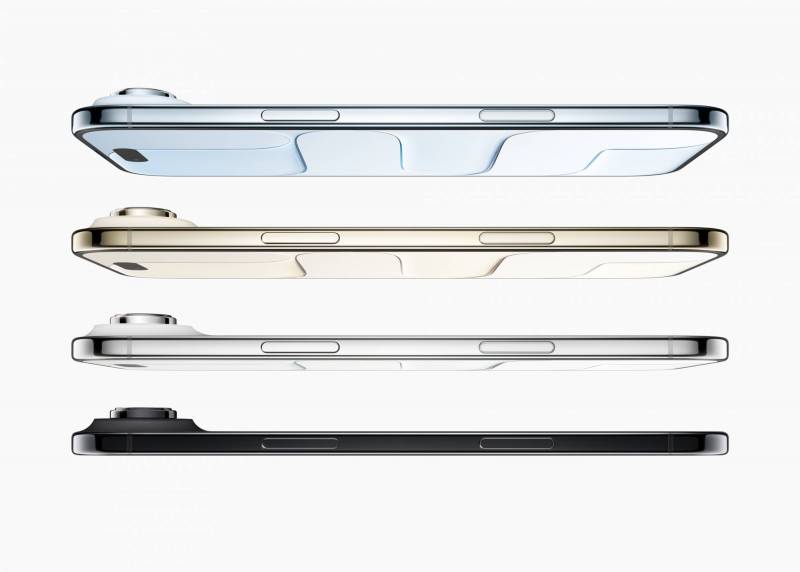
iPhone Air
A 6.5″ Super Retina XDR panel sits front and center. It supports ProMotion, which is Apple’s name for an adaptive refresh rate that can ramp up to 120 hertz for smoother scrolling and gaming, and dial down to 1 hertz on the Always-On screen to conserve battery. Peak outdoor brightness is listed at 3000 nits, which is a technical way of saying the screen should remain readable at noon, even in summer sun. For the footnote-minded, that 6.5″ size is measured as a rectangle; the actual viewable area is slightly smaller due to rounded corners.
Cameras That Aim to Simplify Choices, Not Add Complexity
The rear system is built around a 48-megapixel Fusion main camera that effectively gives you familiar framing options without carrying four separate lenses. You can shoot at 24 millimeters for wide scenes, switch to 28 or 35 millimeters for a more natural perspective, and hop to a 2x telephoto crop for closer framing, all while keeping resolution that looks crisp on a large monitor. A larger quad-pixel sensor and sensor-shift stabilization are designed to keep low-light shots cleaner and less shaky.
Portraits get a practical upgrade. The phone captures depth data automatically, so you can turn a regular shot into a portrait later in Photos. If you have ever snapped a quick picture of a kid or a pet and only later wished for that blurred background, this is for you. The processing pipeline also supports updated Photographic Styles, including a new Bright option that lifts skin tones and overall vibrance. If you prefer to resist a baked-in look, leave it at Standard and tweak after the fact.
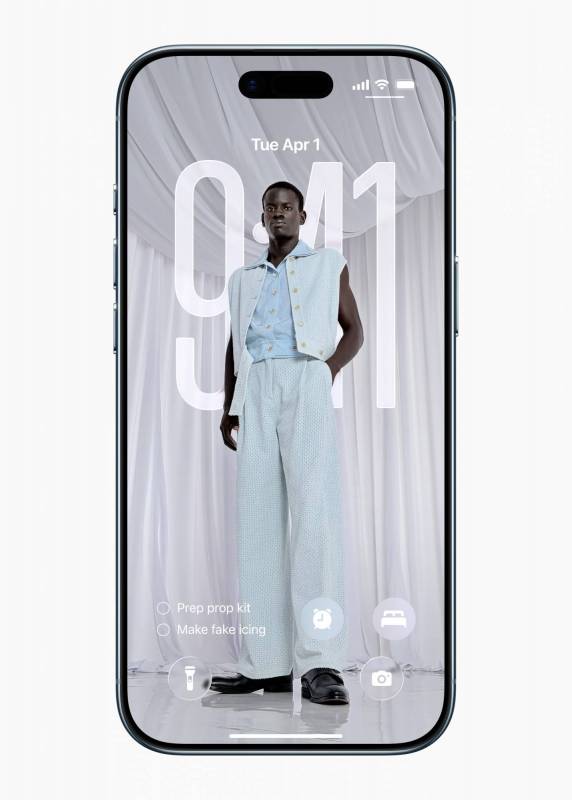
iPhone Air
On the front, iPhone Air introduces an 18-megapixel Center Stage camera with a square sensor and a wider field of view. The lens can expand to fit more people, rotate framing between portrait and landscape while you still hold the phone vertically, and record stabilized 4K high dynamic range video. If you journal your travels or create to-camera clips for social, there is also Dual Capture, which records from the front and rear at once. For calls in FaceTime or other apps, the framing system tries to keep your head centered. It is not magic; it is just software tracking that helps you look put together, even on a moving bus or a wobbly desk stool.
Performance, Chips, and Why That Matters When You Are Not Benchmarking
Inside, the A19 Pro chip is paired with two Apple-designed companions, the N1 wireless chip and the C1X cellular modem. The A19 Pro handles the usual heavy lifting in apps and games. The company claims a faster central processor and graphics unit, with neural accelerators built into each graphics core for on-device machine learning features. The point is not just scores. Smoother photo edits, quicker video exports, and a keyboard that feels responsive all benefit from more headroom.
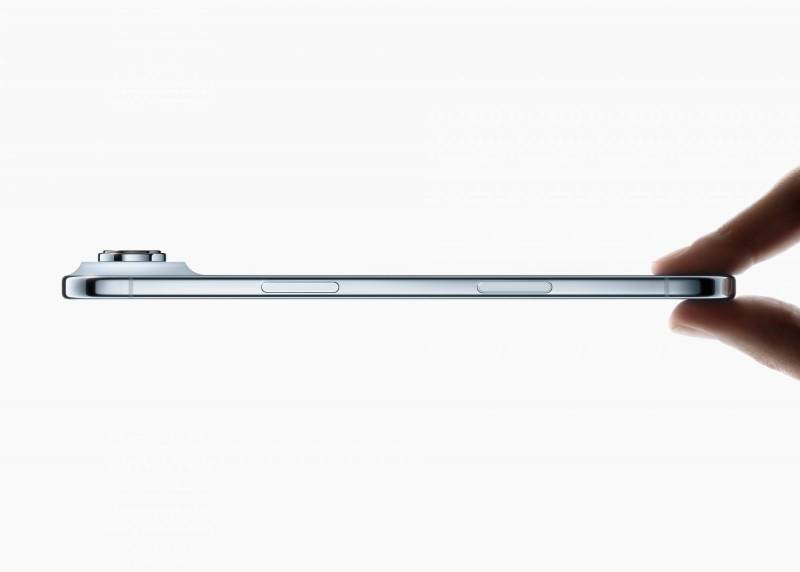
iPhone Air
The N1 chip enables Wi-Fi 7 and Bluetooth 6, which translates to faster local networking where routers support it, more reliable AirDrop transfers, and steadier Bluetooth accessories. The C1X modem promises higher cellular speeds while using less energy, a pairing that should help battery life when you live in an area with flaky coverage.
Apple cites all-day battery results and adds an Adaptive Power Mode in iOS 26 that studies your typical usage and trims background activity if you are on track to run low. If you tend to be out from dawn to midnight, the simple benefit is fewer glances at the percentage number and fewer desperate charge stops.
eSIM Only: Great for Travel, Mostly Invisible at Home
All of the new iPhones drop a physical SIM tray in favor of an eSIM-only setup. An eSIM is a digital subscriber identity module. You activate service by scanning a code or through your carrier’s app. For everyday life, you set it up once and forget it. For travel, you can add a prepaid local plan without hunting for a kiosk. A missing tray also frees internal space for other components, or in the case of the 17 Pro Max, a larger battery. The caveat is obvious. You need a carrier that supports eSIM, and not every discount provider does, so check before you commit.
iOS 26 and Apple Intelligence: Features That Try To Help Without Getting In The Way
The software refresh introduces a visual design called Liquid Glass, which refracts color under translucent panels, primarily for cosmetic purposes but also to give the interface a fresher feel. Call Screening answers unknown callers, collects a name and reason, then rings you to decide. Hold Assist waits in phone queues and pings you when a human picks up. Both are quality-of-life fixes that matter the first time they save you ten minutes.
Apple Intelligence is the company’s umbrella for on-device artificial intelligence features. Visual intelligence lets you search and act on what is visible on your screen. Clean Up removes distractions from photos while trying to stay true to the original scene. Live Translation offers near real-time conversations across supported languages in Messages, FaceTime, and Phone. Features vary by region and language, and many are in beta, which is Apple’s way of saying they will continue to evolve.
Accessories That Fit the Slim Theme
Apple pairs the iPhone Air with a thin MagSafe case, a matching bumper, a crossbody strap made from recycled yarns with sliding hardware, and a MagSafe Battery that attaches to the back for extra power. The battery accessory extends video playback to a claimed total of up to 40 hours when attached, which is less interesting as a marketing number and more useful for weekend trips where outlets are scarce. If you spend a lot of time at theme parks or festivals, that kind of add-on can be the difference between a dead phone at 9 p.m. and a safe ride home.
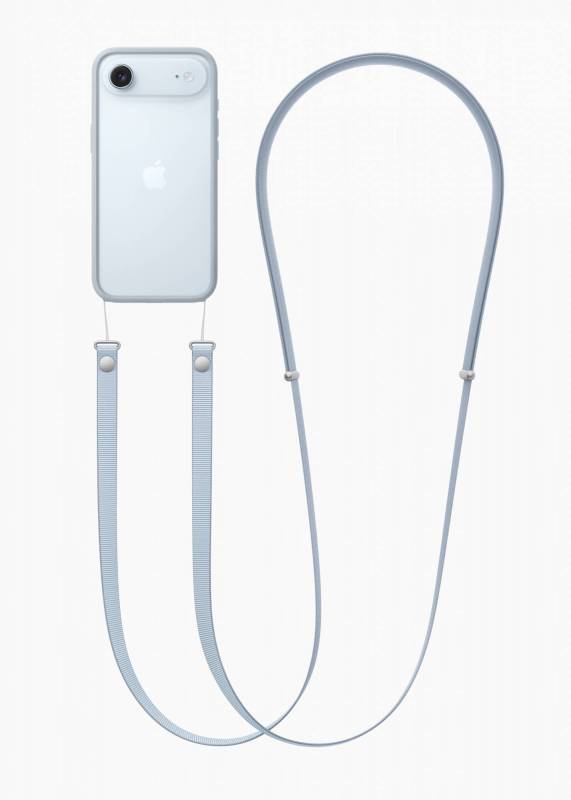
There is also a 40-watt Dynamic Power Adapter that can supply up to 60 watts in bursts. If you like to top up quickly before heading out, higher wattage adapters reduce wait time, although actual rates vary based on temperature, battery health, and what the phone is doing in the background.
The iPhone Air starts at $999. Pre-orders begin on September 12th, with availability listed for Friday, September 19th.
AirPods Pro 3: Stronger Noise Blocking, Smaller Fit Options, and a Workout Twist
AirPods Pro 3 keep the familiar in-ear design while reworking the internals. The big headline is stronger Active Noise Cancellation, which is the system that uses microphones and processing to cancel outside sound before it reaches your ear. Apple says the new model can remove about twice as much noise as the previous version, and four times as much as the original. If you commute on a subway or work in a noisy office, that translates to lower volumes and less fatigue.
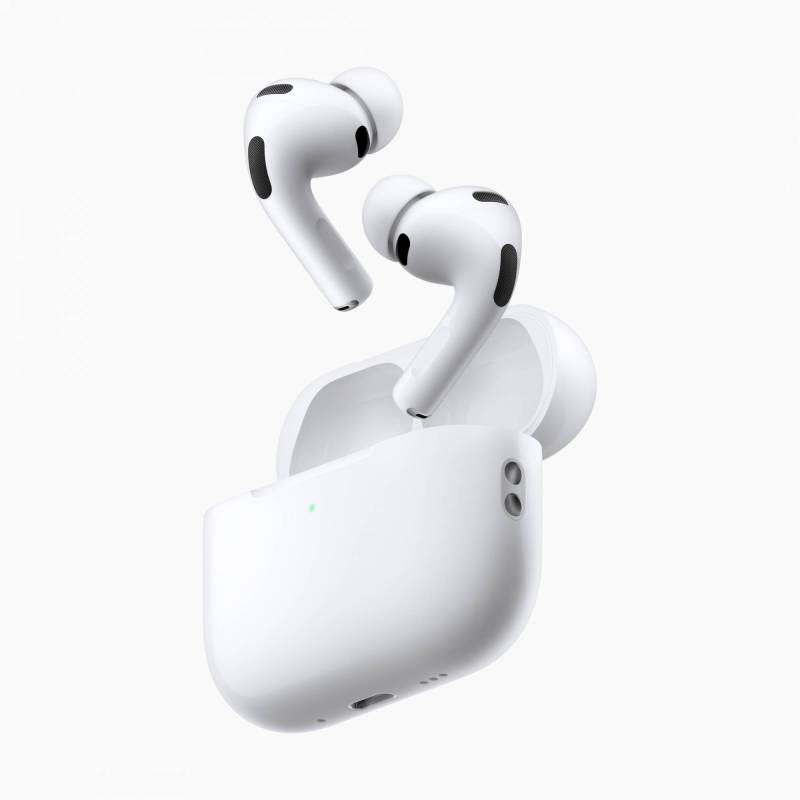
A new acoustic layout aims to widen the soundstage and stabilize bass, while Adaptive EQ adjusts playback to maintain tonal balance. Transparency mode now makes your own voice and nearby conversation sound more natural, so you can keep an ear on a barista or boarding announcement without yanking an earbud out.
Fit is a quiet upgrade that matters daily. The buds are smaller inside, with the tips now including an extra small size, and the shape aligns the tip more centrally for better stability during movement. Rated IP57 for dust and water resistance, they are built to survive sweat, rain, and a splashy sink. If you run, lift, or take Pilates, the seal should hold more securely.

There is a new workout angle. A tiny optical heart rate sensor measures pulse by shining infrared light and reading reflections, a method called photoplethysmography. Paired with motion sensors, your iPhone’s positioning, and Apple’s on-device models, you can track heart rate and calories while starting specific workout types from the Fitness app. Fitness Plus subscribers can also see real-time metrics on screen. If you already wear an Apple Watch, this is redundant. If you do not, it provides insight into effort without requiring a wrist device.
Live Translation arrives in beta for in-person conversations in select languages, with more coming later. Two people can talk through their own paired devices, or you can hold up an iPhone to show text as you speak. Picture a street market, a classroom guest, or a museum docent. It will not replace a human translator for nuance, but it breaks the ice. For full feature support, you will want the current Apple software across your devices.
AirPods Pro 3 start at $249, with pre-orders open now and in-store availability listed for Friday, September 19th.
Apple Watch Series 11: A Thinner Case, Sleep Score, and Faster Networking
Apple Watch Series 11 focuses on three everyday concerns. It lasts longer, holds up better to scratches, and provides more insights into your sleep patterns. Apple quotes up to 24 hours of battery life and faster charging, claiming eight hours after just fifteen minutes on the puck. If you like to wear the watch to bed, that quick top-up before lights out helps.

The aluminum models shift to Ion-X glass with a ceramic coating that Apple says doubles scratch resistance over Series 10. Titanium models continue to use sapphire for the front crystal. If you bang your watch on gym equipment or kitchen counters, a tougher face is not just a nice-to-have.

Sleep score debuts in watchOS 26. It distills duration, consistency, wake events, and time in sleep stages into a single rating with context. Data from academic guidance and millions of recorded nights shaped the model. If your routine is all over the place, the score will make that visible and nudge you with specifics instead of vague advice.
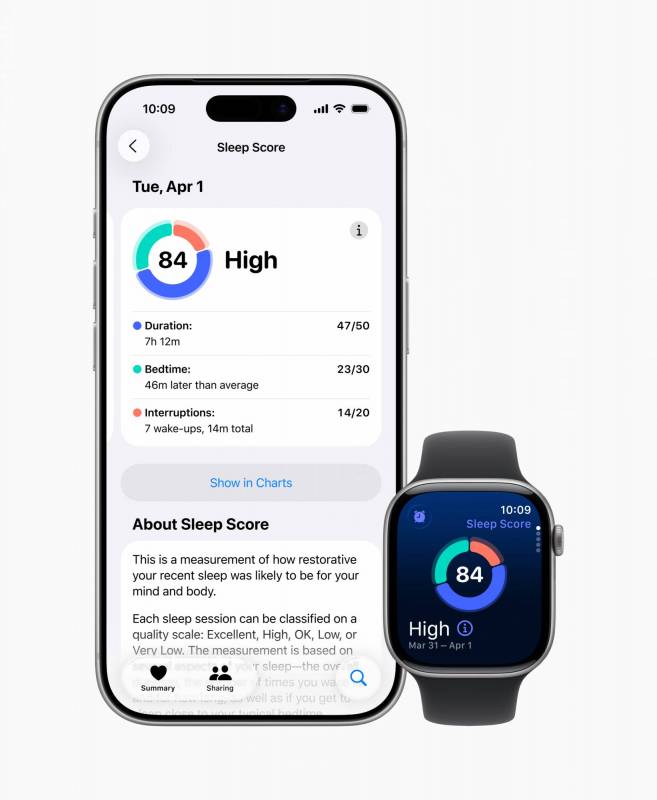
There is 5G cellular for faster data when away from your phone, a redesigned antenna for better reception in weak areas, a new wrist flick gesture to dismiss timers or silence alarms, and an in-workout coaching feature called Workout Buddy that speaks encouragement based on your history. Live Translation for Messages rides along when paired with a supported iPhone.
Apple Watch Series 11 pricing starts at $399. Pre-orders are now open, with retail availability listed for Friday, September 19th.
iPhone 17 and iPhone 17 Pro: Two Paths to Better Cameras and Battery
The standard iPhone 17 gets a 6.3″ display that now supports ProMotion up to 120 hertz, Ceramic Shield 2 on the front with the same three times scratch resistance claim, and a camera pair that moves to 48-megapixels on both the main and ultra wide modules. Ultra wide photos default to 24 megapixels, which is a practical size for sharing and editing without devouring storage, and the base capacity jumps to 256 gigabytes.
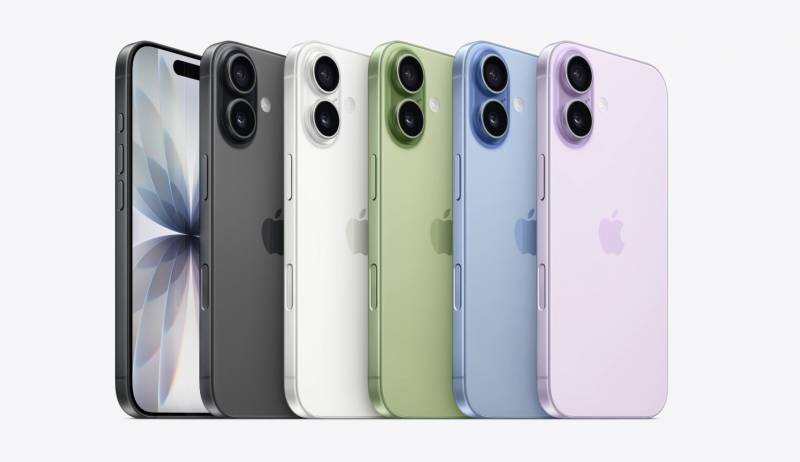
iPhone 17
The front camera adopts the same 18-megapixel Center Stage system described earlier. If you film a lot, you still get 4K 60 frames per second in Dolby Vision, Audio Mix to lift voices, and a Clean Up tool to remove distractions. The A19 chip powers the whole package, and Apple states up to 30 hours of video playback, with fast charging that can hit 50 percent in about 20 minutes using a high-wattage adapter.
The iPhone 17’s price starts at $799 in the United States, with pre-orders opening on the 12th and availability on the 19th.
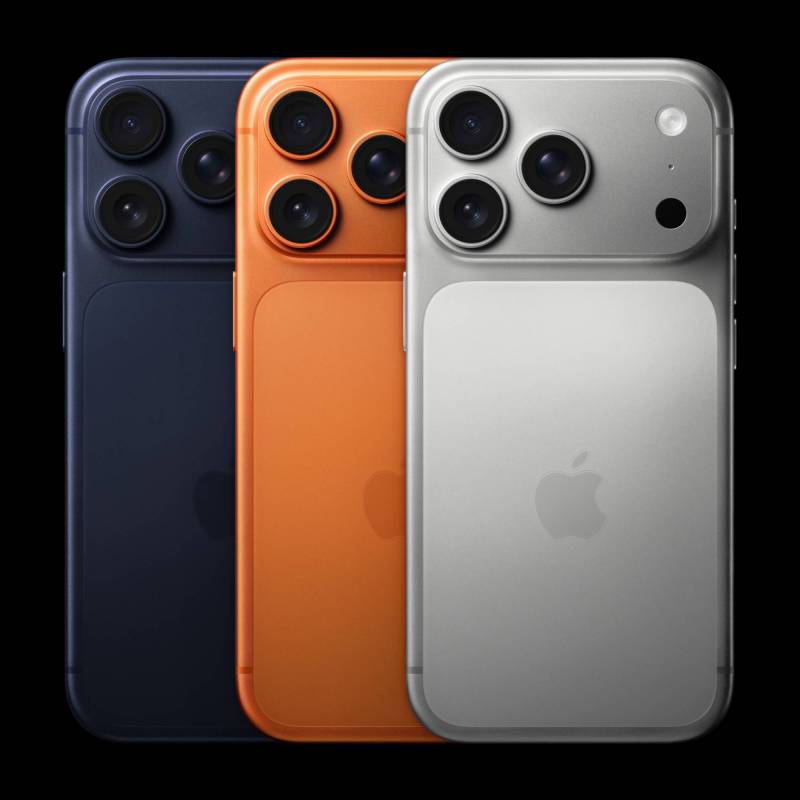
iPhone 17 Pro
iPhone 17 Pro and 17 Pro Max form the performance tier with a 6.3″ display on the Pro and a 6.9″ display on the Pro Max. Apple moves to a heat forged aluminum unibody with a vapor chamber for cooling, which allows the A19 Pro to sustain higher speeds for longer. The camera system is the draw.
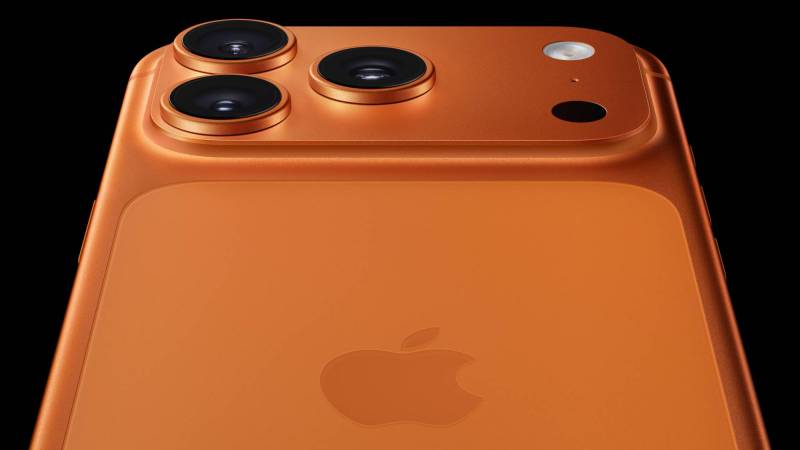
All three rear cameras are 48 megapixels, and the telephoto reaches an 8x optical quality zoom at an equivalent 200 millimeters. The sensor behind the system is said to be 56 percent larger than before, which helps with light gathering and dynamic range. If you shoot indoor sports from the stands or wildlife from a boardwalk, that extra reach and sensitivity pay off.
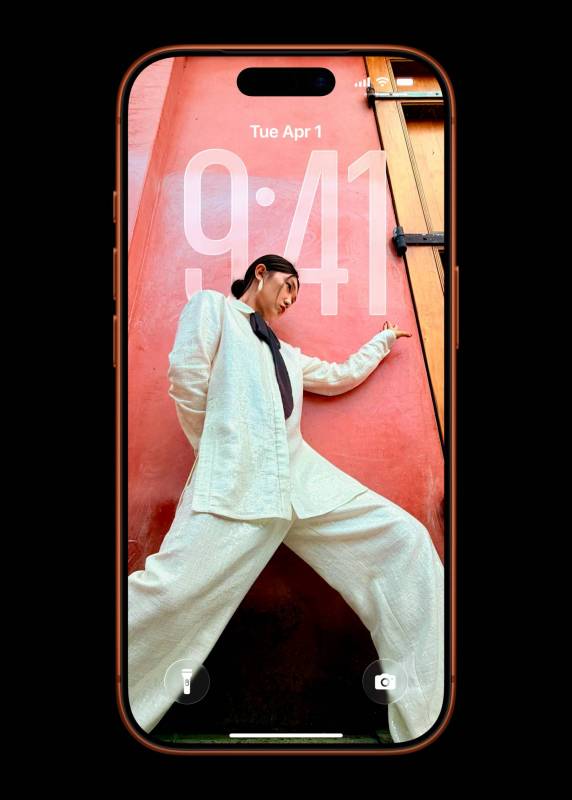
iPhone 17 Pro
Video features lean into pro workflows. There is support for Apple Log profiles, open gate recording, and time code synchronization when used with compatible hardware. ProRes RAW is called out for those who want maximum control in post. Regular people may never touch these settings, and that is fine. The point is that the camera can flex up if you grow into more ambitious projects. Apple lists up to 33 hours of video playback on 17 Pro and up to 39 hours on 17 Pro Max.
Pricing starts at $1,099 for the iPhone 17 Pro and $1,199 for the 17 Pro Max. Pre-orders open on September 12th, with availability listed for Friday, September 19th.
Real Life Scenarios Where These Updates Matter
If you are a traveler, the eSIM-only design on the iPhone Air and 17 series simplifies staying connected. You can add a prepaid international plan before you land, skip airport kiosks, and keep your home line active for two-factor codes. Messages via satellite add a safety net when you head off the grid, which is helpful for national parks and road trips through spotty areas.
If you are a parent or caretaker, the stronger front camera and Dual Capture are perfect for recording a child’s recital while your own reactions appear in a corner frame. The deeper zoom on 17 Pro helps you capture a clean shot from the back row without the grainy appearance of static.
If you commute or share a busy home office, AirPods Pro 3 reduce noise without cranking the volume to unsafe levels. Transparency that preserves the natural quality of voices lets you hear your name at a coffee counter. The smaller fit helps those who struggled with earlier tips. The heart rate sensor is a bonus for anyone who exercises without a watch but still wants a rough idea of intensity.
If you wear a watch to bed, Series 11’s quicker top-ups and sleep score will make the nightly rhythm smoother. If you frequently receive unknown calls from contractors, schools, or doctors, Call Screening and Hold Assist on iPhone and Apple Watch could quickly become your go-to features.
The Bottom Line
The iPhone Air is for the person who wants a big, bright display, a thin and light body, and strong battery life, without going all in on the pro camera extras. iPhone 17 is the practical pick with a smoother screen and bigger base storage. iPhone 17 Pro is the one for the photographer or filmmaker in the making, with longer optical reach, more control, and a chassis designed to keep performance stable under load. AirPods Pro 3 push noise control and fit forward while adding a useful workout trick. Apple Watch Series 11 rounds it out with a tougher face, longer endurance, and clearer sleep insights.
None of these products reinvent what came before. They do refine, and in day-to-day use, refinement is often what you feel most. If your current phone or watch still does the job, you can wait with a clear conscience. If you have been living with a cracked screen, a dying battery, or earbuds that fall out during a jog, this lineup offers several compelling reasons to upgrade, each backed by enough real-world benefits to stand on its own.
Carrier Deals
All of the major carriers are lining up offers to make upgrading a little easier on the wallet. Preorders begin Friday, September 12th, with in-store availability on Friday, September 19th.
AT&T
AT&T leans on simplicity: trade in an eligible iPhone in any condition and you can get the iPhone 17 or iPhone 17 Pro for free after bill credits. If your heart is set on the big screen, take up to $1,100 off the iPhone 17 Pro Max, while the iPhone Air gets up to $830 off its price. The device you trade in doesn’t have to be pristine—this is one of those rare times when the cracked phone in your drawer actually has value. Apple Watch buyers get a sweetener too: purchase a Series 11 or Ultra 3 and knock $300 off a second watch.
Verizon
Verizon plays the bundle card. With a qualifying trade-in and an eligible unlimited plan, you can save up to $1,100 on any iPhone 17 model. Business customers can snag the iPhone 17 Pro (256GB) for free on My Biz Plan with a $20 monthly add-on.
Bundles go even further: add a new iPhone and you can pick up an Apple Watch SE 3 or Series 11 for free, or take $500 off the Apple Watch Ultra 3 with a watch plan. There’s even an “Apple ultimate bundle” that throws in an iPad with A16 and an Apple Watch Series 11 when you open new tablet and watch lines. Smartwatch upgraders can save up to $400 with a qualifying trade-in on Unlimited Plus for Apple Watches.
For accessory hunters, Verizon is offering 20 percent off when you buy three or more essentials, and you can add Apple One to your bill to wrap music, video, games, and storage into one line item.
Xfinity Mobile
Xfinity pitches consistency. Customers on Premium Unlimited or Unlimited Premium Flex can trade in and get the iPhone 17, iPhone Air, or iPhone 17 for free, or take up to $1,100 off the iPhone 17 Pro Max. Even without a trade-in, those plans still lop $400 off a new iPhone line.
The carrier also leans on its Wi-Fi PowerBoost branding, which promises Wi-Fi speeds up to 1 gigabit per second at home and across more than 23 million hotspots, paired with 5G coverage. Independent Ookla testing from early 2025 backed up Xfinity’s performance claims in Comcast service areas, which matters if you spend most of your day bouncing between Wi-Fi and cellular handoffs.
T-Mobile
T-Mobile flexes its network muscle. It’s the only provider with nationwide 5G Advanced, which it says translates into crystal-clear FaceTime calls and smoother apps. Customers also get early access to T-Satellite-ready apps like Maps, Music, and Fitness, plus Magenta Status perks that cover streaming, travel, and VIP experiences. An industry-first five-year price guarantee locks in rates for the long haul.
The deals are equally aggressive. Trade in any condition phone and you can get an iPhone 17 Pro for free, or take $1,100 off any iPhone 17 model, including the Air. Switchers can score an iPhone 17 for free with no trade-in required, or take $830 off any iPhone 17.
Apple Watch buyers save $200, dropping the new Apple Watch SE 3 to just $99 with a new watch line. Bundle shoppers can cut $20 per month off 5G Home Internet when paired with a voice line, plus there’s an online gift card worth up to $300. Preorders open at 5 a.m. Pacific on September 12.
Boost Mobile
Boost bets on convenience with perks built around flexibility and hands-on support. Preorders are live now for the Apple Watch Series 11, Ultra 3, and SE 3, while the iPhone 17 lineup opens September 12.
At BoostMobile.com, new and existing customers can save $830 on any iPhone 17 model with the $65 per month Infinite Access plan, which includes annual upgrades, zero down, no trade-in requirements, global talk and text, and Store-to-Door Setup & Activation.
Another promo offers a full year of free Boost Mobile wireless service when you buy a new iPhone at full price and pair it with the $25 Unlimited plan, or you can apply that credit to Unlimited+ or Unlimited Premium. Buyers can also save $100 on the new Apple Watch Series 11, Ultra 3, or SE 3 by signing up for the $10 per month watch plan with 36-month financing.
On the Apple site, Boost Mobile’s offer scales up: $1,000 off the iPhone 17 family with the Infinite Access plan, plus the same perks.
The standout perk is Boost’s Store-to-Door Setup & Activation. A Boost expert hand-delivers your new device within a two-hour window, transfers your number, sets up apps, migrates your data, and answers questions—all free with a premium device and Infinite Access. For anyone who dreads the setup grind, it’s concierge service from a value carrier.