
Segway is moving deeper into off-road territory with the Segway Xaber 300 electric dirt bike, a race-inspired e-moto that trades gas, gears, and exhaust noise for instant electric torque and a surprisingly long spec sheet. First shown at CES 2026, the Xaber 300 will go on sale May 15 through select authorized Segway dealers nationwide, starting at $5,299.99. It’s built for off-road use only, so this isn’t your next commuter bike with knobby tires. It’s aimed at riders who want dirt-bike feel, electric simplicity, and enough onboard tech to make old-school purists squint a little.

Built for Dirt, Not the Bike Lane
The Segway Xaber 300, pronounced “say-br,” is the brand’s latest step into high-performance electric off-road riding. That’s a notable move from a company many people still associate with scooters, self-balancing transporters, and other small electric vehicles that rarely involve mud, ruts, or clearing a rocky climb without embarrassing yourself.

This new bike is meant to sit closer to the enthusiast end of the electric dirt bike market. It weighs 187 pounds and uses a Segway custom mid-drive flat-wire motor paired with the company’s X720 Titan controller. The motor is rated at 21 kW and lists a maximum torque of 600Nm. For riders who don’t speak spec-sheet fluently, that means the Xaber 300 is designed to deliver strong acceleration quickly, without waiting for an engine to rev or a transmission to catch up.

Segway claims a 0.25 kW/kg power-to-weight ratio, along with a 60 mph top speed and a 0 to 50 mph time of 5.5 seconds. Those are serious numbers for a bike in this price range, though performance figures always deserve the usual off-road asterisk: terrain, rider weight, tire choice, weather, and how aggressively you ride will all matter.
The Battery Story Matters Here
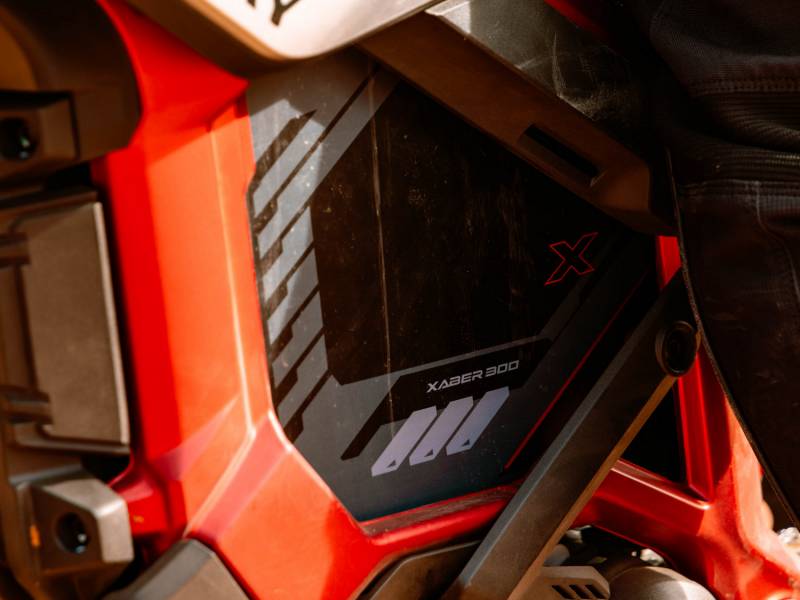
The Segway Xaber 300 uses a 72V, 44Ah battery with more than 3 kWh of capacity and Samsung 50S lithium cells. Segway describes the cells as automotive-grade, and the battery has a 5C peak discharge rate, meaning it’s built to deliver high bursts of power when the bike needs them.
Range is one of the messier topics with electric off-road bikes, because riding gently on packed trails isn’t the same thing as climbing loose hills, throwing roost, or spending the afternoon repeatedly testing your judgment. Segway lists a maximum range of up to 62 miles in 150 mode. More detailed range estimates include 44 miles in 150 mode at 43 mph, 37 miles in 200 mode at 50 mph, 34 miles in 300 mode at 56 mph, and 31 miles in Beast Mode at 59.6 mph.
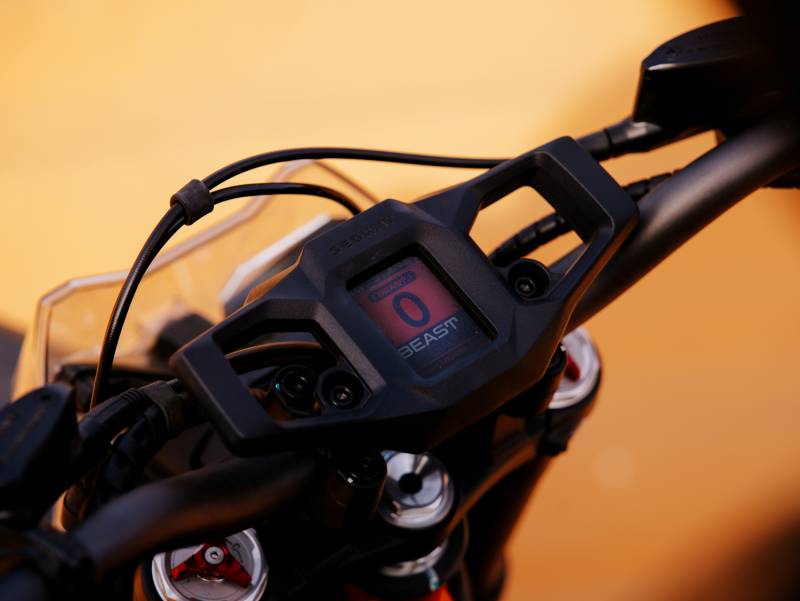
Those numbers suggest the Xaber 300 should be useful for a meaningful trail session rather than a quick backyard loop, but anyone planning longer rides will still want to think about charging access, terrain, and how often they’ll be tempted to use the faster modes. Temptation, as usual, is terrible for range.
Adjustable Power Without Buying Another Bike
One of the more practical ideas here is the Segway Xaber 300’s multi-mode setup. The bike includes 150, 200, and 300 power modes, plus Beast Mode for maximum performance. That could make the bike more approachable for someone building skills, while still leaving room to grow.

A newer rider could start in 150 mode to keep things calmer on loose dirt or narrow trails, then step up as confidence improves. A more experienced rider might use the lower modes when riding with friends, conserving battery, or picking through technical sections where finesse matters more than speed. Beast Mode is there for the moments when the trail opens up, and your internal adult supervision briefly goes out for coffee.

The Segway Xaber 300 also includes Pro Mode power curve customization, allowing riders to adjust how power comes on. That matters because instant electric torque can be wonderful, but it can also be abrupt if the bike isn’t tuned to match the rider and the terrain.
A Virtual Clutch for Riders Who Miss the Old Ways
Segway has also added a virtual electronic clutch that simulates the feel and function of a mechanical clutch. Since electric motors don’t need traditional clutches in the same way gas motorcycles do, this is less about necessity and more about control and familiarity.
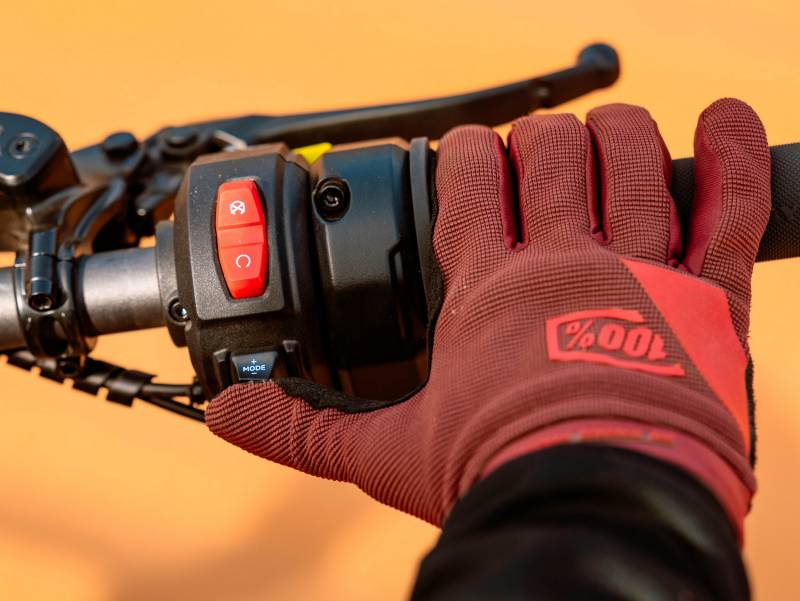
For riders coming from gas-powered dirt bikes, clutch feel can be part of how they manage traction, lift the front wheel, or handle technical sections. The virtual e-clutch is intended to make the Segway Xaber 300 feel less alien in those situations. Whether it feels convincing will matter more than how clever it sounds, but the idea makes sense. Electric dirt bikes don’t have to mimic gas bikes in every way, but borrowing the controls riders already understand can lower the learning curve.
Suspension, Brakes, and Frame Specs Aren’t Afterthoughts
The Segway Xaber 300 has 220mm of suspension travel front and rear, with a custom Marzocchi inverted fork featuring 37mm stanchions and an 85mm-stroke Marzocchi shock in the rear. Both the fork and shock are fully adjustable for compression, rebound, and preload. That means riders can tune how the suspension reacts to hits, weight, and riding style rather than being stuck with one factory setup.
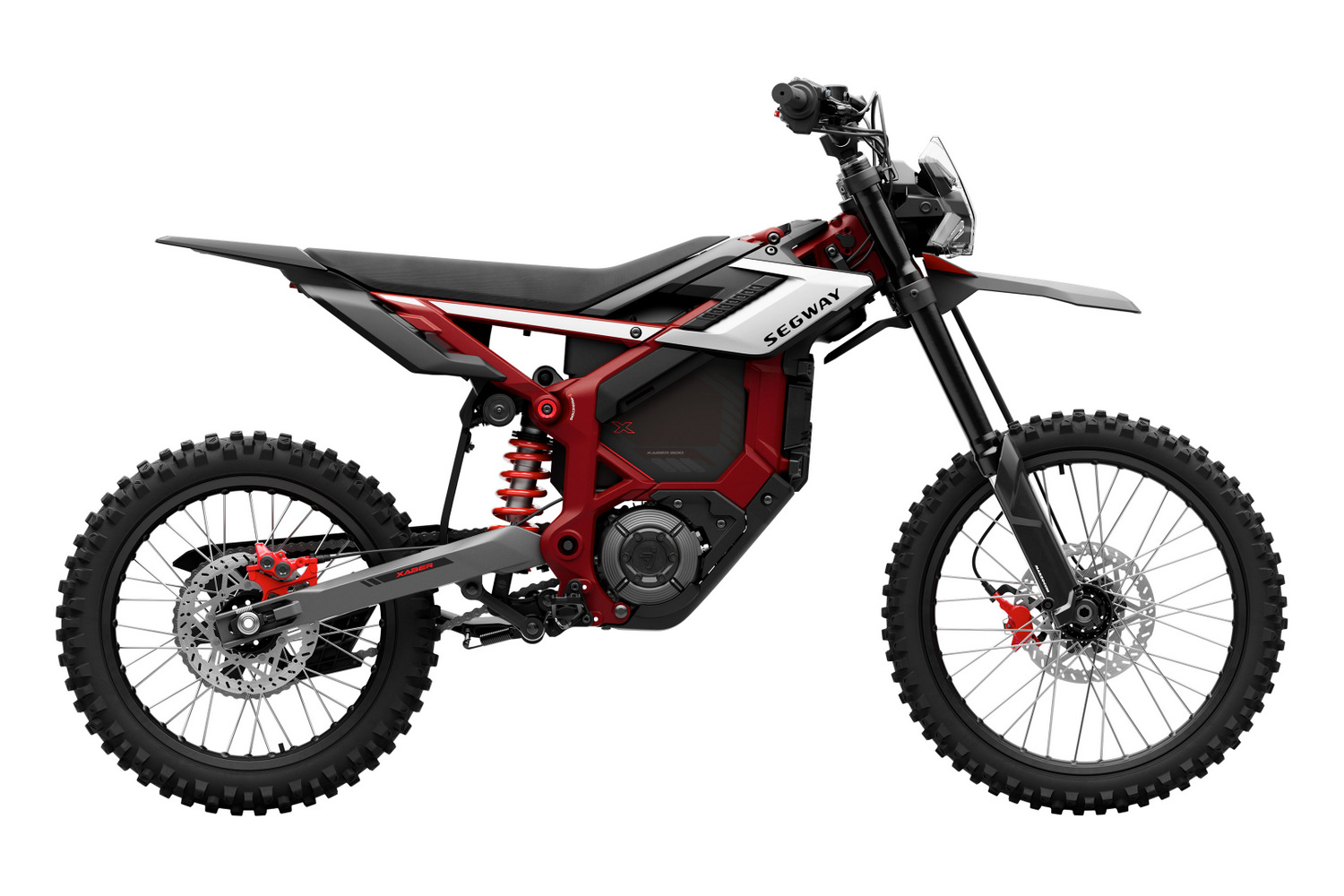
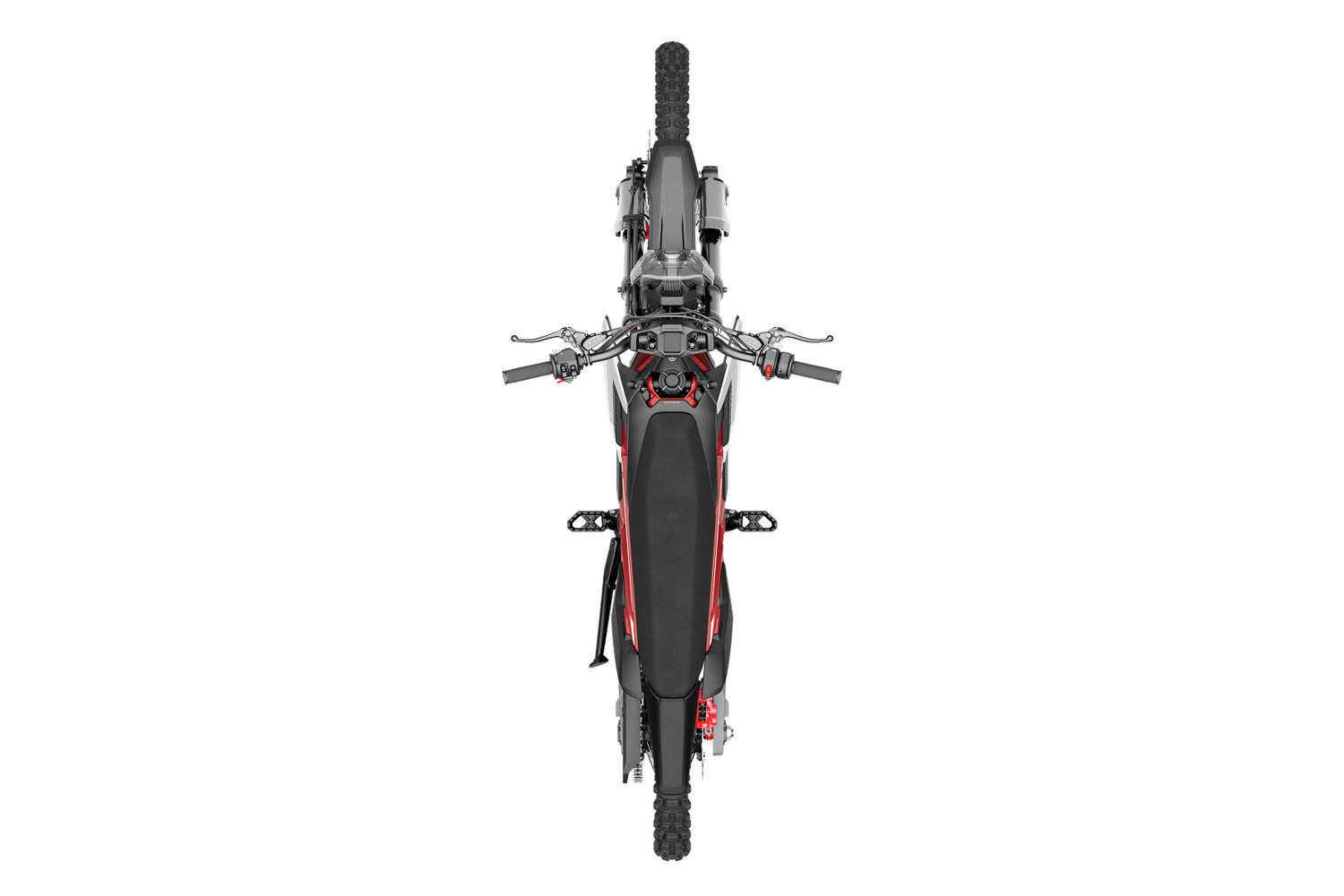
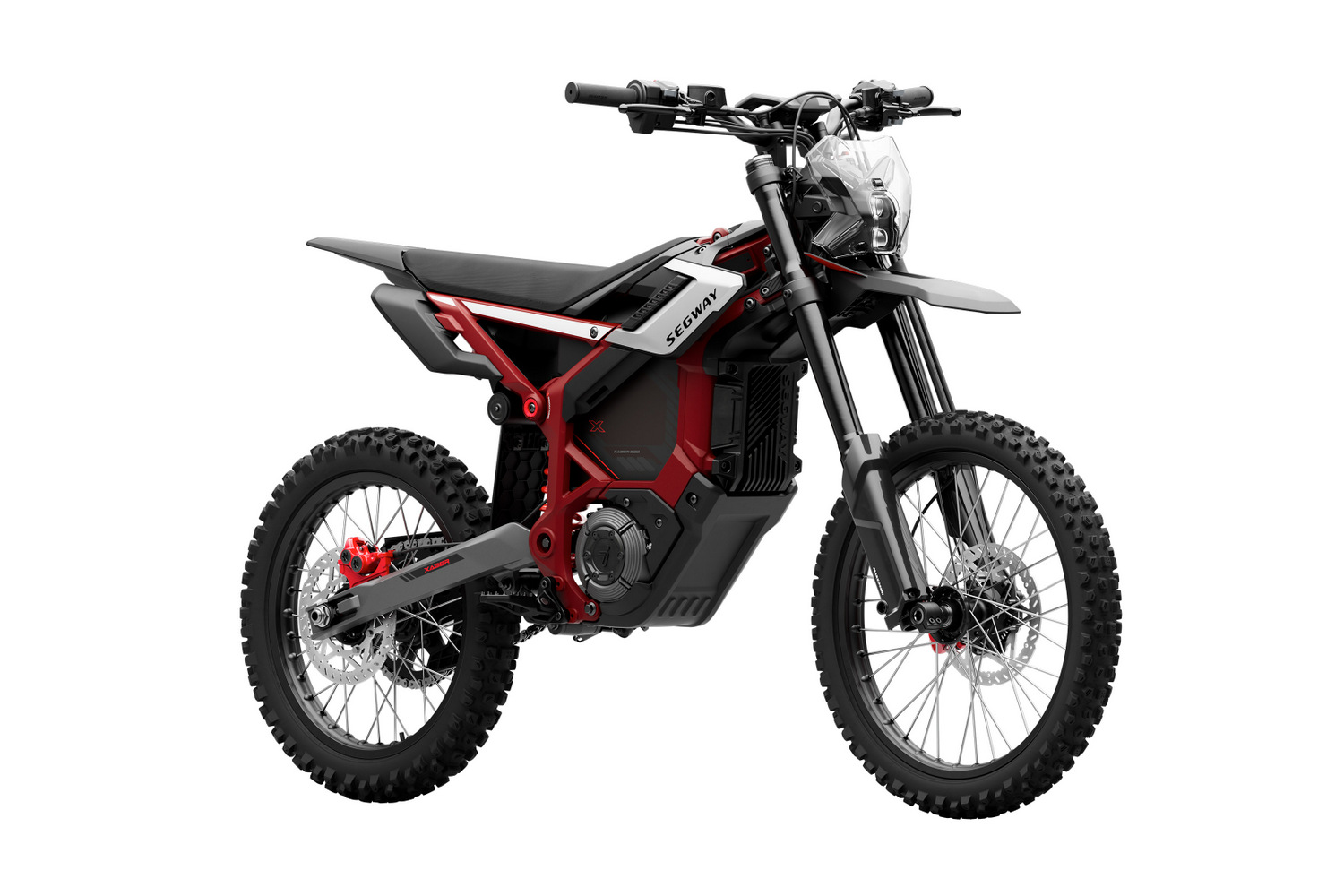
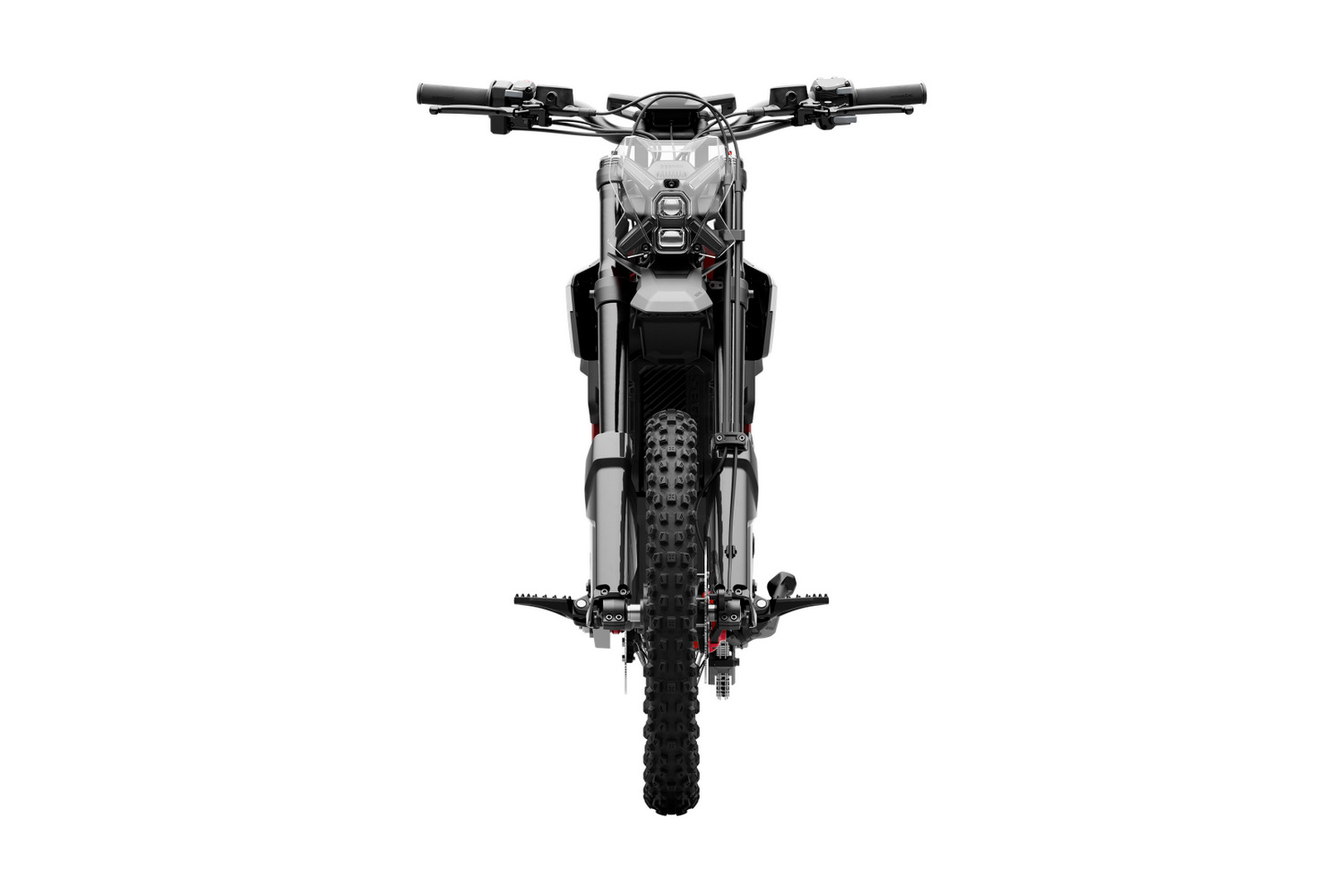
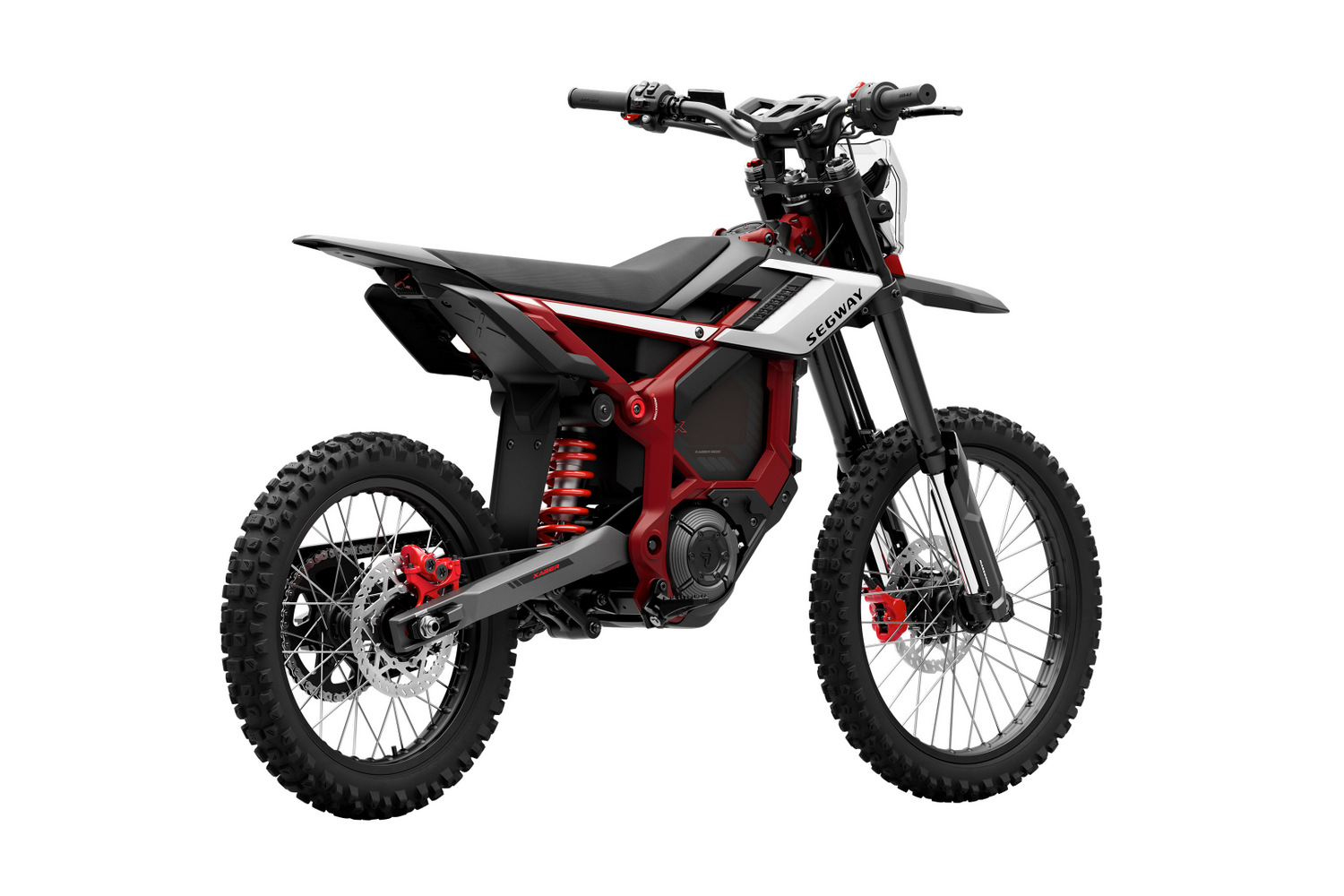
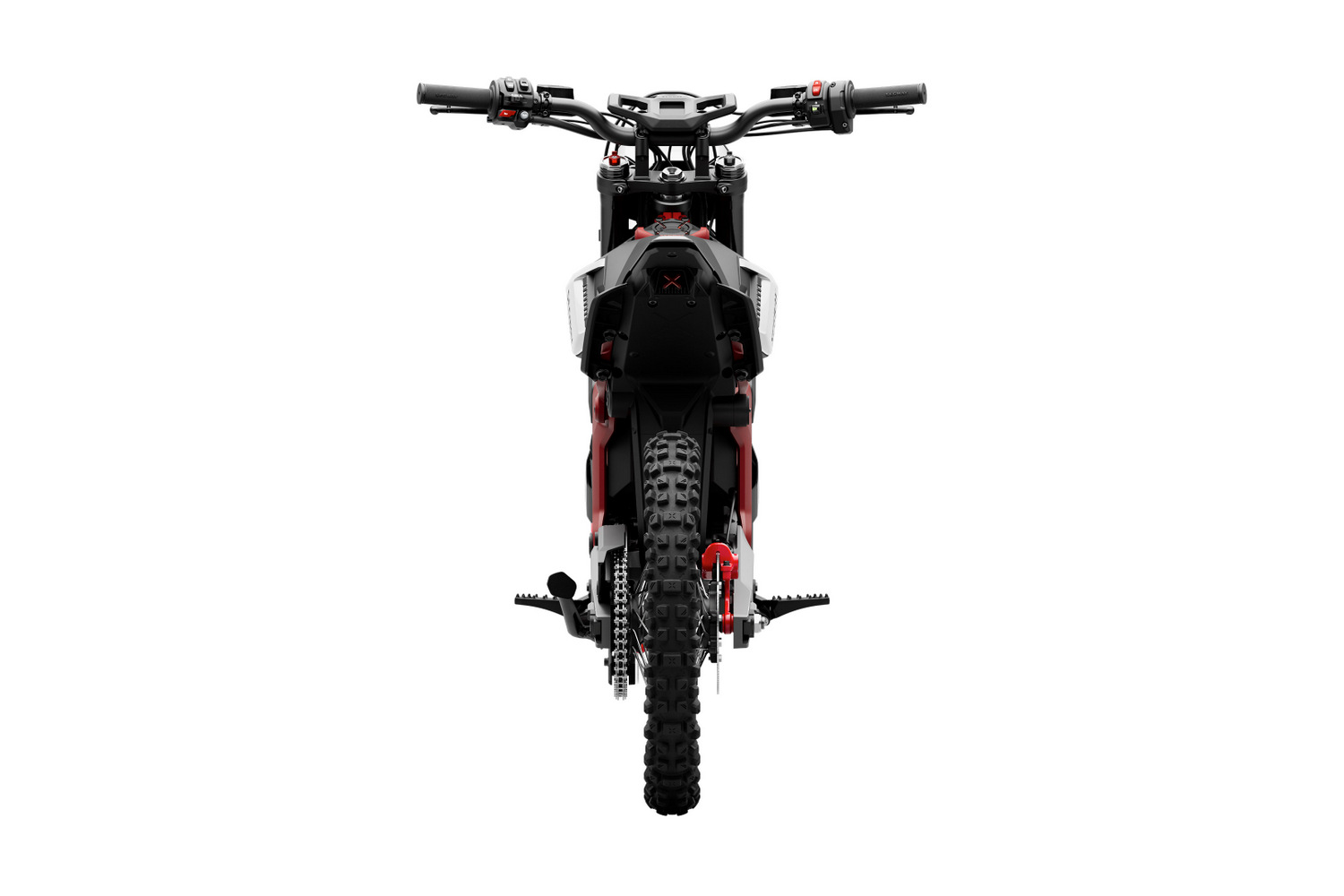
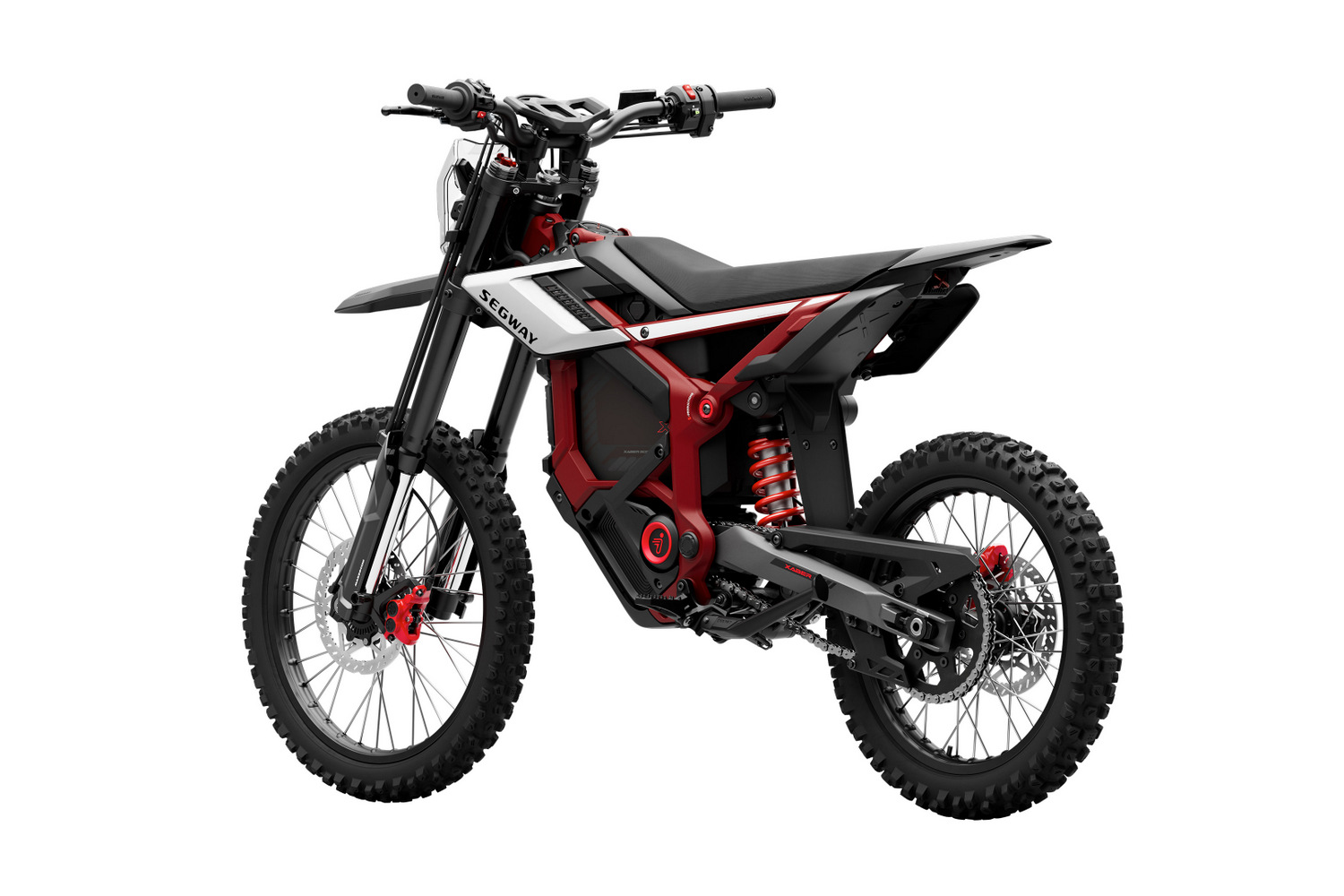
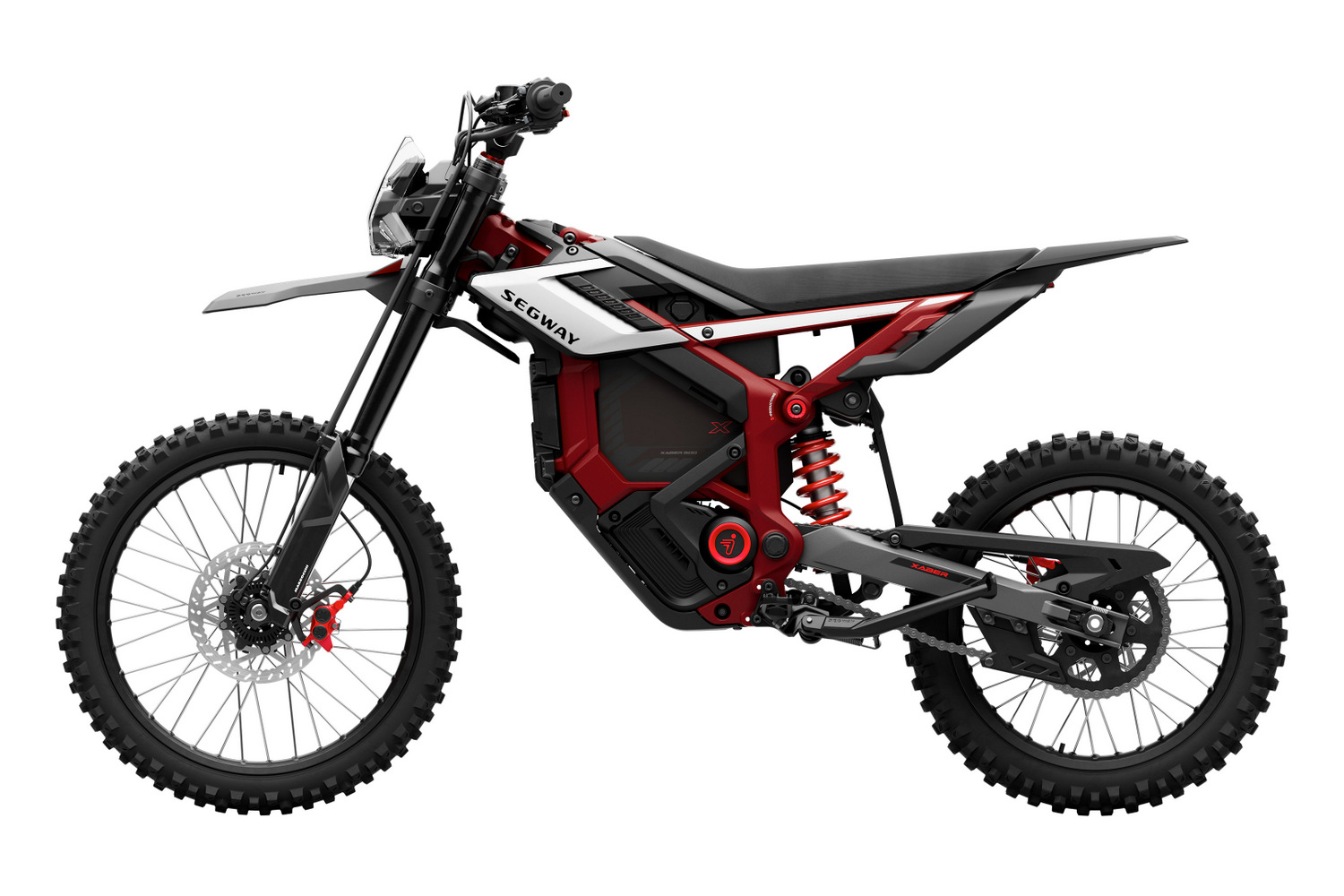
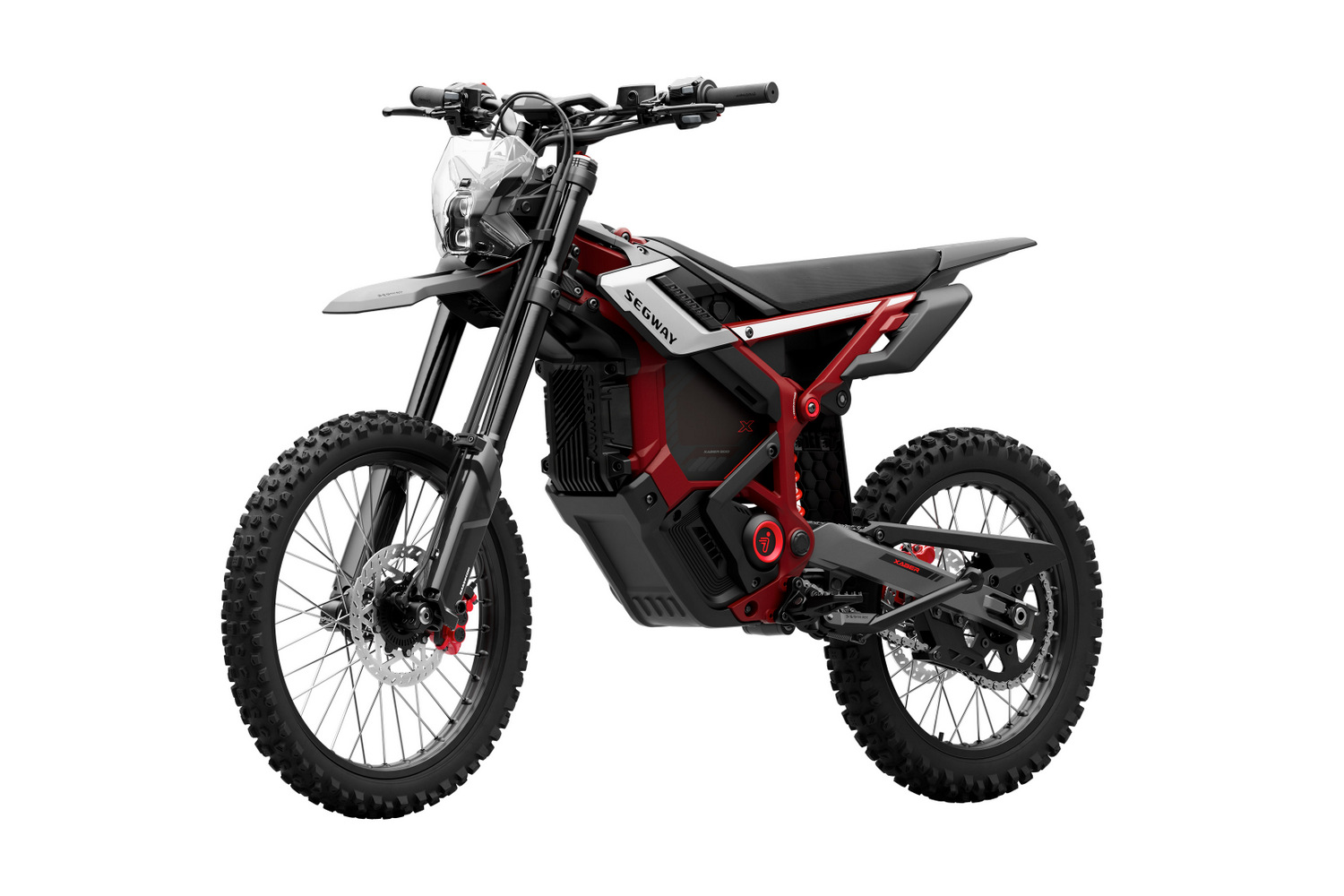
Braking is provided by four-piston hydraulic brakes with 220 x 3mm rotors at both wheels. The wheel setup is 19″ in front and 17″ in the rear, with a 520 chain. Ground clearance is 267mm, and the wheelbase is 1,295mm.
The Segway Xaber 300’s frame is a high-pressure forged 6000-series aluminum racing frame with a listed torsional stiffness of 1621.4 N·m/deg. In plain English, torsional stiffness describes how much the frame resists twisting under load. A stiffer frame can help the bike feel more predictable when cornering, landing, or riding rough ground, though suspension tuning and overall geometry still play big roles in how it feels from the saddle.
Smart Features Come Along for the Ride
Because this is a Segway, the Xaber 300 doesn’t stop at motor, battery, and suspension. It includes a 2.4″ full-color TFT display, GPS tracking, 4G connectivity, Internet of Things integration, and over-the-air update capability. Over-the-air updates mean Segway can add or refine features through software after purchase, assuming support remains consistent over time.
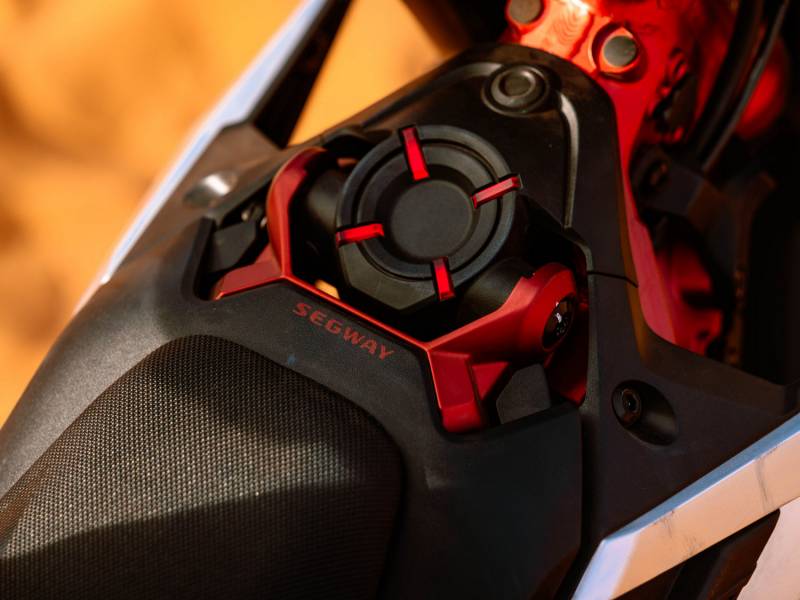
The bike also includes selectable traction control, hill hold control, regenerative braking, one-button reverse, multiple rider profiles, a high/low beam headlight, and BMS 6.0 battery management. Traction control can help limit wheel slip on loose surfaces, while regenerative braking can feed energy back into the battery as you slow down. It won’t turn gravity into free lunch, but it can help smooth the ride and stretch efficiency.

A Virtual Wheelie Coach will be available later via an update, allowing riders to set a maximum wheelie angle in the app. It’s a very Segway use of gyroscopic sensor know-how, and it’s also the sort of feature that will either be useful for controlled practice or become the first thing your most chaotic friend wants to demonstrate. Future updates are also expected to bring Rider Control Mode, maximum speed limits, location tracking, geo-fencing, and real-time app monitoring.
Pricing, Availability, and Who It’s For
The Segway Xaber 300 starts at $5,299.99 and will be available in Shred Velvet and Black Diamond color options beginning May 15 through official Segway dealers in the US. It’s rated for riders from 5’5″ to 6’1″ and supports a maximum rider weight of 330 pounds. The battery and display carry IPX7 ratings, while the whole vehicle is rated IP67, meaning it’s built with water and dust resistance in mind. The battery is UL 2271 certified, which is worth noting because battery safety matters, especially in higher-output electric vehicles.

Warranty coverage includes two years on key components, including the battery, motor, and frame, along with one year on the complete bike.

The Segway Xaber 300 won’t be for someone who wants a street-legal runabout or a casual path cruiser. It’s for off-road riders who like the idea of instant electric power, lower maintenance compared with gas engines, adjustable riding modes, and enough connected features to make the bike feel more like a modern device than a simple machine. That’s either progress or heresy, depending on how much premix is currently in your garage.



When you are in the middle of no where, being able to just dump more gas in is way more convenient. If you live where you can ride around your home then it looks like a good option.
Lots of excellent control freatures, making it work the price tag.