
It’s an unfortunate fact of modern medicine that women’s health has historically been an afterthought. Clinical trials didn’t even consistently include women until the early ’90s, which helps explain why hormone care and reproductive diagnostics still feel uneven today. At the same time, consumer health tech has exploded, often promising insight without delivering much substance. Vivoo is trying to bridge that gap with a pair of products that aim to pull meaningful health data out of places we’ve mostly ignored, using tools designed to fit into everyday routines rather than disrupt them. It’s an ambitious approach, and a notably different one.
Vivoo FlowPad
First up is FlowPad, and the name is doing some heavy lifting here. This is a connected menstrual pad, but not in the gimmicky way you might expect. On the outside, it looks and functions like a normal pad. Inside, though, Vivoo has embedded what it says is the world’s first hygienic microfluidic diagnostic system built directly into a menstrual product. It’s already picked up a CES Innovation Award, which gives this more credibility than your average “concept wellness gadget.”
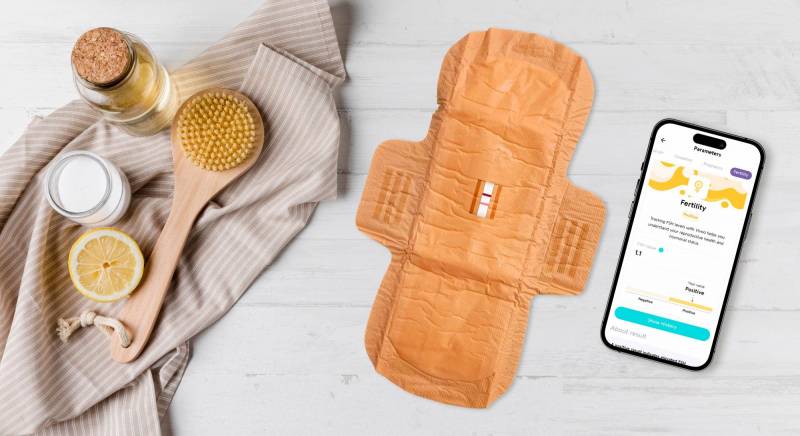
First up is FlowPad, and the name is doing some heavy lifting here. This is a connected menstrual pad, but not in the gimmicky way you might expect. On the outside, it looks and functions like a normal pad. Inside, though, Vivoo has embedded what it says is the world’s first hygienic microfluidic diagnostic system built directly into a menstrual product. It’s already picked up a CES Innovation Award, which gives this more credibility than your average “concept wellness gadget.”
The pad contains a sealed microfluidic architecture that passively channels menstrual blood into controlled zones, filtering it before introducing stabilized reagents that react with specific hormones. The system currently focuses on Follicle-Stimulating Hormone (FSH), a key marker for fertility, ovarian health, and perimenopause transitions, with support for Luteinizing Hormone (LH) as well. After use, the wearer scans the pad in the Vivoo app, which analyzes color changes and reaction patterns to generate personalized insights.
Vivoo emphasizes that everything happens within the fully sealed pad. There are no swabs, no vials, no blood draws, and no changes to routine. From a hygiene standpoint, that matters. From a convenience standpoint, it matters even more. The app doesn’t just show one-off results either. It builds longitudinal hormone trends over time and ties those patterns into hydration, stress, lifestyle, and nutrition data already supported in the Vivoo ecosystem. That makes it useful not just for fertility tracking, but also for people navigating irregular cycles, early hormonal shifts, or the foggy uncertainty of perimenopause.
There’s also a bigger vision at play. Vivoo frames menstrual blood as a diagnostic goldmine that’s been historically discarded, despite containing biomarkers tied to endocrine health, inflammation, stress response, and long-term metabolic trends. And they’re not stopping at hormones. Future biomarkers on the roadmap include estrogen metabolites, cortisol, inflammation markers, iron, infection indicators, and vaginal pH. Whether users want that level of insight is a separate question, but the technical foundation is clearly being laid.
FlowPad is expected to cost between $4 and $5 per pad, with subscription and pack options to be announced closer to launch. Early access will prioritize researchers, medical partners, and existing Vivoo users. It’s not cheap compared to a standard pad, but it’s dramatically cheaper than lab work or repeated doctor visits, which is kind of the whole point.
As always, there’s a reasonable privacy conversation to be had. Vivoo’s policy is clear, but tools like this only empower users if trust holds over time. Anytime you’re committing deeply personal health data to your phone, it’s worth reading the fine print and deciding what you’re comfortable sharing, and with whom.
Smart Toilet by Vivoo
If menstruation isn’t part of your life, Vivoo still wants your bathroom involved in your health data. Enter the Vivoo Smart Toilet, a $99 optical clip-on device that attaches to almost any toilet or urinal in seconds. No plumber, no special installation, and no redesigning your bathroom around a glowing throne.
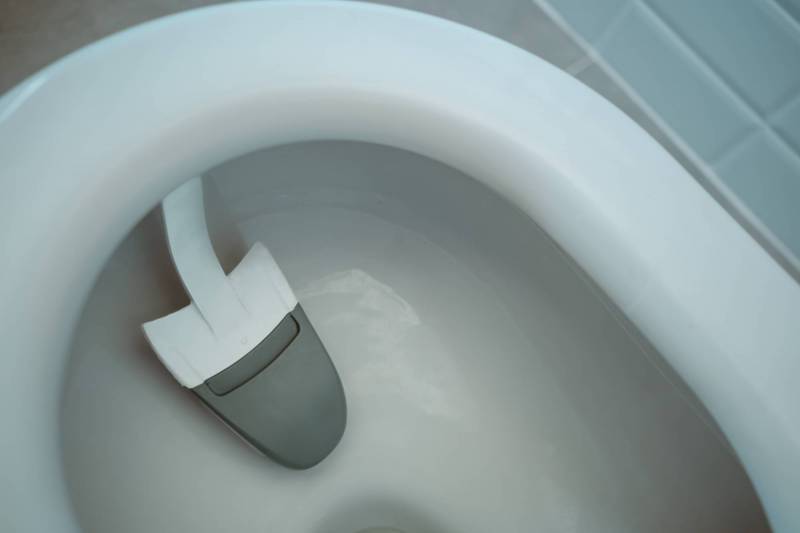
The Smart Toilet uses advanced optical, lightwave-based sensors to measure urine specific gravity, one of the most reliable ways to assess hydration. There are no test strips, no cartridges, no reagents, and no physical contact. You install it, use the toilet as usual, and the device passively captures and analyzes a sample during use, then rinses itself clean with every flush. Antibacterial and antifungal coatings help keep it hygienic without extra maintenance.
Results are delivered within seconds through the Vivoo app, where proprietary algorithms normalize the data to account for environmental factors and sample variability. The device supports over 1,000 measurements per battery cycle, features an externally accessible battery pack, and can handle up to 15 user profiles in a household with automatic user recognition. In commercial settings, user support is effectively unlimited.
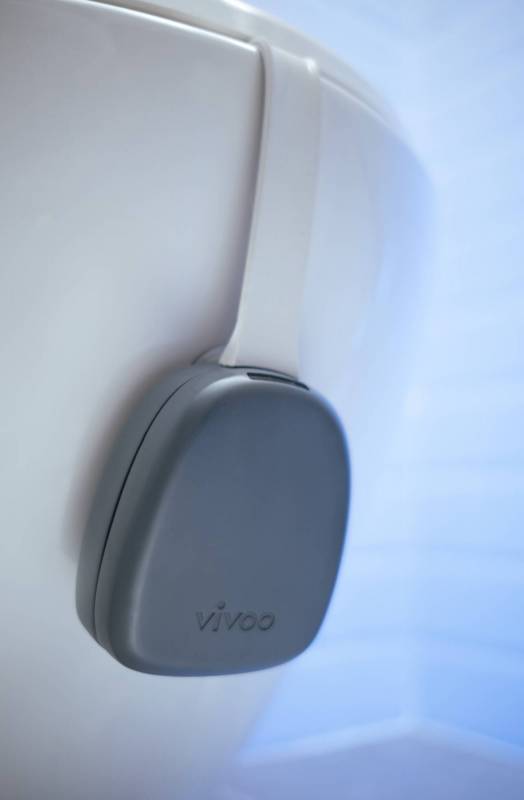
The bigger point here is hydration. Vivoo rightly calls out that the “8 glasses a day” rule is outdated and often misleading. Mild dehydration affects energy, cognition, metabolism, skin health, and long-term wellness far more than most people realize. Thirst alone is a poor indicator, and many people walk around underhydrated without realizing it. By turning a routine bathroom visit into a passive daily check-in, Vivoo is trying to remove friction from something we all know deserves more attention.
The Smart Toilet was first announced back at CES 2023, and the refined commercial version will ship in waves starting January 5, 2026. The first two batches will cost $99 and won’t require a subscription, shipping in March and June. A full rollout begins in September at $129, paired with a $5.99 monthly subscription. It’ll be available through Vivoo’s website, Amazon, and select retail partners.
Yes, the idea of your toilet knowing things about you is still a little funny. But if an app and a quietly judgmental bathroom fixture are what finally get people to hydrate properly, there are worse futures to imagine. And as one of my friends likes to say, sometimes rudely but not incorrectly, remember to hydrate or die-drate.
Taken together, Vivoo’s FlowPad and Smart Toilet point to a broader shift in how we think about health monitoring. Instead of occasional doctor visits, invasive tests, and vague advice we’re expected to follow blindly, these products aim to turn everyday routines into quiet sources of real data.
Menstrual cycles, hydration, stress, and hormonal changes aren’t rare events; they’re constant, and ignoring them doesn’t make them less important. What Vivoo is betting on is that when people are given accessible, understandable insights into their own bodies, they’re more likely to notice changes early and make better decisions before small issues become big ones.
There’s always a balance to strike between convenience, privacy, and usefulness, and these tools won’t be for everyone. But the underlying idea is hard to argue with: the more agency you have over your own health information, the less you’re forced to rely on guesswork, outdated rules, or waiting until something is already wrong.





Be the first to comment on "Vivoo Brings Medical Insight To Your More Personal Bodily Functions with FlowPad and Smart Toilet"