
Apple has never been shy about charging premium prices, so any iPhone that lands closer to the middle of the market tends to come with a quiet disclaimer. Something is usually missing. A feature disappears, a capability gets trimmed back, or the phone arrives with the faint suggestion that the real experience costs a few hundred dollars more. The iPhone 17e, starting at $599, does not entirely escape that dynamic. Apple still reserves its most extravagant hardware for the higher tiers. Yet this model feels less like a consolation prize than earlier “budget” iPhones.
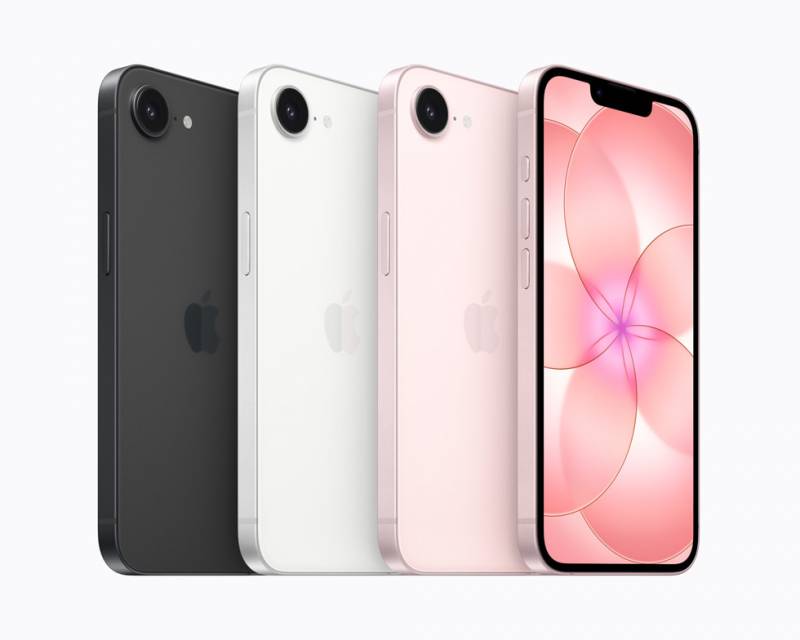
Instead of looking like the stripped-down option, the 17e comes across as a carefully balanced version of the modern iPhone experience, and that distinction matters. $600 is hardly impulse-buy territory, but it lands in a range that feels realistic for people holding onto an aging iPhone 11, a second-generation iPhone SE, or even an iPhone 12 that is beginning to feel cramped and a little slow.
Not everyone wants the largest screen, the most cameras, or the most expensive finish. Plenty of buyers simply want a phone that works smoothly, lasts through a full day, and takes dependable photos without much effort. Viewed through that lens, the iPhone 17e starts to make a lot of sense.
What You Get for the Money
Price always grabs the headline, but what Apple includes at that price tells the more interesting story.
The iPhone 17e begins with 256GB of storage. That may not sound dramatic until you consider how long Apple held on to lower-capacity models. Older iPhones often started with 64GB or 128GB, which could fill up quickly as photos, videos, apps, and downloaded media piled up. Doubling that entry storage changes the ownership experience more than it might appear on a spec sheet. It means fewer moments spent deleting videos or clearing out apps simply to free up space.
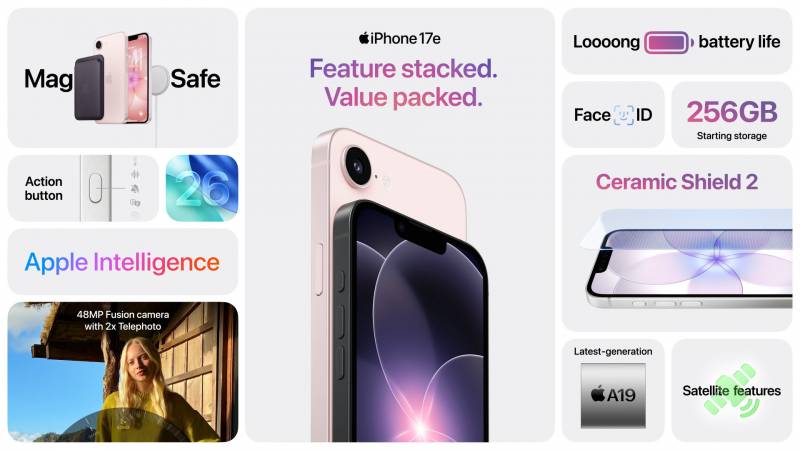
The display measures 6.1″ and uses OLED technology, Apple’s preferred screen type for higher contrast and richer color. Blacks appear properly black instead of gray, photos have more depth, and text stays crisp even at smaller sizes. Apple says the screen can reach 1200 nits of peak brightness for high-dynamic-range content. In day-to-day terms, that translates into a display that remains readable outdoors rather than washing out when sunlight hits it.
Apple has also added a new anti-reflective coating designed to reduce glare. It is the sort of improvement that rarely earns headlines but becomes obvious the first time you try reading directions on a bright afternoon.
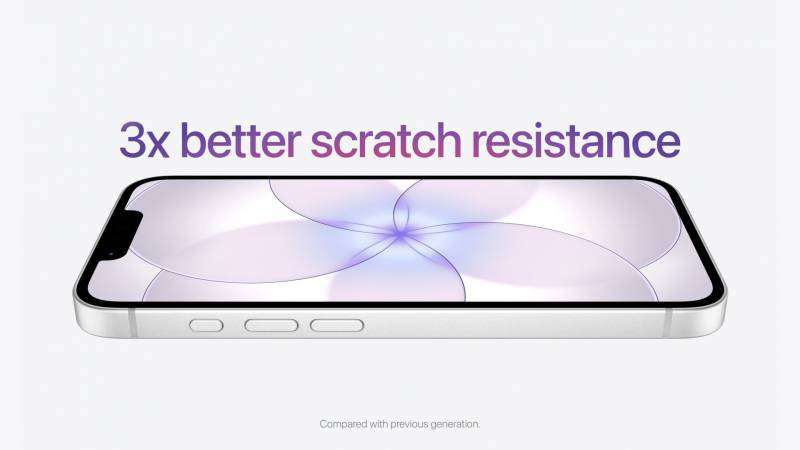
The phone itself uses an aluminum enclosure and Apple’s latest Ceramic Shield 2 glass on the front. Ceramic Shield has been Apple’s approach to improving screen durability, and the second-generation version focuses on scratch resistance as much as drop protection. That emphasis makes sense. Catastrophic drops are dramatic, but the small scratches that accumulate from keys, pockets, and countertops are what usually make a phone look worn after a year or two.
Daily Use
The iPhone 17e feels designed for everyday use rather than technical showmanship. This is the phone for commuting, messaging, navigation, photos, and the hundred small interactions that happen between morning and bedtime.
The iPhone 17e uses Apple’s A19 processor. Chip names rarely stir much excitement, but they quietly determine how long a phone remains pleasant to use. Faster processors mean apps launch quickly, photos process without delay, and the phone stays responsive as software grows more complex.

Apple says the six-core CPU inside the A19 is up to twice as fast as the processor in the iPhone 11. Anyone upgrading from a phone in that era will notice the difference right away. Jumping between apps happens more quickly, editing photos takes less time, and demanding games feel smoother.
Battery life may prove even more important. Apple rates the iPhone 17e for up to 26 hours of video playback. Those figures always come from controlled tests, so real-world results will vary depending on signal strength, screen brightness, and how heavily you lean on the camera or GPS. Still, the combination of the efficient A19 chip and Apple’s newer C1X cellular modem suggests a phone that should comfortably last through a full day of typical use.
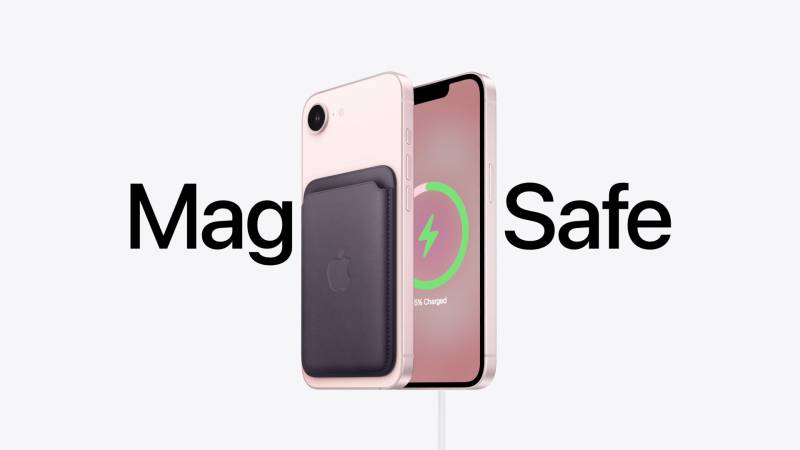
Another welcome addition is MagSafe. Earlier budget-oriented iPhones skipped Apple’s magnetic accessory system, but the 17e finally includes it. MagSafe chargers snap into perfect alignment, rather than requiring careful placement on a wireless charging pad. Wallets, stands, and battery packs attach with magnets, which sounds trivial until you use them for a while and realize how much easier it makes daily charging and mounting.
For a phone in this price tier, MagSafe helps the 17e feel more like the rest of Apple’s lineup.
The Camera: Practical Instead of Overloaded
Apple takes a straightforward approach to the iPhone 17e’s camera system. Instead of stacking multiple lenses onto the back, the phone relies on a single 48-megapixel main camera that performs double duty.
That sensor captures standard photos at full resolution while also enabling a 2× crop that functions like a short telephoto lens. Because the sensor captures so much detail, the camera can zoom in on the center of the image without the mushy quality typical of digital zoom.

The result is a setup that covers the shots most people take. Family photos, pets, restaurant meals, vacations, receipts, and the occasional suspicious-looking plumbing repair all fall comfortably within its range.
Portrait photography also gets a quiet improvement. The phone can recognize people, dogs, and cats automatically and record depth information while taking a standard photo. That means the portrait blur effect can be applied later, rather than requiring the photographer to switch modes beforehand.

Video remains a strong area for the iPhone line. The 17e records in 4K resolution at up to 60 frames per second with Dolby Vision color grading, which delivers richer contrast and color. Apple has also added wind noise reduction and a feature called Audio Mix that separates voices from background noise when recording video.
For parents filming school events, travelers capturing street scenes, or anyone recording quick clips outdoors, those audio improvements may prove just as valuable as higher-resolution video.
Connectivity and Safety Features
The iPhone 17e introduces Apple’s C1X cellular modem, the company’s second-generation in-house design. Apple says the modem delivers speeds up to twice as fast as the one used in the previous iPhone 16e while consuming less power.
That combination matters because cellular radios quietly influence both performance and battery life. A modem that connects faster and maintains a stable signal can reduce the constant background activity that drains a battery during the day.
Satellite communication remains part of the package as well. When cellular service and Wi-Fi are unavailable, the iPhone 17e can still send messages via satellite. The feature supports Emergency SOS, roadside assistance, and location sharing through the Find My network.
These tools are not something anyone expects to use regularly. Their value is evident during the occasional stretch of highway without reception, on a remote hiking trail, or during an emergency when the nearest cell tower is nowhere to be found.
Crash Detection also returns, allowing the phone to contact emergency services automatically if it detects a severe vehicle accident.
The Software Experience
The iPhone 17e arrives with iOS 26 and Apple Intelligence features built into the system. Apple’s approach to artificial intelligence leans heavily on integration rather than novelty.
Live translation appears in Messages, FaceTime, and phone calls, allowing conversations to flow more smoothly between languages. Call screening tools can filter unknown callers before the phone rings. Messages from unfamiliar senders can be moved to a separate folder to keep conversations cleaner.
Apple Intelligence also powers on-device writing tools and visual search features that allow the phone to identify objects and information visible on the screen.
Some of these capabilities will likely evolve over time, especially as Apple continues refining its AI tools. The company’s strength historically lies in folding new features into existing apps rather than forcing people to learn entirely new workflows.
Who Should Consider the iPhone 17e
The iPhone 17e makes the strongest case for people who are holding on to older iPhones. Owners of the iPhone 11, the second-generation iPhone SE, or even the iPhone 12 will see clear improvements in display quality, camera performance, battery life, and processing speed.
Those upgrades come alongside newer conveniences such as USB-C charging, MagSafe accessories, and satellite communication features that simply did not exist on many earlier models.
Buyers comparing the 17e to midrange Android phones will encounter familiar tradeoffs. Android devices in the same price range sometimes offer hardware advantages on paper, such as higher-refresh-rate displays or additional camera lenses. Apple tends to compete in other areas: longer software support, strong resale value, and cameras that deliver reliable results without much adjustment.
Anyone already using a recent iPhone may feel less urgency. The 17e refines Apple’s formula rather than reinventing it.
Final Thoughts
The iPhone 17e suggests Apple is taking its more affordable models seriously. Instead of feeling like a pared-down version of a flagship phone, it delivers many of the features that define the current iPhone lineup.
Generous storage, MagSafe support, the A19 processor, a capable 48-megapixel camera, and useful safety features combine into a phone that feels well-rounded rather than compromised.
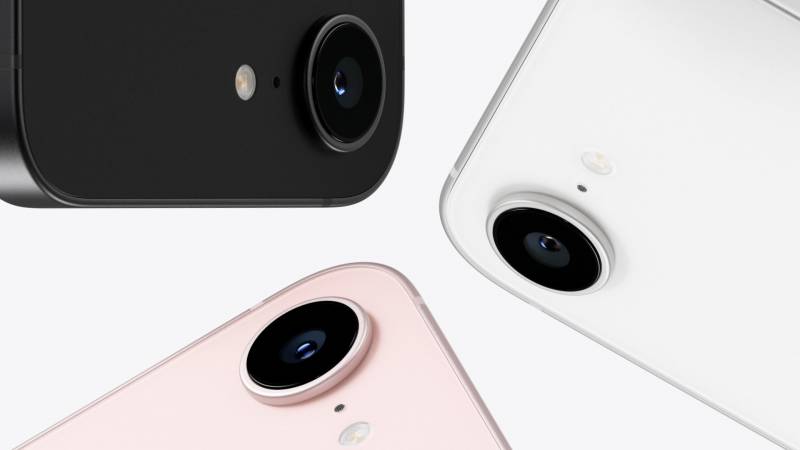
$600 still represents a significant purchase. Apple is not suddenly competing in the bargain bin. Yet the iPhone 17e strikes a balance that earlier budget models sometimes missed. For anyone stretching an older iPhone through one more year than planned, this may be the upgrade that finally makes sense.
If you’ve been waiting for an iPhone upgrade that feels practical rather than extravagant, the iPhone 17e is worth a closer look.




This features seem fairly nice for Apple’s lower priced iPhone.
Not too expensive and you still get MagSafe and a 48MP camera. Seems like a win to me!
Finally, a lower priced iPhone with all the bells and whistles!