
Once upon a time, a man and woman lived in a house, deep in the mountains. When they moved in, their house had an old, mostly functional GE slide-in electric range. Then, one day, that range’s control panel failed, and rather than spend $300 on a replacement panel, they decided to buy a new oven. Oh, those sweet summer children. How naive and ignorant they were. Four months later (yes, really), the man and woman finally had a functional range. This is their story, and I really hope the Whirlpool Corporation pays careful attention to this article.
The First Circle of Whirlpool: Brand Loyalty Isn’t What It Once Was
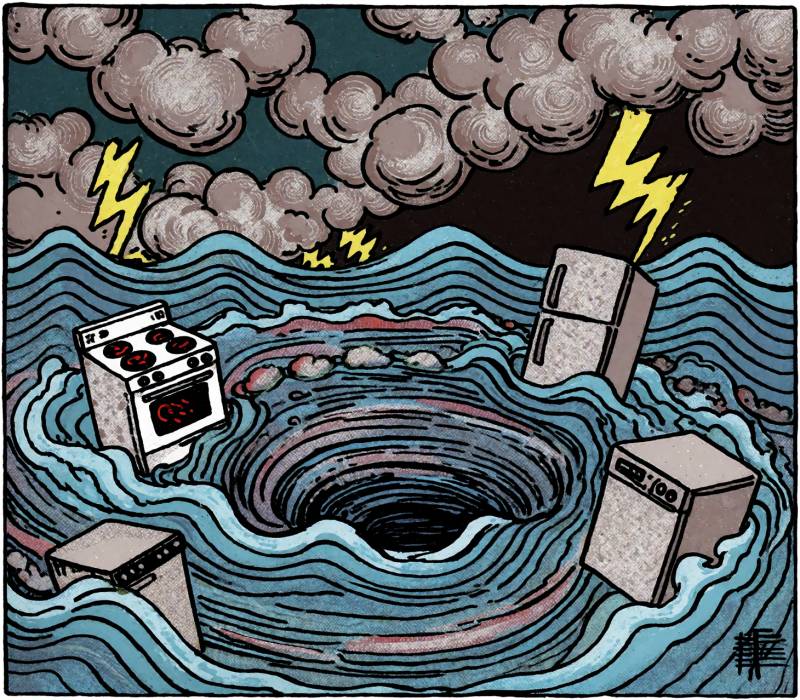
The descent into Whirlpool is fraught with large appliance peril. (Image: Krea2)
My husband and I have been homeowners for a decade now. Our first home’s dishwasher failed almost immediately after we moved in, so we went to Lowe’s to choose a replacement. We settled on a KitchenAid model, and in the five years we owned our home, it served us very well. During our time in that home, we also replaced our bottom-tier fridge with a KitchenAid model, and we loved it again.
So, when our Electrolux fridge finally bit the dust a few years ago in our current home, we replaced it with a KitchenAid, this time found through Costco. Pro tip: you don’t need to be a Costco member to start shopping for appliances online. You can buy your membership when you buy the appliance, and Costco will deliver it.
Our KitchenAid fridge, the KRFF407HPS, was noticeably lower quality than the previous generation of KitchenAid appliances, but not terribly so, so we accepted it. It’s been about three and a half years, and we’re still really happy with our fridge. It works, it’s quiet, and most importantly: it keeps our food really cold. Food in the back of the meat drawer tends to frost a little because it’s so cold. It also has great air circulation, and most old food desiccates, which means less mess when you discover things you forgot about.
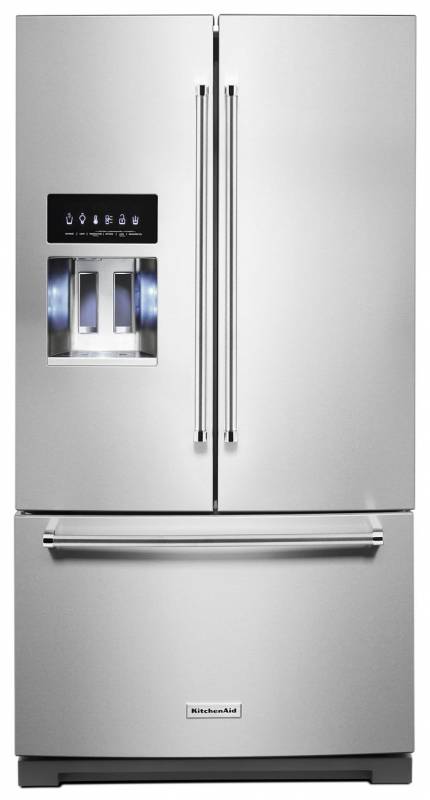
We really like our 2022 KitchenAid refrigerator. (Image: KitchenAid)
Can you blame me for choosing KitchenAid when our GE oven finally bit the dust? This time around, I remembered I still get corporate discounts through my previous employer, so I found a nice-looking KitchenAid model (or so I thought), the KFES530SPS, and got a smokin’ deal.
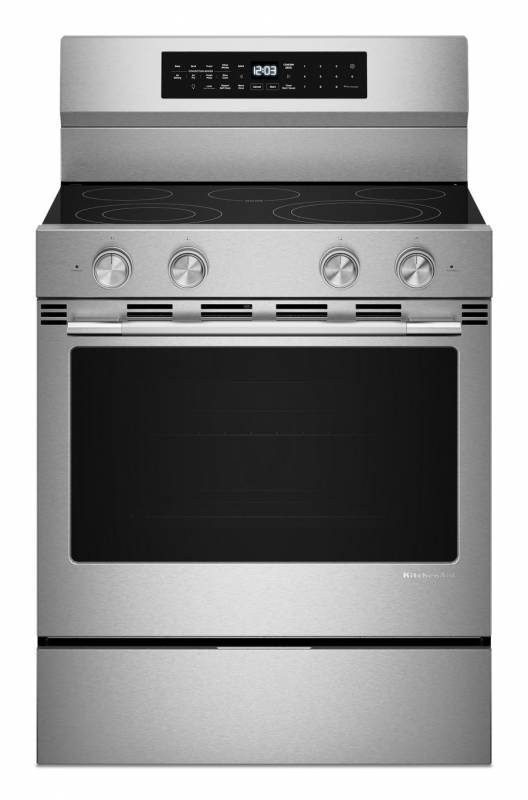
That’s a real nice range you got there. Would be a shame if somethin’…happened to it. (Image: KitchenAid)
My husband had been interested in KitchenAid’s advertised Pizza Mode, which uses convection to bake a fresh pizza in only five to seven minutes. This is cool, and it worked as advertised, but it’s also the only feature that actually worked as advertised.
None of the burners maintained heat reliably. Using the cooktop required constant fiddling with the knobs because the burner would suddenly jump or drop in temperature. Delicate foods like eggs require careful temperature regulation, so this quickly turned breakfast into a chore.
We finally realized the front left burner was defective, as the programmed temperature curve was completely wrong, and it didn’t operate at all at any position below medium.
On top of all this, we were really disappointed by the appliance’s extremely low quality. The steel cabinet on this model is made from ridiculously low-gauge steel, and everything else seems to be as well, judging by how lightweight the whole thing is. The door is so lightweight, it doesn’t spring closed on its own at all. The front stainless cover for the knob panel sat at an angle, making the range look cheap for what it was supposed to be.
Since I purchased this range through Whirlpool directly (they have a whole online storefront for those eligible for their corporate discount program), I contacted Whirlpool for help.
Our range was seven days old.
The Second Circle of Whirlpool: Don’t Run a Mailbox Nobody’s Watching
Like most millennials, I prefer written communication over phone calls for dealing with situations such as this, so I first tried contacting Whirlpool’s customer support email on a Saturday morning, which I thought was [email protected]. I figured I wouldn’t get a response until Monday, but I expected a response nonetheless.
Crickets.
Tuesday afternoon, I sent a follow-up email.
Chirp…chirp…chirp…

If an email doesn’t bounce but nobody’s around to read it, does it even exist? (Image: Krea2)
Going back through my email history on this saga, I haven’t been able to find where I saw this email address as a contact point for Whirlpool, but it appears to be a valid mailbox because neither of my messages bounced.
“Everyhome” is associated with Whirlpool Inside Pass (the corporate discount program), so I have a feeling this address was published somewhere on the Inside Pass storefront…but the seven circles of Whirlpool I’ve been through have left my brain addled, so who knows?
Ultimately, the problem here is simple: don’t run a mailbox nobody’s monitoring. If an email address is valid, it needs to go somewhere. I used to work on Microsoft Exchange Server, so I’m confident saying that technical difficulties are no excuse here. It is extremely easy to set up catch-all processing for all kinds of incoming customer communications.
Do it.
Coming back to our story, I was right at the tail end of Whirlpool’s 15-day return policy, which implied I could get a retail replacement range, rather than dealing with warranty service. Two days after my second email appeal for help, I went through Inside Pass chat support.
Our range was two weeks old.
The Third Circle of Whirlpool: What Happens When There’s No Service?
To be very fair to Whirlpool’s customer support agents over both phone and chat, everyone who handled my case was helpful and friendly. I appreciate the fact that Whirlpool appears to have kept its customer support in the United States. The quality shows in the people working on the front lines.

Frontline customer support agents are very rarely the cause of a corporation’s systemic failures. (Image: Krea2)
These folks, however, are held over a barrel by top-down corporate policies, and those policies are rather clearly about saving money, first and foremost.
And so we have arrived at one of this article’s two major points of contention: Whirlpool, you need to fix your customer service policies across the board. Customer service is a cost center. You will always lose money on customer service because it’s all about dealing with people who already gave you their money, rather than people who are still thinking it over.
This doesn’t mean customer service is a loss leader you should cut as much as possible. It means customer service is a necessary part of your ongoing overhead, and you need to budget for it correctly.
Customer service is about repairing damaged relationships, because angry customers cost you far more than it costs to make them happy. I cannot stress this enough. It’s Public Relations 101: when you’ve made your customer see red, they will tell literally everyone they know how much they hate you and think you should go bankrupt over your gross malfeasance and negligence as a company.
Whether the customer’s accusations are true is irrelevant to their material effects: if that customer has a lot of friends and family, guess what? You didn’t just lose one customer – you lost a dozen. Or five dozen. Or several hundred. Or thousands, tens of thousands, hundreds of thousands – because you, the corporation, never know if the person you’re talking to is a common plebe or a high-profile influencer.
When this whole appliance soap opera happened, Whirlpool sure didn’t know they were talking to someone who’d write a media article about it once all was said and done.
And so we waited. We waited some more. We waited even longer. We had a functional range aside from a bad burner, so we just chilled and waited.
Finally, the phone rang. I don’t know how long it was before someone called me, honestly, because I was still unprepared for the hell awaiting me, and I didn’t think to meticulously track the timeline so I could write about it later. I’m sure Whirlpool can see the exact timeline in their ticketing system, though! I think it might have been eight days.
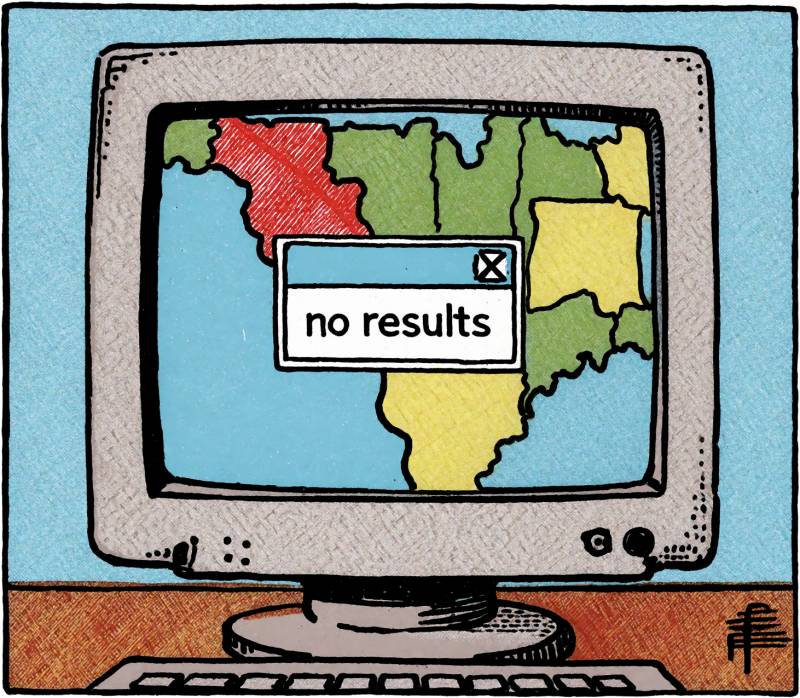
If you live rural, warranty service for your large appliances might be a challenge. (Image: Krea2)
The woman on the other end of the line told me Whirlpool couldn’t find a service technician in my area to do a warranty repair, so they were going to replace the range with a brand-new one.
I could have told them this from the outset. I don’t know why it took more than a week for them to determine nobody was available, because this is 2026, and I have a lot of experience in warranty logistics, because I’ve done a whole lot of computer hardware support over the years. Whirlpool should have been able to determine immediately my delivery address was outside their service area for rapid warranty support and immediately escalated my ticket to dispatch a replacement unit.
At any rate, we finally had confirmation we were getting a new range. Hooray!
We had now been sitting on a defective range for seven and a half weeks, and it doesn’t appear Whirlpool did anything to expedite the delivery, because it took another four weeks for the dispatch of my replacement range.
The Fourth Circle of Whirlpool: When Subcontractors Are Awful
I finally got an automated email from Whirlpool logistics saying my range was with the LTL freight company contracted for delivery (a subcontractor hired by Allegro Home Delivery, a national residential LTL freight logistics company), so I waited with great anticipation. The phone rang in the morning, and the caller ID showed no number. The caller wanted my delivery address because the one he had didn’t seem right.
Our town is only found by roads appearing as inaccessible, either seasonally or all the time, when using an outdated GPS unit. If you’re using a smartphone with up-to-date navigation, it’s easy to find us with turn-by-turn directions…especially when there are only two turns off the interstate (but a lot of driving between those two turns).
So I let the delivery driver know why he thought he couldn’t route to our home, and I tried to give him directions on how to get to our house. He angrily interrupted me and demanded a different address because he couldn’t use the one I’d given him. I let him know it was a really easy route and drive, and I could tell him how to find our home.
His response was to become extremely hostile – and then he hung up on me.
It’s never a good idea to bring angry delivery drivers to your home. (Image: Krea2)
So now I had an angry stranger on my hands, who had my home address and was expected to enter my home. This is an untenable situation because angry people are reckless and can turn dangerous on a dime.
I immediately called the toll-free number Whirlpool includes in all their delivery emails. I told the CSR what happened and demanded a new delivery date. Because we’re so rural, she told me it would be another week, and I agreed; there was no way I was letting a hostile stranger near my home, and our defective range still mostly worked.
This was the beginning of things really going south with Whirlpool, and this interaction wasn’t even directly Whirlpool’s fault (but they absolutely should have investigated the subcontractor’s customer interactions and dealt with the problem instead of ignoring it).
Our range was almost nine weeks old when the replacement finally arrived.
The Fifth Circle of Whirlpool: This Might Be False Advertising
I really like pyrolytic self-clean. This feature runs the oven at 800-900°F, which incinerates everything combustible in the cavity, like old, polymerized grease. It’s really useful for cleaning up the residue of a particularly fatty mess, and it also cleans our Ninja Foodi’s stainless steel wire basket, so I used it maybe once a year with our previous oven. When we first decided to replace our GE range, I specifically wanted a model with real self-clean, which is hard to find these days.
If you read up on the performance of pyrolytic self-clean in modern ovens, you’ll find this feature is poorly implemented, thanks to the decline in quality engineering by appliance manufacturers. The real effect? It’s a feature that may as well be removed entirely, because none of the sensitive electronic components in a modern oven can handle the heat, especially not convection ovens.
Still, I wanted to believe in my new oven’s self-cleaning ability, so I forged ahead and ran the shortest clean cycle (two hours) on our Foodi basket, just to see how it performed.
We were in our basement maker space, watching YouTube and working on projects, when suddenly we both heard a loud BANG and saw one of the hanging LED workshop light bars swing…and behind it was a still-moving 240V electrical cord, which had just taken a massive surge from our new oven’s main burner, committing seppuku.
We ran upstairs.
The kitchen was smoky (don’t forget to open a window if you use pyrolytic self-clean!), and the oven’s fancy LED display was showing a very angry error message.
Main oven burner failed.
What’s the point of a nonfunctional pyrolytic self-clean? (Image: Krea2)
Whirlpool, if you can’t engineer a pyrolytic self-clean feature that works as expected the first time it’s used, you have to stop advertising it as a feature.
You can’t claim your appliance has a feature it materially can’t actually support. This is false advertising. Stop doing it.
The second failure came about four weeks after the replacement was delivered, but we are now almost nine weeks into this story, and this time we had a fully nonfunctioning oven (but a functioning cooktop, at least).
Whirlpool is lucky we have, and love, our Ninja Foodi SP101 countertop air fryer and toaster oven, because we relied on this guy to get us through the misery barreling toward us, and it kept me from having to turn into the kind of customer CSRs tell stories about for weeks.
Side Quest: Electrical Safety Is Fire Safety!
The reason our hanging light and the 240V cable for the range were swinging so wildly after this surge is because the 240V cable was never actually tacked down after installation (which is from before we bought our home). This is a fire hazard because various transient electrical phenomena can cause the cable to absorb enough energy to make it move, and it can end up smacking into, say, a nailhead, which could cut into the insulation, cause a short, and burn your house down, because 240VAC@40A is a lot of energy.
If you have any loose hard AC wiring in your home (i.e., visible in an unfinished basement), do your family a favor: go to your closest hardware store, get the insulated cable staples you need (different sizes for different wiring gauges), and tack it down ASAP.
The Sixth Circle of Whirlpool: The Consumer’s Secret Weapon
By this point, it’s hard to express just how angry my husband and I both were at the Whirlpool corporation and, more specifically, the KitchenAid brand. It’s inexcusable that KitchenAid engineered such obviously defective, poorly designed, poorly constructed appliances, because I know firsthand how good KitchenAid appliances used to be.
We agreed we wouldn’t accept either a repair or a same-model replacement. KitchenAid sold us two lemons in a row. Regardless of the overall projected reliability of pyrolytic self-clean on any modern range, Whirlpool chose to advertise this feature, and I, as the consumer, believed them when they said it was supported.
The fact that it wasn’t was the final straw for me. I called Whirlpool customer service and made my final demand, which is the final demand a consumer can make:
Fix this, or I’m calling my bank and filing a chargeback on my credit card.
A credit card chargeback is the nuclear option for you as the consumer. (Image: Krea2)
Retailers have to absorb additional fees, on top of losing the entire value of the original transaction, when angry customers file chargebacks. This is a tool at your disposal, and for your protection, as a consumer. It’s the nuclear option, and it shouldn’t be used in any scenario where there are better options still available, but we were completely done with KitchenAid at this point, and there was no way I was going to accept eating any portion of my thousand dollars because of Whirlpool’s systemic failures as a large appliance manufacturer.
If a brand sells you a lemon large appliance twice in a row, a chargeback is a reasonable threat. It’s the message which says, to the retailer, “you are going to eat the cost of this, one way or another, because I refuse to.”
The magic words had the desired effect, and the CSR I was talking to asked if I wanted to escalate to a supervisor, who would be calling me in the near future. I agreed.
Our story has now come to three full months of hell…but it’s not over.
The Seventh Circle of Whirlpool: Top-Down Policies Destroy Customer Relationships
The final twist of the knife on Whirlpool’s part was in how my escalation was handled. I can only assume this is due to strictly enforced, top-down corporate policies that try to cut customer service costs, which, again, is already a cost center no matter what you do.
About a week after I was told someone would call me, an escalations supervisor finally called me directly. She reviewed my case notes, and I explained that I was fine with replacing my oven with another Whirlpool product, but I would not accept another KitchenAid appliance. My husband and I settled on a Maytag model, the MET8800FZ, which is older and, from my research, appears to be well-established as reliable, and it has a ten-year warranty on most of the expensive components.
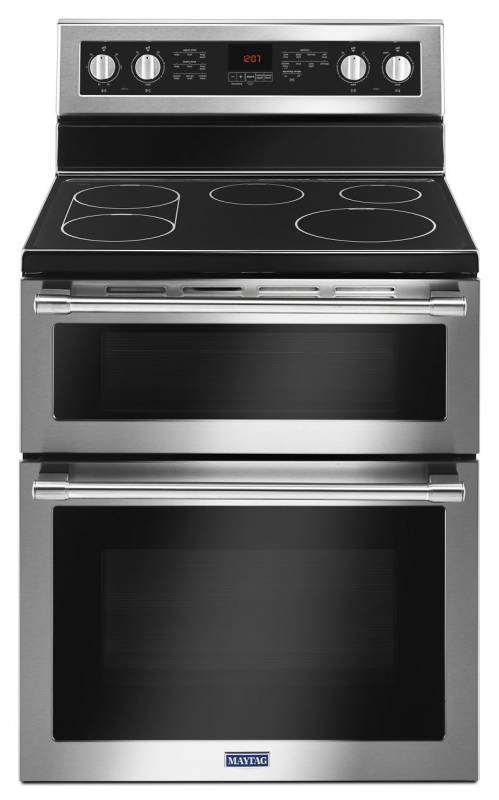
The Maytag MET8800FZ is an older model with less high-tech glitz, but its engineering is proven. Hopefully. (Image: Maytag)
The discounted price difference between the two models was only $200, so I figured I’d get the replacement without paying the difference. She agreed without any resistance, which was nice, given everything I’d been through by this point.
Near the end of September, I received my confirmation email from Whirlpool logistics on my replacement oven. The email included an order number, but the order didn’t exist in Whirlpool’s regular direct sales system, so I couldn’t look up the status.
This is another point to Whirlpool: fix this. I don’t really care what the excuses are for why you have siloed inventory logistics between customer service and sales, but you need to make it possible for your customers to see all their orders through your online storefront, regardless of the origin of those orders.
We waited, and then we waited some more. After two weeks of waiting, I called Whirlpool and asked what was going on with my ticket.
I was shocked to learn my replacement oven hadn’t even been dispatched from the warehouse – and it wouldn’t be dispatched for another two weeks.
A month of delays on a major kitchen appliance is just no good. (Image: Krea2)
I told her this was unacceptable, given our current range’s oven was totally dead. She agreed, apologized profusely, and put the order in for my new range. I immediately received an email from Whirlpool to schedule delivery.
The first delivery date available was another two weeks out.
And now, two weeks later, and four full months since the start of this, we finally have our new electric range.
Conclusion: Make Stacked Ranking Great Again
Whirlpool, it’s time. I hate to be the one to say it, because I know how objectively damaging it can be to any business when used for too long, but it’s time to bring back Stacked Ranking, also known as Ranking & Rating in some manufacturing industries. This is a ruthless and entirely mathematical method of systematically chopping every single person in a corporation who is contributing to its decline through bad decisions.
The problems at Whirlpool have nothing to do with the front-line agents and supervisors I dealt with as a customer. In fact, your CSRs were easily some of the best agents I’ve dealt with in the last decade as a consumer. They were all friendly, nice, and as helpful as they could be in their given roles; they overwhelmingly sympathized with me as they read through my case notes. The problems are with the company’s leadership and decision-makers.
Why didn’t your escalation policy automatically ensure my replacement oven order was fulfilled within 24 hours? Why was my first available delivery date two weeks out, and why wasn’t my order flagged in Allegro Home Delivery’s system for expedited delivery? Why did nobody tell me I’d have to wait another month for a functioning range in my kitchen?
Systemic corporate failures lead to a perfect storm of customer service problems. (Image: Krea2)
Why is it that Maytag is able to engineer an oven which is consistently rated as reliable and of reasonably good quality, but KitchenAid can’t? You’re the same company. You’ve owned the KitchenAid brand since the 1980s. This brand used to be high quality all of a decade ago, rightfully earning its reputation as a premium American appliance brand. You clearly were once capable of quality engineering.
So what happened?
Where did your good engineers go? Have you been so busy fulfilling other, less fiscally responsible agendas that you forgot to hire the best engineers you could find to design your appliances? Were you more concerned with activist hedge funds and investors who bought up lots of stock and then manipulated your C-level leadership into making obviously terrible business decisions, which led to a drastic decline in the competency and quality of your engineers, product designers, and decision-makers?
It’s also not as if an electric range is difficult to design and manufacture. The physics of an electric heating element hasn’t changed. There are more fancy components in a modern oven, but there’s no reason for something like self-clean to simply not work – and to destroy the main burner in the process.
There’s no material reason for an oven burner to not handle the tolerances it’s supposed to handle, unless your engineers don’t know what they’re doing, and your product managers don’t understand why you can’t cut corners on components in something like an electric range, which is easily one of the largest fire hazards in any modern residence.
You must design it correctly. You must ensure every component can materially handle the heat it will be exposed to over its lifespan. You can’t use undersized components and inadequate insulation just to save a few benjamins on the appliance’s landed cost. Period.
Large home appliance makers have an outsize public obligation to ensure products are held to the highest safety and quality standards. If they don’t, families suffer. (Image: Krea2)
It’s time to take this seriously, Whirlpool. It’s time to take the dramatic decline in your product quality seriously, and the fact that it’s now clear your top-down customer service policies focus more on cutting costs than repairing customer relationships.
There are clearly still high-ranking people in your corporation who know what they’re doing, which is why certain product lines remain highly rated by real-world owners. This implies you do, in fact, have competent people, but have inexplicably chosen to also retain incompetent people, and it’s up to the customer to try and divine which products were designed by qualified engineers.
GE made stacked ranking infamous.
It’s time for Whirlpool to bring it back in full force – and, in so doing, you must remember this is merely a tool to address the current crisis, rather than a new policy which should be left in place indefinitely, because that’s when you start firing the good engineers and decision-makers, simply because the policy says you have to (I’ve witnessed this firsthand).
This isn’t complicated. You can fix this. It’s happened before, and it’ll happen again. Nearly every American manufacturing company went through a similar crisis in the 1990s. Those of us who are old enough to have lived through it remember it vividly.
90s-era nostalgia shouldn’t include 90s-era quality. (Image: Krea2)
Go look at the lessons you learned then, apply them here, and for the love of all that is good in the world, figure this out before you piss off so many customers you don’t have any left.
Get rid of all your bad decision-makers – your PMs making bad product (and customer policy) decisions, your cost center bean counters pushing for more cuts in post-purchase support, and your engineering managers who are allowing bad engineering to make it to production.
Show the door to the bad executives who keep making excuses for poor decisions that cumulatively cost the company hundreds of millions, if not billions. Do the math on my one customer service incident, involving three ranges, three LTL deliveries, and two disposals, and extrapolate how much you’re wasting on post-purchase problems you could avoid entirely with better quality standards from the start. The cost of the severance packages will be dwarfed by the ongoing costs of systemic incompetence, trust me. Stop caring about anything except cutting out the bad top-level decision-makers. Start chopping heads and replacing them with better ones, who are hired on their proven track record as decision-makers.
America also has no dearth of high-quality, highly qualified engineers. YouTube is full of brilliant Americans who spend their free time engineering and building amazing things, with a clear understanding of the science and math behind what they’re doing. Hire them.
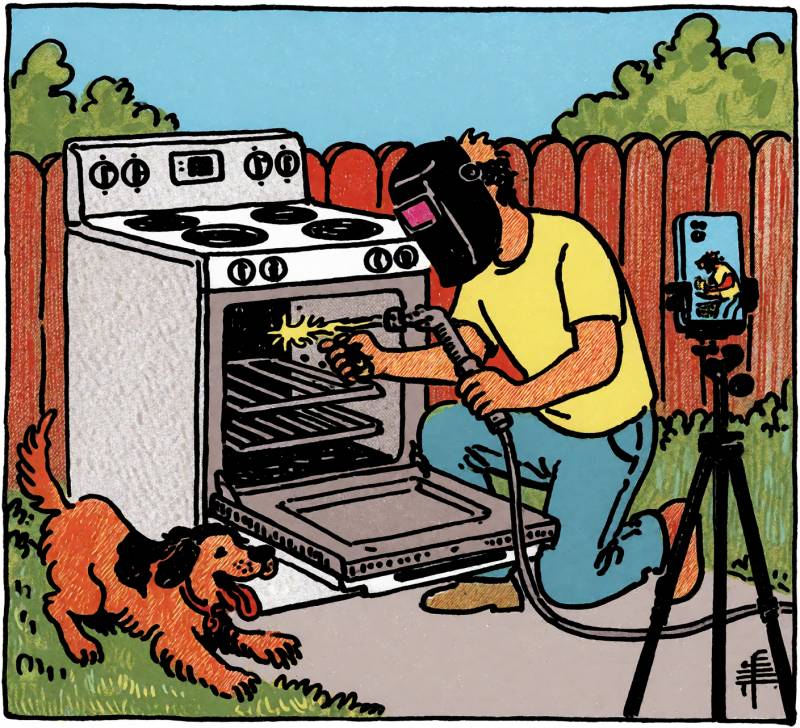
Find them, hire them, restore your reputation. (Image: Krea2)
Affordable large appliances are generally poorly designed, poorly engineered, and poorly made. The components are undersized and made from inferior materials, so the parts you expect to last at least 15 years – compressors, motors, pumps, and heating elements – often last only five to ten.
There’s no defensible reason for any of this. If the name of the game is cost-cutting, then we, as consumers, are not paying enough for our appliances, and we need to reset and expect to spend twice as much on something we can realistically expect to last as long as an appliance manufactured before 1980. The reason your grandma’s retro fridge still works is that the compressor keeping the food cold is engineered properly, by competent and qualified engineers who understood the imperative of designing a quality product.
Both GE and Whirlpool manufacture several product lines, each marketed and priced for a specific segment of the consumer market. These companies can also make inexpensive, entry-level appliances. When it comes to mid-tier premium, however, stop convincing yourselves the average consumer is just paying for the badge. We didn’t buy KitchenAid to impress our friends; we bought it because it used to be a reliable brand.
Homeowners shouldn’t be forced into an extreme black-and-white choice between absolute bottom-tier garbage and high-end ultra-luxury. We can’t afford to spend thousands on a range, but that’s how much we’d have to spend to find something current that is actually built to last.
It makes no sense for Whirlpool to be ranked among the most reliable for electric ranges while KitchenAid is the least reliable. This is like saying Lexus engines are great while Toyota engines are terribly unreliable. It’s nonsensical for one company to have both competent and incompetent engineers, which is why all Toyota-engineered engines are highly reliable, and the Lexus brand focuses on luxury details, not engine and drivetrain reliability.
It makes more sense to put premium and luxury nameplates, finishes, and firmware on a unified platform across all product lines, which is what auto makers have done worldwide for decades. I don’t understand how this isn’t the standard for an appliance maker as massive as Whirlpool. Why not put the KitchenAid nameplate and trim on a Maytag range and call it a day, if the Maytag range is so dramatically materially superior to the KitchenAid? What are you even doing at this point?
Go back to designing quality, durable, reliable appliances. Stop worrying about competing with Samsung and LG’s endless(ly unreliable) fancy features, and focus on what actually matters for the long haul: the material durability and reliability of the appliance’s components. Market your appliances’ superiority on this basis, and people will stop cursing your brands under their breath.
Have pride in your brands – and in the American legacy of the same. Have pride in your reputation, and don’t market products you know are garbage. It’s insulting to your customers, believe me. We know better, so you should, too.
If it’s not a winner, why are you selling it? (Image: Krea2)
I, for one, will not be buying another Whirlpool appliance. We like our Maytag range so far (in less than a week of ownership), but when our next appliance goes kaput, we’ll more than likely buy GE, or fix what we have, since it seems all modern appliances are increasingly terrible. At this point, Whirlpool’s done me dirty enough to put me off of them for a long while. They did eventually take care of me as a customer, but it took four months of frustrations and corporate failures to get there, and that’s just three months too many.
I also left out of this story a number of finer details, which Whirlpool can readily determine by looking at all my existing case notes as their customer – and all of which serve to reinforce my belief that Whirlpool is suffering from serious, systemic quality problems in both its engineering and its top-down customer service policies.
This is but one story in an endless line of angry customers who have been bilked over and over by major manufacturing brands that have willfully and deliberately let the quality of what they produce slide ever further into the gutter. We put up with it because we have no alternative, but that doesn’t mean we can’t demand, very loudly, that these corporations show us some respect as consumers and go back to making products we buy because we want to, not because we have to.
All it takes is committed effort. We’ve been through this quality crisis before, and we’ve recovered from it before. Now all that’s left is to do what we know we can do.
The only way this story really has a happy ending is when Whirlpool commits to a serious focus on quality. (Image Krea2)



Be the first to comment on "My Descent Into the Seven Circles of Whirlpool: How a Defective Oven Became a Customer Service Disaster"