
Most electric bikes built for commuting ask you to choose between practical transportation and something that feels enjoyable to ride. The new Amflow UE Carbon series is trying to make that compromise less necessary. Amflow‘s first city-focused e-bikes pair lightweight carbon fiber frames with powerful pedal assistance, commuter-friendly cargo racks, and a surprisingly extensive collection of connected features. There are two versions, the $3,499 Amflow UE Carbon and the $3,899 Amflow UE Carbon Pro, with the biggest difference hiding in how they change gears. Both are intended for commuting, errands, and the occasional ride without an agenda.
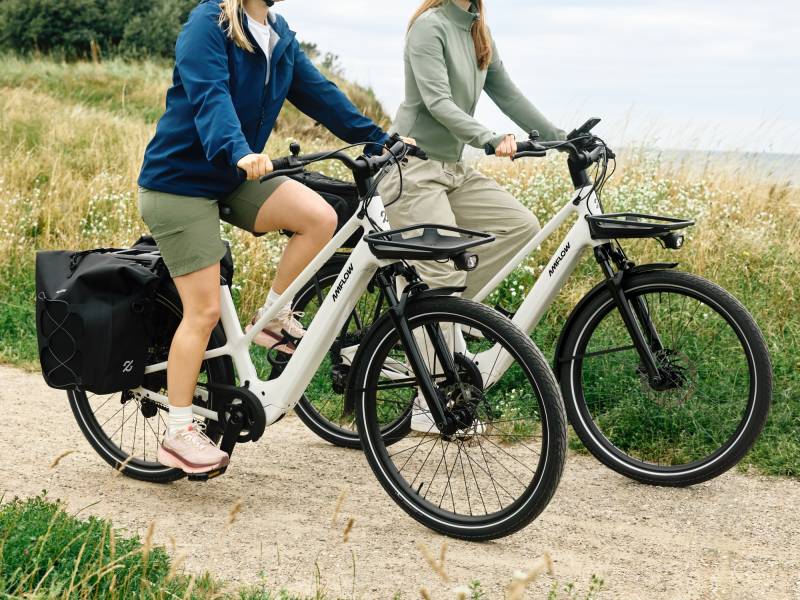
Amflow is better known for its performance-oriented electric mountain bikes, so moving into everyday transportation is an interesting shift. Rather than starting with a basic commuter and adding a few premium touches, the company has built much of its existing motor and software technology into a bicycle designed to navigate city streets, carry groceries, and get you to your destination without changing clothes.
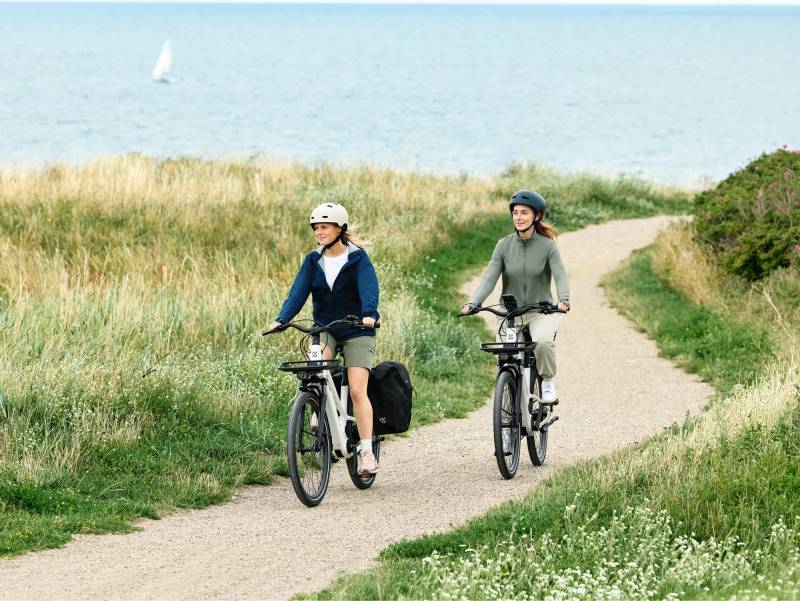
The result is an e-bike that takes comfort, connectivity, and convenience seriously, though it packs a lot of technology into something that ultimately just needs to get you from one place to another.
A Lightweight Carbon Fiber Frame Designed for Everyday Riding
One of the more interesting decisions behind the Amflow UE Carbon series is its full carbon fiber frame. Carbon fiber is commonly associated with expensive road bikes and performance-focused cycling, where reducing weight can be worth a considerable premium. It’s less common on commuter bicycles, which tend to favor aluminum frames that are less expensive to manufacture.
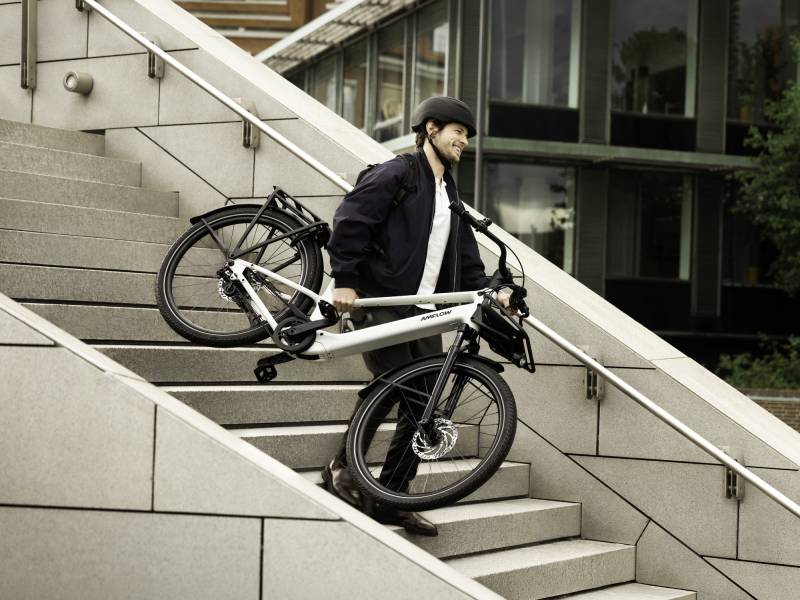
The Amflow UE Carbon’s frame weighs approximately 5.2 pounds, while the complete bicycle starts at a claimed 46 pounds. That’s not featherweight by traditional bicycle standards, but it’s comparatively manageable for an electric commuter equipped with a substantial battery, motor, suspension, lighting, and cargo-carrying hardware.
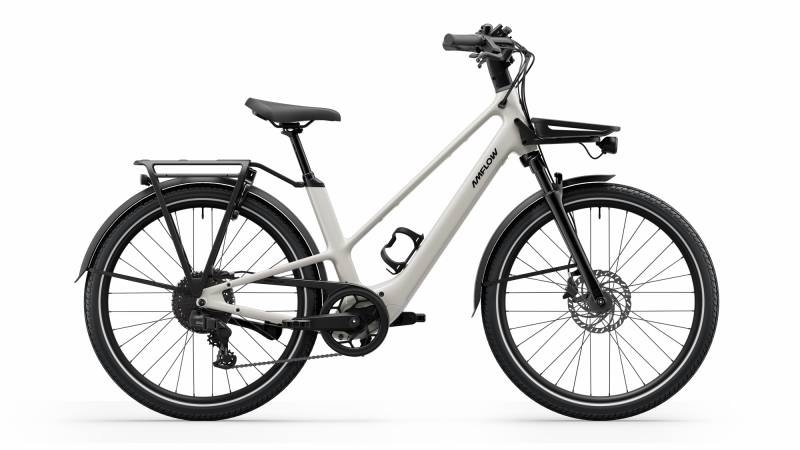
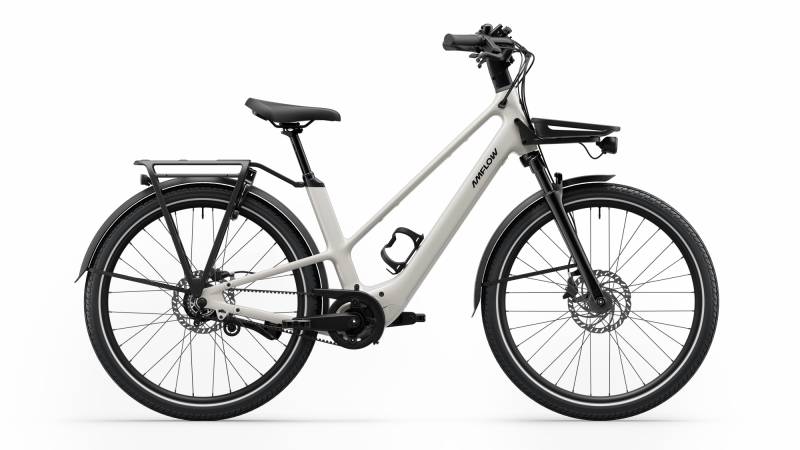
Amflow UE Carbon
The difference becomes more meaningful when you’re maneuvering through a crowded apartment building, getting the bike into an elevator, or moving it around a garage. Of course, 46 pounds is still plenty of bicycle to wrestle up a flight of stairs, especially if you have mobility limitations.
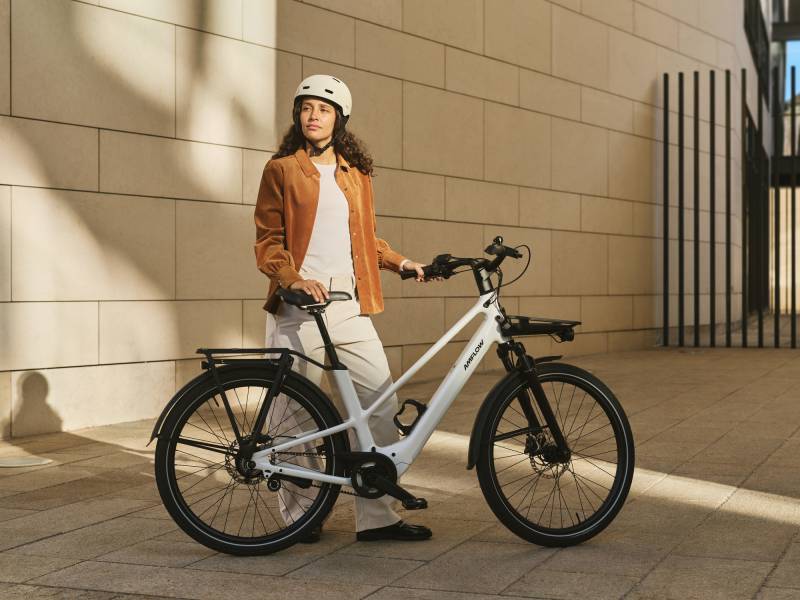
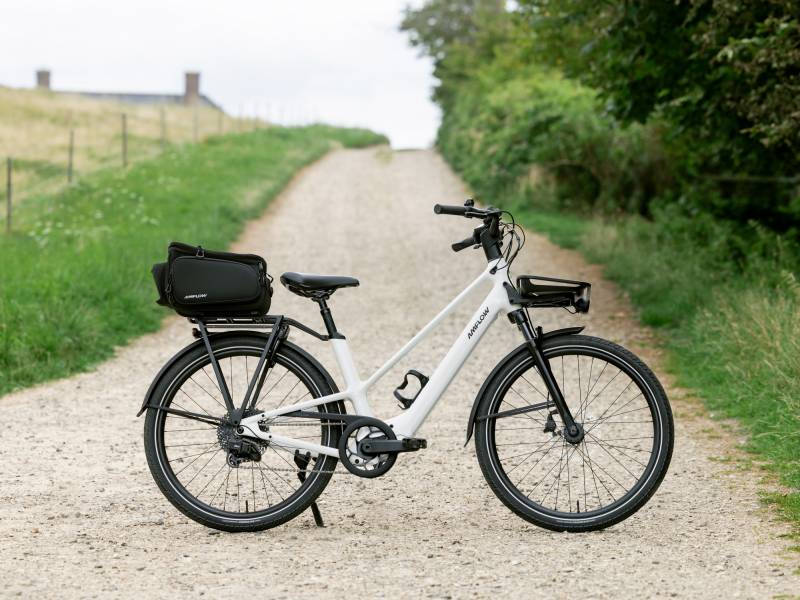
The frame has a low step-through design, so you don’t have to swing your leg over a high top tube every time you get on or off. That may sound like a minor convenience until you’re making frequent stops, wearing work clothes, or trying to get moving again with a loaded rear rack.
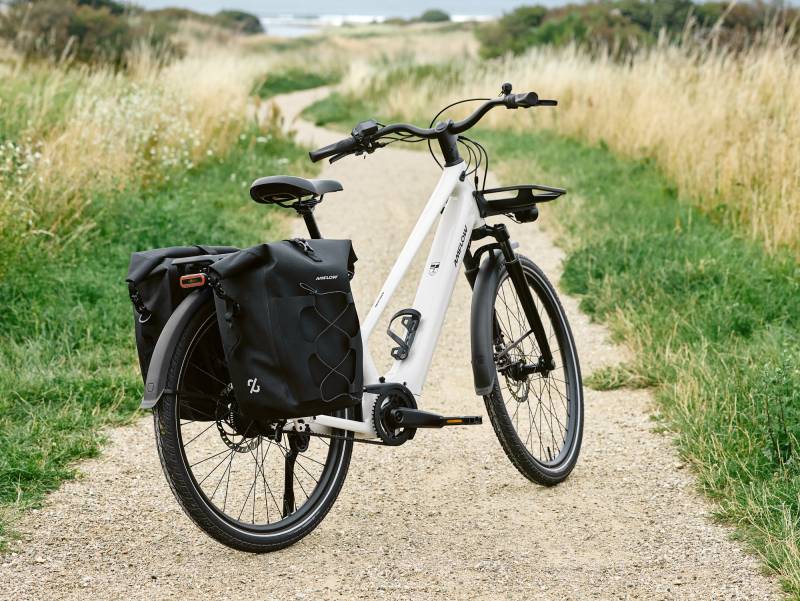
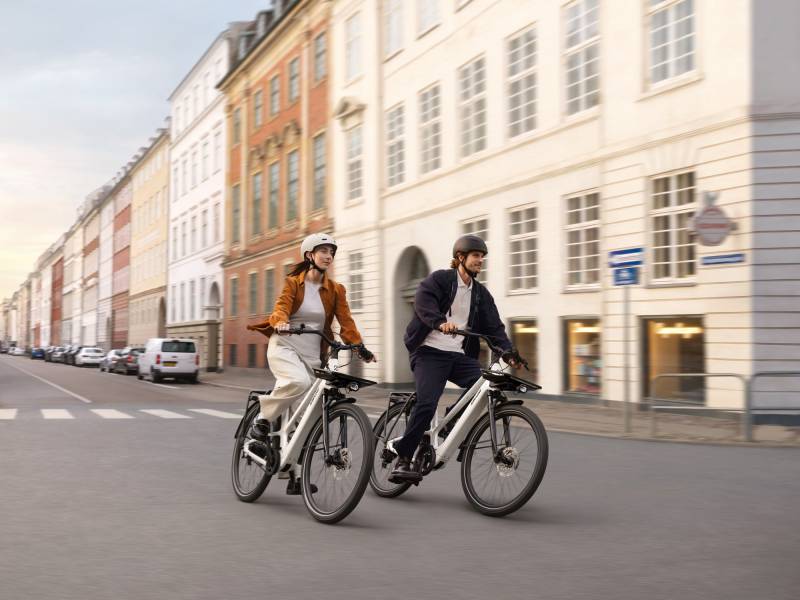
Amflow has also opted for a more upright riding position, with geometry designed to keep your back straighter and reduce pressure on your shoulders and wrists. The company describes the riding posture as approaching 90 degrees, with a roughly 10.2″ height difference between the saddle and handlebars.
Interchangeable handlebar stems provide two height and reach configurations, giving you some flexibility to find a comfortable position. The standard frame is intended to accommodate riders ranging from approximately 5’1″ to 6’3″, an unusually broad range for one frame size. Still, rider height alone doesn’t guarantee a good fit, and anyone near either end of that range would be wise to try the bike before purchasing.
A smaller version is expected in 2027 for riders between approximately 4’7″ and 5’3″. Its specifications indicate a smaller frame, 24″ wheels, a different battery, and a shorter-travel adjustable seatpost.
Both standard models come in Lunar White, giving the UE series an understated appearance that fits its urban focus.
Suspension and Comfort Features That Make Sense Beyond Perfect Pavement
City riding rarely involves the perfectly smooth pavement bicycle advertisements seem so fond of. There are potholes, uneven sidewalks, rough pavement seams, and the occasional curb transition that catches you by surprise.
To help make those everyday encounters more comfortable, the Amflow UE Carbon includes a suspension fork with approximately 2.6″ of travel. That’s enough movement to absorb smaller impacts and reduce vibrations reaching your hands, though it isn’t intended for aggressive mountain biking.
The fork also has a lockout feature that reduces suspension movement on smoother roads, where a firmer front end can feel more efficient.
The seatpost adds cushioning and offers about 1.2″ of suspension travel. It also provides about 4.9″ of height adjustment, letting you raise or lower the saddle while riding.
That adjustable seatpost could be useful when stopping at traffic lights or navigating crowded areas. Lowering the saddle makes it easier to put your feet down, while raising it again provides a more efficient pedaling position once you’re moving.

Amflow pairs these features with a comfort-oriented saddle, swept-back handlebars, ergonomic grips, and 26″ wheels fitted with 2″-wide Maxxis Overdrive tires. The wider tires should provide some additional cushioning and stability over uneven surfaces.
Stopping power comes from Magura MT A2 hydraulic disc brakes with 180mm rotors at both wheels. Hydraulic brakes use fluid pressure to operate the brake calipers and generally provide more consistent braking feel than basic cable-operated systems. That’s an important consideration on an e-bike that may be carrying groceries, work equipment, or other cargo.
The Avinox M2 Motor Brings Serious Power to a Commuter Bike
The Amflow UE series uses the Avinox M2 electric drive system, with a stated maximum torque of 125 newton-meters and peak power output of 1,100 watts. Torque measures rotational force, and on an electric bicycle, it helps determine how strongly the motor can assist when you’re accelerating or climbing. For a commuter, that matters when pulling away from a traffic light, navigating a steep neighborhood street, or riding with a full set of panniers.
The M2 system is rated for 110 newton-meters under nominal operating conditions, with 125 newton-meters available at peak output. Amflow also specifies a maximum assist ratio of 8:1, meaning the motor can contribute substantially more power than you’re putting into the pedals under supported conditions.
That’s considerable assistance for a city bicycle, though maximum motor output isn’t the same as continuous power delivery, and real-world performance depends on riding conditions, battery state, and system settings.
Amflow reports that the UE series can climb grades of up to 30%, even when carrying a substantial load. That’s a demanding incline, and while the claim is encouraging, it’s based on controlled testing rather than an assurance that every steep hill will feel effortless.
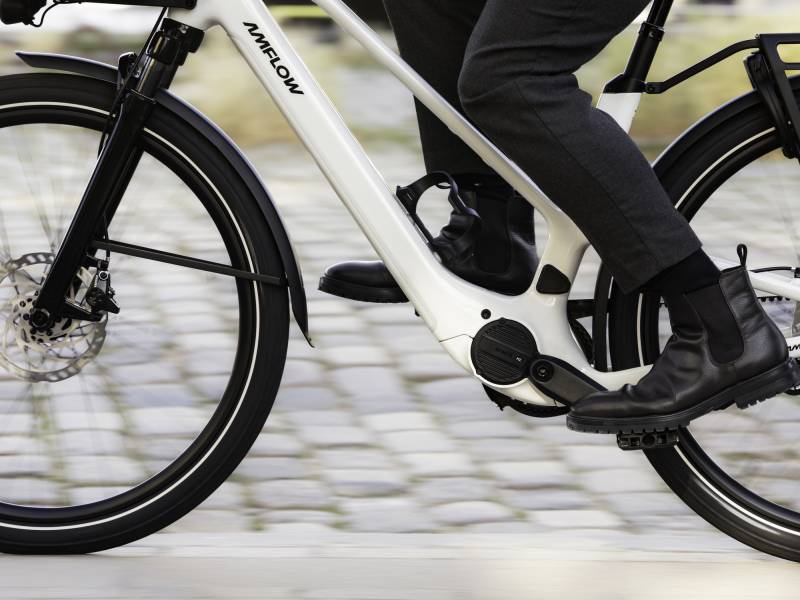
The motor includes an intelligent traction control system that adjusts power delivery based on pedaling behavior and riding conditions. The goal is smoother acceleration and more predictable assistance, rather than having the motor deliver its full force the instant you begin pedaling.
There’s also a new Auto Boost feature that can activate additional motor assistance when the system detects conditions that call for it.
Imagine starting uphill after stopping at an intersection with a loaded rear rack. Instead of reaching for a control to request extra power, the bike can increase assistance automatically when its operating criteria are met.
The motor is also designed to operate at under 45 decibels in the company’s testing. That’s intended to keep mechanical noise from becoming an unwelcome soundtrack to an otherwise peaceful ride.
One important detail to verify before purchasing is the bike’s regional speed-assistance configuration and legal classification. Motor output alone doesn’t determine where an e-bike can legally operate, and local regulations may affect where and how you can ride it.
Up to 82 Miles of Range, with a Removable Battery
The standard Amflow UE Carbon and Carbon Pro each include a removable Avinox RS600 battery with 600 watt-hours of capacity.
A watt-hour measures stored energy, so battery capacity helps determine how much riding assistance is available before recharging. However, it doesn’t translate directly into a guaranteed number of miles.
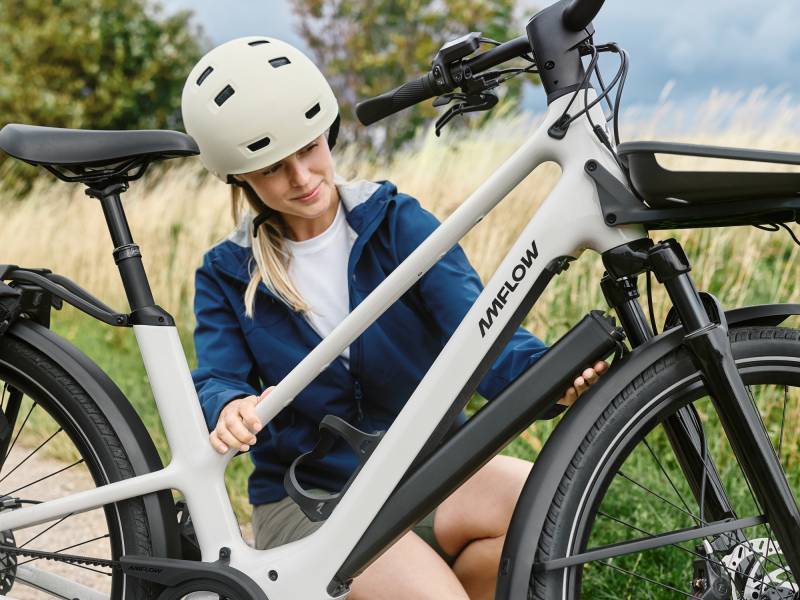
Amflow estimates a maximum range of approximately 82 miles under controlled conditions. That’s enough on paper to cover several days of shorter commuting without charging, but your results will depend on how much assistance you request, terrain, temperature, cargo weight, and your own pedaling effort.
Someone using high assistance on steep hills with loaded racks shouldn’t expect the same range as someone riding relatively flat streets at a moderate pace.
The removable battery makes charging more flexible. If your bicycle is stored in a garage, apartment bike room, or another location without a convenient outlet, you can take the battery inside rather than finding somewhere to plug in the entire bicycle.
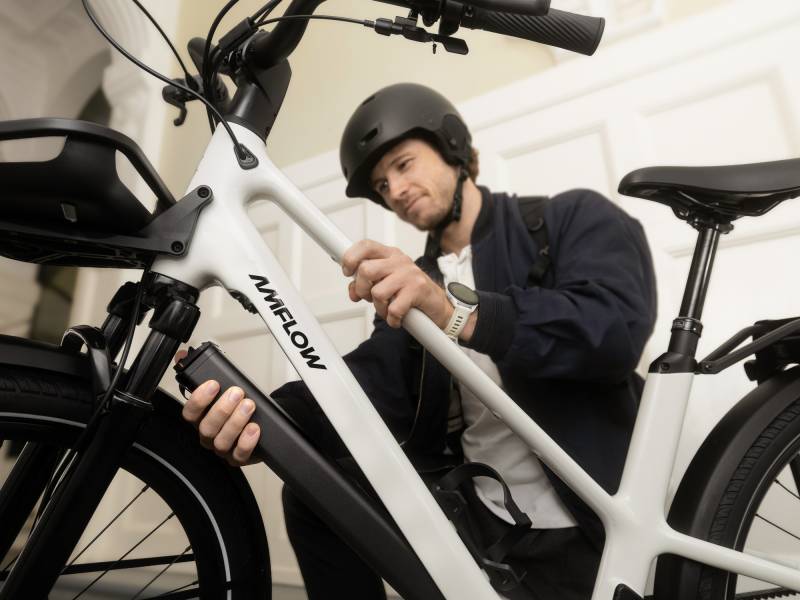
Using the included 168-watt charger, Amflow lists a full charge time of approximately 2 hours and 23 minutes under its test conditions.
The system also supports a customizable charging limit. Limiting how fully a lithium-ion battery charges during routine use can help reduce battery stress over time, especially when you don’t need the maximum possible range every day.
For someone whose round-trip commute is only 10 or 15 miles, that could be a sensible compromise.
Amflow UE Carbon vs. Carbon Pro: The $400 Difference Is in the Drivetrain
The most meaningful difference between the two Amflow UE models isn’t motor power, battery capacity, or frame material. Both share those major components. Instead, the distinction comes down to how they transfer power to the rear wheel and change gears.
The $3,899 Amflow UE Carbon Pro uses a customized, electronically controlled three-speed internal gear hub paired with a Gates CDX carbon belt drive.
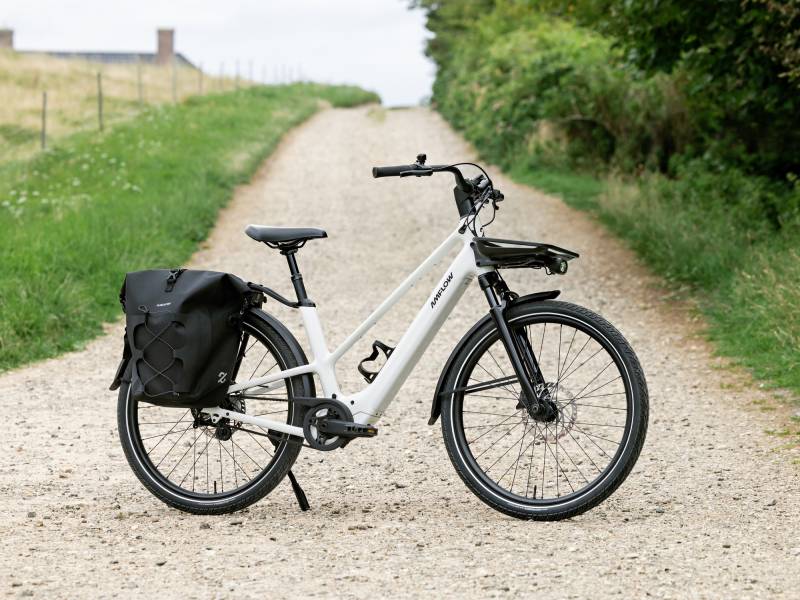
Amflow UE Carbon Pro
An internal gear hub keeps the shifting mechanism enclosed inside the rear wheel’s hub, protecting it from much of the dirt and weather that conventional exposed drivetrains encounter.
The Gates belt replaces the familiar metal bicycle chain with a reinforced belt that doesn’t require traditional chain lubrication. That means less greasy maintenance, a quieter drivetrain, and fewer opportunities to discover a black chain mark on your pants after arriving at work.
The Pro’s three electronically selected gears are designed around climbing, everyday cruising, and faster riding. The internal hub can also change gears while the bicycle is stationary.
That last detail is more useful than it might sound. If you’ve ever stopped unexpectedly in a high gear and then struggled to get moving again, you’ll understand the appeal of selecting an easier gear before starting.
The $3,499 Amflow UE Carbon takes a more conventional approach, using a 10-speed electronic rear derailleur co-developed with TRP, along with a chain and an 11-43-tooth cassette.
A derailleur moves the chain between different sprockets at the rear wheel, providing a wider selection of closely spaced gears. Having 10 ratios gives you more opportunities to fine-tune pedaling effort and cadence across changing terrain.
The trade-off is the additional cleaning, lubrication, and adjustment that can come with an exposed chain drivetrain. Both models support electronic Automatic Shifting and SmoothShift features, intended to reduce the amount of attention you need to devote to gear changes.
Automatic shifting could be a welcome convenience when you’re navigating traffic, watching for pedestrians, or approaching another intersection. Still, whether a computer chooses the same gear you would prefer is something that can only be judged after spending meaningful time riding.
For commuters who value low maintenance and don’t want to think much about drivetrain upkeep, the Pro’s $400 premium could be easy to justify. For riders who prefer more gear choices and a familiar drivetrain layout, the standard Carbon may be the better purchase.
A Small Touchscreen and a Surprisingly Connected Cockpit
Modern bicycles increasingly borrow features from cars and smartphones, and the Amflow UE series follows that trend enthusiastically. Both models include an Avinox DP200 1.4″ LCD touchscreen on the handlebars. The compact display provides access to riding information and controls without requiring you to mount your phone every time you leave home.
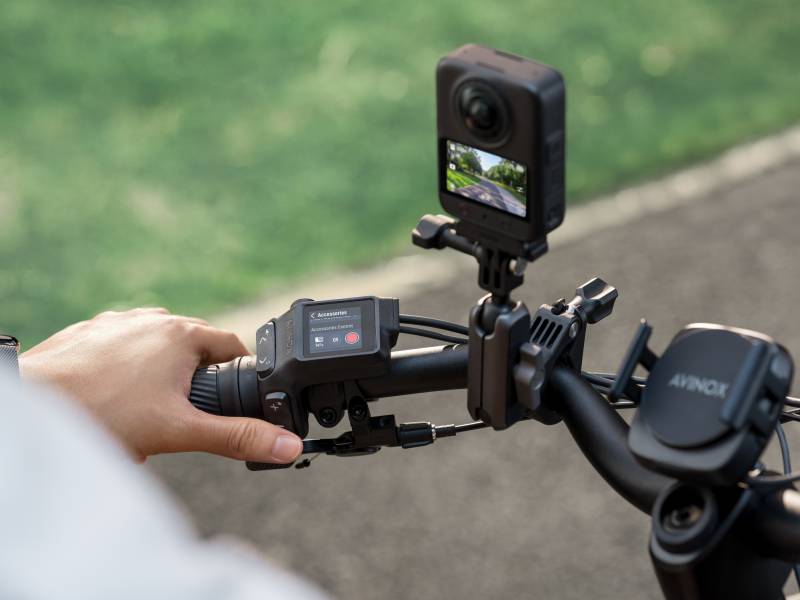
There’s also an integrated phone mount with 15-watt wireless charging and up to 20-watt USB-C wired charging. The mount can rotate between portrait and landscape orientations, which could be handy when using your phone for navigation.
Keeping a phone charged during a long ride is useful, especially if it’s providing directions or recording your route. Just remember that an exposed phone is still vulnerable to weather, vibration, and the occasional unexpected impact.
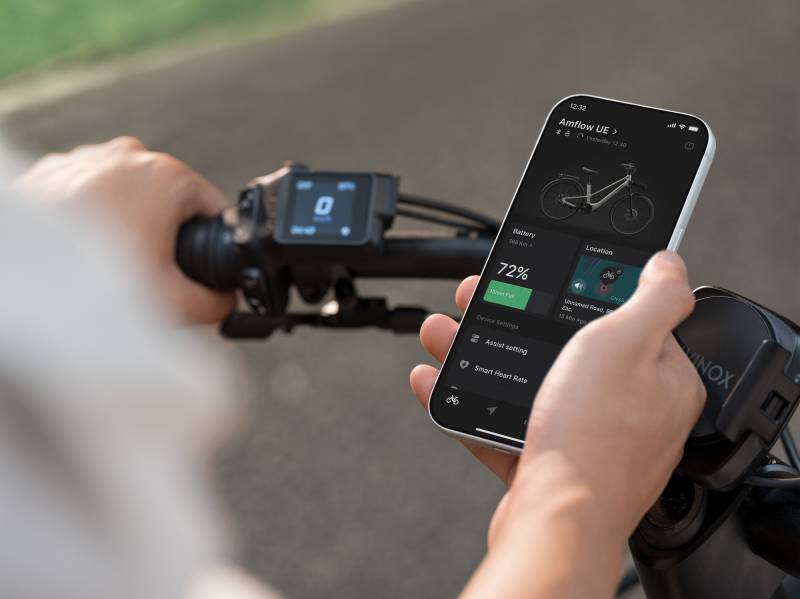
Lighting receives similar attention. The integrated front and rear lights offer automatic activation in dim conditions, high- and low-beam control, and braking detection that increases rear-light brightness when slowing down.
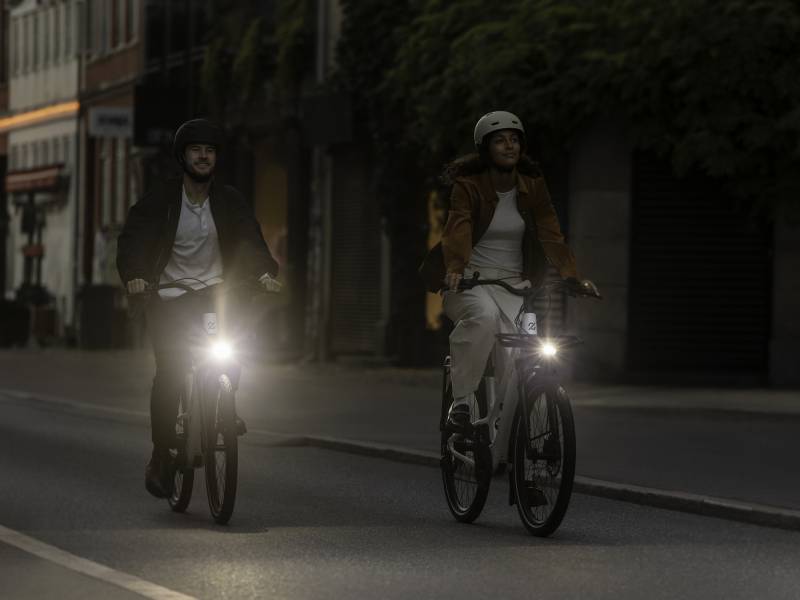
Automatic lighting can be helpful when your ride extends into dusk, or you pass through darker streets and parking areas. It also reduces the chance of forgetting to turn on your lights.
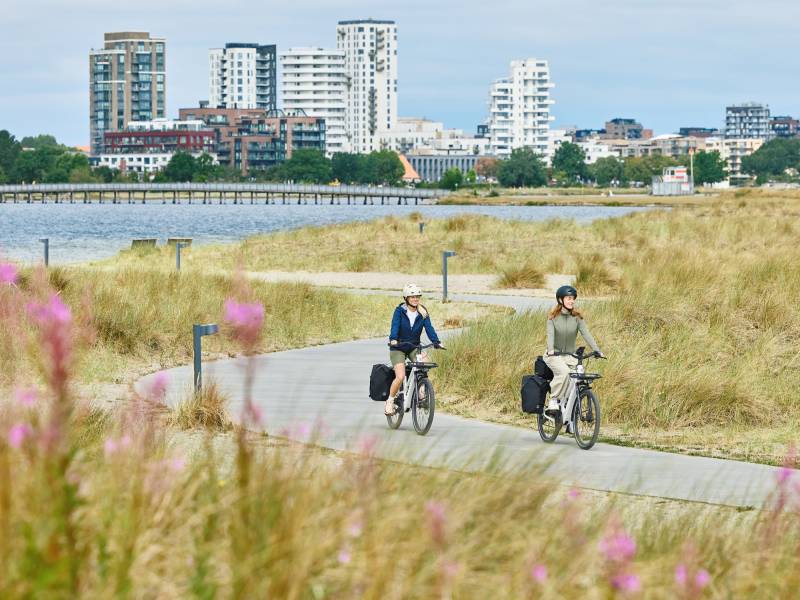
These are the kinds of features that can make a commuter bicycle feel less like a collection of accessories and more like one thoughtfully designed transportation system.
The remaining question is how reliably everything works together outside controlled demonstrations.
Apple Watch Integration, Smart Heart Rate Control, and App Features
The companion Avinox Ride app extends the UE’s capabilities beyond the handlebar display, with features that range from ride recording to security and health tracking.
Apple Watch compatibility is one of the more interesting additions. With the Avinox Ride app connected, an Apple Watch can show information such as current speed and assistance mode. It can also display riding statistics and heart rate data, giving you another way to monitor your effort without looking down at the bicycle’s screen.
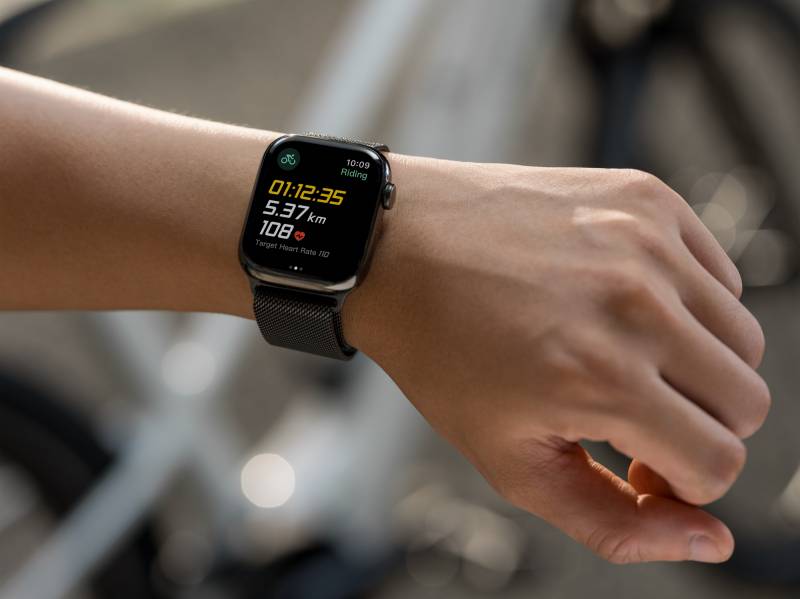
The Smart Heart Rate Control feature adds another layer by letting you set a target heart rate zone that influences how much motor assistance the bike provides.
That could be useful if you want your commute to contribute to your daily exercise without arriving at work exhausted. Rather than manually adjusting assistance throughout the ride, the system can help regulate motor support in response to heart rate information. The Apple Watch app can also alert you when your heart rate exceeds your selected zone.
Riding information can sync with Apple Fitness and Apple Health, allowing you to review activity statistics alongside other workouts.
There are broader app conveniences, too. Ride recording can combine consecutive trip segments or split them apart afterward, and multi-bike management lets an account connect to multiple compatible Amflow bicycles using QR codes.
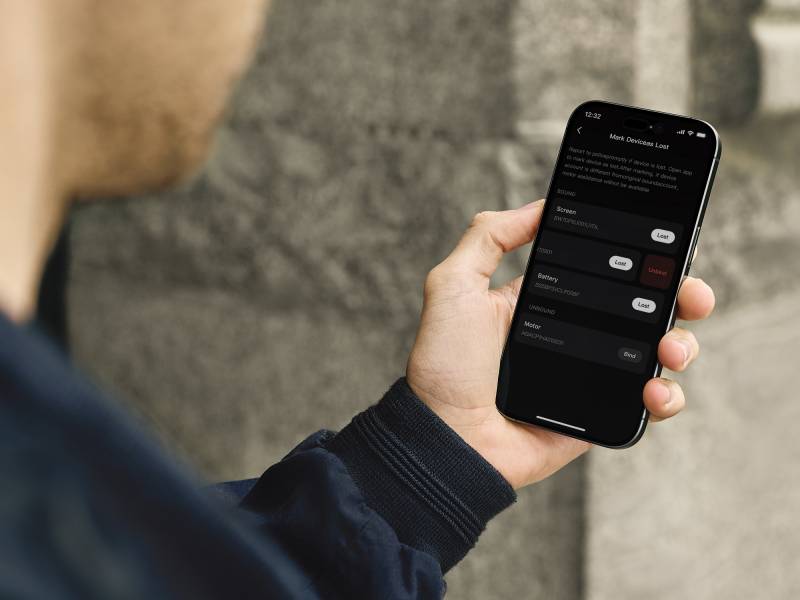
If you have more than one Amflow bike in the household, that simplifies tracking them without juggling separate accounts.
The system also supports connecting a compatible Osmo camera, with recording controlled through the bicycle’s display or wireless controls. That could appeal to someone who likes documenting scenic rides, although it’s less essential when your primary goal is making it to the grocery store before closing.
According to Amflow’s pre-release software documentation, the expanded Apple Watch, Apple Find My, remote locking, and automatic shifting features were scheduled to become fully available with the November 17 launch. Their presence in the software doesn’t guarantee consistent day-to-day performance, so those capabilities deserve closer attention during testing.
Security Features That Go Beyond a Basic Bicycle Lock
A premium electric bicycle is a substantial investment, and theft protection matters when you’re spending nearly $4,000 on something you might leave outside a coffee shop.
Both UE models include an Avinox hardened-steel frame lock with ART 2-Star certification. Its horseshoe-style design secures the rear wheel, helping prevent someone from simply riding away.
The lock uses 10mm steel construction and shares a physical key with the removable battery lock, so you don’t need separate keys for those components. The frame lock also supports attaching a chain.
A frame lock is useful for quick stops, but immobilizing a wheel isn’t the same as securing the bicycle to a fixed object. A determined thief could still carry the bike away, so a suitable additional lock remains worth considering.
On the digital side, the Avinox Ride app supports remote locking and unlocking functions, along with a Lost Mode that can report the bike’s serial number and lock down supported components if the bicycle or certain accessories are stolen.
Apple Find My integration adds another way to locate the bicycle and trigger an audible alert.
Find My can be valuable when trying to locate a misplaced or stolen device, although its location reporting depends on Apple’s network and shouldn’t be mistaken for guaranteed continuous GPS tracking.
Apple Watch convenience extends to unlocking, too. With password protection and Bluetooth unlocking enabled, the bike can automatically unlock when you approach with a paired Apple Watch and switch on the control display.
That’s a thoughtful touch when you’re returning to the bike with your hands full, though physical security still matters no matter how sophisticated the software becomes.
Built to Carry Groceries, Work Gear, and More
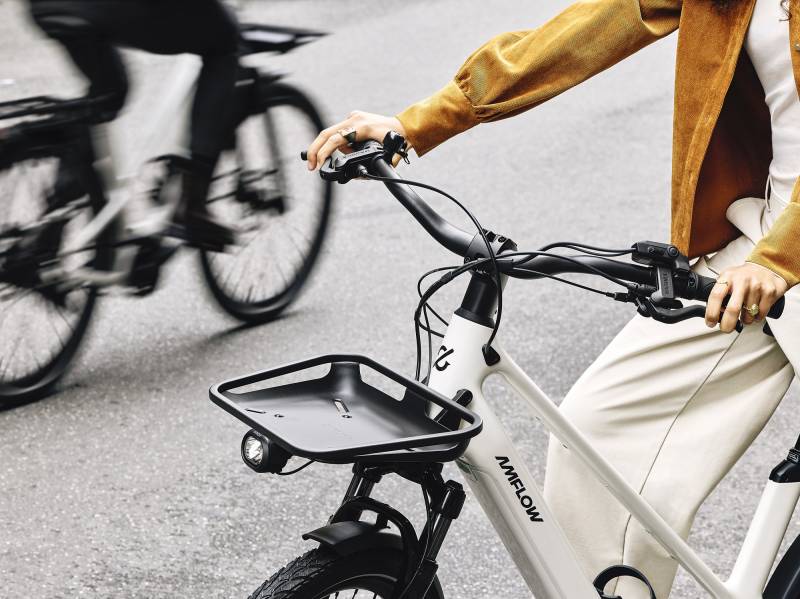
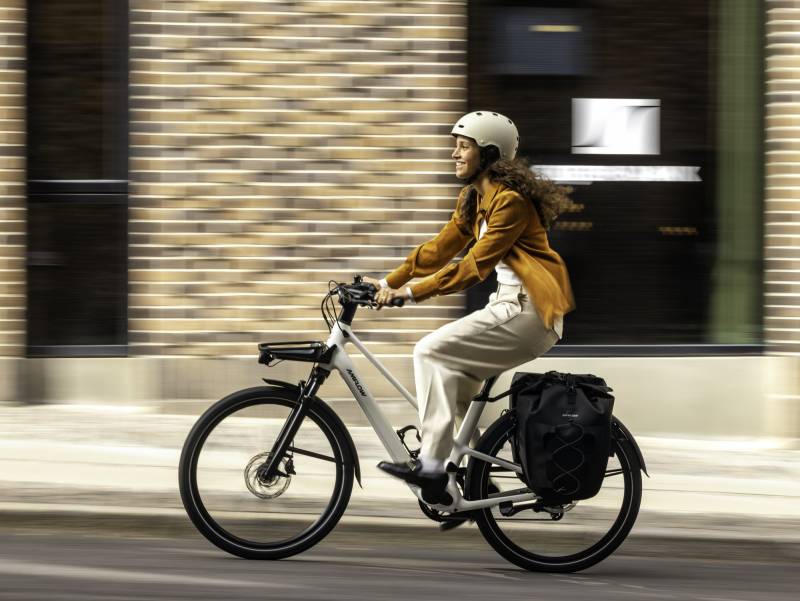
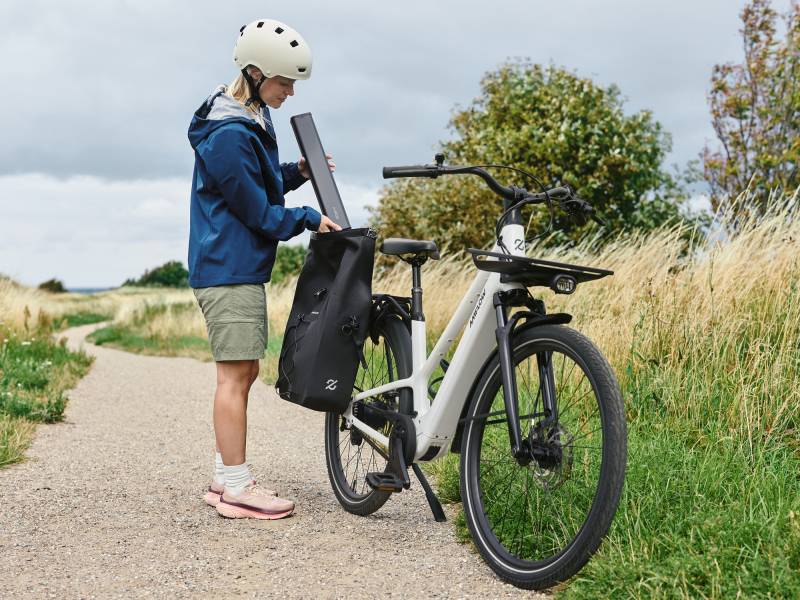
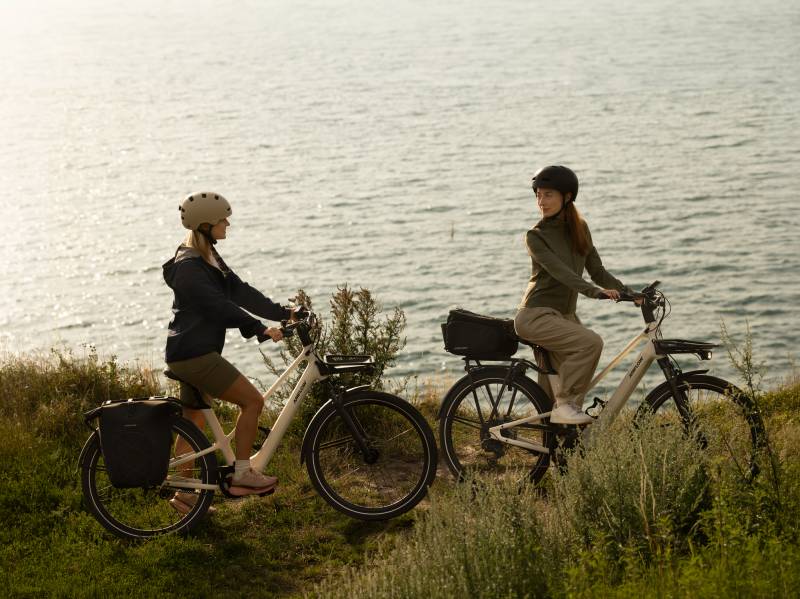
Despite the emphasis on electronic features, some of the most useful Amflow UE equipment is refreshingly straightforward. The front rack supports up to approximately 44 pounds, while the rear rack is rated for roughly 59.5 pounds.
That’s meaningful cargo capacity for a commuter bicycle. A backpack, laptop bag, lunch, and a few groceries can add up quickly, and having proper racks means you aren’t forced to carry everything on your back.
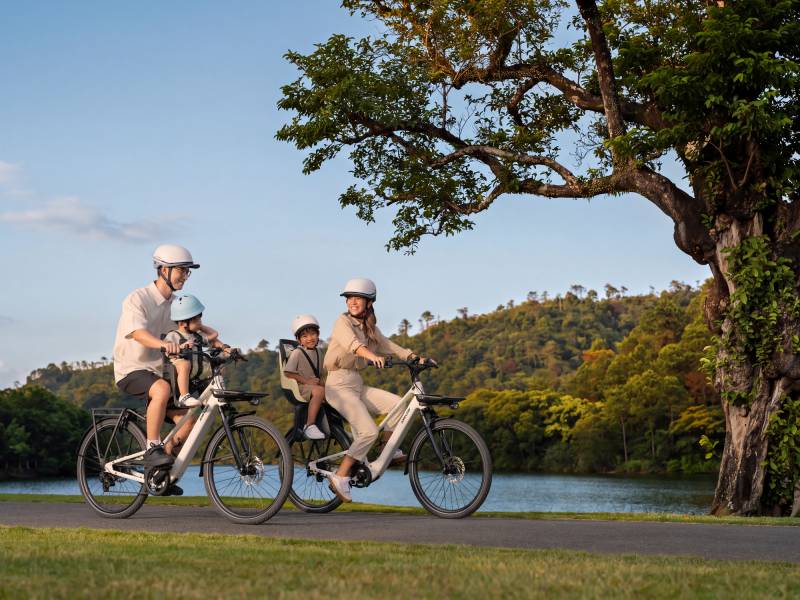
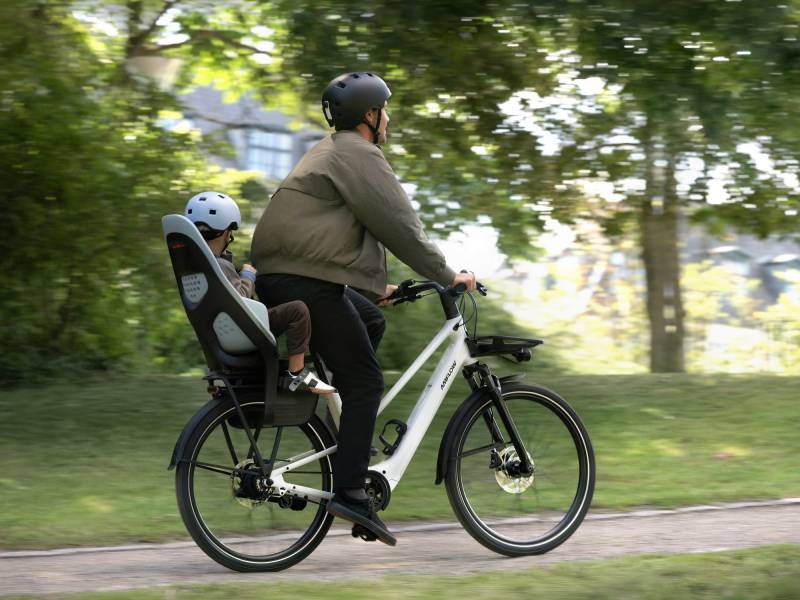
The rear rack uses the MIK HD mounting interface, designed to work with compatible quick-release baskets, bags, panniers, and approved child seats.
That versatility expands the bicycle’s appeal beyond someone simply commuting alone.
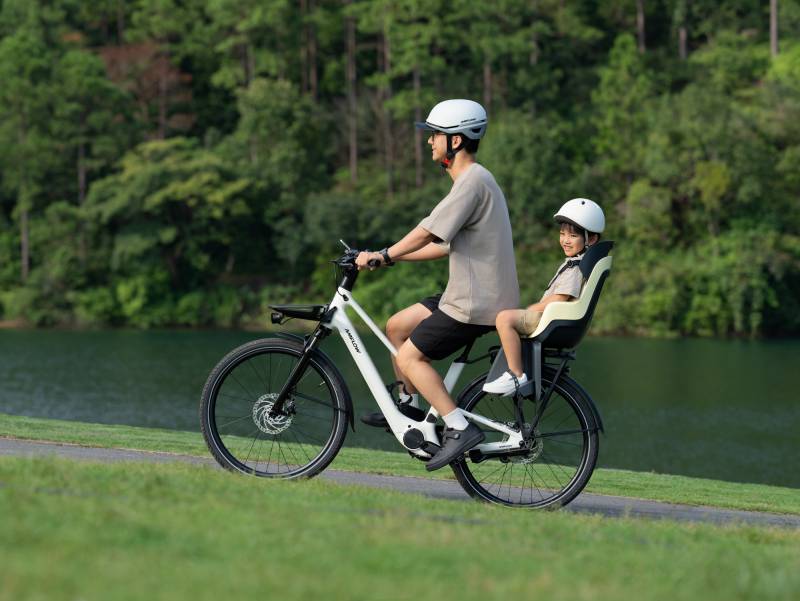
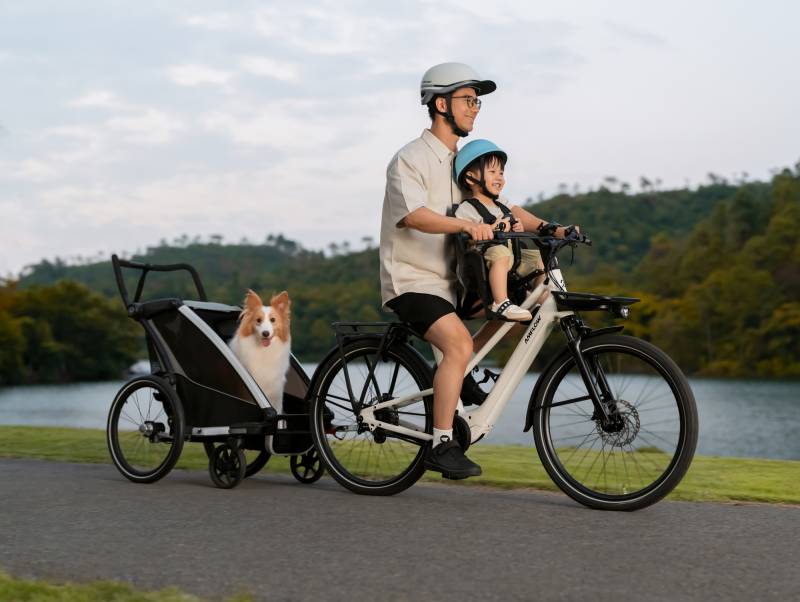
A parent might use the rear rack for a compatible child seat during a neighborhood outing, while someone else could fit panniers for groceries or equipment needed throughout the workday. The front rack provides additional room for items you’d prefer to keep within sight.
Of course, rack capacity isn’t the same as the bicycle’s total permitted carrying weight. Anyone planning to transport a child or substantial cargo should check the bicycle’s overall load limit and the specific accessory manufacturer’s compatibility and weight requirements.
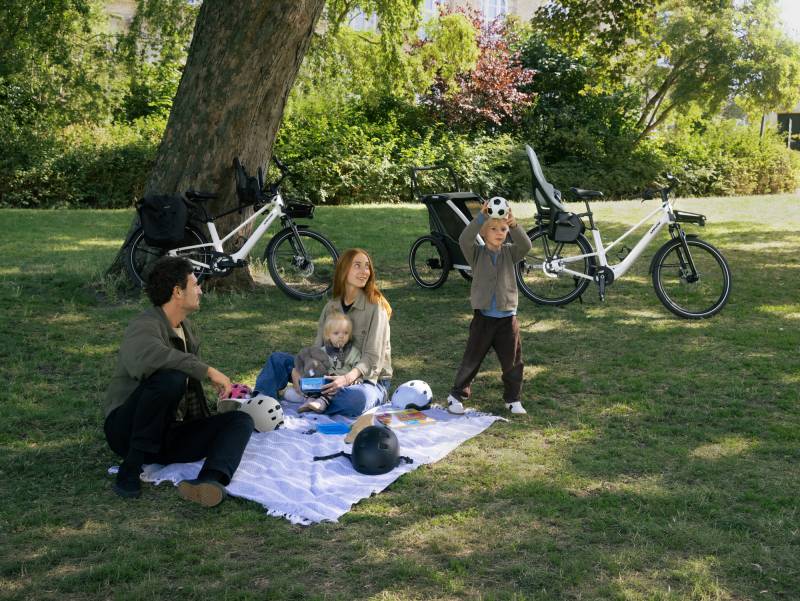
Both models also include practical equipment such as a kickstand, mudguards, bell, bottle cage, cargo net and rack straps, pedals, and a portable wrench set.
Including these everyday accessories matters more than it might seem. An expensive commuter that arrives without basic commuting essentials can quickly become an even more expensive project.
Is the Amflow UE Carbon Series Worth Considering?
At $3,499 for the Amflow UE Carbon and $3,899 for the UE Carbon Pro, neither bicycle is an inexpensive alternative to driving. They’re premium commuter e-bikes aimed at people who ride regularly enough to appreciate the difference between a basic electric bicycle and one with a more sophisticated motor, integrated electronics, substantial cargo capacity, and a comfort-oriented design.
The carbon fiber construction is appealing, but the combination of a strong motor, removable battery, upright riding position, and practical equipment may have a bigger impact on everyday ownership.
The Amflow UE Carbon Pro’s belt drive and internal hub make the strongest case for spending more. If your bicycle will be transportation rather than an occasional weekend toy, reduced drivetrain maintenance has tangible value.
The standard Amflow UE Carbon, meanwhile, provides most of the same hardware and connected features for $400 less, making it worth considering if you prefer a conventional multi-gear drivetrain.
There are still important questions that specifications alone can’t answer. Real-world range, motor responsiveness, automatic shifting behavior, long-term software support, and local service availability will all influence whether the UE series lives up to its commuter ambitions.
The number of connected features also introduces complexity. A bicycle that depends on multiple electronic systems may be more convenient when everything is working, but long-term repairability and parts availability deserve consideration before committing to a premium purchase.
For someone who wants to replace some car trips, commute without arriving overheated, or handle errands without relying on a vehicle for every short journey, the Amflow UE series offers an interesting combination of everyday utility and performance-oriented engineering.
Both models are available through Amflow’s official channels and authorized retail partners worldwide starting today. A smaller-frame version is planned for 2027.
The appeal of the Amflow UE isn’t simply that it has a powerful motor or a long list of smart features. It’s the possibility of making routine bicycle transportation comfortable and convenient enough that you’ll choose it more often. Whether its considerable technology makes everyday riding easier, or occasionally makes a simple bicycle more complicated than necessary, will be the more interesting question once these bikes spend some time on real streets.


Be the first to comment on "Amflow UE Carbon Series Brings Powerful Pedal Assistance, Smart Shifting, and Everyday Practicality to City E-Bikes"