
The Jetboil Genesis Basecamp System isn’t a backpacking espresso gimmick or a heavy steel beast that eats your trunk space. It’s a two-burner camp stove that folds into itself, slips into a carry bag, and opens to cook like a real kitchen range — not a compromise. If you’ve ever coaxed dinner from a sputtering camp stove, you’ll appreciate the luxury of something that just works. That’s the headline: the Genesis Basecamp is built for people who cook actual meals when camping, not just for those rehydrating noodles.
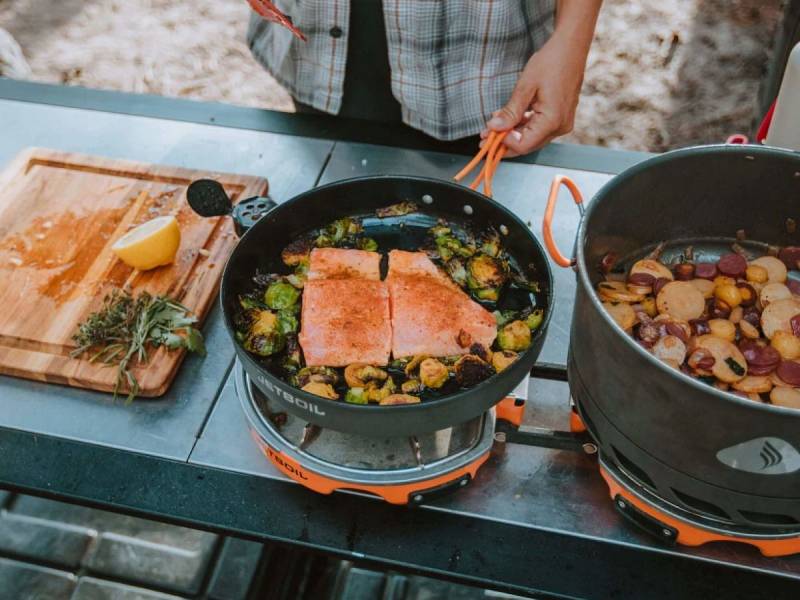
Jetboil calls the Genesis Basecamp an all-in-one cooking system, and that’s not marketing fluff. This compact, clamshell-style dual-burner stove runs on standard propane, with each burner producing 10,000 BTU — enough to bring a liter of water to a boil in just over three minutes when using the included FluxRing pot. That heat efficiency isn’t just about bragging rights: faster boils mean less fuel burned, which matters on longer trips.
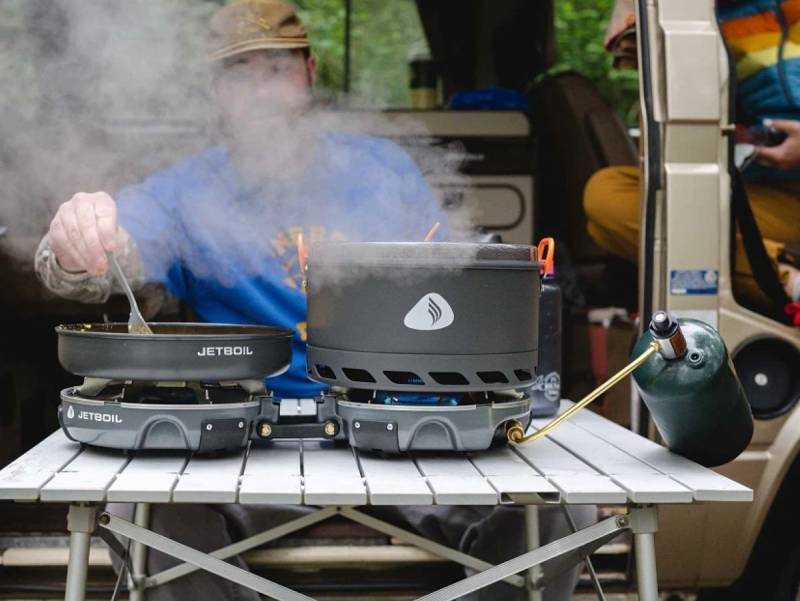
The burners are regulated for consistent output down to 20ºF, so cold weather doesn’t leave you with weak, sputtering flames. Available in Orange or Overland Grey, the Genesis Basecamp retails for $449.99, which plants it firmly in the premium gear category — but not so premium you’d need to be leading guided expeditions to justify it.
What’s In the Box
The Jetboil Genesis Basecamp ships as a complete kitchen rather than an incomplete idea. The box includes the folding two-burner stove, a 5-liter FluxRing cook pot with a strainer lid, a 10″ ceramic-coated nonstick fry pan, a windscreen, a fuel regulator, and a carry bag that is sized to make packing simple.
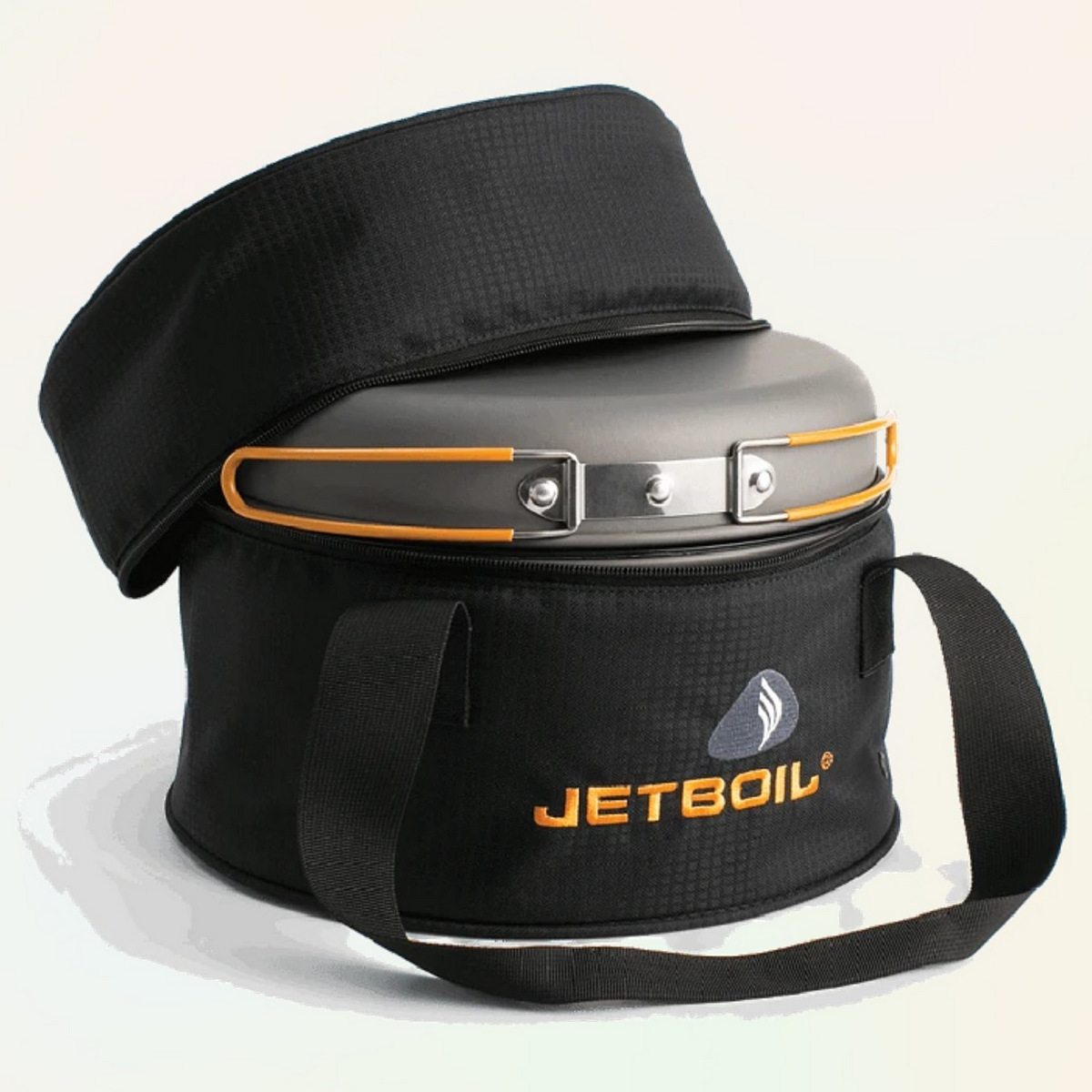
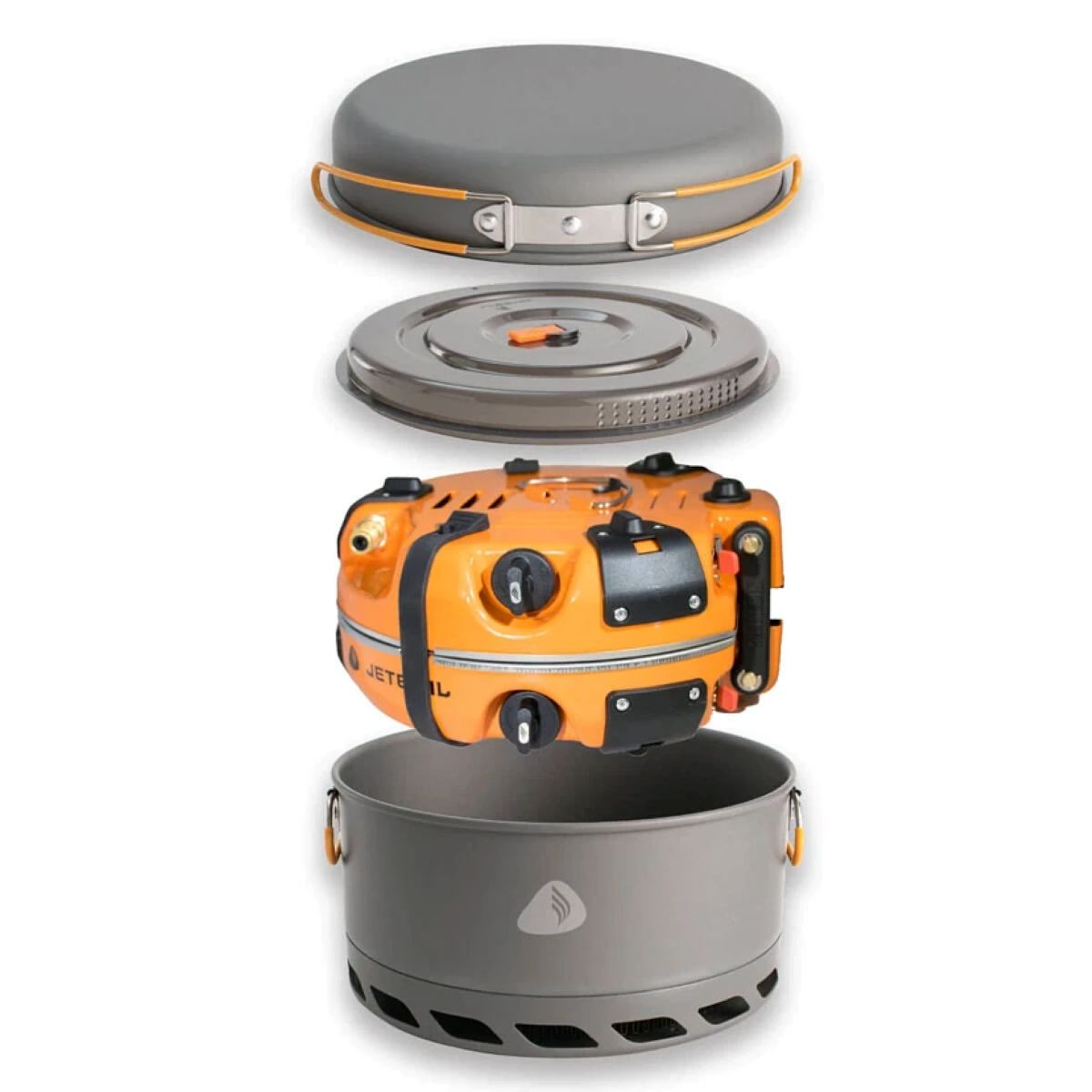
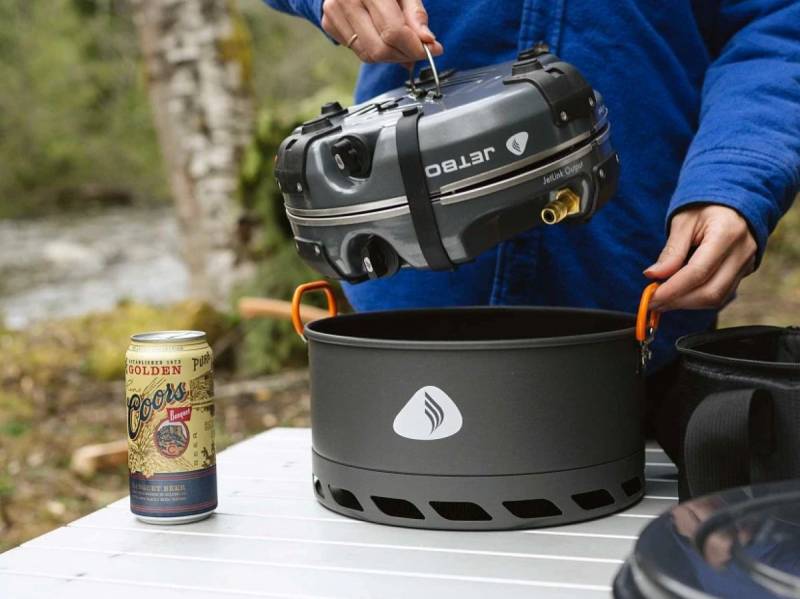
The whole kit nests neatly like a Matryoshka doll: the stove folds and drops into the 5-liter pot, the pan caps the stack, and everything slides into the bag with a dedicated pocket for the regulator.
The Physical Tour
Closed, the system measures a tidy 10.3″ tall by 7.2″ wide. Open, it spans approximately 20.5″ long, which is the sweet spot to run two real pans side by side without pan-handle jousting.
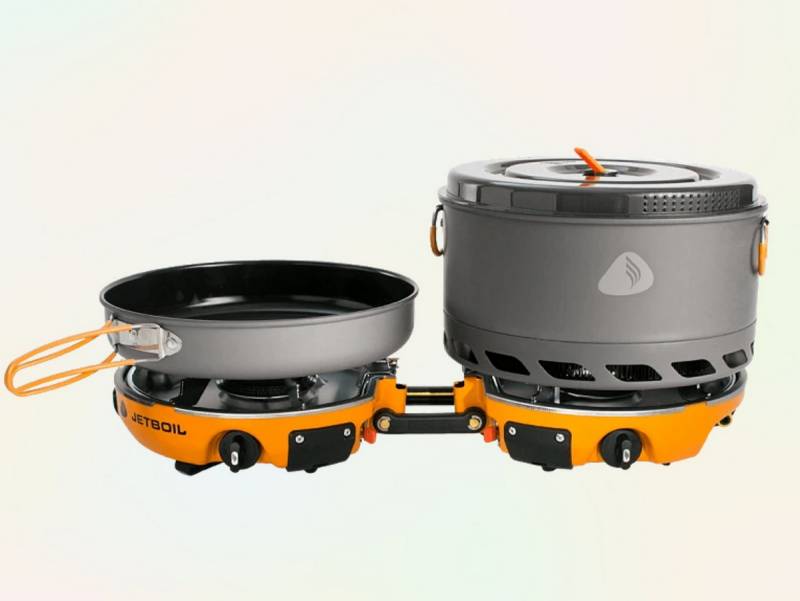
The Jetboil Genesis Basecamp’s body has a rugged, steel-feeling stiffness that avoids the flexy, tin-lunchbox vibe of budget suitcase stoves. The burners fold on a central hinge, and the lever igniter is a one-flick start — no chasing sparks
Flame control is where this design earns its keep. Each knob offers four full turns of adjustment, so you can dial in a whispering simmer for a delicate sauce on one side while you crank a boil for pasta on the other. For group cooking, that combination of low-end delicacy and high-end muscle is the difference between “edible” and “you’re going to be asked to cook again.”
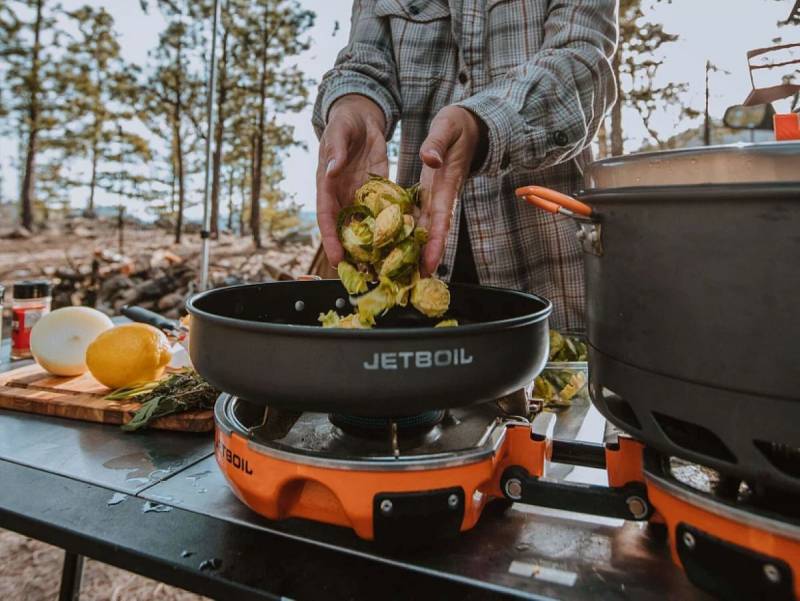
The included cookware isn’t an afterthought. The 10″ ceramic-coated fry pan releases eggs and sticky sauces without drama, and the 5-liter FluxRing pot spreads heat efficiently and drains with a strainer lid that doubles as a sanity saver when you’re on dish duty.
It’s worth noting that the pot itself is not nonstick, which is great for durability, but it does mean a little more elbow grease if you caramelize something with enthusiasm.
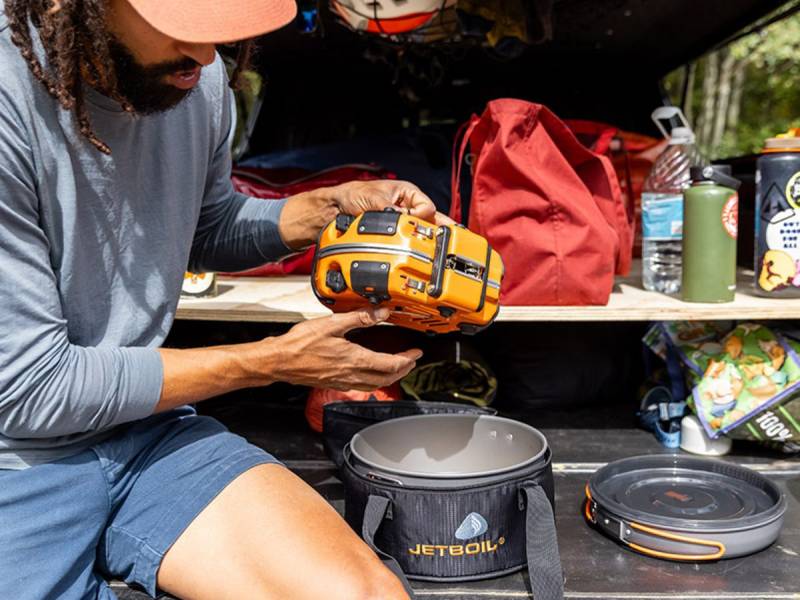
The total system weight is listed at 9.1 pounds, and that number excludes the regulator, windscreen, and carry bag. In real life, plan for a hair more on the scale once everything’s zipped into the case.
How It Works in the Real World
Setup is refreshingly quick: Unzip the bag, lift out the cookware, unfold the stove, clip on the windscreen, and thread in a standard 16.4-ounce propane bottle. You can be cooking in under a minute. The regulated burners keep boil times consistent, and the windscreen helps preserve flame shape when gusts pick up.
Jetboil’s three-minute-and-change boil time per liter proves accurate in real use, and the estimate of up to 48 liters boiled per one-pound propane bottle is a practical benchmark for trip planning. The real star, though, is control: the knobs offer wide, progressive adjustment, so simmer actually means simmer. Pancakes brown evenly, rice doesn’t scorch, and you can keep one burner whispering low while the other is running a full boil — a rare combination on a portable stove.
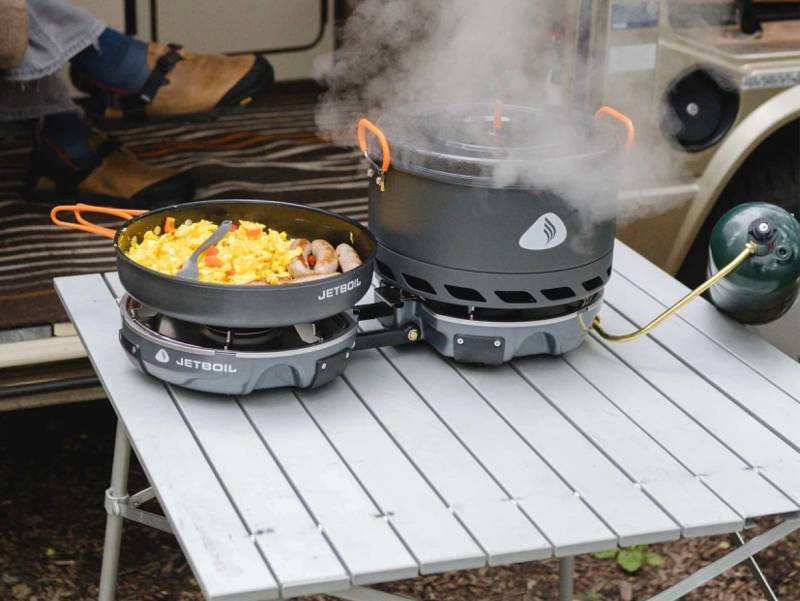
The wide stance comfortably fits the included pot and a second 10″ pan without pan handles clashing, which makes group cooking far less chaotic. Quirks are minor: the windscreen takes a little practice the first time you assemble it, and the carry bag doesn’t have a spot for the propane bottle. If you’re fussy about scratches, you’ll want to tuck a thin cloth between the folded stove and pot during transport.
Cold Weather, Fuel, and the JetLink Party Trick
The Jetboil Genesis Basecamp System runs on propane, and the stove’s fuel interface is a 1/4″ female National Pipe Thread (NPT). Propane is reliable, widely available, and more tolerant of cold than straight butane. All gas canisters lose pressure as they get cold, because gas pressure tracks temperature. That’s why boil times stretch in freezing weather and why piezo igniters can get moody when you need them most.
Jetboil’s guidance is smart and simple: keep your canister warm in a pocket or sleeping bag before use, don’t set it on snow, and carry a spare to swap if one chills too much. The system is regulated for consistent output down to 20ºF, and while I can’t imagine cooking in a blizzard for fun, it helps to know dinner won’t be held hostage by a cold snap.
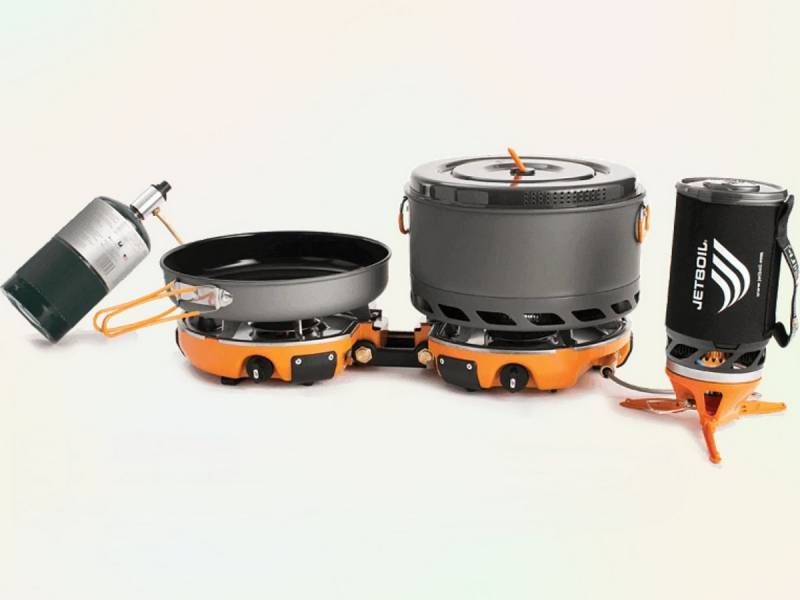
Genesis Basecamp shown with the optional Luna Satellite Burner and 1.0L Spare Cup.
Then there’s JetLink, which is Jetboil’s daisy-chain port built into the Genesis, HalfGen, and several Eureka! stoves. Plug the JetLink accessory hose into that side port, and you can connect multiple burners to one fuel source, up to a veritable home-style range at camp. The Eureka! Ignite and Ignite Plus can join the party too, though those two must sit at the end of the chain rather than act as the starter stove.
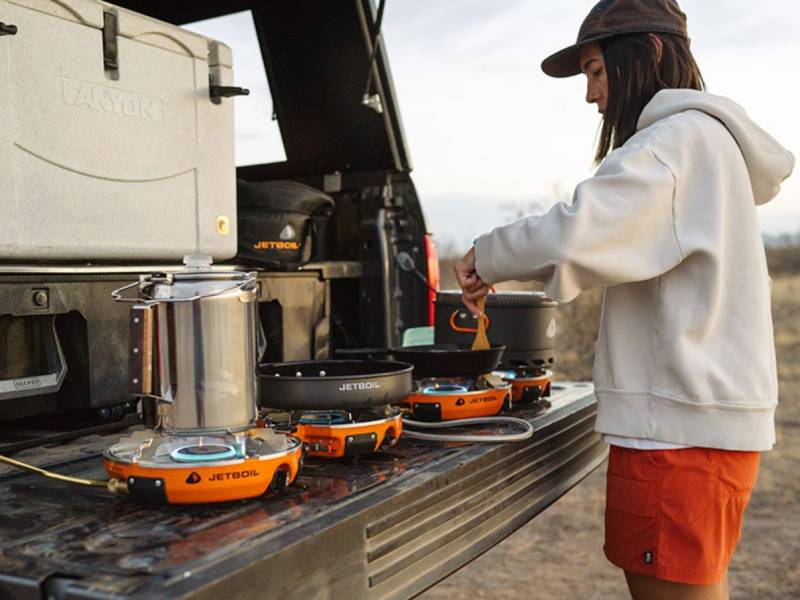
For basecamps with big groups or elaborate menus, JetLink turns the Genesis from “two burners” into “a kitchen you can scale.”
Performance by the Numbers
The two burners each provide 10,000 BTU, or 3 kilowatts, which puts the Jetboil Genesis Basecamp in the “controlled power” tier rather than the “scorch the earth” class of mega-stoves. The measured boil time is three minutes fifteen seconds per liter in the included pot, and the water-per-bottle figure — up to 48 liters per one-pound propane can — lets you plan fuel for a long weekend
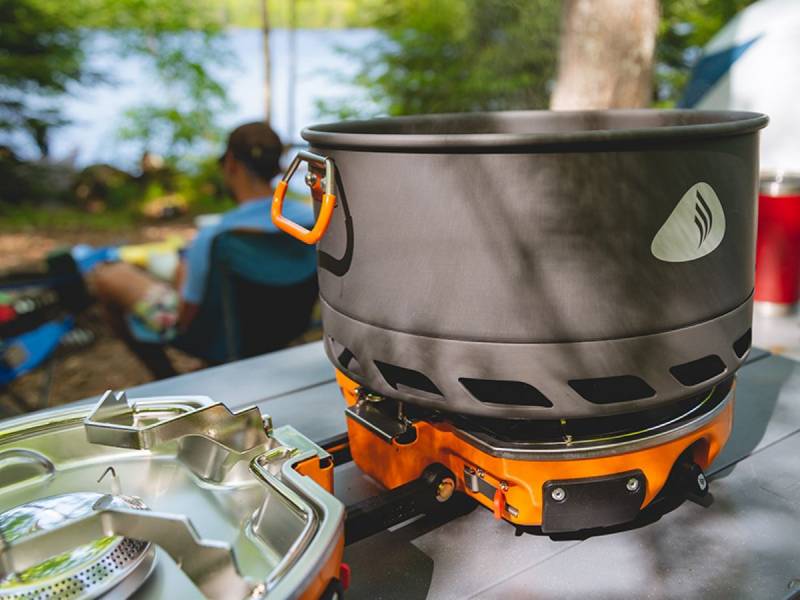
The system’s open footprint makes it more stable with big pots than tall, single-canister rigs, and the precise control keeps you from wasting fuel by overshooting temperatures. I’d summarize it this way: you can boil fast when you want, but more importantly, you can cook well when you need to.
What are Some Other Options?
Against the classic $129.99 Coleman Triton 2-Burner Propane Stove, the Genesis is more compact when packed, more refined to control, and easier to nest with cookware.
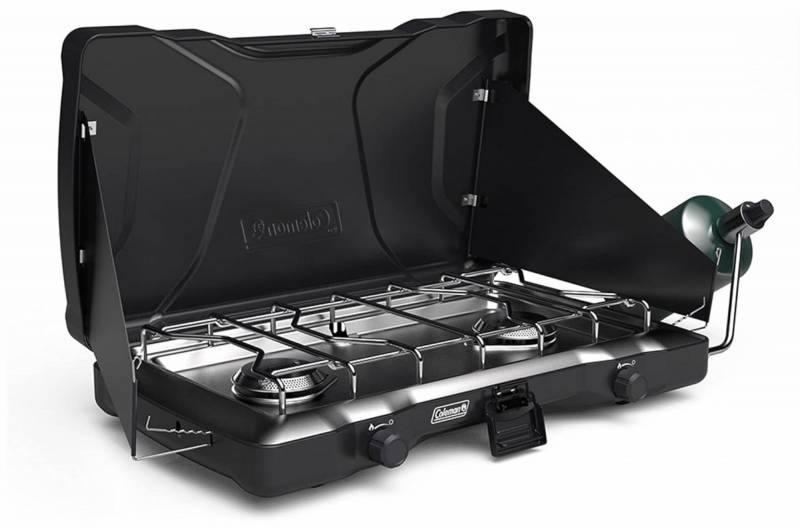
Coleman Triton 2-Burner Propane Stove
But the flame control is typically more coarse, the wind management relies on raised metal side panels that can limit the size of the pans used on the burners, and the footprint is bulkier in a tote. Even so, if budget drives the decision, Coleman wins on price. If cooking finesse and packability matter, the Jetboil Genesis Basecamp System pulls ahead.
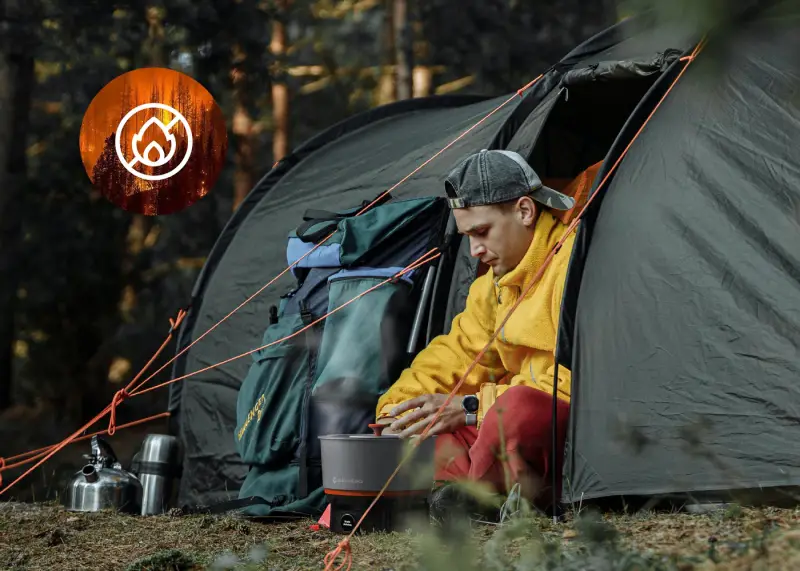
Compared to the $219.99 Stoke Voltaics Nomad Cooking System, you’re really choosing between fire and wire. The Nomad is an electric cooking system with five power levels (200–1000W) that can run off car inverters, portable power stations, and RV hookups. It sidesteps all the usual wind issues of a flame stove, has smart cookware recognition to fine-tune heating, stacks neatly like a nesting doll, and is perfect for no-flame zones or vanlife setups.
Stoke Voltaics Nomad Cooking System
But the Nomad is also a single-burner solution, so you’ll be cooking sequentially instead of simultaneously, and you’ll always need a compatible power source. At 7 pounds, it’s slightly lighter than the Genesis Basecamp. In other words, the Nomad is a great choice in areas where open flames aren’t allowed or where electricity is plentiful, while the Genesis is still the pick for backcountry setups, dispersed camping, and multi-pan meals that demand two burners.
Why You’d Buy It
A good reason to buy the Jetboil Genesis Basecamp is that it behaves like a kitchen. If you’re feeding a family or a small group and you care about more than boiling water, the combination of two stable burners, real flame modulation, and the included cookware lets you make meals you’ll remember for reasons other than “we were starving.”
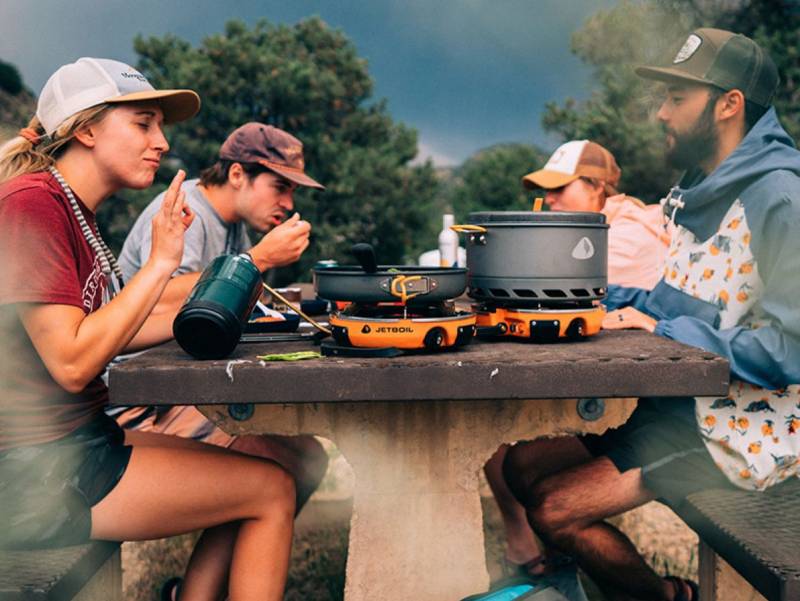
The packability works, so it fits in a hatchback next to sleeping bags and a cooler instead of demanding its own crate. The regulated performance keeps dinner on schedule. The one-year limited warranty covers the basics, and while the price is not shy, the experience when you’re actually using it will feel aligned with what you pay.
I’d be the first to say that you should not buy the Jetboil Genesis Basecamp if you only camp once a year and your menu tops out at instant coffee and oatmeal, or if the price stretches the fun out of the purchase. If fiddling with the windscreen in gusts would ruin your morning, note that there’s a learning curve. If you want your fuel bottle tucked into the same case, you’ll need to accept that it rides separately.
The Scenarios That Sell It
Picture this: you’ve just rolled into camp after a long hike or ride. On one burner, a red sauce simmers gently; on the other, water hits a rolling boil. You can hold a whisper-thin flame without it dying and strain pasta right through the pot lid — no juggling pans, no losing dinner to the dirt.
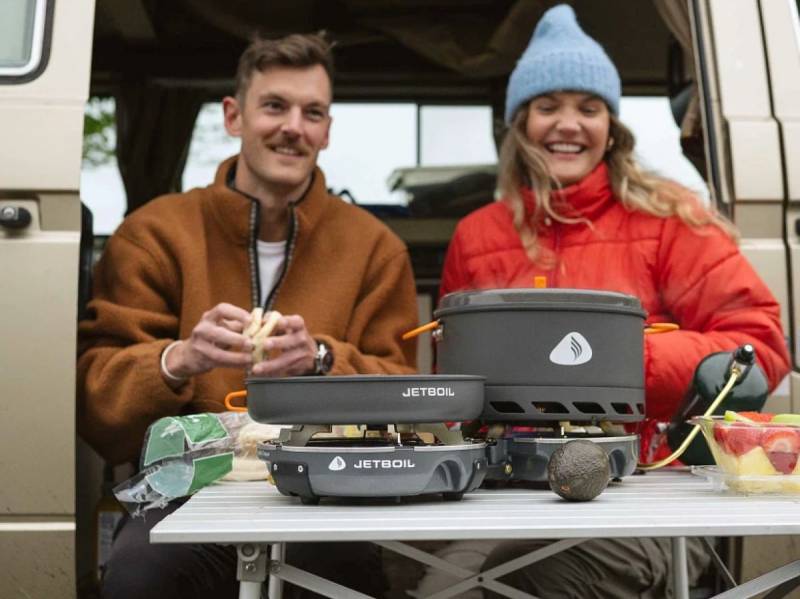
Or it’s dawn in the desert, cold enough to see your breath. You’ve kept the propane canister warm in your jacket, flick the igniter, and breakfast starts without drama. Later, on a group trip, you JetLink in another burner and turn out fajitas while rice steams.
This is the difference between camp food and camping food — the Jetboil Genesis Basecamp System makes dinner the part of the trip everyone remembers for the right reasons.
A Note on Durability and Care
The Jetboil Genesis Basecamp’s outer case feels solid with its steel construction, the ceramic-coated pan cleans up quickly, and the pot’s heat exchanger is protected by the FluxRing skirt. But as mentioned, I would still pack a thin cloth inside the pot before nesting the stove to keep scratches at bay during travel.
I also think it would be wise to practice assembling the windscreen while you’re at home at least once. That first dry run will pay off when the weather turns dramatic in the wild. And while the igniter has been reliable, carrying a lighter or matches is simply good backcountry manners.
Quick Look: Jetboil Flash 1.0L and How It Fits In
If the Genesis Basecamp is the home range you take on the road, the Jetboil Flash 1.0L is the quick-boil companion that lives in your pack. It weighs about 13.1 ounces for the system excluding the stabilizer, outputs 5,300 BTU, and reliably brings half a liter to a boil in around 120 seconds.
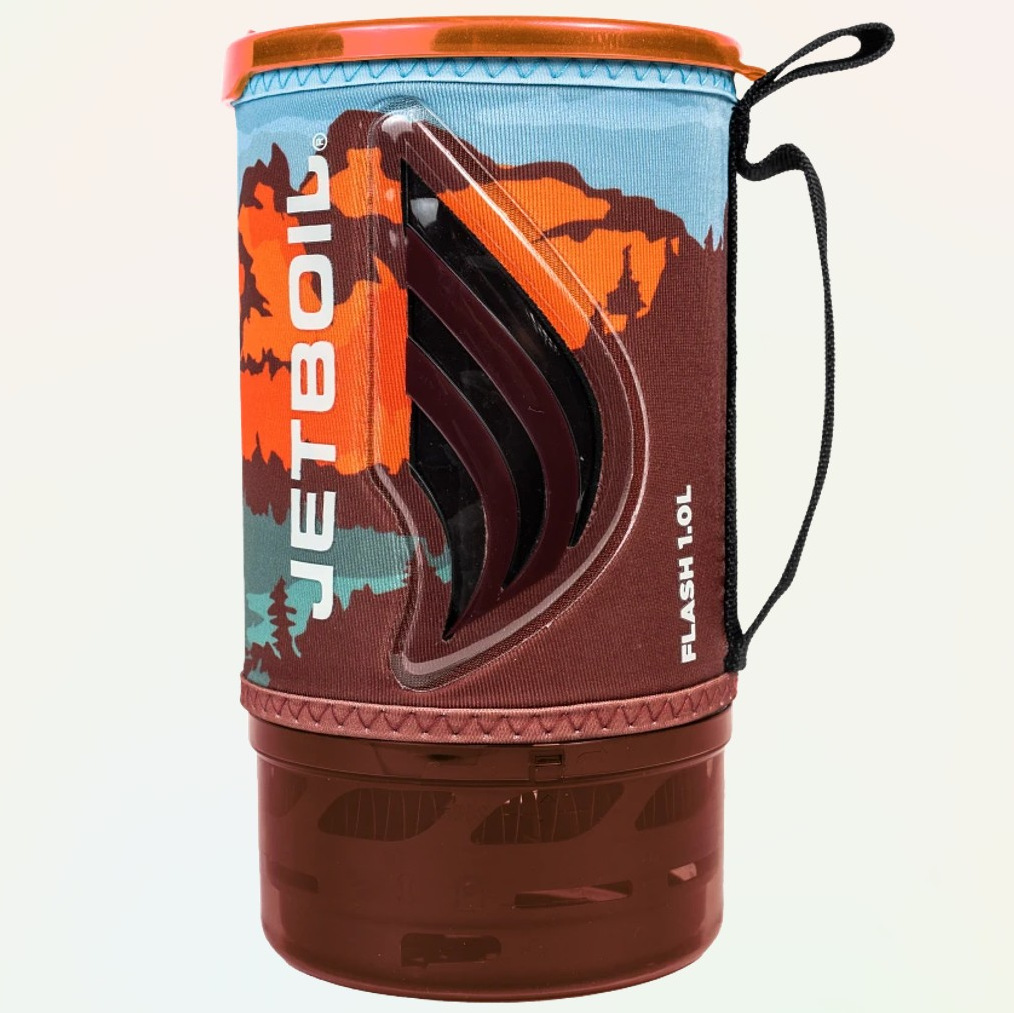
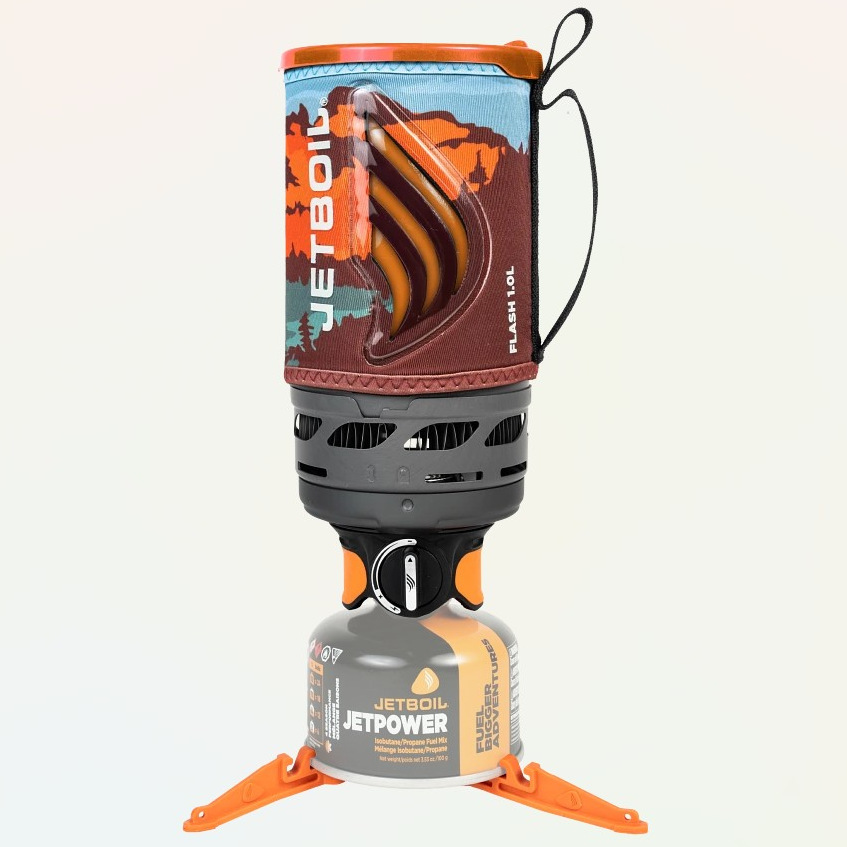
The 1-liter FluxRing cup features an insulating cozy that keeps your hands comfortable and beverages hot. Its turn-and-click ignition with a color-changing heat indicator makes it almost unfairly easy to use for making coffee. The Jetboil Flash 1.0L runs on JetPower Fuel, which is a blend formulated for efficiency, and the whole kit nests into itself with a measuring-cup bottom cover.
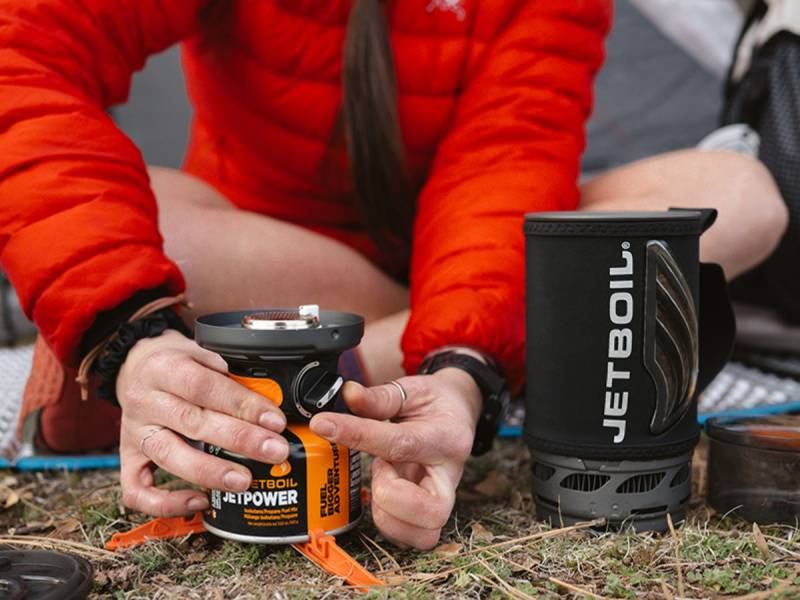
Kev and I have had a Jetboil Flash for a couple of years; it is perfect for turning cold mornings into hot drinks quickly.
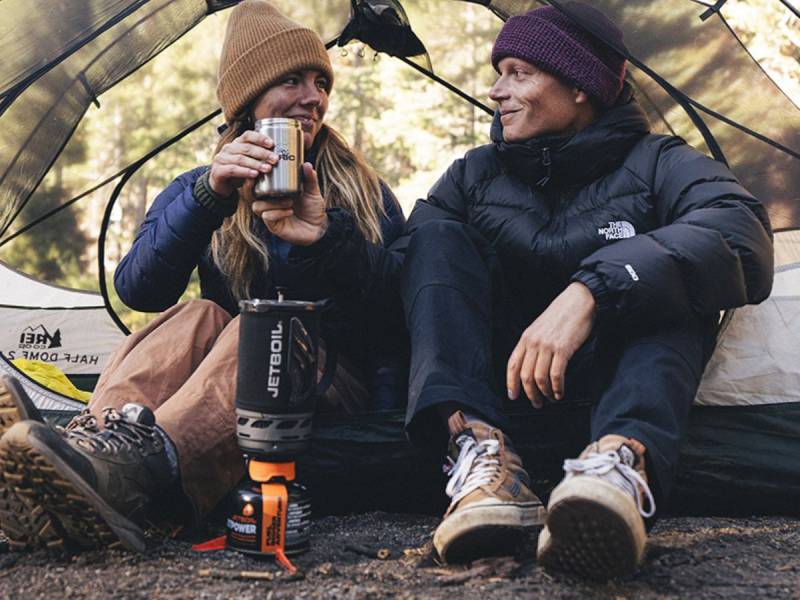
If you already have the Jetboil Genesis Basecamp for camp cooking, the Flash is the grab-and-go kettle for dawn starts, summit cocoa, or quick lunch stops.
It is compact, straightforward, and honest about its purpose, which is exactly what you want when fingers are cold and patience is thin. It’s also a great option if you’re not looking for home-cooked meals while camping and just want to enjoy something simple like oatmeal or a cup of noodles.
Should You Get One?
The Jetboil Genesis Basecamp System is for campers who actually cook. Its value isn’t just in the 10,000-BTU burners or the three-minute boils — it’s in the rare ability to simmer properly and pack down small enough to live in your car full-time. If your idea of camping food involves risotto, pancakes, or fajitas instead of just ramen or rehydrating freeze-dried camp fare (not that there’s anything wrong with that, if it’s your jam), this stove turns mealtime into something you’ll look forward to.
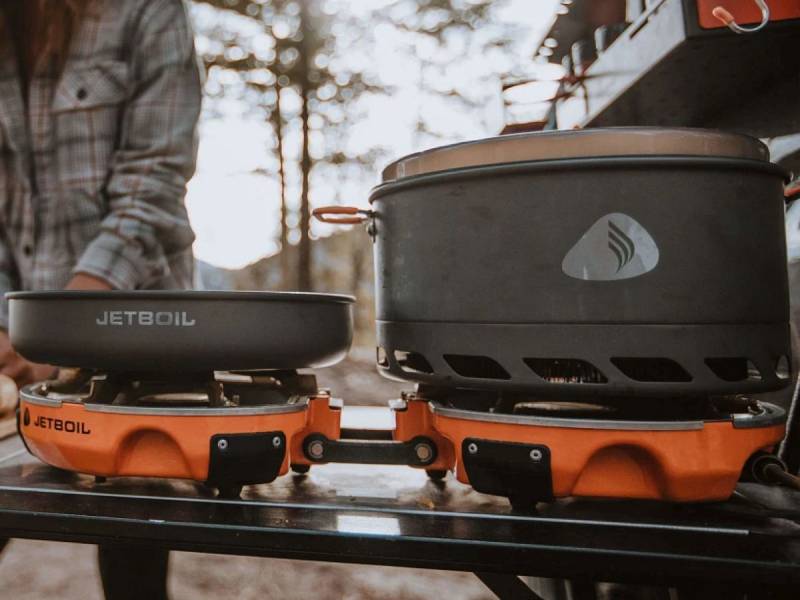
The Genesis Basecamp’s packability is genuinely useful — it fits next to a cooler in a hatchback rather than demanding its own storage crate — and its regulated burners keep dinner on schedule even when temperatures drop. Yes, the $449.99 price tag puts it in premium territory, but the cooking experience feels equally premium.
Skip it if you only camp once a year, if your menu never goes beyond oatmeal, or if the price makes you wince. But if you want a compact, capable camp kitchen that behaves like the one at home, the Genesis Basecamp is the rare piece of gear you’ll appreciate on every single trip
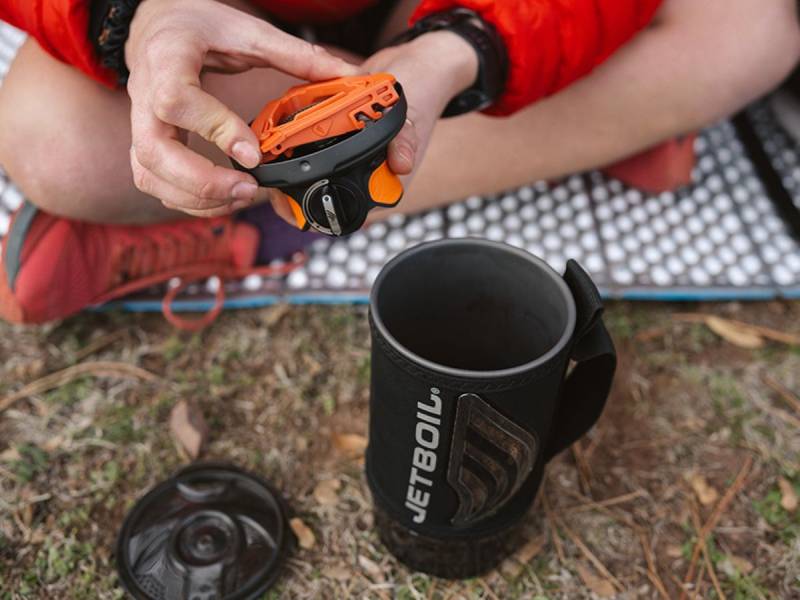
And if all you need is a fast way to boil water for coffee or noodles, pair it — or just go — with the Jetboil Flash 1.0L; it’s the grab-and-go solution that has you sipping before your friends finish cursing at their burners.
The Jetboil Genesis Basecamp System sells for $449.99, and you can grab it straight from Jetboil or from major retailers, including Amazon. If you’re looking for something more compact, the Jetboil Flash 1.0L Fast Boil System is $144.99, and it’s also available directly from Jetboil or on Amazon.



Definitely cool, but we’re not the target audience for it. I know several who _would_ appreciate it quite a bit, though.