
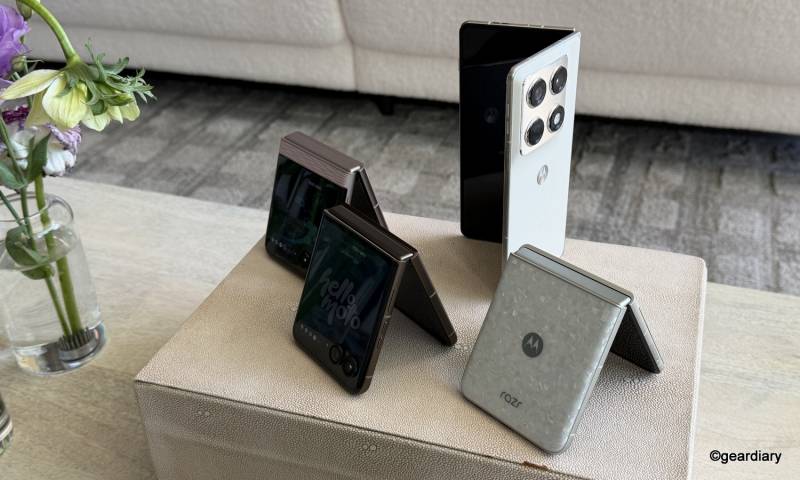
The Motorola 2026 razr lineup wants to make a familiar argument: foldables don’t have to be fragile little novelty phones you baby through the day. The family includes the motorola razr ultra, motorola razr+, and motorola razr, with the motorola razr fold sitting above them as a larger book-style foldable. There are bigger outside screens, sturdier hinges, faster chips, larger batteries, new camera tools, and a few Google Photos tricks that could be useful, provided you’re comfortable letting your phone rummage through your closet. Also arriving are the moto buds 2 plus, Motorola’s new Bose-tuned earbuds.
Motorola Now Has a Razr for Almost Every Foldable Curiosity Level
For 2026, Motorola has a wider foldable range than it has had before. Instead of asking one flip phone to please everyone, Motorola now offers three clamshell-style models with varying levels of power, display size, battery life, and pricing. The motorola razr ultra is the flagship, the motorola razr+ sits in the premium middle, and the motorola razr is the entry point for people who want the compact foldable experience without wandering into flagship pricing.
The motorola razr fold, which debuted earlier at Lenovo Tech World, stretches the family beyond the flip-phone shape. It’s a larger book-style foldable with an 8.1″ 2K LTPO inner display, a 6.6″ pOLED external display, Snapdragon 8 Gen 5, 16GB of LPDDR5X memory, 512GB of storage, and a 6000mAh battery.
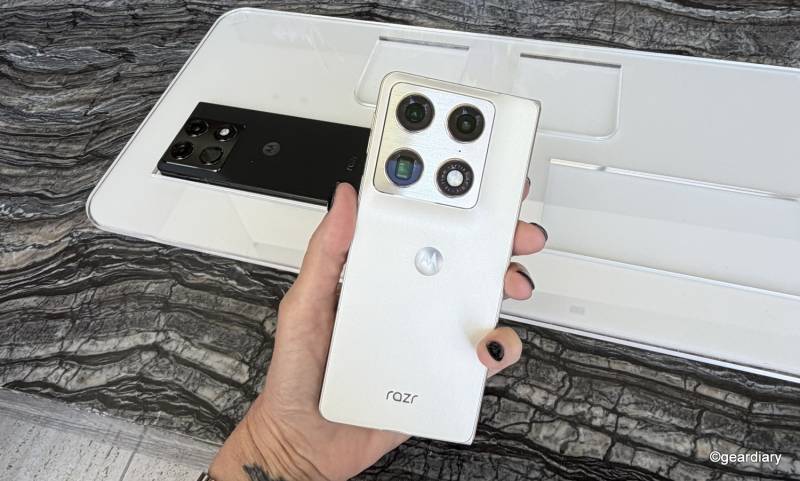
motor razr fold
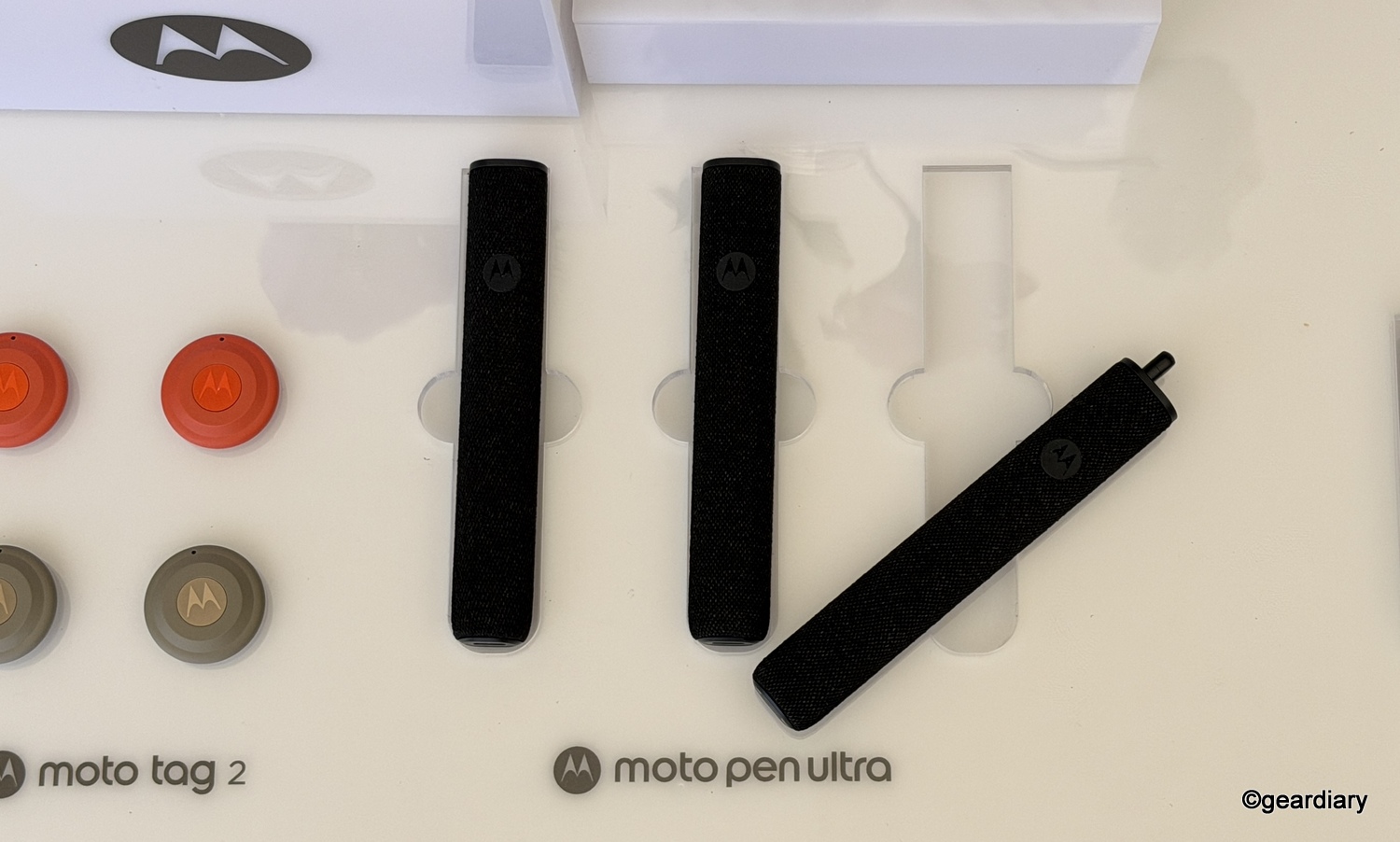
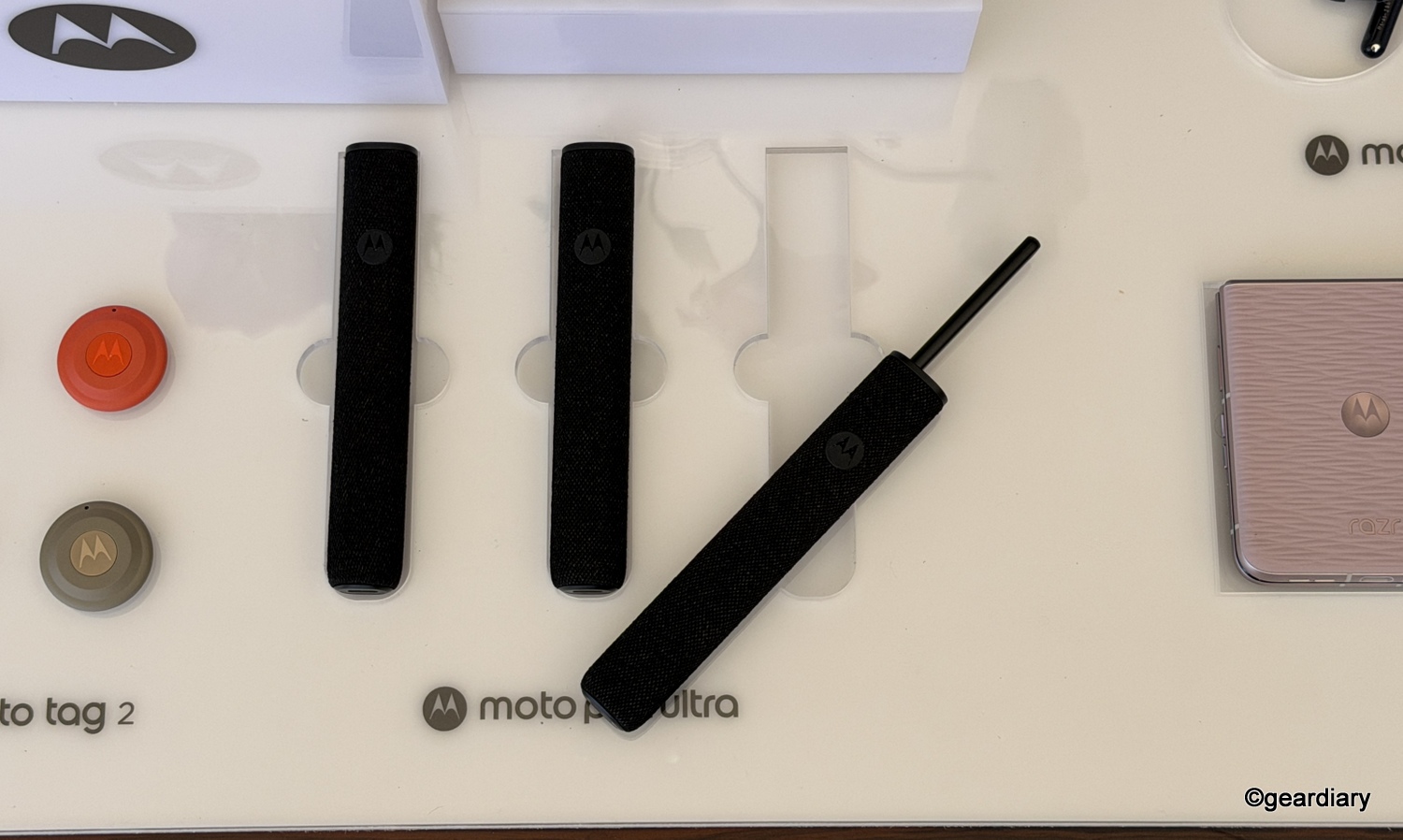
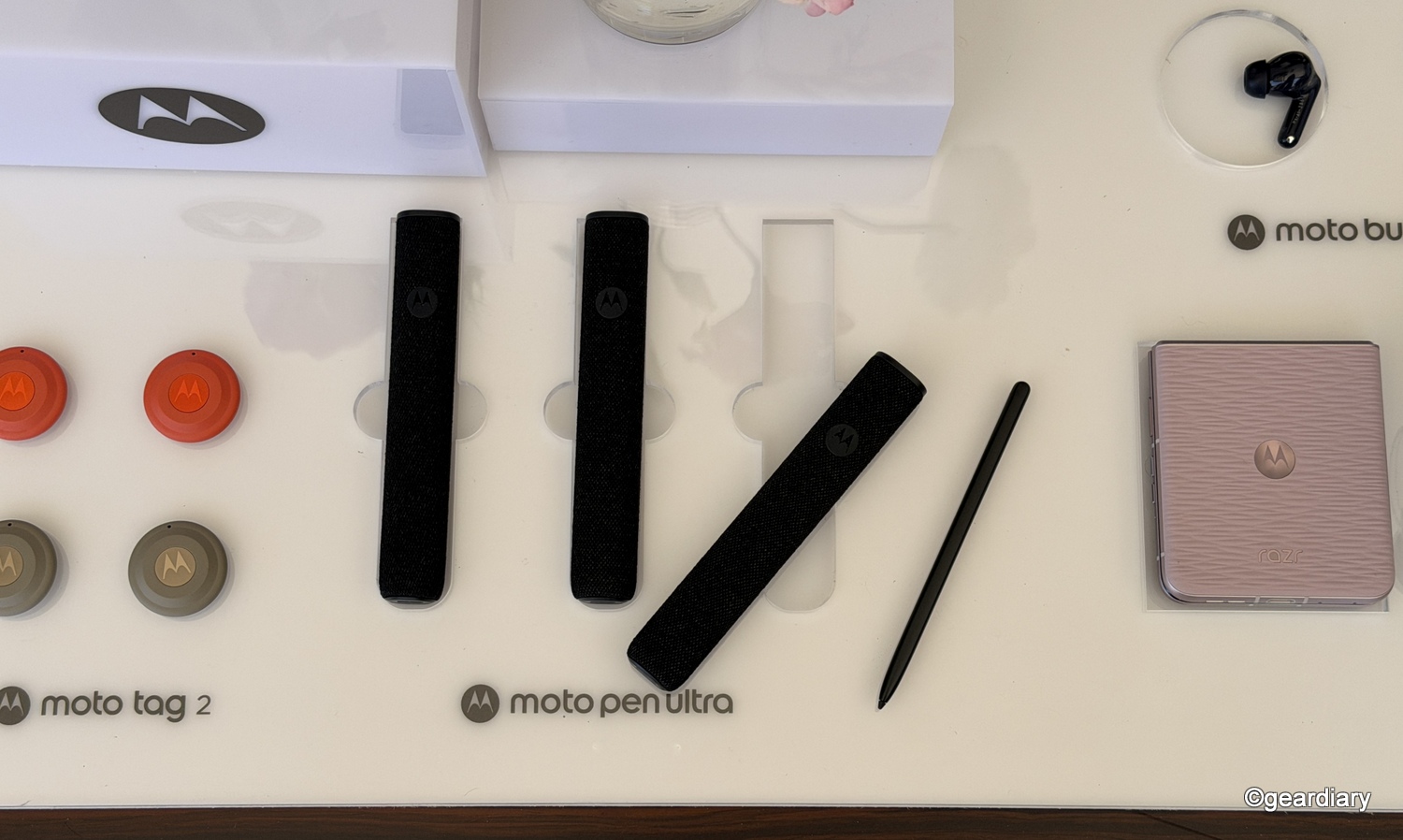
It also supports the moto pen ultra, sold separately, making it more of a productivity and media device than a pocketable nostalgia play. The razr fold starts at $1,899.99, so it’s very much in “please don’t drop this in the parking lot” territory.
-

- moto pen ultra
-

- moto pen ultra
-
- moto pen ultra
The three flip models are easier to sort through. The razr ultra starts at $1,499.99, the razr+ starts at $1,099.99, and the standard razr starts at $799.99. That spread matters because flip phones are no longer just about being fun and cute, although they are still very much about being fun and cute.
The bigger question is whether the outside screen, camera system, battery, and durability make the folded shape feel useful after the first week of showing it off at dinner.
The Outside Screen Is Where the Razr Still Makes Its Best Argument
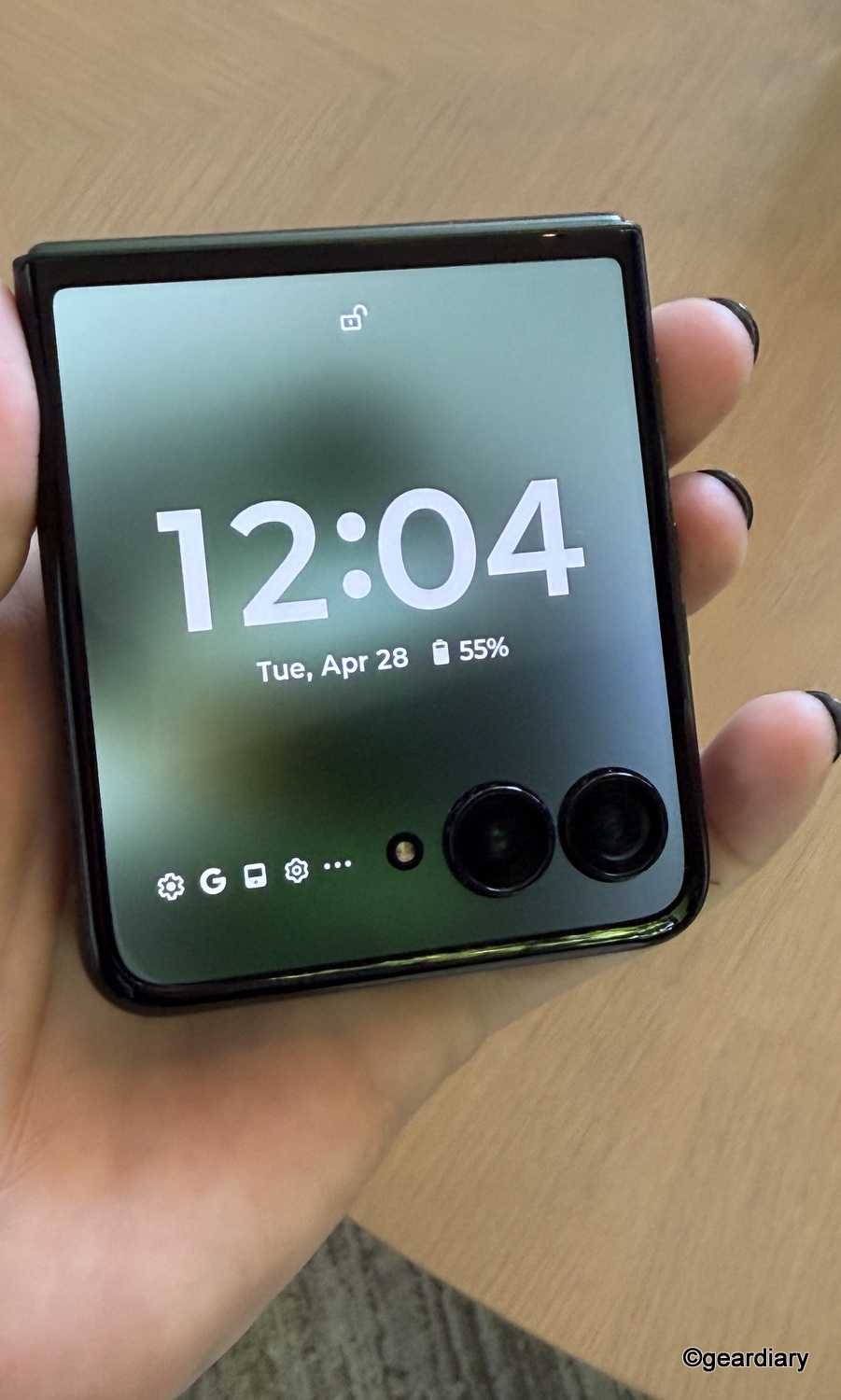
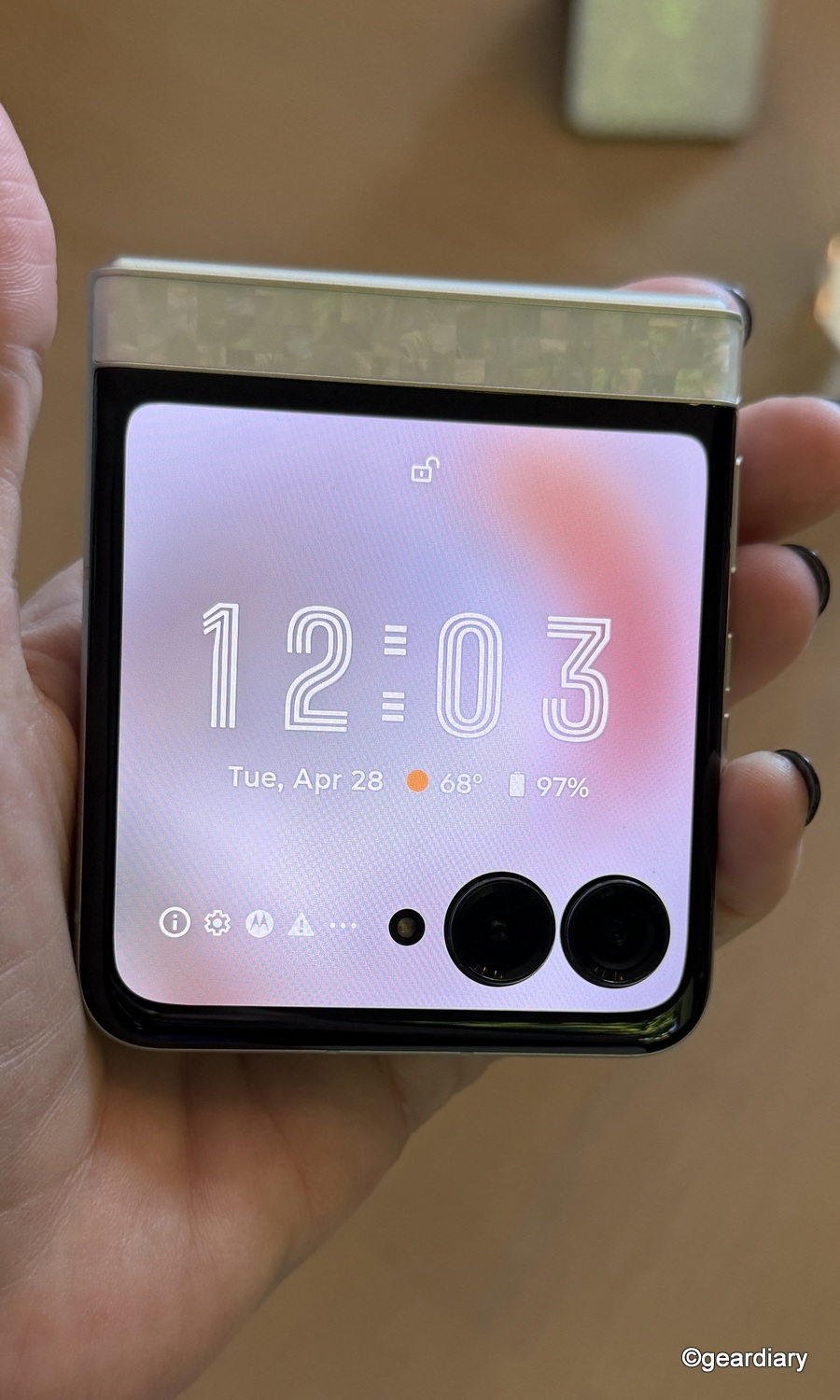
The external display remains one of the clearest reasons to consider a modern flip phone. On the motorola razr ultra and razr+, you get a 4.0″ external display that can run full apps, show notifications, handle messages, and support widgets without opening the phone. That means you can glance at a map, reply to a quick message, control music, check a boarding pass, or doomscroll with plausible deniability, since the phone is technically still closed.
-

- moto razr plus
-

- moto razr
-

- moto razr ultra
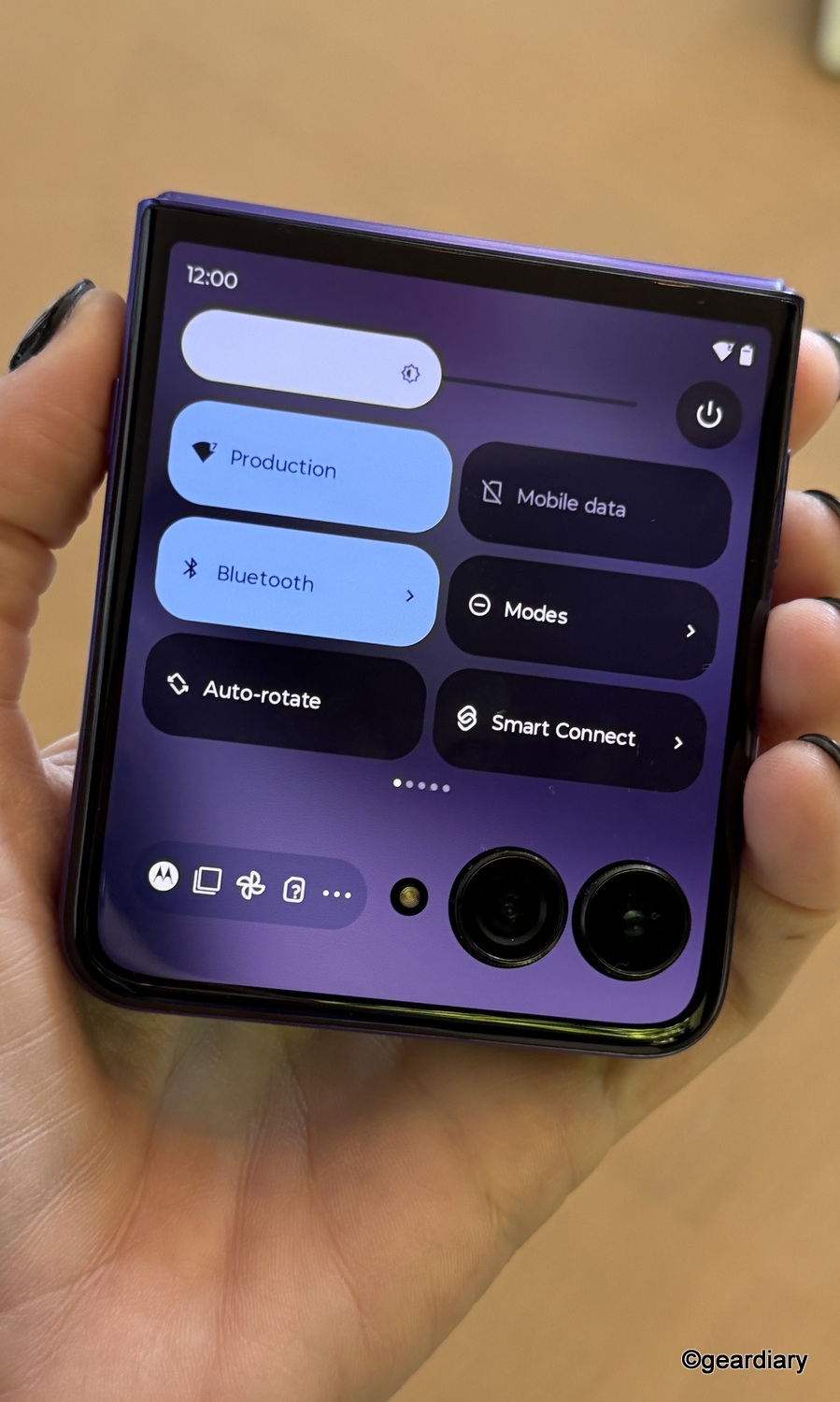
The razr ultra’s outer screen uses an Extreme AMOLED panel, a display technology known for deep blacks, strong contrast, and vivid color. It has a 165Hz refresh rate and up to 3000 nits of peak brightness. Refresh rate describes how often the screen updates each second, so a higher number can make scrolling, animations, and fast-moving games look smoother. Brightness, measured in nits, is one of those deeply unromantic specs that becomes important the moment you’re outside trying to read a text in direct sun.
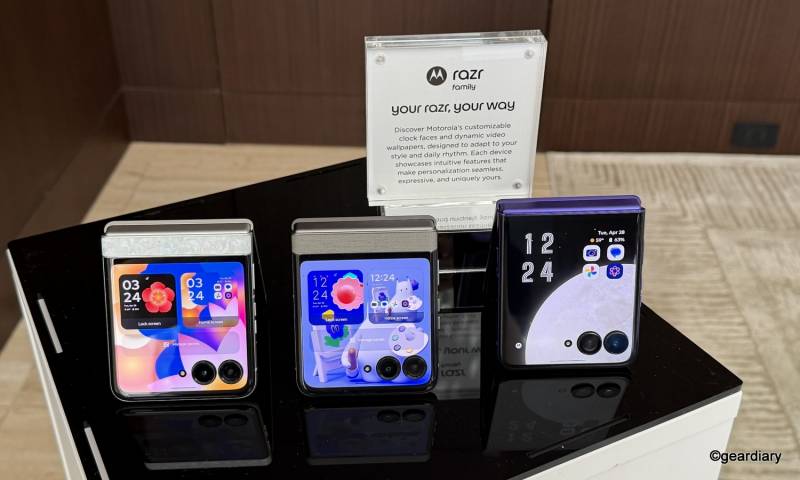
The razr+ also gets a 4.0″ Extreme AMOLED external display with a 165Hz refresh rate, though its peak brightness is listed at 2400 nits. The standard razr gets a smaller but still useful 3.6″ external Extreme AMOLED display with a 90Hz refresh rate and 1700 nits of peak brightness. That’s less flashy on paper, but it still gives the base model the thing that makes a flip phone feel less compromised: the ability to do small tasks without unfolding the phone every single time.
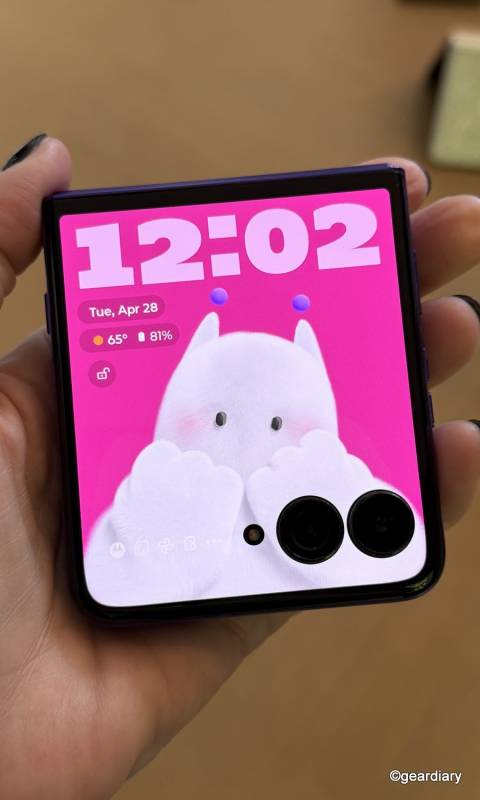
moto razr ultra
The razr fold takes a different approach because it isn’t trying to disappear into a tiny square. Its 6.6″ pOLED external display is closer to a traditional phone screen, with a 21:9 aspect ratio, 2520 x 1080 resolution, 10-bit color, Dolby Vision, Pantone Validated color, a 165Hz refresh rate, and up to 6000 nits of peak brightness. That means the fold should feel more like a regular phone when it’s closed, then open into something much closer to a small tablet when you need more room.
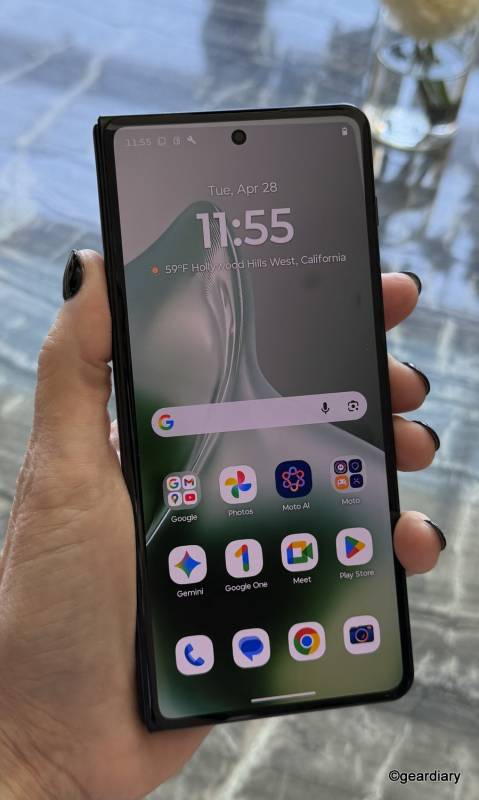
moto razr fold
Motorola has also added hands-free interactions on the flip models’ outer displays. You can hover your hand over the screen to wake it or silence an alarm, and you can launch Google Gemini with the Hey Google command. Gemini availability depends on device, language, country, and an internet connection, and Google’s usual reminder applies: check responses for accuracy. Translation: your phone may be clever, but it still shouldn’t be your sole legal counsel, medical adviser, or memory palace.
Big Inner Displays
The razr fold is the display outlier, and that’s the point. It opens into a much larger 8.1″ 2K LTPO display with an 8:7.2 aspect ratio, HDR10+, Dolby Vision, 10-bit color, a 120Hz refresh rate, 100% DCI-P3 color coverage, Pantone Validated color, and up to 6200 nits of peak brightness. LTPO is a display technology that can adjust refresh rate more efficiently, which helps balance smooth motion with battery life.
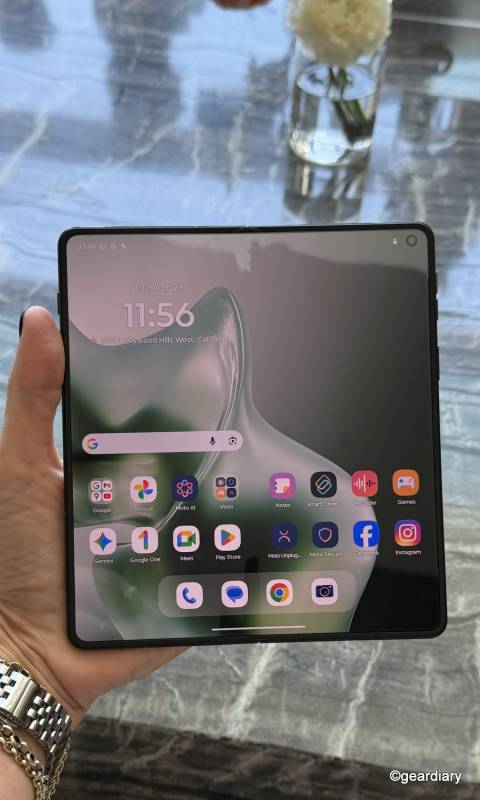
moto razr fold
The big appeal is space. This is the model built for reading longer articles, watching video without feeling like you’re peering through a mail slot, comparing documents, editing photos, or running two apps side by side without everything feeling cramped. It’s less “tiny phone becomes regular phone” and more “phone becomes small tablet,” which is the whole point of a book-style foldable.
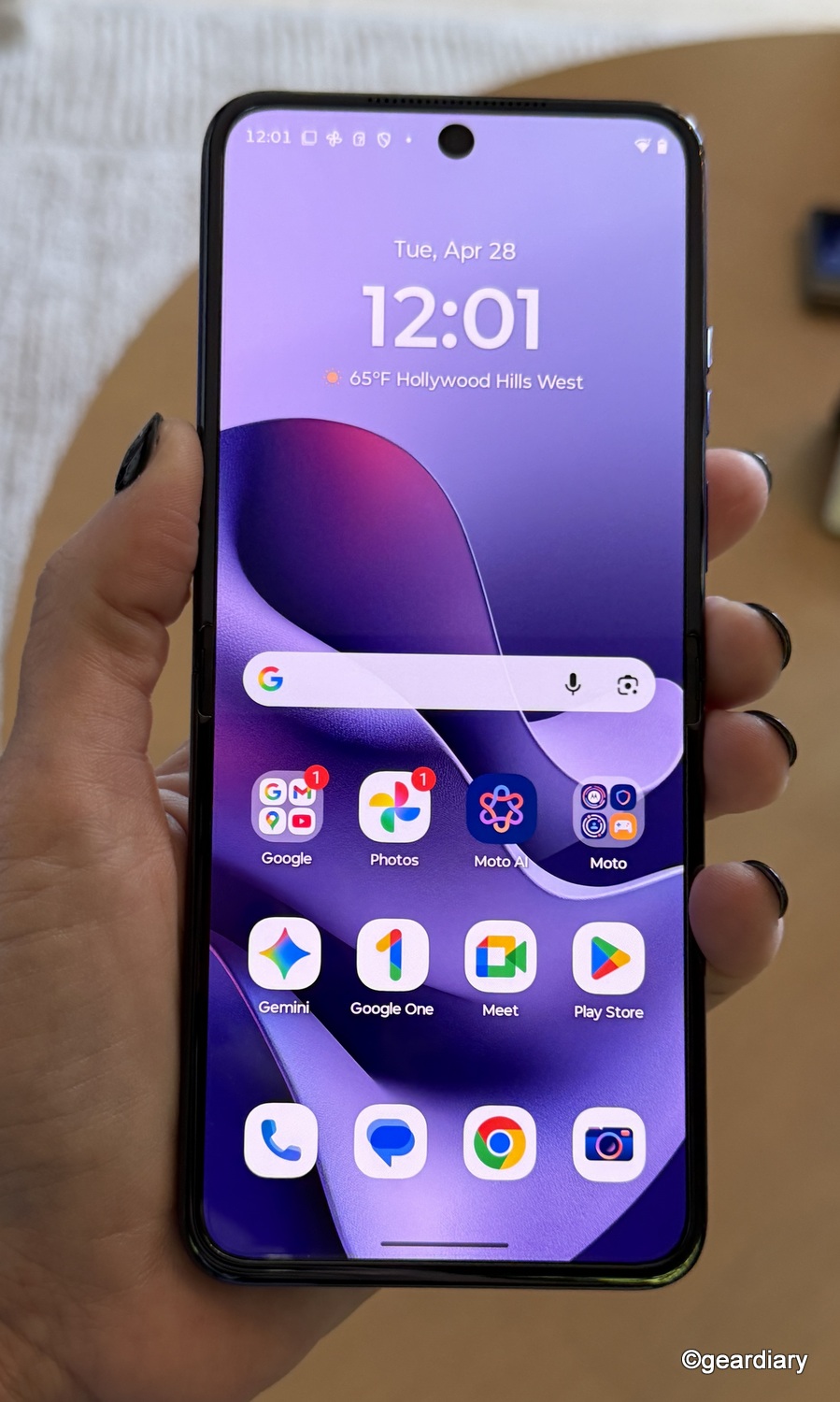
Open the razr ultra, and you get a 7.0″ Extreme AMOLED inner display with a 1224 x 2992 resolution, 10-bit color, a 165Hz refresh rate, HDR10+, Dolby Vision, and up to 5000 nits of HDR peak brightness. HDR, or high dynamic range, is meant to preserve more detail in bright and dark parts of a scene, so a sunset doesn’t turn into a glowing blob and shadowy areas don’t become a muddy cave painting.
The display is also Pantone Validated, meaning it’s been checked against Pantone’s color standards, though Motorola notes that Pantone-generated colors may not perfectly match official Pantone references.
-
- moto razr ultra
-
- moto razr
-
- moto razr plus
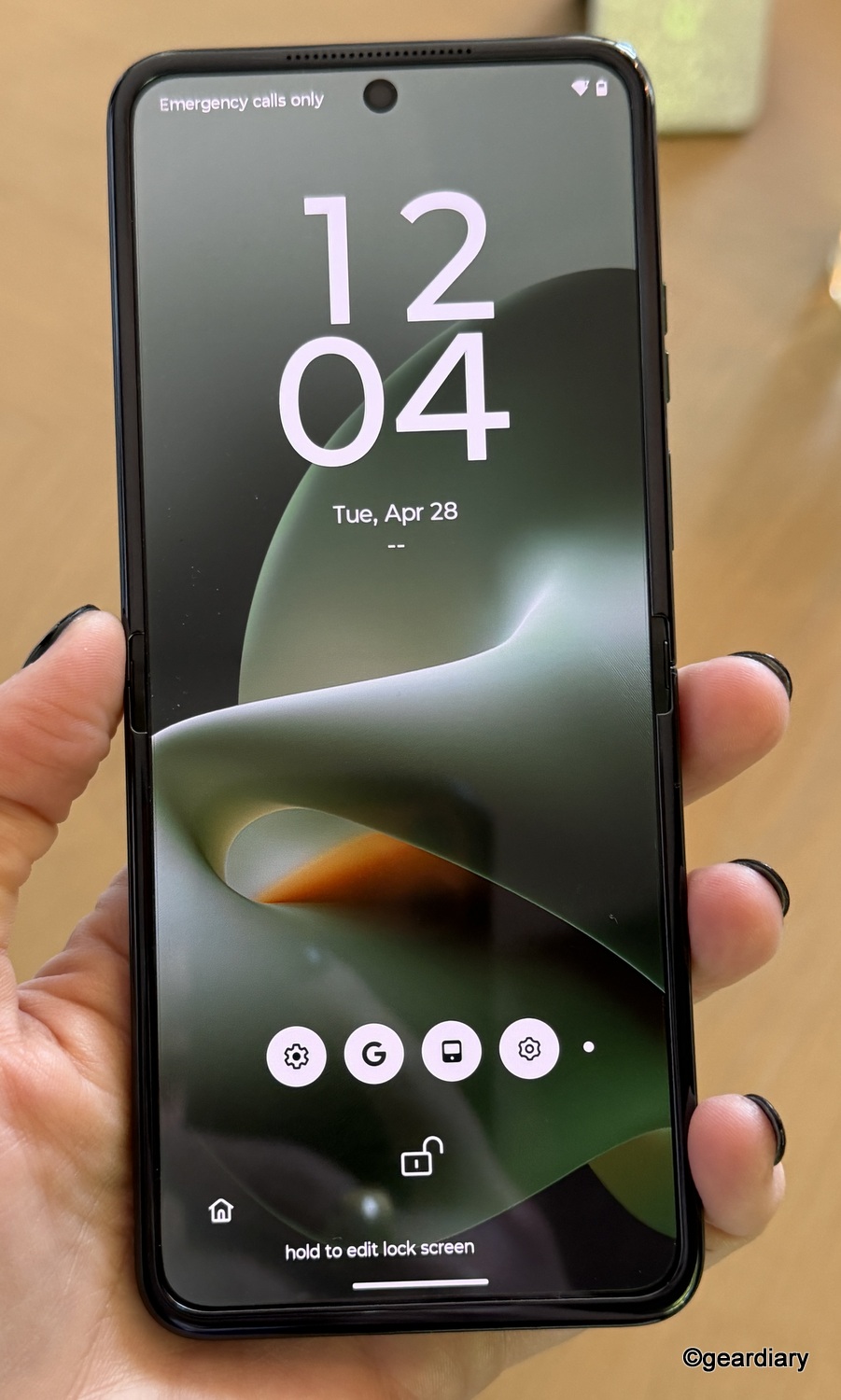
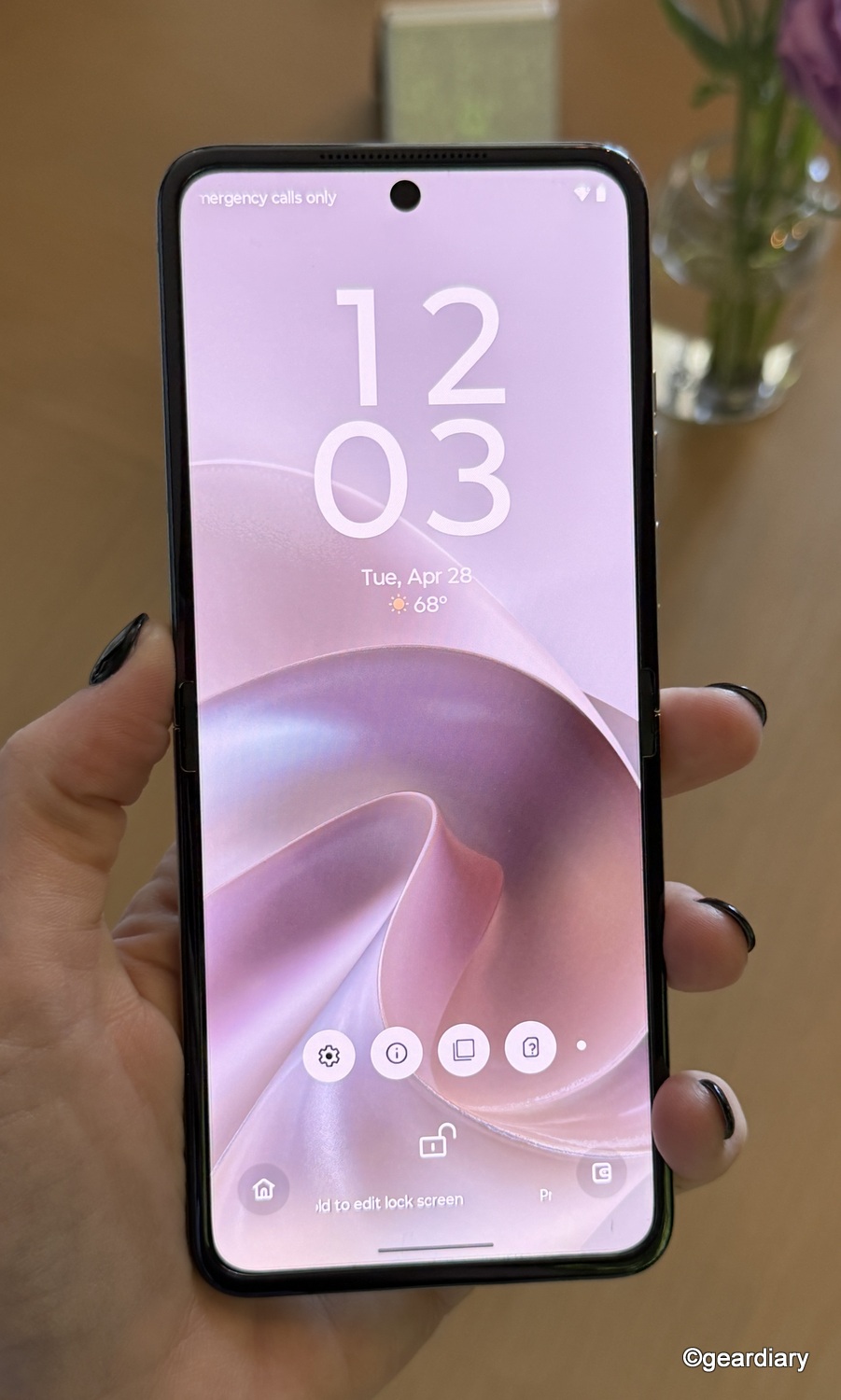
The razr+ has a 6.9″ Extreme AMOLED inner display with a 1080 x 2620 resolution, a 165Hz refresh rate, Dolby Vision, and 3000 nits of peak brightness. The standard razr also opens to a 6.9″ Extreme AMOLED display, with a 1080 x 2640 resolution, a 120Hz refresh rate, HDR10+, Dolby Vision, and 3000 nits of peak brightness.
In daily use, the three flip phones should all feel like full-size phones when open. The differences come down to smoothness, brightness, and how premium the experience feels as you move up the line. The fold is playing a different game, with enough display space to make multitasking, reading, and media feel meaningfully different from a standard slab phone.
-
- moto razr-
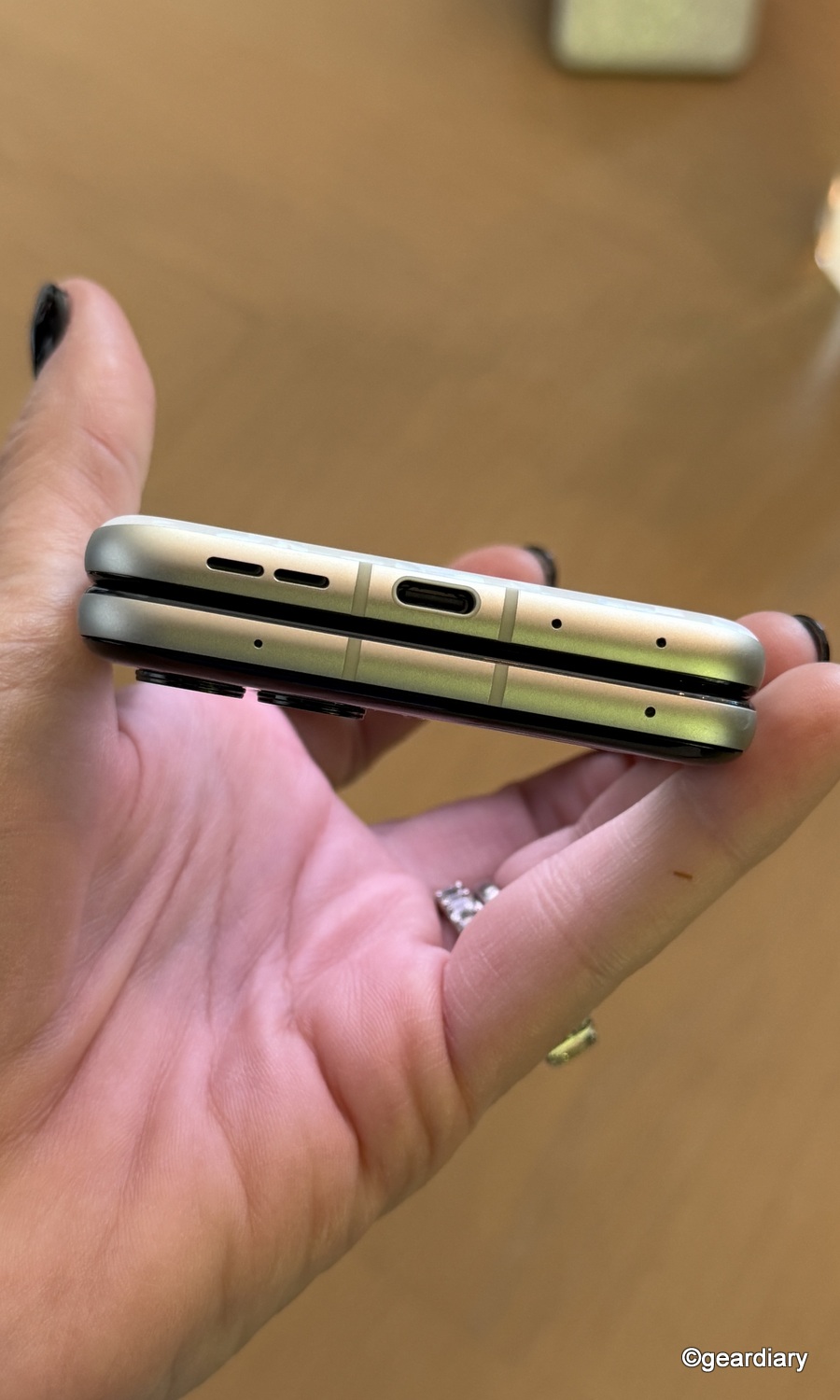
-
- moto razr ultra
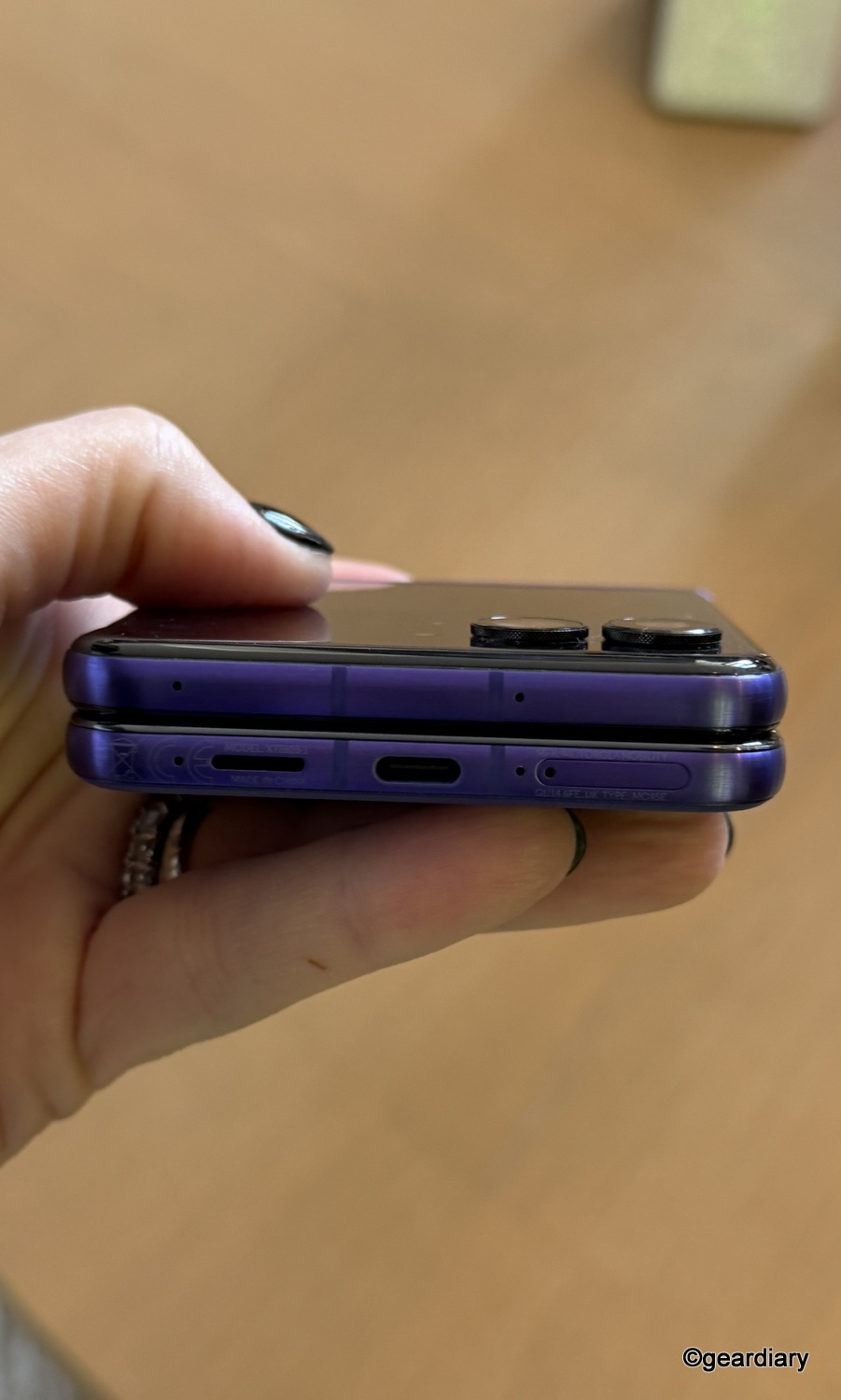
-
- moto razr plus
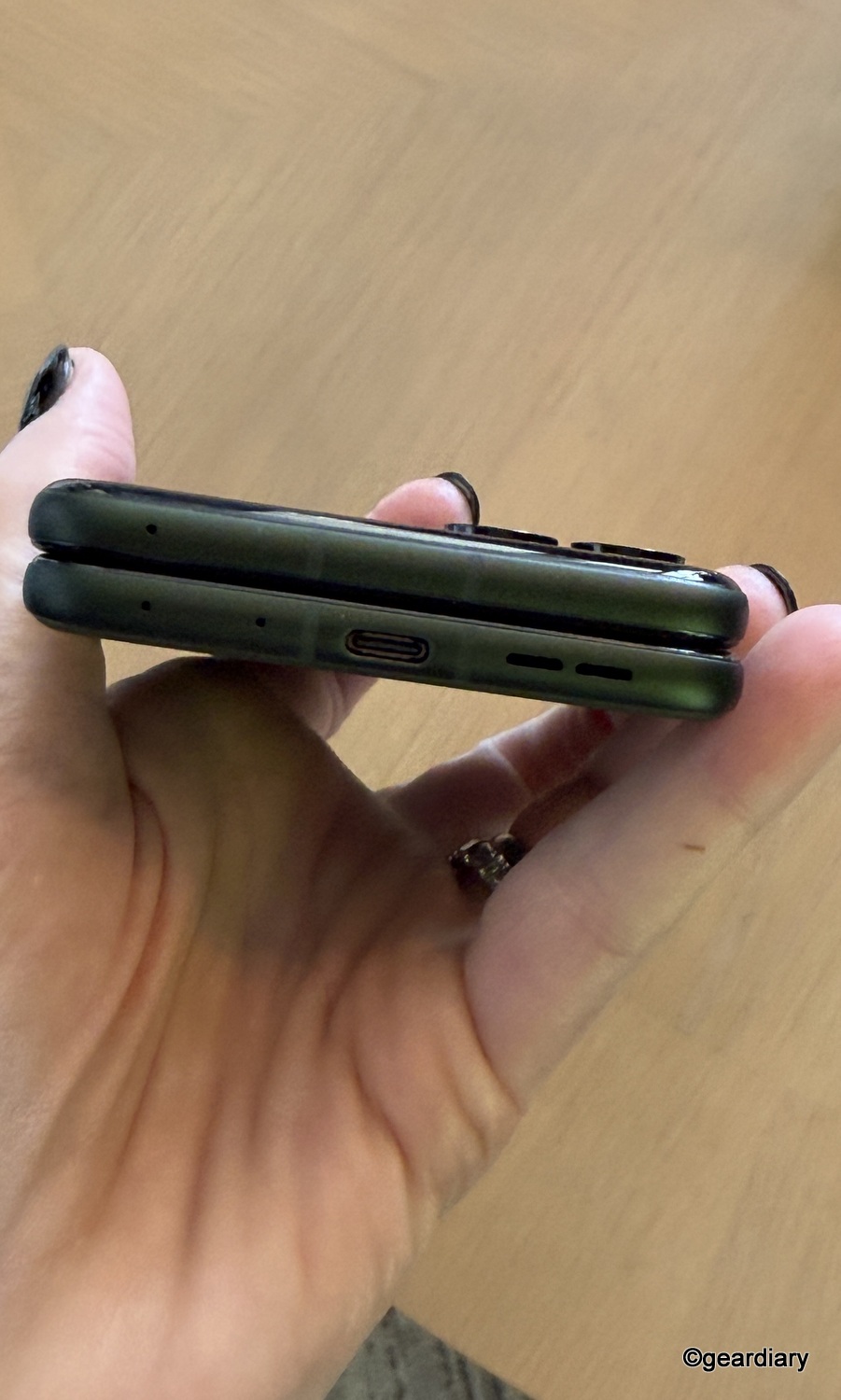
-
- moto razr fold
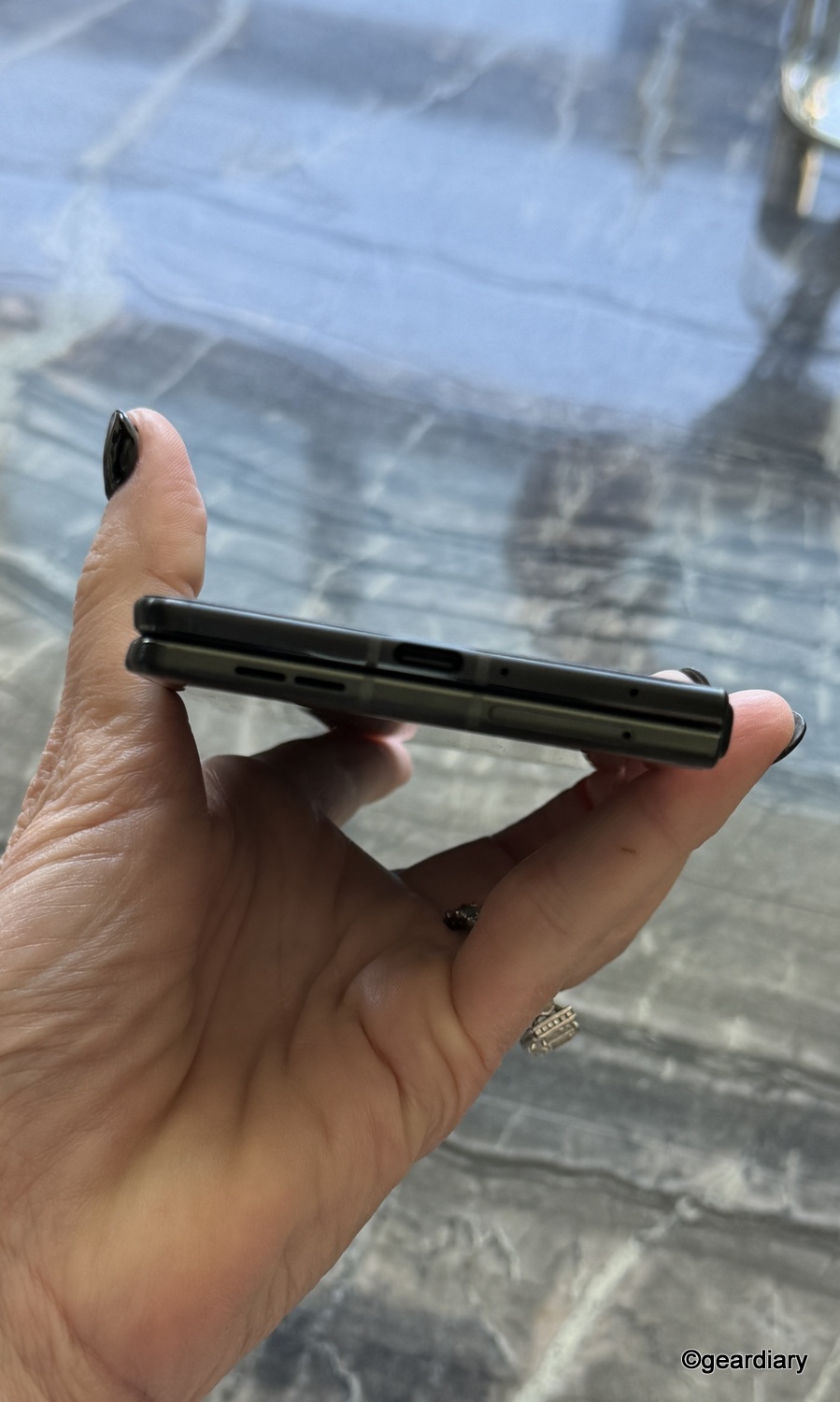
Audio support varies by model, but the general idea remains the same. The razr ultra, razr+, and razr include stereo speakers with Dolby Atmos, while the razr fold adds tuning by Sound by Bose. Dolby Atmos can create a wider, more dimensional effect when supported content is available, though phone speakers still obey the laws of physics. They can sound good; they can’t turn a tiny chassis into a soundbar.
Motorola Remembered That Foldables Should Feel Good in Your Hand
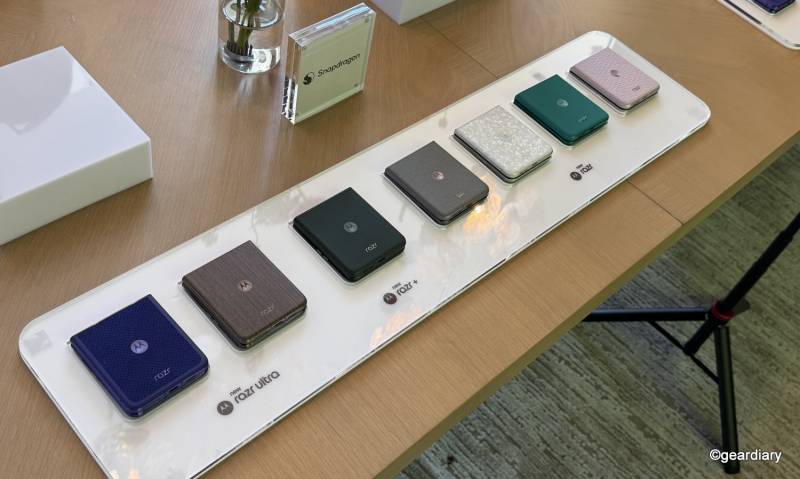
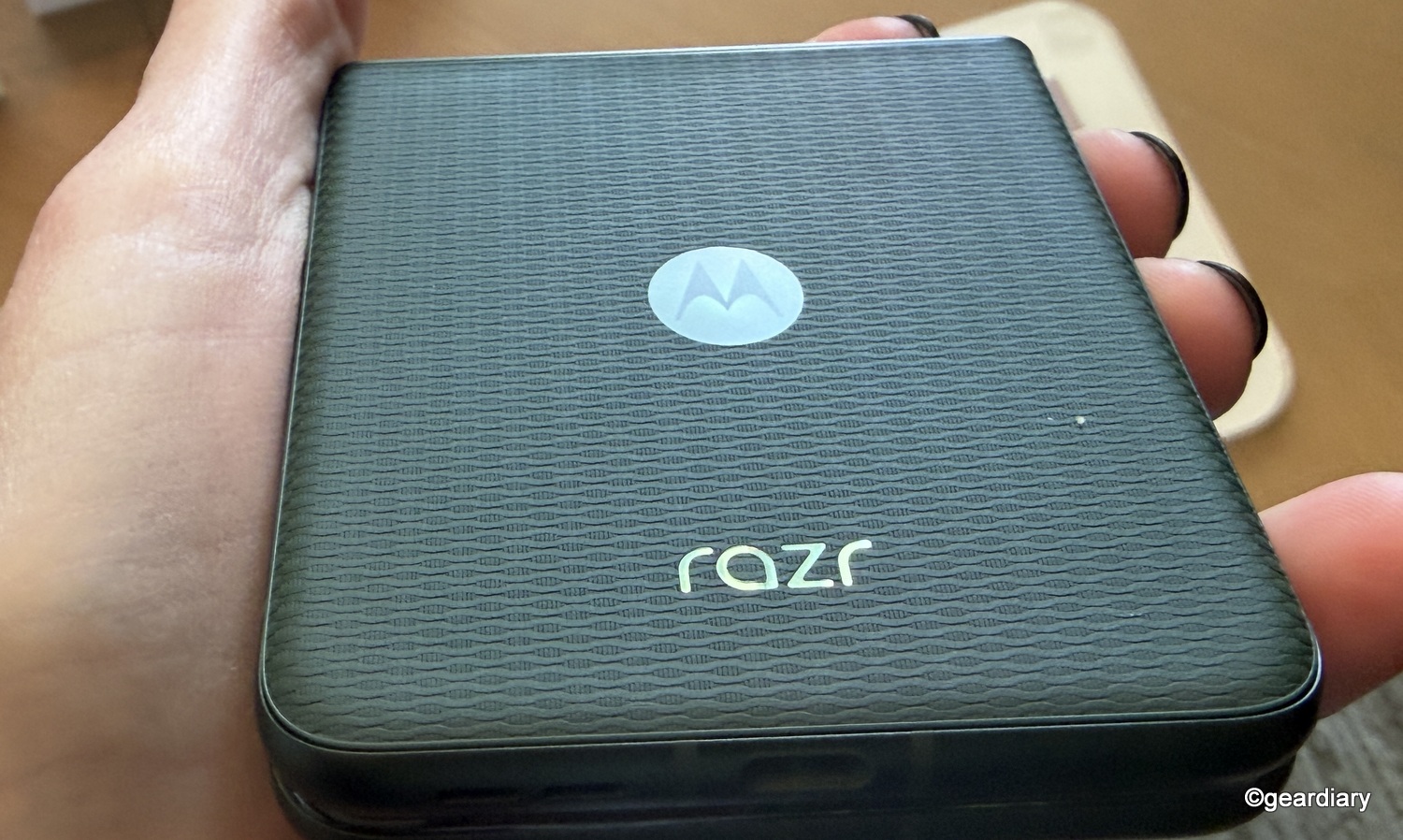
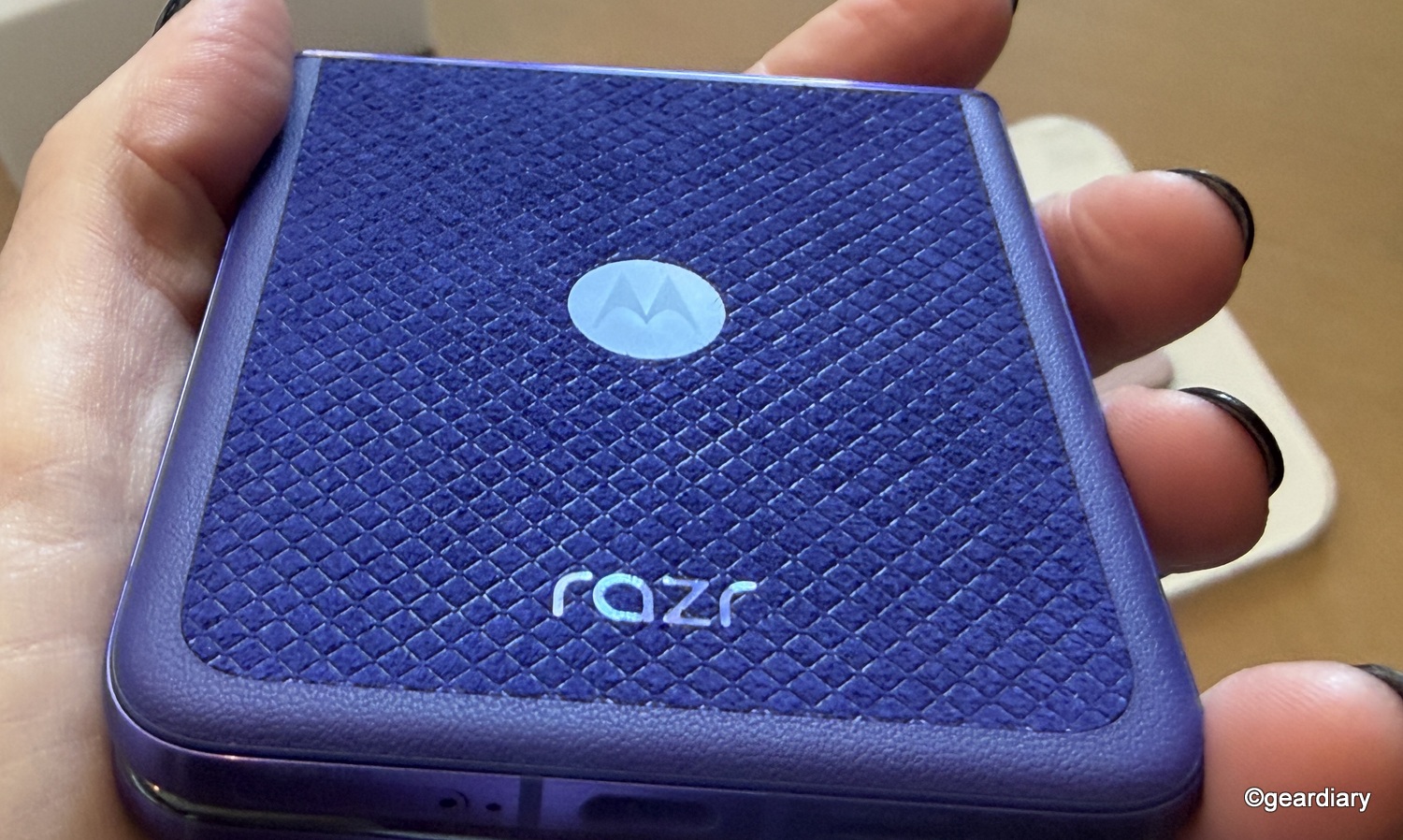
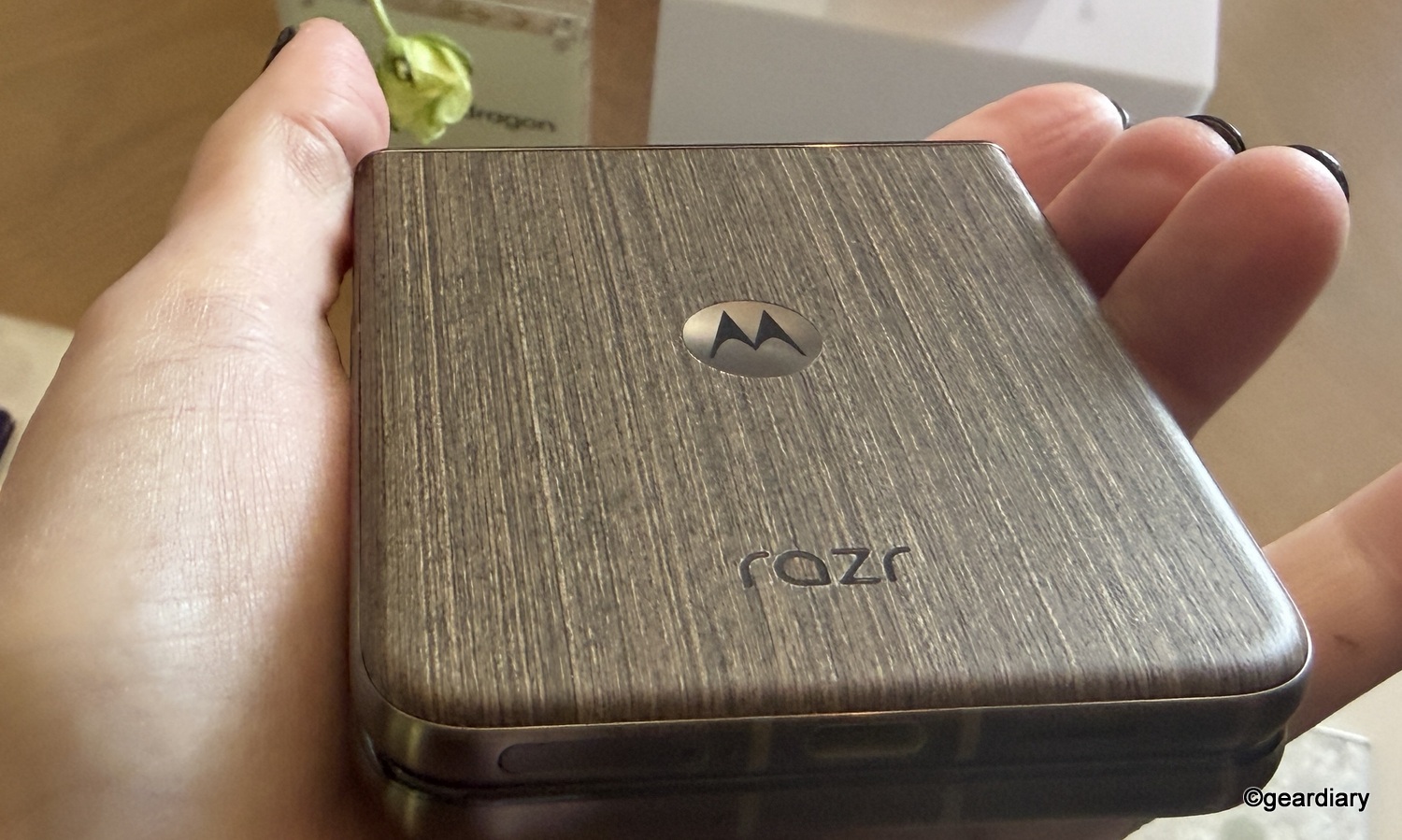
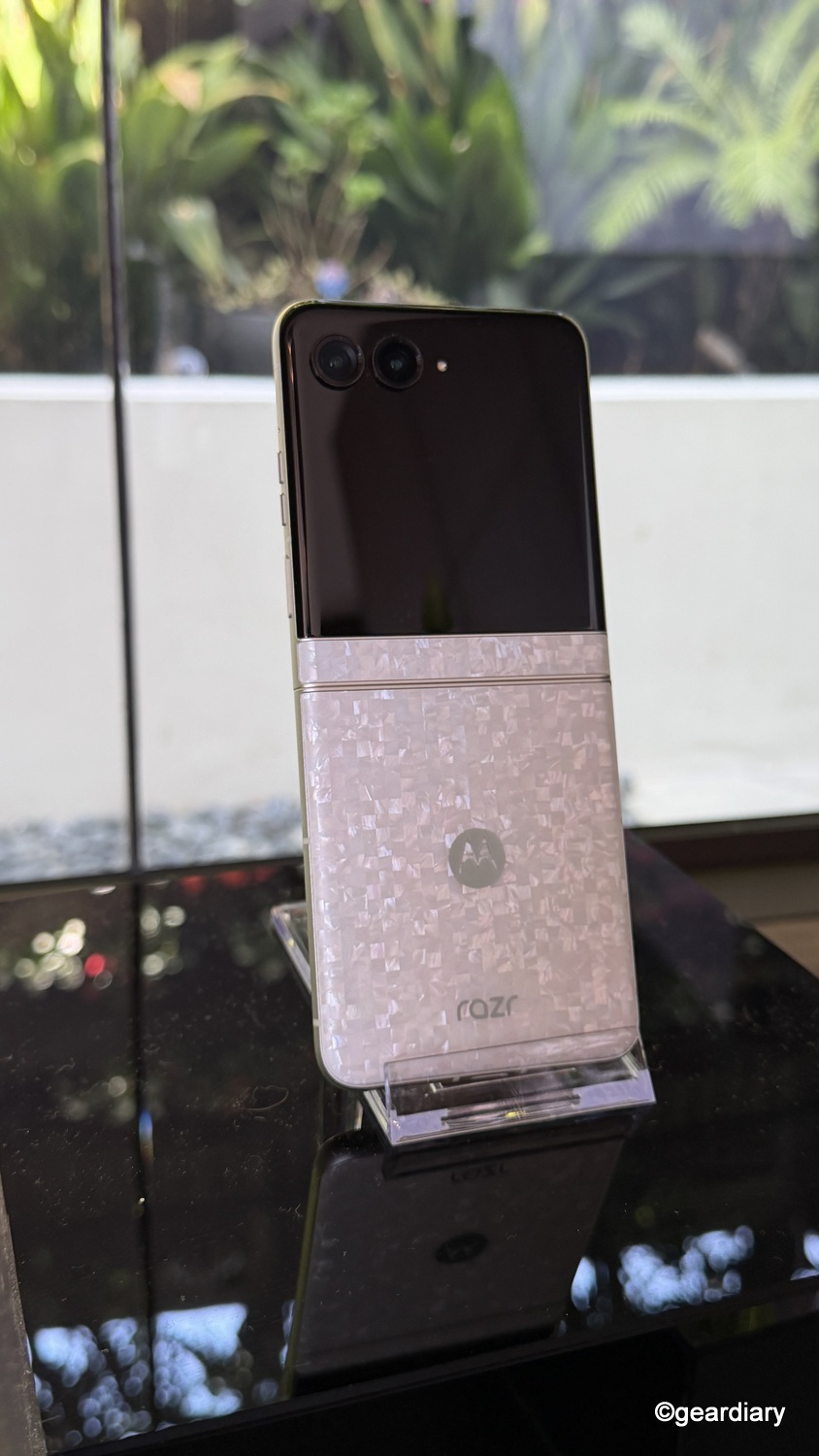
Foldables live or die partly on how they feel in the hand, and Motorola has clearly decided texture is part of the pitch. The razr ultra comes in PANTONE Orient Blue with an Alcantara finish or PANTONE Cocoa with a natural wood veneer finish. Alcantara is a soft, suede-like material often used in cars, headphones, and accessories, while wood veneer gives the Cocoa model a warmer look that should stand out from the glass-and-metal rectangle crowd.
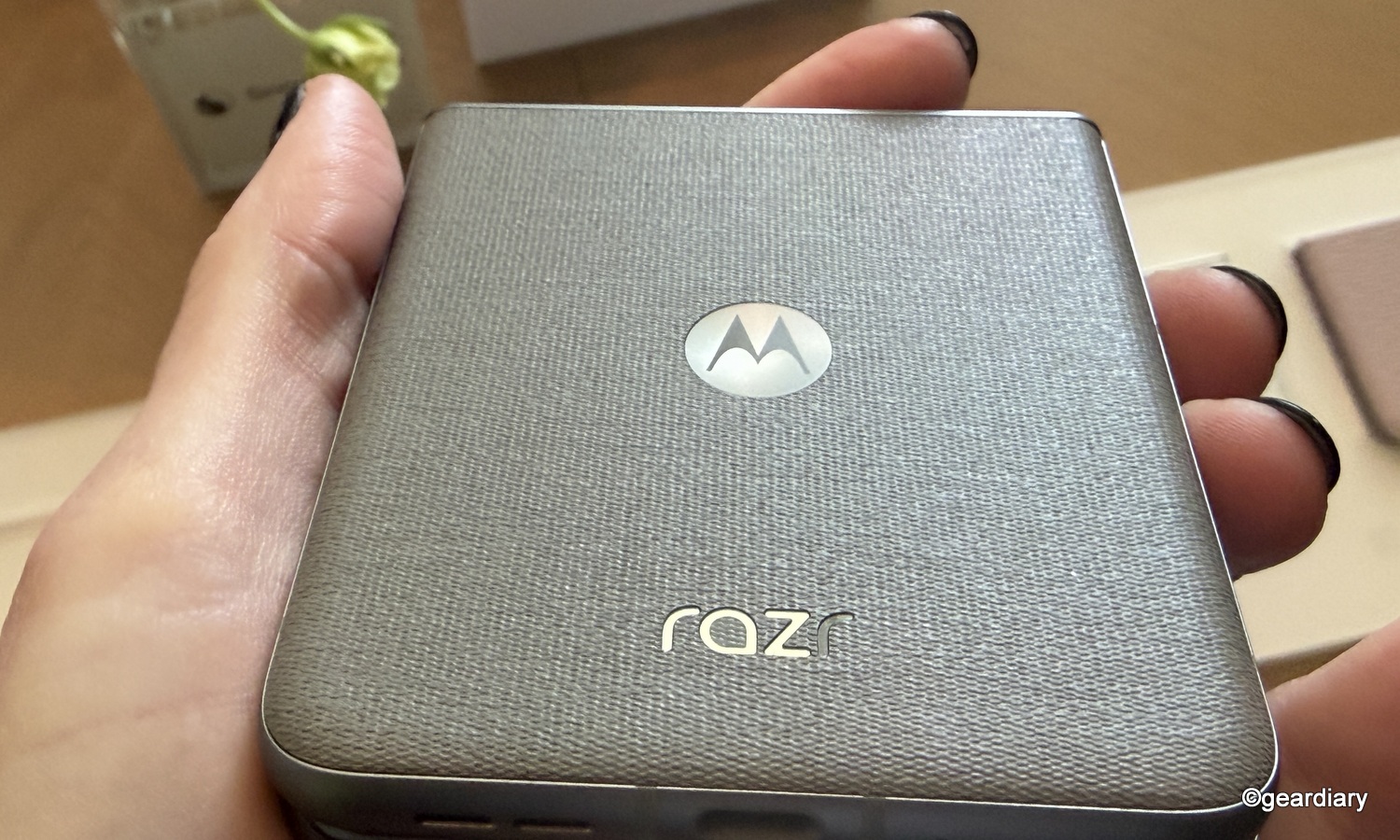
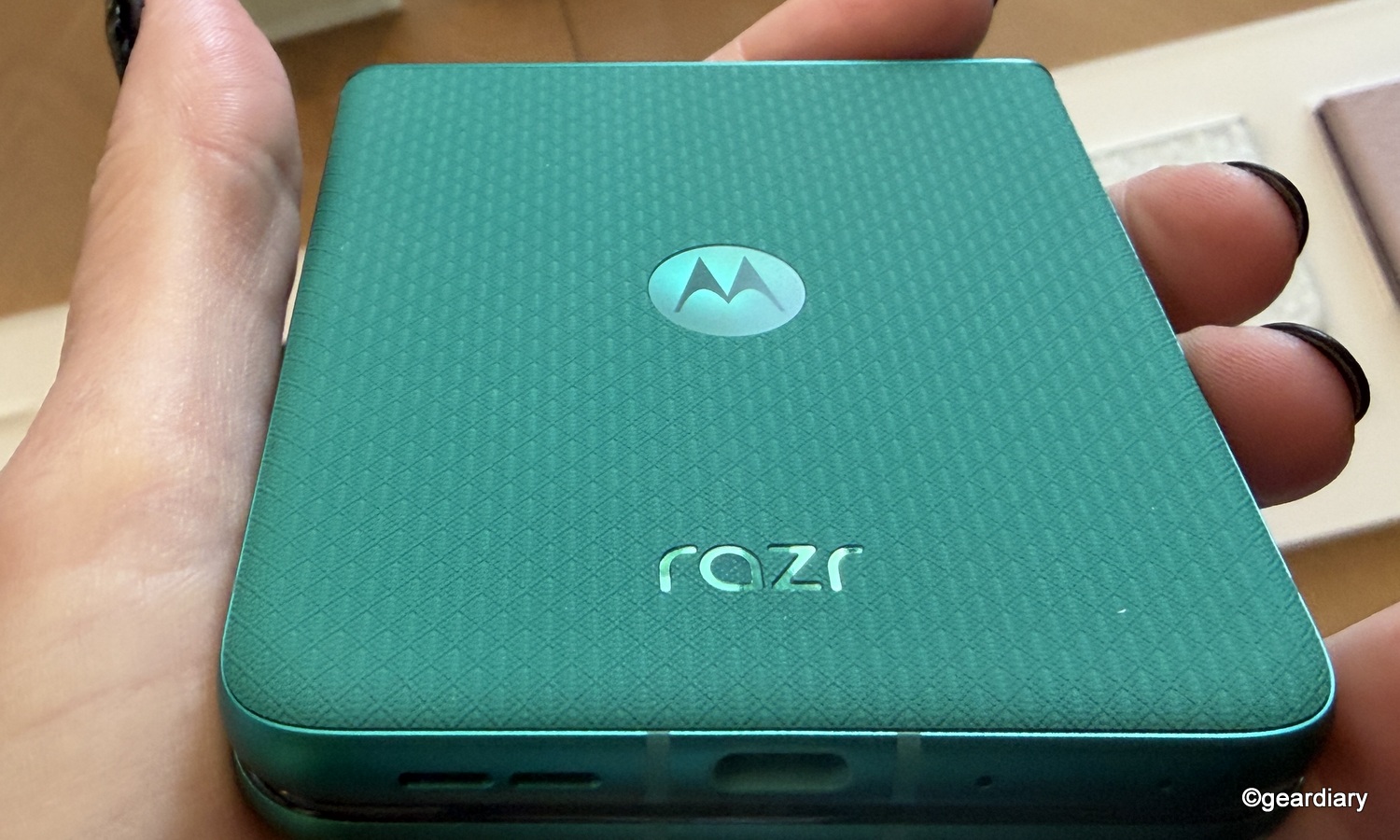
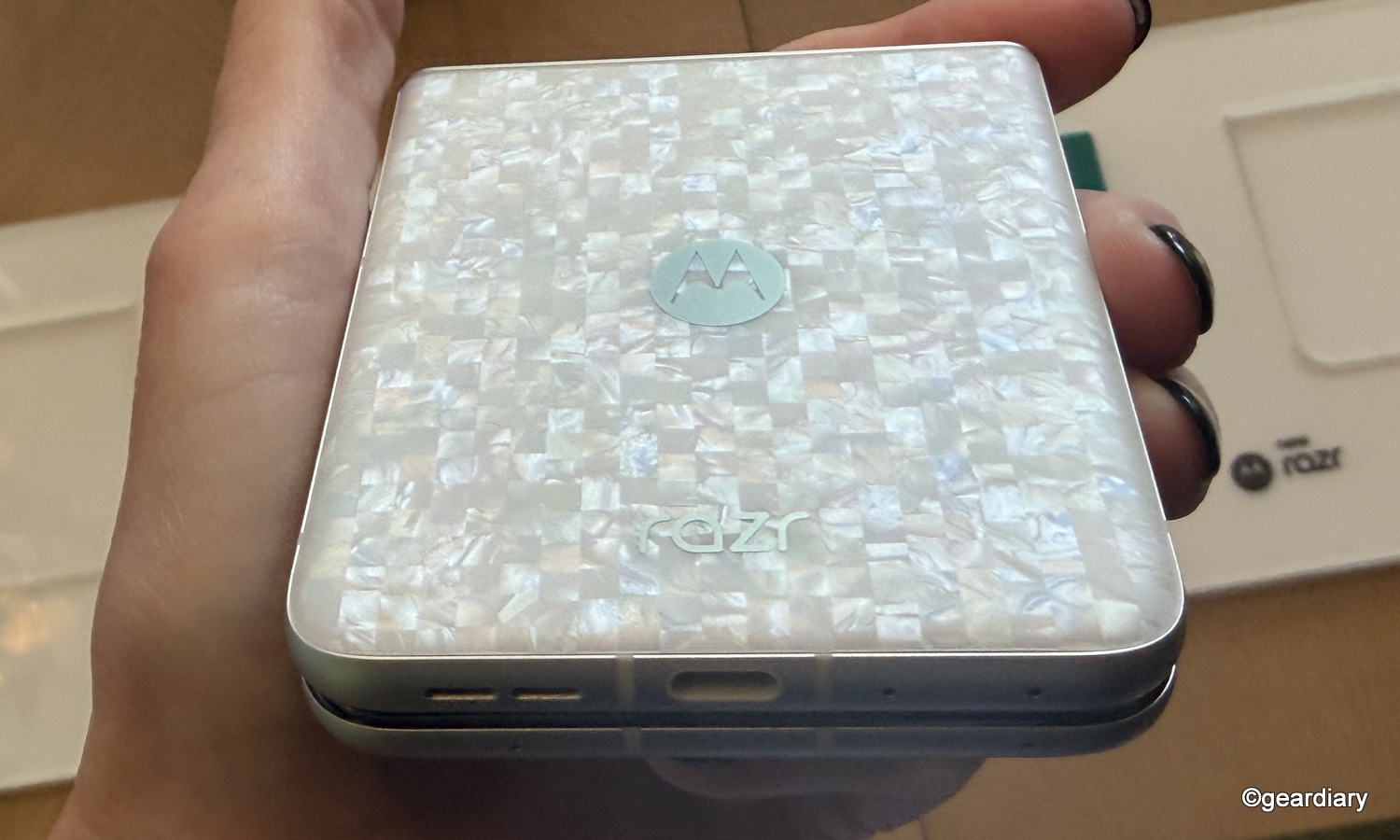
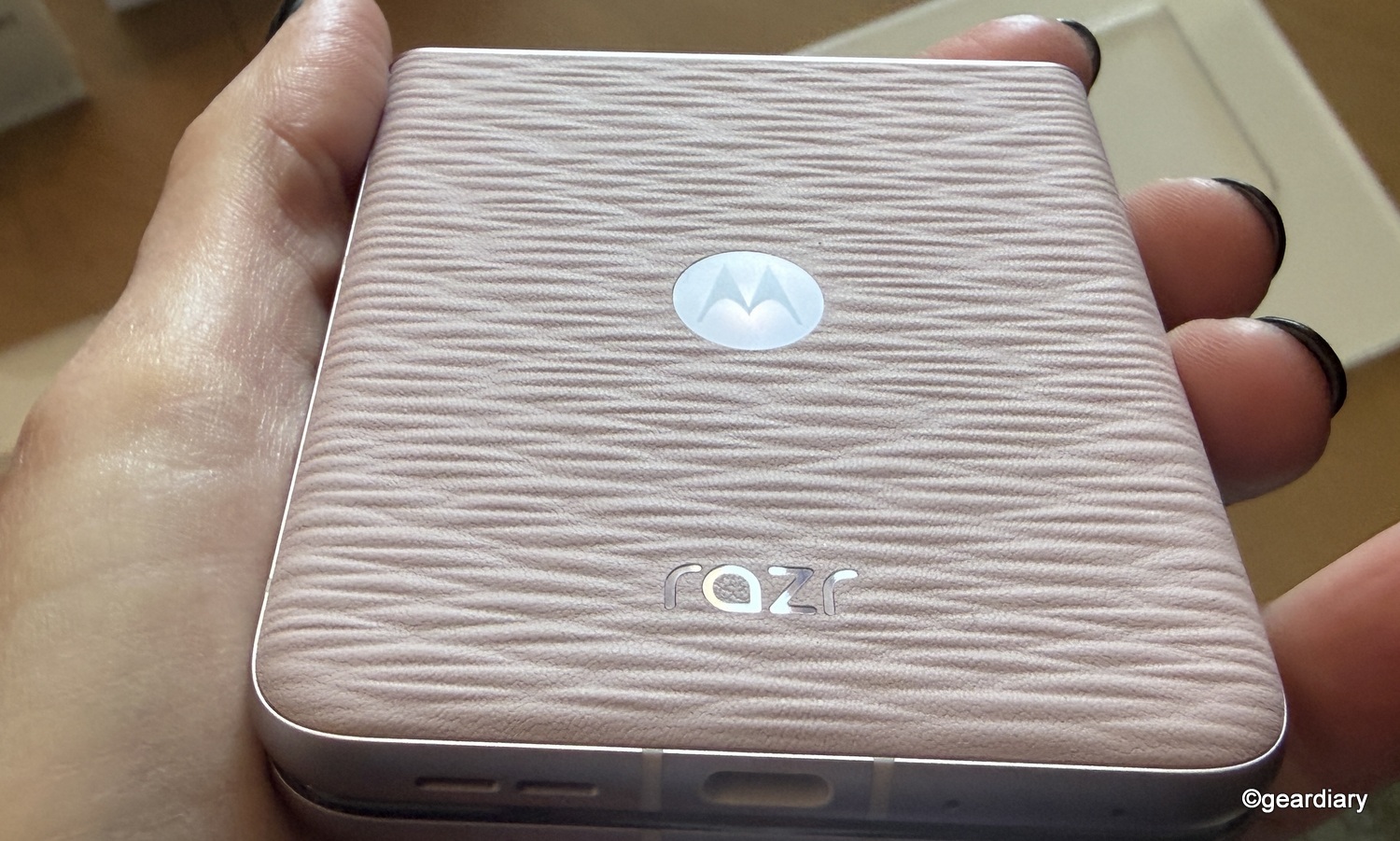
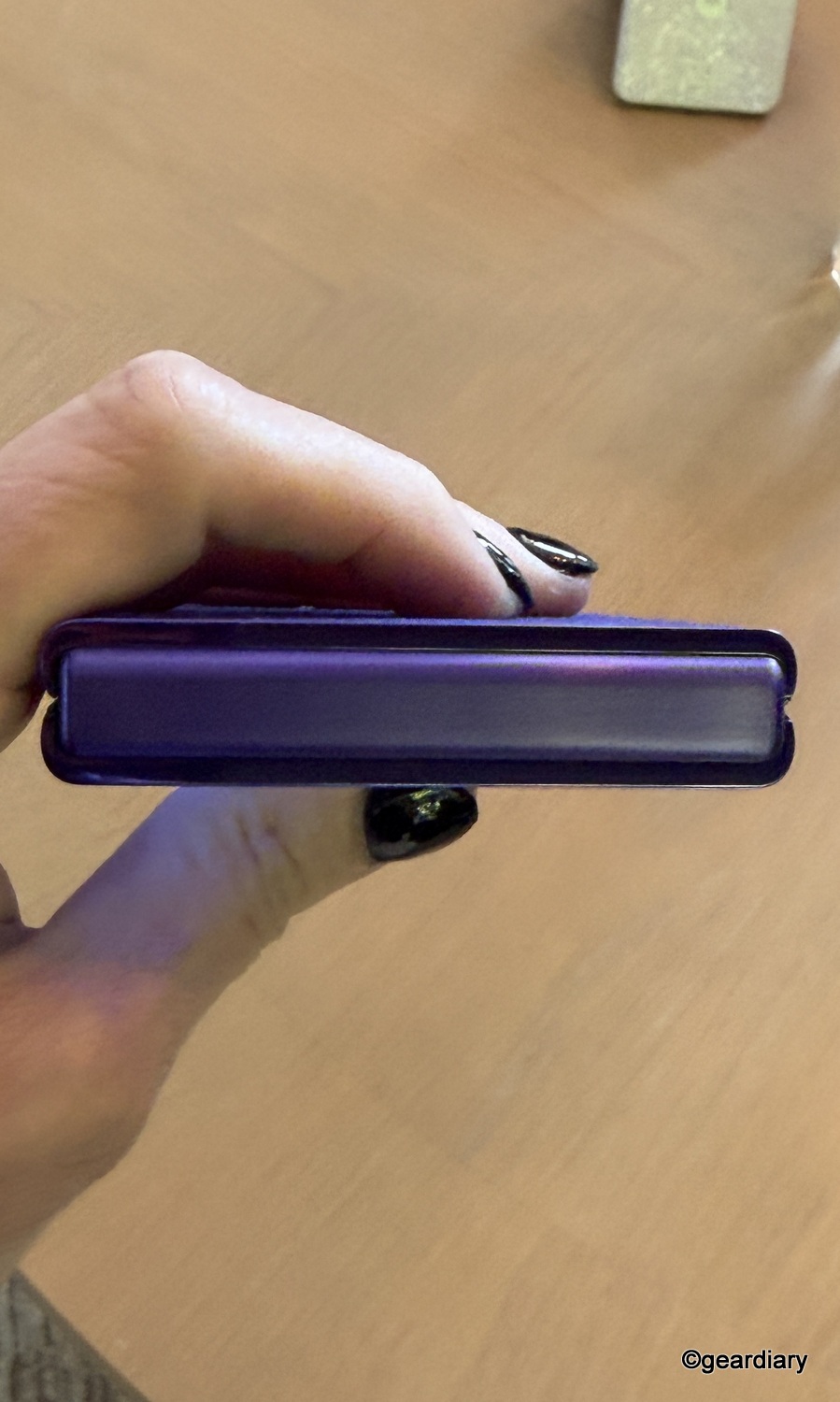
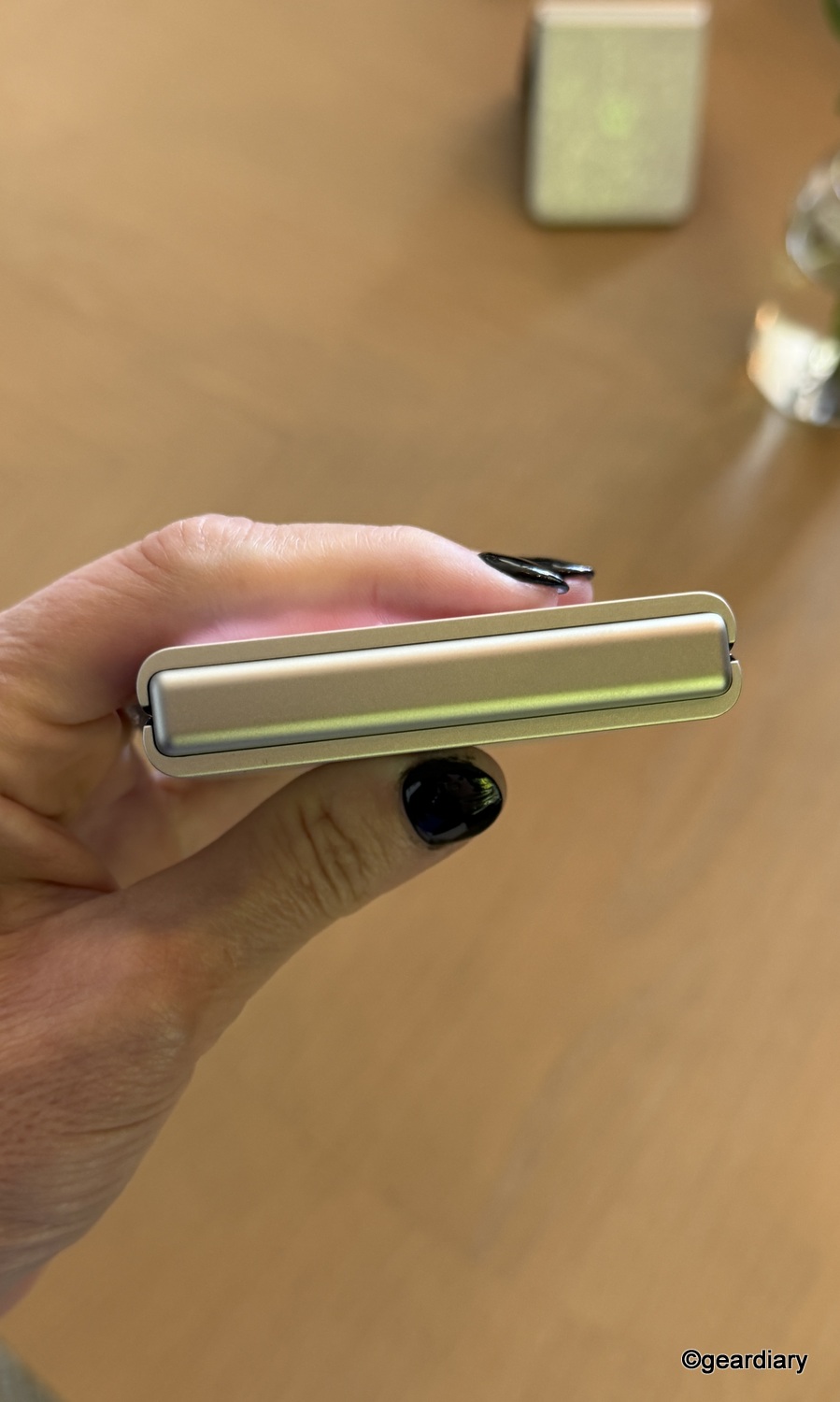
The razr+ comes in PANTONE Mountain View with a woven-inspired jacquard finish. The standard razr gets more color variety, including PANTONE Hematite with a woven-inspired finish, PANTONE Violet Ice and PANTONE Sporting Green with leather-inspired finishes, and PANTONE Bright White in Acetate.
-

- motor razr
-
- motor razr
-
- motor razr
-
- motor razr
-
- moto razr +
-
- moto razr ultra
-
- motor razr ultra
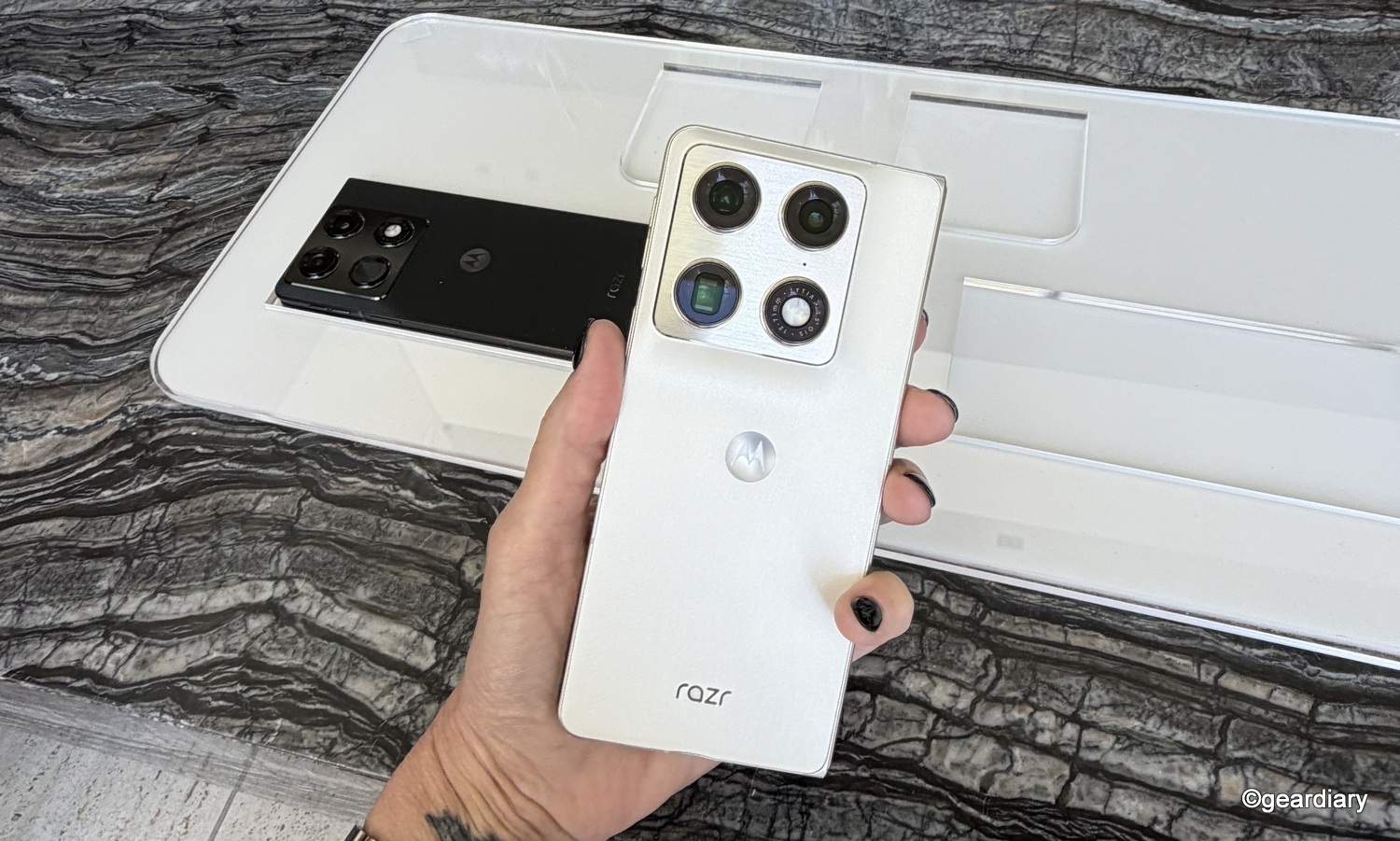
The razr fold keeps things more restrained with PANTONE Blackened Blue and PANTONE Lily White, which makes sense for the model that’s clearly being positioned as the more serious productivity-leaning device.
-
- motorola razr fold
-

- moto razr fold
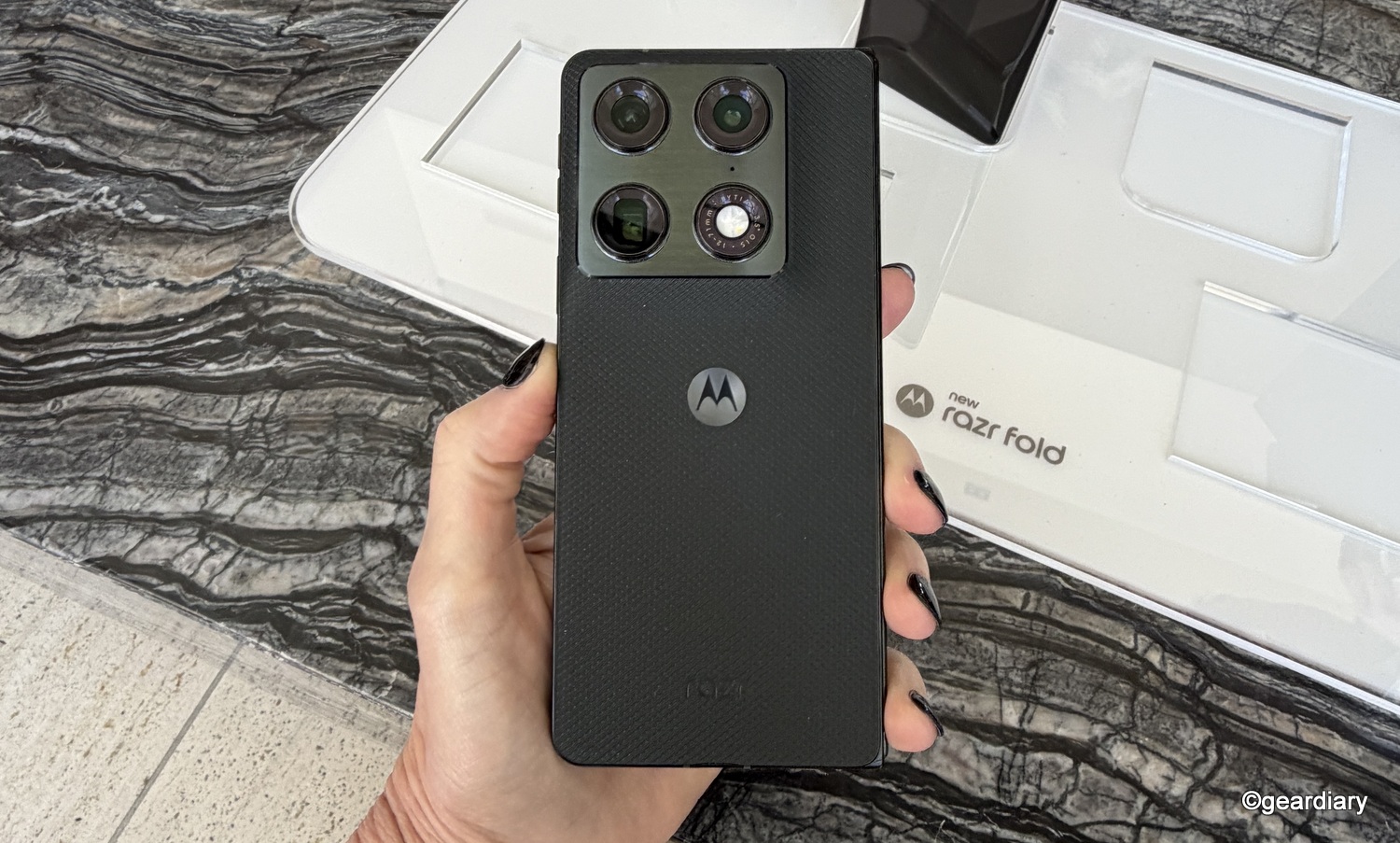
The hinge is titanium-reinforced across the new flip family, and durability is getting more attention this year. The razr ultra uses Corning Gorilla Glass Ceramic 3 on the external display, with Motorola claiming more than 75% better drop performance compared with previous-generation devices based on internal testing. The razr+ and razr use Corning Gorilla Glass Victus on the outside.
-
- moto razr ultra
-
- moto razr
-
- moto razr +
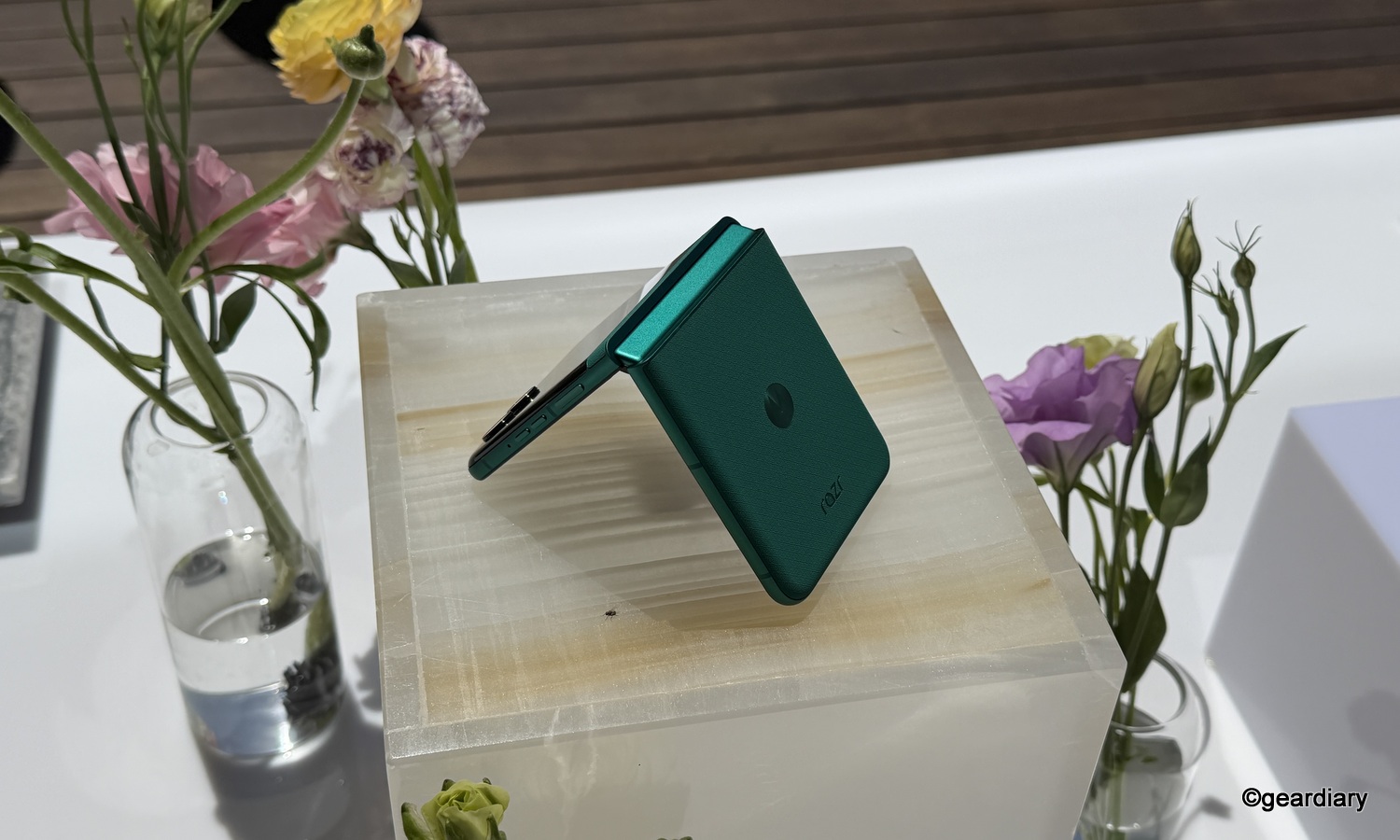
All three flip models carry an IP48 rating, which means they’re tested for protection against objects larger than 1mm and can survive immersion in up to 1.5 meters of still, fresh water for up to 30 minutes under controlled lab conditions. That doesn’t make them waterproof, dustproof, or bathtub-proof in the spiritual sense, and you shouldn’t charge them wet.
The razr fold carries IP48 and IP49 protection, meaning it has similar fresh-water immersion testing and added protection against powerful, high-temperature water jets under controlled lab conditions. That sounds reassuring, but the same caveats apply: resistance can decrease with normal wear, the phone isn’t designed to work underwater, and liquids other than fresh water remain a bad idea. Foldables may be getting sturdier, but they’re still not asking to join you in the pool.
The standard razr also meets MIL-STD 810H testing, independently certified by SGS, for selected environmental stress tests, including altitude, temperature extremes, and humidity. That sounds rugged, but the fine print matters: military-standard testing doesn’t guarantee future survival, and abuse covered in lab testing isn’t necessarily covered under the standard warranty. Still, for anyone nervous about moving to a foldable, it’s a useful reassurance.
The Cameras Are Chasing Reliability, Not Just Bigger Numbers
The razr ultra has the most ambitious camera setup of the flip lineup, with a 50-megapixel main camera, a 50-megapixel ultrawide and macro camera, and a 50-megapixel internal front camera. The main sensor uses LOFIC technology, short for lateral overflow integration capacitor, designed to capture a wider dynamic range.
Put simply, it gives the sensor more room to handle very bright and very dark areas in the same scene, so you’re less likely to lose detail in a white sky or a dark jacket.
-
- moto razr plus
-
- moto razr ultra
-

- moto razr
The razr ultra’s 50-megapixel main camera has optical image stabilization, often shortened to OIS, which physically steadies the camera to reduce blur in still photos and video. It also supports Dolby Vision recording and 8K video at 30 frames per second, along with 4K at 60 or 30 frames per second and full HD options.
The ultrawide camera offers a 122-degree field of view for landscapes, interiors, group shots, and the occasional “look at all this food” table photo. It also handles macro shots for close-up details.
The razr+ and standard razr each have a 50-megapixel main camera, a 50-megapixel ultrawide and macro camera, and a 32-megapixel internal front camera. Their 50-megapixel ultrawide sensors combine four pixels into one larger effective pixel, producing 12.5-megapixel photos that should perform better in challenging light than the megapixel count alone might suggest.
The razr+ records up to 4K video at 60 frames per second, while the standard razr records up to 4K at 30 frames per second.
-

- moto razr fold
-
- moto razr fold
-
- moto razr fold
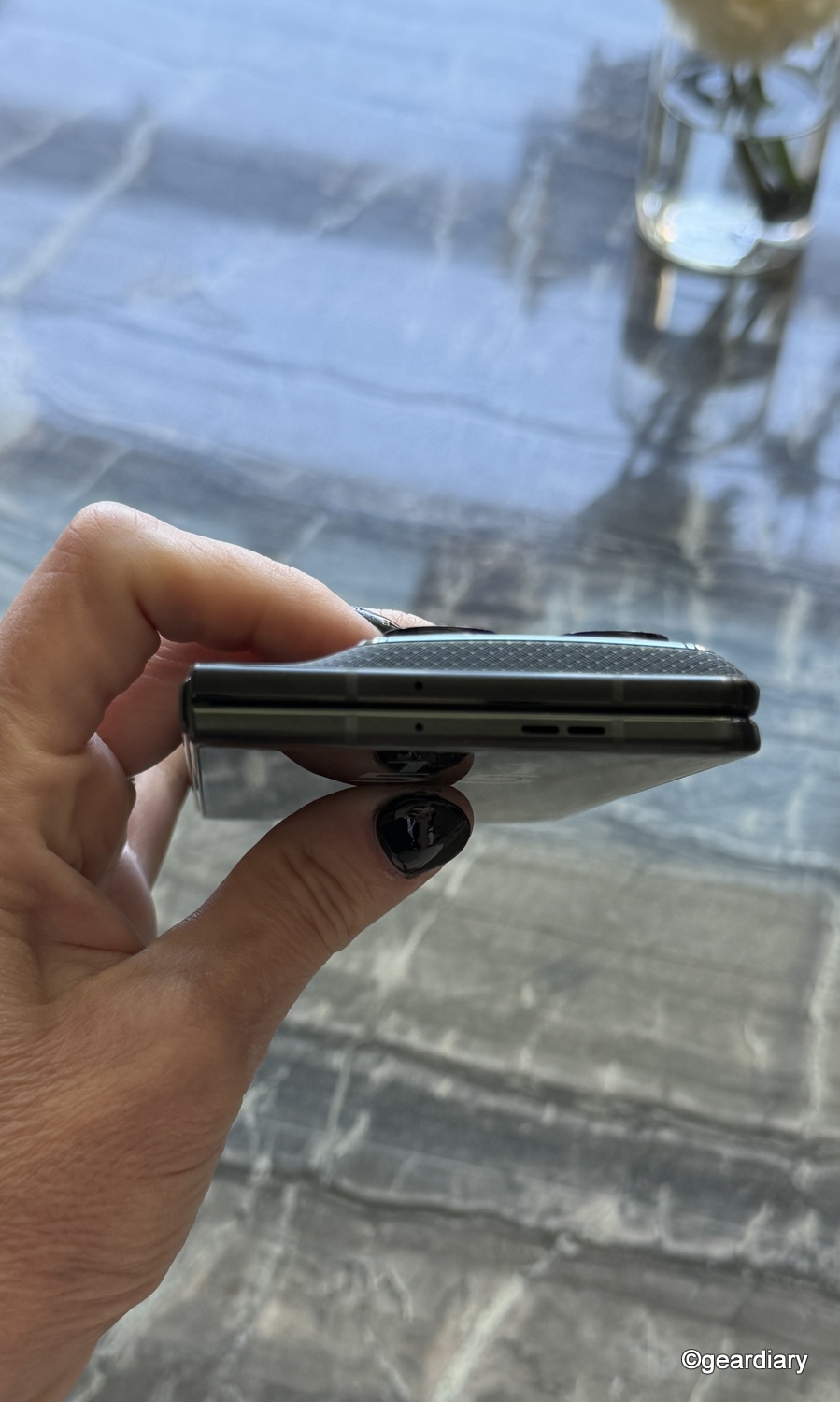
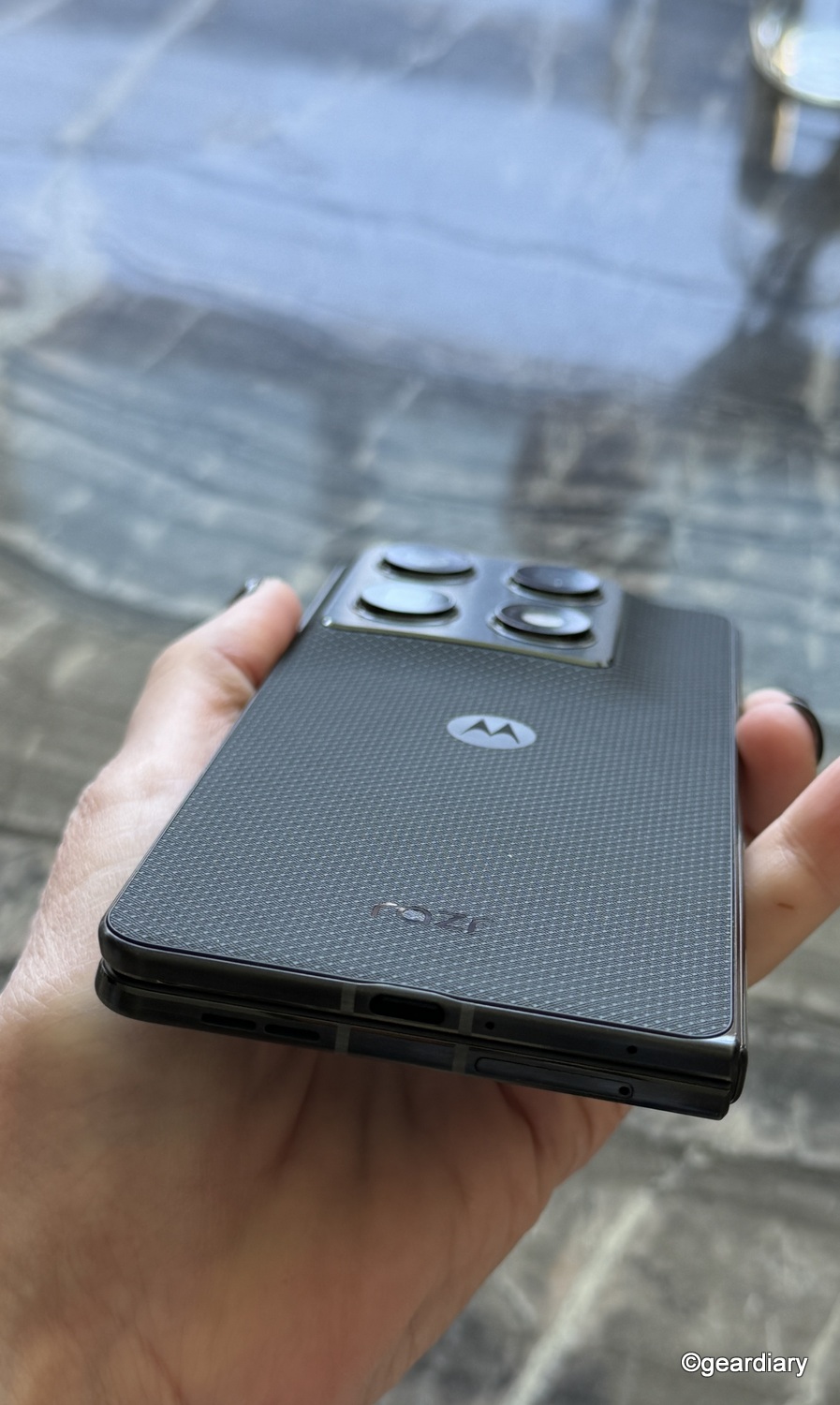
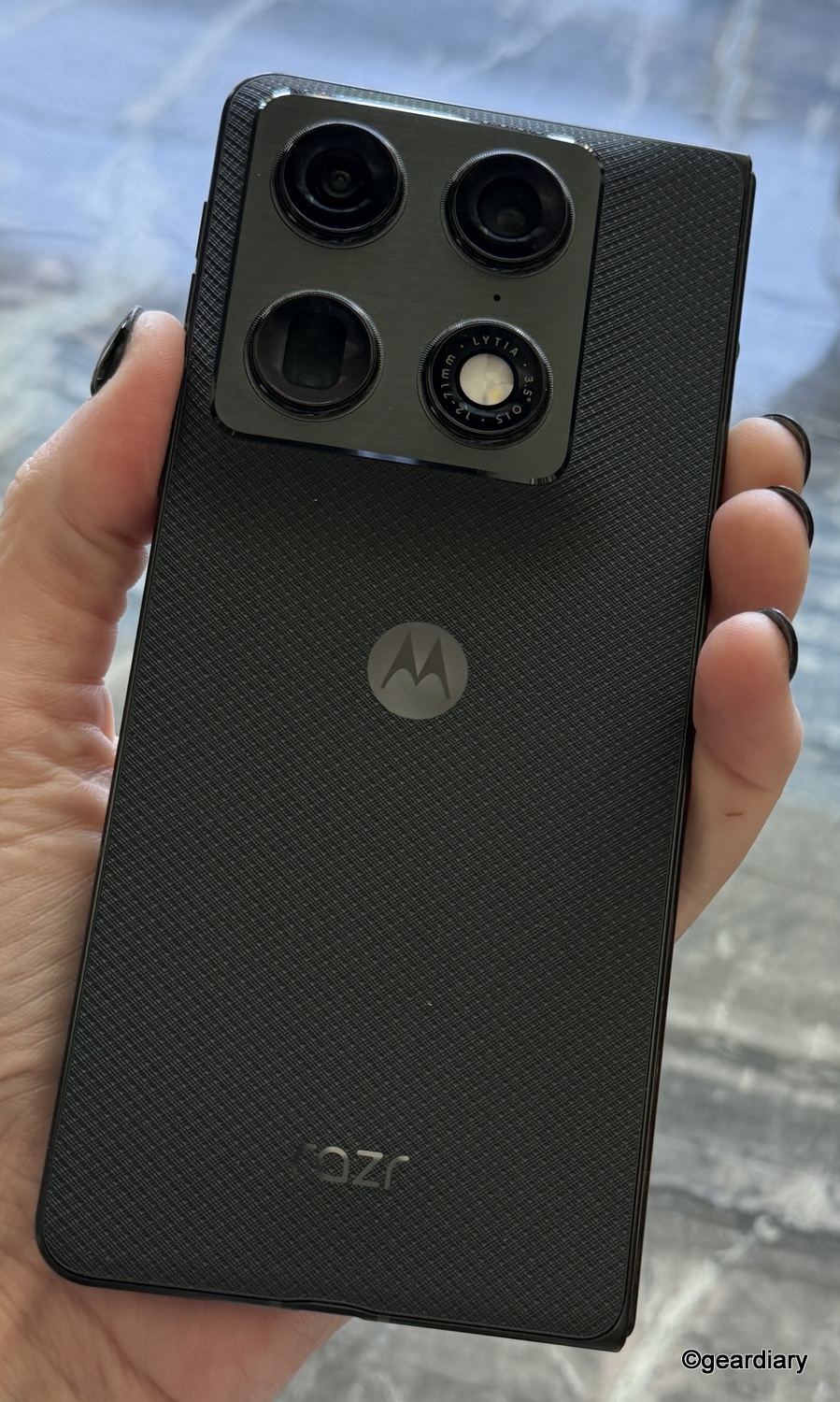
The razr fold gets the most elaborate camera setup in the broader 2026 razr family, at least on paper. It has a 50-megapixel main camera with a Sony LYTIA sensor, optical image stabilization, Dolby Vision recording, and a multi-spectral 3-in-1 light sensor that’s meant to help with color and exposure. There’s also a 50-megapixel ultrawide camera with a 122-degree field of view and macro support, plus a 50-megapixel periscope telephoto camera with 3x optical zoom and up to 100x Super Zoom.
For selfies and video calls, the fold includes a 32-megapixel external front camera and a 20-megapixel internal front camera, because apparently one selfie camera wasn’t going to be enough for a phone with this many screens. Video tops out at 8K at 30 frames per second, with 4K at 60 or 30 frames per second, and slow-motion capture up to 4K at 120 frames per second.
Motorola is also adding a set of shooting modes meant to address familiar phone-camera annoyances. Camcorder Rotate to Zoom lets you rotate your wrist in camcorder mode to zoom in and out while recording, and the camera can automatically identify and zoom toward the subject. Group Shot captures several frames and blends better expressions into one photo, though that feature isn’t available on the standard razr and can recognize up to 10 faces.
Signature Style learns from the edits you make in your gallery, while Frame Match lets you compose the shot first, hand the phone to someone else, and have them line up the on-screen guide. That last one might be the most quietly useful feature here, because strangers and loved ones alike have a remarkable gift for turning a simple portrait into an architectural study of ceiling lights.
Motorola’s AI Tools Could Be Helpful, Provided They Stay Out of the Way
All three new razr flip phones include moto ai features, though you’ll need a Motorola Account and an internet or cellular connection. Catch Me Up summarizes top notifications from supported apps, including Google Dialer, WhatsApp, Google Messages, Microsoft Teams, Messenger, Telegram, Discord, Instagram Direct Messages, Slack, TikTok, X Messages, LinkedIn, Airbnb, and several others, but compatibility with all other apps isn’t guaranteed.
Next Move is meant to suggest context-based next steps, while Motorola’s global search can look through apps, contacts, calendar details, and messages from one place. Ideally, that means less time digging through folders and more time getting back to the thing you were trying to do before another notification steals your attention.
Motorola is also keeping the door open to other assistants. Google Gemini is available for brainstorming, writing help, and conversational follow-ups through Gemini Live. Microsoft Copilot is included for drafting, editing, presenting, and organizing across Motorola devices, with support for voice and vision. Perplexity is also part of the mix, offering answer-style search with cited sources and follow-up research.
A useful version of this future is a phone that helps you find things faster. The exhausting version is a phone with too many assistants waiting around like consultants in a conference room. The difference will come down to how well Motorola keeps these tools accessible without making them feel unavoidable.
Bigger Batteries Make the Foldable Argument Easier to Buy
Battery life has often been one of the easiest ways to criticize foldables, since folding designs leave less room for large battery cells. Motorola is trying to push back on that with larger capacities across the lineup, and the razr fold gets the biggest battery of the bunch.
The razr fold has a 6000mAh battery, which makes sense for a device built around an 8.1″ inner display that’s likely to be used for video, multitasking, reading, gaming, and the other tiny-tablet things a book-style foldable invites. It supports 80W TurboPower wired charging, 50W wireless charging, and 5W reverse charging, so it’s better equipped than most phones to recover quickly when that big inner screen starts eating into the charge. As always, real battery life will depend on brightness, signal strength, app use, and how often you unfold it just because you can.
The razr ultra has a 5000mAh battery, with Motorola rating it for more than 36 hours of battery life under mixed-use testing. It supports 68W TurboPower wired charging, wireless charging, and reverse charging, enabling power sharing with compatible accessories. Motorola says 8 minutes on a 68W or higher Motorola TurboPower charger can provide power for the day, though that requires a substantially depleted battery, and charging slows as the battery fills. The charger is sold separately.
The razr+ has a 4500mAh battery with a claimed 31-plus hours of battery life, 45W TurboPower wired charging, 15W wireless charging, and reverse charging. Motorola lists 11 minutes of charging as enough for power for the day, again under specific conditions and with the right charger. The standard razr gets a 4800mAh battery, more than 36 hours of claimed battery life, 30W TurboPower charging, and 15W wireless charging. Motorola lists 15 minutes of charging as enough for power for the day.
Battery claims should always be treated as informed optimism. Signal strength, screen brightness, app habits, temperature, battery age, and whether you’re filming a child’s entire school concert in 4K all matter. Still, these capacities are encouraging for foldables, especially when the external displays let you handle quick tasks without opening the larger inner screens every time.
The Chips Tell You Who Each Razr Is Really For
The razr fold sits at the top of the broader 2026 razr family with the Snapdragon 8 Gen 5, 16GB of LPDDR5X memory, and 512GB of built-in storage. That combination makes sense for a book-style foldable built around a larger inner display, since it’s the model most likely to be used for multitasking, split-screen work, gaming, video editing, and pretending you’re absolutely not answering emails from the couch.
The extra memory should help keep more apps ready in the background, while the 512GB of storage gives you more breathing room for photos, videos, downloads, and the growing pile of apps you swore you’d delete someday.
The razr ultra uses Qualcomm’s Snapdragon 8 Elite Mobile Platform, with a 3rd-generation Qualcomm Oryon CPU, Adreno graphics, and Qualcomm’s AI Engine for on-device processing. It pairs that with 16GB of LPDDR5X memory and 512GB of built-in storage. LPDDR5X is a fast, power-efficient memory type used in premium mobile devices, and RAM Boost can borrow storage space as virtual memory when needed, though doing so reduces available storage.
The razr+ uses the Snapdragon 8s Gen 3 Mobile Platform, 12GB of LPDDR5X memory, and 256GB of storage. That chip isn’t positioned as high as the Snapdragon 8 Elite, but it should still be quick enough for multitasking, high-refresh displays, image processing, and games that don’t require your phone to double as a hand warmer.
The standard razr uses MediaTek’s Dimensity 7450X processor with 8GB of LPDDR5X memory and 128GB of storage. That’s the clearest dividing line between the $799.99 model and the more expensive versions.
If you mostly want the flip shape, outside display, solid cameras, and long battery life, the standard razr may be the sensible pick. If you’re editing video, gaming, leaning on AI features, or keeping phones for several years, the higher-end chips and extra storage on the razr+, razr ultra, and razr fold become easier to justify.
Google Photos Is Getting a Digital Closet
Motorola and Google are also using the new razr launch to introduce two Google Photos-related features. The first is wardrobe, a Google Photos feature that can identify clothing and accessories in your photo library, generate clean item images, organize them into a digital closet, and let you mix, match, try on, save, and share looks.


That could be handy if you’re packing for a trip, trying to remember whether a jacket works with a certain pair of shoes, or avoiding the grim morning ritual of standing in front of a closet and realizing all your clothes have conspired against you. It also raises the obvious privacy question: this feature requires enough access to your photos to identify your clothing. For some people, that tradeoff will be fine. For others, the phrase “digital closet” may land somewhere between useful and please stop looking at my laundry.
Google Photos wardrobe is expected to launch on a variety of Android devices, including Motorola devices, in select regions over the coming months. Initial availability begins in June 2026 for Android owners who are at least 16 years old and have face grouping enabled.
Motorola is also integrating Google Photos Memories into Daily Drops, a personalized content feed that refreshes twice a day with items such as headlines, calendar information, weather updates, and resurfaced photo memories. Calendar integration requires Google Calendar access, and Memories integration requires Google Photos access.
Daily Drops has begun rolling out on select Motorola devices in parts of Europe, North America, Latin America, and Asia, and it’s expected to arrive on the new razr family shortly after launch.
Moto Buds 2 Plus Bring Bose-Tuned Audio Into Motorola’s Ecosystem
Alongside the phones, Motorola is launching the moto buds 2 plus in North America. The earbuds are priced at $149.99 and arrive in PANTONE Silhouette, with availability beginning April 30 on the Motorola site.
The moto buds 2 plus include Sound by Bose technology, dual 11mm dynamic drivers, balanced armatures by Knowles, Spatial Audio, and support for AAC, SBC, LHDC5, and LHDC4 codecs. A codec is the method used to compress and transmit audio over Bluetooth, and LHDC is meant to support higher-quality wireless audio with lower delay when paired with compatible devices and content. Spatial Audio requires a compatible Motorola smartphone and Dolby Atmos-supported content.
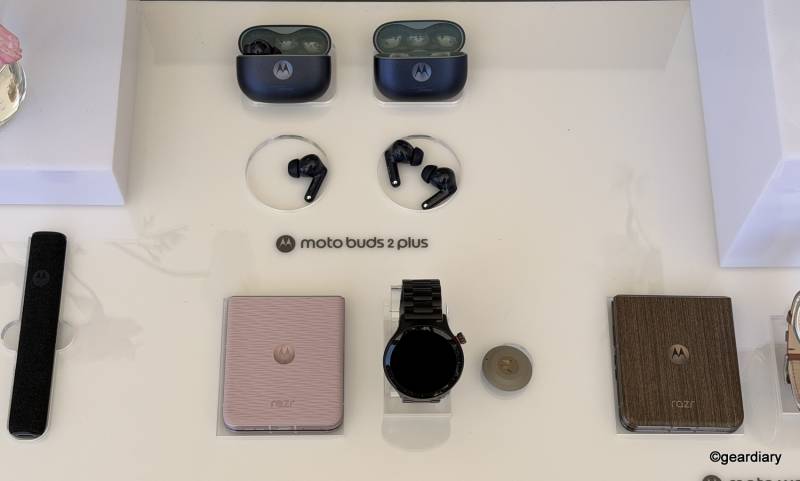
moto buds 2 plus
They also include Dynamic Active Noise Cancellation, transparency mode, six microphones, and CrystalTalk AI noise cancellation through the Moto Buds app. Active noise cancellation listens to surrounding sound and counters it electronically, while transparency mode lets outside sound in so you can hear an announcement, a cyclist, or the barista calling the name they definitely didn’t spell correctly.
The six-microphone setup and Environmental Noise Cancellation are meant to make calls clearer by reducing background noise, and CrystalTalk AI can further clarify your voice in loud environments.
Battery life is rated at up to 9 hours per charge and up to 40 hours total with the charging case, based on median use under optimal conditions. A 10-minute charge can provide up to 2 hours of playback. Each earbud has a typical 60mAh battery, while the case has a typical 520mAh battery. The earbuds are rated IP54 for dust and splash resistance, and the case is rated IPX2.
The moto buds 2 plus also support Bluetooth 6.0, Dual Connection with auto switching, Audio Share, Wear Detection, Fit Test, Gaming Mode, Ring My Buds, alarm detection, user-adjustable controls, customizable EQ with Bass Boost, and voice assistant triggering. Several features require the Moto Buds app from the Google Play Store.
On compatible moto ai phones, pressing and holding the earbuds can activate moto ai features such as Catch Me Up, Pay Attention for recording, transcription, or summarization, Remember This, and translation through Google Translate. Supported languages and features vary, as they always do when the future gets ambitious and multilingual.
Pricing and Availability
In the United States, the motorola razr fold will be available for preorder at Best Buy and the Motorola site on May 14, with unlocked sales beginning May 21 at $1,899.99. It will also be available on T-Mobile, Xfinity Mobile, and Verizon in the coming months. The moto pen ultra will be available on the Motorola site starting May 21 for $99.99.
The motorola razr ultra will be available for preorder at Best Buy, Amazon, and the Motorola site on May 14, with unlocked sales beginning May 21 at $1,499.99. The motorola razr+ will be available for preorder at Best Buy, Amazon, and the Motorola site on May 14, with unlocked sales beginning May 21 at $1,099.99. It will also be available at AT&T on May 21, with T-Mobile availability coming later.
The motorola razr will be available for preorder at Best Buy, Amazon, and the Motorola site on May 14, with unlocked sales beginning May 21 at $799.99. It will also arrive at Boost Mobile, Spectrum Mobile, Verizon, Visible, Xfinity Mobile, Consumer Cellular, Google Fi Wireless, and Cox Mobile on May 21, with T-Mobile and Cricket Wireless availability to follow.
Carrier pricing can vary, so the advertised price may not be what you see once trade-in offers, installment plans, and promotional math enter the chat.
You can learn more or purchase the new devices on the Motorola site, and the carrier models are worth checking if you’re already tied to a plan and willing to read the fine print before celebrating a discount.
How the 2026 Motorola Razr Lineup Compares to 2025
Before anyone assumes the newest razrs are the only ones worth considering, it’s worth looking at how the 2026 lineup compares with last year’s models. The 2025 razr family was already strong, and while the 2026 versions bring bigger batteries, brighter displays, updated camera tools, broader AI features, and higher prices, the older phones may still make a lot of sense if you can find them discounted.
| motorola razr ultra | |
|---|---|
| 2025 Version | razr ultra |
| 2025 Chipset | Snapdragon 8 Gen 3 Elite |
| 2025 Memory/Storage | 16GB LPDDR5X / 512GB |
| 2025 Starting Price | $1,299.99 |
| 2026 Version | razr ultra |
| 2026 Chipset | Snapdragon 8 Elite |
| 2026 Memory/Storage | 16GB LPDDR5X / 512GB |
| 2026 Starting Price | $1,499.99 |
| Biggest Difference | Larger 5000mAh battery, brighter displays, upgraded camera tools, and a $200 price increase. |
| motorola razr+ | |
|---|---|
| 2025 Version | razr+ |
| 2025 Chipset | Snapdragon 8s Gen 3 |
| 2025 Memory/Storage | 12GB LPDDR5X / 256GB |
| 2025 Starting Price | $999.99 |
| 2026 Version | razr+ |
| 2026 Chipset | Snapdragon 8s Gen 3 |
| 2026 Memory/Storage | 12GB LPDDR5X / 256GB |
| 2026 Starting Price | $1,099.99 |
| Biggest Difference | Larger 4500mAh battery, brighter display specs, and a $100 price increase. |
| motorola razr | |
|---|---|
| 2025 Version | razr |
| 2025 Chipset | MediaTek Dimensity 7400X |
| 2025 Memory/Storage | 8GB LPDDR4X / 256GB |
| 2025 Starting Price | $699.99 |
| 2026 Version | razr |
| 2026 Chipset | MediaTek Dimensity 7450X |
| 2026 Memory/Storage | 8GB LPDDR5X / 128GB |
| 2026 Starting Price | $799.99 |
| Biggest Difference | Newer MediaTek chip, larger 4800mAh battery, wireless charging, added durability claims, a $100 price increase, and less listed storage. |
| motorola razr fold | |
|---|---|
| 2025 Version | No direct 2025 equivalent |
| 2025 Chipset | N/A |
| 2025 Memory/Storage | N/A |
| 2025 Starting Price | N/A |
| 2026 Version | razr fold |
| 2026 Chipset | Snapdragon 8 Gen 5 |
| 2026 Memory/Storage | 16GB LPDDR5X / 512GB |
| 2026 Starting Price | $1,899.99 |
| Biggest Difference | New book-style foldable with an 8.1″ inner display, 6.6″ outer display, moto pen ultra support, and a 6000mAh battery. |
The 2026 razr family is more powerful, more expensive, and more ambitious. The razr ultra gets the clearest flagship treatment, the razr+ remains the premium middle child, and the standard razr still looks like the most approachable way into the flip-phone world. The razr fold is the wild card, not because it lacks purpose, but because it changes the razr conversation from stylish flip phones to a broader foldable ecosystem.
That said, last year’s models were very good, and they are still available through some retailers and carriers. If the newest razrs stretch your budget too far, the 2025 motorola razr family is absolutely worth a second look, especially if you can find one with a carrier deal, trade-in offer, or retail discount.
A More Serious Foldable Push
Taken together, the Motorola 2026 razr family feels less like a nostalgia project and more like a full lineup meant to meet people at different comfort levels with foldables. The razr ultra is for the person who wants the strongest flip-phone specs and doesn’t mind paying for them.
The razr+ is the more balanced premium flip model. The standard razr is the one that could bring more people into the category, especially with a useful outside screen, wireless charging, a larger battery, and added durability claims.
The razr fold, meanwhile, is for anyone who wants the razr design language but would rather have a small tablet hiding inside their phone.
The bigger question is whether the software features will feel helpful or merely busy. A smarter external display, a digital wardrobe, notification summaries, voice assistants, and photo memories can all be useful when they behave. When they don’t, they can turn a phone into a well-dressed interruption machine.
Even so, the hardware story is stronger this year, the pricing ladder is clearer, and the addition of the moto buds 2 plus gives Motorola a more complete ecosystem pitch. For anyone who’s been curious about foldables but waiting for them to feel a little less delicate and a little more daily-driver ready, this is the most persuasive razr family Motorola has brought forward yet.

![Incipio [Performance] Series Level 2 Dual-Layered Drop Protection](https://geardiary.com/wp-content/uploads/2016/01/IMG_6939.jpg "Incipio [Performance] Series Level 2 Dual-Layered Drop Protection 42")

Any progress on foldables is welcome … I really miss having a phone that can slide in a pocket easily. Looks like they are getting there with the new version.
I love the idea of foldable phones. The price of these is not too bad. I hope one day to own one.
Awesome Choice for a phone!
Nice specification and features for a smartphone.
Motorola seems to be the company most committed to making foldables mainstream.
I definitely miss having a flip/foldable phone and these look really interesting. I hope I can try one out one of these days!