
On August 11th, 2026, I was invited to a Kickstarter Launch Event in San Francisco for the InfiMaker K1 5-axis CNC, a sleek desktop machine with powerful capabilities for experienced makers and hobbyists alike. I have personally stayed away from things like 3D printers– I’m not creating things to sell on Etsy any time soon. The learning curve seems slightly daunting. I’ve played with laser engravers and copycat CNC routers with varying degrees of frustration. But a 5-axis CNC? No way I’d be able to wrap my head around that. Or could I?
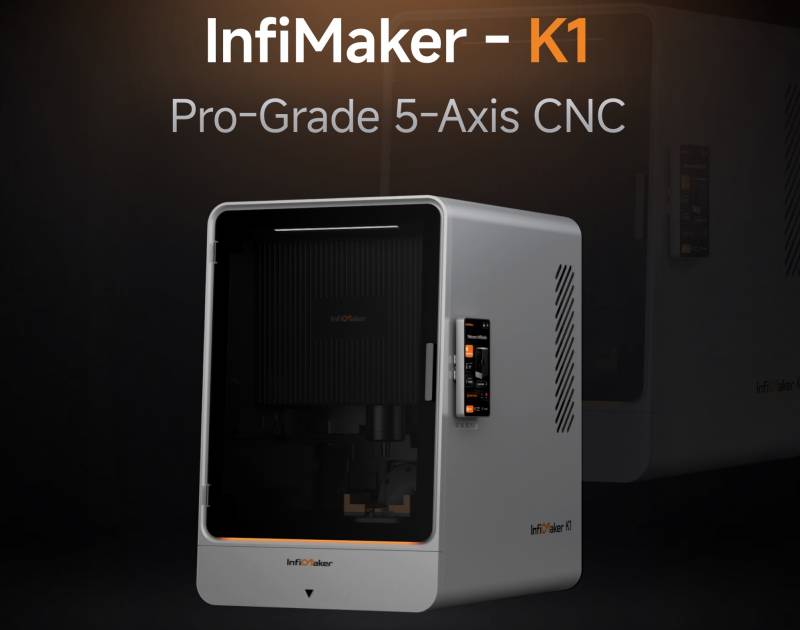
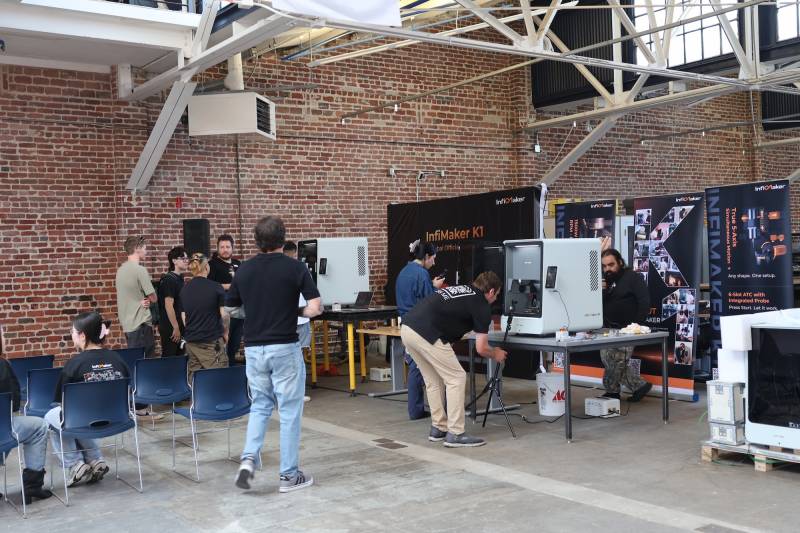
“The gap between the imagination to creation is what we wish to close,” said InfiMaker’s CTO, “LJ”. InfiMaker aims to put pro-grade tools within reach, and they’re not starting from nothing. From college robotics clubs and starting a self-driving construction equipment company, the founders brought their knowledge from DJI agricultural drones and ROMO automated vacuums to create InfiMaker in 2024.
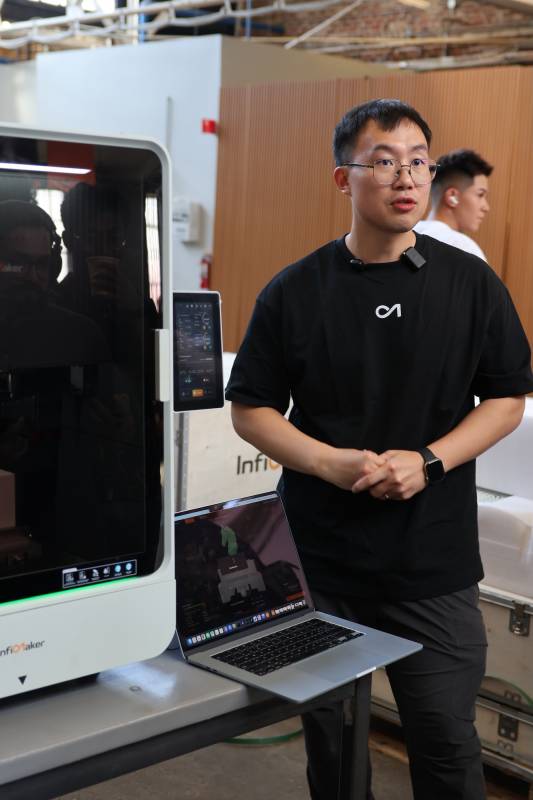
InfiMaker CTO “LJ”
At the launch event, one thing I learned is that the InfiMaker K1 was designed for an easy workflow: it will have auto-probing and auto-tool change, and can auto-resume upon power failure. Perhaps the most attention-grabbing aspect of the system is its software: While the K1 can work with CAM software (G-code protocol) that I know nothing about, the InfiStudio software uses an AI-assisted feature to create tool paths from prompts.
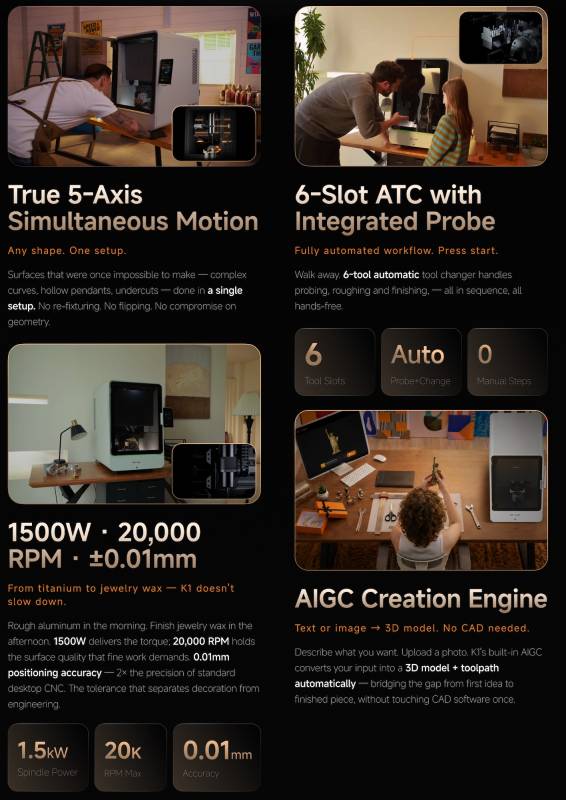
Now, I live in San Francisco, which means I’m constantly bombarded with roadside billboards with cryptic AI advertisements promising the world. Having lived through several bubbles, I’m an AI skeptic. But using AI to smooth out the learning curve for a CNC machine? This seems like science fiction, almost like a Star Trek food replicator, albeit much slower and less edible.
There were two prototype K1 units in action at the event.
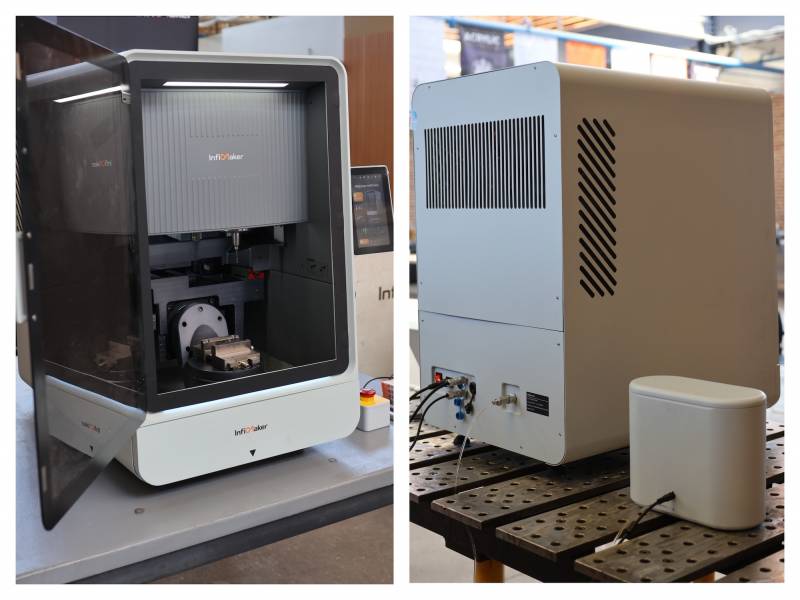
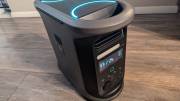
I did a walk around the K1. It’s about the size of a tall college dorm fridge. I noticed a rounded white box next to the K1 that reminded me of a wireless speaker. It had a liquid feed tube. Turns out it’s part of the cooling system that uses distilled water.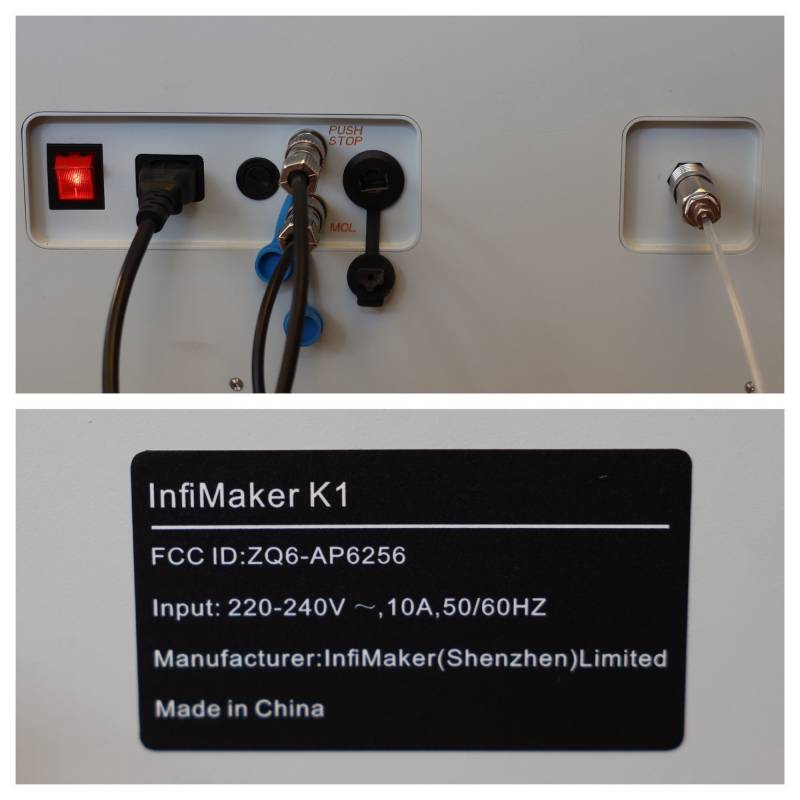
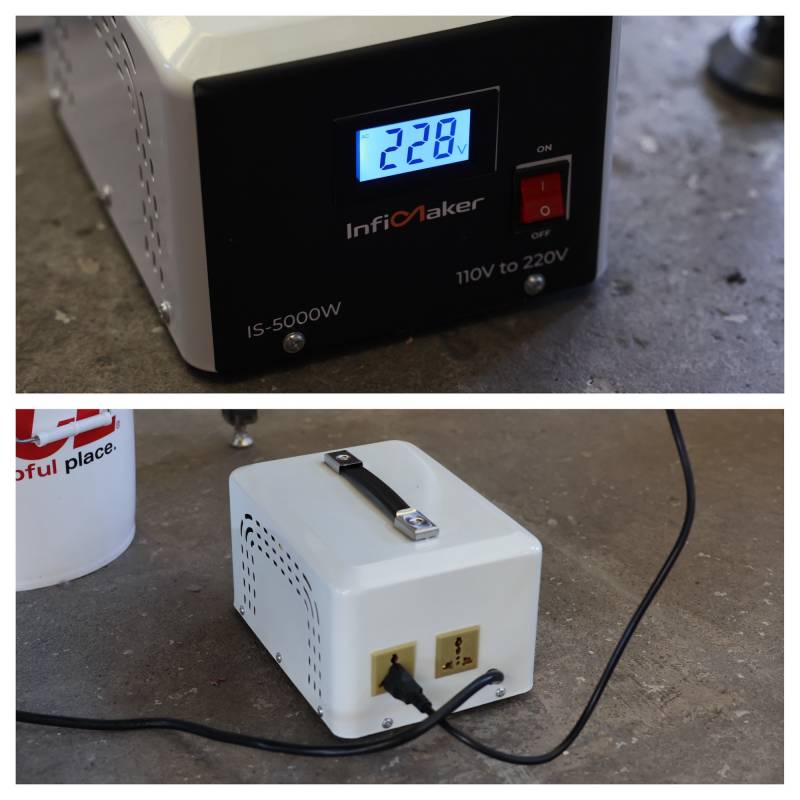
An unassuming box on the floor caught my eye, so I followed it back to the wall outlet. The InfiMaker K1 uses 220V, so the kit includes a 110V-to-220V step-up converter. The digital display is a nice touch. I asked my media rep about power demands, and I was told that the K1 runs at around 500–600W, which translates to roughly 4.5–5.5A at 110V. That’s something to think about for us hobbyists who may not have a dedicated workshop with a robust 220VAC line running.
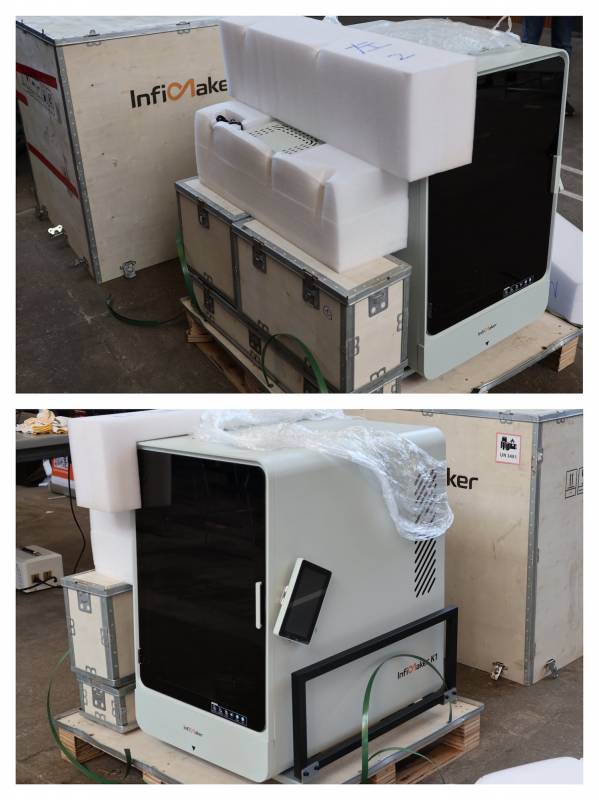
Off to the side, I noticed a partially unpacked K1. It looks like the machine comes with the supporting goodies packed in the crate. If this shows up at your doorstep, you better have the room.
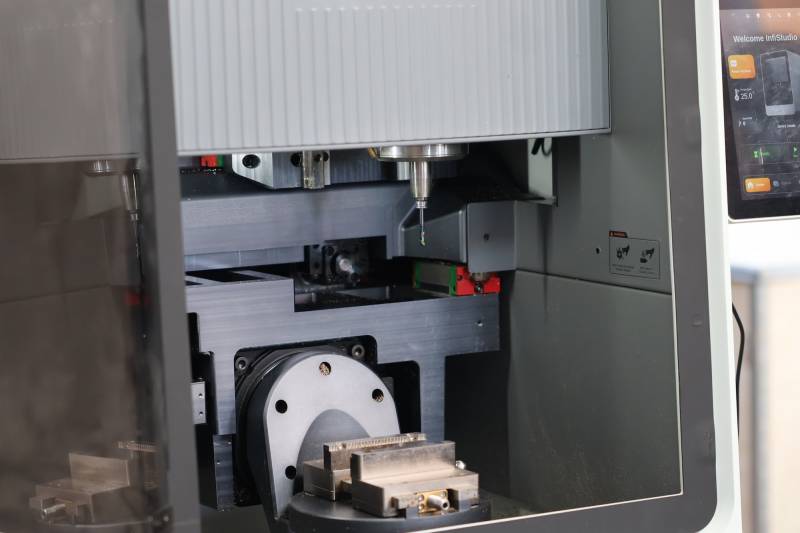
A view inside the InfiMaker K1. Your material (wood, resin, aluminum, etc) is clamped at the bottom.
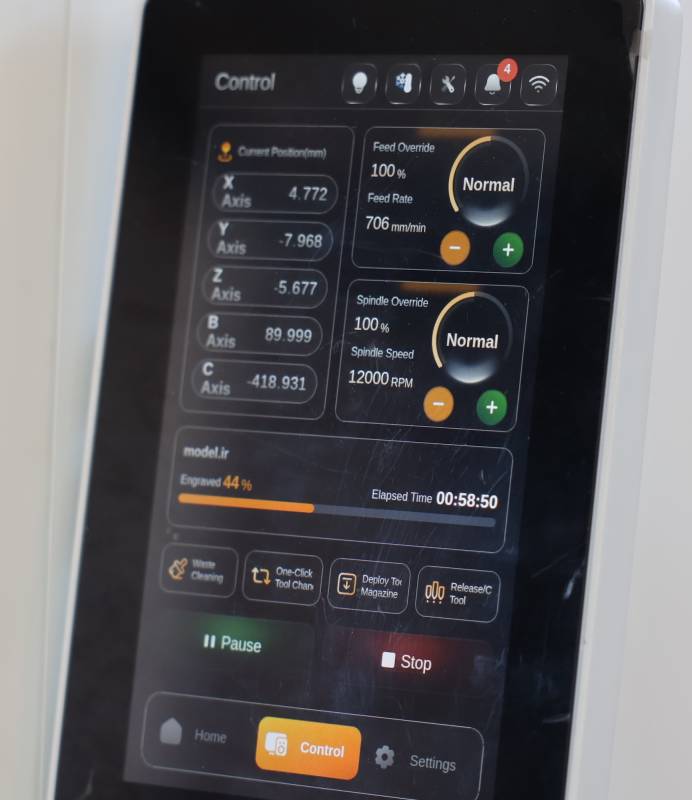
A close-up of the InfiMaker K1’s screen, mounted on the right side. That’s a pretty handsome-looking interface.
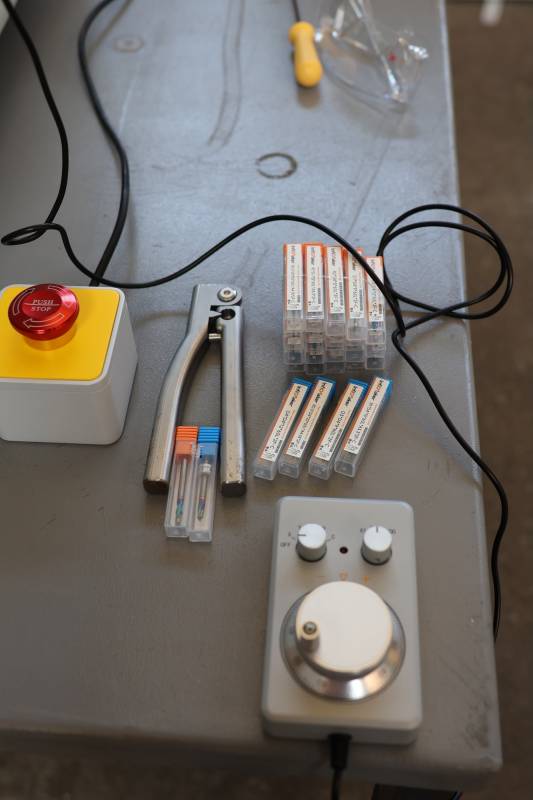
Connected to the demo unit was a red emergency stop button and a wired controller. Also note the small boxes of tooling bits.
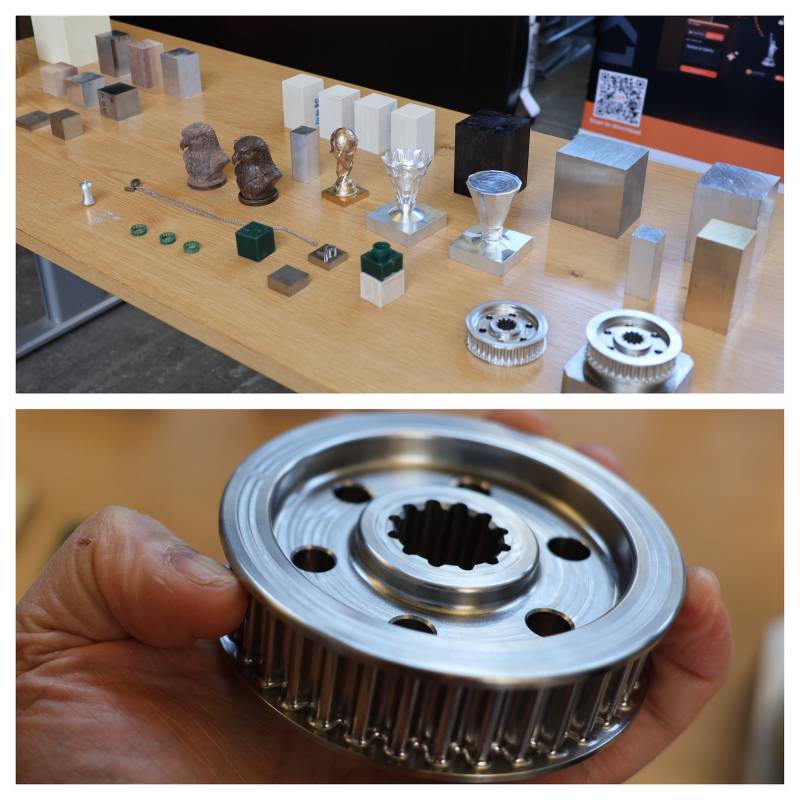
On an adjacent table stood a variety of samples. I thought the metal gear was pretty neat.
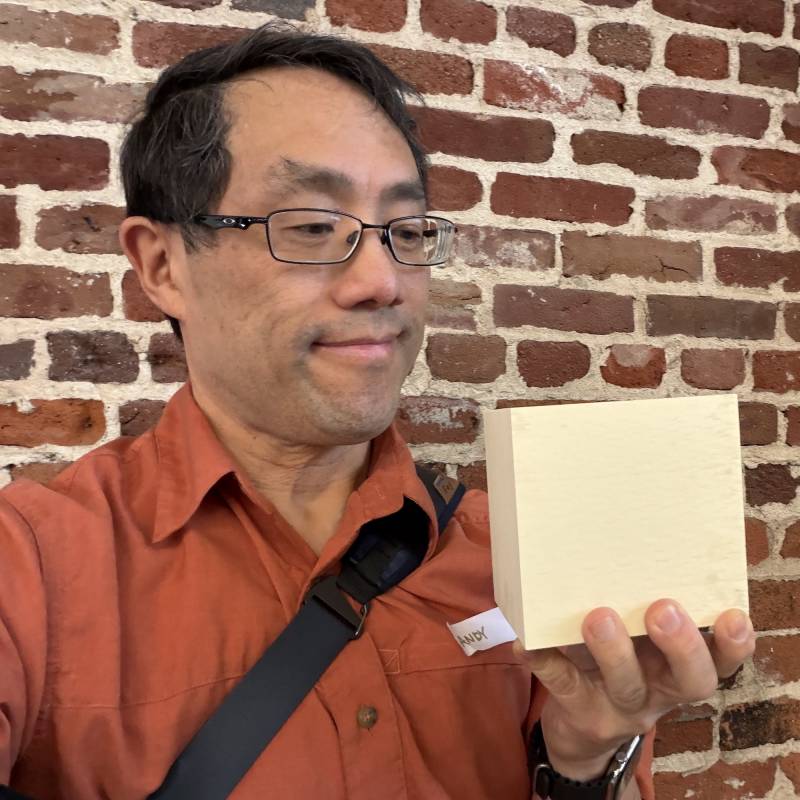
Here’s a photo of two blockheads. Several blocks of material were on display, including this 120 mm (almost 4-3/4″) cube of wood. This is the largest chunk the InfiMaker K1 can work with.
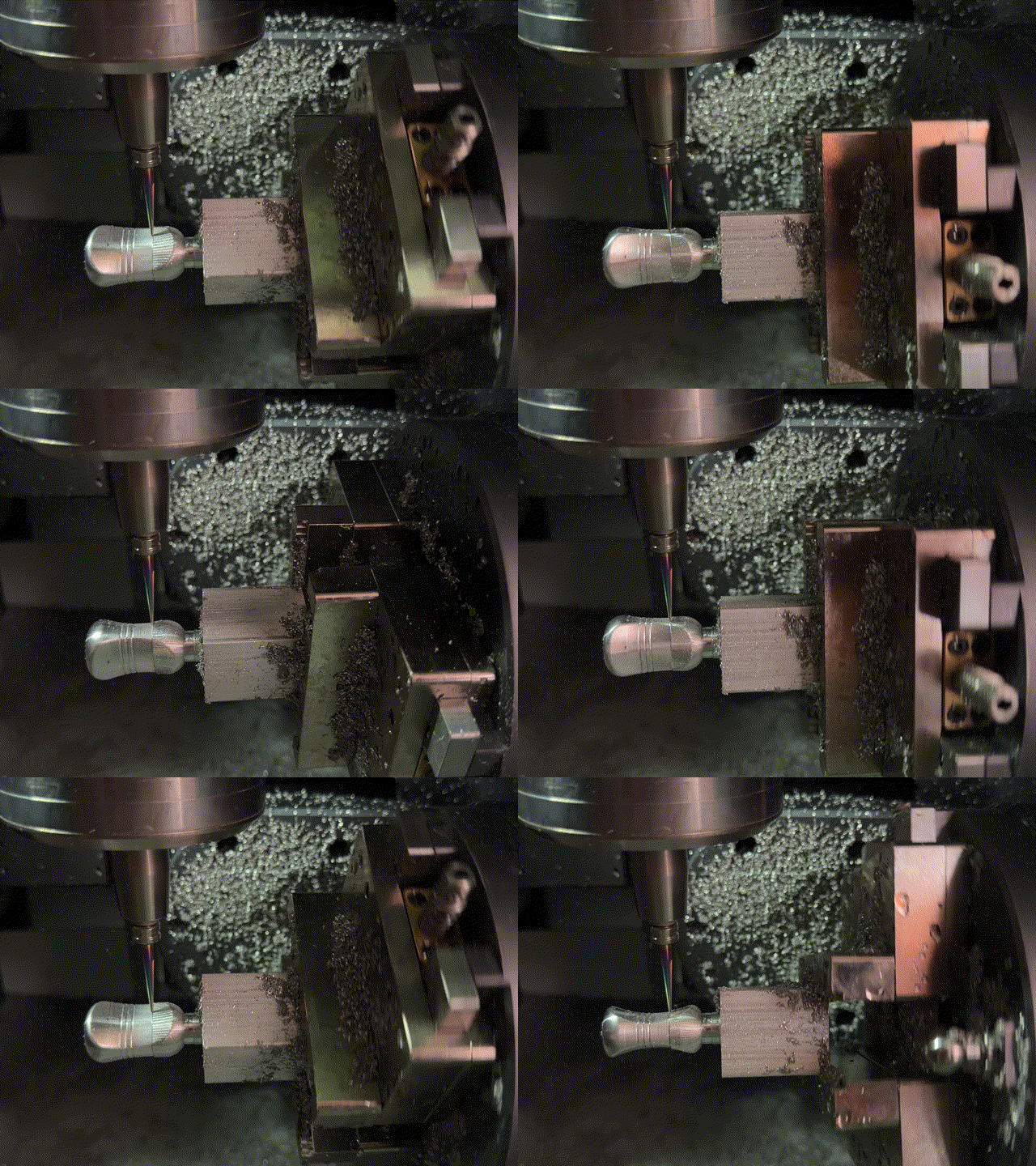
Here’s a close-up of the InfiMaker K1 in action. We were all impressed by how quiet it was. I would place it about as noisy as a laser printer. I think the choice of tooling, speed, and material makes a difference. In one demo, a wooden piece being cut was a bit noisier than I expected.
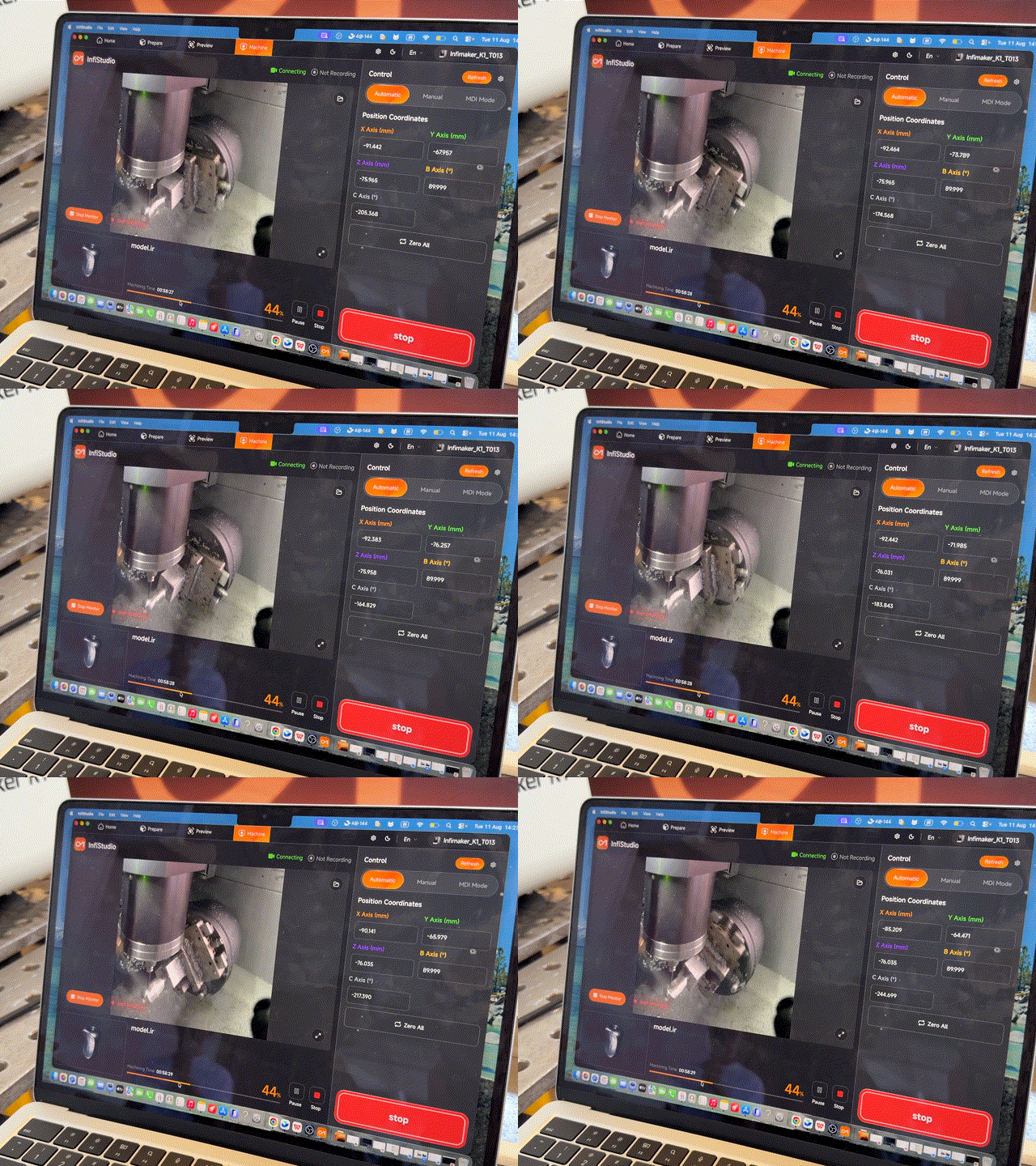
A MacBook Air sat next to an InfiMaker K1 with a video of what was going on inside. I noticed that the prototype had what looked like a GoPro-style camera mounted inside the K1’s door. I don’t know if that’s the final way the K1 will produce streaming video from behind the door, but I was told a camera will be part of the K1.
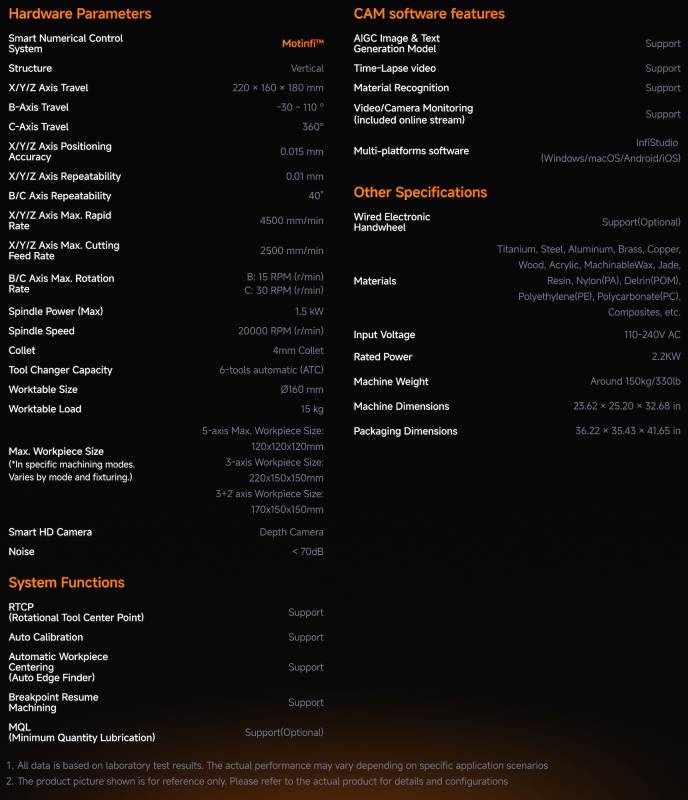
Some of the specs (dimensions, weight) differ slightly between the press release and the InfiMaker K1 page. Then again, they’re not ready to ship yet. I was told that “end of 2026” was a possibility.
I know CNC machines aren’t new, but the InfiMaker K1 seems really well thought out and clearly a lot of time was spent to make this as inviting to newbie hobbyists like me. If users can use AI to overcome the initial barrier to entry, I’m really eager to put the K1 through its paces so I can spend time creating instead of getting frustrated with design software.




Be the first to comment on "The InfiMaker K1 Makes 5-Axis CNC Machining Look Almost Too Easy, and It’s Launching Soon on Kickstarter"