
Apple’s September hardware lineup has plenty of familiar annual upgrades, but the iPhone Duo is the device that changes the shape of the conversation. Apple’s first foldable iPhone opens to a 7.6″ inner display, closes around a 5.4″ outer screen, and starts at $1,999, making it both the most unusual and one of the most expensive iPhones Apple has ever sold. It arrives alongside the iPhone 18 Pro and iPhone 18 Pro Max, AirPods 5, Apple Watch Series 12, and Apple Watch Ultra 4, with Apple Intelligence and Siri AI threaded through nearly everything announced.
All photos courtesy of Apple.
The iPhone Duo Is the One Everyone Will Want to Touch
Foldable phones have been around long enough that Apple isn’t introducing the concept. What it is doing is applying the iPhone formula to a category that has spent years working through awkward hinges, conspicuous creases, odd screen proportions, app compatibility problems, and the unsettling knowledge that the device’s most important display is designed to bend thousands of times.
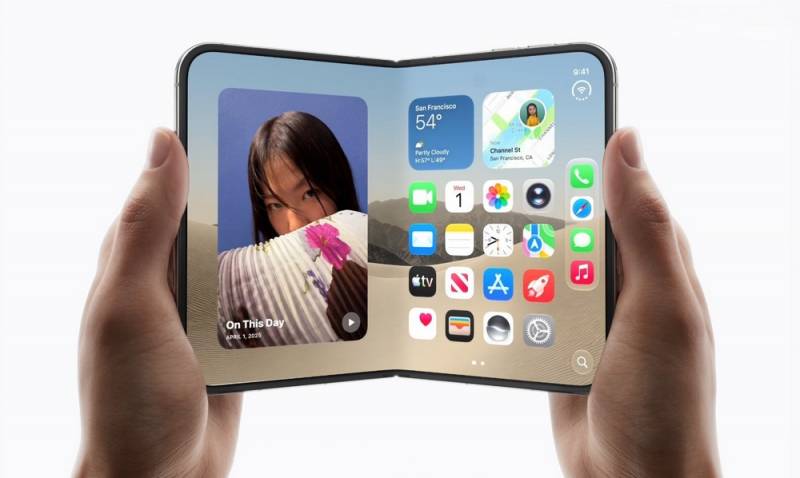
The iPhone Duo takes the book-style approach. Closed, it has a 5.4″ Super Retina XDR outer display that offers 90 percent of the screen area of the iPhone 18 Pro. That should make it usable as a normal, relatively compact iPhone for quick messages, maps, music controls, photos, and the dozens of other little interactions that don’t justify opening a larger screen.
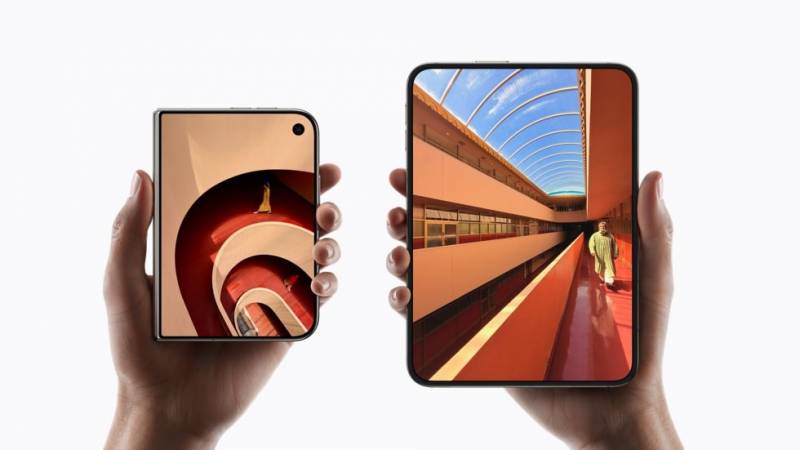
Open it, and the Duo becomes something closer to a small tablet, with a 7.6″ Super Retina XDR inner display that Apple describes as 50 percent larger than the screen on the iPhone 18 Pro Max. The two displays share the same aspect ratio, so apps and content can scale without feeling as though they’ve been thrown from one unrelated device onto another.
That continuity matters more than it sounds. A foldable gets old quickly if every opening makes the software jump, resize strangely, or rearrange itself like furniture during a move.
Both displays support ProMotion adaptive refresh rates, Always On functionality, and up to 3000 nits of peak outdoor brightness. The inner screen gets a nano-texture finish designed to reduce glare and reflections, and Apple has also used the treatment to make the fold crease less visually obvious. Whether that crease stays discreet after a year or two of opening and closing is one of the questions that can’t be settled in a product announcement.
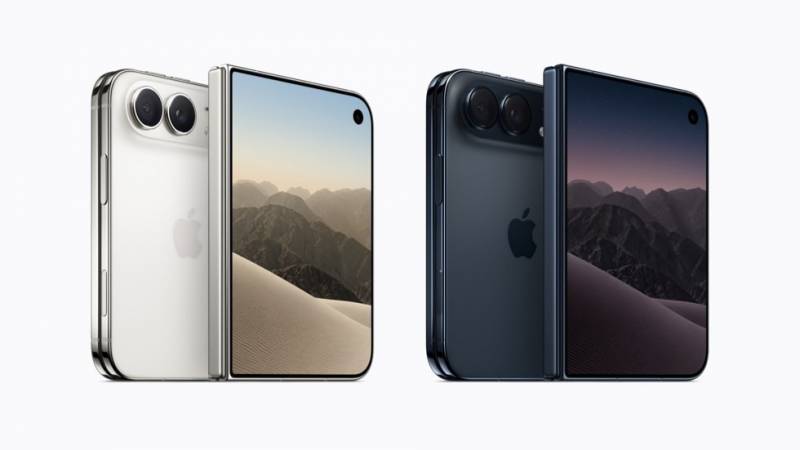
An under-display FaceTime camera sits beneath the larger screen, so it disappears when you don’t need it. Touch ID lives in the side button instead of relying on Face ID, an arrangement that makes sense when the phone needs to authenticate you in two very different physical positions. Apple Watch unlocking is supported as well.
Later this year, iPhone Duo will work with Apple Pencil (USB-C) on either display. That could make the Duo especially interesting for handwritten notes, document markup, rough sketches, or signing something without first hunting down an iPad. Apple Pencil support on an iPhone has long sounded unnecessary. Apple Pencil support on an iPhone that unfolds into a 7.6″ workspace is a different proposition.
The Hinge May Be the Most Important Specification
Apple has built the iPhone Duo around a precision hinge with more than 100 components, plus magnets that help keep the device firmly closed. The hinge also supports the display’s center when the phone is open and flat.
The chassis is made from grade 5 titanium, with a mirror-polished exterior and a 3D-printed hinge cover finished with a contrasting micro-blasted texture. Ceramic Shield covers the back, while Ceramic Shield 2 protects the front and offers three times the scratch resistance of the prior generation. The phone carries an IP68 rating for dust and water resistance.
Inside, structural ribs add stiffness, and ceramic-fiber inserts strengthen the portions of the frame interrupted by antenna lines. The folding display itself uses a layered construction with high-strength glass above and below the flexible panel, a scratch-resistant coating, and a custom polymer cover layer. Special adhesives let the layers shift slightly against one another as the screen bends, reducing stress much like pages sliding against one another when a book opens.
It’s clever engineering on paper, but this is also the point where patience is warranted. A folding phone doesn’t live on paper. It lives in a pocket with lint, in a handbag with keys, on a restaurant table, on an airplane tray, and occasionally in the hands of someone who will close it without checking whether something is caught inside.
Apple hasn’t included a rated number of fold cycles in the announcement. That doesn’t automatically mean there’s a problem, but long-term durability will be one of the most important things to watch once Duo phones have spent months in the real world.
The Duo’s Cameras Make Better Use of the Fold
The iPhone Duo has a 48MP Fusion Main camera that can capture full-resolution 48MP images or shoot at a 24MP default resolution that balances image quality with more manageable file sizes. An integrated optical-quality 2x option provides a closer view without requiring a dedicated telephoto camera, and sensor-shift optical image stabilization helps compensate for hand movement.
There’s also a 48MP Fusion Ultra Wide camera, the same one used on the iPhone 18 Pro models, for wide scenes and macro photography. Those specifications are respectable, but the Duo becomes more interesting when the two displays start cooperating with the cameras.
You can use the rear cameras for selfies while previewing yourself on the outer display, avoiding the quality compromise that usually comes with a front camera. Duo Preview can show the person being photographed exactly what the camera sees, which ought to reduce the familiar ritual of taking five group pictures and discovering afterward that someone disliked every single one.
Kid Cue is more playful. It shows Peanuts animations on the outside screen to encourage a child to look toward the camera. This is one of those features that sounds faintly ridiculous until you’ve tried to photograph a small child who has decided the ceiling, the dog, and one shoe are all more interesting than you.
Smart Take uses on-device processing to recognize when people appear to be posed and automatically capture the shot. That could help when the photographer wants to be in the picture instead of sprinting into position before a timer expires.
Duo FaceTime can put the call on the exterior display so someone standing across from you can join without crowding around the same screen.
For video, the Main camera can record 4K at 120 frames per second in Dolby Vision. You can apply cinematic effects after capture at up to 60 fps, and Audio Mix has been updated to improve voices and isolate music. Time-lapse can record in 4K Dolby Vision HDR.
The folding body also gives you something less glamorous but potentially more useful: a built-in stand. Partially open the phone, set it on a stable surface, and you can record a time-lapse, join FaceTime, or frame a group shot without balancing the device against whatever household object happens to be nearby. Sometimes the most useful camera accessory is simply a hinge.
iOS 27 Has to Give You a Reason to Open It
Hardware alone won’t make the iPhone Duo work. Apple has adapted iOS 27 for the folding format, moving controls, navigation elements, and the Dock toward the sides of the larger screen to preserve vertical space.
When the Duo is open, it can display two Home Screen pages alongside Today View. The Dynamic Island becomes vertical, and interface elements respond as the phone folds, rotates, or flips from one display to the other.
The big change is Split View. For the first time on iPhone, two apps can run side by side. You can also open two windows from the same app, quickly replace one side with a different app, and save app pairs for later.
That gives the larger screen a reason to exist beyond making Netflix bigger. Safari can sit beside Notes while you research a trip. Messages can stay open next to Calendar while you negotiate plans. A document can occupy one half while Siri AI works from the other. Slack and Zoom are among the third-party apps being adapted for the Duo, along with Netflix.
This is where Apple’s influence over its developer ecosystem could matter. Foldables are far less compelling when apps treat the larger display as a stretched phone screen. If developers embrace the Duo’s layout tools, the experience could feel more like carrying a small iPad that folds into a phone.
StandBy also works on either display without requiring the Duo to be charging. Set the phone down, and it can become a clock, photo frame, calendar, weather display, or widget hub.
A20 Pro, Two Batteries, and the Heat Problem
The iPhone Duo uses the same A20 Pro chip found in the iPhone 18 Pro models. Its six-core CPU is rated up to 20 percent faster than A19 Pro, while the seven-core GPU is rated up to 40 percent faster and more power efficient. A pair of 16-core Neural Engines handles on-device machine learning and computational photography, and memory bandwidth is 50 percent higher.
That performance has to fit inside the thinnest iPhone Apple has made when the Duo is open, so thermal management matters. A custom vapor chamber spreads heat away from the processor, and Apple has designed the chip packaging so the A20 Pro can connect more directly to that cooling system. The company rates sustained performance up to 35 percent better than iPhone 17 Pro.
The phone has two batteries, one in each half, managed as a single power system. Apple rates video playback at up to 31 hours on the inner display and up to 44 hours on the outer screen. Using both displays in roughly equal measure is rated for up to 24 hours of use per charge.
That last figure is probably the one worth remembering. A foldable invites you to use its biggest, most power-hungry display, so battery life will depend heavily on whether the Duo mostly stays closed or spends half the day pretending to be a tiny tablet.
Wired charging can reach about 50 percent in roughly 20 minutes, while MagSafe or Qi2 wireless charging can hit about 50 percent in around 30 minutes.
The iPhone Duo is eSIM-only worldwide, eliminating the physical SIM tray and freeing more internal space. Apple’s N1 wireless chip supports Wi-Fi 7, Bluetooth 6, and Thread, while its C2 cellular modem adds millimeter-wave 5G support in the U.S.
Siri AI Is Everywhere, but It’s Still a Beta
The Duo will ship with iOS 27.1 and has been built around Apple Intelligence and Siri AI. Siri can draw on personal context from messages, email, photos, and what’s currently onscreen, while the dedicated Siri app keeps conversation history available across Apple devices through iCloud.
There are also new image tools, including Spatial Reframing, Extend, upgraded Clean Up, and photorealistic generation in Image Playground. Safari’s Notify Me feature can watch pages for changes such as restocks or price drops.
Useful as those features may sound, Siri AI is rolling out as a beta, not a finished promise etched into the titanium. Apple Intelligence becomes available with iOS 27 on September 14 in a range of supported languages, while Siri AI starts in English, with French, Japanese, Korean, Portuguese, and Spanish scheduled to follow in October. Feature availability varies by region and language.
That matters when software intelligence is being presented as part of the reason to buy new hardware. Buying a phone for what it does today is usually safer than buying one for what a beta may become six months from now.
Then There Are the iPhone 18 Pro and iPhone 18 Pro Max
If folding a phone in half sounds like an answer to a question you never asked, Apple’s conventional flagships are getting meaningful changes of their own.
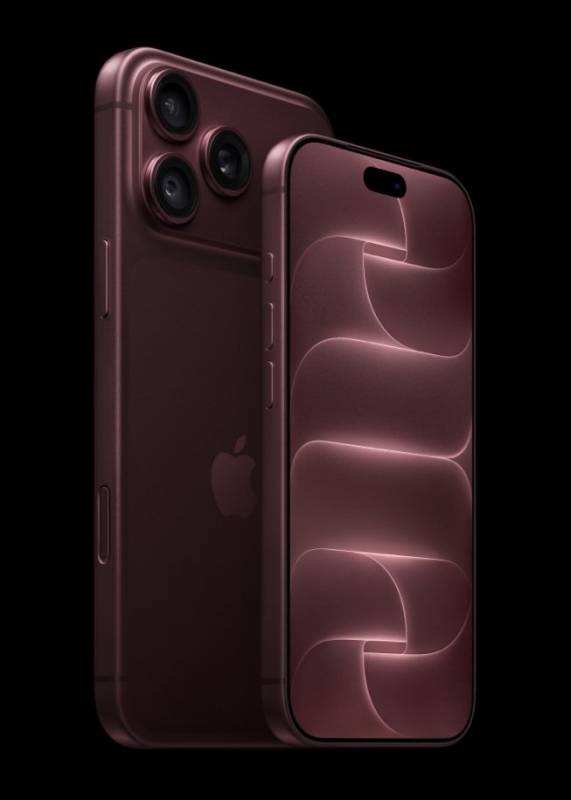
The iPhone 18 Pro starts at $1,199, and the iPhone 18 Pro Max starts at $1,299. Both come with 256GB, 512GB, 1TB, or 2TB of storage and are offered in black, silver, glacier, and a new burgundy finish. Preorders begin September 12, with availability September 18.
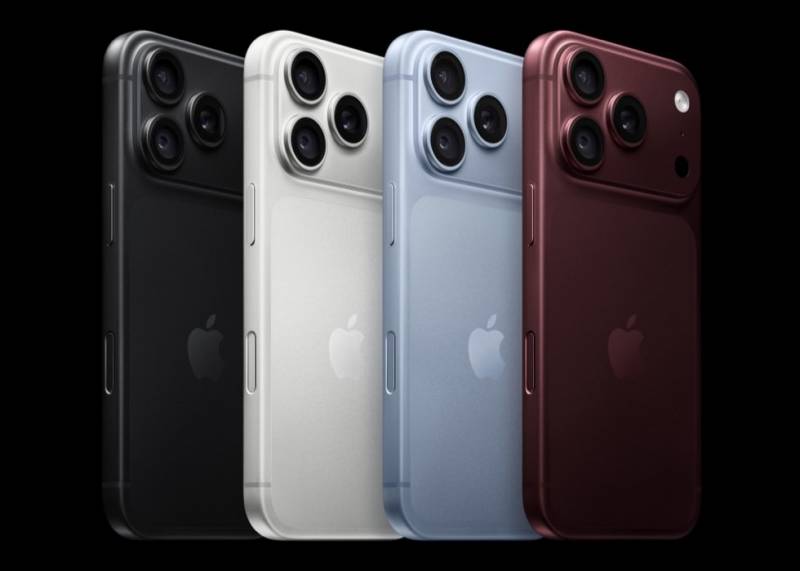
The headline camera change is a new 48MP Fusion Main camera with variable aperture. Six tiny laser-cut blades can physically change the opening that lets light reach the sensor, and it offers four aperture settings for manual control. That can affect both exposure and depth of field, giving photographers more influence over how much of a scene appears sharp rather than leaving every decision to computational processing.
Variable aperture is the sort of specification that can easily become keynote decoration, but this one has practical potential. A wider opening can help in dim light and create shallower depth of field, while a smaller opening can keep more of a group or landscape sharply focused. Apple’s new Pro controls also expose shutter speed, white balance, aperture, and a histogram directly in the Camera app.
More intriguing is Apple Reference Image. In Reference mode, the camera records signed sensor information, and Private Cloud Compute turns it into an unalterable reference image that can sit beside the edited photo in the Photos app. Think of it as a digital negative that shows what the camera sensor originally captured before alterations were made. Apple is also supporting APIs so compatible third-party apps can view those reference images.
For photojournalists, documentary photographers, insurance work, or anyone trying to establish whether an image has been changed, that could matter more than another portrait filter. It won’t solve the broader problem of synthetic imagery by itself, but giving a photograph a verifiable point of origin is a useful direction.
The A20 Pro chip and redesigned vapor chamber also appear here. Apple is also shrinking the Dynamic Island while allowing it to show as many as three Live Activities at once.
Battery life gets particular attention on the Pro Max. Apple rates the iPhone 18 Pro Max for up to 30 hours of use on a full charge under its newer battery model, and five minutes of wired charging can provide around seven hours of video playback. eSIM-only versions in selected markets use the space formerly occupied by a SIM tray for a larger battery, adding two more hours of video playback.
For anyone who wants Apple’s best traditional iPhone camera without being an early adopter of a folding display, the Pro models may be the easier decision. They’re still expensive, but the extra money is going toward a familiar shape with a camera system that has become unusually serious.
AirPods May 5 Be the Sleeper Upgrade
AirPods 5 are easy to overlook beside a folding iPhone, but Apple has moved Active Noise Cancellation farther down the lineup in a way that could matter to far more people.
The $129 AirPods 5 now include Active Noise Cancellation in Apple’s open-ear design, along with an updated multiport acoustic system and next-generation Adaptive EQ. Apple rates the noise reduction at up to 50 percent better than AirPods 4 with ANC. Apple also adjusted Transparency mode to make surrounding voices and ambient sound feel more natural.
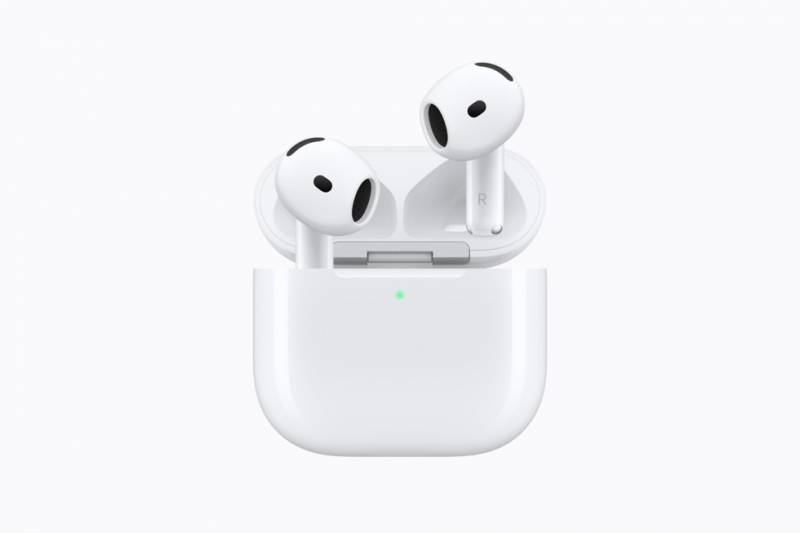
Because these aren’t sealed earbuds with silicone tips, noise cancellation has a harder job. An open design is more comfortable for many ears, but it also gives outside sound an easier path in. The real question is whether AirPods 5 can reduce enough steady airplane, office, or coffee-shop noise to satisfy people who dislike the plugged-ear feeling of AirPods Pro.
Adaptive Audio can automatically blend cancellation and Transparency depending on the environment, and Conversation Awareness lowers media volume when you begin speaking. Live Translation is available when AirPods 5 are paired with compatible Apple hardware and software, and Siri can also respond to a nod or head shake for simple interactions.
There are two versions. The standard AirPods 5 cost $129. The $149 AirPods 5 with Wireless Charging Case add volume adjustment by swiping the stem and provide up to five hours of listening with ANC on, extending to up to 22 hours with the case. That case can charge over USB-C, on an Apple Watch charger, or on a Qi-compatible wireless pad.
Both versions are available to preorder now and arrive in stores September 18.
If the noise cancellation performs well without ear tips, the $129 model could be one of the more broadly appealing products in this launch. Not everyone needs a phone that unfolds into a tablet. Many people would happily take quieter AirPods.
Apple Watch Series 12 Is Getting More Opinionated About Your Health
Apple Watch Series 12 starts at $399 and comes in 42mm and 46mm sizes. Aluminum versions are available in dark bronze, black, light gold, and space gray, while titanium comes in radiant gold and natural titanium. Ceramic versions are also available in pearl white and night blue. Preorders are open now, with availability on September 18.
The bigger story is underneath.
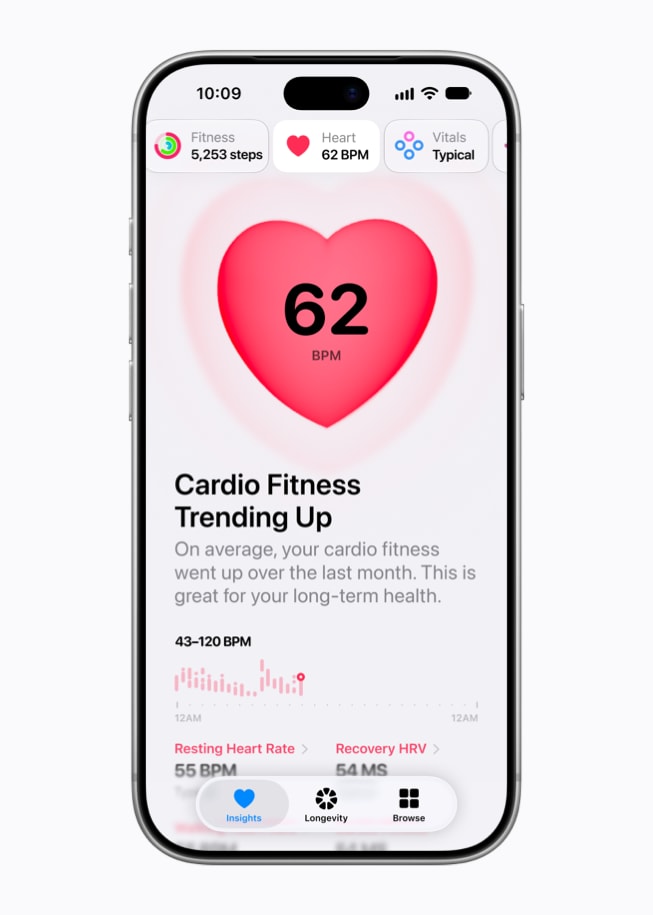
The new Health Sensing System combines redesigned optical and electrical heart sensors with the S11 chip. Heart rate is now measured every five seconds throughout the day, while heart rate variability, or HRV, can be measured as often as every five minutes. HRV tracks subtle differences in the amount of time between heartbeats and can provide useful context around stress and recovery when viewed as a trend rather than a single magic number.
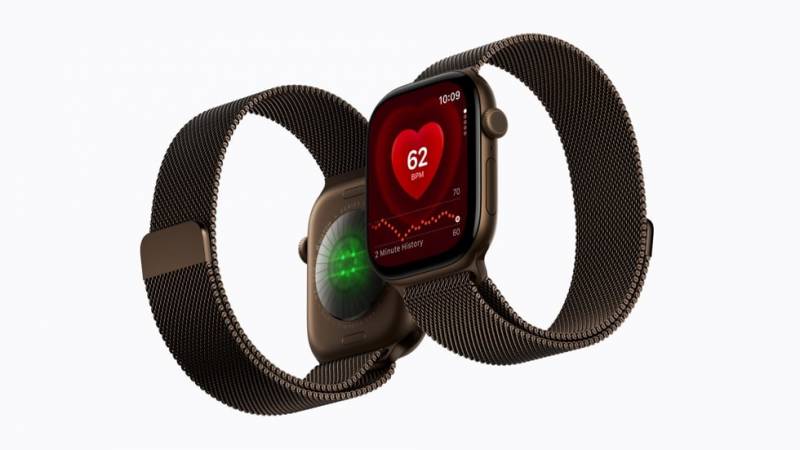
Apple is calling its new system the most accurate heart rate sensing in a wearable, based on an Apple-conducted study of more than 1,000 participants comparing the watch with leading wearable devices. That’s a notable claim, but it remains a company-run comparison, so independent testing will still be valuable.
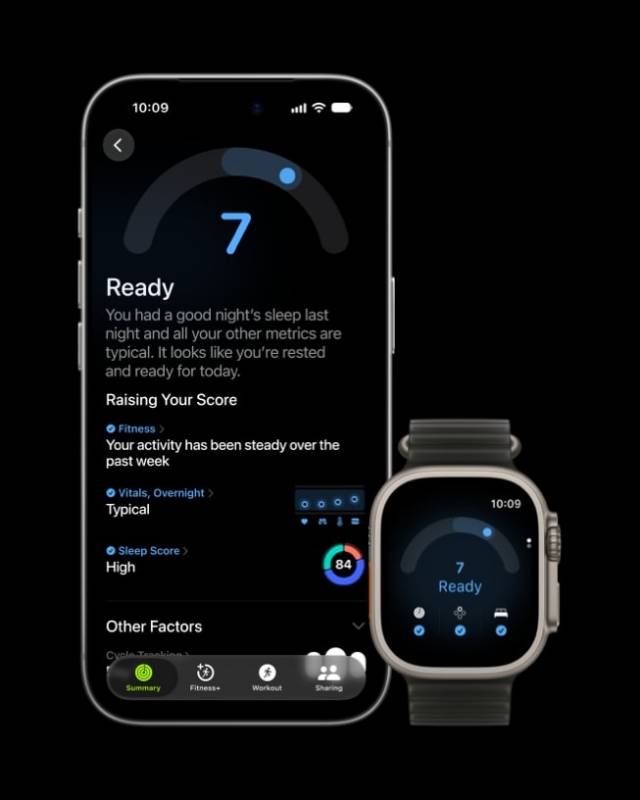
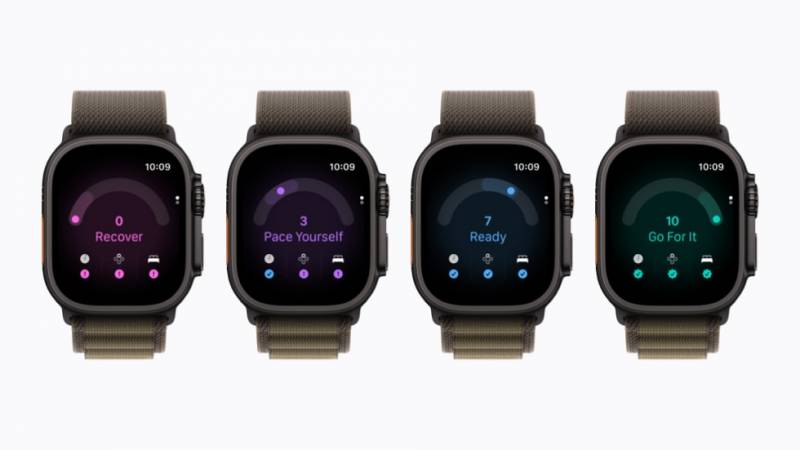
Series 12 also introduces a Readiness score from 0 to 10 based on recent activity, training load, vital signs, and sleep. Instead of leaving you to interpret the number alone, the watch labels the day Recover, Pace Yourself, Ready, or Go For It, and the score can change as new information arrives.
That kind of feature can be genuinely useful if it helps someone recognize that poor sleep and a hard workout are catching up with them. It can also become one more piece of technology assigning a grade before breakfast. The important part will be whether the explanation behind the score remains clear enough that you can understand it rather than simply obey it.
Battery life remains up to 24 hours for everyday use, while outdoor workout tracking increases to as much as 10 hours. Fifteen minutes on the charger can provide up to 12 additional hours.
The Watch Can Now Help Remember What You Just Heard
Series 12 and Ultra 4 also introduce Audio Intelligence, one of the more unusual additions to Apple Watch in years.
Sound Recognition can alert people who are deaf or hard of hearing to sounds including sirens, doorbells, alarms, and a baby crying. Live Rewind can display a text version of the previous 15 seconds of a conversation after a double press of the Digital Crown. Siri Recap can summarize a conversation for later reference, while Shazam can automatically identify nearby music and surface the result in the Smart Stack.
Any watch feature that listens closely enough to tell you what was just said deserves an immediate privacy question, and Apple has anticipated that one. Audio processing takes place in an isolated portion of the S11 chip called Secure Enclave; raw audio isn’t stored, and Live Rewind produces an audible chime plus an onscreen indicator when activated. Siri Recap creates summaries rather than transcripts, and the resulting information is end-to-end encrypted when synced through iCloud.
Live Rewind and Siri Recap are scheduled to arrive in beta later in 2026, initially in English, and they require a compatible Apple Intelligence-enabled iPhone. Some server-assisted Apple Intelligence functions are also subject to daily usage limits, with broader access planned as a paid option in the future. That caveat deserves more attention than it will probably get during a demo.
Apple Watch Ultra 4 Is for the People Who Will Use the Extra Battery
Apple Watch Ultra 4 starts at $799 and is available in natural or black titanium. Like Series 12, it can be preordered now and reaches stores on September 18.
It uses the same S11 chip and Health Sensing System, including the higher-frequency heart rate and HRV readings, Readiness score, Audio Intelligence functions, and redesigned health software. The distinction is endurance.
Ultra 4 is rated for up to 50 hours of everyday battery life and up to 84 hours in Low Power Mode. A 15-minute charge can add up to 18 hours. Its Extended Workout mode can track an outdoor workout for up to 25 hours with full GPS and heart rate measurements, while Max Extended Workout mode stretches outdoor run, walk, and hike tracking to as much as 45 hours while continuing to take GPS readings every second.
That’s overkill for a 45-minute neighborhood walk, but it’s exactly the sort of overkill an ultramarathoner, long-distance hiker, backcountry traveler, or endurance cyclist may appreciate.
Apple also describes Ultra 4 as having the most accurate on-device GPS in a sports watch, based on testing against leading dual-frequency GPS sports watches in challenging urban environments. As with the heart rate claims, independent comparisons will be worth watching once production hardware is available.
Satellite-based Emergency SOS, Find My, and Messages remain part of the Ultra proposition, with two years of satellite service included when you activate Apple Watch Ultra 3 or later, where supported. Cellular requirements and regional availability still apply.
The Health App Is Becoming Part Coach, Part Interpreter
The hardware changes on Series 12 and Ultra 4 feed into a redesigned Health app coming later this year.
A new Insights tab can bring together heart, sleep, fitness, readiness, vital signs, and cycle information and surface patterns or recommendations rather than leaving you to dig through separate charts. A Longevity tab looks at longer-term trends across heart health, sleep, movement, metabolic health, hearing, mental wellbeing, and nutrition.
Health Age may be the feature that gets the most attention. It compares selected measurements with your chronological age using information such as VO2 max, resting heart rate, sleep, and HRV, and it can also incorporate certain lab values. Apple is also adding at-home movement evaluations for flexibility, strength, balance, and movement mechanics.
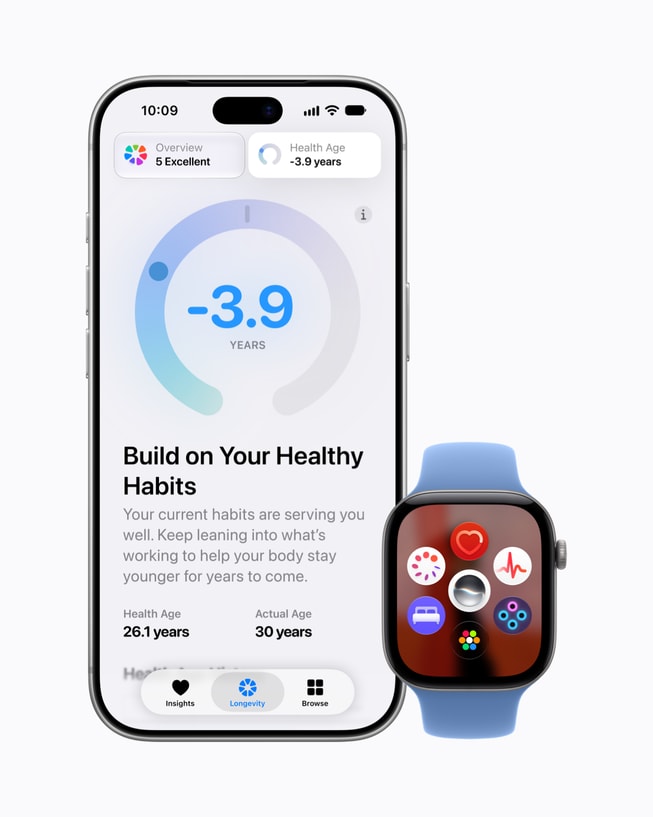
There’s obvious appeal in turning years of health data into something easier to understand. There’s also a risk that a neat score can look more definitive than the underlying data deserves. Apple Watch remains a consumer wellness device, not a replacement for medical diagnosis, and the Vitals app is specifically described as being for wellness rather than medical use.
In the U.S., the redesigned Health app will also let people schedule and purchase a $119 laboratory panel covering more than 50 biomarkers at roughly 2,000 Quest Diagnostics locations. That moves Apple another step beyond tracking workouts and toward becoming an organizer for a much larger portion of personal health information.
The Duo Comes Later and Costs Much More
The timing makes the iPhone Duo stand apart almost as much as the hinge.
The iPhone 18 Pro and Pro Max, Apple Watch Series 12, Apple Watch Ultra 4, and AirPods 5 all arrive in September. The Duo won’t open for preorder until 5 a.m. PT on Friday, October 16, with availability beginning Friday, October 23 in more than 70 countries and regions. Another 28 markets follow on October 30.
The iPhone Duo starts at $1,999 with 256GB of storage and is also available with 512GB, 1TB, or 2TB. The two colors are Star White and Night Sky.
Apple Upgrade offers eligible U.S. customers lease terms starting at $57.99 per month for 24 months, while a standard 24-month payment is $83.29. Those figures make the headline price easier to divide, not smaller.
Accessories aren’t inexpensive either. The two-piece iPhone Duo Case costs $79 in sand or navy blue. The $129 iPhone Duo Folio with Kickstand comes in navy blue or taupe and adds an adjustable stand. Both support MagSafe, Qi2 25W, and Qi-certified wireless charging.
There’s a certain irony in paying extra for a folio with a kickstand when the phone’s hinge can already hold itself up, although the folio should offer more angle choices and, importantly, something between a nearly $2,000 folding phone and whatever surface you’ve just placed it on.
Apple’s 2026 Lineup Has Two Very Different Kinds of Upgrade
The iPhone 18 Pro, AirPods 5, and new Apple Watches follow a familiar pattern. They take products people already understand and improve specific pieces. The Pro iPhones push harder into serious photography. AirPods 5 make noise cancellation cheaper and more accessible. Apple Watch Series 12 and Ultra 4 collect health information more frequently and attempt to explain what that information means.
The iPhone Duo is different because its appeal depends less on whether one specification improved by 20 percent and more on whether folding changes your habits.
If the 5.4″ outer screen is good enough that the Duo feels normal while closed, and the 7.6″ inner display is useful enough that you regularly open it for reading, multitasking, video, photo previews, notes, or Apple Pencil work, the design could justify itself surprisingly quickly. If the larger screen mostly comes out to impress someone at dinner, $1,999 is a spectacular amount of money for a party trick.
Unanswered questions remain that only extended use can settle. The inner display needs to survive years of bending. The hinge needs to remain tight without becoming stiff. Developers need to make Split View feel intentional. Battery life needs to hold up when the large display is used heavily, not just occasionally. And Siri AI needs to become dependable enough that its prominent role across Apple’s new hardware feels earned.
That’s what makes the iPhone Duo the most interesting Apple product announced this September. It isn’t interesting because Apple invented folding phones. It didn’t. It’s interesting because Apple is finally willing to let the iPhone stop being one rigid rectangle, and because the company has built enough software around the fold that the new shape might serve a purpose beyond novelty.
The safer purchases in this lineup are easy to identify. AirPods 5 look particularly compelling at $129 if their open-ear noise cancellation performs as promised. The iPhone 18 Pro models make more sense for photographers who want better controls without taking on first-generation foldable questions. Series 12 brings the new health features into the mainstream Apple Watch, while Ultra 4 earns its premium mainly through battery life, GPS, satellite features, and endurance-oriented design.
But the iPhone Duo is the one that changes what an iPhone can physically become. That makes it the product to watch, even for people who have absolutely no intention of spending $1,999 on one.




Be the first to comment on "Apple Finally Folds: The $1,999 iPhone Duo Leads a Packed 2026 Hardware Lineup"