
The Lowdown
The homerunPET CS106 won’t eliminate every unpleasant aspect of litter box maintenance, and it shouldn’t be purchased with that expectation. But for households that have the room, the budget, and cats comfortable with an enclosed design, it offers a thoughtful combination of capacity and automation.
Overall
Pros
- Spacious 106-liter interior accommodates larger cats
- Built-in automatic litter replenishment
- Generous 12-liter waste bin
- Multiple safety sensors
- Supports several clumping litter types
- Optional step has been particularly useful for my 18-year-old senior cat
- Doesn’t require an app for basic operation
- Removable dome simplifies deeper cleaning
Cons
- Large footprint requires considerable floor space
- Heavy at 44 pounds
- Accessibility step should be included rather than sold separately
- Automatic operation doesn’t eliminate periodic deep cleaning
- The regular price puts it in direct competition with established premium alternatives
- Return shipping and possible cleaning fees make the home trial less generous than it initially appears
There’s plenty to love about sharing your home with cats, but scooping their litter boxes isn’t one of them. The homerunPET CS106 Self-Cleaning Litter Box promises to make that chore easier, especially if you’ve got multiple cats, an enthusiastic digger, or an elderly feline who deserves a consistently clean place to do their business. Of course, not all automatic litter boxes are created equal. Some are cramped for larger cats, others demand frequent attention despite their automation, and quite a few cost enough that you’d expect them to handle nearly everything short of taking the trash to the curb.
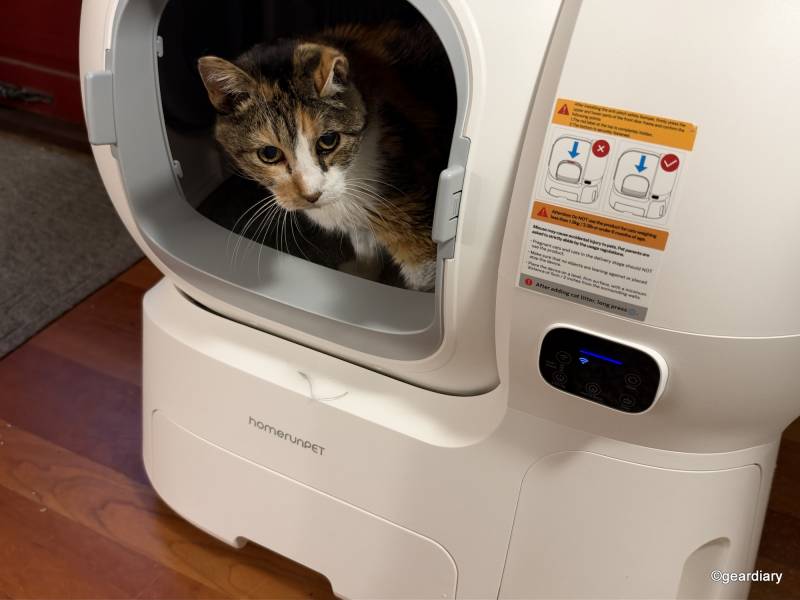
In case it wasn’t obvious, I was sent the homerunPET CS106 to review; it takes a more comprehensive approach to litter box maintenance. It features a spacious, 106-liter enclosed interior, a substantial waste collection bin, multiple safety sensors, app connectivity, and one particularly useful feature that sets it apart from many competitors: a built-in system that automatically replenishes the clean litter. It’s an appealing combination, but at a premium price, the question is whether all that automation translates into less work and a better experience for you and your cats.
With a regular price of $899 and a current promotional price of $699, the homerunPET CS106 competes directly with established automatic litter boxes, including the popular Litter-Robot 4. That’s a demanding price category, where convenience needs to extend well beyond eliminating the daily scoop.
The homerunPET CS106 has some compelling advantages, particularly for larger cats and households where litter box maintenance can become a significant chore. But its size, accessibility, cleaning requirements, and ongoing ownership costs deserve just as much consideration as its automated features.
A Large Litter Box That Doesn’t Pretend Otherwise
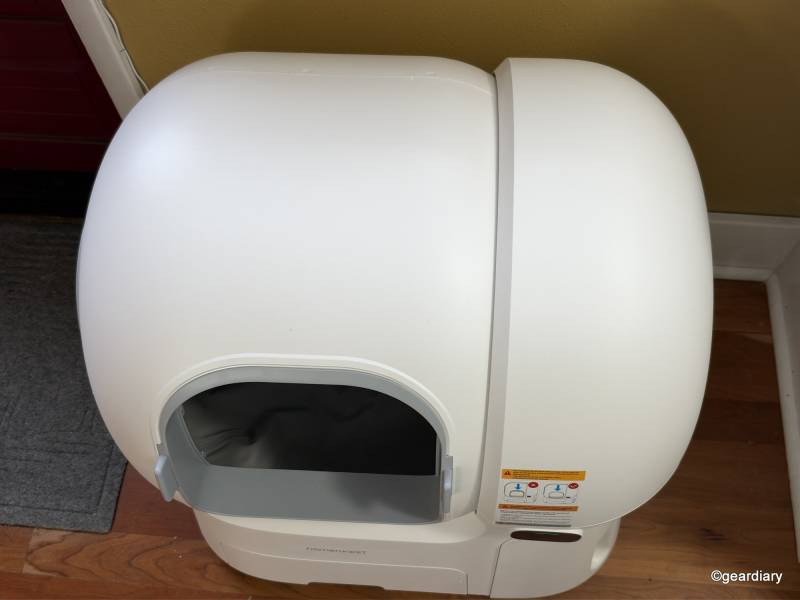
The first thing to understand about the homerunPET CS106 is that it’s big. Measuring 27.44″ by 23.62″ by 28.07″, it requires a dedicated area with enough space for cats to approach comfortably and for you to access the components when maintenance is necessary.
At 44 pounds without packaging, you won’t want to move it around casually. The shipping weight is approximately 62 pounds, so getting it into place may be easier with some help.
The exterior is made of ABS plastic, a rigid thermoplastic commonly used in appliances and electronics because it balances strength, impact resistance, and weight. That doesn’t automatically guarantee durability, but it’s an appropriate material for a product that needs to withstand regular handling, cleaning, and years of interaction with cats.
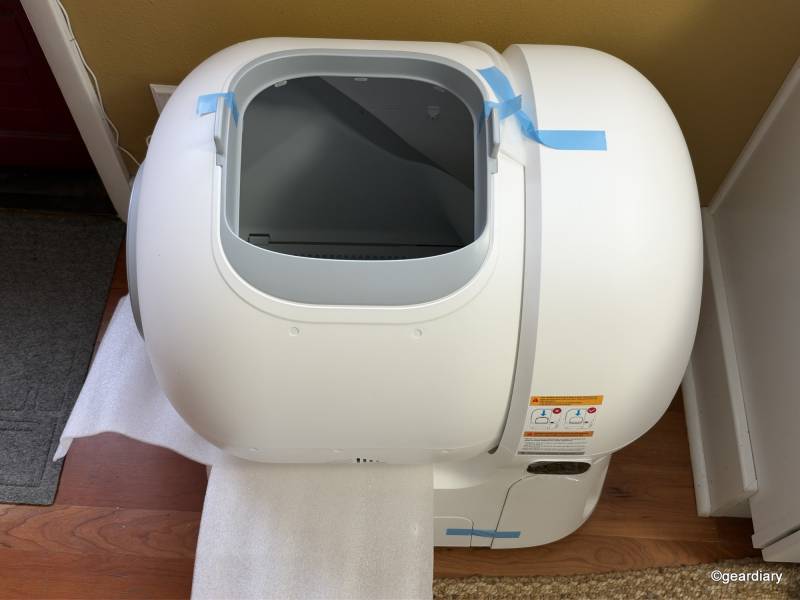
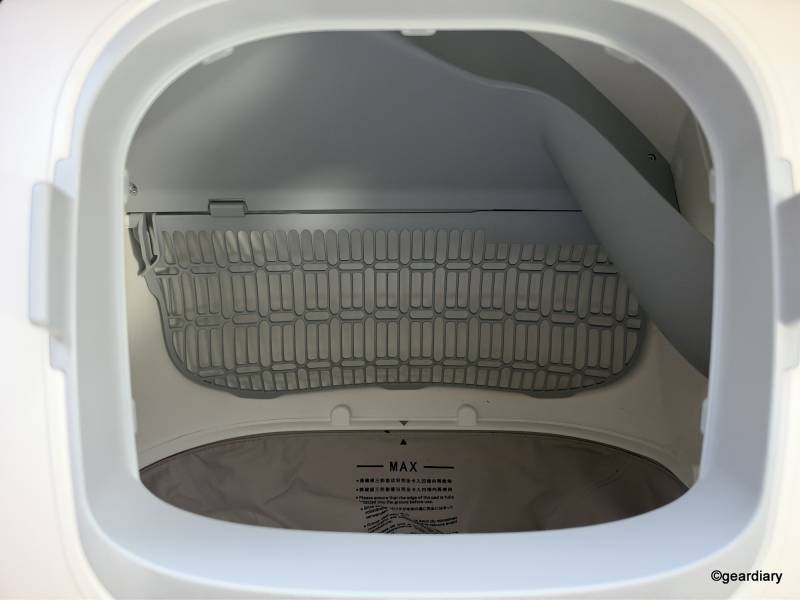
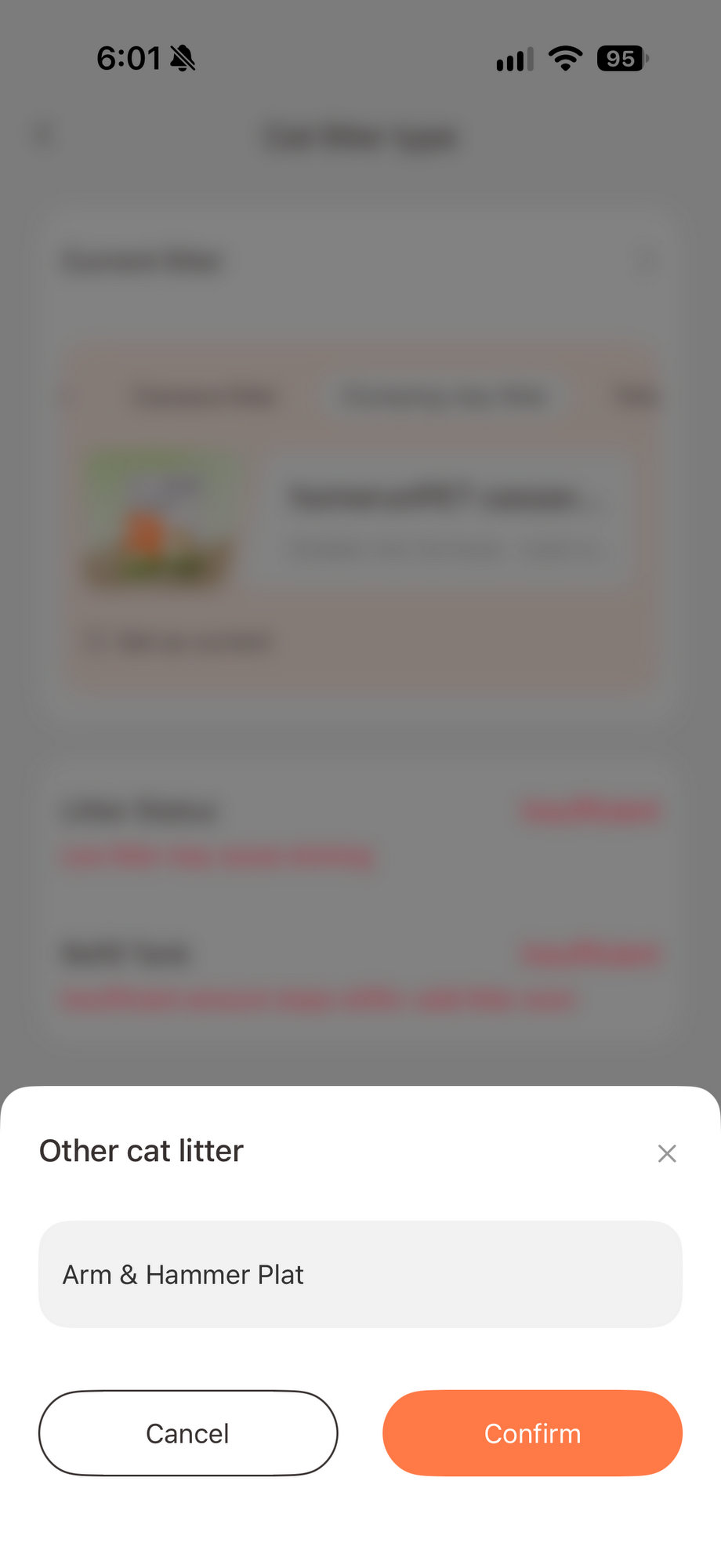
The most notable physical feature is the 106-liter enclosed dome. That figure describes the volume of the interior enclosure, not how much litter it holds. The litter bed holds up to 8 liters, or roughly the weight of the 18-pound ARM & Hammer Clump & Seal Platinum Cat Litter I prefer for my senior cat, Bella.
That distinction matters because a litter box needs more than enough room for a cat to squeeze inside. Cats generally want to turn around, investigate the litter, dig, position themselves, and cover their waste. Some do this with considerable enthusiasm.
A cramped interior can make those activities uncomfortable, especially for larger breeds, and as I have learned the hard way, when the box isn’t big enough, the cat may turn in a way that leaves its rear end hanging over the edge, which isn’t ever ideal (looking at you, Bella!).
HomerunPET rates the CS106 for cats weighing up to 25 pounds, making it a potential option for Maine Coons, Ragdolls, and other substantial felines. The additional interior space should also appeal to cats who dislike feeling confined, like mine.
Of course, a generous interior doesn’t guarantee that every cat will appreciate an enclosed litter box. Some strongly prefer open trays, and even an enclosure this large may take time to adjust to.
The size also creates an unavoidable compromise for their humans. If you live in a smaller home or apartment, the homerunPET CS106’s footprint may be harder to accommodate than a conventional litter box. You’ll also need to leave at least two inches between the unit and the wall for its radar sensor to operate properly.
In other words, you must figure out where the homerunPET CS106 will live before ordering it. This isn’t the kind of appliance you can tuck discreetly into an unused corner and forget about.
What’s Included and Getting Everything Set Up
The homerunPET CS106 includes the litter box, a power adapter and cord, a user manual, one Fresh Gel Deodorizer, two interchangeable litter filters, 10 waste bags, and 10 used-litter bags.
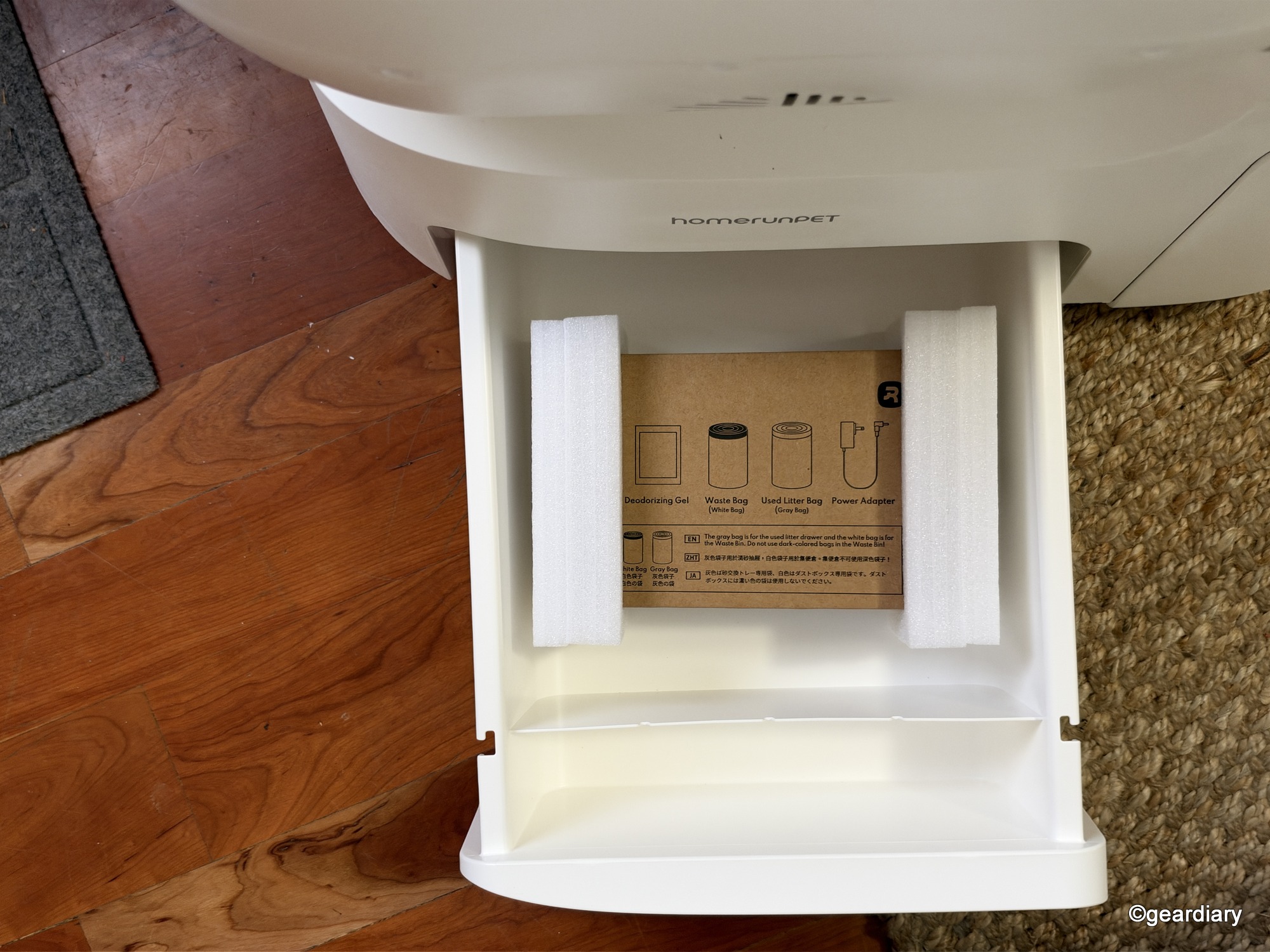
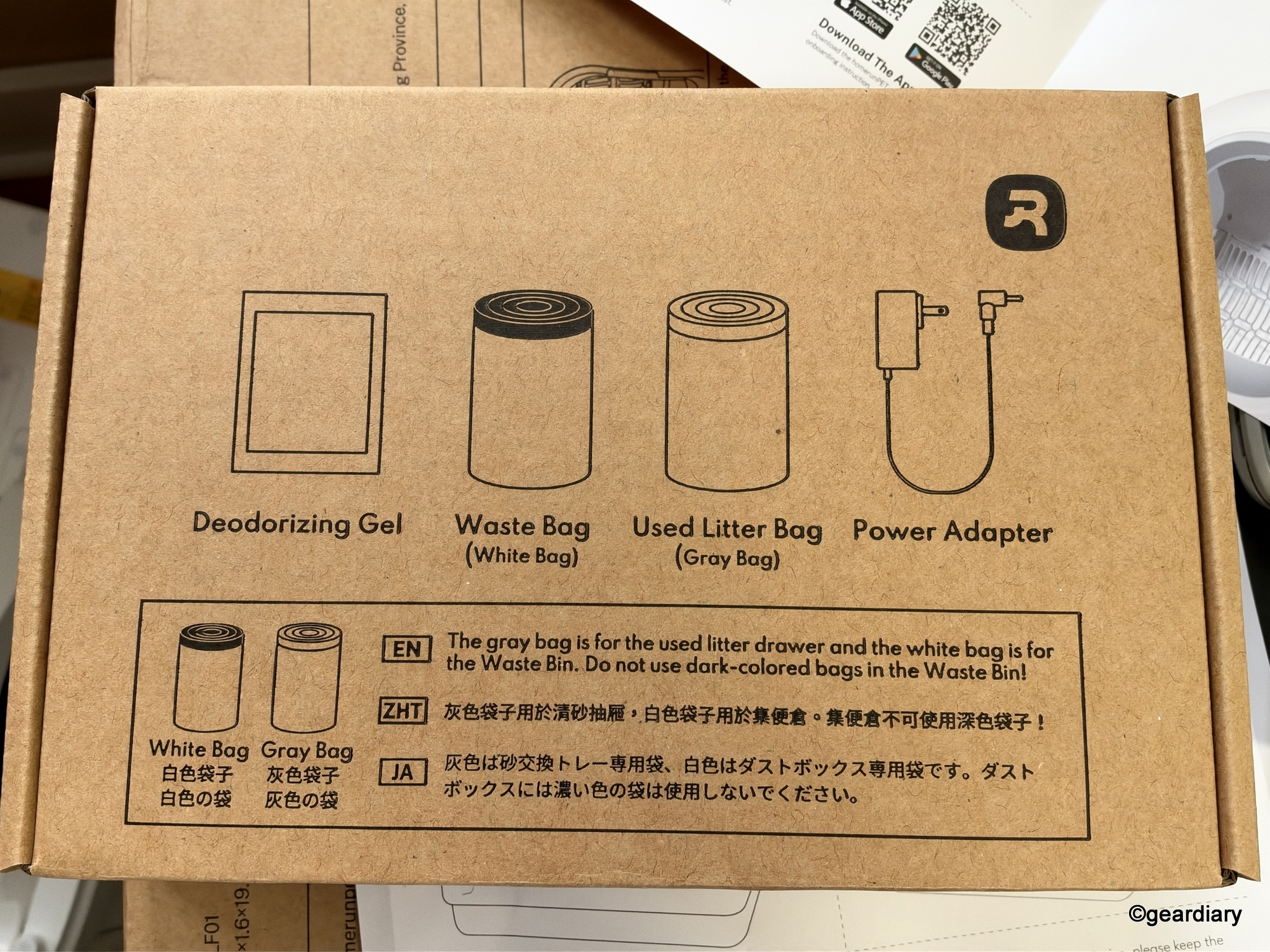
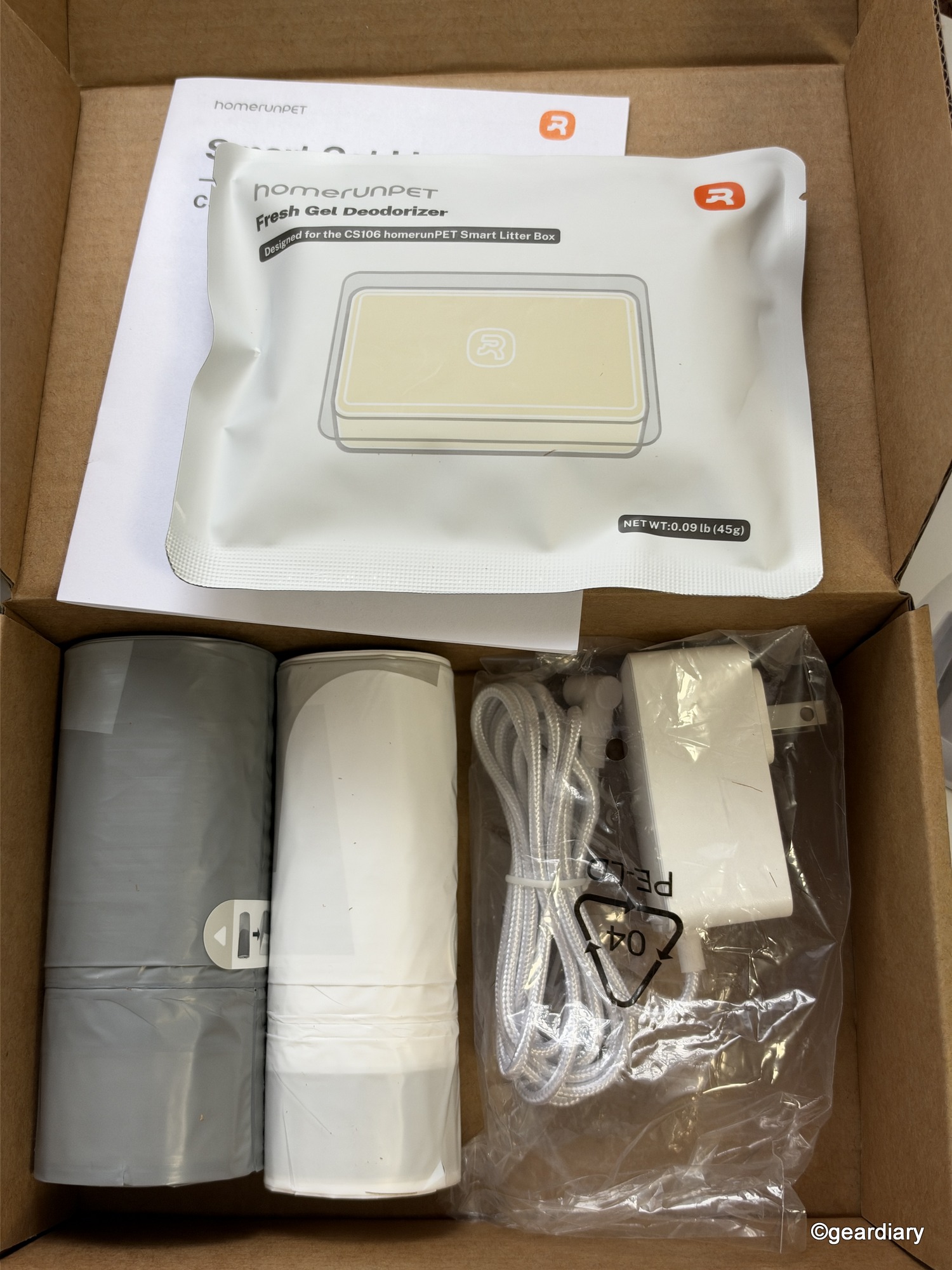
The two filters accommodate different litter particle sizes, which is helpful if your cats have strong preferences about what goes under their paws.
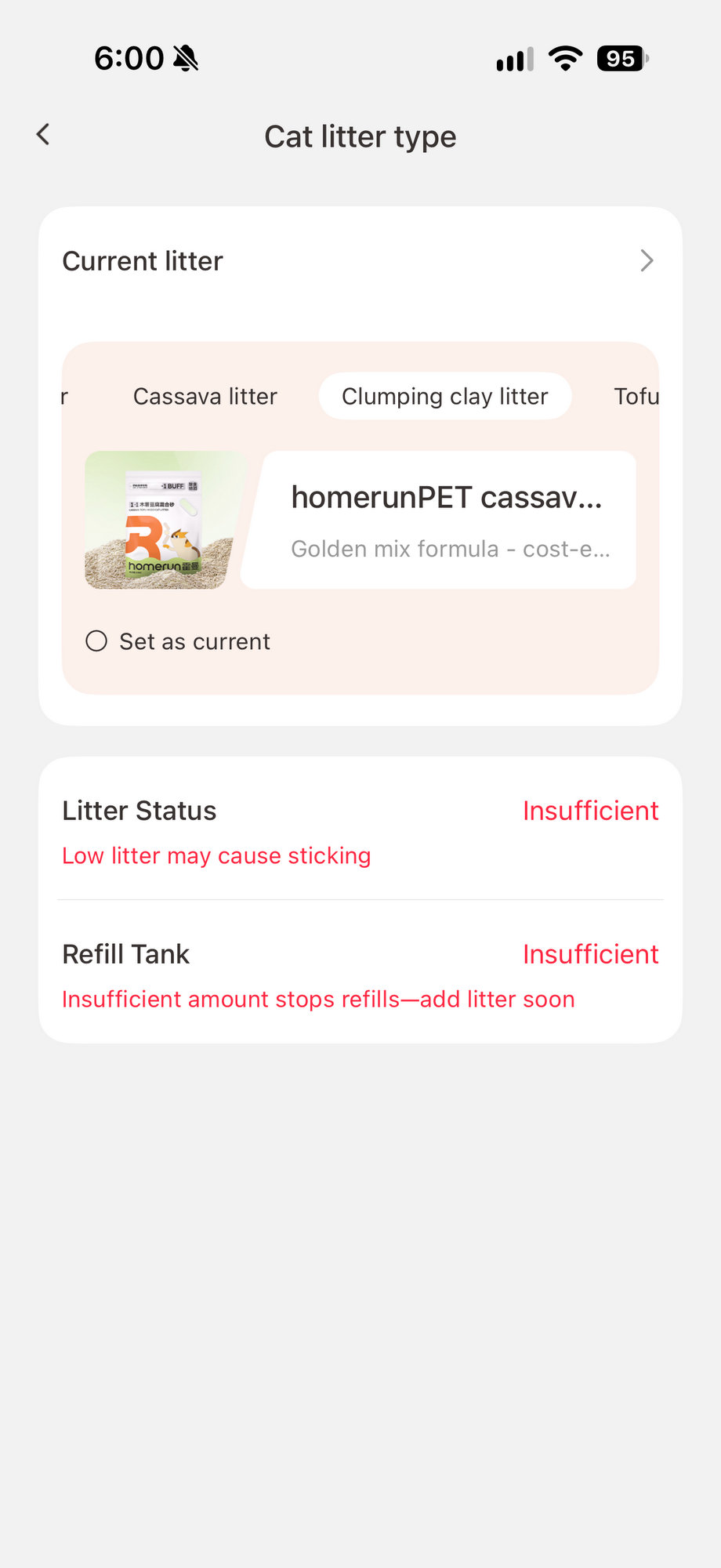
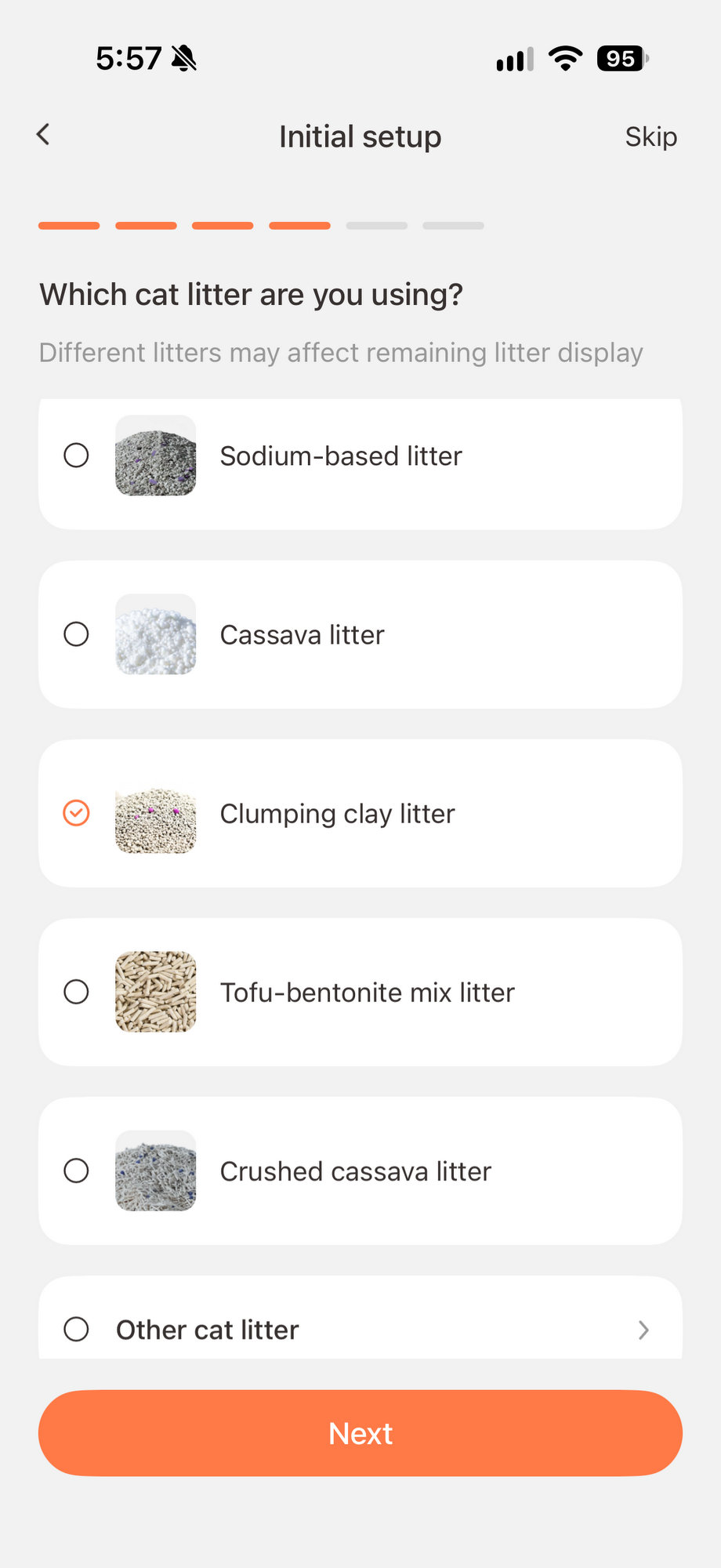
Unlike automatic litter boxes that support only a narrow selection of clumping clay products, the homerunPET CS106 is designed to work with clumping clay, tofu, cassava, cassava-tofu blends, and tofu-bentonite mixtures.
That’s a meaningful advantage, particularly if you’ve already settled on a litter that your cats tolerate well, as I have. Changing the box is disruptive enough without simultaneously changing the litter.
You’ll still need to match the filter to your chosen litter, and the results will depend on how reliably that litter forms solid clumps. A litter that absorbs moisture slowly or crumbles easily can make even a sophisticated automatic cleaning mechanism less effective. I’ve been using the larger filter with Bella’s litter, and it has worked perfectly.
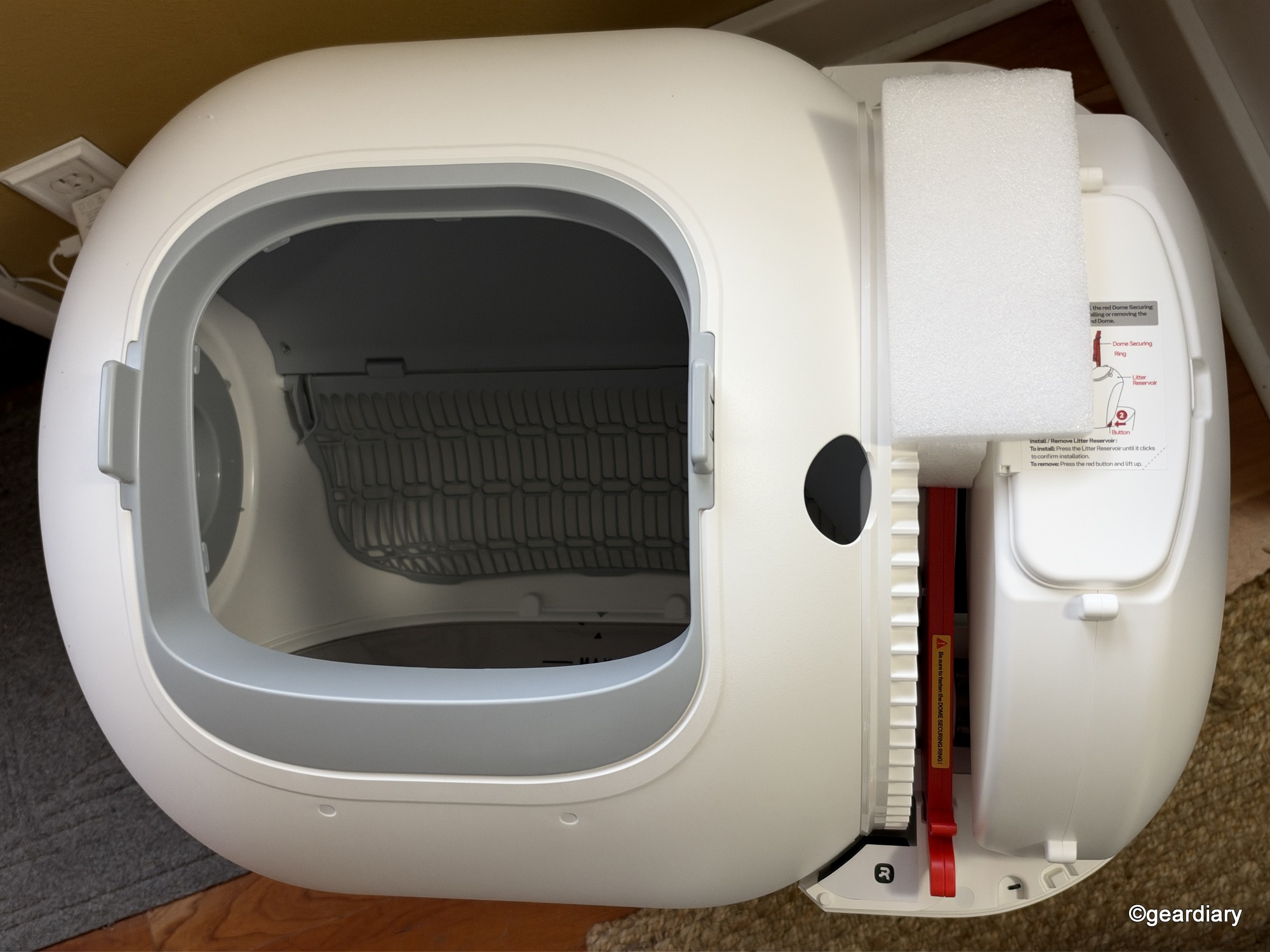
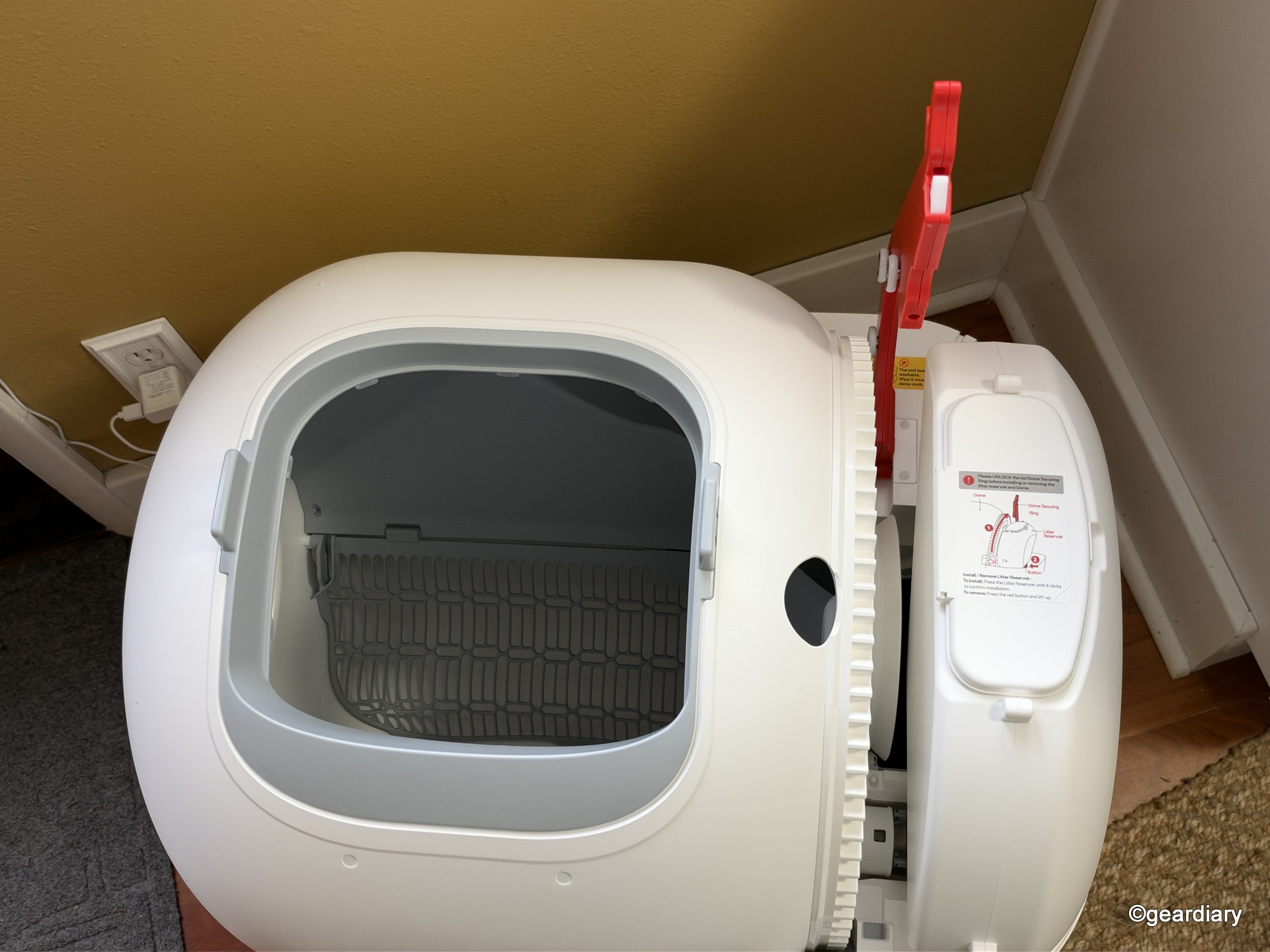
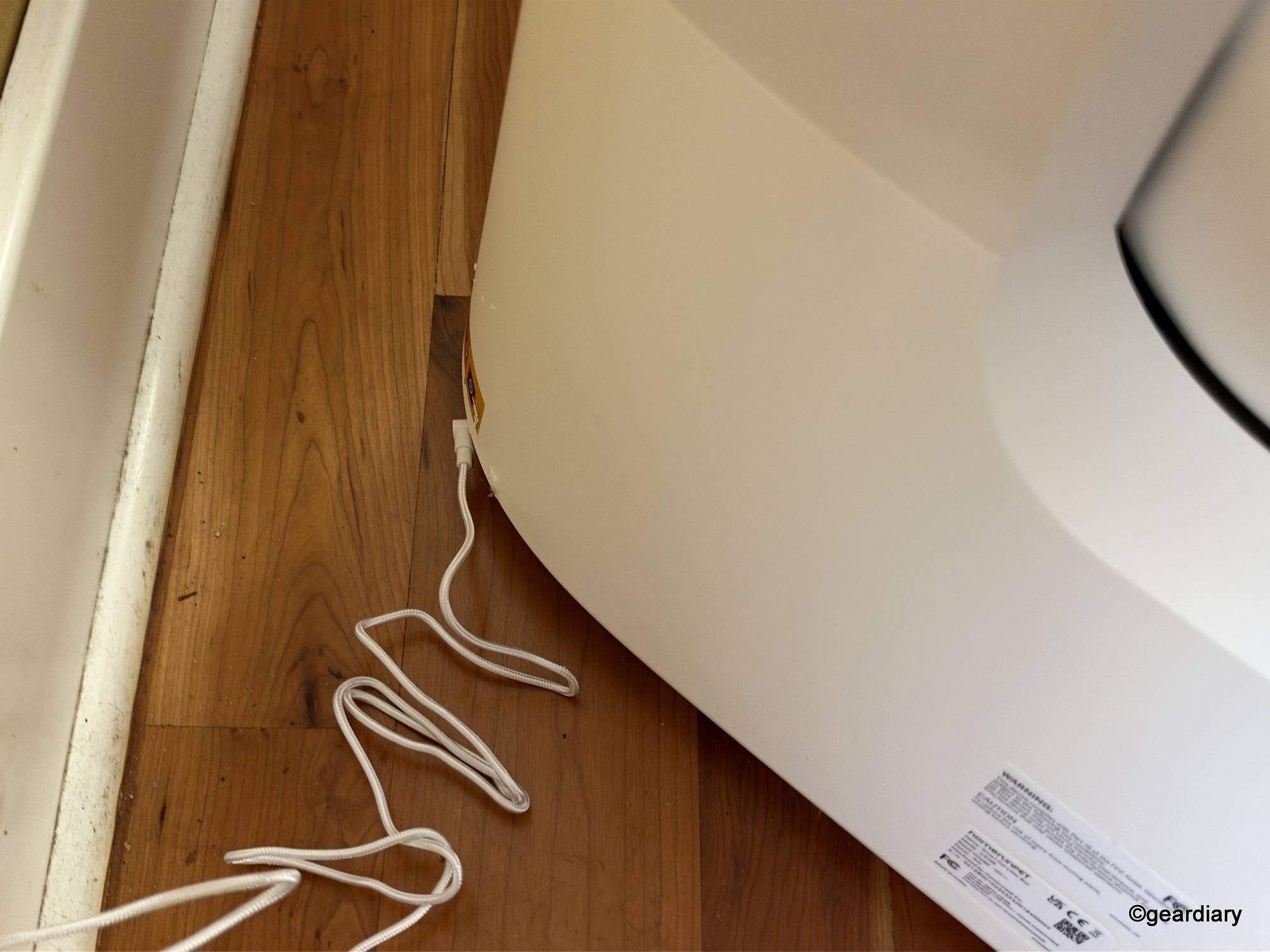
The homerunPET CS106 requires a nearby electrical outlet because it doesn’t have a built-in battery. It also needs to sit on a solid, level floor rather than carpeting so that its weight sensors can accurately detect a cat entering the enclosure.
The initial setup is easy, the controls are intuitive, the various components fit together well, and the machine feels as substantial in person as its specifications suggest.
However, as with any automatic litter box, careful setup is worth the effort. A misplaced component or poorly positioned sensor can turn what should be a convenient appliance into an unnecessarily complicated one.
Automatic Cleaning Is Only Half the Equation
The homerunPET CS106 uses a rotating dome to separate clumped waste from clean litter after a cat finishes using the box. Instead of requiring manual scooping, the system sifts the contents and deposits the waste into a collection compartment. It’s a familiar approach in the automatic litter box category, but homerunPET has incorporated a few details intended to make the process more effective.
The litter bed has a raised, hill-shaped base designed to reduce litter sticking to the interior surfaces. That makes sense because clumps stuck to the bottom or walls can undermine the whole point of automatic cleaning.
The homerunPET CS106’s performance shines in how completely it removes waste without sacrificing too much clean litter, leaving the litter bed ready for the next visit without leaving small fragments behind or requiring frequent manual intervention.
Of course, that process’s effectiveness can also change as a machine gets dirty. Freshly assembled automatic litter boxes have a much easier job than ones that have processed weeks of damp litter, dust, and repeated cleaning cycles. I’ve been using the homerunPET CS106 for over two weeks, and I haven’t noticed any issues.
Another important consideration is how consistently the system handles multiple uses in quick succession. In a multi-cat household, an automatic litter box needs to recognize when a cat has returned and avoid starting an inappropriate cleaning cycle. I have only one cat, so I can’t speak to how well the litter box performs in that scenario.
The homerunPET CS106 has the capacity and technology to handle multiple cats, but nothing beats seeing how it performs in your home.
The Built-In Litter Refill System Makes a Difference
Perhaps the homerunPET CS106’s most interesting feature isn’t that it cleans itself. Several competing products already do that quite well. What sets it apart is the integrated 4.5-liter clean-litter reservoir, about half of the 18-pound boxes I buy for Bella.
Automatic litter boxes typically remove waste through a sifting mechanism, but some clean litter inevitably disappears along with the clumps. Over time, the level drops, and someone needs to replenish it. The homerunPET CS106 handles that task automatically.
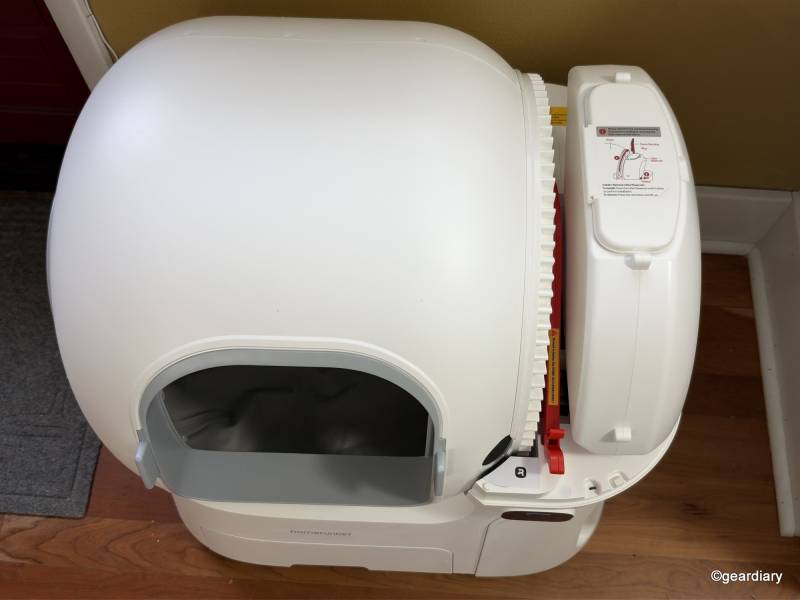
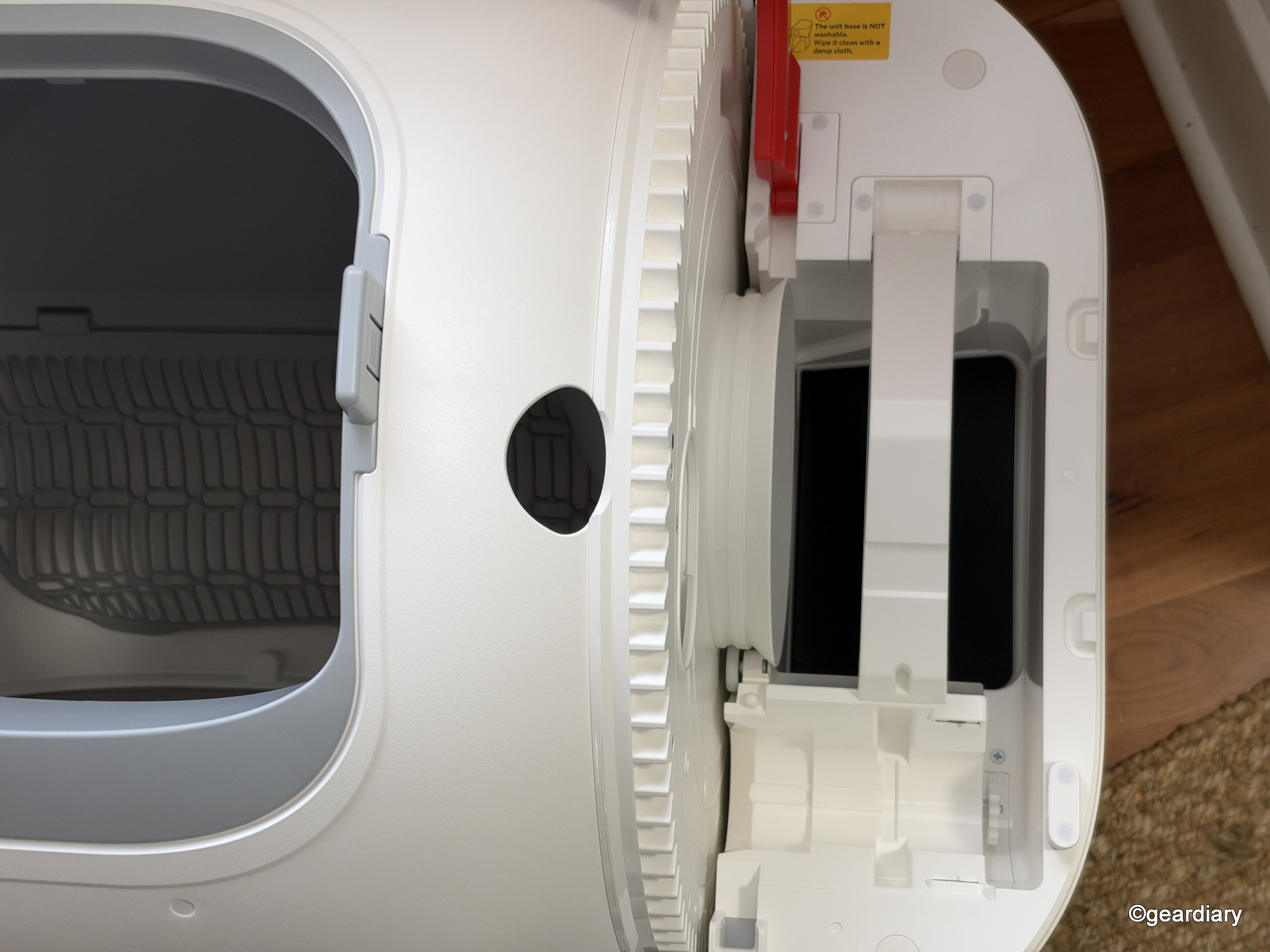
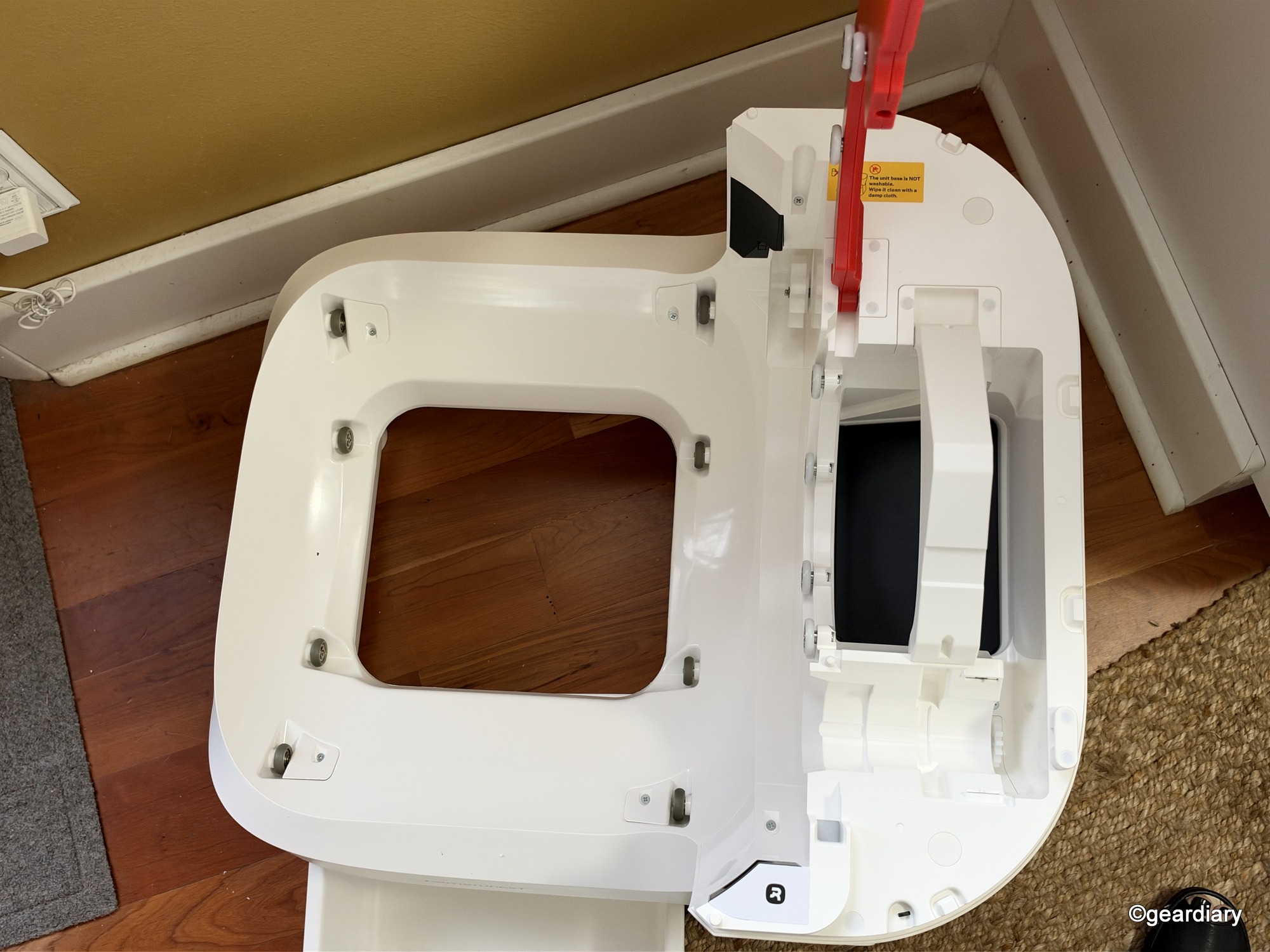
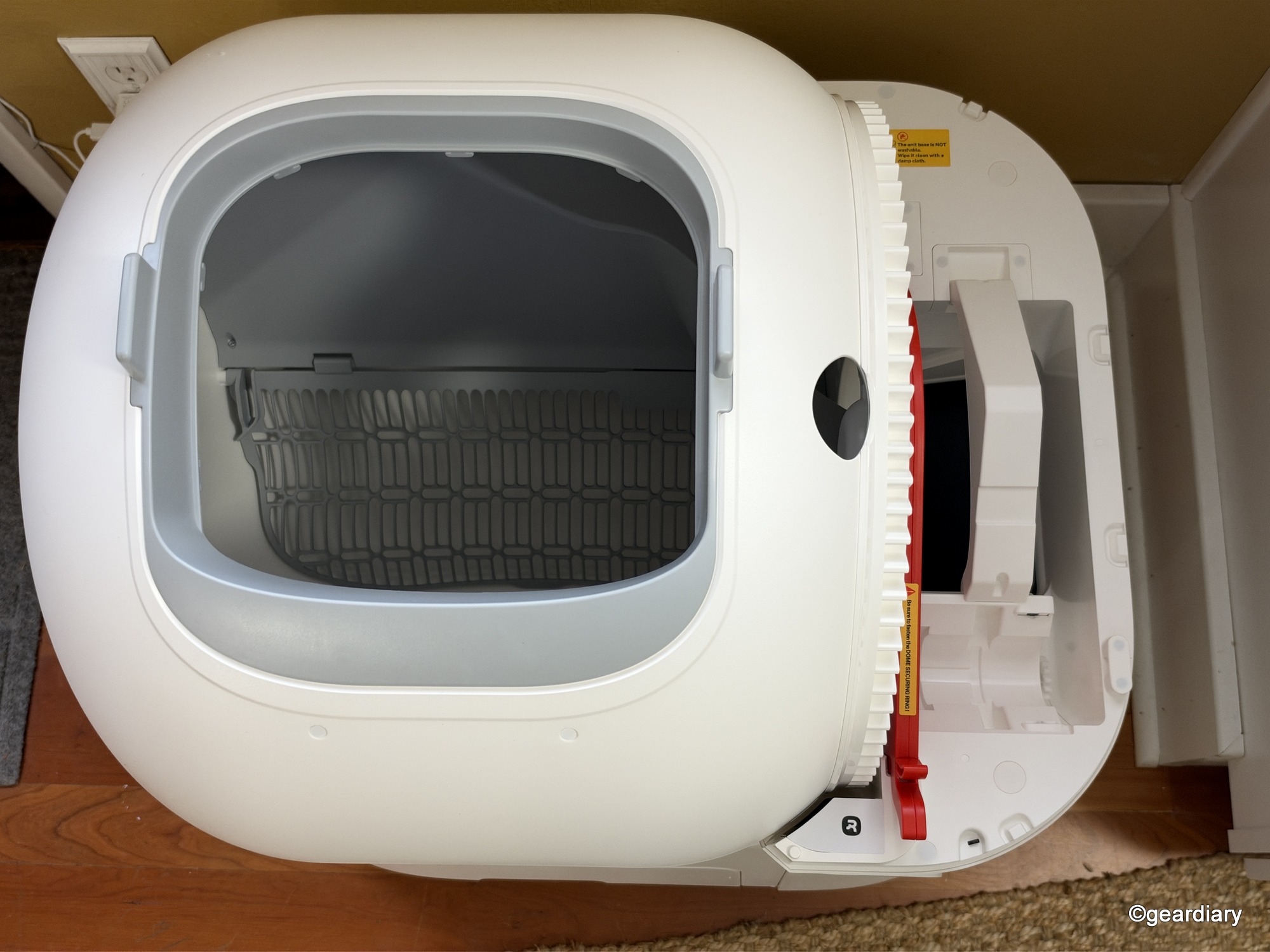
The litter refill reservoir is located under the side cover.
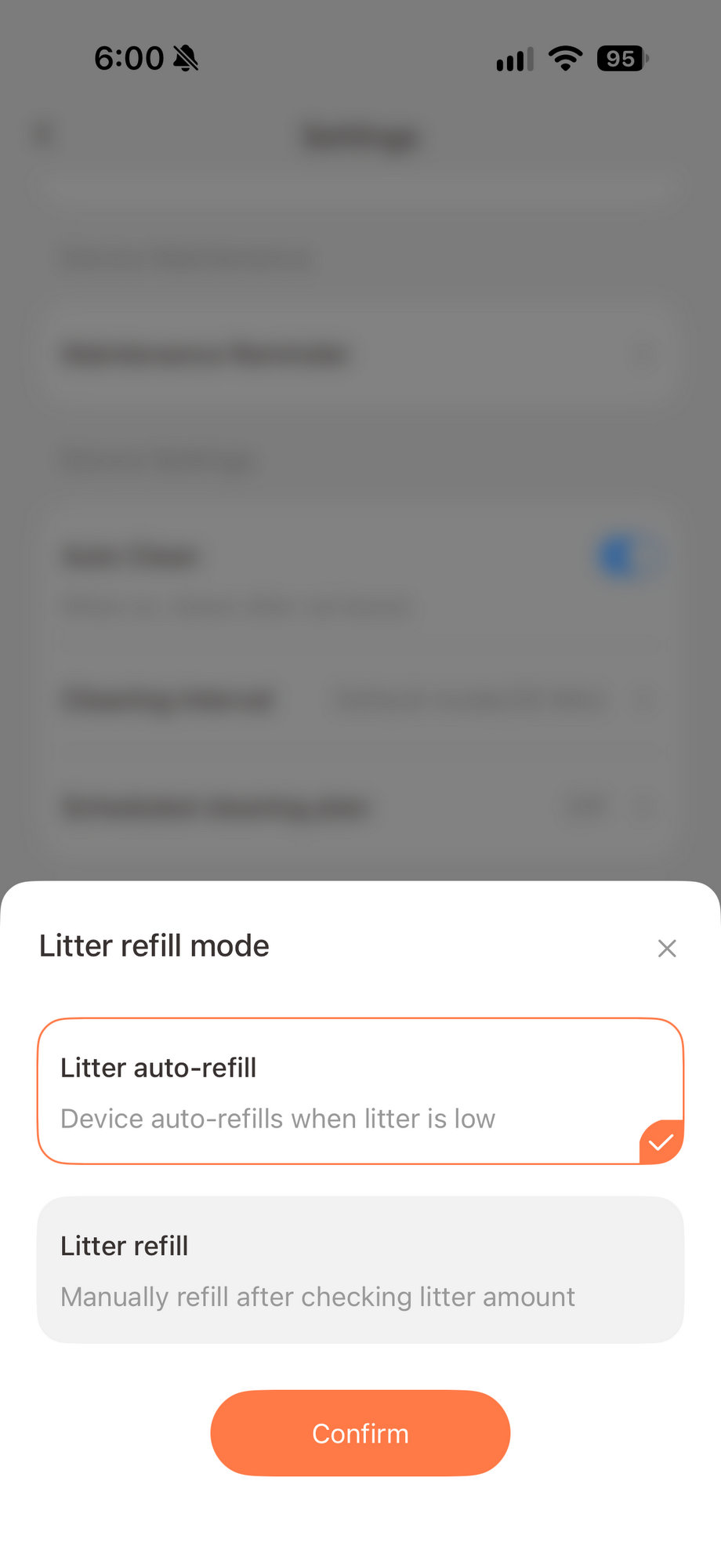
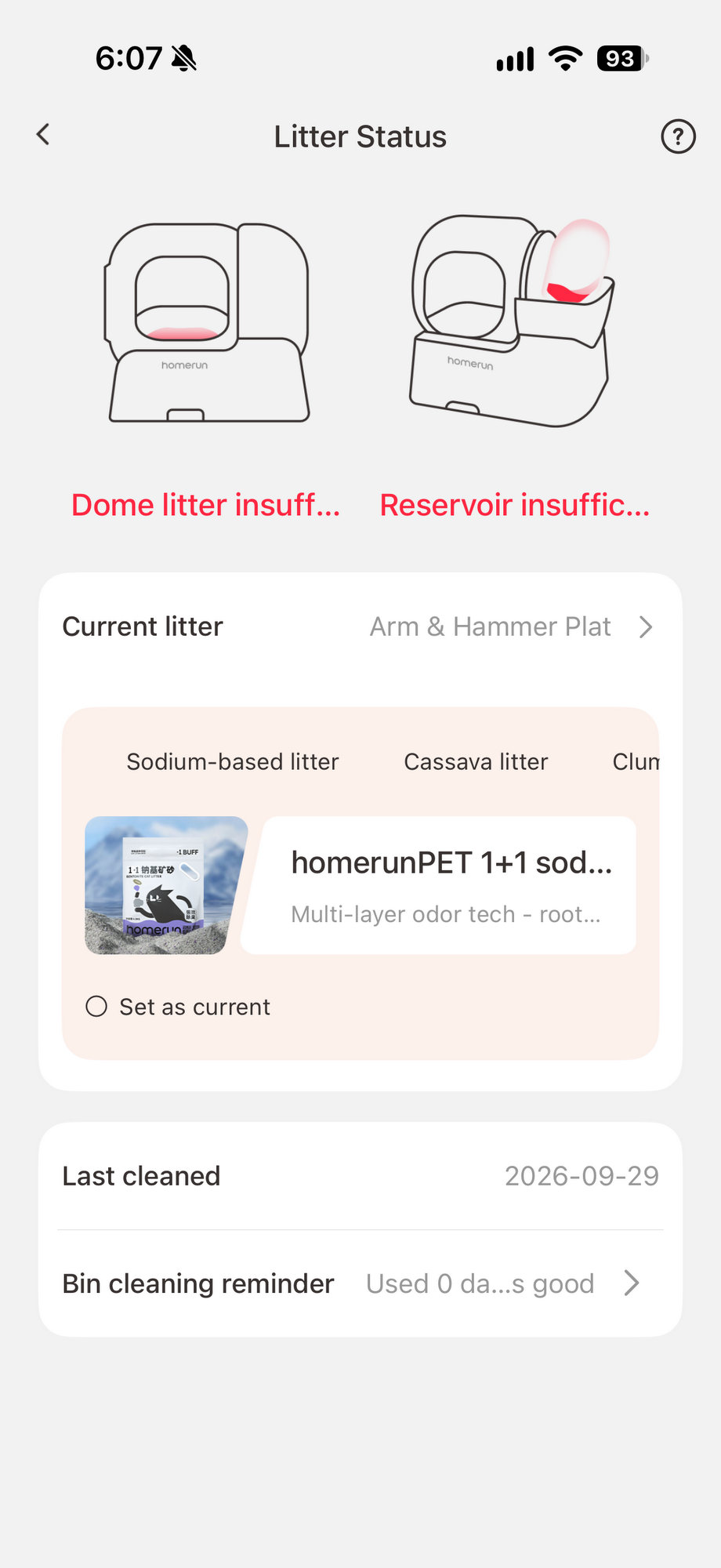
A time-of-flight sensor monitors the litter level by measuring how long reflected light takes to return to the sensor. When the litter gets low, a spiral dispensing mechanism transfers additional litter from the reservoir into the main 8-liter litter bed. The reservoir is built into the machine, so you don’t need to purchase a separate dispensing attachment.
<photo of litter in the reservoir>
This is particularly useful for homes with several cats. A full litter bed gives cats enough material to dig and cover their waste, while reducing the likelihood of urine reaching the liner because the litter has become too shallow.
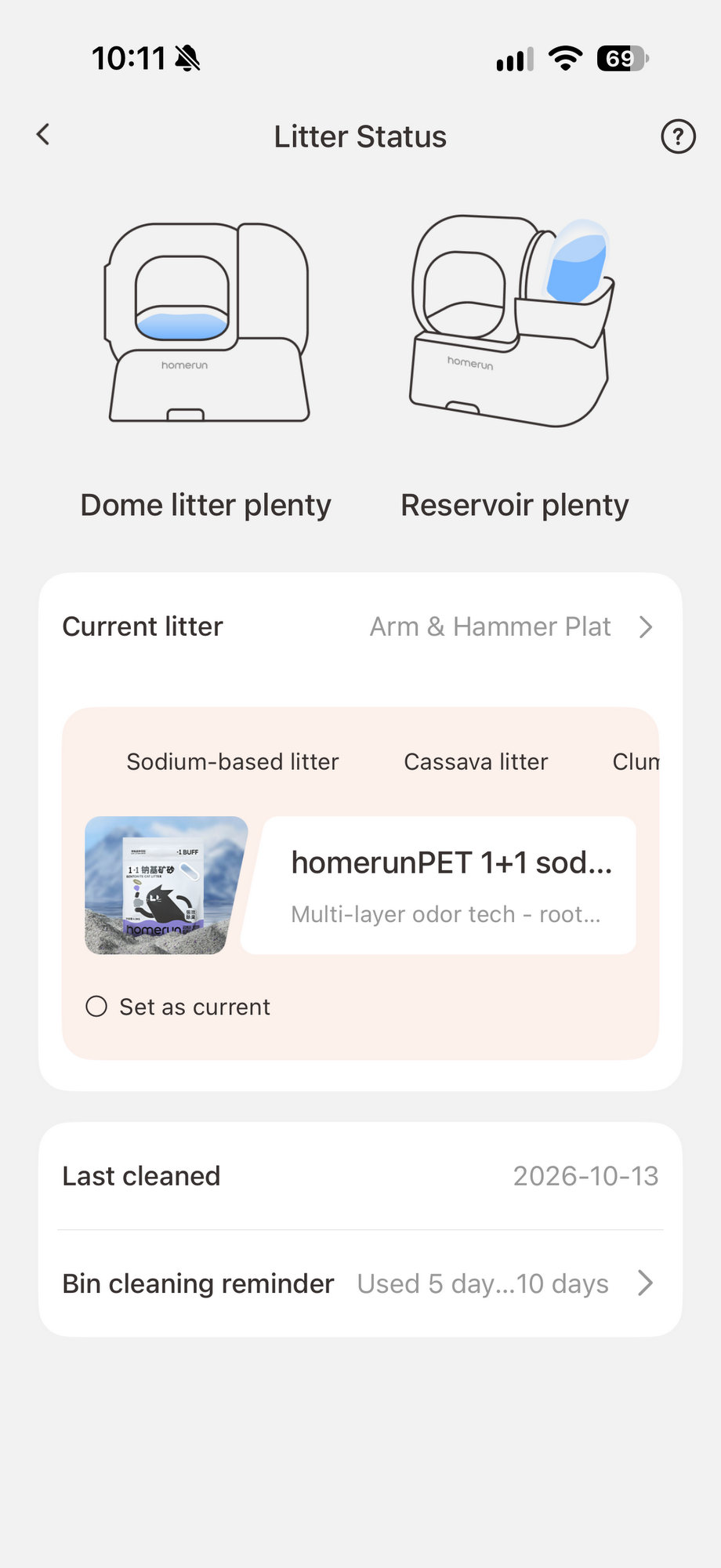
Automatic replenishment also eliminates one of the routine checks many competing systems require. It doesn’t mean you’ll never add litter again. The 4.5-liter reservoir eventually needs refilling, and the system can only dispense what’s available. The homerunPET app can notify you when the reservoir runs low, so you don’t have to check it manually.
In my testing, the refill mechanism maintained a consistent litter depth without overfilling, uneven dispensing, or issues with my preferred litter’s texture. Fine clay granules and larger plant-based pellets might not necessarily flow through the dispensing mechanism in the same way.
Nevertheless, the homerunPET CS106’s automatic replenishment offers a practical advantage over systems that require an additional accessory to do the same job.
A Large Waste Bin Means Less Frequent Emptying
The homerunPET CS106 has a 12-liter waste collection compartment, offering much more storage capacity than a conventional litter tray. HomerunPET estimates that the bin can accommodate up to 20 days of waste from one cat or approximately seven days from three cats.
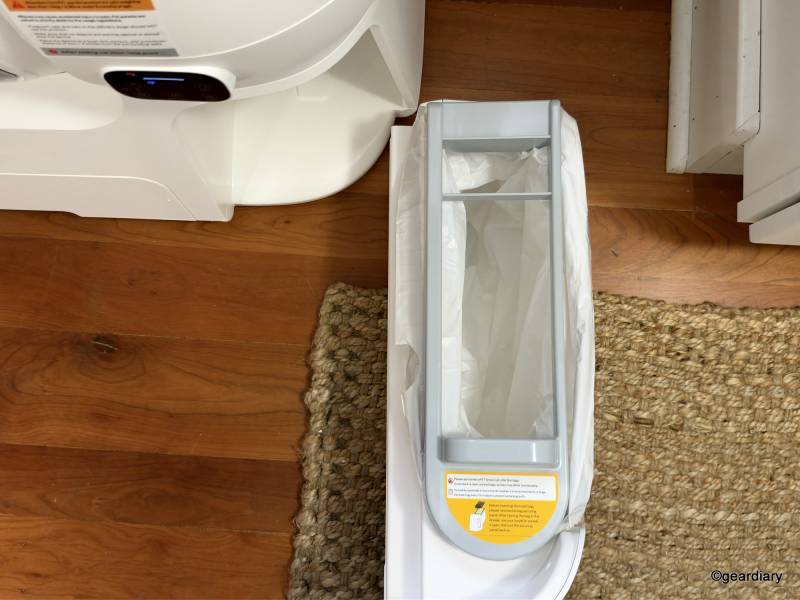
Those figures are useful reference points, but they aren’t guaranteed intervals. Waste accumulation depends on the number of cats, their sizes, diet, litter habits, and how much clean litter they carry into the bin each cycle.
Just as importantly, being able to leave waste in a container for nearly three weeks doesn’t necessarily mean you should. Even when odors stay contained, used litter can absorb moisture, and bacteria don’t stop multiplying just because the waste is out of sight. Emptying the bin more often in hot or humid weather makes sense.
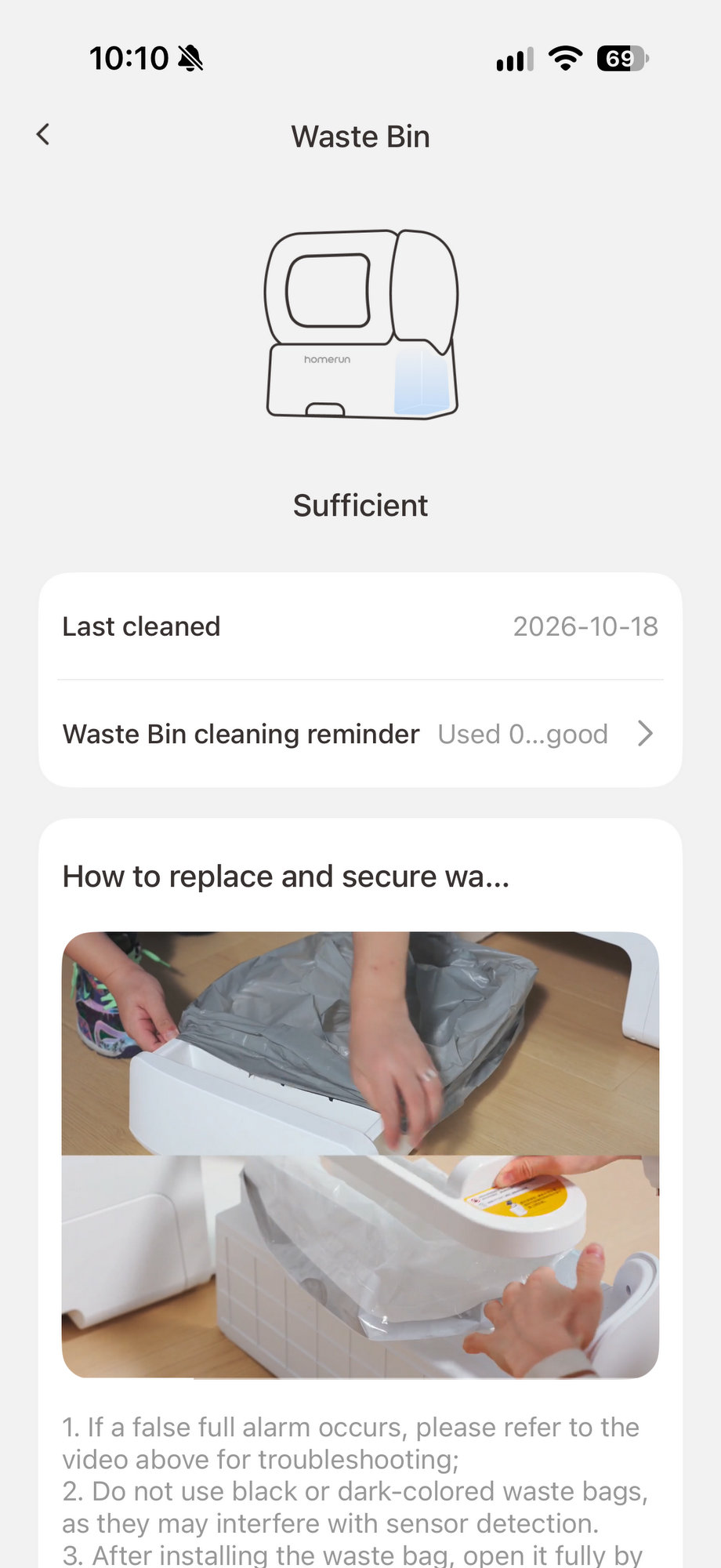
The homerunPET CS106 includes a Fresh Gel Deodorizer to help reduce unpleasant smells, but deodorizing products aren’t a substitute for actual waste removal. In my testing, and with my particular elderly cat, the app notified me that the waste bin was full about nine days in. Removing the waste bag and swapping in a new one is very easy. I have to admit that it is quite shocking how heavy the full waste bag can get, though.
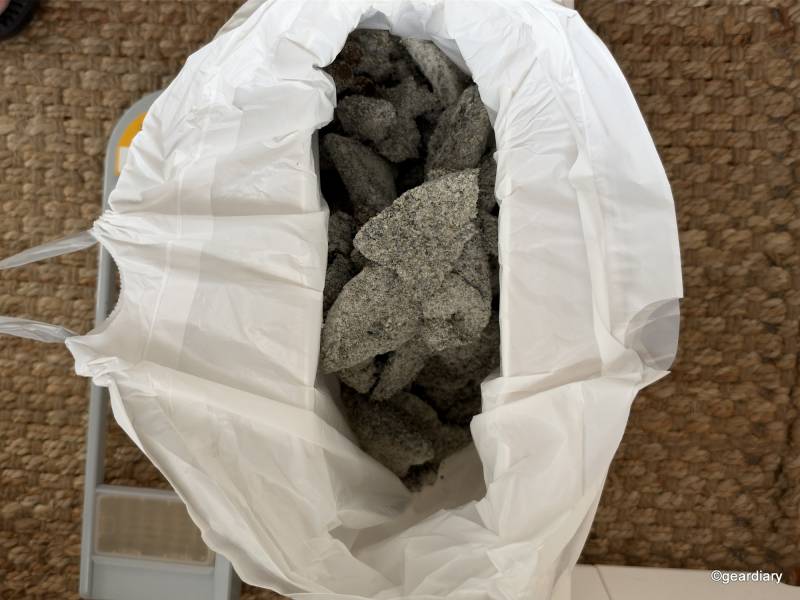
About 10 days of litter collected; it’s gross, but look at how solidly each piece is covered by the litter.
Even so, a well-sealed collection system can make a noticeable difference in keeping surrounding rooms pleasant, particularly when cats use the box overnight or while you’re away, and thankfully, I have never noticed any bad smell around this litter box.
Safety Matters More Than Convenience
Automatic litter boxes have moving parts, and cats aren’t known for respecting household appliance schedules. That’s why safety deserves more scrutiny than nearly any other feature.
The homerunPET CS106 combines four weight sensors positioned in its base, an entrance radar sensor, and a physical anti-pinch bumper. The weight sensors detect when a cat enters the machine, while the radar monitors activity around the entrance. The system is designed to stop movement when it detects a cat approaching or occupying the enclosure. The physical bumper provides an additional layer of protection by preventing the dome from fully closing around the entrance.
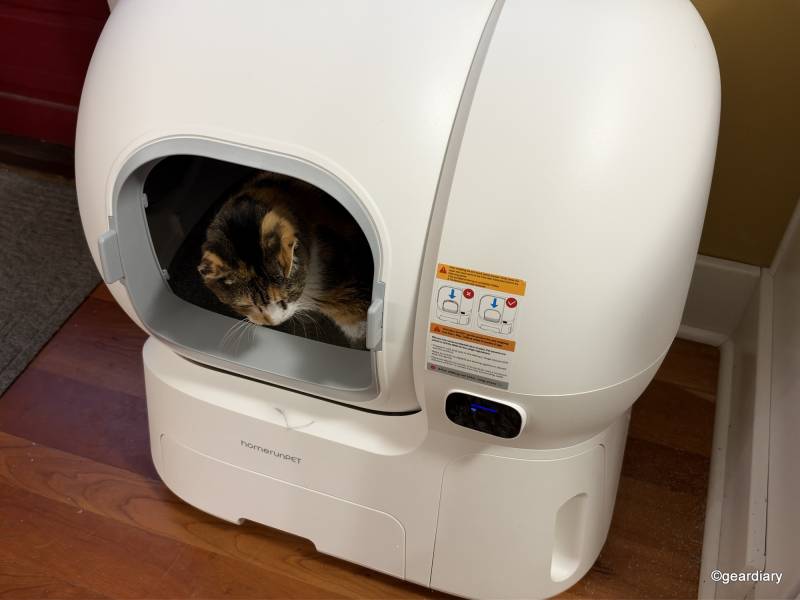
This combination is reassuring on paper because it doesn’t rely on a single detection method. However, the presence of multiple sensors shouldn’t be mistaken for proof that they’ll perform flawlessly under every possible condition. Their effectiveness depends on proper positioning, calibration, and continued operation. That makes it important to follow the installation requirements, keep the sensors clean, and watch for unexpected behavior.
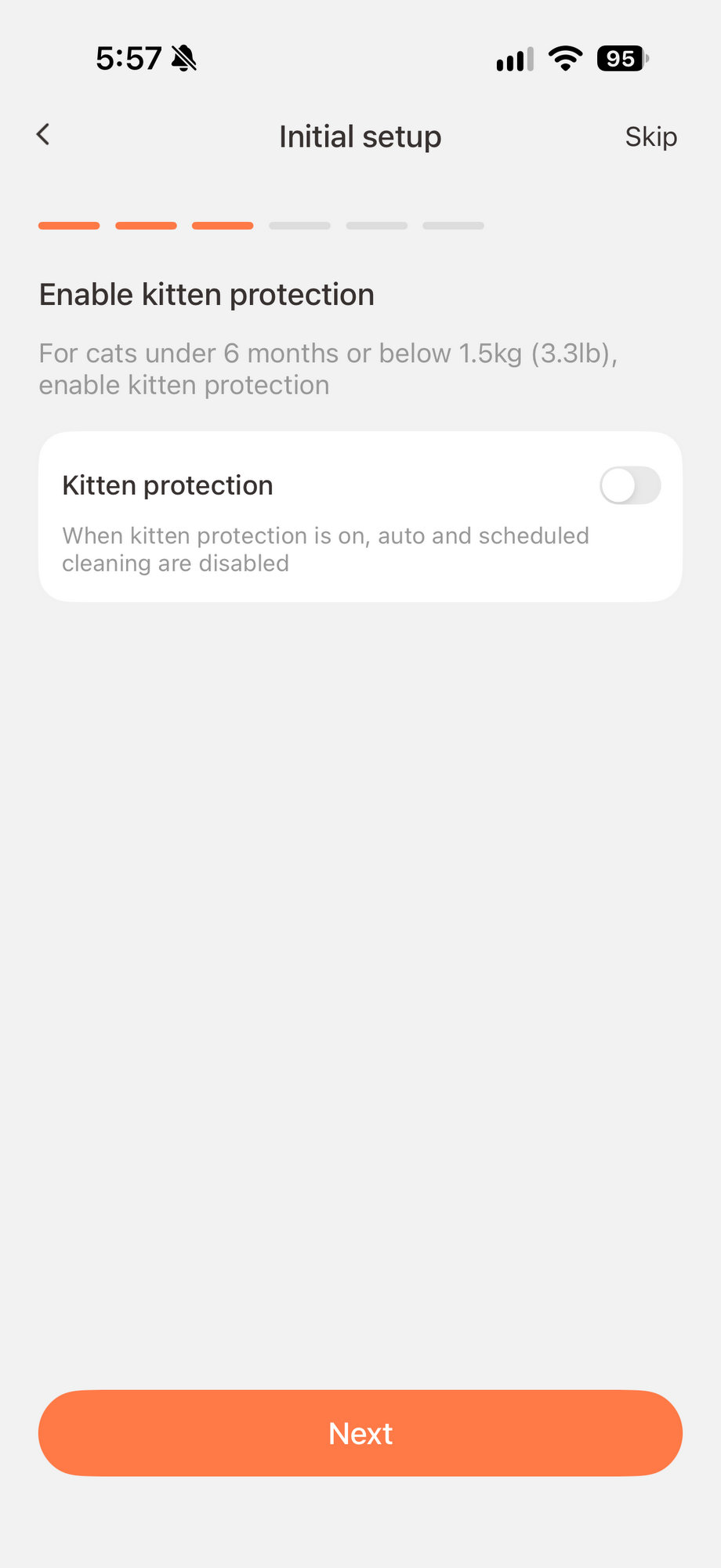
The manufacturer specifies that the homerunPET CS106 shouldn’t be used in automatic mode by kittens younger than six months or weighing less than 3.3 pounds. It also advises against using the machine for pregnant or nursing cats. These limitations matter, especially in households with animals of different ages.
For any cat that seems uncomfortable with the machine, there’s no advantage in forcing the transition. The safest automatic litter box is still one your cat can approach, enter, and leave willingly.
The Optional Step Is Especially Helpful for Senior Cats
One accessory deserves particular attention: the homerunPET Litter Step for the CS106. The step sells separately for $69.99, but it’s currently discounted to $55.99. At first glance, it looks like a fairly straightforward addition. The textured platform is designed to make it easier to access the litter box while catching loose litter from a cat’s paws as they exit.
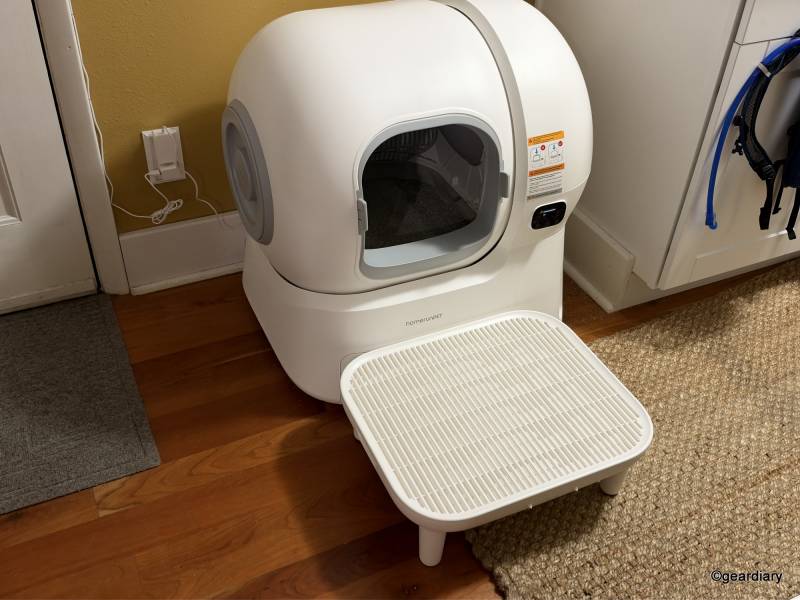
The optional step takes up extra room, making the original orientation impractical for our laundry room.
However, its value becomes more apparent when you share your home with an older cat. A litter box can have generous internal dimensions, effective cleaning, and thoughtful automation, but none of those features matter if an aging cat struggles to get inside.
At 18 years old, a senior cat like my Bella doesn’t necessarily move with the same confidence or flexibility that they did when they were younger. Even small changes in elevation can become harder, especially for cats experiencing stiffness or age-related mobility changes.
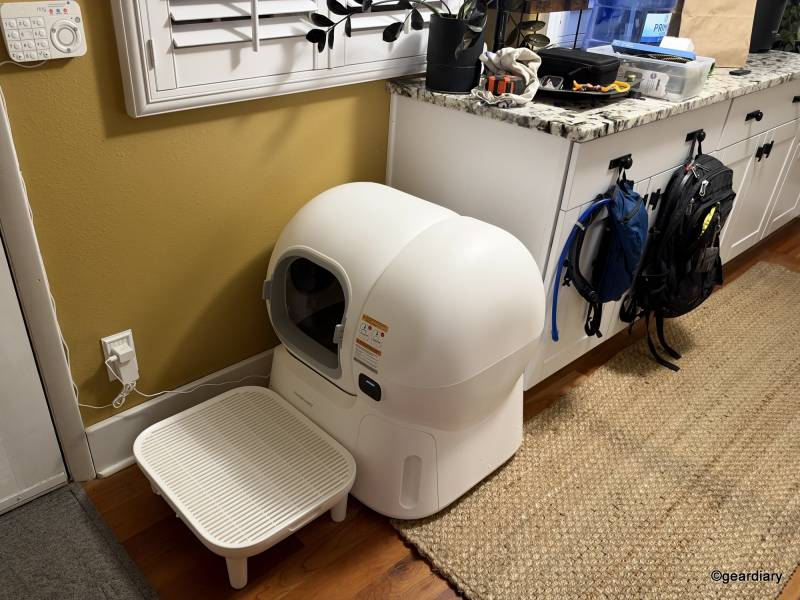
Turning the litter box’s orientation made the HomerunPET CS106 fit much better in our space.
The step provides an extra surface for her when she enters and exits, making the transition less abrupt. Its textured design also gives loose litter a place to collect before it gets tracked across the floor. You can shake the step out or rinse it with water, so maintenance shouldn’t add much extra work.
The optional step has been particularly useful for Bella, making it an important part of the homerunPET CS106’s everyday setup rather than merely an accessory intended to reduce litter tracking. That’s an important distinction. It has also helped keep the small amount of loose litter she would otherwise drag out of the box from leaving, which I greatly appreciate.
Of course, a step isn’t a universal solution for cats with mobility problems. Some elderly cats may still prefer a low-sided, open litter tray that requires very little climbing or maneuvering. For even younger, spryer cats that can comfortably navigate the homerunPET CS106’s entrance, though, the step is still worth considering.
Given its usefulness for senior cats and for keeping litter from being tracked away from the box, it’s unfortunate that homerunPET doesn’t include it with the standard machine, although you can get one bundled with the litter box for $968.99 (currently on sale for $758.99).
At this price, an accessibility accessory that can also keep your cat from tracking litter from the box to your sofa seems like something that should be part of the package.
Smart Controls Without Mandatory App Dependence
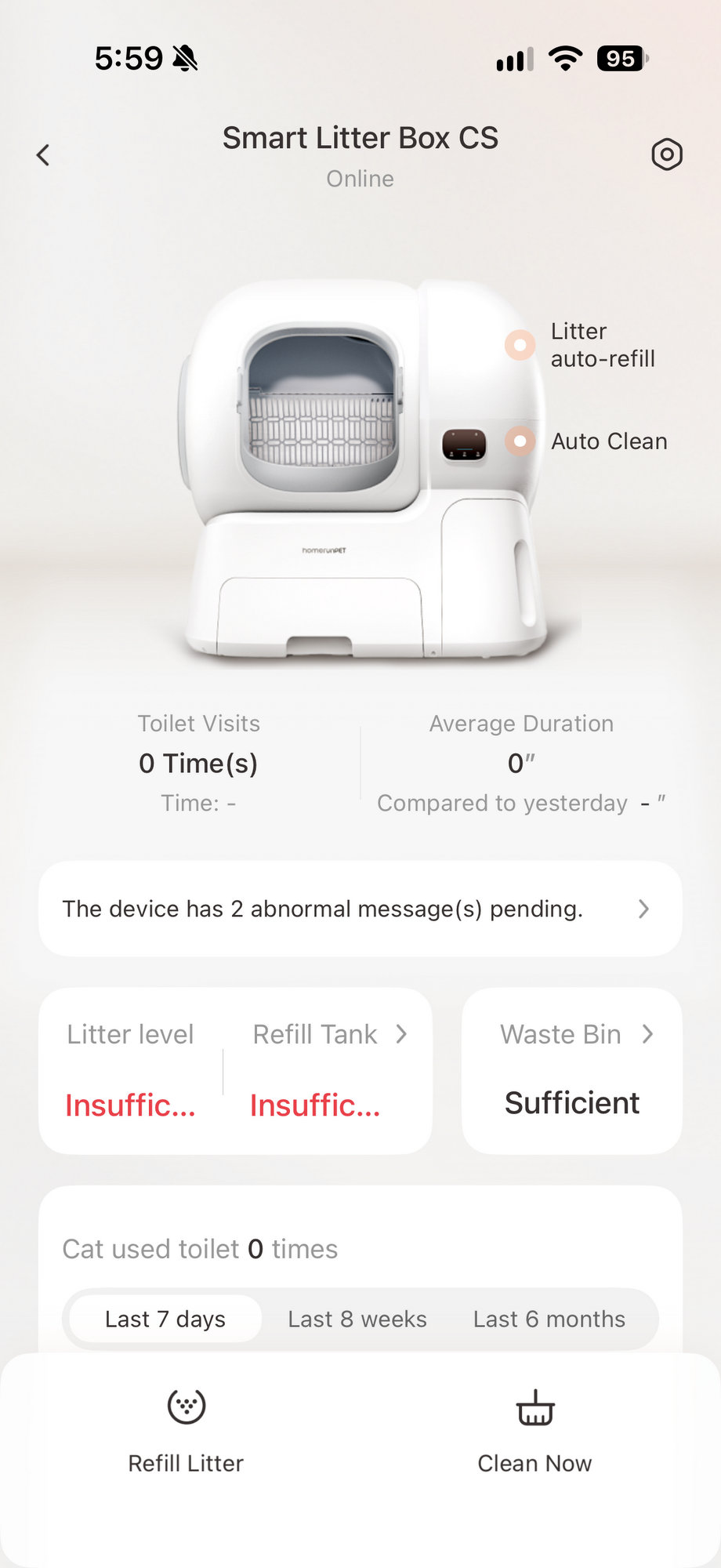
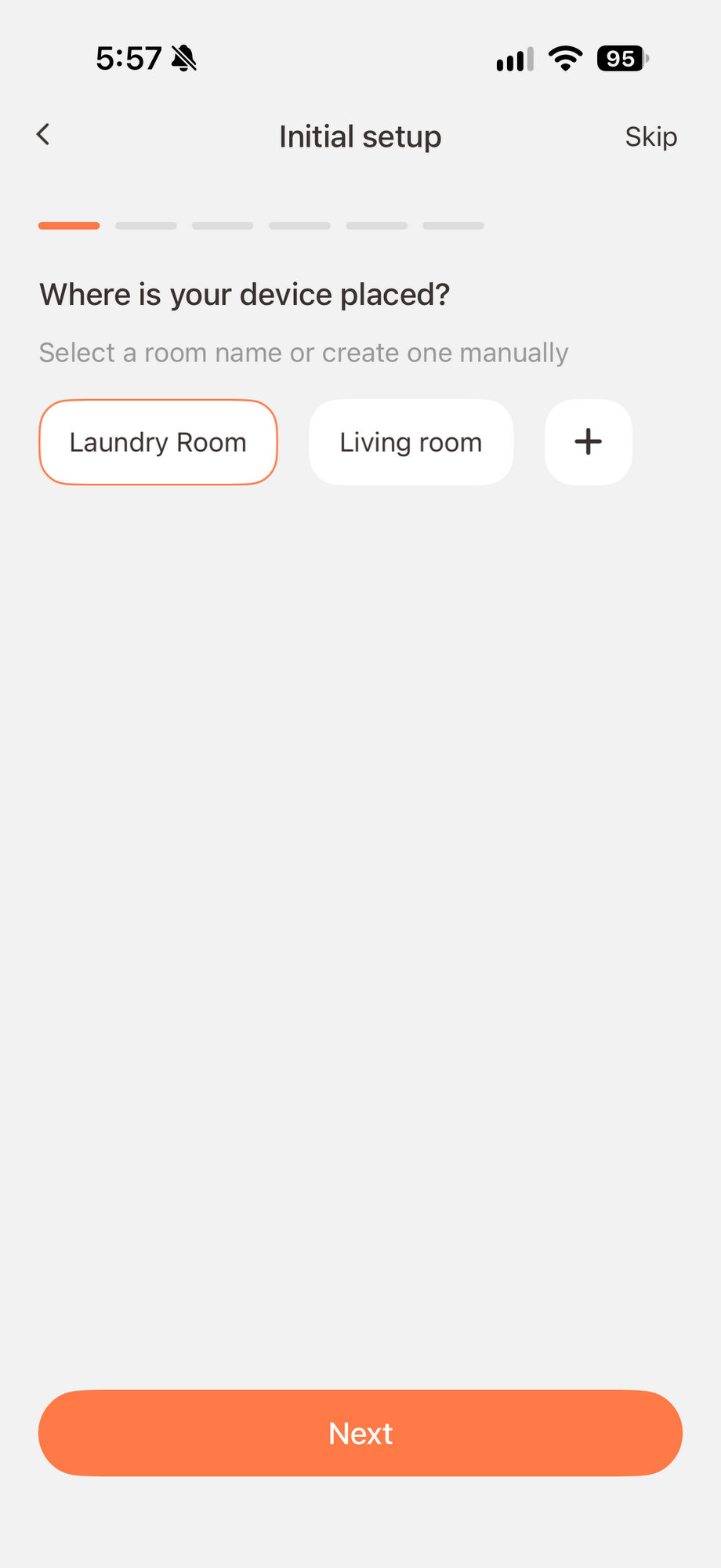
The homerunPET CS106 includes a touch-sensitive control panel, allowing you to operate the machine without connecting it to Wi-Fi. That’s a welcome decision. Not everyone wants another household appliance that requires an app, an account, and a wireless connection just to do its basic job.
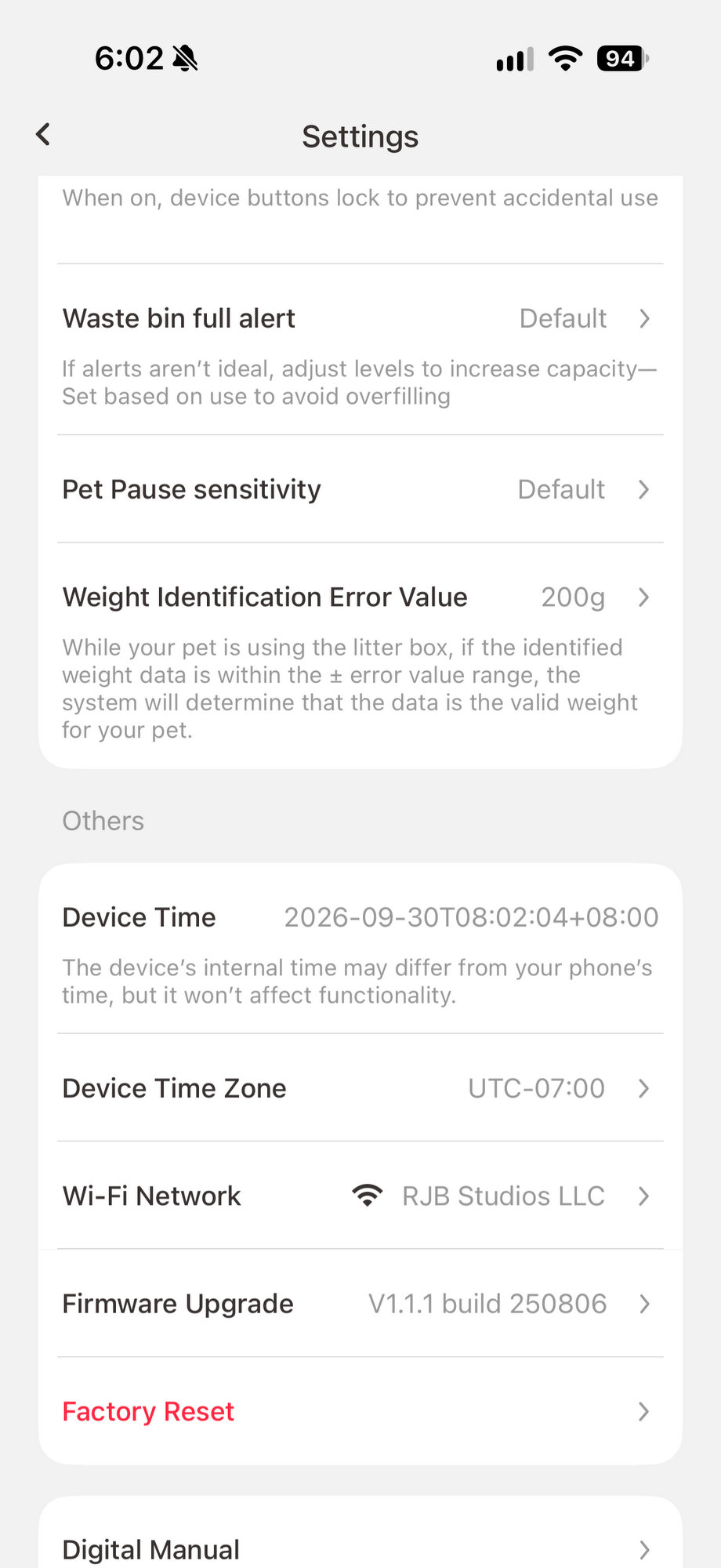
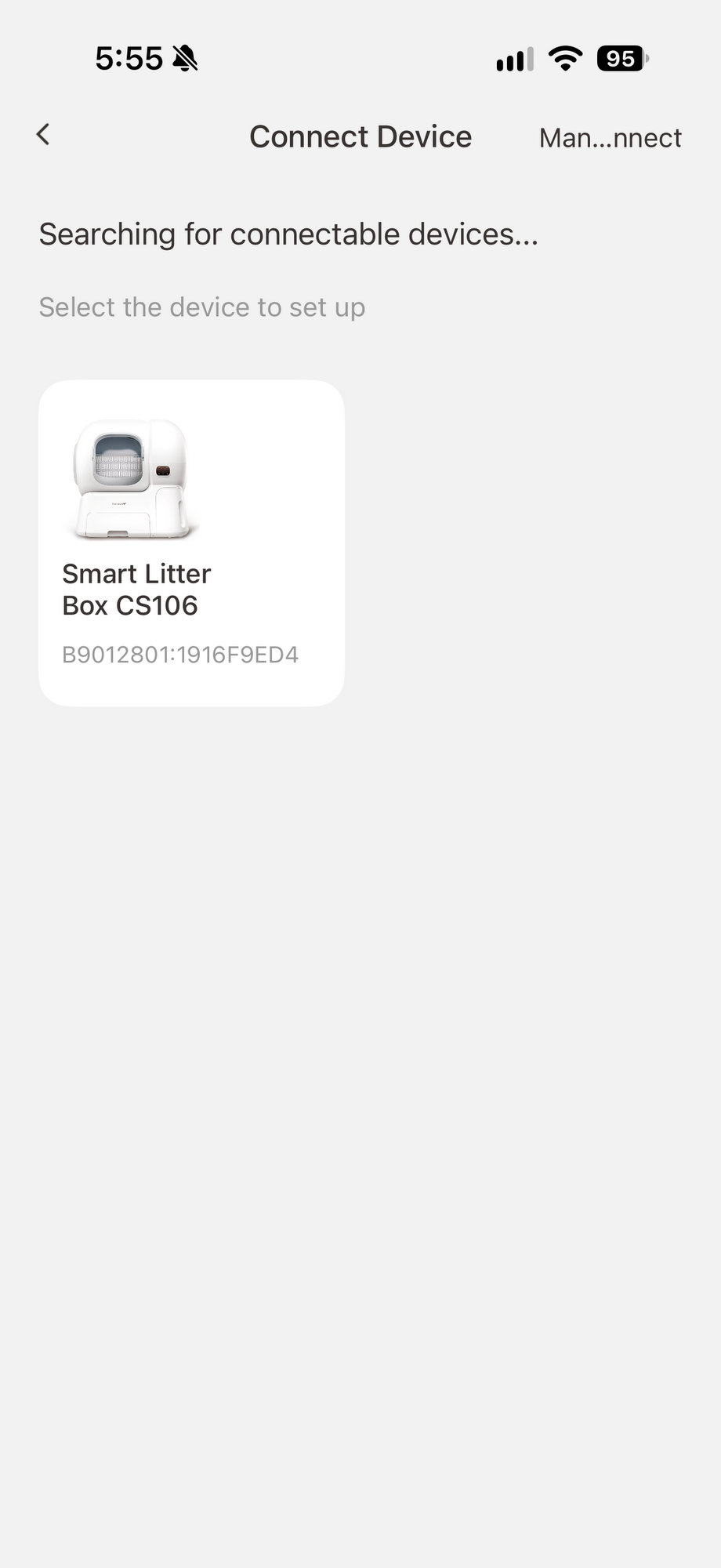
If you prefer connected controls, the CS106 works with the homerunPET app through a 2.4GHz Wi-Fi network. This is the longer-range wireless band commonly supported by smart-home equipment.
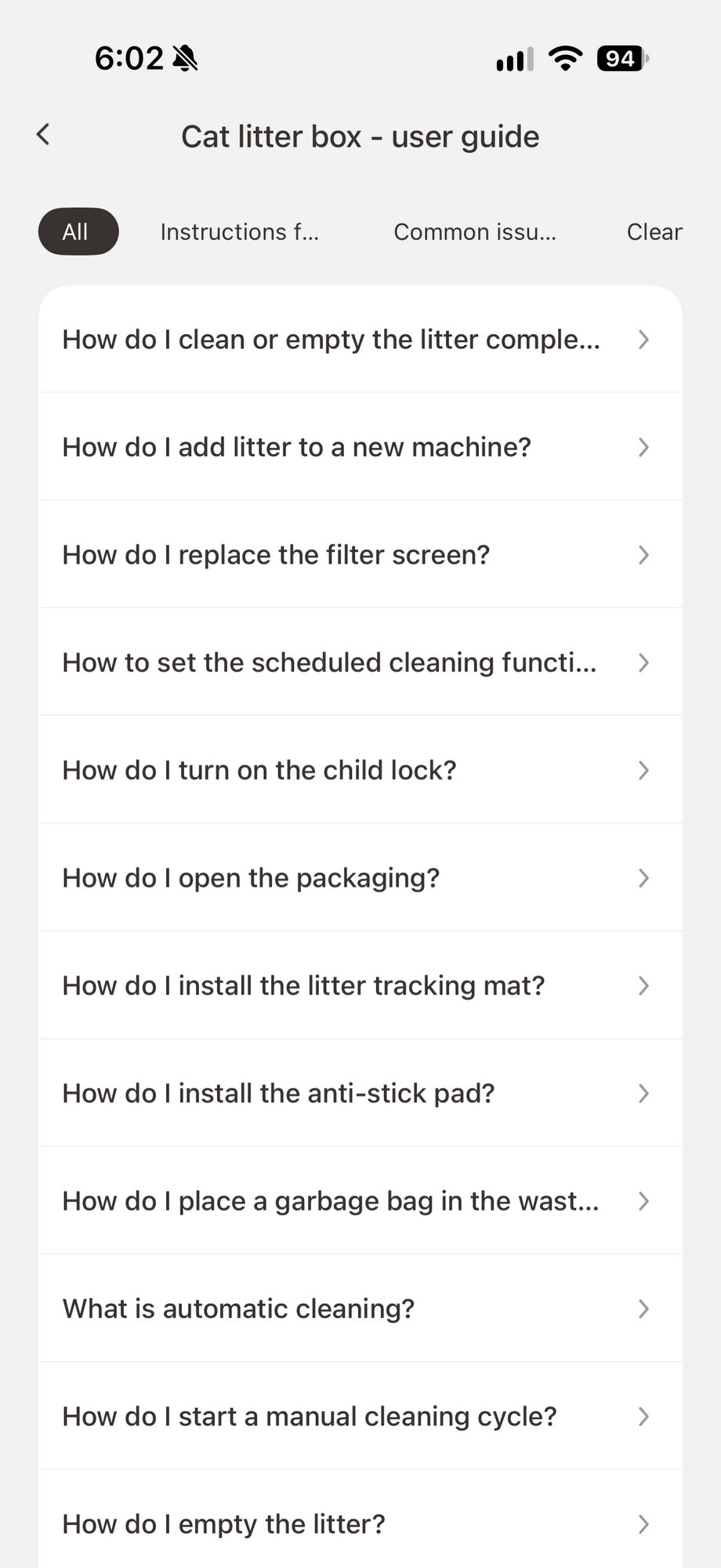
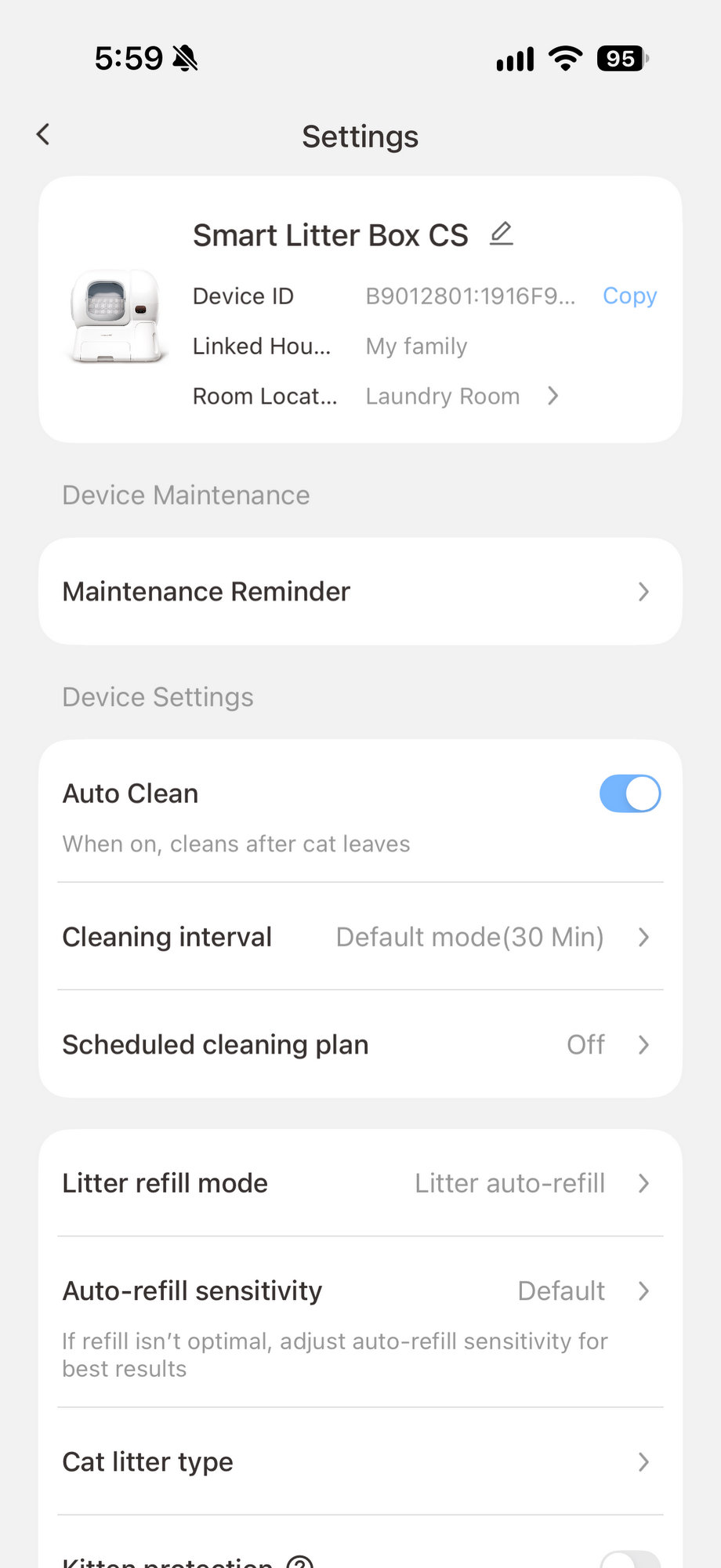
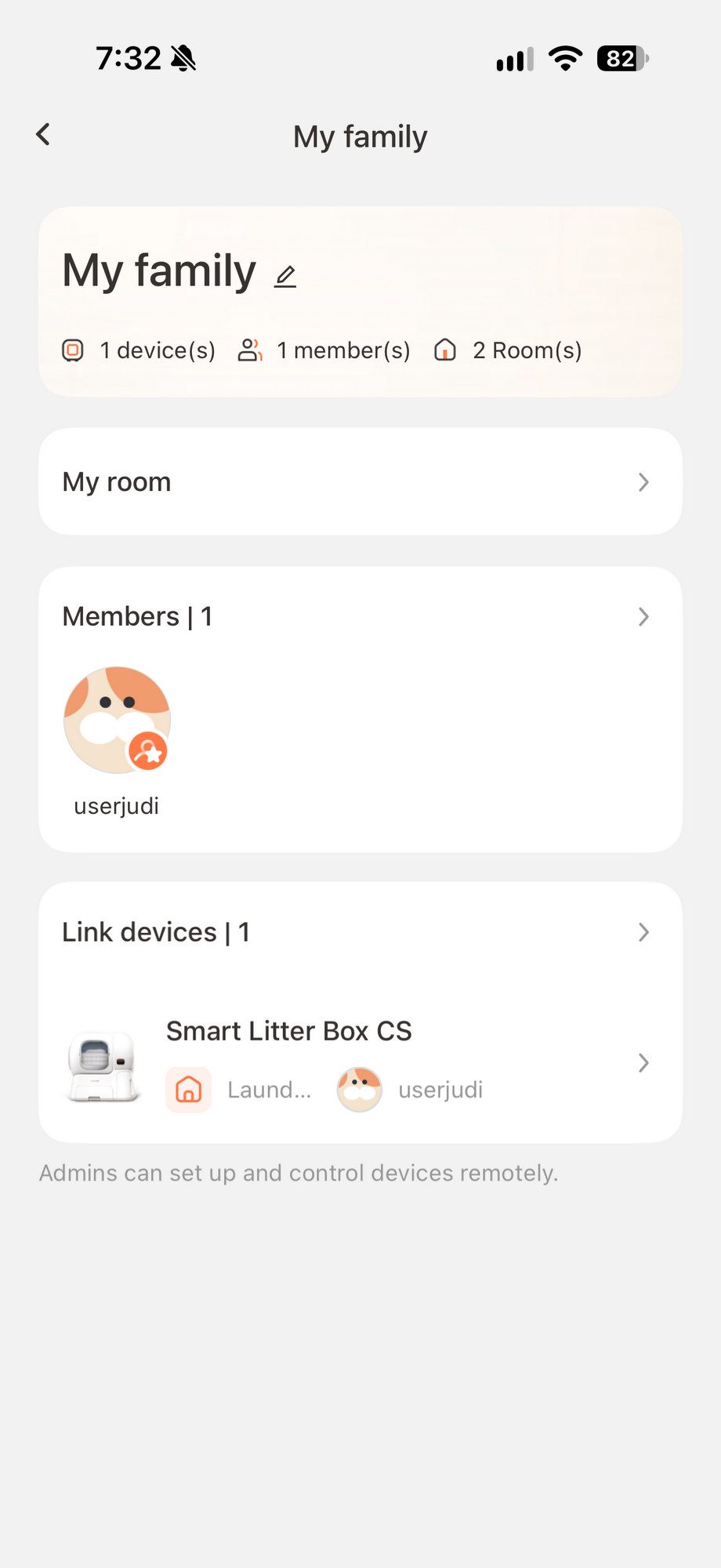
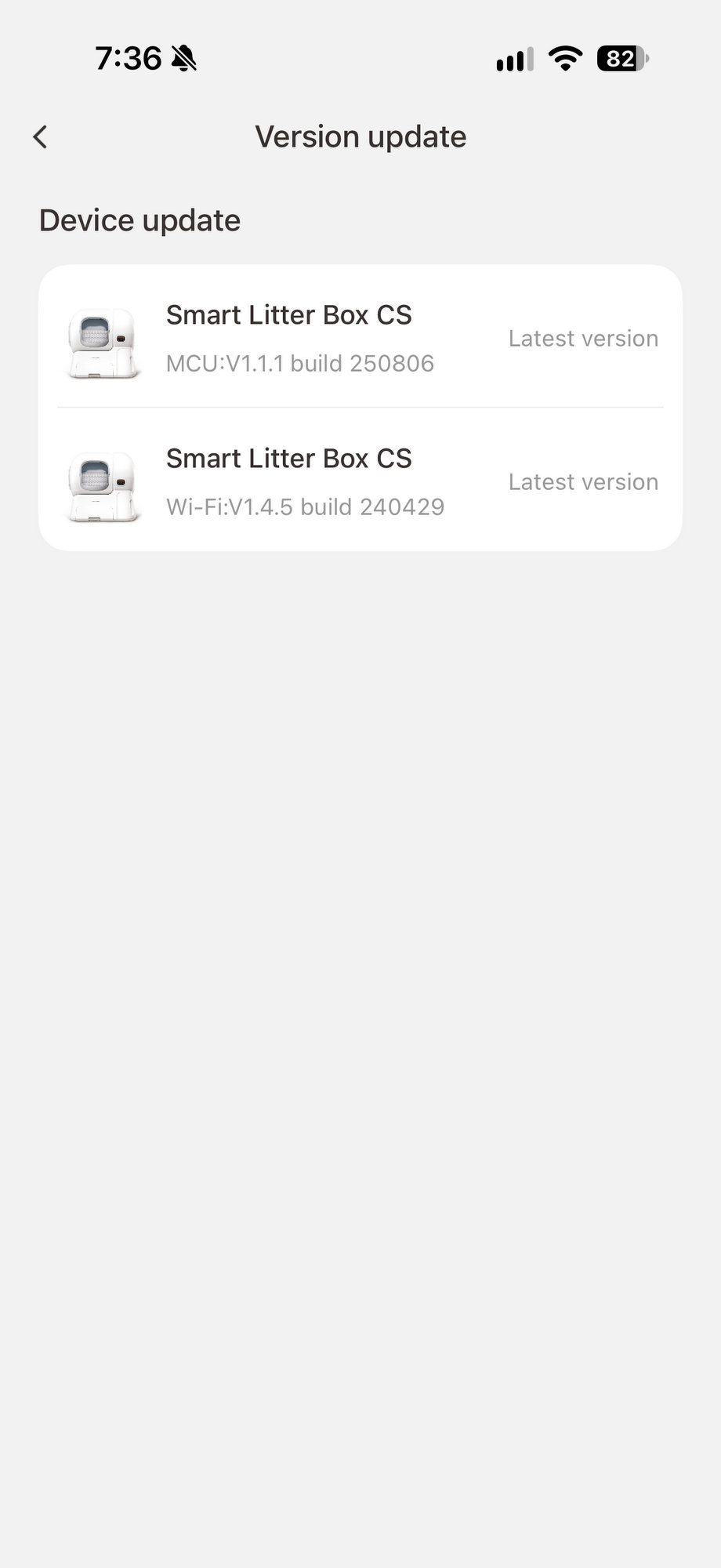
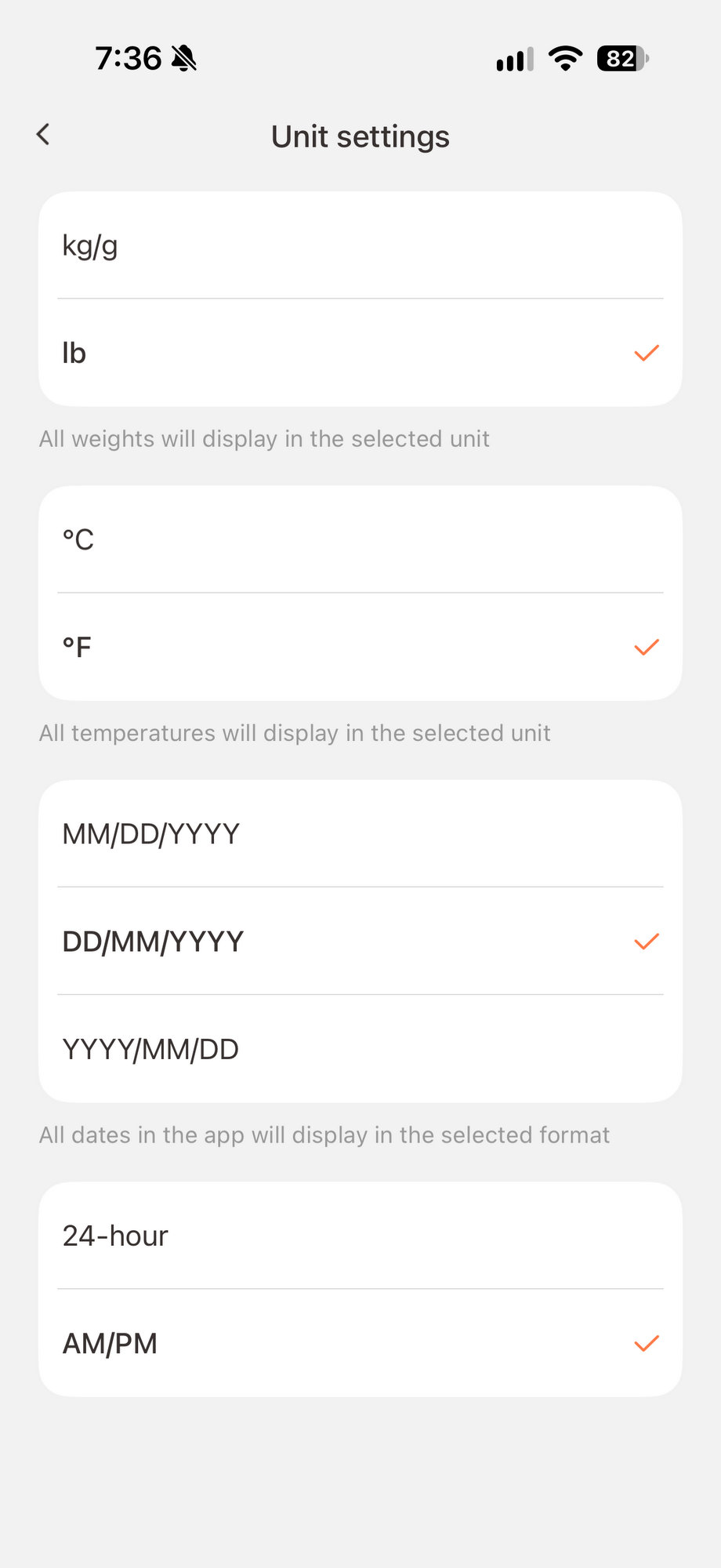
The app provides remote access to the litter box, device status information, and notifications, including alerts when additional clean litter is needed. That can be useful if you travel, work long hours, or simply want to know what’s happening without checking the machine directly. However, the app shouldn’t replace paying attention to your cat.

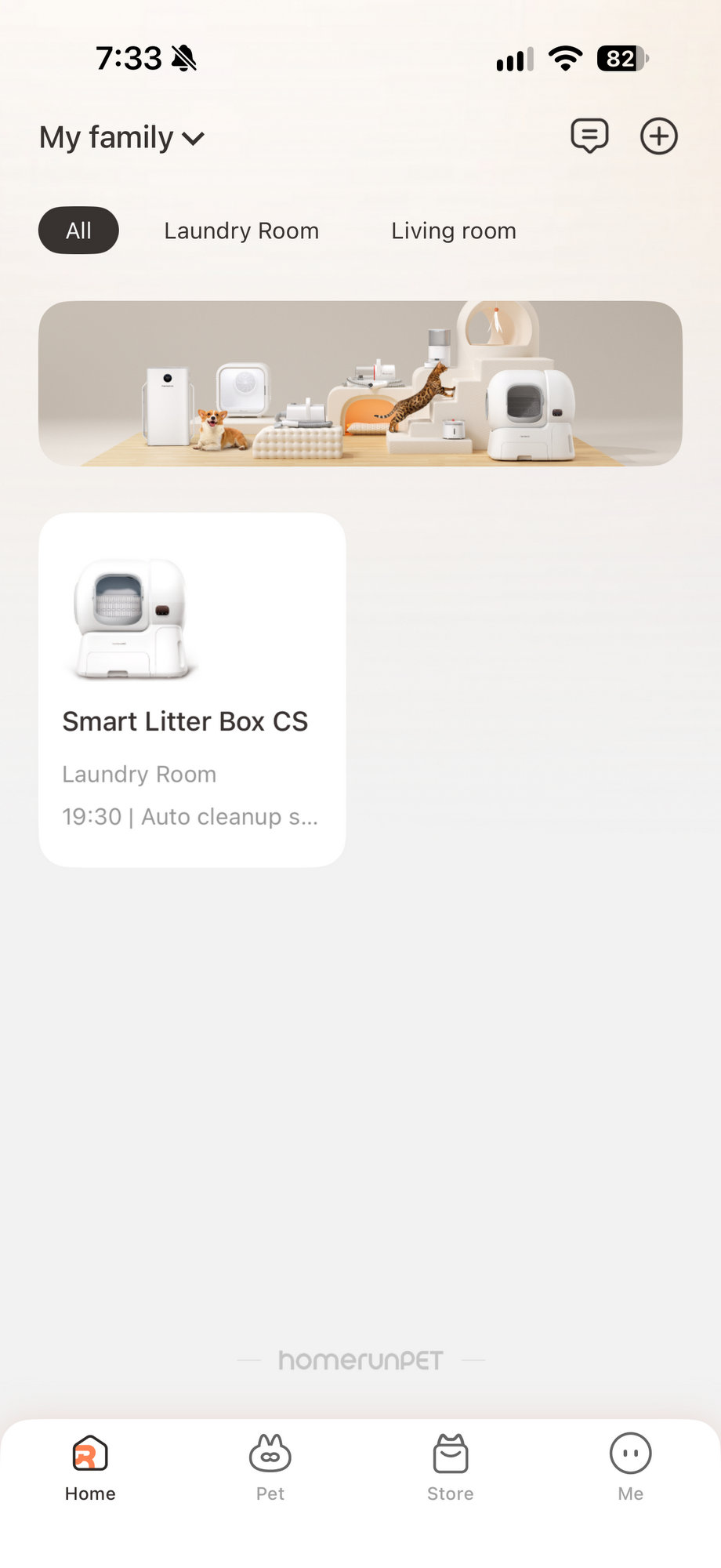

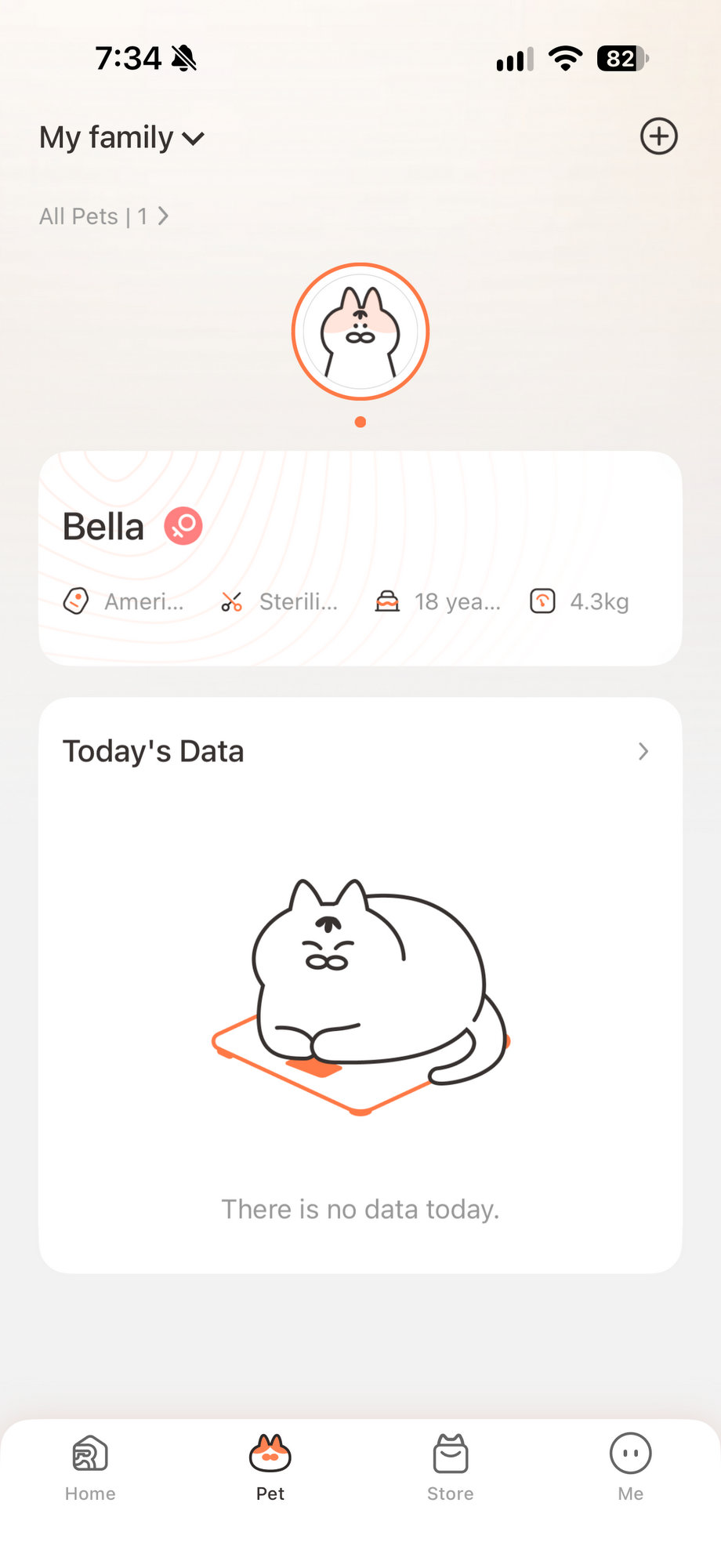

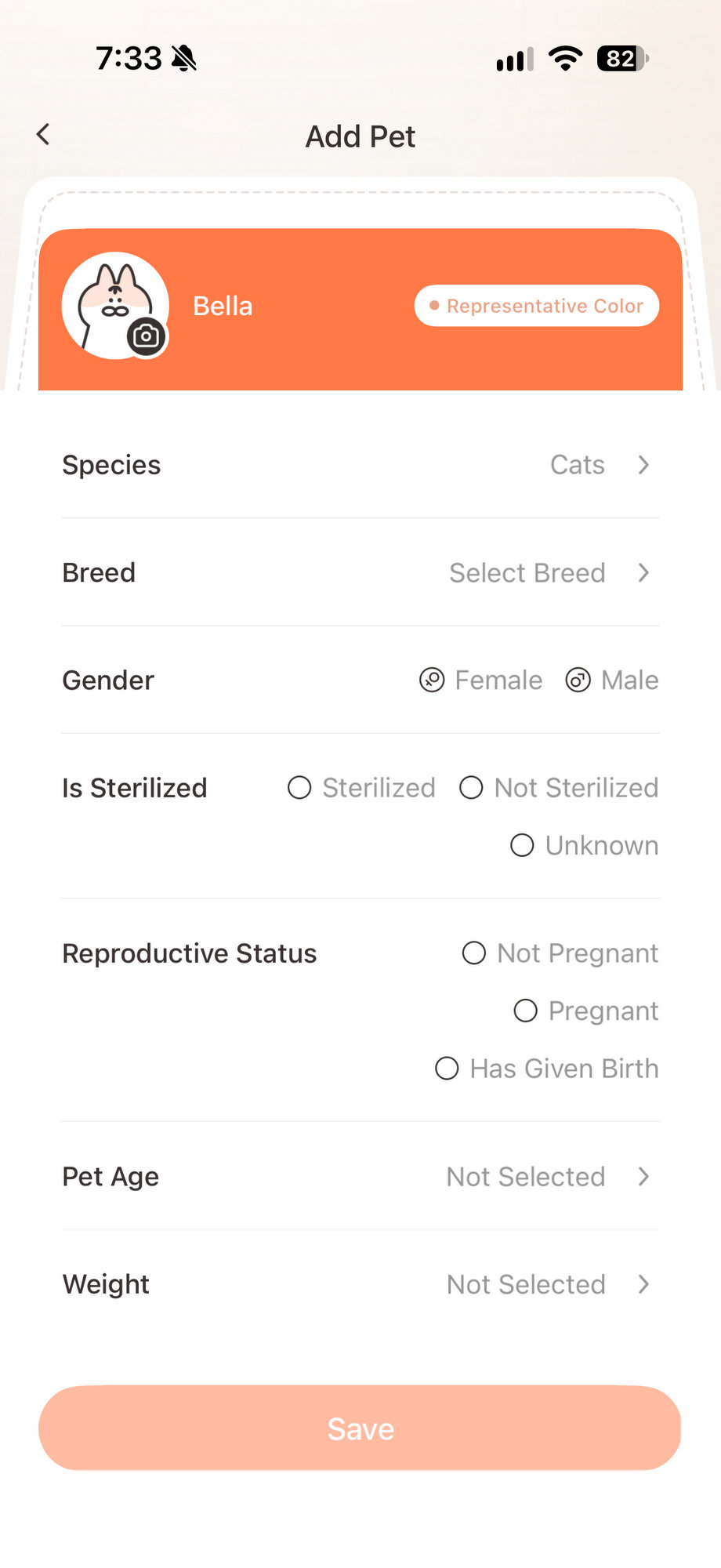
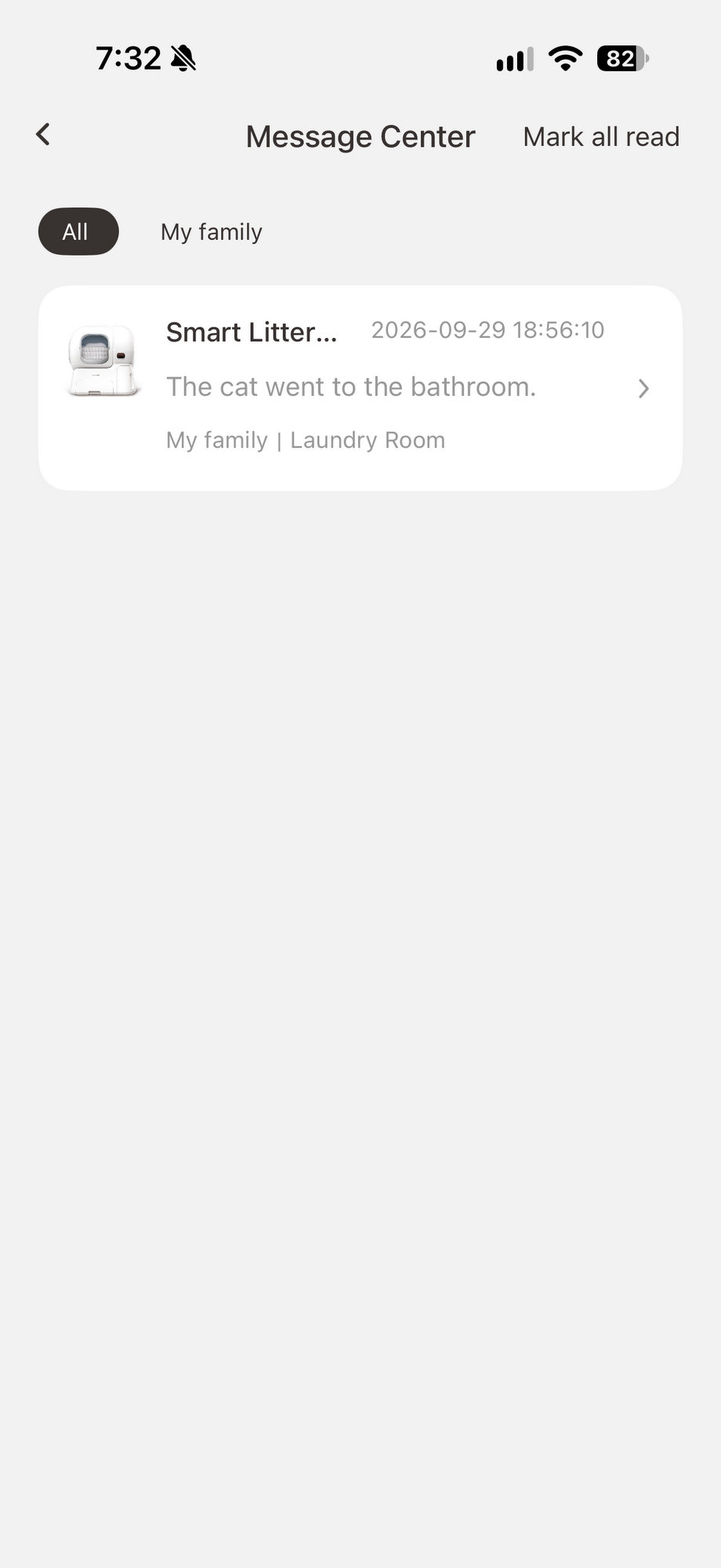
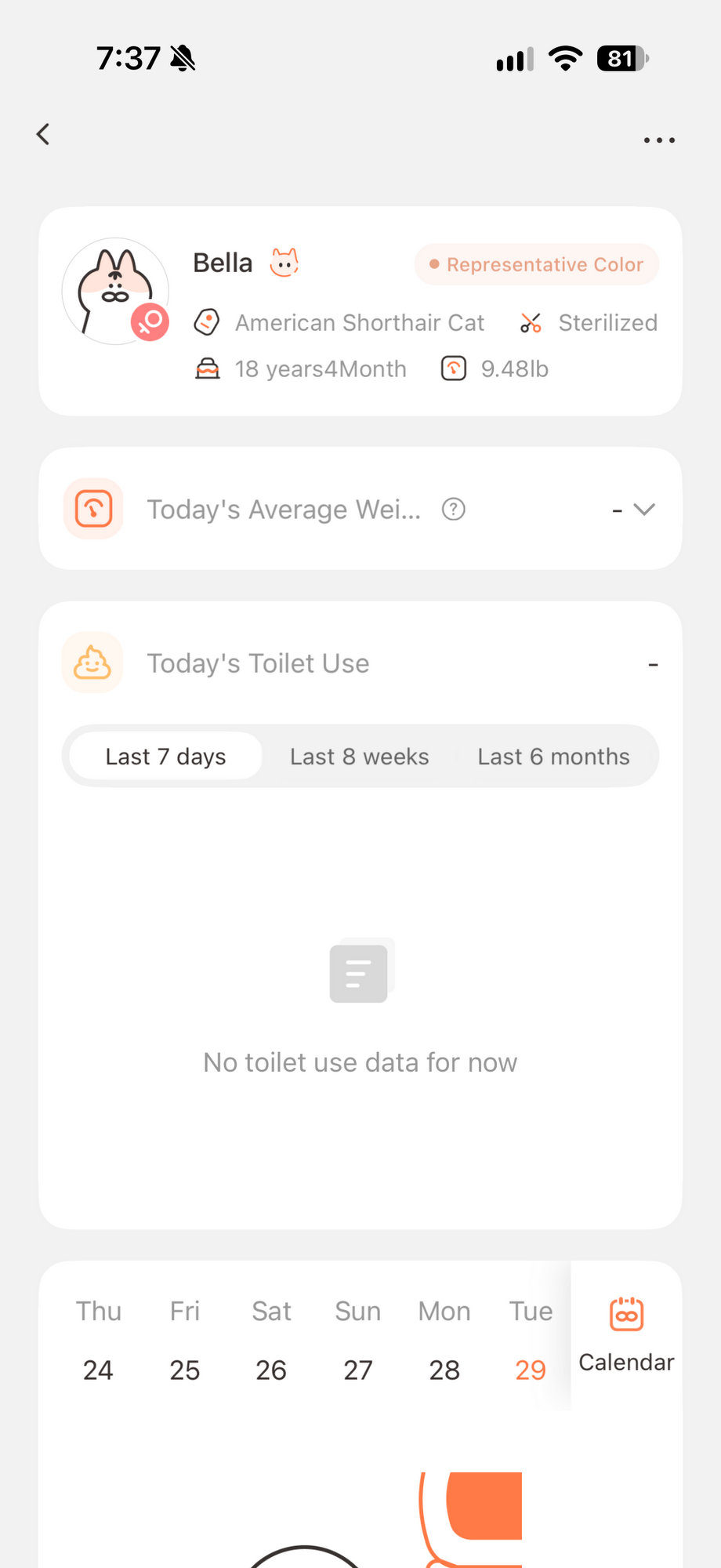
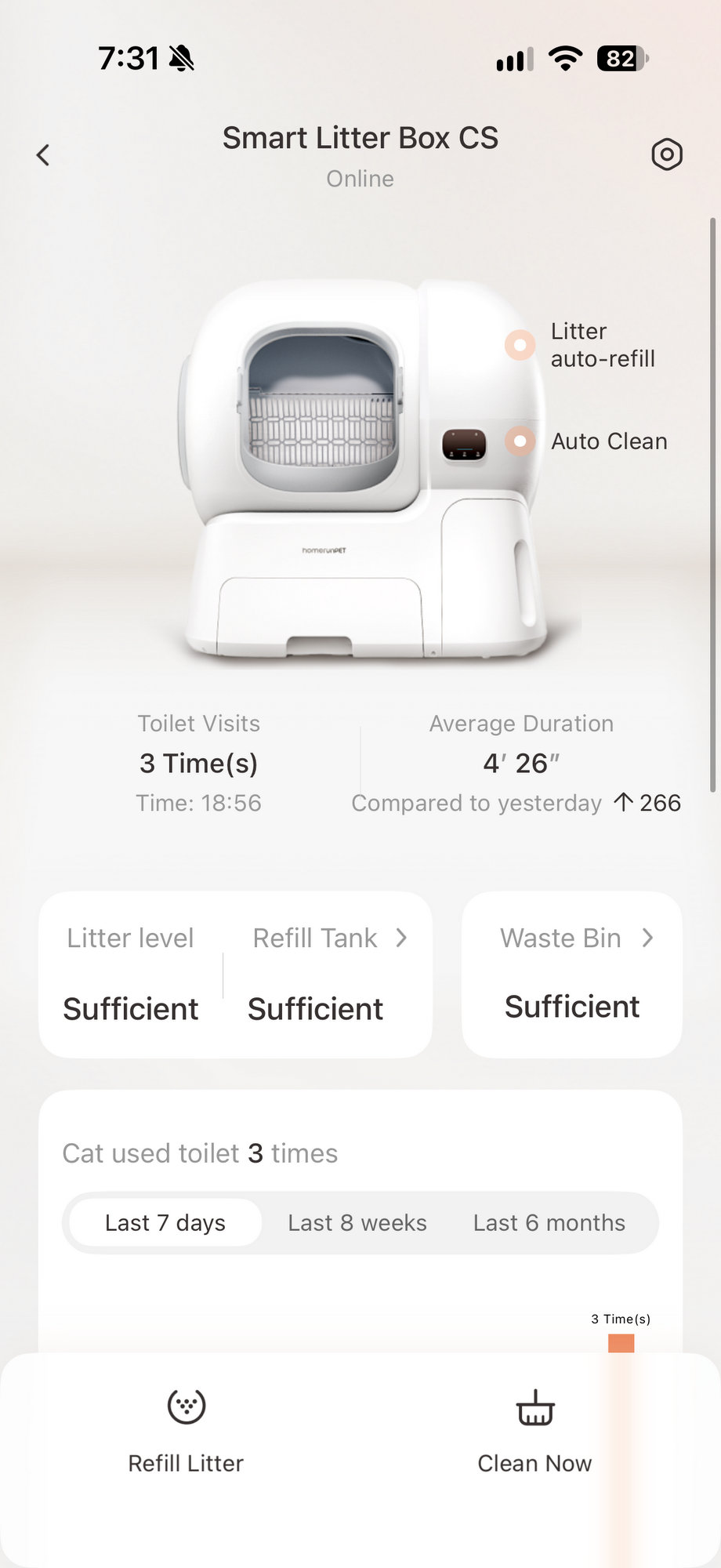
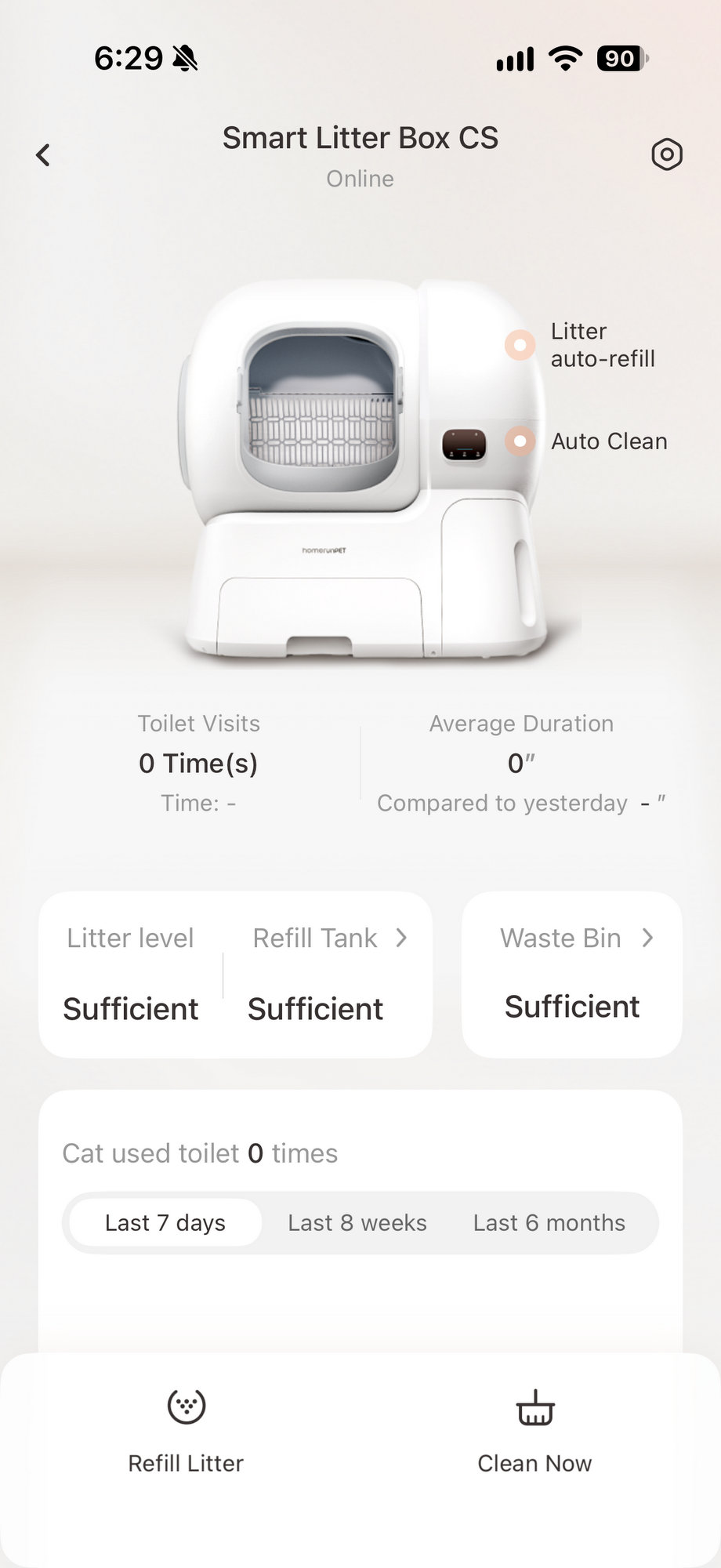


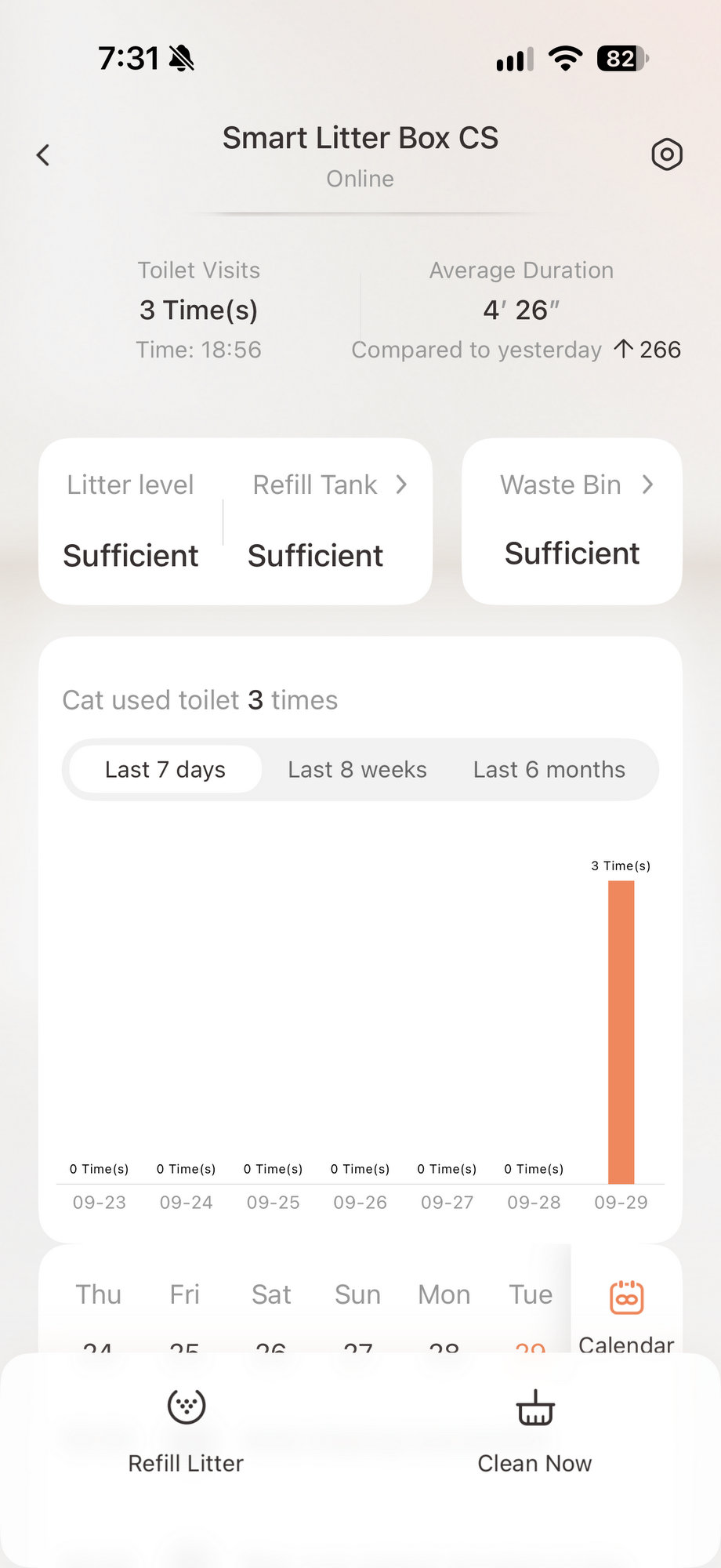
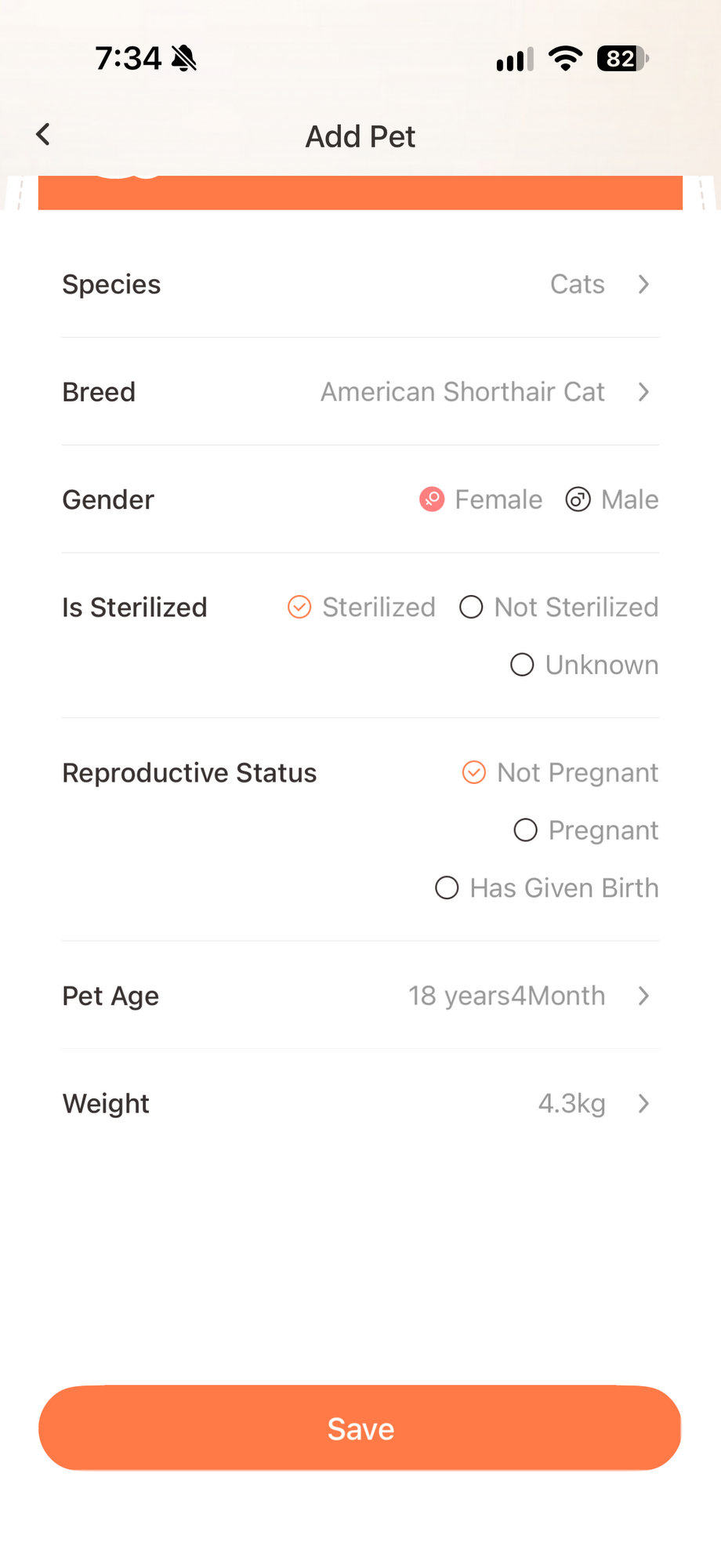
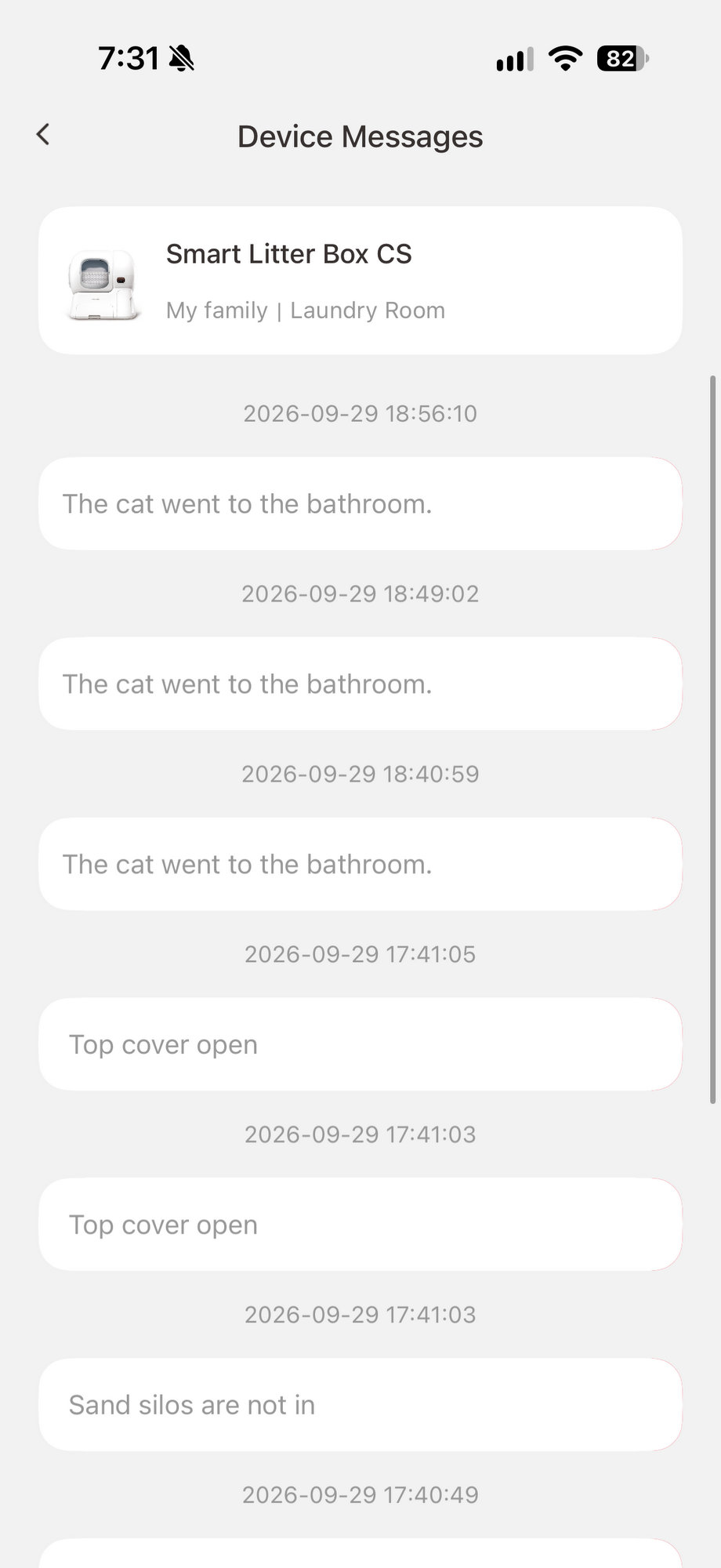
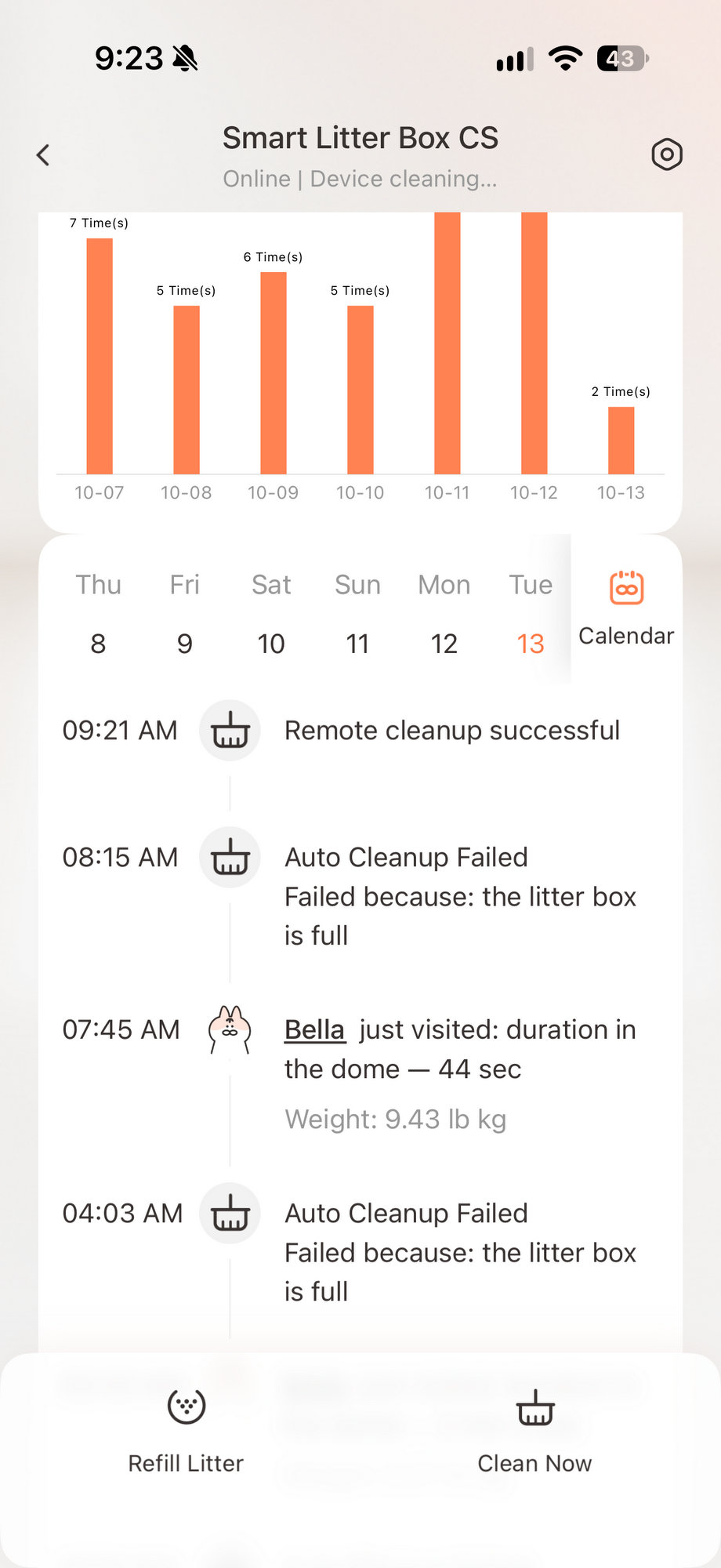
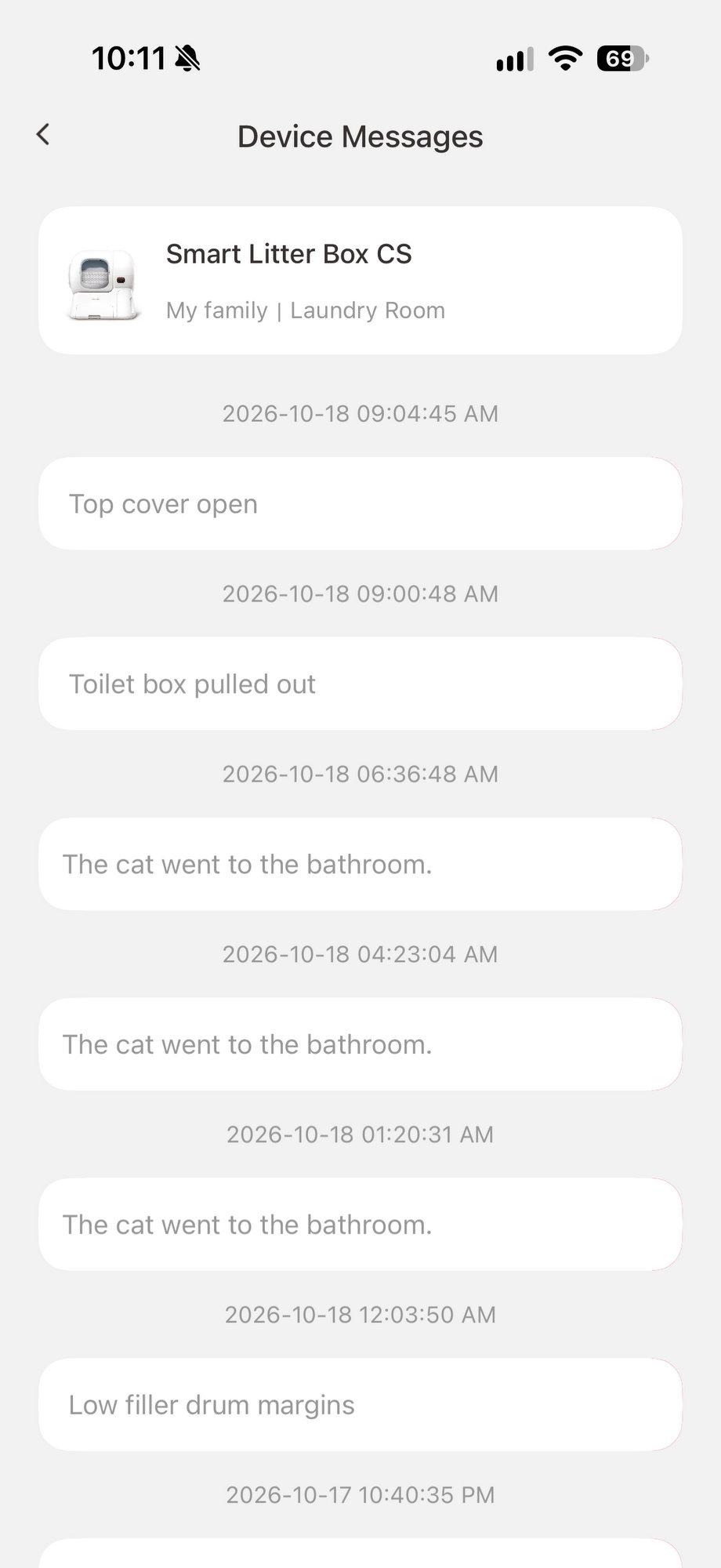
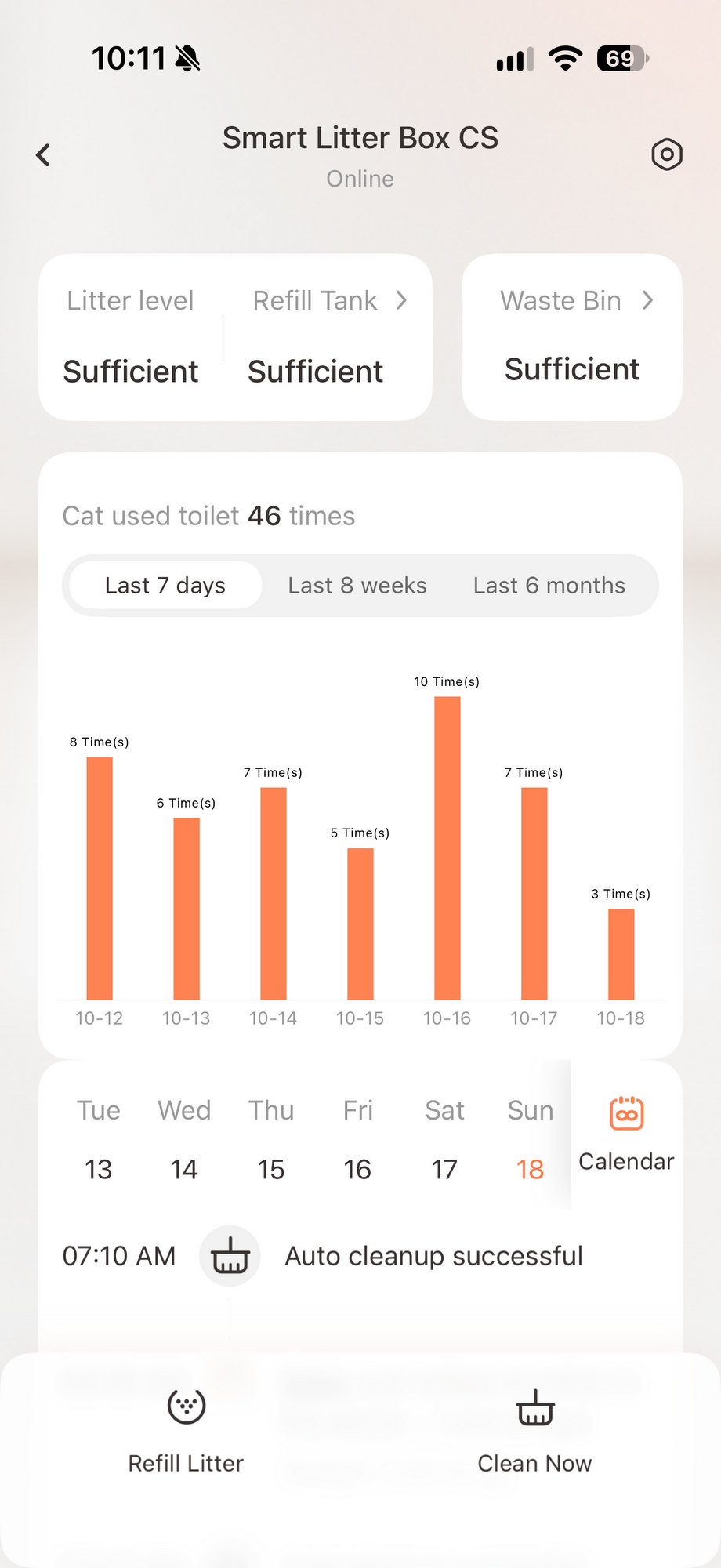
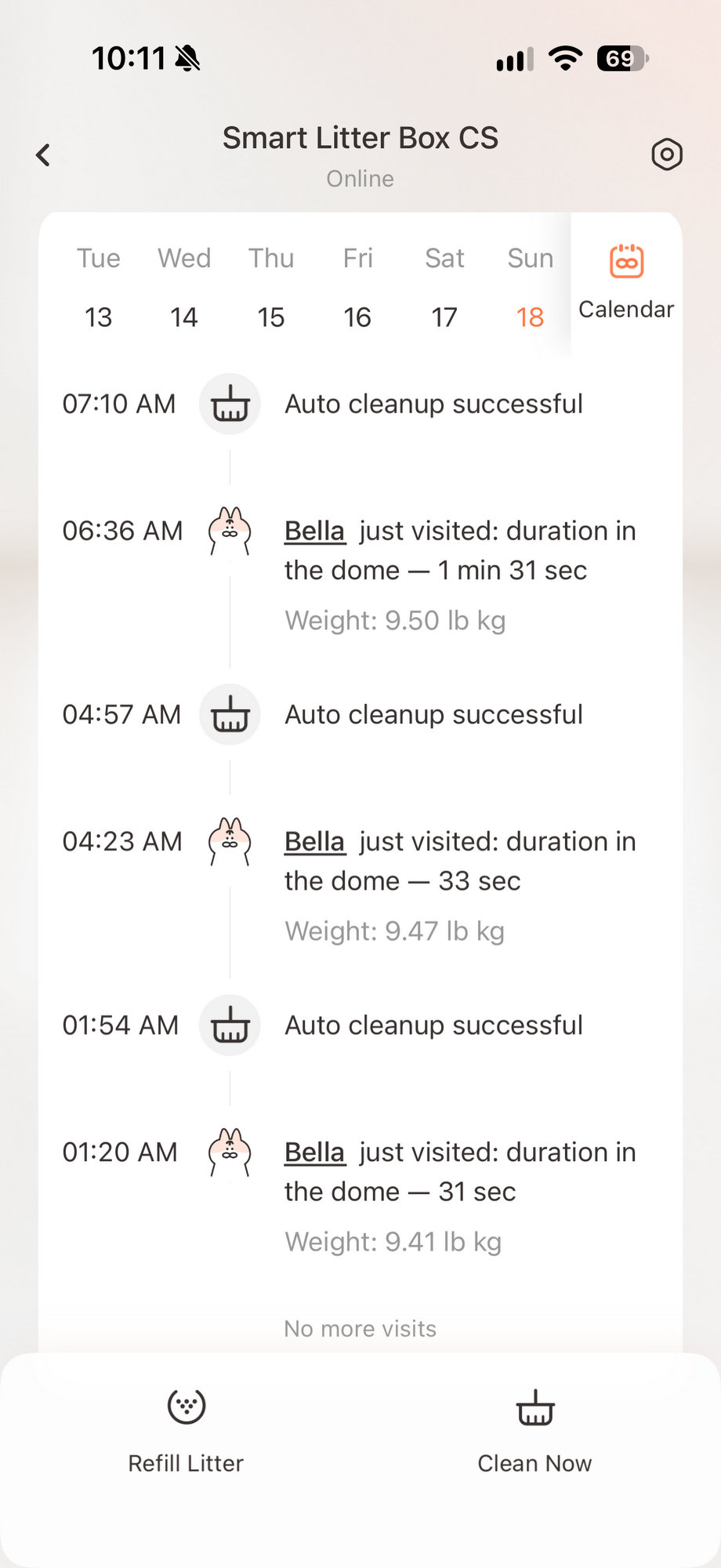
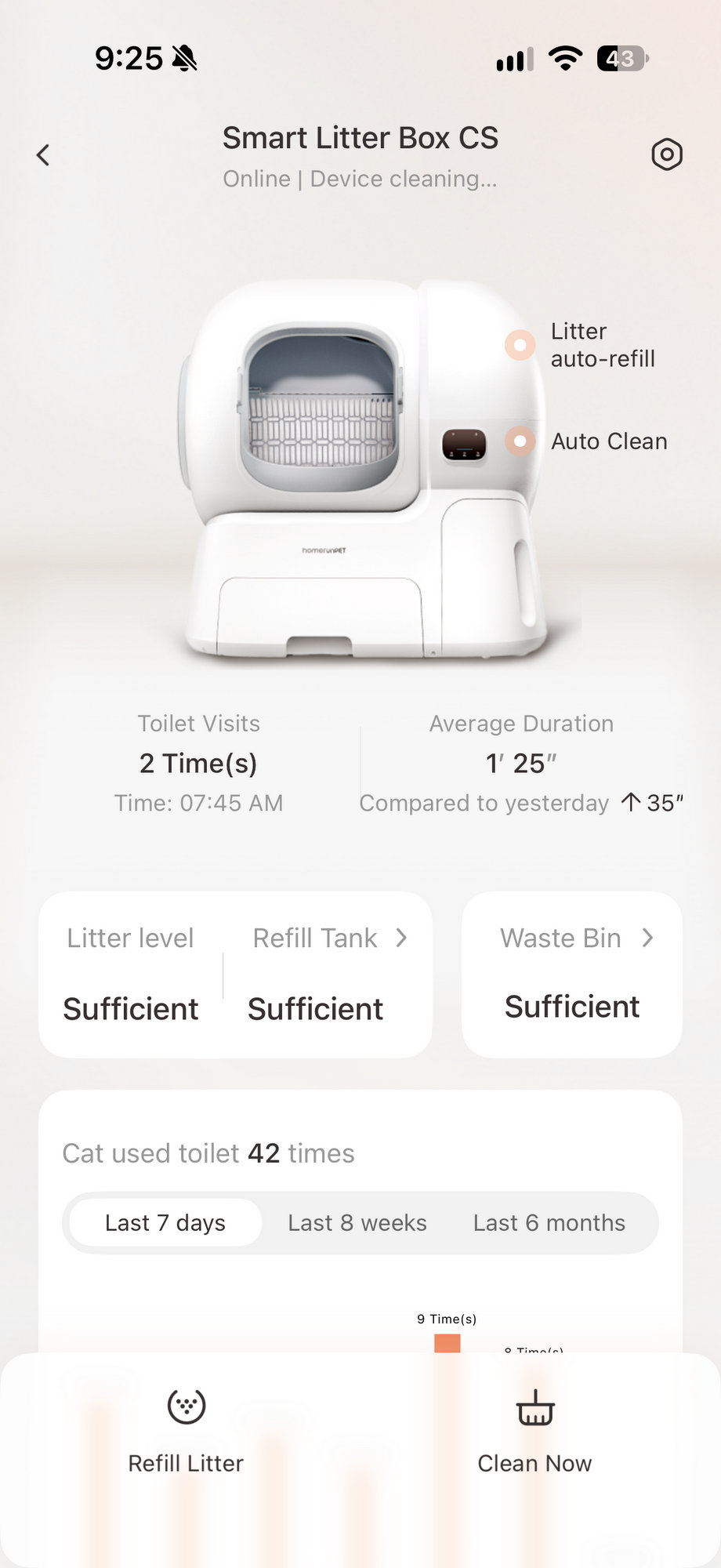
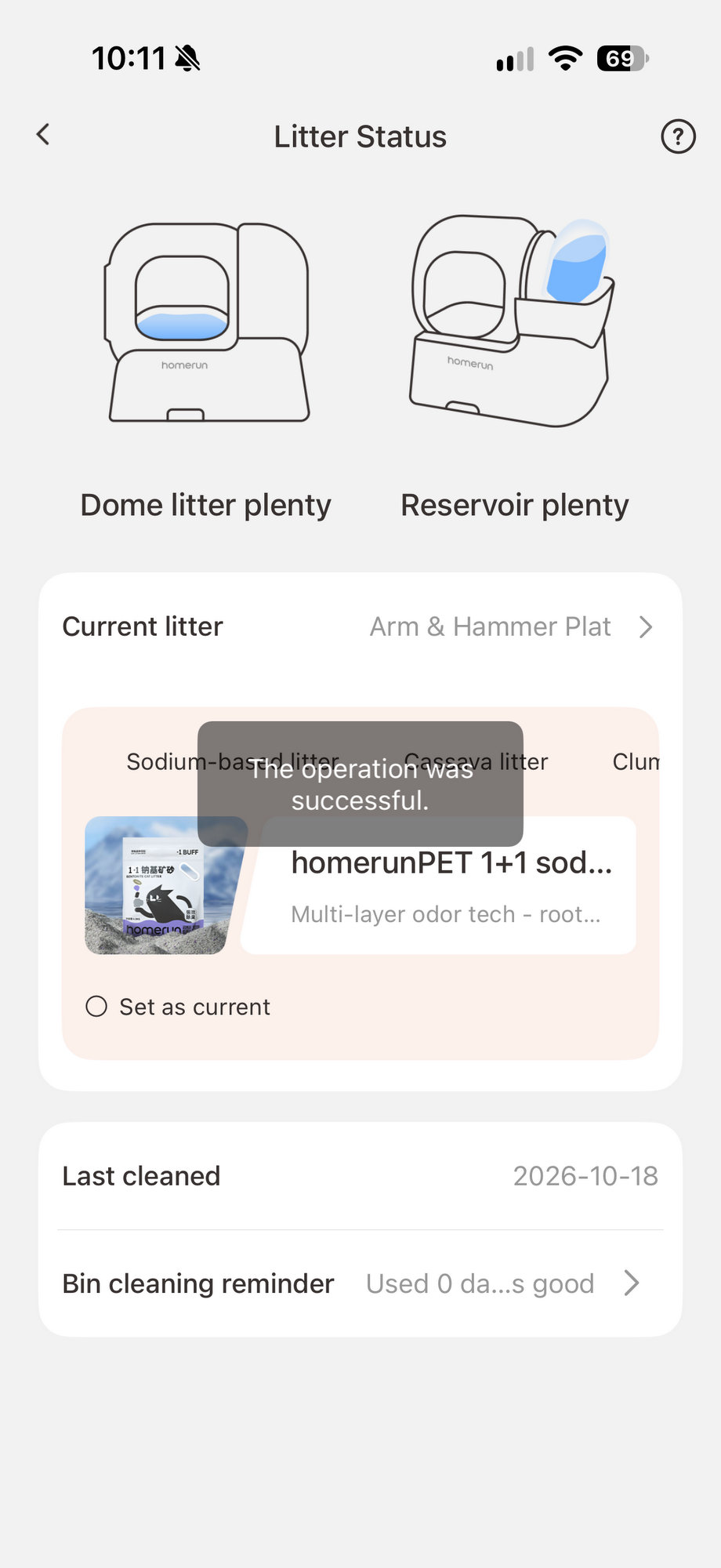
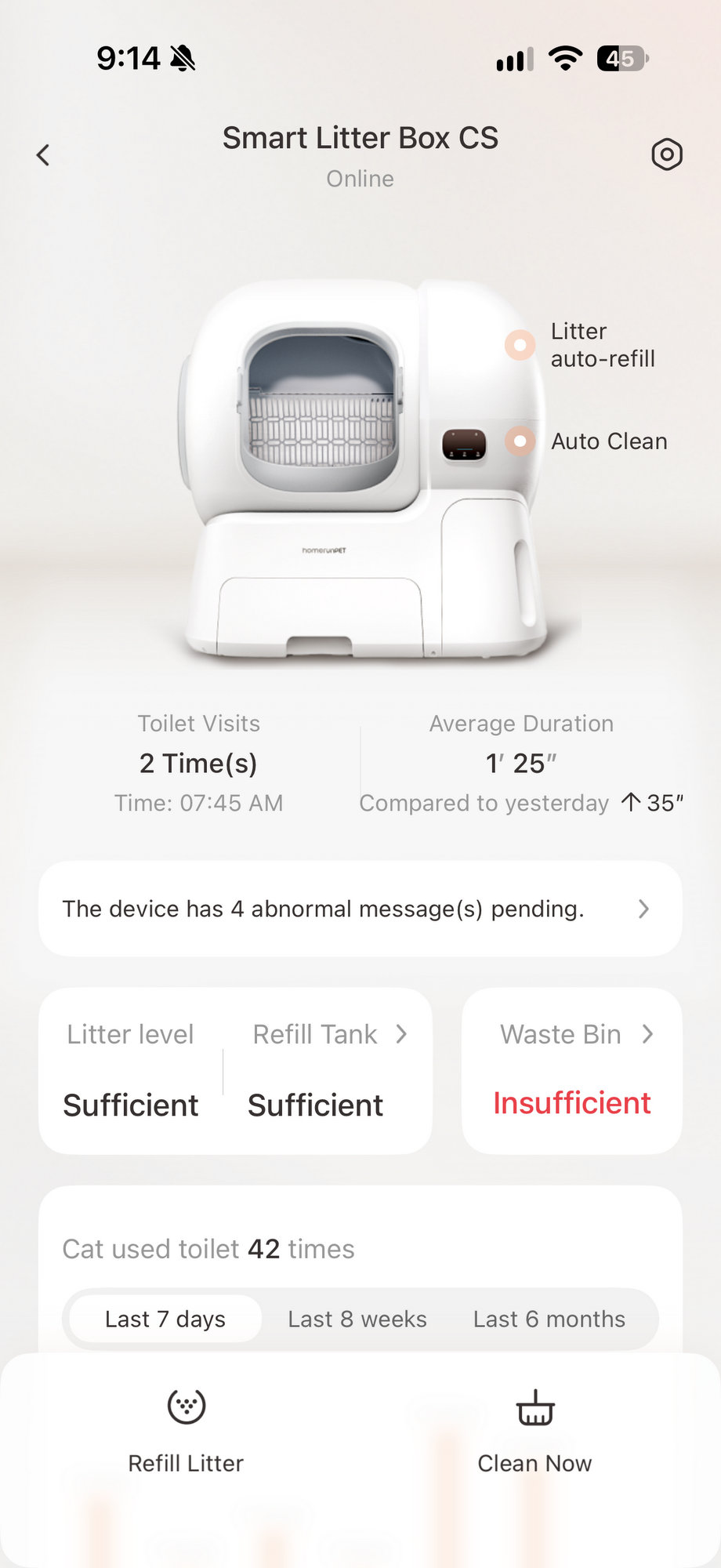
Changes in litter box habits can signal potential health concerns, especially in older animals. More visits, unusual elimination patterns, or changes in urine output may warrant closer observation or veterinary attention, as we’ve seen with Bella. Connected litter boxes can help make those patterns more apparent, but app data isn’t a medical diagnosis.
It’s also worth distinguishing between basic monitoring and the more sophisticated individual-cat identification or health tracking some competitors offer. The homerunPET CS106’s most persuasive technology is its cleaning and replenishment system, not necessarily an extensive collection of app-based health analytics.
Quiet Operation and the Realities of Living With It
HomerunPET rates the CS106’s operating noise at less than 38.8 decibels. That’s a relatively low figure, roughly comparable to a quiet indoor environment, although perceived loudness depends on the room, surrounding surfaces, and distance from the machine.
We have the litter box in our mud room, just off the kitchen. I have been surprised to walk in on it turning because the noise is so low! Litter shifting and clumps tumbling into the waste compartment still make distinct sounds, even when the underlying motor is quiet, though.
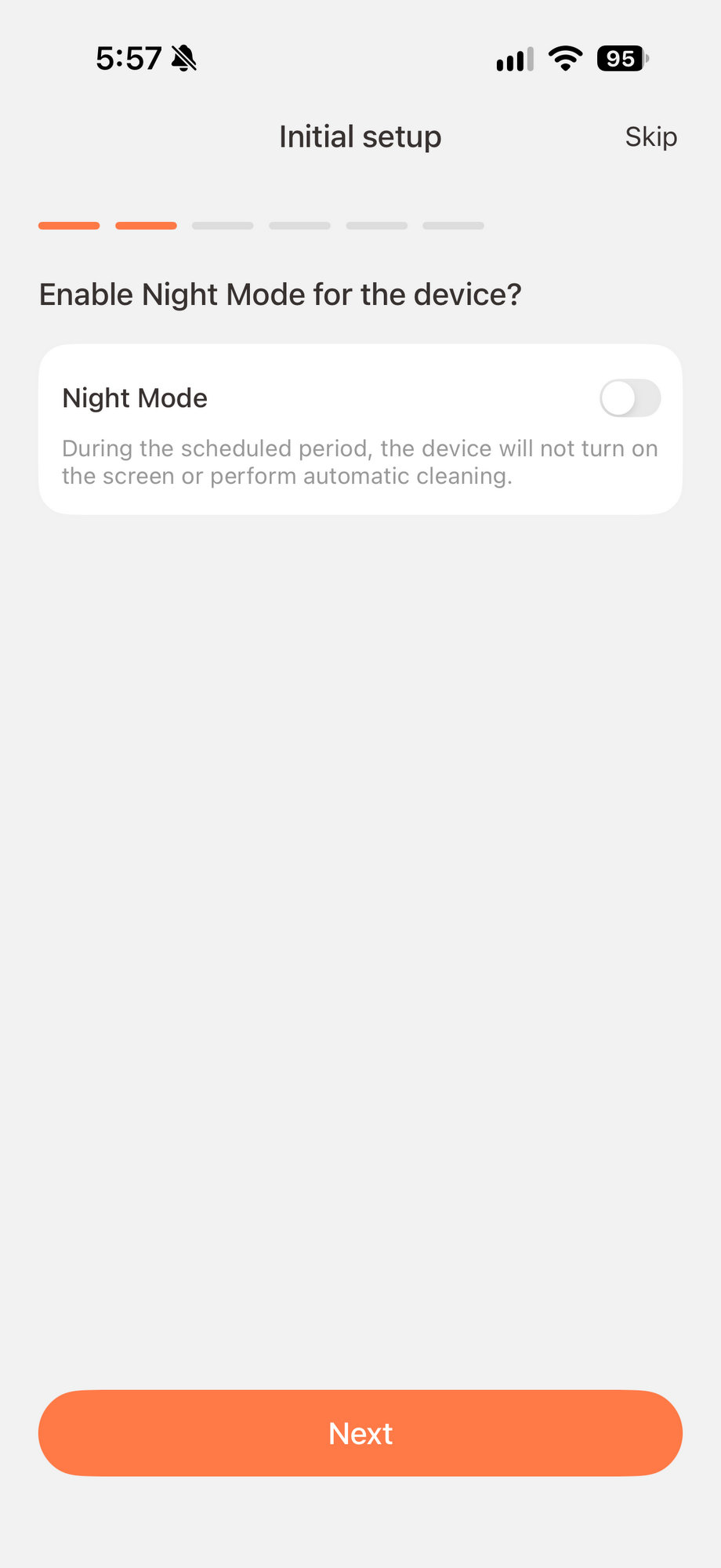
The homerunPET CS106 includes a Night Mode that prevents cleaning cycles during designated nighttime hours, which is useful if the litter box is located near a bedroom or if your cats are particularly sensitive to unexpected sounds. The trade-off is that waste deposited overnight may remain in the litter bed until automatic cleaning resumes. Whether that matters depends on your cats’ habits and how frequently they use the box during those hours.
Cleaning and Maintenance Haven’t Disappeared
One of the more misleading expectations surrounding automatic litter boxes is that they eliminate cleaning. They don’t. They simply automate the most repetitive part. The homerunPET CS106 still requires regular waste disposal, clean-litter replenishment, replacement liners, attention to the deodorizer, and occasional deep cleaning.
When the litter becomes excessively contaminated with small waste particles, the machine has a function that allows the remaining contents to be emptied for replacement into a lined bin in the bottom of the machine. The litterbox has done such a good job so far, though, that I haven’t had to use this feature. It’s great that it is offered, though!
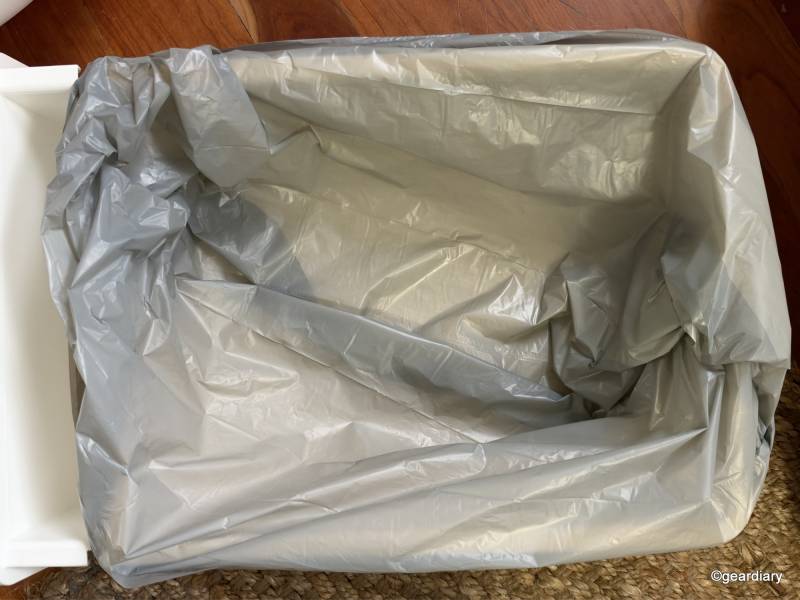
For a more thorough cleaning, the process involves removing the top cover, releasing the securing ring, and lifting out the dome. Separating the litter-contact components from the electronics matters because an automatic litter box needs periodic washing, not just a quick wipe around the opening. You can clean the exterior with a damp cloth, but take care to keep water away from the electronic components.
Long-term ownership also means considering replacement parts and consumables. The supplied bags and deodorizer provide an initial supply, but they won’t last indefinitely. Before committing to any automatic litter box, it’s worth checking replacement liner prices, deodorizer availability, and whether replacement components can be obtained easily. An appliance this expensive should remain serviceable well beyond its first year.
HomerunPET includes a 12-month warranty and advertises a 90-day home trial. However, customers are responsible for return shipping on non-defective returns, and a $20 cleaning fee may apply if the returned machine shows signs of use.
Given the homerunPET CS106’s shipping weight, returning it could become very expensive. That’s worth understanding before ordering, particularly if you’re unsure whether your cats will accept an enclosed automatic litter box.
How Does the homerunPET CS106 Compare to Litter-Robot?
The Litter-Robot lineup is an obvious comparison point because Whisker has established itself as one of the better-known names in automatic litter boxes. The Litter-Robot 4 currently starts at $699, putting it in direct competition with the homerunPET CS106’s promotional price. Both are rotating, self-cleaning litter boxes designed to reduce scooping and contain waste, but they differ in meaningful ways.
The Litter-Robot 4 has a smaller overall footprint of approximately 22″ by 27″ and stands 29.5″ tall. It’s also considerably lighter at approximately 24 pounds. Whisker rates it for cats weighing between 3 and 25 pounds, so both machines can accommodate relatively large cats. However, the homerunPET CS106’s 106-liter enclosure may appeal more to cats that need extra room to maneuver.
The Litter-Robot 4 includes weight and activity monitoring through the Whisker app, and its established ecosystem offers additional accessories and replacement components.
A key difference is litter replenishment.
The homerunPET CS106 includes a 4.5-liter automatic refill reservoir as standard. The Litter-Robot 4 can also replenish litter automatically, but it requires the separate $129 LitterHopper accessory. That makes the homerunPET CS106 more attractive if automatic replenishment is a top priority. On the other hand, the Litter-Robot 4 includes a step and entry fence in its standard package, whereas the homerunPET CS106’s step costs extra.
The difference becomes more significant when you compare total purchase prices rather than just the machines’ advertised prices.
Whisker also offers the newer Litter-Robot 5 starting at $799 and the Litter-Robot 5 Pro starting at $899. These models add expanded monitoring and convenience features, with the Pro offering camera-based monitoring for those who want to see which cat is doing its business.
The more compact Litter-Robot EVO starts at $599, making it a potential alternative for someone who wants automated cleaning but doesn’t need the homerunPET CS106’s generous interior or integrated litter dispensing.
The Litter-Robot lineup offers several choices based on budget, floor space, and monitoring preferences. The homerunPET CS106 takes a more focused approach, prioritizing interior volume, waste capacity, and built-in replenishment.
There’s no universal winner here.
If your main concerns are accommodating larger cats, reducing litter refills, and minimizing how often you empty the waste compartment, the homerunPET CS106 makes a persuasive case.
If you want a smaller machine, a more established accessory ecosystem, or more advanced connected monitoring, one of the Litter-Robot models may be a better fit.
And if your cat refuses enclosed litter boxes altogether, neither brand can overcome that preference through clever engineering.
Is the homerunPET CS106 Worth the Money?
At the $699 sale price, the homerunPET CS106 offers a competitive features set. The spacious interior suits larger cats, the 12-liter waste bin reduces how often you need to empty it, and the built-in litter replenishment system addresses an often-overlooked part of automatic litter box ownership. It also supports different clumping litter formulations, especially if you prefer plant-based litter or don’t want to switch from a product your cats already accept.
The multiple safety sensors, manual controls, and removable dome also reflect attention to the practical requirements of living with an automated appliance. But there are compromises.
The homerunPET CS106 takes up considerable space, weighs 44 pounds, and needs access to a power outlet and a suitable hard floor. You’ll still have to clean it periodically, purchase consumables, and monitor the system for problems.
The optional step improves accessibility, especially for senior cats, but it also increases the total cost. At the regular $899 price, the homerunPET CS106 faces particularly strong competition from more established alternatives.
For a household like mine, with an elderly cat, the step’s usefulness matters most. It’s a reminder that a litter box’s value isn’t necessarily in the number of sensors or the sophistication of its software. Sometimes it’s whether an aging cat can get in and out comfortably without unnecessary effort.
The homerunPET CS106’s strongest argument is that it addresses more than the daily scoop. By automatically restoring the clean litter level and accommodating a substantial amount of waste, it absolutely reduces several recurring maintenance tasks. That’s a meaningful improvement, provided the cleaning mechanism, sensors, and dispensing system remain reliable over time.
The homerunPET CS106 won’t eliminate every unpleasant aspect of litter box maintenance, and it shouldn’t be purchased with that expectation. But for households that have the room, the budget, and cats comfortable with an enclosed design, it offers a thoughtful combination of capacity and automation.
Its real value isn’t in how much technology homerunPET has managed to fit into a litter box. It’s in how little attention the machine ultimately needs while continuing to provide cats with a clean, comfortable place to do their business. And when you’re dealing with litter boxes, it’s a perfectly reasonable luxury to think about them less.
Bella is happy using it; she isn’t tracking litter all over the house, and maintenance has been minimal so far. I’m thankful that we had a large enough and convenient enough area to place the homerunPET CS106 because it is honestly one of the best automated litter boxes I have ever tried.
The homerunPET CS106 Self-Cleaning Litter Box sells for $899 (currently discounted to $699); it is available directly from the manufacturer and other retailers, including Amazon.
Source: Manufacturer-supplied review sample
What I Like: Spacious 106-liter interior accommodates larger cats; Built-in automatic litter replenishment; Generous 12-liter waste bin; Multiple safety sensors; Supports several clumping litter types; Optional step has been particularly useful for an 18-year-old senior cat; Doesn’t require an app for basic operation; Removable dome simplifies deeper cleaning
What Needs Improvement: Large footprint requires considerable floor space; Heavy at 44 pounds; Accessibility step should be included rather than sold separately; Automatic operation doesn’t eliminate periodic deep cleaning; The regular price puts it in direct competition with established premium alternatives; Return shipping and possible cleaning fees make the home trial less generous than it initially appears


Be the first to comment on "HomerunPET CS106 Review: A Self-Cleaning Litter Box That Takes More Than Scooping Off Your To-Do List"