
The Lowdown
In the end, the WAVwatch is an expensive device that asks you to take a lot on faith. If you believe in sound frequency therapy, enjoy experimenting with wellness tech, and understand that results are subjective and unproven, you may find satisfaction here. If you want measurable outcomes, clinical validation, or even a reliable watch, this probably isn’t it.
Overall
Pros
- Standalone device with no app, accounts, or connectivity required
- Large library of frequency programs and simple controls
- Water-resistant and generally comfortable to wear
- Some users report subjective wellness benefits
- Likely harmless when used as a non-medical wellness tool
Cons
- Expensive for an unproven concept with no clinical validation
- Benefits are subjective and difficult to separate from placebo effects
- High-pitched sound can be irritating to people, pets, and children
- Unreliable timekeeping undermines its usefulness as a watch
- Broad marketing claims and testimonials outpace independent evidence
I’ve written a lot of reviews for Gear Diary, and this is the first time I’ve been genuinely stumped about how to approach a wearable product. I can confirm the WAVwatch 2.0 works, but does it WORK? If you’re confused, read on, so we can be confused together.
WAVwatch is not quite a smartwatch, not quite a regular watch, and it hovers uncomfortably close to being a medical device without actually claiming to be one. It is a watch in the sense that it tells time, although only when it feels like remembering what day it is.
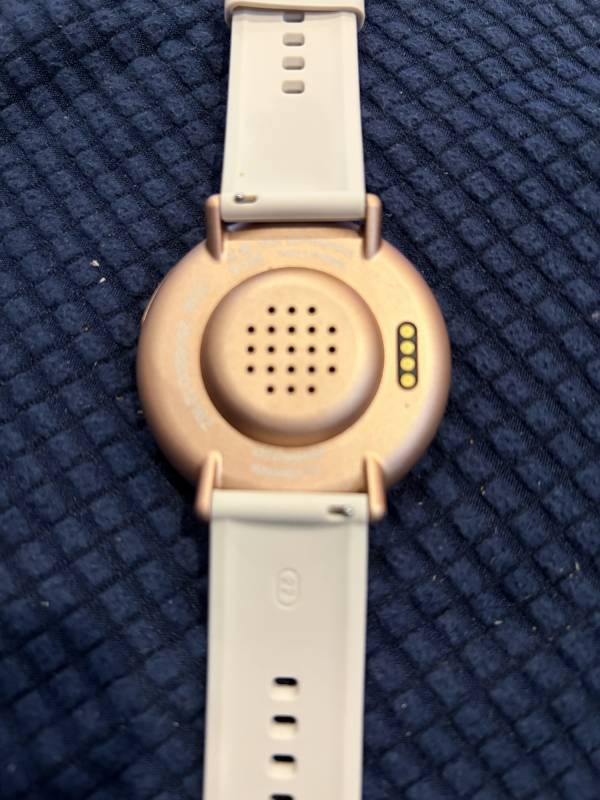
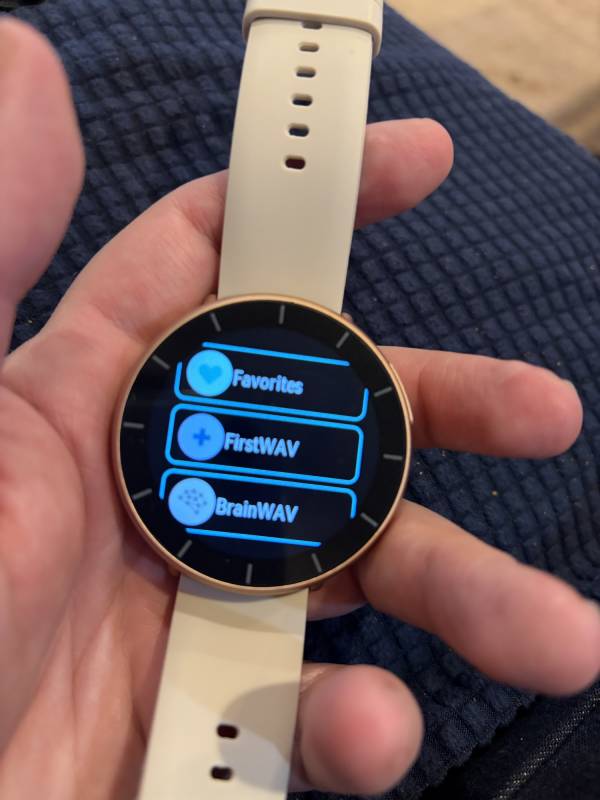
Its real purpose is to emit sound frequencies that the company claims can improve a wide range of health and wellness issues. These frequencies are delivered through a small speaker on the back of the watch, and you select goals and frequency sets through the touchscreen.
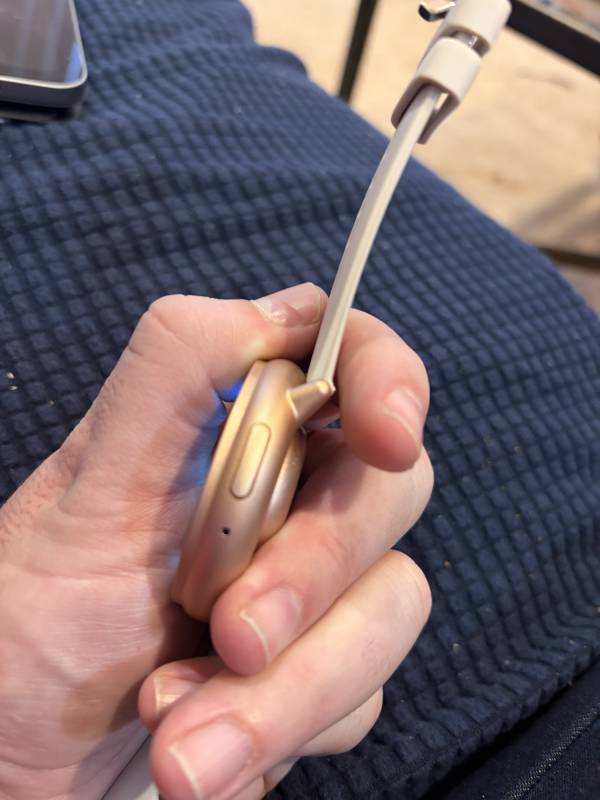
Beyond the touchscreen, there’s a single physical button that functions as both a home shortcut and a power control. If you’re deep in menus, it jumps you back to the main screen; if you’re already there, it turns the display off to save battery.
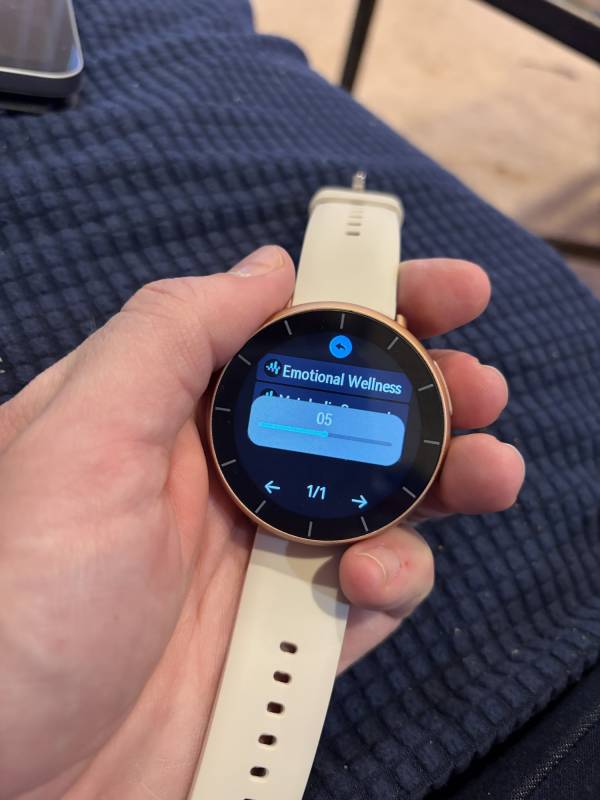
WAVwatch markets itself as a wearable wellness device built around sound frequency therapy, promising benefits ranging from sleep and stress reduction to pain relief, circulation, emotional balance, energy, focus, and an eye-watering list of organ-specific and systemic improvements.
The watch includes 146 frequency sets with over 1,100 embedded frequencies, is water-resistant, requires no app or wireless connection, and claims up to 18 hours of battery life. It’s sold as safe, effective, and natural, and the company emphasizes that it’s a women-owned business.
The best way to describe the WAVwatch’s output is this: imagine hearing only the very highest-pitched squeal from a 1990s dial-up modem, stripped of everything else. You can adjust the volume, but even then, the sound only becomes clearly audible during peaks. Most of the time, I had to hold the watch directly to my ear to hear anything at all.
My 12-year-old son immediately dubbed it “the squeaky watch” and asked me not to wear it near him. Younger ears clearly pick up the frequencies more easily, which raises an interesting question about how audible — or necessary — those sounds actually are.
This is where my problem with the review really starts to crystallize. I can confirm that the WAVwatch does exactly what it claims on a functional level: it makes high-pitched noises and cycles through frequency programs. What I cannot confirm is whether those sounds do anything meaningful to the body beyond that.
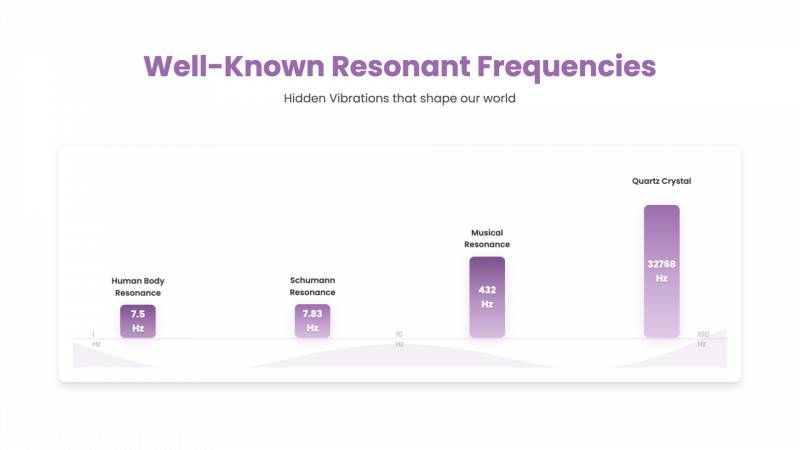
The theory behind WAVwatch starts with solid physics. Everything does have a frequency. That part is not controversial. Where things get fuzzy is the leap from “everything vibrates” to “specific audible frequencies delivered through a wrist-mounted speaker can meaningfully influence organs, hormones, immune response, trauma recovery, and over 160 other conditions.” That leap is where scientific consensus quietly steps off the train.
Sound and vibration are used in legitimate medical contexts, but typically in tightly controlled ways, at specific intensities, often using equipment far more powerful and targeted than a small wearable speaker.
The WAVwatch’s claims are broad, ambitious, and largely unsupported by peer-reviewed clinical evidence. That doesn’t mean it can’t help people feel better, but it does mean the mechanism is unproven, and that distinction matters.
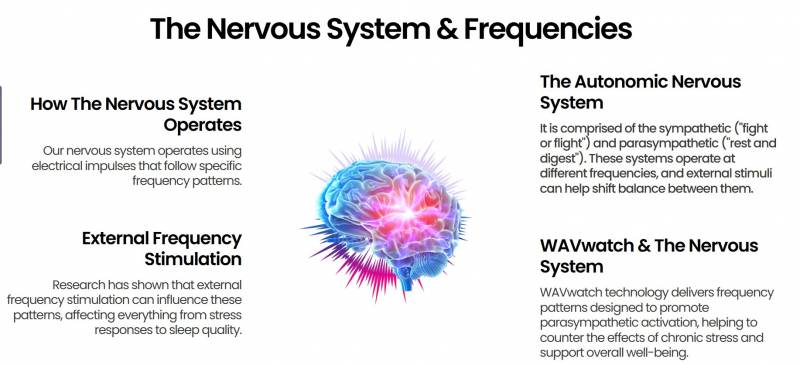
The company’s own review page is filled with glowing testimonials. People describe dramatic reductions in swelling, faster recovery from injuries, improved energy, better sleep, pain relief, and even avoidance of emergency room visits.
Here are just a few of those reviews, copied and then pasted here without editing (other than breaking up large blocks of text), because it’s important to acknowledge that real customers believe this device has helped them.
My daughter had surgery on Oct 31st having broken her ankle. 2 plates and 12 screws later she was still experiencing pain and swelling. I have let her wear the watch and it is absolutely incredible how the swelling has decreased making the pressure and pain MUCH better!
Her toes actually look like toes again! Not sausages. With this types of injury it is hard to decide what setting to use: Pain, Swelling, Sleep, Bones – The beauty of the watch is you have OPTIONS!!!!
After watching Flyover Conservatives and the presentation by Linda of the various features from the Wavwatch, I was intrigued. I have followed David/Stacey Whited for several years and know their Conservative Christian values and would not promote a product if they did not believe in it. I did a little research on your website, as this is not an inexpensive investment.
I have heard of frequencies and healing from a friend who follows all of this. I am 65, my husband 71 … we are beginning to feel more fatigued and just not 100%. Personally, I feel with all the negativity energy surrounding us plus my husband is 4th generation grain farmer and living in a farm community … well, we are exposed to all the chemicals sprayed once the crops are planted. We changed to Non-GMO seeds several years ago, but honestly, we can’t outrun the ‘spray’ as it is everywhere.
So, I decided to gift us an early Christmas present. It arrived very quickly and between my husband and myself we are rotating the Wavwatch. The other day I was so fatigued that I set the watch for ‘exhaustion’ and after several hours I felt a little more pep in my step. I am optimistic that we can feel the benefits of ‘whatever ails us’ on a particular day.
While loading our woodstove, I lost my balance when the log in my hands ran into a log already in the red hot coals. Then, the hearth rug slipped backward. My hand reached into the coals for balance and was badly burned, but the fall could not be stopped. First the nose impacted the iron door, then the cheek hit the fire’s ledge and the chin scrapped the grate. I went into shock before realizing the damage to my arm, knee and spinal alignment.
My husband heard one cry of “Ouch!” and then I went into shock. He used the WAVwatch settings to help the nervous system, and I warmed up from the cold of shock and was able to convey what happened. He got me cleaned up; and reset the WAVwatch for pain management. I slept through the night.
It was miraculous because the nose cartilage broke, but the swelling was minimal with no bruising! I’ve lived a long and hard life–and nothing has ever hurt as badly as this accident. Thank you WAVwatch Team! This one use saved me a very expensive visit to an emergency facility. It has paid for itself in less than a month.
And here’s the thing: I don’t doubt their sincerity. I believe these people experienced relief. What I question is why.
When reviews live exclusively on a manufacturer’s website, they deserve careful scrutiny. Companies tend to surface their most positive feedback, and, no matter how heartfelt, testimonials are still anecdotes.
Outside the WAVwatch site, independent reviews are far more mixed. Some users praise the device and customer service; others report technical issues, disappointment, or feeling misled by the scope of the claims. That doesn’t make WAVwatch a scam, but it does reinforce that results are inconsistent and subjective.
To give the WAVwatch a fair shot, I used the hormone support frequency while sleeping. My hormones are regularly monitored, which made this one of the few areas where I could potentially measure an objective change.
The results were confusing.
The results were inconclusive. My testosterone levels did rise slightly, but when I asked my doctor about it, he wasn’t impressed. Hormones fluctuate naturally, he reminded me, and small changes are common.
When I explained what the WAVwatch does, he was polite but skeptical. His take was essentially this: there’s no solid scientific reason to believe the watch caused the change, though medicine is always evolving and stranger things have happened.
That answer pretty much sums up the WAVwatch experience.
I reached out to the company through their PR agency with practical questions about usability, audibility, and proximity. Could the display stay on? Do the frequencies work if you can’t hear them well? Would proximity matter if the watch were nearby rather than worn? I never received a response.
After weeks of use, I tried to take stock of any changes. My beard and body hair seemed fuller, but I’m also well into hormone therapy, which makes that observation nearly meaningless. I used the pain relief setting after badly twisting my toe, but I also iced it, taped it, and rested. Was the watch helping, or was it just along for the ride?
That’s the core problem. There’s no reliable way for the average person to tell whether the WAVwatch is doing anything beyond providing reassurance. The placebo effect is powerful, especially when paired with a nearly $700 purchase. Feeling calmer, more optimistic, or more attentive to your body can absolutely translate into perceived improvement, and there’s nothing inherently wrong with that. But a placebo is not the same thing as proof.
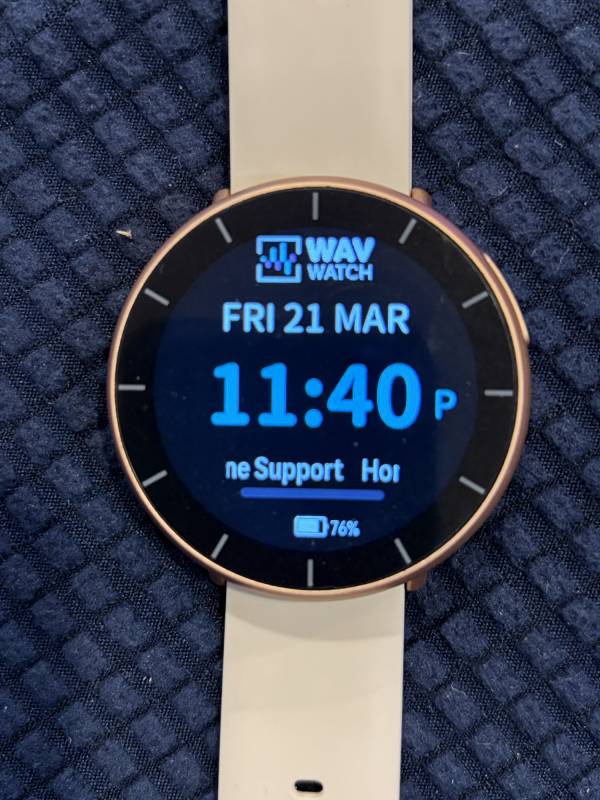
The watch itself doesn’t help its case, as it’s a poor timekeeper. After the battery fully drained a few times, it rebooted to random dates and times, forcing manual correction every time. With no connectivity, it has no external reference point, which makes it frustrating as a daily wearable.
So where does that leave us?
The WAVwatch is likely harmless. Wearing it is unlikely to cause physical damage, and if believing in it brings comfort or calm, that has value. The real risk is financial, and potentially psychological, if someone chooses this over proper medical care. WAVwatch is careful to frame itself as wellness support rather than treatment, but the language and testimonials toe that line very closely.
In the end, this is an expensive device that asks you to take a lot on faith. If you believe in sound frequency therapy, enjoy experimenting with wellness tech, and understand that results are subjective and unproven, you may find satisfaction here. If you want measurable outcomes, clinical validation, or even a reliable watch, this probably isn’t it.
Worst-case scenario, you’re out a significant chunk of money and mildly annoy dogs and children in your vicinity.
I’m giving the WAVwatch probably one of the lowest ratings we have ever given on Gear Diary: a 2. It does what it claims on a purely mechanical level and is unlikely to cause harm, but the lack of clinical validation, unreliable basic watch functions, steep price, and reliance on faith rather than evidence keep it firmly out of our “recommended” territory. It’s interesting as an experiment in wellness tech, but not convincing enough to earn a higher score.
The WAVwatch retails for $697; it is available directly from the manufacturer.
Source: Manufacturer-provided review sample
What I Like: Standalone device with no app, accounts, or connectivity required; Large library of frequency programs and simple controls; Water-resistant and generally comfortable to wear; Some users report subjective wellness benefits; Likely harmless when used as a non-medical wellness tool
What Needs Improvement: Expensive for an unproven concept with no clinical validation; Benefits are subjective and difficult to separate from placebo effects; High-pitched sounds can be irritating to people, pets, and children; Unreliable timekeeping undermines its usefulness as a watch; Broad marketing claims and testimonials outpace independent evidence



Be the first to comment on "WAVwatch Review: Can a $697 Sound Frequency Watch Really Improve Your Health?"