
The Lowdown
During my testing, Neurable One did occasionally tell me something about my concentration or fatigue before I had fully registered it myself, and that is where the product stopped feeling like an interesting experiment and started feeling genuinely useful. Brain Break suggestions sometimes arrived at moments when I was still trying to push through, only for me to realize afterward that my attention had already begun slipping.
Overall
Pros
- Integrates 12 EEG sensors into headphones designed for normal everyday use
- Neurable now controls the complete hardware and software experience
- Brain tracking doesn’t require another wearable
- Focus Sessions attempt to intervene instead of merely recording data
- Adaptive audio and Boosted periods can show whether an intervention helped restore attention
- Smart Brain Breaks respond to your cognitive state rather than a timer
- Context notes make changing measurements more meaningful
- Physical controls avoid distracting gesture commands
- Multipoint Bluetooth, ANC, ambient listening, and wired audio make the headphones broadly useful
- The system can refuse to report questionable data rather than manufacturing a score
- Long-term Brain Data Banking has the potential to reveal useful personal patterns
- Neurable clearly distinguishes brain sensing from medical diagnosis and mind reading
Cons
- $499 is expensive if the cognitive information doesn’t materially change your behavior
- EEG operation reduces rated battery life to approximately 12 hours
- EEG stops below 20% battery and can’t operate while charging
- Brain Age, APF, and other long-term measurements require substantially more testing before their usefulness can be judged
- Reliable EEG measurements depend on good sensor contact
- Some app features remain locked during the early ownership period
- A soft pouch feels stingy for a $499 headphone
- The warranty is only one year
- Raw EEG recordings are stored on Neurable’s servers and aren’t automatically deleted when you remove the app
Most wearables obsess over the body, tracking steps, sleep, heart rate, and how long you’ve been sitting. The $499 Neurable One aims higher, combining premium over-ear ANC with 12 EEG sensors woven into the ear pads to measure brain activity. Its app turns that data into estimates of focus, cognitive load, processing speed, sleepiness, stress, and remaining mental energy. That’s an ambitious amount of insight to pull from something that still has to sound good, feel comfortable, and work like normal headphones, and this isn’t Neurable’s first trip around this particular block.
In 2025, we covered the Neurable MW75 Neuro LT, a collaboration with Master & Dynamic that incorporated Neurable’s brain-sensing technology into an already established premium headphone platform. The LT itself followed the original MW75 Neuro, retaining the core EEG system while becoming lighter, less expensive, and easier to wear for long work sessions.
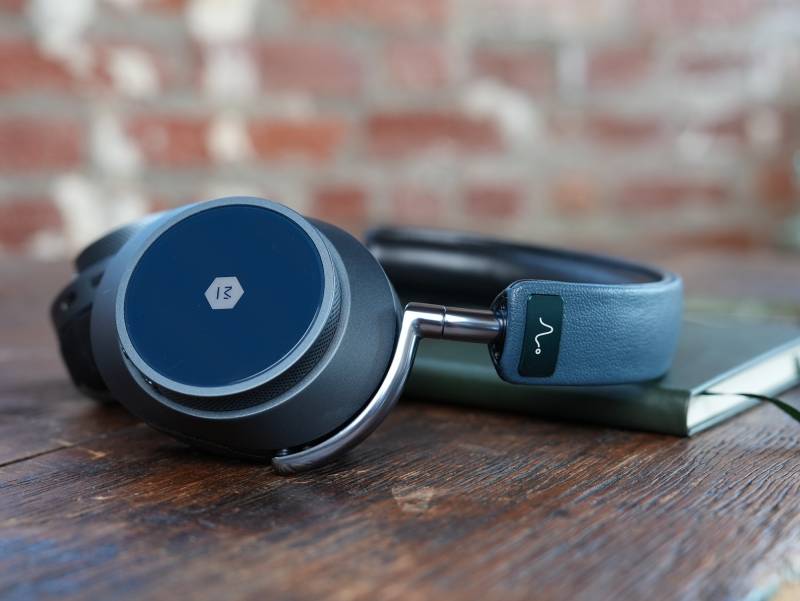
Neurable MW75 Neuro LT
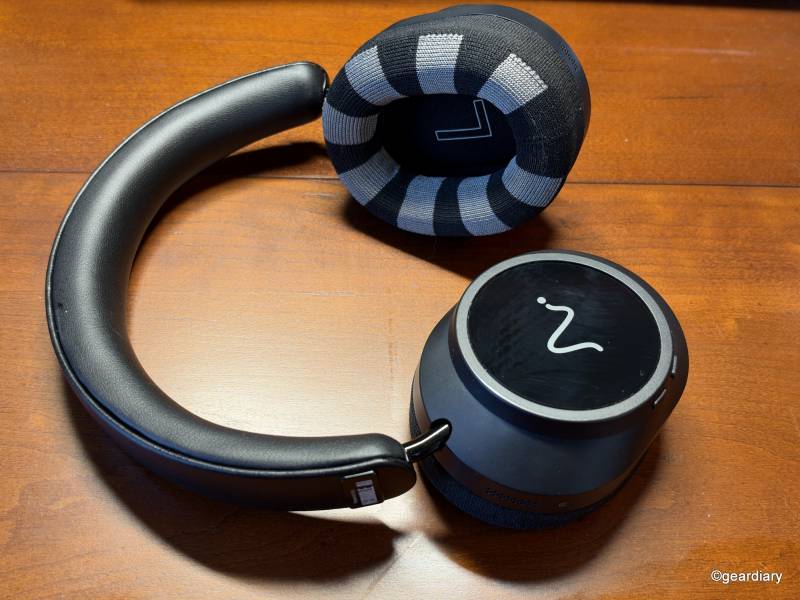
Neurable One is different: This is the first product Neurable has designed, built, and shipped itself. Instead of inserting its EEG technology into headphones designed by another company, Neurable now controls the headphones, sensors, firmware, app, signal processing, and the overall experience.
That raises the stakes considerably; the company can no longer point to Master & Dynamic when someone asks how the headphones sound, feel, or operate. This time, the whole thing belongs to Neurable.
The Interesting Part Isn’t Just Measuring Your Brain
Neurable One makes much more sense when you stop thinking of it as a brain-activity dashboard and start thinking of it as a biofeedback system.
The headphones measure, the app interprets; if something changes, the system looks at what happened next. That loop can run over seconds during a Focus Session, over hours through repeated check-ins, or across weeks and months as longer-term patterns emerge.
During our initial product briefing, Neurable repeatedly returned to the idea that your measurements are most useful when you compare them to your own previous brain activity rather than some theoretical average person, which seems sensible.
Your useful question shouldn’t necessarily be, “How focused am I compared with everybody else?” It’s more like, “What does my brain look like when I’m doing well, and what’s different when I’m not?”
The numbers are interesting, but the premise is that they should eventually help you change something; that’s where Neurable One either becomes a useful tool or a very sophisticated source of trivia.
EEG Without Looking Like You’re Waiting for a Neurologist
Electroencephalography, or EEG, isn’t remotely new. Researchers and clinicians have been measuring electrical activity generated by the brain for roughly a century. What has traditionally been awkward is the hardware.
Clinical and laboratory EEG testing generally involves electrodes positioned around the scalp, often with conductive materials, specialized equipment, and controlled conditions.
It’s extremely useful, but it’s also not something most people put on before answering email.
Neurable takes a different approach. Six dry EEG sensors are woven into each ear pad, creating 12 sensing points around the ears. The sensors record at 16-bit resolution with a 125 Hz sampling rate. It also includes a six-axis inertial measurement unit to detect movement and an infrared proximity sensor.
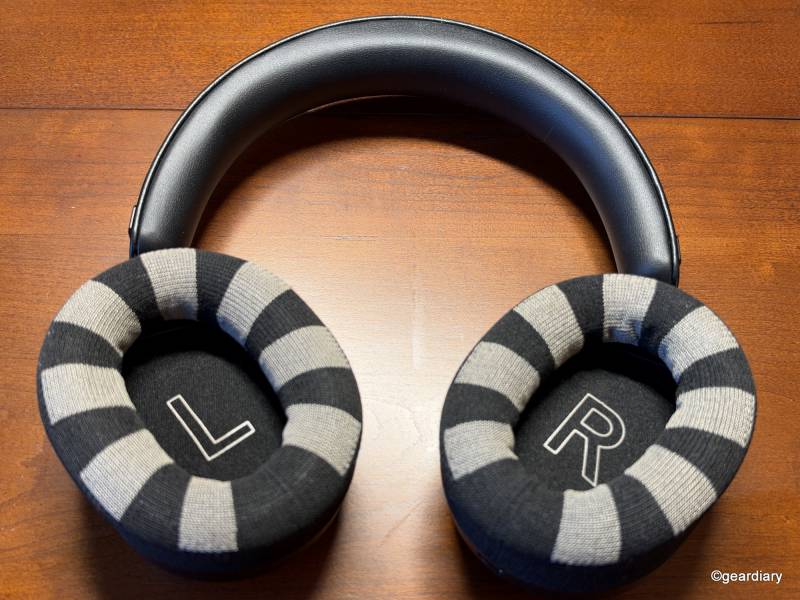
Those supporting sensors matter because recording brain activity in ordinary life is messy.
Talking, moving your head, chewing, walking, playing music, and the headphones’ active noise cancellation all create signals the system must distinguish from the brain activity it’s trying to measure. Simply detecting electrical activity near someone’s head isn’t particularly difficult; separating useful information from everything else is the hard part.
Neurable has spent more than a decade developing the signal-processing technology intended to do that work.
From the MW75 Neuro LT to Neurable One
Anyone familiar with Neurable’s earlier headphones will recognize the basic concept. The MW75 Neuro LT also placed soft EEG sensors around the ears and used them to monitor attention while you worked. The app could track Focus Levels, identify Attention Spans, recommend Brain Breaks, and build longer-term views of your working patterns.
The difference is that those headphones started with Master & Dynamic’s audio platform. Neurable One starts with Neurable; that matters more than a branding change.
The company can now design the ear pads around sensor contact rather than adapting sensors to an existing cushion. It can coordinate power management between EEG, ANC, Bluetooth, and audio. It can develop controls around its own software rather than layering them onto somebody else’s architecture.
Most importantly, Neurable can decide what the product is supposed to become.
The earlier MW75 Neuro models felt like premium headphones that had learned a clever new trick. Neurable One aims to make the brain-sensing component part of the product’s identity from the start.
Fit Isn’t Merely About Comfort This Time
Most headphone reviews discuss fit because uncomfortable headphones eventually wind up on a desk; with Neurable One, fit can also affect the data.
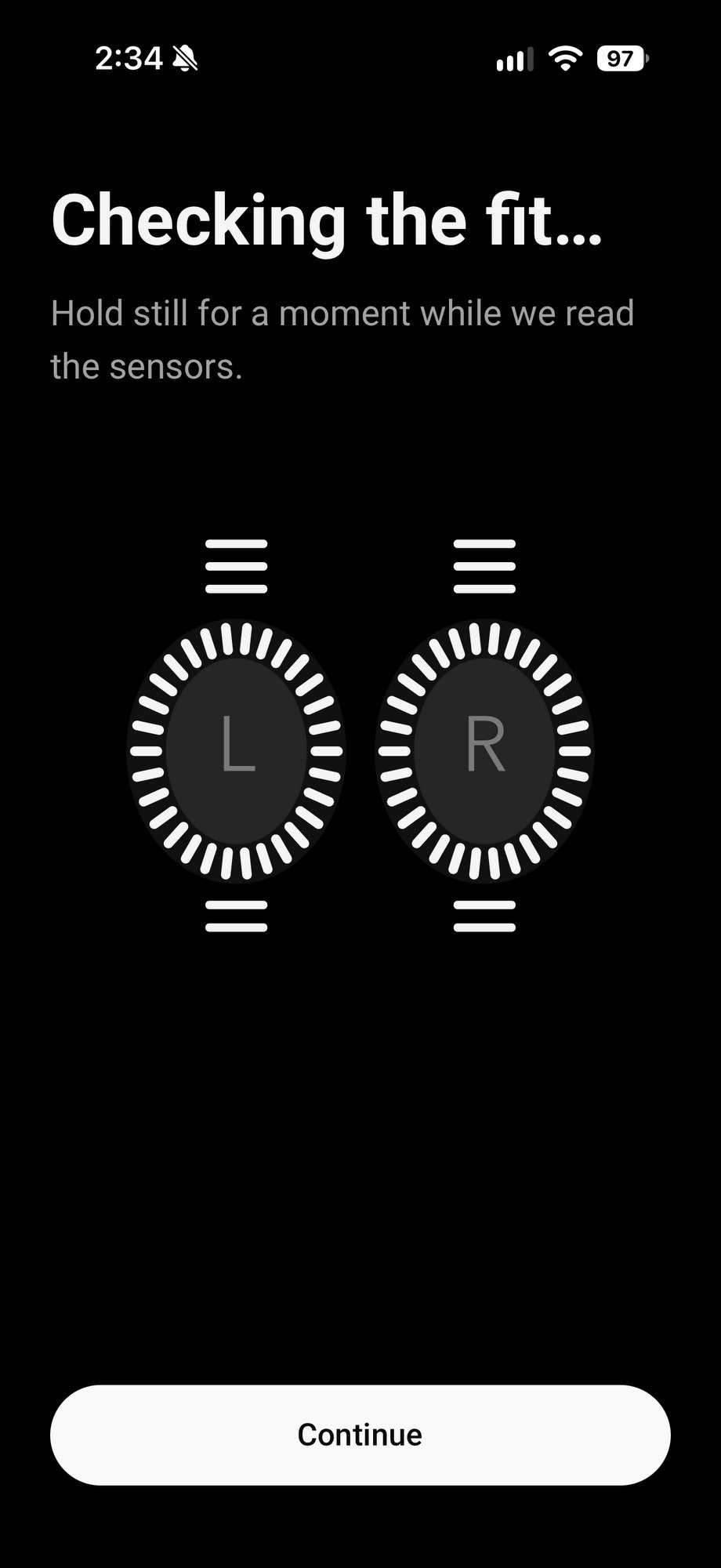
The EEG sensors are woven into the ear cushions, so they need reliable contact around the ears. Neurable recommends positioning the pads flat, moving hair out of the way, and remaining still during the check-in.
Jaw movement, talking, walking, and other activity can contaminate the resting measurement.
If the app reports poor signal quality, you should reposition the headphones and try again.
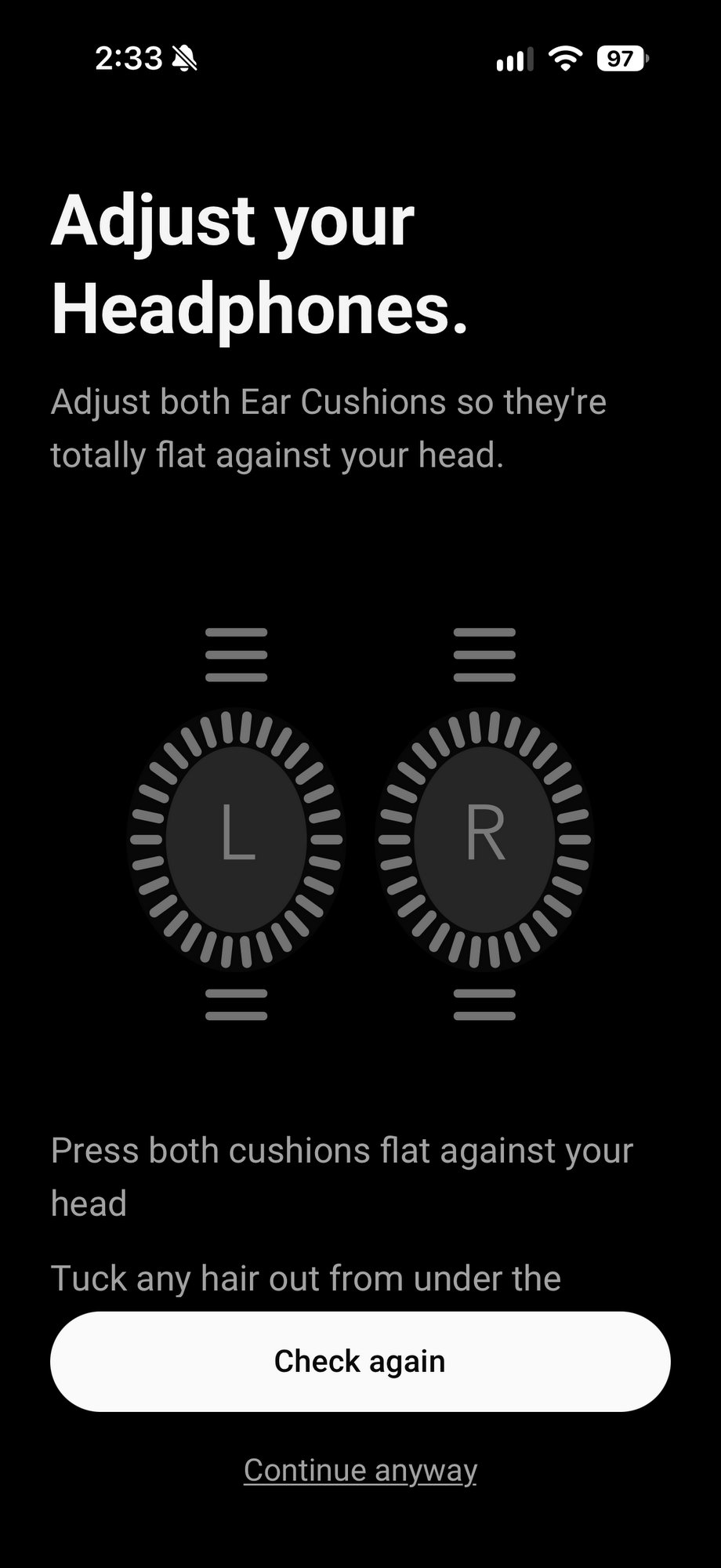
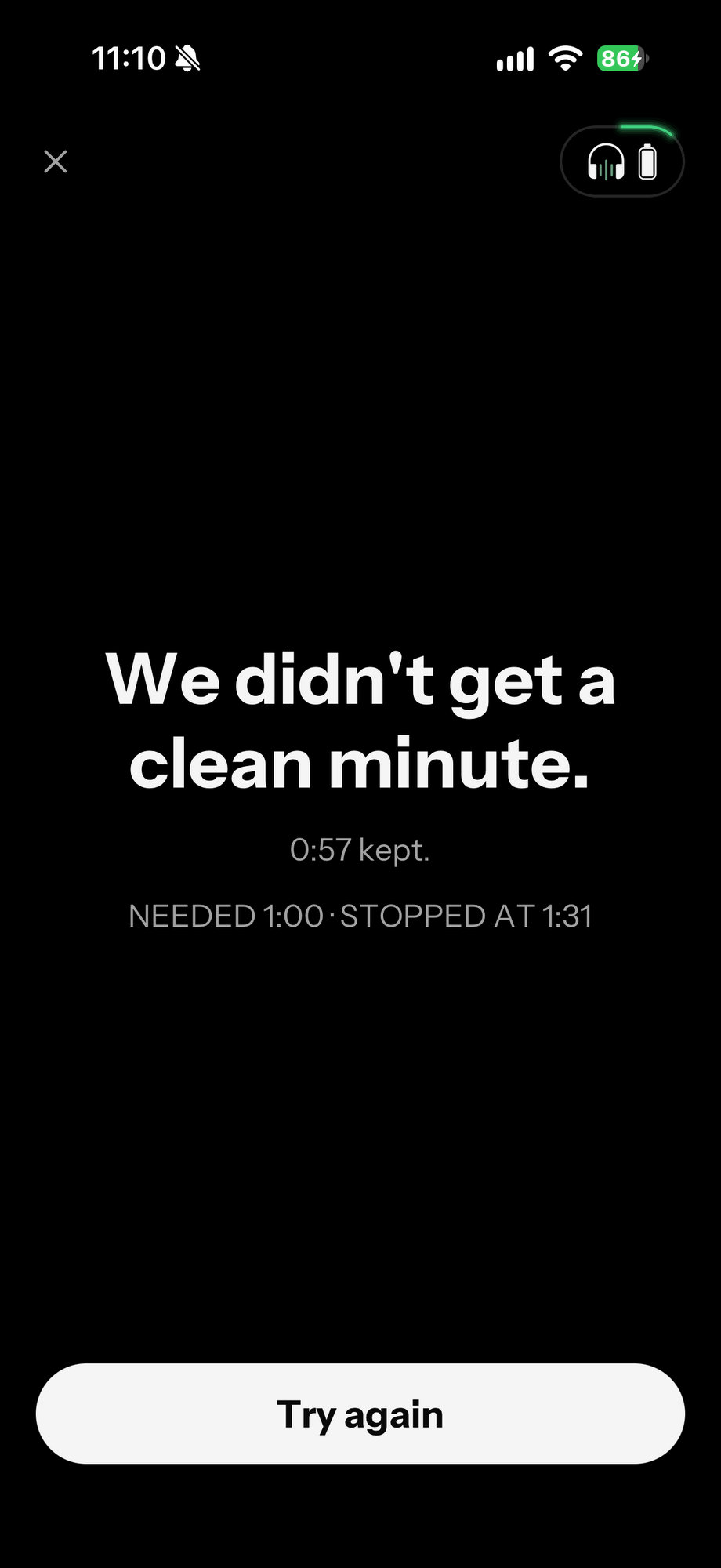
That creates one of the most important practical questions in this review. How much fussing is involved? Like most headphones, the Neurable One’s headband can be adjusted to fit your particular head. I had to set it to the smallest setting.
Initially, I was getting some errors that I didn’t have the proper fit, so the sensors weren’t working properly and removing a particularly dangly pair of earrings, making sure that the ear cups were fully touching the skin around my ears, and making sure that none of my hair was under the ear cups fixed that.
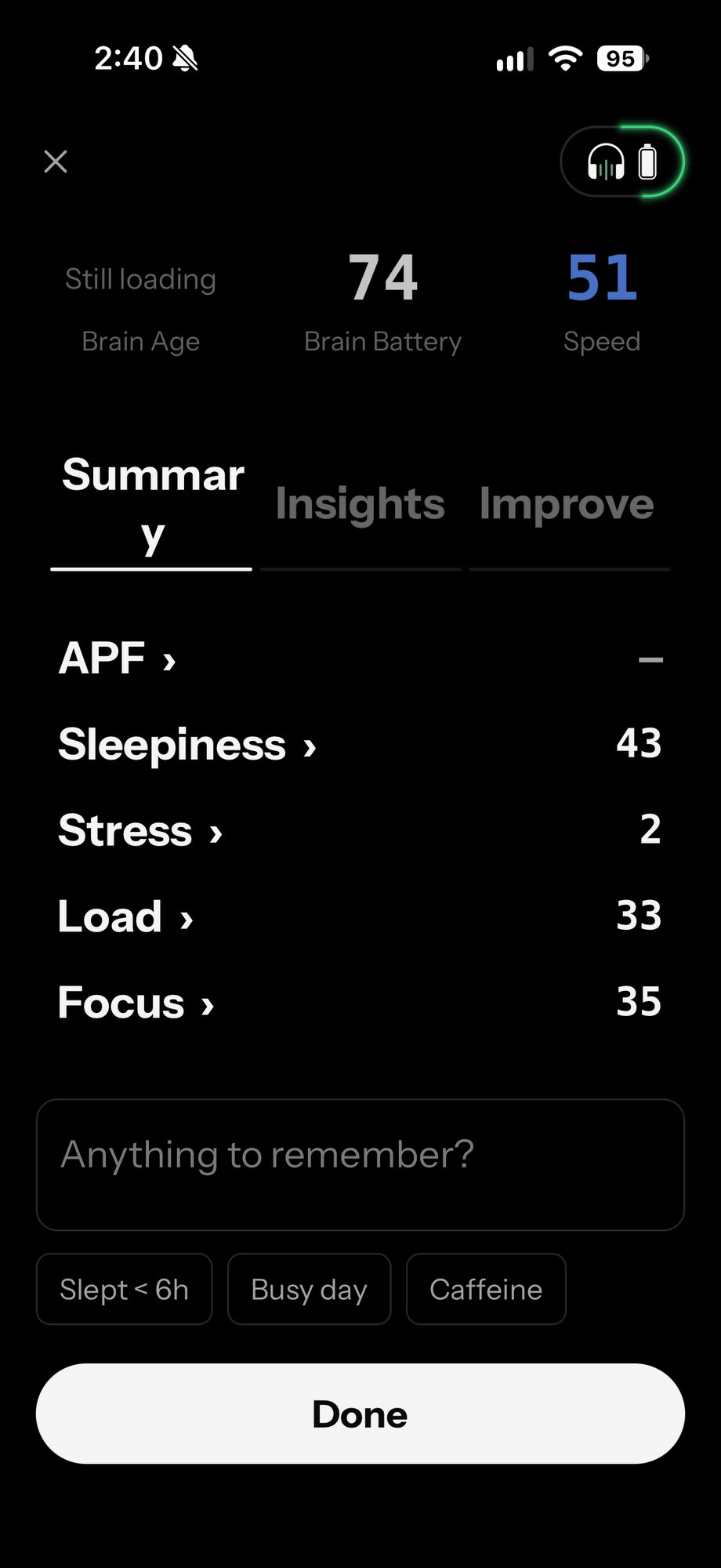
The good news is that Neurable won’t show you a number if one isn’t warranted. When the signal isn’t clean enough, the app can display a dash instead of a measurement. A dash isn’t zero. It means the system decided it didn’t have sufficiently clean data to report.
That’s encouraging because for a product assigning numerical values to something as complicated as your brain, “I don’t know” is occasionally the correct answer.
These Are Still Supposed to Be Your Normal Headphones
Neurable’s reviewer guide makes a point that could easily get buried beneath all the neuroscience: these are also just headphones; they’re supposed to be the pair you use all day.
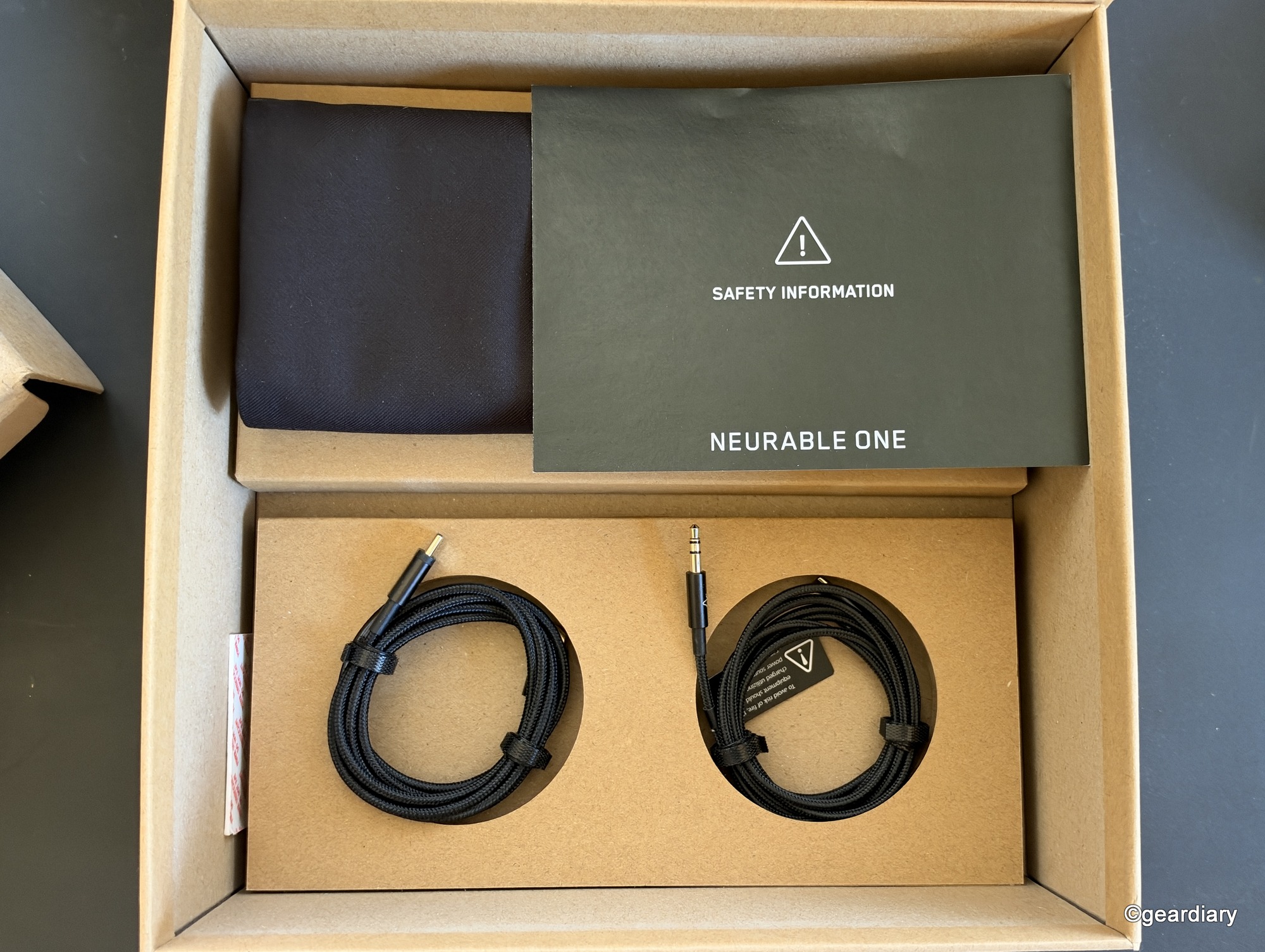
The box includes the headphones, USB-C cable, 3.5 mm audio cable, documentation, and a soft carrying pouch — though I have to admit that the pouch is underwhelming. When the product costs $499 and contains a miniature EEG system, asking for a protective hard case doesn’t feel particularly unreasonable. The one-year warranty is similarly ordinary for a product that isn’t particularly ordinary.
The Neurable One uses 40 mm beryllium drivers, six microphones, active noise cancellation, and an ambient listening mode. Bluetooth 5.2 supports AAC and aptX, and multipoint connectivity lets the headphones stay connected to two devices at once. There’s also a 3.5 mm analog input.
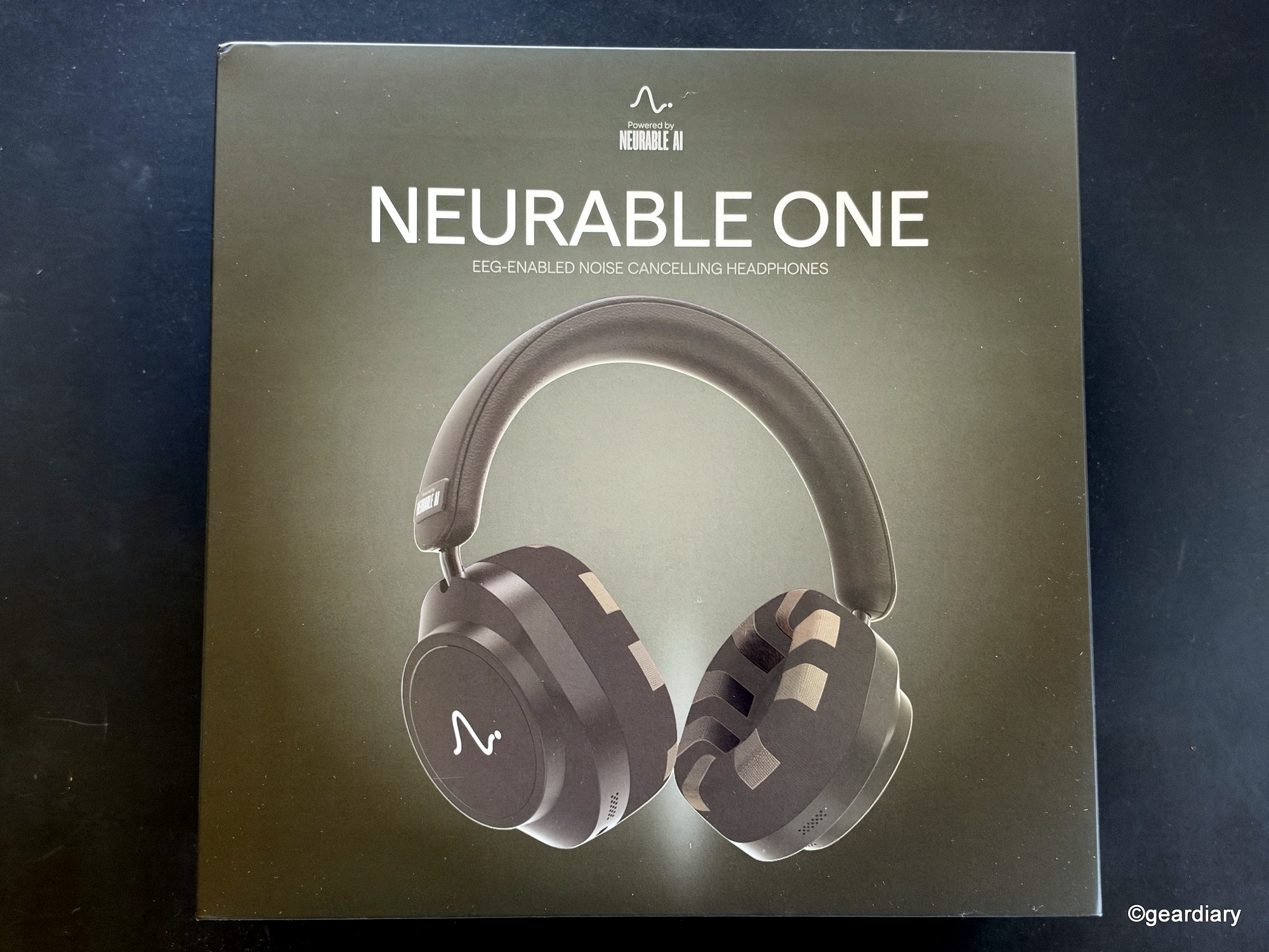
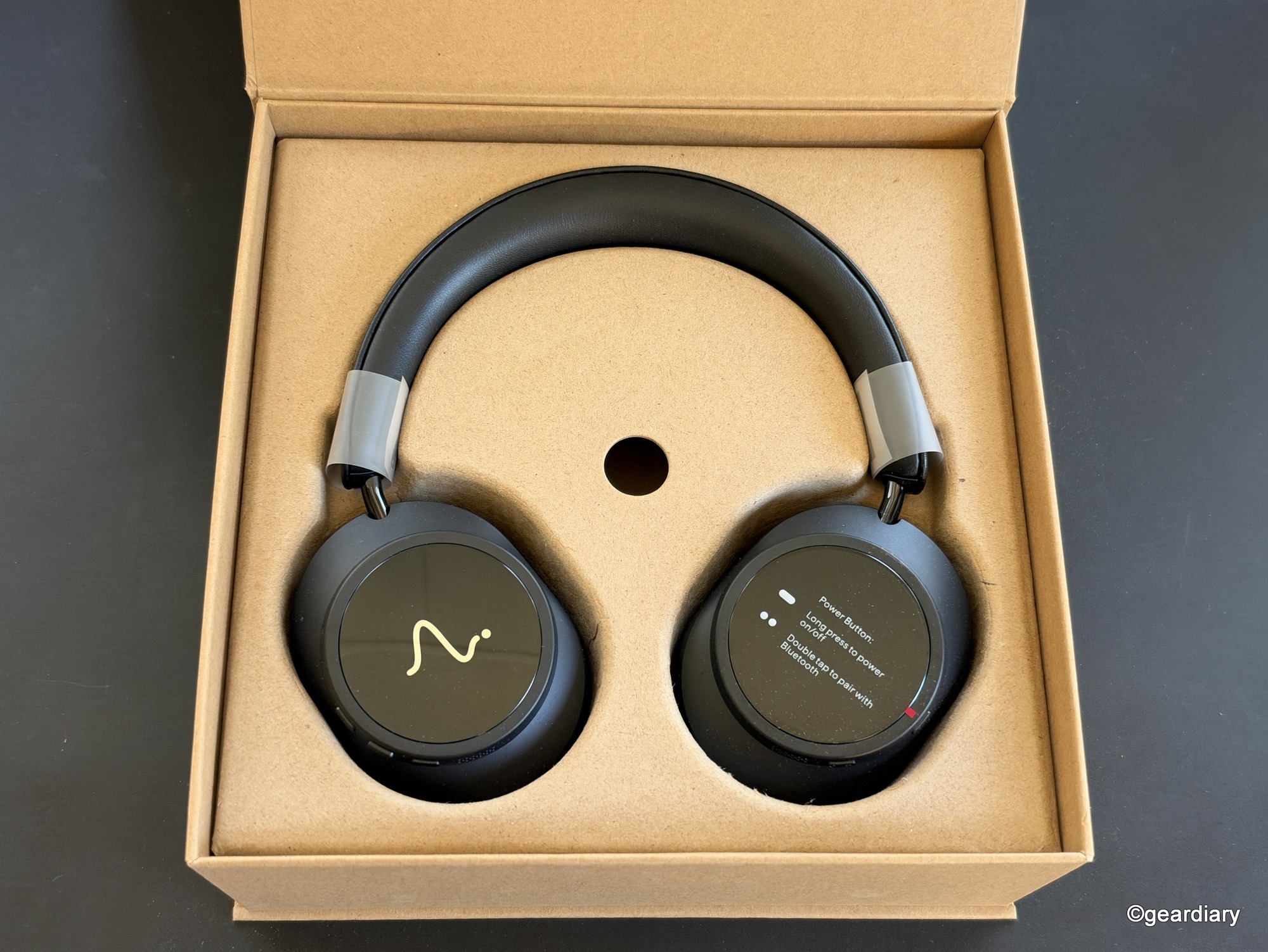
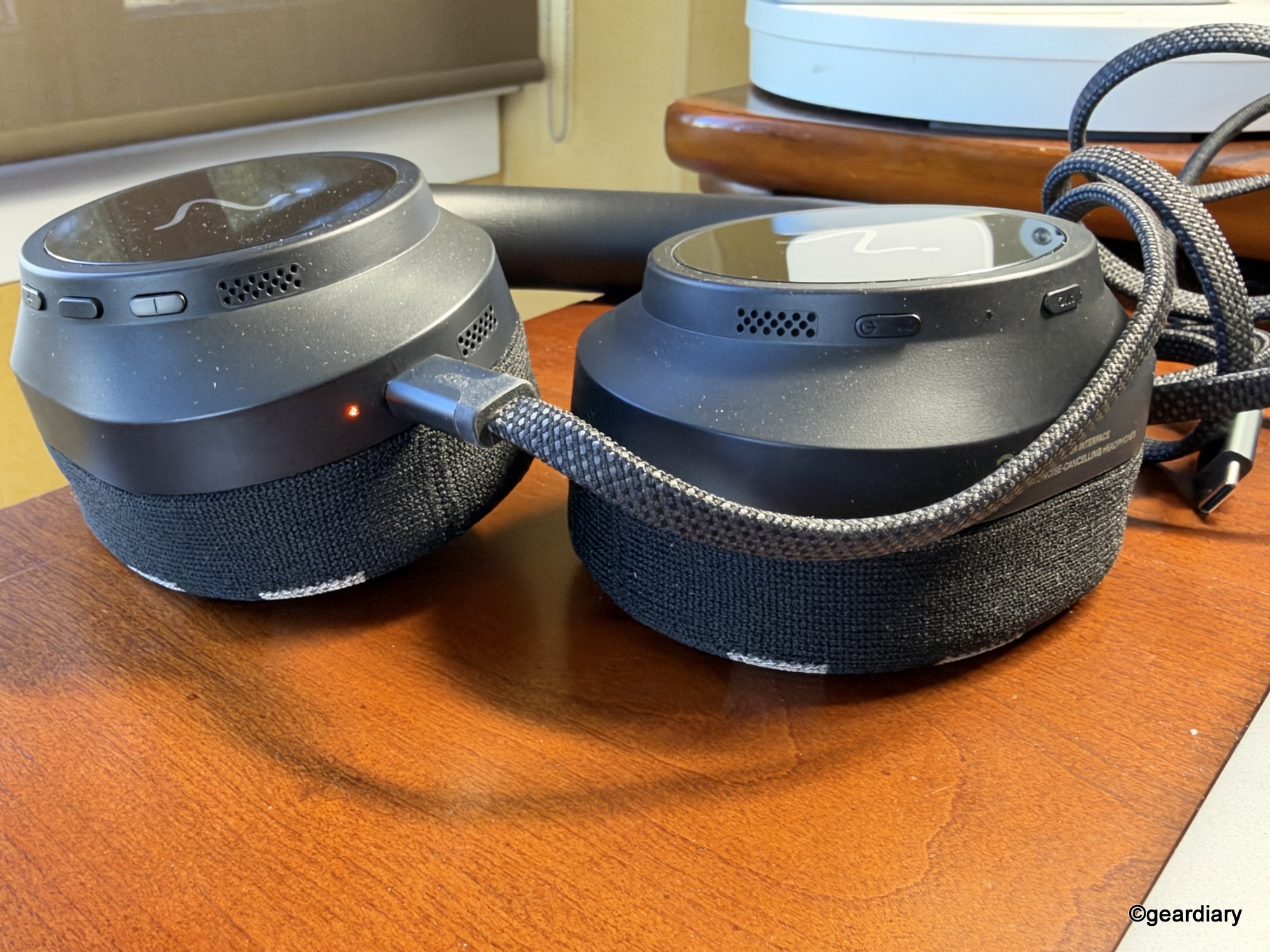
At 345 grams (about 12 ounces), they feel substantial without straying into AirPods Max territory. The construction combines anodized aluminum with a vegan-leather headband and nylon ear pads containing the woven sensors. They fold to approximately 200 by 195 millimeters.
They feel substantial without being overly heavy, and they are clearly built as a premium headset. The clamping force isn’t so strong that they are uncomfortable to wear for hours at a time, with or without glasses.
Physical Buttons Are a Welcome Bit of Sanity
Neurable hasn’t decided that sophistication requires turning the outside of the headphones into a touch-sensitive guessing game. Physical controls handle power and pairing, active noise cancellation and ambient listening, volume, playback, calls, track navigation, and voice assistant access.
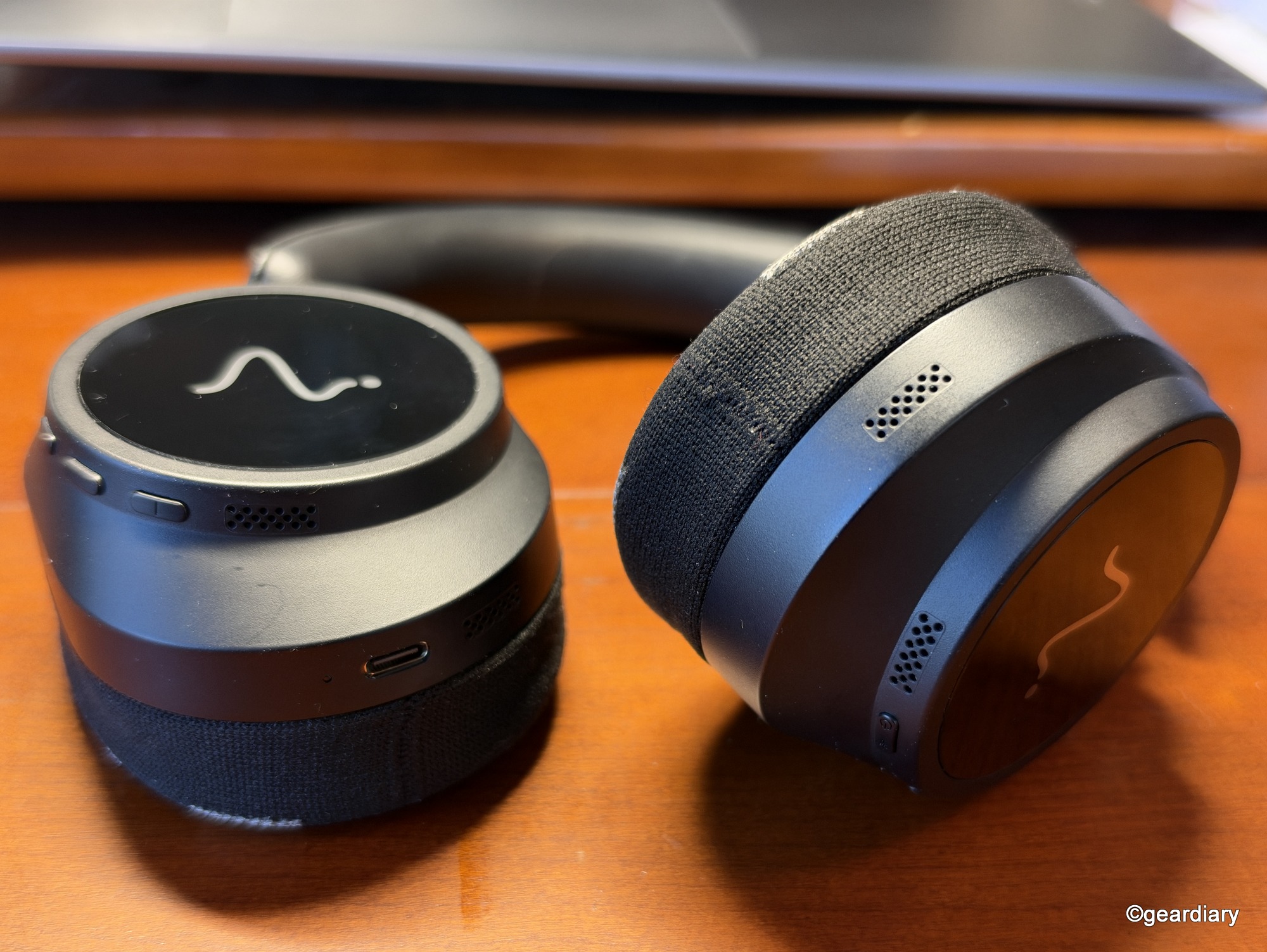
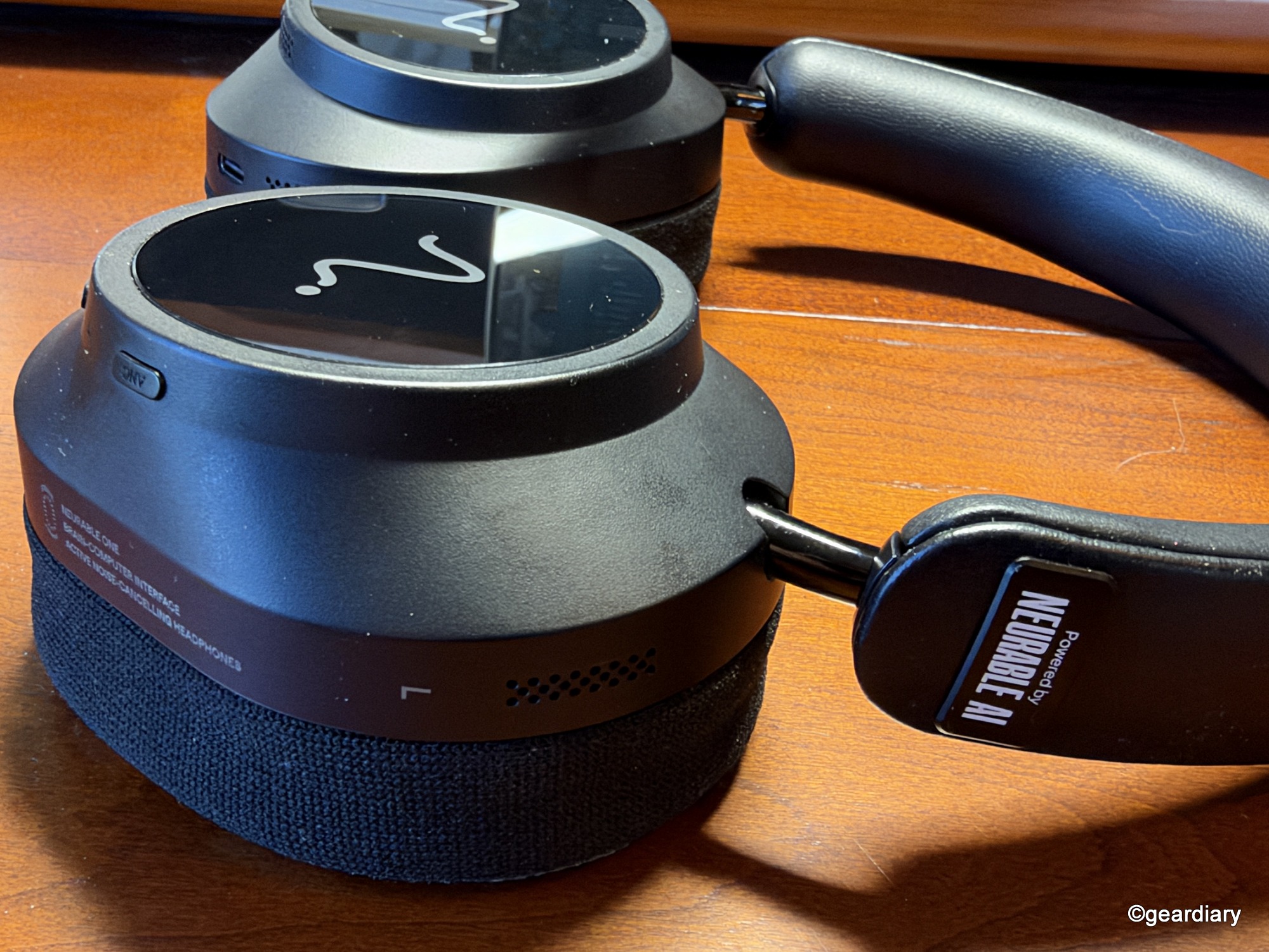
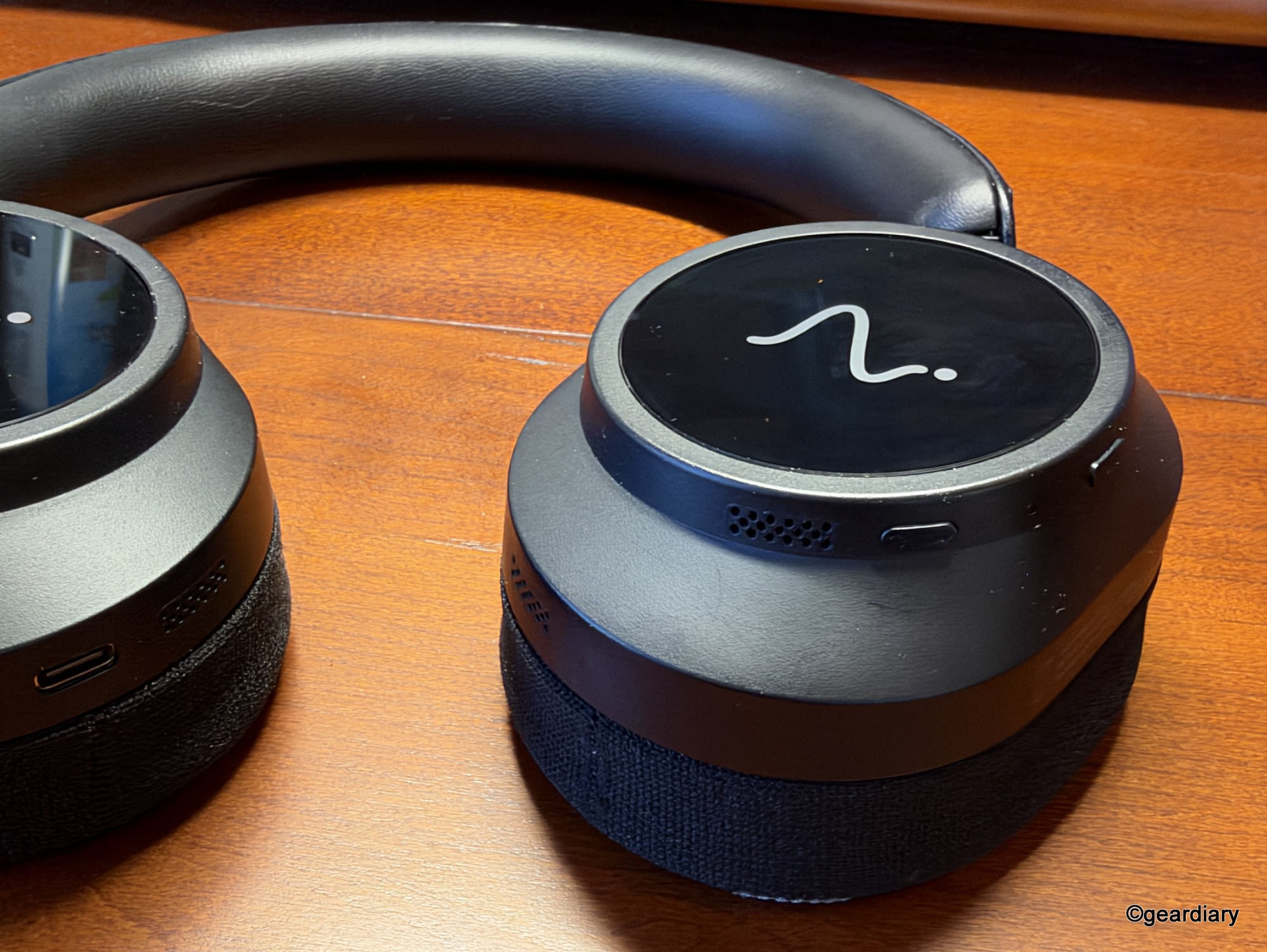
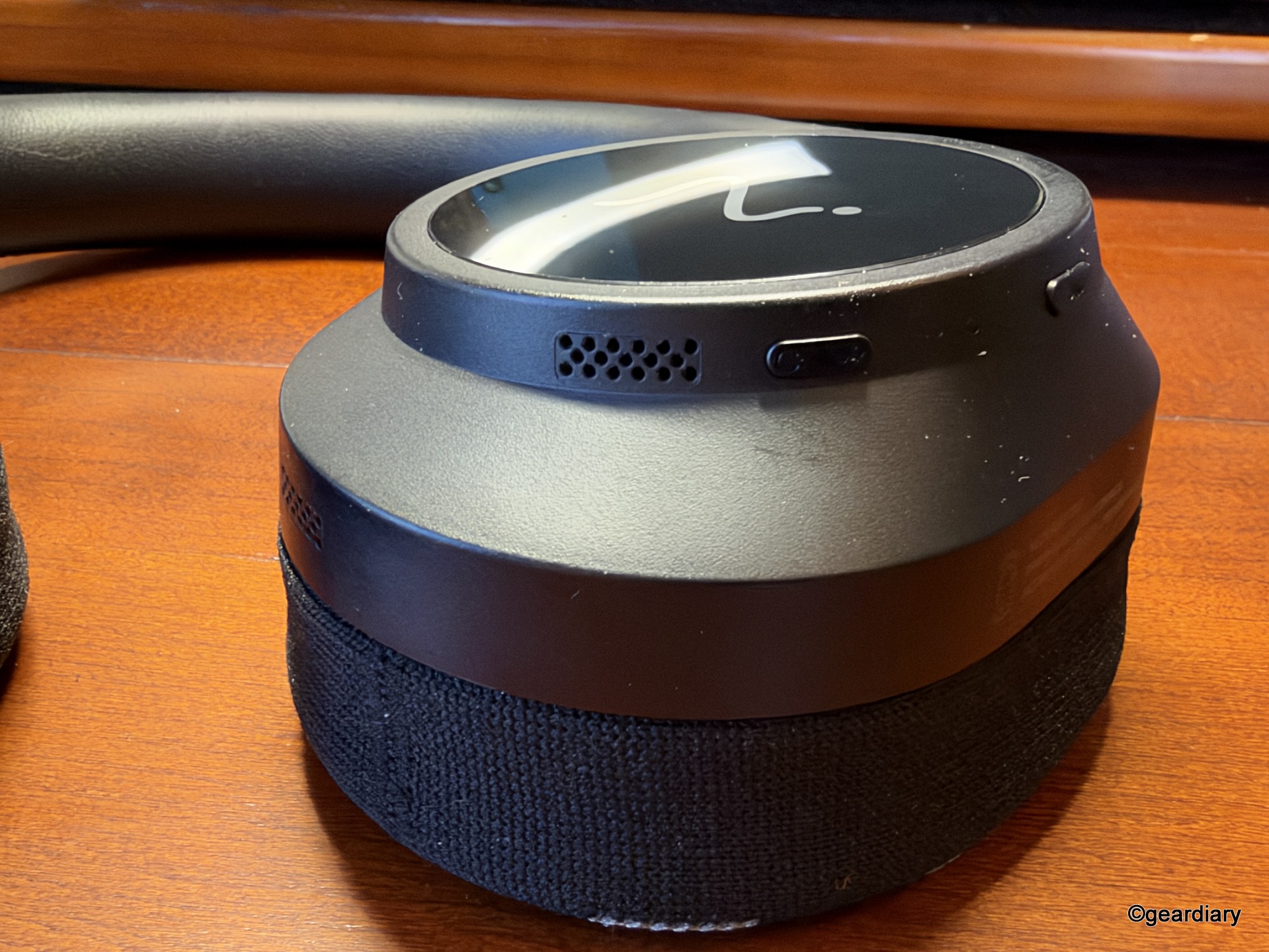
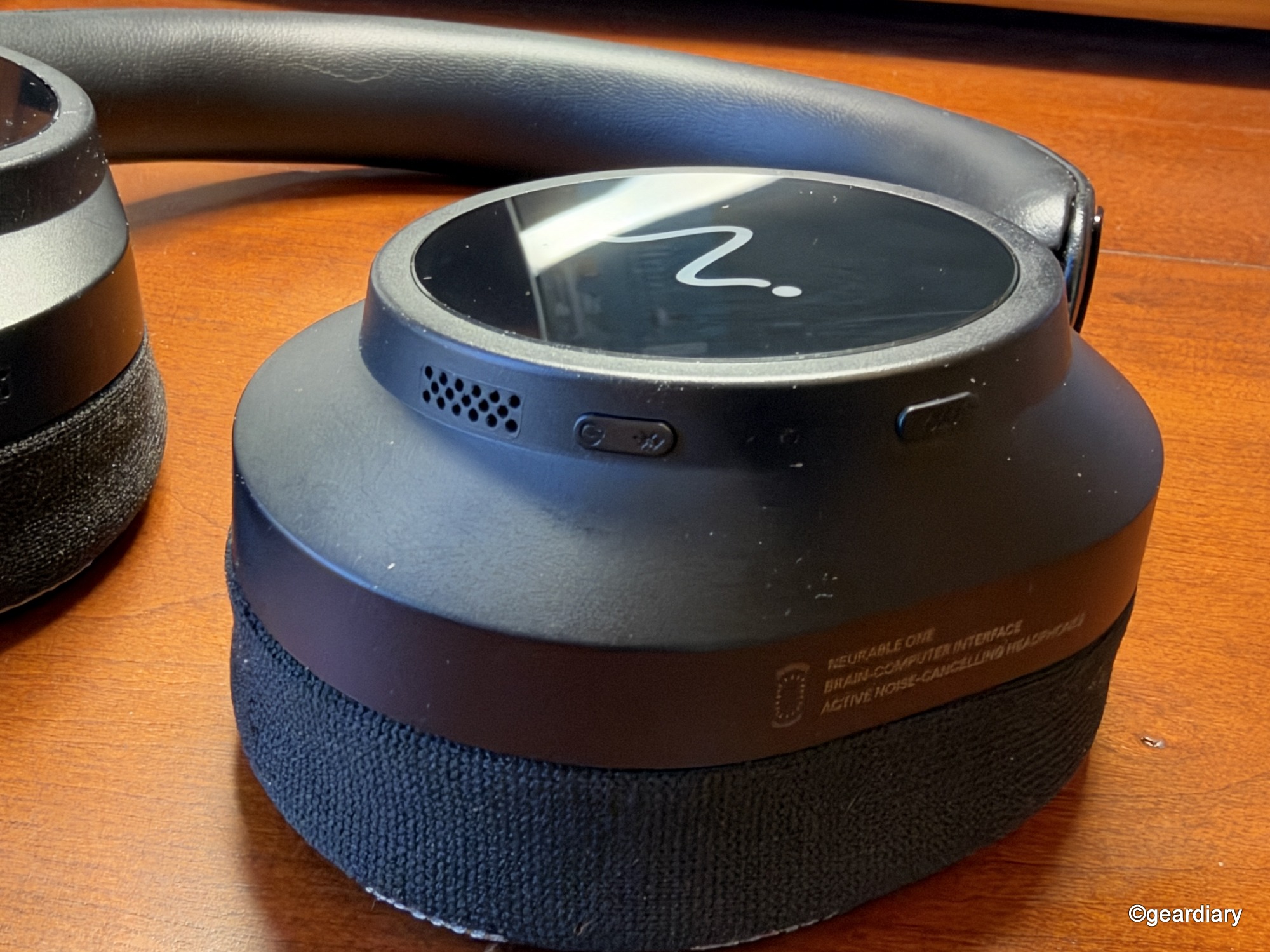
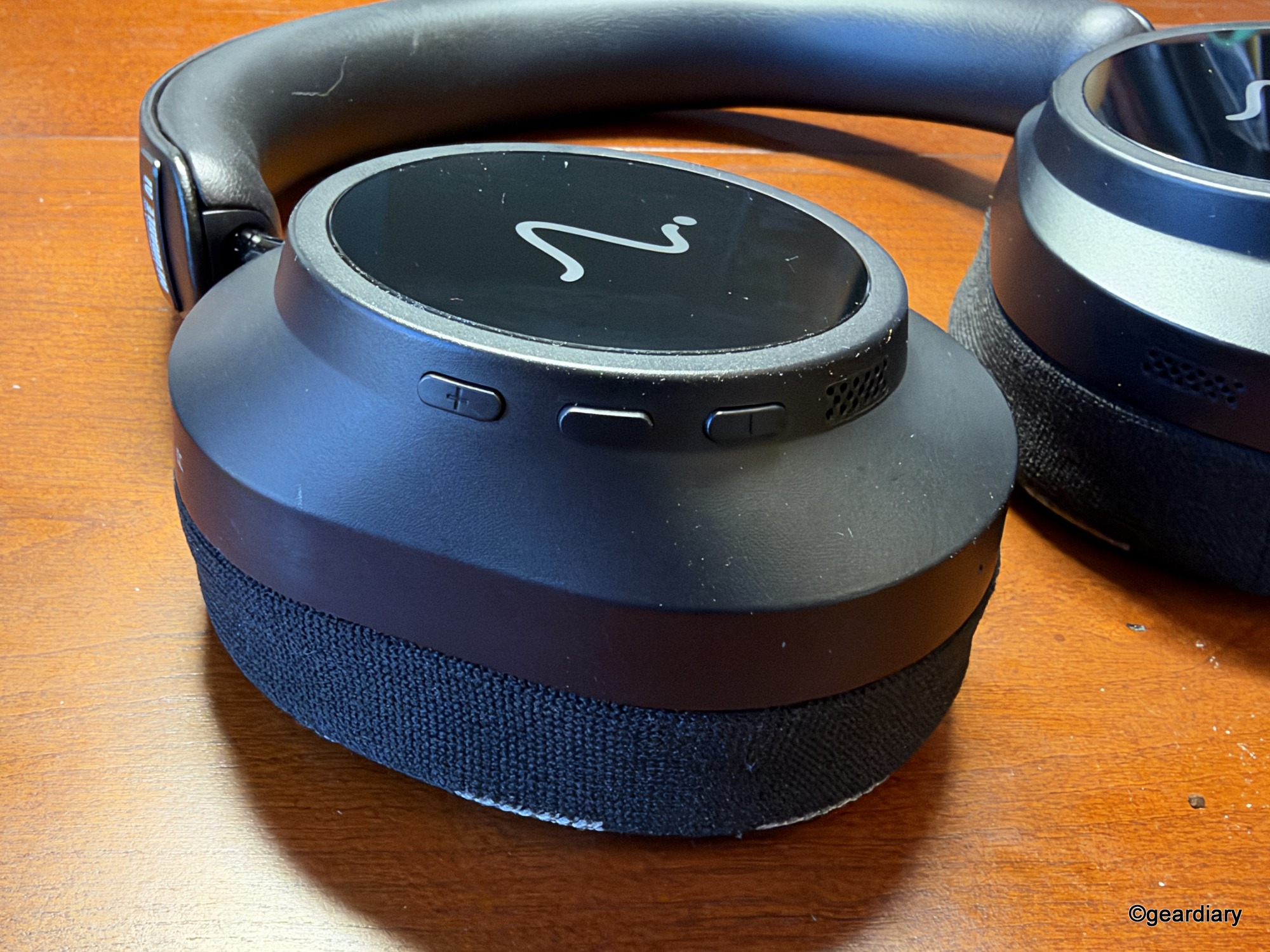
That’s less futuristic than swiping an ear cup, and arguably better when you’re supposed to be concentrating.
Like any headphones, it takes a moment to get comfortable with the Neurable One’s buttons, but with a bit of practice, they become second nature.
Sound Quality Doesn’t Get a Participation Trophy
The EEG system is unusual enough that it’s tempting to grade Neurable One on a curve. Don’t. These are $499 headphones, and they still need to sound like $499 headphones.
They are tuned very well, and simply put, the sound is excellent and exactly what you would expect.
The same applies to active noise cancellation. Sony, Bose, Apple, and others have set a very high bar. Neurable doesn’t necessarily have to beat all of them, but ANC can’t feel like something included just to make the spec sheet look complete.
When noise canceling is on, you notice a difference in ambient noise, as there should be. When active audio is off, music and vocals through the headphones are still clear, but you can also clearly hear if someone is talking to you or other ambient noises you might need to hear, like a doorbell.
Brain tracking is a clever bonus only if the headphones are good enough that you forget you’re wearing a brain tracker.
The One-Minute Check-In Is More Important Than It Sounds
The Neurable app revolves around a roughly one-minute check-in, during which you sit still, close your eyes, and let the headphones establish a resting measurement.
Neurable recommends performing one whenever you put on the headphones and open the app, not merely once each morning. That may sound excessive until you understand what the app is doing with it.
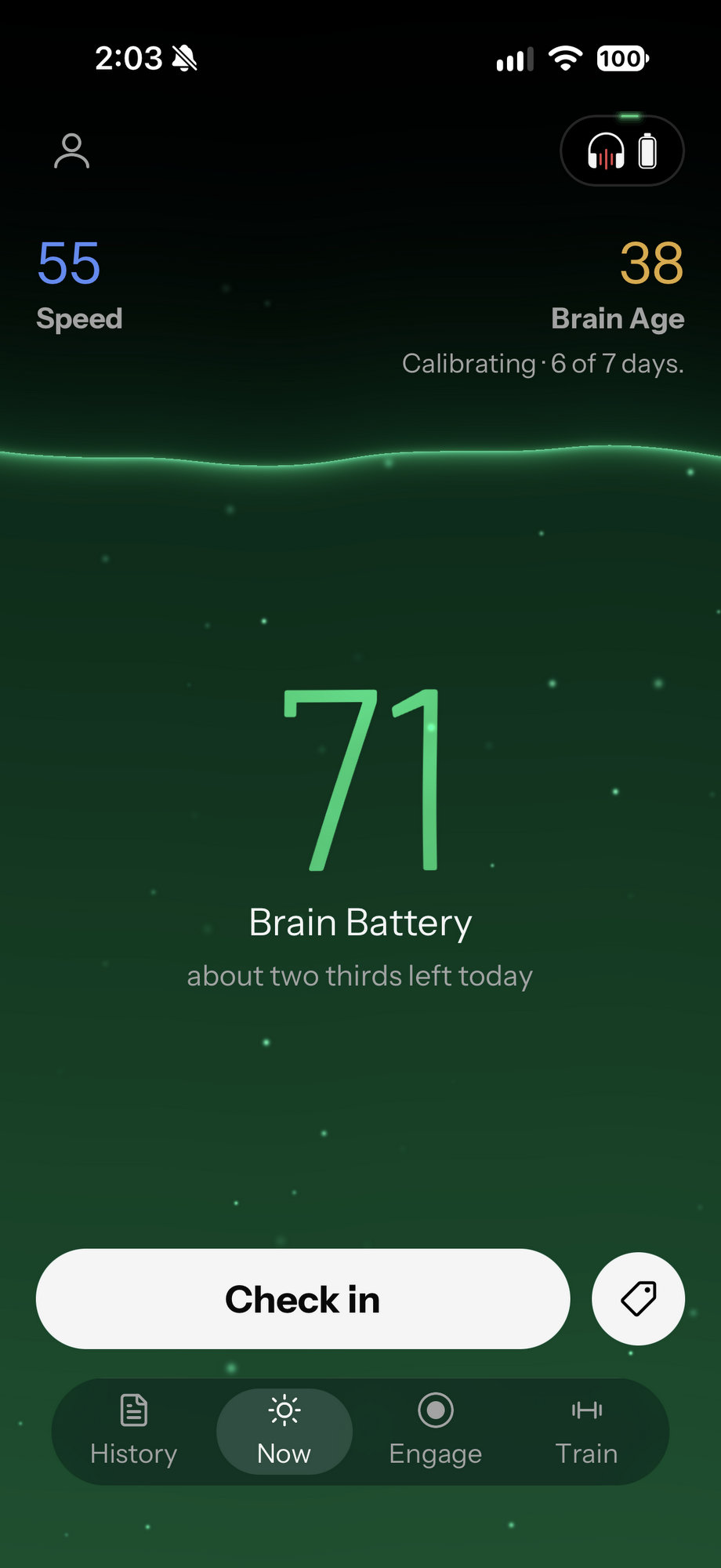
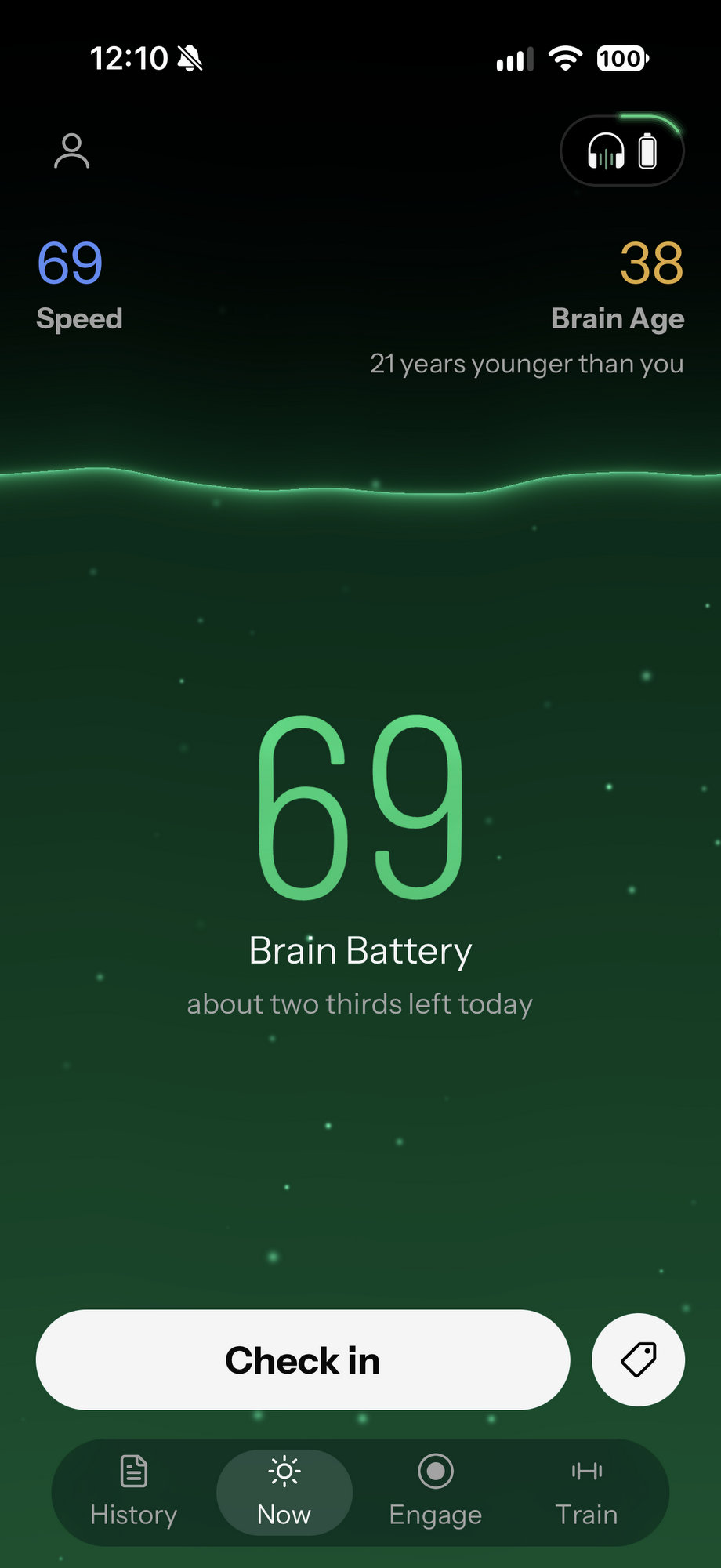
Brain Age, Brain Battery, and Speed are calibrated using check-ins. APF, Sleepiness, Stress, Load, and Focus use the current resting measurement as a comparison point. In other words, the check-in isn’t decorative wellness theater; it’s the foundation for much of what follows.
Skip it consistently, and you’re depriving the system of the baseline information it needs.
Eight Measurements, None of Which Should Be Treated as a Diagnosis
Neurable currently organizes its brain information into eight major measurements.
- Brain Battery estimates how much cognitive capacity you appear to have left in reserve.
- Speed reflects how quickly you’re processing information.
- Focus measures how engaged your attention is.
- Load estimates how hard your brain appears to be working.
- Sleepiness looks for signal patterns associated with fatigue.
- Stress deserves especially careful wording.
Neurable isn’t claiming that it knows you’re anxious about a deadline, furious about an email, or contemplating launching your laptop through the nearest window; it detects a signal pattern associated with stress, which is not the same thing as knowing how you feel.
Alpha Peak Frequency, or APF, measures the frequency of your strongest resting alpha rhythm. It’s probably more useful as a long-term personal trend than as a number to stare at after lunch.
Then there’s Brain Age, which sounds irresistible and therefore deserves the most restraint.
Neurable displays Brain Age within a few days of use, but the company says the measurement can move substantially early on and needs roughly a month of data to calibrate properly. So if the app initially says your brain is 93, don’t start shopping for a walker; likewise, if it says 27, maybe don’t open champagne.
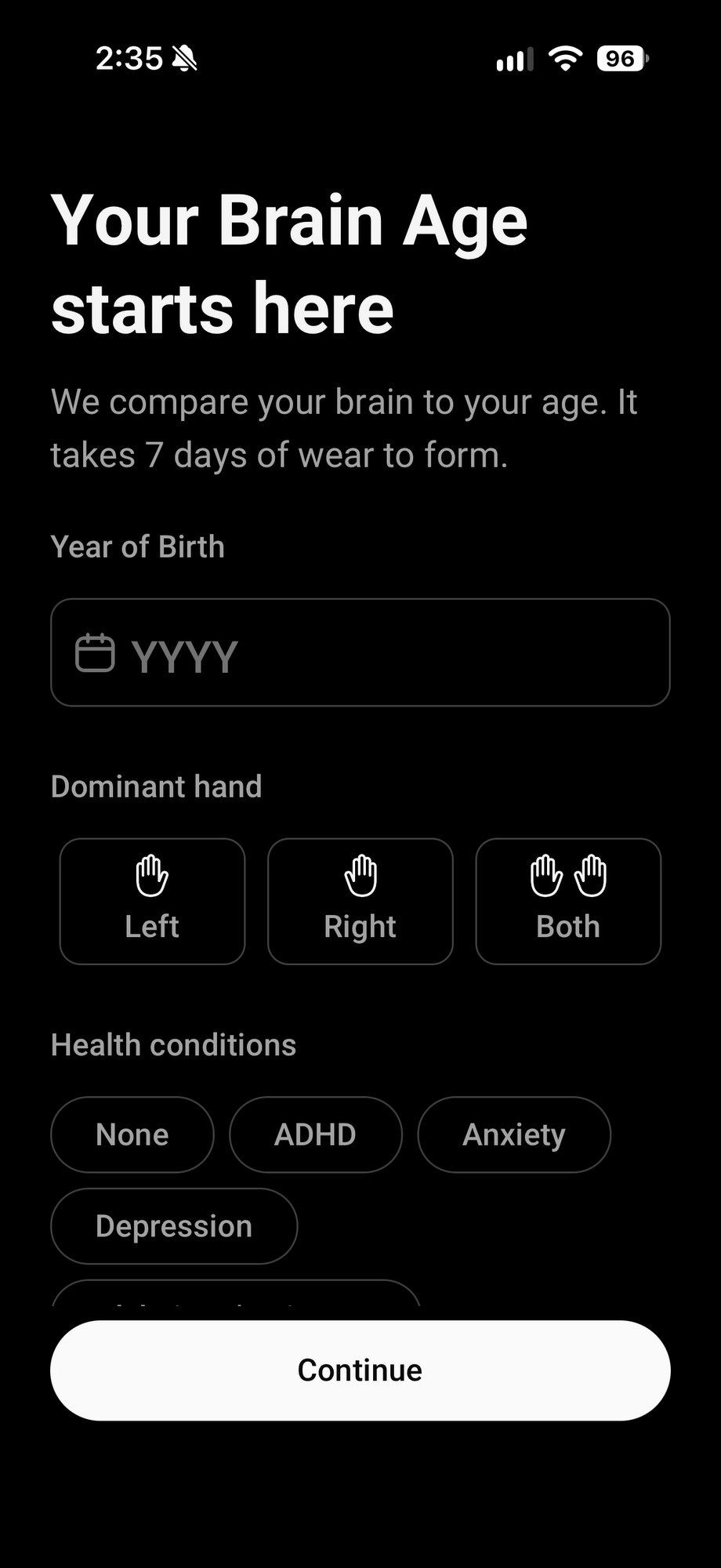
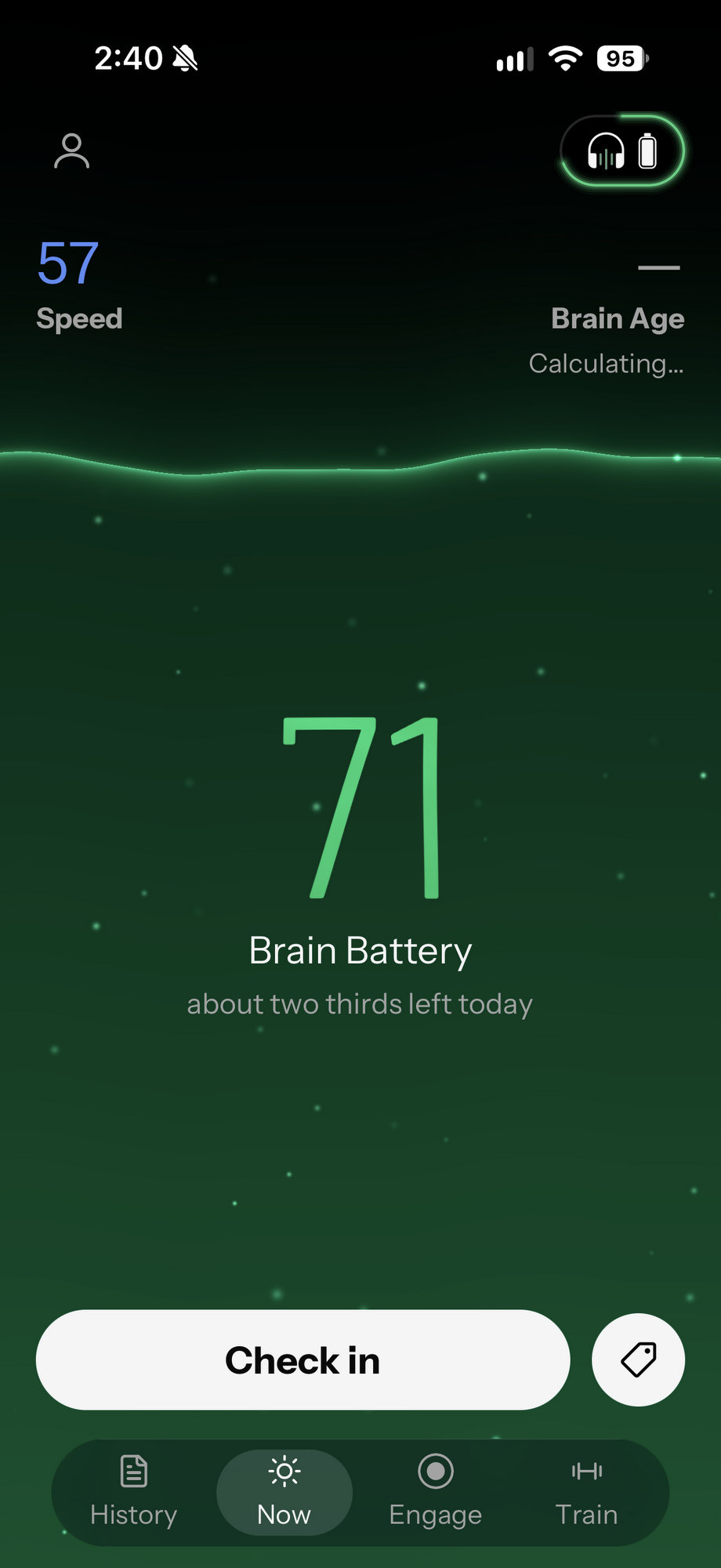
Your brain may be measurable, but that doesn’t mean every measurement is immediately meaningful.
Focus Sessions Are Where the Idea Becomes More Interesting
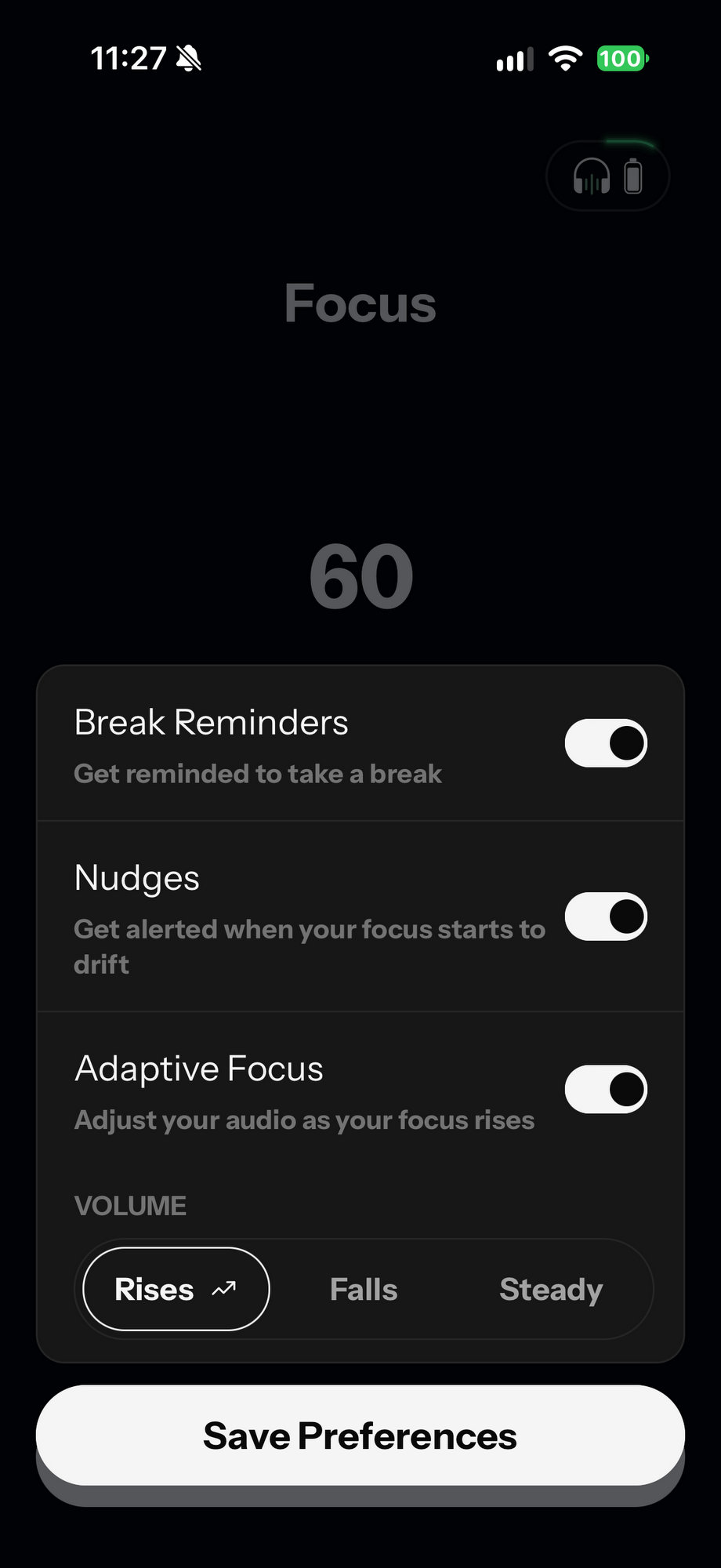
Focus Sessions move Neurable One beyond passive tracking. The headphones monitor your attention while you’re actually working.
During the pre-briefing, Neurable demonstrated the Focus trace rising and falling as concentration changed. When the system detects attention beginning to wander, it can intervene with audio.
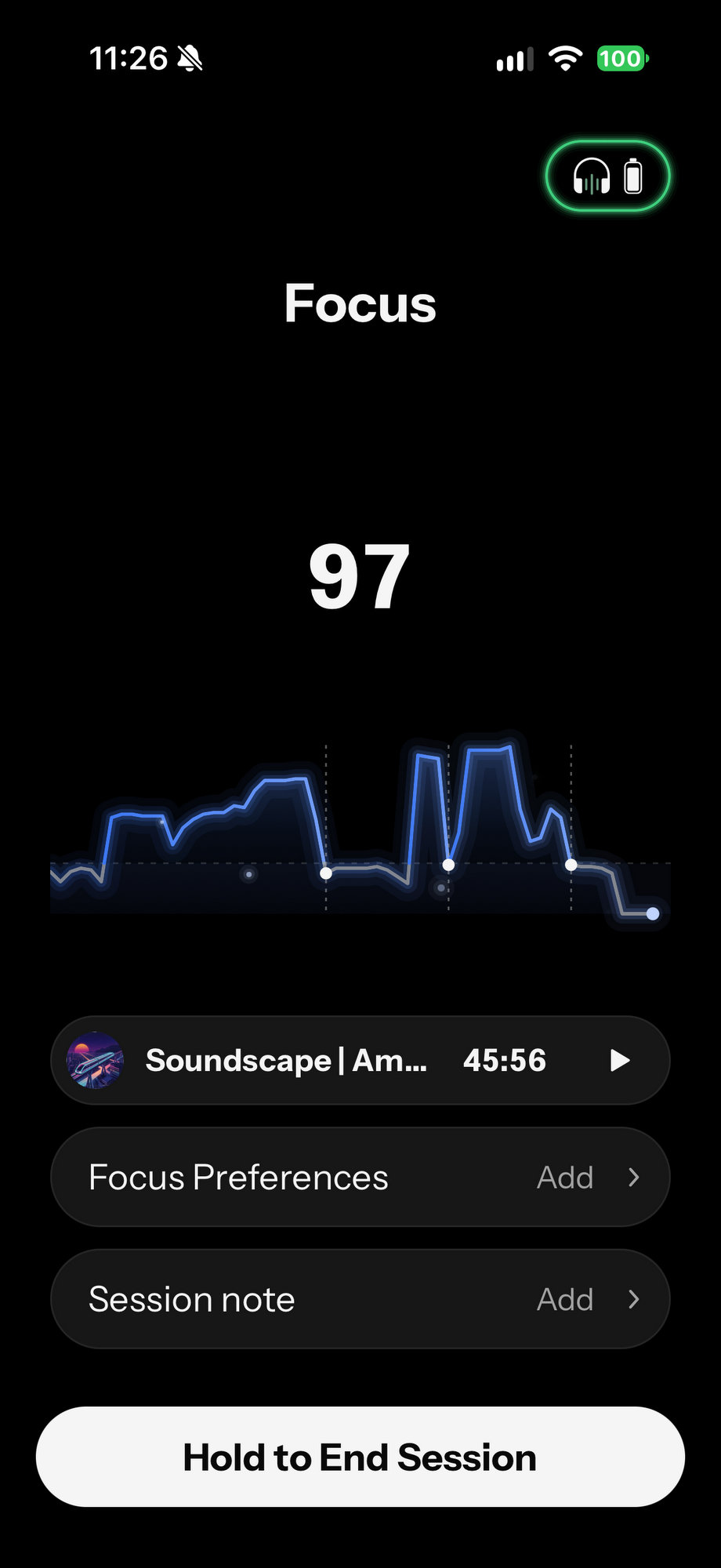
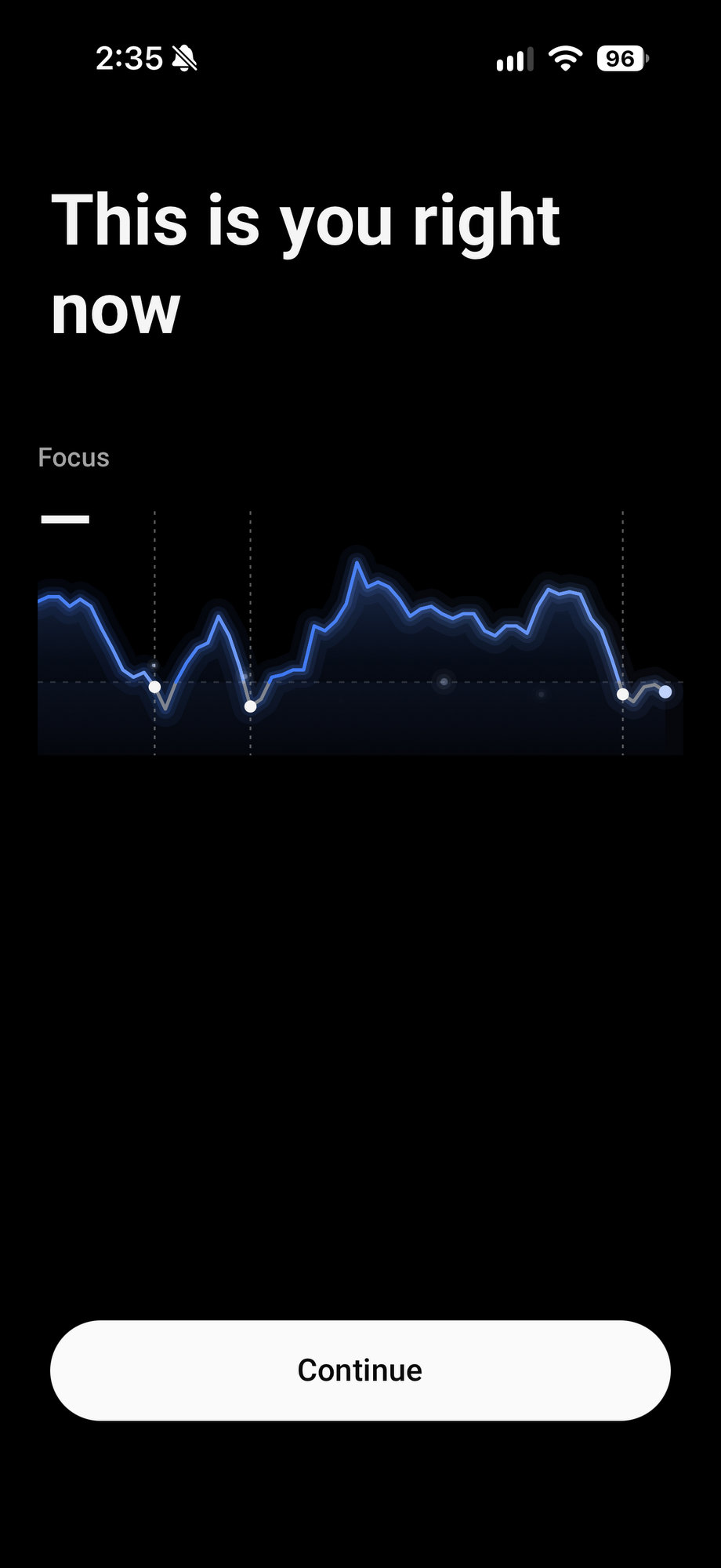
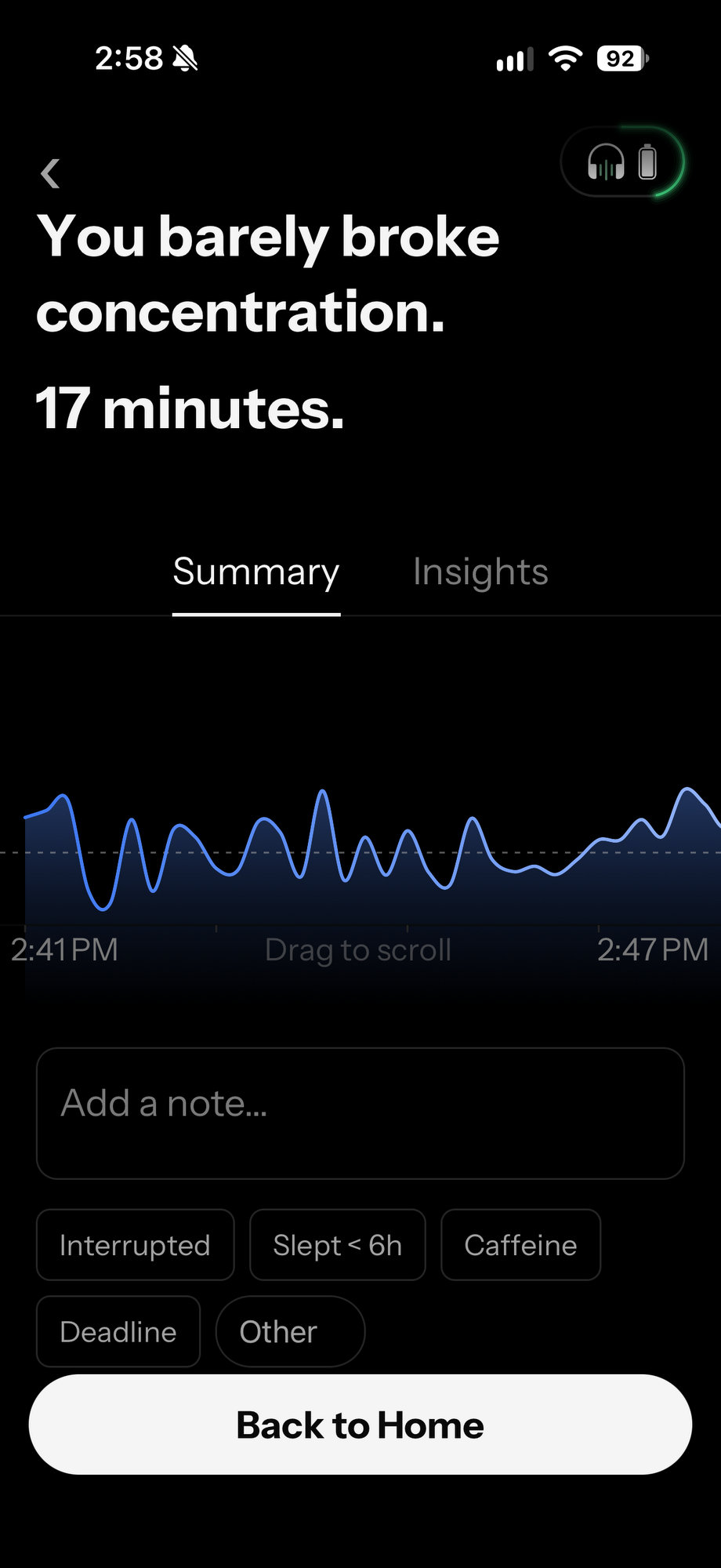
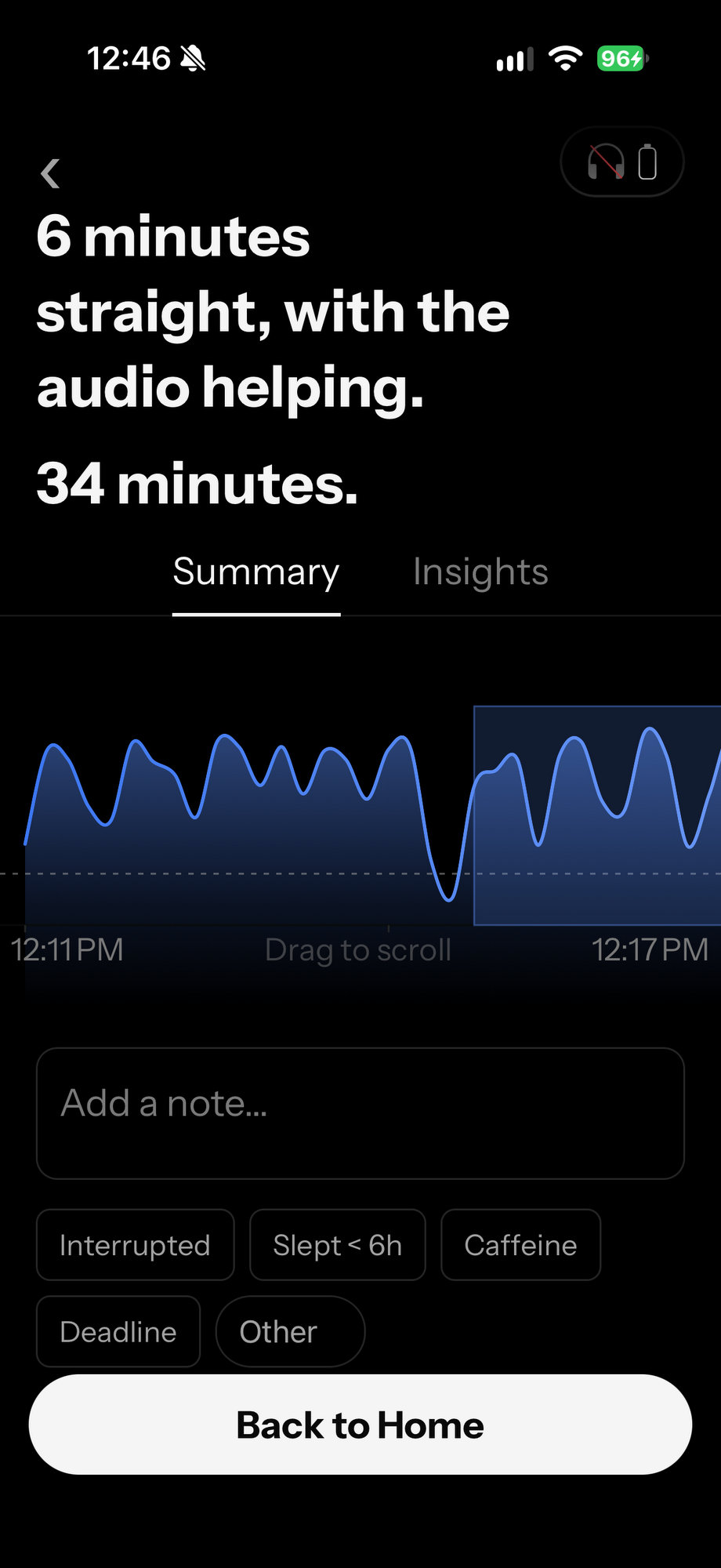
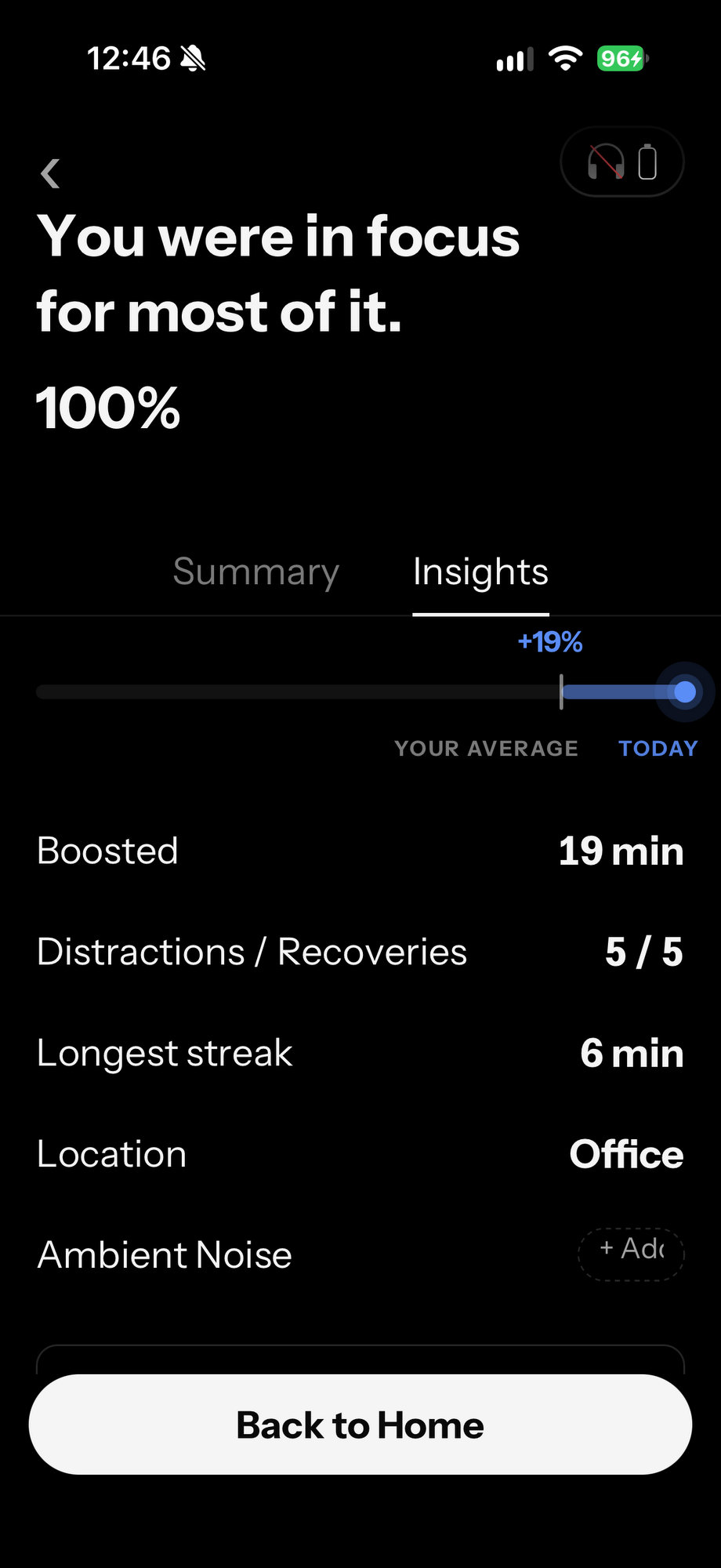
The adaptive audio isn’t simply another playlist playing in the background. Its behavior can change according to what’s happening with your attention, providing a subtle cue when concentration begins slipping and receding again when you’ve recovered. Neurable calls periods when attention returns after an intervention “Boosted.”
That gives the company a much more interesting claim than “we can tell when you’re distracted.”
The system is attempting to determine whether its intervention helped — your attention slipped, the headphones intervened, your attention recovered — now there’s a record of it.
That’s potentially much more valuable than a graph politely informing you after dinner that you weren’t particularly productive at 2:17 p.m.
Your Music Doesn’t Have to Take the Day Off
A Focus Session doesn’t require you to spend the entire workday listening to Neurable’s supplied audio. Tracking continues while you listen to your own music, work through a video call, or use the headphones for a phone call. You can turn off the app’s audio and still keep collecting data. That matters because brain tracking works better as a product concept when you don’t have to rearrange your life to accommodate it.
You put on the headphones, you work, and the system watches what happens.
Brain Breaks Have Returned, but the Idea Has Evolved
Brain Breaks were one of the more appealing concepts in the MW75 Neuro LT. Rather than telling you to take a break every 30 or 60 minutes because a timer expired, the earlier system attempted to identify when your cognitive performance was actually beginning to deteriorate. Neurable One continues that philosophy with Smart Brain Breaks.
When the system sees signs of fatigue or declining attention, it can suggest that you step away. That sounds embarrassingly obvious until you remember how humans actually behave when they’re busy. We are remarkably good at deciding the correct response to diminishing productivity is to sit there longer.
The question isn’t whether taking breaks is healthy; the useful question is whether Neurable can tell when you need one.
The App Goes Beyond Work
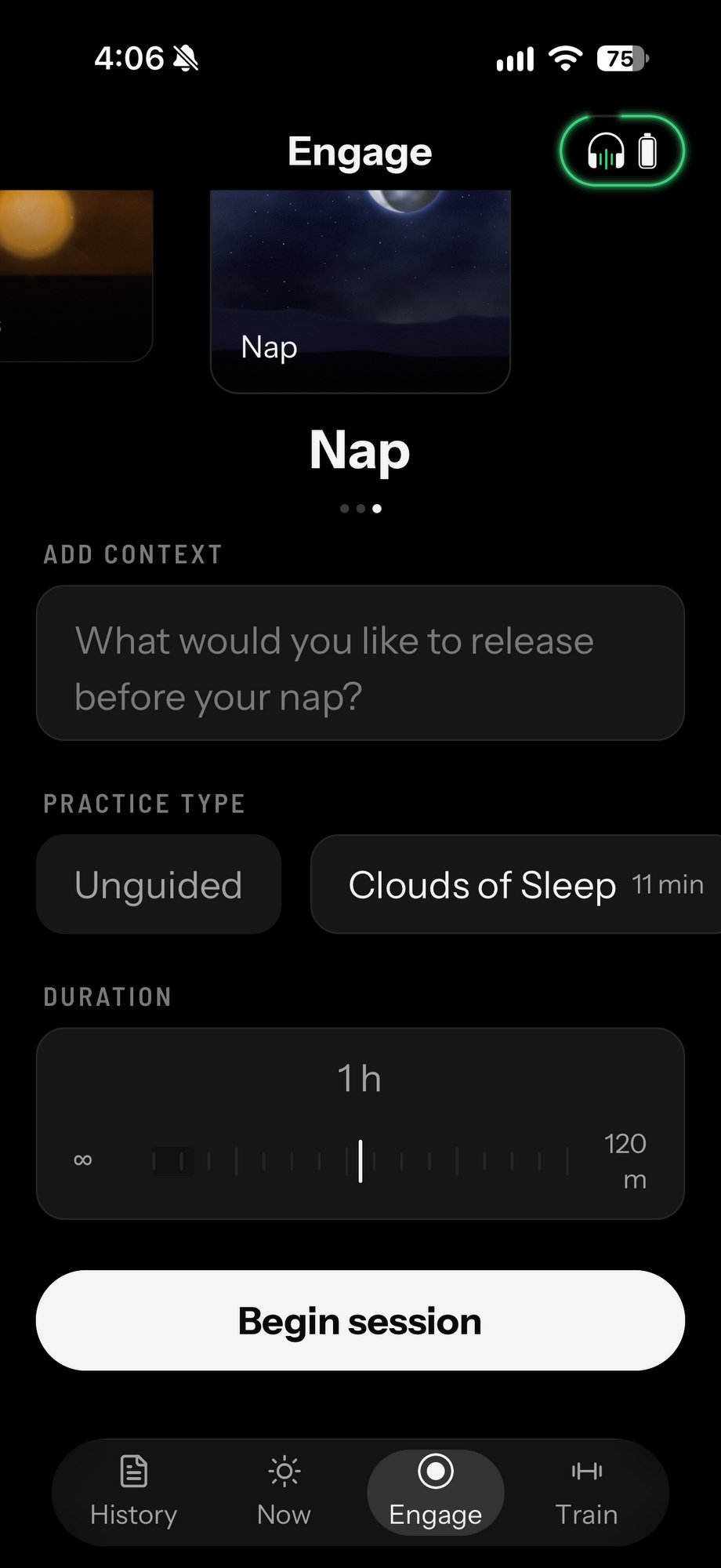
Focus isn’t the entire experience. Neurable One also includes Meditation Sessions, Nap Sessions, and a collection of cognitive training exercises covering areas including sustained attention, divided attention, task switching, cognitive flexibility, visual scanning, and memory.
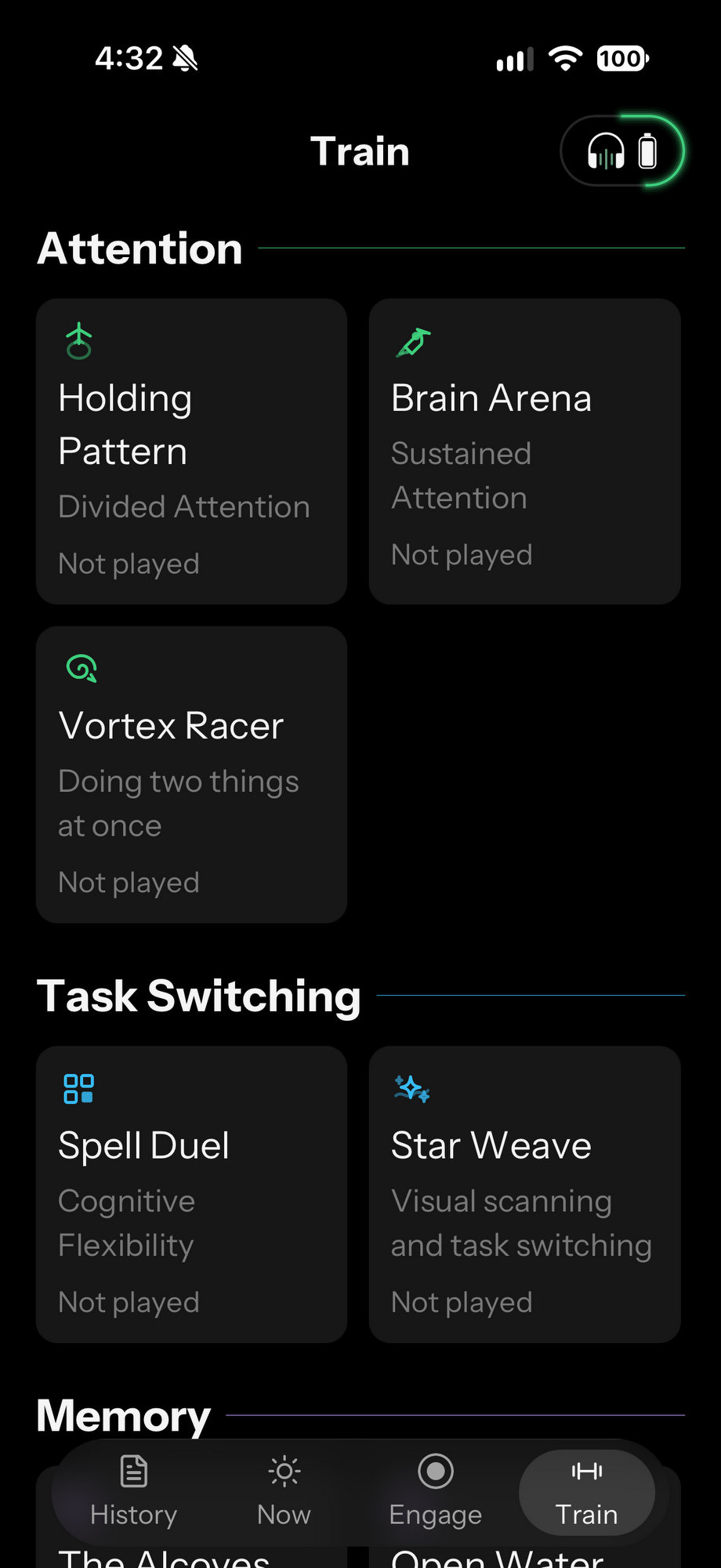
There’s an unusual wrinkle: Ordinary buyers don’t get every feature right away.
Meditation, naps, additional playlists, and many of the training activities unlock gradually during the first weeks of use. Neurable reasons that the system should first collect enough information to establish a useful baseline.
Our review units included a PRESS option that unlocks everything, but Neurable specifically asked us not to use it immediately so we could experience the same first days a customer does. There’s logic in that.
There is also a perfectly defensible argument that after handing over $499, you’ve already completed the most important unlocking achievement.
Brain Data Banking Is Where the Long Game Begins
Individual measurements are only part of the idea. Neurable One can build a history from check-ins and sessions across days, weeks, months, and eventually years; Neurable calls that Brain Data Banking, and this may ultimately be the most important part of the product.
Today’s Focus number is mildly interesting, but discovering six months later that you consistently perform demanding work better before 11:00 a.m., that your cognitive load spikes after certain activities, or that poor sleep reliably carries a measurable cost into the following afternoon could influence actual decisions.
Today’s brain score is trivia; a pattern that changes how you schedule tomorrow is information. Neurable also allows you to attach context to your measurements. Poor night’s sleep? Note it. Extra coffee? Note it. Unusually miserable meeting? Definitely note it.
The point isn’t simply to see that a number changed; it’s to understand what was happening when it changed.
Some of This Can’t Be Properly Reviewed Yet
One thing Neurable gets right in its reviewer’s guide is acknowledging that not every feature can be evaluated over the same timeline. A week or two is enough to see whether Focus matches experience, whether the headphones are comfortable, whether Brain Battery and Sleepiness respond plausibly, and whether break recommendations arrive at sensible moments.
Validating Brain Age isn’t enough; it isn’t enough to make serious conclusions about APF, and it certainly isn’t enough to decide whether years of Brain Data Banking produce meaningful insight.
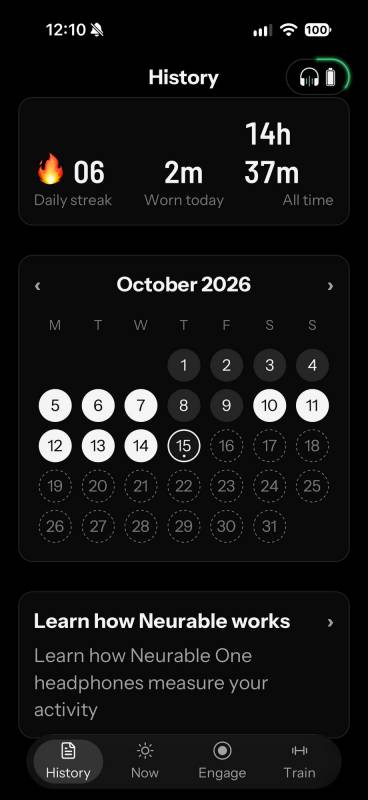
I started using the Neurable One on October 5th. This review covers my experience through October 15th. That’s an important limitation, especially in an industry where wearable companies love to present a decimal point as proof of certainty.
Your Brain Data Doesn’t Vanish Just Because You Delete the App
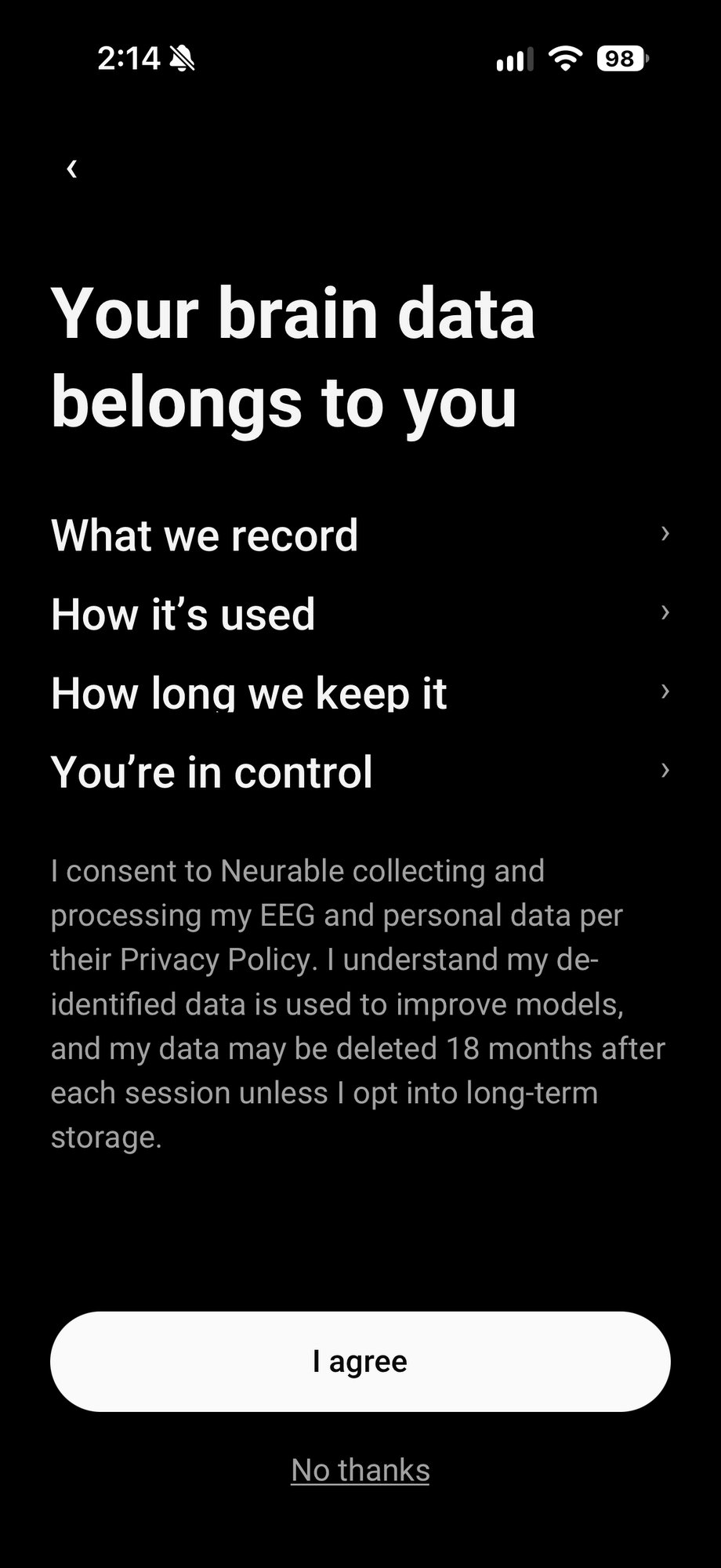
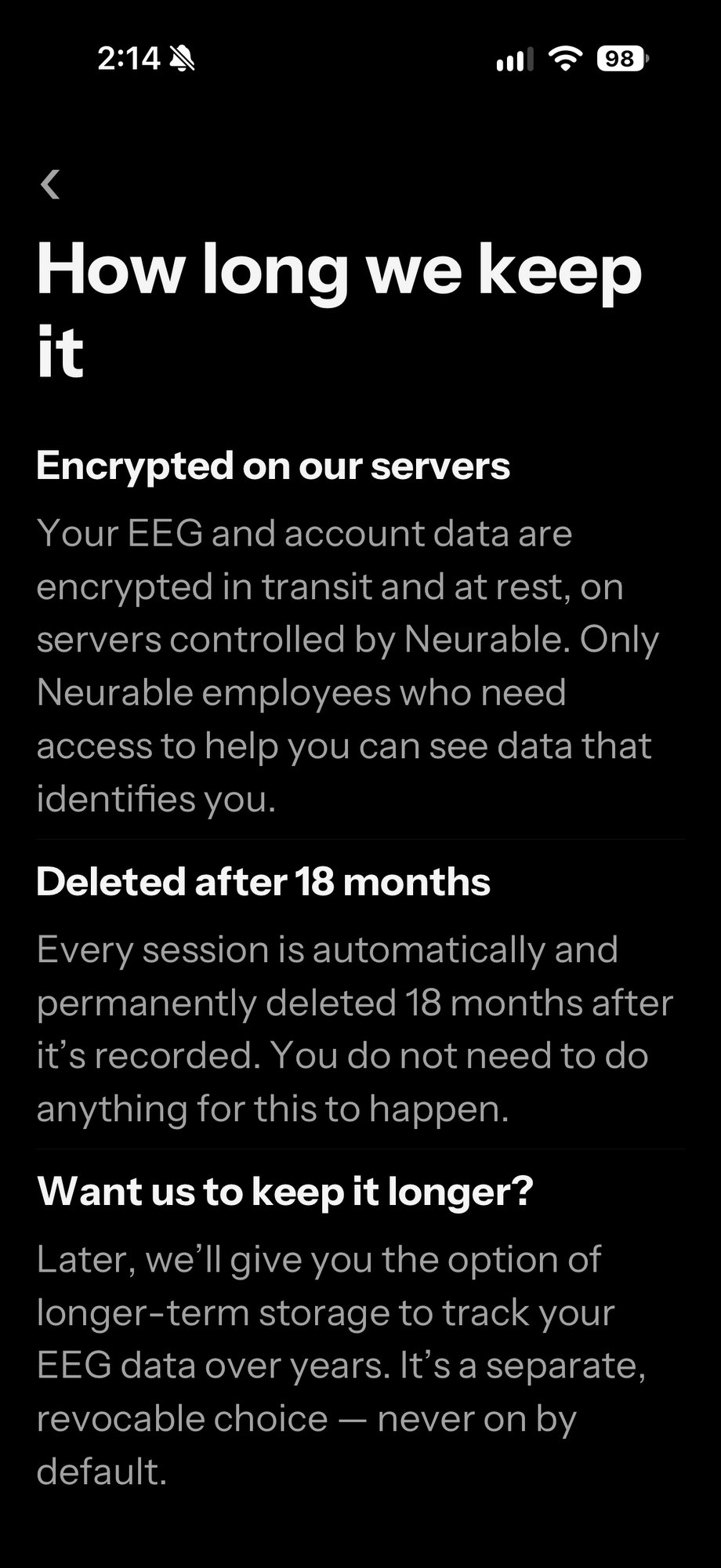
Privacy deserves serious consideration here. Neurable says it doesn’t sell brain data and doesn’t use it for advertising. Neurable processes and stores the underlying EEG recordings on its servers, and the app stores the resulting metrics locally on your device. That distinction matters.
Deleting the app clears the locally stored numbers, but it doesn’t automatically erase the underlying recordings Neurable stores. However, you can request that Neurable delete your data. That’s worth knowing before deciding whether you’re comfortable with continuous brain monitoring.
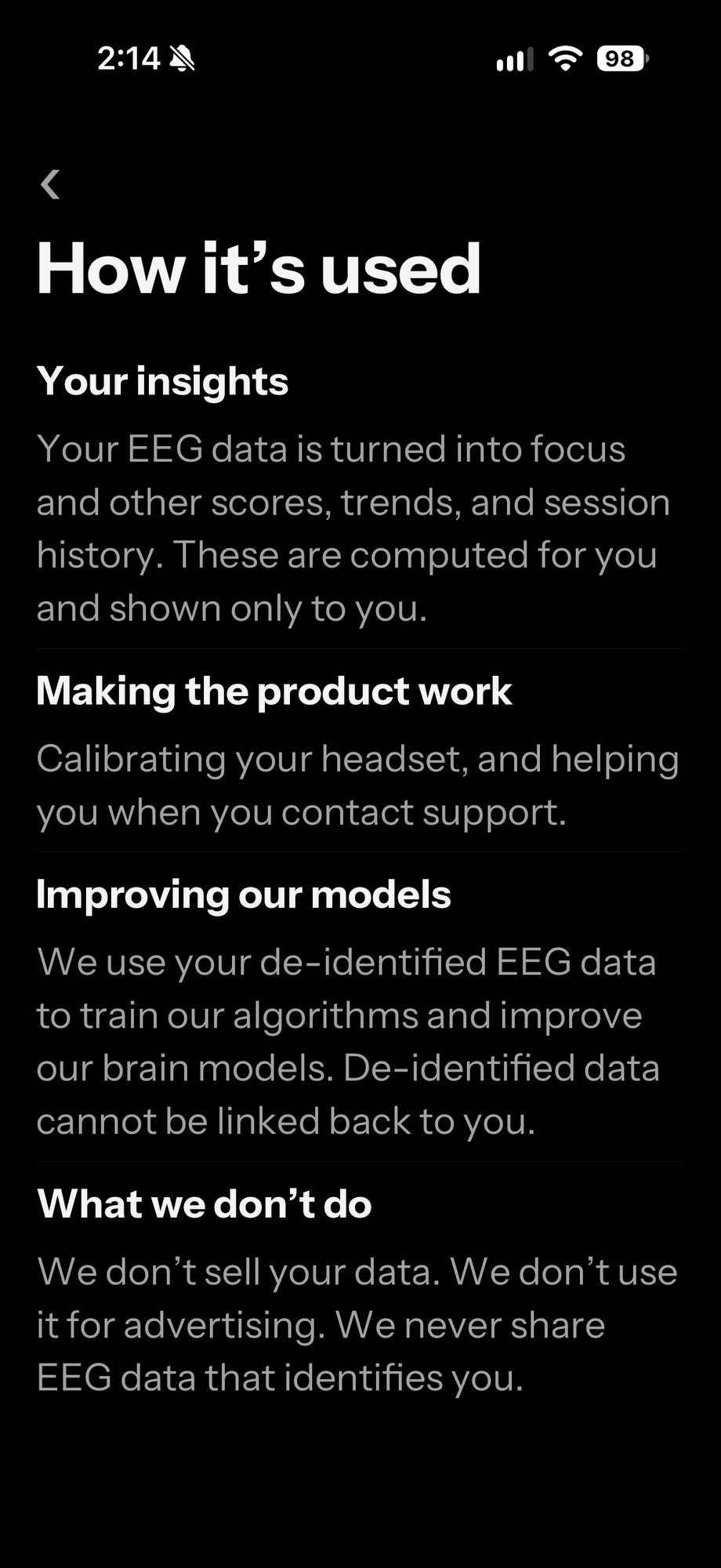
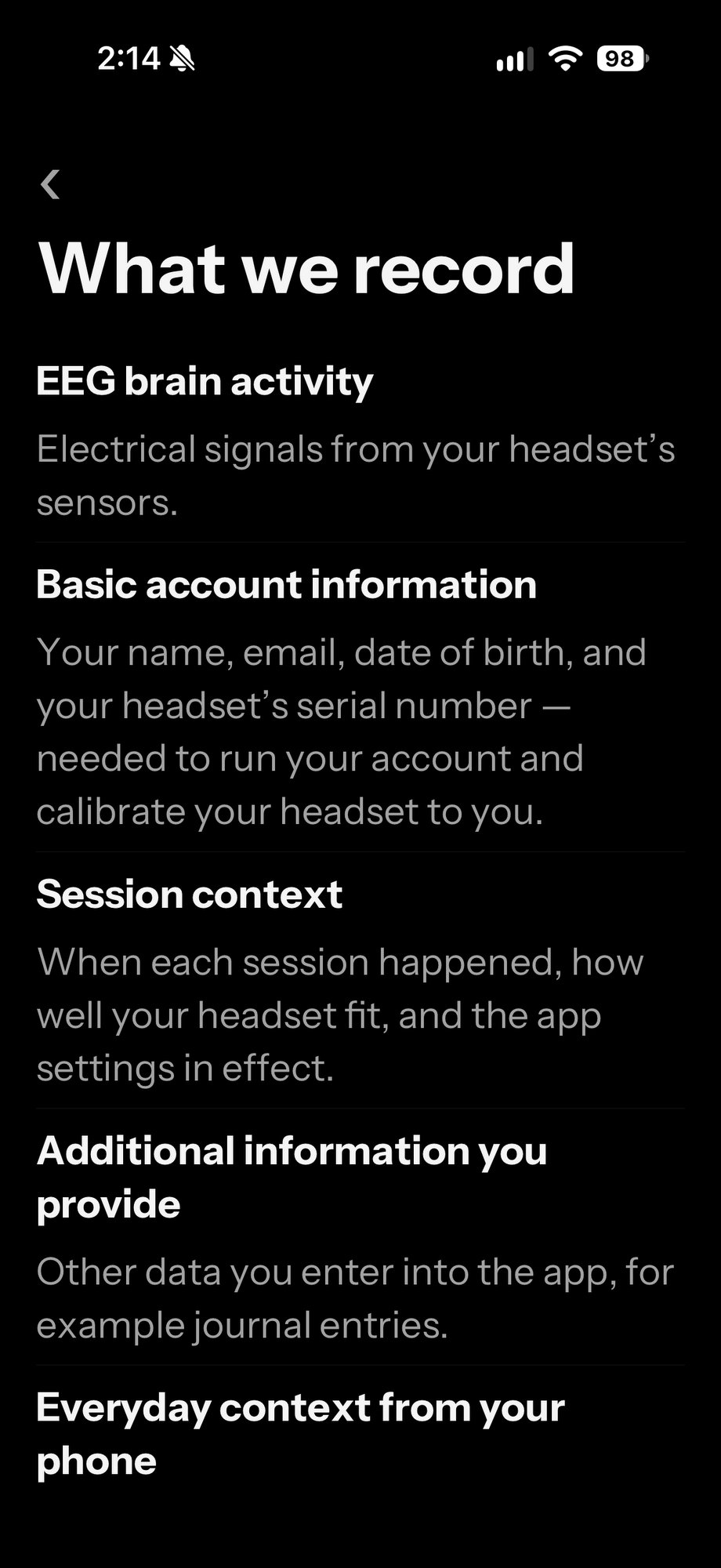
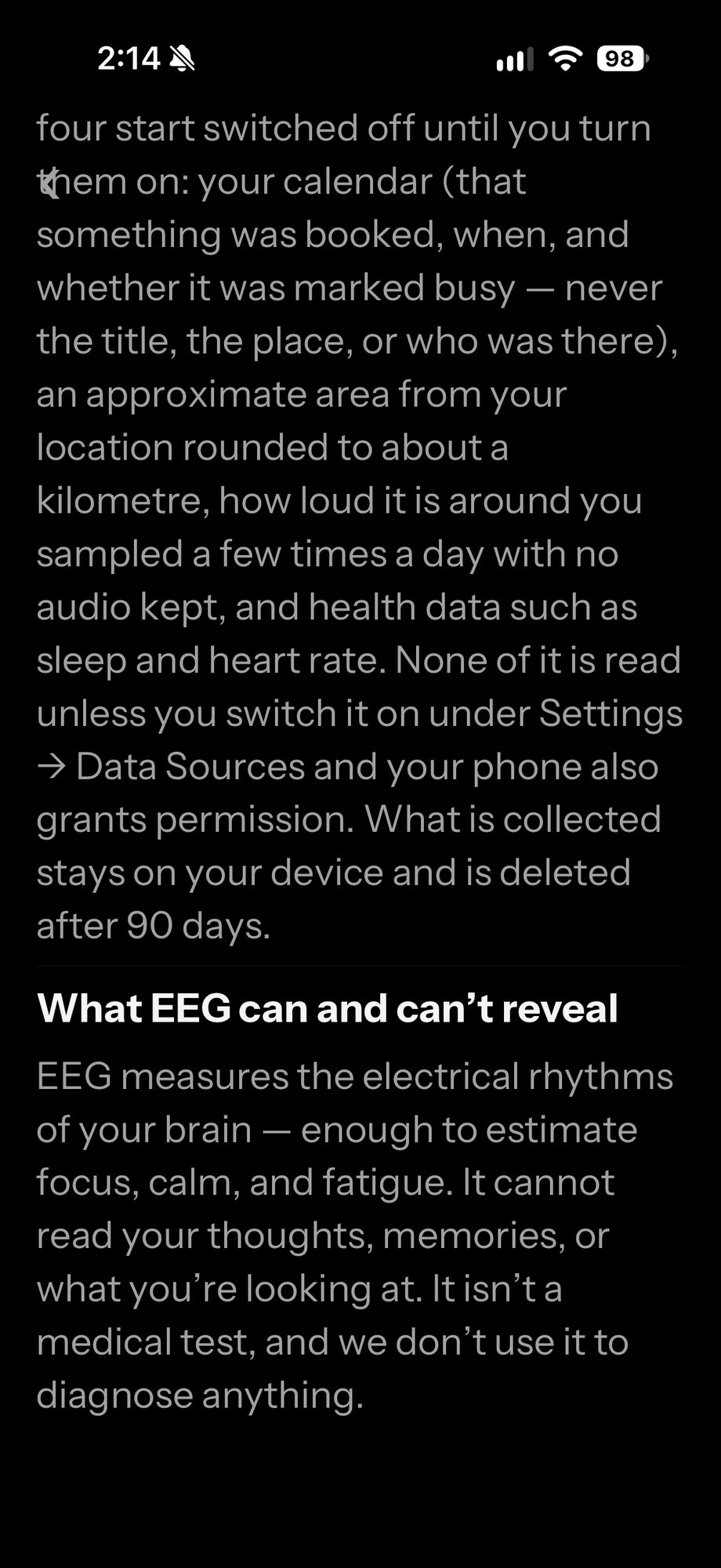
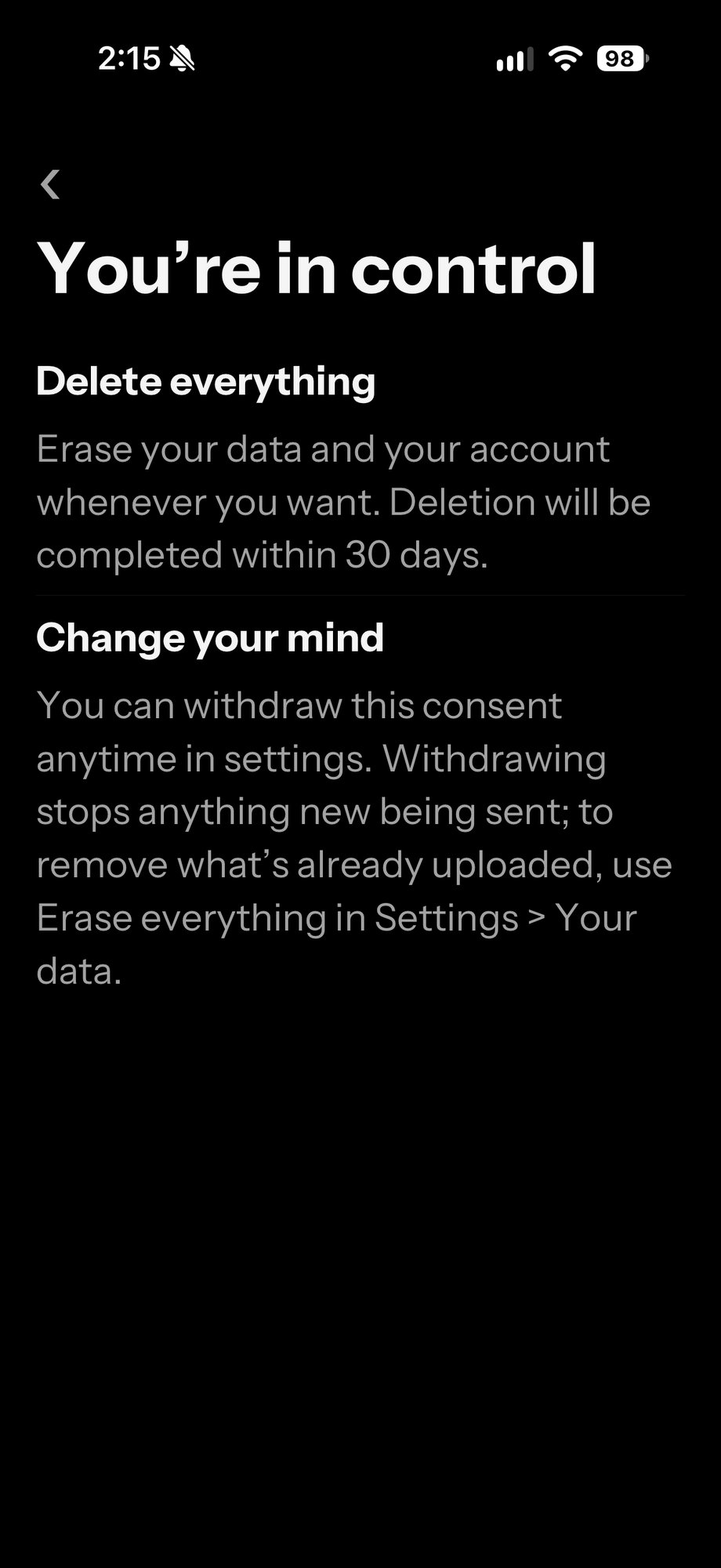
Neurable is also clear about what the system doesn’t do: It doesn’t read thoughts, intentions, words, images, or moods; it doesn’t stimulate your brain; and Neurable One isn’t a medical device intended to diagnose, treat, or monitor a medical condition.
Think brain sensing, not mind reading.
Battery Life Is the Tax for Keeping EEG Running
Neurable rates the headphones for up to 22 hours of normal audio playback, but with EEG running, that falls to approximately 12 hours. A 15-minute USB-C charge provides roughly two additional hours of use.
Two additional restrictions are worth knowing: EEG recording stops when the battery level falls below 20%, and EEG also shuts off while the headphones are charging, so you can’t plug them in at your desk halfway through the day and keep an uninterrupted brain-recording session going.
Charge first. Measure second.
Brains, apparently, are expensive to watch, and the batteries will require recharging.
Neurable One’s Most Interesting Competitor May Be Neurable’s Previous Headphones
Comparing Neurable One strictly against Bose, Sony, or Apple only tells half the story. Those companies make formidable premium headphones, and if audio quality, active noise cancellation, comfort, and battery life are all you care about, they offer easier choices.
Neurable One costs $499 because it does something those headphones don’t: it tries to tell you what’s happening with your attention and mental stamina while you wear it.
But Neurable One also has to contend with the hardware Neurable previously built upon.
The original Neurable headphones were based on Master & Dynamic’s MW75, and that was hardly a weak foundation. When Dan reviewed the $599 MW75 for Gear Diary in 2022, he praised their sound, comfort, premium materials, effective ANC, and battery life. They used 40 mm beryllium drivers, supported multipoint Bluetooth, offered physical controls, and weighed 338 grams, yet he still found them comfortable for extended listening.
That matters because Neurable’s earlier products weren’t simply clever EEG technology attached to a forgettable pair of headphones. They inherited a legitimately premium audio platform.
The MW75 Neuro LT then combined that Master & Dynamic foundation with Neurable’s brain-sensing technology, putting soft EEG sensors into the ear cushions so Focus tracking, Brain Breaks, and longer-term cognitive insights could happen while you worked, listened to music, or traveled. The $499 LT retained the core brain-sensing hardware while trimming weight and lowering the price compared with the earlier MW75 Neuro.
Neurable One changes the equation because Master & Dynamic is no longer providing the underlying headphone; Neurable is now responsible for everything.
That means the company has more freedom to optimize the ear pads around EEG contact, coordinate the firmware and app with its own hardware, and shape the entire experience around brain sensing rather than adapting its technology to someone else’s design. But it also means Neurable has given up the safety net of starting with one of the better premium headphone platforms already on the market.
And that’s a fairly high bar to clear.
Unfortunately, I never got my hands on the MW75 Neuro LT, so I can’t offer the direct side-by-side comparison I’d normally want here. I can’t tell you whether Neurable One sounds better, feels lighter, gets cleaner EEG readings, or improves on the comfort of the Master & Dynamic-based models. What I can say is that Neurable hasn’t apparently forgotten the lesson that made those earlier collaborations work: these have to be good headphones before the brain technology matters.
The Neurable One feels solidly made, the audio quality is excellent, and the scans I’ve taken so far seem genuinely informative rather than ornamental.
Interestingly, Neurable One weighs 345 grams, only seven grams more than the original MW75 Dan reviewed. On paper, that’s essentially a wash, so the comfort comparison comes down to weight distribution, clamping force, ear-pad design, and heat rather than raw mass.
The bigger sacrifice appears to be endurance: the MW75 delivered up to 32 hours of listening, or 28 hours with ANC enabled, while Neurable One is rated for 22 hours of audio and roughly 12 hours with EEG running. That’s the cost of making the brain sensing central rather than supplemental.
So Neurable One’s real advancement isn’t proving that EEG can work inside premium headphones. Neurable’s earlier products already did that. It’s proving that Neurable can take what it learned from working with Master & Dynamic and build a complete headphone that’s compelling on its own merits. In that sense, Neurable’s previous headphones aren’t merely its predecessors; they’re the benchmark Neurable One now has to beat.
What Neurable One Ultimately Has to Prove
It’s very easy to be impressed that headphones can measure brain signals, but that isn’t enough. It’s even easy to become fascinated by your Focus graph, Brain Battery, Sleepiness, Stress, Load, APF, Speed, and Brain Age, but that isn’t enough either.
The value of Neurable One depends on whether those measurements eventually tell you something useful that you didn’t already know.
Someone who already tracks sleep, recovery, exercise, heart-rate variability, or other personal trends will probably understand the appeal immediately. Writers, programmers, students, editors, researchers, and anyone else who regularly performs mentally demanding work may be especially interested. But the central question remains wonderfully simple.
During my testing, Neurable One did occasionally tell me something about my concentration or fatigue before I had fully registered it myself, and that is where the product stopped feeling like an interesting experiment and started feeling genuinely useful. Brain Break suggestions sometimes arrived at moments when I was still trying to push through, only for me to realize afterward that my attention had already begun slipping.
Focus interventions and Brain Battery readings also gave me a reason to change course rather than simply power through out of habit. That doesn’t make every metric equally meaningful, but it does answer the most important question: the system can influence what you do next, not just describe what already happened.
For a product designed to measure the brain, that’s exactly where the bar should be.
The Neurable One sells for $499; it is available directly from the manufacturer.
Source: Manufacturer-supplied review sample
What I Like: Integrates 12 EEG sensors into headphones designed for normal everyday use; Neurable now controls the complete hardware and software experience; Brain tracking doesn’t require another wearable; Focus Sessions attempt to intervene instead of merely recording data; Adaptive audio and Boosted periods can show whether an intervention helped restore attention; Smart Brain Breaks respond to your cognitive state rather than a timer; Context notes make changing measurements more meaningful; Physical controls avoid distracting gesture commands; Multipoint Bluetooth, ANC, ambient listening, and wired audio make the headphones broadly useful; The system can refuse to report questionable data rather than manufacturing a score; Long-term Brain Data Banking has the potential to reveal useful personal patterns; Neurable clearly distinguishes brain sensing from medical diagnosis and mind reading
What Needs Improvement: $499 is expensive if the cognitive information doesn’t materially change your behavior; EEG operation reduces rated battery life to approximately 12 hours; EEG stops below 20% battery and can’t operate while charging; Brain Age, APF, and other long-term measurements require substantially more testing before their usefulness can be judged; Reliable EEG measurements depend on good sensor contact; Some app features remain locked during the early ownership period; A soft pouch feels stingy for a $499 headphone; The warranty is only one year; Raw EEG recordings are stored on Neurable’s servers and aren’t automatically deleted when you remove the app


Be the first to comment on "Neurable One Review: Headphones That Listen to Your Brain While You Listen to Everything Else"