
The Lowdown
If you’re looking for a hands-on way to grow your own food without the dirt, bugs, or unpredictable weather, Plantaform is worth the space on your counter. It’s smart, stylish, and satisfying. In a world where almost everything is designed to be consumed instantly, there’s something profoundly grounding about watching something grow day by day until it becomes dinner.
Overall
Pros
- Beautiful, modern design that complements home decor
- Uses advanced fogponics for efficient, soil-free growing
- Nearly silent operation with minimal maintenance noise
- Straightforward setup with a well-designed app interface
- The app provides helpful, timely guidance and reminders
- Produces vibrant, flavorful greens with noticeable freshness
- Clean and automated growing process with no mess or pests
- Party Mode offers a fun, visual system check
- Excellent customer support experience
- Encourages consistent harvesting and reduced food waste
Cons
- Premium price may be out of reach for some budgets
- Not suitable for root vegetables or large vining plants
- Requires regular app use for optimal experience
- My original unit had a solenoid flaw, but customer service was helpful with getting a new unit after troubleshooting
There’s something undeniably satisfying about snipping off a fresh leaf of basil or harvesting a head of lettuce you grew yourself, without dirt, without a garden plot, and without the guilt of another plastic clamshell from the store. Enter the Plantaform Smart Indoor Garden, a fog-based growing system that makes year-round gardening almost as simple as pushing a button. After spending weeks growing with it, I have a lot of thoughts. So, is the Plantaform worth inviting into your home, or wherever you keep your indoor jungle ambitions? Let’s dig in (figuratively, of course; there’s no actual dirt involved).
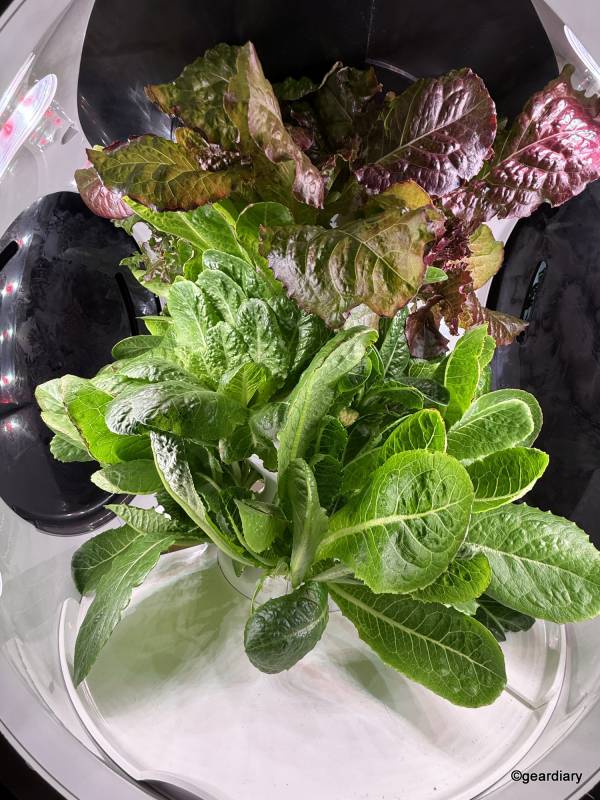
What Is the Plantaform, Exactly?
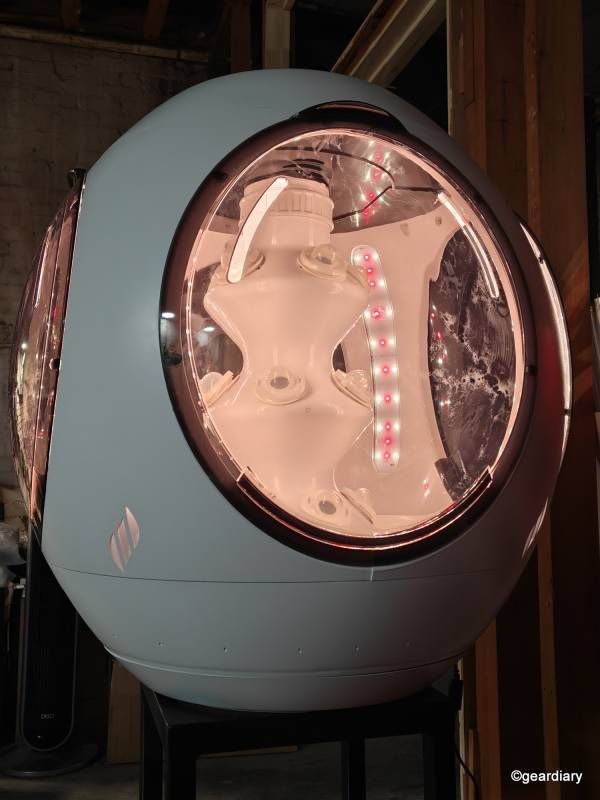
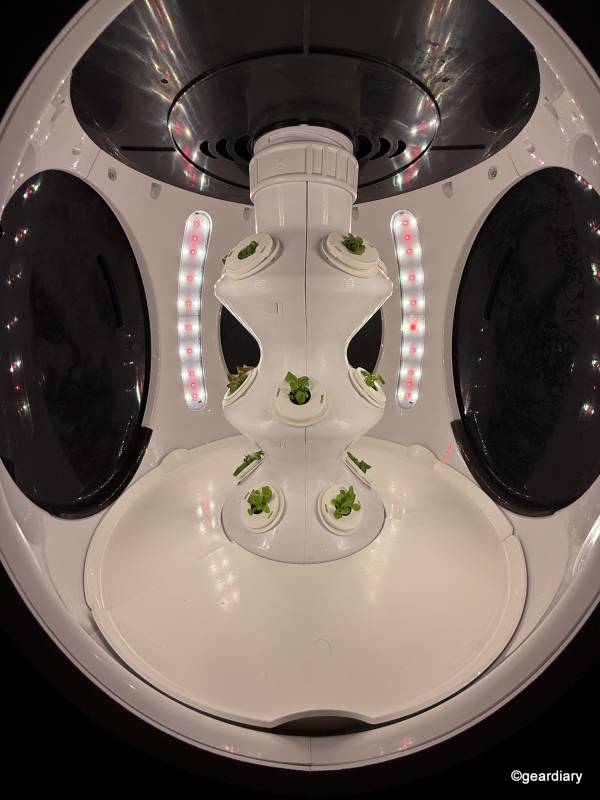
The Plantaform Smart Indoor Garden is your own personal indoor greenhouse, only far more elegant and technologically advanced than the phrase “indoor greenhouse” might suggest. It resembles a modern art installation as much as it does a gardening system. It’s egg-shaped at approximately 28″ tall by 25″ wide, but due to its tapered top and bottom, it can sit securely on a 12″ square base.
It’s available in two colors: Frost White and Midnight Black. Whichever version you choose, it looks less like a hobbyist’s kit and more like an intentional part of your home decor.
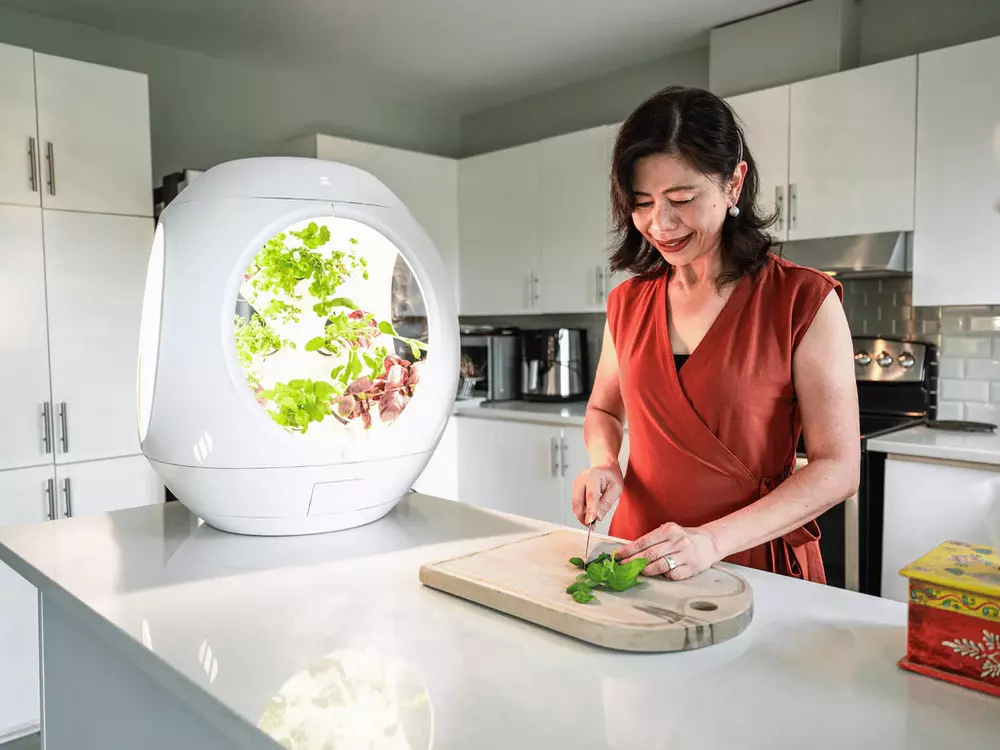
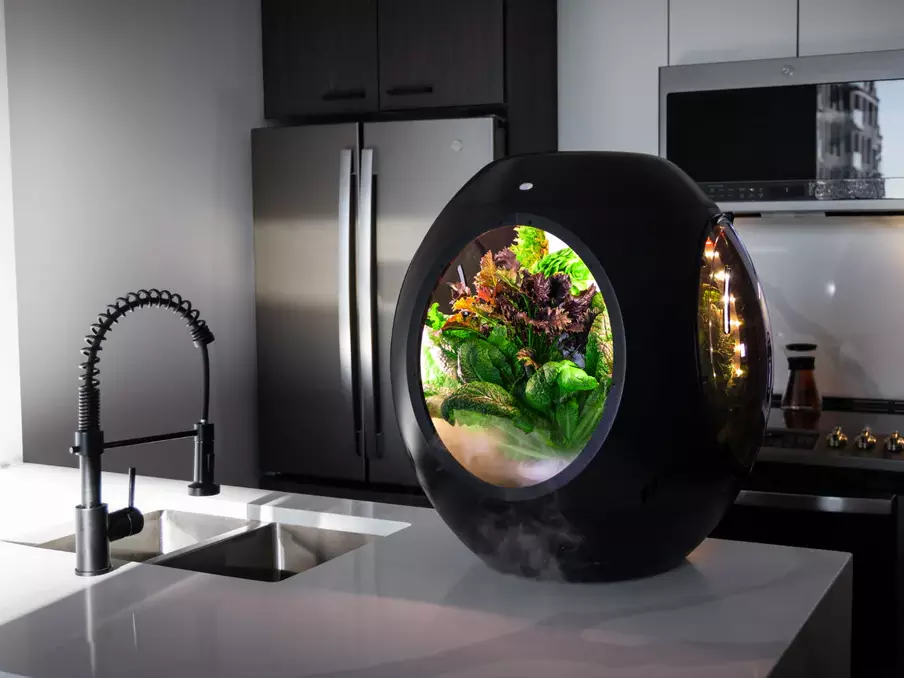
At the core of Plantaform’s function is fogponics. If you’ve never heard of it, imagine this: ultrasonic vibrations turning water and nutrients into a fine, breathable fog that wraps around the roots of your plants. This fog provides maximum oxygen and nutrient absorption with minimal water usage. The roots aren’t soaked or sitting in stagnant pools; they’re bathed in mist, like they’re living in a cloud tailor-made for growth.
Compared to hydroponics or traditional soil gardening, fogponics is cleaner, more efficient, and arguably more futuristic. You don’t need to worry about soil-borne pests, mold, or overwatering. And you certainly won’t have to sweep up spilled potting mix from your hardwood floors.
The entire garden functions as a smart, autonomous system. It manages its own internal environment, including lighting, airflow, humidity, nutrient delivery, and temperature, based on your chosen plant pack. It’s not just automated; it’s adaptive.
What Comes in the Box?
Unboxing the Plantaform is a far cry from assembling flat-packed furniture or deciphering minimalist instruction pamphlets. The unit comes almost fully assembled, which, honestly, is worth a round of applause. There’s a kind of delight in peeling off the protective plastic and realizing you won’t need a single screwdriver.
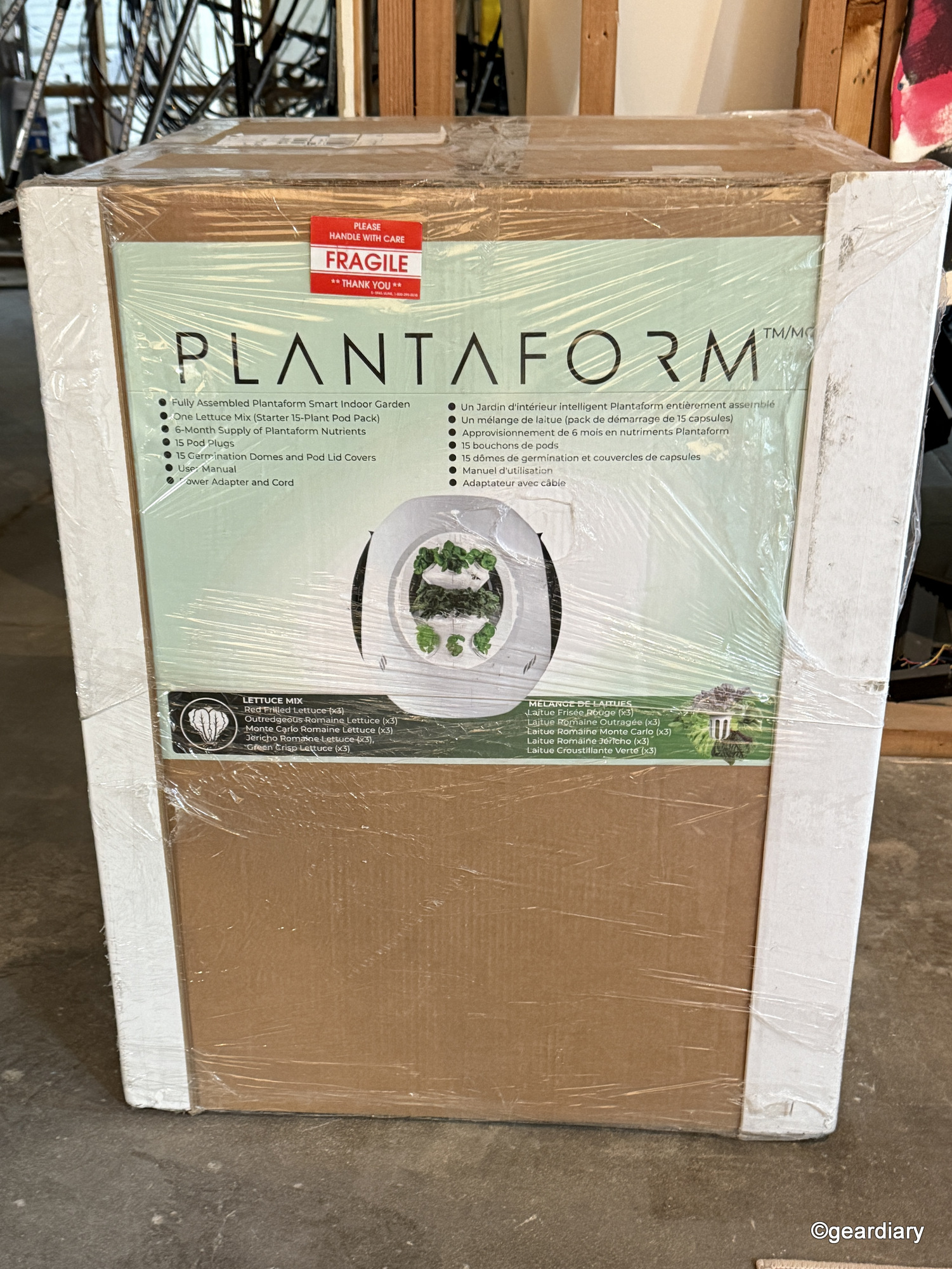
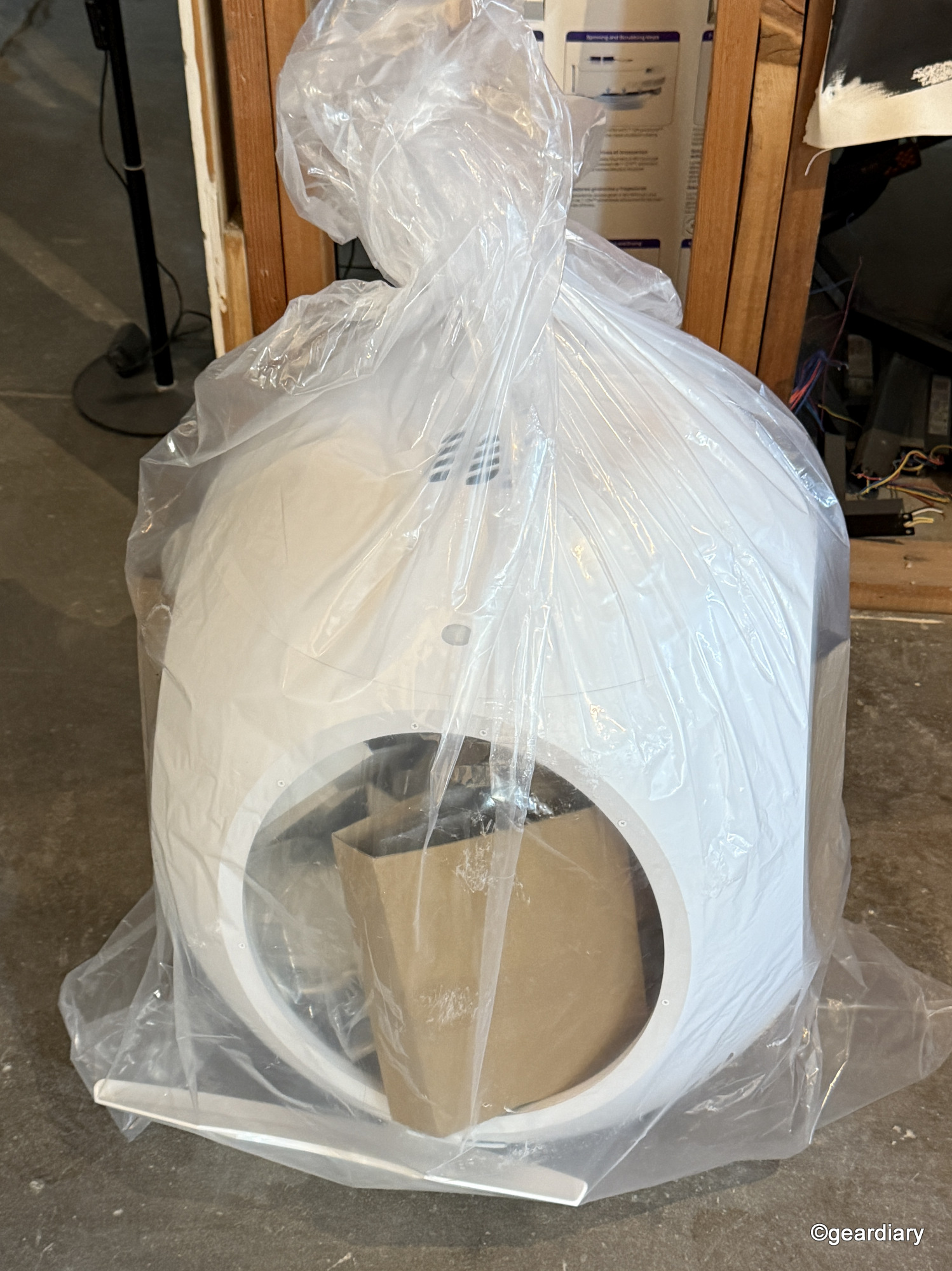
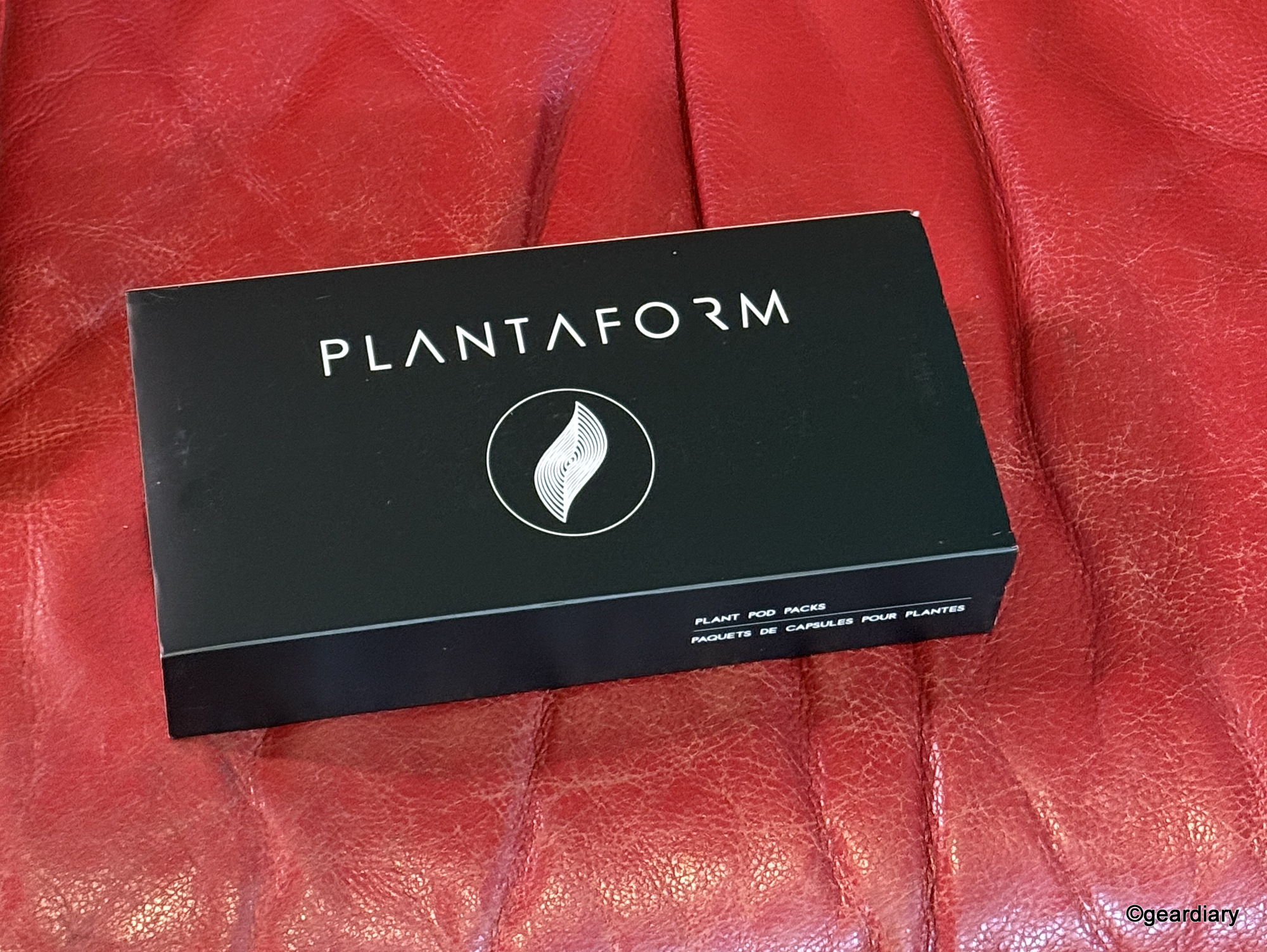
Inside the box, you’ll find the core unit itself, which houses all of the mechanical and technological bits: fans, lights, foggers, and tanks. You also get one Lettuce Mix Plant Pod Pack, 15 reusable germination domes, 15 reusable pod lids, 15 reusable pod plugs, a power adapter and cord, four tinted magnetic side windows, three white water lower tank trays, a 6-month supply of nutrients (refills are $14.99), a cleaning kit, and a user-friendly manual.
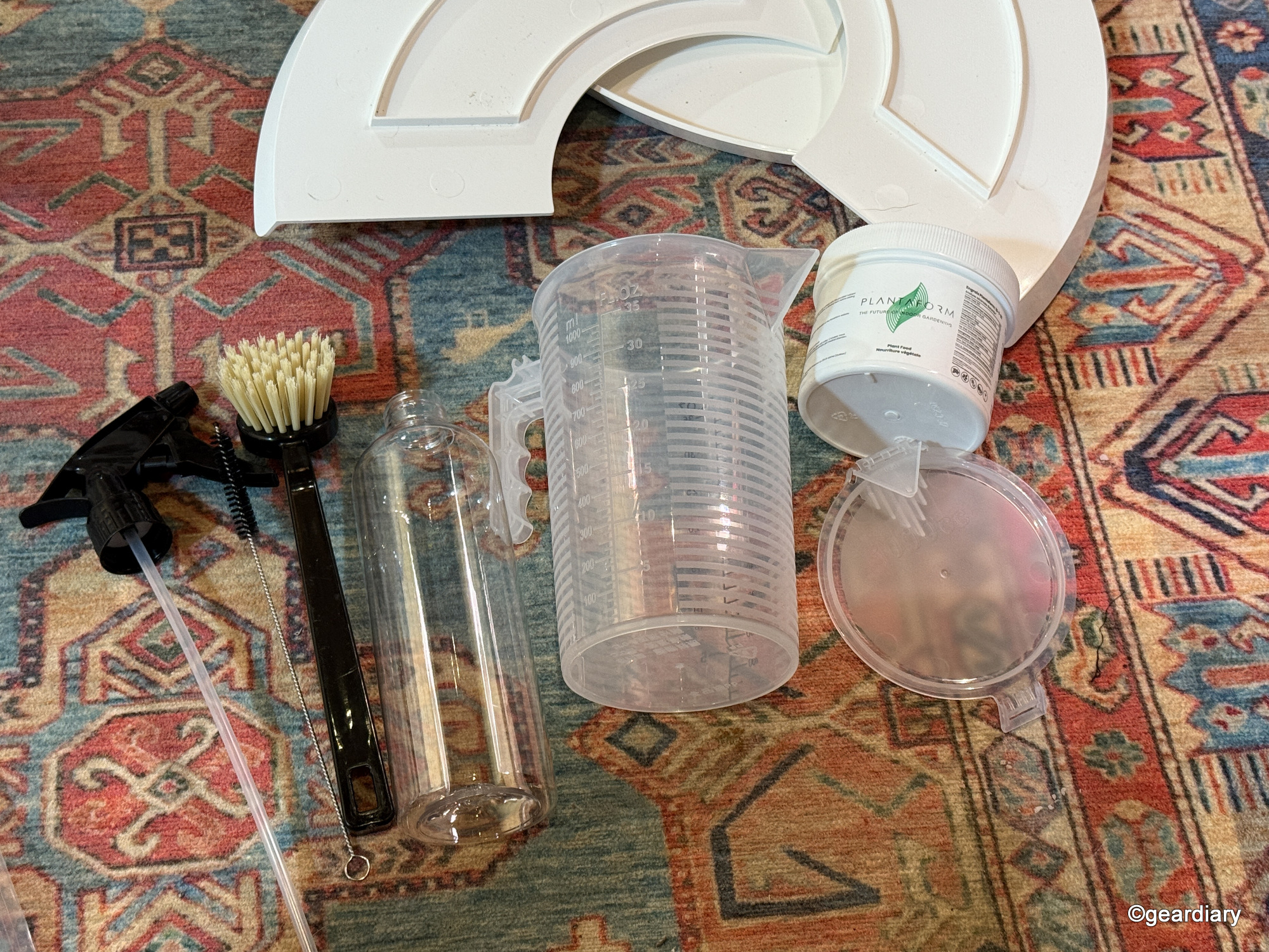
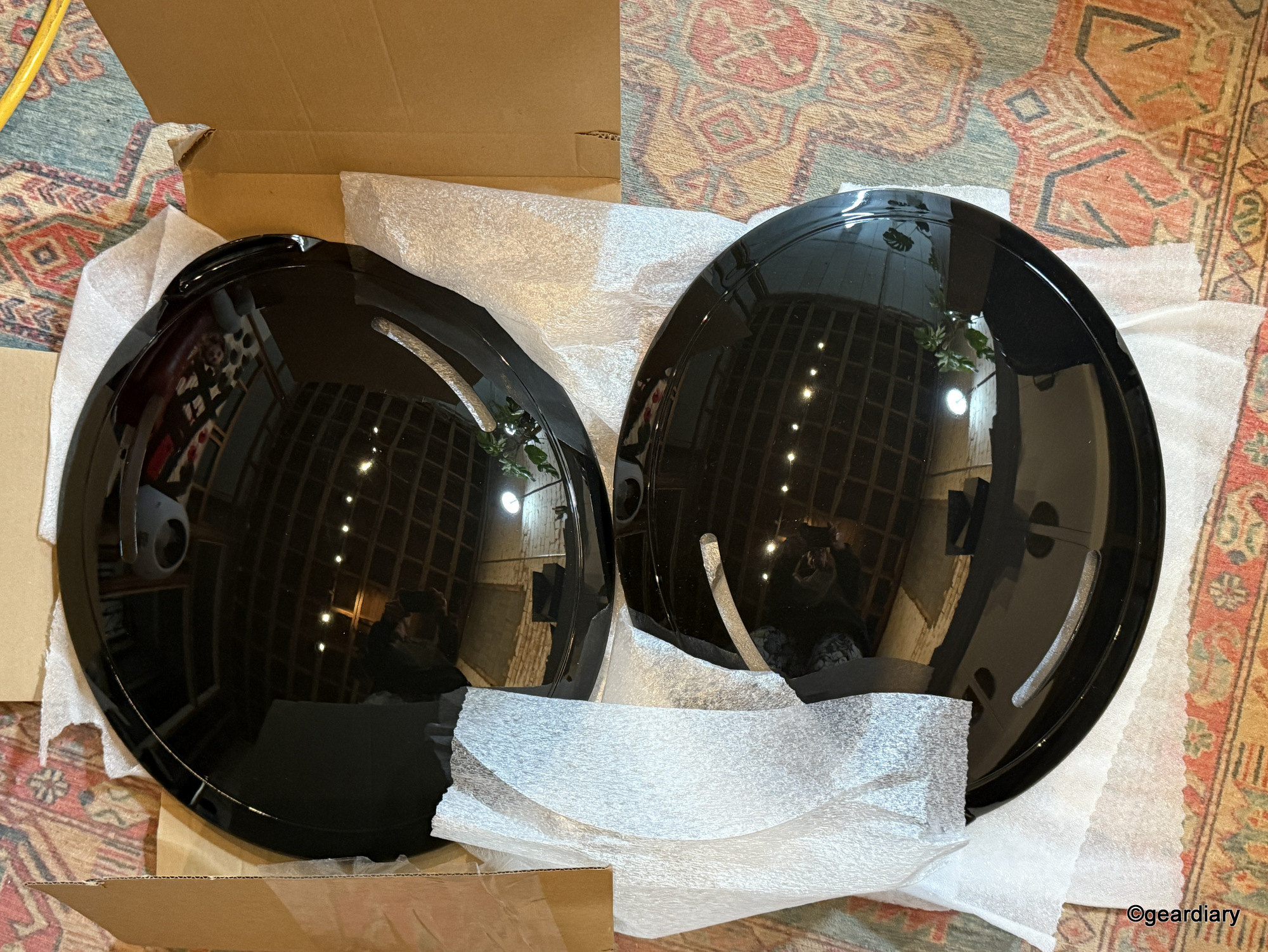
Everything included has its place. The pod lids are well-constructed, with domes that snap on and off with a tactile click. The tank trays cover the lower tank and keep growing plants out of the water, while the tinted windows connect magnetically to the outer shell. Nothing feels flimsy. It feels like a polished product, not something still in beta.
If you ever need to replace any of the parts, like the pod lids, germination domes, pod plugs, root chamber gaskets, or other components, they’re available directly from Plantaform’s website. It’s reassuring to know that you won’t be stuck if something gets lost, cracked, or just worn out after repeated use.
Setting Up: Simplicity with a Side of Satisfaction
The setup process is refreshingly straightforward.
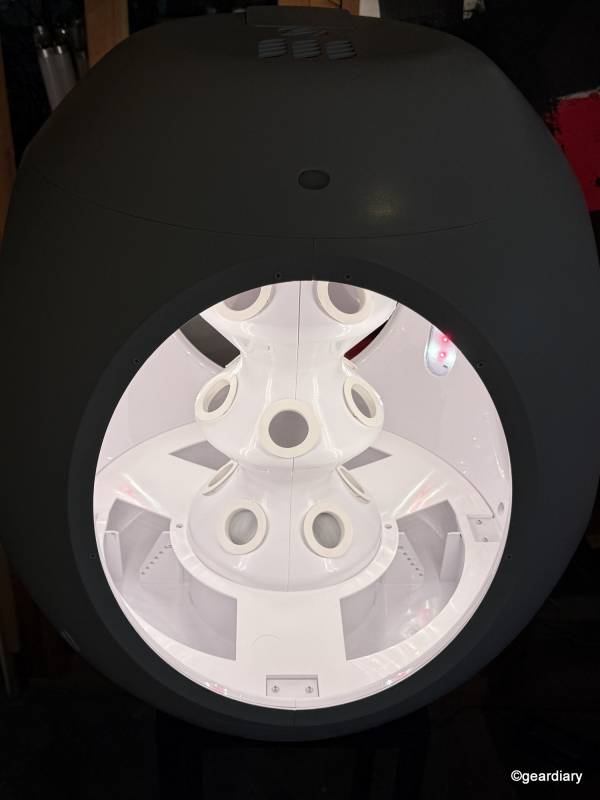
After plugging in the unit and powering it on, you download the Plantaform app and connect the garden to your Wi-Fi network.


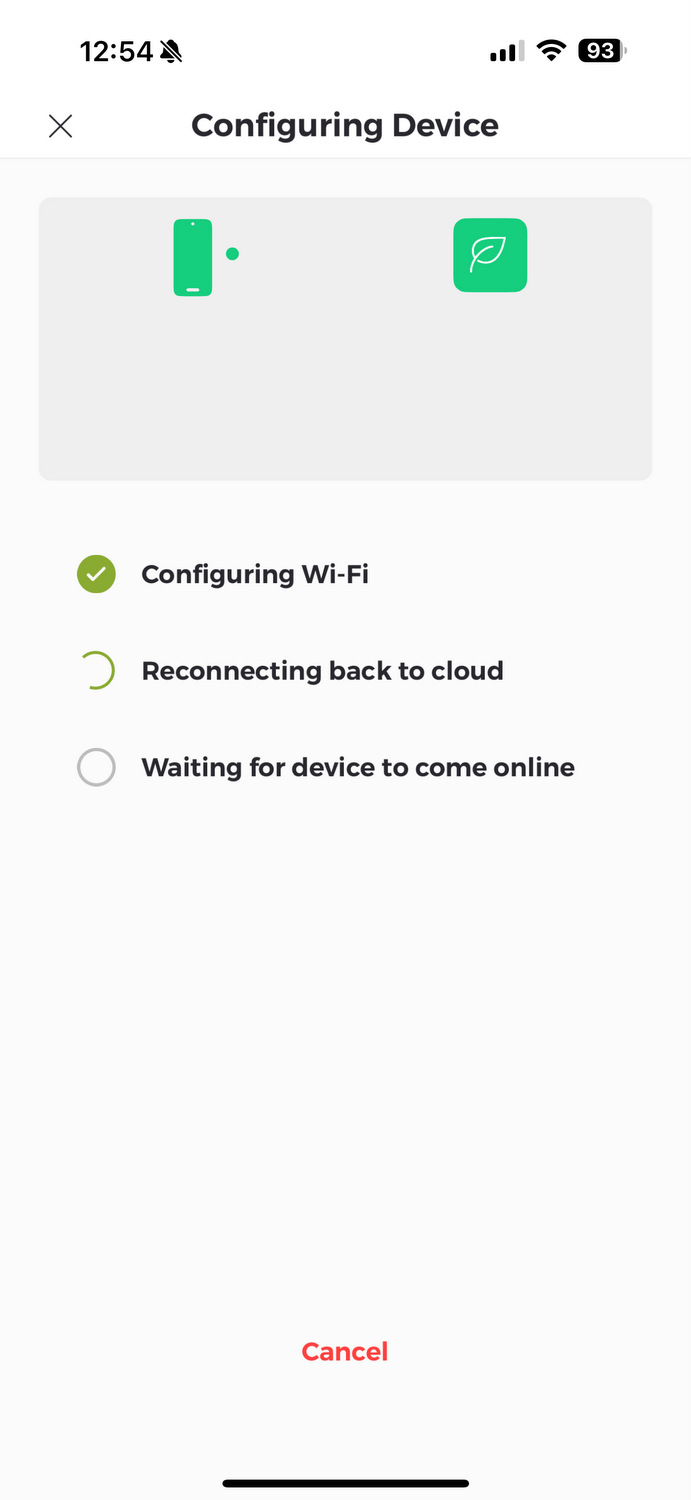
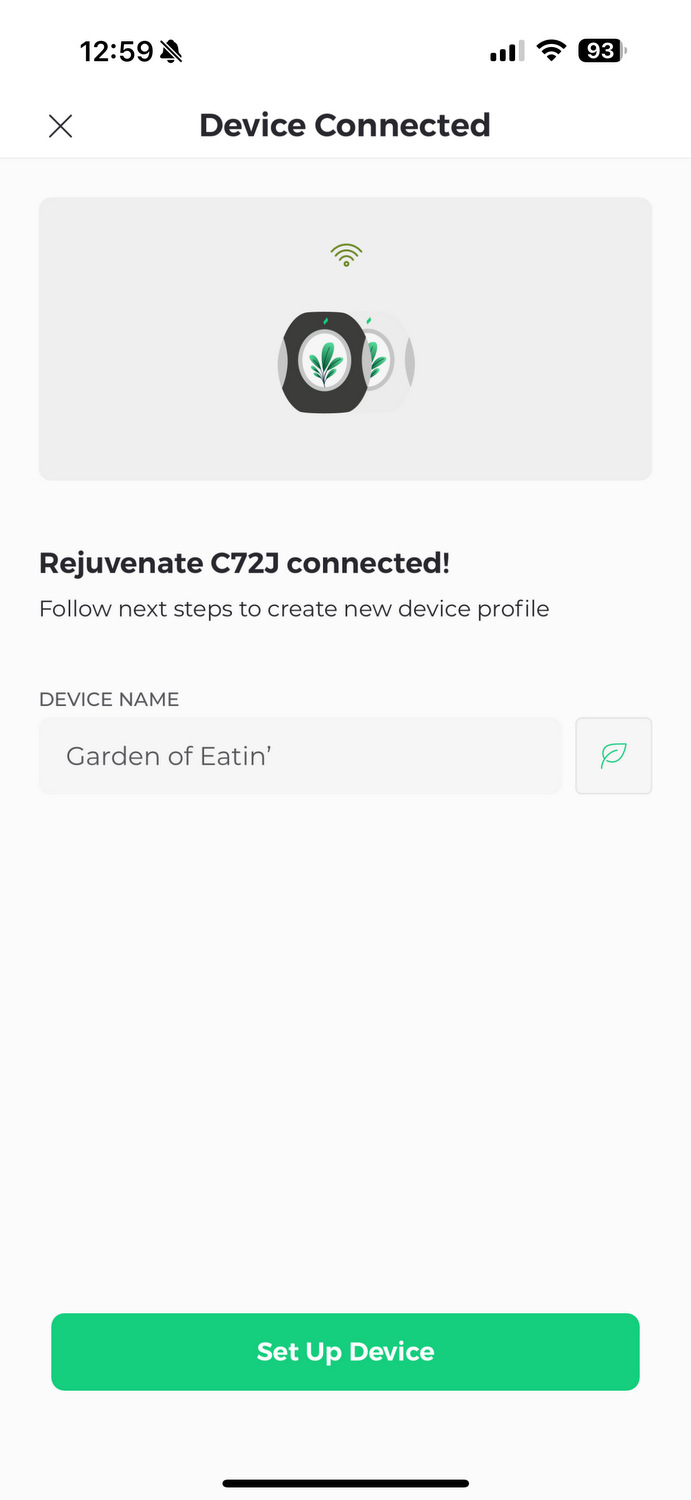
It takes just a few taps and a quick scan of the QR code included with your Plant Pod Pack.
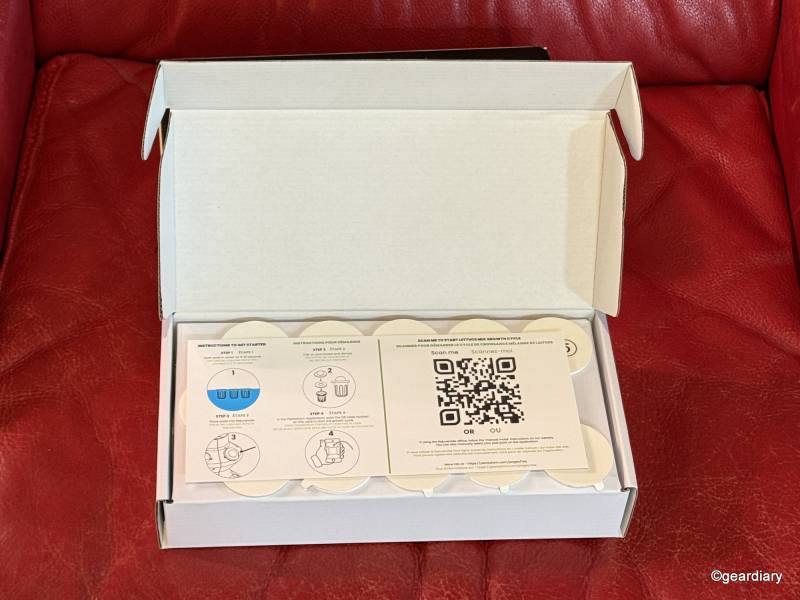
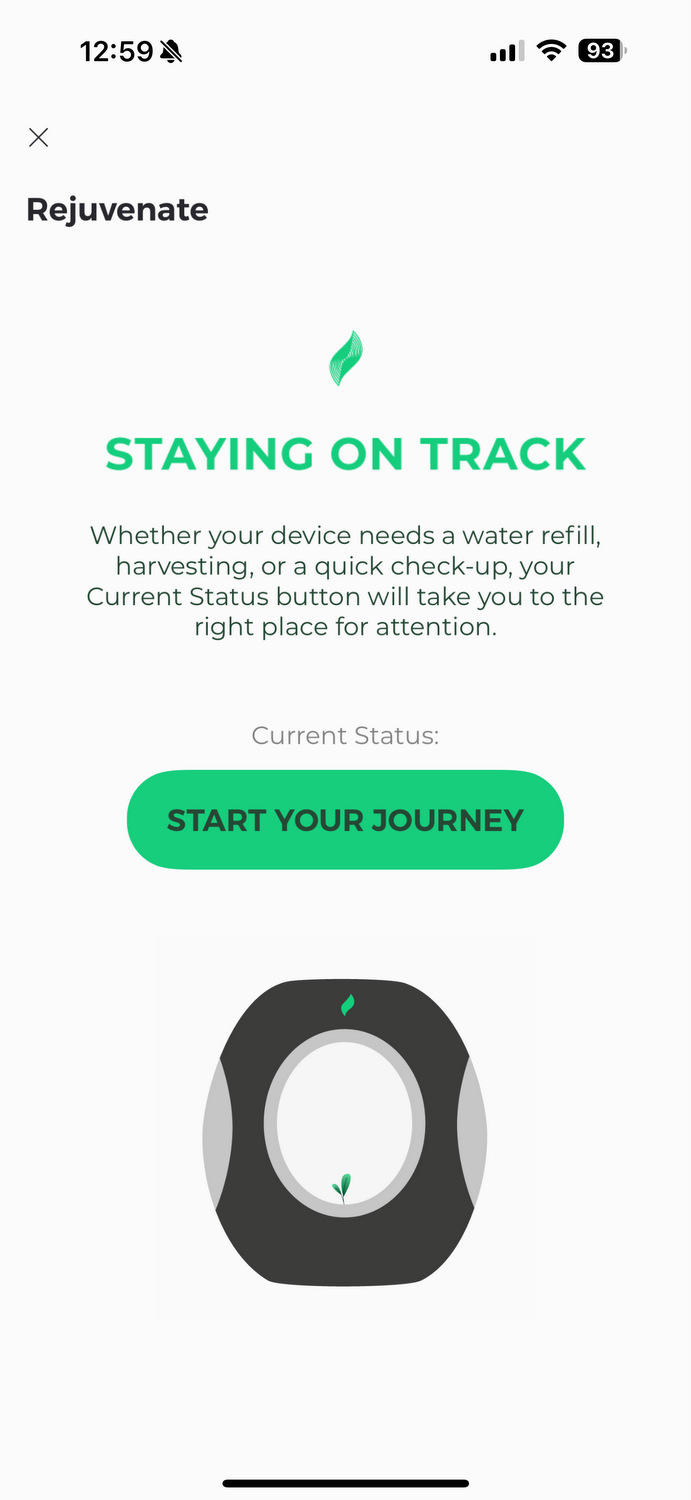
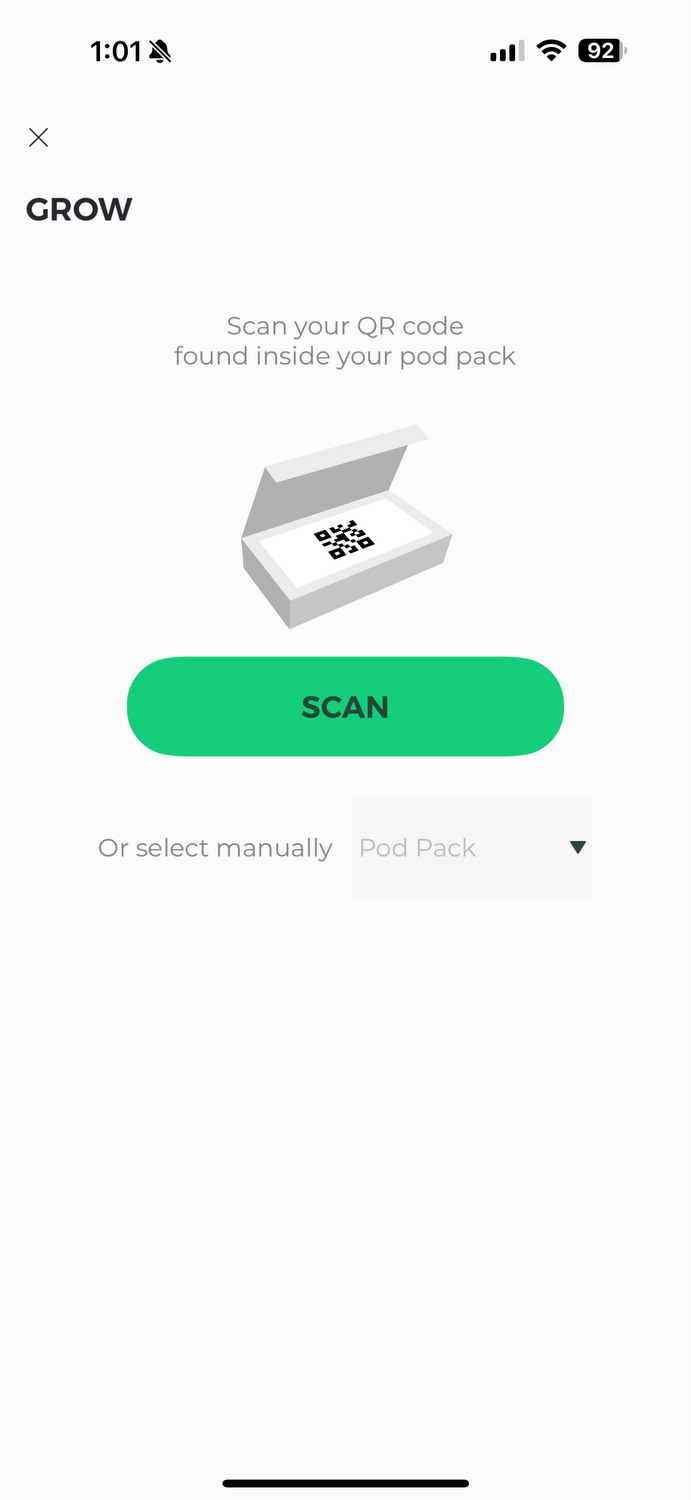
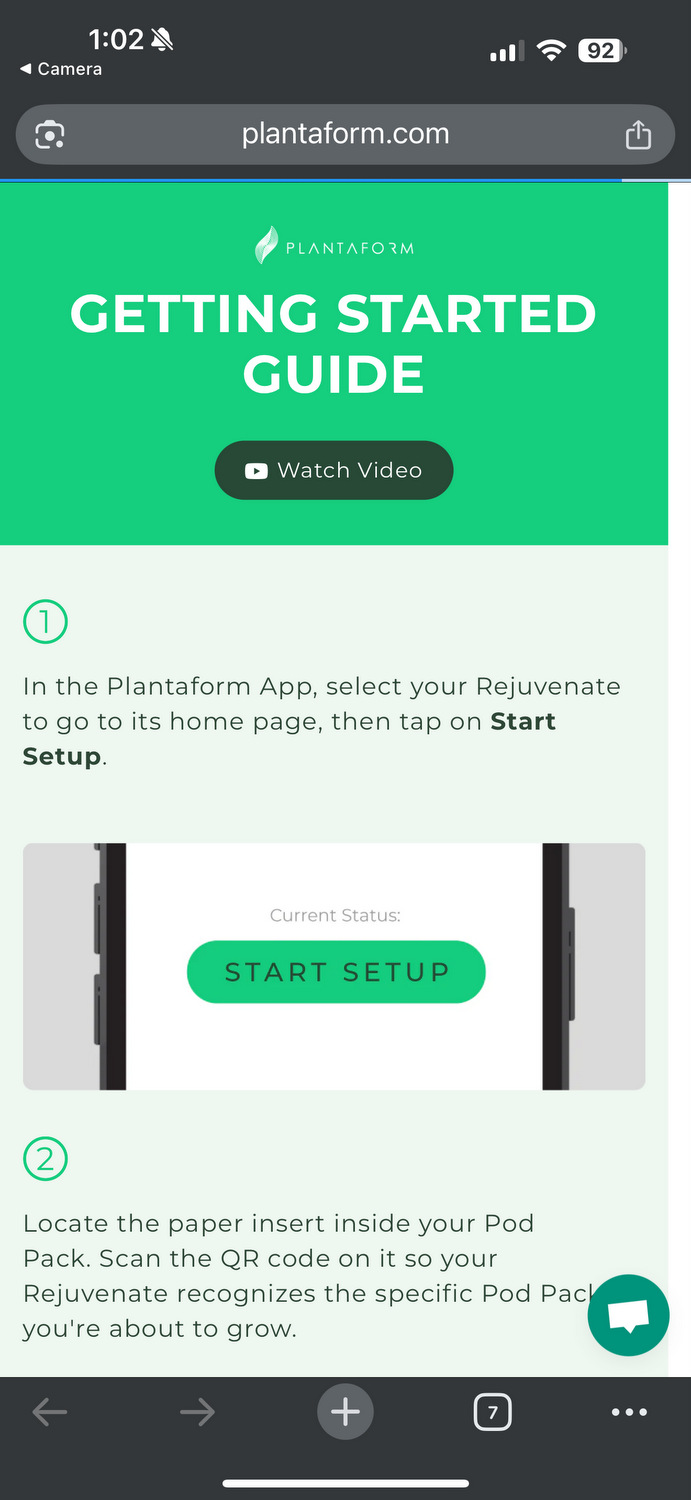
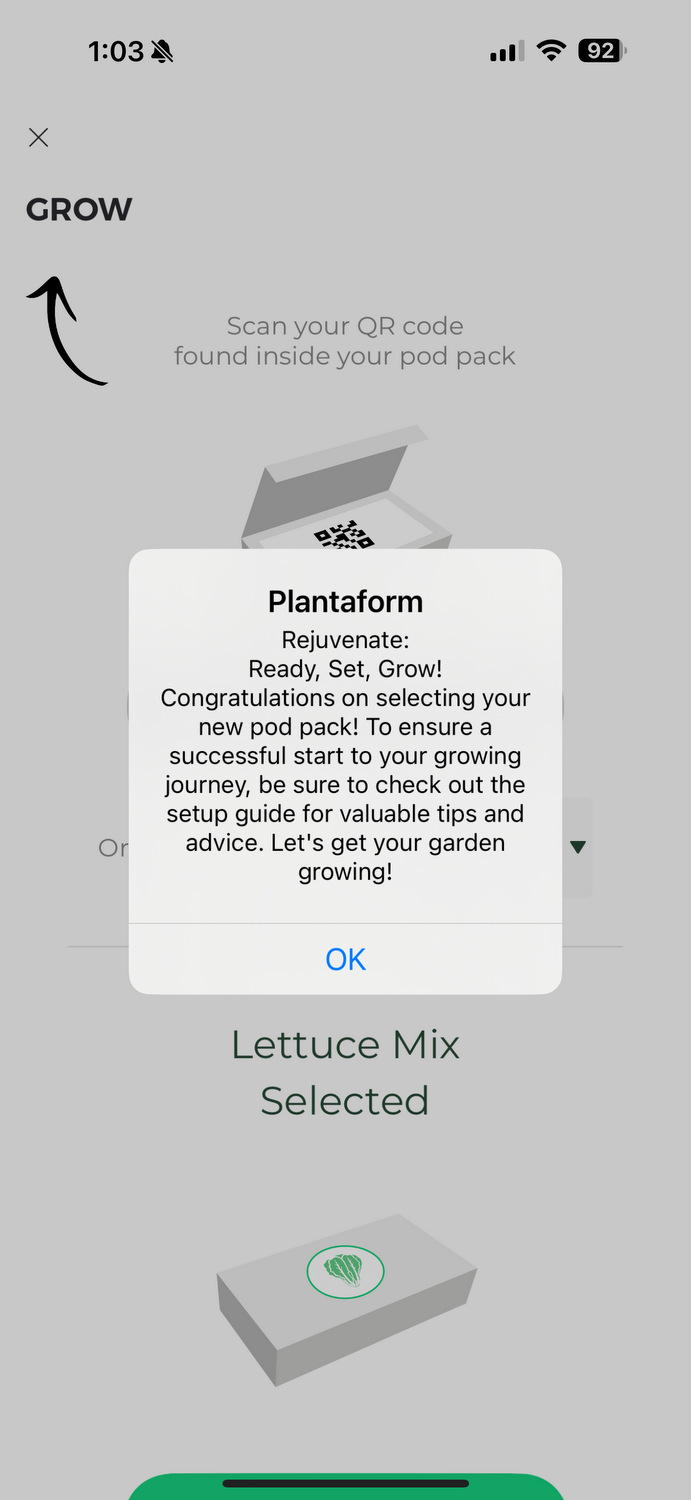
Then, it prompts you to add water and nutrients to the top and bottom tanks. The nutrient formula comes in a dry powdered format, with a measurement-labeled scoop.

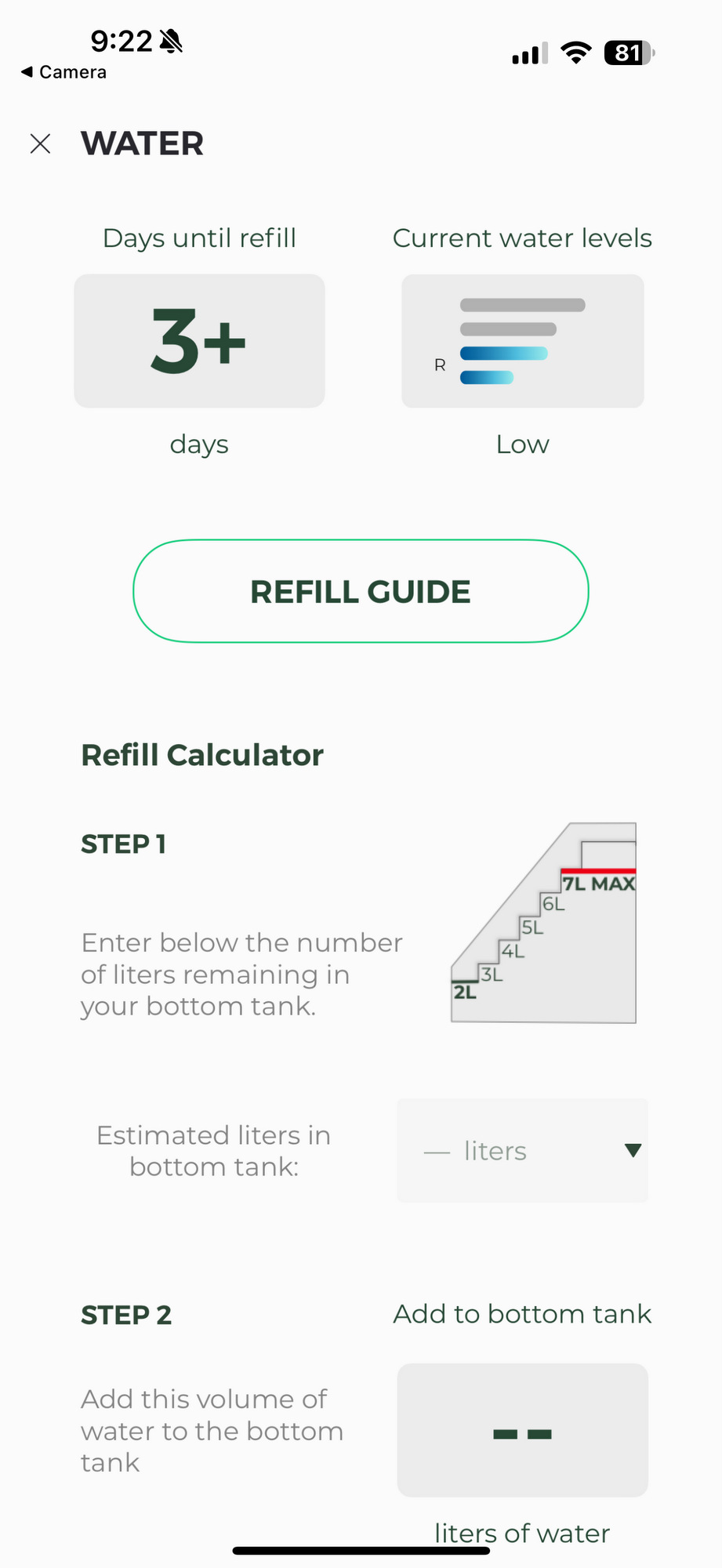
The Plantaform smart indoor garden uses a two-tank system—one smaller tank on top and a larger one below—to efficiently manage water and nutrients. Water and nutrients are added to both tanks, and the top tank slowly drains into the bottom one, helping extend the time between refills. Together, the tanks hold up to 9 liters of water, which typically lasts 2 to 3 weeks, depending on the type of plants being grown. The system monitors water levels and ensures there’s always enough space in the lower tank for fog production, keeping the plants well-fed with minimal effort.
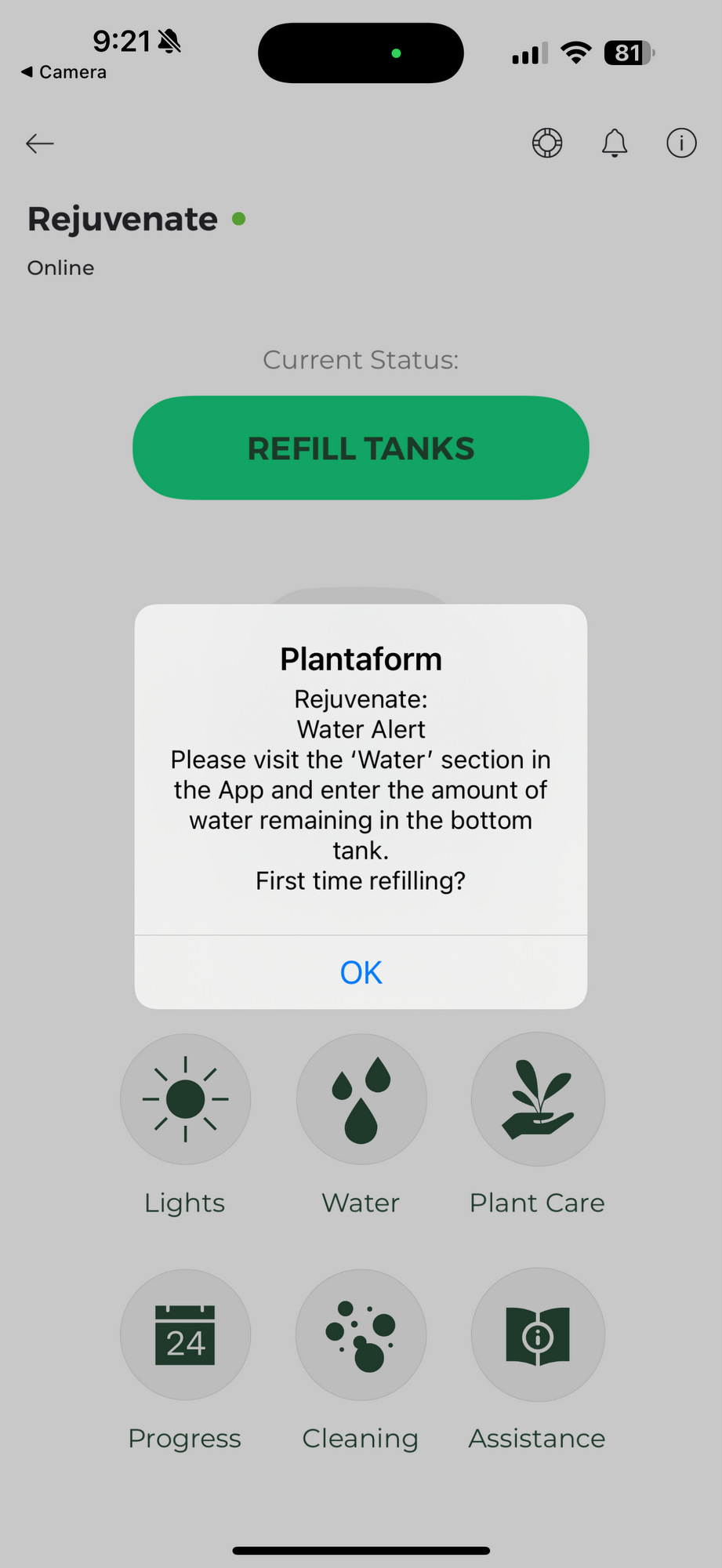
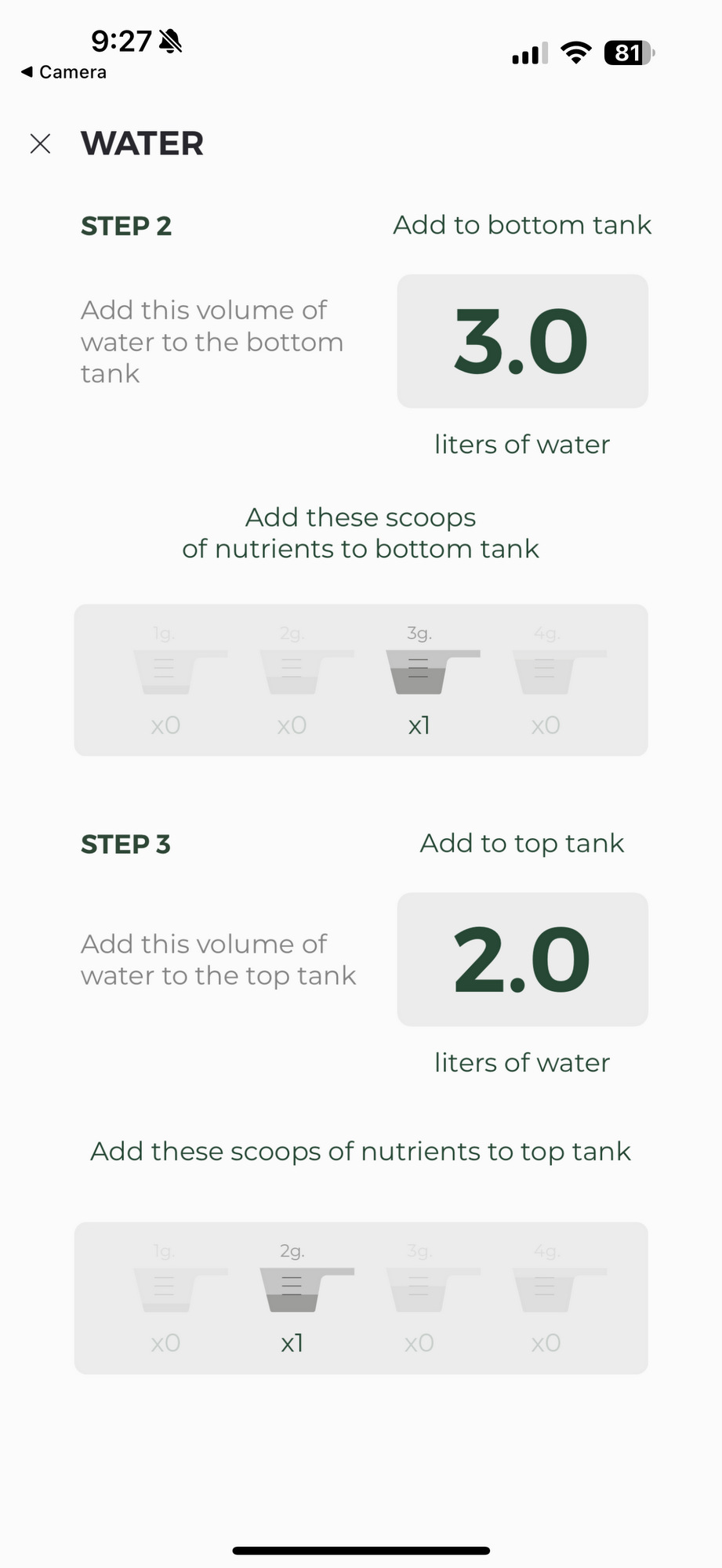
You’re guided through the initial fill: 2 liters in the top tank, 7 liters in the bottom. The app provides exact nutrient-to-water ratios based on your pod pack, so there’s no guessing. It even includes a nutrient calculator in case you need to adjust for partial fills or in-between top-offs.
You really have to be mindful when adding water, though, making sure that it goes only into the lower tank and doesn’t pool on the shelf above. If water spills on either side of the shelf, you will experience an unexpected leak from the Plantaform’s side. Consider yourself warned!
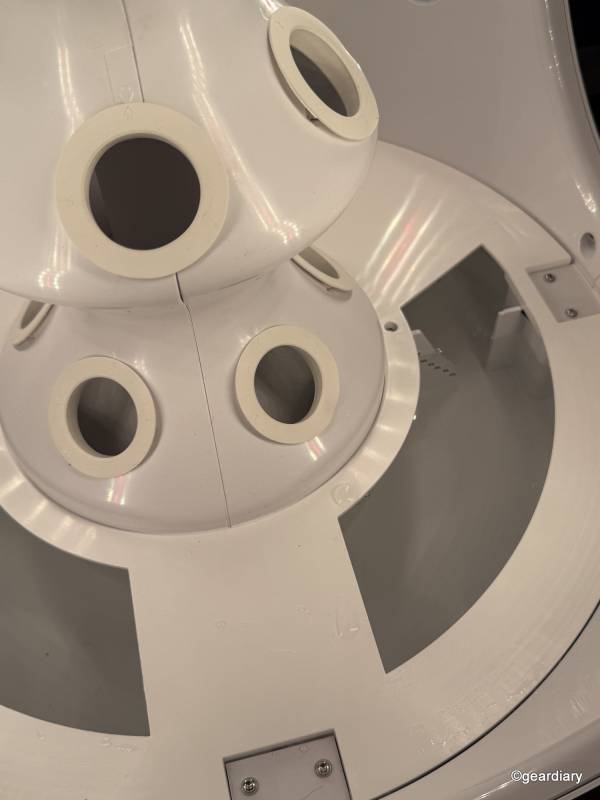
Don’t let water pool on these cover supports above the lower tank. Learn from my mistake!
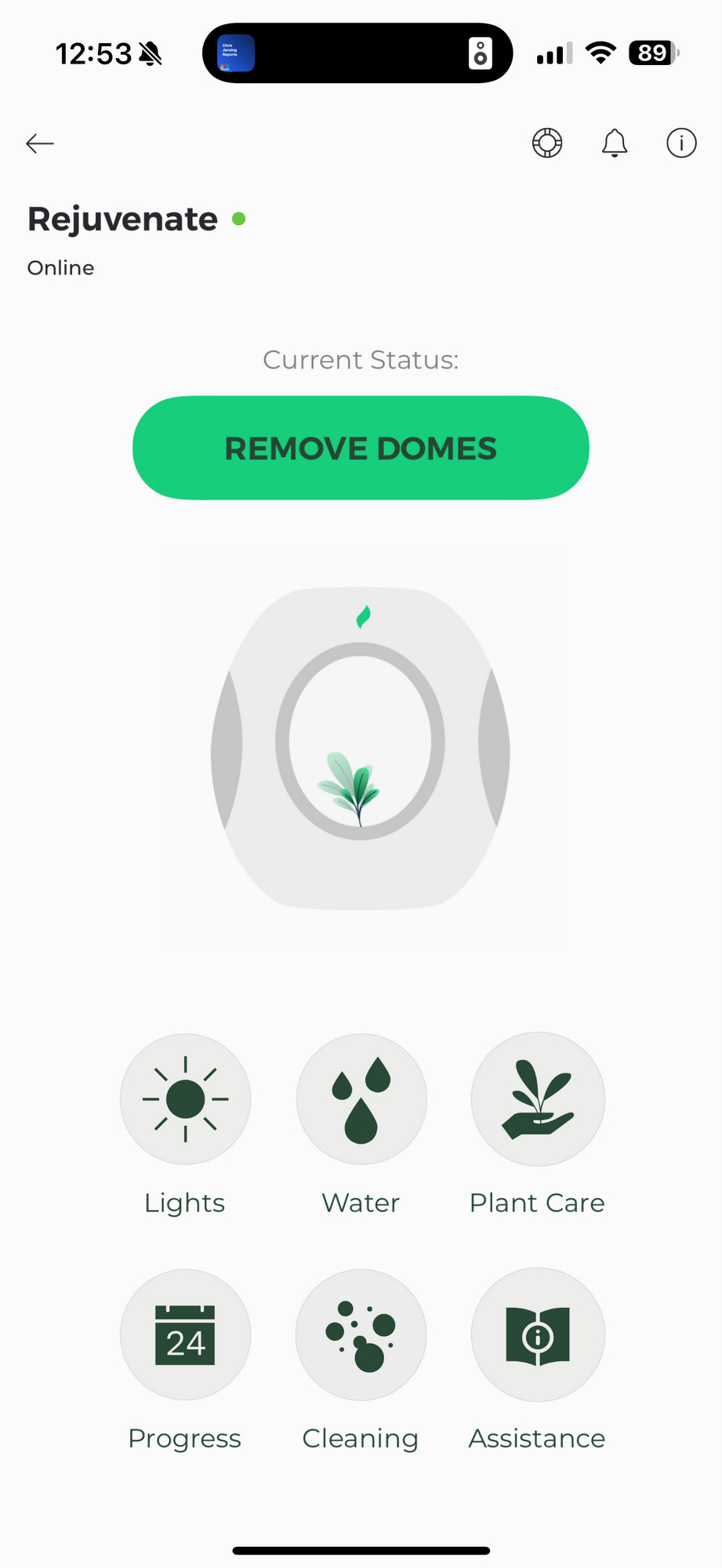
The Plantaform app acts as your control center. It walks you through each stage with calm clarity. You don’t just get the standard “plant pod inserted” message; you get prompts to soak the pods, reminders about when to remove the germination domes, and even gentle encouragement to thin your seedlings.

March 22, 2025
Once the water and nutrients are in, the system configures itself based on the specific plant pack you’re using. The lights adjust, the fog schedule is tuned, and within minutes, your garden is humming softly and doing its thing.
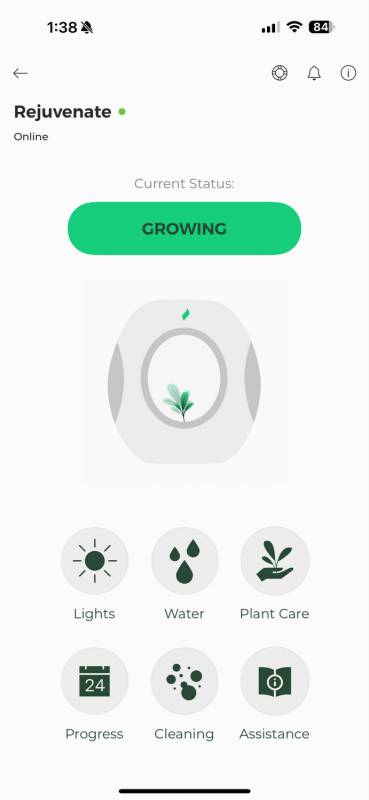
It took me about 30 minutes to go from unboxing the Plantaform to getting the app set up to getting all of the pods soaked, placed, and domed.
Watching Growth in Real Time
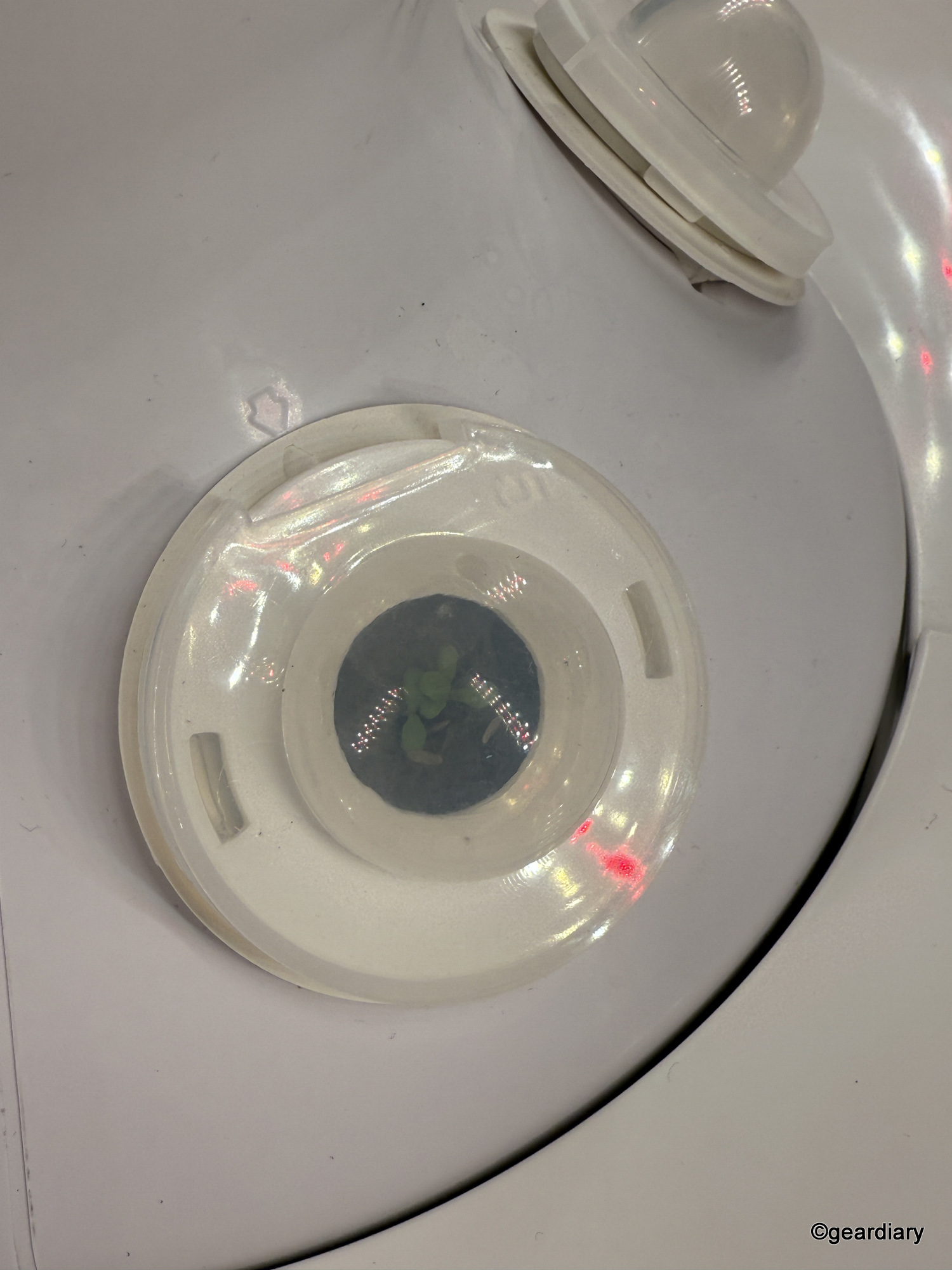
The real magic happens over the next few days. Within 48 hours, you may start to see the first tiny sprouts pushing up toward the germination domes. It’s subtle, but thrilling to see nature doing its thing in a spot where no edible plants would usually grow.
March 25, 2025
-

- March 25, 2025
-
- March 25, 2025
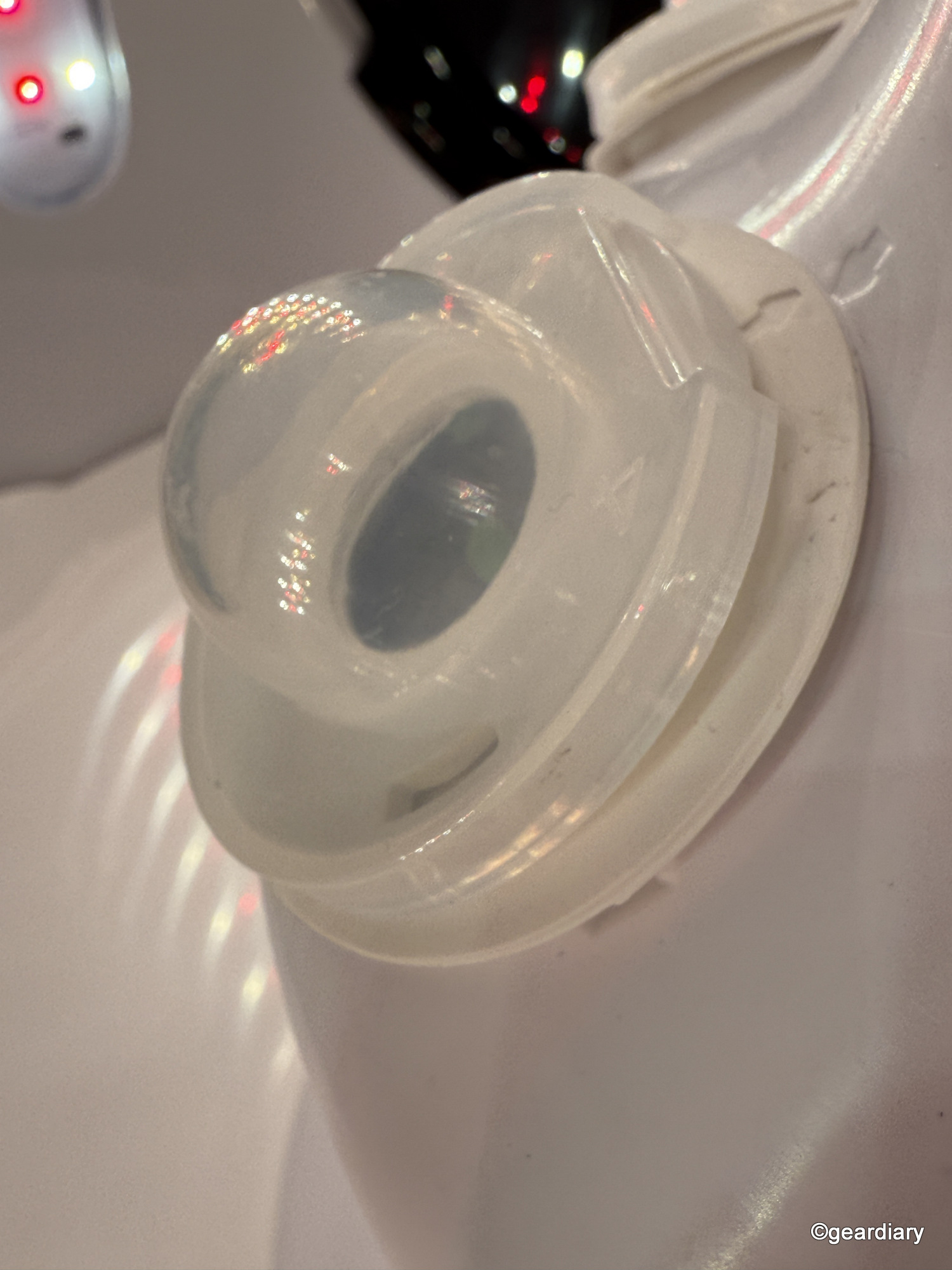
Within a few days, you’ll notice that your plants are getting large enough that they are starting to touch the domes.

March 26, 2025
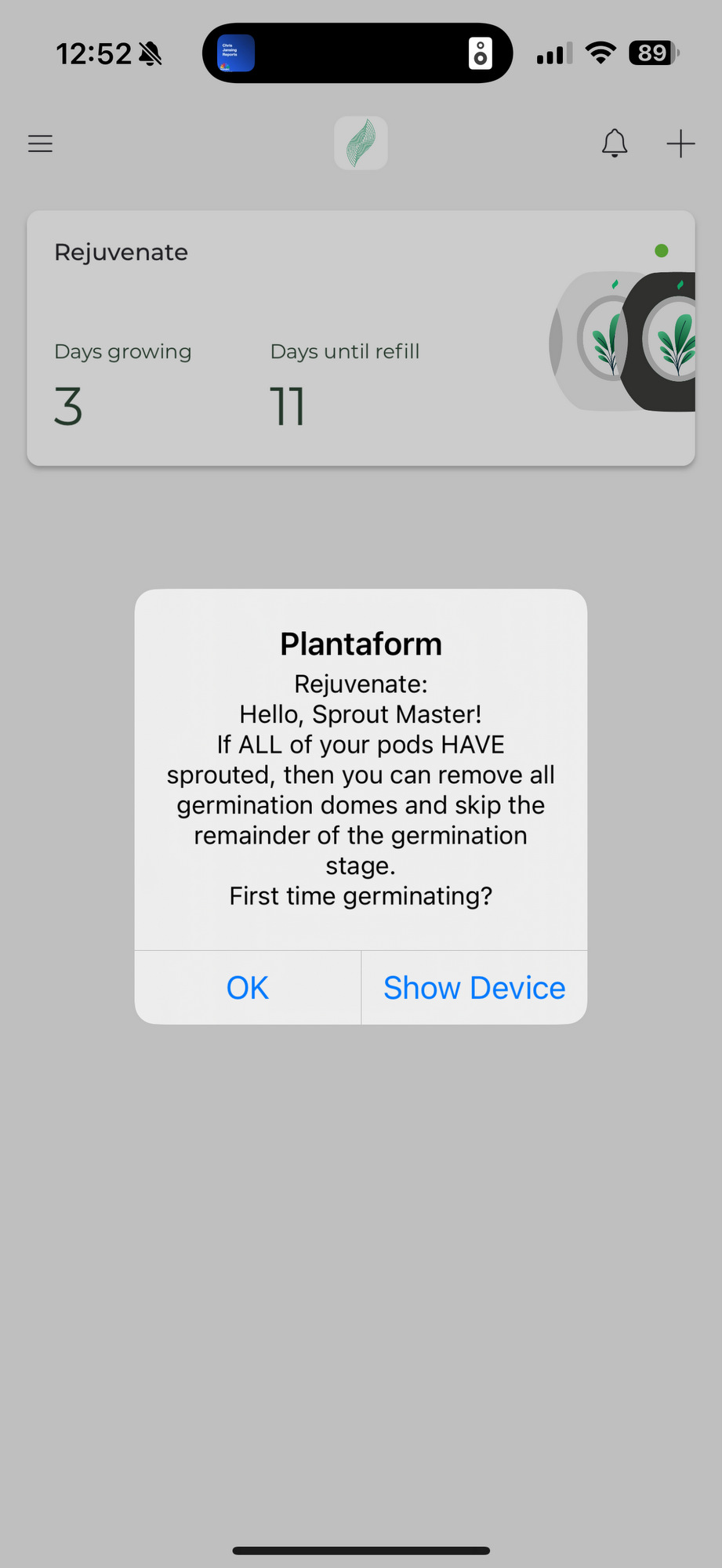
The app will remind you to look if you aren’t paying attention.
-

- March 26, 2025
-
- March 26, 2025
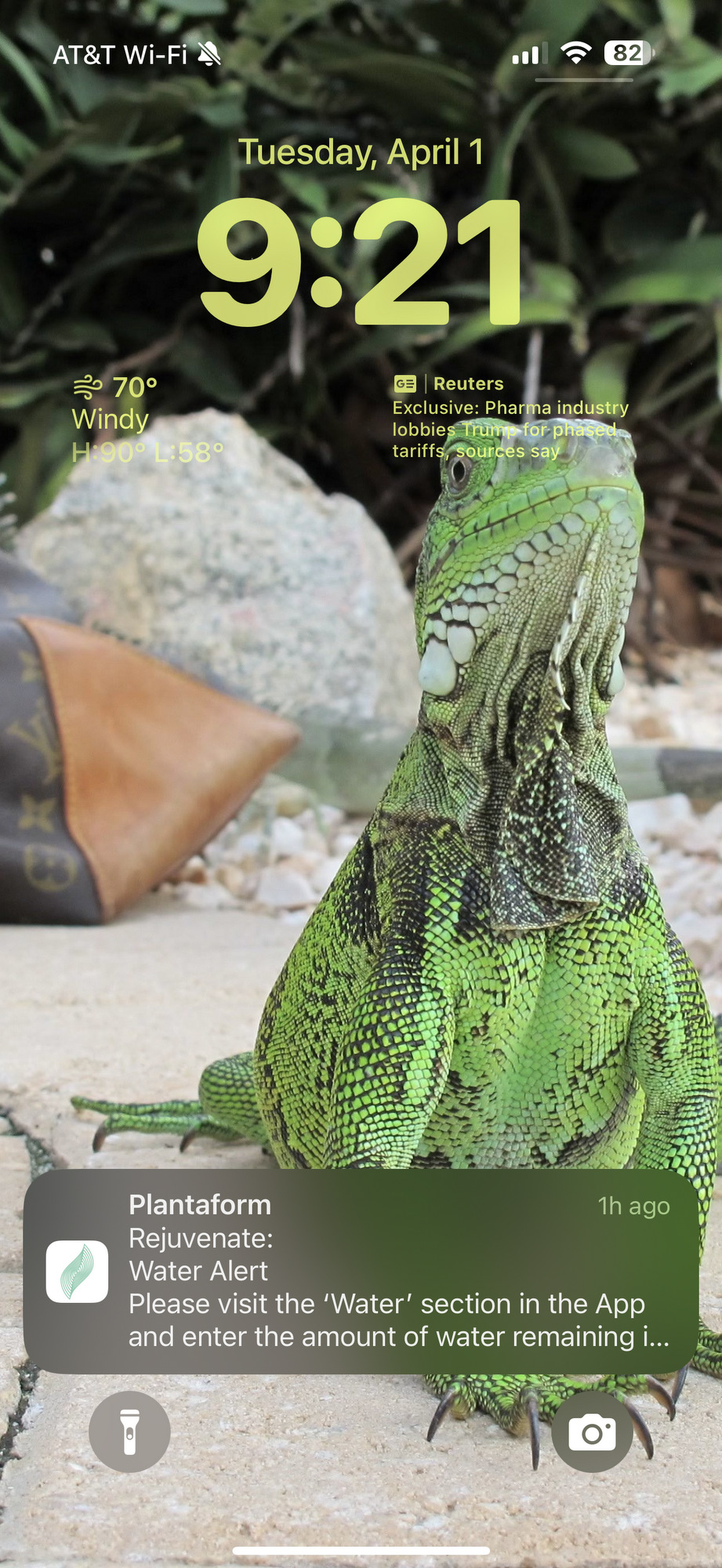
By the end of the first week, your garden will be visibly alive, and you’ll likely receive a notification that it’s time to water. The app will guide you through the process, including the amount of water and nutrients to add to each tank.
April 1, 2025
-
- April 1, 2025
-
- April 1, 2025
-
- April 1, 2025
-
- April 1, 2025
What stands out about using the Plantaform Smart Indoor Garden is the steady, confident pace of growth. You don’t get a sudden burst and then stagnation; you get continuous, measured development that’s clearly being optimized by the fogponics system and LED lighting. The lights don’t just flip on and off like a lamp. They follow an optimized schedule that simulates the sun’s natural cycle, with hues and intensities tailored to what your plants need at their current stage.
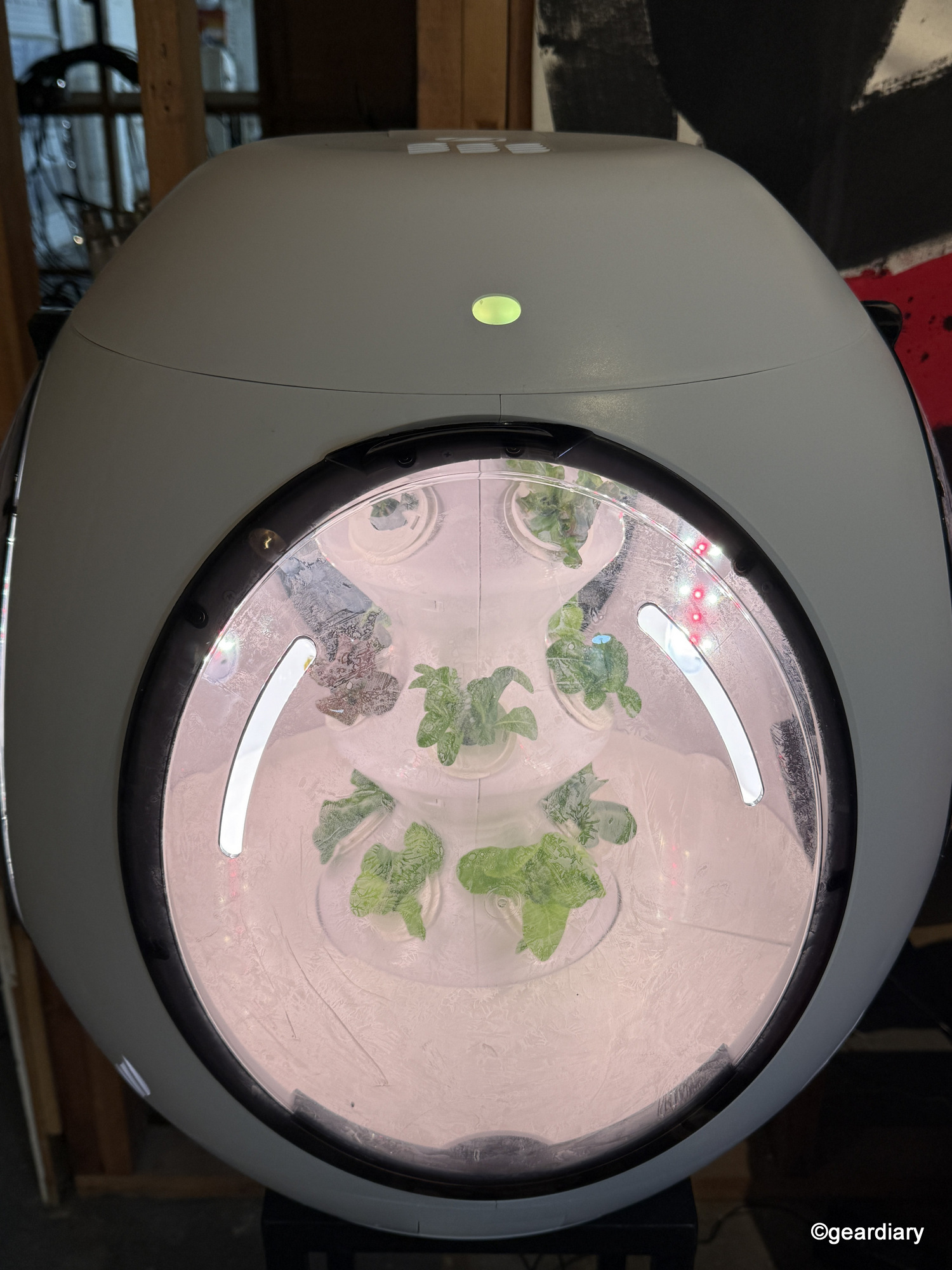
If you activate Party Mode, it’s like giving your garden a moment in the spotlight. A cloud of fog fills the chamber, and the lights shift, providing a brief visual confirmation that the foggers and fans are functioning properly. It’s also kind of mesmerizing to watch.
The Growing Experience
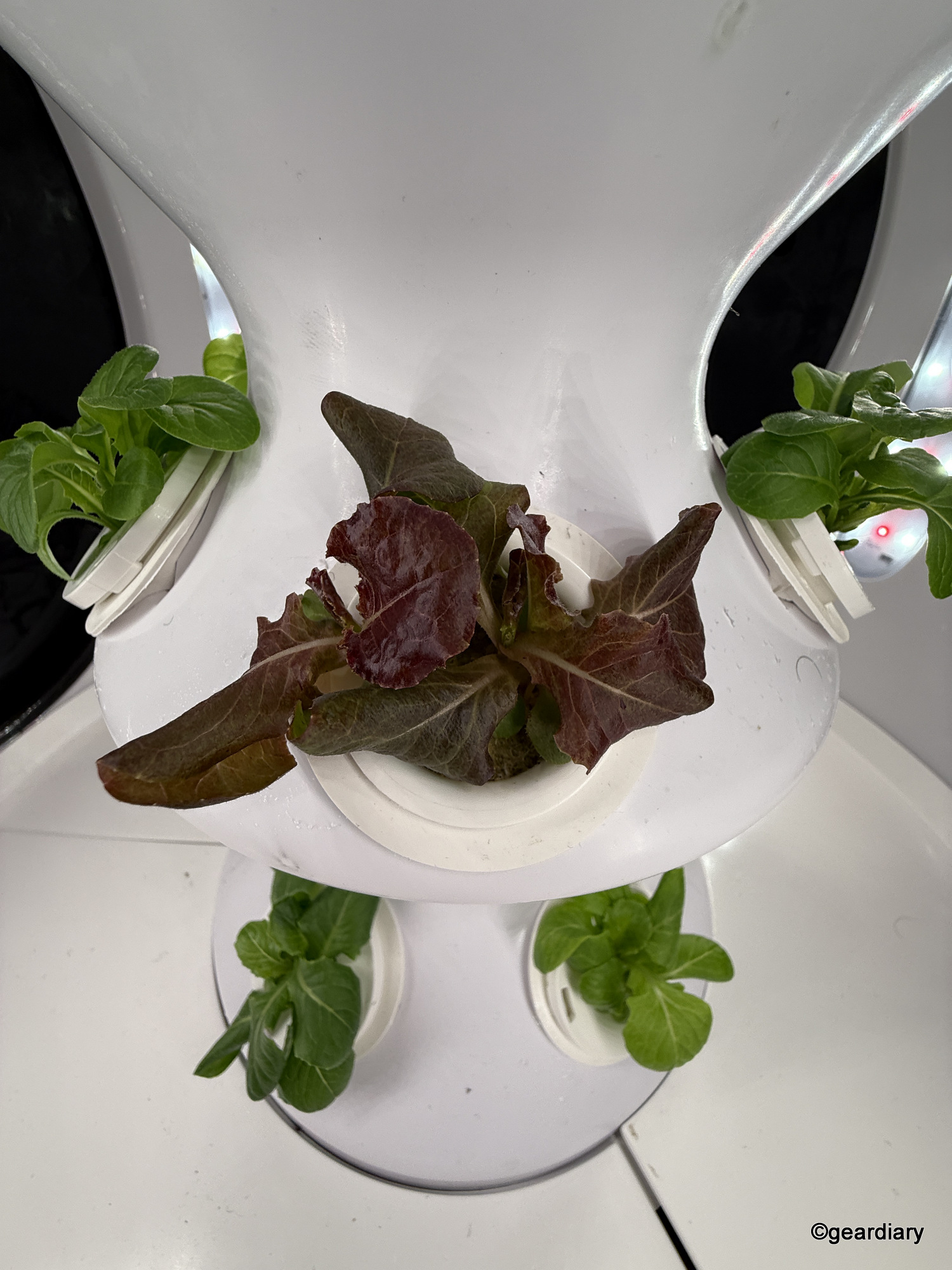
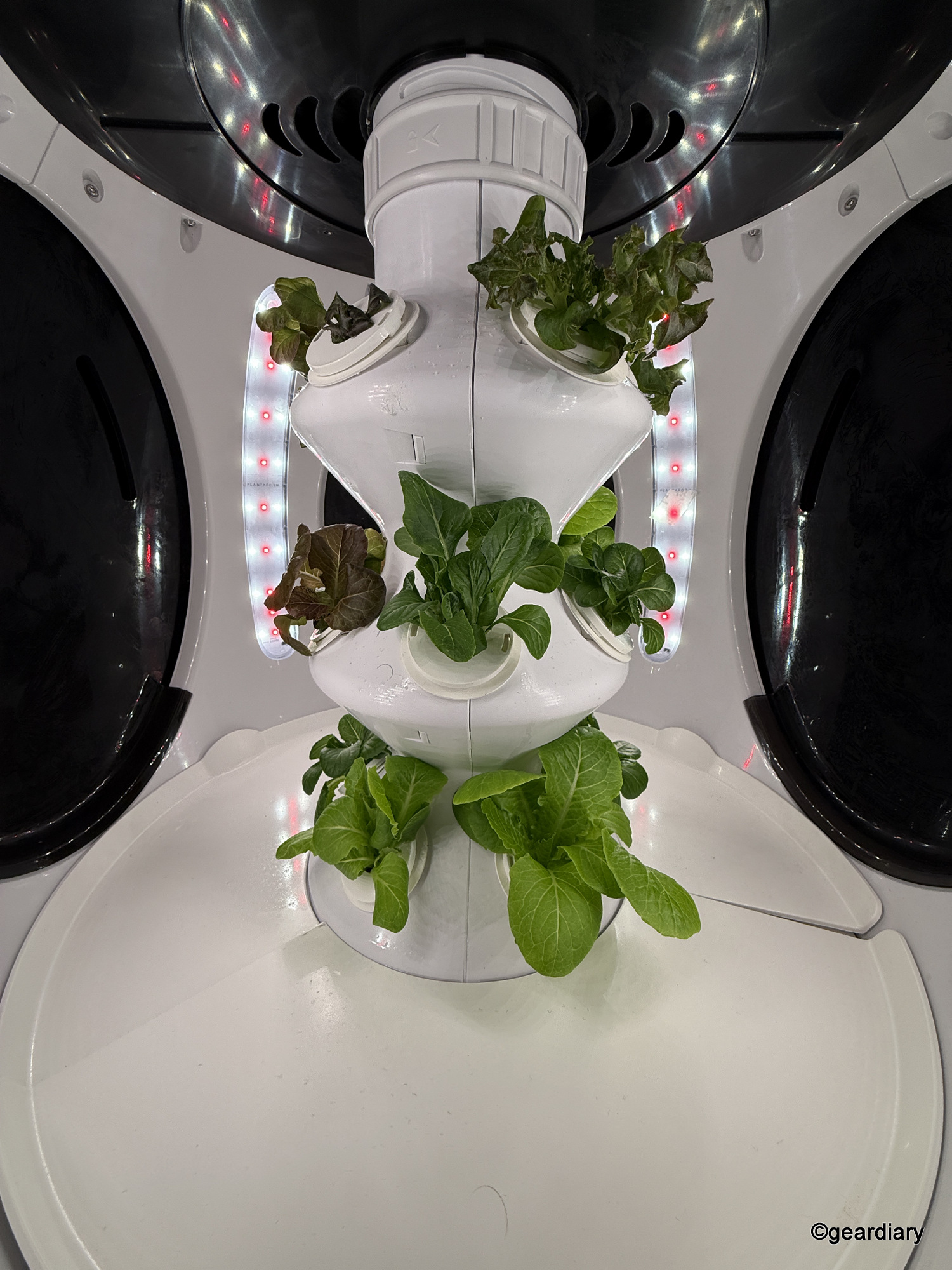
With the Lettuce Mix, I saw noticeable changes day by day. The germination domes stayed on for about 5–7 days, depending on the speed of each pod. Some varieties within the pack germinate faster than others, and the app even accounts for that variability.
-
- April 6, 2025
-
- April 8, 2025
-
- April 10, 2025
-
- April 12, 2025
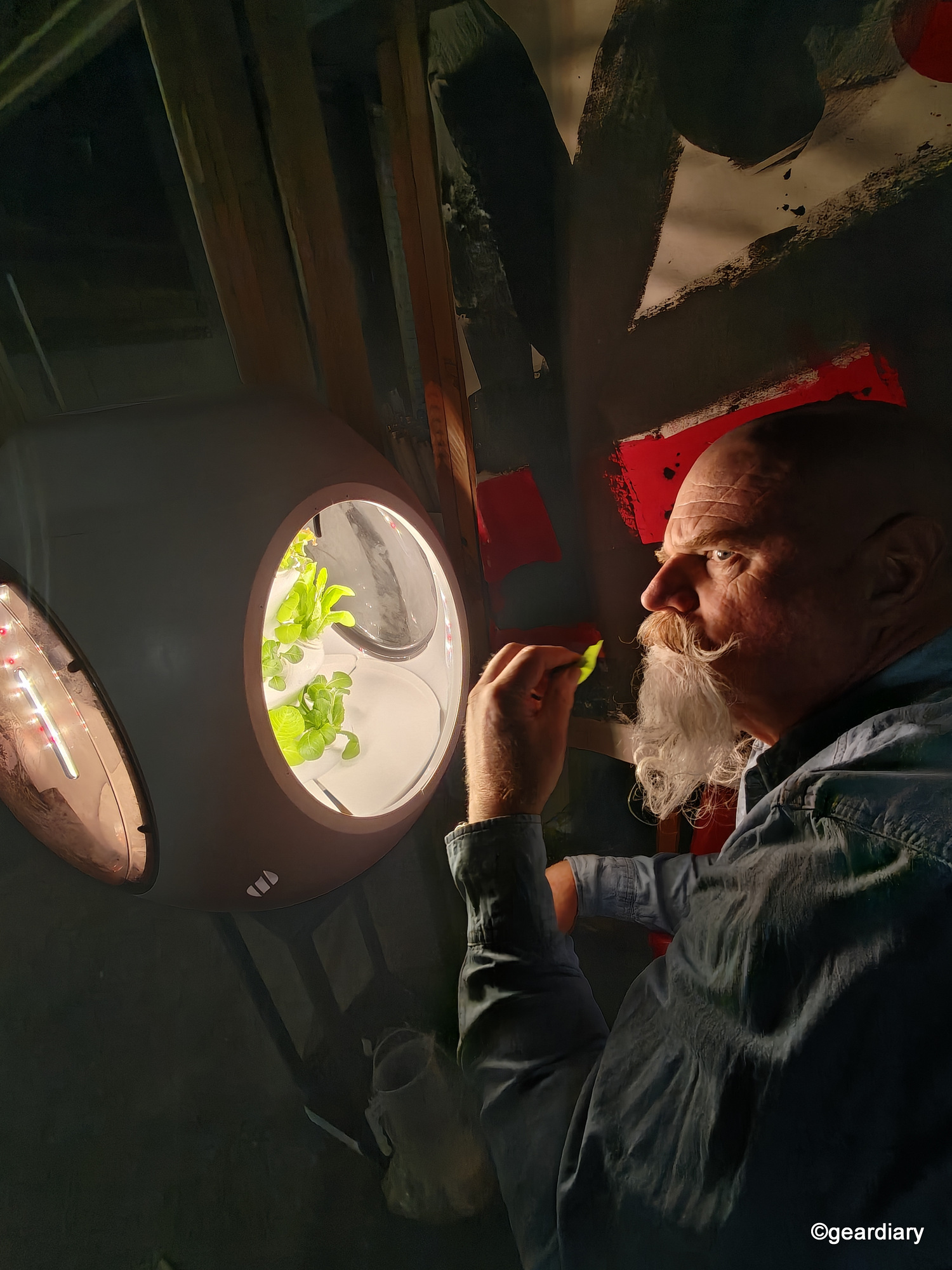
Once the domes came off, it was time to thin the seedlings. Most pods had two or three little sprouts competing for space. I’ll admit that I wasn’t as on top of thinning the plants as you’re supposed to be, but I had a “little rabbit” coming by to sneak nibbles of the fresh young greens as they were growing.
One thing that I perhaps should have paid more attention to from the start was that my top tank never seemed to need water, though the app would send me regular notifications when water was needed. The device produced a substantial amount of fog to nourish the vigorously growing plants, so I never allowed the lower tank to drop below 2 liters. I did think it was curious that the top tank never seemed to drain, but since everything else was going well and my plants were thriving, I didn’t worry about it.
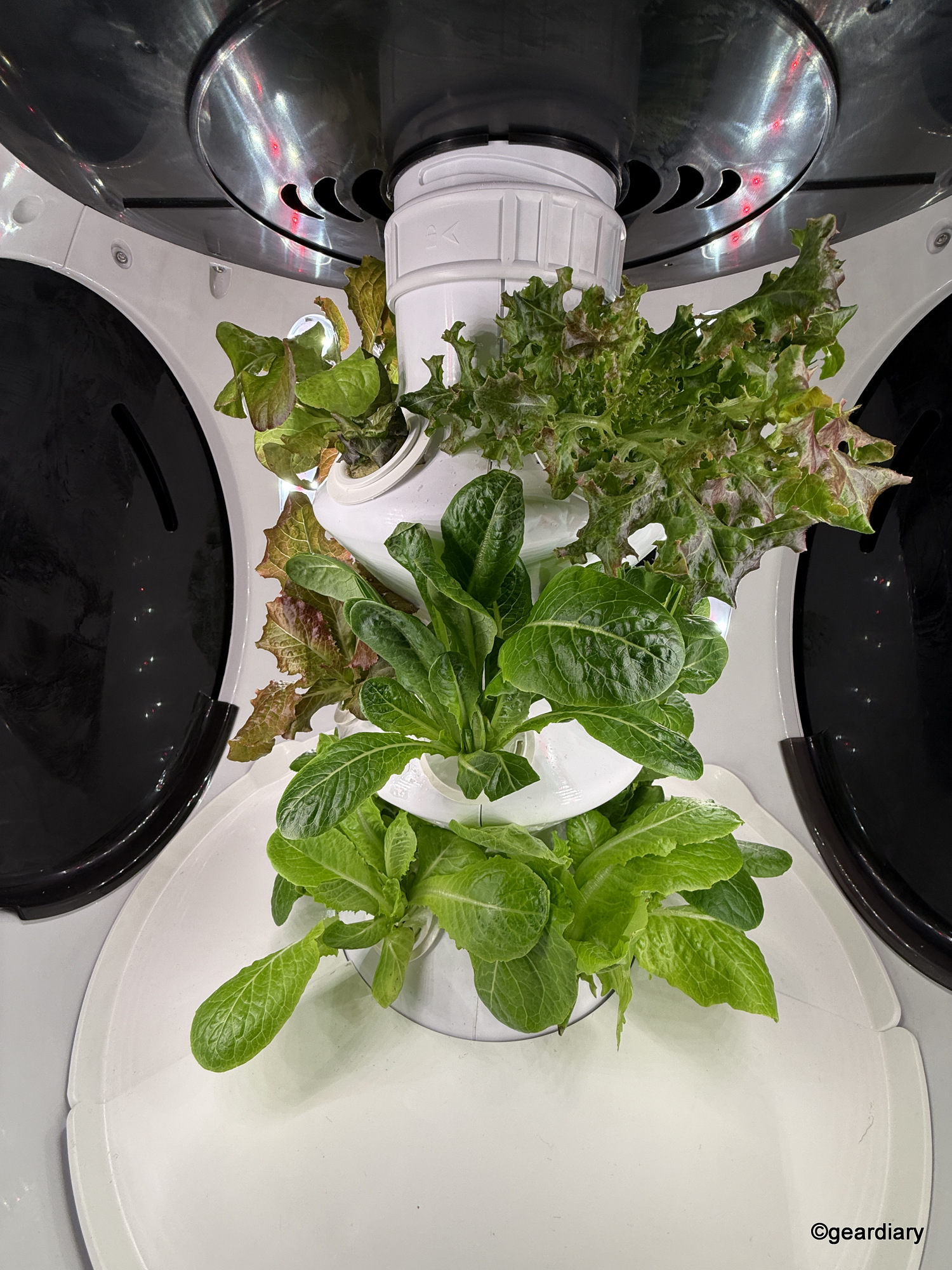
Over the next three weeks, I watched my lettuce go from shy little sprouts to robust leafy greens. The texture and color were better than anything I’d picked up in a grocery store clamshell. There was no limpness, no browning at the tips. Just vibrant, crisp greens begging to be eaten.
Kev wasn’t able to resist all those fresh young greens; on the 18th, he managed to pull off enough lettuce to make a salad for his lunch.
-
- April 17, 2025
-
- April 18, 2025
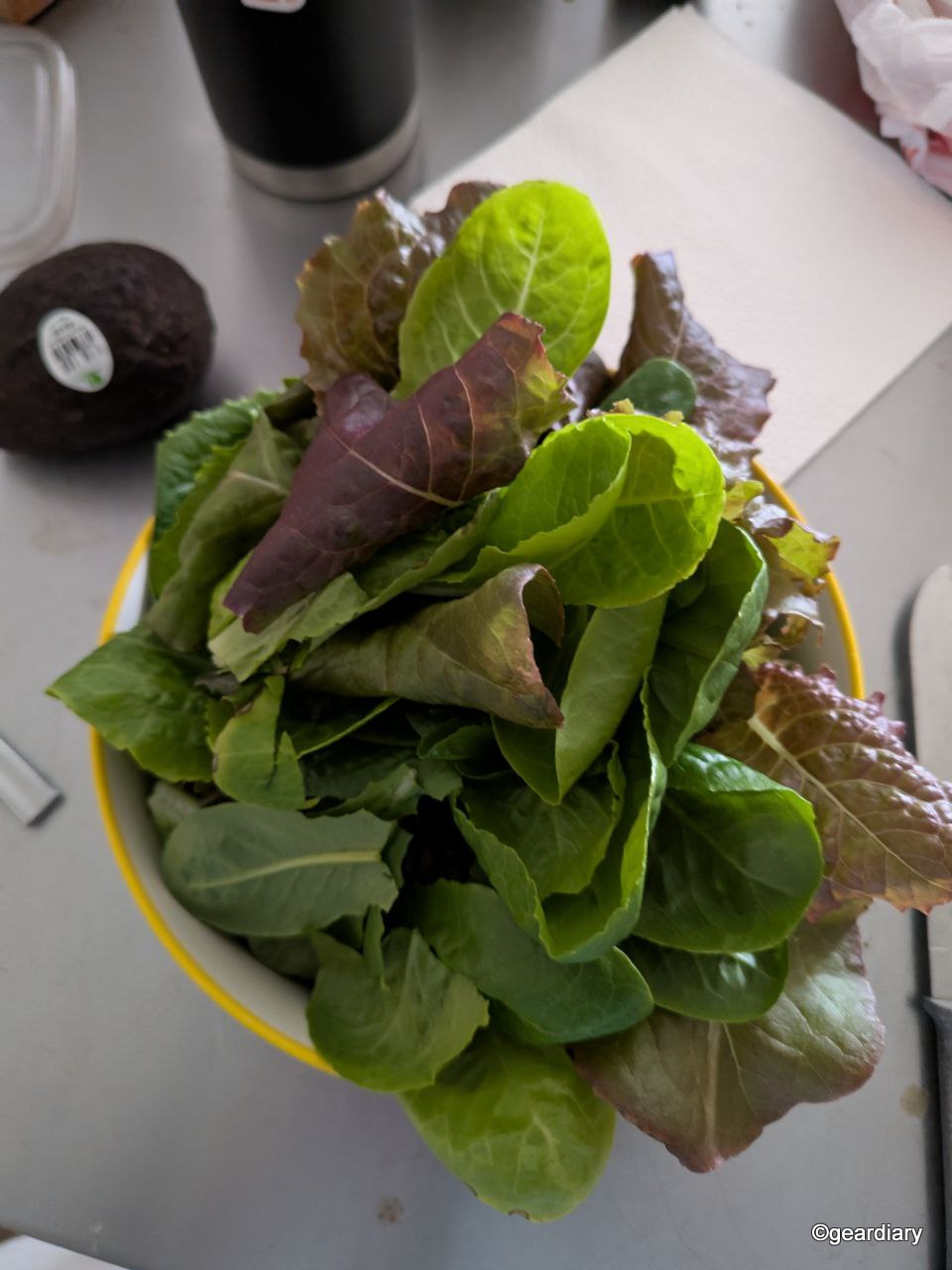
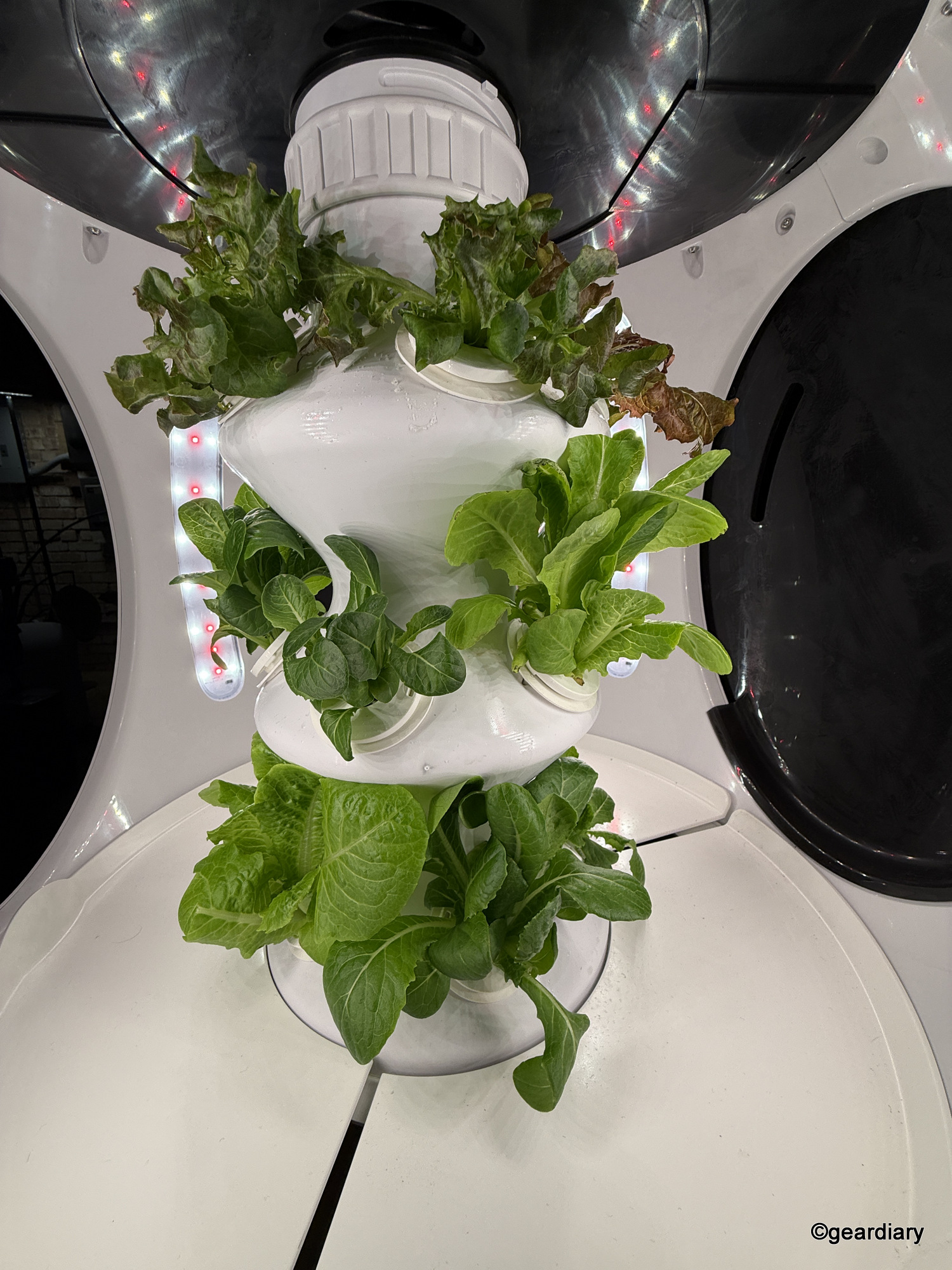
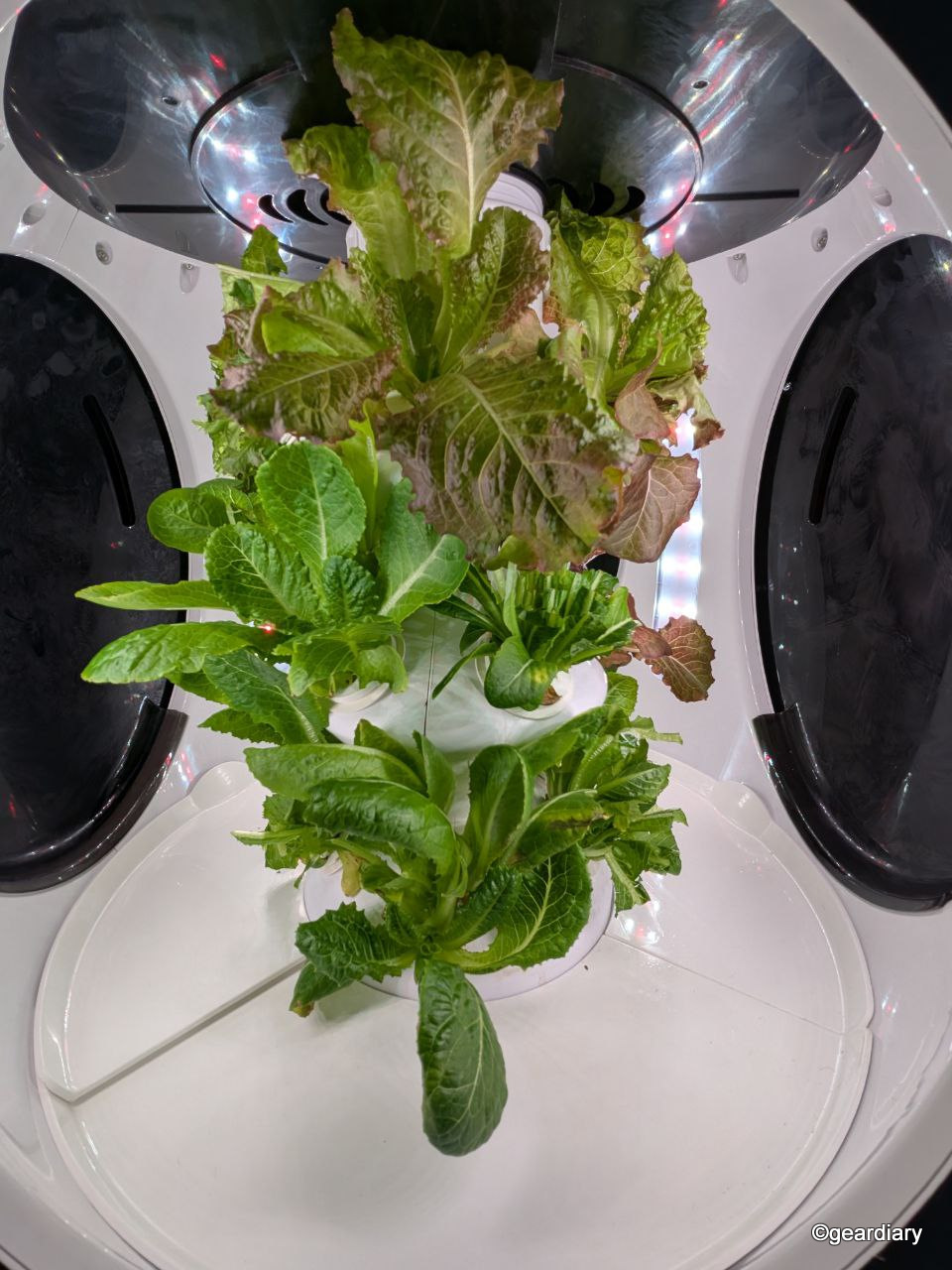
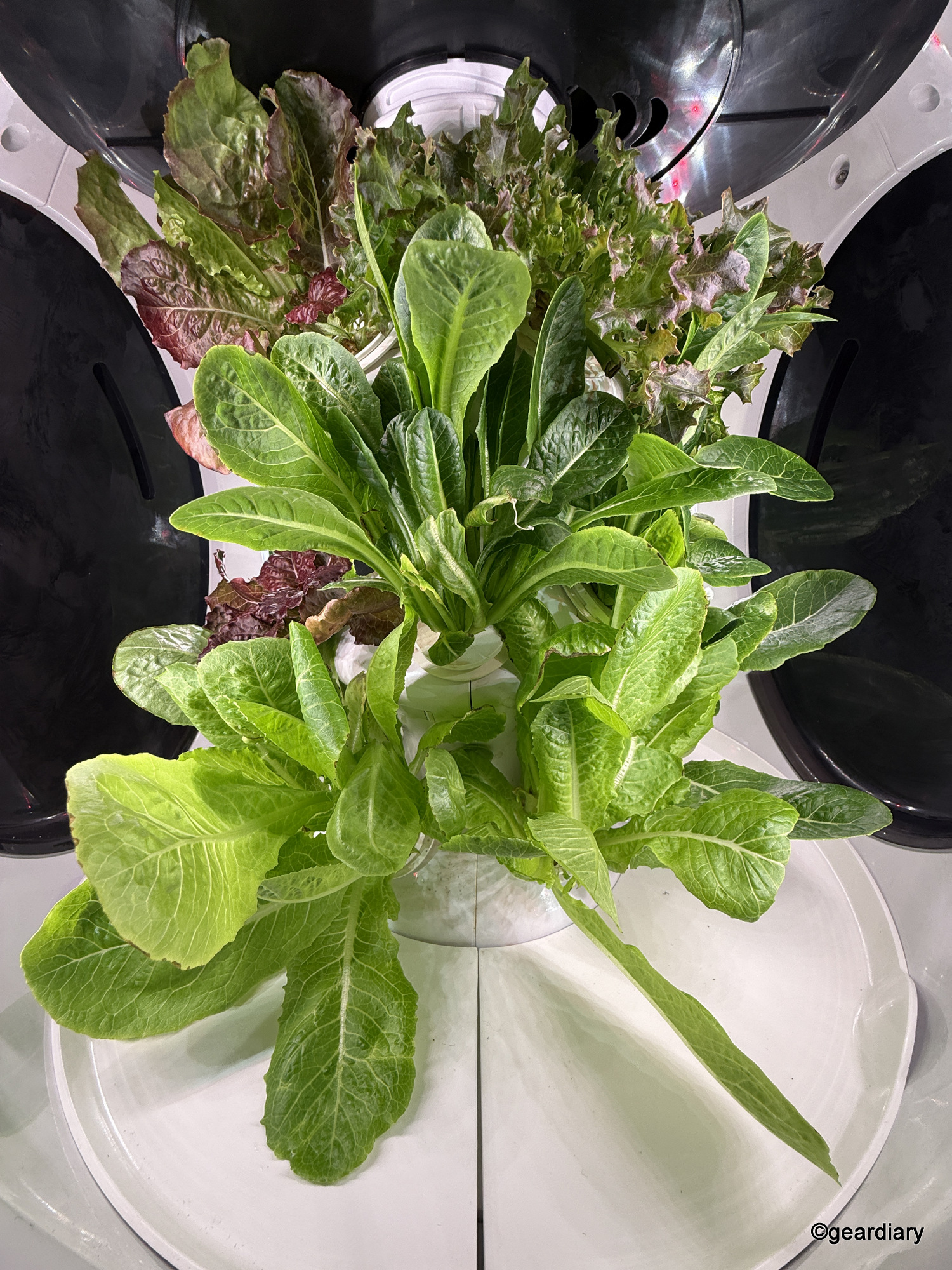
Rather than wait until everything was fully grown, I opted for a staggered harvest. We began by plucking the larger outer leaves, leaving most of the plant intact and thriving.
-
- April 23, 2025
-
- April 24, 2025
-
- April 30, 2025
-
- April 30, 2025
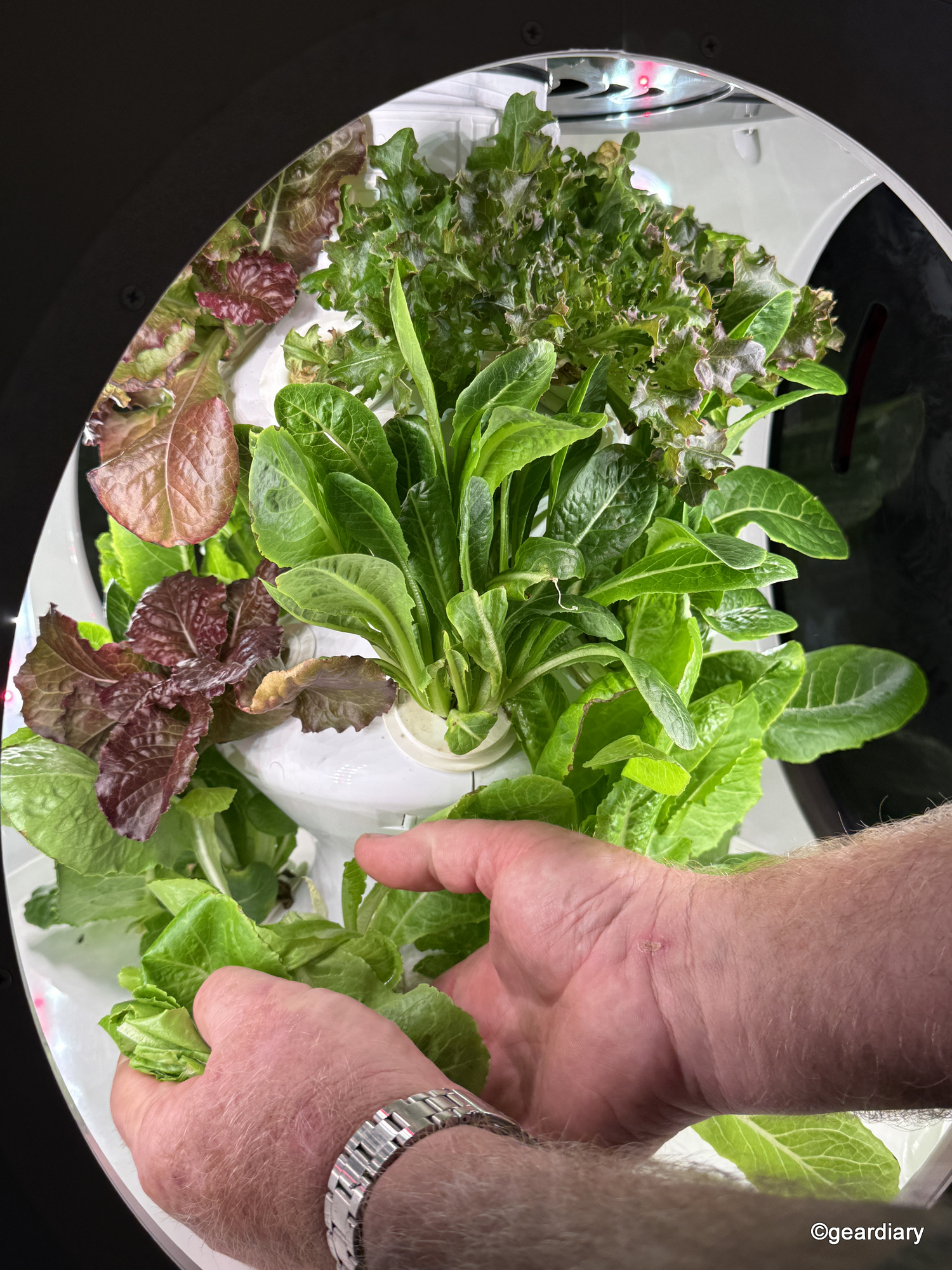
About two weeks before the projected full harvest, I removed two full rows of plants. The remaining plants got more light and space and continued to thrive. You can see the roots swirling in the nutrient-rich water in the lower tank.
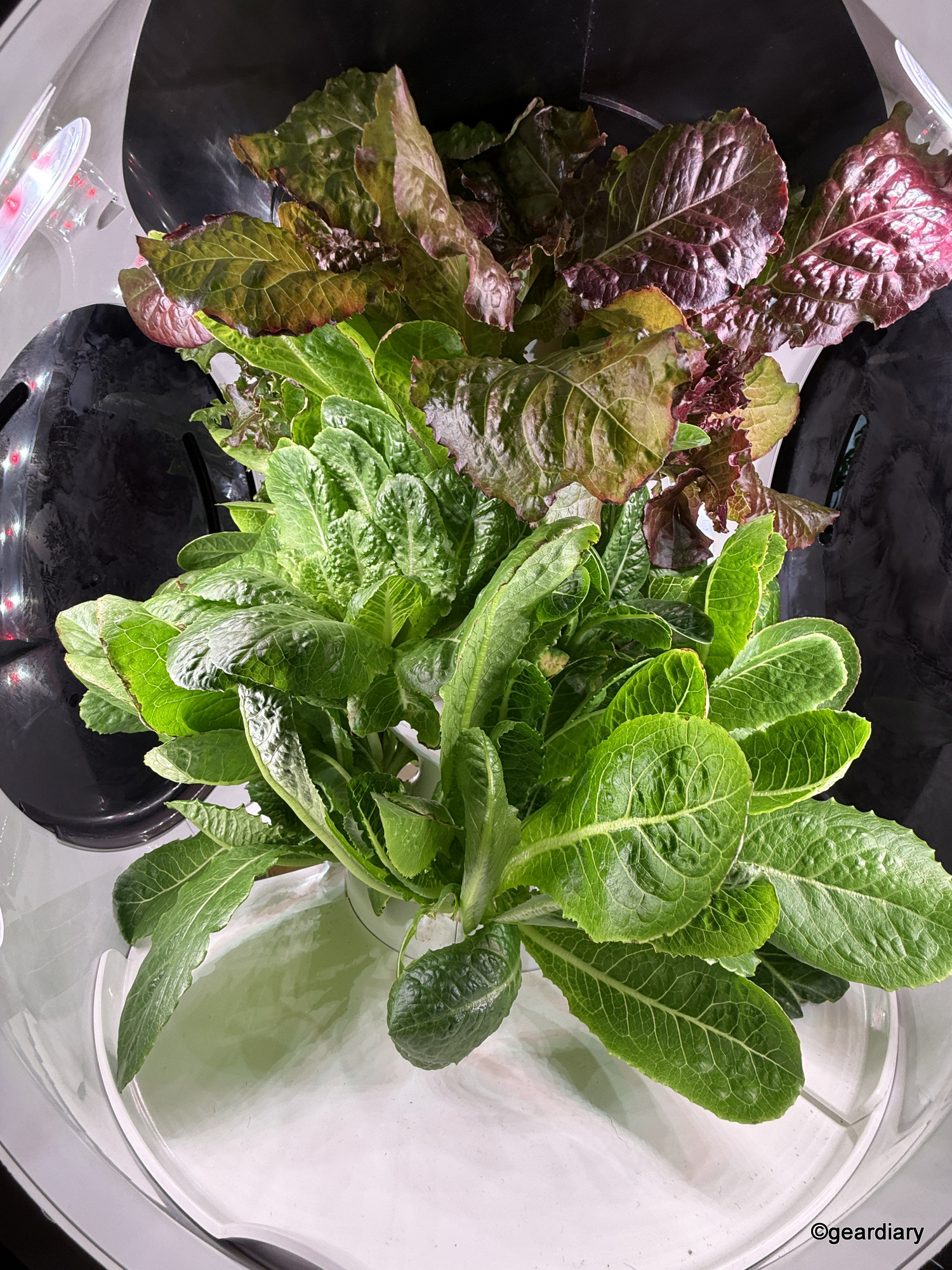
-
- May 6, 2025
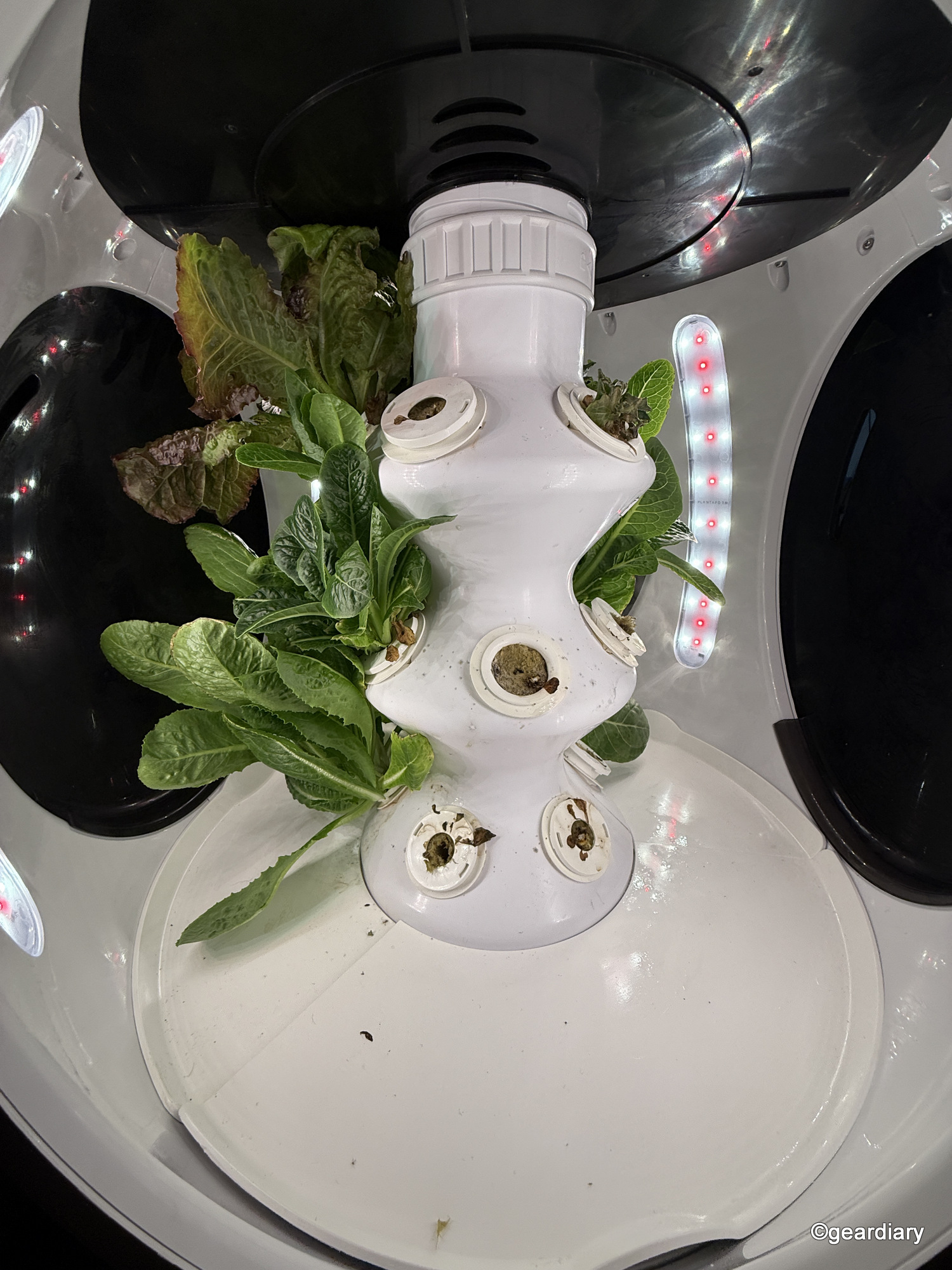
-
- May 6, 2025
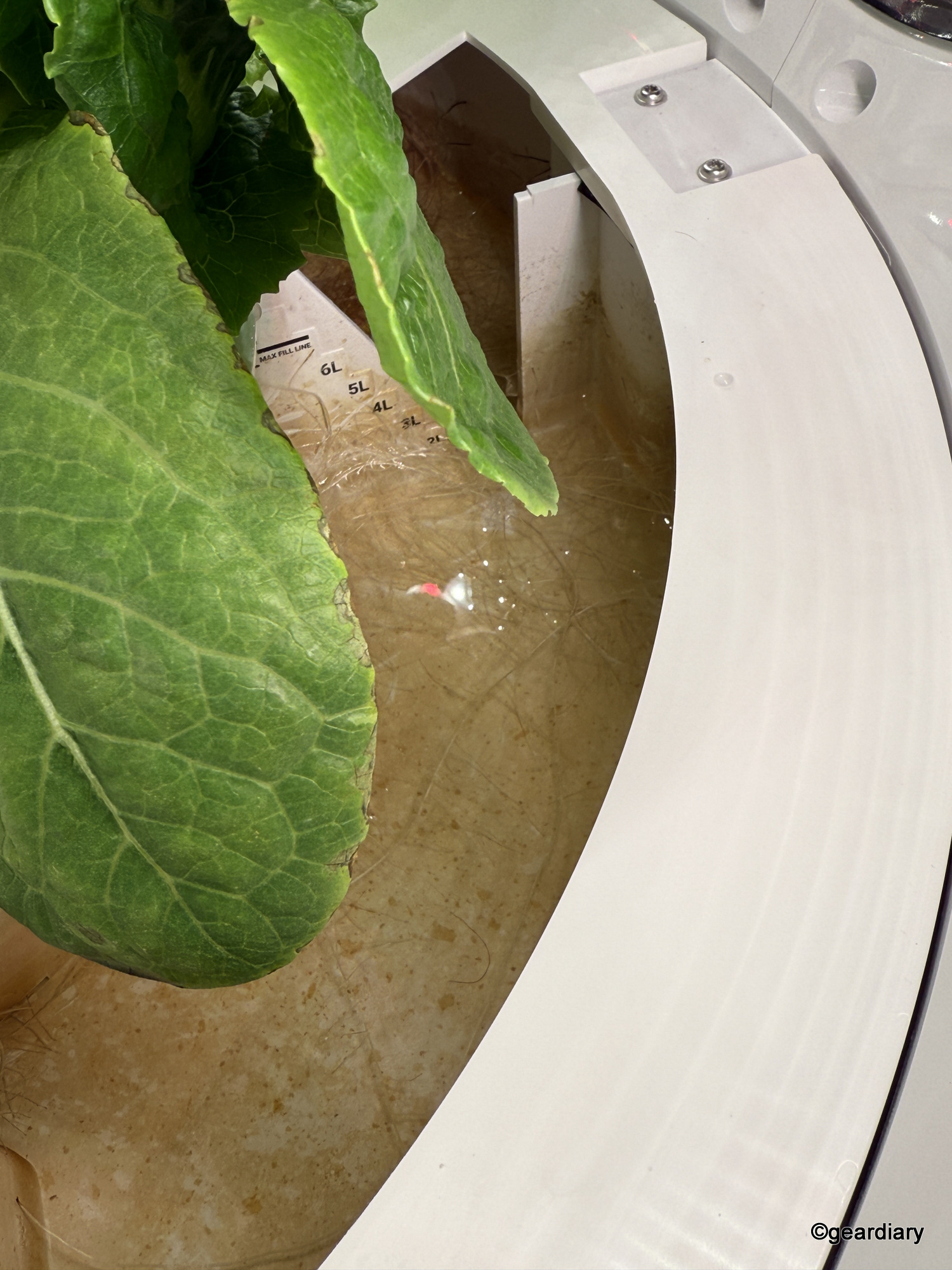
-
- May 6, 2025 – Harvested greens filling a rectangular pan.
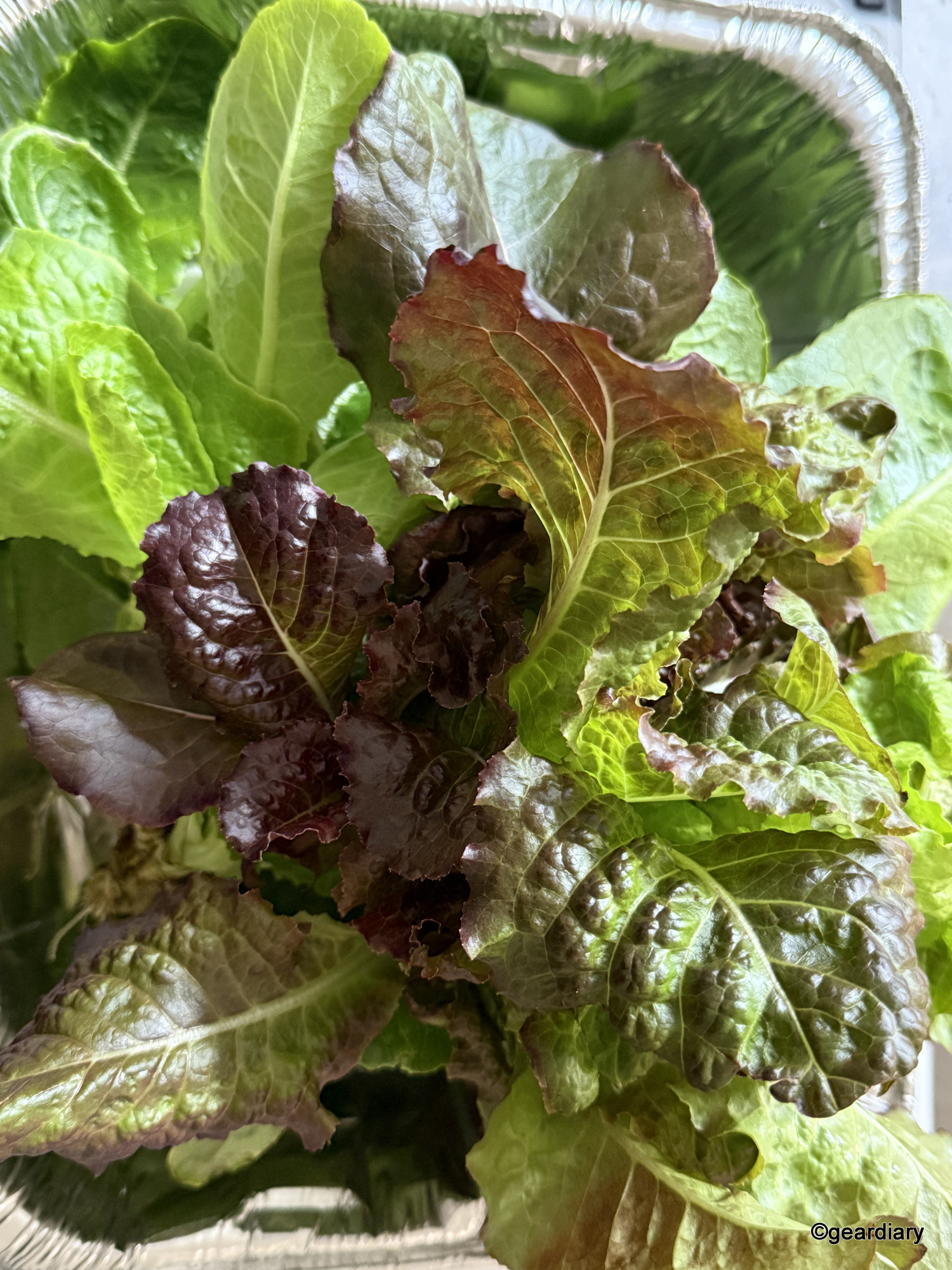
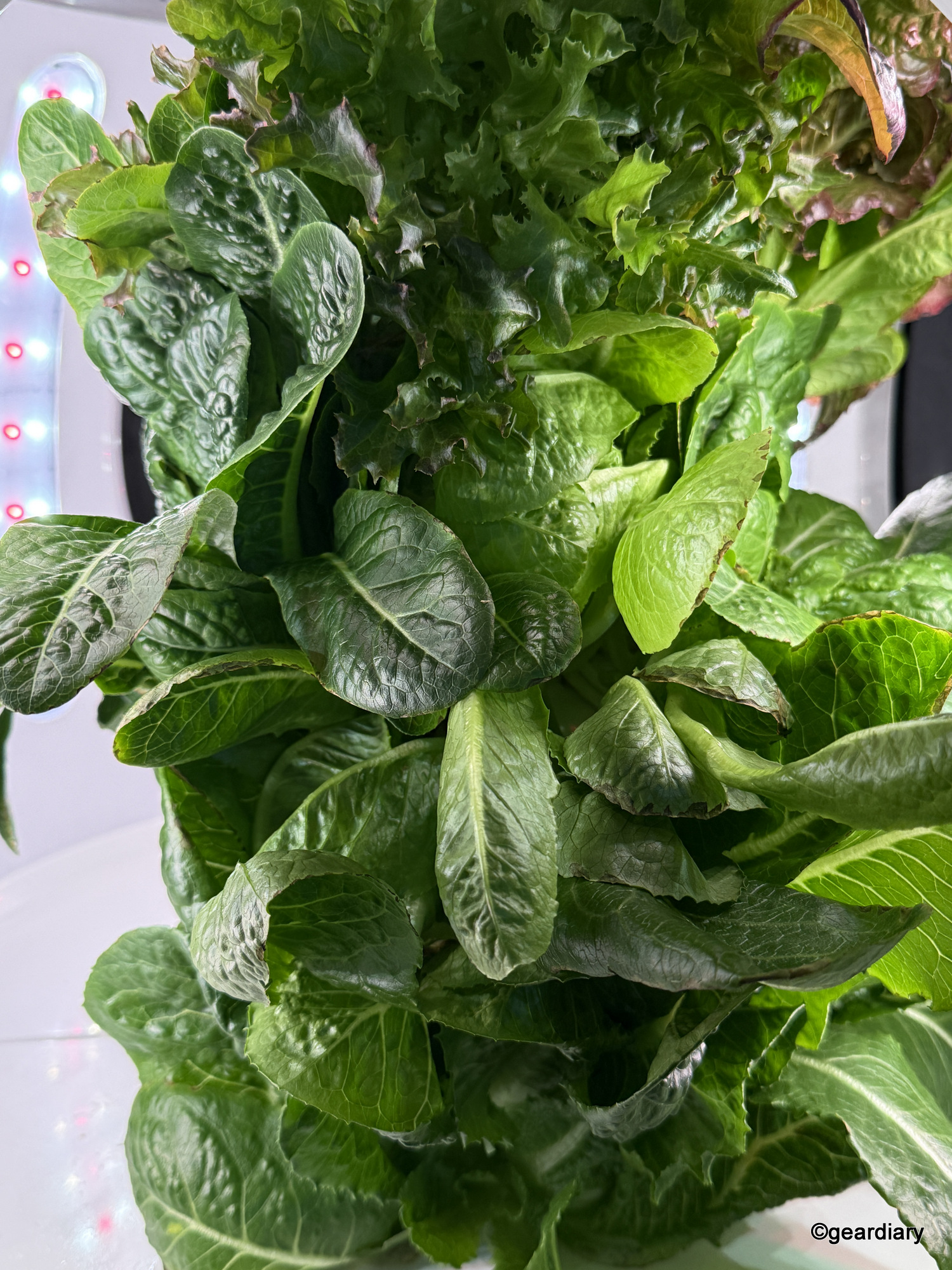
When I harvested the last two rows on May 14th, we had been enjoying fresh greens for several weeks. Growing our own lettuce wasn’t just productive; it was manageable. It wasn’t until the final harvest that we experienced a slight fridge overflow of fresh lettuce, but it was all eaten within a few days.
-
- May 14, 2025
-
- May 14, 2025
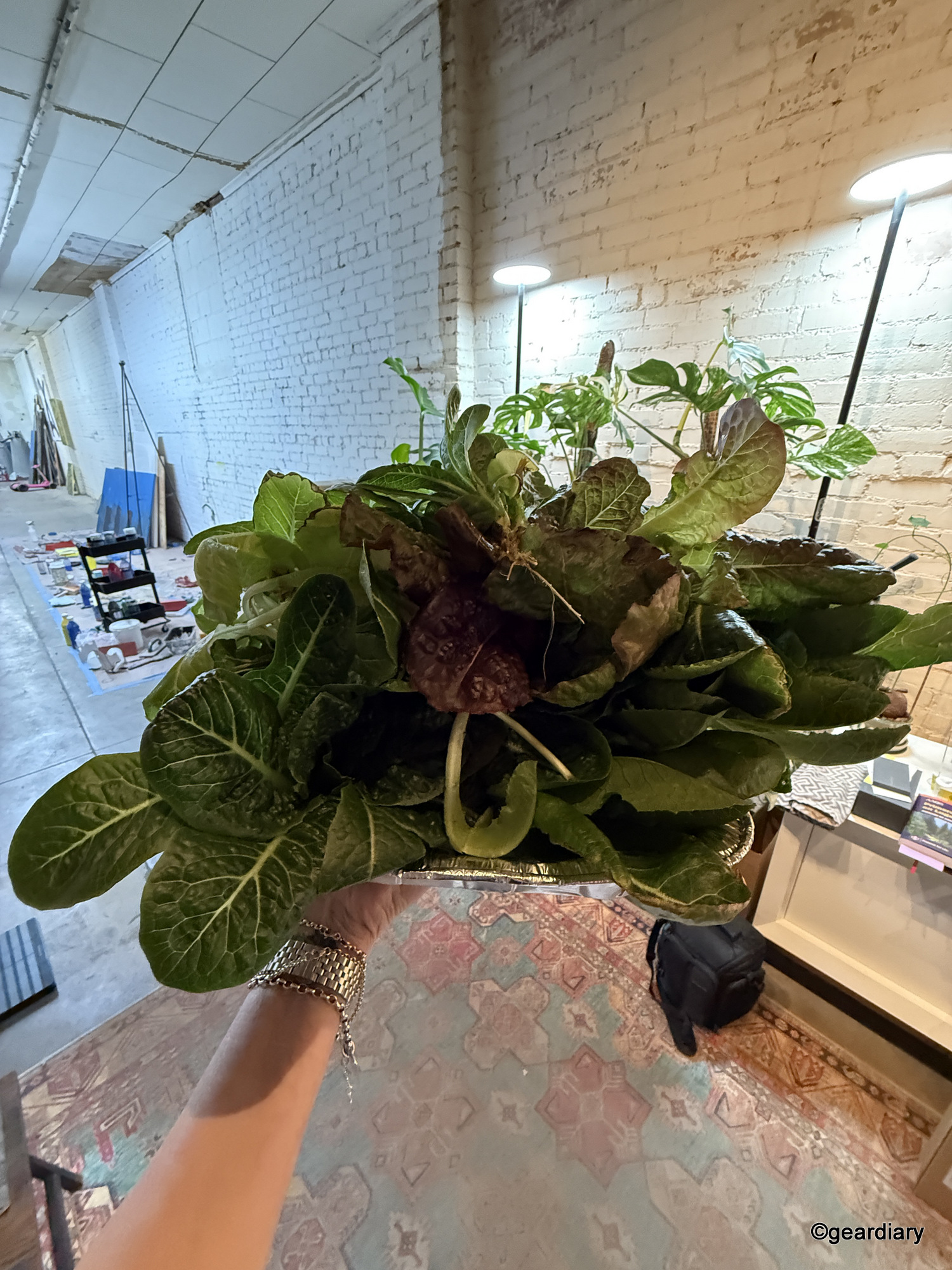
One unexpected bonus? The flavor. The freshly grown lettuce had that gentle bitterness and snap you only get from just-picked greens. They weren’t watered-down or flavorless. And since there are no pesticides or herbicides involved, we could eat the leaves straight off the plant with no rinsing necessary.
A few weeks before our harvest was expected, I went ahead and ordered the $29.99 Herb Essentials pod pack from Plantaform, which includes Sweet Basil, Thai Basil, Cilantro, Parsley, and Oregano, as I wanted to be ready with something new once our lettuce crop was done. It offers a continual harvest starting at about 6 to 8 weeks, with a final harvest at around 13 weeks.
Other pod pack options are also available for $29.99:
- Cherry Tomato Mix, which includes orange cherry tomatoes, sweet basil, and red frilled lettuce. The lettuce can be harvested in 4 to 6 weeks. The basil offers a continuous harvest starting 6 to 8 weeks after planting, with a final harvest at around 13 weeks; the cherry tomatoes offer a continual harvest starting at 12 to 13 weeks, with a final harvest at around 21 weeks.
- Cocktail Mix, which includes lemon basil, dill, thyme, and mint. It offers a continual harvest starting at about 6 to 8 weeks, with a final harvest at around 13 weeks.
- Edible Flower Mix, which includes a variety of edible purple, white, yellow, orange, and red flowers and leaves. It offers a peak bloom harvest, with the first blooms at about 4 to 6 weeks, and the final bloom at around 13 weeks.
- Leafy Mix, which includes a variety of organically certified and non-GMO leafy lettuce greens, ranging from butterhead lettuce to red sweet crisp lettuce and multiple mustard varieties, is the same pod set that came with the Plantaform. It offers what Plantaform calls a single harvest at 4 to 6 weeks.
- Lettuce Mix, which includes five distinct varieties of romaine lettuce ranging in color from deep green to vibrant red. It offers what Plantaform calls a single harvest at 4 to 6 weeks.
- Superfood Salad Mix, which includes bok choy, kale, rainbow Swiss Chard, arugula, and spinach. It’s currently sold out, but I’ve added my email address to be notified when it’s back in stock. It offers what Plantaform calls a single harvest at 4 to 6 weeks.
Living With Plantaform Day to Day
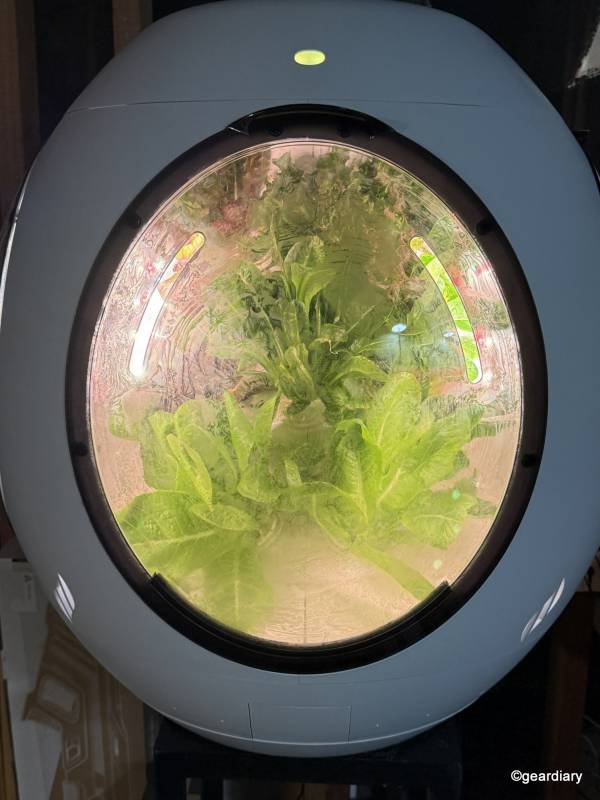
Incorporating the Plantaform into daily life felt natural. It doesn’t buzz or beep or demand attention like some “smart” appliances. It hums quietly in the background, with the occasional whirring of the fan and glimpses of fog through the tinted magnetic side windows.
April 30, 2025
The tinted magnetic windows are more functional than they appear. They control light exposure, help maintain humidity, and protect your plants from pets, kids, or your own overly curious hands. They’re also a big part of why the unit looks more like a designer appliance than a piece of lab equipment.

The app sends periodic reminders, but they never feel naggy. Instead, they’re helpful nudges, like “Water getting low” or “Your plants are ready for harvest.” I never once felt overwhelmed, confused, or unsure of what came next. Everything is spelled out, and if you’re feeling unsure, the in-app Help section is surprisingly robust.
You can tell the Plantaform Indoor Smart Garden was created for home use. Everything from the pod system to the refill calculator to the intuitive app dashboard has been engineered to make indoor gardening feel doable.
Cleaning the Plantaform: How It’s Supposed to Go
The app lets you know when it’s time to harvest and guides you through the cleaning process, but it doesn’t include all the necessary information to dismantle the Plantaform’s center column and remove the root detritus before running a cleaning cycle.
I found these two detailed videos to be incredibly helpful; the first shows the step-by-step process for harvesting and cleaning the device.
This second video demonstrates how to reassemble the Plantaform and utilize the Quick Clean function in the app.
Cleaning the Plantaform: How It Went for Me
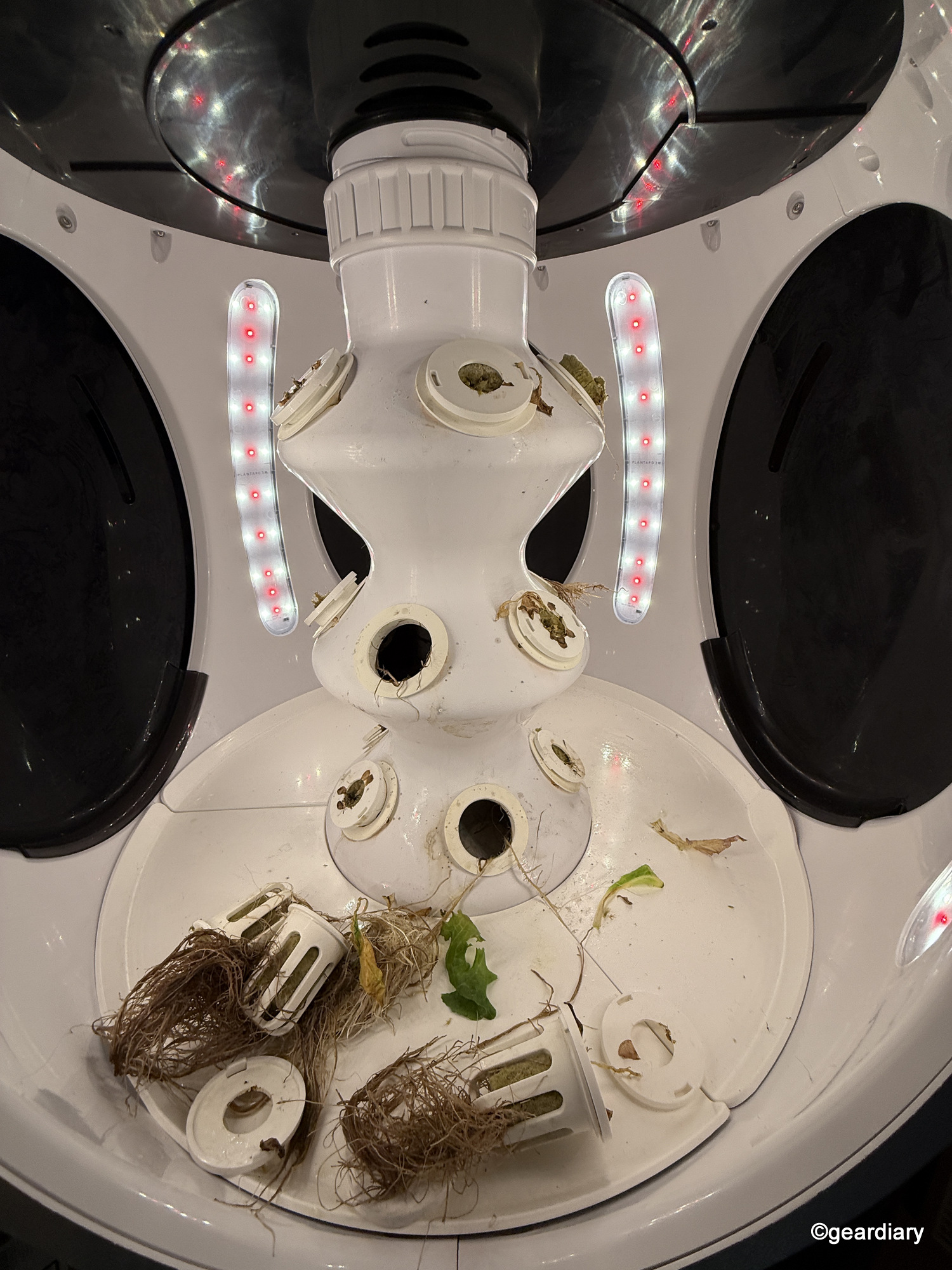
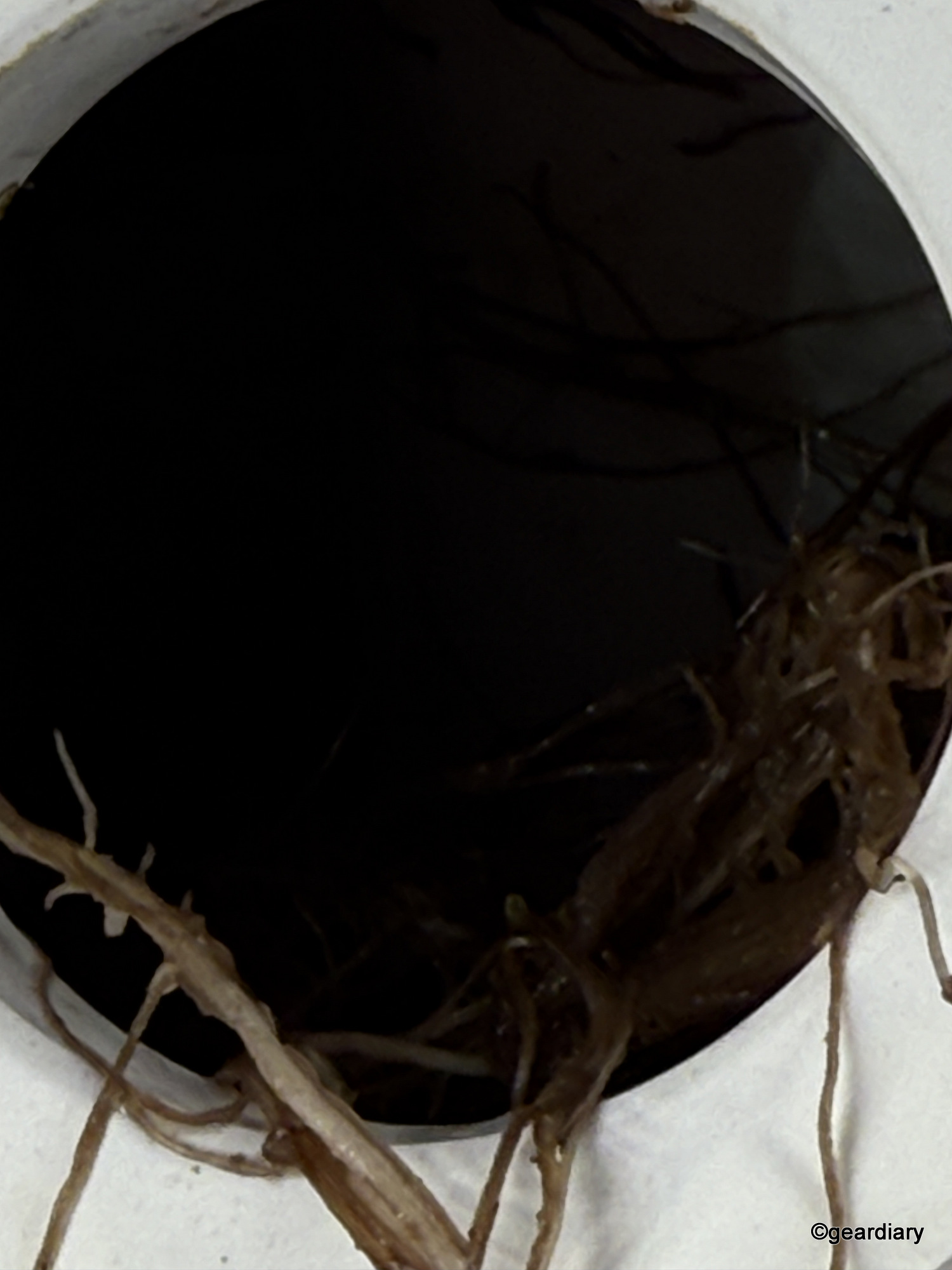
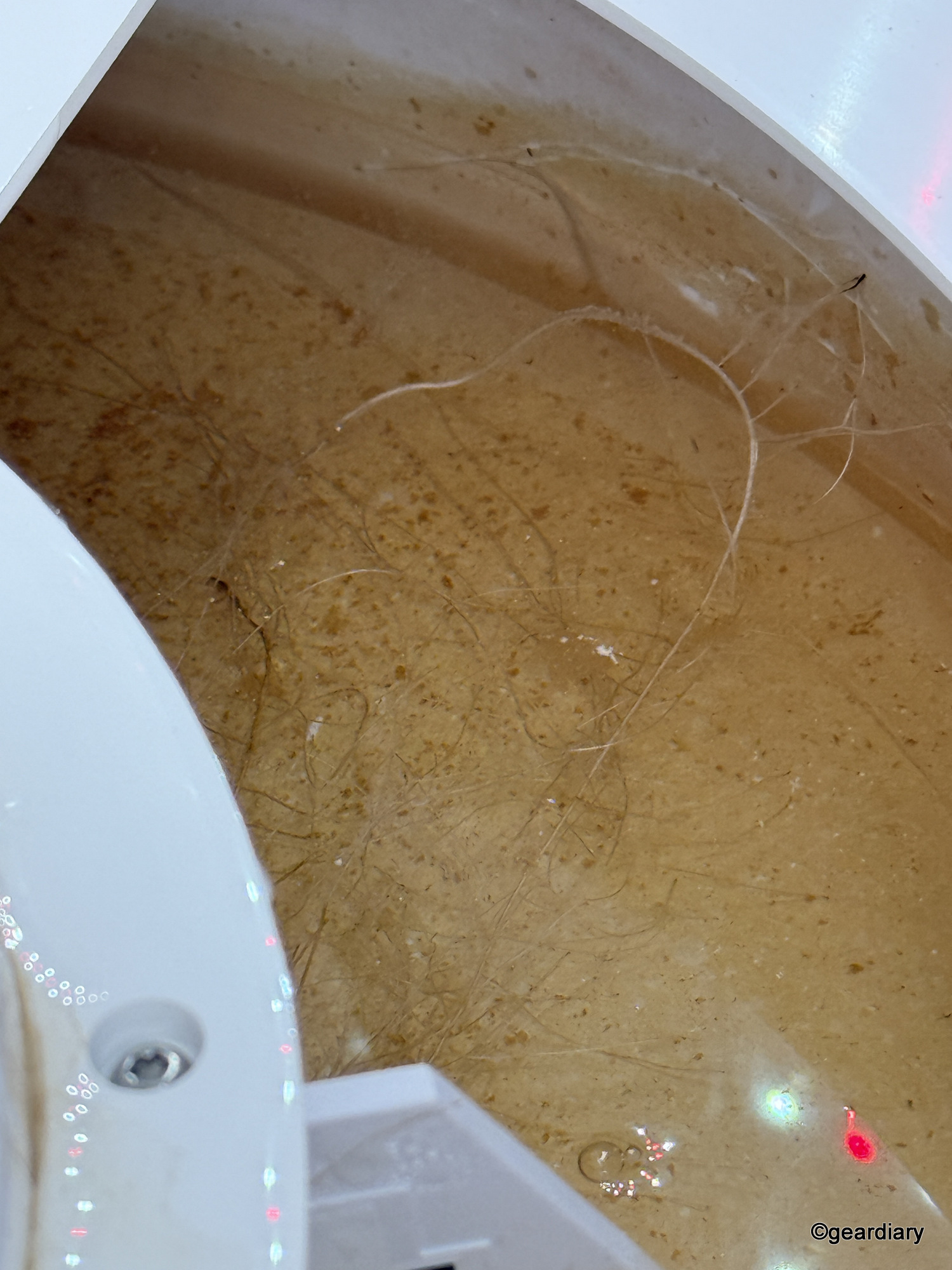
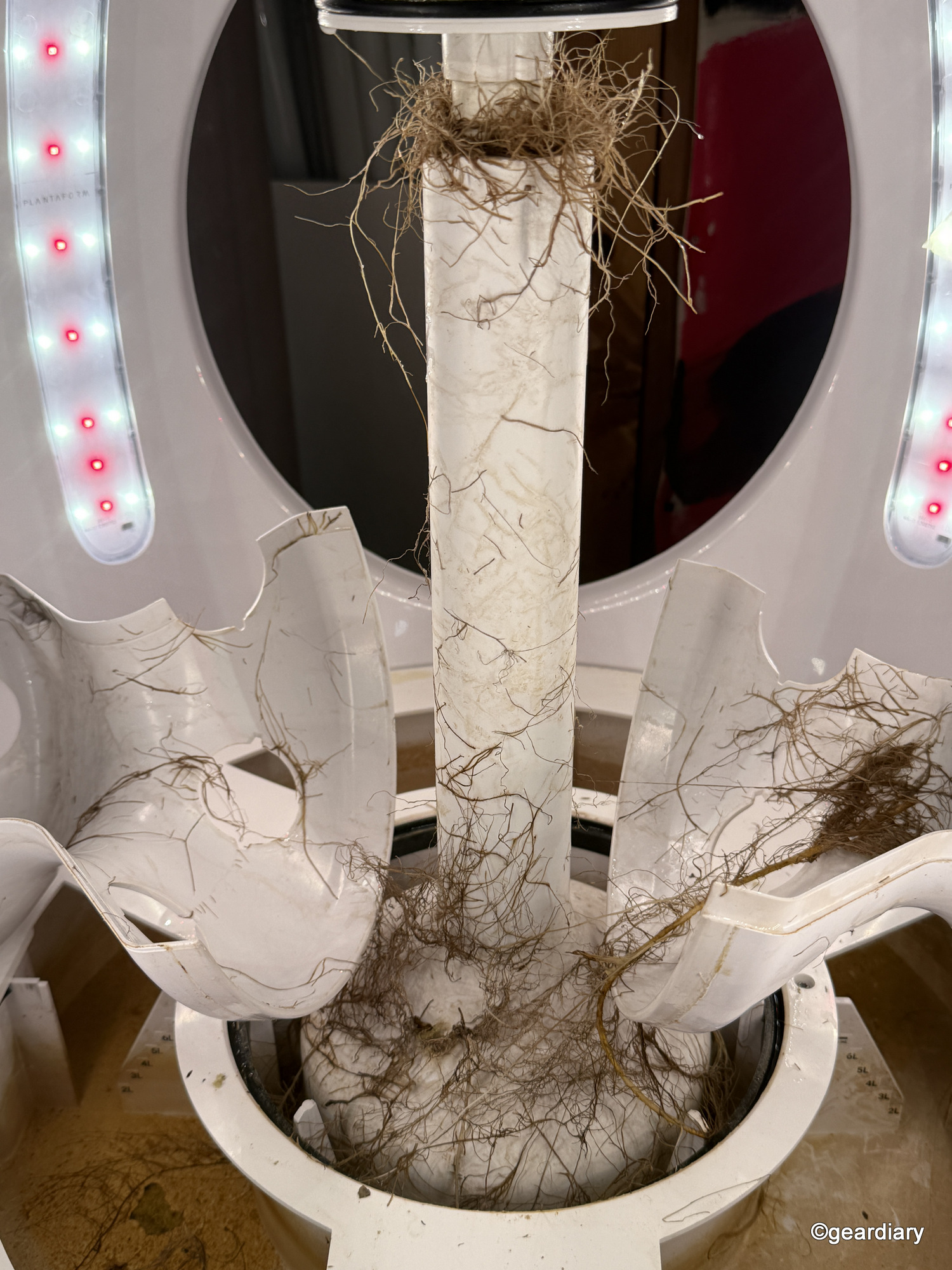
Cleaning between growing cycles is a necessary part of the process. After watching the videos, I was confident that doing it wouldn’t be that painful. However, I’ll admit I was a bit concerned about how the cleanup would go when I saw how crazily the roots had grown through the pods into the center column, reaching all the way down to the lower tank.
-
- The fully harvested Plantaform on May 14, 2025.
-
- Roots inside the center column on May 14, 2025.
-
- Roots in the lower water tank on May 14, 2025.
-
- Roots EVERYWHERE, even after many had been removed!
-
- The Plantaform with the center column removed for cleaning.
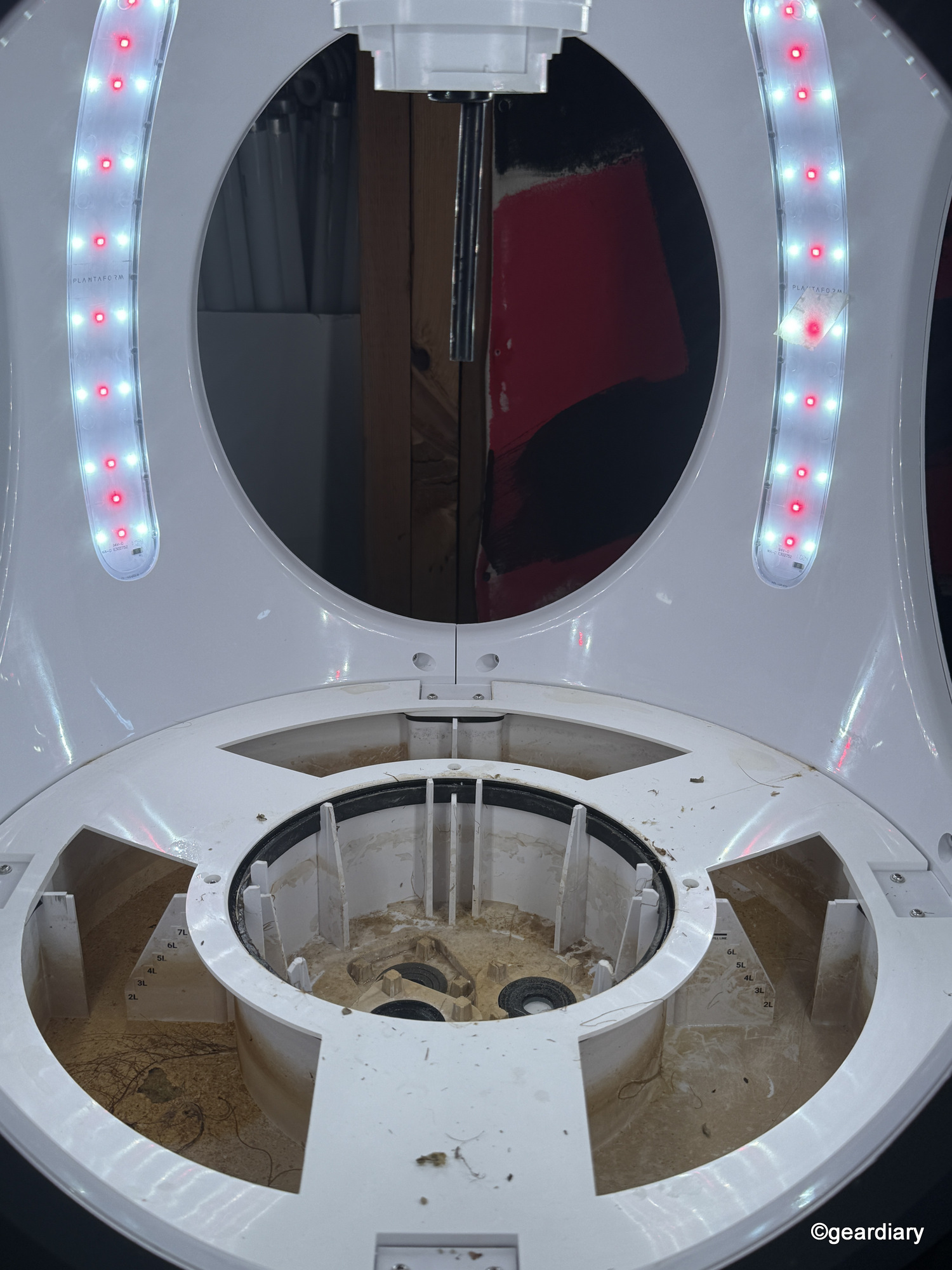
With the bulk of the root detritus removed, it was time for my first cleaning.
The Plantaform app offers two cleaning options: the first is Quick Clean, which is applied between successful harvests, and the second is Full Clean, which is performed every six months; the app will notify you when it’s needed.
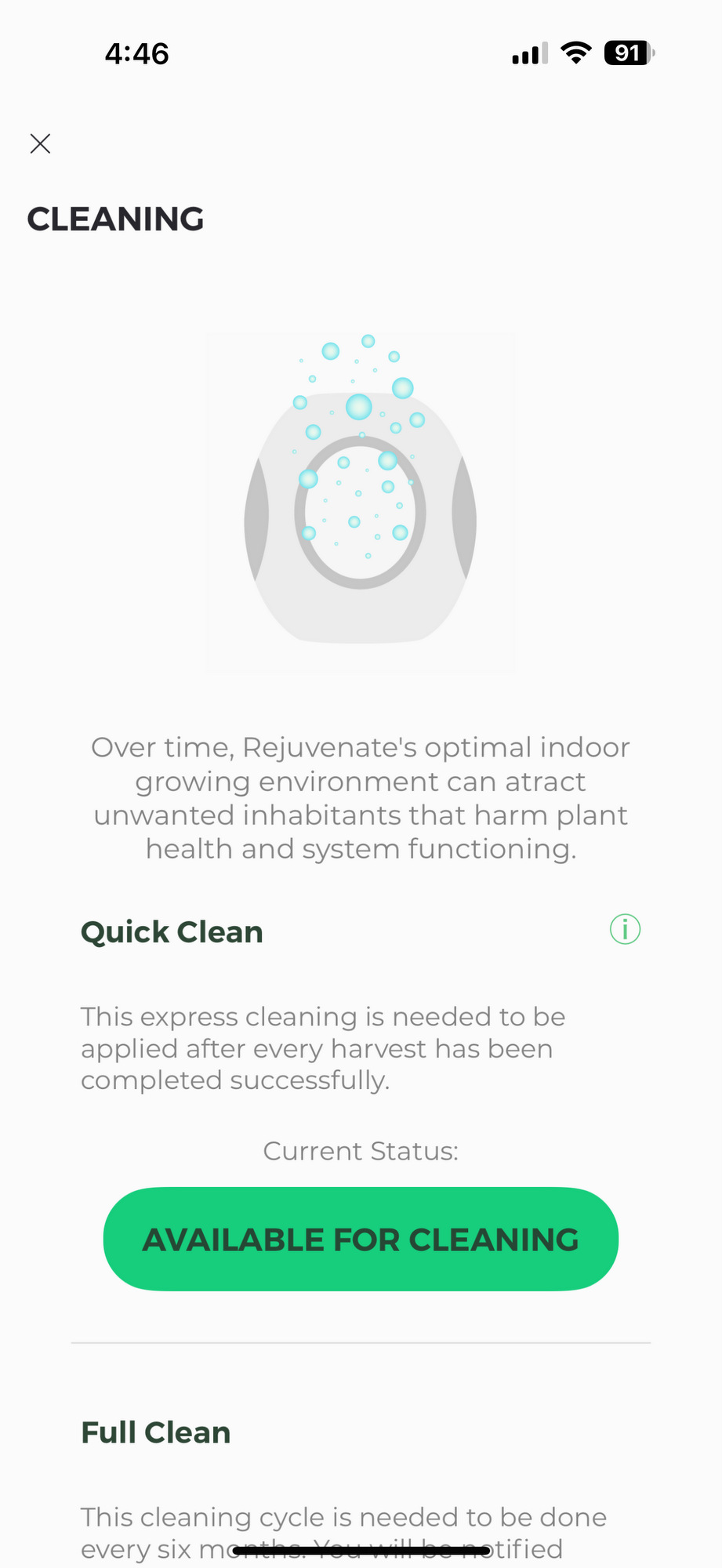
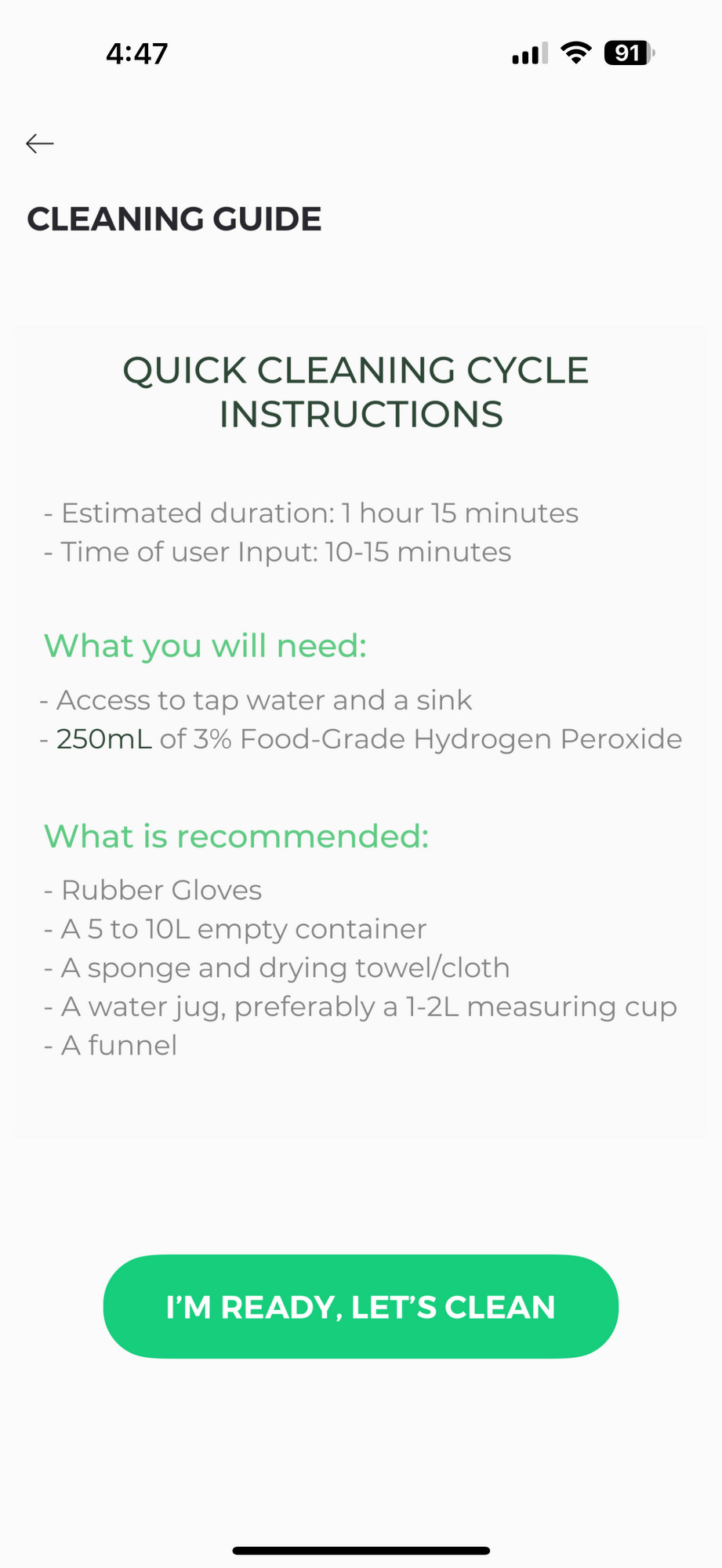
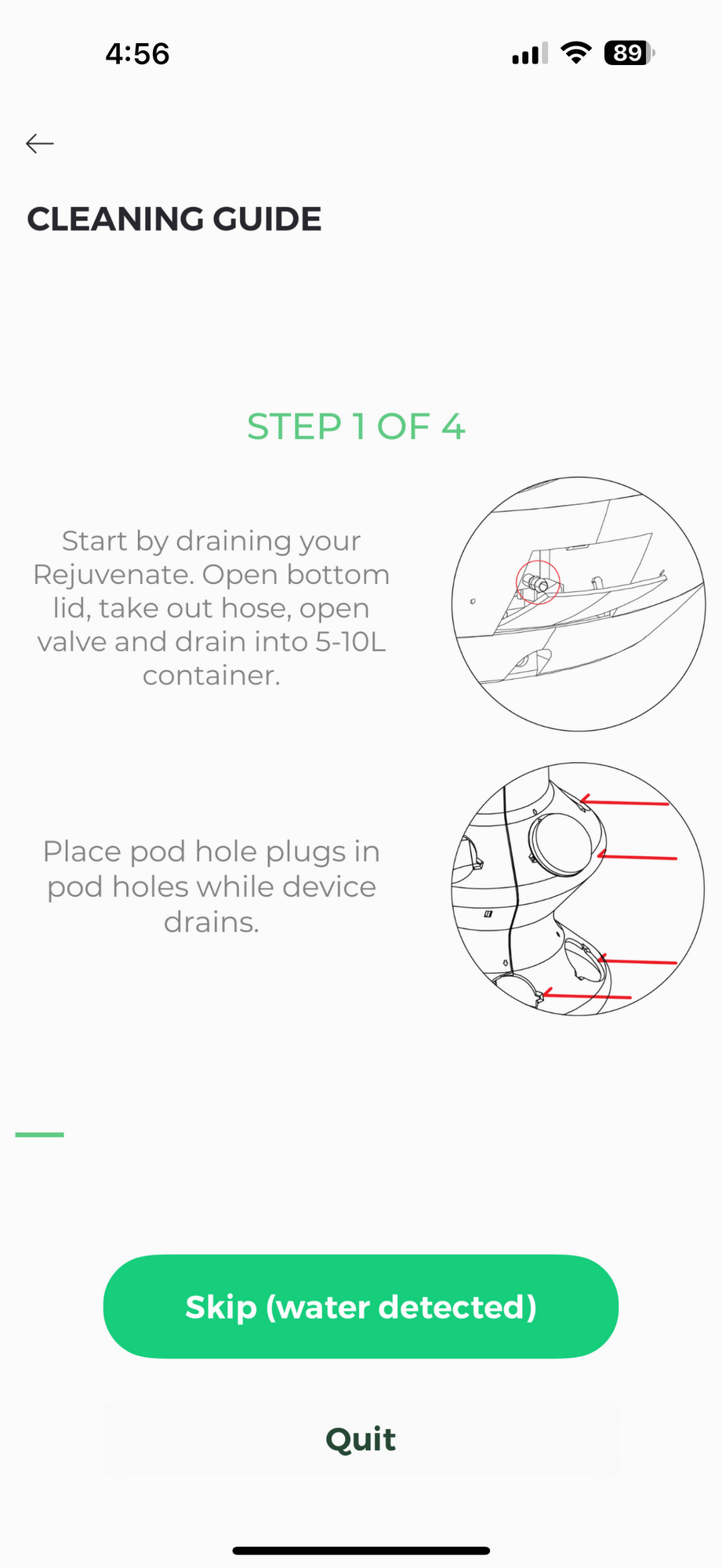
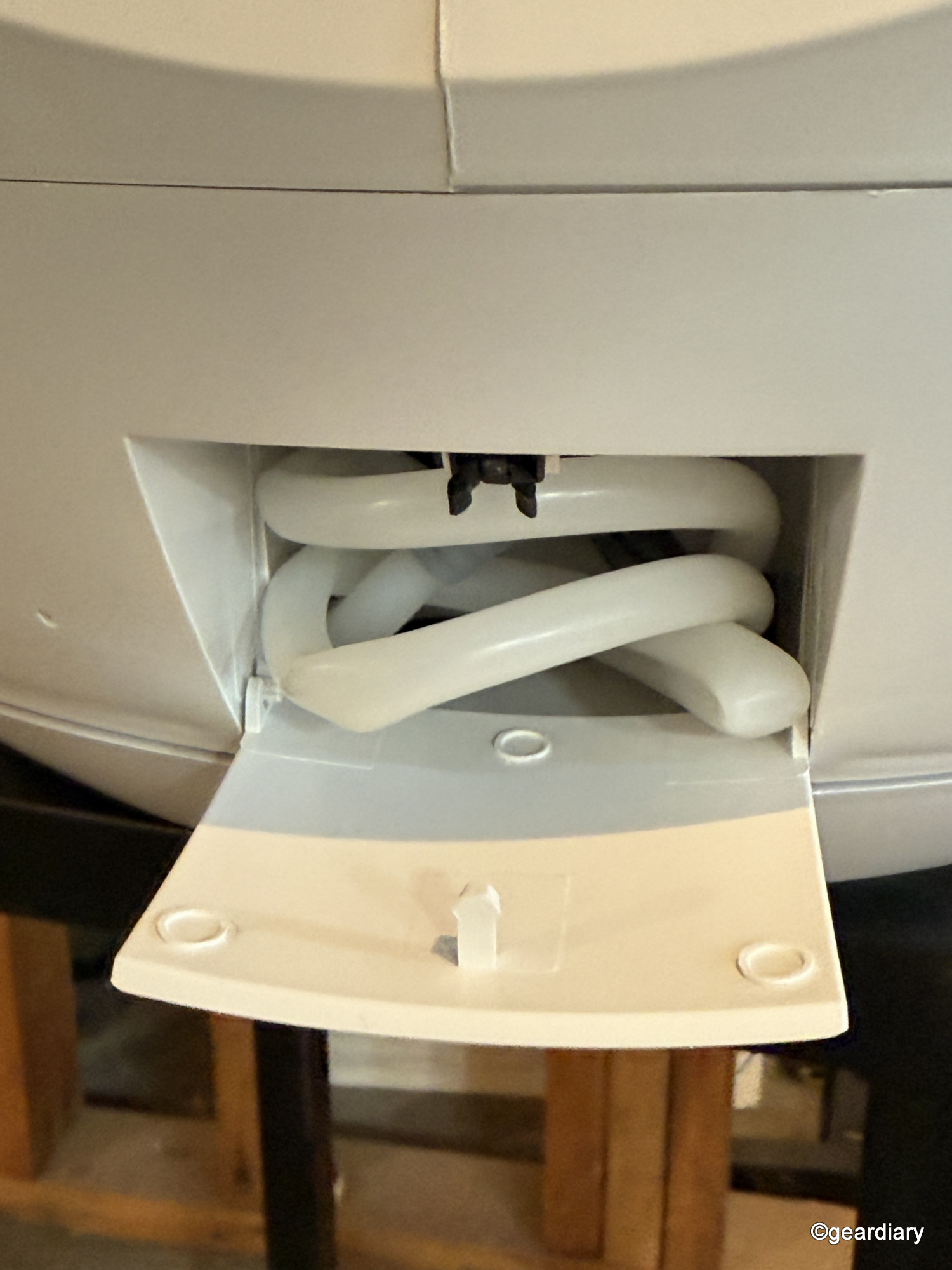
There’s a little pressure-sensitive door in front of the Plantaform that holds the extendable drainage hose; I set a bucket in front and turned on the tap.
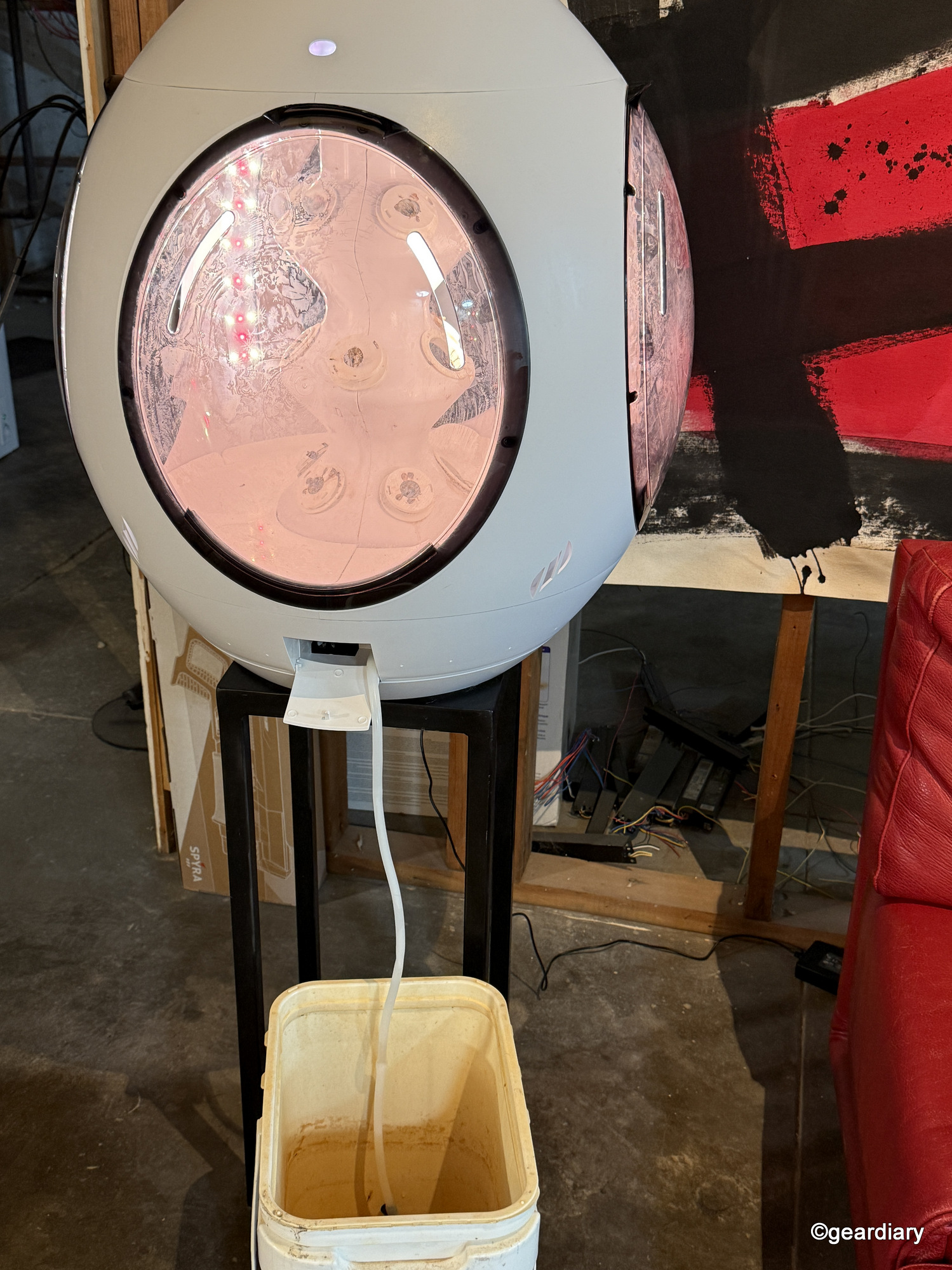
The bottom tank emptied fairly quickly, but when I checked the top tank, I noticed that it hadn’t drained at all, which reminded me of how it had never needed refilling during the growing process. Hmmm, maybe I should have paid more attention to that!
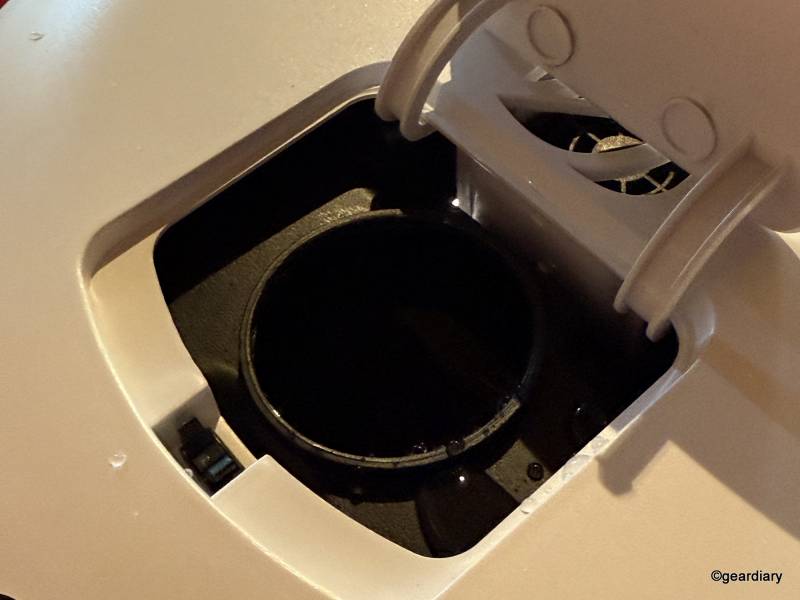
After a quick search in the Plantaform Support section, I found the steps to manually empty the top tank.
How to Manually Drain the Top Water Tank
If you’re performing a full clean or need to empty the top tank manually, follow these steps:
1. Press and hold the status light button for 3 seconds – the light should pulse GREEN.
2. Click the button to cycle through options until it pulses YELLOW.
3. Press and hold the button again for 3 seconds to confirm. The light will turn solid YELLOW, and you’ll hear an audible sound confirming the pump is active.
4. The top tank will drain completely in about 15 minutes.
I followed the instructions and waited for the top tank to drain, but nothing happened. Rather than going through my PR contact, I reached out to Plantaform Support directly, since this felt like the kind of issue an everyday customer might run into.
They got back to me quickly and were helpful and thorough. After some back and forth, they suspected the solenoid valve, which controls water flow between the tanks, wasn’t activating properly, possibly due to a loose connection or a fault. They asked me to leave the unit plugged in and online so they could try to trigger it remotely and monitor what happened.
They also asked me to keep an eye on it and let them know if I heard any draining or saw water move between the tanks. Nothing changed. Later, they told me they had tried to manually trigger the drain from their side but didn’t get a response from the valve. They asked me to shoot a quick video of what happened when I attempted to manually drain myself so they could better understand what was going on.
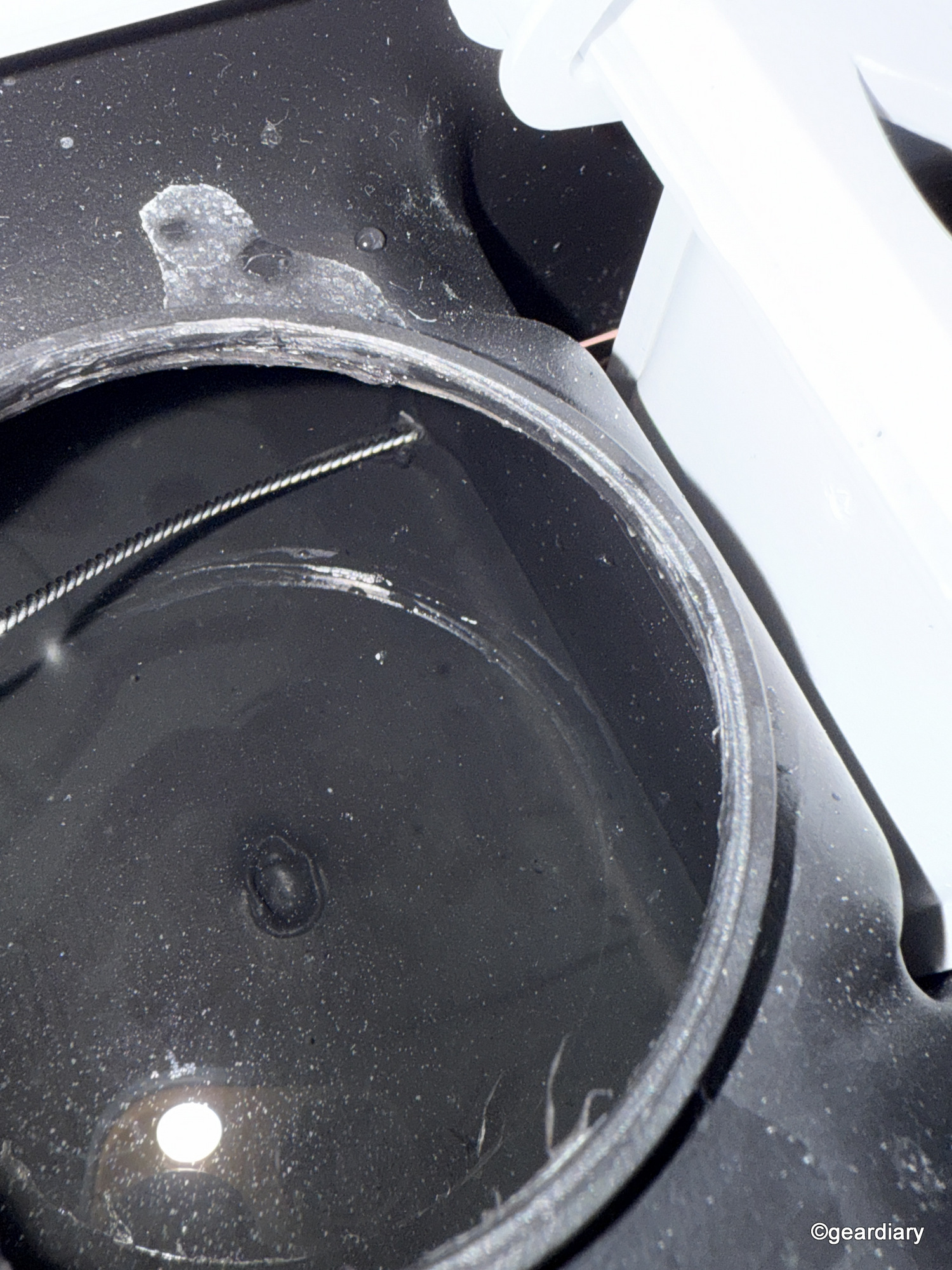
After sending the video, they reviewed it and ran more tests. Then they suggested I check for a blockage in the small drain hole inside the top tank. They recommended using the included pipe cleaner to see if that cleared any debris.
I’ll admit that after looking inside the tank, the only thing that resembled a drain hole looked like it was plugged with plastic, so at that point, I wasn’t entirely sure what I was looking for.
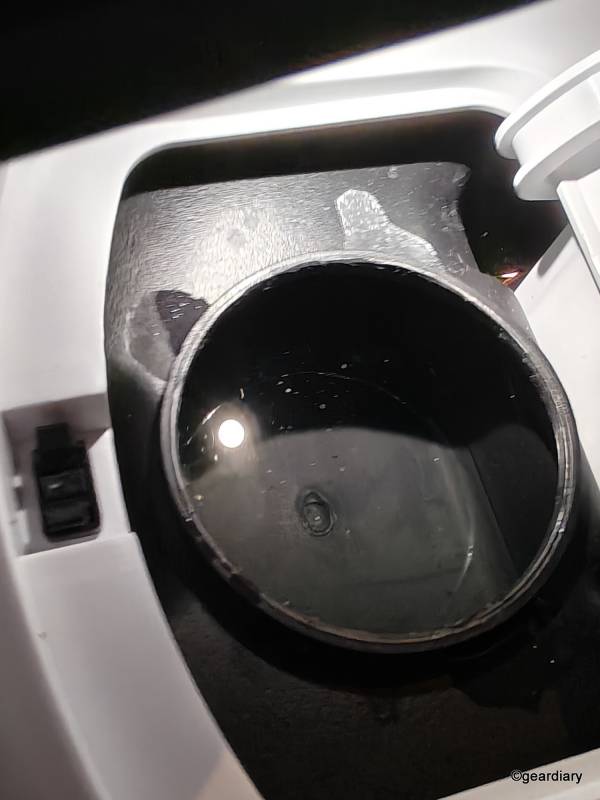
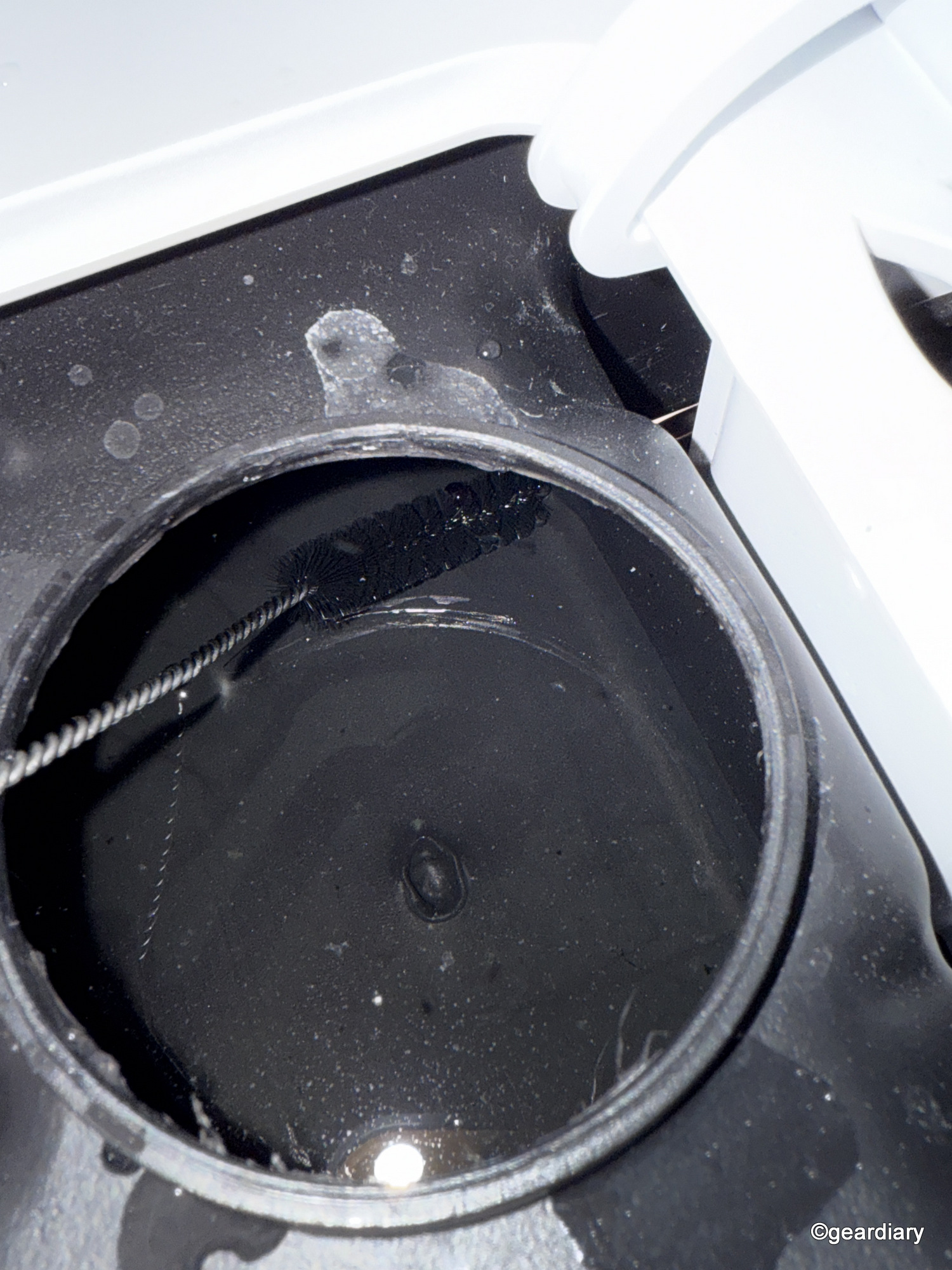
By shining my phone’s flashlight around the area, I noticed a tiny hole just to the side. I managed to get the cleaning tool lined up and shoved inside the tight spot, yet no water began to drain, and no detritus was removed.
Pay attention to these next photos; they will save you some time if you ever need to clean that hole!
After a bit more back and forth with Plantaform customer service, it was determined that my unit had a defective solenoid mechanism; I was told:
The good news is that your plants will still grow just fine, but the top tank won’t be usable for now, which means you may need to refill the bottom tank a little more frequently during future growing cycles
That said, we’d be happy to make this right for you. If you’re open to sending the unit back, we can either fully repair it or send you a replacement—whichever you prefer.
As you’ve seen from my experience thus far, the Plantaform performed perfectly in every area except draining the top tank. Even so, I opted for a replacement and requested a return label, which Plantaform’s customer service quickly agreed to.
The first thing I did upon receiving the replacement was to ensure that the top tank performed a manual drain before setting everything up; it worked perfectly, and I now have the Herb Essentials pod pack growing.
Assuming that, unlike me, you don’t encounter what was undoubtedly a rare issue with your upper tank’s solenoid mechanism, following the step-by-step process outlined in this excellent Plantaform video on Harvesting and Resetting the device will guide you through it all.
Comparing Plantaform to Other Indoor Gardens
Compared to other systems on the market, Plantaform holds its own and then some, but let’s look at some of its competitors.
The $349.95 AeroGarden Farm 12XL might be more compact and budget-friendly, but it lacks the sophistication and aesthetic appeal. The AeroGarden’s water-based system also requires more frequent refills and doesn’t support the same level of nutrient control.
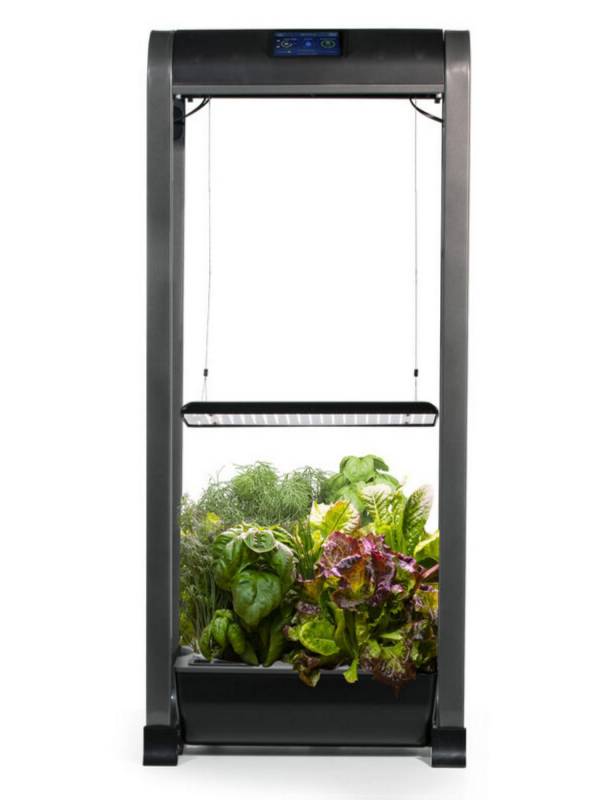
AeroGarden Farm 12XL
The Rise Garden3, which starts at $699, is a modular option that allows for growing larger quantities with each additional level added. Still, it’s more expensive, takes up more space, and assumes a level of gardening commitment that not everyone is ready for.
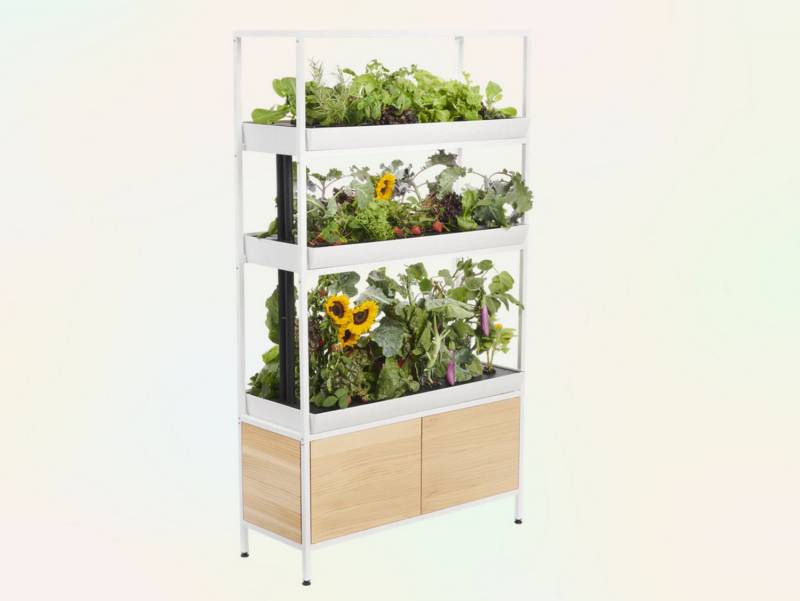
Rise Garden 3 with Three Levels ($1,299)
The $299.99 Click & Grow Smart Garden 9 PRO, on the other hand, is very simple but sacrifices control and customization. It’s more of a beginner toy than a true indoor farming solution.
And I don’t say that to mean; I’ve purchased and owned several Click & Grow models. While I find them great for growing smaller herbs and compact plants, such as strawberries, mini tomatoes, and chili peppers, as well as starting new seedlings to eventually move to their own pots, I would never rely on one for consistent harvesting from full-size plants.
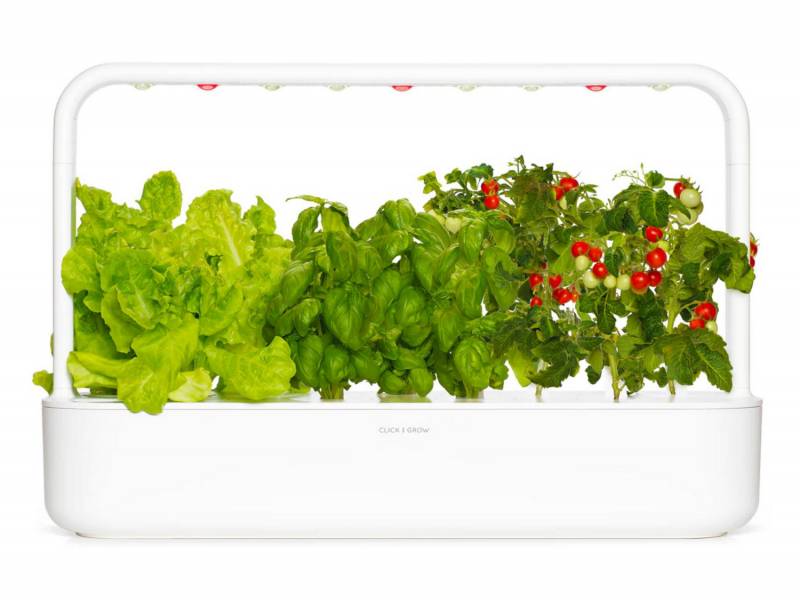
Click & Grow Smart Garden 9 PRO
Plantaform finds the sweet spot. It offers high-level performance without requiring high-level expertise. The fogponic system is clean, efficient, and ideal for those who want serious results without a serious time investment.
Is It Worth It?
At $749, Plantaform isn’t an impulse buy; it’s more of an investment in your lifestyle. However, if fresh, clean food is important to you, it’s worth considering. You’re getting pesticide-free produce grown in a controlled, sustainable environment. You’re reducing your reliance on grocery stores. You’re minimizing waste. And perhaps most importantly, you’re participating in the experience of growing your own food, an act that feels quietly revolutionary in a world where convenience often trumps connection.
The Plantaform Smart Indoor Garden is an excellent choice for apartment dwellers with limited natural light or space. It’s also ideal for busy professionals who want a reliable and automated way to grow fresh food without adding another task to their daily routine. Health-conscious individuals who prefer to know exactly where their produce comes from will appreciate the ability to grow clean, pesticide-free greens at home. Additionally, it’s a smart solution for anyone seeking to reduce their food miles and minimize single-use packaging waste.
The Plantaform Smart Indoor Garden might not be the right fit for you if you’re working with a tight budget, as it is a premium-priced appliance. It’s also not ideal if you’re hoping to grow root vegetables or large vining plants that require more space than the system provides. And if you genuinely enjoy the tactile experience of digging in the soil and prefer traditional, hands-on gardening, this sleek, soil-free setup may feel a bit too clean and automated for your taste, and that’s okay!
For leafy greens, herbs, edible flowers, and even compact fruiting plants like cherry tomatoes, the Plantaform is a fantastic choice.
Should You Buy One?
Using the Plantaform Smart Indoor Garden has completely changed the way I think about growing food at home. It’s not just another gadget, it’s a new kind of appliance. It fits into modern life in a way traditional gardening can’t, offering convenience with an aesthetic appeal.
Plantaform encourages you to eat fresher, plan meals around what’s growing, and appreciate the little things, like the satisfying crunch of a just-picked lettuce leaf or a full salad you harvested and grew yourself.
The beauty of Plantaform is that it doesn’t demand perfection. It supports you whether you want to dip a toe into indoor gardening or become a full-fledged leafy green overlord. And at every stage, it offers a little moment of wonder: a sprout breaking through the surface, the cool mist drifting like breath in winter air, the first snip of a salad you grew with your own hands.
If you’re looking for a hands-on way to grow your own food without the dirt, bugs, or unpredictable weather, Plantaform is worth the space on your counter. It’s smart, stylish, and satisfying. In a world where almost everything is designed to be consumed instantly, there’s something profoundly grounding about watching something grow day by day until it becomes dinner.
The Plantaform Smart Indoor Garden retails for $749.99; it is available directly from the manufacturer.
Source: Manufacturer-supplied review sample
What I Like: Beautiful, modern design that complements home decor; Uses advanced fogponics for efficient, soil-free growing; Nearly silent operation with minimal maintenance noise; Straightforward setup with a well-designed app interface; The app provides helpful, timely guidance and reminders; Produces vibrant, flavorful greens with noticeable freshness; Clean and automated growing process with no mess or pests; Party Mode offers a fun, visual system check; Excellent customer support experience; Encourages consistent harvesting and reduced food waste
What Needs Improvement: Premium price may be out of reach for some budgets; Not suitable for root vegetables or large vining plants; Requires regular app use for optimal experience; My original unit had a solenoid flaw, but customer service was helpful with getting a new unit after troubleshooting





Very interesting. The comparison with other systems is quite helpful.