
The Lowdown
If you want your phone to be a statement piece without sacrificing flagship performance, the Razr Ultra delivers. It’s for people who want the fun of a flip with the power of a modern flagship, and who will actually use that outer display for more than just checking the time.
Overall
Pros
- Full Android apps on the 4″ cover display
- Brilliant 7″ main display with a barely perceptible crease
- Fantastic battery life
- Moto AI adds to the Android user experience
- Excellent performance
- Stylish colors and a premium design
- Available with up to 1TB storage
Cons
- Only three years of major OS updates
- Cameras are not great in low light, and the zoom suffers above 4X
There’s a certain smugness that comes with flipping your phone shut to end a call. It’s dramatic. It’s final. And in the age of flat slabs that all look like they’ve been cut from the same uninspired block of glass, the new Motorola Razr Ultra makes a statement. Yes, it folds. Yes, it’s a great fidget toy. And yes, it’s got enough processing muscle to make you forget that flip phones used to be “basic,” because this one is anything but.
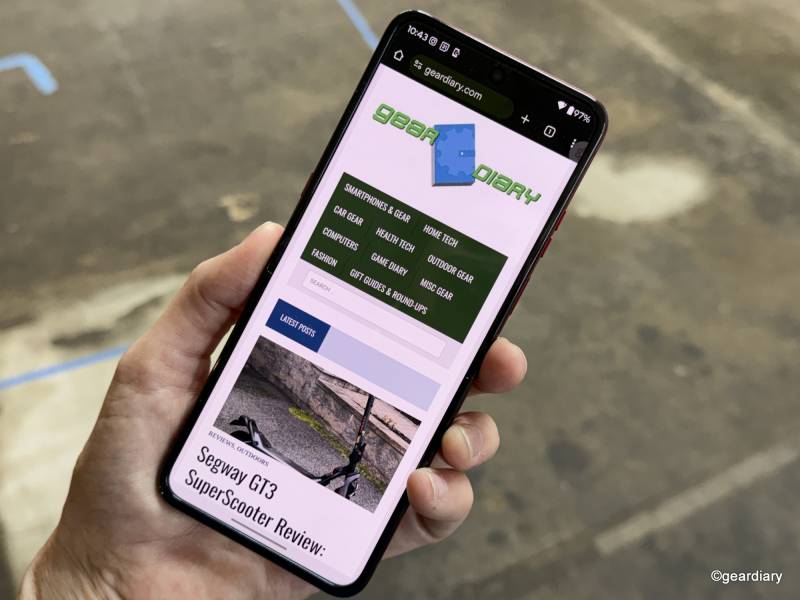
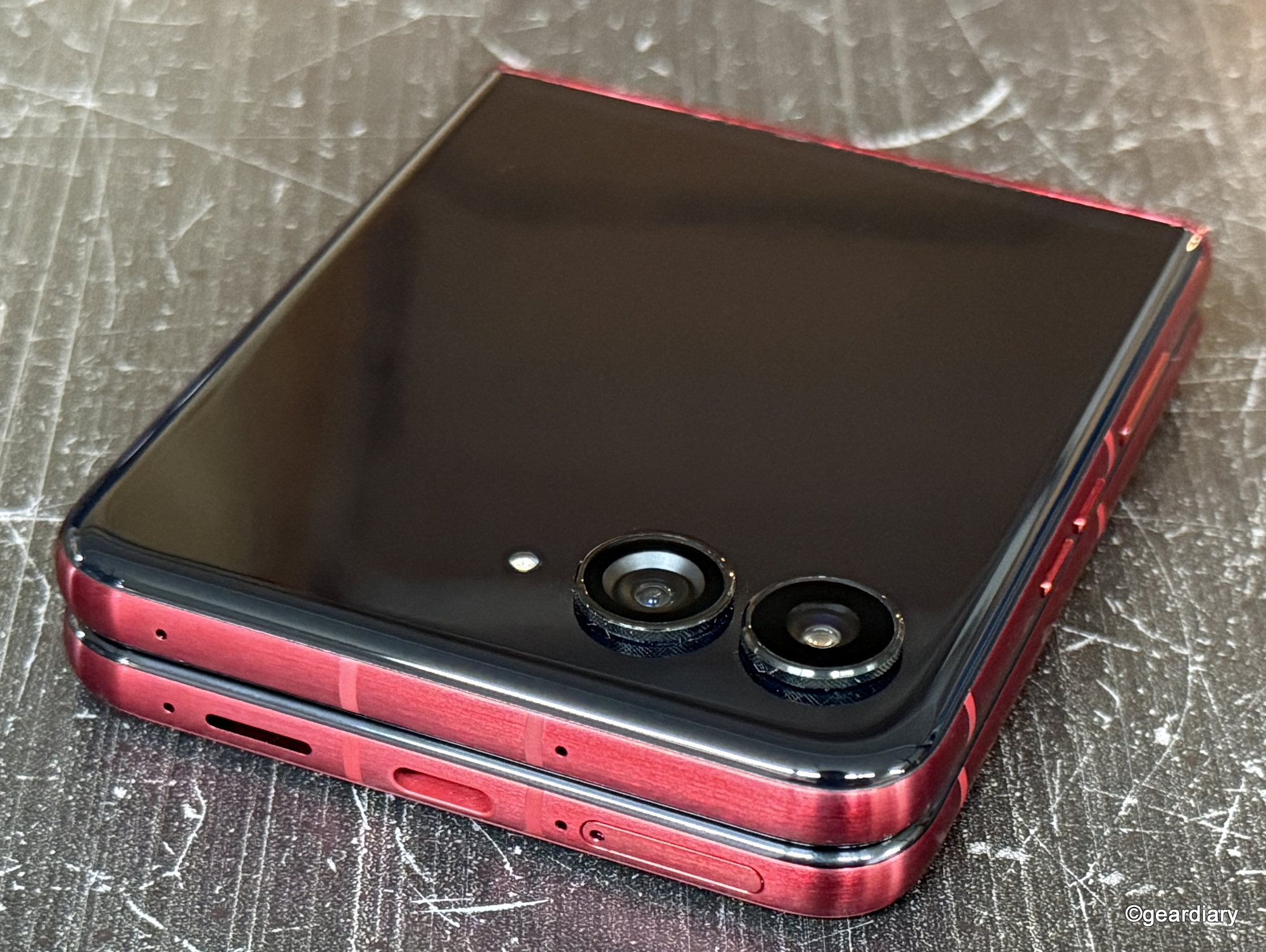
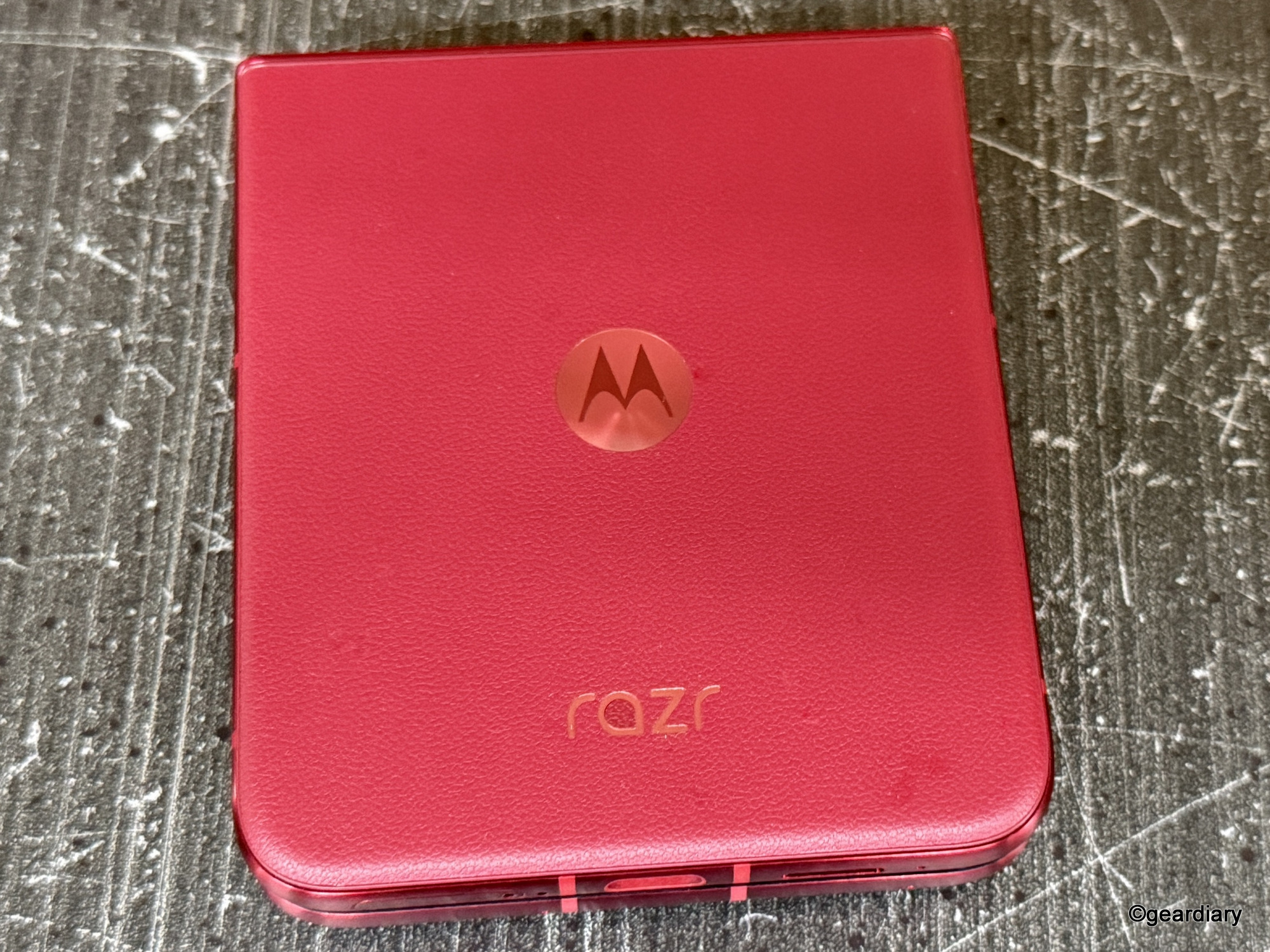
My review unit showed up in PANTONE Rio Red, which has a leather-like texture that feels luxurious and pleasantly grippy. After well over three months of use, I’ve noticed it holds up well to handling, with no shiny worn spots or fingerprints, but lint from a bag or pocket can cling a little.
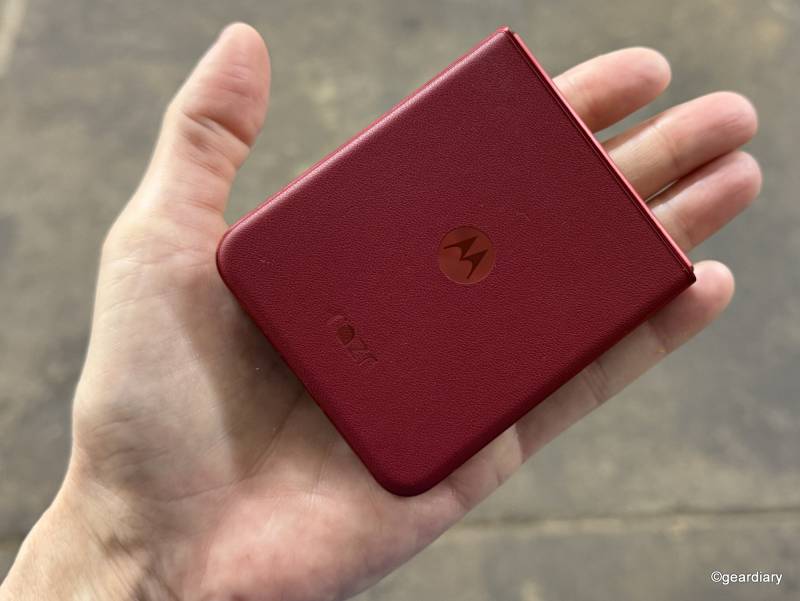
It’s still gorgeous, though, and it turns heads whenever it’s out on a table. You can also get it in deep green Alcantara (think “sports car dashboard, but portable”), satiny fuchsia, or a surprisingly classy FSC-certified wood finish.
What’s in the Box
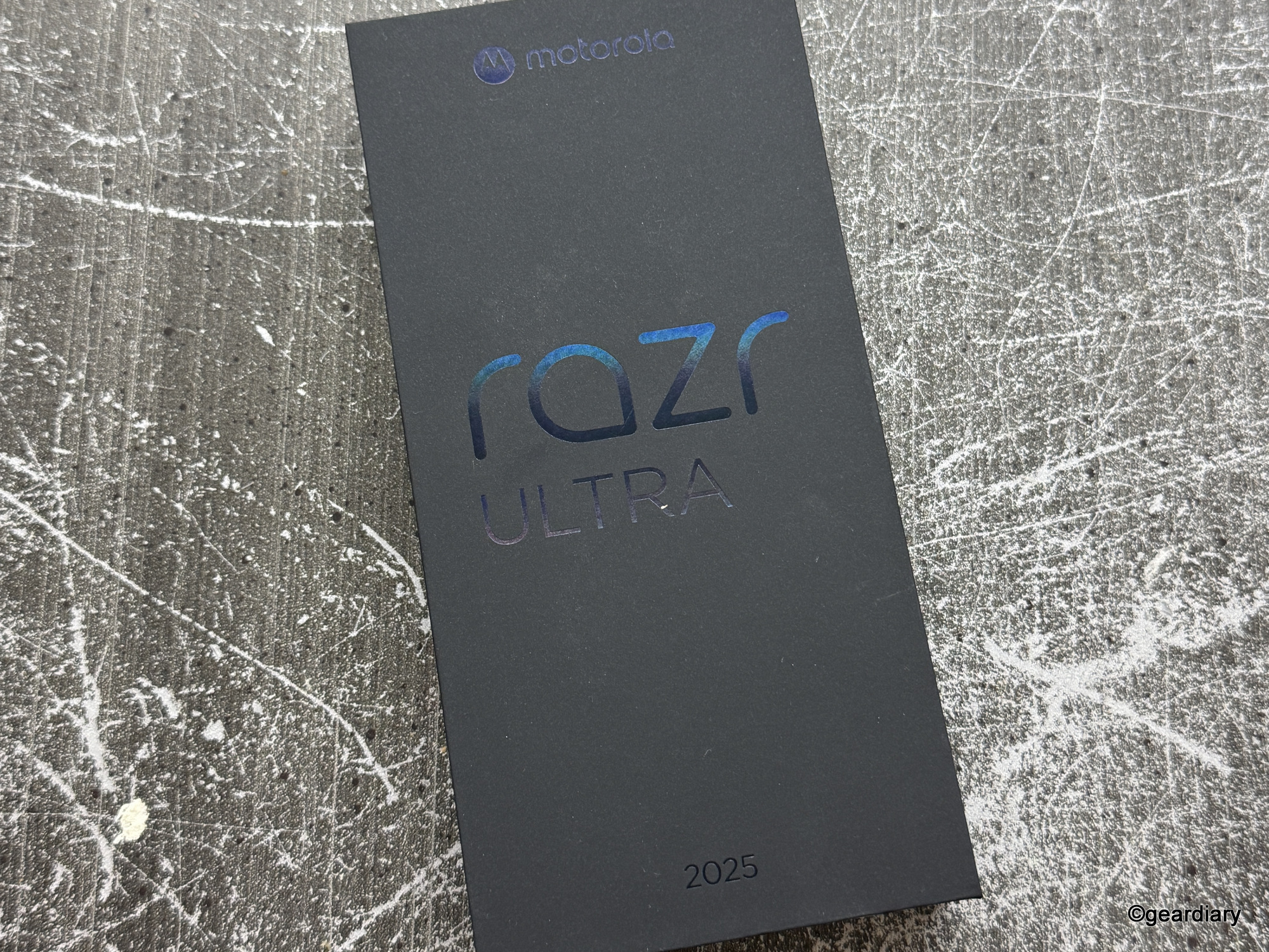
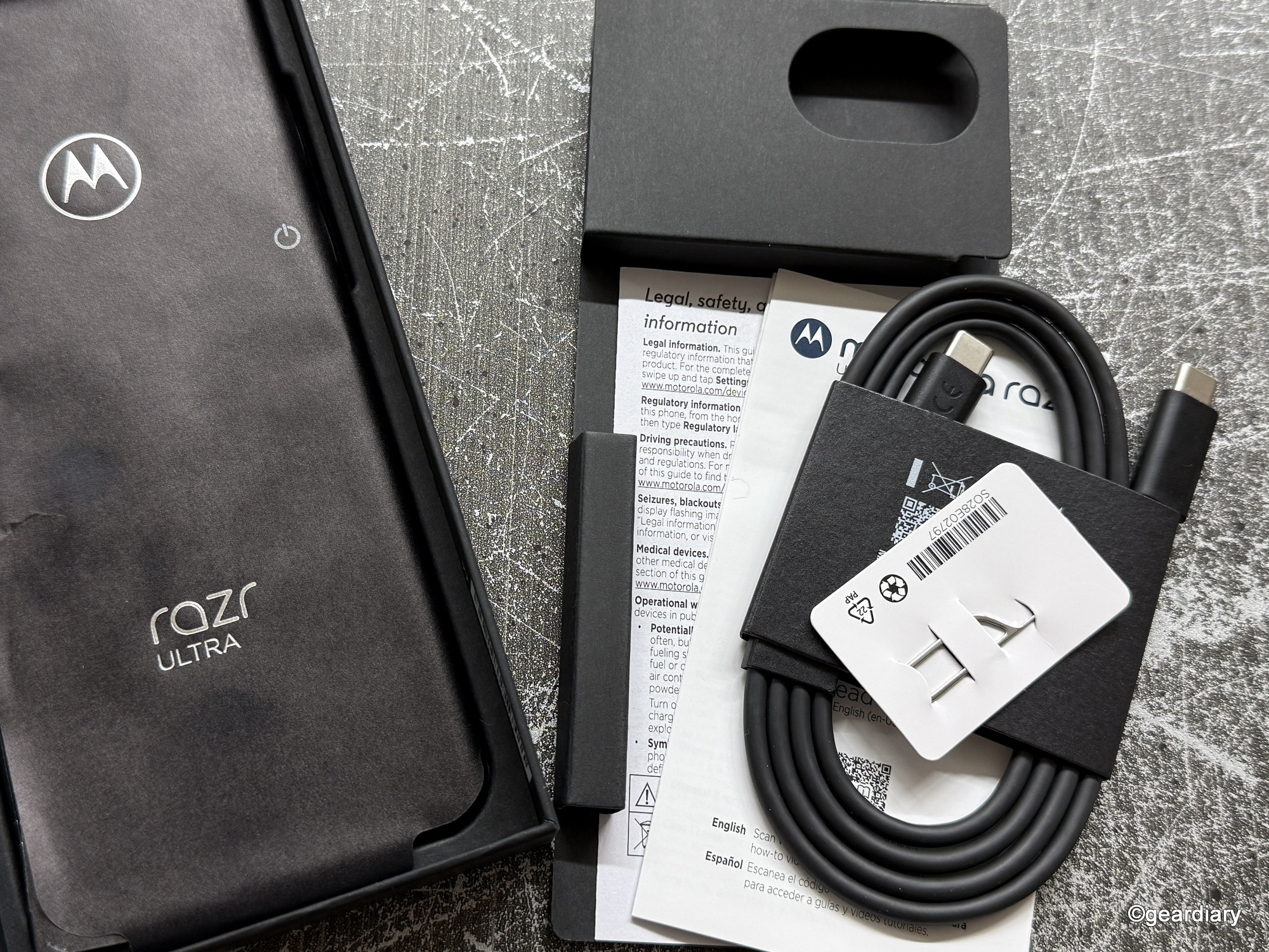
Inside the box, you get the Razr Ultra, a USB-C to USB-C charging cable, a SIM ejector tool, and a quick start guide. There’s no charging brick, Motorola says it’s for environmental reasons, so if you want that 68W TurboPower top-up speed and don’t already own a charger that can deliver it, you’ll need to buy one.
The Outside: Premium, Pocketable, and Unapologetically Showy
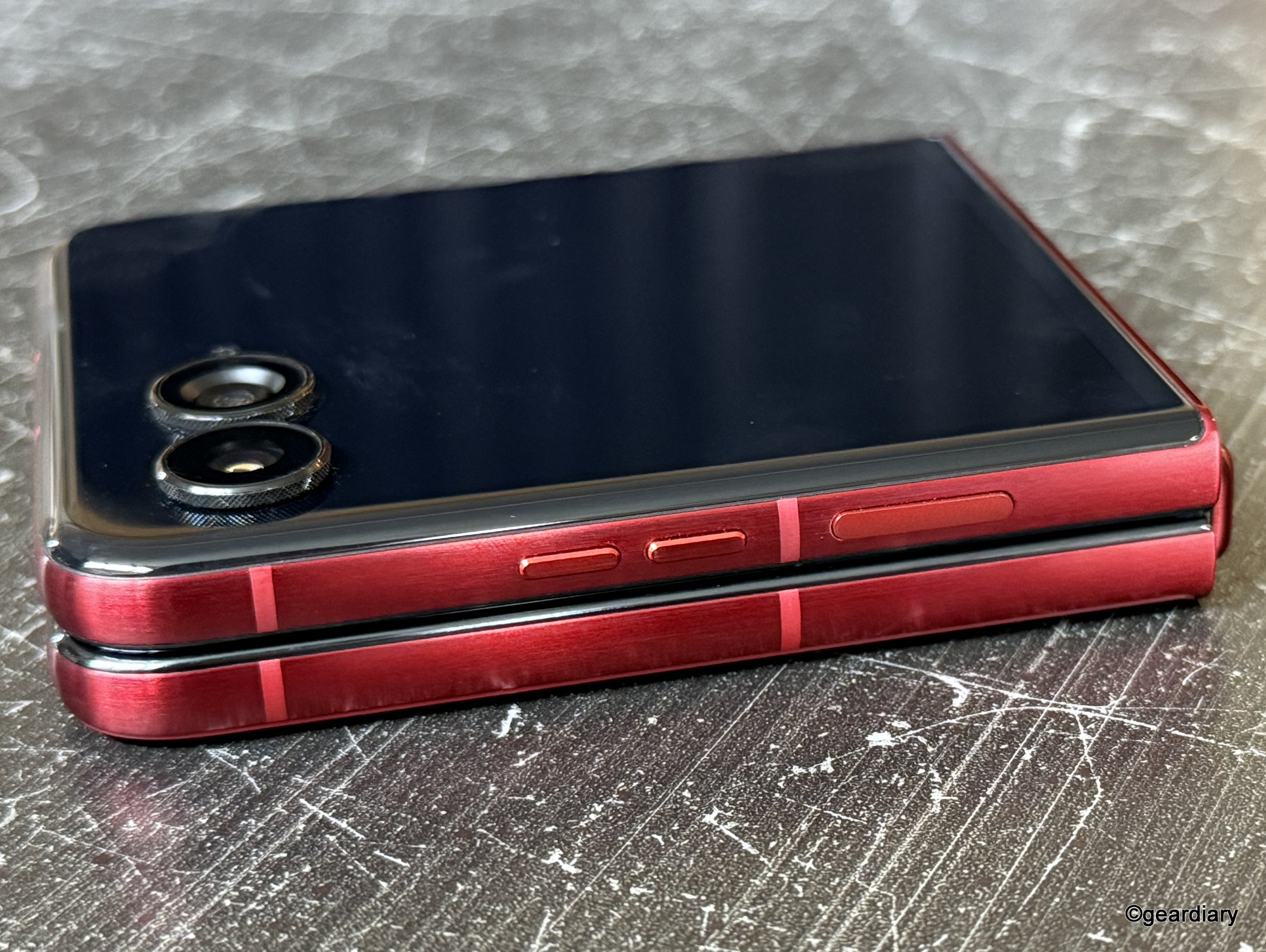
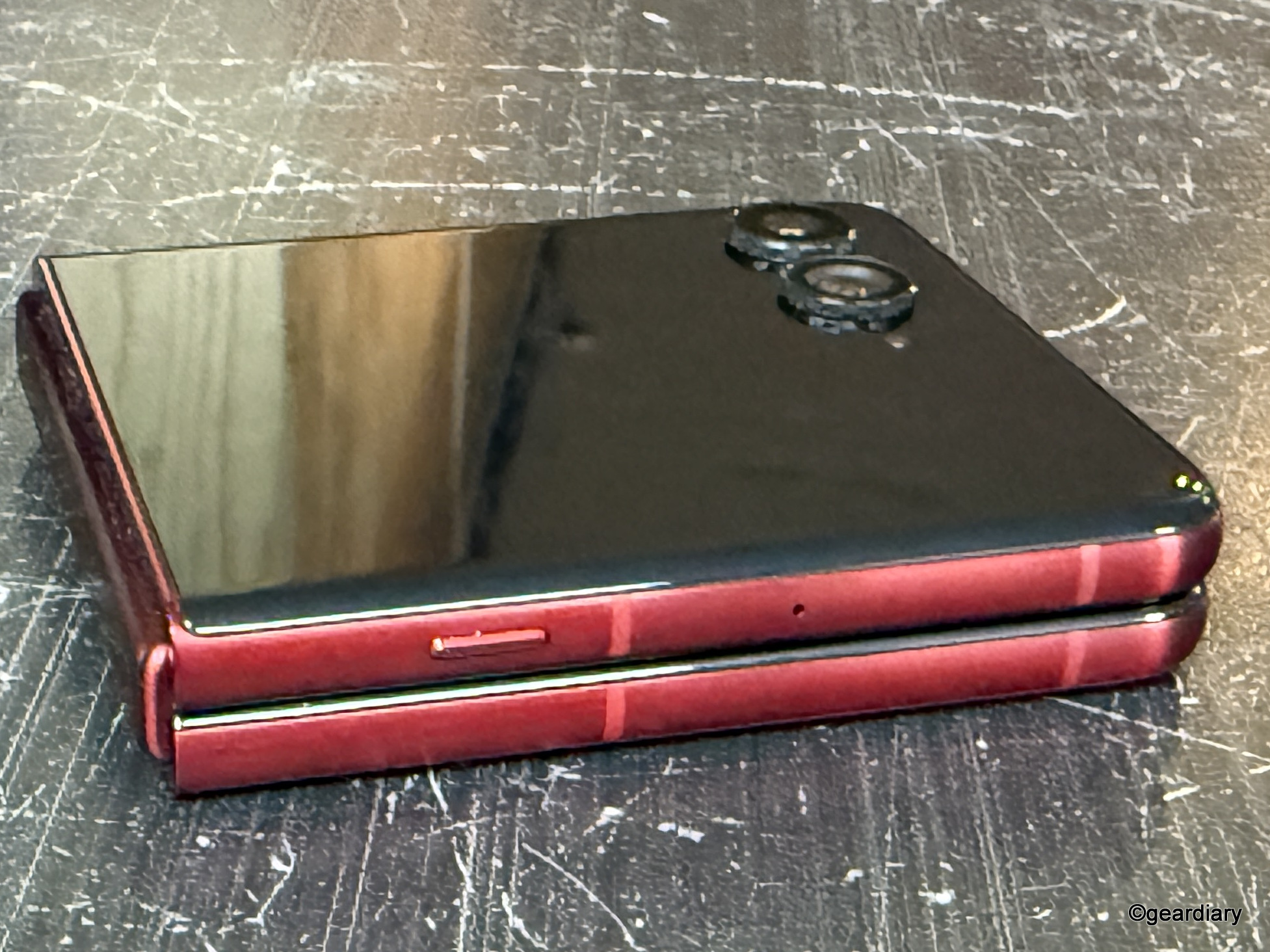
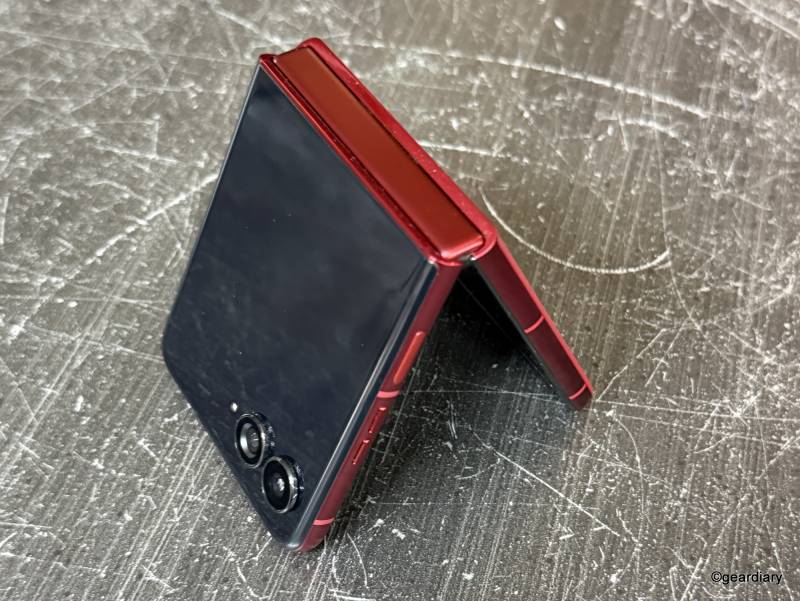
Folded, the Motorola Razr Ultra feels satisfyingly solid and compact. It measures 2.92″ wide by 3.54″ tall, and 0.62″ thick, weighing in at 6.8 ounces (199g). That’s bigger and heavier than your old flip phone, but still lighter and more pocketable than most flagship slabs.
-

- Front
-
- Right
-

- Left
-
- Back
The 6000-series aluminum frame and titanium hinge feel reassuringly solid. I’ve been flipping it open and shut multiple times a day, and the hinge still feels just as tight and smooth as it did out of the box, with no looseness or creaks. The Gorilla Glass Ceramic outer layer and IP48 water resistance meant I didn’t panic when I got caught in a light rain, though I wouldn’t trust it to survive a dip in anything other than fresh water.
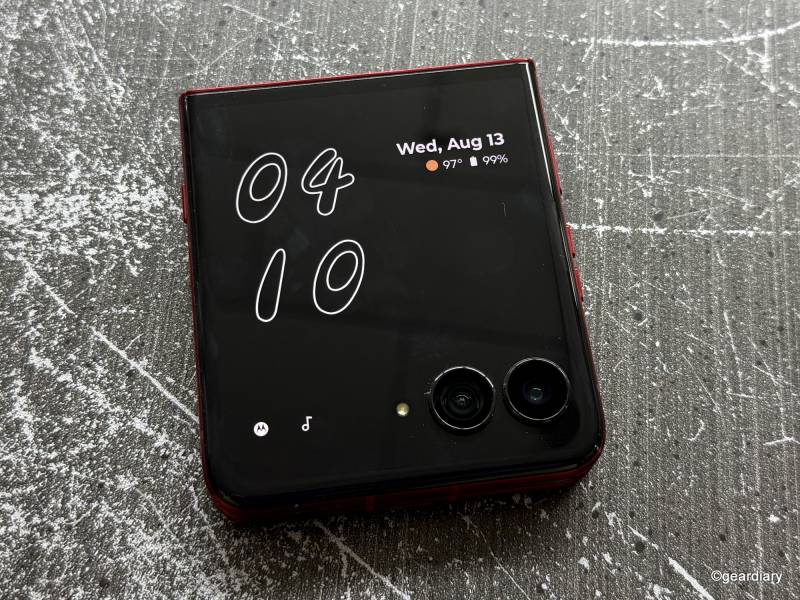
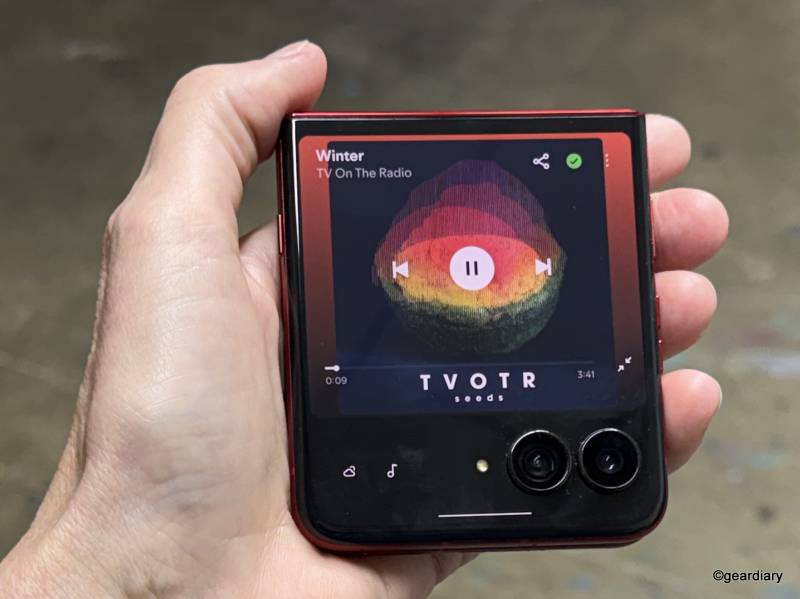
The 4″ pOLED cover screen is bright enough (3000 nits peak) that I could easily check maps or respond to messages while walking in full sun. I ran Google Maps on it during a short trip, and it was shockingly usable without opening the phone. The cutouts for the cameras and LED flash barely get in the way.
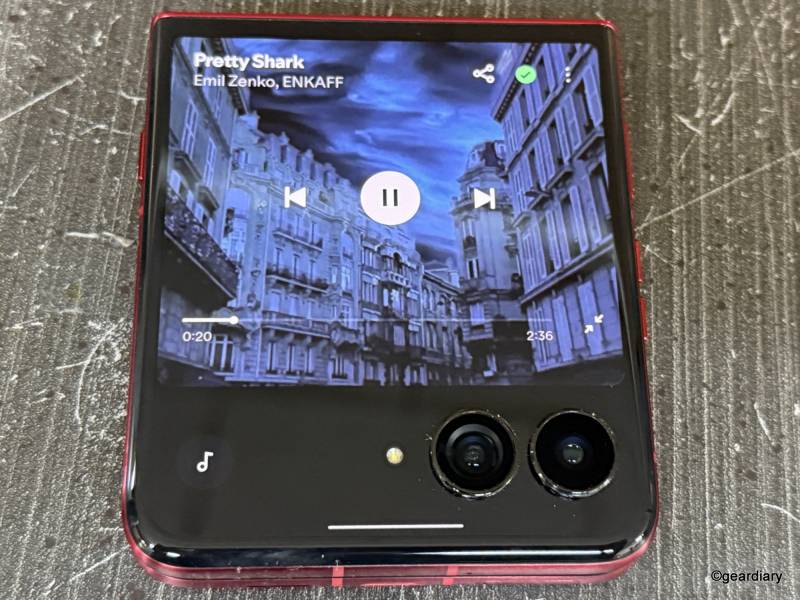
As I found on last year’s razr+, being able to run full apps on the outer display is a game-changer; I could queue up Spotify playlists, send quick Telegram replies, and even scroll Instagram without the full unfold ritual.
The Inside: The “Big Screen TV” of Flip Phones
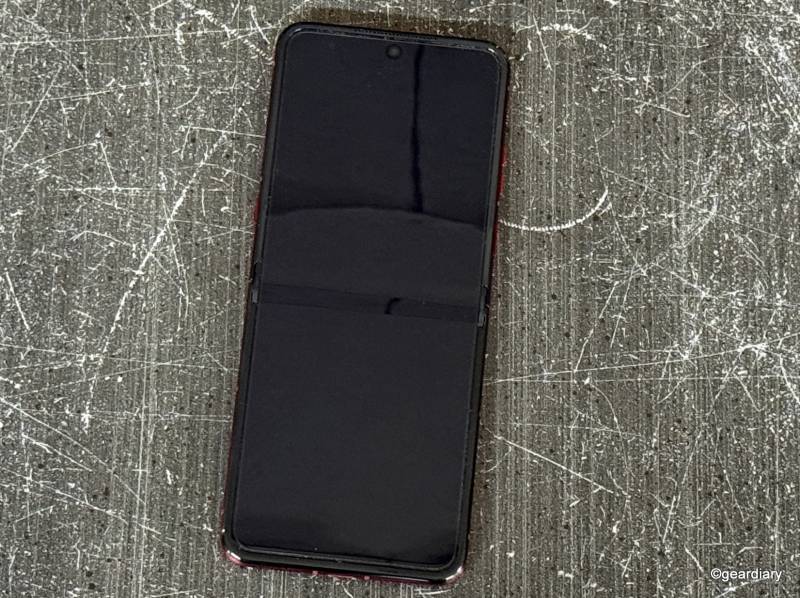
Flip it open, and the Razr Ultra reveals a 7″ LTPO OLED panel with 2912×1224 resolution (464ppi), HDR10+ and Dolby Vision, and a 165Hz adaptive refresh rate. Peak brightness hits 4500 nits, so you can comfortably use it in direct sunlight. The bezels are even, and there’s a centered punch-hole for the 50MP front camera.
The right side holds the volume rocker and power/lock button with a built-in capacitive fingerprint sensor. Along the bottom are the SIM tray, USB-C port, one of two stereo speakers, and a pair of microphones. More mics sit along the top and left sides, the latter also hosting a dedicated AI key for Motorola’s moto ai features.
-

- Right
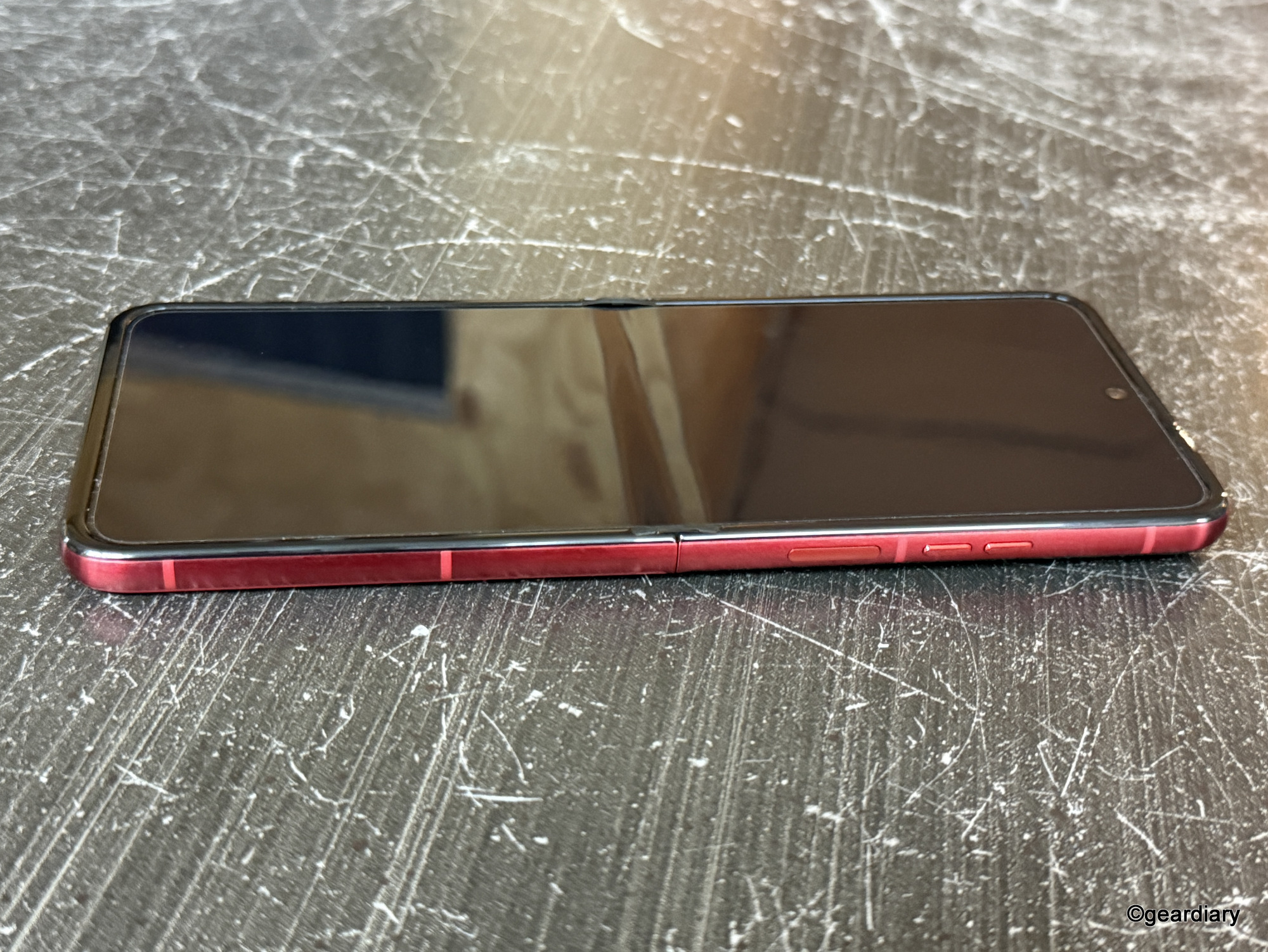
-
- Left
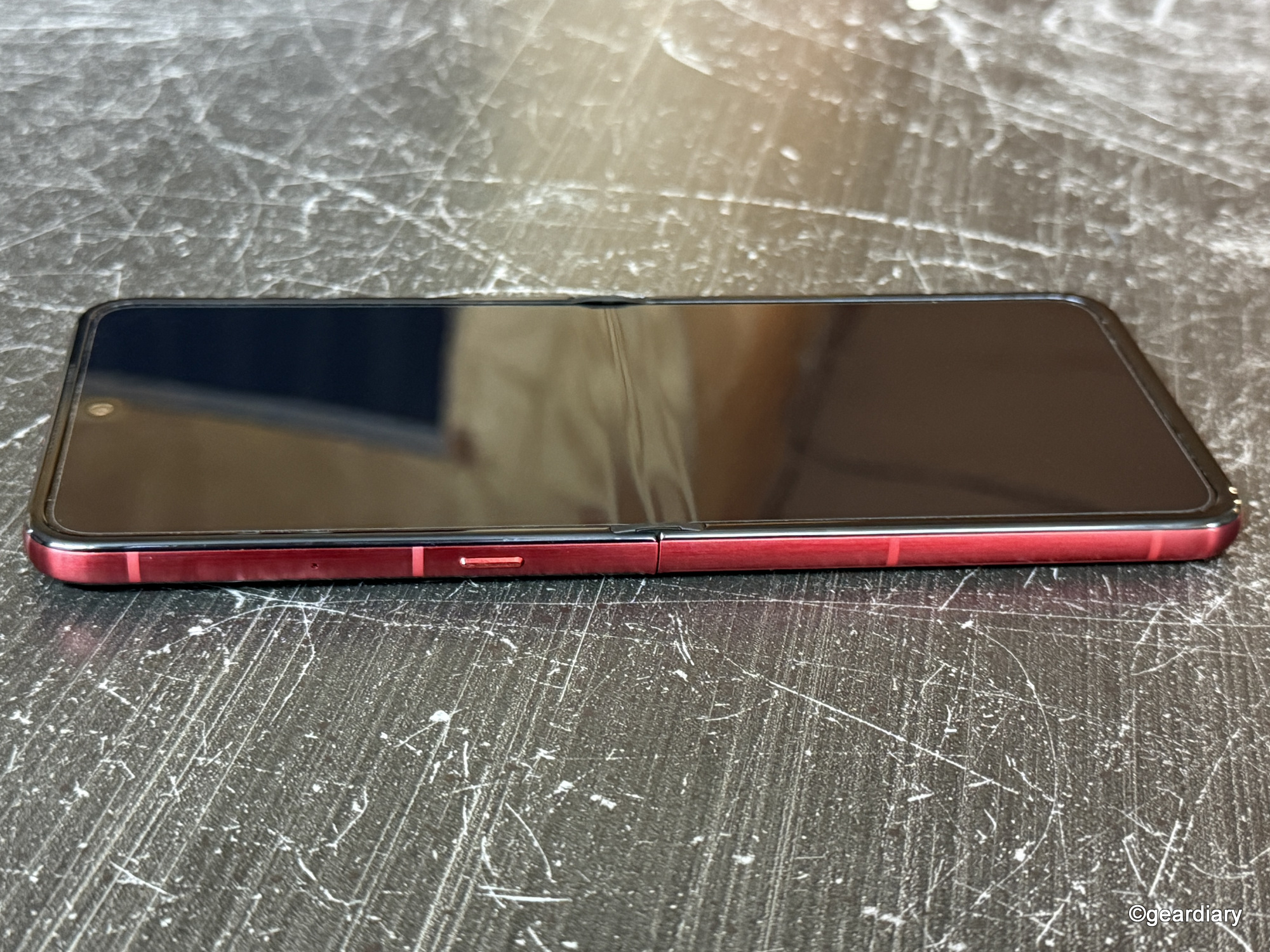
-
- Top
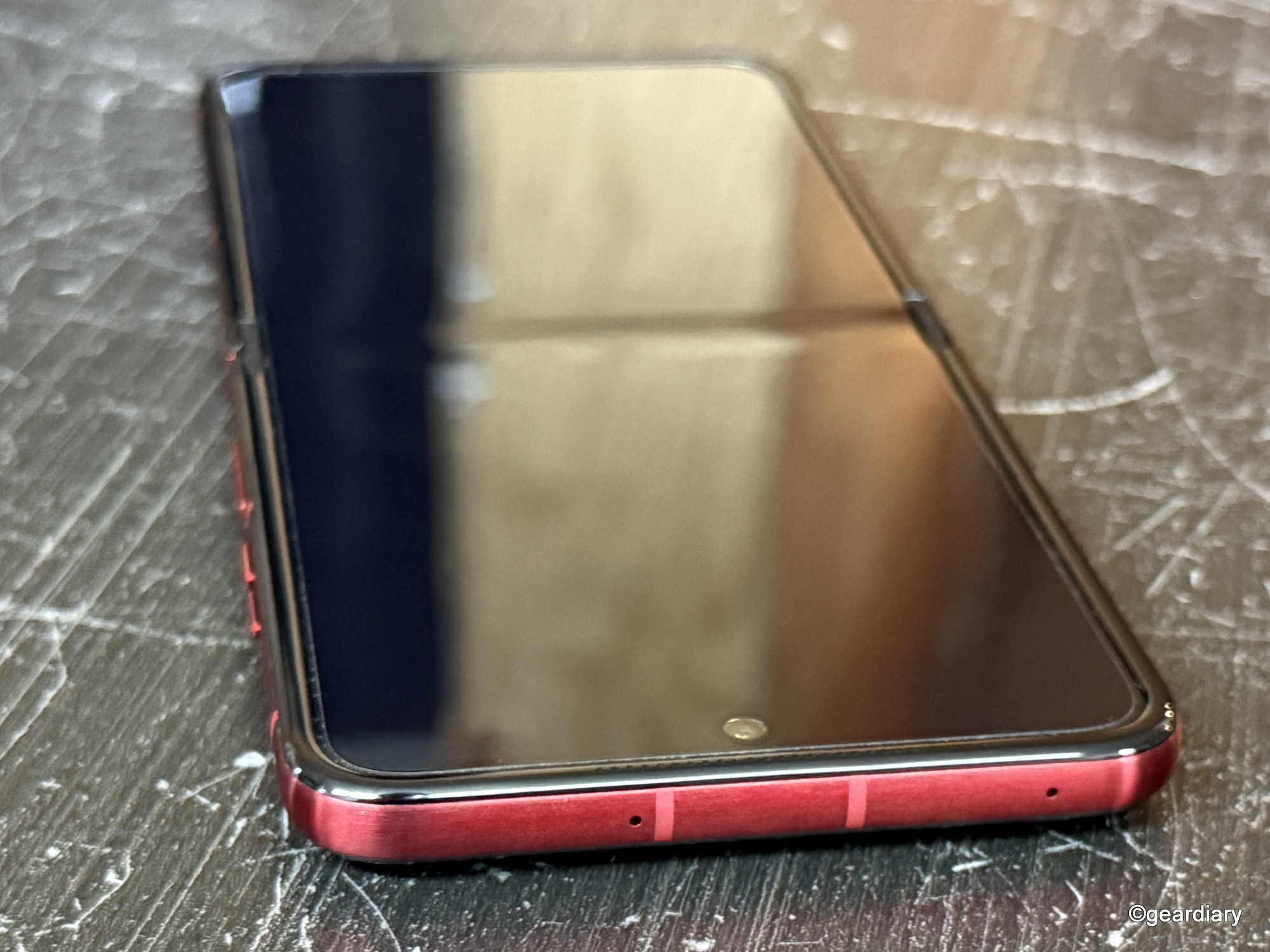
-
- Bottom
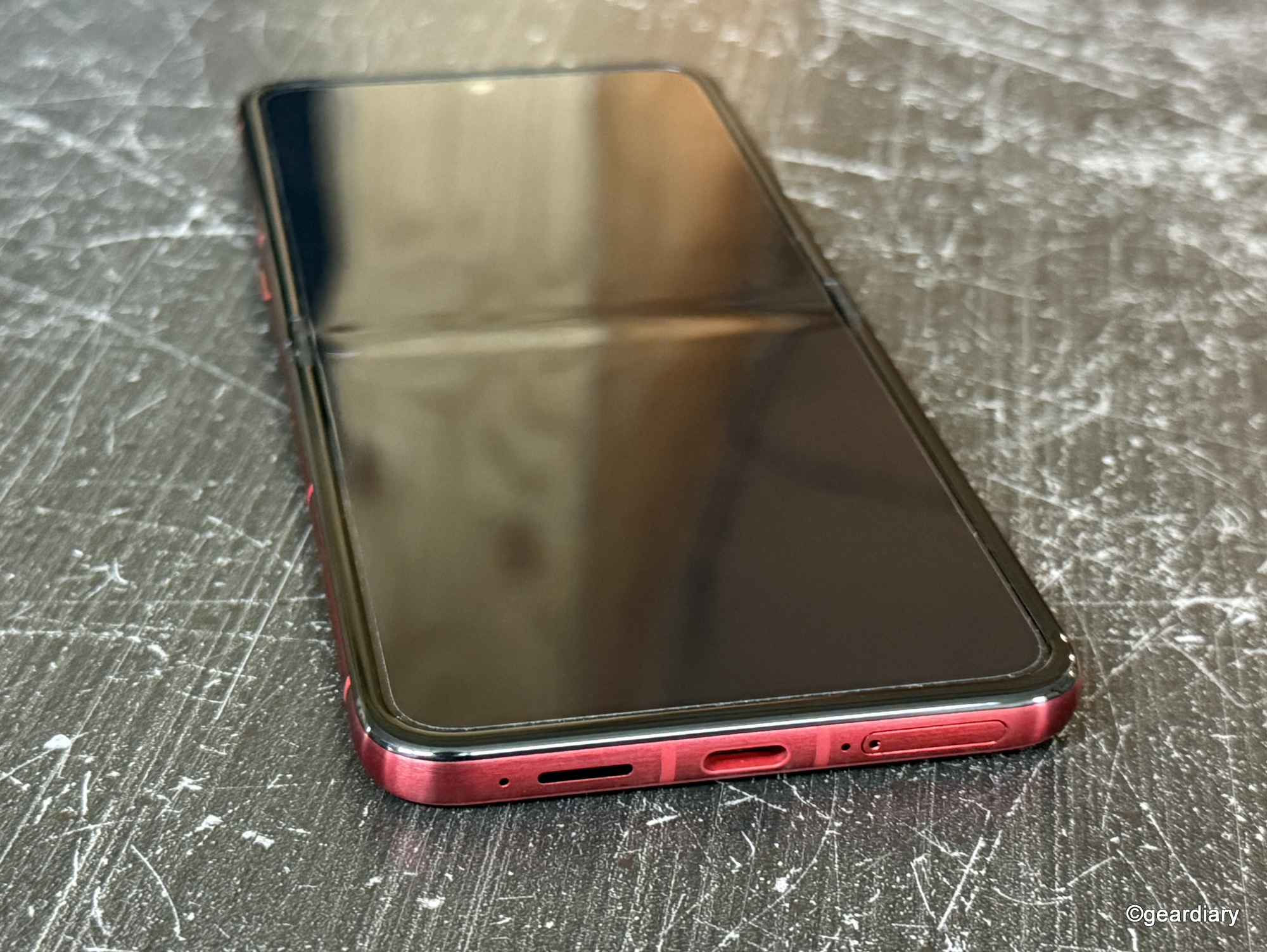
If you’re sensitive to foldable creases, you’ll be happy to know the new hinge design tucks the panel into a teardrop shape when folded, making the crease subtle enough to ignore in everyday use. You’ll feel a slight dip if you run your finger across it, but your eyes will mostly skip over it.
Hardware and Performance: Speed Meets Sass
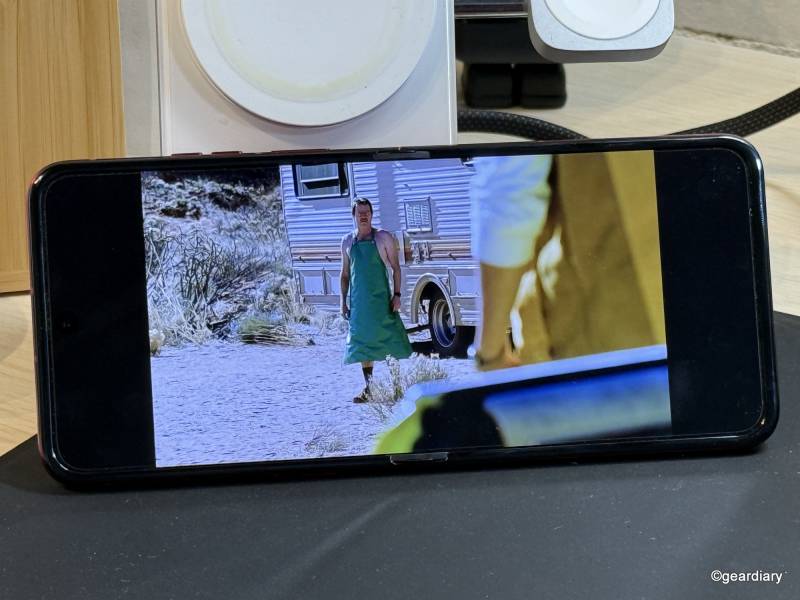
Inside, Motorola went all-in with the Qualcomm Snapdragon 8 Gen 3 Elite chipset, paired with 16GB LPDDR5X RAM and 512GB or 1TB UFS 4.0 storage. It’s fast; apps open instantly, multitasking is fluid, and games run without hiccups. Like most foldables, it can get warm under extended heavy use (and especially during gaming marathons), but for day-to-day tasks, it stays comfortably cool.
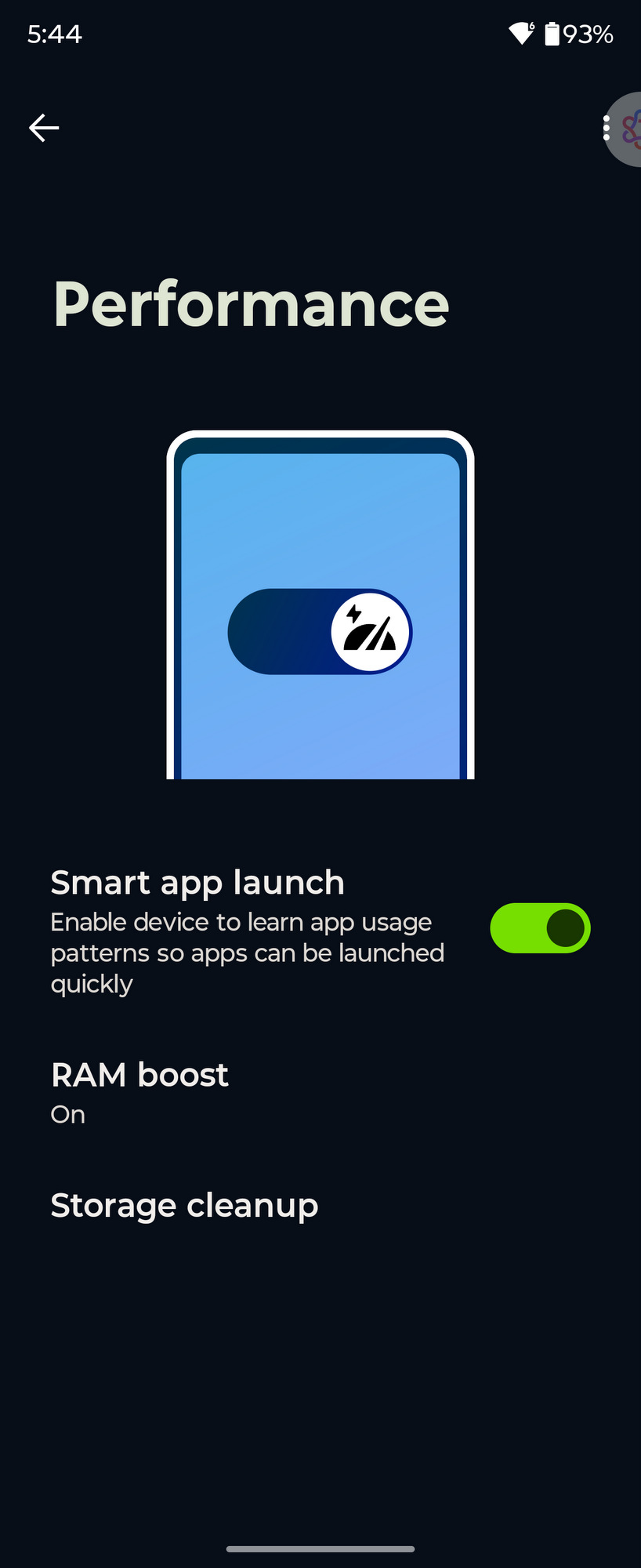
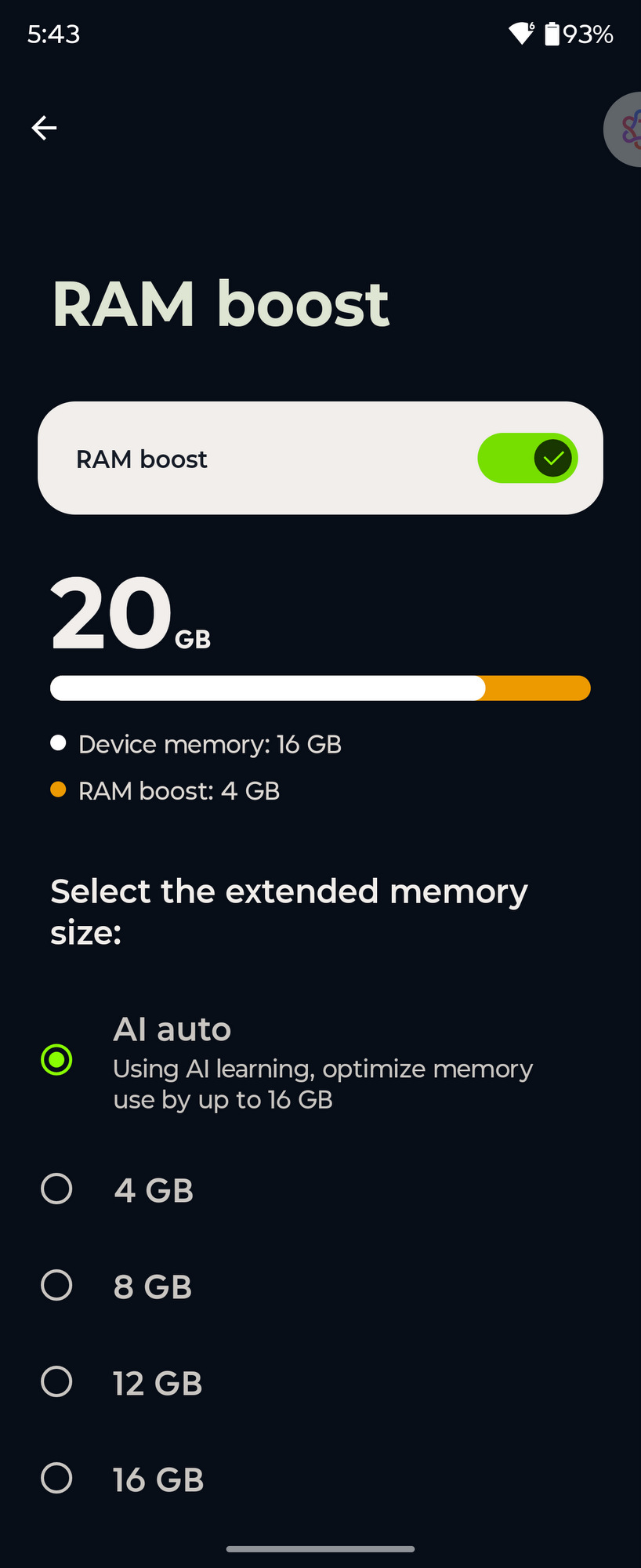
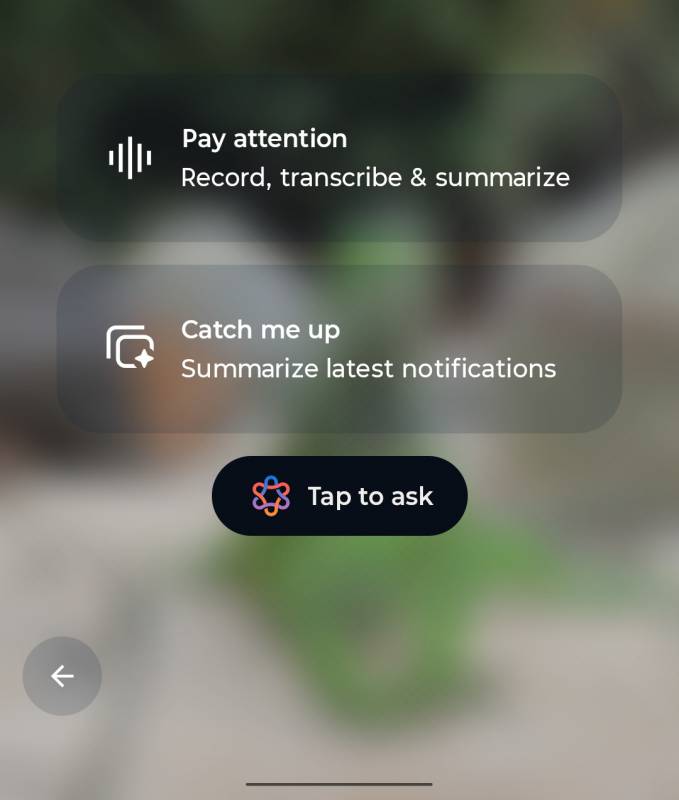
Moto AI has been more useful than I expected. “Catch Me Up” became a morning routine—summarizing overnight messages so I could skip digging through a dozen apps. “Pay Attention” came in handy during a call when I needed to remember a few action items.
Playlist Studio was fun to try, but felt more like a novelty, especially since it currently only works with Amazon Music.
Camera: Flip It, Flex It, Frame It
The Razr Ultra comes equipped with a triple 50-megapixel camera system. The main camera is a 50-megapixel shooter with an f/1.8 aperture, a 1/1.56″ sensor, omnidirectional phase detection autofocus, and optical image stabilization. The ultrawide lens is also 50 megapixels with an f/2.0 aperture, a 122-degree field of view, and phase detection autofocus, and it doubles as a macro camera for close-up shots. On the inside, there’s a 50-megapixel camera with an f/2.0 aperture for selfies and video calls.
Video recording tops out at 8K at 30 frames per second, with options for 4K at 60fps and slow-motion recording at 1080p up to 240fps. Dolby Vision recording is also supported at up to 4K 60fps.
Because it folds, you can use Flex View to prop the phone at angles from 45° to 135° for hands-free selfies, video calls, or time-lapses.
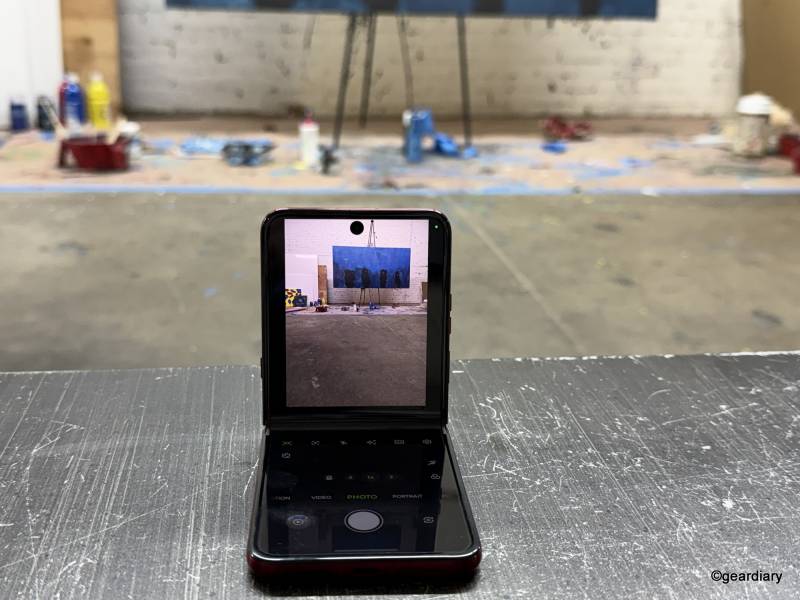
Flex View
Camcorder Mode lets you hold it half-open for a retro video camera grip, and Horizon Lock keeps your horizon level even if you rotate the phone. The outer display doubles as a live preview for your subject; it’s great for portraits where your subject can adjust their pose in real time.
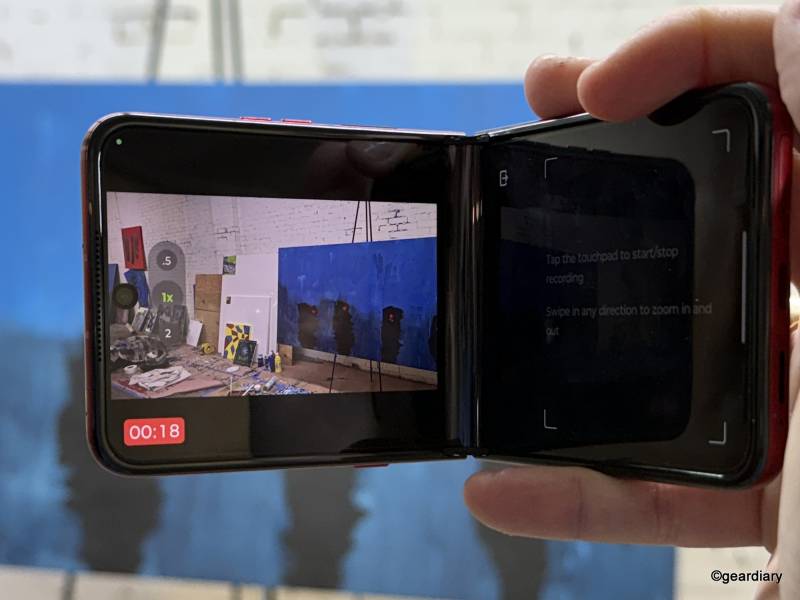
Camcorder mode
Photos Taken with the Razr Ultra
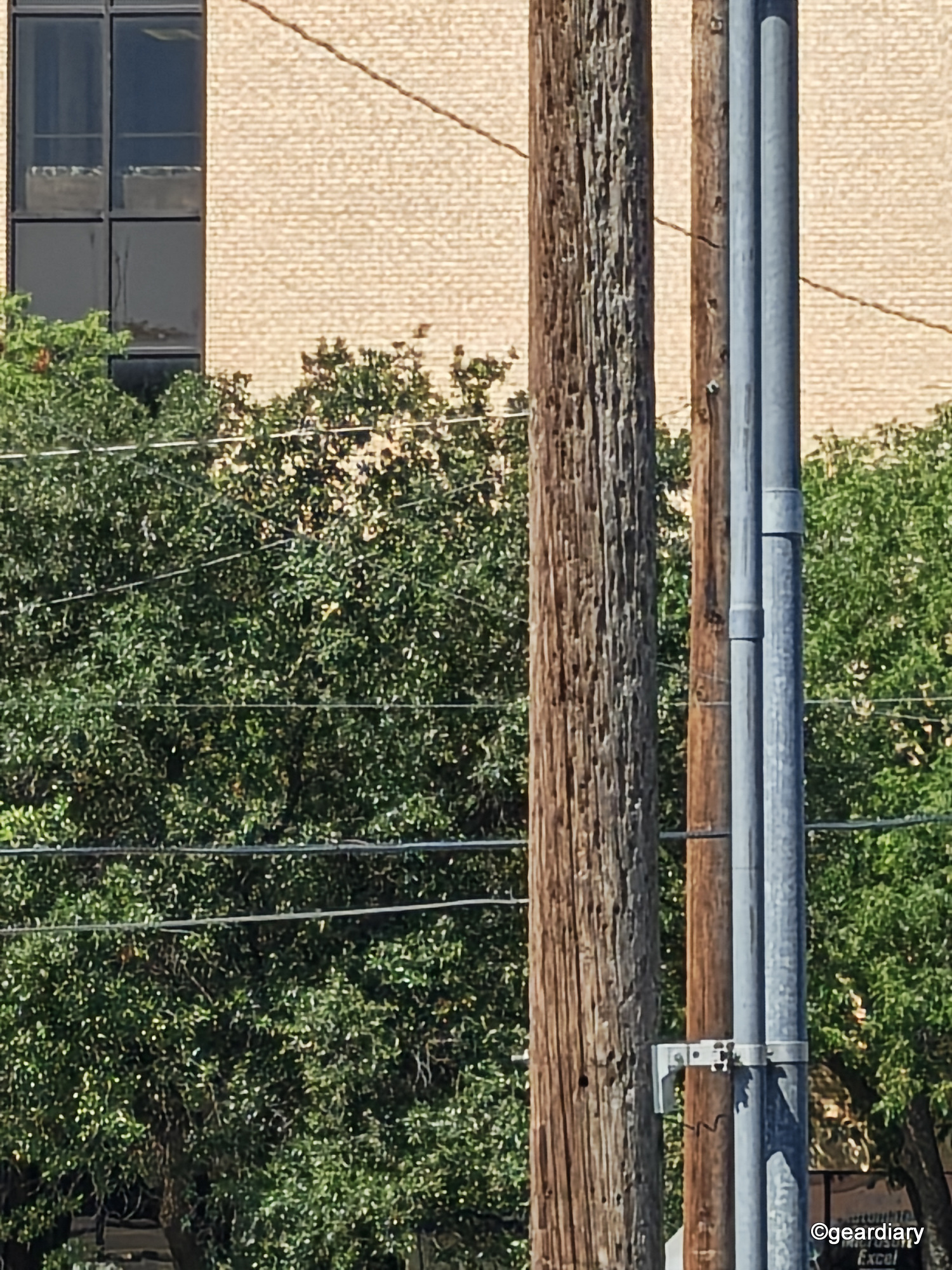
The Razr Ultra’s shooting modes include Slow Motion, Video, Photo, Portrait, Pro (manual), and More, which includes Dual Capture Video, Long Exposure, Ultra-Res, Scan, Group Shot, Photo Booth, Night Vision, Time-lapse, Tilt-Shift, and Panorama.
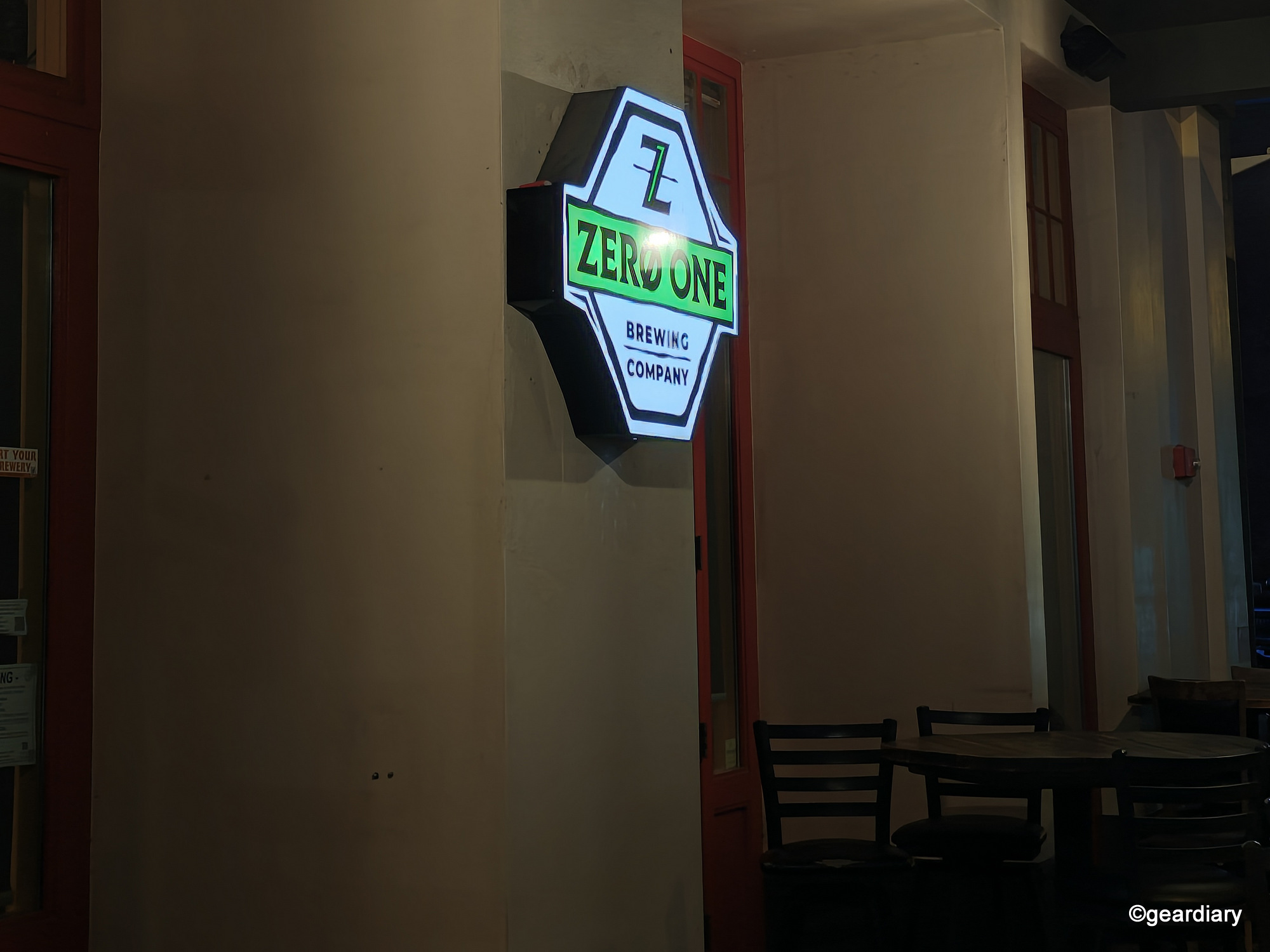
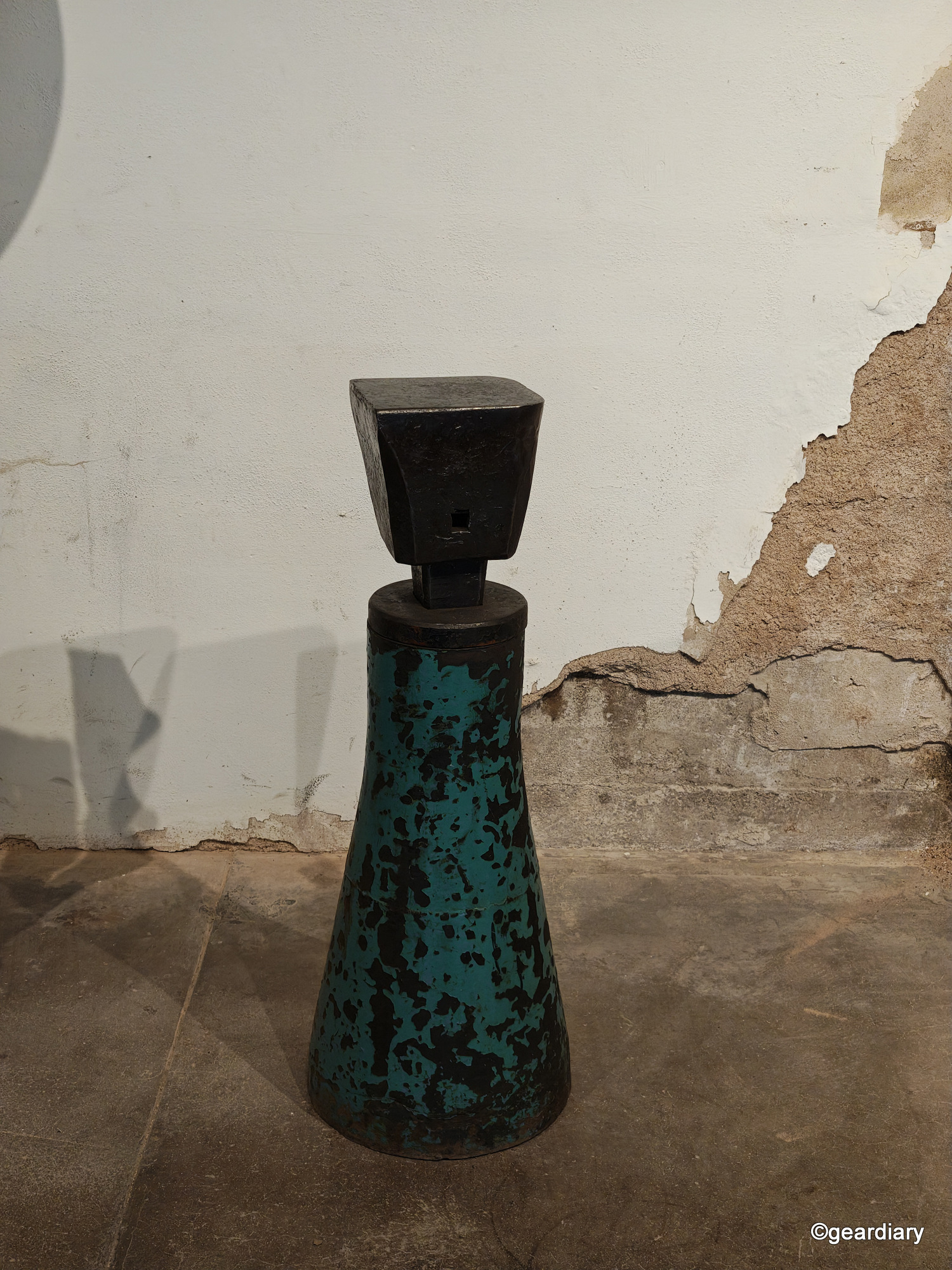
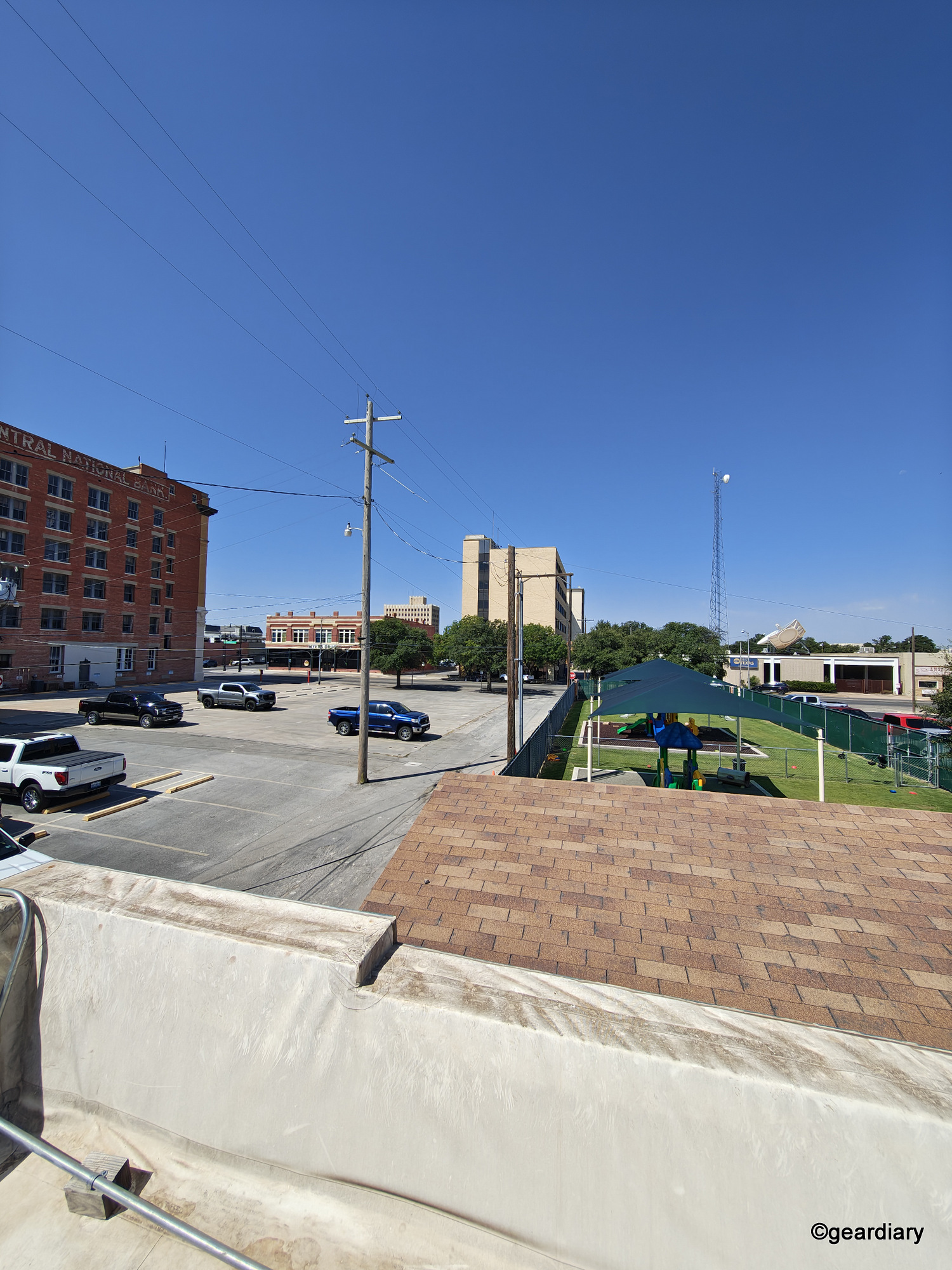
In good light, photo results are crisp and colors are natural. In low light, the main camera does well, but the ultrawide loses detail and shows noise. Zooming beyond 4–5X starts to soften images noticeably.





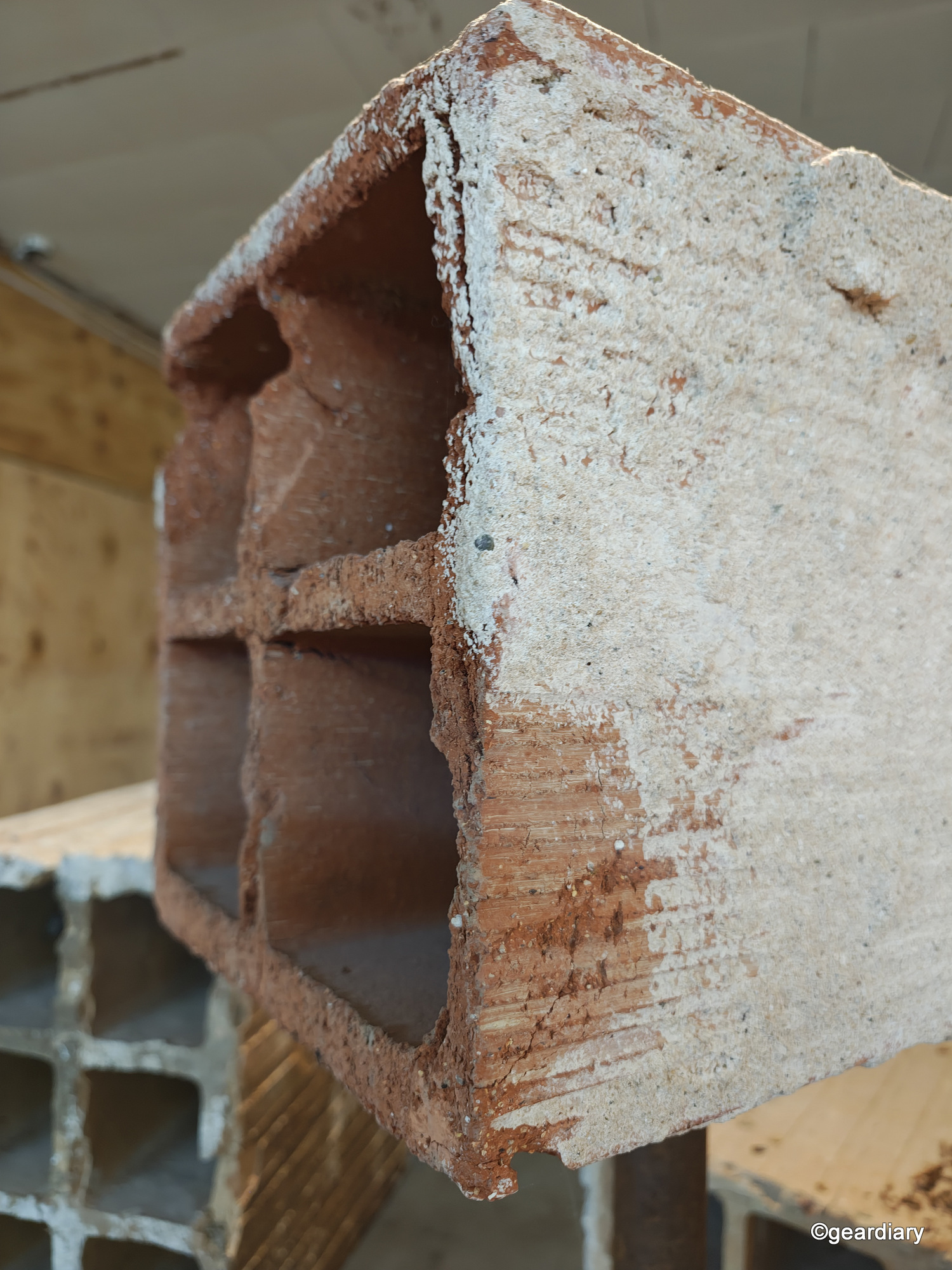




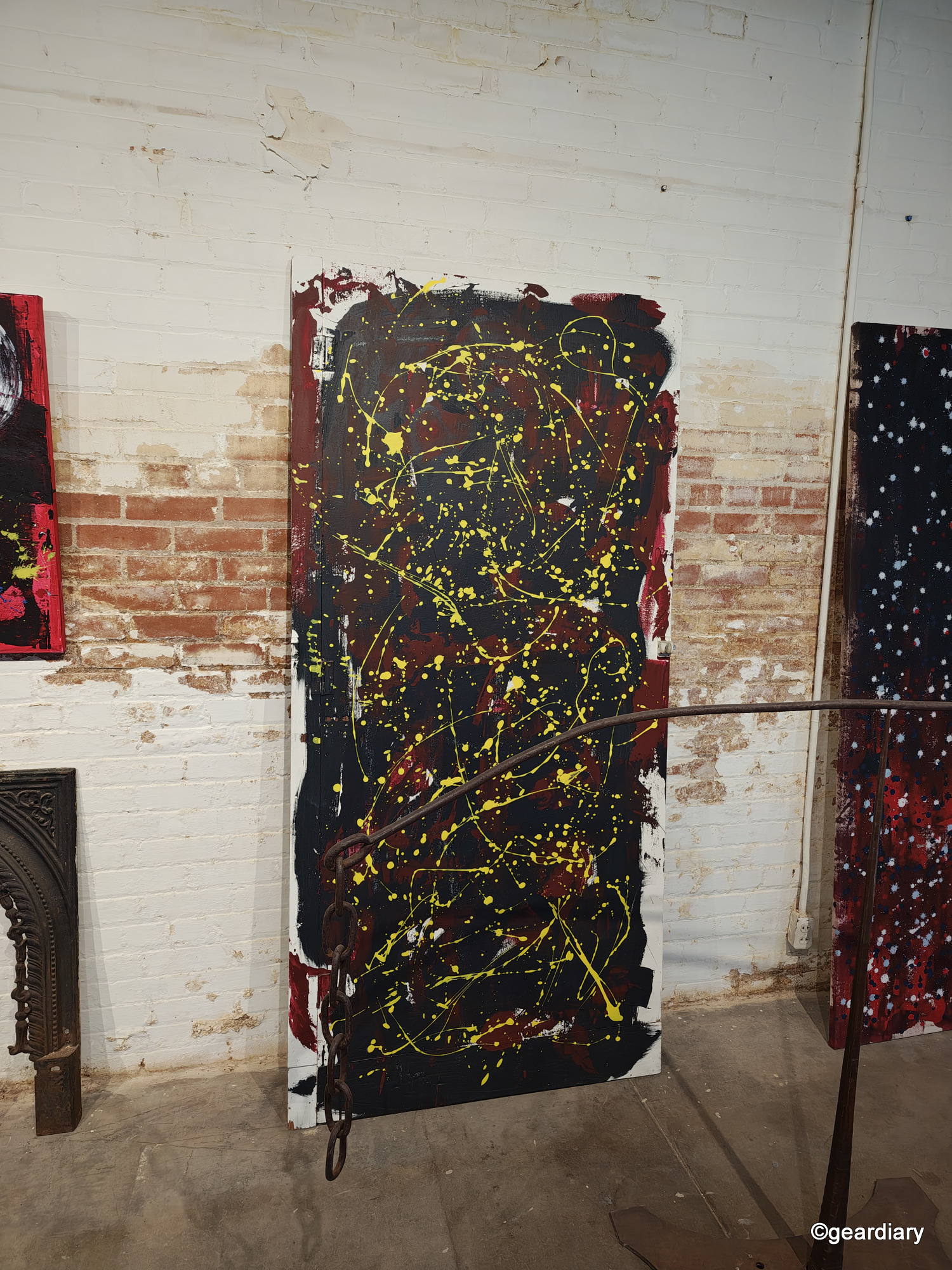

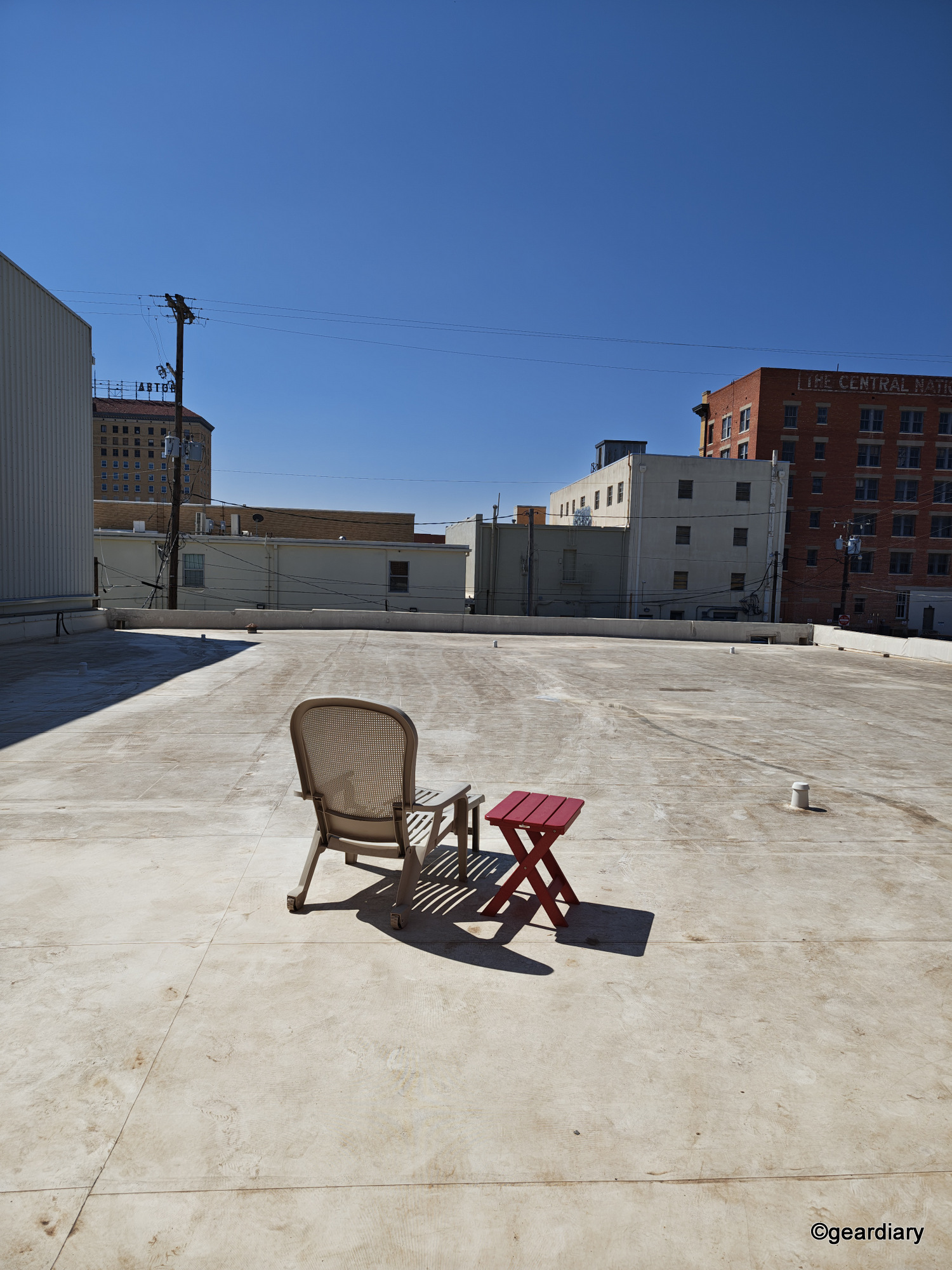
-

- .5X
-
- 1X

-
- 2X

-
- 4X

-
- 10X
-
- 20X

-
- 30X

Everyday Use
The Razr Ultra deftly walks the line between being a tech toy and a true daily driver. Battery life is strong for a foldable: the 4700mAh dual-cell setup lasted about a day and a half in my real-world testing, but you can stretch it to two days with lighter use.
When you do need a top-up, 68W wired charging gets you roughly 12 hours of power in about 8 minutes, with a full charge in ~40 minutes. It also supports 30W wireless charging and 5W reverse wireless charging for topping up earbuds or another phone.
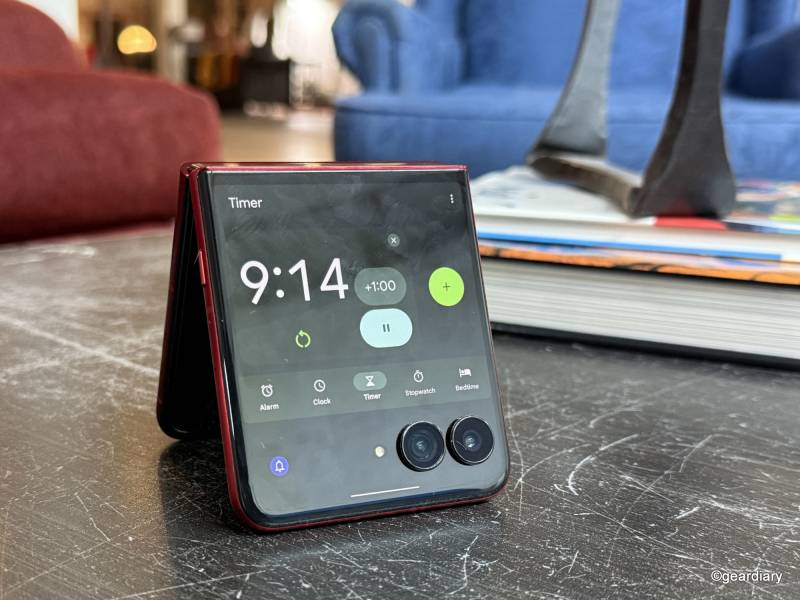
The tent mode with Desk Display is a hidden gem; it’s perfect for a desk clock, music panel, or kitchen timer.
The Razr Ultra supports Wi-Fi 7 (802.11be), Bluetooth 5.4+LE, NFC, sub-6GHz 5G, and LTE. It works on all major US carriers except Verizon and supports dual SIM (nano SIM + eSIM). Call quality on AT&T was consistently clear, with solid data speeds.
Audio is delivered via stereo speakers tuned with Dolby Atmos. They’re surprisingly full for a flip phone, though not on par with a large flagship. There’s no headphone jack, but you get USB-C audio support plus LDAC and aptX HD for high-quality Bluetooth listening.
How It Stacks Up Against the Competition
In the US, the Samsung Galaxy Z Flip7 is the Razr Ultra’s most obvious rival, so let’s compare them for a moment. Motorola clearly wants you to notice it first, with its bold colors and material options. It’s a little heavier than Samsung’s Flip7 at 199g versus 188g, but it uses that space wisely, with a 4.0″ pOLED outer display that’s bright enough to use for almost anything without flipping it open.
The Flip7’s 4.1″ Super AMOLED cover screen is technically a smidge larger, but it doesn’t hit the same brightness. Inside, the Razr Ultra’s 7″ LTPO OLED pushes a silky 165Hz refresh rate, while the Flip7’s 6.9″ Dynamic AMOLED 2X settles at 120Hz but delivers slightly sharper pixel density.
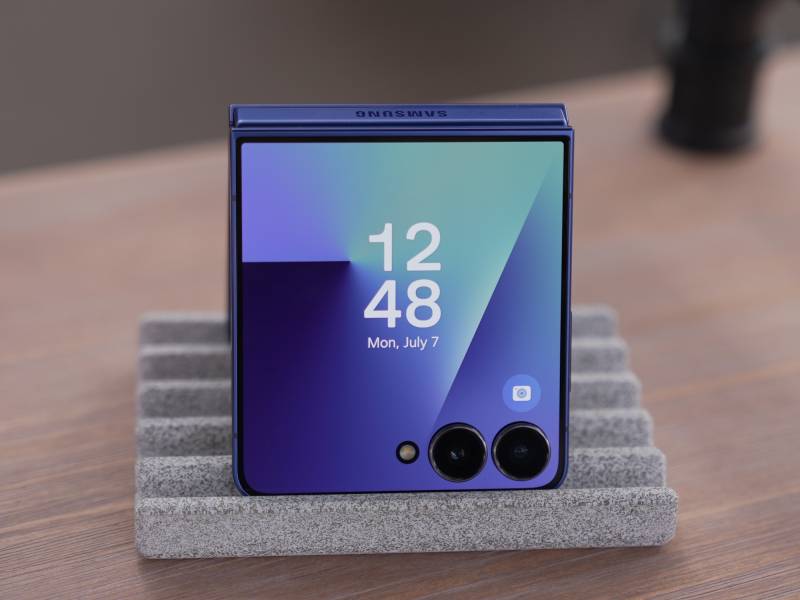
Samsung Galaxy Z Flip7
Under the hood, Motorola’s Snapdragon 8 Gen 3 Elite with 16GB of RAM is built for speed and AI smarts, while Samsung uses a custom deca-core chip and 12GB of RAM. Motorola also stuffs in a 4700mAh battery with 68W wired charging and 30W wireless, which is noticeably faster than the Flip7’s 4300mAh cell and slower charging speeds.
Cameras are where things really diverge. The Razr Ultra goes all-in on 50-megapixel sensors across the board: main, ultrawide/macro, and front-facing, all capable of high-res stills and 8K video. Samsung counters with a 50-megapixel main, a 12-megapixel ultrawide, and a 10-megapixel selfie shooter. On paper, Motorola wins the hardware race, but Samsung pushes 8K recording at 60fps versus Motorola’s 8K at 30fps, and its computational processing is often tough to beat, especially in low light.
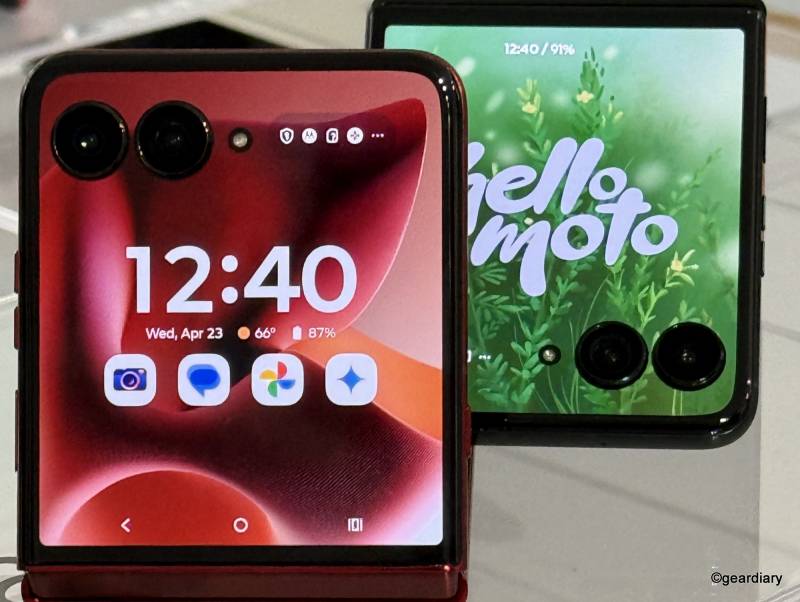
Motorola Razr Ultra
If you’re thinking long-term, Samsung makes a strong case with software support through July 2032. Motorola’s promise of three OS updates and four years of security is fine, but not nearly as future-proof.
Who Should Buy It
If you want your phone to be a statement piece without sacrificing flagship performance, the Razr Ultra delivers. It’s for people who want the fun of a flip with the power of a modern flagship, and who will actually use that outer display for more than just checking the time.
If your top priorities are all-day gaming, the very best low-light camera, or ultra-long battery life, a traditional flagship might still suit you better. But if you want a phone that sparks conversation and justifies its price, the Razr Ultra is a solid bet.
The 2025 Motorola Razr Ultra starts at $1,299.99; it is available directly from the manufacturer and other retailers, including Amazon.
Source: Manufacturer-supplied review sample
What I Like: Full Android apps on the 4″ cover display; Brilliant 7″ main display with a barely perceptible crease; Fantastic battery life; Moto AI adds to the Android user experience; Excellent performance; Stylish colors and a premium design; Available with up to 1TB storage
What Needs Improvement: Only three years of major OS updates; Cameras are not great in low light, and the zoom suffers above 4X



Photo looks good! And Snapdragon 8 Gen 3 Elite with 16GB of RAM make it very strong choice.
The new Razr Ultra seems great, though only 3 years of major OS updates seems behind the times now.
Really like the trend back to flip phones (fits great in the pocket). This does seem the best option – not sure why most attempts have struggled to break through.
I’ve had the Razr Ultra 2025 for a few months, and I love it! Even though it’s not sold through Verizon’s store, I use my unlocked phone (purchased from Moto directly) on Verizon without a problem.
Loving how it folds, my husband would appreciate that too. I do agree about the limited updates, only three years, is not long enough.