
Giving a child their first smartphone has become one of modern parenting’s more fraught milestones, sitting somewhere between handing over a house key and giving them the car keys, except the smartphone is also a portal to everything wonderful and deeply questionable about the internet. For years, parents have faced an unsatisfying binary choice: hand down an old iPhone and hope for the best, or opt for a stripped-down “kid phone” that often felt more like a plastic toy than a serious communication tool. The new AT&T amiGO Jr. Phone is an attempt to redraw that line.
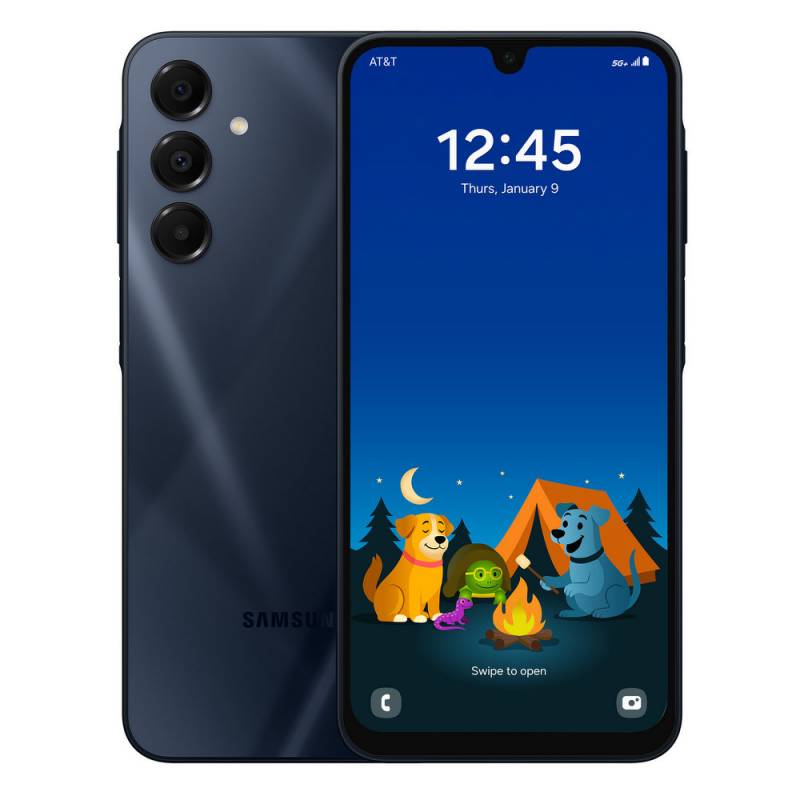
It isn’t just a smaller smartphone or a locked-down adult device. It is a purpose-built phone designed specifically for children, created in collaboration with Samsung and paired with a parent-controlled app that lives on your own phone. It arrives as part of AT&T’s broader amiGO ecosystem, which also includes the new amiGO Jr. Watch 2, and together they represent a carrier stepping directly into territory traditionally occupied by hardware makers and software platforms.
The question, of course, is whether this is genuinely useful, or simply another well-meaning attempt to solve a parenting problem that technology helped create in the first place.
Why a Kid-Specific Smartphone Exists at All
The underlying motivation behind the amiGO Jr. Phone is easy to understand. Children need reliable ways to reach their parents, especially as they begin walking to school, attending activities independently, or simply spending more time outside direct supervision. At the same time, parents are understandably wary of unrestricted internet access, social media, and endless screen time.
Historically, solutions have fallen into three categories. Smartwatches like the Apple Watch SE with cellular connectivity allow basic communication and location tracking, but can feel limited as children grow older. Full smartphones offer flexibility but require extensive manual setup and constant supervision. Then there are niche kid phones, which often lack the polish, performance, or long-term viability to justify their cost.
AT&T is positioning the amiGO Jr. Phone as a middle path; it is designed to function as a real smartphone, but one that starts from a position of restraint rather than excess. That distinction matters more than it might initially appear.
Built With Samsung Hardware, But With Different Priorities
While AT&T is leading the effort, Samsung’s involvement is critical. Samsung brings deep experience designing durable smartphones, managing power efficiency, and building hardware that survives everyday life. That expertise is particularly relevant when the intended owner may drop the phone, forget to charge it, or leave it at the bottom of a backpack beneath a stack of textbooks and a half-eaten granola bar.
AT&T hasn’t emphasized flashy hardware specs like processor speed or megapixel counts, which is telling. This isn’t a phone meant to compete with flagship devices. Instead, the emphasis is on reliability, simplicity, and durability. The underlying assumption is that a child’s first smartphone doesn’t need to run demanding games or shoot cinematic video. It needs to make calls, send messages, reliably share location information, and, perhaps just as importantly, survive.
The inclusion of Samsung’s hardware experience suggests the amiGO Jr. Phone is unlikely to feel like a disposable novelty device. That alone sets it apart from many kid-focused gadgets, which often become obsolete or frustrating within a year.
The Real Control Center Lives on Your Phone
The most consequential part of the amiGO Jr. experience isn’t the phone itself but the companion AT&T amiGO app installed on your own device. This app functions as the control center, allowing you to manage what your child can and cannot do.
From here, you can approve or block apps, set screen time limits, and create schedules that restrict usage during school hours or late at night. You can define Safe Zones—geographic areas like school, home, or a friend’s house—and receive notifications when your child enters or leaves those areas.
Location sharing, in particular, is one of the most practical features. Unlike occasional “check-in” texts that may or may not be answered, location tracking provides continuous awareness. Whether your child is walking home from school, waiting outside soccer practice, or heading to a friend’s house, you can see their location without requiring them to do anything. This feature alone addresses one of the primary reasons parents give their children phones in the first place.
The key difference here is that these controls are built into the experience from the beginning rather than added later through third-party apps or complicated settings menus.
Day-to-Day Living with the amiGO Jr. Phone
In practical terms, the amiGO Jr. Phone is designed to ease children into smartphone ownership gradually rather than dropping them into the deep end.
At first, the phone can function primarily as a communication device. Calling and messaging parents is straightforward, and location tracking operates quietly in the background. Over time, additional apps and features can be introduced as trust and maturity increase.
This incremental approach reflects how children actually grow into technology. It acknowledges that a ten-year-old and a thirteen-year-old have very different needs and responsibilities, even though they technically fall into the same “kid” category.
From the child’s perspective, having a device that looks and behaves like a real smartphone carries social significance. Children are acutely aware of whether their device feels legitimate or infantilizing. A phone that resembles what their parents use helps avoid the stigma that sometimes accompanies visibly child-focused devices.
From the parents’ perspective, the ability to adjust restrictions remotely removes much of the friction typically associated with managing a child’s phone. There is no need to physically take the device, navigate settings menus, or negotiate every adjustment face-to-face. You remain in control without needing constant confrontation.
Where It Fits Compared to Apple and Android Parental Controls
Apple and Google both offer robust parental control systems through Screen Time and Family Link, respectively. These tools allow parents to limit app usage, monitor app usage, and track location on standard smartphones.
So why would anyone choose a purpose-built kid phone instead?
The answer lies in complexity and starting assumptions. Apple’s and Google’s systems assume the phone is fundamentally an adult device that has been modified for children. The amiGO Jr. Phone, by contrast, begins with restrictions in place and expands outward. That subtle shift changes the overall experience.
For parents who are comfortable navigating smartphone settings and configuring parental controls, a standard iPhone or Android device may offer more flexibility and longevity. But for those who prefer something simpler and more guided, the amiGO Jr. Phone removes much of the setup burden.
It also creates a clear psychological boundary. This is the child’s phone, designed for their stage of life, rather than a hand-me-down with retrofitted restrictions.
The Companion amiGO Jr. Watch 2 Extends the Ecosystem
Alongside the phone, AT&T is introducing the amiGO Jr. Watch 2, a cellular-connected smartwatch designed to withstand rough treatment while offering messaging, games, and rewards.
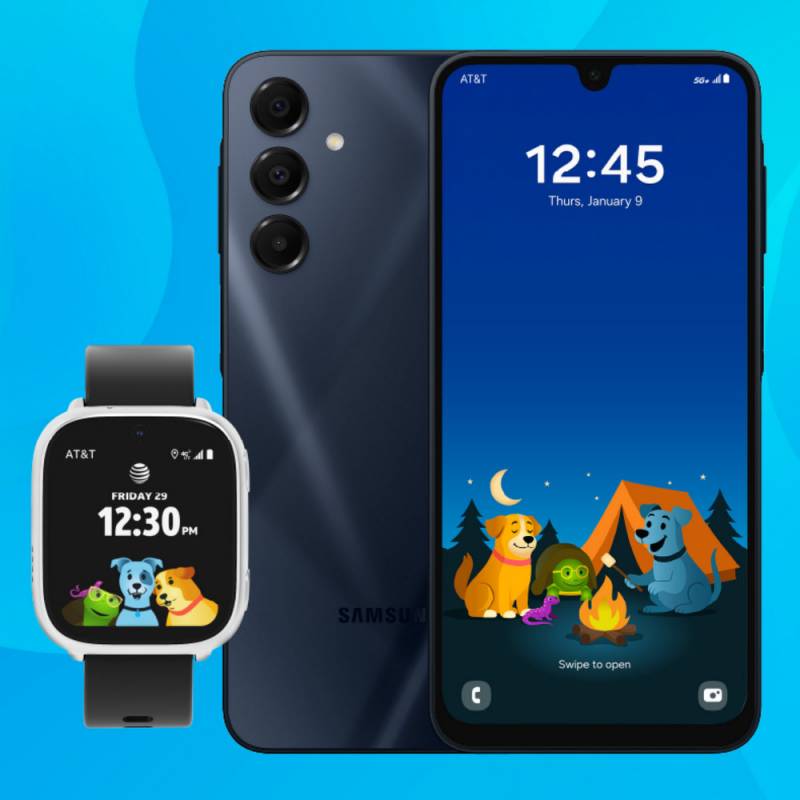
AT&T amiGO Phone and amiGO Watch 2
For younger children not yet ready for a full smartphone, the watch provides a transitional step. It allows communication and location tracking without introducing the full complexity of a phone.
Together, the watch and phone create a progression path that mirrors how children gradually take on more independence.
The Price Makes It Accessible, with Some Caveats
AT&T is offering the amiGO Jr. Phone and the amiGO Jr. Watch 2 for $2.99 per month each on a 36-month installment plan with eligible wireless service. That price is heavily subsidized and tied to AT&T’s broader service ecosystem, meaning the true cost includes the required wireless plan and a long-term commitment.
The low monthly price makes the hardware itself accessible, but it also means you are entering a multi-year relationship with the carrier. For families already using AT&T, this may feel like a natural extension. For those using other carriers, switching solely for this device may require more consideration. Still, the pricing removes one of the traditional barriers to entry for kid-focused phones, which often cost hundreds of dollars upfront.
Who This Phone Makes Sense For
The amiGO Jr. Phone makes the most sense for parents who want structured control without becoming part-time IT administrators. It simplifies introducing a smartphone while maintaining meaningful oversight. It is particularly well-suited for children in the eight-to-twelve age range, where independence is increasing, but full autonomy isn’t yet appropriate.
However, for older teenagers, the limitations may feel restrictive. At some point, transitioning to a standard smartphone becomes inevitable, and parents will need to decide when that shift makes sense.
There is also the broader philosophical question of whether adding more technology is always the right solution to managing technology. No phone, regardless of its design, can replace ongoing conversations about responsibility, boundaries, and digital behavior.
A Thoughtful Attempt at a Difficult Balance
The amiGO Jr. Phone represents a pragmatic attempt to address a real and growing need. It recognizes that smartphones are becoming essential tools for communication and safety while acknowledging the risks that come with unrestricted access. By combining purpose-built hardware, integrated parental controls, and a gradual approach to independence, AT&T has created something that feels more deliberate than most kid-focused devices.
Whether it is necessary will depend largely on your comfort level with configuring and managing standard smartphones. For some families, existing solutions may already provide everything they need. For others, the simplicity and structure offered here could make the transition significantly less stressful.
Ultimately, the amiGO Jr. Phone is less about the device itself and more about what it represents: an acknowledgment that children’s relationship with technology deserves thoughtful design rather than improvised workarounds. And that alone makes it worth paying attention to.



Amazing it’s taken so long to come up with something like this – a good option for parents and kids.