
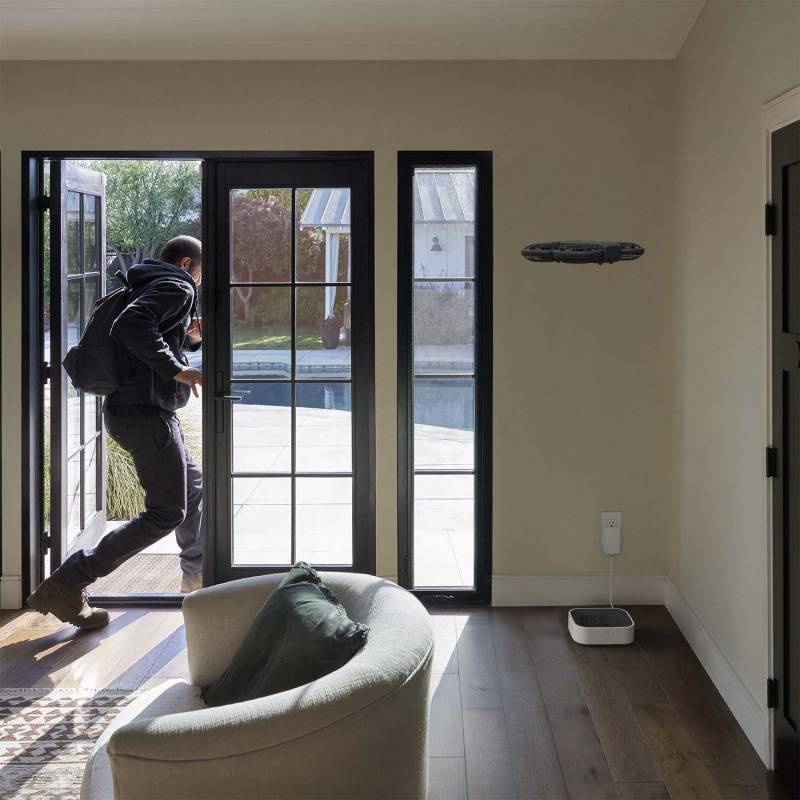
There’s something wonderfully strange about the idea of a tiny security drone flying through your house while you’re hundreds of miles away, checking whether everything is where you left it. Yet that’s precisely what the new Ring Drone Cam promises to do. Announced alongside the Ring Rover Cam as part of the company’s new Ring Robotics lineup, this $249.99 flying camera could offer an intriguing alternative to installing security cameras in every room. Is an autonomous indoor drone something most households need? Probably not. But for anyone with a large home and a habit of worrying while traveling, it’s worth considering.
A Flying Camera Makes More Sense Than You Might Think
Ring has spent years building a security ecosystem around doorbells, cameras, motion sensors, and alarms. Those devices work well enough when you’re trying to monitor a specific location, but traditional security cameras have an obvious limitation: They can only show you what’s happening wherever they’re installed.
If you have a smaller home, that’s probably fine. A camera covering the main entrance, another overlooking the living room, and perhaps one monitoring the backyard might be all you need. But what about a sprawling house with multiple floors, long hallways, guest bedrooms, and rooms that don’t get much attention unless someone’s visiting?
Installing cameras throughout a home can get expensive, and there’s something unsettling about having a permanent camera pointed at every corner of your private living space.
That’s where the Ring Drone Cam starts to sound surprisingly reasonable.
Instead of requiring a fixed camera in each room, the Ring Drone Cam lives in a docking station until you want it to investigate something. When activated, it takes flight, follows a predetermined route, and gives you a moving view of your home.
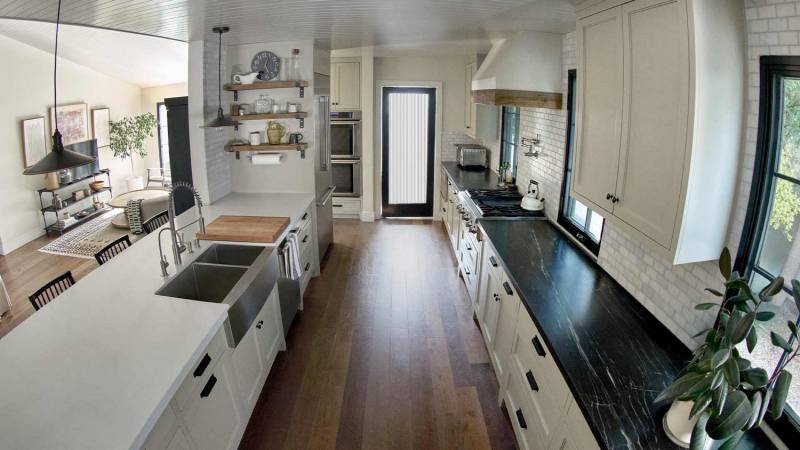
Imagine you’re spending two weeks visiting family, and your Ring system alerts you to unexpected motion near an upstairs window. Ordinarily, you’d check whichever stationary camera happens to cover that area, assuming you’ve installed one. With the Ring Drone Cam, you could potentially send a flying camera to investigate without asking a neighbor to come over.
Or perhaps you’re halfway across the country when you suddenly wonder whether you closed a particular window before leaving. If you’ve configured an appropriate flight route, the drone could give you a closer look.
The Ring Drone Cam is an unusually elaborate solution to a familiar problem, but there’s something appealing about being able to check on parts of your house without installing cameras everywhere.
How the Ring Drone Cam Finds Its Way Around
The Ring Drone Cam uses a navigation system called AI Pilot, which combines cameras, onboard sensors, visual recognition software, and cloud processing to figure out where it is and how to move through your home.
During setup, you’ll carry the drone through your house so it can create a floor plan. From there, it identifies rooms and suggests locations worth checking, such as windows, doors, and hallways. You can customize those points and establish routes for future flights.
When you send the drone to a saved location, AI Pilot calculates an efficient route based on the home’s floor plan. It also adjusts its navigation in real time to avoid furniture and other obstacles rather than simply following a rigid path.
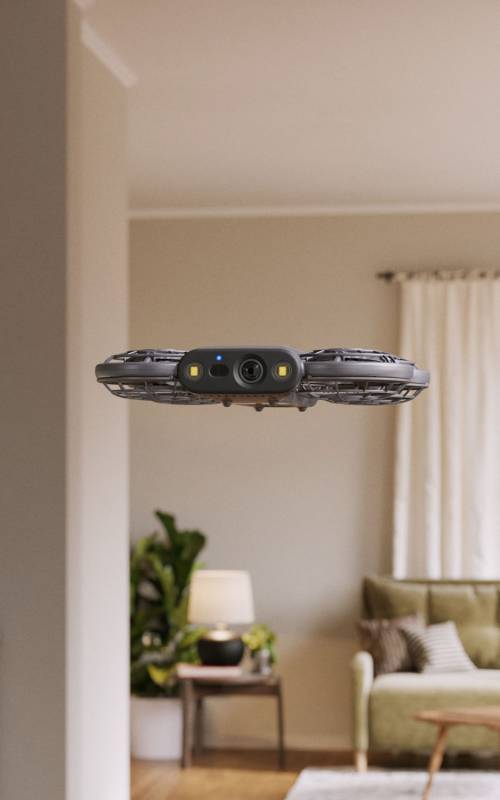
Once configured, the Ring Drone Cam can follow those routes on demand or fly automatically when a connected Ring device detects something unusual. Scheduled flights are also supported with a compatible Ring Protect subscription.
The camera records in 2K resolution, offering more detail than standard 1080p video, with a 148-degree field of view and the ability to rotate 360 degrees. Two built-in LED lights activate automatically in low-light conditions, which should come in handy when an alert arrives in the middle of the night.
The drone also integrates with existing Ring cameras, doorbells, sensors, and alarms, along with the new Alexa Home Map. That means it can respond to activity detected elsewhere in your security system rather than requiring you to launch it manually every time.
Of course, navigating around your house is considerably more complicated than traveling across an empty warehouse. There are chairs, ceiling fans, hanging lights, pets, and all sorts of obstacles that don’t appear on a perfectly tidy floor plan.
Ring has designed AI Pilot to navigate around obstacles, but how reliably it handles the unpredictable chaos of an occupied home will be one of the biggest questions when the finished product reaches customers.
What Happens When Your Security Camera Has Propellers?
There’s another issue worth discussing: The Ring Drone Cam isn’t discreet. In fact, it’s deliberately noisy.
Ring designed the drone with loud propellers so people know when it’s flying around. That’s a sensible privacy consideration, although it also means you shouldn’t expect it to quietly patrol your home while everyone’s sleeping.
Then again, if an intruder has entered your house, having a buzzing drone fly toward them with its lights on might be an effective way to announce that someone, somewhere, is paying attention.
The Ring Drone Cam also has some practical limitations. Its reported flight time is approximately five to eight minutes per charge, so it’s better suited to brief inspections than extended patrols. It also depends on Wi-Fi connectivity and isn’t intended for outdoor flying.
And while the idea of sending a tiny aircraft upstairs to check on something is entertaining, it’s worth remembering that this is a camera, not a security guard. It can show you what’s happening, but it can’t close an open window, investigate a suspicious noise with human judgment, or do much about an unwelcome visitor beyond making its presence known.
Privacy Matters When the Camera Can Follow You
A flying camera inside your home raises reasonable privacy questions, even when it’s intended to improve security.
The Ring Drone Cam stays powered down in its dock with its camera off. Recording begins when a flight is triggered, and an LED indicator makes it clear when the device is operating.
Ring also includes its Throw Away the Key Encryption, or TAKE, system to protect recorded video. This is Ring’s strongest default encryption system to date, intended to provide additional protection for footage captured inside homes and businesses.
Still, the drone relies partly on cloud processing to navigate, so anyone considering one should understand how Ring handles home maps, video recordings, and associated data. Security technology should make you feel more comfortable in your home, not leave you wondering who else might be watching.
The Ring Drone Cam scheduled to begin shipping in the United States on January 27, 2027, for $249.99.
Ring Rover Cam Brings the Same Idea to Businesses
The other new member of Ring Robotics is the $999.99 Ring Rover Cam, a wheeled security robot intended for commercial spaces. Interestingly, its development was influenced by feedback from Amazon Astro customers, who found the robot’s mobile security capabilities among its most useful features. Rather than create another multipurpose household robot, Ring decided to concentrate on security.
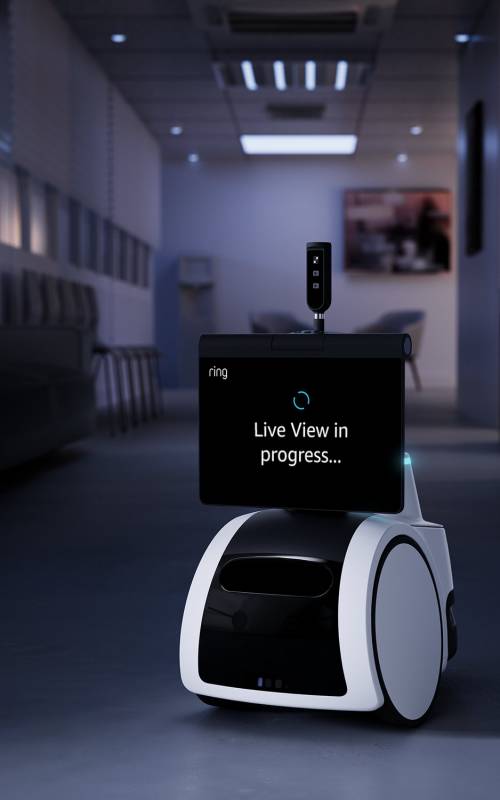
Rover travels across floors, following scheduled patrol routes or responding to alerts from connected Ring devices. Its adjustable periscope camera can rise to look over counters, shelving, and other obstacles, and you can save different camera heights for specific locations. Once it reaches a designated checkpoint, Rover performs a 360-degree scan of its surroundings.
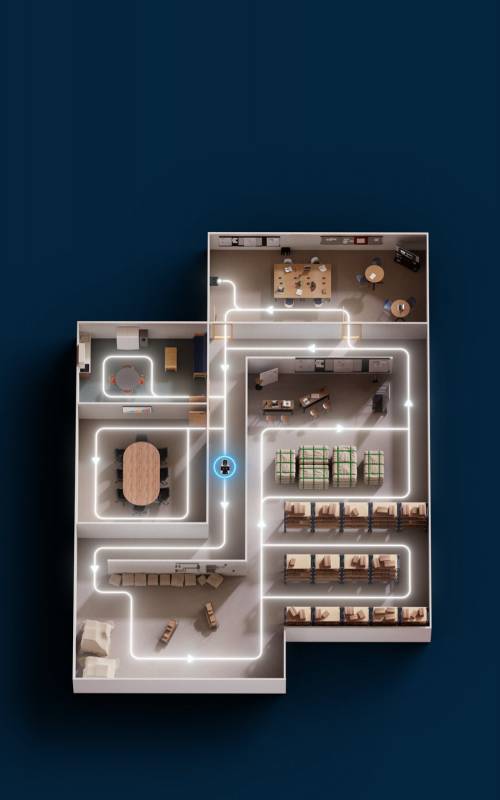
Unlike a stationary camera that only records what’s happening within its field of view, Rover can capture continuous video in up to 4K resolution as it moves. That means a business owner can review an entire patrol rather than seeing only what happened at predetermined stops, provided they have the required Ring Protect subscription.
Rover also includes a siren, a conspicuous light tower, and two-way audio, allowing you to communicate with someone remotely. Even while docked, its person-detection capabilities remain active, so it can alert you and begin recording when someone enters its field of view.
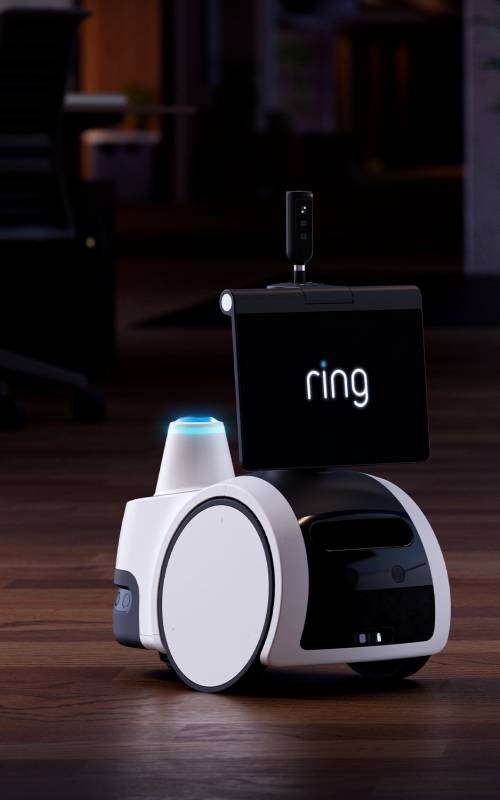
Privacy considerations haven’t been overlooked here, either. Rover includes a Sleep Mode that retracts its camera and disables its microphone with a single tap. LED indicators and an on-screen notification also make its recording status visible.
For a business with long corridors, storage areas, or multiple rooms, it could provide additional coverage without installing stationary cameras everywhere. Of course, how reliably it navigates a busy workplace, where boxes, equipment, and furniture don’t always stay put, remains an important question.
The Ring Rover Cam is scheduled to begin shipping in the United States on December 16, 2026, with preorders available now.
Could a Flying Camera Become a Sensible Home Security Purchase?
The Ring Drone Cam still requires Federal Communications Commission authorization before it can legally offer it for sale. A compatible Ring Protect subscription is also required for certain capabilities, including scheduled flights.
At that price, the hardware itself isn’t outrageously expensive compared with outfitting a large house with several indoor security cameras. Whether the subscription requirements, limited flight time, and practical challenges of indoor navigation make it worthwhile remains to be seen.
For someone living in a modest apartment, an autonomous indoor drone probably creates more complications than it solves. But for someone who regularly leaves a large home unoccupied while traveling, the prospect of checking multiple rooms remotely, without permanently mounting cameras throughout the house, has genuine appeal.
There’s also the undeniable novelty of having a little flying security patrol tucked away in its own docking station. It’s the sort of gadget that sounds ridiculous until you imagine a situation where having one might be reassuring.
The real test will be whether Ring can make the experience dependable enough that the drone becomes something you trust rather than another gadget that needs troubleshooting.



Be the first to comment on "Ring Drone Cam Is a Flying Security Camera for Your House, and It’s Weirdly Intriguing"