
The Lowdown
There’s an audience for the NextSense Smartbuds: if you’re curious about brain-sensing sleep tech, you sleep on your back, and you don’t mind being an early adopter, you may find a lot to like here. But if you’re a side sleeper with sensitive ears, or you simply want a sleep product that asks less of you, there are easier and more comfortable ways to spend this kind of money.
Overall
Pros
- Interesting in-ear EEG concept
- Effective noise masking
- Pleasant soundscape library
- Solid overnight battery life
- Helpful in-ear alarm
Cons
- Uncomfortable for side sleepers
- Sleep detection didn’t always feel accurate
- iPhone-only compatibility
- Slightly confusing subscription model
- No water resistance
NextSense Smartbuds arrive with promises that would make any sleep gadget hard to resist. You tell yourself this might be just the thing™ that finally blocks the hotel HVAC drone, the hallway slams, your spouse who somehow snores in surround sound, and the midnight brain chatter that has no business chattering when the rest of you is trying to clock out. Sleep earbuds already have a tough job. They have to stay comfortable against a pillow, disappear enough that you don’t fixate on them, last through the night, and actually help rather than just look good in an app.
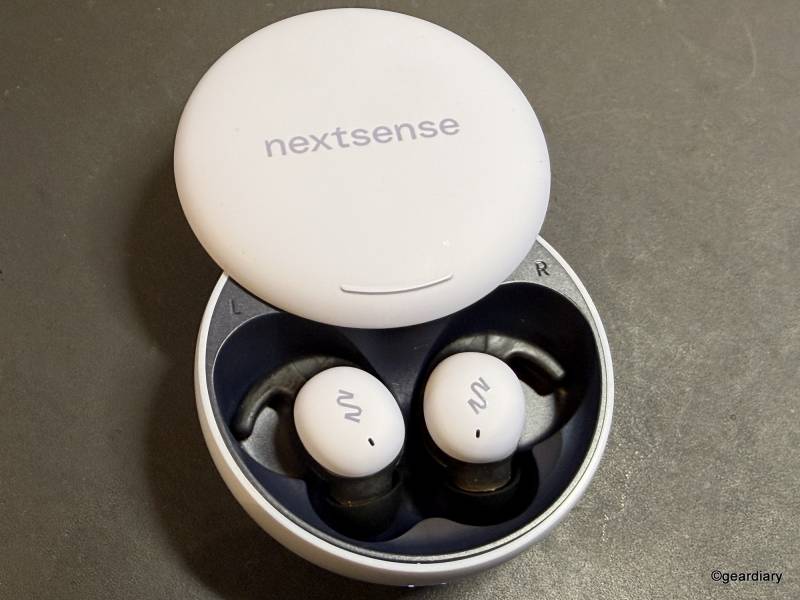
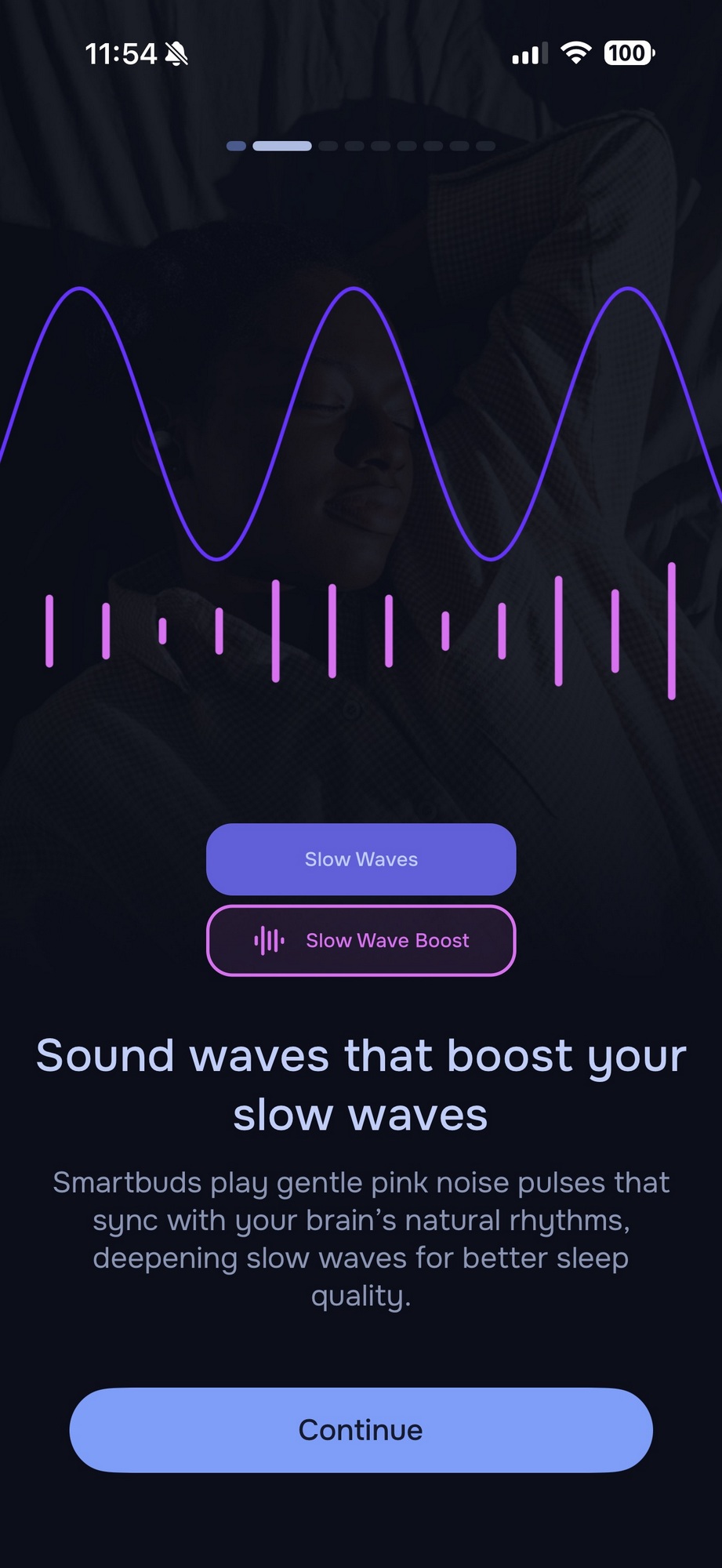
Further, the NextSense Sleepbuds are supposed to monitor brain activity in real time using in-ear EEG sensors, determine which sleep stage you’re in, and then play carefully timed pink noise pulses to support deep sleep. That’s a much bigger promise than “here are some soothing ocean sounds and decent passive noise blocking,” and it’s exactly what makes them so interesting.
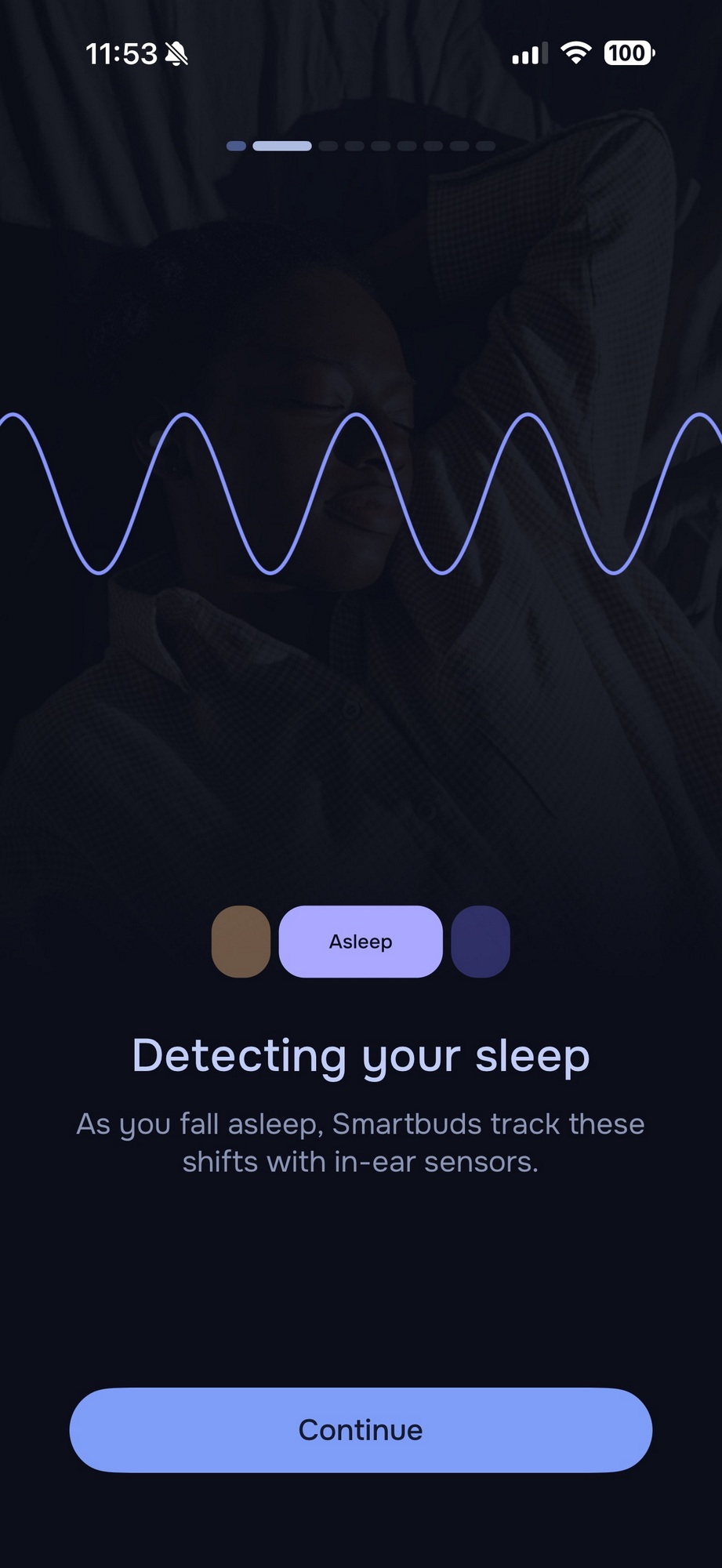
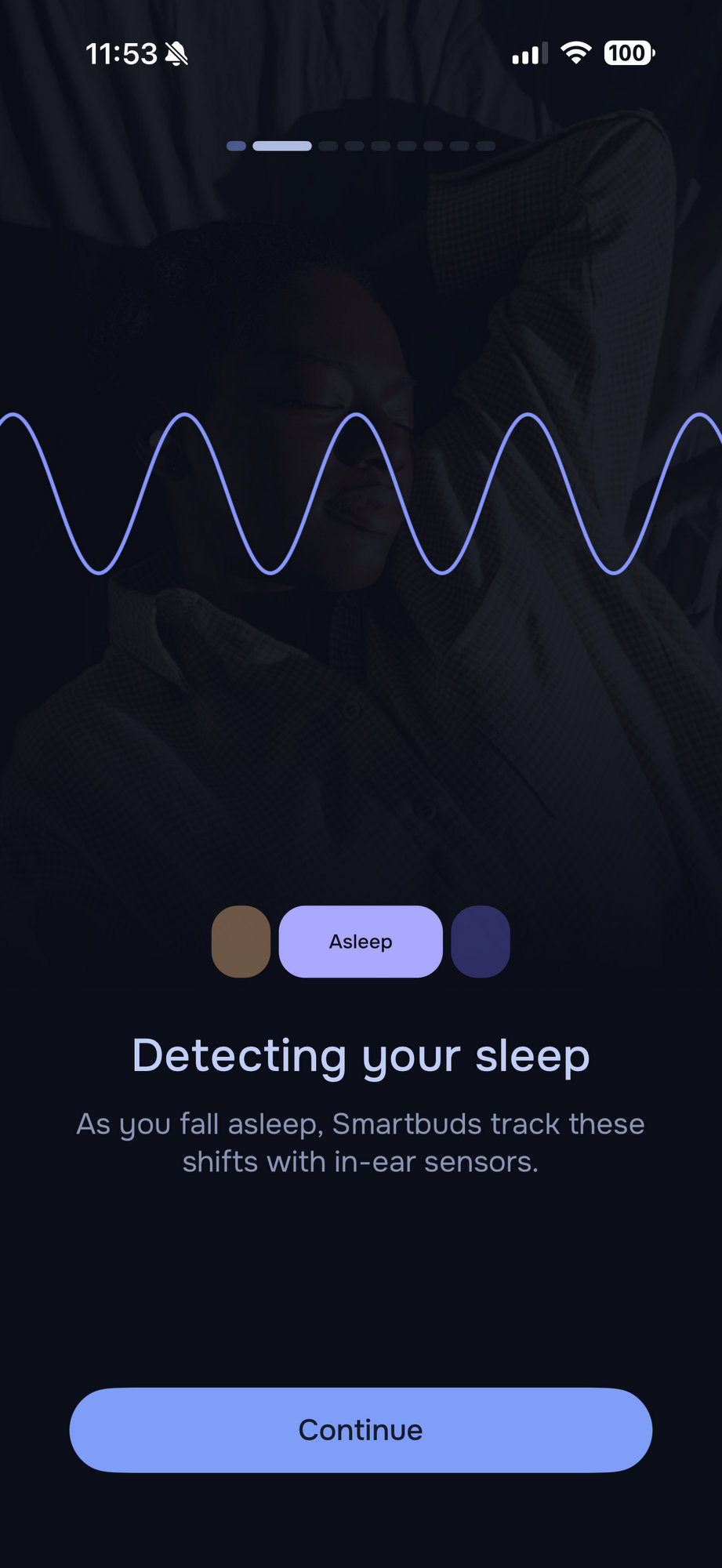
On paper, the concept is easy to like. Instead of guessing at sleep stages the way a watch or mattress sensor does, NextSense says Smartbuds use six clinical-grade dry-contact EEG electrodes to detect what your brain is actually doing. There are two 24-bit EEG channels sampled at 1000 Hz, along with six-axis motion tracking from an accelerometer and gyroscope. The language gets technical fast, but the practical point is simple: these buds are trying to measure sleep from the source rather than infer it from movement and heart rate.
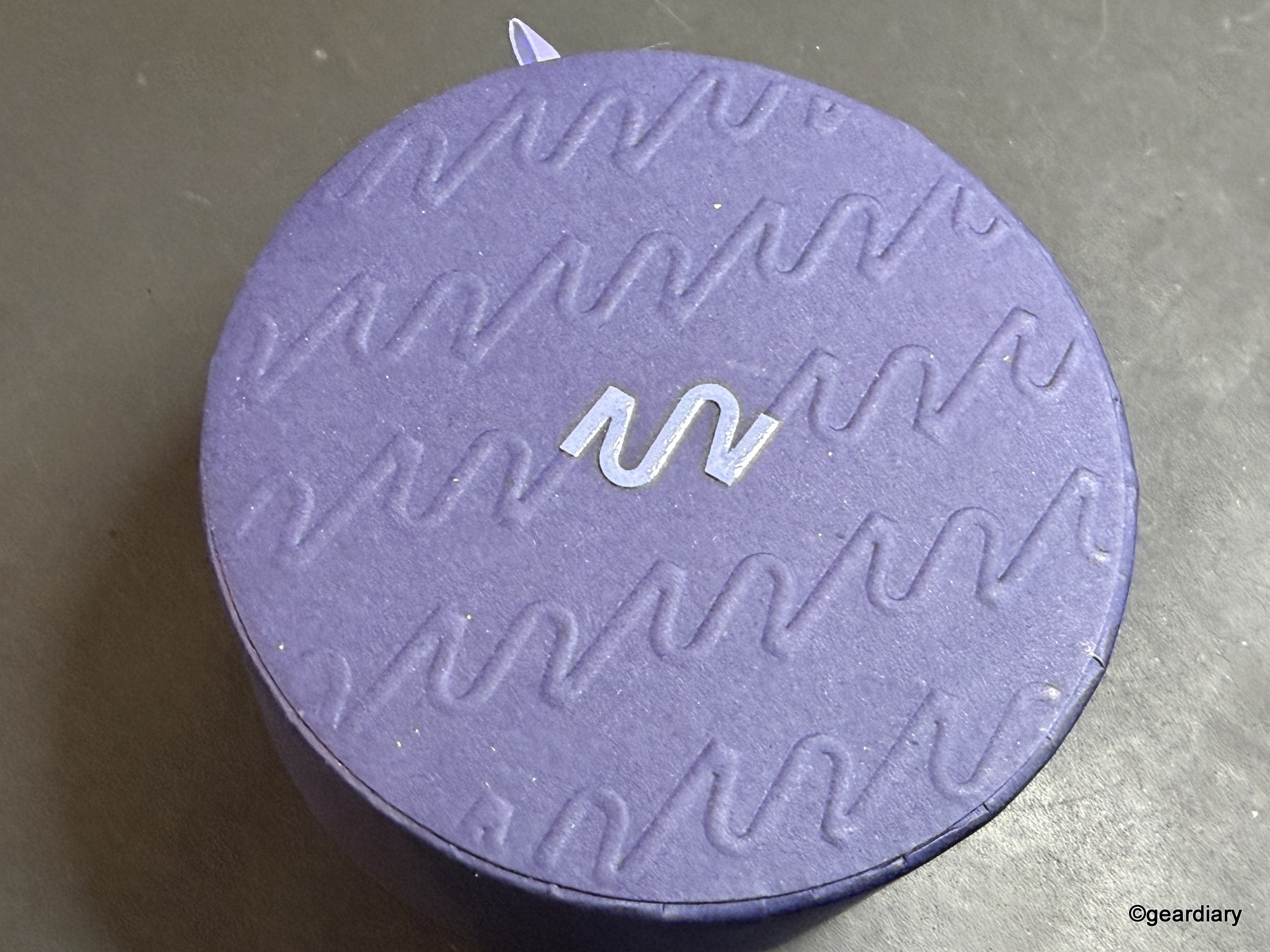
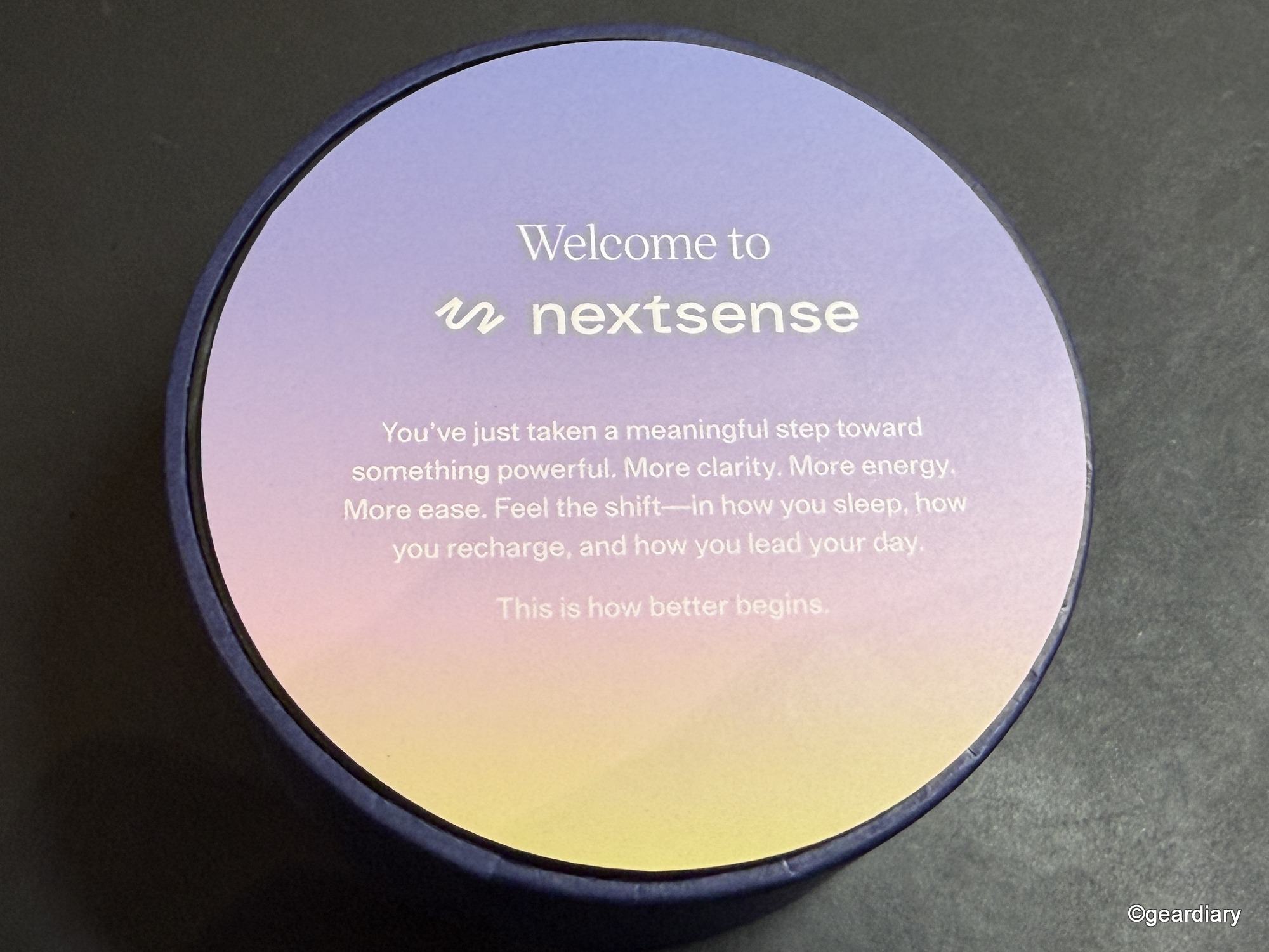
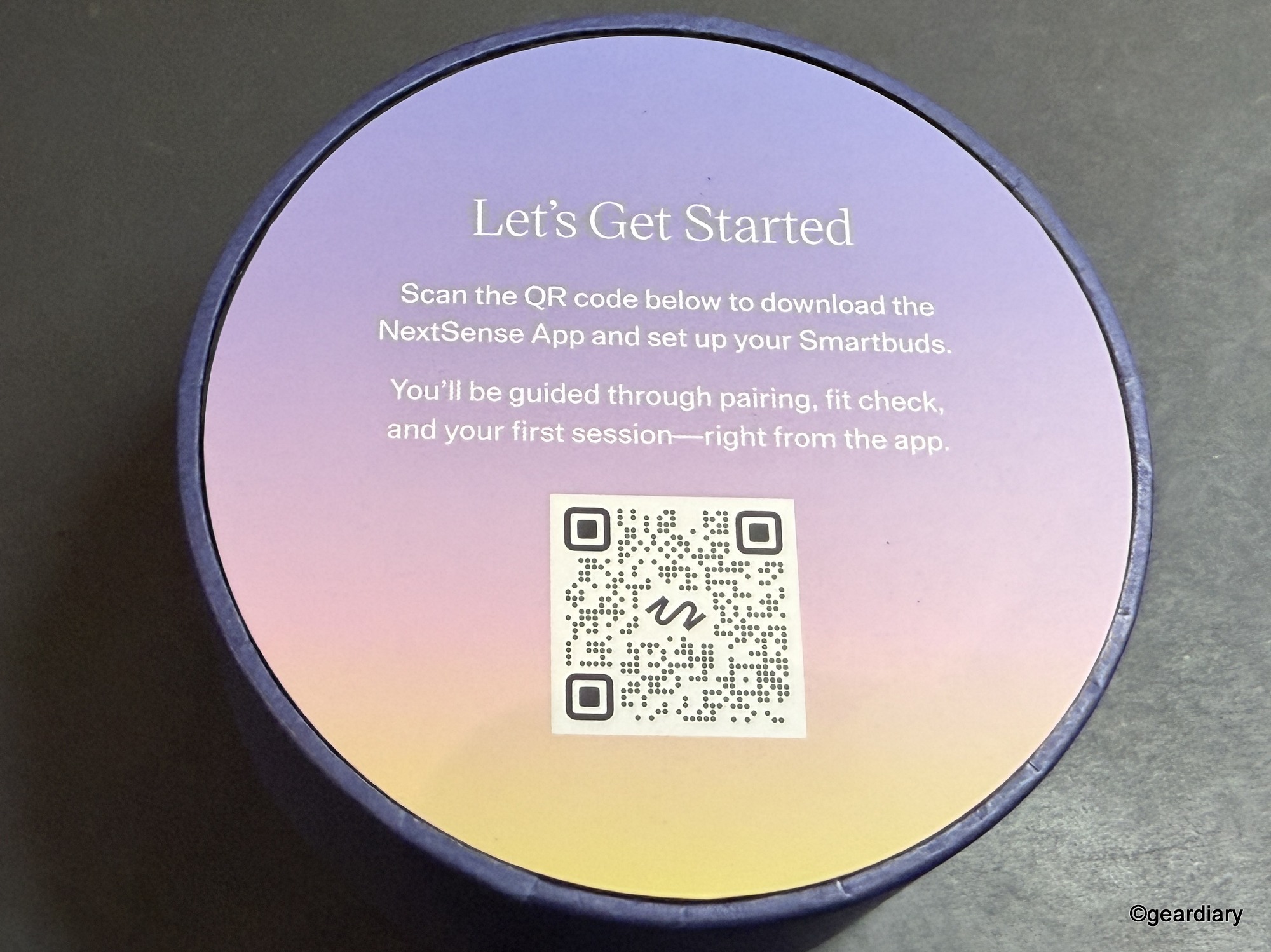
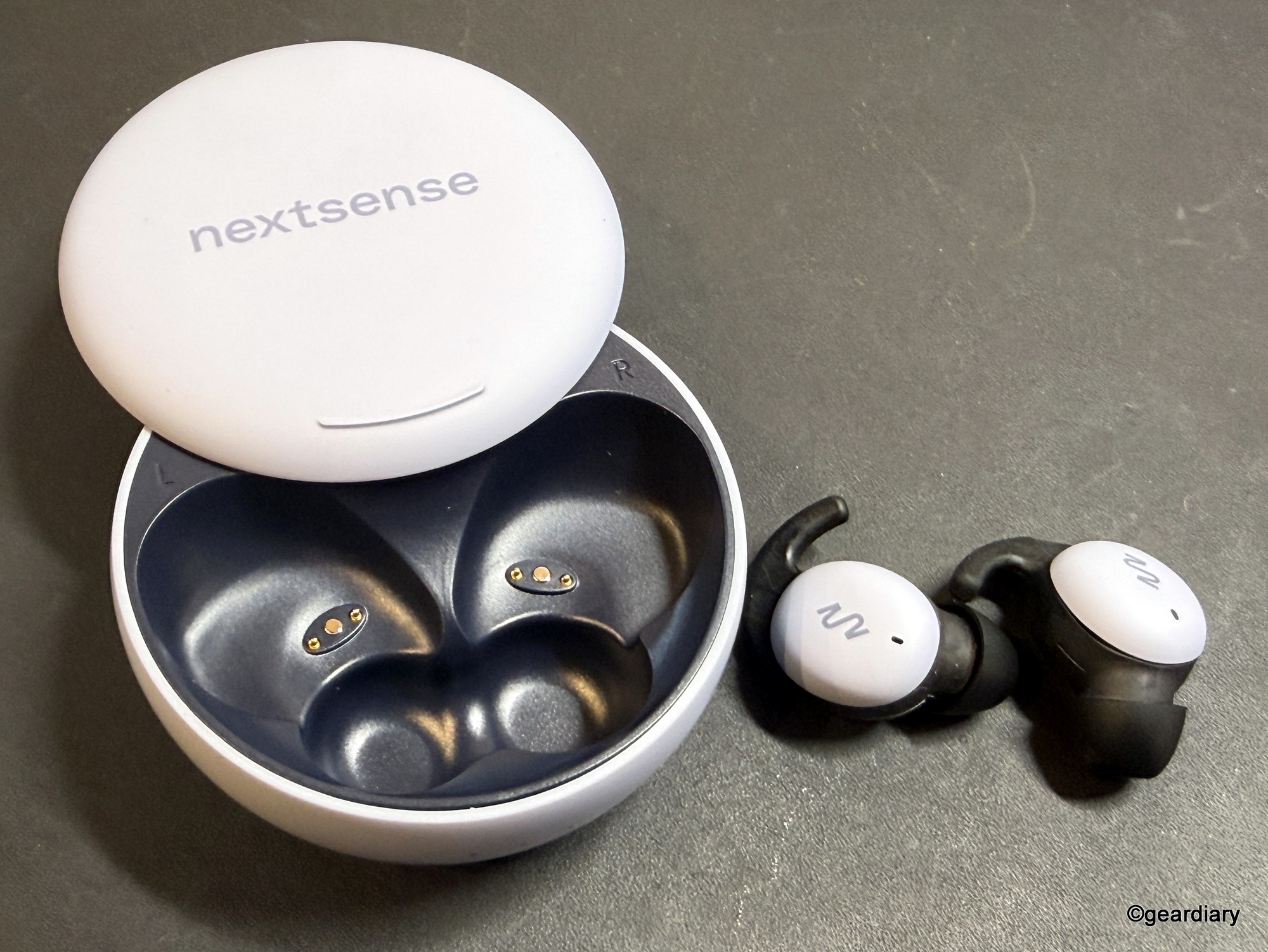
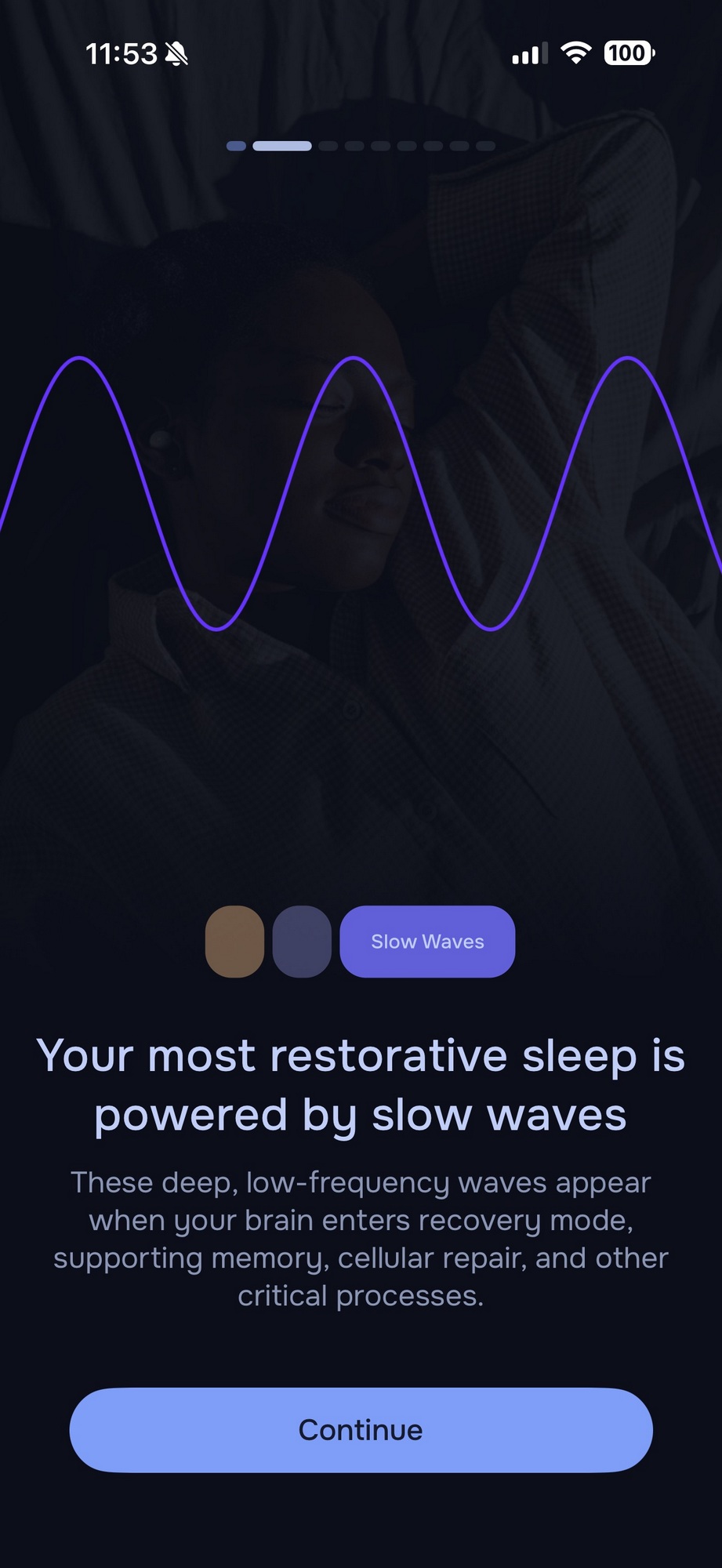
That’s a compelling pitch because EEG, or electroencephalography, is the standard sleep labs rely on when they want to know what stage of sleep you’re actually in. NextSense is trying to skip any guesswork and use your brain signals to guide gentle audio stimulation when you enter slow-wave sleep, the deepest and most restorative stage. In theory, that could make the Smartbuds something more than another sleep tracker with a soothing soundtrack.
In practice, though, the Smartbuds wind up being a reminder that sleep tech still has to survive the basic realities of sleeping.
Getting Started Is Easy Enough
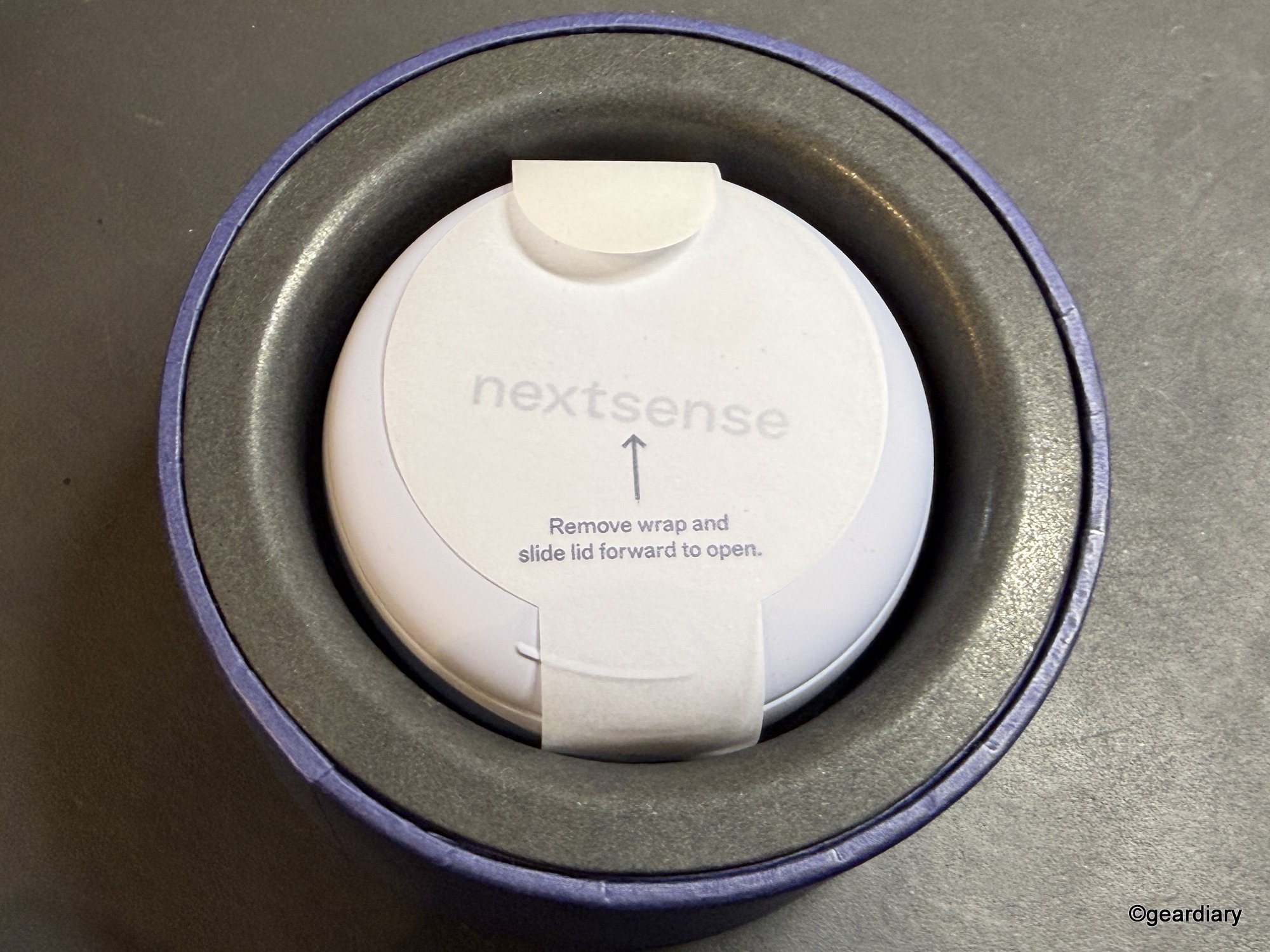
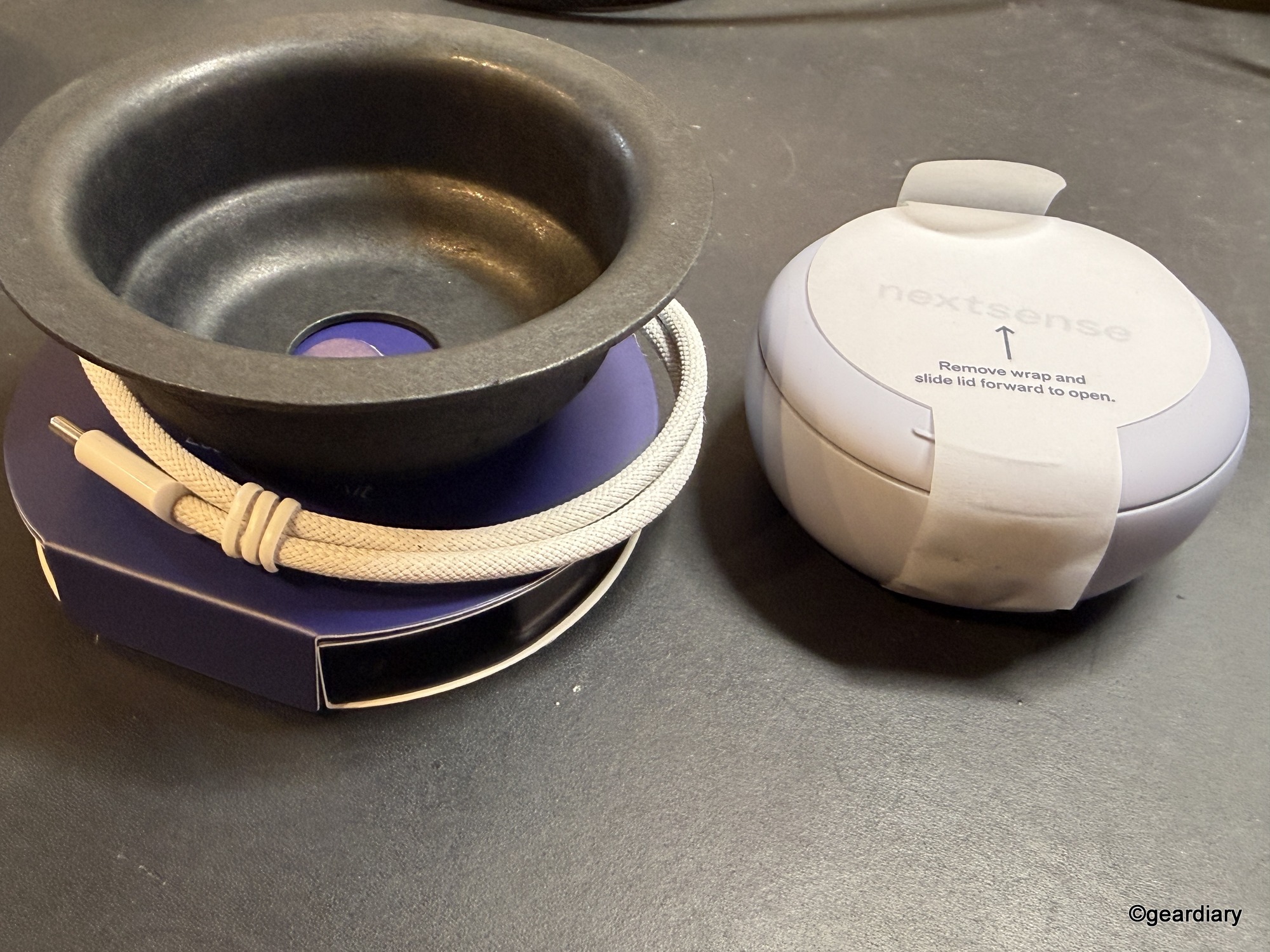
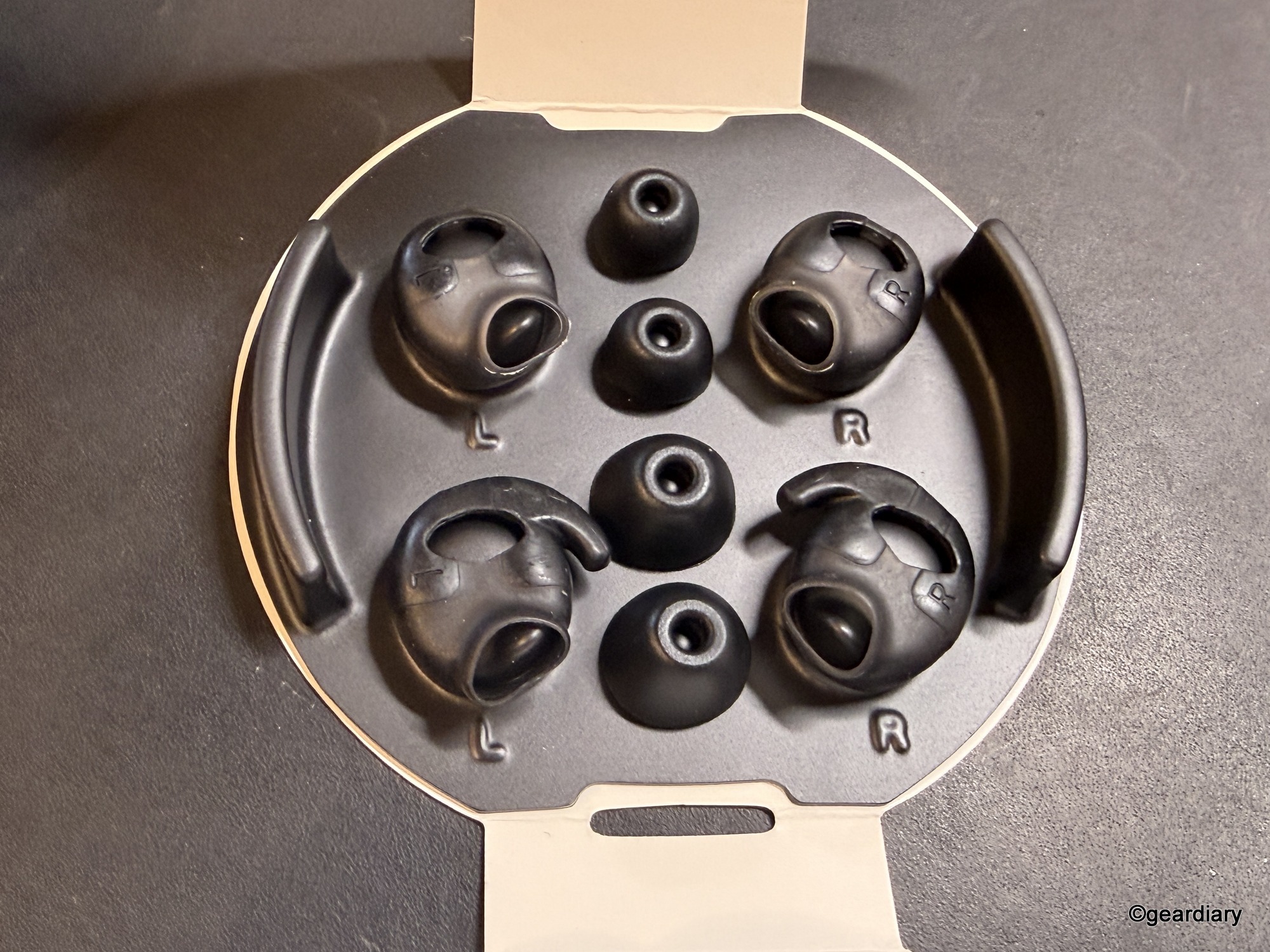
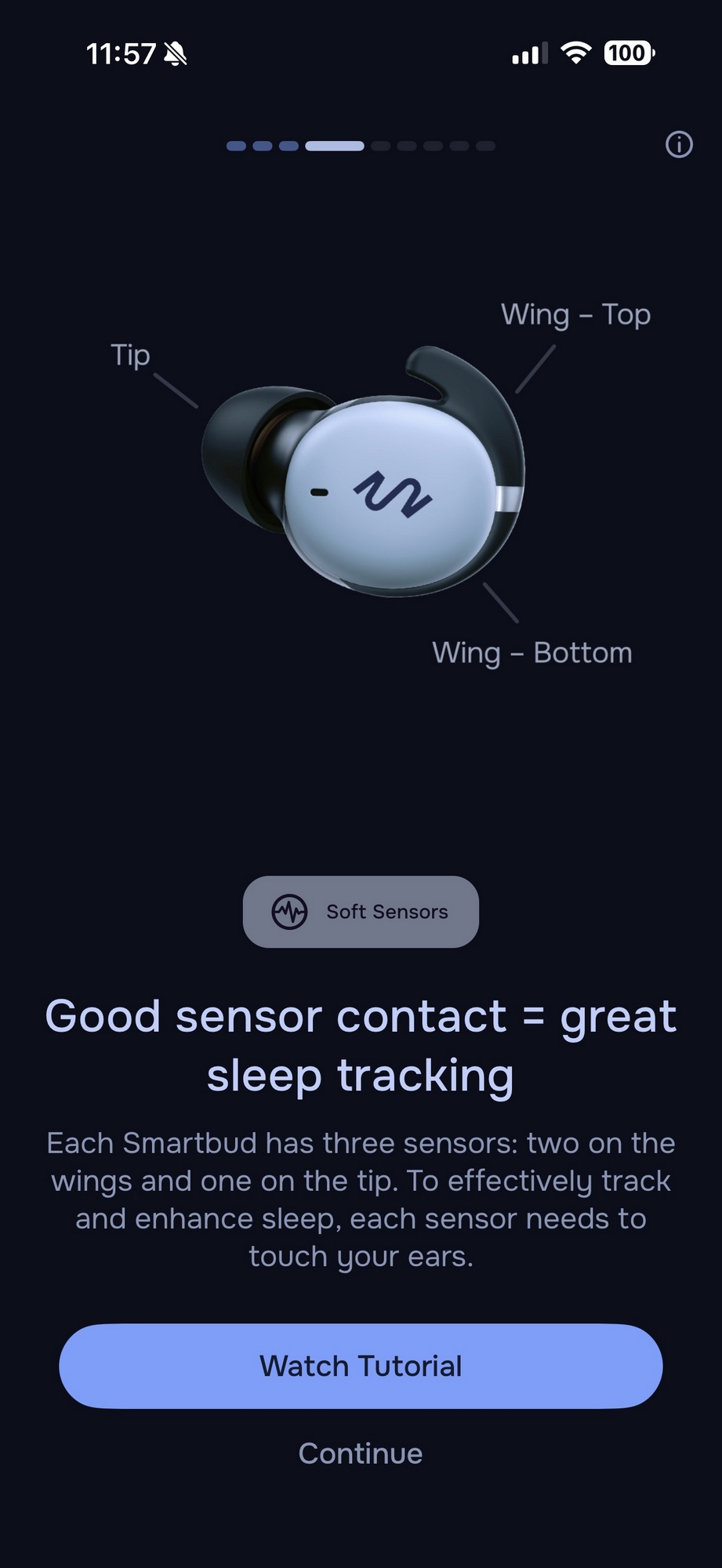
The NextSense Sleepbuds hardware makes a good first impression. The earbuds come in a tidy charging case, and in the box you get a USB-C to USB-C cable, a getting-started guide, and three sizes of ear tips and wings so you can experiment with fit right away. Each bud weighs about 5 grams, which isn’t especially heavy for an earbud but isn’t featherweight either. There’s a 6 mm dynamic driver, Bluetooth 5.3 support, and battery life rated at up to 9 hours of audio and stimulation, with the case holding enough power for up to 4 additional charges.
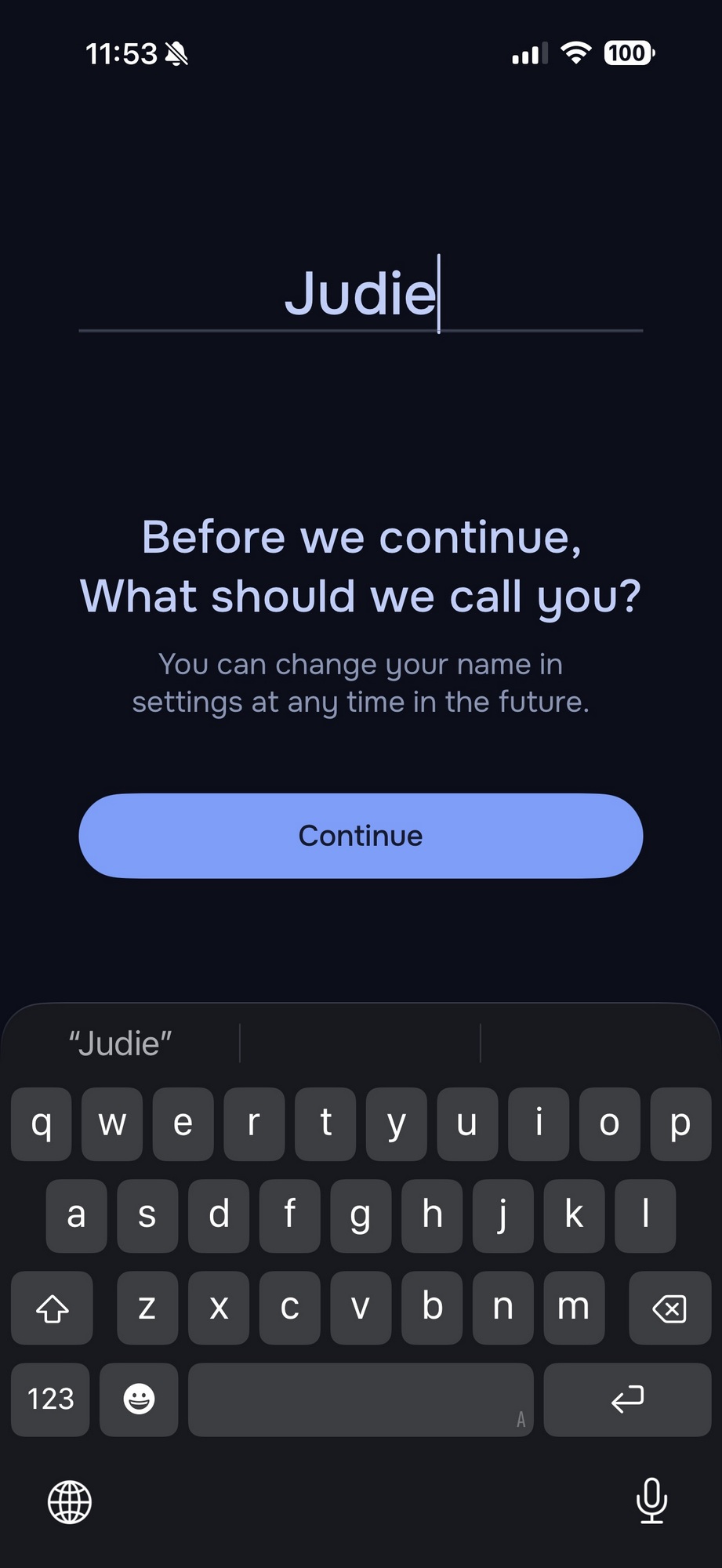
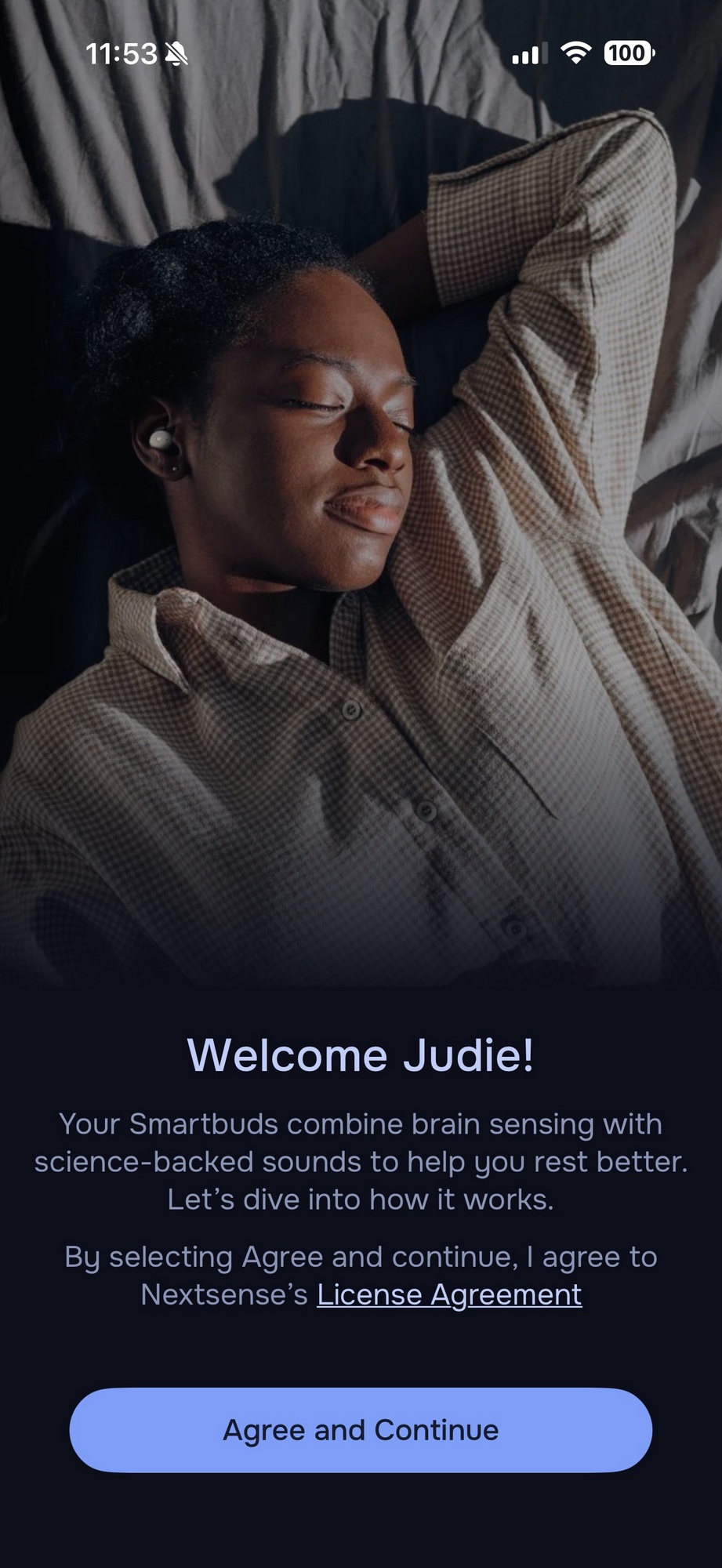
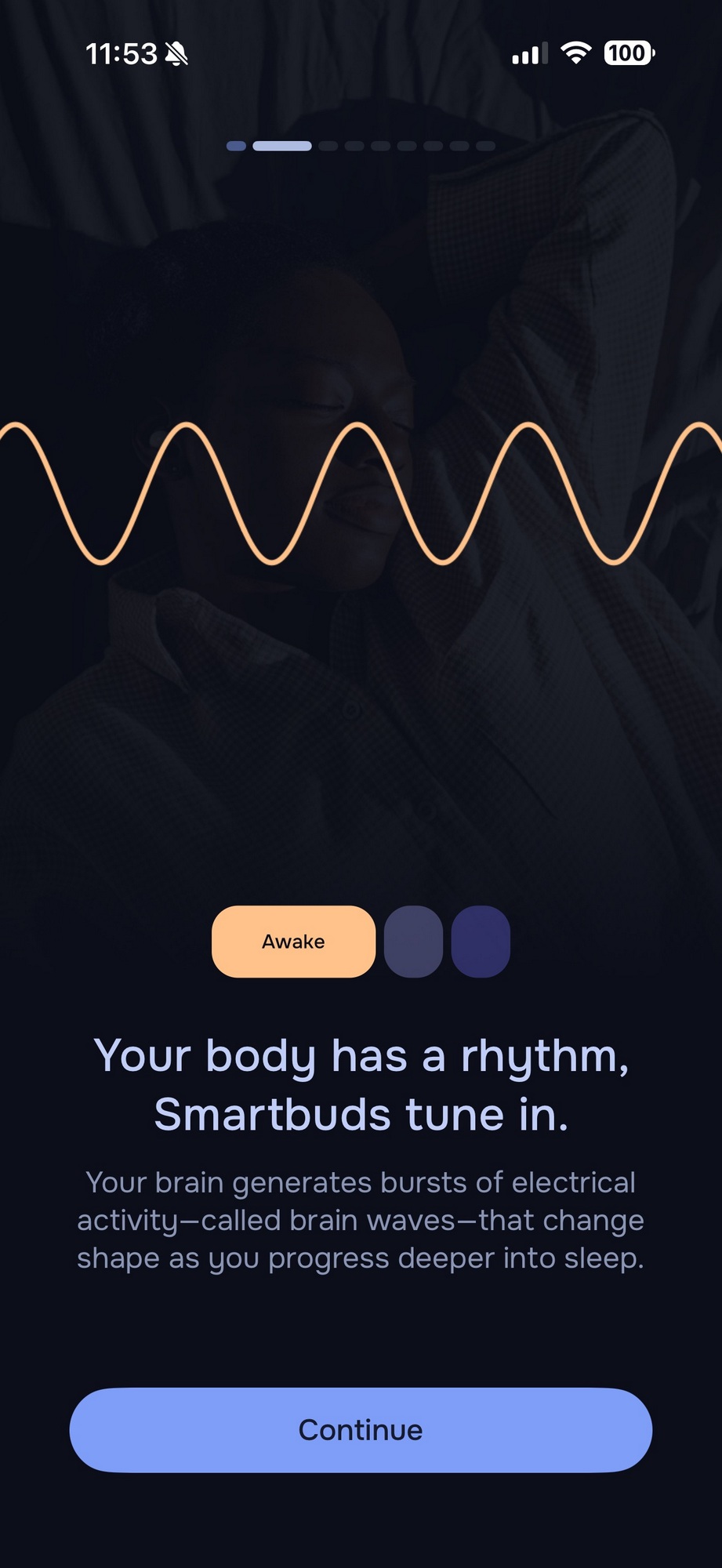
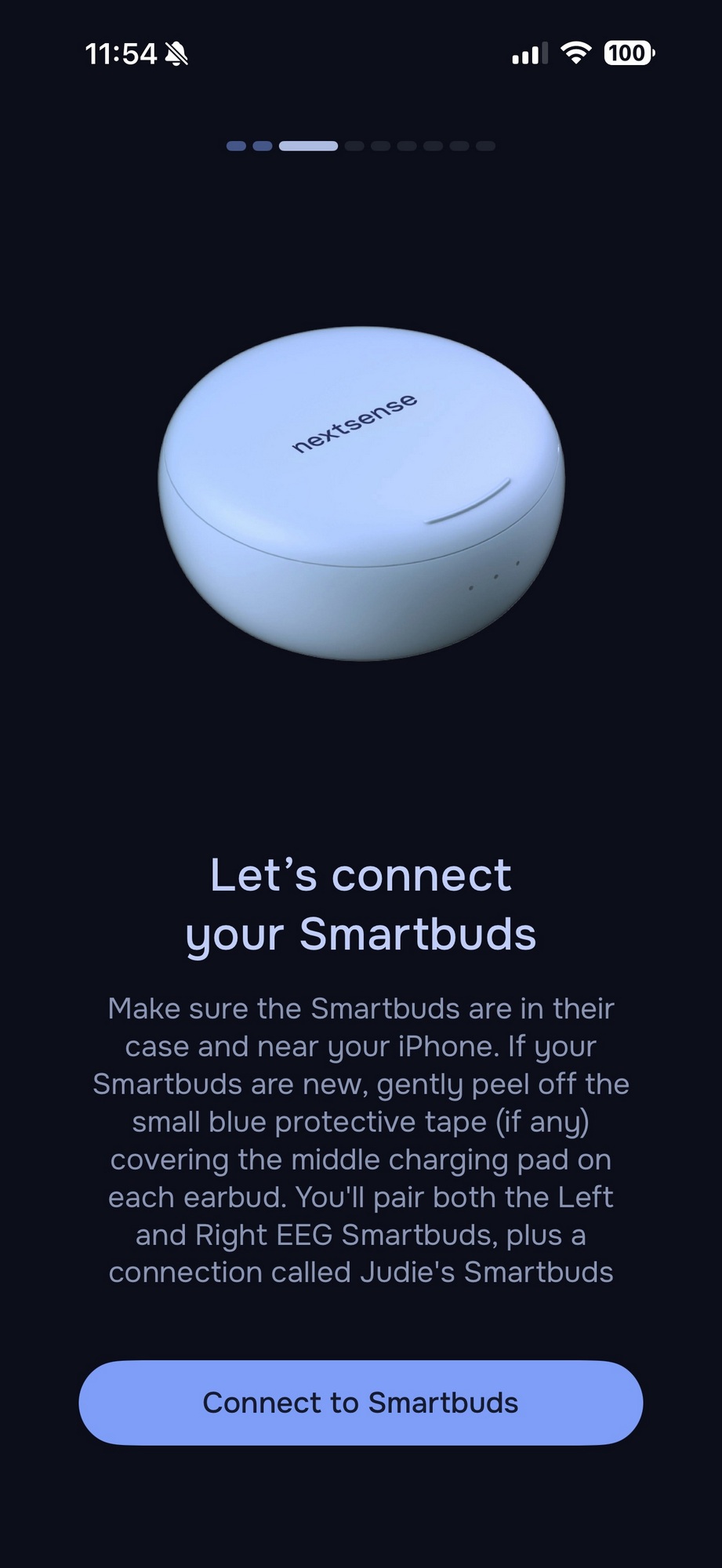
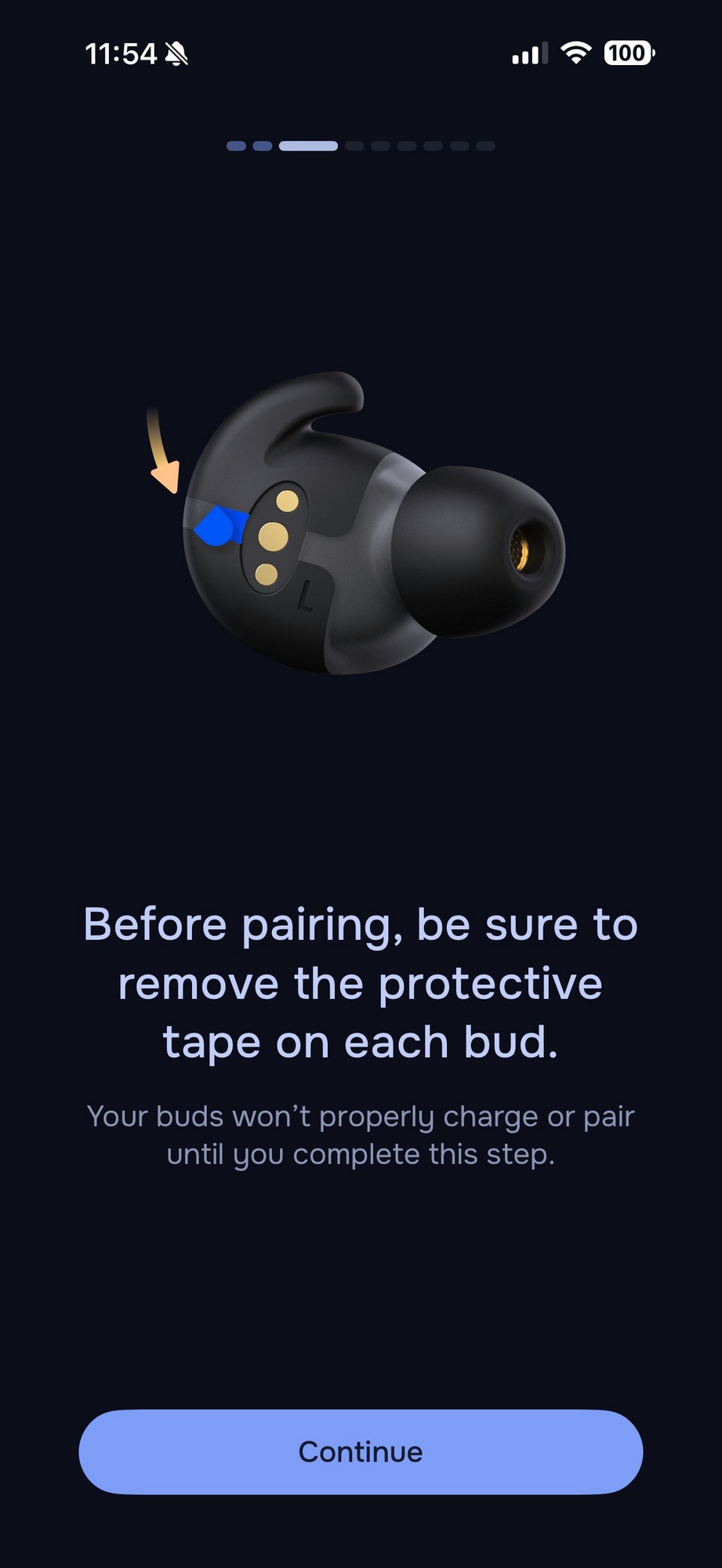
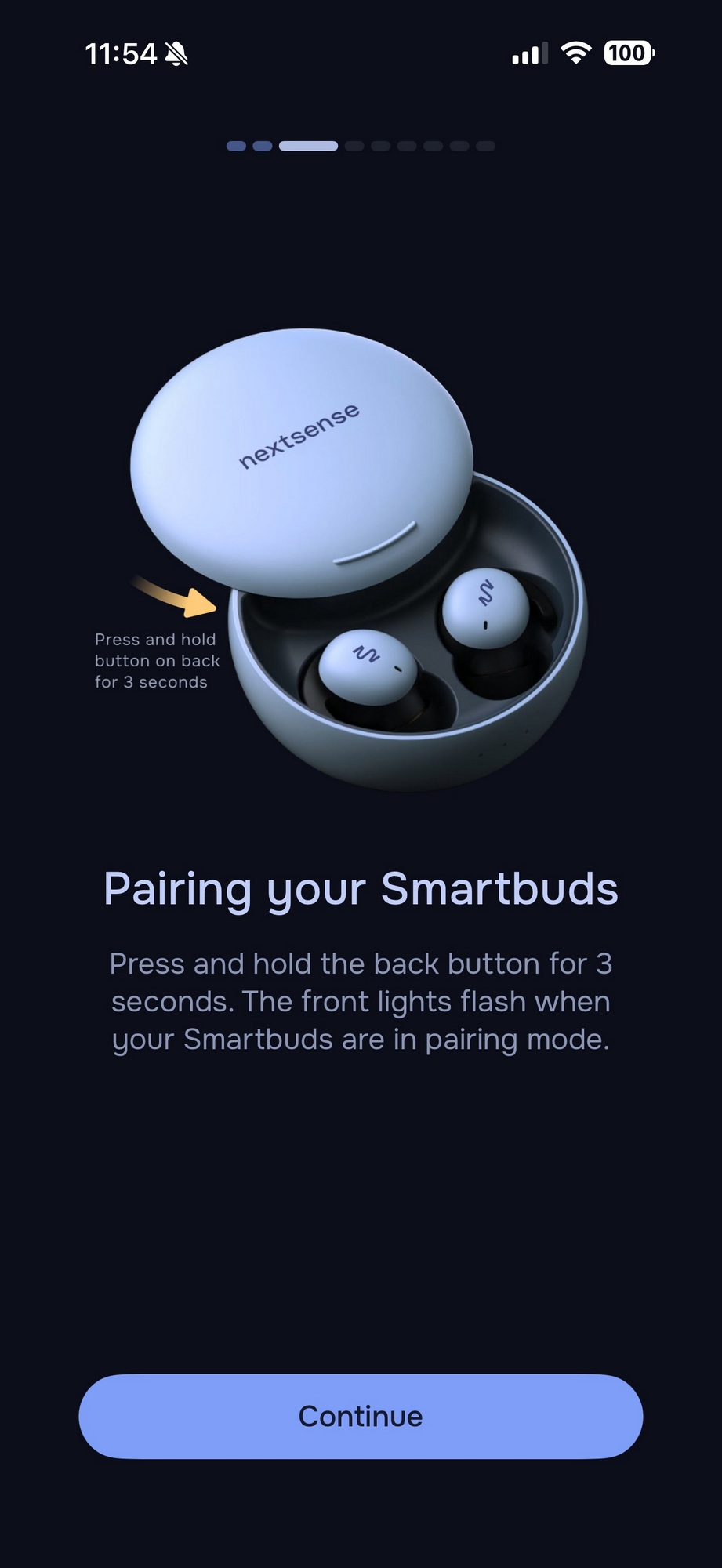
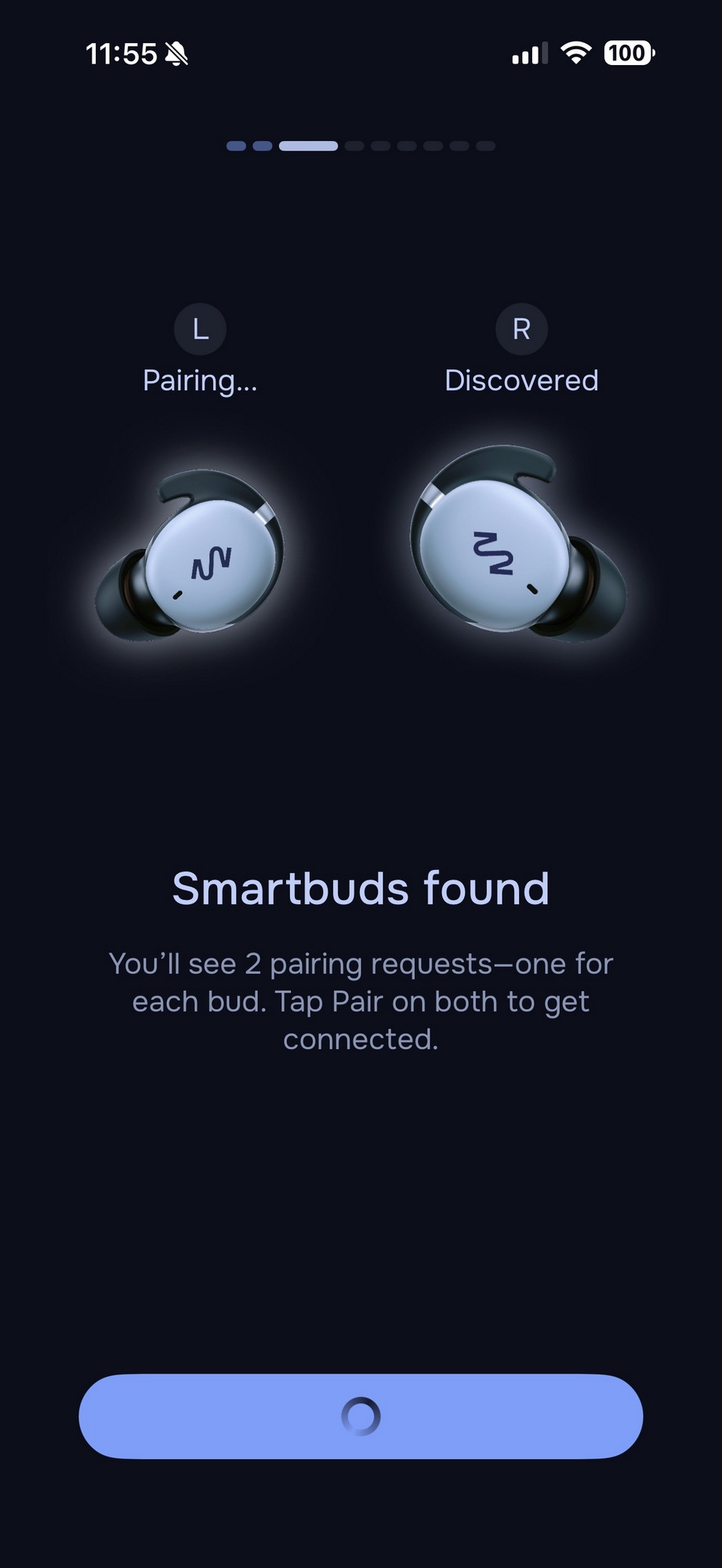
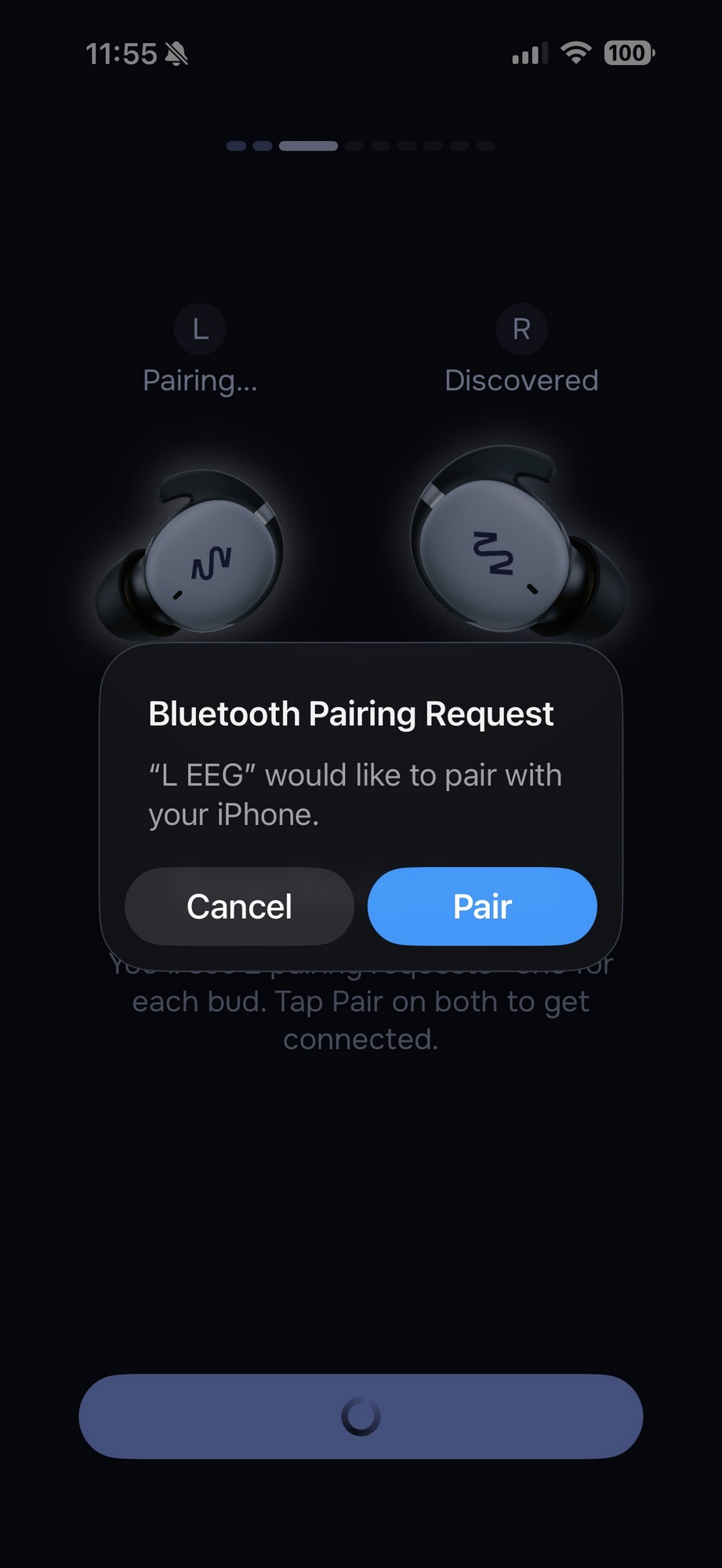
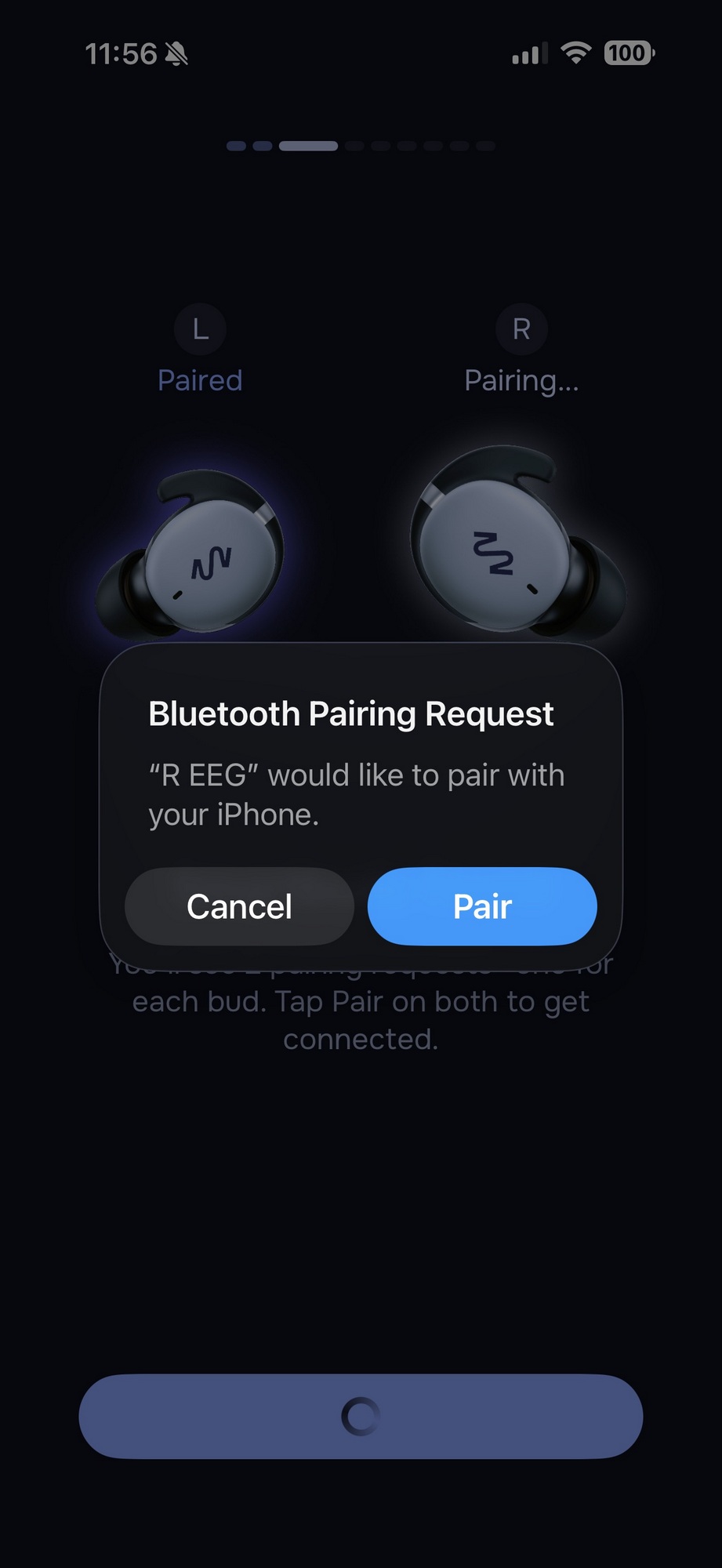
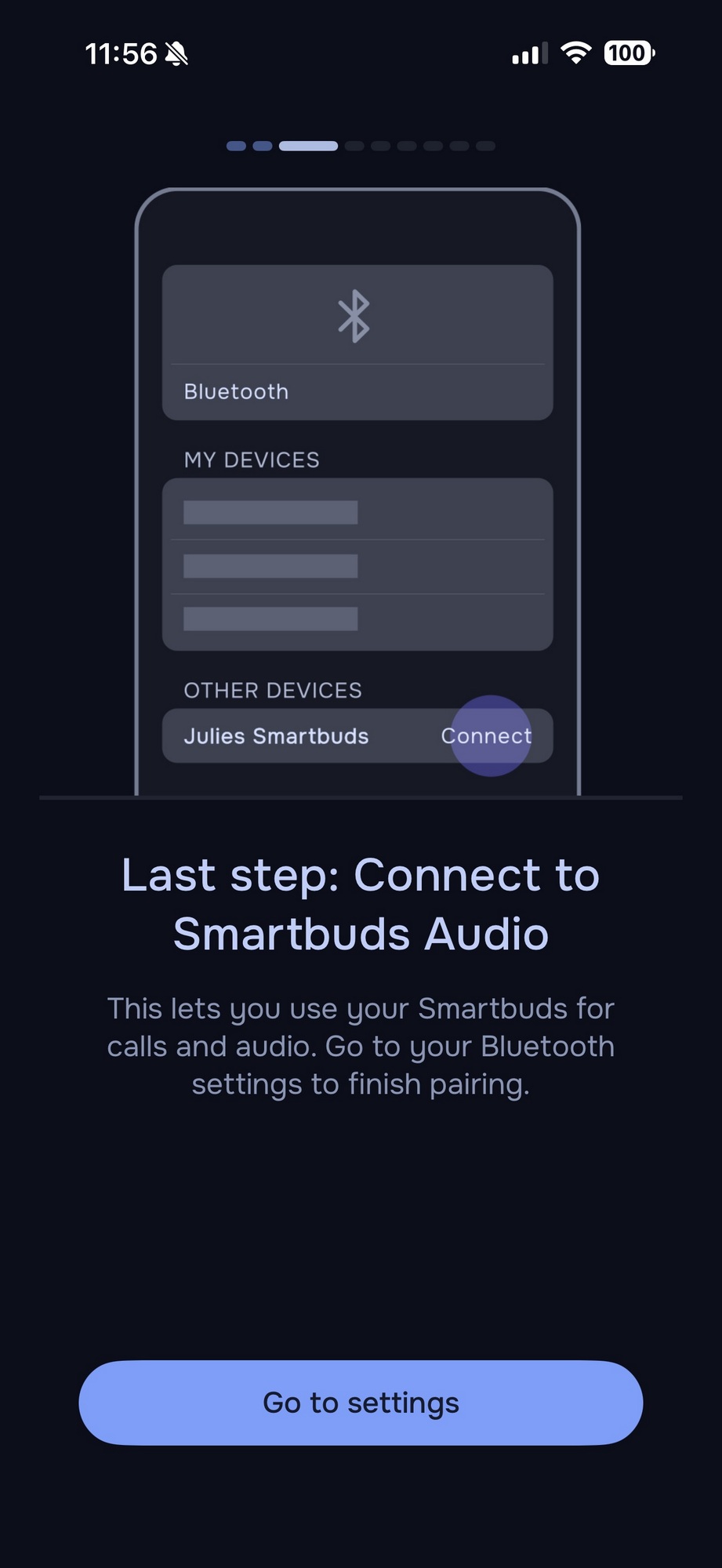
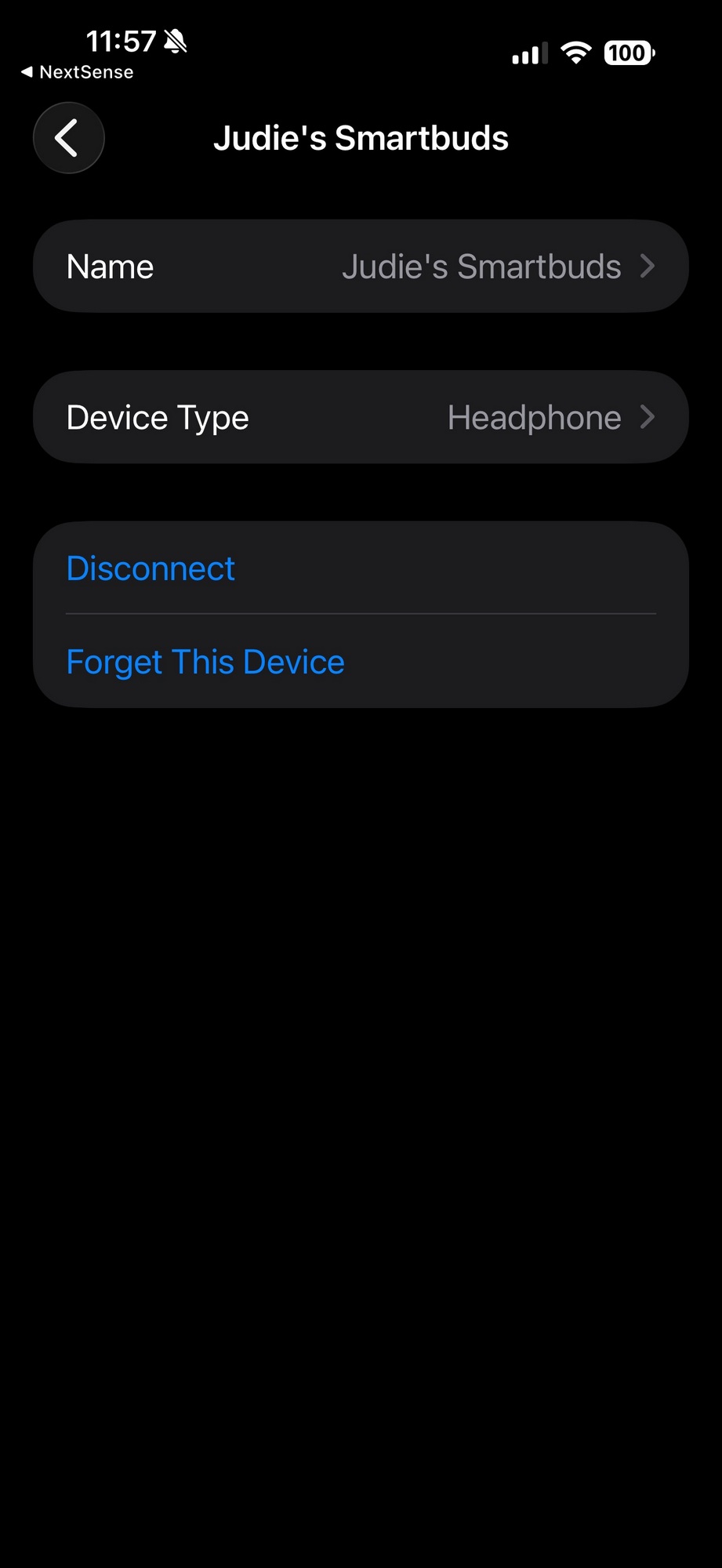
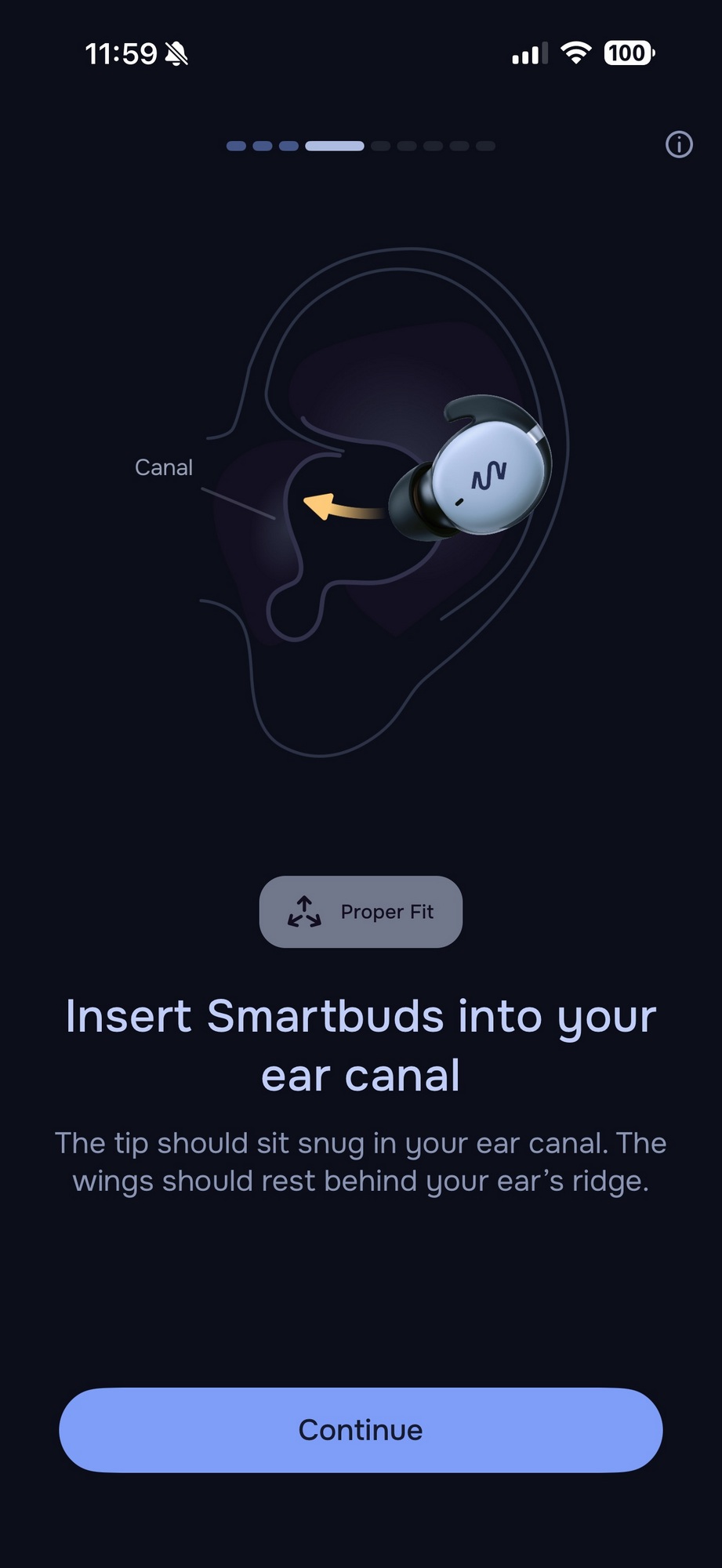
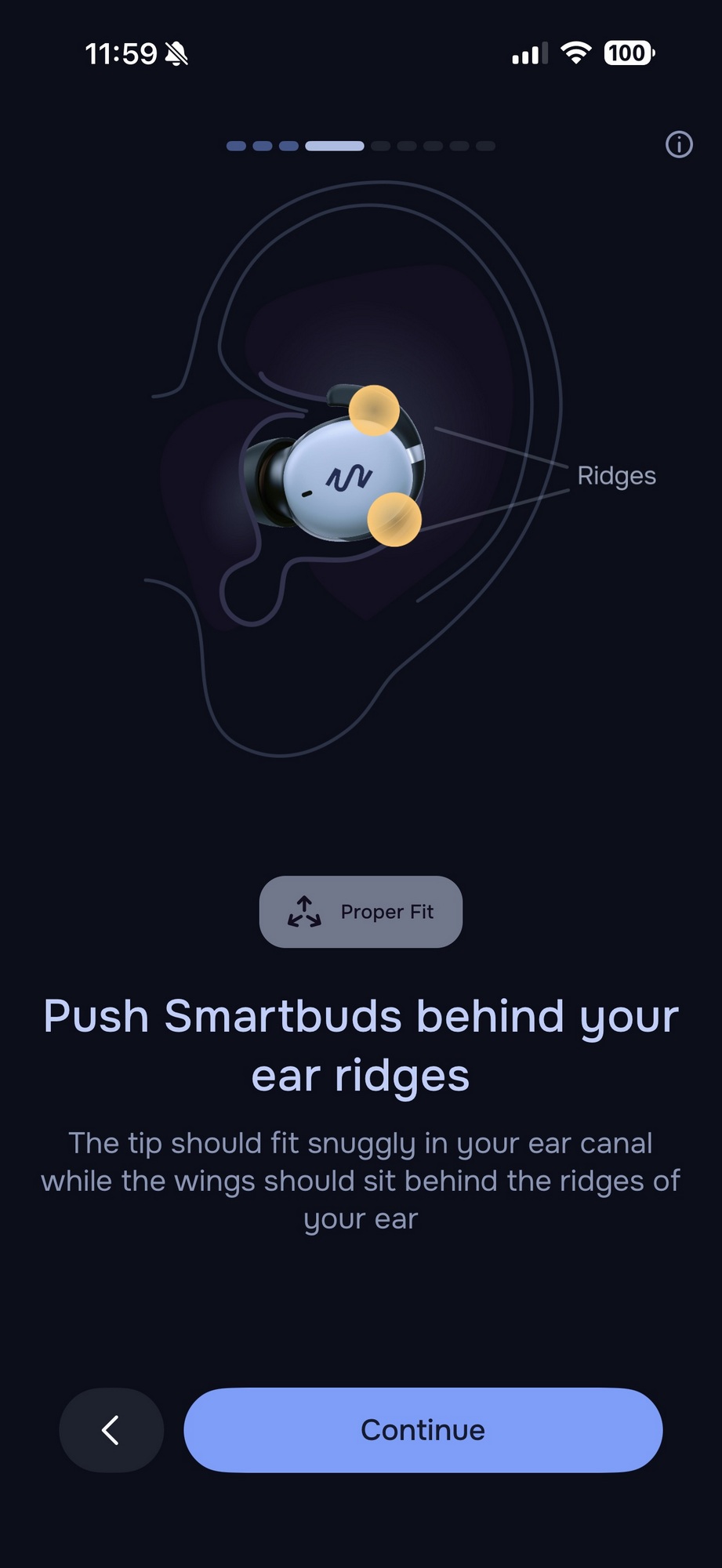
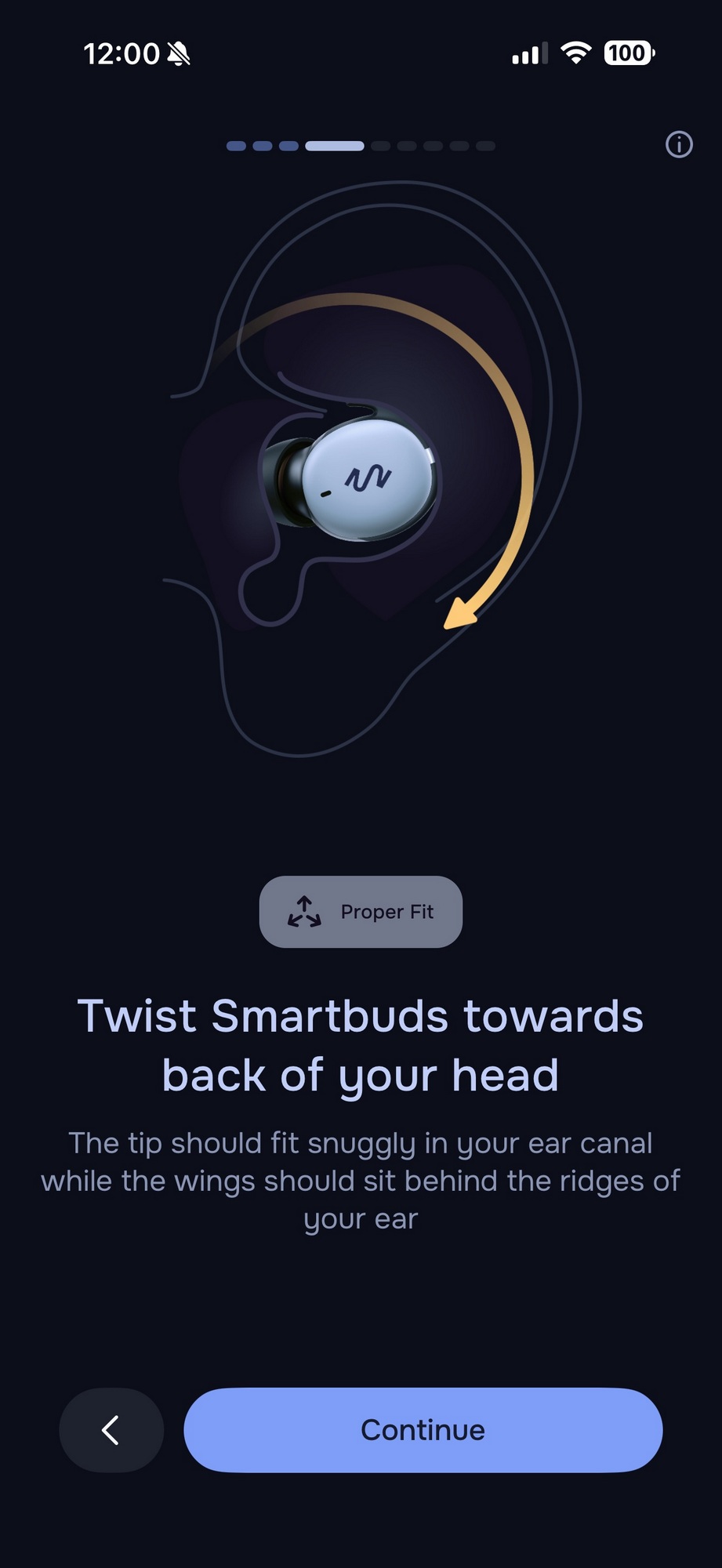
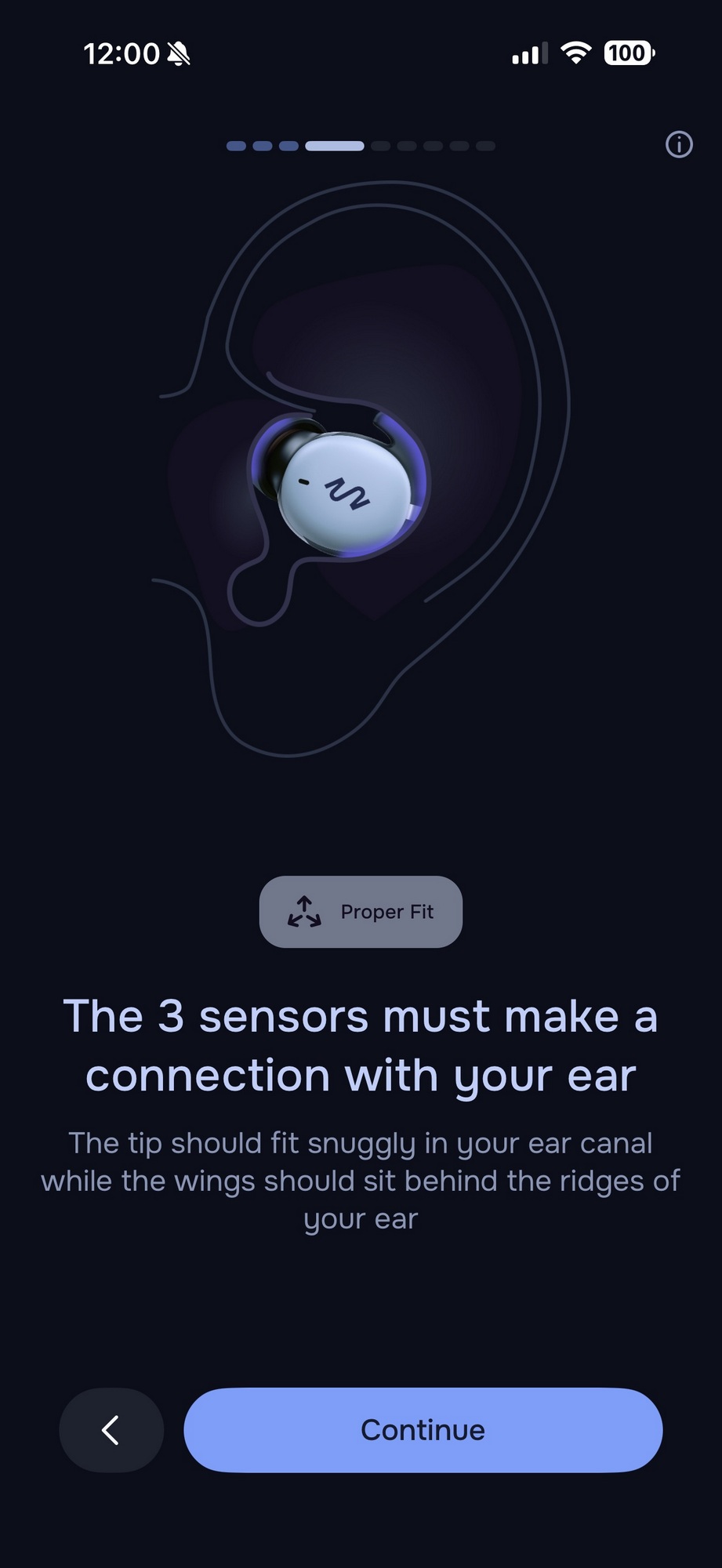
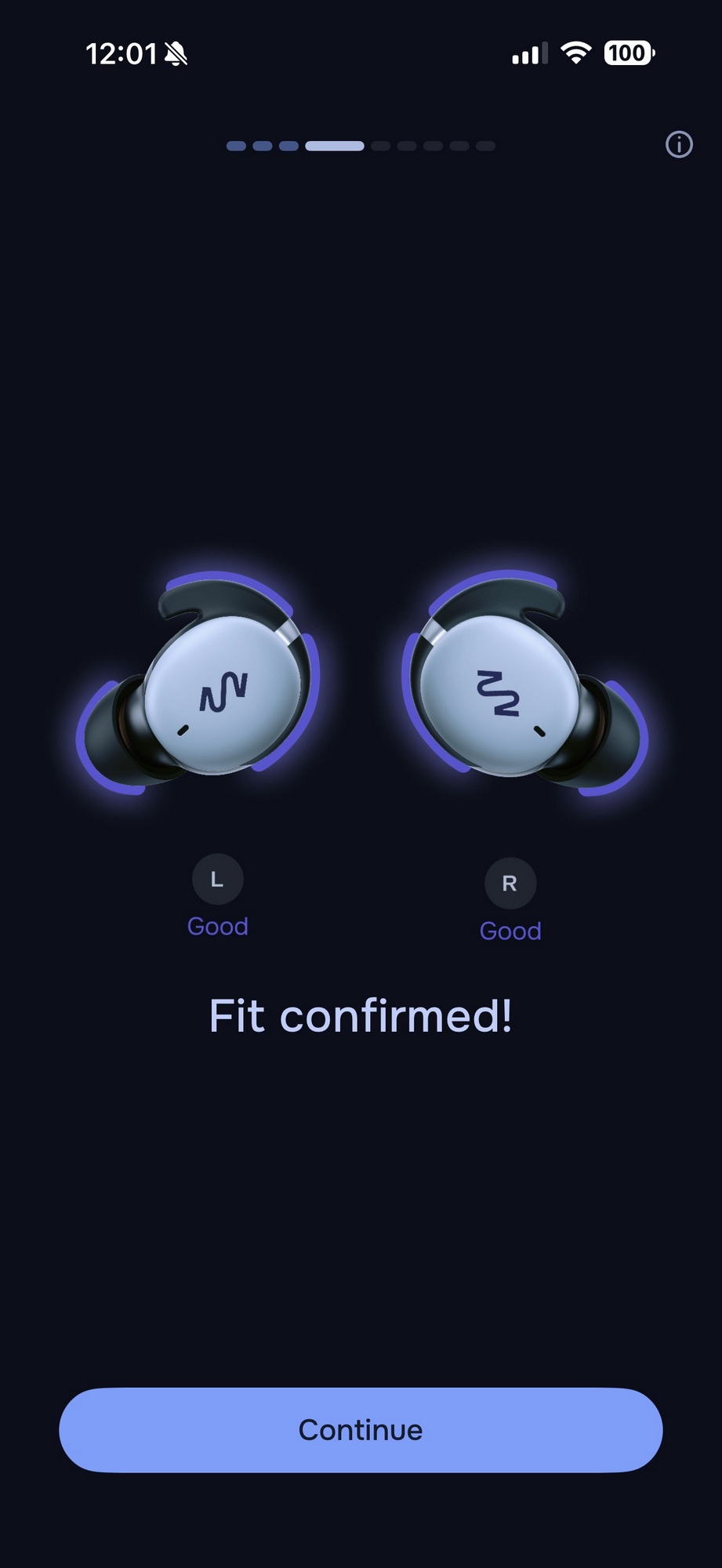
Setup is handled through the NextSense app, and onboarding is fairly straightforward: pair the buds, work through the fit guidance, choose your tip and wing combination, and start exploring the soundscape library. The catch is that Smartbuds require an iPhone 12 or newer running iOS 17 or later. If you’re on Android, the conversation ends pretty quickly.
That’s already a narrow lane for a product at this price, and price deserves its own moment here. The Smartbuds list for $399.99, though NextSense has also been offering them at an introductory discount. That’s a premium ask for sleep earbuds, even before the more confusing part enters the chat.
The Subscription Situation Is Odd
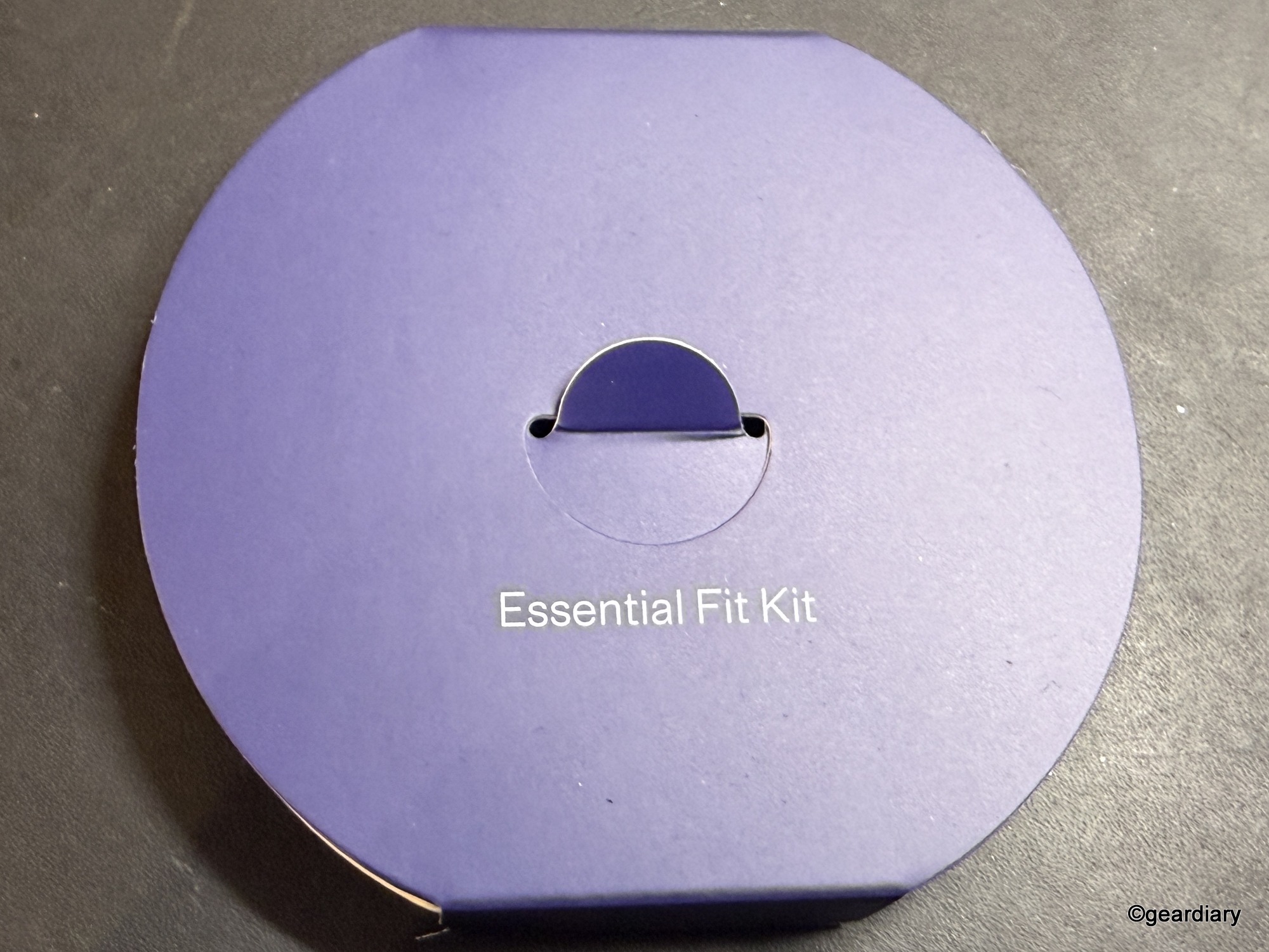
Every NextSense Sleepbuds purchase includes a Fit Kit, which covers the ear tips and wings that help create both the physical fit and the conductive contact needed for EEG. The company also says no subscription is required.
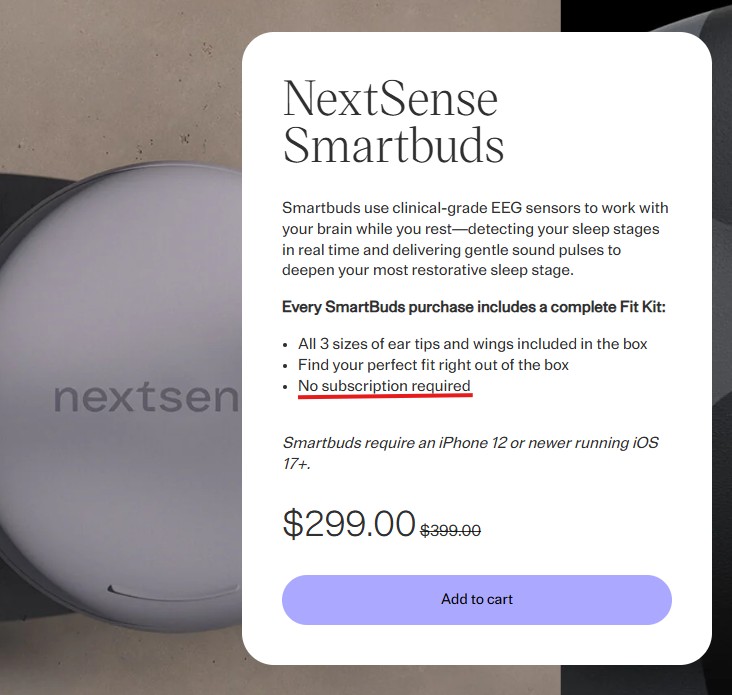
But read a little bit further, and you’ll find that the Smartbuds are designed to be used with a subscription, because the tips and wings need regular replacement to maintain comfort and signal quality. The monthly Fit Kit renewal is $14.99 after an initial 3-month period.
That’s where things get muddy.
I understand the logic behind replacing parts that come into contact with your skin and serve as sensors night after night; in fact, I would consider it a welcome option. Conductive silicone isn’t just decorative here, and if signal quality drops as the materials wear, that matters. Still, there’s a difference between “this helps maintain peak performance” and “this is part of the actual cost of owning the product.” NextSense doesn’t seem sure which message it wants to lead with, and for a company selling something this intimate and this expensive, a costly monthly subscription seems particularly questionable.
The subscription isn’t the reason to skip Smartbuds, but it does make the product feel more complicated than it needs to be.
The Part That Matters Most: Sleeping in Them
The real story starts once the lights are off.
I tried the NextSense Smartbuds over multiple nights and eventually settled on the small tips and small wings as the best fit for my ears. At bedtime, that fit seemed promising. The buds sat flush enough, the audio was pleasant, and I did fall asleep fairly quickly with them in. That part worked better than I expected.
But comfortable when you first settle into bed isn’t the same thing as comfortable at 3:17 a.m.
I’m predominantly a side sleeper, and I use a firmer pillow. That turned out to be a bad combination for the Smartbuds. Night after night, I’d wake up somewhere between 3:00 and 4:00 in the morning because my ears hurt. Not mildly annoyed, not vaguely aware of pressure, but deeply uncomfortable in a way that made sleep feel like a lost cause unless I pulled the buds out. The soreness often lingered well into the next day.
That, more than any sensor spec or app graph, defined my experience with the product.
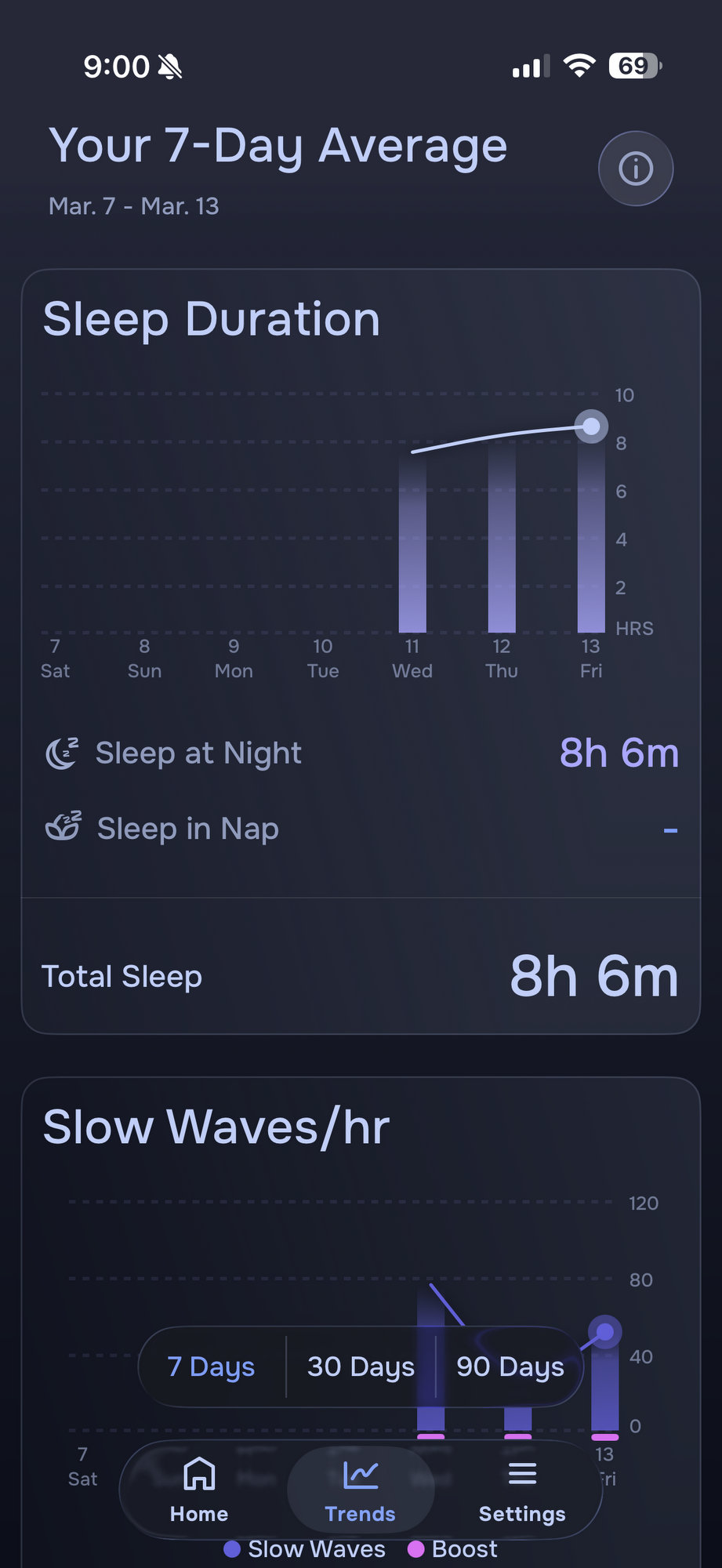
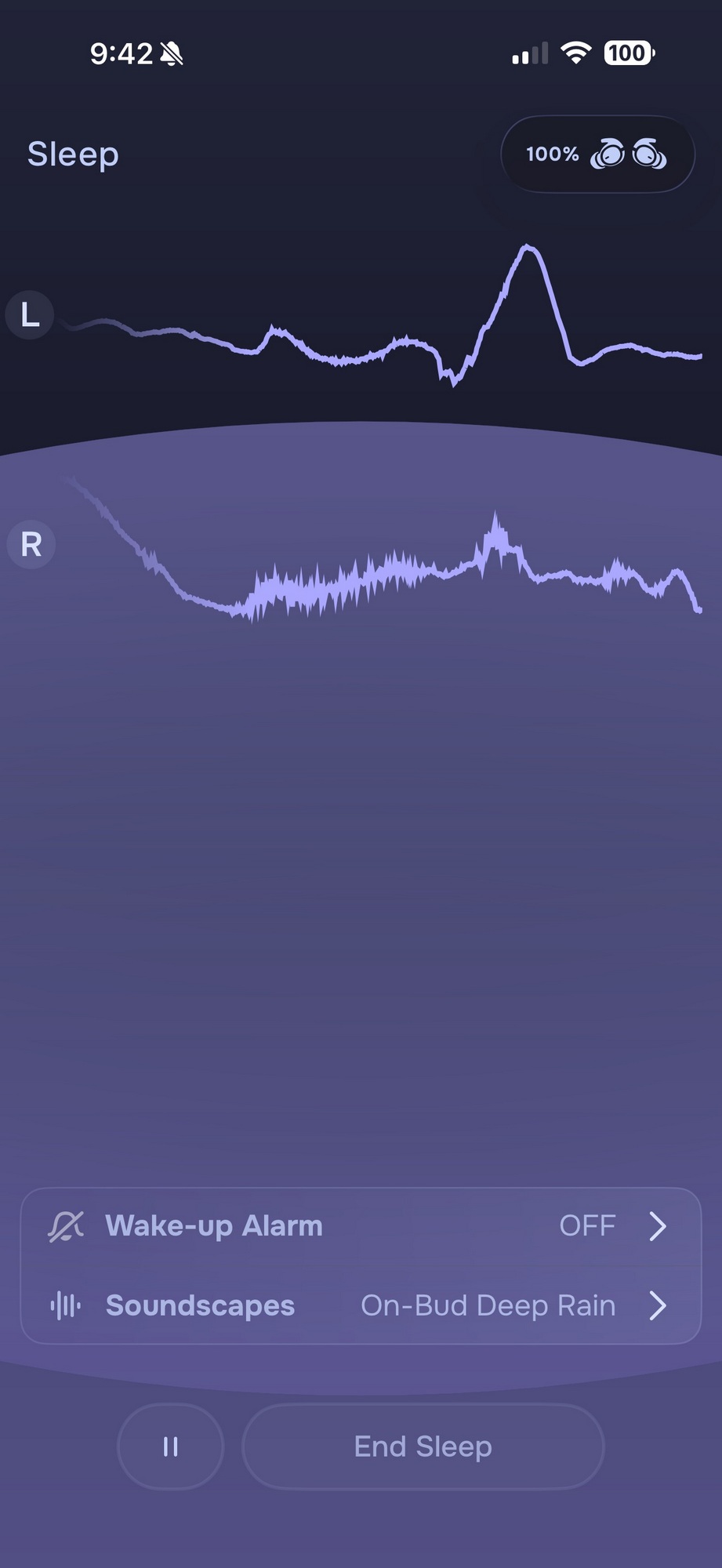
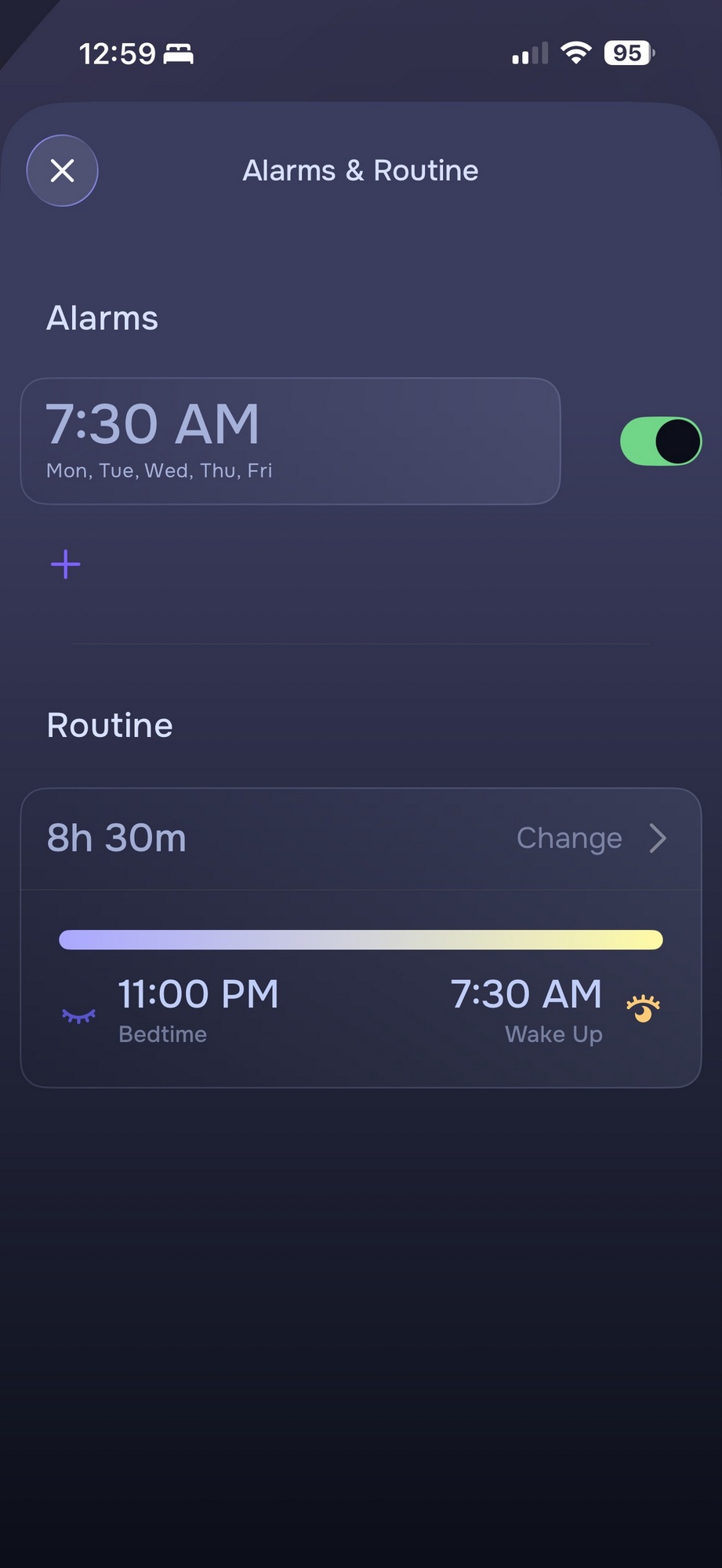
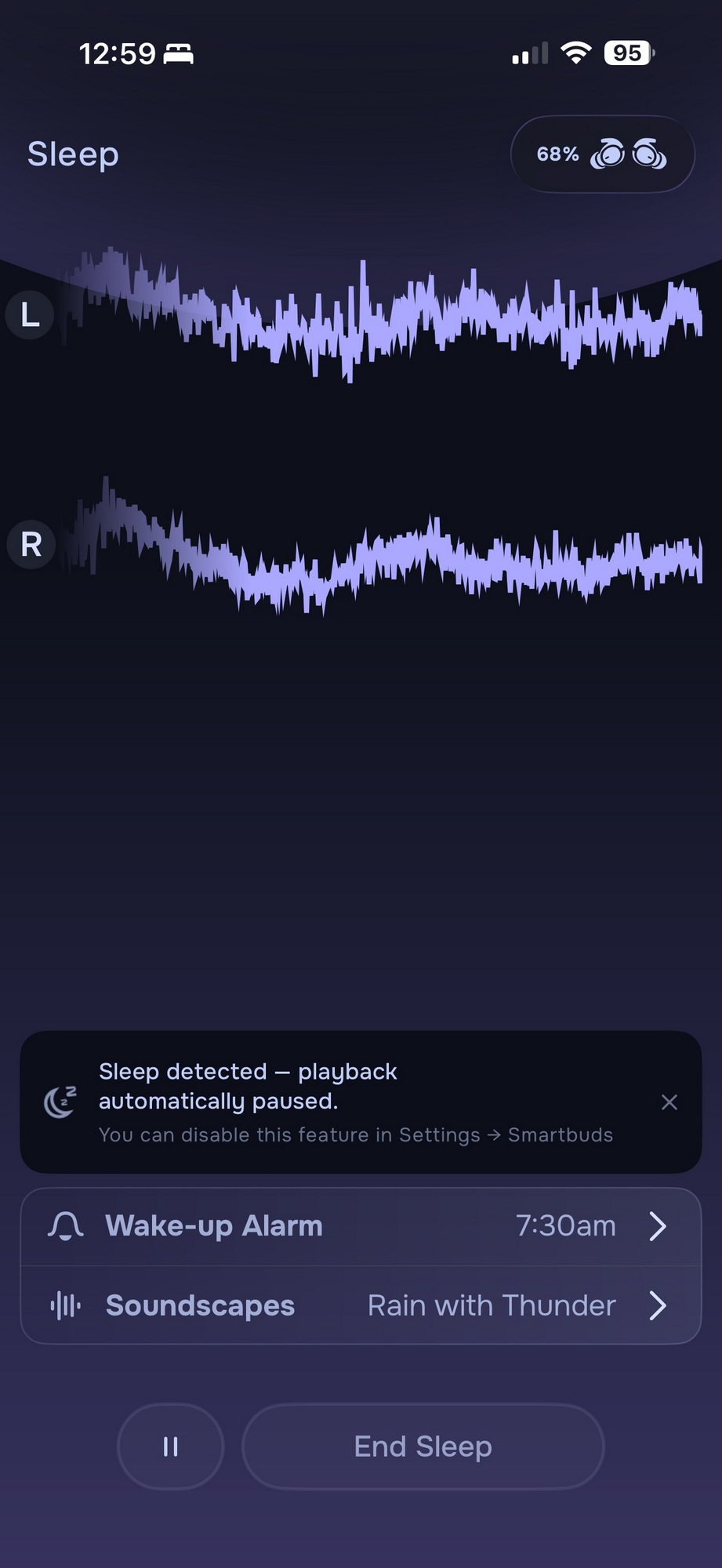
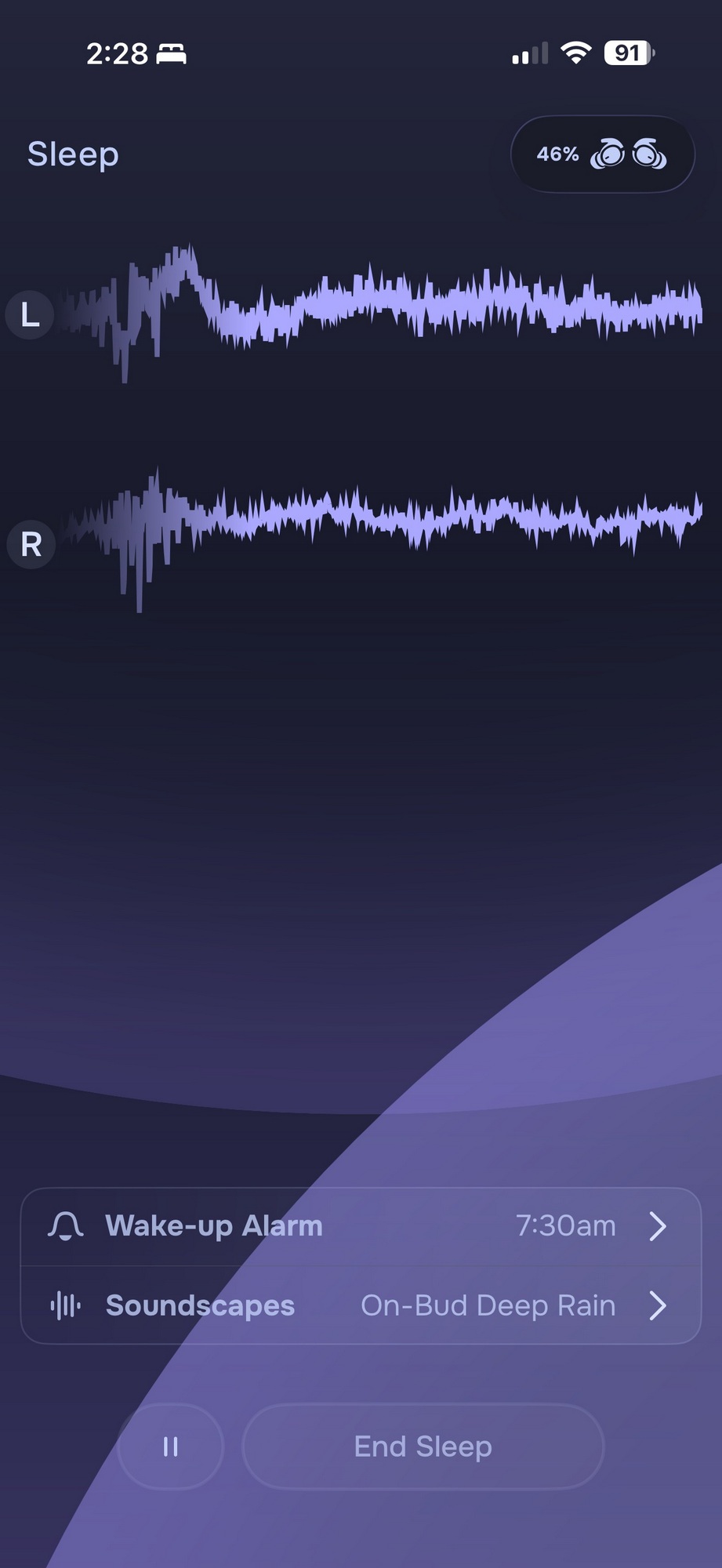
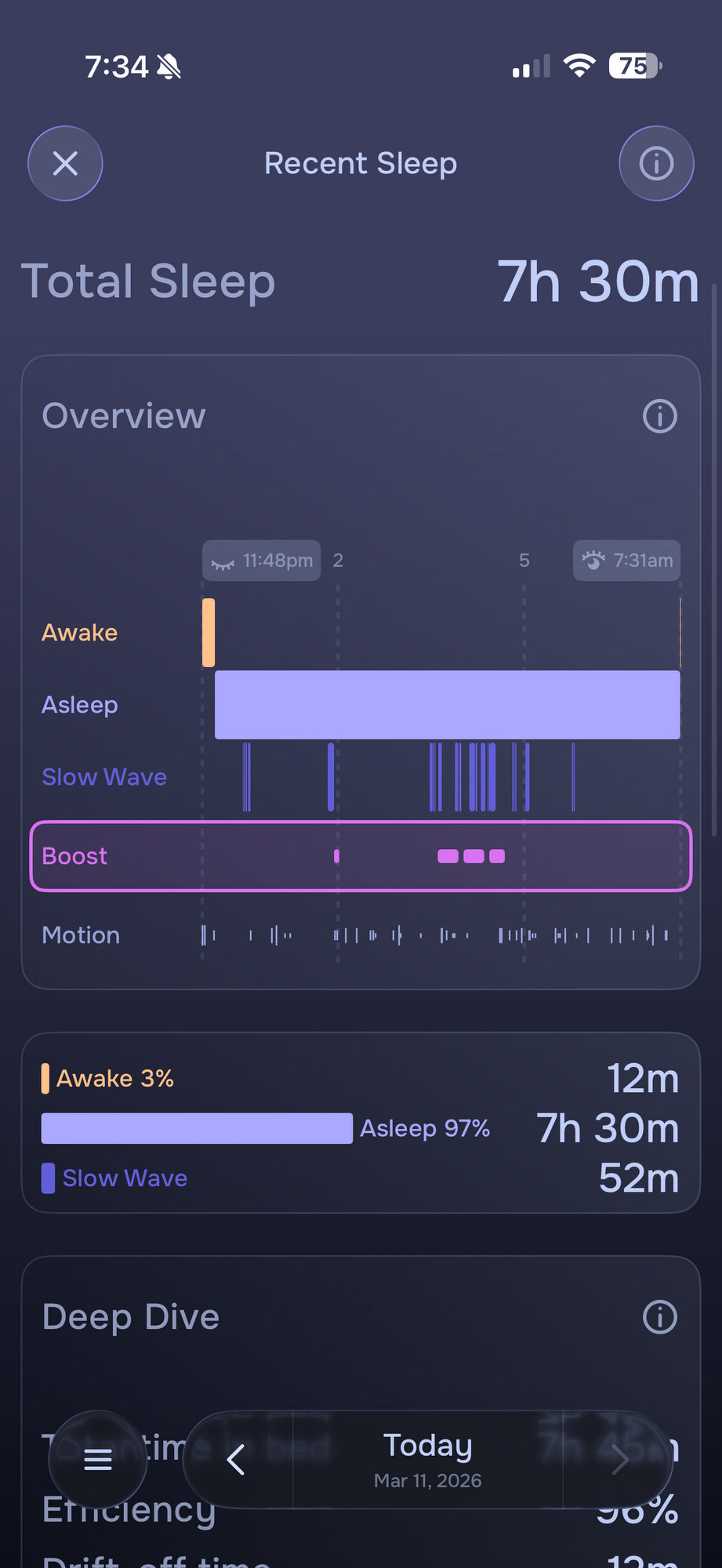
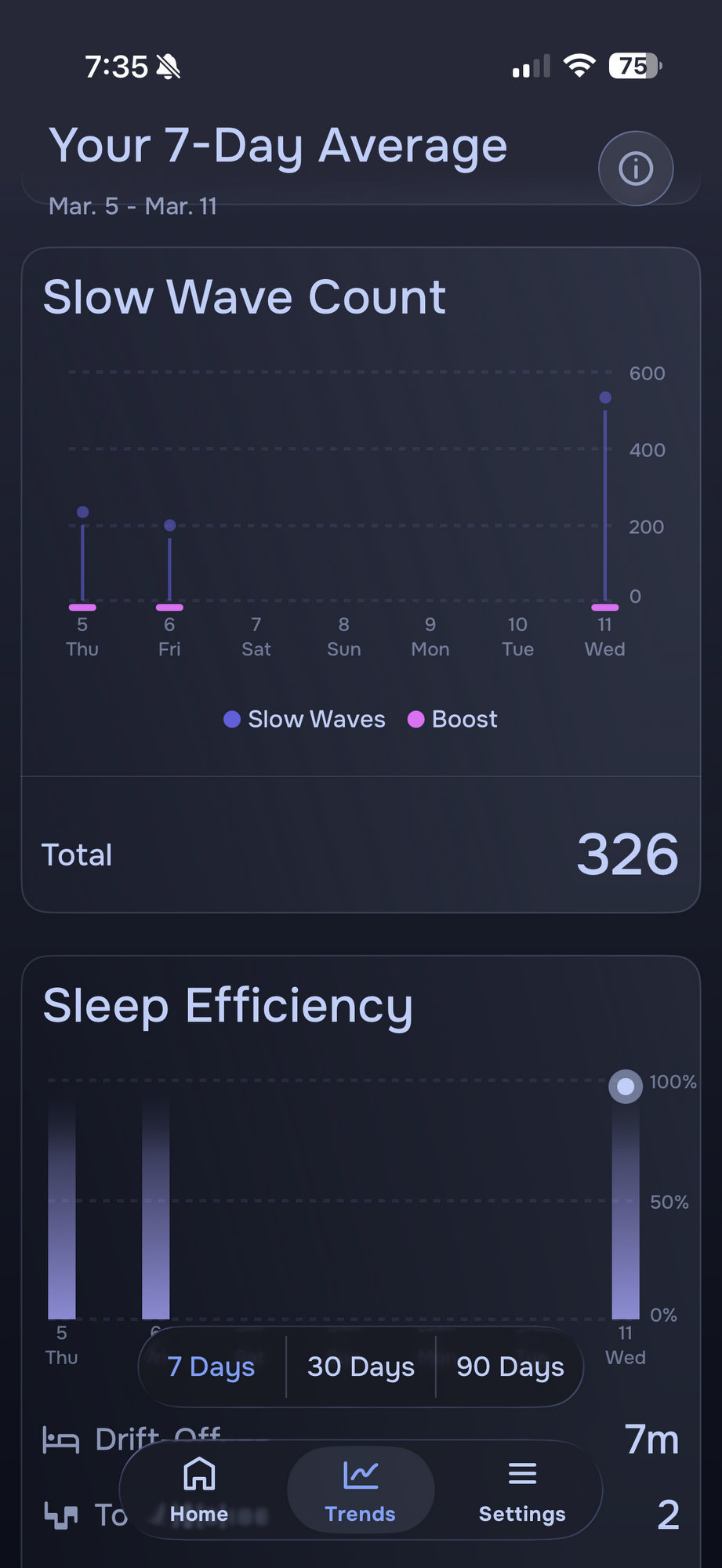
The NextSense app does acknowledge that side sleepers may need a different approach. It suggests using just one Smartbud in your non-dominant pillow ear, and yes, that did help somewhat. But I also switch sides during the night while sleeping, so one ear use never fully solved the problem. It made the Smartbuds more tolerable, not forgettable.
And sleep earbuds really need to become forgettable.
That doesn’t mean everyone will have the same issue. If you’re a back sleeper, a stomach sleeper, or just less sensitive to in-ear pressure, your experience may be much better. But if standard earbuds already irritate you, or if you sleep hard on one side with a dense pillow, I wouldn’t brush past that concern. For a product meant to improve sleep, physical discomfort is a pretty unforgiving flaw.
The Smartbuds Were Better at Sound Than at Convincing Me They Knew I Was Asleep
The biggest reason to spend this kind of money on the Smartbuds isn’t that they play nature sounds, it’s that they’re supposed to detect sleep stages more accurately than traditional sleep wearables and respond accordingly.
That’s where my confidence wobbled.
There were several times when the Smartbuds seemed to detect me as asleep, or at least in some sleep-like state, while I was very obviously awake and looking at my phone. That’s not a tiny quirk you shrug off in a first-generation product. It goes to the core of what NextSense says these earbuds do differently.
If Smartbuds are meant to stand apart because they rely on EEG rather than inference, then they need to feel more trustworthy than the other wearable systems they’re trying to outclass. In my case, they didn’t. My Withings ScanWatch Nova Brilliant and even the sleep monitoring built into my Sleep Number i10 mattress felt more believable when it came to basic sleep-state detection, which is a strange thing to say about a product built around a device with a clinical-grade EEG.
That doesn’t mean NextSense’s science is meaningless or that the concept is broken. The company points to beta data showing increased slow-wave activity and improved sleep quality for some testers, and there’s clearly serious research thinking behind the product. But from a lived experience standpoint, what mattered wasn’t whether the earbuds could theoretically enhance deep sleep. What mattered was whether they consistently seemed to understand when I was awake and when I wasn’t. Too often, they didn’t.
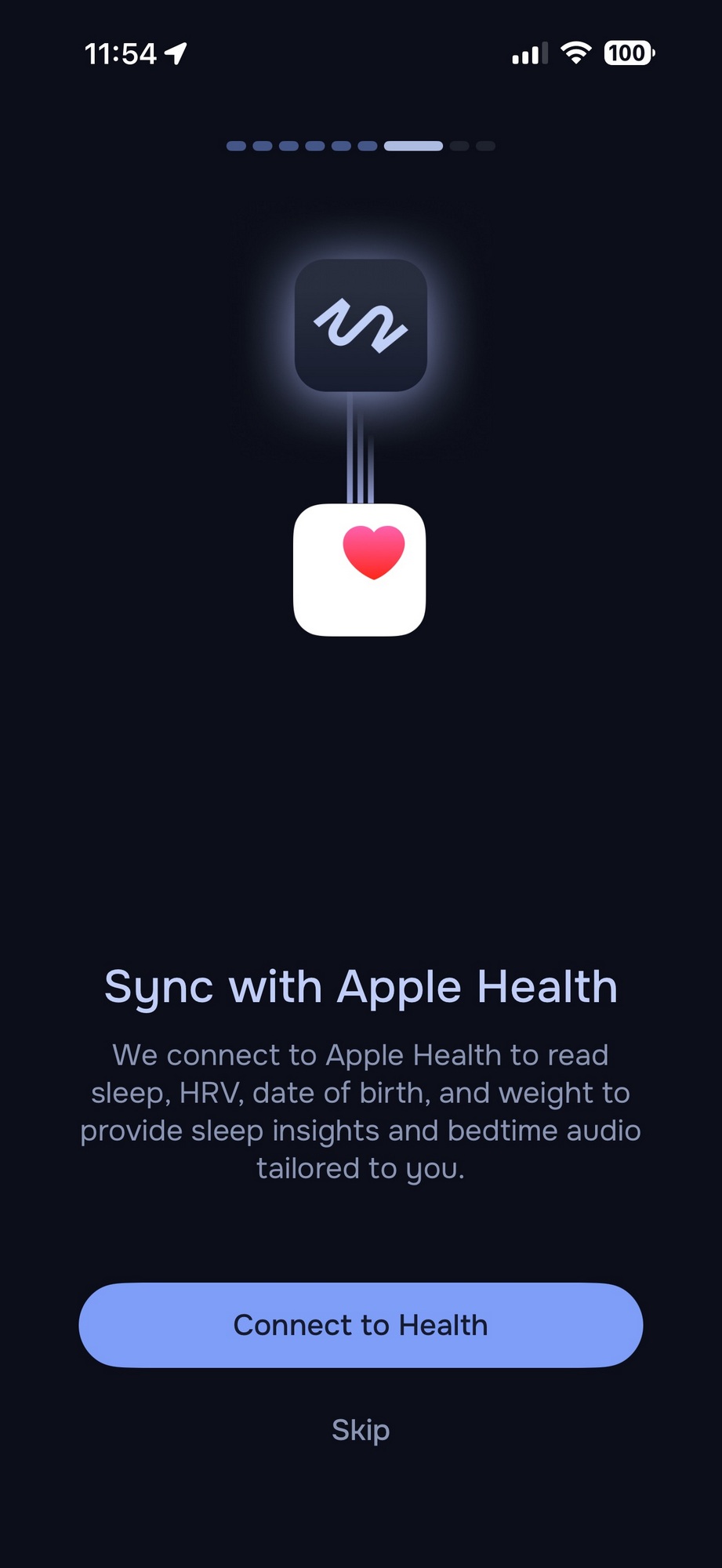
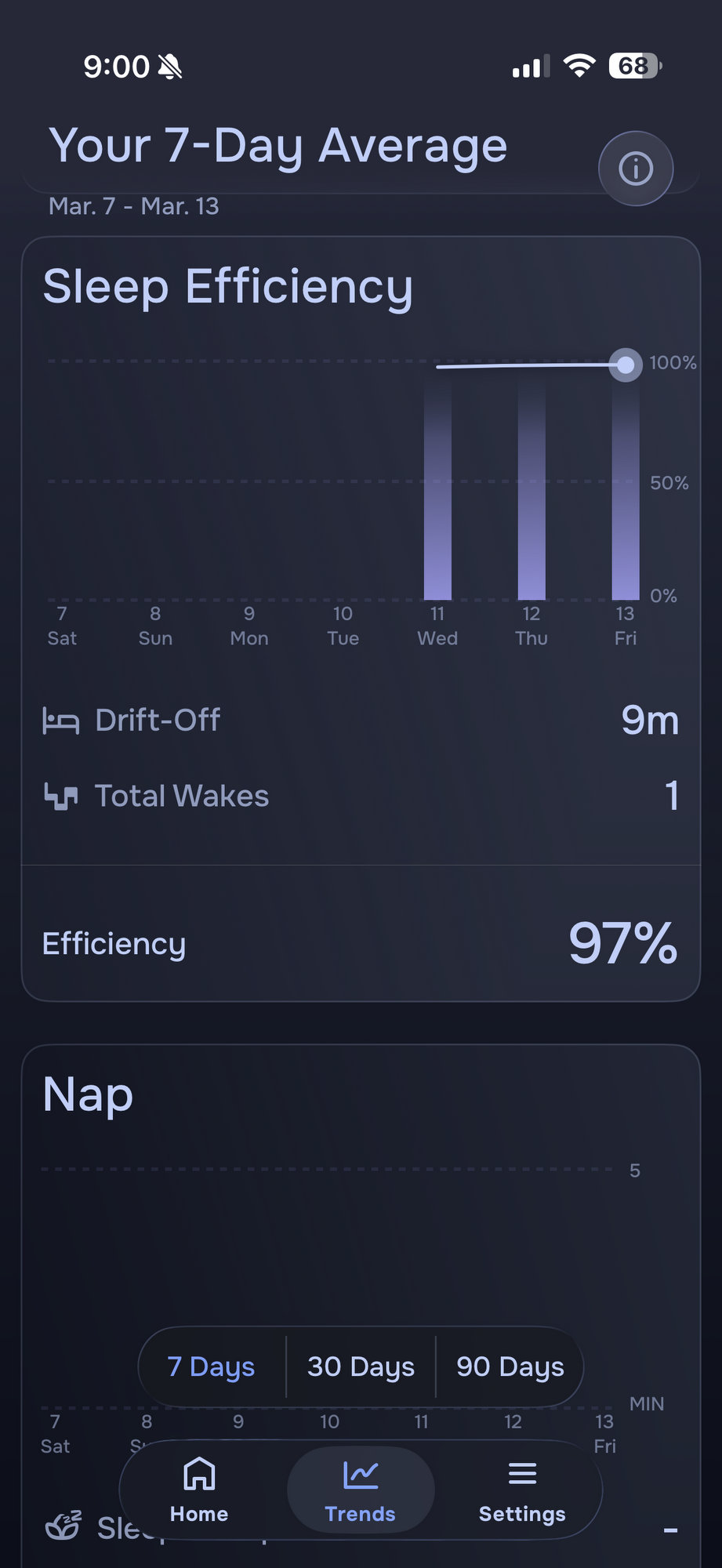
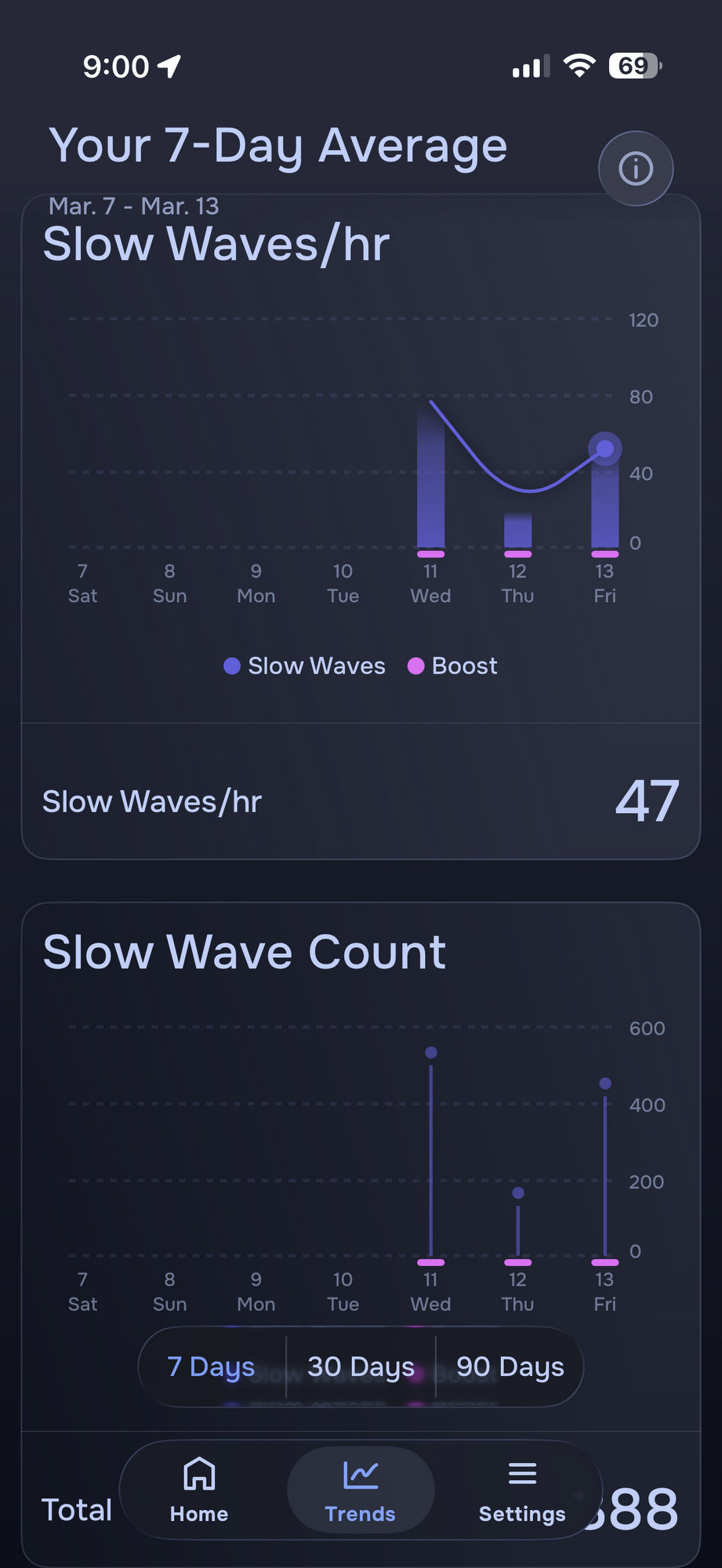
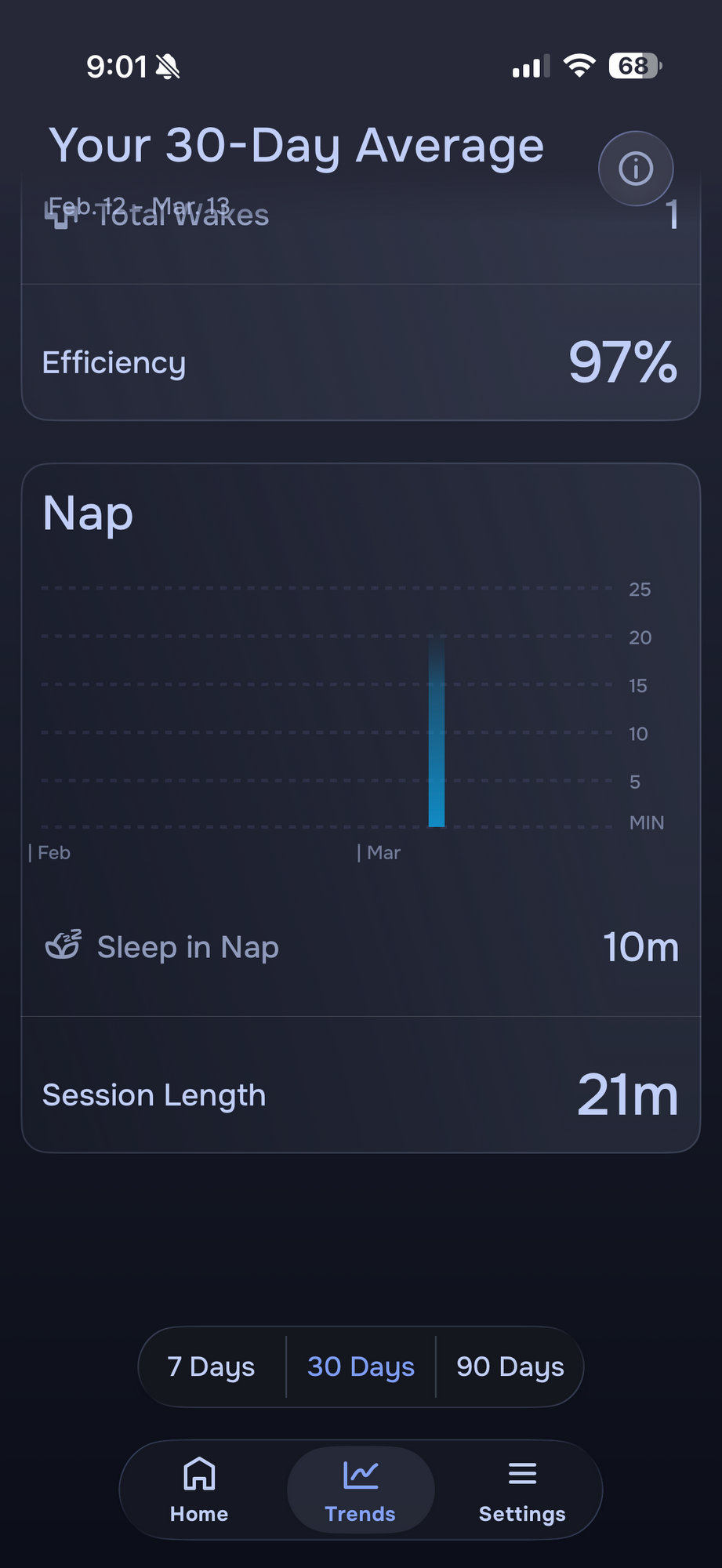
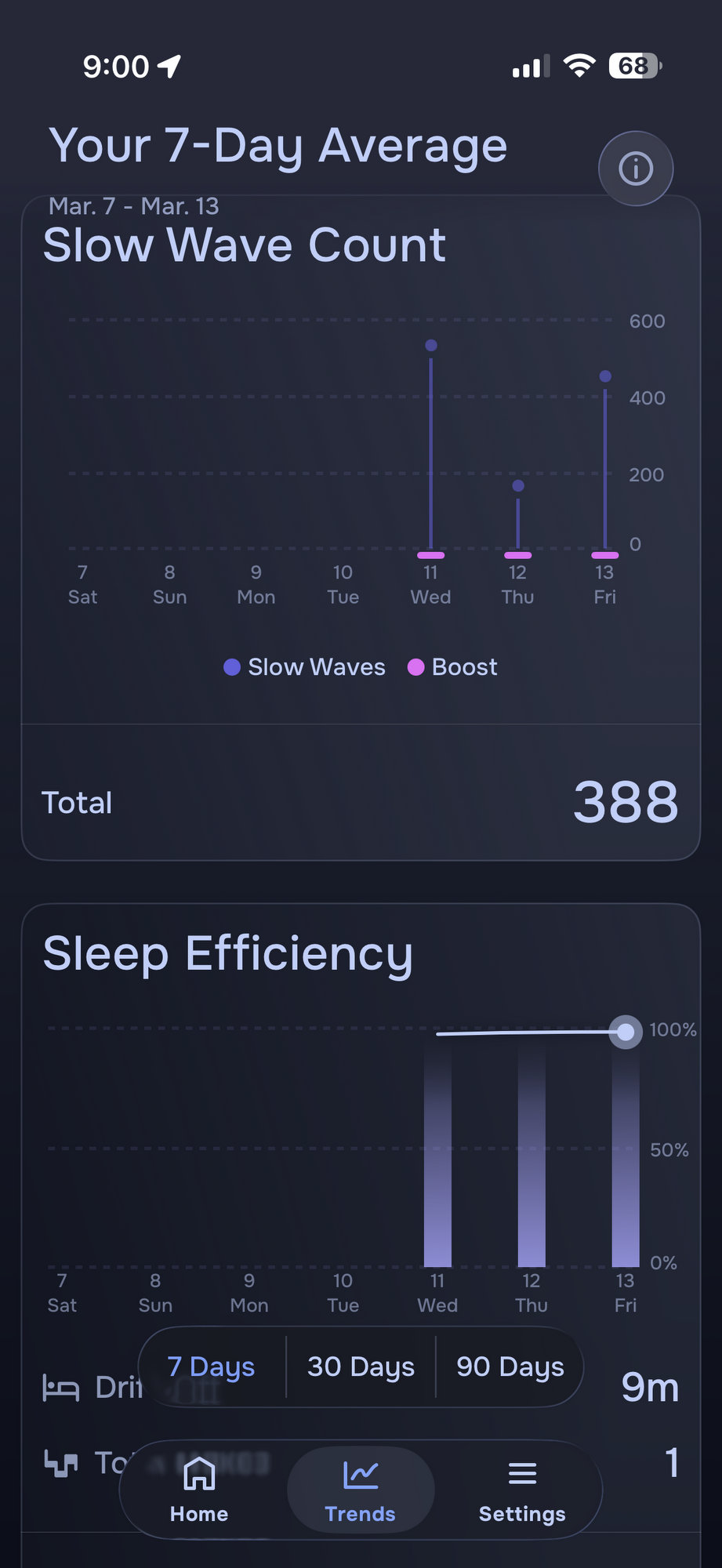
And when the foundation feels shaky, the app’s detailed summaries become less persuasive. The NextSense app offers sleep duration, slow waves per hour, slow-wave count, sleep efficiency, nap length, and additional relaxation and focus data. That’s plenty to dig into, and some people will love the graphs. But data only feels useful when you trust the underlying detection. Otherwise, it’s just a prettier form of uncertainty.
Where the Smartbuds Did Well
If there’s one area where NextSense Smartbuds felt more consistently successful, it was the sound experience itself.
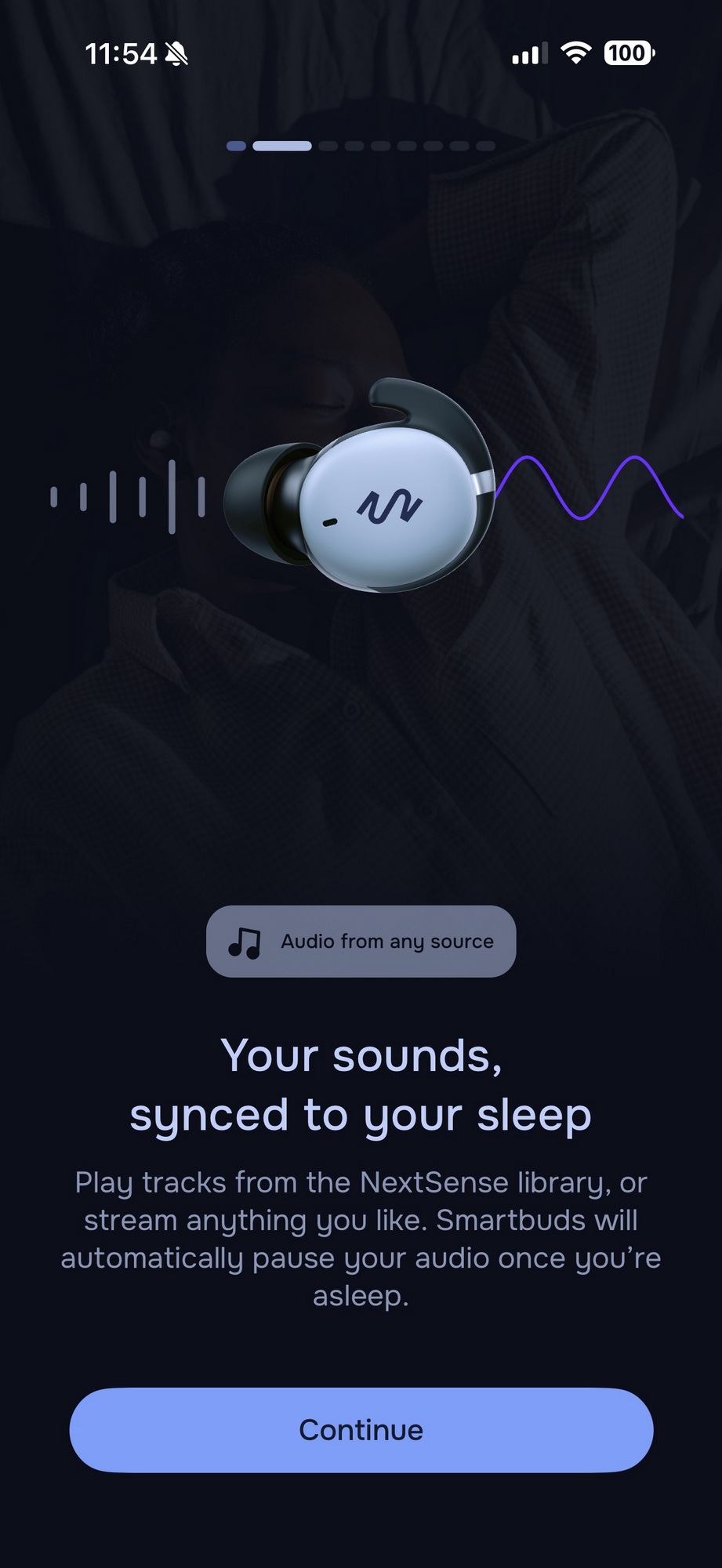
The library includes weather and water tracks, forest and field soundscapes, various noise colors, binaural beats, and ambient compositions meant to ease you toward sleep. There’s also an enhanced sound masking mode that can help drown out external noise. The selection isn’t endless, but there’s enough variety to find something that works for your brain and your mood.
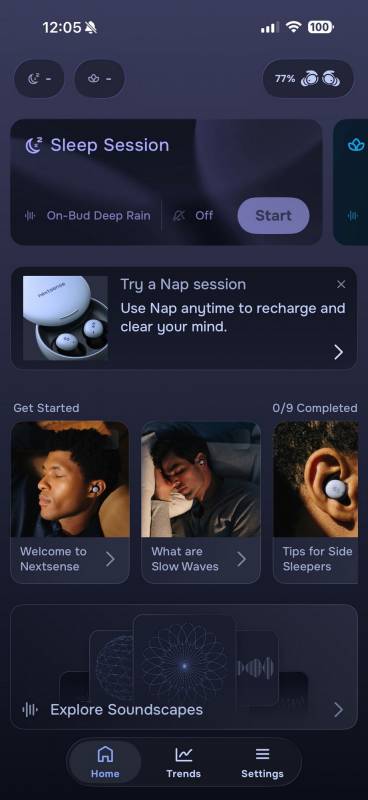
I especially liked using the Midnight Rain soundscape while traveling. There was something oddly effective about pretending I was drifting off to a noise-masking rain when I was actually wedged upright in an economy seat, negotiating for elbow territory and personal dignity. Sleep tech can’t work miracles, but it can at least improve the atmosphere.
The NextSense Smartbuds also did a good job of reducing disruptive environmental noise at home. There are nights when my husband snores, and I could still fall asleep while wearing them. At the same time, the buds didn’t block everything, and that’s a good thing. Sleep earbuds shouldn’t turn your bedroom into a sensory bunker.
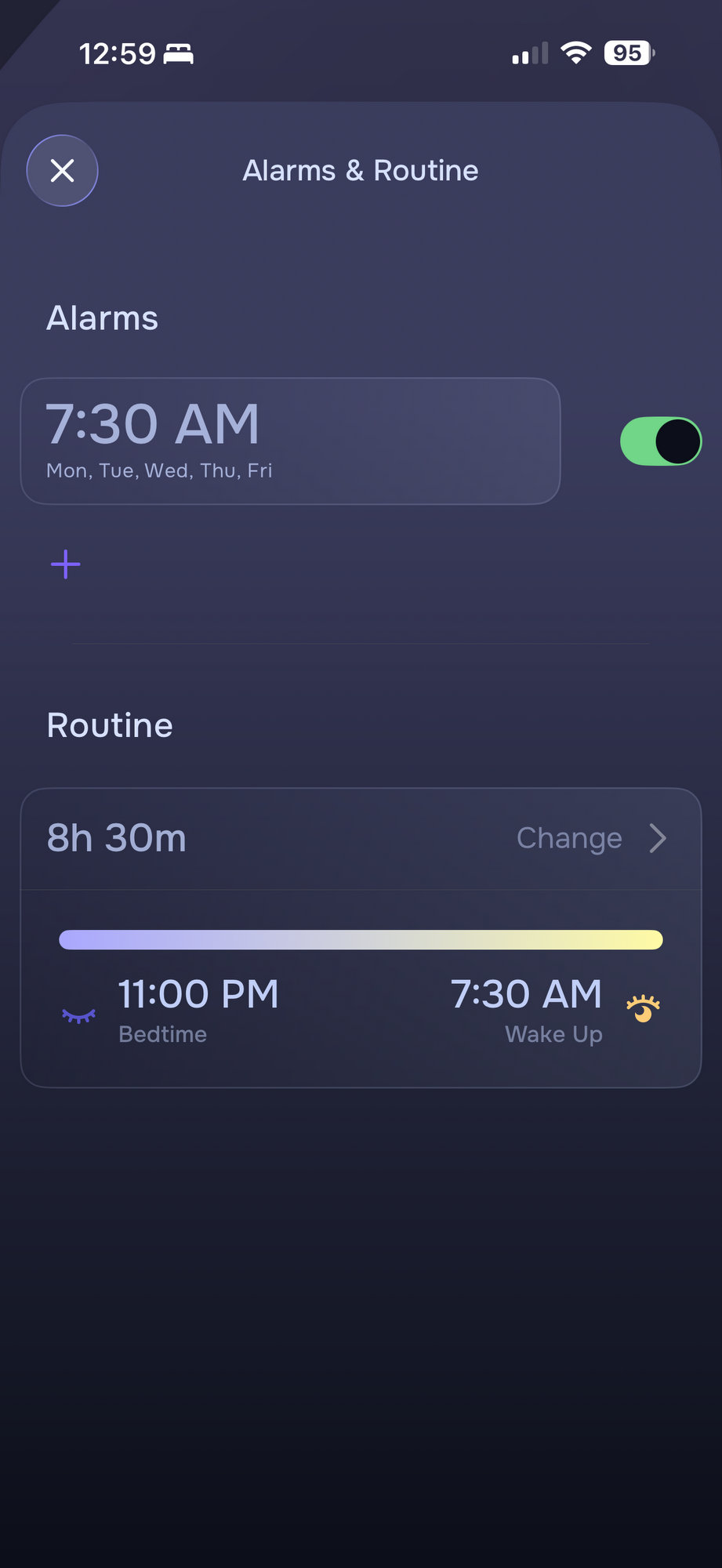
There are a couple of practical notes here. First, quieter sounds like a phone alarm can get masked by wearing the Smartbuds, whether or not a soundscape is playing through them, so it makes more sense to use the in-app alarm instead. That alarm plays directly through the earbuds, which is genuinely useful if you want to wake up without disturbing the person next to you. Second, it’s a good idea to start with a slightly lower volume than you think you need because if you’re not used to sleeping with audio piped directly into your ears, it can feel a little abrupt at first.
The NextSense Smartbuds battery life is also solid. I generally got between eight and nine hours of battery life per night (when I managed to keep them in all night), which is close enough to the company’s nine-hour claim that I can’t really argue with it. The case’s extra charges make the NextSense Smartbuds easy enough to travel with, provided you remember to drop them back in the case each morning.
Privacy and Durability Questions Are Part of the Package
Any time a product wants access to your brain data, privacy deserves more than a passing mention. NextSense says it doesn’t sell or share that data, that data sharing is off by default, and that information is encrypted and can be deleted from within the app. The company also makes it clear that the NextSense Smartbuds can’t read thoughts, memories, or emotions, in case you were wondering. They’re looking for patterns related to sleep stages and transitions, not peeking into your inner monologue.
That all sounds reasonable, and it’s certainly better than vague hand-waving. Still, this is one of those categories where trust isn’t built by a reassuring FAQ alone. It’s built over time through consistency, transparency, and restraint.
The NextSense Smartbuds aren’t waterproof either, which is worth flagging. NextSense says to avoid rain, heavy sweating, and exposure to moisture. That’s not ideal for a product you’re meant to wear overnight, because plenty of people sleep warm. Some competing sleep earbuds now offer at least basic water resistance, and Smartbuds don’t.
NextSense also talks about future features, including brain-responsive relax and focus tracks that could adjust in real time based on your brainwaves and movement. That sounds interesting, but “coming soon” isn’t something I’d factor into a buying decision. NextSense Smartbuds need to stand on what they can do right now.
How They Compare to the Rest of the Sleep-Tech Crowd
At this price, the NextSense Smartbuds can’t just be interesting. They have to compete.
If your main goal is comfortable overnight audio and noise masking, health tech products like the $349.99 (on sale for $259) Ozlo Sleepbuds and the $119.99 Soundcore Sleep A20 make a lot of sense. They don’t offer EEG monitoring, but they’re more clearly designed for all-night wearability, which, frankly, is the first requirement in this category. If the hardware itself keeps waking you up, the scientific ambition matters a lot less.
Then there’s the Oura Ring, which ranges from $ 349.99 to $499.99, taking the opposite approach. It doesn’t play sounds or intervene while you sleep, but it does provide passive sleep tracking without anything in your ears. If you care more about long-term sleep trends than about soundscapes or closed-loop stimulation, that route may be easier to live with.
That’s really where NextSense Smartbuds land for me. They’re a fascinating attempt to do something more advanced than the rest of the category, but they’re also asking you to tolerate more friction in the process. If the fit works for you, that trade-off may feel worthwhile. If it doesn’t, all the EEG talk in the world won’t matter.
Final Thoughts
I wanted to like the NextSense Smartbuds more than I did. The idea behind them is smart, and not just in the branding sense. Using in-ear EEG to measure sleep stages and trigger sound-based slow-wave enhancement is a genuinely interesting step beyond passive sleep tracking. The soundscapes are pleasant, noise masking is effective, battery life is solid, and the app aims to offer more than a typical surface-level sleep score.
But sleep product requirements are brutal: I don’t care how clever the concept is; I only care whether they help me sleep, and for me, the NextSense Smartbuds never got out of their own way. They helped me fall asleep, but they didn’t help me stay asleep. They often became uncomfortable in the middle of the night, and I never fully trusted that they were correctly detecting my sleep state. Add in the iPhone-only requirement and the expensive monthly subscription, and what’s left is a product with real promise that still feels like an early version of itself.
There’s an audience for the NextSense Smartbuds: if you’re curious about brain-sensing sleep tech, you sleep on your back, and you don’t mind being an early adopter, you may find a lot to like here. But if you’re a side sleeper with sensitive ears, or you simply want a sleep product that asks less of you, there are easier and more comfortable ways to spend this kind of money.
The NextSense Smartbuds retail for $399.99 (currently on sale for $299.99); it is available directly from the manufacturer.
Source: Manufacturer-supplied review sample
What I Like: Interesting in-ear EEG concept; Effective noise masking; Pleasant soundscape library; Solid overnight battery life; Helpful in-ear alarm
What Needs Improvement: Uncomfortable for side sleepers; Sleep detection didn’t always feel accurate; iPhone-only compatibility; Slightly confusing subscription model; No water resistance




Be the first to comment on "NextSense Smartbuds Review: A Clever Sleep-Tech Idea That Never Quite Let Me Forget It Was in My Ear"