
If you’re in the market for a book-style foldable, and you live in the United States, your best option is arguably the Samsung Galaxy Z Fold 7. If you live overseas, however, you have many more options. One of the best options is the OPPO Find N6 that came out in the spring of 2026. Both of these phones offer an insanely thin design, excellent cameras, and fun software tricks that can make for a great phone experience. If you’re lucky enough to live somewhere where both are readily available, this is a difficult choice.
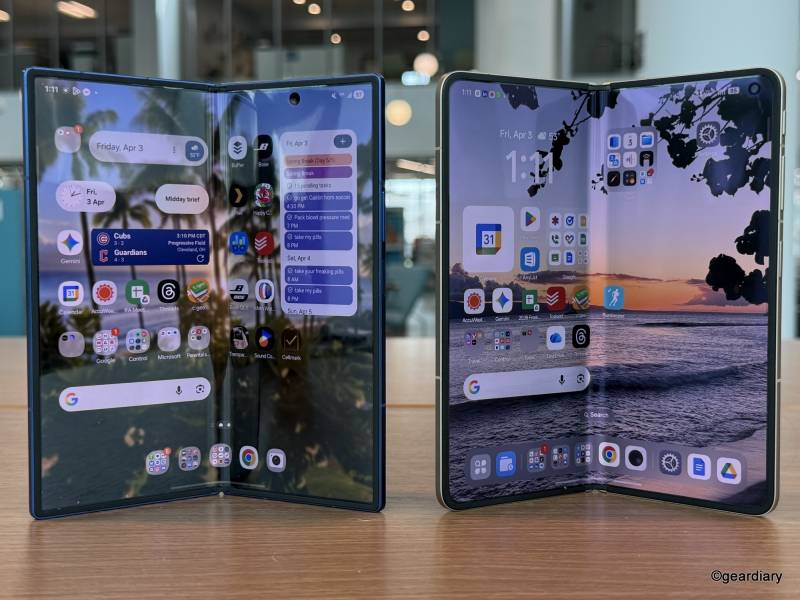
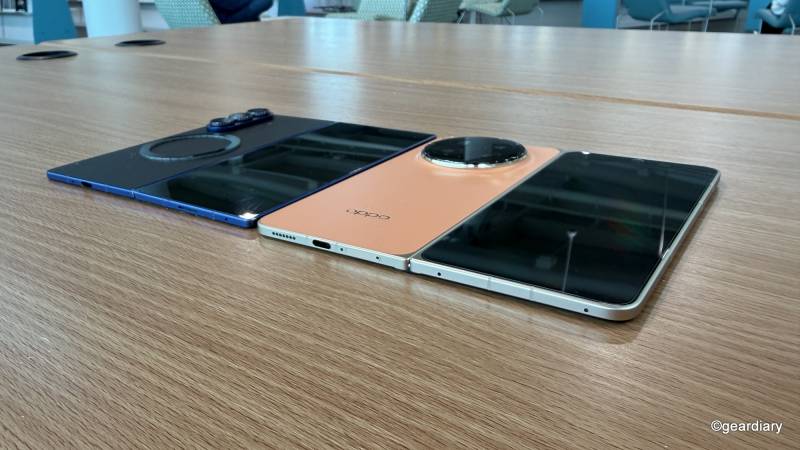
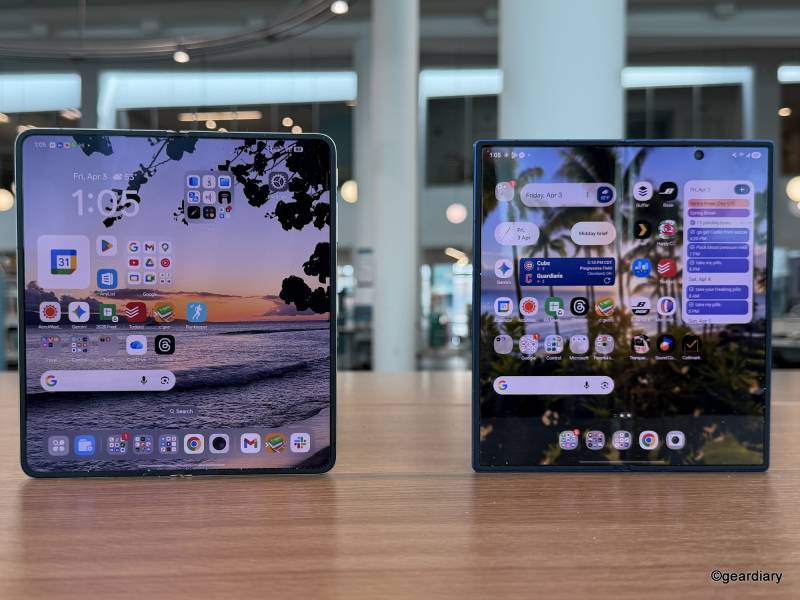
Samsung Galaxy Z Fold7 on the left vs OPPO Find N6 on the right
Fortunately, I’ve used both pretty extensively. The good news is, there are no bad options. Both of these phones are very good at most things, but there are a few differences that will make one stand out more than the other. Here is a breakdown of what you need to know about each of these phones.
OPPO Find N6 and the Samsung Galaxy Z Fold7 Head-to-Head
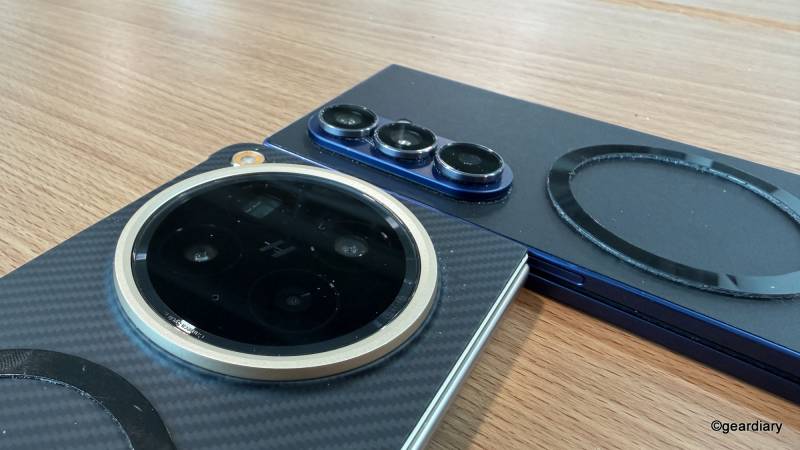
OPPO Find N6 on the left, Samsung Galaxy Z Fold7 on the right
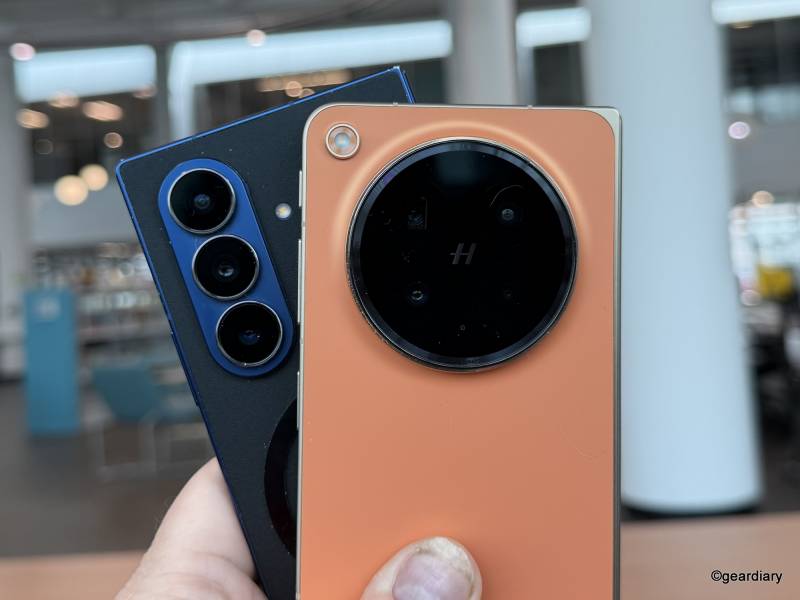
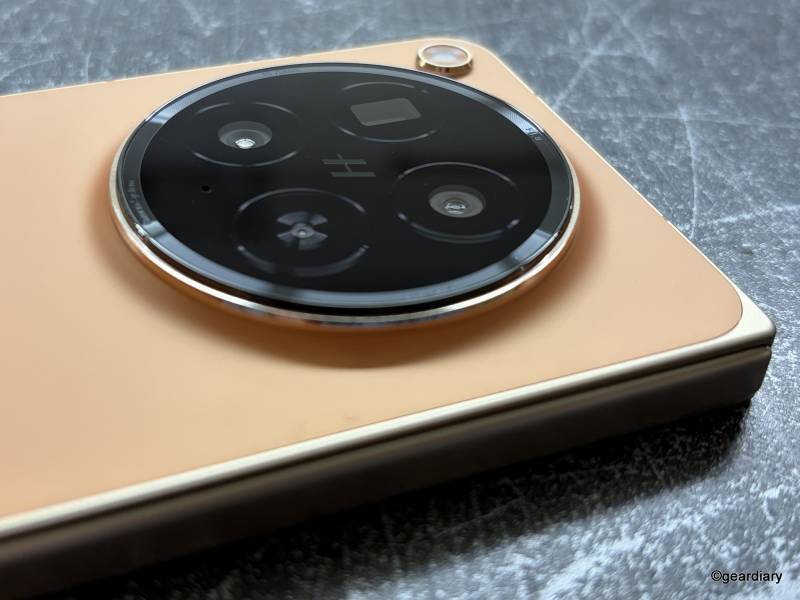
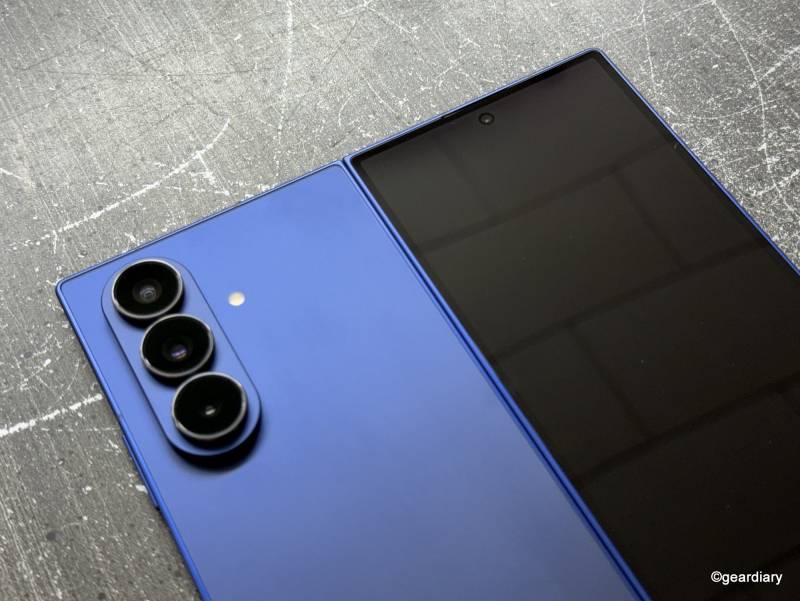
Both phones share a few similarities, but not very many. Both phones feature a side-mounted fingerprint sensor and are the same thickness when folded (8.9mm) and unfolded (4.2mm). Both have aggressively large camera bumps, though the size and shape of the camera islands are different. Samsung put the Fold 7’s island on the side of the phone, which results in a lot of table wiggle. OPPO’s more centered and circular approach is a lot more stable in that respect.
Both phones run on the latest processor available at the time of manufacture. Samsung has the Snapdragon 8 Elite for Galaxy processor, while, by virtue of the fact that it just came out, OPPO gets the faster Snapdragon 8 Elite Gen 5 processor. Despite the names, those processors are only one generation apart — I’ll just say it’s a branding problem and leave it at that. Both phones offer 12GB and 16GB variants of RAM and 256GB up to 1TB of storage, though the exact configurations available vary slightly.
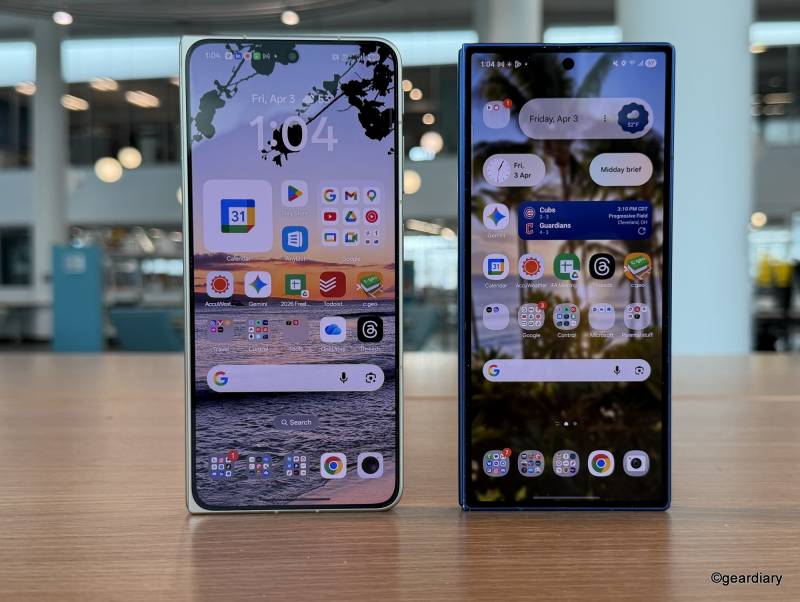
OPPO Find N6 on the left vs Samsung Galaxy Z Fold7 on the right
Both phones also have roughly the same-sized displays inside and out, though OPPO’s are both slightly larger. The key difference here is that the OPPO Find N6 supports stylus use on both the outer and inner screens — Samsung left that capability out. As for the differences, let’s dive in.
The Batteries
One key difference between these two phones comes in the size of the battery that each is packing. Samsung’s Fold 7 has a 4,400 mAh battery, while the OPPO Find N6 has a 6,000 mAh battery in the same chassis. This is due to OPPO’s adoption of silicone carbon battery chemistry, which is a relative newcomer to the mobile space. Samsung, meanwhile, uses the more traditional Lithium-ion cell.
The main differences between the two are capacity and charging. Samsung’s Fold 7 offers all-day battery life with just 25W charging. The OPPO Find N6 lasts closer to a day and a half and charges at 80W with the charger that comes in the box. Samsung no longer ships a charger with its phone.
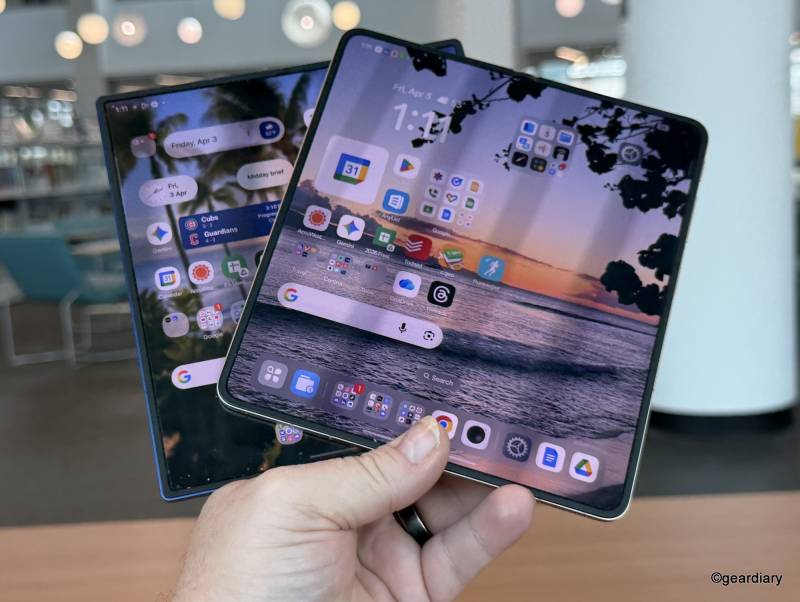
Samsung Galaxy Z Fold7 on the bottom vs OPPO Find N6 on the top
This is a pretty big difference when it comes to all-day battery life, especially if you’re often on the move. Personally, I always carry a book-style foldable to out-of-town events and trade shows, but the Fold 7’s battery never lasts a full day for me under those admittedly stressful circumstances. The Find N6, in the meantime, barely struggles under the same load.
The Displays and the Crease Question
One of the more remarkable aspects of the OPPO Find N6 is in what OPPO calls its “creaseless” display. Foldable phones have had to contend with a screen crease where the fold occurs. Various technologies and techniques have emerged to minimize that minor dip in the display, and Oppo’s latest screen is remarkable in how smooth it is. The crease is there, for sure, but it’s just barely visible and almost impossible to feel.
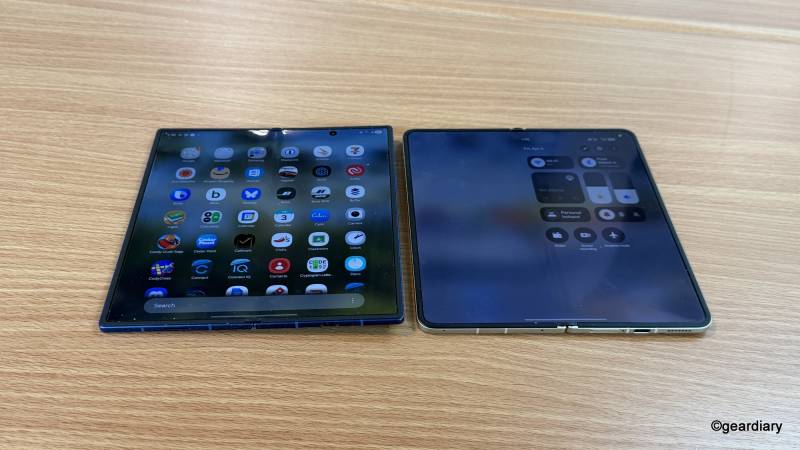
Samsung Galaxy Z Fold7 on the left vs OPPO Find N6 on the right
Oppo achieved this with its Titanium Flexion Hinge, which uses a combination of technologies, including liquid 3d printing, titanium hinges, and auto-smoothing glass, to basically eliminate the crease.
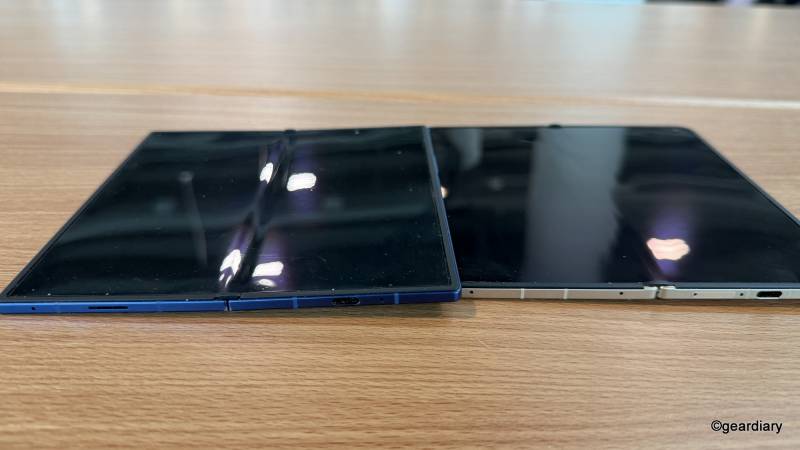
Samsung Galaxy Z Fold7 on the left vs OPPO Find N6 on the right
Samsung, meanwhile, uses a titanium hinge and backplate to help smooth out the crease, but you can still very much see it. It should be mentioned that the crease has never really been that big a deal. It’s noticeable at first, but use the phone for more than a couple of days, and you will no longer care. But, it’s also good to know that we’re getting ever closer to seeing it gone forever.
The Software is Night and Day
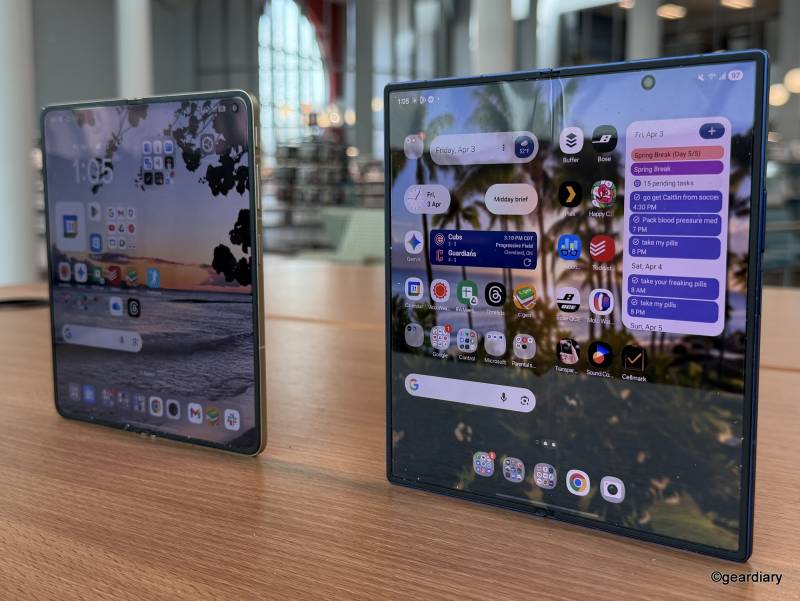
Software is the one category where Samsung is going to hold a pretty big advantage in this showdown. But that’s arguably the most subjective part of this breakdown as well. Personally, I’m a fan of Samsung’s One UI. Color OS is fine, but it’s a bit too iPhone clone-ish for me to get fully into. That’s not the only issue, though.
OPPO Find N6 on the left vs Samsung Galaxy Z Fold7 on the right
Love it or leave it, a lot of what Samsung offers comes in the form of AI. From photo manipulation to agentic functions, AI plays a significant role in Samsung’s user experience. It leverages its strong relationship with Google (and with Qualcomm, for that matter) to optimize the software, making it work better than most other phones. Samsung phones are also generally privy to new AI features through Gemini than Google’s own phones on occasion. Meanwhile, the OPPO Find N6 doesn’t rely nearly as much on AI — that might actually be a selling point, depending on your tastes.
The Cameras Are Very Different
Both the Samsung Galaxy Z Fold 7 and the OPPO Find N6 have really good camera sets, but OPPO offers a far more balanced setup than Samsung. While Samsung went all-in with its main camera, installing a 200-megapixel sensor for the main shooter, OPPO takes a much more even approach with a triple 50-megapixel camera setup.
OPPO Find N6
Samsung’s other cameras are 10 megapixels and 12 megapixels, respectively. As a result, you can get really great photos with the main sensor on the Samsung Galaxy Z Fold 7, but ultrawide and telephoto shots degrade quickly in quality.
Samsung Galaxy Z Fold7
OPPO offers a better selection with all three of its sensors sitting pretty at 50 megapixels apiece. On the front, OPPO also has a better 20-megapixel selfie camera. Samsung’s is another 10-megapixel shooter. Megapixel counts aren’t everything, but the overall quality is higher with OPPO’s offerings than with Samsung’s.
Wrapping It Up
Overall, on paper, it’s fair to say that OPPO dominates Samsung in just about every category, and that’s not inaccurate. But it’s worth repeating two important facts. First, both of these phones are truly excellent folding phone specimens, and neither offers a bad experience. Second, if you live in the United States, this is a non-issue because you cannot buy the Find N6 on this side of the Atlantic (or Pacific, for that matter) without hitting the gray market sites.
OPPO Find N6 on the left vs Samsung Galaxy Z Fold7 on the left
But if you have the chance to pick between these two, the OPPO Find N6 is the winner in most categories — and it’s not really all that close. The Z Fold 7 is a great phone, and a long-overdue advancement over previous generations, but the OPPO Find N6 is that much closer to putting it all together. All factors being equal, if you can pick up either of these phones, I would go with the OPPO Find N6.


The Find N6 is quite impressive, but not being available in the US is a big limitation, and both of these foldables are rather pricey.
I like the idea of a foldable phone!