
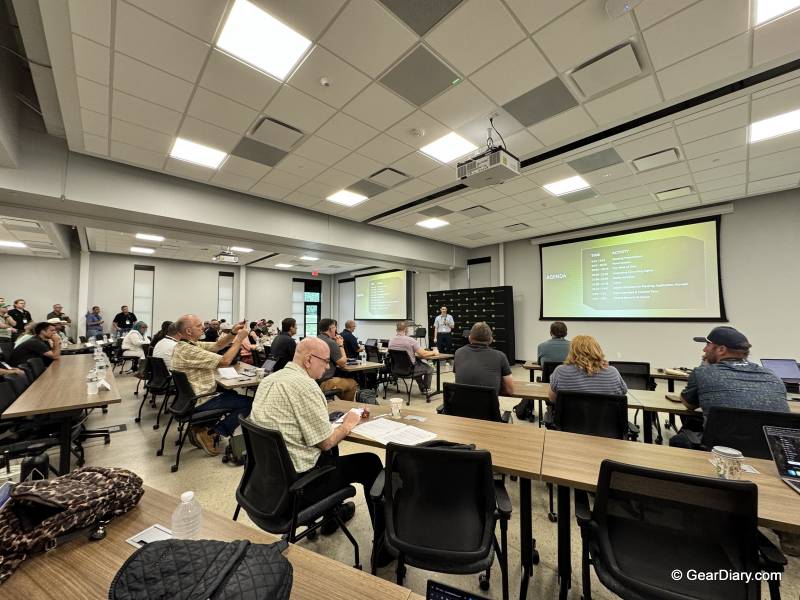
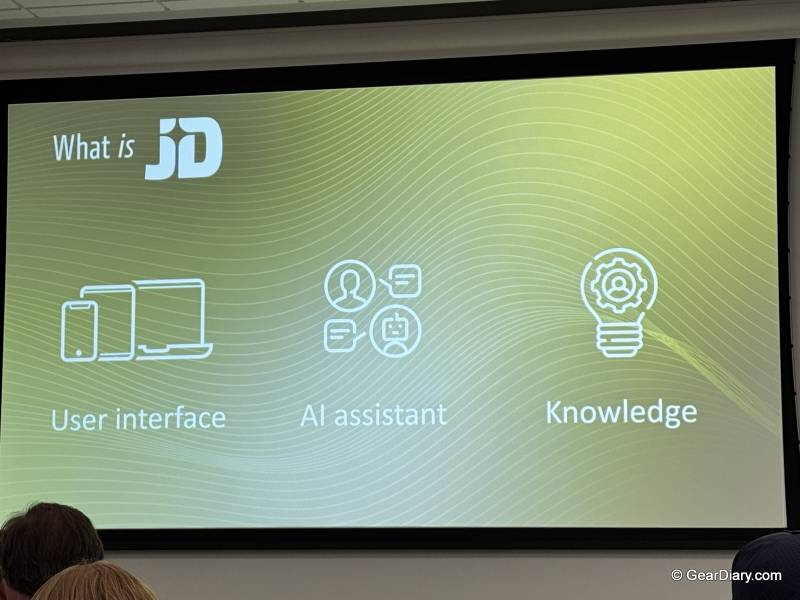
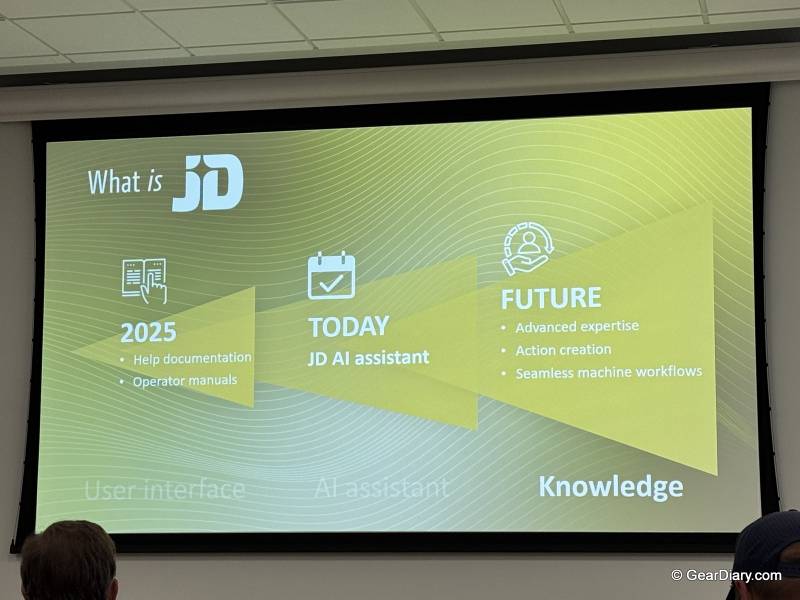
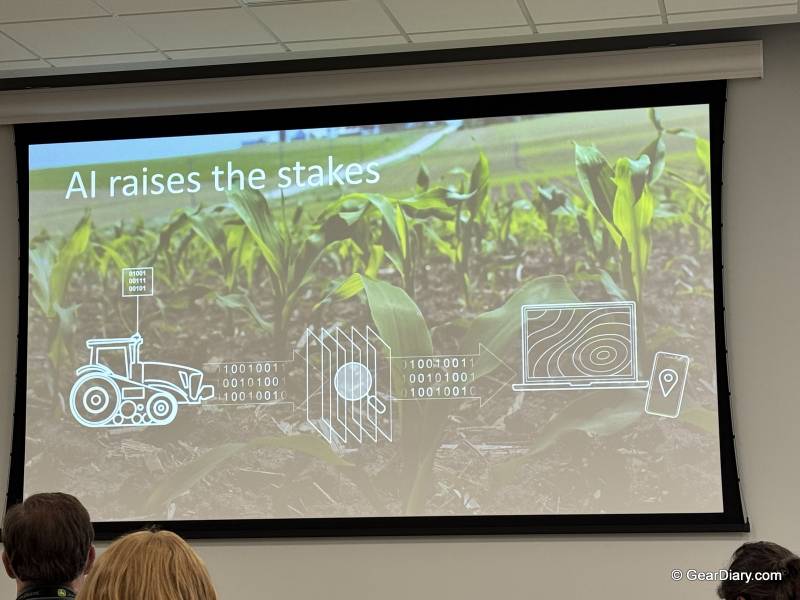
Ames, Iowa sits about fifteen miles from Boone, where the Farm Progress Show opens this week, and in the days before the gates opened John Deere brought a group of journalists and content creators to the Agriculture Innovation Lab at Iowa State University to talk about the data collected at their farms and what the future holds for that data. The future, as of this morning, is JD: an artificial intelligence assistant built into John Deere Operations Center that lets a farmer ask a question in plain language and get an answer drawn from their own fields, machines, and records.
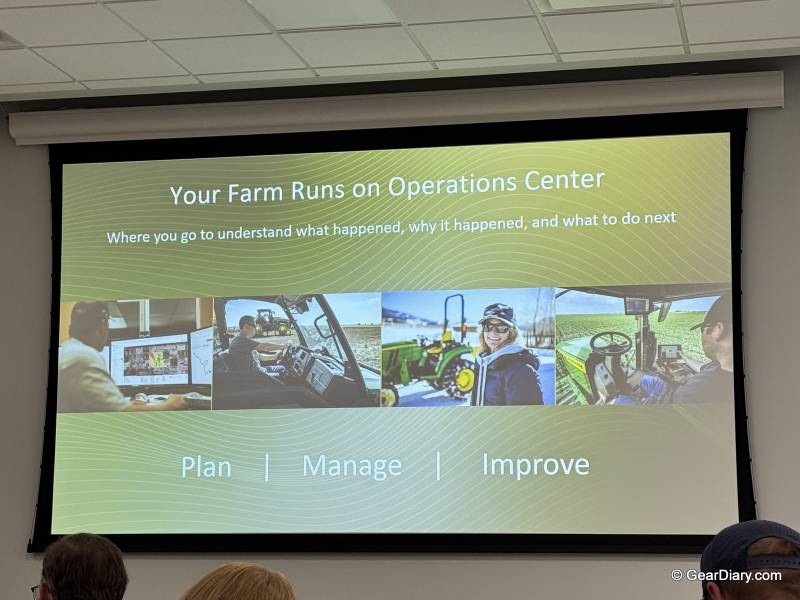
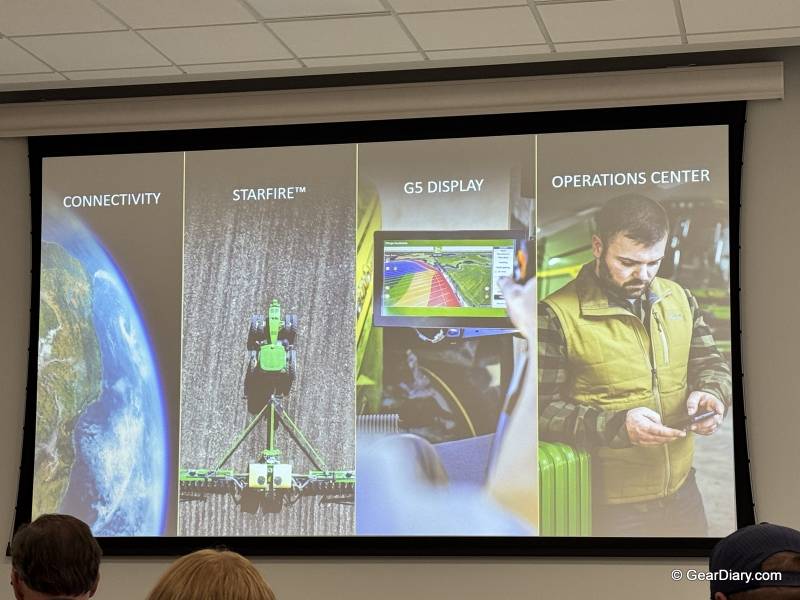
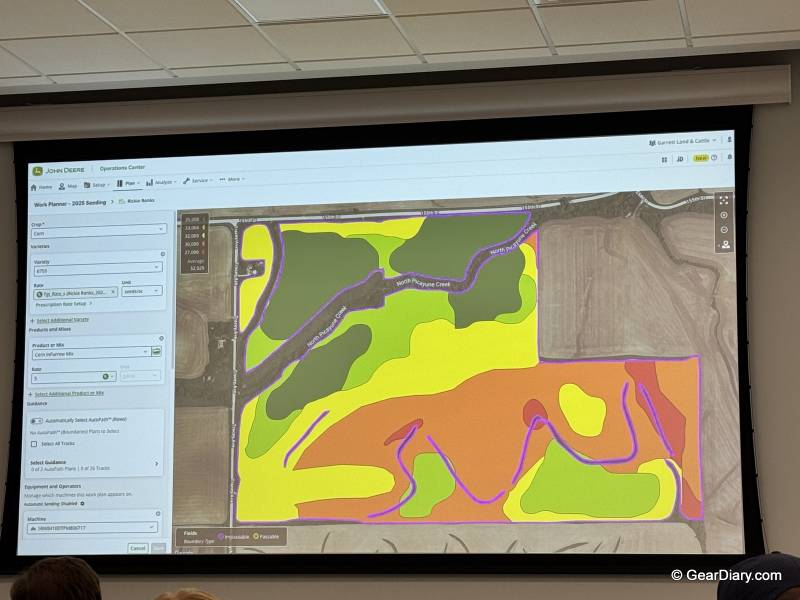
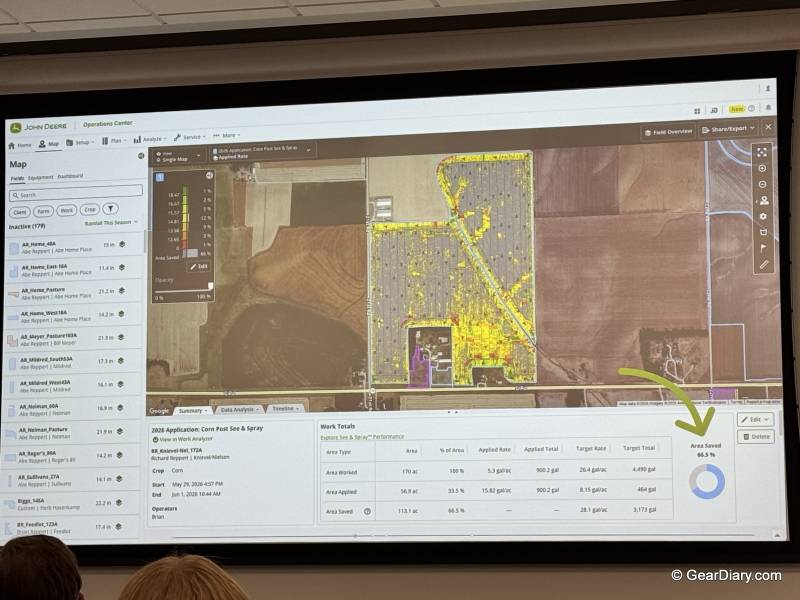
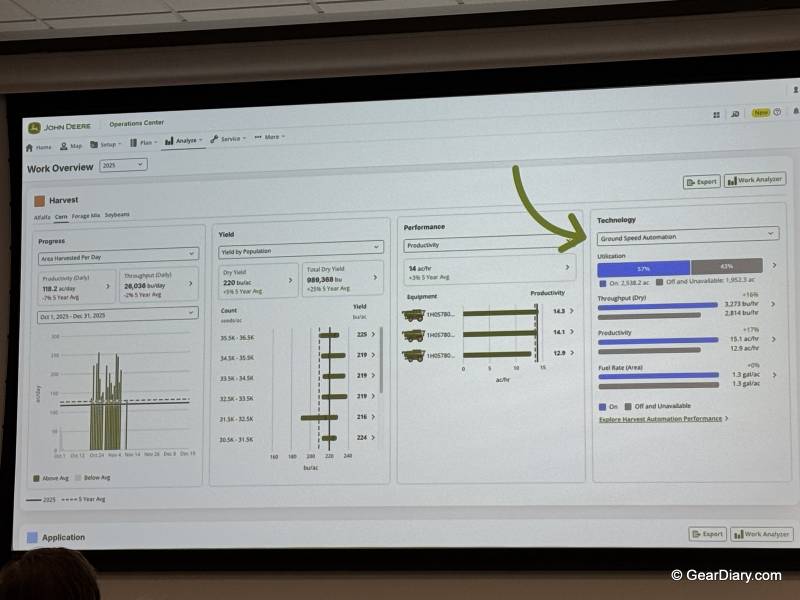
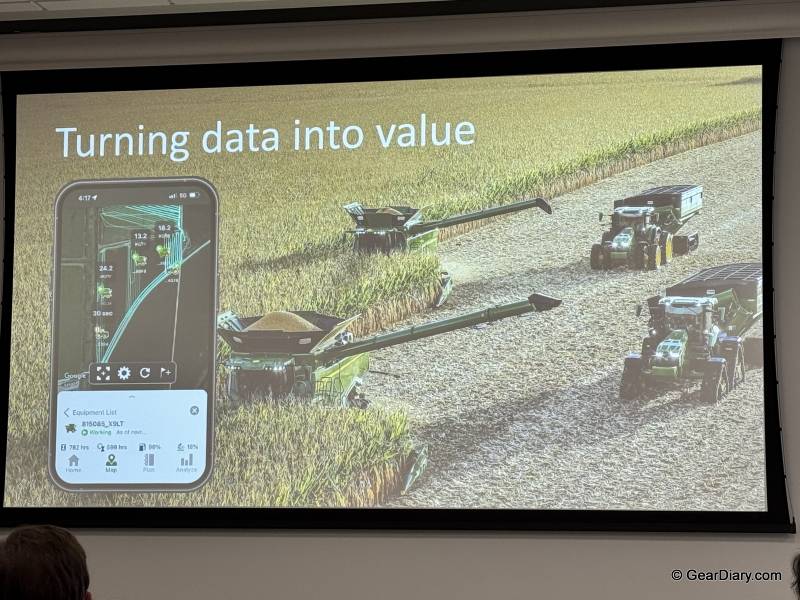
Announced today, JD is a huge new advancement that is added on top of a product that Deere has been building for more than a decade. Operations Center has been the company’s centralized platform for farmers’ field, machine, and operational data since the early 2010s, and by nearly every measure it works: the data gets collected, uploaded, and sits in dashboards, reports, and exports. The problem Deere spent the day at Iowa State describing is that data collection was never the hard part. Retrieval and analysis were.
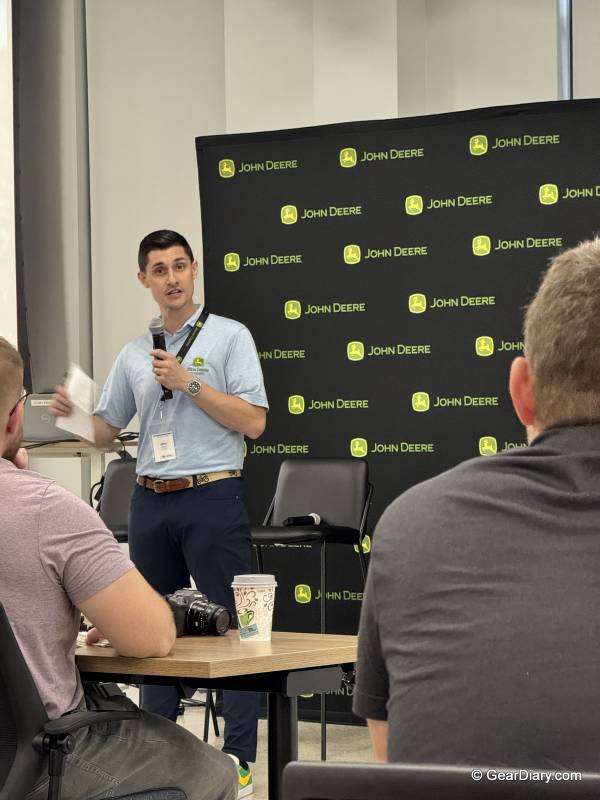
“Farmers have more data available to them than ever before, but the value comes from their ability to use it in the moments that matter,” said Jahmy Hindman, Chief Technology Officer at John Deere, in the announcement. “JD changes the experience from navigating through a sea of data to simply asking it a question. It puts advanced data analysis within reach by enabling farmers to receive answers tailored to their farm and their needs in a matter of seconds.”
Hindman opened the media day session, and the framing he used there is the one worth holding onto: a farm generates a staggering amount of information, and the interface for getting it back out has historically been a person with time, patience, and a working knowledge of where in the platform a given number lives. Most farmers have the first requirement in short supply during the seasons when the answers would actually change a decision.
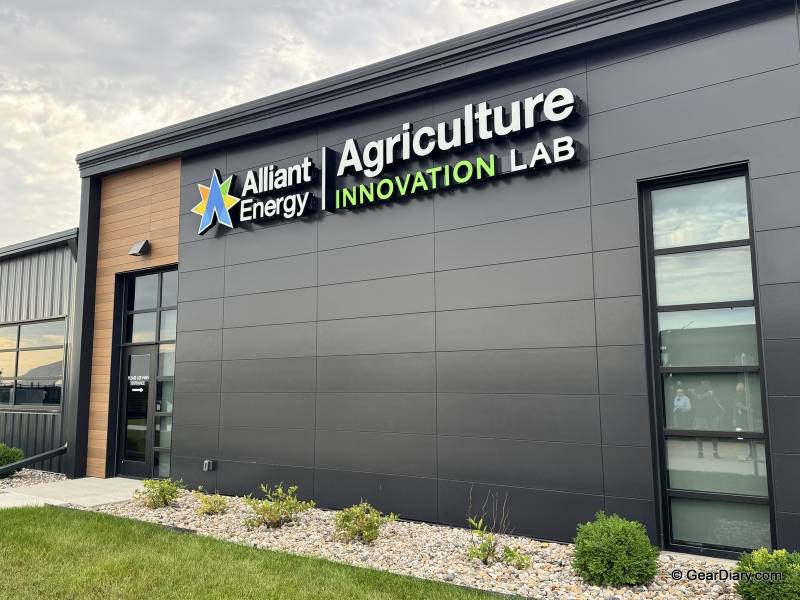
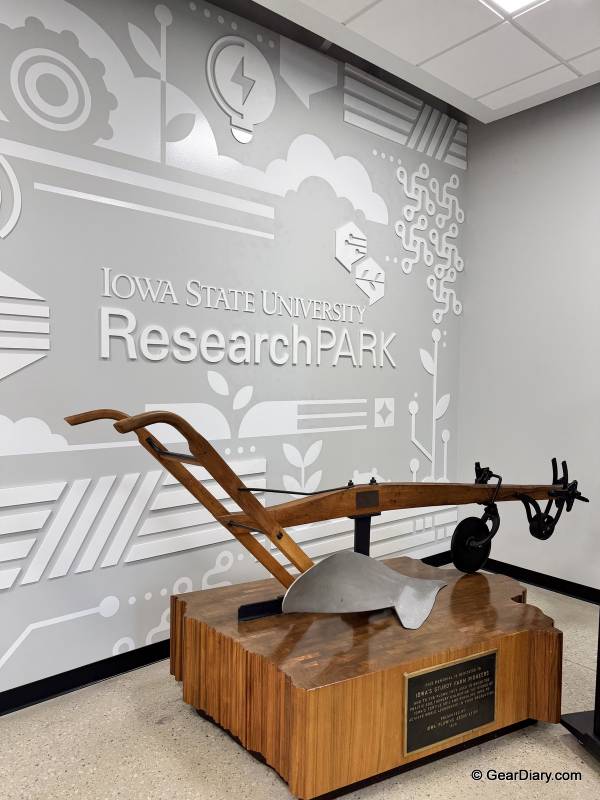
John Deere’s Media Day location was no accident. The Alliant Energy Agriculture Innovation Lab opened in December 2024 at the southern edge of Iowa State’s Research Park, an 86,000-square-foot facility built for roughly $15.5 million, with $3 million contributed by Alliant Energy. It houses Iowa State’s Digital Agriculture Innovation Team, which Dr. Matt Darr founded in 2008 and still leads.
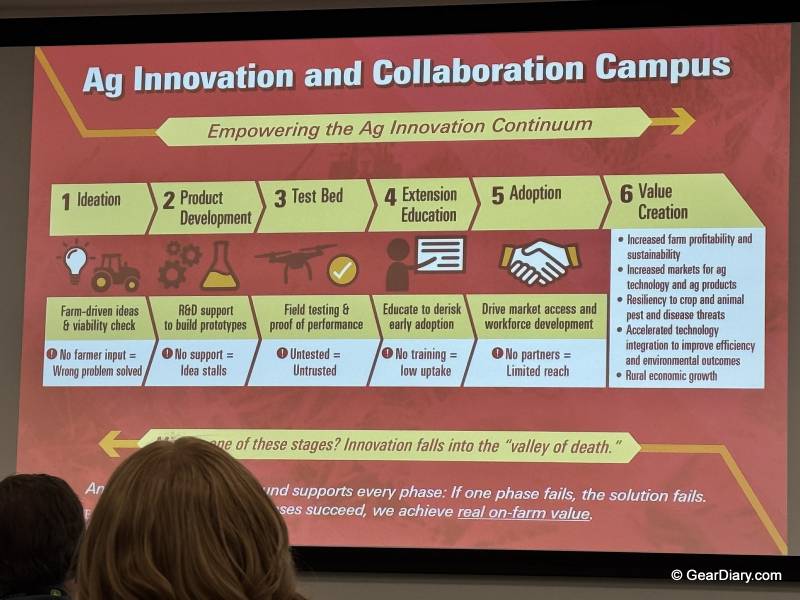
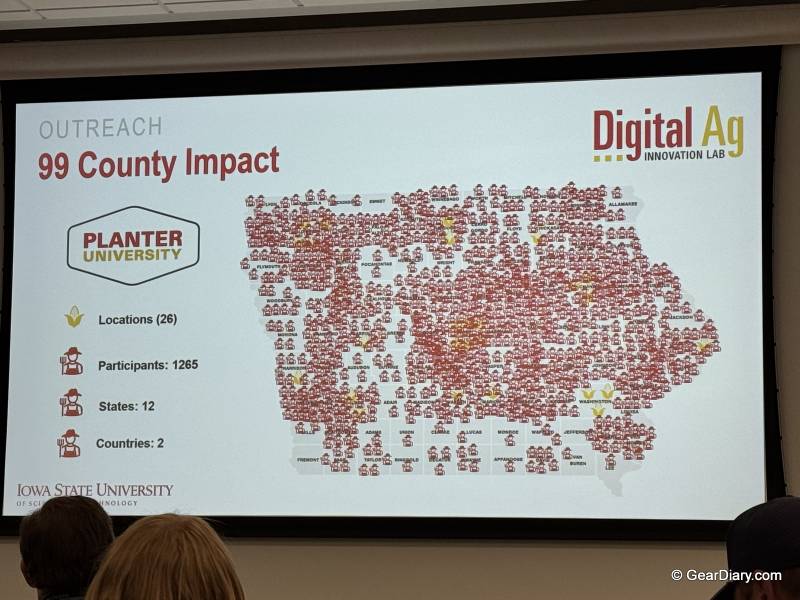
Darr walked the group through what the lab does and why a university facility is the right venue for this kind of work: the team runs 30 to 40 projects a year with industry partners, holds more than 90 patents and technology transfer licenses, and has access to 450 acres of research ground plus another 4,500 acres of production farmland for validation. John Deere is among its named partners, alongside Bayer Crop Science, Vermeer, and Sukup.
When Darr describes the lab’s purpose as moving innovation beyond research and into real-world agricultural application, the room the group was sitting in was a reasonable argument for it — the facility quadrupled the space the team previously had at the BioCentury Research Farm, and it was designed with customer engagement rooms rather than only lab benches.
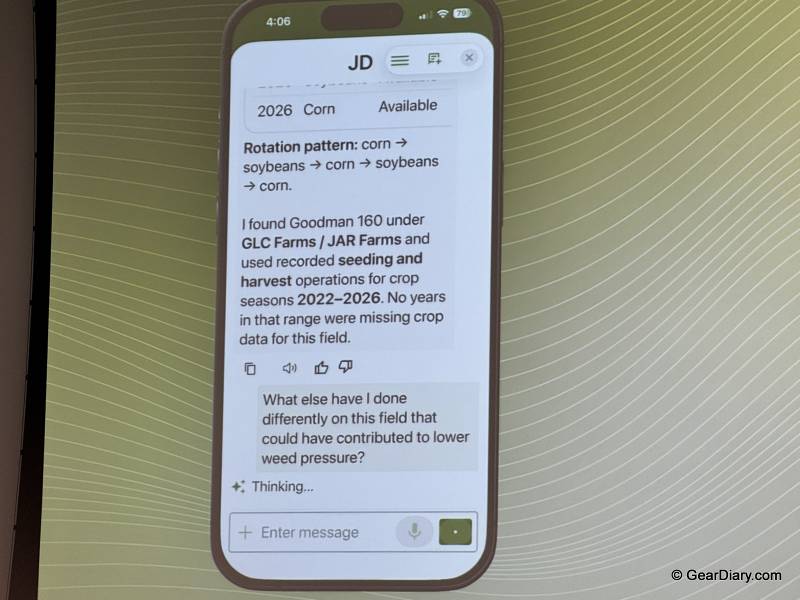
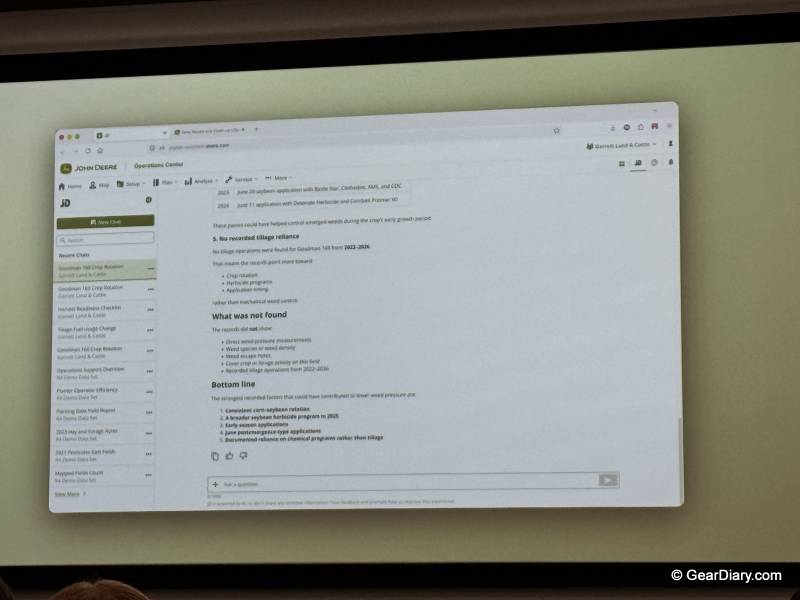
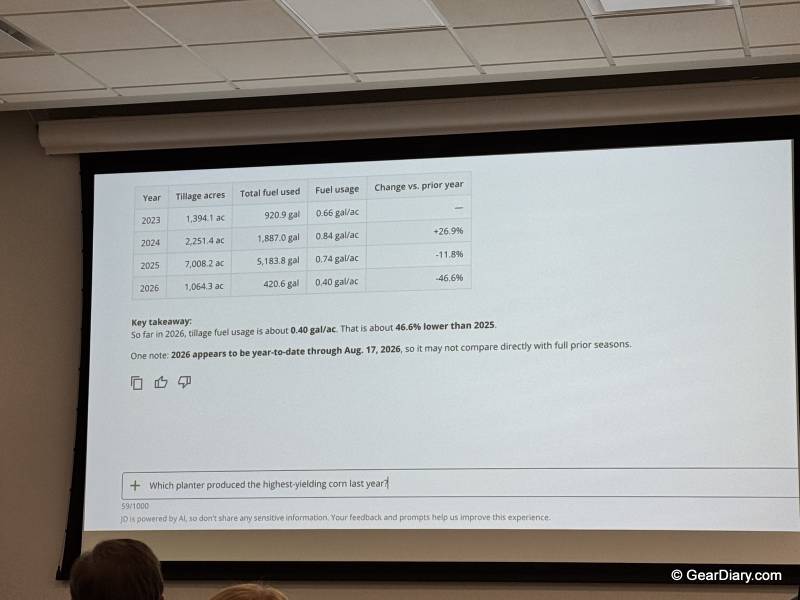
The mechanic is straightforward, and Deere’s demonstration leaned on that deliberately. Instead of navigating to a report, selecting a date range, filtering by machine, and exporting, a farmer types a question into JD, which lives where so many farmers spend most of their days: the Operations Center. The company’s own examples give a fair sense of the range:
How did my fuel use during tillage this year compare with the last three years, which helps identify best practices and can result in fuel savings? How did singulation compare across my fields, and what impact did it have on yield, enabling a better understanding of how equipment settings affect the harvest? Which sprayer operator is covering the most acres per hour, which gets at operational efficiency. And when is the optimal time to harvest based on historical trends, which feeds labor planning.
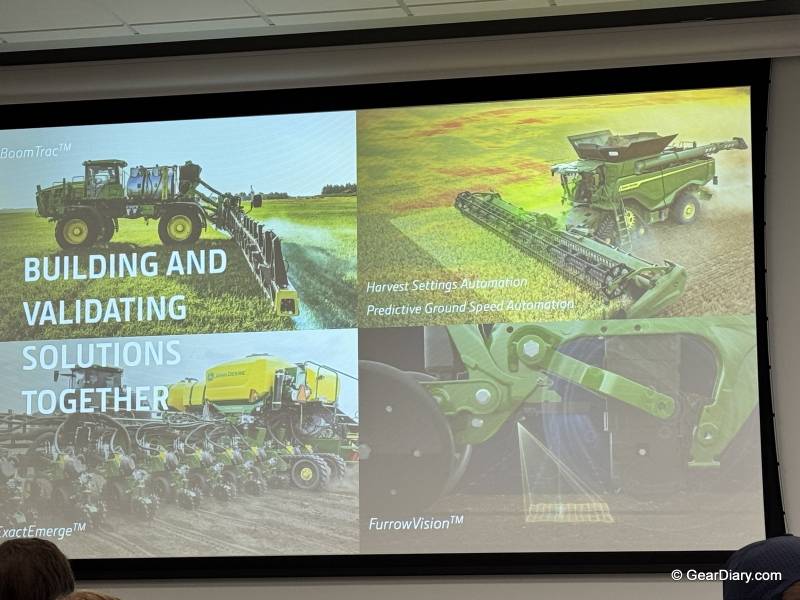
None of those questions are unanswerable today. All of them are answerable today, but only by someone willing to find and analyze the data that would give them that answer. That distinction was the through-line of the entire media day, and it is the distinction that Deanna Kovar, President of Deere’s Worldwide Agriculture & Turf Division, spent her session drawing out.
In her framing, the value of data is not the data. It is the decision the data enables, and a decision that arrives after the window has closed is not worth much. And what I have come to understand is that if a farmer cannot make an informed decision within a short window, that can have a direct effect on crop yield and therefore profits.
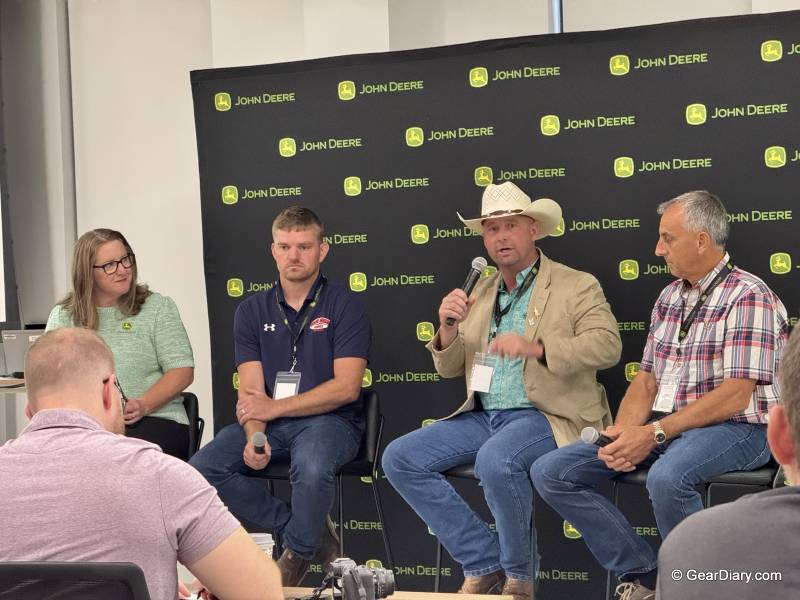
The most persuasive part of the day was not from anyone on Deere’s payroll. Farmers currently using and testing the AI assistant, JD, described a specific and recognizable frustration, and they described it in almost identical terms.
“Because we capture so much data, how are we managing that data to make a decision?” one farmer asked — which is the question in its purest form, and one that a decade of increasingly capable data collection has arguably made worse rather than better.
“Since JD, I can type in a question and JD compiles data, spits out the data, and allows me to make a quick decision,” another said. The operative word there is quick. Another farmer made the same point from the other direction: “…doesn’t take days of searching for that data. Ask JD, it’ll tell you exactly what you need.”
Others focused on how it behaves over time rather than on any single answer. “Simple, concise, and will continue to understand your operations better and better over time,” one said. Two were more blunt about the stakes. “It is going to revolutionize how we manage our operations,” said one. And the phrase that stuck with me longest, from another: “JD solves the data paralysis problem.”
Data paralysis is the right name for it. The failure mode of modern precision agriculture is not missing information. It is having so much information that no one looks at any of it, which functionally returns the operation to where it was before the sensors went on the equipment — except now with a subscription.
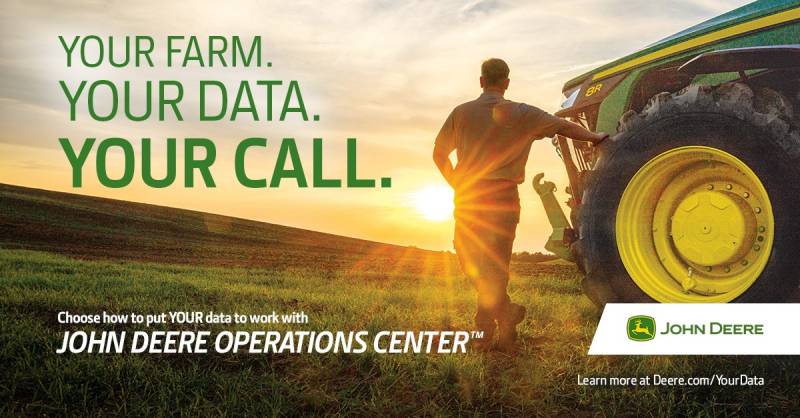
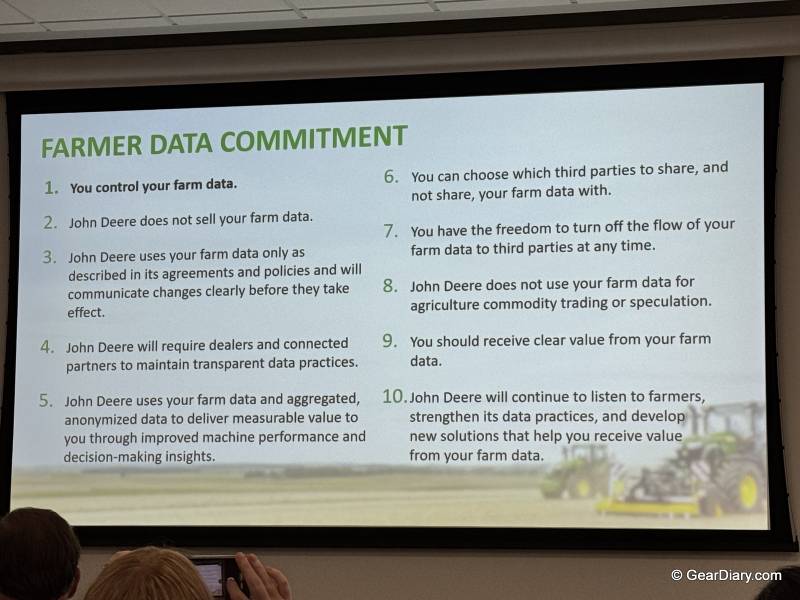
An AI assistant that can answer any question about a farm is, by construction, an assistant with access to everything about that farm. Deere clearly anticipated the data security question, and alongside the JD announcement, the company is highlighting what it calls the Farmer Data Commitment—ten principles governing how it handles customer data.
Deere states them as follows:
- You control your farm data.
- John Deere does not sell your farm data.
- John Deere uses your farm data only as described in its agreements and policies and will communicate changes clearly before they take effect.
- John Deere will require dealers and connected partners to maintain transparent data practices.
- John Deere uses your farm data and aggregated, anonymized data to deliver measurable value to you through improved machine performance and decision-making insights.
- You can choose which third parties to share, and not share, your farm data with.
- You have the freedom to turn off the flow of your farm data to third parties at any time.
- John Deere does not use your farm data for agriculture commodity trading or speculation.
- You should receive clear value from your farm data.
- John Deere will continue to listen to farmers, strengthen its data practices, and develop new solutions that help you receive value from your farm data.
Numbers two and eight are the ones that will get read closely, and they should be. A company sitting on operational data from a large share of American row crop acreage occupies a position that has obvious commercial value in commodity markets, and saying plainly that it does not use farm data for trading or speculation is a commitment worth having on the record.
Number seven matters for a different reason: the ability to shut off a data flow to a third party is meaningfully different from the ability to decline it at signup, because integrations accumulate and circumstances change.
“Farmers receive value from their data when they can use it to make better decisions, and we believe that value should come with control, transparency, and choice,” said Kovar in the announcement. “Our view is simple: farmers should control their data, clearly understand how it is used, and benefit from the insights it can create. JD and the Farmer Data Commitment are part of the same vision for helping farmers put their data to work on their terms.”
The fair critique is that these are principles rather than contract terms, and principles are easier to publish than to enforce. The counterpoint is that publishing them creates a standard the company can be held to, and that number four—extending the expectation to dealers and connected partners—is the clause most likely to create internal friction, which is generally a sign that a commitment is doing something.
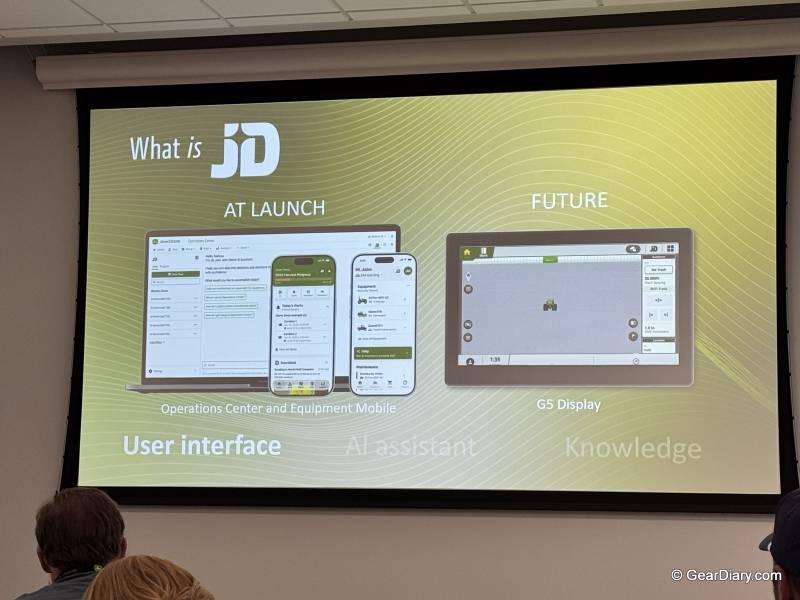
John Deere is opening an Early Access Program for JD, through which customers can express interest in participating. The assistant will become more broadly available later this year through Operations Center on web and mobile, and eventually through the in-cab display interface. The company also says it plans to extend JD’s capabilities to customers in turf, construction, roadbuilding, and forestry, which suggests the underlying approach is not agriculture-specific.
Attendees at the 2026 Farm Progress Show, running September 1 through 3 in Boone, can find John Deere at Outdoor Lots 144 and 153 on West Progress Avenue. More information on JD and the Farmer Data Commitment is at Deere.com/YourData.
Whether JD delivers on the farmer testimonials will depend on things that no media day can demonstrate: how it handles a question it cannot answer, how it behaves when the underlying data is incomplete or wrong, and whether the answers hold up across an operation more complicated than a demonstration. But the problem it targets is real, and it is the right problem. A decade of precision agriculture has been extremely good at capture and mediocre at recall, and the farmers who described data paralysis at Iowa State were not describing a gap in what their equipment can measure.
What I do know for sure, is that the hard working farmers of America deserve the best equipment and data analytics (called Agrolytics at the event) and it appears that John Deere is committed to offering that as a service with their technology-packed farming equipment. I look forward to seeing how this new AI-powered data analytics helps farmers improve their outputs.
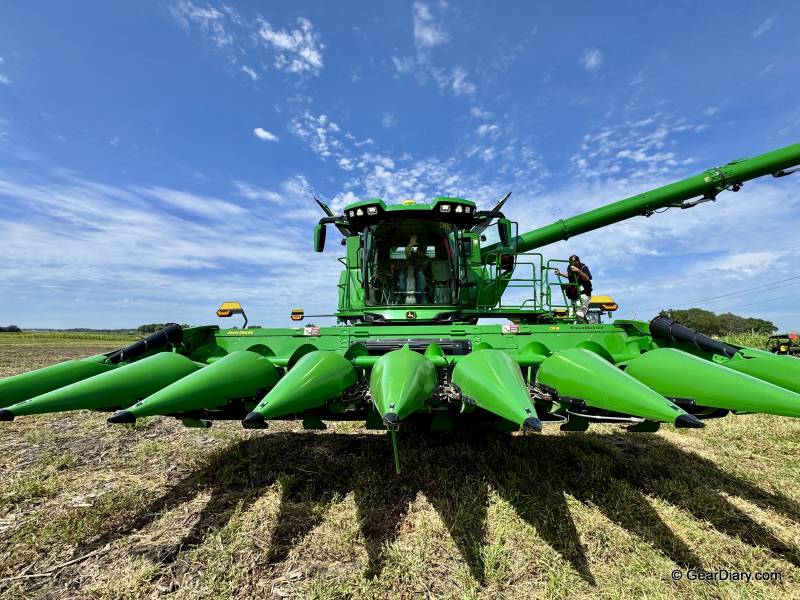
Stay tuned because I’ll bring you some more insights on the equipment itself after some hands-on time with John Deere’s latest combines and sprayers in the fields of Iowa. Check out the photo below for a sneak preview of what we got into!
Disclosure: John Deere paid for my travel andaccommodations but had zero editorial control over the content I wrote.

Be the first to comment on "John Deere Introduces JD, an AI Assistant Built to End Farming’s Data Paralysis Problem"