
Nomad’s $69 Nomad Starlink Cable is aimed at a very specific problem: keeping a Starlink Mini powered while in a vehicle without treating the cable as a disposable accessory. The 50′ cable plugs into a 12V or 24V vehicle socket on one end and Starlink Mini on the other, giving campers, RV travelers, boaters, and remote workers enough reach to chase a better view of the sky. It’s wrapped in a Kevlar 29 aramid fiber and nylon outer weave, with an aluminum adapter and silicone gasket built for dust, weather, and road-trip abuse. The idea is simple.

A Cable for the Part of the Trip Where Everything Gets Annoying
The Starlink Mini already makes a pretty clear pitch: take satellite internet with you, set it where it can see the sky, plug it in, and get online in places where cellular service either limps along or vanishes completely. It’s compact enough to fit in a backpack, includes its own built-in WiFi router, uses less power than larger Starlink systems, has a DC power input, and can deliver max download speeds over 200 Mbps under the right conditions.
That’s the tidy version. The less tidy version is that travel gear gets stepped on, dragged through gravel, pinched in doors, baked in vehicles, and yanked around when you’re trying to find the one clear patch of sky between trees. The Nomad Starlink Cable is built for that second version.
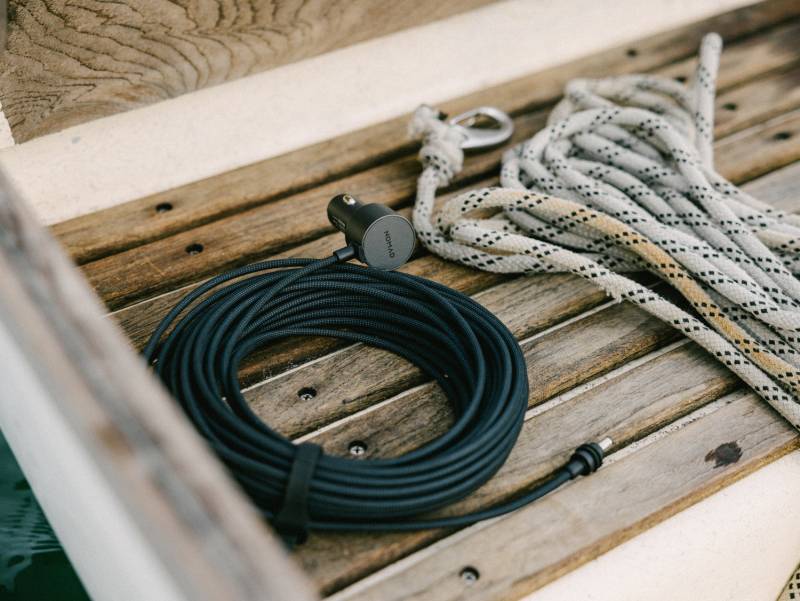
The Nomad Starlink Cable is specifically compatible with Starlink Mini and designed to draw power from any standard 12V or 24V vehicle socket — the old cigarette lighter-style outlet in many cars, trucks, vans, RVs, and boats. Plug one end into the vehicle, connect the other to the Starlink Mini, and the Mini has power without requiring a separate power station or a wall outlet.
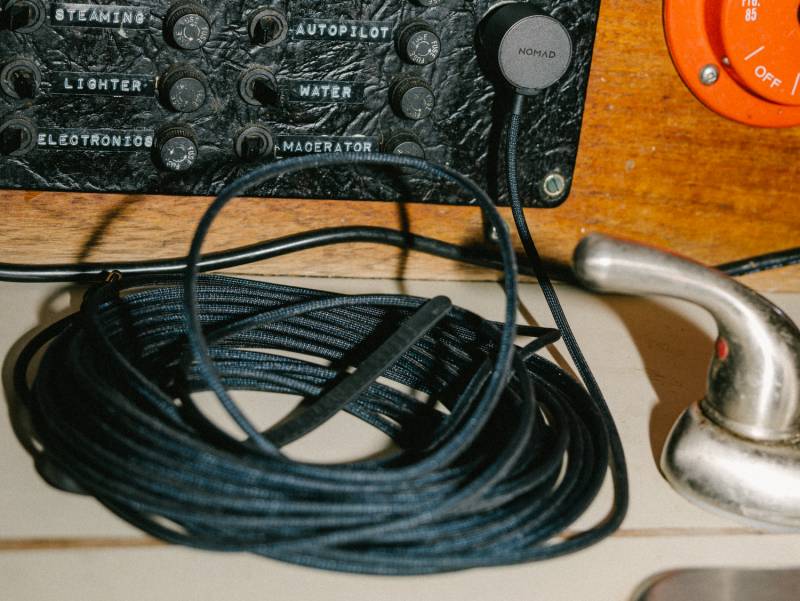
That matters if you’re working from a campsite, checking the weather before heading out on the water, keeping kids occupied in an RV, or trying to send files from a remote property where “just use your phone hotspot” is adorable advice from someone who’s never watched one bar of service disappear in real time.
Why Starlink Mini Makes the Cable More Interesting
Starlink Mini is meant for people who need internet on the go or away from traditional infrastructure. Starlink’s Roam service is designed for travel, camping, boating, and work away from home, with coverage in more than 150 countries, territories, and markets. The 100GB Roam plan is listed at $50 per month, while Roam Unlimited is listed at $165 per month. Both include plug-and-play setup, in-motion use, and the ability to pause service with Standby Mode, though plan details and pricing are always worth checking before you build a whole travel setup around them.
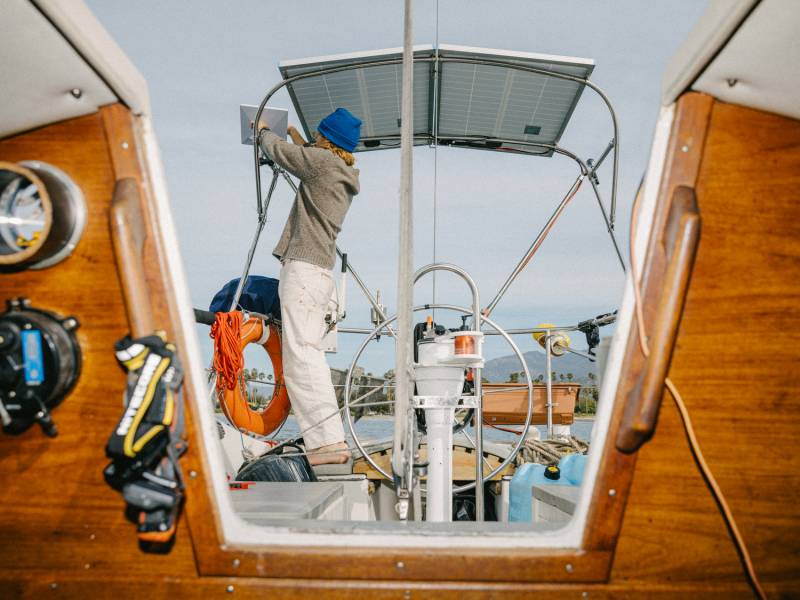
The Mini setup is also refreshingly simple. Starlink’s basic instructions are to plug it in and point it at the sky, in either order. You’ll still need an unobstructed view, and the Starlink app can help you find the best position, but there isn’t much ceremony involved. That’s part of the appeal.
Kev and I have Starlink at home on the ranch, and it’s been by far the best internet solution we’ve had in our 17 years out here. We also picked up a Starlink Mini during one of Starlink’s earlier special deals, where the Mini was included free, and it made immediate sense for camping trips when we’re going to be gone for more than a weekend. In that kind of use, the Starlink Mini feels less like a gadget indulgence and more like a practical safety net, especially when weather, work, maps, messages, and entertainment all depend on whether you can get online.
That’s also where a stronger, longer cable starts sounding a lot less optional.
Built for Reach, Wear, and the Occasional Bad Decision
The Nomad Starlink Cable gives you 50′ of reach, which is the difference between setting the Mini right next to your vehicle and being able to place it where the sky is clearer. That could mean moving it out from under tree cover, away from an RV’s shadow, or onto a better patch of open ground. With satellite internet, placement isn’t a small detail. A few feet can be the difference between a stable connection and a session of staring at buffering icons while questioning your life choices.
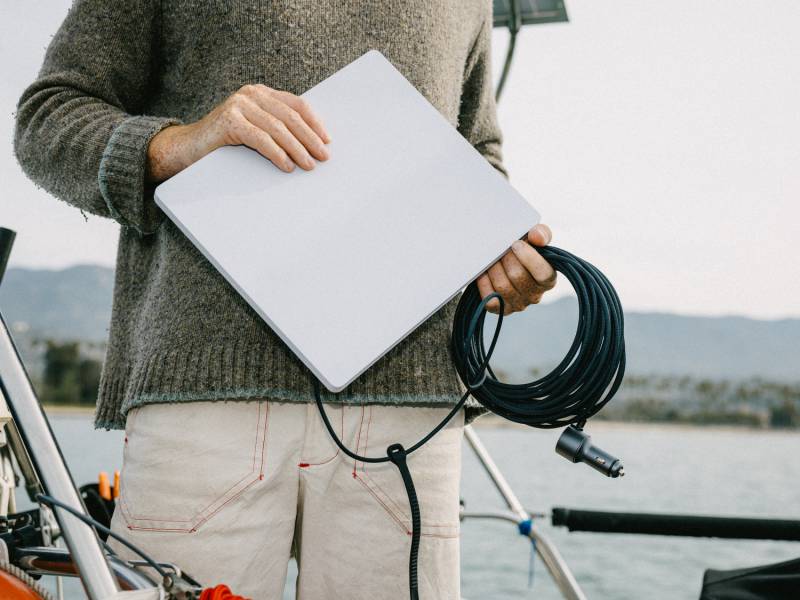
The cable uses a Kevlar 29 aramid fiber and nylon outer weave. Kevlar is the same family of high-strength synthetic fiber used in demanding protective applications, and here it’s meant to help the cable resist strain, abrasion, and repeated flexing. The aluminum adapter reinforces a high-wear area, while the vulcanized LSR silicone gasket helps create a secure, weather-resistant connection. LSR stands for liquid silicone rubber, a flexible material often used where sealing and durability matter.
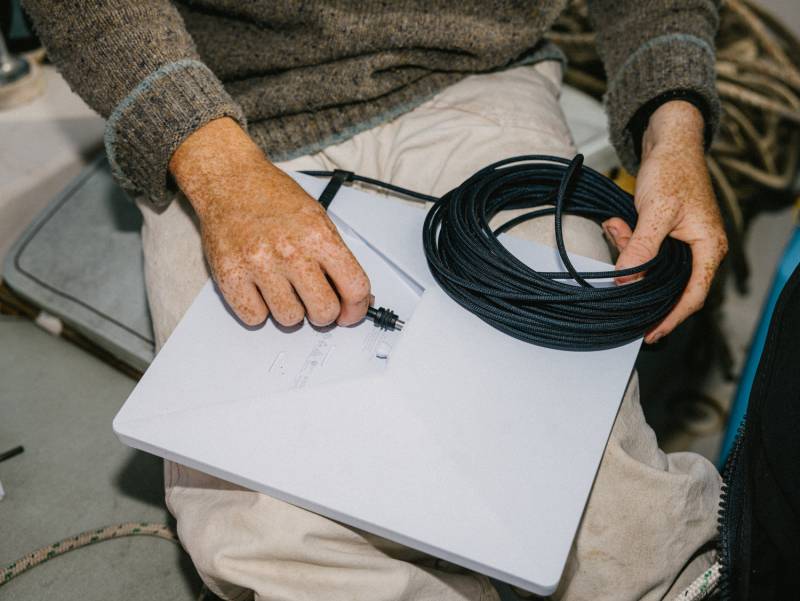
There’s also a custom silicone cable tie, which is the sort of small detail that becomes more important once you’ve dealt with 50′ of cable in a cramped vehicle or a muddy campsite. Cable management is never glamorous. Neither is flossing. Both are still better when you don’t ignore them.
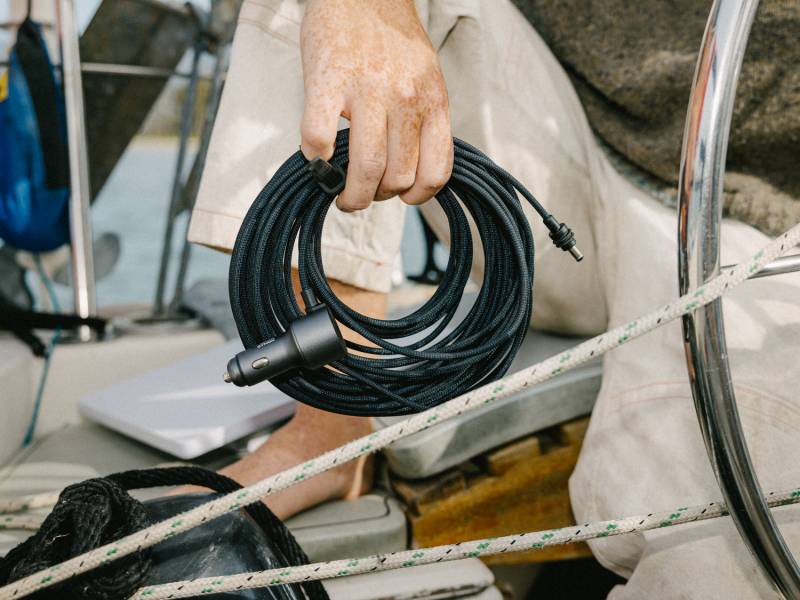
Nomad cofounder and COO Brian Hahn’s reasoning behind the product is straightforward: he spent years taking extended remote working trips by road and sea, relied on Starlink to stay connected, and kept breaking cables. After enough replacements, Nomad developed its own version and road-tested it for much of the past year.
That origin story tracks. A cable like this doesn’t need to reinvent mobile internet. It needs to survive the part where real life gets in the way.
What You Get for $69
The Nomad Starlink Cable costs $69 and is covered by a 2-year warranty. It measures 50′ long, works with Starlink Mini, and supports 12V and 24V vehicle sockets. Its materials include a Kevlar 29 aramid fiber and nylon outer weave, an aluminum adapter, a vulcanized LSR silicone gasket, and a silicone cable tie. It also carries FCC, CE, and UKCA certifications, covering regulatory requirements for the US, European, and UK markets.

The $69 price won’t make sense for everyone. If your Starlink Mini lives on a picnic table twice a year and never leaves a neat little cable loop, you may not need a reinforced replacement or backup. But if your Mini is part of a camping, overlanding, ranch, RV, boating, or remote work setup, the cable becomes easier to justify. Power delivery efficiency can also matter when you’re running from a vehicle or portable battery because every avoidable drain counts.
The bigger point is that mobile internet is only as reliable as the least durable piece of the setup. Starlink Mini can be the star of the show, but the cable still has to get power from point A to point B without becoming the weak link.




A lot of products are developed to fill a need, this one does that. A lot of purchases are delayed because products don’t come with much anymore, it is up to the consumer to fill the gap.
I agree with Ted. A lot of companies stopped including a lot of what’s needed. Luckily, companies like this come out with accessories that help the end user.
I agree with Ted. A lot of companies stopped including a lot of what’s needed. Luckily, companies like this come out with accessories that help the end user.