
When Nissan invited me to drive the new Rogue Hybrid, I was puzzled. I don’t much care for crossovers, and I primarily focus on EVs and car tech, so a gas-powered, appliance-like family hauler isn’t really my thing. Even PHEVs (Plug-in Hybrid-EVs) leave me cold. But Nissan insisted, so I hopped on a short flight from San Francisco to Santa Barbara to check it out.
What’s the Big Deal?
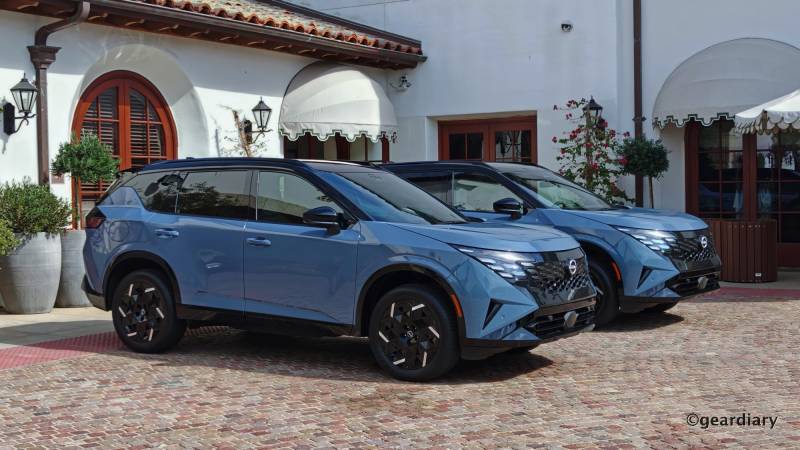
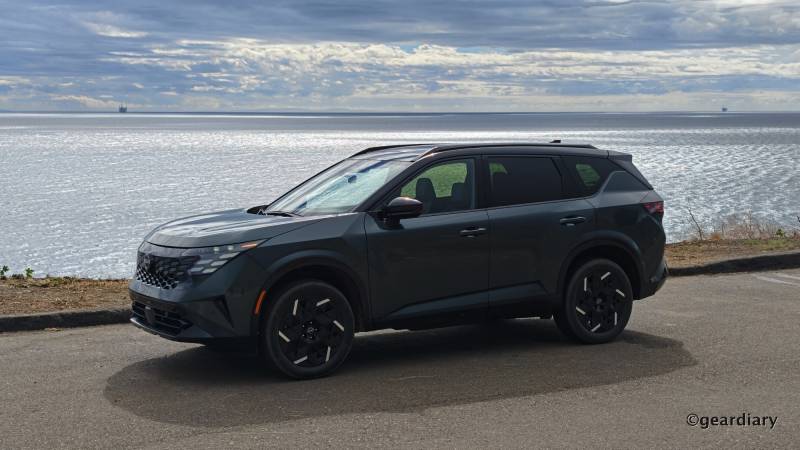
2027 Nissan Rogue Hybrid
Turns out the 2027 Rogue Hybrid is the first proper series hybrid vehicle to land on US shores since BMW’s i3 REX (Range EXtender) back in 2013. A series hybrid is a vehicle where the wheels are powered only by one or more electric motors, fed by a small high-voltage battery, charged by a generator, which in turn is spun by an ICE (Internal Combustion Engine).
Think diesel-electric locomotive, but gas-powered and much smaller, and you have the right idea. Series hybrids are basically EVs that you never need to charge. Just fill up with gas like you’re used to, and enjoy a fast, smooth, and quiet EV driving experience. There is no transmission, so no gears to shift, and lots of torque, so merging and passing is effortless.
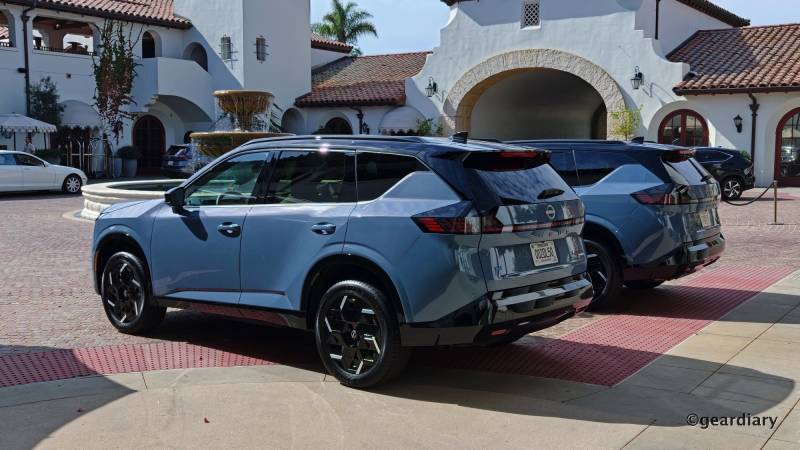
2027 Nissan Rogue Hybrid
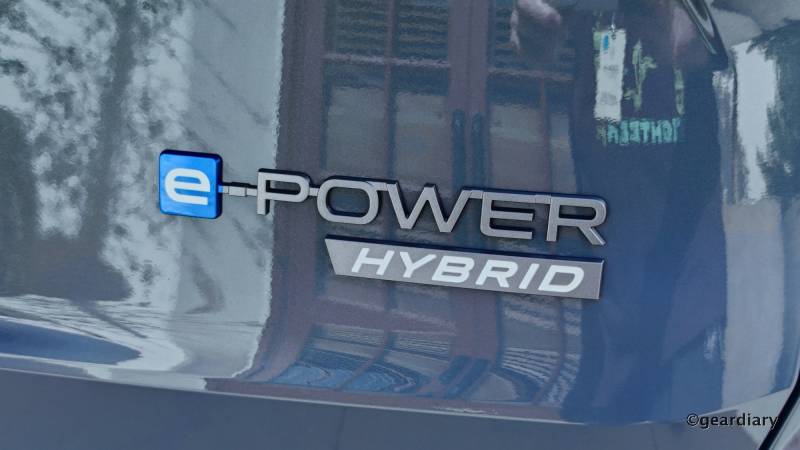
Unlike popular hybrids like the Toyota RAV4 and Honda CR-V, which are parallel hybrids, the new Rogue Hybrid’s gas engine isn’t connected to the wheels in any way. In other words, this car is basically an EREV (Extended Range EV) without a plug. Nissan calls this technology e-Power, and it’s now in its third generation.
Serial hybrids aren’t anything new, but while they are very efficient in the city, they aren’t as efficient as parallel hybrids on the highway. Nissan spent 10 years perfecting its e-Power tech with two previous generations of vehicles sold in Europe and Asia, and claims to have solved this problem. The new Rogue Hybrid manages 38mpg combined.
How Does It Work?
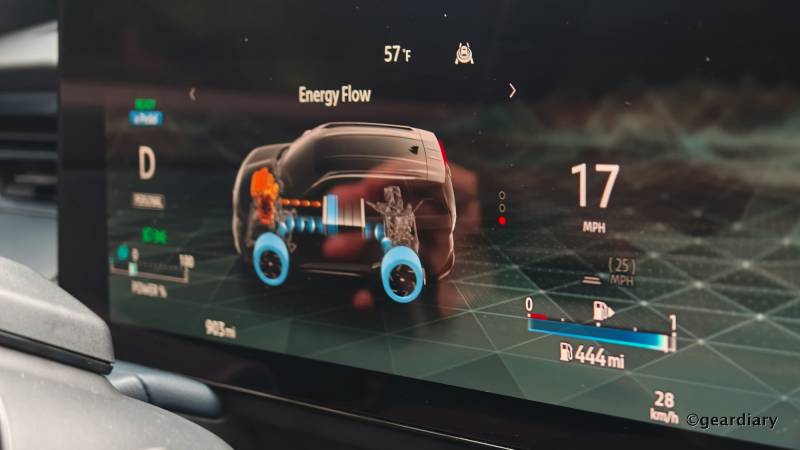
The 2027 Rogue Hybrid drives just like an EV, and that’s a very good thing. A bespoke 148hp 1.5-liter turbocharged 3-cylinder gas engine powers a generator that charges a small 1.67kWh lithium-ion battery, which in turn powers two electric motors located between the front and rear axles, with 225hp of total power. Yes, this means all new Rogue Hybrid trims are AWD (All-Wheel Drive), which is also a good thing.
With 243lb-ft and 144lb-ft of torque (front/rear), there’s plenty of merging and passing oomph, and without a transmission interrupting power transfer, response is immediate and effortless. In my experience, acceleration (0-60mph in 6.4s) isn’t nearly as brisk as today’s typical battery EVs, but it’s better than most similar gas-powered or parallel hybrid crossovers, and power delivery is significantly smoother and quieter.
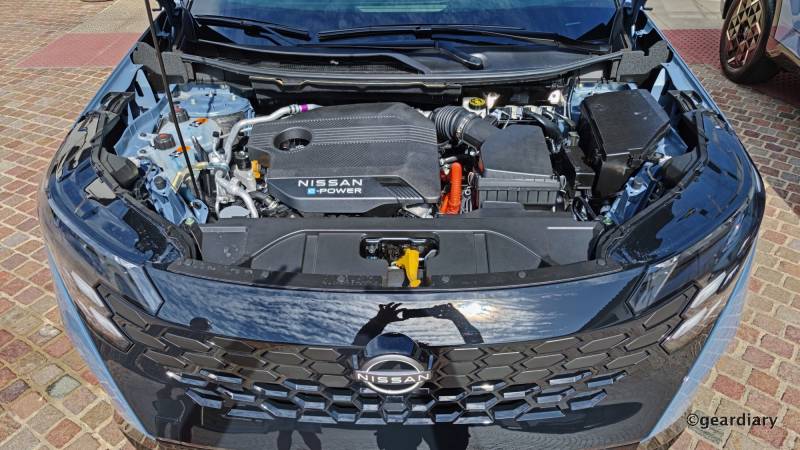
The new Rogue Hybrid’s 1.5L turbocharged 3-cylinder gas engine powers a generator but doesn’t directly power the wheels
Interestingly, you can still faintly hear (and feel) the gas engine revving up to keep the small high-voltage battery charged as needed, but the whole experience is seamless and drama-free. Nissan said it purposely made the gas engine rev up to match the position of the accelerator pedal for a more familiar driving experience. In fact, the gas engine will even rev if you press the accelerator with the gear selector set to park.
Obviously, this isn’t necessary. The gas engine is only connected to a generator, and while revving it generates more electricity and charges the high-voltage battery faster, the electric motors operate completely independently. In fact, Nissan designed this gas engine specifically for e-Power vehicles, and it’s most efficient when running at a constant 2,000-3,000rpm, with a 5,200rpm redline.
One-Pedal Driving?
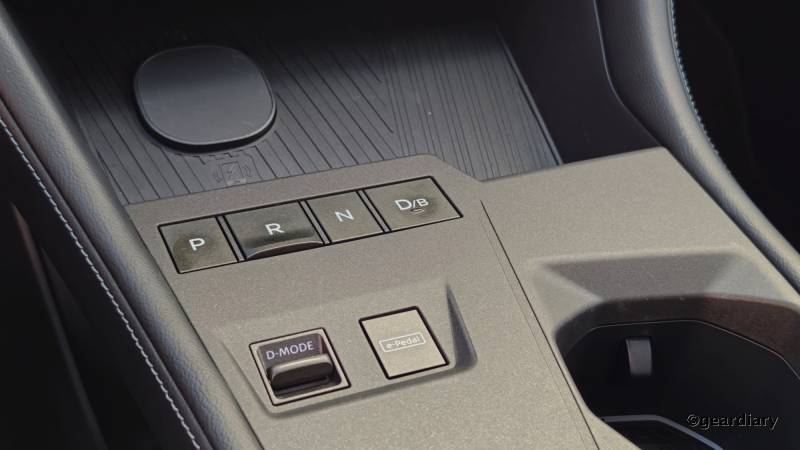
Another benefit of the 2027 Rogue Hybrid ‘s e-Power drivetrain is that it supports true one-pedal driving, like most EVs. Nissan calls this e-Pedal, and it’s activated by pressing a button on the center console. With one-pedal driving, lifting off the accelerator applies regen braking (slowing down by turning the electric motors into generators to recharge the battery) instead of coasting, until the car comes to a complete stop.
Many EV drivers favor one-pedal driving, especially in the city, because you don’t have to constantly move your foot between the accelerator and brake pedal in stop-and-go traffic. Obviously, with one-pedal driving, you can still press the brake pedal at any time, should you need to slow down more rapidly. It takes some getting used to, but one-pedal driving quickly becomes second nature. It’s extremely intuitive.
Ironically, the Leaf and Ariya, which are Nissan’s battery EVs, don’t feature true one-pedal driving. Both cars have something called e-Step, which enables regen braking when lifting off the accelerator, but doesn’t bring the car to a complete stop. Very few hybrids offer one-pedal driving. Most are PHEVs, most only allow it in EV mode (like the Mercedes-AMG E53 PHEV), and most won’t come to a complete stop.
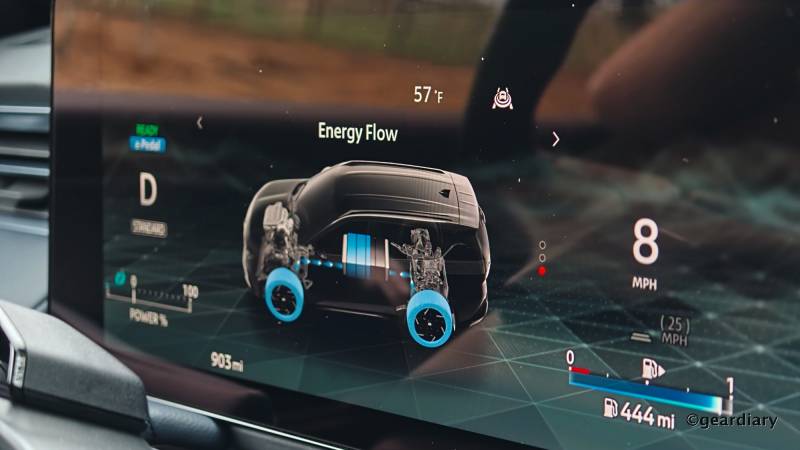
The new Rogue Hybrid is powered by two electric motors
As an aside, the exception to this is Volvo’s XC90, a PHEV SUV which supports true one-pedal driving in hybrid mode when the gear selector is set to “B”. Under these conditions, you get regen braking when lifting off the accelerator (with matching transmission downshifts when the engine is running) until the car comes to a complete stop. I’m honestly surprised this isn’t available on more hybrids and PHEVs. It’s great stuff.
The new Rogue Hybrid also includes something Nissan calls Smooth Stop, a feature (first seen on BMW’s iX3 EV) which reduces head-toss by intelligently modulating the brakes when coming to a complete stop, and it works quite well. Overall, the 2027 Rogue Hybrid is extremely pleasant to drive. It’s not going to blow your socks off like most EVs, but it’s faster than most hybrids, and for me, one-pedal driving seals the deal.
What about the tech?
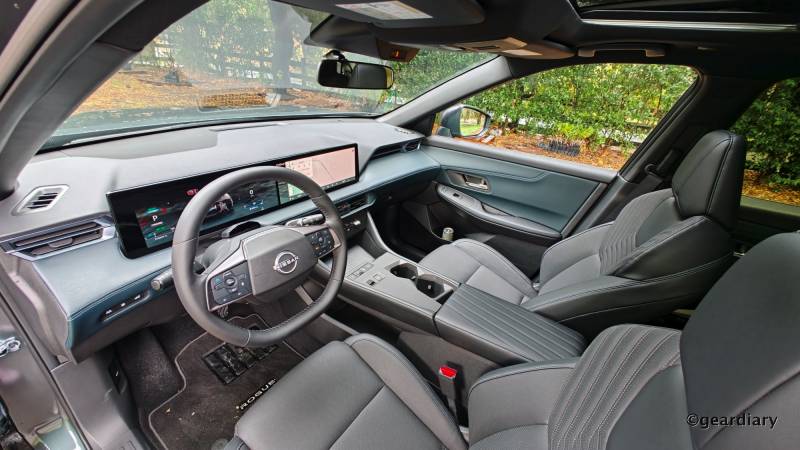
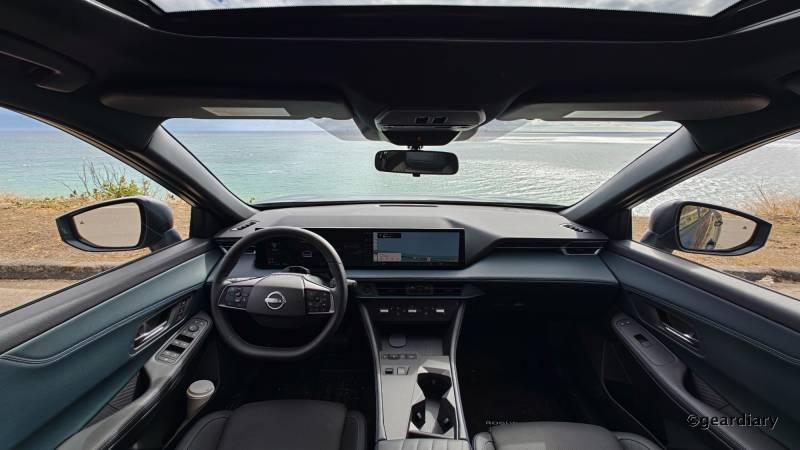
Right now, the 2027 Rogue Hybrid is only available in the mid-range SR trim ($37,490) with the SR Tech Package ($4,000), which is the vehicle I drove. SV ($35,490) and Platinum ($43,490) trims will be arriving in dealerships early next year. The SR Tech Package and Platinum trims come with dual 14.3-inch displays and an Android Automotive-powered infotainment system with Google built-in, which includes Google Maps, Gemini, and the Play Store.
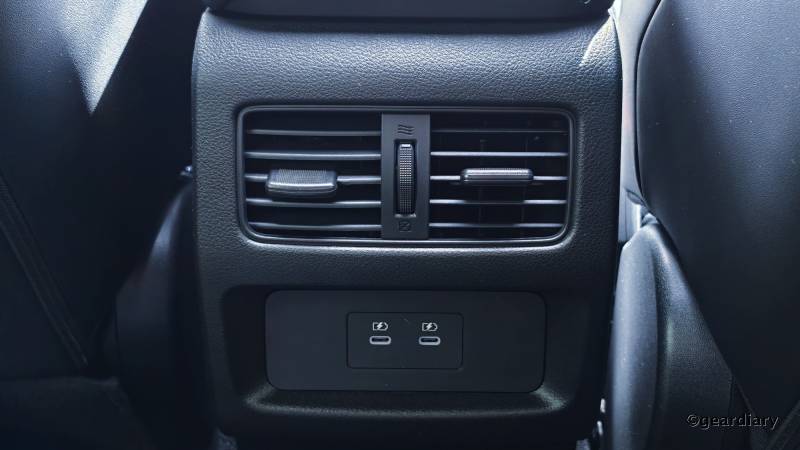
By default, the new Rogue Hybrid features dual 12.3-inch screens. All trims support wireless Apple CarPlay and Android Auto, and offer four USB Type-C ports (two in front, two in the back) plus a 15W Qi2 magnetic wireless charger. The Platinum trim adds a second Qi2 charger, a heads-up display, 64-color ambient lighting, and a 10-speaker Bose premium audio system.
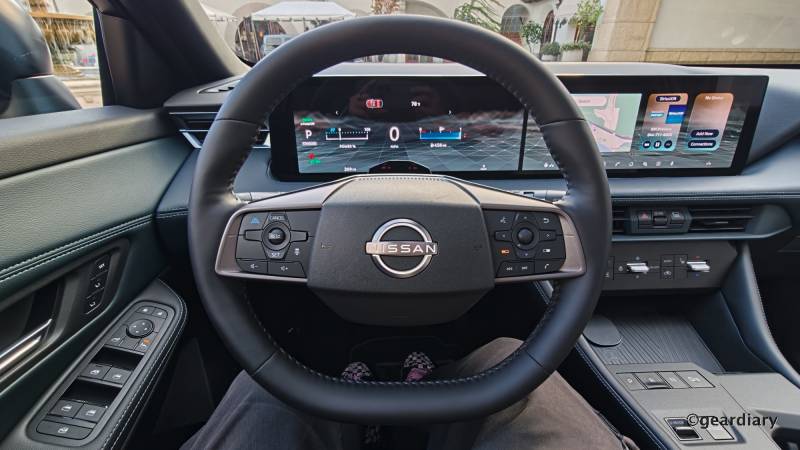
The new Rogue Hybrid features dual 14.3-inch displays running Android Automotive
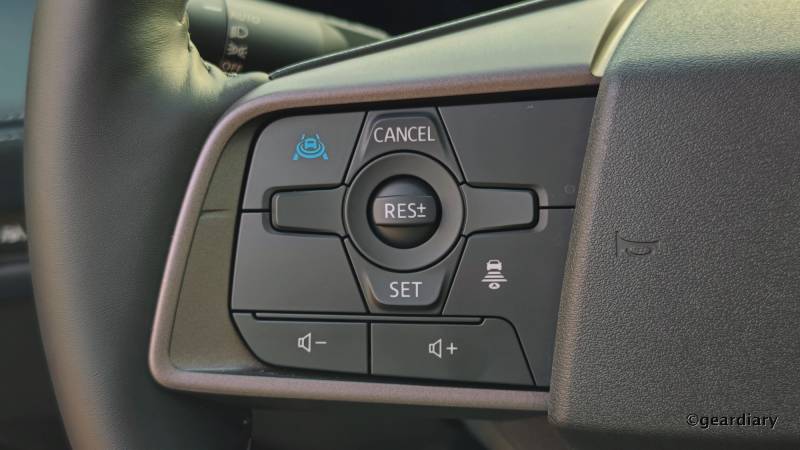
Nissan’s ProPILOT Assist level 2 ADAS (Advanced Driver Assistance System) is standard, but the SR Tech Package and Platinum trims get an improved version of ProPILOT Assist with hands-off traffic jam support and auto lane change. This worked quite well during my drive, but doesn’t match the best level 2 systems available today.
The SR Tech Package and Platinum trims also include a 360-degree transparent camera view with full 3D rotation, which also offers a front wide view (helps see past obstacles at tricky intersections), invisible hood view (helps position the wheels to avoid obstacles), and moving object detection (for extra peace of mind).
And the Rest?
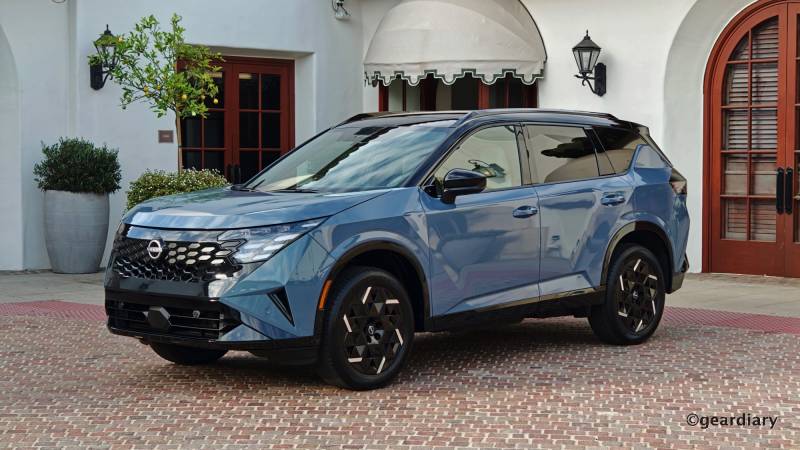
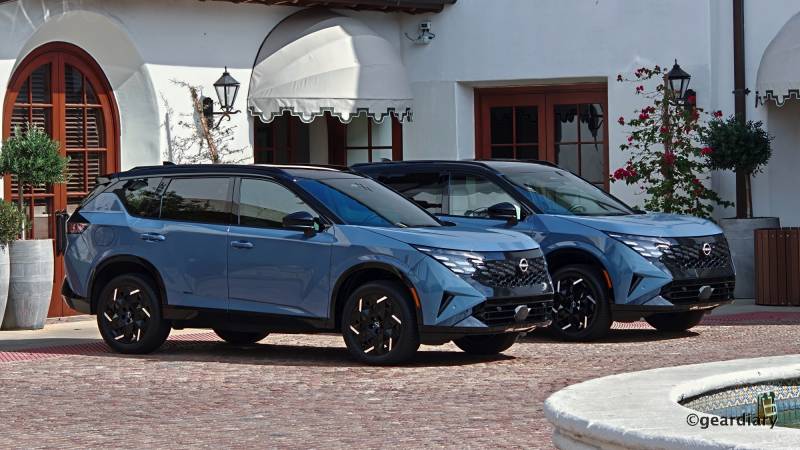
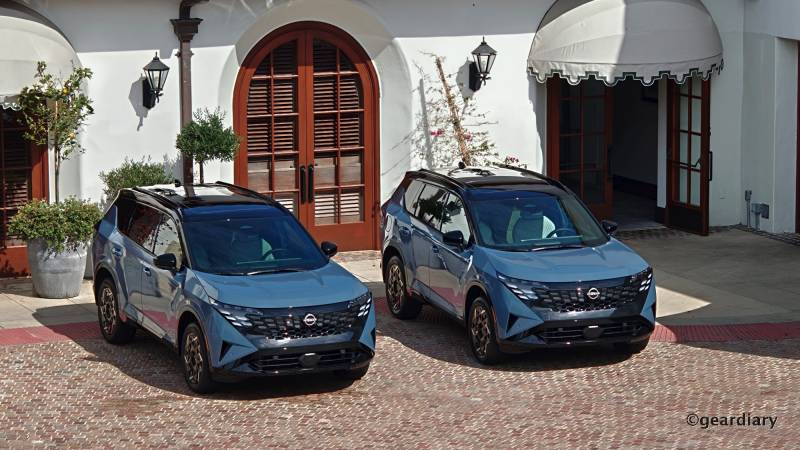
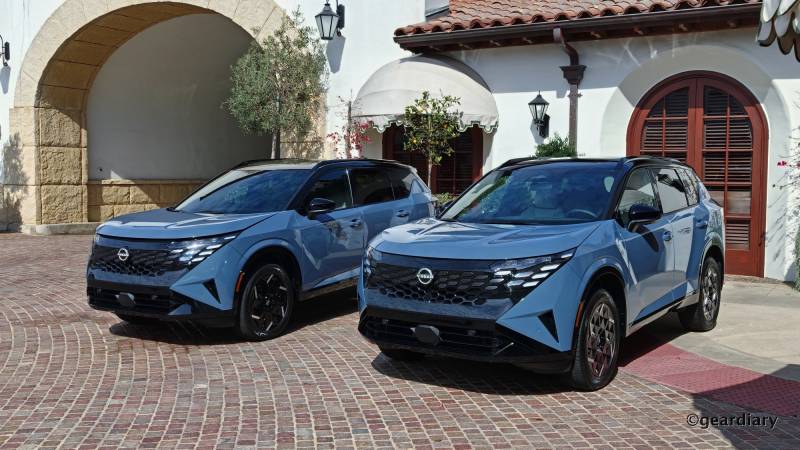
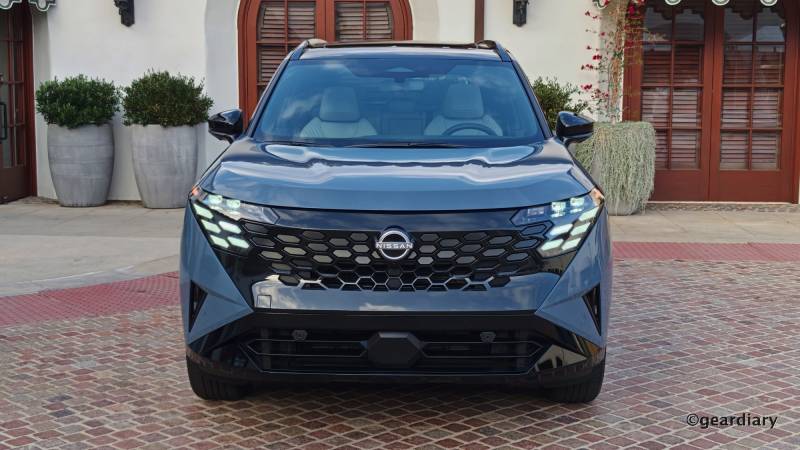
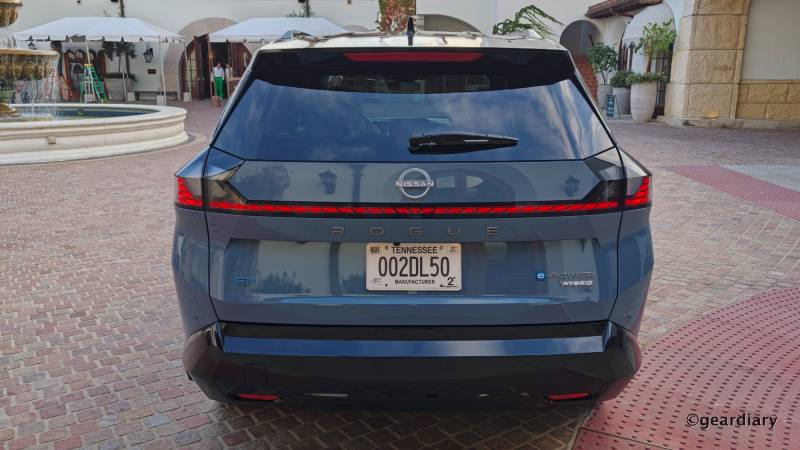
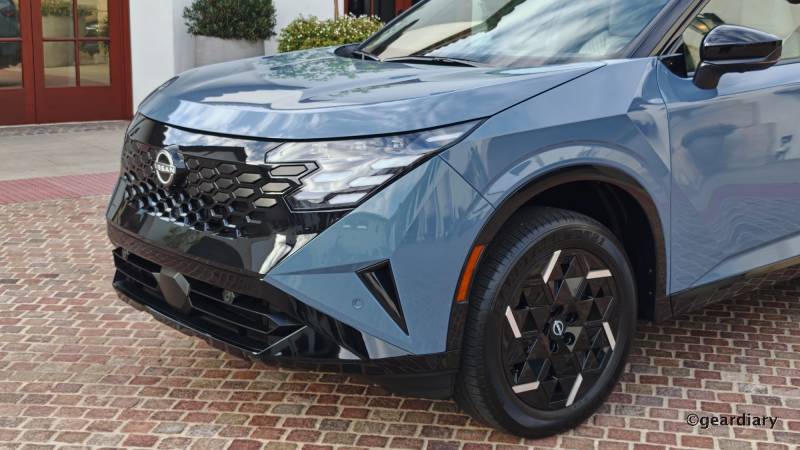
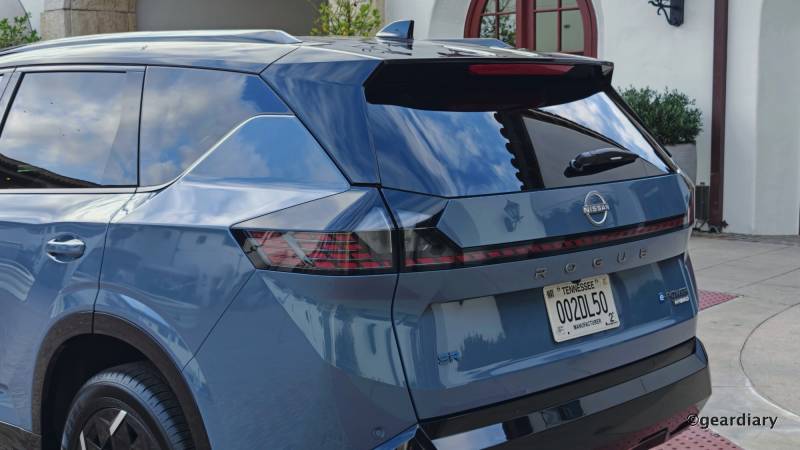
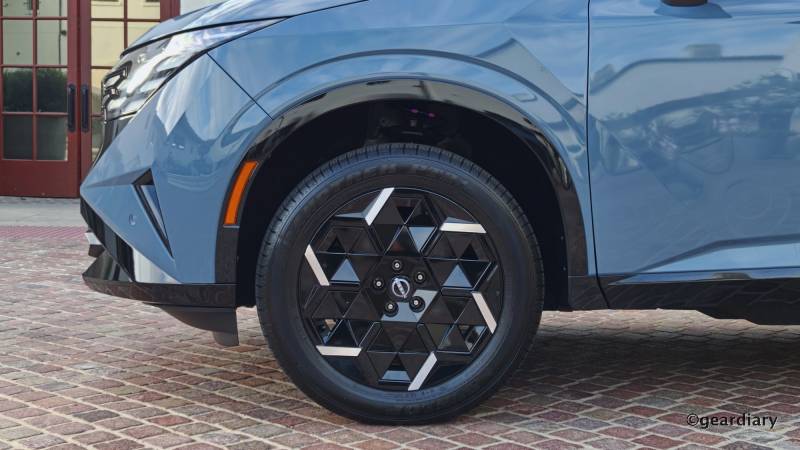
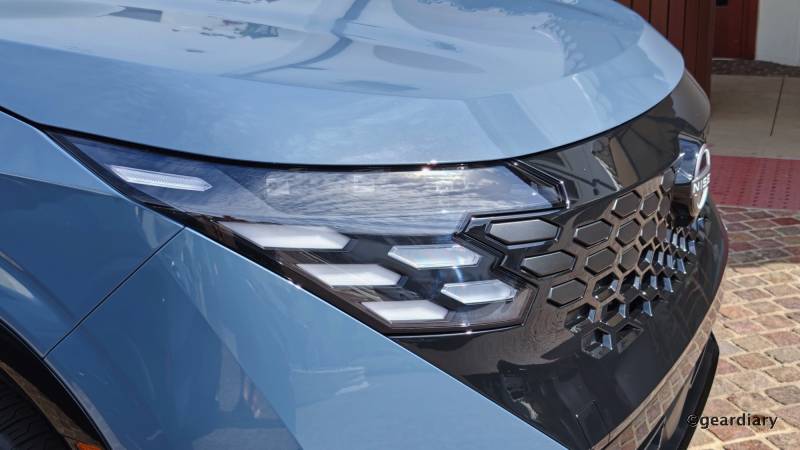
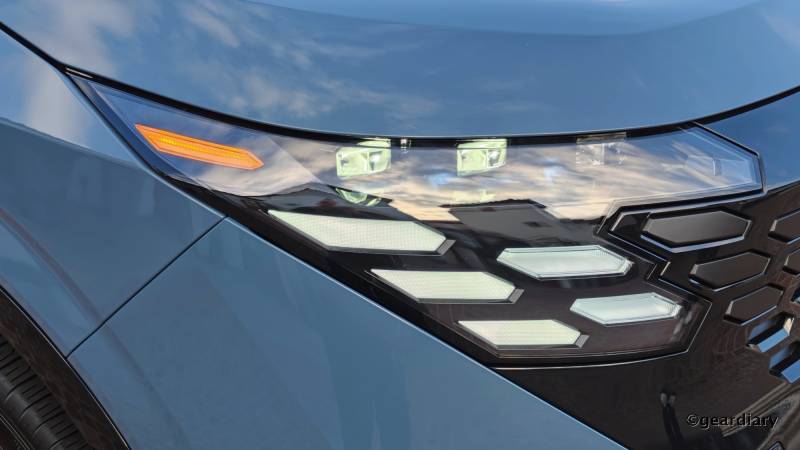
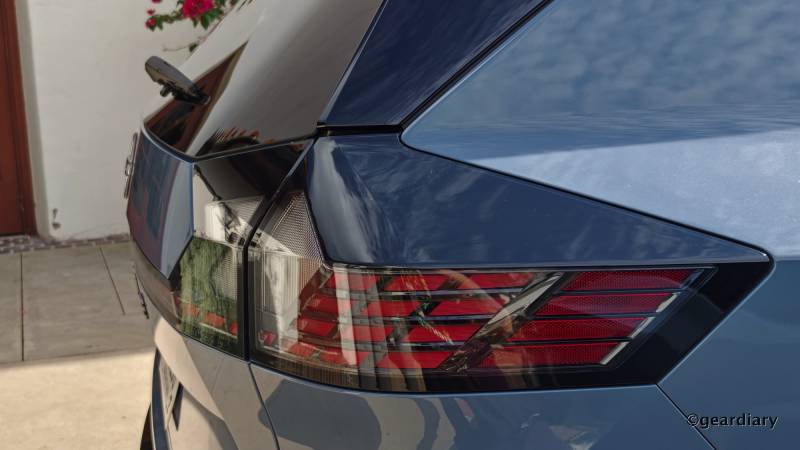
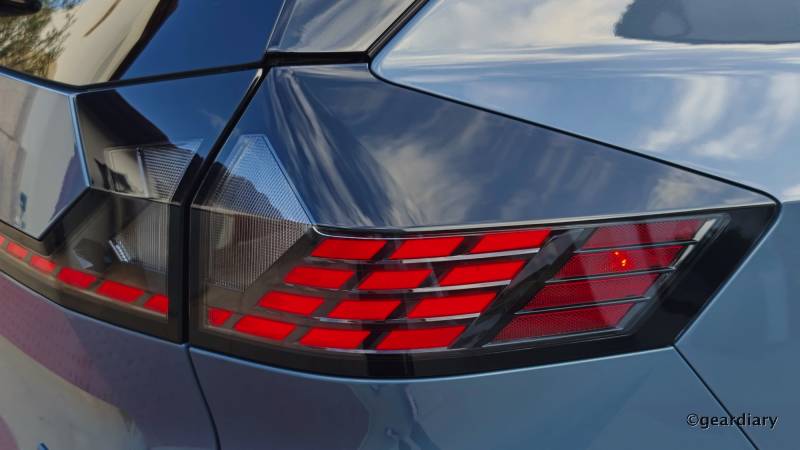
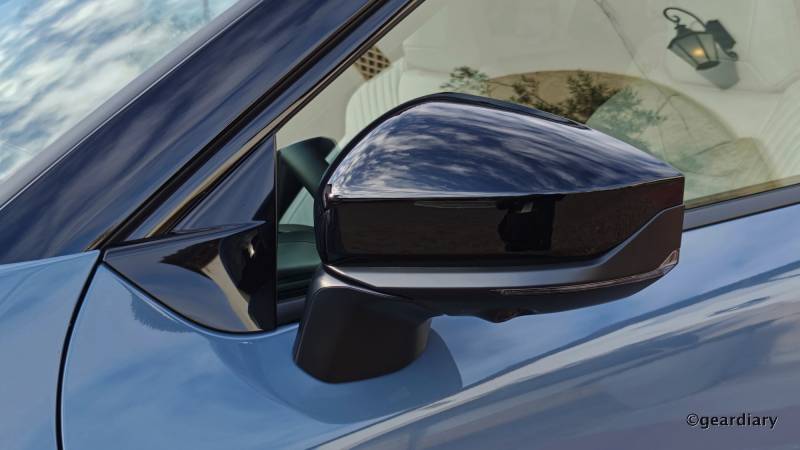
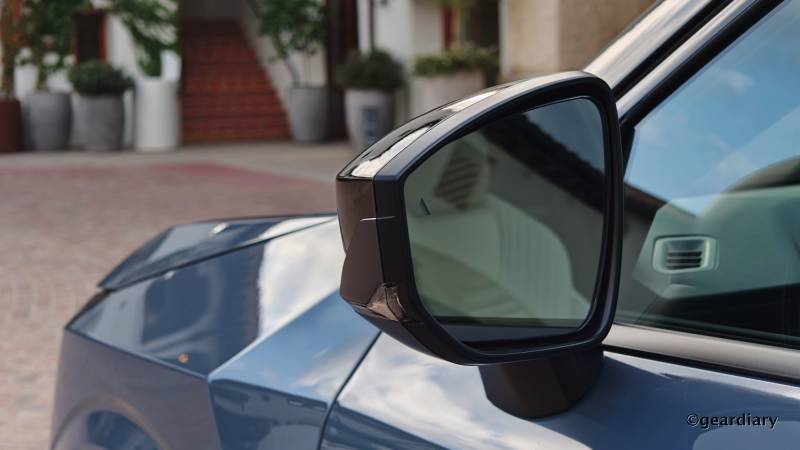
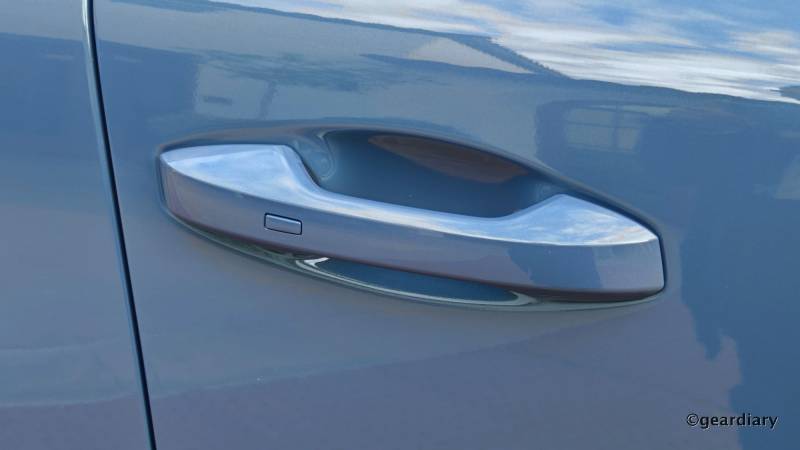
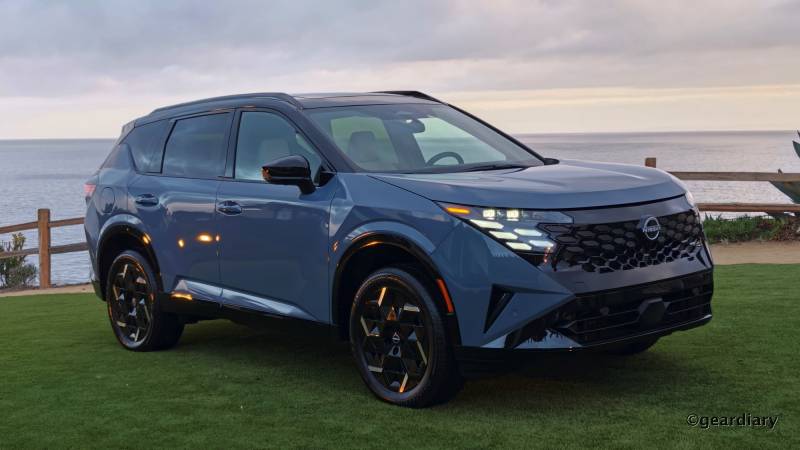
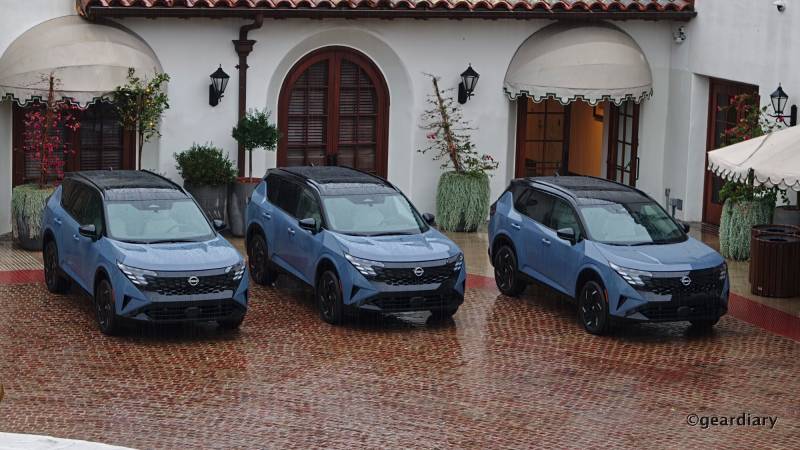
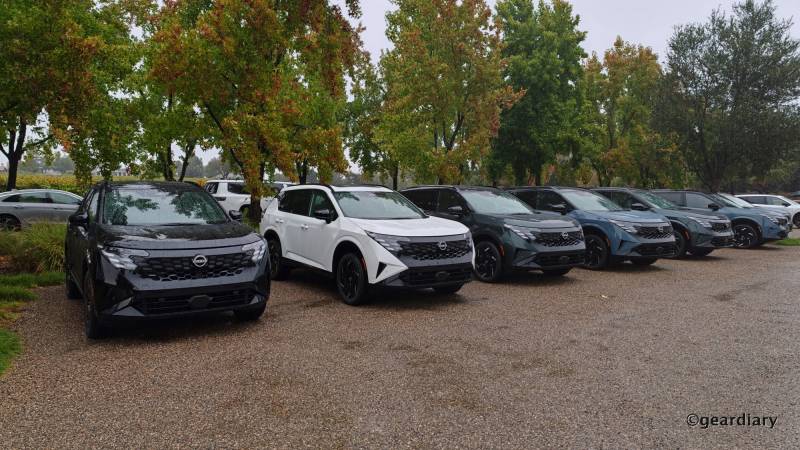
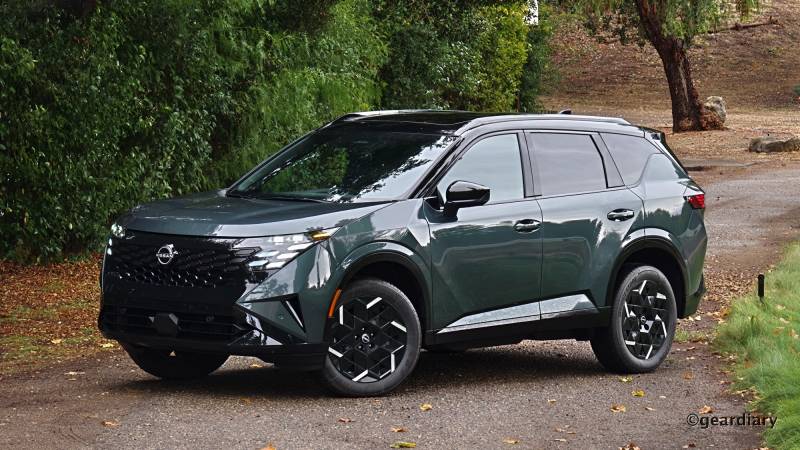
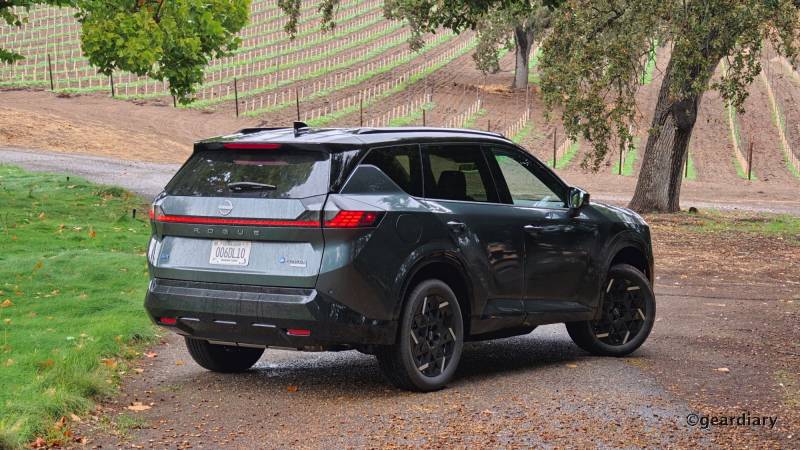
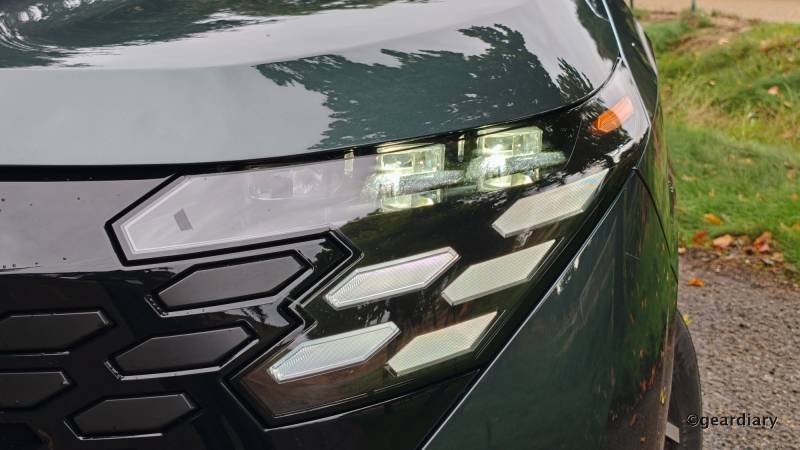
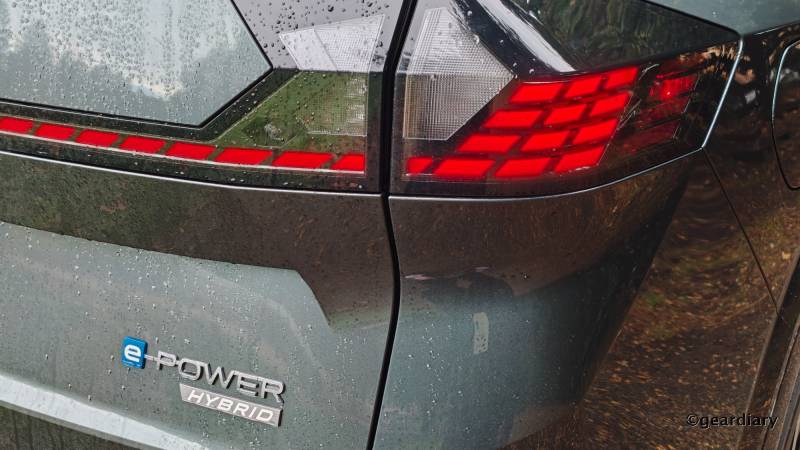
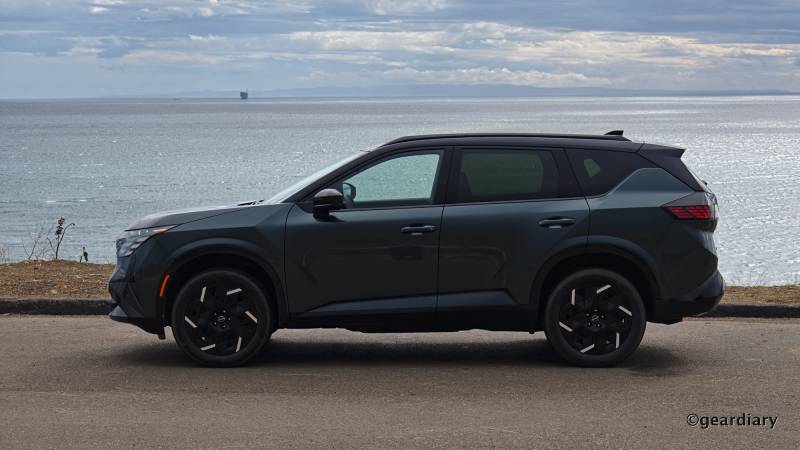
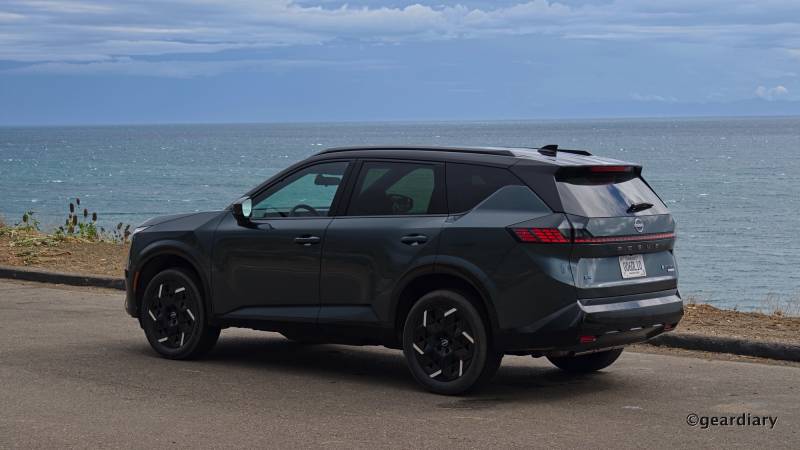
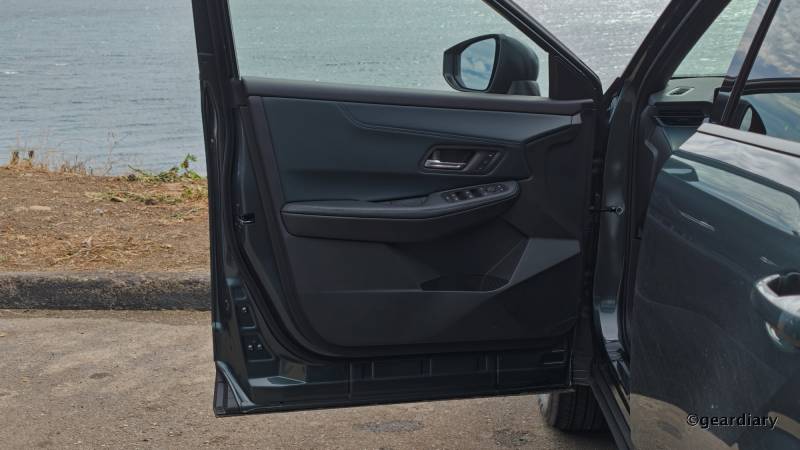
As you can see from my pictures, the new Rogue Hybrid is a decent looking crossover inside and out. While it’s not going to turn heads, it stands out from the sea of bland crossovers thanks to a uniquely Nissan front and rear treatment with LED lights. The exterior design is sharp and clean and that Horizon Blue Pearl Metallic color is particularly striking. Also, the interior materials feel more premium than some competitors (hello, Toyota).
That being said, I’m not a big fan of the push-button gear selector in the center console. It looks and feels kind of cheap. Nissan should move the gear selector to a stalk behind the steering wheel, on the right side, like in today’s best EVs. Also, it’s annoying that Platinum is the only trim with a power passenger seat. Other trims offer a manual passenger seat, but it lacks a height adjustment and sits too high by default (pardon the pun).
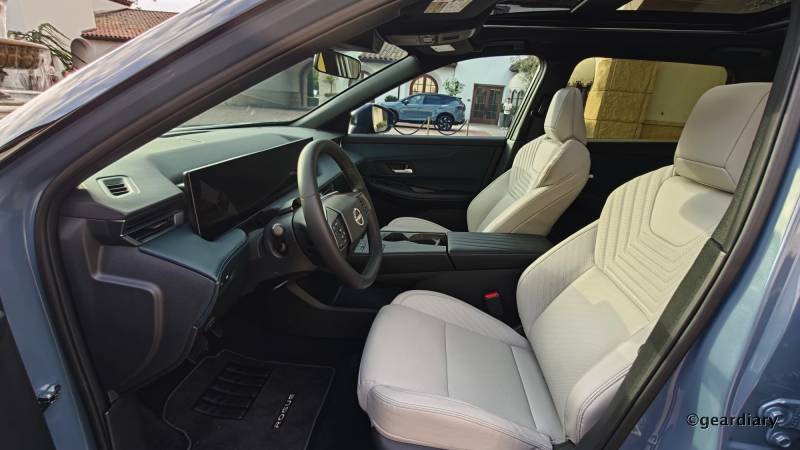
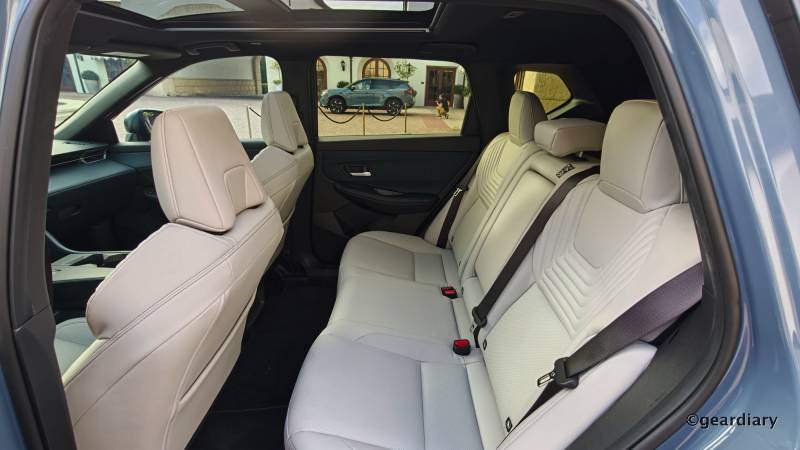
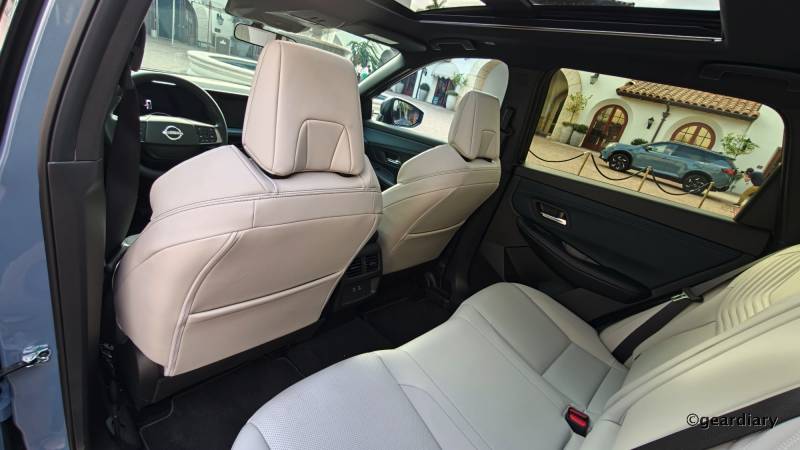
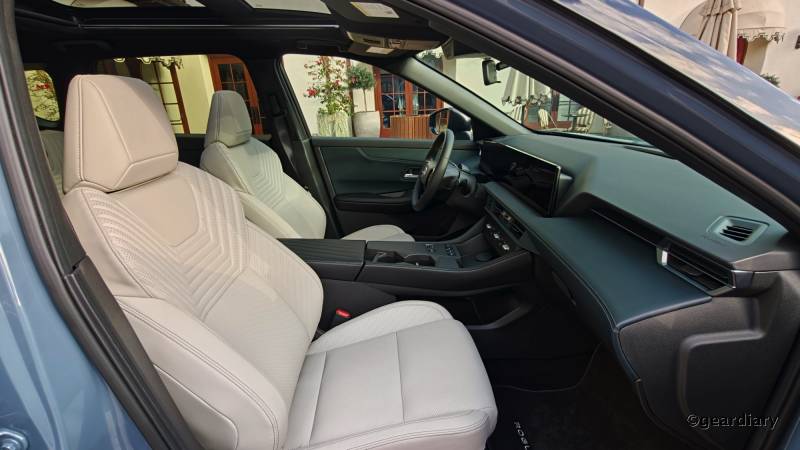
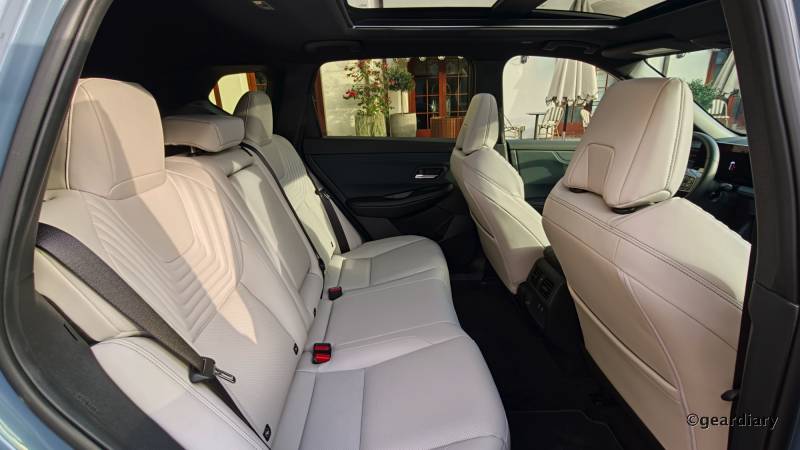
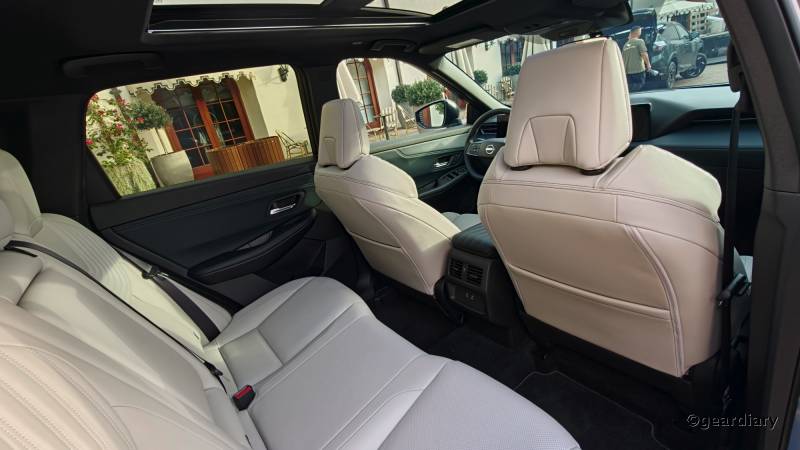
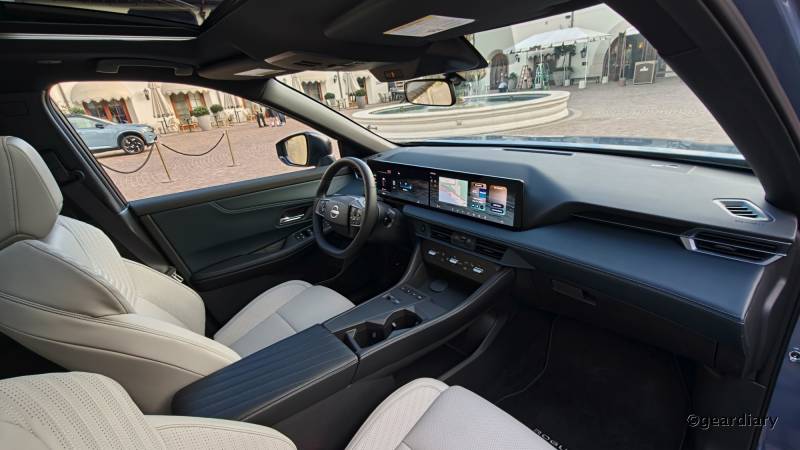
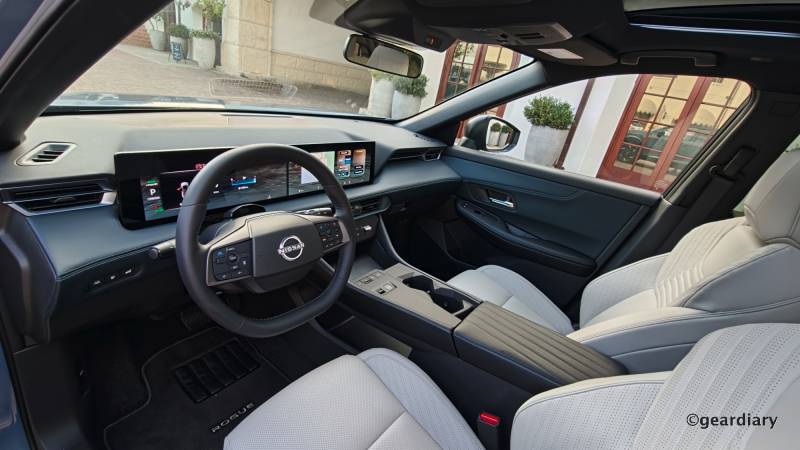
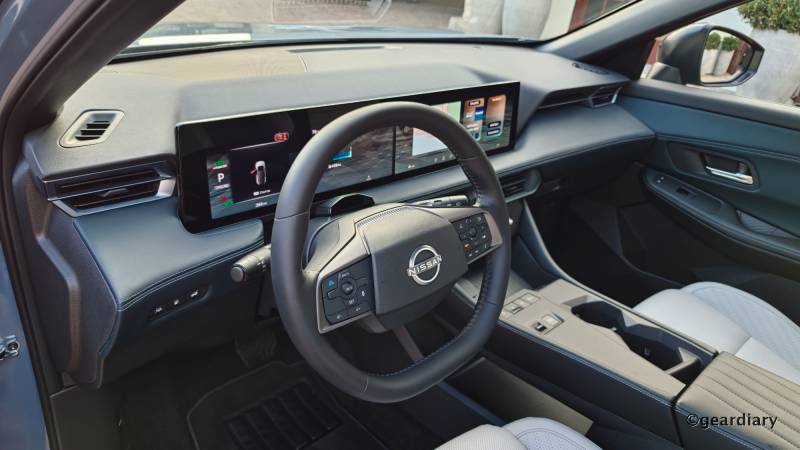
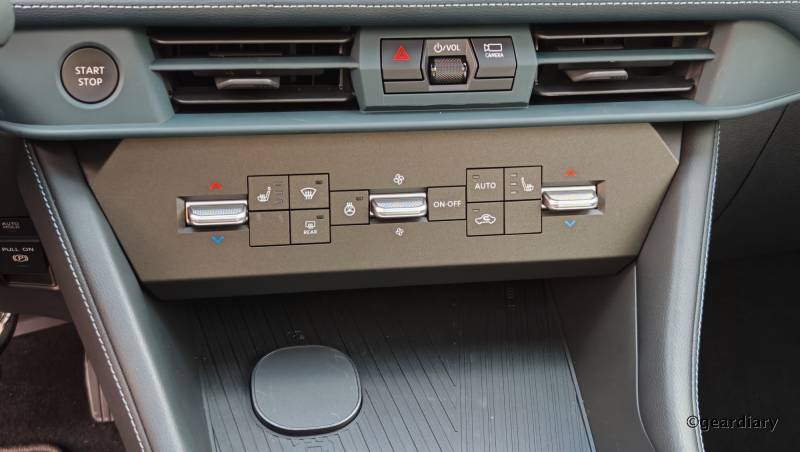
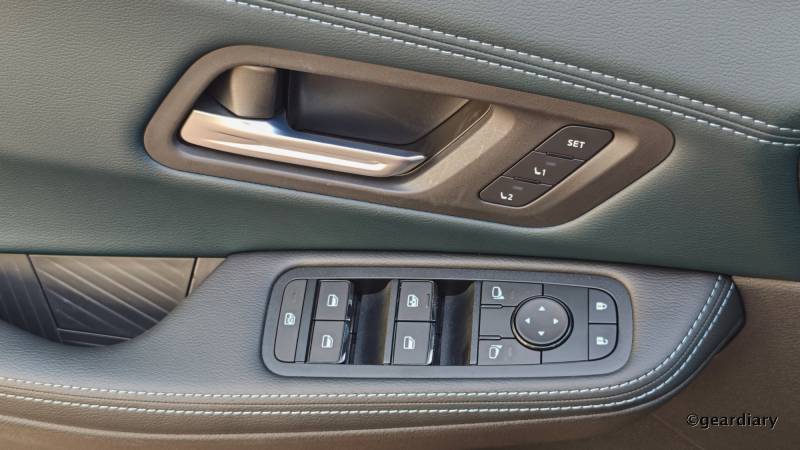
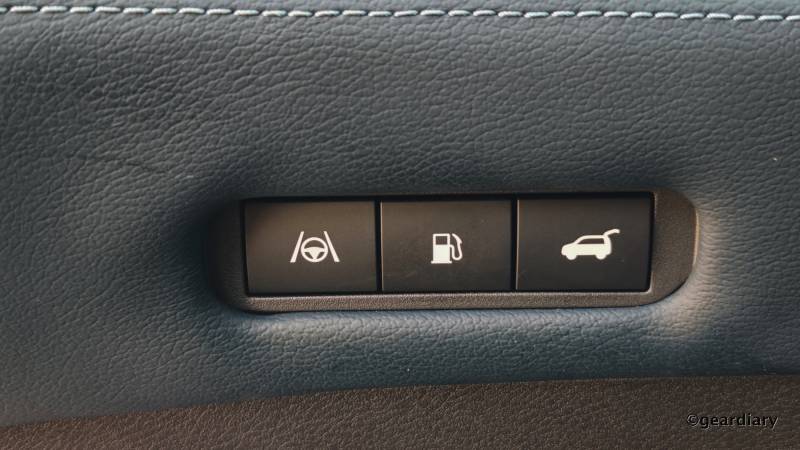
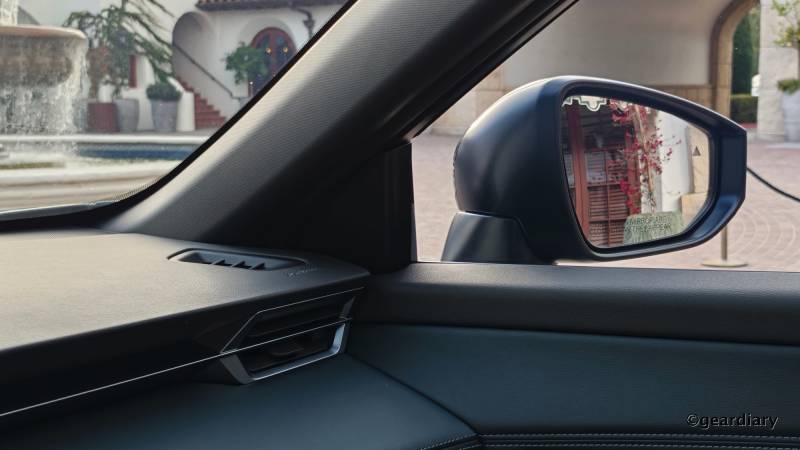
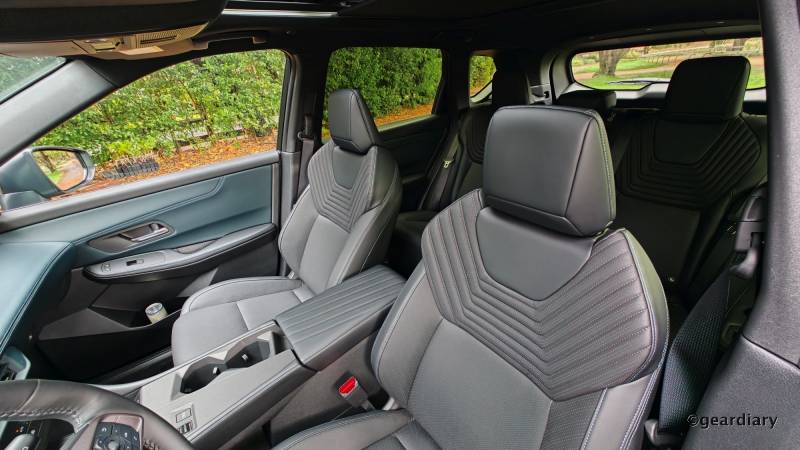
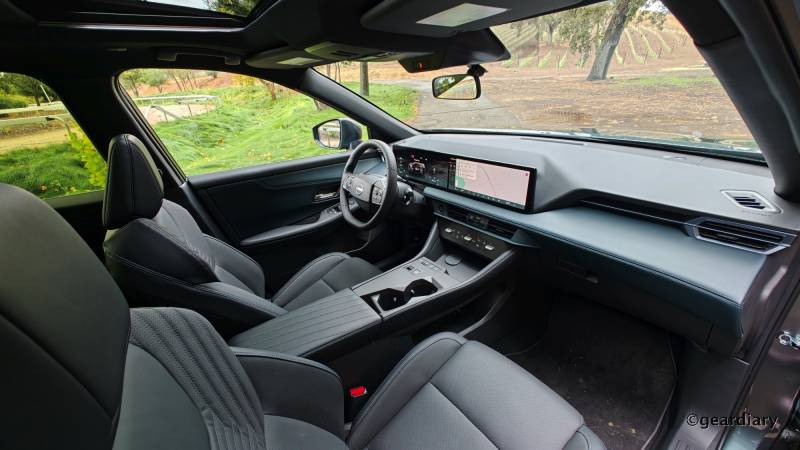
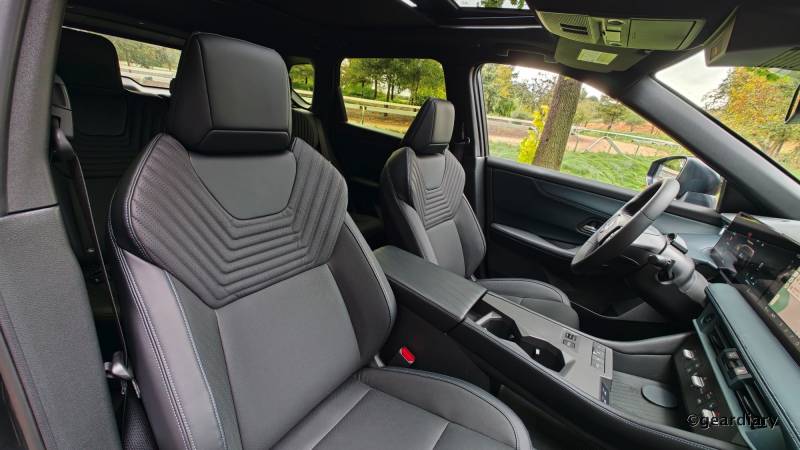
Speaking of which, a power driver seat and heated front seats are standard, and so are the heated steering wheel (except on the SR trim without the mid-range SR Tech Package for some reason). But you’ll have to step up to the Platinum trim to get ventilated front seats and heated rear seats. Dual-zone auto climate is standard across the board, and all trims retain physical climate controls, which is great news.
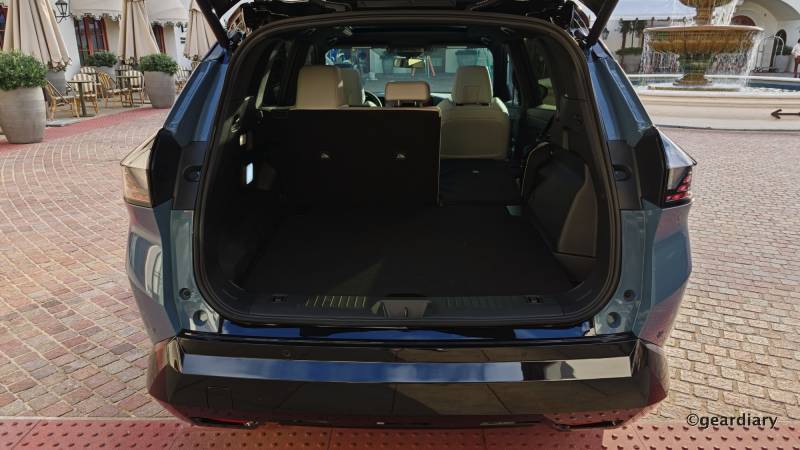
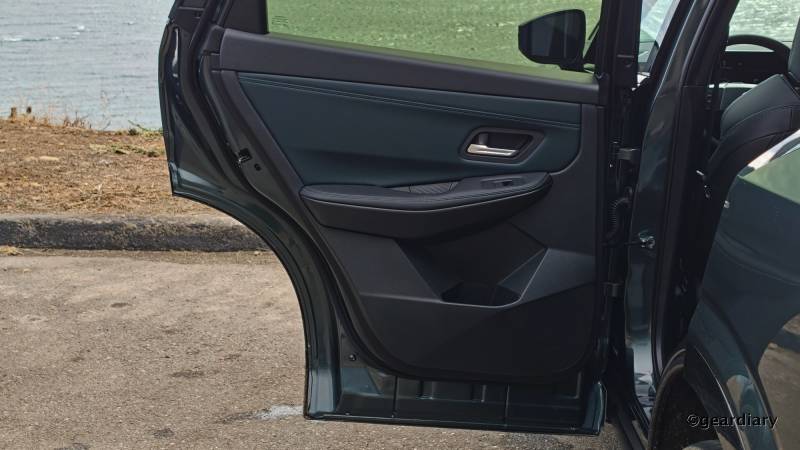
The 2027 Rogue Hybrid is also really spacious, with more front headroom than the competition (up to 40.9 inches), and class-leading front legroom (41.5 inches). Cargo space is generous, too, clocking in at 34.4cu-ft with the rear seats upright, and 65.9cu-ft with the rear seats folded down. Parents will also appreciate the five LATCH anchor points for child seats and rear doors which open to a full 90-degrees.
Should You Consider It?
I’ll have to spend more time with Nissan’s new Rogue Hybrid for a proper review, but after driving it for half a day, I came away very impressed. Remember that I primarily drive fast battery EVs, and my only interest in gas-powered cars are those with a manual transmission like the Mazda MX-5 Miata I keep borrowing from the press fleet when I need a palate cleanser (after all, Miata Is Always The Answer, right?)
With the 2027 Rogue Hybrid, you basically get a well-rounded crossover that drives like an EV, but that you fill up with gas like a hybrid (the 14-gallon tank gives you a range of about 500 miles). I’m not a huge fan of the dino-juice, but I have to admit that Nissan’s e-Power tech is rather compelling, especially in these complicated geopolitical times. So, if you’re shopping for a crossover, the new Rogue Hybrid should be high on your list.



Be the first to comment on "2027 Nissan Rogue Hybrid First Drive: This Gas-Powered Crossover Moonlights as an EV"