
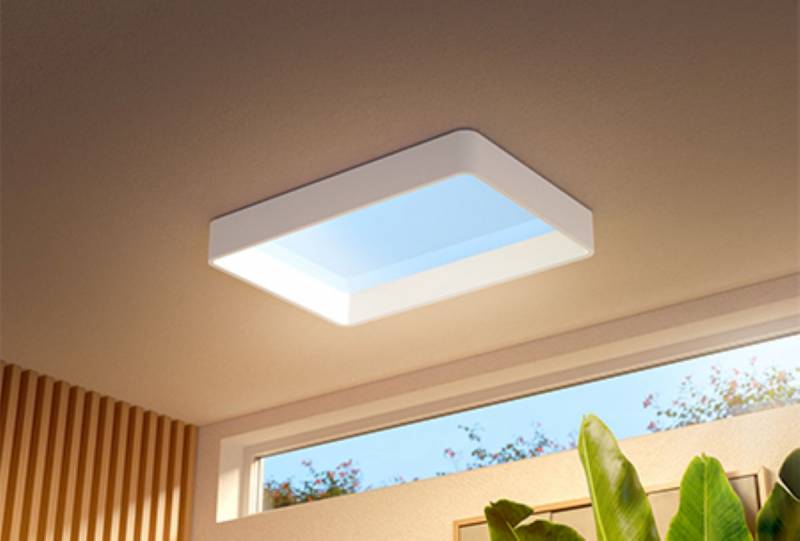
The Philips Skylight is Signify’s latest attempt to solve a familiar home problem: rooms that could use more daylight but don’t have the windows to get it. Designed as a slim, surface-mounted ceiling light, the new range is meant to mimic the brightness, depth, and changing rhythm of natural daylight indoors. It’s not a skylight in the construction-permit sense, so no one’s cutting a hole in your roof. Instead, it uses advanced LED lighting to create the visual impression of looking up toward a brighter, more open sky.
Why Indoor Daylight Is Getting More Attention
There’s a reason people gravitate toward kitchens with big windows, offices with natural light, and bathrooms that don’t feel like stylish caves. Daylight affects how a room feels, not just how well you can see in it. It can make a space feel larger, cleaner, calmer, and less like a place where houseplants go to reconsider their life choices.
Signify, the company behind Philips lighting, is positioning Philips Skylight around that idea. The company points to recent research conducted by iVOX among 2,000 adults aged 18 and older in the Netherlands between May 4 and May 12, 2026. In that survey, 58% of respondents felt they spent too much time indoors, while 89% said they felt more energetic when they got enough daylight. Another 43% said they were open to solutions that recreate daylight indoors.
That research was conducted in the Netherlands, not the U.S., so it shouldn’t be treated as a perfect snapshot of American homes. Still, the larger point travels pretty well. Many people work from home, spend long hours indoors, or live in houses and apartments where natural light is unevenly distributed. The laundry room gets a sad bulb, the hallway gets forgotten, and the bathroom somehow ends up lit like a fitting room with a grudge.
A Ceiling Panel Designed to Feel More Like a Window
Philips Skylight uses Signify’s NatureConnect technology, a lighting approach designed to reproduce qualities associated with daylight, including brightness, color variation, and a sense of depth. Rather than simply blasting a room with a brighter bulb, the panel is meant to create the impression of a window to the sky.
That distinction matters because good lighting isn’t only about output. A harsh overhead light can make a room technically brighter while making everyone in it look like they’re about to be interrogated. Philips Skylight is designed to produce soft, evenly distributed illumination, which should be more comfortable in places where people spend time throughout the day.
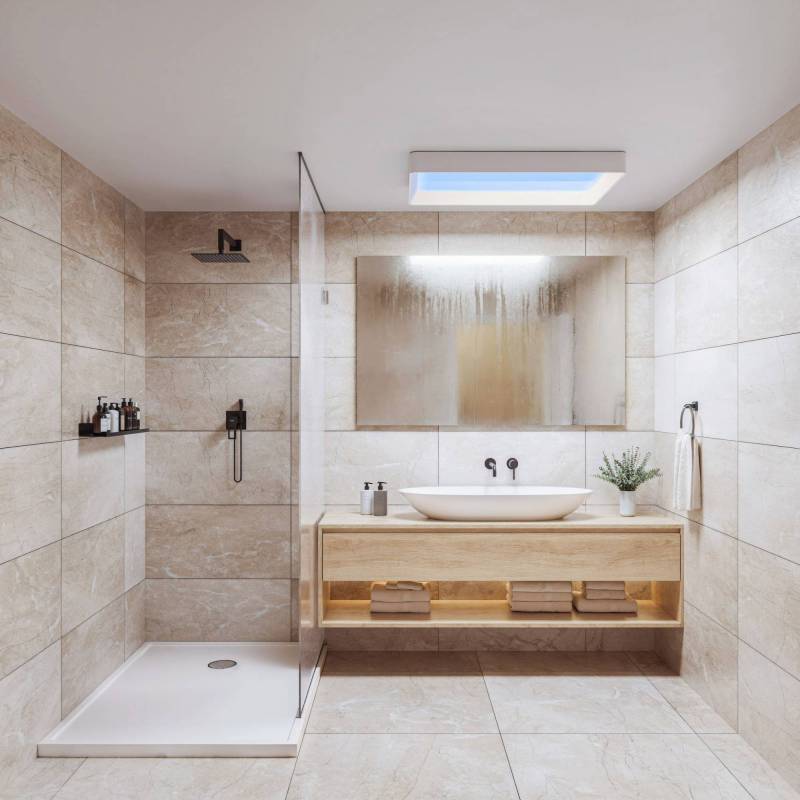
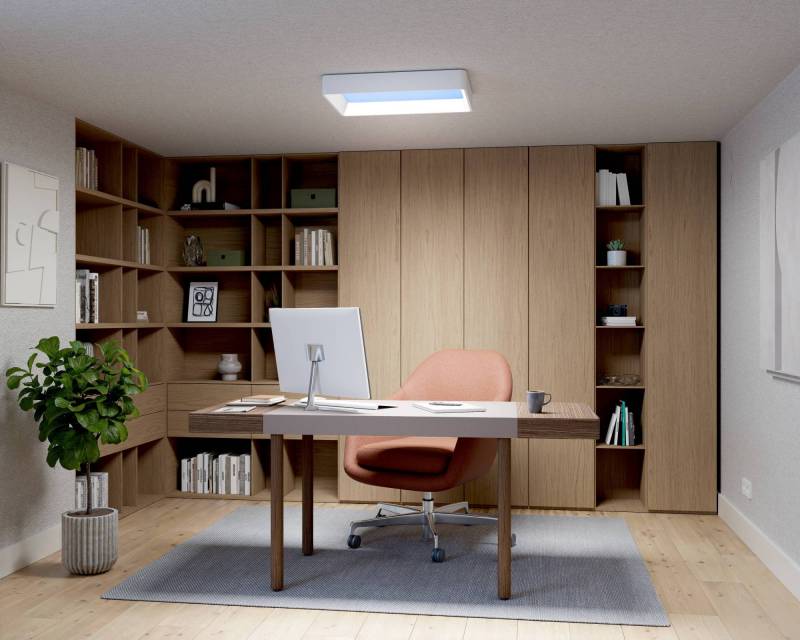
This could make sense in a home office that doesn’t get much sun, a finished basement that needs help feeling less underground, a windowless bathroom, or a kitchen where the natural light disappears by midafternoon. It’s also the kind of product that may appeal to people who don’t want smart lighting to feel like another hobby. The promise here is closer to “make the room feel better” than “please build seven automations before breakfast.”
Lighting That Changes with the Day
One of the more interesting features of Philips Skylight is its auto day rhythm. The light automatically adjusts its brightness and tone throughout the day to reflect the natural progression of daylight. During the day, it delivers brighter, blue-enriched light meant to support alertness. In the evening, it shifts warmer, which tends to feel softer and less clinical.
That daytime effect is supported by Philips BioUp LEDs. In plain English, that means the light includes more blue in its daytime spectrum, inspired by research around circadian stimulation and alertness. Circadian rhythm refers to the body’s internal clock, the one that helps regulate when you feel awake and when you start winding down.
There’s an important caveat here: BioUp is not a medical device. This isn’t a treatment for sleep issues, low energy, seasonal mood changes, or anything else that belongs in a doctor’s office. It’s lighting designed to feel more aligned with the day, and that can be useful, but it shouldn’t be asked to do the job of medical care, a walk outside, or a halfway decent bedtime routine.
Philips Skylight also includes five preset lighting scenes inspired by daylight. Those scenes can be selected based on what you’re doing, whether that’s focusing during the day, softening the room in the evening, or trying to make a dim space feel more inviting without turning it into a showroom.
The VitaUp Version Adds a Vitamin D Angle
The Philips Skylight family also includes Philips Skylight VitaUp variants, and this is where the product gets more unusual. VitaUp models include an integrated UV-B module designed to support the body’s natural vitamin D production indoors.
UV-B is a portion of ultraviolet light associated with vitamin D production when skin is exposed to sunlight. Because that involves UV exposure, the safety details matter. The VitaUp feature includes integrated safety controls, such as automatic shut-off after 8 hours, and can also be controlled manually using the included remote.
Signify notes that Philips Skylight VitaUp is based on testing and relevant scientific literature, but it’s not intended or approved as a medical device. It also doesn’t replace exposure to natural sunlight. That’s the right kind of caveat because this feature will probably be the one that draws the most curiosity, and also the most questions.
Indoor light that can support vitamin D production sounds useful, especially for people who spend a lot of time indoors, but it should be understood as a consumer lighting feature, not a substitute for medical guidance, outdoor time, or supplements recommended by a healthcare professional.
Designed for Normal Rooms, Not Just Design Showcases
Philips Skylight will launch in two versions: Philips Skylight Medium and Philips Skylight VitaUp Medium. Both are surface-mounted ceiling panels with a slim profile, so they’re designed to sit against the ceiling rather than requiring a recessed installation that can turn a small lighting upgrade into a weekend of drywall regret.
Each model includes a remote control, five preset lighting scenes, auto day rhythm functionality, and an IP44 rating. That rating means the light is protected against splashing water from different directions, making it suitable for bathrooms and other damp indoor environments. It doesn’t mean you should treat it like an outdoor fixture or install it where it’ll be directly soaked, but it does make it more flexible than a standard dry-location-only ceiling light.
Pricing has not been announced. Philips Skylight and Philips Skylight VitaUp are expected to become available across U.S. markets starting in September 2026.
A More Thoughtful Approach to Overhead Lighting
The Philips Skylight concept makes sense because overhead lighting is often treated as an afterthought, even though it dramatically changes how a room feels. If Philips can deliver a convincing daylight effect without the panel looking awkward on the ceiling, it could be a compelling option for rooms that need more brightness, more warmth, or simply a little less gloom.
The VitaUp version is the one to watch closely, especially since anything involving UV-B and vitamin D warrants more scrutiny than a standard ceiling light. Still, the broader idea is appealing: a lighting fixture that’s less about showing off technology and more about making indoor spaces feel closer to the outside world.



These are very interesting lights. I look forward to seeing reviews and finding out how well they meet their goals.
Honestly, just replacing a harsh overhead light with something softer would be a huge win for how I feel during long work hours.